HIS to HOPE

by Vicki Goodman, CRO at Curantis Solutions

HIS to HOPE Transition in Hospice Care

What You Need to Know

As a hospice nurse, I am excited to share pivotal news that will significantly impact our field starting October 1st. In case you have been living under a rock, we are transitioning from the Hospice Item Set (HIS) to the Hospice Outcomes and Patient Evaluation (HOPE). This change is not just a modification in terminology; it represents a transformative shift towards a more patient-centered and holistic approach to hospice care. In this article, we will explore what this transition entails, its benefits, and how it will affect our daily practices.

Understanding the Transition from HIS to HOPE

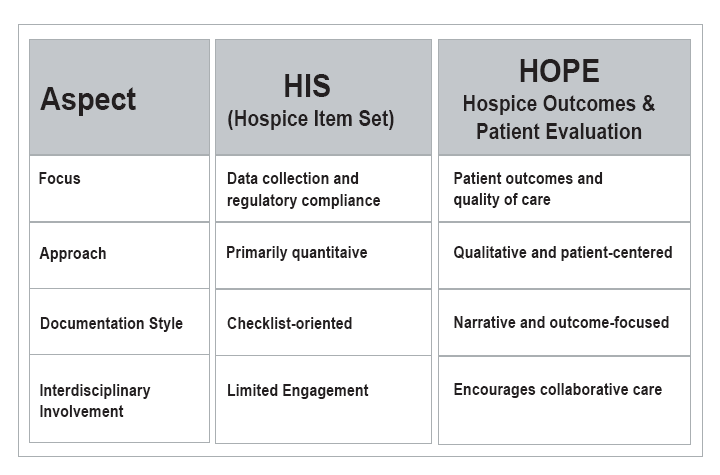
The move from HIS to HOPE signifies an essential evolution in our approach to patient care. While HIS primarily focused on data collection and compliance with regulations, HOPE emphasizes measuring patient outcomes, quality of care, and overall patient experience. This transition encourages us to engage more deeply with our patients and their families, ensuring that their unique needs and preferences are at the forefront of the care we provide.

What is HOPE?

HOPE stands for Hospice Outcomes and Patient Evaluation. This new framework highlights several core principles:

  • Patient-Centered Care
    • Focusing on individual patien needs and preferences
  • Quality of Care Assessment
    • Evaluation how well we meet those needs
  • Holistic Approach
    • Considering emotional, spiritual, and psychological factors in addition to physical health

Benefits of HOPE in Hospice Care

The adoption of the HOPE framework offers numerous advantages for both patients and healthcare providers:

  • Improved Patient Engagement
    • By prioritizing patient preferences, we can foster stronger relationships and enhance the overall care experience
  • Enhanced Quality of Care
    • Focused outcomes assessment allows us to identify areas for improvement and implement best practices
  • Recognition of Care Quality
    • HOPE enables us to demonstrate the effectiveness of our care, leading to greater recognition of our contributions in hospice settings

HIS to HOPE Key Differences

Understanding the distinctions between HIS and HOPE can help clarify the shift in our practices. Here are some key differences

HIS to HOPE Vicki Goodman Curantis Solutions

The Role of Hospice Nurses in the HOPE Framework

As hospice nurses, our role in implementing HOPE will require a significant mindset shift. Here’s how we can adapt our practice:

  • Engage With Patients and Families
    • Actively involve them in care planning and decision-making
  • Assess Holistically
    • Look beyond clinical data to include emotional and spiritual assessments
  • Collaborate with Interdisciplinary Teams
    • Work closely with all caregivers to ensure a comprehensive approach to patient care

By integrating these principles into our daily practice, we can enhance patient experiences and outcomes, ultimately providing the compassionate care that is the hallmark of hospice services.

Acknowledging Our Impact

As we transition to the HOPE framework, it’s essential to take a moment to give ourselves credit for the incredible work we already do. For most of us, patient-centered care has been at the heart of our practice long before HOPE was introduced. This new framework serves as validation, providing a structured approach to highlight the compassionate, individualized care we consistently offer.

Getting Prepared

The transition from HIS to HOPE marks an important chapter in the hospice care journey. Prepare for the transition with partners who understand the complexities and challenges that come with such significant changes. Specifically, work with a software and service company designed to ensure that your hospice team can seamlessly adapt to the HOPE framwork without sacrificing the quality of care. 

About Curantis Solutions

From comprehensive training to state-of-the-art data management systems, we provide everything needed to make this transition as smooth and effective as possible. With Curantis Solutions, you can be confident that no matter how the standards evolve, you will always be at the cutting edge, providing compassionate, patient-centered care. t Curantis, we understand the unique challenges faced by hospice and palliative care organizations. Our commitment to providing exceptional support ensures that you can focus on what matters most—delivering compassionate care to your patients. We pride ourselves on our quick response times, we deeply listen to our clients, and are easy to get ahold of when you need us. When partnering with Curantis Solutions, we guarantee we have support you can depend on.

# # #

Vicki Goodman
Vicki Goodman

Vicki Goodman, RN, BSN, MHA is an accomplished healthcare professional with a strong background in post-acute care, SaaS sales. With a proven track record of driving revenue growth, Vicki has successfully orchestrated sales strategies and marketing initiatives with over 30 years of experience in the home health and hospice EHR industry. Prior to joining Curantis Solutions, Vicki was VP, Enterprise Sales at Matrix Care.

She is an RN and BSN graduated of East Carolina University and received her MHA from University of North Carolina at Chapel Hill. She credits a lot of her success to collaborating with product and marketing teams creating an unstoppable engine. We are thrilled to have her join the Curantis Solutions family and look forward to the continued growth under her leadership.

©2024 by The Rowan Report, Peoria, AZ. All rights reserved. This article originally appeared in Healthcare at Home: The Rowan Report. One copy may be printed for personal use: further reproduction by permission only. editor@therowanreport.com

Ensuring HIPAA Compliance in Healthcare Communication

by Devin Paullin, CGO at Skyscape Buzz

Ensuring HIPAA Compliance

Communications Requiring HIPAA Compliance

While patient communication requires HIPAA adherence, so does any discussion between other parties. Essentially, any time PHI is discussed, a degree of confidentiality must be involved. For example, the Health Insurance Portability and Accountability Act (HIPAA) requires that sensitive patient data be protected when shared or discussed among:

  • Healthcare Providers and Patients
    • Any time a caregiver, staff member, doctor, nurse, or any other employee communicates with a patient, resident, or client, outside of face-to-face meetings, it must be done securely in a way that meets HIPAA standards.
  • Healthcare Professionals Among Themselves
    • HIPAA compliance must be met when healthcare professionals discuss PHI within their department or collaborate with external departments.
  • Healthcare Providers and Insurance Companies
    • Insurance providers require patient details and sensitive PHI. Still, anything that makes information vulnerable to interception must be fully compliant with HIPAA standards.
  • Healthcare Organizations and Third-Party Associates
    • Third parties that need to handle PHI (e.g., IT consultants, collections agencies, or other vendors) must do so in a way that protects patient data. To safeguard communication, healthcare organizations should ask outside associates, vendors, or agencies to sign a business associate agreement (BAA) and/or Data Processing Agreement (DPA). This is a formal agreement to comply with HIPAA standards and ensure accountability.
  • Healthcare Organizations and Public Health Authorities
    • Some diseases or conditions require healthcare professionals to report to public health authorities (e.g. COVID-19 information during the pandemic). This communication requires stringent security measures and protection of PHI.

Why HIPAA Compliance Matters

In healthcare, effective communication is essential for providing high-quality care. However, without HIPAA compliance, the risk of data breaches increases. Implementing secure, HIPAA-compliant communication systems ensures the protection of Personal Health Information (PHI) while improving overall operational efficiency.

Key Benefits of HIPAA-Compliant Communication

  • Protects Patient Privacy and Data Security
    • HIPAA-compliant platforms use advanced encryption and access controls to prevent unauthorized access. This protects patient information, including medical histories, diagnoses, and test results.
  • Enhances Communication Efficiency
    • Secure messaging platforms streamline communication between patients, caregivers, and healthcare providers. These tools eliminate inefficient methods like phone calls and ensure real-time communication.
  • Strengthens Collaborative Care
    • Providing high-quality healthcare often involves a team of professionals working together. Whether it is a hospital placing a patient in rehabilitation or home care, coordinating with intake team, care team and providers,collaboration is key. HIPAA-compliant communication tools allow these professionals to securely share critical patient information, ensuring everyone has the details they need to deliver cohesive, well-informed care.
  • Reduces Legal and Financial Risks
    • Compliance with HIPAA regulations minimizes the risk of violations, protecting organizations from hefty fines and legal repercussions.
  • Maintains Patient Trust
    • Patients are more likely to engage openly with healthcare providers when they feel confident that their sensitive information is protected.

How to Ensure HIPAA Compliance in Communication

To comply with HIPAA regulations, healthcare organizations should adopt the following secure communication methods:

  • Encrypted Emails
    • Ensure emails containing PHI are encrypted and, in some cases, require patient consent.
  • Secure Messaging Platforms
    • Use platforms specifically designed for HIPAA compliance for text-based communication.
  • HIPAA-Compliant Voice Calls and Telehealth
    • Ensure voice and video communication channels are encrypted and secure.
  • Patient Portals
    • Provide secure portals with two-factor authentication for patients to access their medical information.
  • Secure File Sharing
    • Use encrypted systems for sharing patient documents and medical records.

Implementing HIPAA-Compliant Communication Platforms

Adopting a HIPAA-compliant communication platform requires a thorough evaluation of existing systems and policies. Organizations should consider the following steps:

  • Conduct a Communication Audit
    • Identify all channels currently used for healthcare communication and assess their compliance.
  • Choose a Secure Platform
    • Select an all-in-one communication solution designed to meet HIPAA standards.
  • Establish Access Controls
    • Implement role-based access to ensure only authorized personnel can view PHI.
  • Provide Staff Training
    • Educate employees on the importance of HIPAA compliance and how to use secure communication tools.
  • Monitor and Evaluate
    • Regularly assess communication practices to identify and address vulnerabilities.

Final Thoughts

HIPAA-compliant communication is not just a legal obligation—it’s a commitment to patient privacy, security, and high-quality care. By implementing secure communication platforms, healthcare organizations can enhance efficiency, foster trust, and reduce the risk of data breaches. Investing in compliance is an investment in the long-term success and reputation of your organization.

# # #

Devin Paullin HIPAA Compliance in Home Healthcare

Devin Paullin is an award-winning innovator and executive in Healthcare Technology, having developed successful products, solutions, and partnerships in Life Sciences, Post-Acute Care, SDOH, and Long-Term industries.

He is currently Chief Growth Officer for Skyscape which provides Buzz, an all-in-one, real-time HIPAA-compliant clinical collaboration and communication platform that enables the entire staff (admins, operations, clinicians, caregivers, partners, patients, and families) with the tools to communicate securely, easily, in groups or one to one, and affordable, by any mode they choose. Visit Buzz or contact them to learn more about Buzz by Skyscape today.

©2024 by The Rowan Report, Peoria, AZ. All rights reserved. This article originally appeared in Healthcare at Home: The Rowan Report. One copy may be printed for personal use: further reproduction by permission only. editor@therowanreport.com

Enabling Care Through AI

by John Crighton, CTO at Curantis Solutions

Enabling Care Through AI: Ethical Issues

Recently, artificial intelligence (AI) has become an essential component of healthcare organizations. AI is revolutionizing hospice and palliative care by enhancing patient care and optimizing workflows. Its impact is undeniable in these sensitive and life-changing fields. At Curantis Solutions, we are proud to apply AI-driven solutions to support caregivers while upholding ethical standards, enabling care through AI.

The Importance of AI in Hospice and Palliative Care

Hospice and palliative care are primarily based on empathy, understanding, and individual approach. When applied correctly, AI can enhance these core principles in several ways:

  • Improving Efficiency
    • Some of the time-consuming tasks, such as entering assessment notes, reviewing recent documents before a patient meeting, or creating a summary of recent documentation in preparation for a team meeting, can be performed or assisted by AI. By automating these administrative tasks, caregivers can spend more time providing direct patient care.
  • Predictive Analysis
    • AI tools can analyze the patient’s data and predict the possible changes in the patient’s condition, which will help to prevent complications.
  • Individualized Care Plans
    • Based on the patient’s history, AI can help clinicians in the development of care plans that are more accurate in meeting the needs of the patient. Although the idea of using AI in hospice and palliative care is fascinating, it is crucial to approach this issue with caution and always pay attention to ethical issues.

Ethical Issues in the Use of AI in Hospice and Palliative Care

As  the industry incorporates AI into our products and agencies, we need to consider ethical implications such as those shown below:

  • Privacy and Data Protection Issues
    • Hospice and palliative care deal with the patient’s private details. At Curantis Solutions, we ensure that all AI-powered tools comply with the highest security and privacy standards, safeguarding patient data at every step.
  • Bias and Fairness
    • The way AI systems are developed, they are only as good as the data that is used in their development. At Curantis Solutions, we strive to recognize and eliminate any possible prejudice in the AI systems that we develop to benefit all patients.
  • Transparency and Accountability
    • It is important that the caregivers and the patients know how the AI is being used and how the decisions are made. We try to make our AI solutions as transparent as possible, and we ensure that the final decisions are always made by humans. Hospice and palliative care are very personal. This field is defined by the human component, and AI should only supplement it and not replace it. The solutions that we provide are intended to assist clinicians in order to maintain the sanctity of every patient.

A Future of Kindness with the Help of AI

The healthcare sector is changing rapidly, and AI is coming in to improve hospice and palliative care. At Curantis Solutions, we are proud to apply AI in a way that enhances the human factor, ethical values, and the capacity of the caregivers to offer the best care possible to the patient. Therefore, it is possible to envision a future where technology and empathy coexist to ensure that every patient gets the care they require. Leverage AI to reduce administrative burdens for hospice and palliative care.

About Curantis Solutions and AI

The goal of Curantis Solutions is to assist hospice and palliative care providers in the provision of patient-centered and compassionate care. This post discusses how AI can be used in this mission and how it can be done ethically.

We accomplish this in the following manner:

  • Working in partnership with specialists
    • We partner with clinicians, ethicists, and AI experts to guarantee that our solutions are appropriate for the context of hospice and palliative care).
  • Revisiting the Model
    • AI is not set and forgotten; it needs to be assessed and improved on an ongoing basis. We also regularly check the efficacy of our AI tools to ensure that they are accurate, fair, and reliable.
  • Enabling Care Teams
    • Our solutions which are supported by AI are meant to support the skills of the care teams and not to replace them. Thus, we lessen the burden of documentation to allow the providers to focus on the patient and their families more often.

# # #

Curantis Solutions AI John Crighton

John Crighton is a seasoned technology leader, with over 25 years of experience in software development innovation and best practices.

John most recently served as the Chief Technology Officer for Lightning Step, a Behavioral Health SaaS EHR with over 100,000 users. John served on the executive team that scaled the business, contributing to the 40x revenue growth and eventually to a successful exit.  Prior to that, John managed a custom development team at Openlink Financial and was responsible for product quality at SolArc Software. John was part of the management team that led Mission Critical Software to a successful IPO and went on to management roles with JMI Software, NEON Systems, and NetIQ.

John is a veteran of the US Army, and graduated Summa Cum Laude from the University of Houston with a Bachelor’s of Business Administration.

©2024 by The Rowan Report, Peoria, AZ. All rights reserved. This article originally appeared in the Curantis Solutions blog and is reprinted in Healthcare at Home: The Rowan Report with permission. For further permission to reprint, contact Curantis Solutions.

Dementia Care Model Test

FOR IMMEDIATE RELEASE

Contacts:                                  PocketRN
William Leiner
Chief Operating Officer
will.leiner@pocketrn.com

Daughterhood
Becca Dittrich
becca@daughterhood.org

PocketRN and Daughterhood Announce a National Strategic Partnership to Test Medicare Dementia Care Model Developed by Centers for Medicare & Medicaid Services

Guiding an Improved Dementia Experience (GUIDE) Model, a Centers for Medicare & Medicaid Services Innovation Program, Aims to Increase Care Coordination, Support for Caregivers

WASHINGTON, D.C., MARCH 18, 2025 – Today, PocketRN, a leader in virtual nursing, and Daughterhood, a leading non-profit organization empowering family caregivers with community and resources, announced they will form a National Strategic Partnership to test the Centers for Medicare & Medicaid Services (CMS) alternative payment model designed to support people living with dementia and their caregivers.

Under CMS’ Guiding an Improved Dementia Experience (GUIDE) Model, PocketRN will be one of almost 400 participants building Dementia Care Programs (DCPs) across the country, working to increase care coordination and improve access to services and supports, including respite care, for people living with dementia and their caregivers.

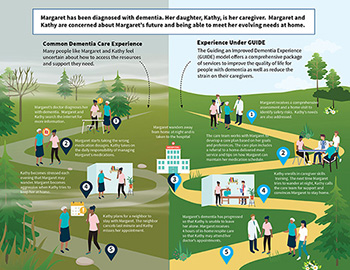
Launched on July 1, 2024, the GUIDE Model will test a new payment approach for key supportive services furnished to people living with dementia, including: comprehensive, person-centered assessments and care plans; care coordination; 24/7 access to an interdisciplinary care team member or help line; and certain respite services to support caregivers. People with dementia and their caregivers will have the assistance and support of a Care Navigator to help them access clinical and non-clinical services such as meals and transportation through community-based organizations.

PocketRN Daughterhood Guide Model

“We couldn’t be more thrilled to bring our revolutionary nurse-led care model to the millions of dementia patients and families who need it most. With PocketRN, patients and families get unwavering support from a Nurse for Life as they navigate the complexities of managing dementia at NO cost to them. Nurses are hands-down the best clinicians to be the ‘glue’ for patients and their families throughout their dementia journey–they’ve been doing so forever, and it’s high-time their work is valued by our system.”

Jenna Morgenstern-Gaines

CEO, PocketRN

“We are so excited to embark on this partnership that will bring invaluable expertise and resources to the dedicated dementia caregivers in our Daughterhood community. Dementia caregiving is a uniquely complex and deeply emotional journey—one that requires not only knowledge and support but also compassion and resilience. This partnership will further empower caregivers with the tools, guidance, and encouragement they need to navigate this journey with confidence, connectivity, and care.”

Anne Tumlinson

Founder, Daughterhood

PocketRN and Daughterhood’s partnership in delivering the GUIDE Model will help people living with dementia and their caregivers have access to the education, supports, and services they need to feel more empowered and less alone in their journey – including unique “circle” community groups, podcasts, educational videos, and other curated resources. The GUIDE Model also provides respite services for certain people, enabling caregivers to take temporary breaks from their caregiving responsibilities. Respite is being tested under the GUIDE Model to assess its effect on helping caregivers continue to care for their loved ones at home, preventing or delaying the need for facility care.

More information on CMS’ GUIDE Model 

# # #

About Daughterhood

Daughterhood is a 501(c)(3) organization that fosters community that empowers individuals to navigate the practical and emotional complexity of caregiving. Its unique blend of “circle” community groups, blogs, podcasts, and curated partner resources gives family caregivers emotional relief along with real, practical, and tangible solutions to navigate the stress, overwhelm, and confusion they often face – and to do so with the support of others on a similar path. For more information, visit https://daughterhood.org/ or engage with Daughterhood on LinkedIn, Facebook, and Instagram.

About PocketRN

PocketRN gives patients, families, and caregivers a Nurse for Life. Its mission is to close the gap between home and healthcare by: enabling nurses to care proactively and continuously at the top of their license, enabling caregivers with peace of mind and the confidence to support others, and enabling patients to access whole-person, trusted, empathetic care when and where they want it. PocketRN is the glue that holds together fragmented experiences in care so that partners, clinicians, patients, and families get back more of what they need: quality time. For more information, visit www.pocketrn.com or engage with PocketRN on LinkedIn, Facebook, and Instagram.

© 2025 This press release originally appeared on the PocketRN website and is reprinted here with permission. For more information, please see press contact information above.

Alliance Statement on Congressional Budget

FOR IMMEDIATE RELEASE

Contacts:        Tom Threlkeld
202-547-7424
Email

Elyssa Katz
571-281-0220
Email

The Alliance Comments on Recent Congressional Budget and Reconciliation Activity

ALEXANDRIA, VA and WASHINGTON, DC, March 5, 2025 – The National Alliance for Care at Home (the Alliance) released the following statement regarding recent legislative developments that may impact the Medicaid program. These include the passage of the House Budget Bill and the reconciliation framework that includes instructions for the House Energy and Commerce Committee to find $880 billion in reductions to programs under its jurisdiction; passage of the Senate Budget framework that does not include such drastic reductions; and comments by Speaker of the House Johnson (R-LA) that any changes to Medicaid will not include caps on federal funding or changes to the state matching formulas.

“The Alliance is reassured by affirmations that the congressional majority will not pursue some of the most drastic proposals previously discussed as options for reducing federal expenditures. Our members will not support any policies that reduce access to essential home and community-based services for eligible individuals. As Congress continues to assess options to reduce federal spending, we encourage leaders to continue to look favorably on high-value services that reduce costs and improve participant satisfaction.

The Alliance House Budge Bill<br />

“Care in the home is a proven model that reduces costs and is preferred by patients and families. An independent evaluation of Money Follows the Person, a grant program that transitioned individuals from institutional settings to the community, found that total spending on older adults decreased by 20 percent during the first year and 27 percent during the second year following their move to the community.[1] If Congress wishes to seek opportunities to reduce spending, we recommend they advance care models that provide cost-effective care without limiting access to services.

“We also recognize that there are opportunities to strengthen program integrity and reduce instances of fraud, waste, and abuse in the health care sector. The Alliance supports actions that reduce fraud, waste, and abuse from bad actors without placing unnecessary burdens or unfairly punishing providers and beneficiaries who are acting in good faith. We look forward to working with Congress to advance policies that strengthen federal health care program oversight.

Medicaid is a complex program and changes to one part of the statute may have unanticipated negative outcomes on other aspects of services, financing, or reimbursements. We encourage Congress to be extremely careful to avoid making changes that could lead to unintended outcomes. We stand ready to provide our expertise to help strengthen Medicaid for all individuals and providers.”

# # #

About the National Alliance for Care at Home

The National Alliance for Care at Home (the Alliance) is a new national organization representing providers of home care, home health, hospice, palliative care, and other health care services mainly delivered in the home. The Alliance brings together two organizations with nearly 90 years of combined experience: NAHC and NHPCO. NAHC and NHPCO have combined operations to better serve members and lead into the future of care offered in the home. Learn more at www.AllianceForCareAtHome.org.    

[1] https://www.medicaid.gov/medicaid/long-term-services-supports/downloads/mfpfieldreport21.pdf

© 2025. This press release was orginally published on the National Alliance for Care at Home website and is reprinted here with permission. For more information, please see contact information above.

HIPAA Compliance in Communication

by Devin Paulin, Skyscape

The Critical Importance of HIPAA Compliance in Home Healthcare Communication

The Rise of Messaging Apps and Healthcare Communication

Nearly 44% of the global population (3.5 billion people) rely on messaging apps to communicate. Unfortunately, available consumer SMS, text, and even “secure” messaging apps like WhatsApp, Apple Message, or Google Messages do not come with safety and security features specifically required to be compliant in the healthcare industry.

Still, consumer SMS apps are quite often used for healthcare communication in which Personal Health Information (PHI) is shared, and many individuals don’t understand the level of risk or that this is a violation of the law.

HIPAA Compliance in Communication Advantages

Group and Individual texting are a proven, timesaving, real-time communication tool in healthcare, and must be done through a HIPAA-compliant messaging platform. Secure platforms can improve privacy and security while maintaining compliance in such a sensitive industry.

There are many reasons why HIPAA compliance is vital for secure communication in home healthcare.

HIPAA Compliance in Communication - Not Just for Doctors and Nurses

HIPAA compliance is not just for medical clinics and hospitals. HIPAA compliance extends to all types of services that hold healthcare information. Physical Therapy, Personal Care, Home Health, Wellness, Behavioral Health, Assisted Living, and many more all fall under HIPAA. Most importantly, ALL providers, staff members (full or part-time), contractors, and third-party partners who come in contact with PHI are subject to HIPAA law, violations, and fines.

HIPAA Compliance in Communication

We're too Small for Violations to be Noticed, Though

Wrong. We regularly speak to many owners and staff members of large and small Home Health Care, Assisted Living, Hospice and Palliative, Mobile Imaging, PT and Rehabilitation, and Behavioral Health across the country. Many openly operate under the false assumption that their business is too small to be noticed by the U.S. Department of Health and Human Services (HHS) and the Office for Civil Rights (OCR), who is responsible for enforcing the HIPAA Privacy and Security Rules. That is not how it works.

Complaints logged by those within or close to your business alert the OCR to possible HIPAA violations. These can be from current and former staff, patients, clients, business partners, or anyone who claims to have witnessed a HIPAA breach. This can include disgruntled employees and whistleblowers. Even for companies that are HIPAA compliant, any breach is to be reported by an employee assigned as the security officer.

HIPAA Compliance in Home Healthcare by Type

HIPAA mandates compliance for all communications involving PHI. Some key examples include:

  • Provider-to-Patient Communication
    • Secure platforms are necessary when caregivers contact patients outside of in-person visits.
  • Provider-to-Provider Communication
    • Sharing PHI within or between departments must meet HIPAA standards.
  • Provider-to-Insurance Communication
    • Insurance companies require sensitive patient data, which must be securely transmitted.
  • Provider-to-Third-Party Communication
    • Any third-party associates handling PHI must have a signed Business Associate Agreement (BAA) and adhere to HIPAA regulations.
  • Provider-to-Public Health Authorities
    • Reporting communicable diseases or pandemics requires secure communication.

Consequence of HIPAA Violations

HIPAA violations can have severe consequences, including:

  • Financial Penalties
    • Fines range from $100 to $50,000 per violation, depending on the level of negligence.
  • Reputational Damage
    • Data breaches erode patient trust, leading to a damaged reputation.
  • Legal Consequences
    • In cases of willful neglect, organizations may face lawsuits or criminal charges.

Final Thoughts

Understanding and adhering to HIPAA regulations is crucial in home healthcare. Compliance not only safeguards sensitive information but also strengthens patient trust and ensures ethical operations.

# # #

Devin Paullin HIPAA Compliance in Home Healthcare

Devin Paullin is an award-winning innovator and executive in Healthcare Technology, having developed successful products, solutions, and partnerships in Life Sciences, Post-Acute Care, SDOH, and Long-Term industries.

He is currently Chief Growth Officer for Skyscape which provides Buzz, an all-in-one, real-time HIPAA-compliant clinical collaboration and communication platform that enables the entire staff (admins, operations, clinicians, caregivers, partners, patients, and families) with the tools to communicate securely, easily, in groups or one to one, and affordable, by any mode they choose. Visit Buzz or contact them to learn more about Buzz by Skyscape today.

©2024 by The Rowan Report, Peoria, AZ. All rights reserved. This article originally appeared in Healthcare at Home: The Rowan Report. One copy may be printed for personal use: further reproduction by permission only. editor@therowanreport.com

Alliance Member Testifies Before Congress

FOR IMMEDIATE RELEASE

Contacts:                                          Elyssa Katz
571-281-0220

Tom Threlkeld
202-547-7424

communications@allianceforcareathome.org

Alliance Member, Jonathan Fleece, Testifies Before Congress on the Value of Care at Home

Ways & Means Health Subcommittee Hearing on “After the Hospital: Ensuring Access to Quality Post-Acute Care”

(Washington, DC and Alexandria, VA) – The National Alliance for Care at Home (the Alliance) released the following statement at the conclusion of a hearing conducted by the House Ways & Means Subcommittee on Health on After the Hospital: Ensuring Access to Quality Post-Acute Care:

“The Alliance thanks Chairman Vern Buchanan (R-FL), Ranking Member Lloyd Doggett (D-TX), and all members of the Health Subcommittee for convening this important discussion on post-acute care. This hearing provided an opportunity to amplify the voices of home health and hospice providers and reinforce the essential role they play in delivering high-quality, patient-centered care in the setting people prefer—at home.”

Dr. Steve Landers

CEO, The Alliance

Alliance Member Testifies: Thank you, Jonathan Fleece

“We are especially grateful to Jonathan Fleece, CEO of Empath Health, for sharing his expertise and for his service on behalf of patients and families. Empath Health has long been a leader in setting the standard for high-quality, patient-centered care, and we appreciate its commitment to advancing care at home.

“As our nation’s population rapidly ages, it is more critical than ever to get these policies right and ensure that home health and hospice remain accessible and protected from harmful cuts and unnecessary administrative burdens. Not only is care at home beloved by patients and families, but it is also cost-efficient, easing strain on the healthcare system by reducing reliance on institutional care and allowing people to heal where they feel most comfortable.”

Jonathan Fleece The Alliance Testifies Before Congress

Continued Advocacy from The Alliance

“Coming out of this hearing, the Alliance remains committed to working with Congress and the Administration to strengthen home health and hospice, safeguard access to these essential services, and advance policies that support their long-term sustainability. We will continue advocating against payment cuts that threaten access, promoting value-based care models, and ensuring regulatory oversight enhances—rather than hinders—the ability of providers to deliver the best possible care.”

To read the full subcommittee hearing testimony of Jonathan Fleece, CEO of Empath Health, click here.

# # #

About the National Alliance for Care at Home

The National Alliance for Care at Home (the Alliance) is a new national organization representing providers of home care, home health, hospice, palliative care, and other health care services mainly delivered in the home. The Alliance brings together two organizations with nearly 90 years of combined experience: NAHC and NHPCO. NAHC and NHPCO have combined operations to better serve members and lead into the future of care offered in the home. Learn more at www.AllianceForCareAtHome.org.    

© 2025 This press release originally appeared on the National Alliance for Home Care website and is reprinted here with permission. For more information, see the contact information above.

ATA Applauds Telehealth Inclusion

FOR IMMEDIATE RELEASE

Contact:                                       Gina Cella
781-799-3137
gcella@americantelemed.org

ATA ACTION APPLAUDS INCLUSION OF MEDICARE TELEHEALTH FLEXIBILITIES IN DRAFT CONTINUING RESOLUTION, URGES CONGRESS TO REINSTATE PROVISIONS AS SOON AS POSSIBLE

WASHINGTON, D.C., MARCH 8, 2025 – ATA Action, the advocacy arm of the American Telemedicine Association, today praised Congress for including Medicare Telehealth Flexibilities and the Acute Hospital Care at Home Program in the draft Continuing Resolution (CR) released today by appropriators. These critical provisions, which were originally implemented under President Trump’s leadership in his first term, will now remain in place through September 30, 2025, ensuring that millions of Americans continue to have access to high-quality, convenient, and affordable care.

“We appreciate Congress taking action to prevent a lapse in these vital telehealth flexibilities. While we would have preferred a longer extension, this step ensures uninterrupted access to telehealth services for patients and clinicians, as we continue working toward permanent solutions that reflect the needs of modern healthcare.”

Kyle Zebley

Executive Director, ATA Action

“But there remains work to be done. The CR must still be passed by Congress, and its path forward remains uncertain,” Zebley noted. “However, we are encouraged that, this past week, we submitted a detailed letter to House and Senate Appropriations Committee leaders, expressing urgency in extending these essential provisions, and clearly Congress listened and is responding to the needs of patients and the healthcare community, for which we are deeply grateful.”

Eliminated Coverage

However, key provisions – including first-dollar coverage for High Deductible Health Plan-Health Savings Accounts (HDHP-HSA), telehealth as an excepted benefit, an expanded Medicare Diabetes Prevention Program (MDPP) that would include telehealth components, and expanded, in-home cardiopulmonary rehabilitation services – were once again left out of the final CR, as they were at the end of 2024. These essential provisions now remain expired, leaving millions of Americans without the telehealth coverage they need.

Telehealth Inclusion ATA Action

“We strongly urge Congress to reinstate these provisions as soon as possible,” Zebley said. “Every day these flexibilities remain lapsed is another day that patients cannot access the care they need, employers struggle to provide affordable coverage, and critical gaps in healthcare widen.

“Telehealth remains a bipartisan issue, and we deeply appreciate the longstanding leadership of President Trump, who put these provisions in place during his first term, as well as our policy champions in Congress,” Zebley added. “We will continue to work in earnest with the administration and lawmakers to solidify telehealth as a lasting pillar of American healthcare.”

# # #

About the ATA

As the only organization completely focused on advancing telehealth, the American Telemedicine Association is committed to ensuring that everyone has access to safe, affordable, and appropriate care when and where they need it, enabling the system to do more good for more people. The ATA represents a broad and inclusive member network of leading healthcare delivery systems, academic institutions, technology solution providers and payers, as well as partner organizations and alliances, working to advance industry adoption of telehealth, promote responsible policy, advocate for government and market normalization, and provide education and resources to help integrate virtual care into emerging value-based delivery models. 

About ATA Action

ATA Action recognizes that telehealth and virtual care have the potential to transform the healthcare delivery system by improving patient outcomes, enhancing the safety and effectiveness of care, addressing health disparities, and reducing costs. ATA Action is a registered 501c6 entity and an affiliated trade organization of the American Telemedicine Association (ATA).

© 2025 This press release was submitted to The Rowan Report by ATA Action via prnewswire.com and is reprinted here with permission. For additional information, please see the contact information above.

Peak Rock Acquires Brightstar Care

FOR IMMEDIATE RELEASE

Contact:                                      Daniel Unger
KekstCNC
(212) 521-4800
daniel.yunger@kekstcnc.com

PEAK ROCK CAPITAL AFFILIATE COMPLETES ACQUISITION OF BRIGHTSTAR CARE

Firm continues to invest in high-growth healthcare and franchisor businesses

AUSTIN, TexasMarch 3, 2025 – An affiliate of Peak Rock Capital (“Peak Rock”), a leading middle-market private equity firm, announced today that it has completed the acquisition of BrightStar Group Holdings, Inc. (“BrightStar Care,” or the “Company”) in partnership with the Company’s founder, Shelly Sun Berkowitz.

BrightStar

Founded in 2002, BrightStar Care is a leading franchisor of home care services with over 400 agencies nationwide. The Company’s franchisees provide both skilled and unskilled home care to clients and custom medical staffing solutions to corporate partners. BrightStar Care stands out for its reputation of excellence and ability to maintain a support system for new and existing franchisees to build long-term success. The Company also holds national accounts with corporations and other partners across distinct patient populations providing healthcare staff anywhere it is needed. BrightStar Care franchisees are committed to providing the highest standard of care through their clinical nurse-led care model. Network-wide, the agencies are Joint Commission accredited, which is the nation’s oldest and largest standards-setting and accrediting body in healthcare.

Peak Rock Acquires BrightStar

In Their Own Words

Spencer Moore, Managing Director of Peak Rock, said, “BrightStar Care stands out because of its unique commitment to clinically led, high quality home care services across its franchisee network. We are excited to partner with Shelly and BrightStar Care management and employees to invest in technology, marketing, and growth initiatives to support the Company’s franchisees in serving more patients.”

“I believe our partnership with Peak Rock will help BrightStar Care continue its mission of providing clients with high-quality compassionate care in the home, as well as make investments to facilitate continued growth with existing and new franchisees. I am looking forward to working with the Peak Rock team during the Company’s next stage of growth.”

Shelly Sun Berkowitz

Founder and Executive Chairwoman, BrightStar Care

“We have found a strong partner in Peak Rock Capital, a group aligned with BrightStar Care’s mission and vision for the future,” said BrightStar Care CEO Andy Ray. “With Peak Rock Capital, BrightStar Care will broaden access to high-quality care for more families, making key investments as we continue to lead the industry.”

Anthony DiSimone, Chief Executive Officer of Peak Rock, added, “This transaction demonstrates Peak Rock’s commitment to investing in founder-owned businesses with strong growth potential. It also highlights our continued interest in investing in resilient healthcare businesses and franchisors that will benefit from our expertise in supporting rapid growth.”

Acquisition Team

JP Morgan and Boxwood Partners served as the financial advisors and Latham & Watkins served as legal counsel to BrightStar. Lincoln International served as the financial advisor and McDermott Will & Emery served as legal counsel to Peak Rock.

# # #

About BrightStar Group Holdings, Inc.

Founded in 2002, BrightStar Care is a leading franchisor of home care services with more than 400 franchised locations nationwide that provide skilled and unskilled home care to clients and custom medical staffing solutions to corporate entities. Their franchise agencies across the country employ more than 15,000 caregivers and 5,700 registered nurses who oversee the care and safety of each individual client. Franchisees are committed to providing a higher standard of care through their clinical nurse-led care model. Network-wide, the Joint Commission accredited BrightStar Care agencies. Joint Commission is the nation’s oldest and largest standards-setting and accrediting body in healthcare. BrightStar Care has also consecutively received The Joint Commission Enterprise Champion for Quality award for more than a decade. For further information about BrightStar Care, please visit www.brightstarcare.com.

About Peak Rock Capital

Peak Rock Capital is a leading middle-market private investment firm that makes equity and debt investments in companies in North America and Europe. Their equity investment platform focuses on opportunities where it can support senior management to drive rapid growth and profit improvement, with expertise in corporate carve-outs and partnering with families and founders seeking first-time institutional capital. The credit platform invests across capital structures, with a broad mandate to provide flexible, tailored capital solutions to middle-market and growth-oriented businesses. Peak Rock’s real estate platform makes equity and debt investments in small to mid-sized real estate assets in attractive, growing geographies. For further information about Peak Rock Capital, please visit www.peakrockcapital.com.

©2025. This press release originally appeared on prnewswire. For additional information, please see the contact information above.

ProRx Pharma to Increase Access to Drugs on FDA Shortage List

FOR IMMEDIATE RELEASE

ProRx Pharma Expands Production to Address Demand for Drugs on FDA Shortage List

Addition of Industry Veterans to Leadership Team Will Power Growth into Wellness and Longevity Sectors

ProRx Pharma, the wellness and longevity 503B outsourcing facility, has announced the expansion of its operations to help meet the demand for critical medications—now and into the future with a full health, wellness, and longevity product line.

The company specializes in manufacturing products on the FDA’s drug shortage list, such as semaglutide, offering medications to clinical centers, hospitals and pharmaceutical companies. ProRx is currently expanding its operations to a total of 6,888 square feet, doubling its existing 3,400-square-foot pharmaceutical and manufacturing facility. The new facility with more production space will allow ProRx to triple its manufacturing capabilities and enhance operational processes that will further strengthen compliance with compounding lab Standard Operating Procedures (SOPs) and the FDA.

ProRx Pharma

“Compounding pharmacies play a critical role in the healthcare ecosystem in terms of meeting patients’ demands for more accessible and affordable medications,” said Kurt Lunkwitz, Chief Operating Officer at ProRx. “The new leadership team at ProRx not only has a wealth of industry experience, but also a shared vision for the company’s future. The addition of these talented professionals means we will continue to be a ‘disruptor’ and redefine what it means to be a leader in the 503B pharmaceutical sector while staying firmly committed to exceeding the standards that are set by our industry.”

New Leadership

As part of its strategic rebranding and expansion under new leadership, ProRx has welcomed several key additions to its operations teams, reinforcing its position as a leading wellness and longevity 503B outsourcing facility. The expanded team includes a new Vice President of Clinical Operations, who brings over 40 years of compounding experience across both 503A and 503B sectors. ProRx also recently welcomed a new head of its Quality Assurance unit, who previously served in the quality division of one of the top three global pharmaceutical companies, bringing invaluable expertise in compliance and product safety. 

New Partnership

Additionally, ProRx has partnered with one of the nation’s top FDA compliance consulting firms, bringing over 25 years of proprietary industry experience working directly with the FDA. Collectively, the new team members contribute over 50 years of pharmaceutical and healthcare experience, further reinforcing ProRx’s commitment to stringent regulatory compliance, quality assurance, and innovative wellness solutions.

Looking Ahead

The new leadership team—with 70-plus years of cumulative experience in the pharmaceutical and healthcare industries—acquired ProRx at the end of 2024 and immediately hired several highly skilled and well-respected professionals in quality control, pharmacy and FDA compliance. These strategic hires, together with an ongoing commitment to quality and compliance, aim to further enhance the company’s operations and act as a driver for future growth, especially in the growing wellness and longevity markets.

“We are working closely with our clients, partners, and patients who depend on us for life-saving medicines. Together, we are addressing the critical drug shortages that affect our healthcare system today while also getting ready for the challenges of the future,” said Lunkwitz.

ProRx is an FDA-registered cGMP facility and is currently licensed to provide compounded medications in 25 states and rapidly expanding coverage. In addition to manufacturing drugs on the FDA shortage list, the company offers pharmaceutical testing, formulation development, clinical supplies, and clinical trial FDA documentation.

# # #

About ProRx Pharma

ProRx Pharma is an FDA-registered cGMP facility focused on providing essential compounded medications to meet the need for medications on the FDA drug shortage list within the wellness and longevity sectors. The company produces customized products and formulations for medical institutions and physician offices, with a specialization in producing high-quality products to ensure patients have access to the medications they need during critical shortages. For more information, visit https://prorxpharma.com/