BREAKING NEWS: UnitedHealth CEO Steps Down

by Kristin Rowan, Editor

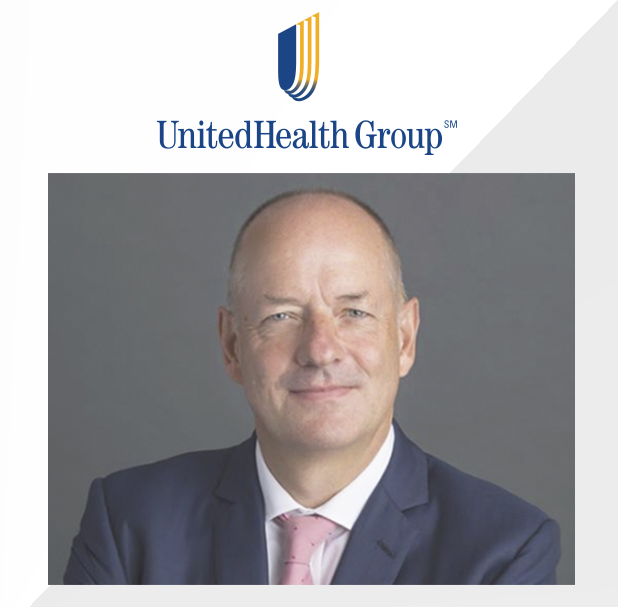
Breaking News: UnitedHealth Group CEO Andrew Witty Steps Down

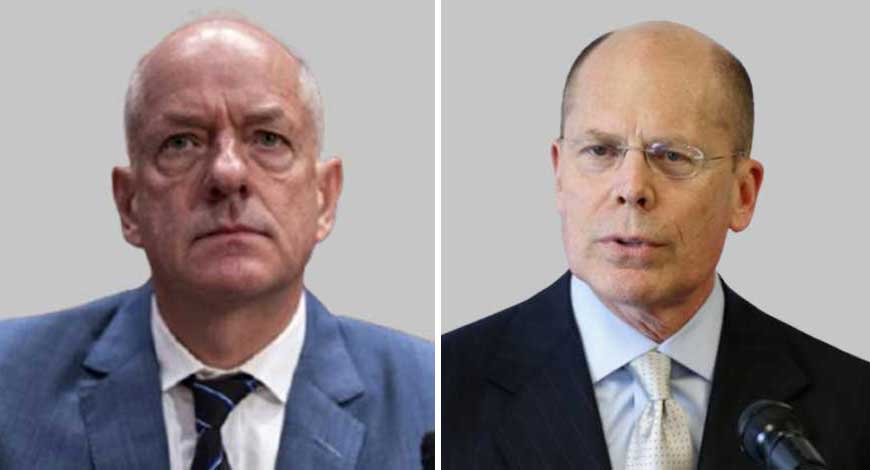
Citing “personal reasons” with no elaboration, UnitedHealth Group CEO Andrew Witty steps down from his position, effective immediately. Witty joined UnitedHealth Group in 2018 and became the company’s CEO in 2021. Despite overwhelming growth during Witty’s tenure, the company continues to face numerous setbacks.

UnitedHealth Group Struggles Since January

The shooting death of Brian Thompson, UnitedHealthcare CEO, in December seems to have set off an onslaught of setbacks for the insurance giant.

  • Share prices have dropped 38% since December, from $503 down to $308
  • The company recently cut its annual forecast, after first adjusting it down, causing the final 18% stock drop
  • For the first time since 2008, UHG missed its forecasted earnings
  • Statements from the company look to 2026 before growth resumes

New (Old) CEO

Stephen Hemsley is the new CEO of UnitedHealth Group, effective immediately. Hemsley, who currently serves as the director of the board, was the company’s CEO from 2006 to 2017. Hemsley will stay on as chairman of the board and company CEO. Witty will serve as senior adviser to Hemsley. 

Contradictions and Conflicts

In an official statement regarding the leadership change, Hemsley said, “We are grateful for Andrew’s stewardship of UnitedHealth Group…. The Board and I have greatly valued his leadership and compassion as chief executive….” 

On a call with investors, Hemsley said, “Many of the issues standing in the way of achieving our goals as well as our opportunities are largely within our control.”

During that same call, Hemsley said, “I’m deeply disappointed in and apologize for the performance setbacks we have encountered from both external and internal challenges.”
UnitedHealth CEO Steps Down

In addition to the conflicting statements, Hemsley will serve as CEO and Chairman of the Board, creating conflict and reducing oversight. The chairman of the board plays a key role in oversight, governance, and communication with the CEO. They also evaluate the CEO’s performance. Holding both roles, especially in light of the shareholder request for reports, may we be in the best interest of UnitedHealth Group, but probably not in the best interest of anyone else.

# # #

Kristin Rowan, Editor

Kristin Rowan has been working at The Rowan Report since 2008. She is the owner and Editor-in-chief of The Rowan Report, the industry’s most trusted source for care at home news, and speaker on Artificial Intelligence and Lone Worker Safety and state and national conferences.

She also runs Girard Marketing Group, a multi-faceted boutique marketing firm specializing in content creation, social media management, and event marketing.  Connect with Kristin directly kristin@girardmarketinggroup.com or www.girardmarketinggroup.com

©2025 by The Rowan Report, Peoria, AZ. All rights reserved. This article originally appeared in The Rowan Report. One copy may be printed for personal use: further reproduction by permission only. editor@therowanreport.com

 

Health Insurance Impact after Thompson’s Death

by Kristin Rowan, Editor

Will Thompson's death change healthcare?

It's all Relative

On the same day that Brian Thompson died, Blue Cross Blue Shield announced a reversal of an earlier planned policy change. In November, the insurance giant announced it would change its process for anesthesia claims. The change would start in three states and begin on February 1st, 2025. The new process would limit the amount of time the company would cover anesthesia for surgeries and other procedures that called for anesthetization.

The announcements said the company would deny any claim for a surgery or procedure needing anesthesia that goes beyond the time limit they established. Reportedly, the policy would not apply to people under 22 or any maternity related care. A press release from the American Society of Anesthesiologists criticized the policy. It said BCBS “will no longer pay for anesthesia care if the surgery or procedure goes beyond an arbitrary time limit, regardless of how long the procedure takes.”

The new policy was confusing. Some reports indicated there would be a time limit set by the insurer and all claims over that time limit would be denied. Another interpretation said the company would initially approve the claim but would only cover the anesthesia up to a point, leaving the balance to the insured. Yet another report implied BCBS shield would still pay for the surgery, surgeon, and facility, but not for any of the anesthesia.

Reversal of Fortune

Though the initial announcement received backlash from anesthetists, surgeons, insured patients, and Connecticut Senator Chris Murphy, the policy was not widespread news. That is, until the shooting of Brian Thompson shed light on all health insurance company policies. Citing “misinformation” the company announced on Thursday, December 4, that it would not proceed with the policy change.

To be clear, it never was and never will be the policy of Anthem Blue Cross Blue Shield to not pay for medically necessary anesthesia services. The proposed update to the policy was only designed to clarify the appropriateness of anesthesia consistent with well-established clinical guidelines.

Spokesperson

Anthem Blue Cross Blue Shield

Social Media Backlash

The New York Times referred to the reactions to Thompson’s death as “morbid glee.” Comments on social media posts, videos, and news stories include:

“Thoughts and deductibles to the family.”

“Unfortunately my condolences are out-of-network.”

“I pay $1,300 a month for health insurance with an $8,000 deductible. When I finally reached that deductible, they denied my claims. He was making a million dollars a month.”

“Cause of death: Lead poisoning! It’s a pre-meditated condition. Payout denied.” 

UnitedHealth Group Responds

UnitedHealth Group CEO Andrew Witty called the media interest in Thompson’s death “aggressive” and “frankly offensive.” In a video to UnitedHealth Group employees, Witty said, “I’m sure everybody has been disturbed by the amount of negative and in many cases citriolic media and commentary…particulary in the social media environment.” Witty noted there were few poeple who had a “bigger positive effect” on the U.S. healthcare system than Thompson.

From Bad to Worse

Witty’s leaked internal video compounded the negativity towards health insurance companies. Witty decryied the media and public vitriol. He then praised Thompson’s impact on healthcare and defended the company policy.

“Our role is a critical role, and we make sure that care is safe, appropriate, and is delivered when people need it,” Witty said, “What we know to be true is the health system needs a company like UnitedHealth Group.” Witty followed his seemingly innocuous statement with, “We guard against the pressures that exist for unsafe care or for unnecessary care to be delivered in a way which makes the whole system too complex and ultimately unsustainable.” Public outcry was amplified after the video was leaked, with insured persons using this as proof that the company’s policy is to deny care.

Health Insurance Impact

Experts Weigh In

Ron Culp, a public relations consultant at DePaul University said if the attack is related to health insurance policies it “could cause companies in the sector to make some changes,” noting that, “empathy and potential alternative solutions will play greater roles.”

Fortune predicts that the incident will cause fewer people to aim for the corner office.

While disgruntlement with corporate America is not new, The Wall Street Journal said this incident is “tinged with class rage and anti-corporate venom….[The] current outpouring is on a grander scale….”

Loss of Faith in Insurance Stock

Between close of business on Tuesday, December 3, the day before Thompson’s shooting, and Tuesday, December 10, major insurance stocks have dropped more than 6%. This includes UnitedHealth, CVS Health, and Cigna, three of the largest private health insurers in the country.

Jared Holz, a health-care equity strategist, said the stock performance appears to be in response to the rhetoric condemning health insurance business models that include denied claims in deference to higher profits.

Final Thoughts

After just one week, the public is still uncovering and pronouncing issues with the healthcare insurance industry. The long-term health insurance impact regarding company policies, denial rates, or anything else remains to be seen. The Rowan Report will never condone violence against another person. However, if Thompson’s death brings about changes in the corruption of for-profit insurance companies, we will all be the better for it.

This is an ongoing story. The Rowan Report will continue to provide updates as they become available.

# # #

Kristin Rowan, Editor

Kristin Rowan has been working at Healthcare at Home: The Rowan Report since 2008. She has a master’s degree in business administration and marketing and runs Girard Marketing Group, a multi-faceted boutique marketing firm specializing in event planning, sales, and marketing strategy. She has recently taken on the role of Editor of The Rowan Report and will add her voice to current Home Care topics as well as marketing tips for home care agencies. Connect with Kristin directly kristin@girardmarketinggroup.com or www.girardmarketinggroup.com

©2024 by The Rowan Report, Peoria, AZ. All rights reserved. This article originally appeared in Healthcare at Home: The Rowan Report. One copy may be printed for personal use: further reproduction by permission only. editor@therowanreport.com
Managed Care Plans: How to Meet Their Needs

by Elizabeth E. Hogue, Esq.

What do Managed Care Plans Really Want from Providers of Services to Patients in Their Homes?

Medicare Managed Care Plans have a long history of disinterest in provision of services to patients in their homes. Despite the fact that they are mandated to provide the same services that enrollees in Medicare fee-for-services receive, they just haven’t done it. Common practices among Plans of draconian, untimely preauthorization processes and doling out authorizations for visits a few at a time make it clear that Plans have seen no real value in services to patients at home.

OIG Investigates

Plans, of course, should have been very interested in services at home. These services save money and keep patients at home where they want to be. Services at home are just generally a beautiful thing!

At the same time, it’s fair to say that the Office of Inspector General (OIG) of the U.S. Department of Health and Human Services (HHS), the primary enforcer of fraud and abuse prohibitions, has Medicare Managed Care Plans in its crosshairs. A key area of concern for the OIG is that Medicare Managed Care Plans make visits to patients in their homes looking for additional diagnoses so that the Plans will receive more money per patient. The OIG is especially critical of this practice because review of medical records of patients who received visits at homes and whose acuity increased as a result never received any care for these new diagnoses.

Managed Care Plans

Managed Care Plans in the News

The Wall Street Journal recently reported that between 2018 and 2021 Plans received $50 billion for diagnoses added to members’ charts, at least some of which resulted from visits to patients in their homes.

After years of disinterest, Plans are now quite interested in at home services. Is it possible that Plans’ newfound interest is related to a desire to increase revenue through home visits? It appears so. Take, for example, comments by the CEO of UnitedHealth Group, Andrew Witty, during an investment call on July 16, 2024.

Managed Care Plan Responds

Managed Care Plans

UnitedHealth Group CEO Andrew Witty

Mr. Witty reported to investors that staff made more than 2.5 million home health visits to Plan members in 2023. “As a direct result, our clinicians identified 300,000 seniors with emergent health needs that may have otherwise gone undiagnosed,” Mr. Witty said. “They connected more than 500,000 seniors to essential resources to help them with unaddressed needs.”

Former UnitedHealth employees told The Wall Street Journal that home visits were used to add diagnoses to patients’ records. They said that clinicians used software during visits that offered suggestions about what illnesses patients might have.

It now looks like it’s possible that at-home care is being hijacked by Medicare Advantage Plans to help Plans engage in practices that the OIG views as questionable. 

Please say it ain’t so!

Elizabeth E. Hogue, Esq.

Elizabeth Hogue is an attorney in private practice with extensive experience in health care. She represents clients across the U.S., including professional associations, managed care providers, hospitals, long-term care facilities, home health agencies, durable medical equipment companies, and hospices.

©2024 Elizabeth E. Hogue, Esq. All rights reserved.

No portion of this material may be reproduced in any form without the advance written permission of the author.