Worthy is Worthy of Consideration

Advocacy

by Kristin Rowan, Editor

Worthy is Worthy

Markovich Calls for Healthcare Overhaul

Worthy is an initiative aimed at nonpartisal healthcare policy reform. Introduced by Ascendiun CEO Paul Markovitch. Worthy calls upon industry players to back major reform in the healthcare system that addresses long-standing problems. According to Markovitch, a 30-year veteran in healthcare, the industry is dysfunctional and in need of a major overhaul. 

“The healthcare system is bankrupting and failing us. It requires systemic reform. Those reforms are unlikely to come from the industry itself. Therefore, we need the federal government to step up and make those reforms happen. The status quo is unacceptable. We need bold, systemic reform urgently, so that is what Worthy is.”

Paul Markovich

CEO, Ascendiun

Worthy Outline

Worthy comes from the idea that our healthcare system ought to be “worthy of our family and friends,” Markovitch said. The overhaul program is built on strategic pillars:

  • Providing every consumer and patient with a comprehensive, real-time digital health record
  • Breaking the “do more, get paid more” fee-for-service model and instead start paying for health outcomes.
  • Make prescription drugs accessible and affordable by eliminating kickbacks in the form of rebates, fees and spread pricing.
  • Put the entire healthcare system on a budget

More than Strategy

Beyond the written initiative, Worthy provides an interactive framework for patients. The website houses podcasts, issue analysis, and videos complemented by social media posts, media commentary, and in-person forums to help consumers and patients understand the changes that need to happen and how to get there. 

Additionally, it seems as though the Worthy plan is not merely speculation. The first phase of the plan focuses on prescription drug reform. The plan is already active inside Blue Shield of California. The insurer changed its pharmacy model, moving away from the pharmacy benefit management (PBM) structure. Instead, Blue Shield of California partners with Amazon Pharmacy, Mark Cuban Cost Plus Drug Company, and Prime Therapeutics, among others. That change became the foundation for the Worthy initiative.

Plan in practice

Blue Shield of California rolled out a Digital Health Record (DHR) program, also now part of the Worthy Initiative, that improves care coordination and transparency. The DHR program in California includes sharing all patient data across providers and with the patient, giving patients a complete and real-time health record. According to Markovitch, interoperability is a meaningless term that allows providers to congratulate themselves for sharing slightly more data than before. His goal is to have a national standard for comprehensive digital health records that eliminates the need for any provider or patient to request records.

Working Together

Worthy presumes that the strategic pillars work together. Total reform doesn’t happen without each piece. Markovitch advocates for the responsible use of artificial intelligence to automate what can be automated. This includes, according to Markovitch, prior authorization, billing, provider directory updates, claims settlements, and routine patient questions.

Shared decision-making

The clinical model that the plan implies is one of shared decision-making. It involves both patient and physician having complete health records together with AI and other technology to gather all available information about a health condition. From there, the patient, loved ones, and all treating physicians work together to form a care plan. Markovitch calls for stronger legislation to move toward this kind of comprehensive care plan.

Worthy shared decision-making

Worthy Vision

Patients over Profits

“Worthy will be advocating for passing a series of laws and enacting regulations that will force all the players to put patients over profits, that is, to do the right thing on behalf of each patient, every time, in order to have a health care business and to earn an income.”

– Paul Markovitch, CEO Ascendiun

Final Thoughts

We don’t know if the Worthy Initiative will gain any ground at the federal level. Likewise, we don’t know if Worthy will make substantive changes to the broken healthcare system. What we do know is that Worthy is, at a minimum, worthy of consideration as a means to overhaul a system that hasn’t truly been effective for a long time. If you agree, here are some links to get more information:

Worthy Podcast

Healthcare Overview

Pharmacy Reform

Blue California Pharmacy Care Reimagined

This is Worthy

# # #

Kristin Rowan Editor The Rowan Report

Kristin Rowan is the owner and Editor-in-chief of The Rowan Report, the industry’s most trusted source for care at home news. She is also a sought-after speaker on Artificial Intelligence, Technology Adoption and Lone Worker Safety. She is available to speak at state and national conferences as well as software user-group meetings.

Kristin also runs Girard Marketing Group, a multi-faceted boutique marketing firm specializing in content creation, social media management, and event marketing. She works with care at home software providers to create dynamic content that increases conversions for direct e-mail, social media, and websites.  Connect with Kristin directly at kristin@girardmarketinggroup.com or www.girardmarketinggroup.com

©2026 by The Rowan Report, Peoria, AZ. All rights reserved. This article originally appeared in The Rowan Report. One copy may be printed for personal use: further reproduction by permission only. editor@therowanreport.com


 

Interoperability and Gen X

Interoperability

by Kristin Rowan, Editor

Interoperability and Gen X

Your Song

Part 1 of this series discussed the timeline and history of interoperability and the slow progress that has been made so far. Both in care at home and the broader health care system, interoperability seems to stall despite regulations and incentives for data sharing. Part 2 takes the discussion into the future when the next generation of care at home patients deals with data silos.

We Didn't Start the Fire

We (Gen Xers) have waited 15 years for HIEs to solve the free exchange of information between health systems. We have also watched and participated in the disparate system for our own healthcare and that of our parents and our children. We are in the unique predicament of needing care for three generations simultaneously. That in-between position gave us the nickname “The Sandwich Generation.” And we are ready to rock this boat!

For What It's Worth

  • More than 65% of us feel like there are barriers to accessing healthcare1
  • More than 70% are using or interested in using AI-assisted diagnosis
  • Almost 75% want Ai-powered care tools
  • 45% believe healthcare will improve in the next 10 years
  • 80% believe that improvement will come from AI-integration and better virtual access
Interoperability Gen X 80s technology

Teach Your Children

Home care patients are still primarily baby boomers who did not grow up with technology embedded in everything they do. Their children, however, did. These are the adult children making decisions for their parents. They are the ones watching their parents sit through hours of Q&A to relay medical history that countless other doctors already have. They are the ones asking “why?”. They know there’s a better way and they expect you to find it.

But, Gen Xers are also independent, resourceful, and adaptable. We are tech-savvy and have a no-nonsense attitude toward authority. We are the generation that doesn’t wait for technology to get better; we create our own. And since our young employees (and our children) eat, sleep, and breathe technology, you can bet the solution will be innovative and quick.

Interoperability and Gen X

It's Now or Never

The next generation of home health patients are approaching 60 and will be eligible for Medicare in 5 years. 2030 is your deadline for interoperability. When our doctors, insurance providers, and home health agencies tell them that information portability isn’t possible, they will not take that answer lying down. When the hospital asks them to drive across town to their imaging center, wait for the imaging center to transfer their results to a CD, and then deliver the physical copy to the hospital (yes, my hospital system made me do this), we will demand to know why.

I'm a Believer

The AI solutions that I’ve seen in the last few years have been innovative, creative, and fascinating. I believe in my fellow Gen Xers and the possibilities that lay before us. I believe that we all have the right to access our own health information, including visits, test results, imaging, notes, and recommendations. And I believe we have the building blocks to unify health records for every patient in real time. If I only I had the coding skills to build it. Maybe I should ask my kids. 

# # #

Kristin Rowan, Editor

Kristin Rowan has been working at The Rowan Report since 2008. She is the owner and Editor-in-chief of The Rowan Report, the industry’s most trusted source for care at home news, and speaker on Artificial Intelligence and Lone Worker Safety and state and national conferences.

She also runs Girard Marketing Group, a multi-faceted boutique marketing firm specializing in content creation, social media management, and event marketing.  Connect with Kristin directly kristin@girardmarketinggroup.com or www.girardmarketinggroup.com

©2025 by The Rowan Report, Peoria, AZ. All rights reserved. This article originally appeared in The Rowan Report. One copy may be printed for personal use: further reproduction by permission only. editor@therowanreport.com

 

Interoperability: The Unreachable Dream

Interoperability

by Kristin Rowan, Editor

Interoperability

The Unreachable Dream

Healthcare and care at home have been reaching for interoperability for decades. When I started working in the care at home industry, there was a learning curve for terminologies, abbreviations (oy! with the abbreviations already!), and the pain points experienced by agencies and vendors. Interoperability was at the top of that list. 2009, the first full year I worked in care at home, was the year Congress mandated EHRs and data exchange. The mandate did not accomplish much. Incompatible data structures limit post-acute care data to the most recent health event, not the patient’s full medical record.

Data Exchange

Interoperability

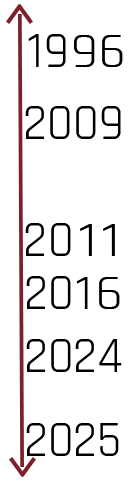
Following the EHR mandate, Congress continued to add regulations and rules to advance data exchange. Starting with HIPAA in 1996, interoperability advanced as follows:

Health Insurance Portability and Accountability Act ensures patient data stays private both within a healthcare system and during data exchange

Congress mandated the use of EHRs throughout healthcare

HITECH Act launched Health Information Exchanges (HIEs) that support secure exchange of information between health systems

Health Level 7 (HL7) designed a framework that establishes protocols for data exchange

Fast Healthcare Interoperability Resources (FHIR), an updated of HL7, enables processes in 84% of hospitals and 61% of clinician offices

21st Century Care Act allows patients to access their own medical information and requires developers to publish APIs and ensure all data in the patient health record is accessible through that API

Trusted Exchange Framework and Common Agreement (TEFCA) lists principles, terms, and conditions to standardize data

CMS Interoperability Framework pushes interoperability nationwide through improved data quality; advanced technology; data aggregation; and alignment of data, tools, and measures

Following the EHR mandate, Congress continued to add regulations and rules to advance data exchange. Starting with HIPAA in 1996, interoperability advanced as follows:Interoperability

  • Health Insurance Portability and Accountability Act ensures patient data stays private both within a healthcare system and during data exchange
  • Congress mandated the use of EHRs throughout healthcare
  • HITECH Act launched Health Information Exchanges (HIEs) that support secure exchange of information between health systems
  • Health Level 7 (HL7) designed a framework that establishes protocols for data exchange
  • Fast Healthcare Interoperability Resources (FHIR), an updated of HL7, enables processes in 84% of hospitals and 61% of clinician offices
  • 21st Century Care Act allows patients to access their own medical information and requires developers to publish APIs and ensure all data in the patient health record is accessible through that API
  • Trusted Exchange Framework and Common Agreement (TEFCA) lists principles, terms, and conditions to standardize data
  • CMS Interoperability Framework pushes interoperability nationwide through improved data quality; advanced technology; data aggregation; and alignment of data, tools, and measures

Thirty Years Later

Despite the laws, regulations, frameworks, and mandates, interoperability is not much better than it was in 1996. I had an experience this year that both enlightened and infuriated me. I switched health insurance plans for a variety of reasons. My new plan didn’t cover most of the doctors, hospitals, and health systems I had been using for many many years. So in February, I found a new PCP and had the standard start of care visit to establish my health history: current conditions, past conditions, past surgeries & procedures, current medications, etc. I requested referrals to new specialists and updates to prescriptions. My PCP performed a “complete physical” that was nothing more than a cursory overview. And then I waited.

Interoperability

The Waiting Game

And waited…and waited…. I thought all these organizations and standards were supposed to make this easier. Still, I waited.

  • I waited for an “invitation” to my PCPs portal to see my visit notes and test results
  • I waited for my PCP to send referrals to new specialists
  • I waited for my health insurance provider to inevitably tell me the specialist wasn’t covered under my plan
  • I waited for a new referral from my PCP
  • I waited for appointments, results, and recommendations
  • I waited for access to new patient portals
  • I waited for the portal to figure out how to give me access to three different providers in the same app
    • (spoiler alert: I have to log in to the same app three different ways to access three different providers; my providers can see all the information in one place, but I can’t)
  • I waited for test results to appear in each portal; some I had to call and request, some I’m still waiting for

Data Exchange "Advancements"

According to my research, 84% of hospitals and 61% of clinicians are currently using FHIR, designed to improve interoperability between different health systems using standard data formats and APIs.

Last month I had an appointment. Correction: I thought I had an appointment for an imaging scan. I thought this because the scheduling nurse called me to confirm the appointment day, time, and location. When I arrived, the check-in nurse couldn’t find me in their system.

It wasn’t just that she didn’t see my appointment. No, it was that she couldn’t find me at all. (We later discovered it was still pending because the imaging department never confirmed the appointment after the scheduling nurse added it.) 

She could see no current or future appointments. She could see no past appointments because they were booked a different way. She couldn’t find any record of me at all. You see, my record started in the next building over.

Error 404: Not Found

Every one of these facilities is in the same healthcare system. (Think ACME hospital, ACME imaging, ACME specialist doctor, and ACME lab) Every office is part of the same healthcare system and none of them can see each other’s information. ACME hospital can’t see the schedule for ACME imaging and can’t schedule imaging appointments outside the hospital. For that, I have to call ACME imaging.

  • But wait! The doctor wrote my referral for ACME hospital, not ACME imaging. I need a new referral.
  • But wait! Neither the healthcare system nor the specialist can write a new referral. My payer will only accept a referral from my PCP.
  • But wait! My PCP has no idea what the referral is for, how it was written, or where it’s supposed to go because my PCP can’t access my records from the healthcare system.

This is advanced data exchange using FHIR, HIE, TEFCA, and QHIN. My health system uses our local HIE and CommonWell Health Alliance, an interoperability network designated as a federal QHIN. Apparently, this ensures the health system can share data with participating providers, but not with themselves.

Home Health is Even Further Behind the Curve

After so many years, so many advancements, and so many regulations, interoperability is no more “solved” than it was in 2009. Even the health systems that are using all the tools aren’t even internally interoperable.

Home Health has an even harder time attaining interoperability. 

  • It is more difficult for HHAs to access patient information, which usually has to be manually imported into the home health EHR
  • Patient consent is required, but HHAs often deal with patients who don’t have the capacity to consent
  • Despite the requirement of APIs, most health information is spread out across multiple systems and the HHA only get information from the referring facility
  • Nearly 80% of HHAs use an EHR
  • Only 28% of HHAs are electronically exchanging information with outside facilities
  • Only 18% can integrate shared data into automated workflows
  • HHAs did not receive the financial incentives that larger healthcare systems got to push interoperability
  • TEFCA participation is not mandatory, slowing down the process of approving a data connection and exchange

Many legacy EHRs have met significant challenges moving into interoperability. Competitors in the space had no financial incentive to create standard languages and formatting designed to share information. HHAs are left with two choices: 

The costly, time-consuming task of reviewing, selecting, and onboarding an entirely new EHR –or–

Piece together workarounds with multiple 3rd party or internal solutions haphazardly strung together to resemble interoperability

Time is Up

The call for interoperability started in 1996. With little advancement and not much hope on the horizon, we (your patients) are looking for other ways to get what we need. Next week, I’ll talk about my predictions for how interoperability will progress for the next generation.

# # #

Kristin Rowan, Editor

Kristin Rowan has been working at The Rowan Report since 2008. She is the owner and Editor-in-chief of The Rowan Report, the industry’s most trusted source for care at home news, and speaker on Artificial Intelligence and Lone Worker Safety and state and national conferences.

She also runs Girard Marketing Group, a multi-faceted boutique marketing firm specializing in content creation, social media management, and event marketing.  Connect with Kristin directly kristin@girardmarketinggroup.com or www.girardmarketinggroup.com

©2025 by The Rowan Report, Peoria, AZ. All rights reserved. This article originally appeared in The Rowan Report. One copy may be printed for personal use: further reproduction by permission only. editor@therowanreport.com