Medicare Advantage Lowers Home Health Care Use

by Kristin Rowan, Editor

End-of-Life Care in Medicare Advantage vs Traditional Medicare

Using research from CMS, researchers from Mt. Sinai in New York and Brown University in Rhode Island studied the data of adults aged 66 and older who passed away and had Medicare coverage in their final year of life. Included in the study were people potentially eligible for home health care and not in a nursing facility, hospital, or hospice care setting. Data from close to 1.8 million people was analyzed. The researchers identified whether the participants received home health care and how many days of end-of-life care they received.

Home Health Higher in Traditional Medicare

Of the nearly 1.8 million participants, the average age was 82. 51.5% were female and 36.5% were enrolled in Medicare Advantage. In the final year of life, home health care use was recorded at 37.5% for MA enrollees and 41.7% for traditional Medicare.

When the researchers looked at different demographic groups within the data sets, home health care usage was higher in traditional Medicare in most groups. However, among American Indian and Alaska Native groups, Medicare Advantage had a slightly higher rate of home health use at 37.9% compared with 37.1% in Traditional Medicare.

Conversely, in the Asian or Pacific Islander demographic, home health use rate was 32.6% in MA and 41.8% in TM. Similarly, the rate of use among the Hispanic group was 33% in MA and 44% in TM. Following a similar trend, in the non-Hispanic Black group home health usage in MA was 38.8% compared with 42.9% in TM. Likewise, among the non-Hispanic White group, home health use in MA was 37.9% versus 41.5% for TM. For those of unknown race, usage was 36.1% in MA compared with 40.1% in TM.

Days of Care Lower in Medicare Advantage

Home health users across all racial and ethnic demographic groups enrolled as Medicare Advantage beneficiaries had fewer days of care in home health than those enrolled in Traditional Medicare. The stand-out group in this part of the research was those of Hispanic descent, who averaged 81.9 days in home health care in Medicare Advantage compared with 111.9 days in Traditional Medicare.

Medicare Advantage Home Health Use

Implications

The researchers indicated some limitations in the study, namely that data was pulled from pre-covid patients because of the changes in home health during covid. The study should be repeated with post-covid data. One of the researchers received personal fees while serving as a senior advisor to CMS. Another received personal fees as a section editor for UpToDate. A third researcher reported receiving personal fees from Abt and UpToDate.

Despite these limitations, the implications of the study show that end-of-life care is not the same between Medicare and Medicare Advantage patients. Medicare Advantage is largely operating on a Value-Based Purchasing Model. The fewer services the beneficiary receives, the more money the primary doctor, hospital, and payer keep. It is not surprising, therefore, that MA patients get fewer services for less time. Patients who switch from Traditional Medicare to Medicare Advantage, especially if they are your patients, should be informed that they are still eligible for home health care and hospice care, but they may have to ask for it.

# # #

Kristin Rowan, Editor

Kristin Rowan has been working at The Rowan Report since 2008. She is the owner and Editor-in-chief of The Rowan Report, the industry’s most trusted source for care at home news .She also has a master’s degree in business administration and marketing and runs Girard Marketing Group, a multi-faceted boutique marketing firm specializing in content creation, social media management, and event marketing.  Connect with Kristin directly kristin@girardmarketinggroup.com or www.girardmarketinggroup.com

©2025 by The Rowan Report, Peoria, AZ. All rights reserved. This article originally appeared in The Rowan Report. One copy may be printed for personal use: further reproduction by permission only. editor@therowanreport.com
 

2025 Final Rule

by Kristin Rowan, Editor

CMS Releases Home Health Final Rule 2025

Last week, the Centers for Medicare & Medicaid Services (CMS) released the Calendar Year (CY) 2025 Home Health Prospective Payment System (HH PPS) final rule. Included in the final rule are updates the Medicare payment policies and rates for Home Health Agencies (HHAs), intravenous immune globulin (IVIG) items, and payment rates for Durable Medical Equipment (DME) suppliers. Estimates indicate that CMS payments to HHAs will increase by 0.5% over 2024.

Partnership for Quality Home Healthcare

The Partnership for Quality Home Healthcare issued a press release in response to the final rule.

[We] were again disappointed that the Centers for Medicare & Medicaid Services (CMS) continued its policy of cuts by finalizing a -1.975 percent permanent cut to home health.

The Partnership for Quality Home Healthcare

The Partnership urged Congress to intervene to “fix the broken payment system” that continues making payment rate cuts year after year. The cuts are reducing patient access. According to recent data, patient visits per 30 days are down nearly 20 percent. The partnership notes workforce shortages, capacity limitations, and closures of providers as the primary reasons behind the decline in patient visits. 

Legislative Action

As we have reported previously, a number of organizations have worked together to advocate for home health with members of Congress. NAHC and NHPCO (Now The National Alliance for Care at Home), The Partnership for Quality Home Healthcare, and others, have proposed bipartisan legislation, the Preserving Access to Home Health Act (S. 2137/H.R. 5159).

NAHC last year filed a lawsuit claiming that CMS used flawed formulae in their calculations of budget-neutrality. That lawsuit has been paused while NAHC/NHPCO follow administrative processes required by the judge. Once those administrative paths are exhausted, The Alliance will look at next steps to continue their objections to the pay cuts. The overturning of “Chevron Deference” will open new avenues for The Alliance as well.

CMS Facts

CMS published its Final Rule Fact Sheet after the issuance of the final rule for CY 2025. According to the fact sheet, the 2025 rule:

    • Finalizes a permanent prospective adjustment of -1.975% (half of the calculated permanent adjustment of -3.95%) to the CY 2025 home health payment rate to account for the impact of implementing the Patient-Driven Groupings Model (PDGM)
    • Includes the final CY 2025 home health payment update of 2.7%
    • Adds an estimated 1.8% decrease to reflect the permanent behavior adjustment
    • Also has an estimated 0.4% decrease that reflects the updated FDL

This yields an aggregated 0.5% increase in payment rates over 2024. 

Increase=Decrease

Despite the overall 0.5% increase in payment rates, PQHH, The Alliance, and many other organizations see this as a drastic pay cut. The increase will not account for inflation, higher operating costs, or any other adjustments. These organizations continue to call upon you to contact your Senators and Representatives as well as to support them in their ongoing efforts with the bipartisan bills and the lawsuit. 

CMS Proposed Rule CY 2025

Ongoing Updates

The information in the 2025 final rule is still being analyzed and is further complicated by the change in leadership at the national and local levels after this week’s election. Please see our Upcoming Events section on the website for several webinars discussing these issues. The Rowan Report will continue to bring additional insights as they become available.

# # #

Kristin Rowan, Editor

Kristin Rowan has been working at Healthcare at Home: The Rowan Report since 2008. She has a master’s degree in business administration and marketing and runs Girard Marketing Group, a multi-faceted boutique marketing firm specializing in event planning, sales, and marketing strategy. She has recently taken on the role of Editor of The Rowan Report and will add her voice to current Home Care topics as well as marketing tips for home care agencies. Connect with Kristin directly kristin@girardmarketinggroup.com or www.girardmarketinggroup.com

©2024 by The Rowan Report, Peoria, AZ. All rights reserved. This article originally appeared in Healthcare at Home: The Rowan Report. One copy may be printed for personal use: further reproduction by permission only. editor@therowanreport.com

Hospice Fraud Oversight

by Kristin Rowan, Editor

CMS Oversight in Fraud-Ridden States

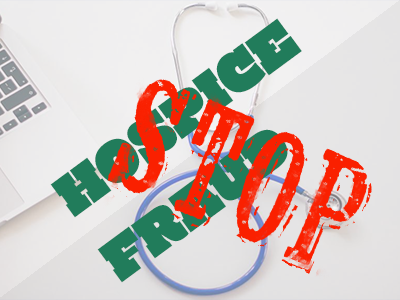
In 2023, The Centers for Medicare and Medicaid Services (CMS) cited research suggesting that hospices profit from fraud far too often. CMS has identified cases of hospices certifying benficiaries who are not terminally ill, providing little to no services, and still billing CMS. Four states have had rapid growth in fraudulent hospices: Arizona, California, Nevada, and Texas.

Churn-and-Burn

Some of the registered hospices had non-operational addresses. This information led to an investigation that resulted in evidence of the fraud dubbed “Churn and Burn.” This scheme involves registering a new hospice and billing for services until there is an audit or the agency maxes out on yearly payments. Then, the hospice closes, keeps the money, registers for a new Medicare billing number, and starts all over again.

Program Integrity Strategy

As a result of  the findings of this research, CMS put more effort behing the hospice program integrity strategy to find and address fraudulent activity. Part of the strategy was unannounced visits to hospices nationwide. Hospices not active at listed addresses were deactivated and Medicare billing privileges were revoked. Of the more than 7,000 hospices visited, 400 had potential administrative action pending.

Enhanced Oversight

In the four states identified as having higher instances of fraud, CMS implemented a provisional period of enhanced oversight. During the provisional period, CMS conducted a medical review prior to payment for hospices in these states that have identified problems.

Nationwide Pilot Project

In addition to the provisional period for the four identified states, CMS started a pilot project to review hospice claims after a patient’s intitial 90 days of hospice care. This pilot project was not limited to the four states, but was implemented nationwide. CMS launched the program to help inform medical reviews in determining whether hospices are submitting claims for eligible patients.

Regulatory Changes

CMS also proposed some regulatory changes to combat hospice fraud. Some of these regulatory changes were initially suggested by hospice providers. The proposals include:

Hospice Fraud
    • Prohibiting the transfer of Medicare billing privileges of a new hospice for 36 months
    • Clarifying the definition of “Managing Employee” to include the administrator and medical director of a hospice
    • Implementing a Special Focus Program to increase oversight on poor-performing hospices that have ongoing health and safety deficiencies
    • Adding criminal background checks for owners when they initially enroll for Medicare billing privileges.

Prepayment Review Expanded

CMS has just announced that they will expand the prepayment review process in the four states beginning in September, 2024. Information from CMS is limited and states that prepayment review volume will start low to protect compliant hospices, but will increase if a hospice is found to be non-compliant. Consequences for non-compliance includes delays in payment, extended review, or additional administrative actions.

According to preliminary information we received from a hospice consultant, the expanded program puts all new hospices or hospices with ownership changes into prepayment review even if they have not had identified problems. 

We have reached out to both CMS and some of our expert hospice consultants to get more information and will update this story as information becomes available.

# # #

Kristin Rowan, Editor

Kristin Rowan has been working at Healthcare at Home: The Rowan Report since 2008. She has a master’s degree in business administration and marketing and runs Girard Marketing Group, a multi-faceted boutique marketing firm specializing in event planning, sales, and marketing strategy. She has recently taken on the role of Editor of The Rowan Report and will add her voice to current Home Care topics as well as marketing tips for home care agencies. Connect with Kristin directly kristin@girardmarketinggroup.com or www.girardmarketinggroup.com

©2024 by The Rowan Report, Peoria, AZ. All rights reserved. This article originally appeared in Healthcare at Home: The Rowan Report. One copy may be printed for personal use: further reproduction by permission only. editor@therowanreport.com