Medicaid Enrollees Sent to ICE

by Kristin Rowan, Editor

UPDATE

The Rowan Report originally published this article on August 7, 2025. This update is as of August 15, 2025.

After HHS began providing access to personal data on Mediciad enrollees to the Department of Homeland Security (DHS), 20 states filed to sue the department for violating privacy laws. Shortly thereafter, CMS entered into a new agreement to give DHS daily access to view the same data.

Federal Judge Vince Chhabria of California ordered HHS to stop giving DHS access to personal information. The ruling grants a preliminary injunction, stopping HHS from sharing Medicaid data with ICE in the 20 states that participated in the lawsuit. The injunction will last until 14 days after the two agencies complete and submit a reason for the decision to share information. The reasoning must comply with the Administrative Procedure Act. The injunction can also end if litigation is concluded (a formal hearing and decision).

Chhabria noted that there is no formal law preventing government agencies from sharing information, he cited agency policy as his reasoning for the injunction. ICE has a well-publicized policy against using Medicaid data for immigration enforcement. Judge Chhabria wrote in his ruling:

“Given these policies, and given that the various players in the Medicaid system have relied on them, it was incumbent upon the agencies to carry out a reasoned decisionmaking process before changing them. The record in this case strongly suggests that no such process occurred.”

August 7, 2025

Associated Press Confirms

Enrollee Information Given to ICE

In a surprise announcement on July 17, 2025, investigative reporter Kimberly Kindy and reporter Amanda Seitz filed a report. They uncovered information confirming Medicaid enrollee information given to ICE from CMS. ICE will use this to find “aliens” across the country. The health and personal information disclosed includes home addresses, birth dates, Social Security numbers, and ethnicities.

Department of Homeland Security Responds

DHS Assistant Secretary Tricia McLauglin said, “…CMS and DHS are exploring an intitiative to ensure that illegal aliens are not receiving Medicaid benefits….”

DHS Spokesperson Andrew Nixon said, “With respect to the recent data sharing between CMS and DHS, HHS acted entirely within its legal authority—and in full compliance with all applicable laws….”

Opposing Viewpoints

Senator Adam Schiff (D-CA) said, “The massive transfer of the personal data of millions of Medicaid recipients should alarm every American. This massive violation of our privacy laws must be halted immediately. It will harm families across the nation and only cause more citizens to forego lifesaving access to health care.”

Similarly, CA Governor Gavin Newsom said, “This potential data transfer brought to our attention by the AP is extremely concerning, and if true, potentially unlawful….”

HHS and DHS Sued

State Attorneys General from 20 states, led by California Attorney General Rob Bonta have filed suit. They are suing the Department of Health and Human Services (HHS), the Department of Homeland Security (DHS), HHS Secretary Robert F. Kennedy Jr., and DHS Secretary Kristi Noem.

The Associated Press found a Medicaid internal memo and emails. Subsequently, the AP reported that Medicaid officials tried to stop the data transfer due to legal and ethical concerns. The objection was unsuccessful. CMS had 54 minutes to comply with an order coming from two advisors within Secretary Kennedy Jr’s camp.

Disclosure Focuses on Violation of Laws

Current laws provide that states can create their own health plans, eligibility standards, and coverage, as long as the plan follows federal criteria. Medicaid laws also provide for emergency coverage for non-citizens. Seven states and D.C. started programs that offer full Medicaid coverage to non-citizens.

Four of the seven states, New York, Oregon, Minnesota, and Colorado, never submitted identifiable information about Medicaid recipients to CMS. The data shared with ICE came from the remaining three states; California, Illinois, & Washington State; and Washington D.C.
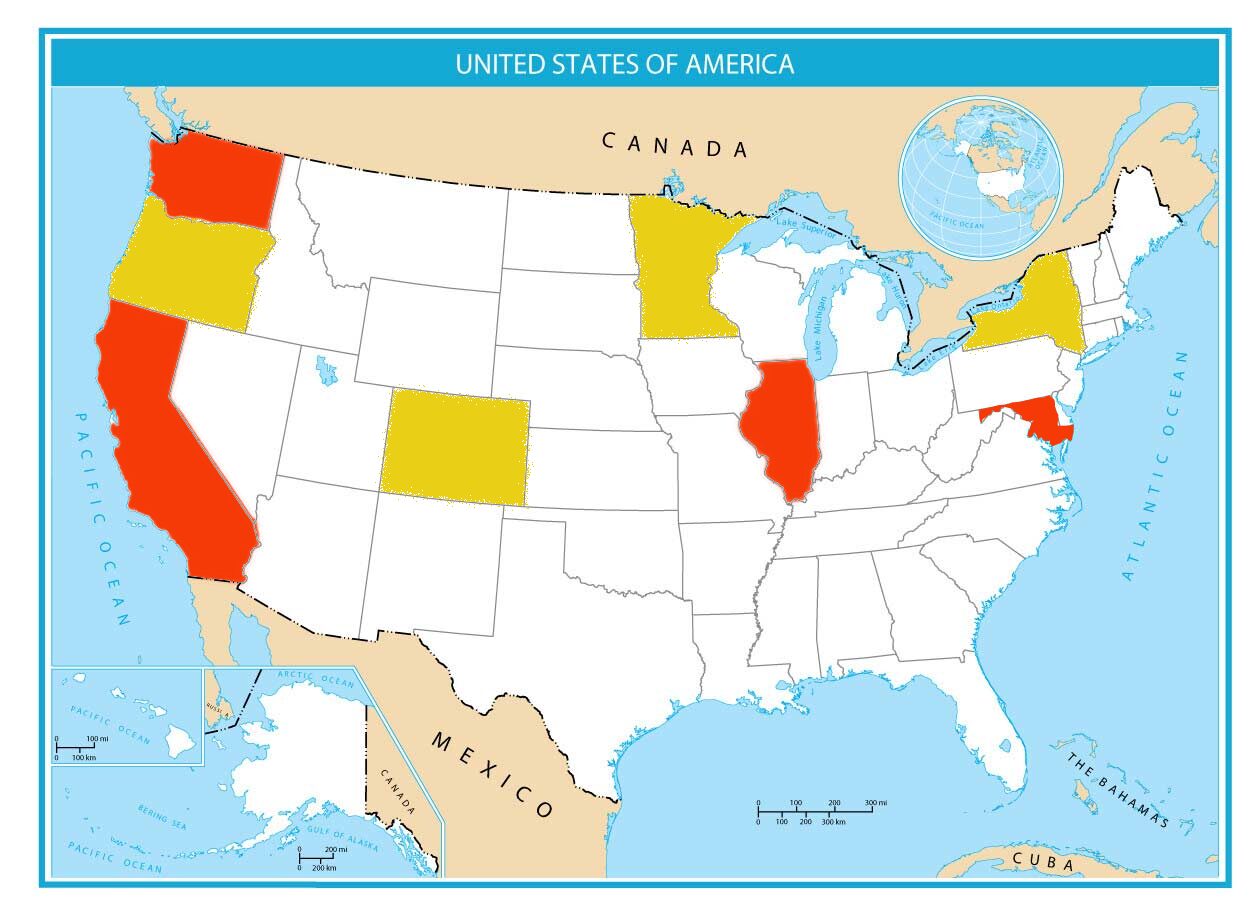
Map of U.S. States Compromised by CMS and DHS

The Allegation

The lawsuit was filed in the U.S. District Court for the Northern District of California. It alleges that the federal government is allowing the personal data of Medicaid recipients to be used for purposes unrelated to the Medicaid program.

Further, the coalition of states alleges that the disclosures violate several federal data privacy laws. These  include Health Insurance Portability and Accountability Act (HIPAA), Federal Information Security Modernization Act (FISMA), and the Privacy Act. 

Additionally, the Attorneys General state that the disclosures are contrary to the Social Security Act and a violation of the Spending Clause.

The lawsuit calls upon the court to bar CMS from sending additional PII to DHS and to bar DHS from using any of the information it has already received.

“In the seven decades since Congress enacted the Medicaid Act to provide medical assistance to vulnerable populations, federal law, policy, and practice has been clear: the personal healthcare data collected about beneficiaries of the program is confidential, to be shared only in certain narrow circumstances that benefit public health and the integrity of the Medicaid program itself.”

Attorneys General

Coalition of States

Final Thoughts

This lawsuit is the latest of many against the current administration. The Rowan Report will continue to update this and other stories impacting care at home as the lawsuits continue.

# # #

Kristin Rowan, Editor

Kristin Rowan has been working at The Rowan Report since 2008. She is the owner and Editor-in-chief of The Rowan Report, the industry’s most trusted source for care at home news, and speaker on Artificial Intelligence and Lone Worker Safety and state and national conferences.

She also runs Girard Marketing Group, a multi-faceted boutique marketing firm specializing in content creation, social media management, and event marketing.  Connect with Kristin directly kristin@girardmarketinggroup.com or www.girardmarketinggroup.com

©2025 by The Rowan Report, Peoria, AZ. All rights reserved. This article originally appeared in The Rowan Report. One copy may be printed for personal use: further reproduction by permission only. editor@therowanreport.com

 

Fraud, Waste, and Abuse

by Kristin Rowan, Editor

Fraud, Waste, and Abuse

DOJ, HHS False Claims Act

Fraud, Waste, and Abuse has become something of a mantra within the Department of Health and Human Services (HHS). Secretary Kennedy has committed to combatting fraud, waste, and abuse within the federal healthcare system. The Department of Justice (DOJ) and HHS have a long history of working together to combat healthcare frauding under the False Claims Act (FCA).

Working Group

In furtherance of their goal to combat healthcare fraud, HHS and DOJ have formed the DOJ-HHS False Claims Act Working Group. The Working Group will include leadership from the HHS Office of General Counsel, CMS Center for Program Integrity, the Office of Counsel for the OIG, and the DOJ Civil Division.

Working Group Priorities to Combat Fraud, Waste, and Abuse

1. HHS will refer potential False Claims Act violations to the DOJ that are in line with the Working Group priority enforcement areas:

  • Medicare Advantage
  • Drug, device, or biologics pricing
    • arrangements for discounts, rebates, service fees, and formulary placement and pricing reporting
  • Barriers to patient access to care
    • violations of network adequacy requirements
  • Kickbacks related to drugs, medical decives, DME, and other products paid for by federal healthcare programs
  • Materially defective medical devices that impact patient safety
  • Manipulation of Electronic Health Records systems to drive inappropriate utilization of Medicare covered products and services

2. The Working Group will maximize collaboration to expedite investigations and identify new leads. They will leverage HHS resources using data mining and assessment of findings.

3. The Working Group will discuss implementing payment suspension according to the CMS Medicare Program Code of Federal Regulations¹

4. The Working Group will discuss whether DOJ will dismiss a whistleblower case under the U.S. Code for Civil actions for False Claims, pursuant to the DOJ Manual for Civil Fraud Litigation²

Report Fraud, Waste, and Abuse

The Working Group encourages whistleblowers to report violations of the False Claims Act within the priority areas. Tips and complaints from all sources about potential fraud, waste, abuse, and mismanagement can be reported to HHS at 800-HHS-TIPS (800-447-8477). Similarly, the Working Group encourages healthcare companies to identify and report such violations.

Fraud, Waste, and Abuse

²DOJ Dismissal of a Civil Qui Tam Action. When evaluating a recommendation to decline intervention in a qui tam action, attorneys should also consider whether the government’s interests are served, in addition, by seeking dismissal pursuant to 31 U.S.C. § 3730(c)(2)(A).

¹Suspension of payment. The withholding of payment by a Medicare contractor from a provider or supplier of an approved Medicare payment amount before a determination of the amount of the overpayment exists, or until the resolution of an investigation of a credible allegation of fraud.

# # #

Kristin Rowan, Editor

Kristin Rowan has been working at The Rowan Report since 2008. She is the owner and Editor-in-chief of The Rowan Report, the industry’s most trusted source for care at home news, and speaker on Artificial Intelligence and Lone Worker Safety and state and national conferences.

She also runs Girard Marketing Group, a multi-faceted boutique marketing firm specializing in content creation, social media management, and event marketing.  Connect with Kristin directly kristin@girardmarketinggroup.com or www.girardmarketinggroup.com

©2025 by The Rowan Report, Peoria, AZ. All rights reserved. This article originally appeared in The Rowan Report. One copy may be printed for personal use: further reproduction by permission only. editor@therowanreport.com


Fraudsters Arrested, Oz Issues Warning

by Kristin Rowan, Editor

Fraudsters Arrested, Oz Issues Warning

Fraud in California

Fraudsters arrested in West Covina, CA this week were allegedly running a Medicare scheme. Authorities arrested hospice owner-operator Normita Sierra. They charged her with nine counts of health care fraud, one count of conspiracy, and four counts illegal remuneration (kick-backs) for health care referrals. The U.S. Attorney’s Office named co-conspirator Rowena Elegado. They also arrested her and charged her with one count of conspiracy and four counts of illegal remuneration for health care referrals.

Kickbacks

Sierra and Elegado worked together to pay marketers to recruit patients who did not have a hospice referral from their PCP and who were not terminally ill. Some of the kickbacks paid to marketers were as high as $1,300 per patient per month. After six months, the patients were referred out to Sierra’s home health company.

Medicare Claims

According to the U.S. Attorney’s Office, from 2018 to 2022, Sierra’s hospice agences submitted $4.8 million in fraudulent claims. Of those claims, Medicare paid approximately $3.8 million.

Dr. Oz Issues Warning

In a video statement, Dr. Oz explained how Medicare recipients are falling victim to scams. Sales people call, email, and even knock on your door, offering advice, free samples, and referrals. These marketers have one goal: get you sign a piece of paper. That paper signs you up for hospice care and agrees to allow a specific hospice agency to provide that care. The hospice agency then bills Medicare for services they never provide. Watch the video statement here.

HHS OIG Issues Consumer Alert

In a similar statement, HHS issued a consumer alert regarding DME companies. The alert warns that some DME companies are contacting Medicare beneficiaries. They claim to work for or on behalf of Medicare. Once they receive the patient’s Medicare number, they bill Medicare for unnecessary medical items. These items include urinary catheters, knee and back braces, orthotic braces, and prescription drugs, which may or may not ever be sent to the patient. HHS urges enrollees not to give their Medicare number to anyone. Further, they suggest regulary reviewing items charged to insurance, and refusing delivery of any medical supply not ordered by a physician.

Oz Issues Warning
Fraudsters Arrested

Combating Waste, Fraud, and Abuse

Dr. Oz and CMS have spoken numerous times about combatting the waste, fraud, and abuse withing the Medicare and Medicaid systems. Originally a strong proponent for Medicare Advantage, Oz has promised to audit MA after discovering the government pays more for MA than traditional Medicare. Oz also promised to reduce the amount of prior authorization requests needed before a patient gets services. Oz responded to the Republican-backed House bill requiring more oversight on Medicaid eligibility. Oz indicated that some Medicaid patients are enrolled in more than one state and that Medicaid is paying for able-bodied patients. The waste, fraud and abuse across Medicare and Medicaid is costing the government between $1 and $10 billion and Dr. Oz plans to find it and make significant changes to the management of the system.

A Cautionary Tale for Hospice Providers

You may be thinking, “What does this have to do with me?” Unfortunately, even the most scrupulous hospice agencies can fall prey to marketers running schemes. There are legitimate referral resources in the market who can help your agency get more referrals and more clients. There are also underhanded marketers who know how the system works. These predators will promise new referrals (for a fee) and then enroll uneligible patients without your knowledge. If you are working with or looking for a referral partner for your hospice agency, use one that is referred by someone you trust, and/or do a lot of research on the company history before working with anyone. Be especially wary of the ones who promise much more than what most referral companies offer.

# # #

Kristin Rowan, Editor

Kristin Rowan has been working at The Rowan Report since 2008. She is the owner and Editor-in-chief of The Rowan Report, the industry’s most trusted source for care at home news, and speaker on Artificial Intelligence and Lone Worker Safety and state and national conferences.

She also runs Girard Marketing Group, a multi-faceted boutique marketing firm specializing in content creation, social media management, and event marketing.  Connect with Kristin directly kristin@girardmarketinggroup.com or www.girardmarketinggroup.com

©2025 by The Rowan Report, Peoria, AZ. All rights reserved. This article originally appeared in The Rowan Report. One copy may be printed for personal use: further reproduction by permission only. editor@therowanreport.com

 

Medicare Advantage Audits

by Kristin Rowan, Editor

CMS Strategy for Medicare Advantage Audits

Last week, The Centers for Medicare and Medicaid Services (CMS) rolled out a new, aggressive strategy to enhance and accelerate Medicare Advantage Audits under RADV. CMS will audit all eligible MA contracts in all newly initiated audits. The strategy will also invest additional resources to complete the audits for each payment year (PY) 2018 to 2024.

Falling Behind

CMS is several years behind in completing audits. In fact, the last payment year with any significant recovery was from PY 2007. Completed audits from 2011 to 2013 recovered 5%-8% in overpayments. Federal estimates put current overpayments at $17 billion annually. MedPAC‘s estimate is significantly higher at $43 billion annually.

“We are committed to crushing fraud, waste and abuse across all federal healthcare programs. While the Administration values the work that Medicare Advantage plans do, it is time CMS faithfully executes its duty to audit these plans and ensure they are billing the government accurately for the coverage they provide to Medicare patients.”

Dr. Mehmet Oz

Administrator, CMS

The Plan to Manage Medicare Advantage Audits

According to a press release from CMS, the plan is to complete all outstanding audits from PY 2018 to 2024 by early 2026. Here are key elements from the plan:

  • Enhanced Technology: CMS will deploy advanced systems to efficiently review medical records and flag unsupported diagnoses.
  • Workforce Expansion: CMS will increase its team of medical coders from 40 to approximately 2,000 by September 1, 2025. These coders will manually verify flagged diagnoses to ensure accuracy.
  • Increased Audit Volume: By leveraging technology, CMS will be able to increase its audits from ~60 MA plans a year to all eligible MA plans each year in all newly initiated audits (approximately 550 MA plans).  CMS will also be able to increase from auditing 35 records per health plan per year to between 35 and 200 records per health plan per year in all newly initiated audits based on the size of the health plan.  This will help ensure CMS’s audit findings are more reliable and can be appropriately extrapolated as allowed under the RADV final rule

CMS will also reportedly work with the Department of Health and Human Services Office of Inspector General (HHS-OIG) to recover uncollected payments identified in past audits. 

Impact of Medicare Advantage Audits on Providers

If CMS is able to audit as many plans and records as they are anticipating, Medicare Advantage payers could be looking at significant overpayments. CMS will aggressively seek repayment. When MA payers lose money, they tend to pass that loss on to providers and patients. We could see MA plans cutting benefits, denying procedures, and other cost-saving measures.

Providers who are aware of the unsupported diagnoses or who profited from them may be on the hook for overpayments. Law firm Ropes and Gray suggests that “[MA] plans should…minimize historical risk by correcting or deleting unsupported diagnoses for any time periods for which they are still able to do so.”

I suggest not using this particular law firm. I also suggest checking your payer contracts for clawback and indemnification clauses. When applicable, negotiate new and renewal contracts very carefully.

Medicare Advantage payers will push back on these audits, file lawsuits, and challenge how CMS is conducting audits. MA payers have historically denied treatments and medications that would be covered under traditional Medicare plans. They go to great lengths to avoid paying for services patients did receive. I’m certain they won’t be happy paying back money for services they never received.

CMS indicates it will start the new audit plan immediately. We will continue watching for updates through the end of the year to see if CMS reaches their goal. Of course, we will continue to report on changes at CMS and with Medicare Advantage payers as they happen.

# # #

Kristin Rowan, Editor

Kristin Rowan has been working at The Rowan Report since 2008. She is the owner and Editor-in-chief of The Rowan Report, the industry’s most trusted source for care at home news, and speaker on Artificial Intelligence and Lone Worker Safety and state and national conferences.

She also runs Girard Marketing Group, a multi-faceted boutique marketing firm specializing in content creation, social media management, and event marketing.  Connect with Kristin directly kristin@girardmarketinggroup.com or www.girardmarketinggroup.com

©2025 by The Rowan Report, Peoria, AZ. All rights reserved. This article originally appeared in The Rowan Report. One copy may be printed for personal use: further reproduction by permission only. editor@therowanreport.com

 

Update is Not an Increase

by Kristin Rowan, Editor

Updates to Hospice Rule

On April 11, 2025, the Centers for Medicare and Medicaid Services (CMS) issued their proposed rule for hospice rates, Conditions of Participation (CoPs) and face-t0-face encounter requirements for FY 2026. The proposed rule also includes a change in regulatory text for the Hospice Quality Reporting Program.

Following Executive Order 14192, an attempt to reduce the expense attached to following Federal regulations, CMS is seeking feedback on streamlining regulations and reducing expenses. The RFI to submit responses can be found here.

Payment Updates

The proposed update to the hospice payment rate yields a net increase of 2.4 percent. This change includes a 3.2 percent market basket increase based on the estimate cost increase for inpatient hospitalization. The 0.8 percent productivity adjustment offsets the market basket increase. The quality data penalty of 4 percent remains in place.

Market Basket Objections

Not for the first time, commentors on CMS proposed rules objected to the use of the hospital wage index in determining hospice pay rates. According to a report from the Federal Register, a few commenters on the FY 2025 payment update opposed using the IPPS wage index to determine the hospice wage index. According to the commenters, the hospital wage index uses cost report wage data that excludes hospice wage costs. The exclusion of hospice costs skews the accuracy of wage adjustments for hospice providers.

In response to the same proposed rule, MedPAC recommended that wage index policies be repealed and replaced by new Medicare wage index systems that use all-employer, occupation-level wage data; account for wage differences across geographical areas, and match wages in adjacent local areas. 

CMS Ignores Objections

Despite years of comments, objections, and suggestions to update the hospice wage index calculations using more accurate data, CMS continues to insist that using the pre-floor and pre-reclassified hospital wage index is the more appropriate for determining hospice payment rates. CMS states that this position is “longstanding and consistent with other Medicare payment systems.”

Productivity Adjustment

The productivity adjustment started with the Affordable Care Act. It’s stated purpose is to “reduce Medicare spending by recognizing that hospitals can improve their efficiency and productivity.” Average efficiency and productivity gains in all private non-farming businesses form the productivity adjustment.

The most recent document from CMS about the productivity adjustment comes from 2022, using data from 2019. The report shows that hospital growth falls far below the average growth of private non-farming businesses. Using two different methods of calculations, hospital growth falls between 0.2 and 0.3 percent. Non-farming business growth is 0.8 percent. 

Labor Productivity

CMS uses labor productivity as its measure for the productivity adjustment for Medicare hospitals and hospices. The estimate for labor productivity across all private non-farming businesses is 2.0 percent. The calculation for hospital labor productivity is 0.8 percent. This is the number used in this year’s productivity adjustment. Actual labor productivity growth in hospitals from 1993 to 2018 was 0.4 percent.

Quality Reporting Reduction

Hospices that do not submit the required quality data incur a payment reduction of 4 percent. This yields a 1.6 percent decrease over last year’s rates after factoring in the 2.4 percent increase. Quality data reporting includes the HIS tool, administrative data, and CAHPS hospice survey. The threshold to avoid the 4 percent reduction includes submitting at least 90 percent of HIS records within 30 days of an event date and ongoing monthly participation in CAHPS surveys.  The HOPE reporting tool replaces the HIS system beginning October 1, 2025. These requirements are not changing with the FY 2026 proposed rule, with the exception of the change from the HIS tool to the HOPE tool.

Comment from The Alliance

In last week’s newsletter, we summarized Dr. Steven Landers’s keynote address from the New England Home Care & Hospice Conference and Expo. Always passionate about care at home, and particularly about hospice, which he describes as “a national treasure,” Dr. Landers strongly stated that an “update is not an increase” when it doesn’t keep up with inflation and pay increases. 

Final Thoughts

Every year, CMS, MedPAC, and HHS make changes to hospice and home health payment rates based on faulty information that doesn’t account for the nature of the work or the person-centered requirements of the industry. Non-farming industries can increase efficiency and productivity in myriad ways that cut staff. We see it in grocery stores with the increasing number of self-checkout lines. We see it in restaurants with QR code menus, ordering kiosks, and payment kiosks. There is no substitute for one-on-one contact in a home setting for care at home, particularly in hospice. Nurses can’t take on enough more patients in a day to make a meaningful impact on efficiency and productivity without sacrificing quality of care.

AI for Efficiency and Productivity

I’ve been speaking for some time now on the advantages of using augmented and generative intelligence in care at home. As long as CMS continues to lower reimbursement rates using the collective productivity rates of impertinent industries, care at home has to embrace the technology that increases productivity and efficiency in the office and in the field. Talk to text, documentation, scheduling, onboarding, and data analytics are readily available through AI platforms and drastically reduce costs across departments.

You can read about some of the AI tools here. For more information or to engage our consulting services for AI adoption, contact me directly.

# # #

Kristin Rowan, Editor

Kristin Rowan has been working at The Rowan Report since 2008. She is the owner and Editor-in-chief of The Rowan Report, the industry’s most trusted source for care at home news, and speaker on Artificial Intelligence and Lone Worker Safety and state and national conferences.

She also runs Girard Marketing Group, a multi-faceted boutique marketing firm specializing in content creation, social media management, and event marketing.  Connect with Kristin directly kristin@girardmarketinggroup.com or www.girardmarketinggroup.com

©2025 by The Rowan Report, Peoria, AZ. All rights reserved. This article originally appeared in The Rowan Report. One copy may be printed for personal use: further reproduction by permission only. editor@therowanreport.com

 

Trouble in MA Paradise?

by Kristin Rowan, Editor

Medicare Advantage

It’s no secret within the care at home community that Medicare Advantage is not without its problems. Coverage and care are good when the beneficiary is relatively healthy. When it’s really needed, MA plans deny coverage. Multiple insurance companies have upcoded patient care for higher reimbursements. And predatory marketing tactics target our most vulnerable.

Predatory Marketing

Medicare Advantage payers use unethical marketing to target seniors, sometimes going as far as to call unwitting customers and strong-arm them into changing from their traditional Medicare plans to MA. Anecdotally, a family friend was convinced to switch to Medicare Advantage three times. Each time, his family caregiver reversed that change before any real damage was done. Similarly, our own Editor Emeritus, Tim Rowan, fielded calls aimed at his disabled, grieving brother, urging him to change to a MA plan. Luckily, those calls were deflected by someone who knew better. Not everyone is as lucky.

UHC Projects Lower Earnings

Despite a 9.8 billion dollar year-over-year increase in revenue in the first quarter of 2025, UnitedHealth Group last week submitted a lower earnings outlook for 2025. UHG attributed the revision to “increased care activity” in its Medicare Advantage business. 

UHG has strong growth in providing benefits and services to more members. In Massachusetts, for example, the company reported 100% growth in care activity. Simultaneously, Optum Health, the arm responsible for home health, took on more clients with lower reimbursement rates, impacting overall revenue. Optum cites changes to the CMS risk adjustment model particularly for complex patients as a contributor to the problem.

Breaking it Down

UHG initially projected strong growth through 2025. The projection was partly based on the expection of a gradual increase in care activity. More members should increase revenue. What UHG did not account for was rapid growth of high-risk members in a risk-adjustment model that had not yet been thoroughly tested. Medicare Advantage is a money losing model that is propped up by Traditional Medicare. UHG is finally feeling that impact and it will only get worse as HHS cracks down on waste, fraud, and abuse in MA.  

Elevance Pulls Plug on MA Marketing

One week after UHG revised its earnings projections for 2025, Elevance announced plans to cut is Medicare Advantage marketing. EVP of payer solutions at ATI Advisory, a consulting firm in the healthcare space, says cutting spending on MA marketing happens for different reasons. 

“It’s often a temporary decision to give an MAO a year to ‘catch up’ or right-size impacts from the prior year. For example, it might be in response to larger-than-expected enrollment during the prior year, higher-than-expected utilization the plan is trying to get under control, or a change in federal policy.”

Breaking it Down

Elevance reported better earnings in Q1 2025 than were expected. The company listed home health as one of its key revenue drivers. The operating revenue increase came from higher premiums and growth in MA membership. The announcement to cut marketing spend came less than a week later. 

In other words, the company had a surge of MA sign-ups at the beginning of the year when plan coverage started after open-enrollment. Now that the company is seeing how many of those members actually need care and how much they will have to spend to provide that care, they no longer want to enroll additional MA members.

Opposition

The National Association of Benefits and Insurance Professionals expressed “deep concern” over Elevance’s announcement. NABIP represents licensed health insurance agents and brokers with a stated goal of promoting access to affordable health insurance coverage. 

“This decision directly harms Medicare beneficiaries by limiting their access to essential healthcare options and support during Medicare’s enrollment period,” NABIP CEO Jessica Brooks-Woods said.

NABIP asked CMS, Congress, and health plans to mitigate the effects of this announcement. They urged CMS to “freeze any carrier-initiated changes after October 1 that would limit agent access. 

Breaking it Down

NABIP represents agents and brokers who sell insurance plans to eligible members. They are membership based and rely on member fees as a main revenue stream along with fees collected for education, advertising, and sponsorships. Their PAC raises money from members to support political candidates.

Agents and brokers make money from commissions on sales of healthcare plans. The commission on Medicare Part D is around $109 per member per year. The commission on Medicare Advantage plans varies by state and carrier, but is as high as $780 per member per year. Commissions for Medicare Supplement plans are a percentage of premiums. The average commission for supplement plans is $322. 

But, of Course...

According to The Commonwealth Fund, average supplement plan premiums dropped from 2016 to 2020, decreasing agent compensation. In the same period, Medicare Advantage premiums have decreased, but agency compensation has increased at a rate higher than inflation.

It is not surprising, then, that the member-based advocacy group on behalf of sales people who earn nearly 7 times the commission on MA plans wouldn’t want companies like Elevance to stop marketing them.

Final Thoughts

I don’t believe Medicare Advantage is going anywhere anytime soon. I also don’t believe any government agency can monitor itself for fraud, waste, and abuse. Further, I don’t believe an association that makes its living on commissions has the best interest of its customers as its first priority. 

Perhaps fewer beneficiaries will be subjected to the predatory marketing and sales calls pushing them into Medicare Advantage plans. Perhaps knowledgeable, well-intentioned individuals and associations can shed light on the real advantages of Traditional Medicare. Perhaps CMS, under the direction of HHS, will turn the “waste, fraud, and abuse” mirror in the direction it belongs. 

# # #

Kristin Rowan, Editor

Kristin Rowan has been working at The Rowan Report since 2008. She is the owner and Editor-in-chief of The Rowan Report, the industry’s most trusted source for care at home news, and speaker on Artificial Intelligence and Lone Worker Safety and state and national conferences.

She also runs Girard Marketing Group, a multi-faceted boutique marketing firm specializing in content creation, social media management, and event marketing.  Connect with Kristin directly kristin@girardmarketinggroup.com or www.girardmarketinggroup.com

©2025 by The Rowan Report, Peoria, AZ. All rights reserved. This article originally appeared in The Rowan Report. One copy may be printed for personal use: further reproduction by permission only. editor@therowanreport.com

 

Vision for CMS

by Kristin Rowan, Editor

Vision for CMS from Dr. Oz

Last week, Dr. Mehmet Oz issued a statement on his vision for the future of CMS. Dr. Mehmet Oz is a cardiothoracic surgeon and former host of his own TV show. Under the Department of Health and Human Services, CMS has a $1.7 trillion budget and oversees the health outcomes of more than 160 million people.

“I want to thank President Trump and Secretary Kennedy for their confidence in my ability to lead CMS in achieving their vision to Make America Healthy Again. Great societies protect their most vulnerable. As stewards of the health of so many Americans – especially disadvantaged youth, those with disabilities, and our seniors, the CMS team is dedicated to delivering superior health outcomes across each program we administer. America is too great for small dreams, and I’m ready to get work on the President’s agenda.”

Dr. Mehmet Oz

Administrator of CMS, Department of Health and Human Services

Make America Healthy Again

With HHS Secretary Kennedy, Oz is throwing his support behind Make America Healthy Again, under direction from President Trump. Senator Kennedy says that, under the leadership of Dr. Oz, CMS will work to modernize Medicare, the Marketplaces, and Medicaid. The goal is to get Americans the care they want, need, and deserve. The agenda includes:

  • Empowering the American People with personalized solutions with which they can better manage their health and navigate the complex health care system. As a first step, CMS will implement the President’s Executive Order on Transparency to give Americans the information they need about costs.
  • Equipping health care providers with better information about the patients they serve and holding them accountable for health outcomes, rather than unnecessary paperwork that distracts them from their mission. For example, CMS will work to streamline access to life-saving treatments.
  • Identifying and eliminating fraud, waste, and abuse to stop unscrupulous people who are stealing from vulnerable patients and taxpayers.
  • Shifting the paradigm for health care from a system that focuses on sick care to one that fosters prevention, wellness, and chronic disease management.  For example, CMS operates many programs that can be used to focus on improving holistic health outcomes. 

Letter to Medicaid

Following the vision statement, Dr. Oz released a letter to state Medicaid Agencies outlining the use of Medicaid dollars during his tenure as Administrator. The two-page letter, citing recent studies on gender dysphoria, directed Medicaid agencies to eliminate gender reassignment surgery from covered procedures, opting instead for psychotherapy. Hormonal interventions will be reserved for exceptional cases.

“My top priority is protecting children and upholding the law. Medicaid dollars are not to be used for gender reassignment surgeries or hormone treatments in minors – procedures that can cause permanent, irreversible harm, including sterilization. We have a duty to ensure medical care is lawful, necessary, and truly in the best interest of patients. CMS will not support services that violate this standard or place vulnerable children at risk.”

Read the full letter here.

Final Thoughts

We believe this will be the first of many changes made to Medicare and Medicaid rules under Dr. Oz. We will continue to share updates from the CMS newsdesk.

# # #

Kristin Rowan, Editor

Kristin Rowan has been working at The Rowan Report since 2008. She is the owner and Editor-in-chief of The Rowan Report, the industry’s most trusted source for care at home news, and speaker on Artificial Intelligence and Lone Worker Safety and state and national conferences.

She also runs Girard Marketing Group, a multi-faceted boutique marketing firm specializing in content creation, social media management, and event marketing.  Connect with Kristin directly kristin@girardmarketinggroup.com or www.girardmarketinggroup.com

©2025 by The Rowan Report, Peoria, AZ. All rights reserved. This article originally appeared in The Rowan Report. One copy may be printed for personal use: further reproduction by permission only. editor@therowanreport.com

 

Mass Layoffs in HHS “Overhaul”

by Kristin Rowan, Editor

Mass Layoffs at HHS

HHS Secretary Robert F. Kennedy Jr. announced more than 10,000 position cuts within the department this week. The layoffs impact employees at the FDA, the CDC, the National Institute for Occupational Safety and Health, and CMS, among others.  

The 10,000 layoffs come after 10,000 additional employees left the department this year through retirement and deferred resignation programs. The HHS overall staff is currently at around 75% of its previous numbers.

Kennedy Promises no Cuts to Essential Services

Despite the 25% reduction in workforce, Secretary Kennedy insists that no essential services will be cut. Native American tribes across the Southwest disagree with that statement and met with Kennedy to discuss the support they need. Kennedy left those meetings saying, “We are all going back with a long laundry list of tasks that we need to perform. And I’m going to give you my commitment today that I am available and listening to you.” Kennedy promised to look into cuts that disrupted scientific research and reinstate them.

Mass Layoff Impact to Care at Home

Of the 10,000 layoffs, approximately 300 of them came from within CMS. The agency lost roughly 4% of its total workforce. The administration pointed to “minor duplication” across the agency that the layoffs will eliminate.

The Administration for Children and Families (ACF), Assistant Secretary for Planning and Evaluation (ASPE), and CMS will share critical programs within the Administration for Community Living (ACL) that support older adults and people with disabilities.

Long-Term Goals

Multiple departments within HHS are consolidating, removing overlapping positions, research, and efforts. The stated goal of the department is to implement Make America Healthy Again, aimed at ending the chronic disease epidemic.

Make America Healthy Again

From the office of the President, Make America Healthy Again focuses on combatting rising rates of mental health disorders, obesity, diabetes, and other chronic diseases. According to the Presidential Action, agencies should prioritize gold-standard research, work with farmers to ensure food is the healthiest and most affordable possible, and ensure the availability of treatment options and the flixibility for health insurance coverage to provide benefits that support healthy lifestyles and disease prevention.

Make America Healthy Again

Final Thoughts

The current upheaval and overhaul within HHS does not seem to be impacting CMS or Medicare and Medicaid services at this time. The 4% reduction is staff is negligible and there have been no cuts to services or programs within CMS. Word from HHS is that no additional cuts are planned and their next focus will be on streamlining efficiency. The new Assistant Secretary for Enforcement position to combat waste, fraud, and abuse will oversee the Office of Medicare Hearings and Appeal. We will continue to follow this story as it develops.

# # #

Kristin Rowan, Editor

Kristin Rowan has been working at The Rowan Report since 2008. She is the owner and Editor-in-chief of The Rowan Report, the industry’s most trusted source for care at home news .She also has a master’s degree in business administration and marketing and runs Girard Marketing Group, a multi-faceted boutique marketing firm specializing in content creation, social media management, and event marketing.  Connect with Kristin directly kristin@girardmarketinggroup.com or www.girardmarketinggroup.com

©2025 by The Rowan Report, Peoria, AZ. All rights reserved. This article originally appeared in The Rowan Report. One copy may be printed for personal use: further reproduction by permission only. editor@therowanreport.com

 

CDPAP Overhaul Under Scrutiny

by Kristin Rowan, Editor

CDPAP Overhaul in NY Medicaid Program

New York State Department of Health issued a comprehensive plan to overhaul the state’s Medicaid program. The state’s program, Consumer Directed Personal Assistance Program (CDPAP), allows patients to hire the caregiver of their choice. Eligible participants like the program for its autonomy. The redesign of the program’s execution reduces payment processors from more than 600 to just one company: Public Partnerships, LLC of Georgia.

The Need for the CDPAP Overhaul

New York Governor Kathy Hochul points to waste, fraud, and abuse in the Medicaid program as the drivers of the change. According to the Department of Health and Human Services (HHS), the cost for CDPAP rose from $2.5B in 2019 to $12B in 2025. Despite drawing national criticism, Hochul maintains that the program needs stronger oversite to ensure adequate care. Additionally, the state’s Medicaid program has recently suffered more than $143 million in clawbacks from kickbacks and improperly claimed reimbursements.

Brakes Applied

Last week, a judge issued a temporary restraining order (TRO) blocking the consolidation of the payer system down to a single entity. The TRO was issued following a lawsuit filed on behalf of individuals and independent living centers. The parties claim that the transition to Public Partnerships LLC has been delayed by technical challenges. The delays threaten to remove beneficiary access to home health services. The litigants also cited failure on the part of the state to serve notice and to allow for a fair hearing to challenge the change.

CDPAP Overhaul

A judge has extended that TRO through April 14th, blocking additional changes. Beneficiaries who have already switched to the new payer are not impacted by the TRO. HHS Secretary Robert F. Kennedy Jr. stated there will be a 90-day review period to assess whether the change complies with federal law.

Hit From Both Sides

For or against the transition to a single payer, lawmakers on both sides of the aisle are in agreement on one thing: Public Partnership LLC should not be that single payer. The company has a history of financial mismanagement, no experience working in New York, and may have engaged in bid rigging.

Dubious Reassurances

The NY Department of Health issued a public service announcement saying access to home health care will remain intact and that members will be able to keep their current caregiver. Following the review period from HHS and the pending lawsuits, residents of New York may experience familiar disappointments.

This is an ongoing story and we will provide updates as the story develops.

# # #

Kristin Rowan, Editor

Kristin Rowan has been working at The Rowan Report since 2008. She is the owner and Editor-in-chief of The Rowan Report, the industry’s most trusted source for care at home news. She also has a master’s degree in business administration and marketing and runs Girard Marketing Group, a multi-faceted boutique marketing firm specializing in content creation, social media management, and event marketing. Connect with Kristin directly kristin@girardmarketinggroup.com or www.girardmarketinggroup.com

©2025 by The Rowan Report, Peoria, AZ. All rights reserved. This article originally appeared in The Rowan Report. One copy may be printed for personal use: further reproduction by permission only. editor@therowanreport.com

 

MedPAC Comments on CY 2026

by Kristin Rowan, Editor

MedPAC Comments on CY 2026

MedPac Sends Recommendations to Congress

 MedPAC makes recommendations to Congress and HHS on issues affecting the Medicare program. The March report for 2025 includes recommendations for hospice, home health, and SNFs, in addition to in-patient and out-patient hospital services.

Hospice

Using the exact terminology from the 2024 report, MedPAC recommends that Congress eliminate the update to the 2025 Medicare base payment rates for hospice. MedPAC pointed to a number of statistics to support the evaluation:

  • The number of hospice providers increased in 2023
  • Some of the growth in hospice providers occurred in states where CMS has concerns over program integrity
  • The percentage of patients using hospice increased by .8 percent nationwide, as did the days of care and visits per week
  • Medicare payments exceeded marginal costs by 14 percent

Opinion

  • The population of the U.S. is aging as more and more Baby Boomers qualify for Medicare; there is an increased need for hospice agencies to accommodate the volume of patients
  • Whether there are more hospices in states where program integrity is questioned does not impact the need for hospice care; program integrity reform changes this, not reimbursement rates
  • The rise in use, length of stay, and days of care explain the increase in the number of hospice; need, not profitability drives this growth
  • The average markup in 2022 was 72 percent above marginal cost

Marginal Cost

Marginal cost is the cost of adding one more unit of production. In simple terms, that would be the overall costs of adding one hour of care for a hospice patient. This would include scheduling, hourly wage, and other operational costs. MedPAC believes that if an agency adds one hour of care and make 14 percent more than their costs, that is sufficient.

Home Health

Keeping with tradition, MedPAC used the same language again from 2024 to recommend that Congress reduce the 205 Medicare base payment rate for home health agencies by 7 percent. 

Home Health & Hospice
  • The number of HHAs participating in Medicare increased by 3.4 percent.
  • Most of the growth in HHAs was in LA County. Outside LA County, the number of HHAs decreased by 2.8 percent.
  • The number of 30-day episodes per beneficiary decreased by 1.8 percent, but is still higher than in prepandemic years
  • MedPAC was unable to compute the marginal profit for 2023
  • Quality of care (percent discharged to community) increased by 1.3 percent
  • The all-payer margin in HHAs was 8.2 percent, attracting investors
  • The projected Medicare payment margin for 2025 is 19 percent
Image of letters spelling health and wealth

Opinion

  • LA County has more HHAs, but the rest of the country has fewer. We believe if you ask The National Alliance for Care at Home, Bill Dombi, or any number of prior HHA owners, low reimbursement rates forced them out of business
  • Pandemic numbers skewed the need for care at home because everyone was at home; if you only look at prepandemic numbers compared with 2023 numbers, the need for home health is increasing
  • HHAs keep patients out of the hospital, which accounts for more Medicare payments and higher costs
  • Again, the average margin across the U.S. is 72 percent, but MedPAC somehow believes 8 percent will attract investors and buyers; volume is attracting buyers, not margins
  • The projected 2025 margin is 19 percent and MedPAC recommends lowering it to 14 percent, matching hospice, and is 58 percent lower margins than the average industry

One Point of Parity

Surprisingly, there is an overlap in thinking between providers and MedPAC. In the February 2025 comment on the CMS notice of proposed rulemaking for 2026, MedPAC addressed the coding intensity and increased Medicare Advantage payments. 

Last summer, Editor Emeritus Tim Rowan reported on the inflated health conditions filed by payers. Medicare Advantage payers also routinely deny care that traditional Medicare plans would cover. MA payers are collecting on both the front and back ends of the “Bank of CMS.” According to the Center for Economic Policy Research, upcoding by MA plans costs CMS 106 percent of traditional Medicare costs. Quality bonus payments add an additional 2 percent. Operating surplus from enrolling healthier beneficiaries adds another 11 percent. Payments to MA plans are 19 percent higher. MedPAC agrees and urges CMS to further investigate coding intensity from MA payers.

Point of Contention

Although we agree with MedPAC’s assessment of MA coding intensity, that is where the similarity ends. Let’s take that recommendation one step further and require that MA plans pay hospice and home health providers a higher percentage of their risk-assessment adjustment and let the payers make their profits elsewhere.

It Could be Worse

Given the recent upheaval in D.C. and the fear that Medicare, Medicare Advantage, Medicaid, Social Security, and other benefits would be done away with completely, we are relieved to see the House Budget Bill passing without the drastic reductions to care at home.

From the Alliance

Following the passing of the House Budget Bill,  The National Alliance for Care at Home issued a response statement. We’ve published the full response here for you.

# # #

Kristin Rowan, Editor

Kristin Rowan has been working at The Rowan Report since 2008. She is the owner and Editor-in-chief of The Rowan Report, the industry’s most trusted source for care at home news. She also has a master’s degree in business administration and marketing and runs Girard Marketing Group, a multi-faceted boutique marketing firm specializing in content creation, social media management, and event marketing.  Connect with Kristin directly kristin@girardmarketinggroup.com or www.girardmarketinggroup.com

©2025 by The Rowan Report, Peoria, AZ. All rights reserved. This article originally appeared in The Rowan Report. One copy may be printed for personal use: further reproduction by permission only. editor@therowanreport.com