Are Nurses Independent Contractors?

by Kristin Rowan, Editor

Are Nurses Independent Contractors?

Jury will decide intent

After investigation, the U.S. Department of Labor (DOL) sued Amazing Care Home Healthcare Services over misclassification of workers, recordkeeping violations, damages, and unpaid overtime. The court decided the workers were misclassified. 

Classification as Employee

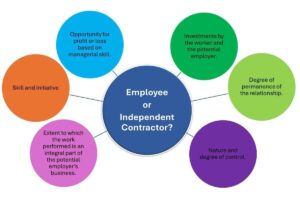
According to the decision, the workers were employees because the company had control over the work, set wages, required workers to report absences, and evaluated their performance. The DOL provides guidance on what constitutes an employee. Prior regulations use a “totality-of-the-circumstances” approach to classification, looking at the whole picture rather than a single determining factor. Other documents rely on an “economic reality” test that examines two core factors: the nature and degree of control a worker has over the work and the worker’s opportunity for profit or loss.

Summary Judgment

The DOL called for summary judgement, in which the judge would decide the case without a trial or jury due to “overwhelming” evidence. The judge partially agreed and granted summary judgement in favor of the DOL on worker classification, recordkeeping, and damages. The court declined summary judgement on the issue of overtime and intent. There is some question as to whether the workers were paid some overtime wages during the period in question and whether the misclassification was willful. These questions will be decided by a jury at trial. 

Economic Reality

The totality framework to determine worker classification came into use during the Biden administration. The DOL has recently proposed a return to the economic reality framework from 2020. Two core and three additional factors comprise the economic reality test. These two core factors are the primary determinants:

  • The nature of and degree of a worker’s control over their work
    • does the employer control scheduling, pay rates, and prices;
    • does the employer supervise performance and discipline workers
  • Opportunity for profit or loss
    • does the worker advertise services independently, negotiate contracts, decide when and where to work, have the ability to hire helpers to perform the work

These three additional factors are considered in classification analysis, but carry less weight than the two primary considerations:

  • The amount of skill required for the work
    • does the worker use their own specialized skills rather than relying on the company for training
  • –and–

    • does the worker use that skill to grow the business
  • The degree of permanence of the working relationship between company and worker
    • is the work sporadic, as needed, or project-based
  • –and–

    • is the company engaging in seasonal or temporary work or industry
  • Whether the work is part of an integrated unit of production
    • can the business operate without the work performed

Clear Answer

Using the economic reality test, can we classify home health nurses as independent contractors or employees without question?

Employee

Agency sets pay rate for the nurse
Supervised performance
Clients belong to the agency
Nurses do not hire and pay helpers
Nurses do not automatically make more when the agency grows
The business cannot operate without nurses

Independent Contractor

An agency could allow the worker to set their own schedule
Nurses use their own skills, degrees, and certifications
Work could be created as project-based where 1 client=1 project for 30 days

Final Thoughts

Without very careful planning and disruption of practice, it is pretty clear that home health workers are not independent contractors, but are employees. There may be significant differences in the operation of non-medical supportive care at home, but pay rates are still determined by the agency, performance is supervised, clients belong to the agency, and the business cannot operate without healthcare workers. The DOL sued for unpaid overtime amounting to $5.9 million on behalf of both LPNs and Home Health Aides. 
Are nurses independent contractors

If you do now or plan to in the future engage any worker as an independent contractor, review all current FLSA and DOL requirements to ensure you are not misclassifying your workers.

# # #

Kristin Rowan Editor The Rowan Report

Kristin Rowan is the owner and Editor-in-chief of The Rowan Report, the industry’s most trusted source for care at home news. She is also a sought-after speaker on Artificial Intelligence, Technology Adoption and Lone Worker Safety. She is available to speak at state and national conferences as well as software user-group meetings.

Kristin also runs Girard Marketing Group, a multi-faceted boutique marketing firm specializing in content creation, social media management, and event marketing. She works with care at home software providers to create dynamic content that increases conversions for direct e-mail, social media, and websites.  Connect with Kristin directly at kristin@girardmarketinggroup.com or www.girardmarketinggroup.com

©2026 by The Rowan Report, Peoria, AZ. All rights reserved. This article originally appeared in The Rowan Report. One copy may be printed for personal use: further reproduction by permission only. editor@therowanreport.com


 

Overtime Law Changes: An Interview with Angelo Spinola

by Kristin Rowan, Editor

Overtime Law Changes

An Interview with Angelo Spinola

Recent Department of Labor (DOL) changes to the overtime law appear to be at odds with a court ruling. Last week, The Rowan Report reported on Pennsylvania’s 3rd circuit court decision allowing the DOL to interpret meaning and create the rule that 3rd party employers cannot use the exemption to overtime rule. They must pay overtime according to the Fair Labor Standards Act (FLSA). The decision is in direct opposition to the DOLs intent to revert back to allowing the exemption and to its statement that it will no longer uphold the rule. The Rowan Report reached out to care at home attorney Angelo Spinola to get his take on the Pennsylvania court’s decision and how it impacts care at home.

Prior Statements

Angelo was a presenter at last year’s National Alliance for Care at Home (The Alliance) annual meeting, during which he discussed the DOL proposal to change the FLSA. In his remarks, Spinola emphasized that the exemption change is huge for home care. He also provided some specific examples showing how the change will benefit caregivers.

From the DOL

Overtime law changes, according to the DOL, will:

  • Reduce labor costs
  • Provide greater scheduling flexibility
  • Expand access to home care services
  • Reduce overhead for agencies

In Practice

Angelo added additional context from a real-world perspective.

First, you can still pay overtime. Payroll policies of any agency with an overtime program in place will supercede the DOL rule. However, those policies need to be written and part of your contractual agreement with the caregiver.

Secondly, some states have their own overtime laws, which also override the FLSA. Not every state will be impacted by the change.

Additionally, removing the overtime requirement brings back day rates instead of hourly pay, which can be beneficial for caregivers and patients. This reinstatement also impacts bonus payments. Currently, gift cards, bonuses, on-call premiums, and similar incentives are incorporated into rates for overtime. Without the exemption, agencies can bring back bonuses designed to encourage longevity, productivity, or other behaviors, and those incentives will not be subject to overtime rules.

The practical reality is, with overtime rules in place, many agencies will not allow caregivers to work more than 40 hours. Thus, patients end up with more unique caregivers, which leads to less continuity of care. The other consequence is that caregivers seek to make up those hours at other agencies or by taking on another part time job. Without the exemption, caregivers can work more hours, the patient gets fewer unique caregivers and benefits from improved continuity of care. Scheduling is less complicated without having to consider the part-time job.

In His Own Words

With the DOL proposal still undecided and its potential conflict with the recent Pennsylvania court decision, we sat down with Angelo to get his take on the decisions and the impact both would have on home care.

The Rowan Report:

Angelo, thank you for joining us today. I appreciate you taking the time to talk about the overtime rules. With the DOL no longer enforcing the rule as it stands and the Pennsylvania court case upholding it, we want to make sure we are relaying the right information and that our readers are following the right recommendations.

Overtime Rule Changes interview Angelo Spinola

Angelo:

It definitely seems like it’s two different views on the same issue, and I think we will see that for a while, until and unless the Department of Labor actually issues new regulations and interpretations. They have alluded that they are going to do that, maybe by simply not enforcing the rule. Still, at the end of the day, it is the current rule, there is the requirement to pay overtime.

RR:

Can you speak to the PA decision, then, as it relates to that?

RR:

Can you speak to the PA decision, then, as it relates to that?

RR:

Does this case have any impact, then, on the DOL reverting back to pre-2013 when 3rd party agencies could take the exemption?

wAngelo:

If this court is taking the position that the DOL can decide, then that should not impact the DOL’s next subsequent decision to decide again that third parties can use the exemption.

Remember, this is just a Court of Appeals decision, and the court itself says that it is not precedential. What I wonder is, what happens now if the Department of Labor in the future decides that they no longer think that agencies should use these exemptions? Does this pave the way for that kind of future action? Prior to this case, the Chevron deference probably would apply, because the authority all points to the ability for third parties to be able to use the exemption.

When you look at when the exemptions were applied to the FLSA, there was no limitation of who could use them. The limitation was about what kind of work the employee performed, who they performed it for. If it was assistance with ADLs and IADLs in a personal home, then you could rely on the exemptions.

Then came the efforts to limit those exemptions over several years, via Congress and a Supreme Court challenge. In the Koch decision, in the early 2000s, the Supreme Court said, “Third-party employers can rely on the exemption, because there is nothing in the language that suggests they cannot.”

In response, the DOL took it in their own hands and changed it, before there was a limitation from the Chevron deference. Now they want to change it back. I think that is where the weight of authority is, so I think they will be able to survive any deference challenge.

I think this case actually supports that argument: “We get to decide what we want to do. Look at what Pennsylvania said.” Nevertheless, I still believe it’s going to be a challenge for the DOL to flip it back again. They will have to go through all that history of what Congress had said, and what the Supreme Court said. Still, this decision certainly helps any future administration, should they choose to flip things back to the way they sit today. All this assumes that the DOL does, in fact, change it, which I think they will.

Overtime Law Changes divides care at home industry

A House Divided

RR:

There is a portion of the home care industry that wants the exemption to stay as it is, and another that says, no, it needs to go back to the way it was. I wonder if that is in any way going to impact whether or not the Department of Labor in this administration moves forward, or maybe pauses on changing that language.

Angelo:

I think there’s a growing understanding of what the reinstatement of the exemptions would mean. There is a narrative that it must mean that caregivers will lose their right to overtime pay, and will therefore be compensated unfairly, meaning less. Agencies are coming around to understanding that isn’t going to happen, because the market will not allow it to happen. This explains why caregiver rates have increased in recent years. They will go work somewhere else if you don’t compensate them fairly. So, the nature of the compensation is likely to change. It may look more like bonuses, or incentives, or things that you would do for exempt employees.

RR:

I want to make sure I am presenting this correctly here. When this changes, will it open up some possibilities in home care? If a family is paying for 10 or 12 hours per day, paying for overtime makes a huge difference and they would likely opt for fewer hours or a second caregiver. But, with the exemption, you have fewer caregivers on one case, better continuity of care, and possibly more care hours.

Angelo:

That is exactly right. What agencies do now is they often limit the caregiver to 40 hours, and then that caregiver has to go find a job at a second agency if they want to work 70 or 80 hours. In that scenario, caregivers bounce around multiple clients, who have to utilize multiple caregivers, especially if they require a lot of hours. A lot of those clients have memory issues and a vulnerable immune system. On top of mental confusion issues, the more exposure you have to different people, the more unique bacteria and germs come into the house, the more at risk you are.

You can see how much better it is, on several levels, for a caregiver to work many hours with one client. That is usually the client’s preference anyway. 

RR:

You said you think it’s pretty certain at this point that the Department of Labor is going to change that ruling back to the 1974 version. Do you anticipate lawsuits against that change?

Angelo:

I think we’re probably going to. It’s such a big deal, I would expect to see something. I would think that the advocacy groups and the unions are already likely prepared for that. When the change in 2013 was announced, the industry rallied, and we were prepared to file. So, it would not shock me in any way, if that same response returned.

RR:

I appreciate your time and helping all of the industry understand these sometimes very confusing changes in labor laws. I anticipate that once the Department of Labor makes their final decision, we’ll be back in touch to talk again about what it means, when it will be enforced, and what any pending lawsuits will have to say about it. We’ll keep everybody abreast of what these changes are going to mean for the industry.

Angelo:

Yeah, this will be one to track for sure. We are going be tracking this for the next 12 months at least.

RR:

I think for the industry and for the agencies that we talk to, the most important thing is following the law as it stands, regardless of what it is. What do they need to follow right now? What is the date on which they need to change what they’re doing, and whether or not a rule change gets overturned in another court case. They want to be in compliance, and we want to ensure what we report helps our readers to do just that.

Today, the overtime rule is in effect and agencies are required to pay overtime. That will continue to be true until the Department of Labor actually implements this change they’re talking about, regardless of what anybody else is saying.

Angelo:

That’s right. The only thing that really has changed right now is that the Department of Labor themselves are not enforcing the 2013 rule per the field assistance bulletin that went out, but that has no impact on private litigation.

RR:

Thank you so much. I really appreciate you taking the time to talk, and I’m sure I’ll see you next week.

Angelo:

Absolutely, I’ll see you at Home Care 100.

# # #

With two decades of legal experience, Angelo Spinola’s practice focuses on employment litigation with a special interest in the home health, home care and hospice industry. Bringing a wide breadth of knowledge across the health care spectrum, he works with an array of home-based care clients, including Fortune 500 organizations and franchisors, small businesses, and franchisees across multiple industries. Additionally, Angelo works closely with private equity firms and investment groups with respect to labor and employment issues that may arise during acquisitions and activities in these sectors.

Overtime Law Changes Angelo Spinola
Kristin Rowan Editor The Rowan Report

Kristin Rowan is the owner and Editor-in-chief of The Rowan Report, the industry’s most trusted source for care at home news. She is also a sought-after speaker on Artificial Intelligence, Technology Adoption and Lone Worker Safety. She is available to speak at state and national conferences as well as software user-group meetings.

Kristin also runs Girard Marketing Group, a multi-faceted boutique marketing firm specializing in content creation, social media management, and event marketing. She works with care at home software providers to create dynamic content that increases conversions for direct e-mail, social media, and websites.  Connect with Kristin directly at kristin@girardmarketinggroup.com or www.girardmarketinggroup.com

©2026 by The Rowan Report, Peoria, AZ. All rights reserved. This article originally appeared in The Rowan Report. One copy may be printed for personal use: further reproduction by permission only. editor@therowanreport.com

 

Overtime Ruling Upheld

by Kristin Rowan, Editor

Ruling Upheld

Agencies must pay minimum wage and overtime

A District Court of Pennsylvania ruled in favor of the Secretary of Labor against the WiCare Home Care Agency. The parties engaged in a lawsuit alleging the agency failed to pay minimum wage and overtime.

Background

The battle on overtime wages for home health aides continues to create more questions than answers. The FLSA in 1974 extended overtime coverage for all domestic service workers with two exceptions: companion services and live-in employees. In 2013, the Department of Labor published a rule that created an exception to the exceptions: third-party employers, such as home care agencies and staffing agencies, cannot use the exception. This forced most home health and personal care agencies to pay minimum wage and overtime rates. Courts upheld this rule, applying deference to the DOL interpretation of the FLSA. This is in keeping with the Chevron Doctrine, which has since been overturned.

In July of 2025, the DOL proposed a rule that would revert back to the 1974 interpretation of the exceptions. Later that month, the Wage and Hour Division (WHD) of the DOL stated it would no longer uphold the 2013 change for new and existing cases. The DOL used the overturning of the Chevron case in support of the proposed rule.

Arguing Deference

WiCare lost the first case and the court ordered them to pay more than $1 million in back wages and damages. WiCare filed an appeal and argued that the DOL does not have standing to change the parameters of FLSA. The agency argued that government agencies should not be shown deference in their interpretation of a statute (Chevron Deference). They also argued that the DOL does not have the authority to override the exceptions for companion and live-in caregivers.

Court Unpersuaded

The opinion was filed by some but not all of the court of appeal judges. The court held that it is “well established” that agencies have the authority to give meaning to statutory terms. The decision upholds the now overturned Chevron Deference and conflicts with the 2025 statement from the WHD that it would not uphold the rule.

What it all Means

The proposed rule to undo the 2013 rule and revert to the 1974 rule is still undecided. This means that the existing FLSA rule remains intact. That rule requires overtime pay from an agency or other third-party employer.

This ruling on appeal is unlikely to impact other Chevron Defense cases. The court stated that the DOL has the express right to establish meaning and would have that right with or without Chevron. This ruling may, however, influence the proposed rule that would eliminate overtime requirements. The industry is split on support for this change and advocates continue to argue on both sides. This ruling may be used in attempts to stop the proposed rule from being finalized.

Final Thoughts

Until there is a clear change to the FLSA overtime and minimum wage exemptions and exceptions, individual employers and agencies should continue to ensure caregivers are paid both minimum wage and overtime wages in accordance with the existing exemptions.

# # #

Kristin Rowan Editor The Rowan Report

Kristin Rowan is the owner and Editor-in-chief of The Rowan Report, the industry’s most trusted source for care at home news. She is also a sought-after speaker on Artificial Intelligence, Technology Adoption and Lone Worker Safety. She is available to speak at state and national conferences as well as software user-group meetings.

Kristin also runs Girard Marketing Group, a multi-faceted boutique marketing firm specializing in content creation, social media management, and event marketing. She works with care at home software providers to create dynamic content that increases conversions for direct e-mail, social media, and websites.  Connect with Kristin directly at kristin@girardmarketinggroup.com or www.girardmarketinggroup.com

©2026 by The Rowan Report, Peoria, AZ. All rights reserved. This article originally appeared in The Rowan Report. One copy may be printed for personal use: further reproduction by permission only. editor@therowanreport.com

 

Overtime Changes

by Kristin Rowan, Editor

Overtime Changes

FLSA exemption to resume

In 1938, the Fair Labor Standards Act (FLSA) established a federal minimum wage, guaranteed overtime, and kept children out of the workforce. Exemptions to FLSA include executive, administrative, professional, computer employee, and outside sales positions. Employers did not pay minimum wage for retail workers, service workers, agricultural workers, or construction workers.

Domestic workers included

An amendment to FLSA in 1974 added domestic workers to those who must receive minimum wage and overtime. The amendment did not include “companionship services” and live-in domestic service employees. A later amendment from 2013 narrowed the definition of “companionship services.” This eliminated the exemptions for workers who provided “care.” Companions could still be exempted from overtime. This stopped home care agencies from claiming exemptions and required overtime pay for home care workers.

Overtime Changes FLSA Exempt

Rolling back the rule

The Department of Labor is considering unraveling the 2013 amendment. There is a concern that they may have misinterpretated the rule. Additionally, requiring overtime for home care workers will increase the cost of care. Supporters of the rule change believe that allowing exemptions for overtime among home care workers would make live-in care more affordable. If the 2013 amendment is removed, employers would not have to guarantee minimum wage or overtime for home care aides.

Industry impact

The DOL argues that this change will make care more affordable and expand access to care at home. However, there is already a workforce shortage in the industry. Lowering pay rates and removing overtime could cause a mass exodus from the industry. As far as we know, DOL did not discuss requiring CMS to increase reimbursements rates or covering non-medical supportive care at home as an alternative.

“Removing basic labor protections from home care workers will only exacerbate the multiple issues buffeting the home care sector, its workers and consumers: serious threats from cuts to federal Medicaid contributions, changing immigration policies and the lack of realistic long-term services and supports (LTSS) options.”

Katie Smith Sloan

President and CEO, LeadingAge

Comments from the industry

The public comments period on this proposed rule change ended on September 2, 2025. The proposed rule received roughly 5,300 comments. Some examples of feedback include:

“…reversing the 2013 protections, the DOL would undermine the wages and economic security of home care workers…exacerbate turnover and workforce shortages…[and] harm older adults and people with disabilities….” – Hand in Hand: The Domestic Employers Network

“This proposed change is a crucial step toward restoring flexibility and affordability in home care services, particularly for families relying on live-in support.” – Owner, Home Helpers Home Care of Larimer County and member of HCAOA and IFA

“…strongly support workforce development and has historically and continues to support thoughtful solutions to our workforce crisis. We strongly support the restoration of the overtime exemption.” – The Virginia Association for Home Care and Hospice and the West Virginia Council for Home Care and Hospice

Home care workers are also strongly vital for companion care, personal care, home health, nursing, therapy, caring for the disabled and the elderly, and more. The proposed rule that was meant to strip home care workers of wage and overtime protections is absolutely cruel and harmful for home care workers…” – Derek Dinh, CA

“I am not a home care worker, but used a home care worker to take care of my mom when she was unable to do things around the home and then got progressively worse. They need to be paid a living wage and receive overtime. They are professional people who take care of those who need care.” – Wendy Peale, NY

Opposition

  • Among the people and organizations who have publicly expressed opposition to this change are:
  • LeadingAge
  • Autistic Self Advocacy Network
  • American Civil Liberties Union
  • Congresswoman Pramila Jayapal
  • The Commonwealth of Pennsylvania, California, Colorado, Connecticut, District of Columbia, Hawaii, Illinois, Massachusetts, Maryland, Maine, Michigan, Minnesota, Nevada, New Jersey, New York, Oregon, Rhode Island, Vermont, and Washington

Final Rule

The has not issued a final rule. However, neither has the DOL enforced the requirement since July 25, 2025. Home care agencies can currently claim overtime exemptions. There is no set timeline yet for a final decision. We will continue to follow updates on this topic.

# # #

Kristin Rowan, Editor

Kristin Rowan has been working at The Rowan Report since 2008. She is the owner and Editor-in-chief of The Rowan Report, the industry’s most trusted source for care at home news, and speaker on Artificial Intelligence and Lone Worker Safety and state and national conferences.

She also runs Girard Marketing Group, a multi-faceted boutique marketing firm specializing in content creation, social media management, and event marketing.  Connect with Kristin directly kristin@girardmarketinggroup.com or www.girardmarketinggroup.com

©2025 by The Rowan Report, Peoria, AZ. All rights reserved. This article originally appeared in The Rowan Report. One copy may be printed for personal use: further reproduction by permission only. editor@therowanreport.com