Worthy is Worthy of Consideration

by Kristin Rowan, Editor

Worthy is Worthy

Markovich Calls for Healthcare Overhaul

Worthy is an initiative aimed at nonpartisal healthcare policy reform. Introduced by Ascendiun CEO Paul Markovitch. Worthy calls upon industry players to back major reform in the healthcare system that addresses long-standing problems. According to Markovitch, a 30-year veteran in healthcare, the industry is dysfunctional and in need of a major overhaul. 

“The healthcare system is bankrupting and failing us. It requires systemic reform. Those reforms are unlikely to come from the industry itself. Therefore, we need the federal government to step up and make those reforms happen. The status quo is unacceptable. We need bold, systemic reform urgently, so that is what Worthy is.”

Paul Markovich

CEO, Ascendiun

Worthy Outline

Worthy comes from the idea that our healthcare system ought to be “worthy of our family and friends,” Markovitch said. The overhaul program is built on strategic pillars:

  • Providing every consumer and patient with a comprehensive, real-time digital health record
  • Breaking the “do more, get paid more” fee-for-service model and instead start paying for health outcomes.
  • Make prescription drugs accessible and affordable by eliminating kickbacks in the form of rebates, fees and spread pricing.
  • Put the entire healthcare system on a budget

More than Strategy

Beyond the written initiative, Worthy provides an interactive framework for patients. The website houses podcasts, issue analysis, and videos complemented by social media posts, media commentary, and in-person forums to help consumers and patients understand the changes that need to happen and how to get there. 

Additionally, it seems as though the Worthy plan is not merely speculation. The first phase of the plan focuses on prescription drug reform. The plan is already active inside Blue Shield of California. The insurer changed its pharmacy model, moving away from the pharmacy benefit management (PBM) structure. Instead, Blue Shield of California partners with Amazon Pharmacy, Mark Cuban Cost Plus Drug Company, and Prime Therapeutics, among others. That change became the foundation for the Worthy initiative.

Plan in practice

Blue Shield of California rolled out a Digital Health Record (DHR) program, also now part of the Worthy Initiative, that improves care coordination and transparency. The DHR program in California includes sharing all patient data across providers and with the patient, giving patients a complete and real-time health record. According to Markovitch, interoperability is a meaningless term that allows providers to congratulate themselves for sharing slightly more data than before. His goal is to have a national standard for comprehensive digital health records that eliminates the need for any provider or patient to request records.

Working Together

Worthy presumes that the strategic pillars work together. Total reform doesn’t happen without each piece. Markovitch advocates for the responsible use of artificial intelligence to automate what can be automated. This includes, according to Markovitch, prior authorization, billing, provider directory updates, claims settlements, and routine patient questions.

Shared decision-making

The clinical model that the plan implies is one of shared decision-making. It involves both patient and physician having complete health records together with AI and other technology to gather all available information about a health condition. From there, the patient, loved ones, and all treating physicians work together to form a care plan. Markovitch calls for stronger legislation to move toward this kind of comprehensive care plan.

Worthy shared decision-making

Worthy Vision

Patients over Profits

“Worthy will be advocating for passing a series of laws and enacting regulations that will force all the players to put patients over profits, that is, to do the right thing on behalf of each patient, every time, in order to have a health care business and to earn an income.”

– Paul Markovitch, CEO Ascendiun

Final Thoughts

We don’t know if the Worthy Initiative will gain any ground at the federal level. Likewise, we don’t know if Worthy will make substantive changes to the broken healthcare system. What we do know is that Worthy is, at a minimum, worthy of consideration as a means to overhaul a system that hasn’t truly been effective for a long time. If you agree, here are some links to get more information:

Worthy Podcast

Healthcare Overview

Pharmacy Reform

Blue California Pharmacy Care Reimagined

This is Worthy

# # #

Kristin Rowan Editor The Rowan Report

Kristin Rowan is the owner and Editor-in-chief of The Rowan Report, the industry’s most trusted source for care at home news. She is also a sought-after speaker on Artificial Intelligence, Technology Adoption and Lone Worker Safety. She is available to speak at state and national conferences as well as software user-group meetings.

Kristin also runs Girard Marketing Group, a multi-faceted boutique marketing firm specializing in content creation, social media management, and event marketing. She works with care at home software providers to create dynamic content that increases conversions for direct e-mail, social media, and websites.  Connect with Kristin directly at kristin@girardmarketinggroup.com or www.girardmarketinggroup.com

©2026 by The Rowan Report, Peoria, AZ. All rights reserved. This article originally appeared in The Rowan Report. One copy may be printed for personal use: further reproduction by permission only. editor@therowanreport.com

 

Pharmacy and PBM Separation Pushed by Congress

by Kristin Rowan, Editor

Bi-Partisan Bill Introduced

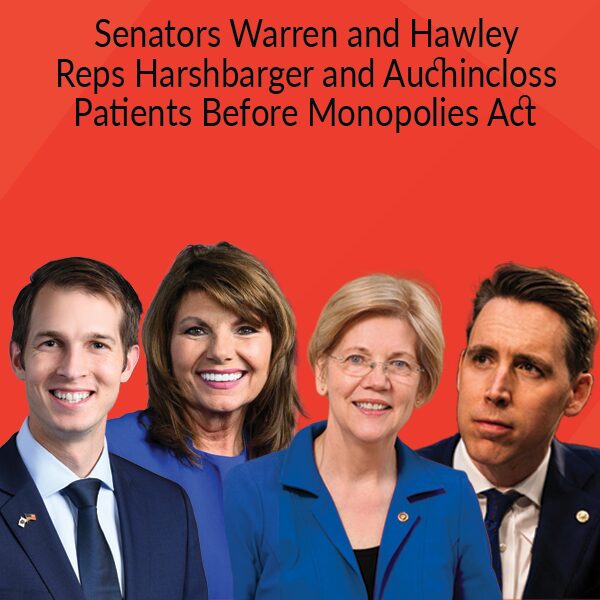
The final session of this Congress may not be as “lame” as anticipated. On December 11, 2024, Senators Elizabeth Warren (D-Mass.) and Josh Hawley (R-Mo.), with the support of Representatives Diana Harshbarger (R-Tenn.) and Jake Auchincloss (D-Mass.) introduced the Patients Before Monopolies Act.

The bill, if passed, would prohibit any company from owning both a Pharmacy Benefit Manager and a Pharmacy. Joint ownership of both creates a “gross conflict of interest” that allows companies to increase their own profits at the expense of patients and independent pharmacies.

Pharmacy Benefit Managers

Pharmacy Benefit Managers (PBMs) act as middlemen between consumers, health insurance companies, drug manufacturers, and pharmacies. They were designed to negotiate reimbursement and dispensing fees in pharmacies, negotiate drug prices from manufacturers, and manage drug costs for insurance companies. The PBM Act claims that PBMs have manipulated the market, increased drug costs, and are driving independent smaller pharmacies out of business. 

In Their Own Words

“PBMs have manipulated the market to enrich themselves — hiking up drug costs, cheating employers, and driving small pharmacies out of business. My new bipartisan bill will untangle these conflicts of interest by reining in these middlemen,” said Senator Warren.

“The PBM industry is rife with self-dealing that raises costs for patients and bankrupts independent pharmacists. No PBM should be allowed to own pharmacies, because it poses an unacceptable conflict of interest when it then sets reimbursement rates for its own versus external pharmacies. Independent pharmacies deserve fair play,” said Representative Auchincloss.

Pharmacy Benefit Managers

“As a life-long pharmacist, I know first-hand how unchecked PBM consolidation and vertical integration have allowed these shadowy middlemen to self-deal and manipulate the system in ways that are driving up drug costs, limiting patient choices, and putting the financial screws to independent community pharmacies,” said Representative Harshbarger.  “I’m a proud conservative Republican, but we have antitrust laws for a reason. That’s why I’m joining my colleagues in introducing the bipartisan Patients Before Monopolies Act, which will protect consumers and taxpayers, and ensure fair competition by breaking-up these anticompetitive, conflict-of-interest arrangements. Federal regulators should never have let this excessive concentration of our healthcare industry happen in the first place, and so it’s up to Congress to get the job done.”

Issues Addressed

The PBM Act aims to address the issues of higher drug costs, fewer independent pharmacies, and larger profits for corporations. The PBM Act would:

    • Disallow the parent company of any PBM or insurer from owning a pharmacy
    • Require any PBM or insurer that also owns a pharmacy to sell the pharmacy business within three years
    • Allow the FTC, DHHS, DOJ Anti-Trust Division, and state attorneys general to issue orders requiring the divestiture of pharmacies by owners of PBMs or insurers
    • Allow the same to sieze revenue made from the pharmacy business from any owner of a PBM or insurer
    • Distribute the funds to communities and consumers who have been overcharged by these pharmacies
    • Mandate the reporting of all divestments of pharmacies to the FTC
    • Allow the FTC to review any and all future acquisitions

PBMs have manipulated the market to enrich themselves — hiking up drug costs, cheating employers, and driving small pharmacies out of business. My new bipartisan bill will untangle these conflicts of interest by reining in these middlemen.

Elizabeth Warren

Senator, D-Mass.

Who is Impacted?

CVS Health, Cigna, and UnitedHealth Group, among others, would be required to sell their pharmacy businesses within three years.

Caremark, owned by CVS, Express Scripts, owned by Cigna, and OptumRX, owned by UnitedHealth Group, are three of the largest PBMs in the country. Together, they control about 80% of all prescription drug claims.

Not surprisingly, the Pharmaceutical Care Management Association, a lobbying group for PBMs, has contested the claims made in the bill and by its supporters. They argue that PBMs offer convenient, affordable access to medications.

Similarly, CVS said that its integrated business model, both a PBM and pharmacy, helps connect people to accessible, affordable care. The pharmaceutical giant claims it has lowered out-of-pocket drug costs more than 25% in the last ten years and that it reimburses independent pharmacies at a higher rate than its own CVS pharmacy locations.

A spokesperson for CVS Caremark said that policies designed to limit their ability to negotiate with drug manufacturers and pharmacies would increase the cost of medicine. He also said these policies would be a “handout” to the pharmaceutical industry.

Supporters

The bipartisan, bicameral Act has support from the American Economic Liberties Project (AELP), National Community Pharmacists Association (NCPA), American Pharmacy Cooperative Inc (APCI), Pharmacists United for Truth and Transparency (PUTT), Patients Rising, and AffirmedRx.

Public statements on behalf of the PBM Act harshly criticize PBMs, private health insurers, and the healthcare system as a whole.

Giant PBMs and insurers owning their own pharmacies has driven independent pharmacies out of business and reduced patient access to quality care. The Patients Before Monopolies Act addresses the root cause of this problem — consolidated market power — by eliminating the inherent conflicts of interest within the big three PBM business model. We are thrilled to see Sen. Warren and Sen. Hawley lead this bipartisan effort to lower drug costs, protect independent retail pharmacies, and improve patient access to care.

Morgan Harper

Director of Policy and Advocacy, American Economic Liberties Project

A particularly egregious result of the vertical integration of PBM-insurers with retail and mail-order pharmacies is that the PBM – which competes with independent pharmacies and others – decides what their rival pharmacy will be reimbursed and which patients will be allowed to use them. There are also countless examples of PBMs paying their pharmacies much higher reimbursement than non-affiliated pharmacies and using patient data to steer patients to their own pharmacies. We’re grateful to Sens. Warren and Hawley and Reps. Harshbarger and Auchincloss for introducing the PBM Act, which will go a long way in eliminating the conflicts of interest that currently exist in this space.

Anne Cassity

Senior VP of Government Affairs, National Community Pharmacists Association

The inherent conflicts of interest between PBMs owning their own retail, mail-order, and specialty pharmacies have resulted in higher drug costs, reduced patient choice and access to care, and unsustainable reimbursements to non-PBM affiliated pharmacies. With retail pharmacies closing at an alarming rate and patients fighting life threatening diseases being steered to PBM owned pharmacies and often overcharged thousands of dollars for medications, Senator Warren’s Patients Before Monopolies Act couldn’t come soon enough. This commonsense legislation strikes at the heart of anti-competitive PBM behavior and roots out conflicts of interest by prohibiting ownership of both a PBM and a pharmacy. American Pharmacy Cooperative, Inc, is grateful to Senator Warren for her work and leadership on this issue and looks forward to fighting for this critically important piece of legislation.

Greg Reybold

VP of Healthcare Policy and General Counsel, American Pharmacy Cooperative, Inc.

While there are a variety of conflicts of interest that can compromise the intended role of PBMs to act as counterweights to inflated drug prices, one of the chief areas of system misalignment arises from PBM ownership of pharmacies. As these large vertically integrated companies serve as both price-setter and price-taker for pharmacy transactions, PBM incentives to reduce drug markups and to manage pharmacy reimbursement and network decisions in an unconflicted manner are significantly undermined. In our work advising government programs and commercial plan sponsors, we stress that minimizing or eliminating these areas of misalignment are foundationally critical in order to achieve greater balance for medicine accessibility and affordability.

Antonio Ciaccia

President, 3 Axis Advisors

For too long vertically integrated PBMs have put profits over patients, driving up costs, limiting access to essential medications and forcing countless independent pharmacies to close their doors. The Patients Before Monopolies Act is a step toward breaking these monopolies, restoring fairness and competition and, most importantly, ensuring patients get the care they need at a price they can afford. At the heart of our mission is the belief that transparency and integrity should be the foundation of health care. I congratulate Senators Warren and Hawley, and Representatives Harshbarger and Auchincloss for putting patients first, and urge Congress to pass this bipartisan bill.

Greg Baker

Pharmacist and CEO, Affirmed Rx, a transparent PBM

This bill is the next step in urgently-needed legislation to eliminate the profiteering and other conflicts of interest that exist when private health insurers and their pharmacy benefit managers are allowed to design and sell health benefit plans while also owning pharmacies, clinics and other point-of-care entitiesm Vertical integration among the largest healthcare insurers has only served to saddle Americans with the priciest possible premiums for impossibly high-deductible plans that provide fewer options and ultimately result in poorer health outcomes. We applaud Senators Warren and Hawley for recognizing the need to dismantle the current system, which has failed consumers and taxpayers at just about every level.

Monique Whitney

Executive Director, Pharmacists United for Truth and Transparency

Across the country, patients feel increasingly disenfranchised by the healthcare system. The culprit: a complex web of powerful health conglomerates including health insurers, Pharmacy Benefit Managers (PBMs), and their affiliated pharmacies. Patients Rising applauds Senators Elizabeth Warren and Josh Hawley, along with Representatives Diana Harshbarger and Jake Auchincloss for putting forward bi-partisan legislation to put patients before monopolies. It is critical we crack down on health conglomerate conflicts of interest and encourage businesses to operate in the interest of patients’ long term health and wellbeing.

MacKay Jimeson

Executive Director, Patients Rising

The New York Times stated their uncertainty over whether this bill would gain any traction. With so much support, both across the aisle, across congress, and from outside entities, it seems likely it will move ahead. However, Congress has run out of time to pass any bill during this term and will have to be reintroduced in January.

The Rowan Report will continue to follow the progress of the PBM Act next year.

# # # 

Kristin Rowan, Editor

Kristin Rowan has been working at Healthcare at Home: The Rowan Report since 2008. She has a master’s degree in business administration and marketing and runs Girard Marketing Group, a multi-faceted boutique marketing firm specializing in event planning, sales, and marketing strategy. She has recently taken on the role of Editor of The Rowan Report and will add her voice to current Home Care topics as well as marketing tips for home care agencies. Connect with Kristin directly kristin@girardmarketinggroup.com or www.girardmarketinggroup.com

©2024 by The Rowan Report, Peoria, AZ. All rights reserved. This article originally appeared in Healthcare at Home: The Rowan Report. One copy may be printed for personal use: further reproduction by permission only. editor@therowanreport.com