Second Longest Shutdown Since 1980

by Kristin Rowan, Editor

Second Longest Shutdown Since 1980

–As of October 30, 2025–

Shutdown day 30

Subsidy Standoff

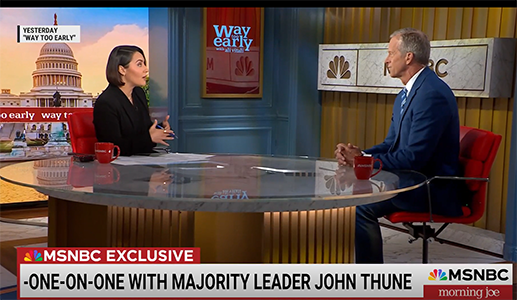
Senate Majority Leader John Thune spoke with MSNBC about the shutdown and the subsidy expiration. “Shouldn’t people who are signing up during open enrollment know what they’re signing up for?,” MSNBC asked. Thune said the first step has to be opening the government before that conversation happens, not in the context of the budget talks. According to Thune, the Republican party objects to the current operation of the subsidy program and the incentive structure needs reform.

Subsidy Standoff Not to Blame

Current estimates show insurance premiums rising by 18% – 22% in 2026. Leader Thune suggests that only a “tiny percentage” of that increase is due to the expiration of the enhanced subsidies and the rest is coming from the insurance companies. He says premiums should not being going up by this much and the extreme rate increase is because of waste, fraud, and abuse, and the lack of incentives for insurance companies to lower costs.

No Reform, No Subsidy

Throughout the interview, Leader Thune would not commit to 
Government Shutdown Senate Majority Leader John Thune

negotiating with Democrats, would not guarantee subsidies would be saved, and would not commit to voting for any extension without at least lowering income caps back to pre-COVID levels.

After the Senate session today, Thune spoke to reporters, indicating there was a “higher level of communication” happening. He went on to repeat his earlier statement to MSNBC.

“…there are a lot of rank-and-file members that continue, I think, to want to pursue solutions and to be able to address the issues they care about, including health care, which … we’re willing to do, but it obviously is contingent upon them opening up the government.”

John Thune

Senate Majority Leader

(Un)lucky Number 13

October 28th marked the 13th vote put to the Senate to reopen the government in 28 days. The Senate reconvened yesterday and plan to vote again today, October 30th. Senators have mixed opinions about the likelihood of an agreement now that deadlines for military pay, SNAP benefits, and other programs close in.

Senate Minority Leader Chuck Schumer (D) said negotiations were “occasional” and that Republicans haven’t offered anything different from the original House-passed budget.

Senator Lindsey Graham (R) said resolving the differences on health care would come after the government reopens. “I’m hoping next week, hopefully after the election, that we can get the government back open, talking about our differences on health care.”

Senator Thom Tillis (R) states there is no evidence that formal negotiations are happening, just discussions. 

When Will it End?

The Senate is expected to vote today, October 30th. The measure needs 60 affirmative votes to pass. The vote to automatically continue without discussion failed 37-61. The subsequent votes to temporarily fund the government through November 21st failed 55-45 on October 1 and 54-45 on October 28. Senator Jim Justice (R-WV) voted yes in the first vote, but did not vote yesterday.

If I Were a Gambler...

The rumors and accusations fly on both sides about who is to blame for the shutdown. There are betting sites placing odds on the date the standoff will end. I’m no political expert, but I think there’s something else going on. I believe both sides are playing risky games and that neither side knows the rules to the other’s game. I think both sides know the exact date they will each agree to end this standoff. And I’m sure there are underlying motives that have nothing to do with what they’re telling us.

We will continue to report on this ongoing story as more information becomes available.

# # #

Kristin Rowan, Editor

Kristin Rowan has been working at The Rowan Report since 2008. She is the owner and Editor-in-chief of The Rowan Report, the industry’s most trusted source for care at home news, and speaker on Artificial Intelligence and Lone Worker Safety and state and national conferences.

She also runs Girard Marketing Group, a multi-faceted boutique marketing firm specializing in content creation, social media management, and event marketing.  Connect with Kristin directly kristin@girardmarketinggroup.com or www.girardmarketinggroup.com

©2025 by The Rowan Report, Peoria, AZ. All rights reserved. This article originally appeared in The Rowan Report. One copy may be printed for personal use: further reproduction by permission only. editor@therowanreport.com

 

Government Shutdown

by Kristin Rowan, Editor

Government Shutdown Threatens Care at Home

Lawmakers on opposite sides of the aisle failed to come to a budget agreement by the deadline. This causes an immediate cease to all non-essential government functions and many government employees aren’t being paid. 

UPDATE: Shutdown, Day 16

–As of October 16, 2025–

What it Means for Care at Home

After 10 attempts, the government is no closer to an agreement than they were on September 30th. The Senate is expected to break at the end of the day, leaving the next opportunity to negotiate until at least Monday. 

Telehealth

The biggest impact on care at home during the government shut down is the ability to complete required face-to-face visits using telehealth appointments. Both home health and hospice have employed telehealth for face-to-face encounters since the COVID-era waiver, which has now been extended several times. The most recent extension, which we anticipated Congress to extend in this budget, expired on September 30th.

All face-to-face encounters occurring after October 1, 2025 must be in person.

According to home health expert Melinda A. Gaboury of Healthcare Provider Solutions says it is unlikely an extension would be retroactive even if Congress includes an extension in the finalized budget.

Payments

Conflicting information on Medicare payments leave us unsure of the actual impact. Some reports say there will be no delay while others mention 10-day holds. It is unclear whether this is in addition to the standard 14-day hold. Either way, we are anticipating (and hoping for) minimal payment disruptions.

Surveys

Initial Medicare certification for home health and hospice as well as recertifications will be delayed. If ACHA, CHAP, or another accrediting body is conducting your survey, however, there should be no delay. These accrediting bodies are continuing without interruption. State agency surbveys will be delayed until after the budget is finalized and the shutdown ends.

Look for continued updates from The Rowan Report as the shutdown and negotiations continue.

–As of October 9, 2025–

The Disagreement

Reporters and spokespoeople from both sides of the debate have suggested various reasons for the shutdown. Equally, both sides claim they are not the holdouts. What we do know for sure is that one of the primary points of contention is the continuation of subsidies for Affordable Care Act Marketplace Insurance plans. One group wants an extension written into the current budget while the other says it’s not necessary since the subsidies currently run through the end of the calendar year.

Push to Extend

The lawmakers who are pushing to get the subsidy issue resolved believe that marketplace users are not going to sign up for insurance in November and do it again in January when the subsidies are fixed. Instead, insurance commissioners warn that without the subsidies, many people will opt not to have insurance at all and others will select substandard plans based on affordability. They will be priced out of the plans they want without the subsidies in place.

Priced Out

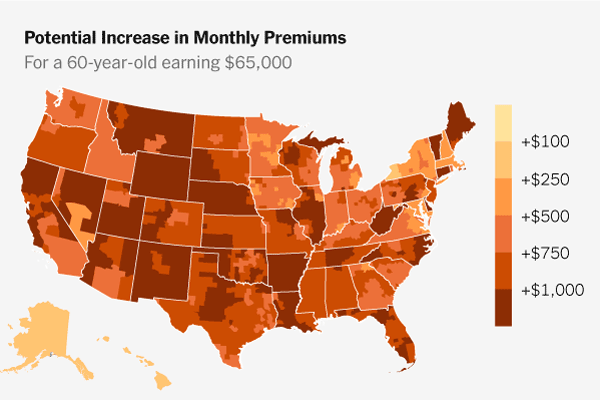
In 2025, even with the subsidies, the average family was paying $800 per month on health insurance through the marketplace. When the subsidies expire, those same families will see their existing plan rates jump to $3,000 per month. KFF, the nonpartisan health research organization, estimates that most users will have a 114% rate increase. 

Government Shutdown

Photo Credit – The New York Times

Counter

According to ND insurance commissioner Jon Godfread, lawmakers who oppose the subsidies are actually opposing the cost of health care and insurance across the board. They insist the subsidies aren’t necessary if healthcare and insurance costs drop instead. Proponents of the subsidies agree, but say that is a longer discussion that will take a lot of time to resolve and the subsidies provide an immediate solution to a bigger problem. They are urging the holdouts to include the subsidies in the budget and tackle the rising cost of healthcare later.

Open Enrollment

The clock is ticking. Open enrollment for 2026 begins November first in every state except Idaho, where open enrollment starts next week. Insurers have already locked in their 2026 premium rates, which will likely cause sticker shock for most marketplace users. Most insurers have prepared subsidy and non-subsidy rates, but without the extension, we will only see the much higher non-subsidy rates. These rates are unlikely to change before enrollment starts and the only hope for marketplace buyers is for Congress to extend the subsidies.

Home Health & Hospice

Care at Home Impact

There are several ways in which the shutdown and the loss of the subsidy may impact care at home.

Payment delays are the most pressing risk. Government officials have promised no delay for some essential services like SNAP and WIC. It is likely Medicare and Medicaid payments will be delayed. While those payments will come through eventually, care at home agencies have to operate without payment or hope the

payers will process payments locally while waiting on the government to reopen. The longer the shutdown lasts, the more likely it is that payments will be delayed. The 6th Senate budget vote failed today, sending the shutdown to day 8.

The longer term impact for care at home will come if the subsidies are not renewed. If insurance rates increase by more than 100% on November 1, users will opt for lower priced coverage, which may no longer include care at home benefits. Fewer patients seeking care at home means less money for agencies. Long-term, it also means higher hospital and ER usage and costs, which increases government spending and usually leads to additional care at home cuts to offset the costs.

National Alliance for Care at Home has identifed current and potential implications of the shutdown. Read their analysis here.

This is an ongoing story and we will continue to provide additional information as it happens. 

# # #

Kristin Rowan, Editor

Kristin Rowan has been working at The Rowan Report since 2008. She is the owner and Editor-in-chief of The Rowan Report, the industry’s most trusted source for care at home news, and speaker on Artificial Intelligence and Lone Worker Safety and state and national conferences.

She also runs Girard Marketing Group, a multi-faceted boutique marketing firm specializing in content creation, social media management, and event marketing.  Connect with Kristin directly kristin@girardmarketinggroup.com or www.girardmarketinggroup.com

©2025 by The Rowan Report, Peoria, AZ. All rights reserved. This article originally appeared in The Rowan Report. One copy may be printed for personal use: further reproduction by permission only. editor@therowanreport.com