Medicaid Enrollees Sent to ICE

by Kristin Rowan, Editor

UPDATE

The Rowan Report originally published this article on August 7, 2025. This update is as of August 15, 2025.

After HHS began providing access to personal data on Mediciad enrollees to the Department of Homeland Security (DHS), 20 states filed to sue the department for violating privacy laws. Shortly thereafter, CMS entered into a new agreement to give DHS daily access to view the same data.

Federal Judge Vince Chhabria of California ordered HHS to stop giving DHS access to personal information. The ruling grants a preliminary injunction, stopping HHS from sharing Medicaid data with ICE in the 20 states that participated in the lawsuit. The injunction will last until 14 days after the two agencies complete and submit a reason for the decision to share information. The reasoning must comply with the Administrative Procedure Act. The injunction can also end if litigation is concluded (a formal hearing and decision).

Chhabria noted that there is no formal law preventing government agencies from sharing information, he cited agency policy as his reasoning for the injunction. ICE has a well-publicized policy against using Medicaid data for immigration enforcement. Judge Chhabria wrote in his ruling:

“Given these policies, and given that the various players in the Medicaid system have relied on them, it was incumbent upon the agencies to carry out a reasoned decisionmaking process before changing them. The record in this case strongly suggests that no such process occurred.”

August 7, 2025

Associated Press Confirms

Enrollee Information Given to ICE

In a surprise announcement on July 17, 2025, investigative reporter Kimberly Kindy and reporter Amanda Seitz filed a report. They uncovered information confirming Medicaid enrollee information given to ICE from CMS. ICE will use this to find “aliens” across the country. The health and personal information disclosed includes home addresses, birth dates, Social Security numbers, and ethnicities.

Department of Homeland Security Responds

DHS Assistant Secretary Tricia McLauglin said, “…CMS and DHS are exploring an intitiative to ensure that illegal aliens are not receiving Medicaid benefits….”

DHS Spokesperson Andrew Nixon said, “With respect to the recent data sharing between CMS and DHS, HHS acted entirely within its legal authority—and in full compliance with all applicable laws….”

Opposing Viewpoints

Senator Adam Schiff (D-CA) said, “The massive transfer of the personal data of millions of Medicaid recipients should alarm every American. This massive violation of our privacy laws must be halted immediately. It will harm families across the nation and only cause more citizens to forego lifesaving access to health care.”

Similarly, CA Governor Gavin Newsom said, “This potential data transfer brought to our attention by the AP is extremely concerning, and if true, potentially unlawful….”

HHS and DHS Sued

State Attorneys General from 20 states, led by California Attorney General Rob Bonta have filed suit. They are suing the Department of Health and Human Services (HHS), the Department of Homeland Security (DHS), HHS Secretary Robert F. Kennedy Jr., and DHS Secretary Kristi Noem.

The Associated Press found a Medicaid internal memo and emails. Subsequently, the AP reported that Medicaid officials tried to stop the data transfer due to legal and ethical concerns. The objection was unsuccessful. CMS had 54 minutes to comply with an order coming from two advisors within Secretary Kennedy Jr’s camp.

Disclosure Focuses on Violation of Laws

Current laws provide that states can create their own health plans, eligibility standards, and coverage, as long as the plan follows federal criteria. Medicaid laws also provide for emergency coverage for non-citizens. Seven states and D.C. started programs that offer full Medicaid coverage to non-citizens.

Four of the seven states, New York, Oregon, Minnesota, and Colorado, never submitted identifiable information about Medicaid recipients to CMS. The data shared with ICE came from the remaining three states; California, Illinois, & Washington State; and Washington D.C.
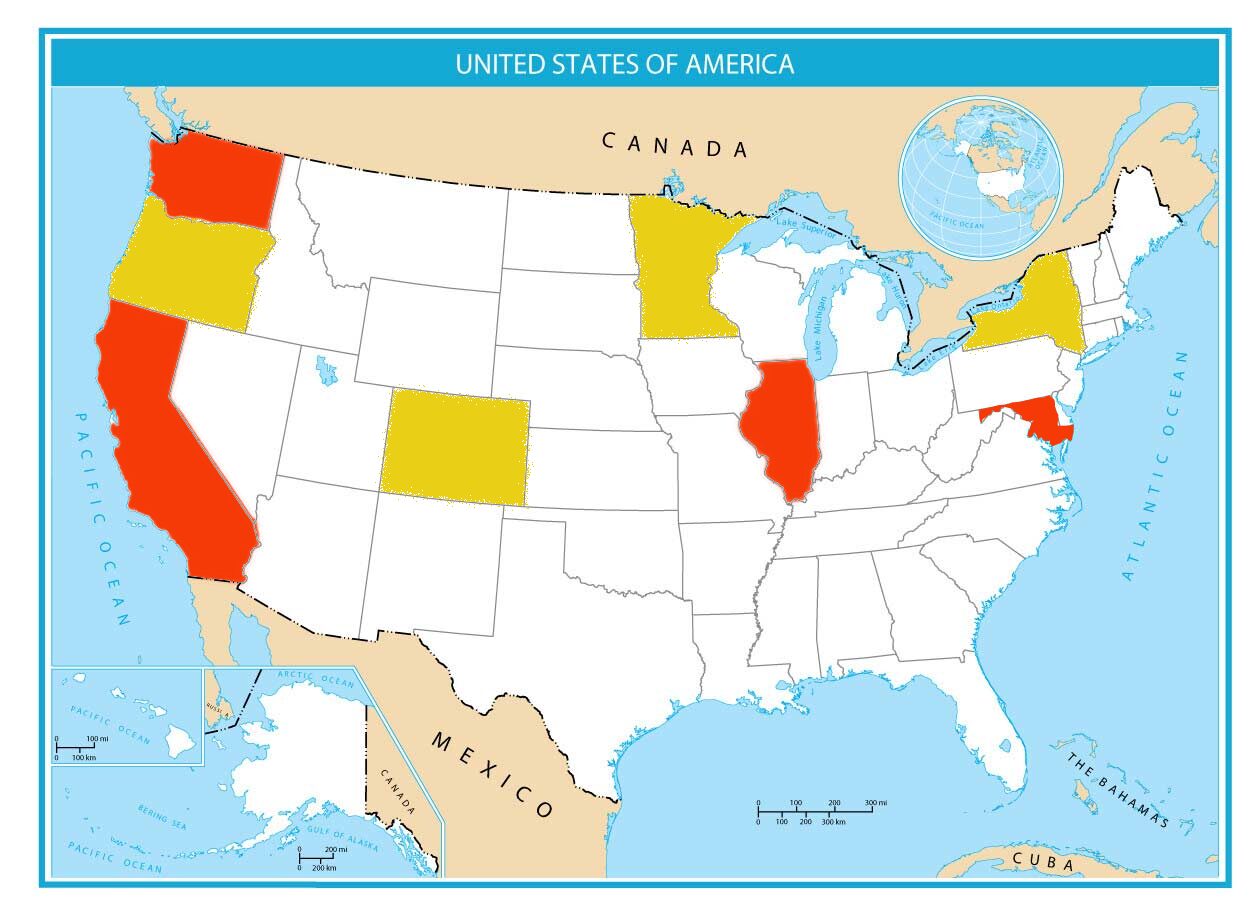
Map of U.S. States Compromised by CMS and DHS

The Allegation

The lawsuit was filed in the U.S. District Court for the Northern District of California. It alleges that the federal government is allowing the personal data of Medicaid recipients to be used for purposes unrelated to the Medicaid program.

Further, the coalition of states alleges that the disclosures violate several federal data privacy laws. These  include Health Insurance Portability and Accountability Act (HIPAA), Federal Information Security Modernization Act (FISMA), and the Privacy Act. 

Additionally, the Attorneys General state that the disclosures are contrary to the Social Security Act and a violation of the Spending Clause.

The lawsuit calls upon the court to bar CMS from sending additional PII to DHS and to bar DHS from using any of the information it has already received.

“In the seven decades since Congress enacted the Medicaid Act to provide medical assistance to vulnerable populations, federal law, policy, and practice has been clear: the personal healthcare data collected about beneficiaries of the program is confidential, to be shared only in certain narrow circumstances that benefit public health and the integrity of the Medicaid program itself.”

Attorneys General

Coalition of States

Final Thoughts

This lawsuit is the latest of many against the current administration. The Rowan Report will continue to update this and other stories impacting care at home as the lawsuits continue.

# # #

Kristin Rowan, Editor

Kristin Rowan has been working at The Rowan Report since 2008. She is the owner and Editor-in-chief of The Rowan Report, the industry’s most trusted source for care at home news, and speaker on Artificial Intelligence and Lone Worker Safety and state and national conferences.

She also runs Girard Marketing Group, a multi-faceted boutique marketing firm specializing in content creation, social media management, and event marketing.  Connect with Kristin directly kristin@girardmarketinggroup.com or www.girardmarketinggroup.com

©2025 by The Rowan Report, Peoria, AZ. All rights reserved. This article originally appeared in The Rowan Report. One copy may be printed for personal use: further reproduction by permission only. editor@therowanreport.com


 

Mass Layoffs in HHS “Overhaul”

by Kristin Rowan, Editor

Mass Layoffs at HHS

HHS Secretary Robert F. Kennedy Jr. announced more than 10,000 position cuts within the department this week. The layoffs impact employees at the FDA, the CDC, the National Institute for Occupational Safety and Health, and CMS, among others.  

The 10,000 layoffs come after 10,000 additional employees left the department this year through retirement and deferred resignation programs. The HHS overall staff is currently at around 75% of its previous numbers.

Kennedy Promises no Cuts to Essential Services

Despite the 25% reduction in workforce, Secretary Kennedy insists that no essential services will be cut. Native American tribes across the Southwest disagree with that statement and met with Kennedy to discuss the support they need. Kennedy left those meetings saying, “We are all going back with a long laundry list of tasks that we need to perform. And I’m going to give you my commitment today that I am available and listening to you.” Kennedy promised to look into cuts that disrupted scientific research and reinstate them.

Mass Layoff Impact to Care at Home

Of the 10,000 layoffs, approximately 300 of them came from within CMS. The agency lost roughly 4% of its total workforce. The administration pointed to “minor duplication” across the agency that the layoffs will eliminate.

The Administration for Children and Families (ACF), Assistant Secretary for Planning and Evaluation (ASPE), and CMS will share critical programs within the Administration for Community Living (ACL) that support older adults and people with disabilities.

Long-Term Goals

Multiple departments within HHS are consolidating, removing overlapping positions, research, and efforts. The stated goal of the department is to implement Make America Healthy Again, aimed at ending the chronic disease epidemic.

Make America Healthy Again

From the office of the President, Make America Healthy Again focuses on combatting rising rates of mental health disorders, obesity, diabetes, and other chronic diseases. According to the Presidential Action, agencies should prioritize gold-standard research, work with farmers to ensure food is the healthiest and most affordable possible, and ensure the availability of treatment options and the flixibility for health insurance coverage to provide benefits that support healthy lifestyles and disease prevention.

Make America Healthy Again

Final Thoughts

The current upheaval and overhaul within HHS does not seem to be impacting CMS or Medicare and Medicaid services at this time. The 4% reduction is staff is negligible and there have been no cuts to services or programs within CMS. Word from HHS is that no additional cuts are planned and their next focus will be on streamlining efficiency. The new Assistant Secretary for Enforcement position to combat waste, fraud, and abuse will oversee the Office of Medicare Hearings and Appeal. We will continue to follow this story as it develops.

# # #

Kristin Rowan, Editor

Kristin Rowan has been working at The Rowan Report since 2008. She is the owner and Editor-in-chief of The Rowan Report, the industry’s most trusted source for care at home news .She also has a master’s degree in business administration and marketing and runs Girard Marketing Group, a multi-faceted boutique marketing firm specializing in content creation, social media management, and event marketing.  Connect with Kristin directly kristin@girardmarketinggroup.com or www.girardmarketinggroup.com

©2025 by The Rowan Report, Peoria, AZ. All rights reserved. This article originally appeared in The Rowan Report. One copy may be printed for personal use: further reproduction by permission only. editor@therowanreport.com
 

CDPAP Overhaul Under Scrutiny

by Kristin Rowan, Editor

CDPAP Overhaul in NY Medicaid Program

New York State Department of Health issued a comprehensive plan to overhaul the state’s Medicaid program. The state’s program, Consumer Directed Personal Assistance Program (CDPAP), allows patients to hire the caregiver of their choice. Eligible participants like the program for its autonomy. The redesign of the program’s execution reduces payment processors from more than 600 to just one company: Public Partnerships, LLC of Georgia.

The Need for the CDPAP Overhaul

New York Governor Kathy Hochul points to waste, fraud, and abuse in the Medicaid program as the drivers of the change. According to the Department of Health and Human Services (HHS), the cost for CDPAP rose from $2.5B in 2019 to $12B in 2025. Despite drawing national criticism, Hochul maintains that the program needs stronger oversite to ensure adequate care. Additionally, the state’s Medicaid program has recently suffered more than $143 million in clawbacks from kickbacks and improperly claimed reimbursements.

Brakes Applied

Last week, a judge issued a temporary restraining order (TRO) blocking the consolidation of the payer system down to a single entity. The TRO was issued following a lawsuit filed on behalf of individuals and independent living centers. The parties claim that the transition to Public Partnerships LLC has been delayed by technical challenges. The delays threaten to remove beneficiary access to home health services. The litigants also cited failure on the part of the state to serve notice and to allow for a fair hearing to challenge the change.

CDPAP Overhaul

A judge has extended that TRO through April 14th, blocking additional changes. Beneficiaries who have already switched to the new payer are not impacted by the TRO. HHS Secretary Robert F. Kennedy Jr. stated there will be a 90-day review period to assess whether the change complies with federal law.

Hit From Both Sides

For or against the transition to a single payer, lawmakers on both sides of the aisle are in agreement on one thing: Public Partnership LLC should not be that single payer. The company has a history of financial mismanagement, no experience working in New York, and may have engaged in bid rigging.

Dubious Reassurances

The NY Department of Health issued a public service announcement saying access to home health care will remain intact and that members will be able to keep their current caregiver. Following the review period from HHS and the pending lawsuits, residents of New York may experience familiar disappointments.

This is an ongoing story and we will provide updates as the story develops.

# # #

Kristin Rowan, Editor

Kristin Rowan has been working at The Rowan Report since 2008. She is the owner and Editor-in-chief of The Rowan Report, the industry’s most trusted source for care at home news. She also has a master’s degree in business administration and marketing and runs Girard Marketing Group, a multi-faceted boutique marketing firm specializing in content creation, social media management, and event marketing. Connect with Kristin directly kristin@girardmarketinggroup.com or www.girardmarketinggroup.com

©2025 by The Rowan Report, Peoria, AZ. All rights reserved. This article originally appeared in The Rowan Report. One copy may be printed for personal use: further reproduction by permission only. editor@therowanreport.com

 

BREAKING NEWS: Kennedy Rescinds Public Participation in Rule Making

by Kristin Rowan, Editor

Public Participation Rescinded

The Administrative Procedure Act (APA) requires that an agency publish a notice of proposed rulemaking in the Federal Register; allow sufficient time for public participation via written data, views, or arguments; and then publish a final rule. Matters relating to agency management, personnel, or public property; loans, grants, benefits, or contracts; and for “good cause” are exempt from the reporting requirements. The Richardson Waiver, adopted in 1971, waived the exemption and instructed agencies to use the good cause exemption sparingly. Effective immediately, the Richardson Waiver is rescinded.

“The policy waiving the statutory exemption…imposes on the Department obligations beyond the maximum procedural requirements specified by the APA, adds costs [that] are contrary to the efficient operation of the Department, and impedes the Department’s flexibility to adapt quickly to legal and policy mandates.”

Robert F. Kennedy, Jr.

Secretary, Department of Health and Human Services

What it Means

Public participation is now optional. Agencies and offices of the Department of HHS can, if desired, use the public notice and comment procedures for these matters, but are no longer required to do so. The Department will continue to follow these procedures in all circumstances in which they are required to do so.

Law firm Hogan Lovells, experts in healthcare law, wrote about the potential implications for the health care industry in a recent blog post. According to the firm, it is unclear how HHS will interpret the “benefits” portion of the exemption. HHS, and specifically CMS, currently uses the notice and comment procedure for various benefits programs, including Medicare and Medicaid. Secretary Kennedy’s statement clearly calls out the limitation in impacting any other law requiring notice and comment periods.

Public Participation in Medicare Rules

Hogan Lovells indicates that few if any policies written under the Medcare Act will be impacted by this change. The Medicare Act operates under additional rulemaking requirements under section 1871(a) of the SSA. Additionally, Azar v. Allina Health Services, 587 U.S. 566 (2019) confirms that Medicare rulemaking is independent from the APA. Some policies are currently exempt from the notice and comment obligations under the Medicare Act and will remain exempt.

Public Participation in Medicaid and CHIP rules

Medicare and CHIP fall under Title XIX of the SSA, which does not contain its own notice and comment requirements separate from the APA. HHS has used the APA notice and comment rules for many of the changes made to the Medicaid program. HHS could interpret the “benefits” clause as exempting Medicaid changes from the rule. Hogan Lovells states it is currently unclear whether HHS will take this route. They also purport the courts have not ruled on whether APA excludes Medicaid from the notice and comment requirements, and may not agree with that exclusion. Until the term “benefits” is better defined, Medicaid, CHIP, the insurance exchange marketplace, and TANF, among others, may be impacted.

Department of Veterans Affairs

A notable exception to these changes is the rulemaking in the Department of Veterans Affairs as it relates to the Veterans Health Care act of 1992. This program implemented Federal contractor requirements that established pricing and contracting standards for drug manufacturers. The VA policies and rules have historically been enacted using guidance letters, avoiding the rulemaking process altogether.

Final Thoughts

There is too much that is yet unknown regarding this change to understand its full impact. There will be immediate changes, court rulings, further changes, and likely a lot of advocacy from national organizations fighting for transparency for Medicare, Medicaid, and other “benefit” programs. This will be an ongoing story and The Rowan Report will bring updates as they happen.

# # # 

Kristin Rowan, Editor

Kristin Rowan has been working at The Rowan Report since 2008. She is the owner and Editor-in-chief of The Rowan Report, the industry’s most trusted source for care at home news .She also has a master’s degree in business administration and marketing and runs Girard Marketing Group, a multi-faceted boutique marketing firm specializing in content creation, social media management, and event marketing.  Connect with Kristin directly kristin@girardmarketinggroup.com or www.girardmarketinggroup.com

©2025 by The Rowan Report, Peoria, AZ. All rights reserved. This article originally appeared in The Rowan Report. One copy may be printed for personal use: further reproduction by permission only. editor@therowanreport.com