UnitedHealth Causes Heightened Alarm

by Kristin Rowan, Editor

UnitedHealth Causes Heightened Alarm

Guardian Investigation Launches Probe

In July of 2025, The Guardian reported that UnitedHealth had secretly paid nursing homes to reduce hospital transfers. The investigation revealed that UnitedHealth was placing its own medical teams inside nursing homes and pushing them to cut care expenses, delay transfers, and deny care.

Senators Push for Answers

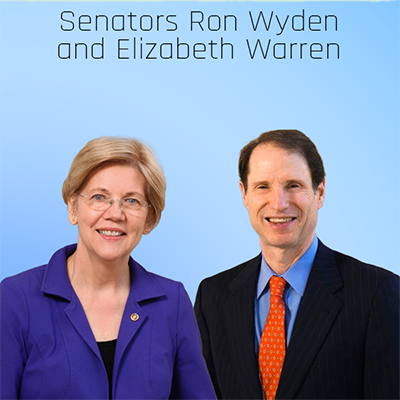
In the weeks following The Guardian report, Senators Ron Wyden (D-OR) and Elizabeth Warren (D-MA) launched their own investigation of the insurance giant’s cost cutting measures in nursing homes. Wyden and Warren sent a letter to then UnitedHealth Group leaders requesting documents and information about the nursing home incentive program.

New Allegations

A new letter from Senators Wyden and Warren states that UHG has refused to comply with the initial request. In the months since the demand for information, UHG has provided only “brief and unsubstantial answers” to their questions.

“Because you have failed to respond adequately to our inquiry – and in light of additional recent reporting – we are renewing our inquiry with heightened alarm.”

Ron Wyden and Elizabeth Warren

United States Senators

Additional Reports

The Senators’s letter alludes to recent additional reports. They were referring to a December story, also from The Guardian, reporting allegations of wrongful deaths inside the nursing home care program. In a statement, UnitedHealth denied any allegations their practices “endanger patient safety or violate ethical standards.”

No Response is a Response

When asked about the second letter, UnitedHealth Group did not respond to reporters at The Guardian. UHG leadership said in statement that they would “continue to engage” with the senators. The company’s leadership also maintains that its nursing home program “improves outcomes” and “reduces unnecessary hospitalizations.”

Unanswered Questions

UnitedHealth attended a briefing with the senators’ offices last July. During that meeting, UnitedHealth made several claims the Senators are now questioning.

  • UHG maintained their nurses are not required to contact company representatives prior to taking a nursing home patient to the hospital, but a document provided by a whistleblower alleges the opposite 
  • UHG failed to adequately explain why hospital admission rates are part of the metrics for determining bonuses
  • UHG chose not to respond to questions about pending wrongful death lawsuits for Mary GrantCindy Deal, and an unnamed nursing home resident in New York

Deadline to Comply

Senators Wyden and Warren allege that UnitedHealth Group has withheld internal documents that directly relate to their initial request for information. The senators gave a deadline of January 28, 2026 to respond with the following information:

  • Hospitalization policies, including clinical protocols for determining when transfers are warranted, definitions of avoidable versus unavoidable hospitalizations, and whether staff must consult Optum supervisors before hospital transfers.
  • Bonus program metrics and thresholds, including how UnitedHealth determines APK limits, whether facilities are penalized for exceeding thresholds, and five years of documentation on bonus payments to nursing homes.
  • Advance directive policies, including training materials for end-of-life conversations, the mortality risk assessment tool used, and who participates in those discussions with residents.
  • Marketing and enrollment practices for I-SNP plans at contracted nursing homes.
  • Federal oversight and compliance, including any CMS sanctions or enforcement actions in the past five years.
Wyden Warren UnitedHealth Group Heightened Alarm

Failure to Respond

Without adding details, the letter states that should UnitedHealth Group fail to respond it full, they will seek answers to their questions using “all tools at the Committee’s disposal.”

This is an ongoing inquiry/investigation and story. The Rowan Report will continue to provide updates as they become available.

# # #

Kristin Rowan Editor The Rowan Report

Kristin Rowan is the owner and Editor-in-chief of The Rowan Report, the industry’s most trusted source for care at home news. She is also a sought-after speaker on Artificial Intelligence, Technology Adoption and Lone Worker Safety. She is available to speak at state and national conferences as well as software user-group meetings.

Kristin also runs Girard Marketing Group, a multi-faceted boutique marketing firm specializing in content creation, social media management, and event marketing. She works with care at home software providers to create dynamic content that increases conversions for direct e-mail, social media, and websites.  Connect with Kristin directly at kristin@girardmarketinggroup.com or www.girardmarketinggroup.com

©2026 by The Rowan Report, Peoria, AZ. All rights reserved. This article originally appeared in The Rowan Report. One copy may be printed for personal use: further reproduction by permission only. editor@therowanreport.com

 

BREAKING NEWS: Warren, Cassidy React to Supreme Court Ruling

by Kristin Rowan, Editor

The Background

Senators Warren and Cassidy react to the landmark decision by the Supreme Court in Loper Bright Enterprises v. Raimondo. That decision effectively overturned the Chevron Doctrine, which gave deference to federal agency decisions in interpreting ambiguous statutes. Eliminating the Chevron Deference puts more responsibility on federal agencies to show reason behind their interpretations. Likewise, it requires Congress to be less ambiguous in its wording of statutes. This decision would impact CMS’s ability to create their own definitions of terms when calculating reimbursement rates, implementing rules.

Senator Elizabeth Warren Reacts

Warren Chevron Bill

Senator Elizabeth Warren (D-MA)

Less than one month after the U.S. Supreme Court decided the case that overturned Chevron Deference, Senator Elizabeth Warren (D-MA) introduced a bill in the Senate that would override the Supreme Court’s decision and establish Chevron Deference as law.

“Giant corporations are using far-right, unelected judges to hijack our government and undermine the will of Congress,” Warren said. According to Warren, the pending legislation, “The Stop Corporate Capture Act”, will stop corporate interest groups from using their own interpretations of statutes over the judgment of Congress or expert agencies.

Senator Cory Booker (D-NJ) called the Supreme Court decision “an egregious power grab from the US Supreme Court.”

Warren asserts that the overturning of Chevron Deference would put more power in the hands of industry-backed lobbyists who already have more negotiating power than the general public. This assertion is contrary to the majority opinion from Chief Justice John Roberts, who wrote, “Courts must exercise their independent judgment in deciding whether an agency has acted within its statutory authority.”

Increasing Congressional Authority

In addition to making Chevron Deference law, the Stop Corporate Capture Act would also:

Modernize and Reform the Regulatory Process

    • Streamline the White House’s review period for regulations, creating a 120-day time limit for review.
    • Authorize agencies to reinstate rules that are rescinded by Congress through the Congressional Review Act.
    • Reform agencies’ cost-benefit analysis to emphasize public benefits of a rule, including non-quantifiable benefits like promoting human dignity, securing child safety, and preventing discrimination.

Empower and Expand Public Participation in Rulemaking

    • Create an Office of the Public Advocate to help members of the public participate more effectively in regulatory proceedings.
    • Strengthen agency procedures for notifying the public about pending rulemakings.
    • Provide the public with greater authority to hold agencies accountable for unreasonable delays in completing rules. 
    • Require agencies to respond to citizen petitions for rulemaking that contain 100,000 or more signatures.

Increase Transparency and Protect Independent Expertise in Rulemaking

    • Require all rulemaking participants to disclose industry-funded research or other related conflicts of interest.
    • Require any submitted scientific or other technical research that raises a specified corporate conflict of interest be made available for independent public review. 
    • Bring transparency to the White House regulatory review process by requiring disclosure of changes to draft rules during that process and the source of those changes.
    • Require agency officials to provide justification when the regulatory review process ends with a rule being withdrawn.  
    • Establish financial penalties for corporate special interests that knowingly submit false information during the rulemaking process. 

Senator Bill Cassidy Responds

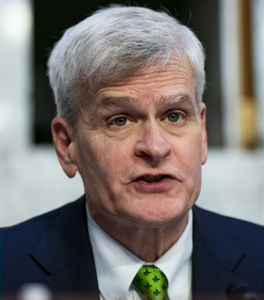
At the same time that Warren introduced her bill overriding Loper v. Raimondo, Senator Bill Cassidy (R-LA) introduced the “Upholding Standards of Accountability (USA) Act of 2024.” Cassidy’s bill takes the removal of the Chevron Deference further than simply overturning the previous ruling. According to the description, the USA Act imposes additional accountability in agency rulemaking. 

Senator Cassidy is the ranking member of the Senate Health, Education, Labor, and Pensions (HELP) Committee. He stated, “For decades, the executive branch has exploited Chevron deference to increase its power beyond what Congress intended, all while skirting congressional oversight. Now, with Chevron deference overturned, Congress must work to rein in the executive branch and hold it accountable to the people and their elected representatives.”

Cassidy Chevron Bill

Senator Bill Cassidy (R-LA)

Decreasing Agency Authority

The direct impact of the Supreme Court decision is that federal agencies do not get preferential treatment when interpreting a statute. Cassidy’s bill requires the head of any federal agency signing a major rule to testify before the committee of jurisdiction within 30 days of the rule’s publication.

Additionally, the bill would:

    • Require each person nominated to a Senate-confirmed position to testify before the committee of jurisdiction prior to Senate confirmation; 
    • Improve cost-benefit analyses by requiring federal agencies to conduct retrospective reviews of such analyses for major rulemakings within five years of each rule’s effective date; 
    • Clarify that federal agencies are permitted to communicate with Congress at all times regarding proposed rules; and  
    • Require timely, substantive responses to congressional oversight from federal agencies. 

Cassidy Challenges Existing Rules

Immediately after the Loper v Raimondo decision, Sen. Cassidy sent a letter to the U.S. Secretary of Education Miguel Cardona asserting that the Education Department has established rules outside of the authority given to it by Congress. He specifically alluded to the new Title IX rule. Cassidy asked Cardona, “How will the department change its current practice to enforce the laws as Congress writes them, and not to improperly legislate via agency action?”

Given Cassidy’s position in the Senate HELP Committee and his previous statements on medical debt, the multitude of bills he introduced on transparency, accountability, and decreasing authority, this is likely not Cassidy’s last attempt to challenge agency rules.

Likely Outcomes

Senator Warren's Bill

There are ten co-sponsors of Warren’s bill and a long list of endorsing organizations. Despite that, experts say the bill has only a slim chance of passing in an election year in the Senate, where Democrats currently have a narrow majority control. The bill is even less likely to pass in the Republican controlled House of Representatives. 

Senator Cassidy's Bill

Similar to Warren’s bill, Cassidy’s bill has a low likelihood of passing. The Democrat majority in the Senate may dismiss the bill before it ever reaches the house. In 2023, the 118th Congress passed only 34 bills, the lowest number in decades. With only a few months remaining for the Congress, and the focus turning to a new Democratic nominee, passing this, or any other, bill seems improbable.

Final Thoughts

Regardless of your political affiliation, the overturning of the Chevron Deference is good news for home health, hospice, and palliative care. This ruling puts more pressure on CMS to justify its reasoning for certain decisions it has made. Senator Warren’s bill threatens the advantage given to the home health industry related to NAHC’s senate and house bills and pending lawsuits. Senator Cassidy’s bill ensures federal agency oversight and requires CMS to rationalize their decisions and prove budget-neutrality.

We will continue following these and other Chevron Deference related stories.

# # #

Kristin Rowan, Editor

Kristin Rowan has been working at Healthcare at Home: The Rowan Report since 2008. She has a master’s degree in business administration and marketing and runs Girard Marketing Group, a multi-faceted boutique marketing firm specializing in event planning, sales, and marketing strategy. She has recently taken on the role of Editor of The Rowan Report and will add her voice to current Home Care topics as well as marketing tips for home care agencies. Connect with Kristin directly kristin@girardmarketinggroup.com or www.girardmarketinggroup.com

©2024 by The Rowan Report, Peoria, AZ. All rights reserved. This article originally appeared in Healthcare at Home: The Rowan Report. One copy may be printed for personal use: further reproduction by permission only. editor@therowanreport.com