DOJ Settles with UnitedHealth and Amedisys

by Kristin Rowan, Editor

DOJ Settles with UnitedHealth and Amedisys

Judge to Weigh In

DOJ settles with UnitedHealth and Amedisys after almost nine months of negotiations. The Department of Justice (DOJ) initially blocked the proposed merger between UnitedHealth and Amedisys, citing concerns over eliminating competition in home health and hospice services in some areas of the U.S. After the most recent settlement hearing, the merger seems to be back on track.

Public Comment Period and Judicial Review

Now that the DOJ hurdle has been passed, there is a public comment period. Following the public comment period, the U.S. District Court for the District of Maryland will enter final judgement. From the Justice Department website:

As required by the Tunney Act, the proposed settlement, along with a competitive impact statement, will be published in the Federal Register. Any interested person should submit written comments concerning the proposed settlement within 60 days following the publication to Jill Maguire, Acting Chief, Healthcare and Consumer Products Section, Antitrust Division, U.S. Department of Justice, 450 Fifth Street NW, Suite 4100, Washington, DC 20530. 

Antitrust Division Statement

“In no sector of our economy is competition more important to Americans’ well-being than healthcare. This settlement protects quality and price competition for hundreds of thousands of vulnerable patients and wage competition for thousands of nurses. I commend the Antitrust Division’s Staff for doggedly investigating and prosecuting this case on behalf of seniors, hospice patients, nurses, and their families.”

Abigail Slater

Assistant Attorney General, Justice Department Antitrust Division

Divestiture Agreement

According to the new agreement, UnitedHealth will sell 164 home health and hospice locations across 19 states. In addition to the sale, the agreement provides the buyers of these locations with assets, personnel, and relationships to help them compete with remaining UnitedHealth locations. Also included are protections to deter UnitedHealth from interfering with the new owners’ ability to compete.

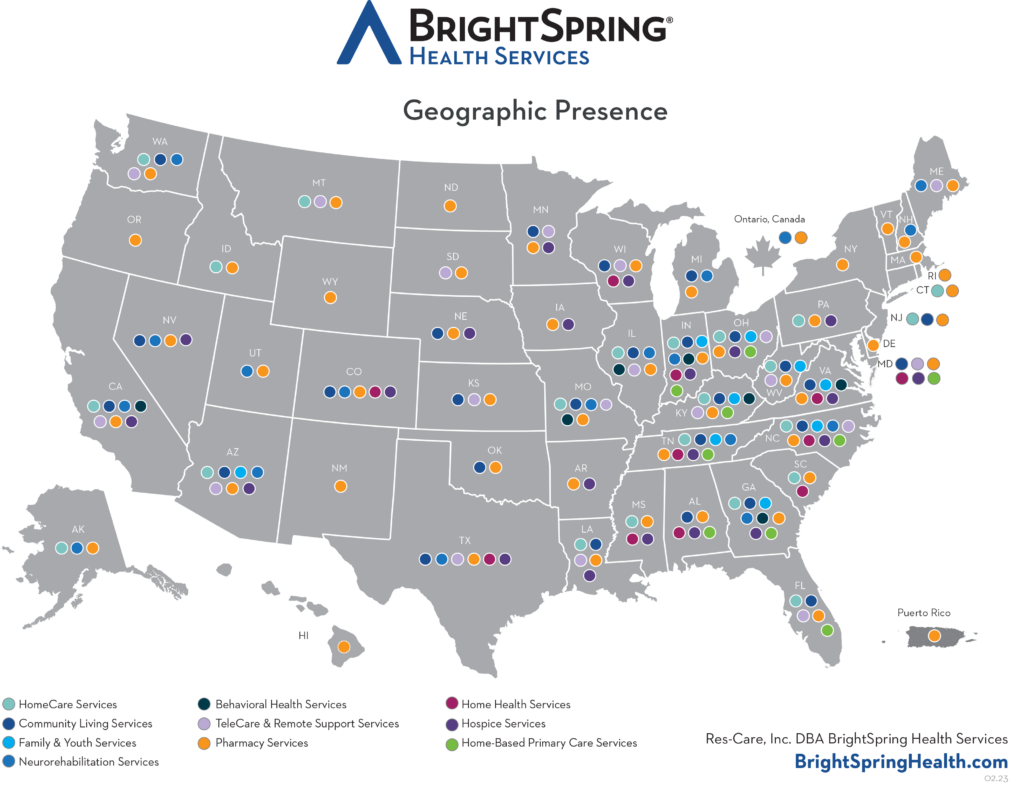
BrightSpring Health Services and Pennant Group will acquire the 164 locations. Slater said the settlement, which includes the largest ever divestiture of outpatient healthcare, protects quality and price competition patients as well as wage competition for nurses. However, antitrust specialist Robin Crauthers, a partner with McCarter & English, says it doesn’t go far enough. According to Crauthers, the settlement agreement does not address all of the markets that would have less competition and that the DOJ accepted less than they wanted in the agreement.

Additionally, critics argue the divestiture moves 164 home health and hospice agencies from one large player to two other large players in the space. Arguably, rather than preserve competition, this divestiture agreement will only serve to strengthen the largest players in the market, giving them a substantial advantage over smaller agencies in these areas.
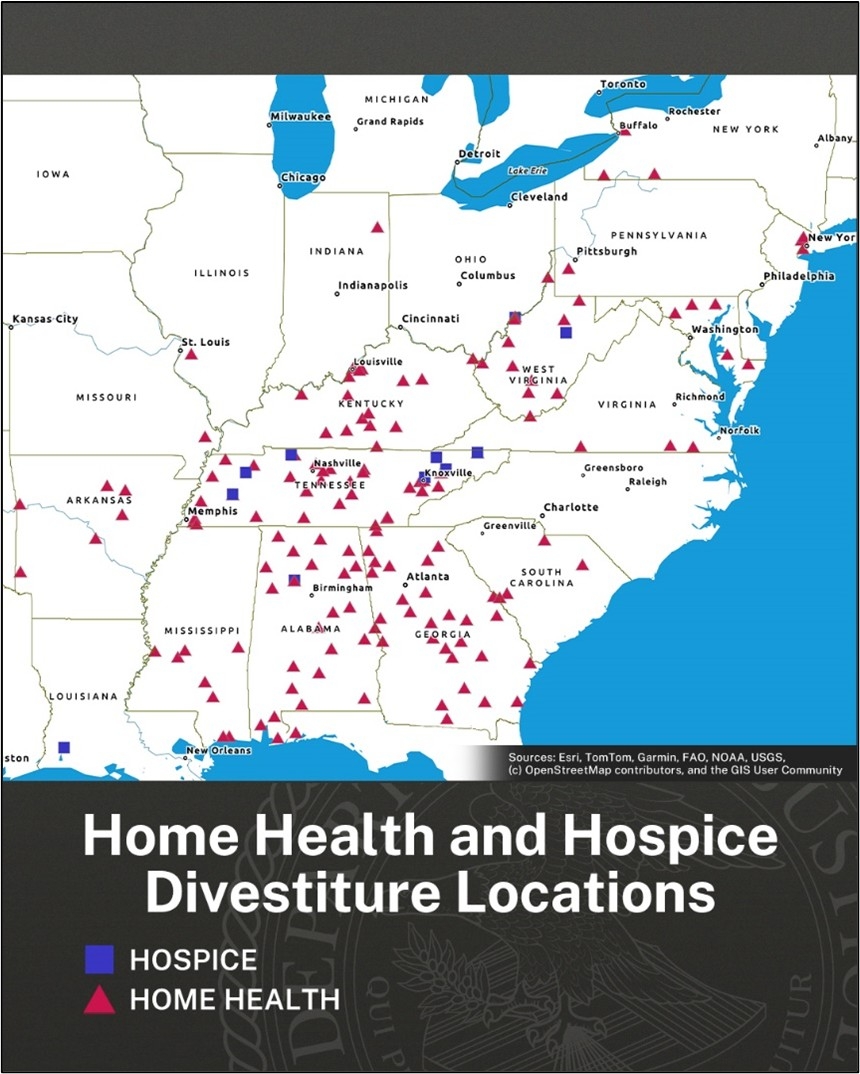
UnitedHealth Amedisys divestiture locations

Not the Only Concern

Vertical Integration

Joe Widmar, Director of M&A at West Monroe consulting firm, says that the number of home health and hospice agencies is not the tipping factor in competition. Rather, it is UnitedHealth’s vertical integration. A health insurance company that also owns nearly 2,700 subsidiaries, including pharmacies, home health and hospice, behavioral health, consulting for healthcare organizations, surgery centers, hospitals, mental health, managed care for Medicaid and Medicare, and specialty care. Virtually any referral from a PCP to any other health professional puts more money into the health care giant’s pockets. The lack of competition is across all forms of healthcare, leaving patients no choice buy to support UnitedHealth Group in areas where all local healthcare providers are subsidiaries. I 2024, UnitedHealth insurance paid $150.9 million to its subsidiaries for care. These provider companies are not counted in the profit caps placed on insurance companies.

Upcoding

In addition to side-stepping profit caps, vertical integration aids in upcoding. Upcoding is the practice of digging into a patient’s life to find (or create) additional patient needs. Insurers add as many codes as possible for the greatest reimbursement rates. According to a recent study, UnitedHealthcare overbilled Medicare Advantage by $14 billion through upcoding. 

In-home health risk assessments and patient reviews, often offered to beneficiaries as a free service, result in an average risk score 7% higher than in patients seen in medical practices and hospitals. UnitedHealth generates more income from patient review diagnoses than any other MA insurer. The Department of Justice is currently investigating UnitedHealth’s Medicare billing practices.

Final Thoughts

If you own a home health, hospice, or palliative care agency in any of the states shown in the graphic above, write to Jill Maguire with comments and concerns. Our primary objective is providing quality care to patients in their homes. We know that home care is less expensive for the patient and government-funded insurance. But not when all the home care agencies in an area are owned by only a few of the largest home health agencies in the country. And not when the insurer is adding diagnostic codes to pad their bill. 

# # #

Kristin Rowan, Editor

Kristin Rowan has been working at The Rowan Report since 2008. She is the owner and Editor-in-chief of The Rowan Report, the industry’s most trusted source for care at home news, and speaker on Artificial Intelligence and Lone Worker Safety and state and national conferences.

She also runs Girard Marketing Group, a multi-faceted boutique marketing firm specializing in content creation, social media management, and event marketing.  Connect with Kristin directly kristin@girardmarketinggroup.com or www.girardmarketinggroup.com

©2025 by The Rowan Report, Peoria, AZ. All rights reserved. This article originally appeared in The Rowan Report. One copy may be printed for personal use: further reproduction by permission only. editor@therowanreport.com
 

UnitedHealth Bribes Nurses

United Health Bribery Update

In the weeks since the below article revealed allegations against UnitedHealth, members of Congress are calling for action. At least one US Senator and two Representatives are engaged in the allegations. Senator Wyden (D-OR) announced that his office is launching its own investigation. Senator Hawley (R-MO), who is on the investigations subcommittee said it was “alarming to hear these serious allegations. I look forward to securing justice for patients, policyholders, and whistleblowers alike who’ve been harmed by insurance companies.” Other Senators expressed similar sentiments.

“If these allegations are true, UnitedHealth must be held responsible for their gross abuse of patients. Patients should always come before profits.”

Buddy Carter

Chair of the House subcommittee on health, U.S. Representative, (R-GA)

Three U.S. Representatives, coming from both sides of the aisle, are calling on the DoJ to investigate. A letter to the DoJ reads:

“The Guardian’s findings reveal the need for a wide-ranging investigation by the Department of Justice into years, if not decades, of potential waste, fraud, and abuse at UnitedHealth.”

Here is another take on the breaking news story, published by whistlebloweraid.org

The Guardian has uncovered some truly disturbing information about UnitedHealth Group. As the investigation and reporting belongs to them, I have reprinted the first part of the article here. Read the full article here.

by George Joseph, The Guardian
Wed May 21, 2025

Revealed: UnitedHealth secretly paid nursing homes to reduce hospital transfers

A Guardian investigation finds insurer quietly paid facilities that helped it gain Medicare enrollees and reduce hospitalizations. Whistleblowers allege harm to residents

UnitedHealth Group, the nation’s largest healthcare conglomerate, has secretly paid nursing homes thousands in bonuses to help slash hospital transfers for ailing residents – part of a series of cost-cutting tactics that has saved the company millions, but at times risked residents’ health, a Guardian investigation has found.

UnitedHealth paid nursing homes

Those secret bonuses have been paid out as part of a UnitedHealth program that stations the company’s own medical teams in nursing homes and pushes them to cut care expenses for residents covered by the insurance giant.

In several cases identified by the Guardian, nursing home residents who needed immediate hospital care under the program failed to receive it, after interventions from UnitedHealth staffers. At least one lived with permanent brain damage following his delayed transfer, according to a confidential nursing home incident log, recordings and photo evidence.

“No one is truly investigating when a patient suffers harm. Absolutely no one,” said one current UnitedHealth nurse practitioner who recently filed a congressional complaint about the nursing home program. “These incidents are hidden, downplayed and minimized. The sense is: ‘Well, they’re medically frail, and no one lives for ever.’”

Confidential Investigation

The Guardian’s investigation is based on thousands of confidential corporate and patient records obtained through sources, public records requests and court files, interviews with more than 20 current and former UnitedHealth and nursing home employees, and two whistleblower declarations submitted to Congress this month through the non-profit legal group Whistleblower Aid.

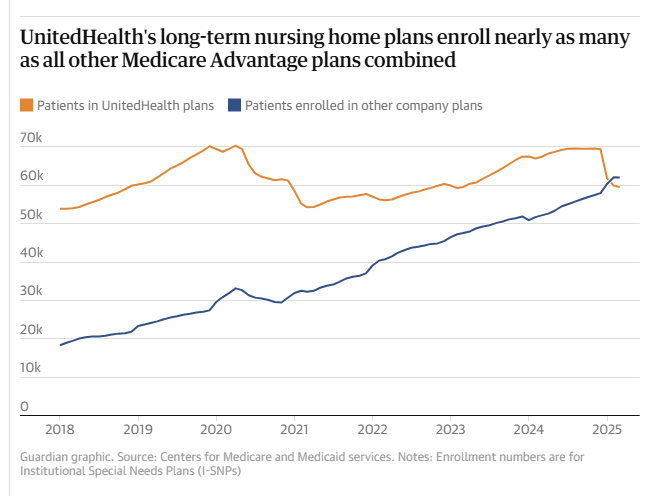
The documents and sources provide a never-before-seen window into the company’s successful effort to insert itself into the day-to-day operations of nearly 2,000 nursing homes in small towns and urban commercial strips across the nation – an approach which has helped UnitedHealth secure a vast stream of federal dollars from Medicare Advantage plans that cover more than 55,000 long-term nursing home residents.

UnitedHealth Responds

UnitedHealth said the suggestion that its employees have prevented hospital transfers “is verifiably false”. It said its bonus payments to nursing homes help prevent unnecessary hospitalizations that are costly and dangerous to patients and that its partnerships with nursing homes improve health outcomes.

Long-Term Profit

UnitedHealth Profit over Patients

Under Medicare Advantage, insurers collect lump sums from the federal government to cover seniors’ care. But the less insurers spend on care, the more they have for potential profit – an opportunity that UnitedHealth higher-ups have systematically sought to exploit when it comes to long-term nursing home residents.

To reduce residents’ hospital visits, UnitedHealth has offered nursing homes an array of financial sweeteners that sounded more like they came from stockbrokers than medical professionals.

Seven Years of Bribery and Threats

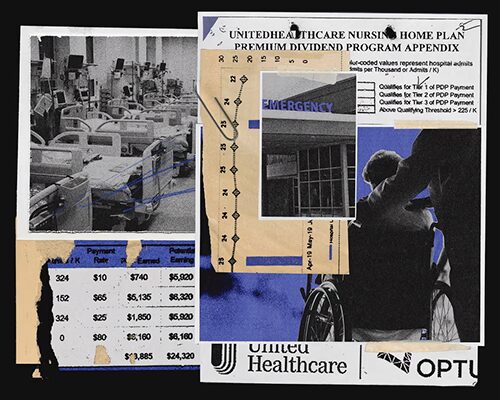
Over the past seven years, the company has shelled out “Premium Dividend” and “Shared Savings” payments that boosted nursing homes’ bottom lines. Through its “Quality and Shared Risk” program, UnitedHealth offered an even bigger cut to nursing homes that drove down medical spending, but threatened to claw back money from those that didn’t, according to former employees and internal corporate documents.

“You gain profitability by denying care, and when profitability suffers for the shareholders, that’s when people get crazy and do things that are not appropriate.”

Anonymous

Former National Executive, United Health

# # #

© 2025 This article is reprinted from The Guardian. The full article can be accessed here. For more information or for permission to reprint, please contact The Guardian directly.

BREAKING NEWS: UnitedHealth CEO Steps Down

by Kristin Rowan, Editor

Breaking News: UnitedHealth Group CEO Andrew Witty Steps Down

Citing “personal reasons” with no elaboration, UnitedHealth Group CEO Andrew Witty steps down from his position, effective immediately. Witty joined UnitedHealth Group in 2018 and became the company’s CEO in 2021. Despite overwhelming growth during Witty’s tenure, the company continues to face numerous setbacks.

UnitedHealth Group Struggles Since January

The shooting death of Brian Thompson, UnitedHealthcare CEO, in December seems to have set off an onslaught of setbacks for the insurance giant.

  • Share prices have dropped 38% since December, from $503 down to $308
  • The company recently cut its annual forecast, after first adjusting it down, causing the final 18% stock drop
  • For the first time since 2008, UHG missed its forecasted earnings
  • Statements from the company look to 2026 before growth resumes

New (Old) CEO

Stephen Hemsley is the new CEO of UnitedHealth Group, effective immediately. Hemsley, who currently serves as the director of the board, was the company’s CEO from 2006 to 2017. Hemsley will stay on as chairman of the board and company CEO. Witty will serve as senior adviser to Hemsley. 

Contradictions and Conflicts

In an official statement regarding the leadership change, Hemsley said, “We are grateful for Andrew’s stewardship of UnitedHealth Group…. The Board and I have greatly valued his leadership and compassion as chief executive….” 

On a call with investors, Hemsley said, “Many of the issues standing in the way of achieving our goals as well as our opportunities are largely within our control.”

During that same call, Hemsley said, “I’m deeply disappointed in and apologize for the performance setbacks we have encountered from both external and internal challenges.”

UnitedHealth CEO Steps Down

In addition to the conflicting statements, Hemsley will serve as CEO and Chairman of the Board, creating conflict and reducing oversight. The chairman of the board plays a key role in oversight, governance, and communication with the CEO. They also evaluate the CEO’s performance. Holding both roles, especially in light of the shareholder request for reports, may we be in the best interest of UnitedHealth Group, but probably not in the best interest of anyone else.

# # #

Kristin Rowan, Editor

Kristin Rowan has been working at The Rowan Report since 2008. She is the owner and Editor-in-chief of The Rowan Report, the industry’s most trusted source for care at home news, and speaker on Artificial Intelligence and Lone Worker Safety and state and national conferences.

She also runs Girard Marketing Group, a multi-faceted boutique marketing firm specializing in content creation, social media management, and event marketing.  Connect with Kristin directly kristin@girardmarketinggroup.com or www.girardmarketinggroup.com

©2025 by The Rowan Report, Peoria, AZ. All rights reserved. This article originally appeared in The Rowan Report. One copy may be printed for personal use: further reproduction by permission only. editor@therowanreport.com

 

New Deal to Sell HH & Hospice Agencies

by Kristin Rowan, Editor

UnitedHealth, Amedisys to Divest Home Health & Hospice...Again

History

UnitedHealth, Amedisys to divest home health and hospice properties to satisfy DOJ. Almost two years ago, the health services division of UnitedHealth Group, Optum, announced plans to by Amedisys. The purchase announcement came after Optum outbid Option Care Health with an unsolicited offer. The Department of Justice launched an anti-trust probe shortly after the announcement. To satisfy the DOJ, UnitedHealth and Amedisys plan to divest some of its businesses as part of the acquisition agreement.

Anti Anti-Trust

We previously reported that Amedisys entered into an agreement with VitalCaring to divest some of its home health and hospice locations. This agreement was meant to satisfy the DOJ concerns raised in its anti-trust lawsuit against Amedisys and UnitedHealth. 

In January of 2025, VitalCaring lost a lawsuit filed by Encompass Health and Enhabit and were ordered to pay 43% of all future profits to the two companies. In the wake of that court decision, VitalCaring pulled the agreement and signed a mutual release with UnitedHealth, with all parties walking away from the deal.

BrightSpring

BrightSpring Health Services is an $11.5B company with locations across the United States and employing more than 37,000 people. In January of this year, BrightSpring sold is Community Living Business to Sevita. BrightSprings intends to acquire additional properties, focusing on its home- and community-based businesses. According to the BrightSpring President and CEO Jon Rousseau, BrightSpring is “focused on getting to 3x leverage within the next two years.”

Amedisys operates in 38 states with more than 500 locations. The document Amedisys submitted to the SEC does not indicate how many of its properties and those of UnitedHealth will be divested. A UnitedHealth statement said the company plans to divest at least 128 home health and hospice facilities.

One has to wonder whether we are trading one monopoly for another.

BrightSpring Health Services

New Deal

As the DOJ lawsuit enters mediation this August, UnitedHealth and Amedisys search for another way to divest its properties. Enter the New Deal. BrightSpring Health Services, parent company to Adoration Home Health Acquisition LLC, Adoration Hospice Care Acquisitions LLC and Senescence LLC, DBA All Saints Hospice will purchase some of the properties from both Amedisys and UnitedHealth. The Pennant Group, parent company to Cornerstone Healthcare, Inc. and Tensaw River Healthcare, LLC, will purchase additional properties from bother companies.

According to documents submitted to the Securities and Exchange Commission (SEC), both agreements have mulitple contingencies, including the finalization of the UnitedHealth/Amedisys merger. Financial information on the two deals was not included in the Amedisys SEC filing. In a separate filing, Pennant valued their part of the agreement at nearly $102.5 million.

No Deal Yet

The sale of properties to BrightSpring and Pennant Group relies on the finalization of the merger between Amedisys and UnitedHealth. A magistrate will oversee mediation between the two companies and the DOJ beginning this August.

The SEC and the DOJ have not yet responded to the intent to divest to BrightSpring and Pennant Group.

Final Thoughts

The proposed merger between UnitedHealth and Amedisys has been ongoing for two years. The two companies, who previously stated their competition helped keep them honest and keep costs low, now state that the merger will lower costs even more. The DOJ disagrees. To alleviate concerns, the merger includes the release of properties anywhere the merger would create an unfair advantage. Mediation in August will reveal more on the position of the DOJ, the response from UnitedHealth and Amedisys, and the specifics of the divestment of home health and hospice agencies. The merger proposal expires December 31, 2025. We will continue to follow the story as the parties enter mediation.

# # #

Kristin Rowan, Editor

Kristin Rowan has been working at The Rowan Report since 2008. She is the owner and Editor-in-chief of The Rowan Report, the industry’s most trusted source for care at home news, and speaker on Artificial Intelligence and Lone Worker Safety and state and national conferences.

She also runs Girard Marketing Group, a multi-faceted boutique marketing firm specializing in content creation, social media management, and event marketing.  Connect with Kristin directly kristin@girardmarketinggroup.com or www.girardmarketinggroup.com

©2025 by The Rowan Report, Peoria, AZ. All rights reserved. This article originally appeared in The Rowan Report. One copy may be printed for personal use: further reproduction by permission only. editor@therowanreport.com
 

Trouble in MA Paradise?

by Kristin Rowan, Editor

Medicare Advantage

It’s no secret within the care at home community that Medicare Advantage is not without its problems. Coverage and care are good when the beneficiary is relatively healthy. When it’s really needed, MA plans deny coverage. Multiple insurance companies have upcoded patient care for higher reimbursements. And predatory marketing tactics target our most vulnerable.

Predatory Marketing

Medicare Advantage payers use unethical marketing to target seniors, sometimes going as far as to call unwitting customers and strong-arm them into changing from their traditional Medicare plans to MA. Anecdotally, a family friend was convinced to switch to Medicare Advantage three times. Each time, his family caregiver reversed that change before any real damage was done. Similarly, our own Editor Emeritus, Tim Rowan, fielded calls aimed at his disabled, grieving brother, urging him to change to a MA plan. Luckily, those calls were deflected by someone who knew better. Not everyone is as lucky.

UHC Projects Lower Earnings

Despite a 9.8 billion dollar year-over-year increase in revenue in the first quarter of 2025, UnitedHealth Group last week submitted a lower earnings outlook for 2025. UHG attributed the revision to “increased care activity” in its Medicare Advantage business. 

UHG has strong growth in providing benefits and services to more members. In Massachusetts, for example, the company reported 100% growth in care activity. Simultaneously, Optum Health, the arm responsible for home health, took on more clients with lower reimbursement rates, impacting overall revenue. Optum cites changes to the CMS risk adjustment model particularly for complex patients as a contributor to the problem.

Breaking it Down

UHG initially projected strong growth through 2025. The projection was partly based on the expection of a gradual increase in care activity. More members should increase revenue. What UHG did not account for was rapid growth of high-risk members in a risk-adjustment model that had not yet been thoroughly tested. Medicare Advantage is a money losing model that is propped up by Traditional Medicare. UHG is finally feeling that impact and it will only get worse as HHS cracks down on waste, fraud, and abuse in MA.  

Elevance Pulls Plug on MA Marketing

One week after UHG revised its earnings projections for 2025, Elevance announced plans to cut is Medicare Advantage marketing. EVP of payer solutions at ATI Advisory, a consulting firm in the healthcare space, says cutting spending on MA marketing happens for different reasons. 

“It’s often a temporary decision to give an MAO a year to ‘catch up’ or right-size impacts from the prior year. For example, it might be in response to larger-than-expected enrollment during the prior year, higher-than-expected utilization the plan is trying to get under control, or a change in federal policy.”

Breaking it Down

Elevance reported better earnings in Q1 2025 than were expected. The company listed home health as one of its key revenue drivers. The operating revenue increase came from higher premiums and growth in MA membership. The announcement to cut marketing spend came less than a week later. 

In other words, the company had a surge of MA sign-ups at the beginning of the year when plan coverage started after open-enrollment. Now that the company is seeing how many of those members actually need care and how much they will have to spend to provide that care, they no longer want to enroll additional MA members.

Opposition

The National Association of Benefits and Insurance Professionals expressed “deep concern” over Elevance’s announcement. NABIP represents licensed health insurance agents and brokers with a stated goal of promoting access to affordable health insurance coverage. 

“This decision directly harms Medicare beneficiaries by limiting their access to essential healthcare options and support during Medicare’s enrollment period,” NABIP CEO Jessica Brooks-Woods said.

NABIP asked CMS, Congress, and health plans to mitigate the effects of this announcement. They urged CMS to “freeze any carrier-initiated changes after October 1 that would limit agent access. 

Breaking it Down

NABIP represents agents and brokers who sell insurance plans to eligible members. They are membership based and rely on member fees as a main revenue stream along with fees collected for education, advertising, and sponsorships. Their PAC raises money from members to support political candidates.

Agents and brokers make money from commissions on sales of healthcare plans. The commission on Medicare Part D is around $109 per member per year. The commission on Medicare Advantage plans varies by state and carrier, but is as high as $780 per member per year. Commissions for Medicare Supplement plans are a percentage of premiums. The average commission for supplement plans is $322. 

But, of Course...

According to The Commonwealth Fund, average supplement plan premiums dropped from 2016 to 2020, decreasing agent compensation. In the same period, Medicare Advantage premiums have decreased, but agency compensation has increased at a rate higher than inflation.

It is not surprising, then, that the member-based advocacy group on behalf of sales people who earn nearly 7 times the commission on MA plans wouldn’t want companies like Elevance to stop marketing them.

Final Thoughts

I don’t believe Medicare Advantage is going anywhere anytime soon. I also don’t believe any government agency can monitor itself for fraud, waste, and abuse. Further, I don’t believe an association that makes its living on commissions has the best interest of its customers as its first priority. 

Perhaps fewer beneficiaries will be subjected to the predatory marketing and sales calls pushing them into Medicare Advantage plans. Perhaps knowledgeable, well-intentioned individuals and associations can shed light on the real advantages of Traditional Medicare. Perhaps CMS, under the direction of HHS, will turn the “waste, fraud, and abuse” mirror in the direction it belongs. 

# # #

Kristin Rowan, Editor

Kristin Rowan has been working at The Rowan Report since 2008. She is the owner and Editor-in-chief of The Rowan Report, the industry’s most trusted source for care at home news, and speaker on Artificial Intelligence and Lone Worker Safety and state and national conferences.

She also runs Girard Marketing Group, a multi-faceted boutique marketing firm specializing in content creation, social media management, and event marketing.  Connect with Kristin directly kristin@girardmarketinggroup.com or www.girardmarketinggroup.com

©2025 by The Rowan Report, Peoria, AZ. All rights reserved. This article originally appeared in The Rowan Report. One copy may be printed for personal use: further reproduction by permission only. editor@therowanreport.com

 

Prior Authorization Requirement Removed by UnitedHealthcare

by Kristin Rowan, Editor

Easier Access to Home Health

Prior authorization requirements can be cumbersome, delaying or even preventing care in some cases. Patients who need prior authorization to get he care they need also generally have form after form to fill out or to have completed by their PCP or hospital physician, who doesn’t have time for adequate visits, much less more paperwork.

As part of their ongoing efforts to reduce prior authorization volume by 10%, UnitedHealthcare has just announced a change in their home health services requirements.

Limits on Where Changes Apply

Beginning April 1, 2025, UHC will no longer require prior authorization or concurrent reviews for home health services managed by Home & Community (formerly naviHealth). This is the next step in an ongoing effort to modernize the authorization process and simplify health care for its members and providers. 

These changes will apply to Medicare Advantage and Dual Special Needs Plan (D-SNP) beneficiaries in 36 states and the District of Columbia.

  • Alabama
  • Alaska
  • Arkansas
  • California
  • Colorado
  • Connecticut
  • Florida*
  • Georgia
  • Idaho
  • Illinois
  • Indiana
  • Iowa
  • Kansas
  • Kentucky
  • Louisiana
  • Maine
  • Maryland
  • Massachusetts
  • Nebraska
  • Nevada
  • New Mexico
  • North Carolina
  • North Dakota
  • Ohio
  • Oklahoma
  • Oregon
  • Pennsylvania
  • Rhode Island
  • South Carolina
  • Tennessee*
  • Texas
  • Utah
  • Virginia
  • Washington
  • Wisconsin
  • Wyoming
  • Washington, D.C.

*In Florida and Tennessee, the changes will not apply to D-SNP plans that are not managed by Home & Community.

Prior Authorization Additional Information

You should continue to request prior authorization and concurrent review through March 31, 2025. UHC reminds all providers that following CMS guidelines for providing home health care services is still required. And in states where a Medicare denial is required to get Medicaid prior authorizations, providers should submit their requests through the UHC provider portal. 

The available information on this pending change is limited. We will provide updates should they become available. Please contact UHC directly through the provider portal if you have specific questions.

# # #

Kristin Rowan, Editor

Kristin Rowan has been working at The Rowan Report since 2008. She is the owner and Editor-in-chief of The Rowan Report, the industry’s most trusted source for care at home news .She also has a master’s degree in business administration and marketing and runs Girard Marketing Group, a multi-faceted boutique marketing firm specializing in content creation, social media management, and event marketing.  Connect with Kristin directly kristin@girardmarketinggroup.com or www.girardmarketinggroup.com

©2025 by The Rowan Report, Peoria, AZ. All rights reserved. This article originally appeared in The Rowan Report. One copy may be printed for personal use: further reproduction by permission only. editor@therowanreport.com
 

VitalCaring Pulls Agreement

by Kristin Rowan, Editor

Just as we were setting the article on UnitedHealth Group and Amedisys for publication, we received the following breaking news story:

VitalCaring Divestment Agreement Cancelled

VitalCaring entered into the agreement on June 28, 2024, just after the merger announcement and initial pushback from the Department of Justice. The DOJ approved the divestiture, despite some misgivings about the quality of care. VitalCaring said at the time that it believed the merger and the divestment were in the “best interest of patients and stakeholders.”

VitalCaring has been under its own scrutiny since 2022 when Encompass Health and its home health and hospice arm, Enhabit, Inc. accused VitalCaring CEO April Anthony of using unethical practices to establish the company. Anthony is the founder of Encompass Home Health & Hospice, the previous owner and CEO of Liberty Health Services, and founder and former CEO of Homecare Homebase.

She Who Shall Not be Named

Encompass Health filed an injunction against April Anthony, and her partners Vistria Group and Nautic Partners in 2021 for violation of the terms of her employment agreement, non-competition agreement, non-solicitation, and misappropriation of trade secrets.

Anthony and her partners purchased a small home health agency in Louisiana and started plan for its growth while Anthony was still CEO of Encompass. Additionally, Anthony recruited employees of Encompass to work at her new venture using a fake recruiter to cover her tracks. Anthony used fake names, spouses’ phones, and her personal laptop to remain undetected during this time. Anthony asked her partners and recruits to refer to her as Voldemort.

Judgment Day

In August of 2022, a judge called the actions of Anthony and her partners “willful misconduct” and agreed with almost all of Encompass’s allegations. The judge found that Anthony was in violation of her non-compete agreement and that she was actively running a direct competitor while still serving as CEO of Encompass. The judge stated, “These are not the actions of a person complying with her contractual obligations.” Although Encompass’s injunction asked to have the non-compete agreement extended, the judge only enforced the existing non-compete agreement, and found that that Anthony had violated the covenant.

Pay the Piper

The Delaware Court of Chancery, in December of 2024, agreed with the earlier findings of the court and found that Anthony, two former senior officers of Encompass, and the investment companies were complicit in their miconduct and that VitalCaring was a result of their deceit.

The court awarded an upfront payment for mitigation damages of $1.62 million dollars plus attorneys’ fees. The court also imposed a trust entitling Encompass Health and Enhabit to 43% of al of VitalCaring Group’s future profits, paid quarterly as well as 43% of proceeds if and when the company is sold.

Divorce Proceedings

Depending on the source, each of the companies involved in the divestiture agreement are claiming credit for filing for divorce. 

  • An equity analyst for UnitedHealth Group said, “UNH has abandoned VitalCaring as a divestiture buyer after the Delaware Chancery decision against VitalCaring’s executives.”
  • An article from a hospice website stated, “Amedisys has halted the divestiture of some of its home health and hospice locations to Texas-based VitalCaring. 
  • A stock market website reported “VitalCaring Group cancelled the acquisition of certain home health care centers from UnitedHealth Group, Inc.”

Regardless of who filed for divorce, UnitedHealth Group and Amedisys are courting new partners to acquire the home health centers that need to be divested before their marriage can be blessed by the DOJ.

# # #

Kristin Rowan, Editor

Kristin Rowan has been working at The Rowan Report since 2008. She is the owner and Editor-in-chief of The Rowan Report, the industry’s most trusted source for care at home news .She also has a master’s degree in business administration and marketing and runs Girard Marketing Group, a multi-faceted boutique marketing firm specializing in content creation, social media management, and event marketing.  Connect with Kristin directly kristin@girardmarketinggroup.com or www.girardmarketinggroup.com

©2025 by The Rowan Report, Peoria, AZ. All rights reserved. This article originally appeared in The Rowan Report. One copy may be printed for personal use: further reproduction by permission only. editor@therowanreport.com

 

UnitedHealth Group Amedisys Merger Faces Further Delays

by Kristin Rowan, Editor

UHG and Amedisys Waive Termination

The UnitedHealth Group and Amedisys merger has been an ongoing story since the initial merger agreement was signed in June of 2023. The proposed merger came under scrutiny by the Federal Trade Commission (FTC) and the Department of Justice (DOJ). UnitedHealth Group and Amedisys are competitors in the home healthcare market and the merger would hurt patients.

“UnitedHealth’s plan to extinguish Amedisys as a competitor is the result of an intentional, sustained strategy of acquiring, rather than beating, competition.”

Department of Justice

DOJ Pushes Back

Late in 2024, the DOJ filed a lawsuit against the merger, claiming that both companies have acknowledged that their competition helps keep them honest and drive quality both in patient and employee care. The DOJ noted that the acquisition would be presumptively illegal in multiple markets. UHG, Amedisys, and Optum proposed selling off some of its care centers to address the concerns about competition. 

Merger Deadline Reached

Under the initial merger agreement, UHG would pay $3.3 billion to acquire Amedisys, which would remain as a subsidiary of UHG. That agreement was set to be finalized on December 27, 2024. There has been no decision made on the DOJ lawsuit, so the merger could not be completed. UHG and Amedisys have mutually agreed to extend the merger and added a break fee of $275 million.

Indefinite Merger Extension Through 2025

The new agreement has an indefinite ending. According to the wording, the merger agreement will now expire either on December 31, 2025 or 10 days after a final court decision in the lawsuit, whichever comes first.

According to the new filing with the SEC, UnitedHealth and Amedisys will be divesting assets to secure the merger and satisfy the DOJ. If not, they will incur a break fee of up to $325 million. Both companies have an agreement with VitalCaring Group to acquire the necessary assets.

UnitedHealth Group Amedisys Merger

What If?

If…The Trump administration is less stringent in antitrust matters, as expected.

The lawsuits currently at the U.S. District Court and five states will likely fail.

If…the U.S. District Court for the District of Maryland either decides to block the merger permanently or does not reach a final order by the end of the year…

The merger agreement will expire.

If…UnitedHealth Group, Optum, and/or Amedisys fails to divest holdings…

The merger agreement will not satisfy the antitrust regulations and the failing party will pay hundreds of millions in damages, and the merger agreement will end.

This is an ongoing story and we will continue to report on updates as they occur. See our accompanying BREAKING NEWS story.

# # #

Kristin Rowan, Editor

Kristin Rowan has been working at Healthcare at Home: The Rowan Report since 2008. She has a master’s degree in business administration and marketing and runs Girard Marketing Group, a multi-faceted boutique marketing firm specializing in event planning, sales, and marketing strategy. She has recently taken on the role of Editor of The Rowan Report and will add her voice to current Home Care topics as well as marketing tips for home care agencies. Connect with Kristin directly kristin@girardmarketinggroup.com or www.girardmarketinggroup.com

©2025 by The Rowan Report, Peoria, AZ. All rights reserved. This article originally appeared in The Rowan Report. One copy may be printed for personal use: further reproduction by permission only. editor@therowanreport.com

Pharmacy and PBM Separation Pushed by Congress

by Kristin Rowan, Editor

Bi-Partisan Bill Introduced

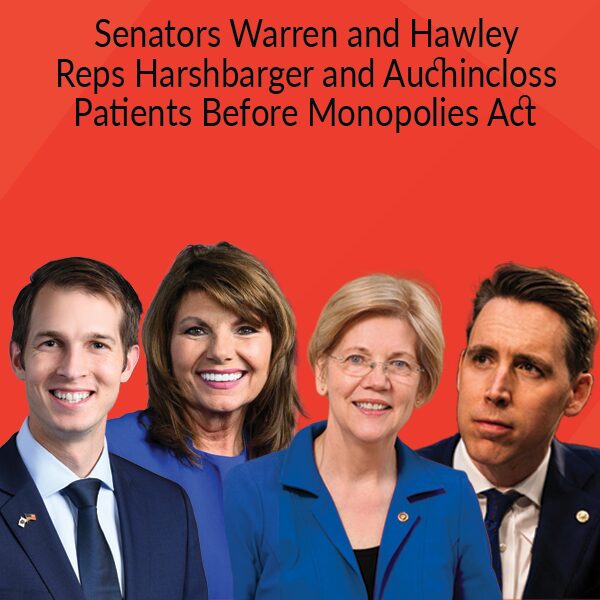
The final session of this Congress may not be as “lame” as anticipated. On December 11, 2024, Senators Elizabeth Warren (D-Mass.) and Josh Hawley (R-Mo.), with the support of Representatives Diana Harshbarger (R-Tenn.) and Jake Auchincloss (D-Mass.) introduced the Patients Before Monopolies Act.

The bill, if passed, would prohibit any company from owning both a Pharmacy Benefit Manager and a Pharmacy. Joint ownership of both creates a “gross conflict of interest” that allows companies to increase their own profits at the expense of patients and independent pharmacies.

Pharmacy Benefit Managers

Pharmacy Benefit Managers (PBMs) act as middlemen between consumers, health insurance companies, drug manufacturers, and pharmacies. They were designed to negotiate reimbursement and dispensing fees in pharmacies, negotiate drug prices from manufacturers, and manage drug costs for insurance companies. The PBM Act claims that PBMs have manipulated the market, increased drug costs, and are driving independent smaller pharmacies out of business. 

In Their Own Words

“PBMs have manipulated the market to enrich themselves — hiking up drug costs, cheating employers, and driving small pharmacies out of business. My new bipartisan bill will untangle these conflicts of interest by reining in these middlemen,” said Senator Warren.

“The PBM industry is rife with self-dealing that raises costs for patients and bankrupts independent pharmacists. No PBM should be allowed to own pharmacies, because it poses an unacceptable conflict of interest when it then sets reimbursement rates for its own versus external pharmacies. Independent pharmacies deserve fair play,” said Representative Auchincloss.

Pharmacy Benefit Managers

“As a life-long pharmacist, I know first-hand how unchecked PBM consolidation and vertical integration have allowed these shadowy middlemen to self-deal and manipulate the system in ways that are driving up drug costs, limiting patient choices, and putting the financial screws to independent community pharmacies,” said Representative Harshbarger.  “I’m a proud conservative Republican, but we have antitrust laws for a reason. That’s why I’m joining my colleagues in introducing the bipartisan Patients Before Monopolies Act, which will protect consumers and taxpayers, and ensure fair competition by breaking-up these anticompetitive, conflict-of-interest arrangements. Federal regulators should never have let this excessive concentration of our healthcare industry happen in the first place, and so it’s up to Congress to get the job done.”

Issues Addressed

The PBM Act aims to address the issues of higher drug costs, fewer independent pharmacies, and larger profits for corporations. The PBM Act would:

    • Disallow the parent company of any PBM or insurer from owning a pharmacy
    • Require any PBM or insurer that also owns a pharmacy to sell the pharmacy business within three years
    • Allow the FTC, DHHS, DOJ Anti-Trust Division, and state attorneys general to issue orders requiring the divestiture of pharmacies by owners of PBMs or insurers
    • Allow the same to sieze revenue made from the pharmacy business from any owner of a PBM or insurer
    • Distribute the funds to communities and consumers who have been overcharged by these pharmacies
    • Mandate the reporting of all divestments of pharmacies to the FTC
    • Allow the FTC to review any and all future acquisitions

PBMs have manipulated the market to enrich themselves — hiking up drug costs, cheating employers, and driving small pharmacies out of business. My new bipartisan bill will untangle these conflicts of interest by reining in these middlemen.

Elizabeth Warren

Senator, D-Mass.

Who is Impacted?

CVS Health, Cigna, and UnitedHealth Group, among others, would be required to sell their pharmacy businesses within three years.

Caremark, owned by CVS, Express Scripts, owned by Cigna, and OptumRX, owned by UnitedHealth Group, are three of the largest PBMs in the country. Together, they control about 80% of all prescription drug claims.

Not surprisingly, the Pharmaceutical Care Management Association, a lobbying group for PBMs, has contested the claims made in the bill and by its supporters. They argue that PBMs offer convenient, affordable access to medications.

Similarly, CVS said that its integrated business model, both a PBM and pharmacy, helps connect people to accessible, affordable care. The pharmaceutical giant claims it has lowered out-of-pocket drug costs more than 25% in the last ten years and that it reimburses independent pharmacies at a higher rate than its own CVS pharmacy locations.

A spokesperson for CVS Caremark said that policies designed to limit their ability to negotiate with drug manufacturers and pharmacies would increase the cost of medicine. He also said these policies would be a “handout” to the pharmaceutical industry.

Supporters

The bipartisan, bicameral Act has support from the American Economic Liberties Project (AELP), National Community Pharmacists Association (NCPA), American Pharmacy Cooperative Inc (APCI), Pharmacists United for Truth and Transparency (PUTT), Patients Rising, and AffirmedRx.

Public statements on behalf of the PBM Act harshly criticize PBMs, private health insurers, and the healthcare system as a whole.

Giant PBMs and insurers owning their own pharmacies has driven independent pharmacies out of business and reduced patient access to quality care. The Patients Before Monopolies Act addresses the root cause of this problem — consolidated market power — by eliminating the inherent conflicts of interest within the big three PBM business model. We are thrilled to see Sen. Warren and Sen. Hawley lead this bipartisan effort to lower drug costs, protect independent retail pharmacies, and improve patient access to care.

Morgan Harper

Director of Policy and Advocacy, American Economic Liberties Project

A particularly egregious result of the vertical integration of PBM-insurers with retail and mail-order pharmacies is that the PBM – which competes with independent pharmacies and others – decides what their rival pharmacy will be reimbursed and which patients will be allowed to use them. There are also countless examples of PBMs paying their pharmacies much higher reimbursement than non-affiliated pharmacies and using patient data to steer patients to their own pharmacies. We’re grateful to Sens. Warren and Hawley and Reps. Harshbarger and Auchincloss for introducing the PBM Act, which will go a long way in eliminating the conflicts of interest that currently exist in this space.

Anne Cassity

Senior VP of Government Affairs, National Community Pharmacists Association

The inherent conflicts of interest between PBMs owning their own retail, mail-order, and specialty pharmacies have resulted in higher drug costs, reduced patient choice and access to care, and unsustainable reimbursements to non-PBM affiliated pharmacies. With retail pharmacies closing at an alarming rate and patients fighting life threatening diseases being steered to PBM owned pharmacies and often overcharged thousands of dollars for medications, Senator Warren’s Patients Before Monopolies Act couldn’t come soon enough. This commonsense legislation strikes at the heart of anti-competitive PBM behavior and roots out conflicts of interest by prohibiting ownership of both a PBM and a pharmacy. American Pharmacy Cooperative, Inc, is grateful to Senator Warren for her work and leadership on this issue and looks forward to fighting for this critically important piece of legislation.

Greg Reybold

VP of Healthcare Policy and General Counsel, American Pharmacy Cooperative, Inc.

While there are a variety of conflicts of interest that can compromise the intended role of PBMs to act as counterweights to inflated drug prices, one of the chief areas of system misalignment arises from PBM ownership of pharmacies. As these large vertically integrated companies serve as both price-setter and price-taker for pharmacy transactions, PBM incentives to reduce drug markups and to manage pharmacy reimbursement and network decisions in an unconflicted manner are significantly undermined. In our work advising government programs and commercial plan sponsors, we stress that minimizing or eliminating these areas of misalignment are foundationally critical in order to achieve greater balance for medicine accessibility and affordability.

Antonio Ciaccia

President, 3 Axis Advisors

For too long vertically integrated PBMs have put profits over patients, driving up costs, limiting access to essential medications and forcing countless independent pharmacies to close their doors. The Patients Before Monopolies Act is a step toward breaking these monopolies, restoring fairness and competition and, most importantly, ensuring patients get the care they need at a price they can afford. At the heart of our mission is the belief that transparency and integrity should be the foundation of health care. I congratulate Senators Warren and Hawley, and Representatives Harshbarger and Auchincloss for putting patients first, and urge Congress to pass this bipartisan bill.

Greg Baker

Pharmacist and CEO, Affirmed Rx, a transparent PBM

This bill is the next step in urgently-needed legislation to eliminate the profiteering and other conflicts of interest that exist when private health insurers and their pharmacy benefit managers are allowed to design and sell health benefit plans while also owning pharmacies, clinics and other point-of-care entitiesm Vertical integration among the largest healthcare insurers has only served to saddle Americans with the priciest possible premiums for impossibly high-deductible plans that provide fewer options and ultimately result in poorer health outcomes. We applaud Senators Warren and Hawley for recognizing the need to dismantle the current system, which has failed consumers and taxpayers at just about every level.

Monique Whitney

Executive Director, Pharmacists United for Truth and Transparency

Across the country, patients feel increasingly disenfranchised by the healthcare system. The culprit: a complex web of powerful health conglomerates including health insurers, Pharmacy Benefit Managers (PBMs), and their affiliated pharmacies. Patients Rising applauds Senators Elizabeth Warren and Josh Hawley, along with Representatives Diana Harshbarger and Jake Auchincloss for putting forward bi-partisan legislation to put patients before monopolies. It is critical we crack down on health conglomerate conflicts of interest and encourage businesses to operate in the interest of patients’ long term health and wellbeing.

MacKay Jimeson

Executive Director, Patients Rising

The New York Times stated their uncertainty over whether this bill would gain any traction. With so much support, both across the aisle, across congress, and from outside entities, it seems likely it will move ahead. However, Congress has run out of time to pass any bill during this term and will have to be reintroduced in January.

The Rowan Report will continue to follow the progress of the PBM Act next year.

# # # 

Kristin Rowan, Editor

Kristin Rowan has been working at Healthcare at Home: The Rowan Report since 2008. She has a master’s degree in business administration and marketing and runs Girard Marketing Group, a multi-faceted boutique marketing firm specializing in event planning, sales, and marketing strategy. She has recently taken on the role of Editor of The Rowan Report and will add her voice to current Home Care topics as well as marketing tips for home care agencies. Connect with Kristin directly kristin@girardmarketinggroup.com or www.girardmarketinggroup.com

©2024 by The Rowan Report, Peoria, AZ. All rights reserved. This article originally appeared in Healthcare at Home: The Rowan Report. One copy may be printed for personal use: further reproduction by permission only. editor@therowanreport.com

Updates on UnitedHealthcare CEO Shooting

by Kristin Rowan, Editor

Last Week

As most of the U.S. now knows, last week, UnitedHealthcare CEO Brian Thompson was shot and killed outside a hotel in Manhattan just hours before the UnitedHealth Group Investor Event. The Rowan Report provided the breaking news story with the information available at the time.

Manhunt

According to reports, after the shooting, a man fled the scene on foot and then rode an e-bike toward Central Park. Police were in pursuit based on early descriptions of the shooter and later on video footage of the shooting. The suspect was wearing a hoodie in the images of the shooting. Further investigation found a photo of the suspect in the lobby of a hostel where it is believed he stayed, smiling. Police followed the suspect into Central Park, where it is believed he got into a taxi and left the park.

He was later spotted at a bus station near the George Washington bridge.

Conflicting Images

Images obtained of the suspect taken inside the hotel show a man appearing to be in his 20s, wearing a dark  jacket with the hood up and a black face mask resting under his chin. An image of the suspect at a nearby Starbucks puts the suspect in a dark jacket with a black mask covering his mouth. Twenty minutes after the shooting, he is spotted getting into a taxi wearing a black jacket and a white surgical mask covering his mouth and nose. Conspiracy theories about why he would change his mask started circulating quickly.

Ongoing Investigation

A video shows the suspect entering the bus station near the George Washington Bridge. There is no video of him exiting the station. Police believe he got on a bus.

Meanwhile, police found a backpack in Central Park they believe belonged to the suspect. The investigation also discovered a cell phone that may be linked to the shooting. Early on Monday, December 9, police returned to Central Park with dive crews to search for evidence.

Delay, Deny, Defend

Delay Deny Defend by Jay M. Feinman is a book criticizing health insurance companies. The sub-title, “Why Insurance Companies Don’t Pay Claims and What YOu can Do About It,” supports the description of the book indicating that Feinman explains how to be more custios when shopping for policies and what to do when you have a disputed claim. Feinman also includes a play for the legal reforms he feels are needed to end the abuse.

NYPD officers found writing on the three shell casings left at the scene of the shooting. Initially reported as “Deny, Defend, & Depose”, police have now clarified that the permanent marker found on the casings read “Deny, Delay, & Depose.”

Former FBI agent Brad Garrett said he believes the shooter is “trying to send a message.” Police have not commented on what they think the words might mean. Meanwhile, “Deny Defend Depose merchandise appeared overnight, followed quickly by the corrected “Deny Delay Depose.”

Person of Interest

Around the time the dive crews arrived to search for clues in Central Park, a man entered a McDonald’s in Altoona, PA, nearly 280 miles away. An employee recognized him as the man from the photos and alerted local police. The person of interest, now identified as Luigi Nicholas Mangione, had a weapon, a mask, and writings that linked him to the shooting. The writings suggest he has issues with corporate America in general, and named several other people in the document in addition to Brian Thompson. He also had a fake ID that matches the one used to check in to the hostel in New York. Mangione has now been charged with Thompson’s murder.

unitedhealthcare CEO Thompson Person of Interest

Mangione was taken into custody by local police. Several members of the NYPD were later seen entering the police station in Altoona. As of Monday afternoon, Mangione was refusing to talk to police and did not have an attorney.

A DNA swab was taken and will be compared with DNA from a Starbucks cup found near the scene. Reports indicate Mangione will be extradited to New York. Mangione was denied bail and will remain in the Pennsylvania prison while he and his attorney fight the extradition to New York.

Additional information about Mangione surfaced on December 11. Mangione’s grandfather founded Lorien Health Services. The company, based in Maryland, operates six ALFs and eight nursing homes. Mangione often volunteered with the company in high school. Additionally, Mangione’s former roommate said in an interview that Mangione recently had surgery that was “heinous” and left him with multiple screws in his body. 

Public Outcry

The customary sentiments of comfort, sympathy, and condolences were pointedly absent in the days after Thompson’s death. Instead, stories of denied claims, limitations on access to care, and other frustrations with the industry flooded social media. Of the 60,000 reactions to the UnitedHealth Group post about Thompson’s death, 57,000 were laugh emojis.

Many industry professionals noted that the incident has brought up bigger issues with healthcare insurance in general. The Rowan Report previously wrote about UnitedHealthcare using AI in place of medical professionals to determine medical necessity. This resulted in a much higher than expected denial rate and more than 90% reversal of denials on appeal.

For more information on how healthcare might change after the shooting death of Brian Thompson, please see our complimentary article this week, “Will Thompson’s death change healthcare?”

# # #

Kristin Rowan, Editor

Kristin Rowan has been working at Healthcare at Home: The Rowan Report since 2008. She has a master’s degree in business administration and marketing and runs Girard Marketing Group, a multi-faceted boutique marketing firm specializing in event planning, sales, and marketing strategy. She has recently taken on the role of Editor of The Rowan Report and will add her voice to current Home Care topics as well as marketing tips for home care agencies. Connect with Kristin directly kristin@girardmarketinggroup.com or www.girardmarketinggroup.com

©2024 by The Rowan Report, Peoria, AZ. All rights reserved. This article originally appeared in Healthcare at Home: The Rowan Report. One copy may be printed for personal use: further reproduction by permission only. editor@therowanreport.com