Medicaid Cuts Still Looming

by Tim Rowan, Editor Emeritus

Medicaid Cuts Looming

Terminal Prognosis

Let me tell you about my brother. In his early 30’s, Tom was diagnosed with a rare disorder, one of the 25 versions of Ataxia. A disorder that is sometimes genetic, sometimes of unknown cause. It damages the part of the brain stem that controls balance, eye-hand coordination, and speech. He was supposed to be confined to a wheelchair by age 45 and not make it to 60.

Medicaid to the Rescue

Tom will celebrate his 71st birthday next week. Some years back, an experimental drug appeared that happened to be effective with his variation of Ataxia. That medication, administered intravenously in his home, is ridiculously expensive. If not for Medicare and Medicaid, those early prognoses would have come true. With the treatments, the disorder does still progress, though much more slowly. During my visits to his home — yes, he still manages on his own for now — he and I talk about the Assisted Living or Skilled Nursing Facility that looms in his future. Always with his head low and a sigh, he says he knows that day will come.

One in 71 Million

The 20 percent of American citizens who qualify for Medicaid are as nervous as Tom is about a bill making its way through Congress. As of May 22, 2025, H.R. 1 passed the House of Representatives by one vote. Today, it is still under debate in the Senate, where several amendments are being considered.

Medicaid Pays More than Medicare

In a February report, the Kaiser Family Foundation explained it this way:

Medicaid road sign "cuts ahead"

Four in ten adults incorrectly believe that Medicare is the primary source of coverage for low-income people. For those who need nursing or home care, Medicaid is the primary payer. Medicaid covered two-thirds of all home care spending in the United States in 2022. With House Republicans considering $2.3 trillion in Medicaid cuts over 10 years, the availability of home care could be affected in future years. Home care cannot afford the loss of almost one-third of the entire Medicaid budget.

Medicaid Cuts Impact

The February report indicates that H.R 1 could fundamentally change how Medicaid financing works. This would consequently impact enrollees’ access to care. The authors assert that “cuts of this magnitude would put states at financial risk, forcing them to raise new revenues or reduce Medicaid spending by eliminating coverage for some people, covering fewer services, and/or cutting rates paid to home care workers and other providers.”

“Such difficult choices would have implications for home care because over half of Medicaid spending finances care for people ages 65 and older and those with disabilities, the enrollees most likely to use home care and related services.”

Mohamed, A.; Burns, A.; O'Malley Watts, M.

Authors, What is Medicaid Home Care (HCBS)?

Medicaid Cuts Proposals

The Center on Budget and Policy Priorities has been listening to Senate debates and reading proposed amendments. In a news release this week, CBPP offered a dismal assessment.

“The health provisions in the Senate Republican leaders’ plan are, alarmingly, even harsher and more damaging than the health provisions in [H.R. 1]. Under both plans, tens of millions of people would face substantially higher health care costs and millions would lose access to life-saving treatments, routine care, and medications they need.”

Medicaid Cuts

Higher Costs, Less Access

Home Care and the Work Requirement

There is much talk in Congress and in social media about able-bodied Medicaid beneficiaries who sit at home and play video games all day. Not only does this indicate a confusion between healthcare and welfare (you can’t eat or sleep in Medicaid), but it also tends to exaggerate the scope of this fraud/waste/abuse target. 

As KFF points out, most Medicaid adults under age 65 are already working but are paid low enough that they still qualify. Many who are not working (12%) serve as caregivers for a family members. If they are removed from the home to go to a job, someone else would have to take over caregiving duties, probably a home care agency. Thus, there would be a net loss to the system. 

Net Loss

The Congressional Budget Office found when examining the House version that work requirements would decrease federal spending by reducing the number of uninsured. However, in the same report, the CBO notes that there would be no increase in employment numbers.

On top of the uncertain benefit of the work requirement, the bill as it stands today would greatly increase reporting requirements. In place of “once qualified, always qualified,” Medicaid eligibility will require regular reporting to prove employment and annual re-qualification paperwork. The new red tape burdens will be especially difficult on seasonal workers or those who frequently change jobs.

Medicaid Cuts and Rural Hospitals

No one is quite sure what the impact on home care will be when Medicaid cuts force rural hospitals to close, as the CBO predicts. Longer journeys to receive hospital care and doctor visits may push more beneficiaries to home care while home care will be struggling to find caregiving staff.

Before the bill becomes law, rural hospitals are already in trouble. The American Hospital Association says that 48 percent of rural hospitals operated at a loss in 2023 and 92 closed their doors over the past 10 years. There are 16.1 million Medicaid beneficiaries living in rural communities, including 65 percent of nursing home residents. Can home care cover the losses if a portion of the estimated $800 billion in Medicaid cuts over 10 years hit home care just as hard?  

Medicaid Support in Congress

There are home care champions on the Republican side of the House and Senate. Some of them have already expressed their doubts about whether cutting home care would decrease or increase overall spending. In the “strange bedfellow” category, conservative icon Josh Hawley of Missouri swore he would “tank any bill that cuts Medicaid benefits.”

Senate Republicans can afford to lose only three votes to get this bill passed and sent back to the House. Today would be the time for all of them to hear from the care at home industry. Call your Senator. All phone numbers start with 202-224-

# # #

Tim Rowan The Rowan Report

Tim Rowan is a 30-year home care technology consultant who co-founded and served as Editor and principal writer of this publication for 25 years. He continues to occasionally contribute news and analysis articles under The Rowan Report’s new ownership. He also continues to work part-time as a Home Care recruiting and retention consultant. More information: RowanResources.com
Tim@RowanResources.com

©2025 by The Rowan Report, Peoria, AZ. All rights reserved. This article originally appeared in The Rowan Report. One copy may be printed for personal use: further reproduction by permission only. editor@therowanreport.com


Medicaid Cuts Remain Unknown So Far

by Tim Rowan, Editor Emeritus

"Life and Death"

Medicaid Cuts are Looming

We don’t need to cut benefits, and it really infuriates me to hear people here talking about that because it stresses people out. This is life and death for them.     –Senator Bernie Moreno (R-OH)

Budget Reconciliation Threatens Medicaid

After last weeks HHS purge, all of Care at Home is on edge as the U.S. House and Senate negotiate differences in each body’s budget reconciliation bill. The same jitters are found among Medicaid-eligible citizens, especially those who hear more rumors than actual progress reports from Washington. All we know for sure this week are two things: Speaker Johnson has pushed his deadline for a vote on the bill, asking for $880 billion in cuts, from Memorial Day to Independence Day; and the parallel Senate budget bill, at this date, is quite different. Watching the reconciliation talks should be nerve-wracking but entertaining.

The House Version

As of May 1, it is too early to assign a dollar amount to the FY 2026 Medicaid budget. H.B. 1968, named “Full-Year Continuing Appropriations Act of 2025,” delegates specific cut decisions to committees. It first directs the House Energy and Commerce Committee, which oversees Medicaid and part of Medicare, to reduce the federal deficit by $880 billion over ten years. The Agriculture Committee, which oversees SNAP, is ordered to cut $230 billion over the same time period.

Image of a Congressional Bill Document

Medicaid Cuts: Per Capita Caps

The Energy and Commerce Committee is the oldest standing legislative committee in the House. It has broad jurisdiction over our nation’s energy, health care, telecommunications, and consumer product safety policies. In the 119th Congress, it is chaired by Brett Guthrie (R-KY), a West Point graduate with a degree in Public and Private Management from Yale.

Guthrie has advocated changes to Medicaid since his days as a Kentucky state legislator. He pushed for the $880 billion in cuts that found life in H.B. 1968. Guthrie’s solution to growing Medicaid costs is “per capita caps” which would give states a fixed maximum amount of money for each person on Medicaid. According to an analysis by Axios, published after interviewing Guthrie:

  • “The federal government now covers a percentage of states’ Medicaid costs, so the amount reimbursed goes up or down depending on how much a state spends on the program.
  • Per capita caps would likely result in less money for states, forcing them to make up the difference by raising taxes or cutting spending elsewhere.”

In His Own Words

Guthrie told Axios he saw how the Medicaid program affected state budgets firsthand while serving in the Kentucky Statehouse. “I dealt with it,” he told Axios. “That is why I care about this…It just overwhelmed state budgets. What I’ve learned is, as we keep subsidizing health care, the price keeps going up. So, my idea with per capita allotments has always been that it will control costs.”

People might “fall off” Medicaid. “I’ve talked to a lot of providers, other groups, and they’re concerned. I’m not saying they’re not, but I think we can do it in a way that people get service.”
(202) 225-3501; (202) 225-3501

Brett Guthrie

Chairman, Energy and Commerce Committee

SNAP Cuts

Glenn Thompson (R-PA) chairs the Agricultural Committee, which will be asked to make cuts to SNAP. Prior to being elected to Pennsylvania’s Fifteenth District, Thompson spent 28 years as a therapist, rehabilitation services manager, and a licensed nursing home administrator.
(202) 225-5121; (814) 353-0215

Strange Bedfellows in the Senate

Along with every Democrat, at least two conservative Republicans have expressed uncertainty about putting budget savings on the backs of Medicaid beneficiaries. Senators Bernie Moreno of Ohio and Josh Hawley of Missouri both warned in interviews with newsmagazine Semafor that proposals to cut the federal government’s share of the costs in states that have expanded Medicaid, and to otherwise cap Medicaid expansion spending, could lead to coverage losses. Moreno bluntly told Semafor that both ideas amount to “cutting benefits.”

“There’s not 50 votes for any kind of cuts in benefits. That’s just a fact,” Moreno said.

Just A Skosh of A Difference to Negotiate

A detailed analysis by the Geiger Gibson Program in Community Health at the Milken Institute School of Public Health at George Washington University compares the House and Senate versions side by side. Their analysis points out that the Senate outline for its bill calls for at least $1 billion in Medicaid spending reductions over the 10-year budget window. As already noted, the House wants its committees to find at least $880 billion over the same window.

“The Senate bill also authorizes the Budget Committee to adjust the targets for the purpose of “protecting the Medicaid program,” which may include “strengthening and improving” Medicaid (undefined) in a deficit-neutral fashion. The Senate measure thus effectively prioritizes protections for Medicaid over other potential policy aims to be achieved through the reconciliation process. The House bill, by contrast, calls for scaling back tax relief if the spending reduction targets are not met, thereby placing additional pressure on the $880 billion floor.

The House and Senate now must reconcile two extremely different measures before the reconciliation process actually proceeds, the university report concludes. “Although it is unclear whether the House will proceed with a legislation to achieve reconciliation in advance of a final agreement.”

$779 billion is a lot of reconciling...

One final independent analysis may draw this discussion to a close that speaks directly to our industry’s concerns. The Commonwealth Fund, in a March 25 “Issue Briefing,” looked at the long-term consequences of deep Medicaid cuts. In its executive summary, the briefing says:


Key Findings and Conclusions

Combined losses from proposed Medicaid and SNAP cuts would reach $1.1 trillion over a decade, including a $95 billion loss of federal funding in 2026 alone. State gross domestic products (GDPs) would be $113 billion lower, exceeding federal budget savings. About 1.03 million jobs would be lost nationwide in health care, food-related industries, and other sectors. State and local governments would lose $8.8 billion in state and local tax revenues. Not extending the enhanced health insurance premium tax credits that are scheduled to expire after December 2025 would lead to an additional 286,000 jobs lost in 2026, for a combined total of more than 1.3 million jobs lost in the United States.

Stay tuned. We at the Rowan Report are committed to keeping a close eye on developments in this bi-partisan battle.

# # #

Tim Rowan Editor Emeritus

Tim Rowan is a 30-year home care technology consultant who co-founded and served as Editor and principal writer of this publication for 25 years. He continues to occasionally contribute news and analysis articles under The Rowan Report’s new ownership. He also continues to work part-time as a Home Care recruiting and retention consultant. More information: RowanResources.com
Tim@RowanResources.com

©2024 by The Rowan Report, Peoria, AZ. All rights reserved. This article originally appeared in Healthcare at Home: The Rowan Report. One copy may be printed for personal use: further reproduction by permission only. editor@therowanreport.com
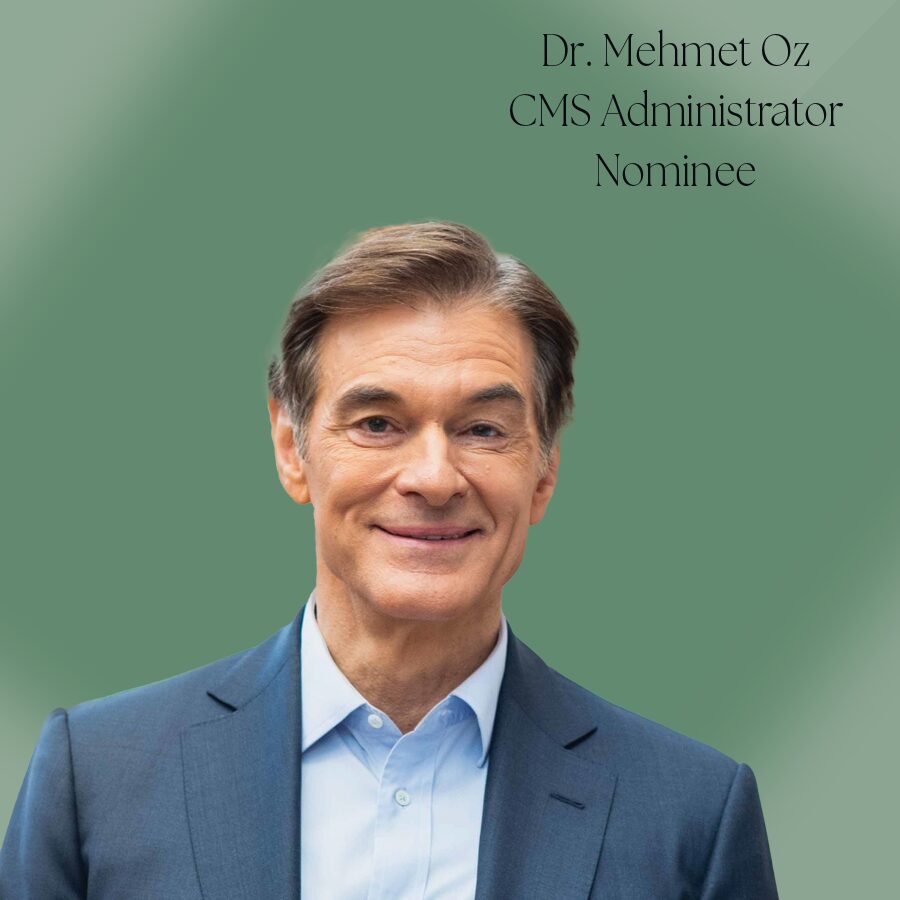
Dr. Oz Nomination Advances to Full Senate

by Tim Rowan, Editor Emeritus

Dr. Oz Nomination Advance to Senate

“Given your close ties to the industry that you would regulate, if you are confirmed, the public would have reason to question your impartiality and commitment to serving the public’s interest.”  — Senator Elizabeth Warren, letter to Dr. Mehmet Oz

Reuter’s Ahmed Aboulenein reported on March 12 that “Warren called on Oz to divest from his financial holdings related to industries regulated by the agency and commit to strong ethics safeguards.” Oz, of course, is President Donald Trump’s nominee for CMS Administrator, the agency most important to Home Health and Hospice providers.

Across the aisle, Missouri Senator Josh Hawley peppered Oz with questions about his position on transgender therapy. “You previously praised trans surgeries for minors and supported the use of puberty blockers for children. You discussed transgender therapy on your TV program and hosted transgender children.”

Hawley also questioned Dr Oz’s previous comments on abortion, adding: “I hope he’s changed his views to match President Trump! We need the Trump agenda at CMS.”

It goes without saying that a nominee who encounters challenges from the left and the right is facing an uphill battle toward Senate confirmation, especially when nominees this year can only afford to lose three votes from the majority party. What exactly has Dr. Oz said or done over his long career that may put his nomination in jeopardy?

Pulling Back the Curtain

Becker’s Hospital Review summarized Oz’s history as well as his answers to questions during his three-hour Senate hearing on March 14.

“The former TV personality answered questions about potential Medicaid cuts, the focus of the House’s February budget instruction that the Energy and Commerce Committee cut $880 billion over 10 years. Medicare and Medicaid are the largest programs under the committee’s oversight. (A March 5 Congressional Budget Office report said the only way to reach the $880 billion saving goal over the next decade, without raising taxes, would be through Medicaid or CHIP cuts.)”

While Dr. Oz did not directly respond to questions or reveal his stance regarding Medicaid cuts, he did have a prepared non-answer for the Senators. “I commit to doing whatever I can, working tirelessly to ensure that CMS provides Americans with superb care. Especially Americans who are most vulnerable. Our young, our disabled and our elderly.”

CMS Administrator Nominee Dr. Oz

On March 25, the Senate Finance Committee voted to advance Oz’s nomination to the full Senate. The panel voted 14 to 13, along party lines. 

Vision Statement

Prior to facing the challenging questions thrown at him from both sides of the aisle, Dr. Oz used his opening statement to outline a vision focused largely on modernizing CMS’s systems; addressing waste, fraud and abuse; and incentivizing Americans to make healthier lifestyle choices.

In the past, Oz had endorsed privatizing Medicare through a change that would essentially result in something that might be called “Medicare Advantage for All.” In his Senate hearing answers, Oz pivoted to the opposite argument. He cited problems of overpayments to Medicare Advantage plans, the need to limit prior authorizations, and emphasized the need to halt the practice of “upcoding” where providers or plans bill for treating patients as sicker than they actually are.

In 2010, Dr Oz hosted a 15-minute segment on his show called “Transgender Kids: Too Young to Decide?” in which he spoke to transgender children, their parents and a doctor who provided gender-affirming care.

Outlook

Considering the slim Republican majority in the Senate, Ox can afford to lose only three Republican votes in his bid to become the next CMS administrator.

# # #

Tim Rowan, Editor Emeritus

Tim Rowan is a 30-year home care technology consultant who co-founded and served as Editor and principal writer of this publication for 25 years. He continues to occasionally contribute news and analysis articles under The Rowan Report’s new ownership. He also continues to work part-time as a Home Care recruiting and retention consultant. More information: RowanResources.com
Tim@RowanResources.com

©2024 by The Rowan Report, Peoria, AZ. All rights reserved. This article originally appeared in Healthcare at Home: The Rowan Report. One copy may be printed for personal use: further reproduction by permission only. editor@therowanreport.com

Agency Management System for Fractional Home Care

by Tim Rowan, Editor Emeritus

Agency Management System for Fractional Home Care

There is a growing service sector within Home Care to provide in-home care to seniors living in Independent Living and Assisted Living facilities. We described the basics of the way it works in last week’s interview with Jessica Nobles. She pointed out that there was no software available for the kind of scheduling required by this type of home care. She wound up creating her own software to schedule on-site caregivers performing visits that can be anywhere from five-minutes to full, four-hour shifts.

Right after building the customized scheduling tool, Ms. Nobles met Tim and Gina Murray, who had been through an identical experience with their own agency, Aware Home Care. The difference between their stories was that both the Nobles’ and the Murray’s, after selling their respective agencies, embarked on different paths. Jessica and Clint went the consulting route and Tim and Gina formed a software company, CinchCCM, Community Care Made Easy. We spoke to them this week to hear the rest of the story.

Agency Management System Win-Win-Win

At no cost to the residential facility itself, a home care agency places one or more caregivers on the premises. IL or AL residents join a kind of co-op to be eligible to request in-home services. Some agencies who offer this service accept requests for traditional shifts, five-minute check-ins, and pretty much everything in between.

Many request regular morning breakfast help, others tuck-in services. Most agencies in this sector allow registered members to request unscheduled, as-needed help. To accommodate the needs of all members, an agency will add caregivers as the number of participants grows. The Murray’s outlined the benefits to all involved.

Gina Murray
  • Caregivers like predictable income. They are paid for their entire time on-site, whether they are in a member home or on call between visits.
  • IL and AL owners find that the level of care keeps residents in their facilities longer by delaying the need to move to a nursing facility.
  • Families gain peace of mind, knowing their older loved ones have a caregiver nearby and on call all day, sometimes overnight.
  • Home Care agencies report enhanced caregiver satisfaction and retention, along with a steady, predictable payroll.

Clearly, agency management software was not intended to automate this type of arrangement.  

Not Your Parents' Agency Management System

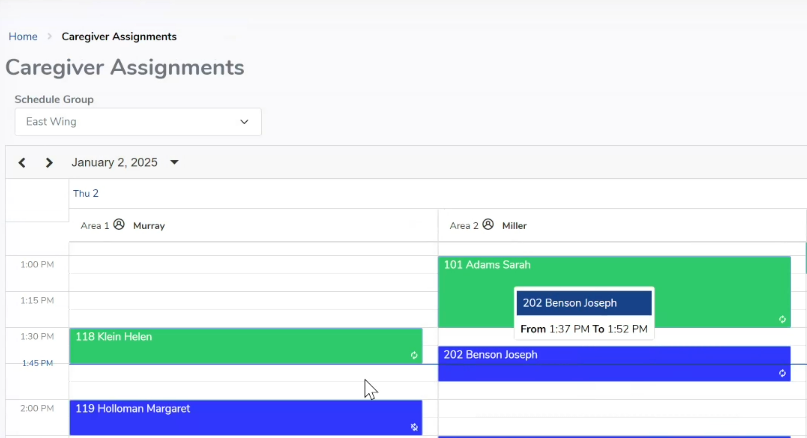
CinchCCM Screenshot

The Murray’s designed a system that displays schedules on a color-coded, calendar grid, with a column for each day and row for each 15-minute unit. Then they began to add features.

  • caregivers can tweak scheduled visits by drag and drop
  • remote family members can see scheduled and completed visits as well as caregiver notes
  • on the system’s mobile app, each caregiver can see the schedule of all other on-site colleagues. If a client unexpectedly needs more time and a caregiver has another visit coming up, that caregiver can find an available colleague and ask, through a secure message on the app, for someone to fill in.
  • on the system’s mobile app, each caregiver can see the schedule of all other on-site colleagues. If a client unexpectedly needs more time and a caregiver has another visit coming up, that caregiver can find an available colleague and ask, through a secure message on the app, for someone to fill in.
  • a management dashboard displays real time charts of caregiver utilization and gross profit. Agencies with multiple sites can report each site’s data separately and roll all sites up into one combined report.

Tim Murray explained that version 5.0 is nearly finished and ready to be released later this year. “It has been a long, slow development process,” he said, “and the first version was functional but simple. Adding the mobile app was a big step forward and very popular with the field staff. Management reports and real-time charts brought CinchCCM from a scheduling application to a full agency management system.”

Pricing, Growth, Evolution

CinchCCM is priced per client, based on average daily census at the end of each month. The Murray’s found this policy to be both manageable and fair. Their customers have a predictable revenue stream if most residents choose the monthly retainer option, and they have a predictable software cost for budgeting.

As word spread and software sales grew, Tim and Gina Murray sold Aware Home Care, formed a corporation, and turned their efforts to feature development, customer support, and sales. Those efforts have led to growth to 60 clients across the country. “As the so-called fractional home care concept grows,” Gina Murray concluded, “we want to be there to make it a smooth experience for those who give it a try.”

# # #

Tim Rowan The Rowan Report

Tim Rowan is a 30-year home care technology consultant who co-founded and served as Editor and principal writer of this publication for 25 years. He continues to occasionally contribute news and analysis articles under The Rowan Report’s new ownership. He also continues to work part-time as a Home Care recruiting and retention consultant. More information: RowanResources.com
Tim@RowanResources.com

©2025 by The Rowan Report, Peoria, AZ. All rights reserved. This article originally appeared in The Rowan Report. One copy may be printed for personal use: further reproduction by permission only. editor@therowanreport.com

Fractional Home Care

by Tim Rowan, Editor Emeritus

Solve Nagging Problems; Raise Revenue

Along with the rest of the Private Pay sector, Jessica Nobles’ Eastern Tennessee agency was struggling with caregiver recruitment and retention. Finding good people is less than half the battle. To keep them, you have to pay a competitive wage and provide enough hours to ensure that wage translates into an attractive and predictable monthly income. We spoke with Jennifer, Founder of Home Care Ops, last week to learn one of her solutions.

Fractional Home Care

What Nobles calls “Fractional Home Care” is providing services in a senior living community with one or more caregivers stationed on site. Residents pay a membership fee or pre-purchase a package of hours. The agency is thus guaranteed a small revenue base and clients are free to request services for a few minutes or a few hours on an as-needed basis.

“Our caregivers love this arrangement because it virtually guarantees them full-time pay. They remain on site at the facility for a contracted shift, which can be their choice of daytime or night hours. If demand warrants it, we will assign more than one caregiver at a time.”

Jessica Nobles

Founder, Home Care Ops

She added that the advantage to the agency is that nearly all of a caregiver’s day is paid hours. There are no mileage reimbursements and no paying for travel time or idle time. “Think of it as a co-op,” she continued. Ten clients can share one caregiver. They get all the care they need and our caregivers are earning for their entire day.”

The benefit accrues to independent living communities as well. Their arrangement with an outside Home Care agency means they no longer have the burden of hiring and retaining a caregiving staff of their own and their residents get better care. The residents pay for the services, not the facility, and they have the option of using the on-site caregivers as needed or through the pre-purchase plan of a block of ten or twenty 15-minute units.

A Typical Scenario

Jessica offered an example of how Fractional Home Care often works. An Assisted Living Facility resident lives independently but occasionally needs help with showers, or help getting to and from the community center, etc. In a typical home care setting, that person would have to bring in a caregiver for four, six, or eight hours, though less than an hour is needed. The family speaks with the onsite agency to arrange for the specific help needed, whether it is a few minutes

Fractional Home Care ALF

every other day or an hour every day. The agency offers a membership at flat fee and both parties get exactly what they need. The caregiver is available to add other residents to his or her schedule, making it possible to achieve a 40-hour work week.

“Some patients might need traditional daily care as they might get from any other agency,” Jessica explained. “They can contract for that for around $1,600 per month. Our caregiver can come multiple times a day since there are no drive time concerns.” She said that not every client needs a membership program. Some prefer pre-sold units, perhaps buying five 15-minute visits in advance. “They never have to pay for down time. Our caregivers never sit idle should their work be done before their shift is up.” 

Jessica Nobles Fractional Home Care

Fractional Home Care Improves Agency Reputation

Jessica has found that her agencies have earned a reputation for such excellent care that they have occasionally replaced franchise home care organizations locally that have national contracts with national ALFs. Some of these facilities have been dissatisfied with the care they were getting with their national organization’s contracted agency. When this happens, they seek a local agency to replace them. Jessica has seen this several times when the franchise was not staying on site.

“We explain our fractional model, with someone on site at specified times when at least three residents have signed on, and one caregiver per 10 clients. The more clients who sign up, the more caregivers we station at the facility. This leads to an additional benefit for the ALF. This level of service delays the day the family decides to move Mom from their community to a nursing facility.”

Fractional Home Care has been so successful, the word spread to other residential communities. Nobles’ company had had to turn some away. When that happened, she and her partner and husband began to teach the system to other agencies.

There was one obstacle, she admits. There were no Agency Management Software systems that could be adapted to the fractional way of providing care. She and her team finally created their own…right before she found one on the market that met their needs. Jessica introduced us to Tim and Gina Murray, co-founders of Cinch CCM. Jessica recommends Cinch CCM to fractional home care agencies. We have scheduled a demo and will have a review in the near future.

# # #

About Jessica Nobles

With over a decade of Private Duty Home Care leadership and knowledge, Jessica Nobles worked her way up through every position from Caregiver, Operations Coordinator, Franchise Developer, and Independent Agency Owner. As the founder and operator of Nobility Care Solutions, she grew her revenue to six figures within the first year of business through grassroots marketing, creative community engagements, and referral partnerships. She is also the Executive Administrator for Home Care Ops where she coaches, consults, and empowers other home care owners and operators to create operational systems and strategies that build lasting business success and consistently increases revenue.

Tim Rowan, Editor Emeritus

Tim Rowan is a 30-year home care technology consultant who co-founded and served as Editor and principal writer of this publication for 25 years. He continues to occasionally contribute news and analysis articles under The Rowan Report’s new ownership. He also continues to work part-time as a Home Care recruiting and retention consultant. More information: RowanResources.com
Tim@RowanResources.com

©2024 by The Rowan Report, Peoria, AZ. All rights reserved. This article originally appeared in Healthcare at Home: The Rowan Report. One copy may be printed for personal use: further reproduction by permission only. editor@therowanreport.com
Threats to Your Business

by Tim Rowan, Editor Emeritus

Threats to Your Business

Two seemingly unrelated news items jumped out at me that could be threats to your business while I was away tending to funeral preparations for my brother’s wife. Before I analyze those reports, please indulge me as I start with a personal note. I cannot speak highly enough of the end-of-life care my sister-in-law received from the team at Dynamic Hospice of the Los Angeles area, coordinated by longtime friend of The Rowan Report, Michelle Hofhine. They deserve more than this simple public thanks can accomplish.

Health Insurance's Uncertain Future

In a February 7 article for Axios, Caitlin Owens speculates that the Trump administration’s economizing efforts may eventually move to health insurance, particularly the excessive profits from their Medicare Advantage business lines. Explaining why both Moody’s and S&P Global Ratings downgraded their outlook from “stable” to “negative,” Owens cited rising medical costs, the inability to fully offset those costs by hiking premiums, pharmacy benefit manager tightening the screws, and recent strain in operating performance as regulators crack down on insurance abuses in both Medicare Advantage and Medicaid.

Image of letters spelling health and wealth

The author of the piece also mentioned the trend of large providers refusing to renew MA contracts due to underpayment and unjustified care denials. Some employers, she said, are bypassing insurers and contracting directly with providers. The inability to provide service to MA beneficiaries, who make up 50% of the Medicaid patients, could be a threat to your business and the care at home industry.

The downside of this analysis for Home Health and Hospice providers, as well as Medicare Home Care agencies, is that MA and Managed Care may start to shift more costs to their customers to make up their “losses.” The upside is that this is another opportunity for the industry as a whole to renew its advocacy efforts to try again to convince government payers that in-home care saves them more than it costs them.

It is too soon to predict what policy changes HHS Secretary Kennedy and CMS Administrator Oz will enact, but it is safe to assume they will adopt the White House’s goal to slash government spending. During a time when private payers see their margins squeezed and public payers are looking to cut costs, renewing our sector’s decades-long message that we are the quintessential economizing solution may mean that message will finally be heard.

Private Equity Bad for Patients, Senate Finds

Closed run-down hospital

The second surprising report came from the U.S. Senate Budget Committee. In a scathing bipartisan report of an in-depth investigation spearheaded by Chuck Grassley (R-Iowa) and Sheldon Whitehouse (D-RI), the committee declared that “private equity investment in health care has negative consequences for patients and providers.”

Titled “Profits Over Patients,” the 162-page report focuses on two of the largest private equity firms that have recently invested in two large hospital systems. We mention it because there has been an atmosphere of celebration in recent years at post-acute care conferences about the renewed interest in Home Health and Home Care among investors.

Here are some of the reasons the Senate recommends caution:

  • Emphasis on profit over quality of care: “Documents obtained by the Committee detailed how private equity’s ownership of hospitals earned investors millions, while patients suffered and hospitals experienced health and safety violations, understaffing, reduced quality of patient care and closures.”
  • “Chronic understaffing” leads to much longer wait times for patients
  • Closures for “economic reasons” force patients to drive long distances for care
  • Higher frequency of health and safety violations puts patients at risk
  • Minutes of some board meetings show discussions focus only on profit maximization tactics — cost cutting, increasing patient volume, and managing labor expenses — with little to no discussion of patient outcomes or quality of care at their hospitals
  • In one extreme case, according to Senator Whitehouse, one firm “paid out $645 million in dividends and preferred stock redemption to its investors and shareholders, while it took out hundreds of millions in loans that it eventually defaulted on.

Senator Whitehouse added in the report, “Private equity investors have pocketed millions while driving hospitals into the ground and then selling them off, leaving towns communities to pick up the pieces.”

Let's Finish With Optimism

Three weeks is not enough time to evaluate the impact of any one four-year term in office. We have clues about the new administration’s approach to healthcare in general and in-home care in particular, but only clues. Perhaps the future is malleable. Perhaps now is the time to turn up the volume. We know patients prefer care in the home. Maybe, with our advocacy, this government will prefer it too.

# # #

Tim Rowan Founder Editor Emeritus
Tim Rowan is a 30-year home care technology consultant who co-founded and served as Editor and principal writer of this publication for 25 years. He continues to occasionally contribute news and analysis articles under The Rowan Report’s new ownership. He also continues to work part-time as a Home Care recruiting and retention consultant. More information: RowanResources.com
Tim@RowanResources.com

©2024 by The Rowan Report, Peoria, AZ. All rights reserved. This article originally appeared in Healthcare at Home: The Rowan Report. One copy may be printed for personal use: further reproduction by permission only. editor@therowanreport.com

Meet the CMS Administrator Nominee

by Tim Rowan, Editor Emeritus

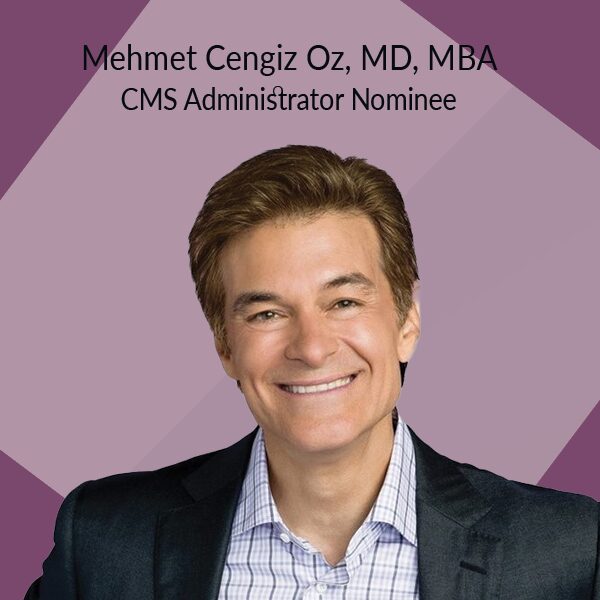
Mehmet Oz, MD, MBA is the CMS Administrator nominee in the new administration that assumes power on January 20. A popular TV personality and former gubernatorial candidate, the public side of Dr. Oz is well known, but the details of his life and his qualifications to head a $1.16 trillion government program less so. We reached out to the nominee’s PR firm on November 22 to request an interview but have not received a response. We gathered the following background information from his web site and other sources.

Heritage and Education

Mehmet Cengiz Öz was born on June 11, 1960 in Cleveland, Ohio, of Turkish immigrant parents. Raised in Wilmington, Delaware, he holds dual U.S. and Turkish citizenship and comes from healthcare roots. His father, Mustafa Oz, graduated at the top of his class at Cerrahpaşa Medical School in 1950 and moved to the United States to join the general residency program at Case Western Reserve University in Cleveland, where Mehmet was born. His mother, Suna Atabay, was the daughter of an Istanbul pharmacist.

Mehmet graduated with a biology degree from Harvard University in 1982. He earned an MD at the University of Pennsylvania School of Medicine and an MBA from Penn’s Wharton Business School in 1986. He completed his surgical training at NewYork-Presbyterian Hospital and served as a professor of surgery at Columbia University.

CMS Administrator Nominee Dr. Oz

Completing his general surgery residency and cardiothoracic fellowship at Columbia-Presbyterian Medical Center in New York City, Oz became an attending surgeon at NewYork-Presbyterian Hospital/Columbia University Medical Center in 1993. He was later appointed professor of surgery at Columbia University in 2001. An advocate for integrating alternative medicine with conventional practices, he co-founded the Cardiac Complementary Care Center in 1995.

During his time at New York-Presbyterian, Oz patented the Mitraclip, a small implantable clip that can be placed using a catheter to repair the heart’s mitral valve. Oz reported earning over $333,000 in royalties from that product in his 2022 disclosures.

Rise to Fame

Oz gained national attention through appearances on “The Oprah Winfrey Show.” Winfrey’s production company, Harpo Productions, and Sony Pictures produced the daytime syndicated program, “The Dr. Oz Show,” which debuted in 2009. It won 10 Emmy Awards during its run.

The program, which focused on health and wellness topics, aired until 2022, when he left it to run for the U.S. Senate in Pennsylvania, winning the Republican nomination and eventually losing to Democrat John Fetterman. Oz is also a prolific author, with eight of his books on the New York Times bestselling list. The Dr. Oz Show gained in popularity during its run but occasionally faced criticism for promoting unproven health products and practices.

Finances

Most of what can be learned about Oz’s personal finances comes from disclosures he made during his Senatorial campaign. He reported a salary of $2 million as host of The Dr. Oz Show and $7 million from his stake in Oz Media. He was also paid $268,000 as a guest host on Jeopardy in 2021. In addition to salaries, Oz and his wife, Lisa, reported investments in big tech, health care, private equity funds, and various real estate holdings.

Oz’s 2022 financial disclosures showed Amazon stock worth up to $25 million; Microsoft, Apple, and Alphabet (Google) stock, each valued up to $5 million, and Nvidia stock valued up to $1 million. He also owned stock in UnitedHealth Group worth up to $500,000, and in CVS Health (Aetna), valued at up to $100,000. They also owned shares in privately owned gas station and convenience store chain Wawa valued between $5 million and $25 million. His 2022 disclosures showed he earned $5 million in dividends from his investment in Wawa.

The Oz’s also reported a real estate portfolio that includes residential and investment properties in New Jersey, New York, Pennsylvania, Florida, Maine, and his parents’ native country, Turkey, each valued from $1 million to $25 million. His 2022 disclosures also showed an investment property in Palm Beach and a cattle farm in Okeechobee, Florida, worth up to $5 million each, and $500,000 worth of cattle.

In addition to these investments, Oz currently runs the non-profit organization HealthCorps, which trains teenagers to share the organization’s curriculum on mental health, physical health, and nutrition. He also serves as Global Advisor and Stakeholder at iHerb, a company that sells supplements, personal care, grocery, and beauty products.

CMS Administrator Nominee

What Kind of CMS Would Oz Create?

What we know of Dr. Oz’s opinions regarding Medicare and Medicaid we learned from his 2022 Pennsylvania campaign message. During that campaign, Oz was a vocal supporter of privatizing Medicare. In 2020, Oz co-wrote an opinion piece in Forbes, suggesting “an affordable 20% payroll tax” to fund a “Medicare Advantage For All” program that could replace private insurance.

His plan, co-authored with Steve Forbes, suggested a 20% payroll tax, half paid by the employer, which the government would use to purchase a Medicare Advantage plan for everyone. The proposal did not explain how this would replace private insurance as MA plans are administered by insurance companies. Of course, this was four years ago, before it was widely known that MA plans pad patient assessments and deny care at a higher rate than straight Medicare does.*

CMS Administrator Nominee Outlook

Uncertainties to keep watch over include the CMS Administrator’s supervision over Medicaid and negotiating Medicare drug prices. If confirmed by the Senate, Oz would have the power to approve states’ requests to change their Medicaid plans, such as adding work requirements for beneficiaries.

He will also oversee drug price negotiations. The Inflation Reduction Act gave CMS the power to negotiate with pharmaceutical marketers to reduce the price of popular medications for people covered by Medicare Part D. The first round of negotiations concluded in August, and the next slate of drugs up for negotiations will be announced in February.

In nominating Dr. Oz, the President-elect said Oz will “help cut waste and fraud.” Whether that goal or seeing to the health of the more than a third of Americans insured through CMS programs becomes Mehmet Oz’s priority should be the first question asked in his Senate confirmation hearings.

Statement from National Alliance for Care at Home

I congratulate Dr. Oz on his nomination for CMA Administrator, I believe it generally is a good thing for patient care when physicians engage in public service and public policy leadership. I am still learning about his priorities and approaches for CMS and am looking forward to speaking with him about the importance of a vibrant and growing care at home sector. Home care and hospice offers CMS the greatest win-win opportunity in American healthcare; people get the independence and dignity they want and deserve while the taxpayers and families save on the costs of unnecessary hospitalization and institutionalization.

Steve Landers, MD, MPH

Chief Executive Officer, National Alliance for Care at Home

# # #

Tim Rowan, Editor Emeritus

Tim Rowan is a 31-year home care technology consultant who co-founded and served as Editor and principal writer of this publication for 25 years. He continues to occasionally contribute news and analysis articles under The Rowan Report’s new ownership. He also continues to work part-time as a Home Care recruiting and retention consultant. More information: RowanResources.com
Tim@RowanResources.com

©2024 by The Rowan Report, Peoria, AZ. All rights reserved. This article originally appeared in Healthcare at Home: The Rowan Report. One copy may be printed for personal use: further reproduction by permission only. editor@therowanreport.com

Product Review: Startup Reimagines the EMR

by Tim Rowan, Editor Emeritus

Catherine Zhang was thriving in product engineering while Mayur Pandya held a similar leadership role for Silicon Valley’s Workday. Their futures were predictable and bright until Catherine’s close friend unexpectedly passed away, changing her career goals as profoundly as her heart.

Over a cup of coffee, Zhang and Pandya learned they both had close family working in health care. The conversation turned to how they might apply their product development expertise to, as they put it today, “improve patient outcomes, empower care teams, and reduce the cost of care in the U.S.”

Their first task was to identify which healthcare sector had a pain point that needed their talents most. Naturally, they found their way to the $129 billion Home Health sector. Ms. Zhang told us they were taken aback by the severity of the harm done to Home Health by Medicare Advantage plans.

Catherine Zhang Narrable

“We learned that over 600 HHAs had closed their doors in the previous five years. MA reimbursement ranges from 60% to 70% of what Medicare pays, and the administrative burden imposed by MA plans is seven to eight times what it is for traditional Medicare. Making matters worse, or perhaps because of these pressures, we found the turnover rate among HHA nurses to be 31%.”

Mayur Pandya Narrable

Fast Forward Two Years

Working together, the pair attracted investors, additional coders, and, most importantly, experienced Home Health advisors and product designers. What began as an idea to ease the workload on the nurse in the field grew into a full-fledged electronic medical record system, complete with AI-enabled intake, scheduling, revenue management, physician signatures, and quality control. Naturally, created in the 2020’s, the new system is built around Artificial Intelligence tools. They dubbed it “Narrable.”

“What we wanted to do,” Ms. Zhang continued, “was to harness the power of AI to eliminate the inefficiencies we were learning from owners and nurses within HHAs. Some spend hours completing assessments and visit notes in the evening because ‘it is too hard to document in the patient’s home.’ Many told us that intake, scheduling, chasing physician signatures, and productivity tracking are too unpredictable or too complex for their existing EMR and they resort to multiple spreadsheets.” One HHA owner told Zhang that he “spent $500,000 last year on double data entry.”

Narrable Features We Saw

Narrable’s roots are in the field nurse’s experience. Ms. Zhang explained that the system’s clinician-centric design can eliminate tens of thousands of “invisible” clinician work. In the product demonstration she walked us through, we were able to understand how an AI engine might save work by eliminating both steps and errors.

    • Scheduler analyzes each clinician’s capacity, ability to accept an additional patient, and geographic location, automatically recommending the best person to take a new case. Still, a human makes the final decision.
    • OASIS assessment answers are automatically checked against referral documents and internal logic quality checks are performd.
    • Clinical notes benefit from AI pre-filling demographic data, reminding the clinician of OASIS determinations and goals stated on the Plan of Care.
    • Eligibility is checked against payer data and prior Home Health admissions
    • Physician PECOS integration auto-fills fields, eliminating repetitive data entry
    • Claims management includes:
      • alerts to find uncompleted tasks that may delay billing
      • automated claims submission
      • automatic monitored and posted remittances

Lastly, Narrable offers a suite of configurable management reports that check for maximum allowable PDGM revenue, HHVBP outcomes that may affect adjustments, and real-time financials. A configurable financial report displays paid vs expected revenue, A/R, adjustments, and denials.

Our Narrable Recommendation

At last month’s inaugural conference of the new National Alliance for Care at Home, we witnessed a virtual AI explosion. Every established tech company and a plethora of startups are diligently experimenting to identify the appropriate role for artificial intelligence in Home Health and Hospice. As with all breakthrough technologies, there will be a race to the finish line, with the large, established companies enjoying a head start and others scrappily inventing and innovating with no legacy products acting as a ball and chain.

In this writer’s opinion, Zhang and Pandya have come up with something different. Any HHA thinking about launching an EMR search and evaluation project would not regret the time invested in giving Narrable a look.

# # #

Tim Rowan, Editor Emeritus

Tim Rowan is a 30-year home care technology consultant who co-founded and served as Editor and principal writer of this publication for 25 years. He continues to occasionally contribute news and analysis articles under The Rowan Report’s new ownership. He also continues to work part-time as a Home Care recruiting and retention consultant. More information: RowanResources.com
Tim@RowanResources.com

©2024 by The Rowan Report, Peoria, AZ. All rights reserved. This article originally appeared in Healthcare at Home: The Rowan Report. One copy may be printed for personal use: further reproduction by permission only. editor@therowanreport.com

Here We Go Again

by Tim Rowan, Editor Emeritus

OIG Accuses Medicare Advantage Providers of Padding Patient Assessments...Again

“Hello, this is your Medicare Advantage company calling. I am one of their clinicians and it is time for us to update your health assessment. If you will agree to a home visit, we will send you a $50 gift card to CVS.”

This phone call my brother received is typical, increasingly common, and not necessarily on the up-and-up, according to a new report to CMS from the Department of Health and Human Services Office of the Inspector General (OIG). OIG found that these home visits, known in the insurance industry as “Health Risk Assessments,” (HRA) when coupled with HRA-related claims data, increased Medicare Trust Fund payments to MA companies $7.5 billion in 2022 and twice that in 2023. Most of it went to the top 20 companies.

Concerned woman on a telephone call

The October 2024 report, “Medicare Advantage: Questionable Use of Health Risk Assessments Continues to Drive Up Payments to Plans by Billions,” accuses the industry as a whole of improperly padding payments by “finding” new health conditions during these HRA’s that may indicate the need for additional care at additional cost to the company. It questions the use of MA plan employees doing these assessments instead of relying on the customer’s primary care physician’s reports.

OIG references CMS’s own report, “Part C Improper Payment Measure (Part C IPM) Fiscal Year 2023 (FY 2023) Payment Error Rate Results,” to determine that gross overpayments to Medicare Part C plans in 2023 amounted to just over six percent of total payments, or $14.6 billion. The net increase to MA plans, after adjusting for underpayments, brought the percentage to 4.62. Total 2023 payments to MA plans came to $275,605,962,817.

The report also points out that identifying additional customer need during an HRA does not necessarily translate into the insurance company paying for additional care.

OIG Recommendations

In addition to implementing prior OIG recommendations, the new report asks CMS to:

    • Impose additional restrictions on the use of diagnoses reported only on in-home HRAs or chart reviews that are linked to in-home HRAs for risk-adjusted payments,
    • Conduct audits to validate diagnoses reported only on in-home HRAs and HRA-linked chart reviews, and
    • Determine whether select health conditions that drove payments from in-home HRAs and HRA-linked chart reviews may be more susceptible to misuse among MA companies.

CMS concurred with OIG’s third recommendation but rejected the other two.

While the entire 38-page report is well-worth reading, OIG has also published a one-page summary.

At this year’s annual conference of The National Alliance for Care at Home, the new merger of NAHC and NHPCO, a number of education sessions were devoted to teaching Home Health agency owners how to negotiate with Medicare Advantage plans in order to minimize losses and better care for patients who chose those plans. Comments included the high rate of care denial, unreasonable prior authorization policies, and slow payments as compared to traditional Medicare. Other healthcare entities have chosen a potentially more effective response: Just Say No. 

Hospital systems have had enough

According to a roundup of recent decisions by large and small healthcare systems in Becker’s Hospital CFO Report (10/25/24), no fewer than 30 healthcare providers are severing their relationships with one or more MA plans, with another 60 who told Beckers they are seriously considering the same move.

Doctor tears up contract

States Have as Well

A sister publication, Becker’s Payer Issues, reported in its October 23 edition that more and more states are issuing fines against MA plans for violations ranging from excessive denied claims to collection of co-pays when none was required.

How Much Longer?

All of this demands a serious question. How much longer will Home Health continue to tolerate abuse by these giant, for-profit payers now that a different path forward has been paved by hospital systems and state regulatory arms? The loudest voice for Home Health to join the “Just Say No” movement over the last few years has been that of Bruce Greenstein, CTO of LHC Group. Following his company’s acquisition by UnitedHealth’s Medicare Advantage division, Optum, his less loud message is to work with MA plans to teach them what Home Health is and what it can do for them.

Statement from Dr. Landers

In his inaugural address to The Alliance last month, new CEO Dr. Steven Landers called for our entire industry and everyone taking a paycheck from it to join him in advocacy. We fully support that call to action, recognizing that no national association can influence lawmakers and CMS regulators without member support, but he was referring to Medicare rules and payment structures. As we know, that includes less than half of Medicare beneficiaries today. Thanks to deceptive TV ads during open enrollment every year, that number will continue to shrink.

Widespread Advocacy

We need to turn at least part of our advocacy focus to the dominant payers, the MA divisions of insurance companies. Read the Beckers report on the 30 healthcare systems that have torn up their MA contracts. Read the companion report about the epidemic of care denials. Yes, it is a David vs. Goliath story, with even the largest organizations in Home Health dwarfed by the size of the payers. As so many hospital systems have shown, however, it is possible to switch from begging for a few more cents per visit to forcing a plan to beg you to take their patients.

It will only work though if everyone does it. We have already lost LHC Group, and Optum is in the final stages of adding Amedisys to their stable. Out of 11,000 HHAs, there is still a chance we have a united voice loud enough to be heard and taken seriously.

Final Thoughts

One of their improper cost-cutting tactics is routine care denial. For example, the Labor Department alleged that UnitedHealth subsidiary UMR denied all urine drug screen claims from August 2015 to August 2018 without determining whether a claim was medically necessary. In my brother’s case, following his wife’s HRA by her MA company, with no additional care offered, he made the tough choice to put her on in-home hospice care. The assessing nurse immediately detected she had a UTI and ordered the appropriate antibiotics. She responded quickly and may be discharged from hospice soon. Hospice care, of course, is paid by traditional Medicare, not Medicare Advantage.

Tim Rowan, Editor Emeritus

Tim Rowan is a 30-year home care technology consultant who co-founded and served as Editor and principal writer of this publication for 25 years. He continues to occasionally contribute news and analysis articles under The Rowan Report’s new ownership. He also continues to work part-time as a Home Care recruiting and retention consultant. More information: RowanResources.com or contact Tim at Tim@RowanResources.com

©2024 by The Rowan Report, Peoria, AZ. All rights reserved. This article originally appeared in Healthcare at Home: The Rowan Report.homecaretechreport.com One copy may be printed for personal use: further reproduction by permission only. editor@homecaretechreport.com

The Great Hospital/Home Health Divorce Movement

by Tim Rowan, Editor Emeritus

Hospitals Divesting Home Health Departments

Is this an early omen of two related trends? A number of hospitals are divesting their home health departments, while large health insurance companies are swallowing up large home health companies.

Beckers reported on October 23 that Providence Health plans to spin off its home-health services along with hospice and palliative care into a new joint venture that will be managed by Compassus, a for-profit, Tennessee-based provider of home care services in 30 states. The move will affect about 700 patients receiving care every day in Spokane County.

The Catholic not-for-profit health system’s agreement with Compassus will be known as “Providence at Home with Compassus.”

After a regulatory review, the deal is expected to close in early 2025. Providence and Compassus will each own a 50% stake. The new venture is part of a strategy to expand and improve home-based services, but also to cut costs. Providence, which operates Sacred Heart Medical Center and Holy Family Hospital in Spokane, declined to disclose the financial details of the joint venture.

LHC Group Was Not Enough

A news release that surfaced on October 25 said that UnitedHealth Group representatives are set to meet with Justice Department officials to make the case for the insurance giant’s acquisition of Amedisys to be approved. The meeting is often the last step before the Justice Department decides whether to file a lawsuit challenging an acquisition, according to the news outlet. 

Amedisys operates more than 500 facilities in 37 states. Shareholders approved the acquisition in September 2023, but the deal has been held up by regulatory scrutiny. Justice Department officials are concerned the deal could increase prices for home health, according to Bloomberg. 

Hospitals Divesting Home Health

If approved, this would be phase two of UnitedHealth’s historic foray into our sector. United acquired LHC Group, a home health provider with more than 900 locations, in February 2023. If UnitedHealth’s acquisition of Amedisys is approved, the company would own 10% of the entire home health market, with significant overlap between Amedisys and LHC acquisitions in some Southern states, according to Bloomberg. 

Regulators could approve the deal with some changes to address competition concerns, Bloomberg reported. In August, Amedisys and UnitedHealth agreed to sell a reported 100 home health and hospice care centers to VitalCaring Group if the merger is approved.

Three or More is a Trend

UnitedHealth is not the only insurance company interested in owning home health agencies and hospices:

  1. Humana acquired Kindred, one of the nation’s largest HHAs, and rebranded it CenterWell Home Health. Today it operates more than 360 home health locations in 38 states. In 2023, the company said it would expand into in-home primary care in several states.
  2. In 2023, CVS Health acquired home health provider Signify Health for $8 billion. The company won a bidding war for Signify over UnitedHealth Group, Amazon and Option Care Health. Signify Health has more than 10,000 clinicians.
  3. Evernorth, Cigna’s health services arm, offers home health services with a staff of more than 430. In January, Cigna CEO David Cordani said home health was one area where it would focus on future acquisitions.
  4. In 2021, Centene sold its majority stake in home-based primary care provider U.S. Medical Management. Centene retained a minority stake in the company.

Our healthcare sector is changing as the entire U.S. healthcare scene changes. Next week we will delve further into the ramifications of the CMS 2025 final rule and of course the political events of this week.

# # #

Tim Rowan, Editor Emeritus
Tim Rowan is a 30-year home care technology consultant who co-founded and served as Editor and principal writer of this publication for 25 years. He continues to occasionally contribute news and analysis articles under The Rowan Report’s new ownership. He also continues to work part-time as a Home Care recruiting and retention consultant. More information: RowanResources.com
Tim@RowanResources.com

©2024 by The Rowan Report, Peoria, AZ. All rights reserved. This article originally appeared in Healthcare at Home: The Rowan Report. One copy may be printed for personal use: further reproduction by permission only. editor@therowanreport.com