by Kristin Rowan | May 30, 2024 | Admin, Artificial Intelligence, Vendor Watch
by Kristin Rowan, Editor
Having a lot of data can help grow your business, streamline processes, improve efficiencies, and make your agency more profitable. But, if you don’t know how to use the data, or simply don’t have the time and man-power to analyze the data, then those hidden treasures waiting in all that data remain hidden. Understanding the value of that data, Curantis Solutions partners with Amazon HealthLake to help you harness it.
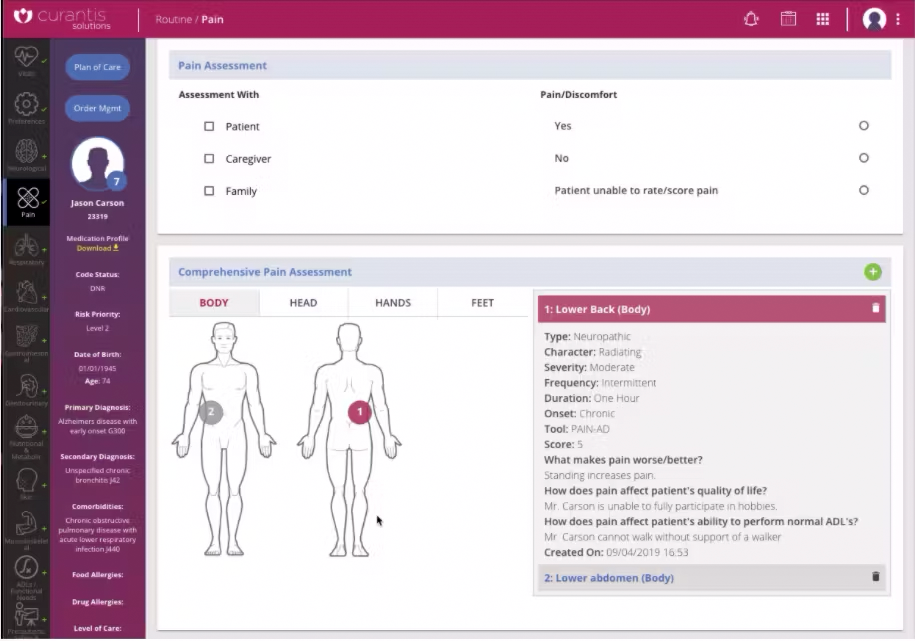
Curantis Solutions is a Texas based company delivering value to hospice and palliative care agencies. Their cloud-based management solutions help you increase operational and financial efficiencies while still offering well-coordinated and high quality patient care. The platform works to address two common pain points in our industry: siloed data and software systems that operate separate from each other. Curantis Solutions re-imagines workflows to reduce hours spent on tasks outside of direct patient care.
The Impetus for Change
New CMS regulations and the HL7 Fast Healthcare Interoperability Resources (FHIR) create standards that providers and health care plans must meet. This could help home health and hospice agencies with clinical data issues. FHIR imagines a unified EMR system for greater interoperability. Facing FHIR compliance, Curantis Solutions turned to AWS to help centralize their data. Using Amazon HealthLake, a fully managed FHIR service, Curantis was able to make their client data interoperable.
The Solution for Curantis Solutions
Using Amazon’s Working Backwards process, Curantis found a customer-centric solution. AWS helped Curantis work through:
- Business objectives
- A free, introductory program, “Gain Insights”
- Cloud set-up and solution design
Curantis also implemented Amazon Kinesis to help collect, process, and analyze real-time data. All of Curantis’s data is now easily accessible, opening the door for AI, analytics, and business intelligence.
Curantis Solutions and Amazon HealthLake Data Processing and Analytics
Using Amazon, Curantis Solutions can build visual dashboards and reports. The visual reports help agency administrators understand and apply the data at a glance without spending hours analyzing the data points. The integration allows data analysis in almost real time. The Amazon suite of services aids Curantis in growth and enhanced data processing for their clients. It also allows Curantis to highlight powerful industry and patient data trends. These key indicators will help with critical decision making for continued high quality patient care.
This new platform adds expanded abilities to meet customer needs:
- Enhanced partner integrations
- Diverse way to prensent a patient-focused view
- The power to make predictions about a patient’s decline based upon chart data
- The ability for customers and internal stakeholders to easily explore data
Curantis Solutions was born from a desire to put hospice and palliative care first. With a genuine culture of caring, our team is dedicated to creating a refreshingly simple software experience that utilizes emerging technology, smart design and a cloud-native/serverless architecture to create an experience that is congruent with the technology you utilize in your everyday life. It’s time for hospice and palliative care software to make life easier vs creating arduous workarounds and added frustration. It’s time you experience Curantis Solutions!
AWS HealthLake is a HIPAA-eligible service offering healthcare companies a complete view of individual and patient population health data using FHIR (Fast Healthcare Interoperable Resources) API based transactions to securely store and transform their data into a queryable format at petabyte scale, and further analyze this data using machine learning (ML) models. Using the HealthLake FHIR-based APIs, healthcare organizations can easily import large volumes of health data, including medical reports or patient notes, from on-premises systems to a secure, compliant, and pay-as-you-go service in the cloud. HealthLake offers built-in natural language processing (NLP) models to help customers understand and extract meaningful medical information from a single copy of raw health data, such as medications, procedures, and diagnoses.
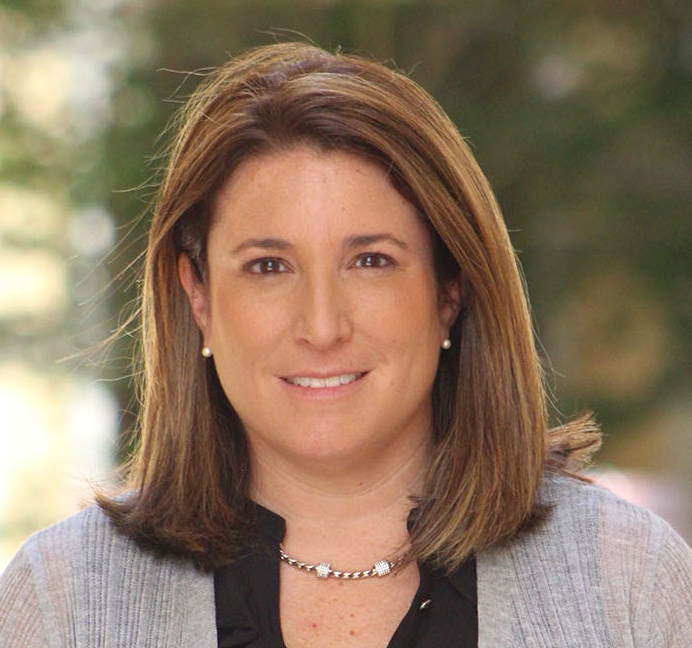
Kristin Rowan has been working at Healthcare at Home: The Rowan Report since 2008. She has a master’s degree in business administration and marketing and runs Girard Marketing Group, a multi-faceted boutique marketing firm specializing in event planning, sales, and marketing strategy. She has recently taken on the role of Editor of The Rowan Report and will add her voice to current Home Care topics as well as marketing tips for home care agencies. Connect with Kristin directly kristin@girardmarketinggroup.com or www.girardmarketinggroup.com
©2024 by The Rowan Report, Peoria, AZ. All rights reserved. This article originally appeared in Healthcare at Home: The Rowan Report. One copy may be printed for personal use: further reproduction by permission only. editor@therowanreport.com
by Kristin Rowan | May 23, 2024 | Artificial Intelligence, Clinical, Telehealth
Telehealth’s evolution includes the dramatic shift to at-home and hybrid healthcare models post COVID-19 as well telehealth’s role in program management and staffing. From telehealth’s earliest models to today’s automated systems, Telehealth and AI have future implications for care at home. I recently sat down for an interview with Dr. Pamela Ograbisz, a nurse practitioner with expertise in telehealth spanning almost two decades.
The Rowan Report:
First off, thank you for taking the time to talk with me today. Can you give our readers a brief introduction about you and your background?
Dr. Pamela Ograbisz:
I have been in telehealth for about 19 years now. I’ve been a nurse practitioner for 25 plus years. My specialty is cardiothoracic surgery and critical care. I have it was started out as a nurse in CT surgery, went back to school, became a nurse practitioner, then worked in CT also my entire career in critical care. We had an opportunity roughly 17 years ago when I was working in a cardiothoracic unit where we were connected by bridges and tunnels and water.
RR:
And, how did you come to be involved in telehealth?
Ograbisz:
We covered seven different sites and we weren’t able to get to all of our patients in a timely manner. We were struggling. We were trying to figure that out. A nurse reached out to us and was on a flip phone. She was taking photos and sending things and we were able to piece together a plan because of that. We literally all sat down that night after around and said, we need to do something like this. And we were attached to a medical school. And so we got them involved as well. And we built one of the first ICU bunkers in the classroom for telemedicine. And it was really sort of the beginning of something amazing. And I saw how well it worked. And I had the privilege of going around and building more of those programs.
RR:
And this eventually brought you to LocumTenens.com?
Ograbisz:
I was recruited by LocumTenens.com. When I first joined them, they had roughly 7% of their business was tele[health] and it was all behavioral health and they were really trying to expand their footprint. And of course, this was prior to COVID, we were still dealing with a lot of legislative issues and not everybody necessarily believed in it. It was still very scary for people and we were trying to sort of showcase what we could do. And so I came in and wrote a lot of policy and procedure and then COVID happened and we had to flip everything over it and we were poised to do so, which was fantastic.
So overnight we started turning on just loads of programs, 100% virtual. And then honestly, a lot of them never went back or they’ve come to a hybrid model. So now you can then convert those programs from traditional boots on ground all the time to more, you know, expandable, flexible models that have a hybrid option that includes telehealth.
RR:
Are you still operating the telehealth programs for LocumTenens.com?
Ograbisz:
My role now is I run LT Telehealth, which is a company inside of LocumTenens.com. We’re not a stand alone, but we do run all of the telehealth programs inside of the company. I also oversee all APP (advanced practice provider) relationships and how we’re growing that business and then our legislative arm.
RR:
LocumTenens.com is a full service staffing company, right? How are you finding the workforce shortage right now?
Ograbisz:
So, I would say that probably for a while, we commiserated with the health systems. But, filling the gaps from workforce shortage is our business.
I will tell you this, I graduated school a long time ago when I got out, it didn’t matter if you were a doctor or a nurse practitioner or a PA, your goal was to join a practice. You wanted to become a partner and you wanted your name on that building and you wanted to own a piece of that building. Nobody was owned by the hospital groups. I felt like with the evolution of the electronic health record, everything changed. People were asked to do a whole lot more. All of a sudden it became a lot of boxes to check a lot of things to tick. You sat on more and more committees. It became more and more about the paperwork. And then of course, with the advent of EHRs, billing changed; CMS codes changed how you got paid. People started bucking the system. And so what we saw then honestly was a shift. Now people coming out [of college] are like, yeah, I’m not joining a practice or I’ve left my practice. This gives me a new creative way to be part of medicine with flexibility which no one ever promised you when you got out of school. Right? No one ever said, “You want to be a cardiothoracic surgeon? Work, life balance is for you!” No, right? 80 hour weeks and sleeping in the hospital. You signed up for it; you knew it. And now people have been given a glimpse of what it can be and what it could be. And so I think that the physician shortage 100% exists, but COVID forced the gig economy. And so what we’re seeing is people wanting to work on their own terms and 1099 contracting does that for them.
RR:
How are you seeing telehealth working in care at home?
Ograbisz:
So, we’ve been working on the medical hospital-at-home pieces trying to figure out how we can sort of fit into that model. We’ve seen a lot of really wonderful pilot programs come out of Mayo and Hopkins and what they’re doing. I think the biggest problem right now is they’re not reimbursed well. That is making it very hard for other systems that don’t have deep pockets like those two facilities to scale those programs to any kind of large extent. What we would say is we know that it’s better. If a patient is too ill to leave home, we can facilitate a visit with the doctor right from the house. We’ve found it is especially helpful in the oncology program we launched when a doctor has to deliver bad news. The pushback we got was the patients are not going to be able to adapt and get that kind of news through a screen. But the patients really proved that wrong. It was the patients who said, “If someone’s going to tell me that I have six months [to live], I don’t really want to hear that in a sterile, cold, doctor’s office. I really am much happier if I could be in my own environment and process that information.”
RR:
What is standing in the way of a robust telehealth system for hospitals, physician groups, and home health?
Ograbisz:
I mean, CMS obviously needs to catch up with the telehealth. They were doing it during COVID. We need to extend that so that those payments, as long as the coding is all there, those payments need to come through for telehealth. But when you combine it with home health and hospice, you have that in person touch point. So the whole visit then is reimbursable, which is why a lot of hospitals and physician groups are partnering with home health, hospice, and palliative care or organizations now because you get that in-person visit, but everything is sent back to the physician to oversee changes in care, oversee changes in medication. At home care and physician care combined, the reimbursement goes into place because you have that touch point there, a face-to-face visit. They can verbally and visually see everything that’s going on, but then it goes back to the physician and they can then also get reimbursed for that. So there’s a lot of that with telehealth that is crossing over. Home health and hospice agencies need to start using telehealth and they need to be partnering with the ACOs and they need to be partnering with physician groups and now they have to partner with payers, especially as we move to the value based system. They have to partner with them because there’s only a certain amount of money that each patient is going to get. Some of it’s going to go to the hospital, some of it’s going to go to the physician and some of it’s going to go to the home health company and if there’s no partnership then there’s no money. So, you know, they have to take on some of that risk, but telehealth is the way to do that.
RR:
We’ve been talking a lot the last year or so about the rapid advancements in AI. What we’re seeing is that AI is impacting interoperability, telehealth, direct patient care, and so much more. What do you see happening in health care with Ai?
Ograbisz:
Yeah, I think it’s a huge unknown. I think everyone’s afraid to commit. I think there’s more scary stuff than there is positive stuff. So right now, what we’re worried about is someone taking on my identity, somebody being able to give advice in my voice with my likeness and put that out somewhere. So I think when you talk to providers, they see more of the scary side and how are we going to control it? But then you look at the most amazing pieces which is I can use AI to help me form a better diagnosis, to cultivate more ideas for how to treat things for each how process and procedure, right? How do we go about garnering information, which is what I think AI will help us do better in the telehealth space. I think it will be interesting to see where all of the programmatic goes. I think more towards like holographs and literally like Star Trek lead people into rooms, you know, life size images where it’s not just we go from just a 2D flat screen to really look at 4D, you know, being able to really see and perhaps even with scans and patient monitoring and you can hold the scanner up and I can see your liver, who knows? I think the possibilities are endless. But I think right now in all honesty, I think it’s fear…until we figure out a little bit of the regulatory side of it.
RR:
You’re also working on advocacy for telehealth on state and national levels. Will you follow up with us on how the next round goes as far as extending the reimbursement for telehealth?
Ograbisz:
Absolutely! I’ve written a lot of pieces that I’ll share with you. We’re always happy to collaborate.
RR:
Thank you, again for your time. Your insights were wonderful.
# # #
Kristin Rowan has been working at Healthcare at Home: The Rowan Report since 2008. She has a master’s degree in business administration and marketing and runs Girard Marketing Group, a multi-faceted boutique marketing firm specializing in event planning, sales, and marketing strategy. She has recently taken on the role of Editor of The Rowan Report and will add her voice to current Home Care topics as well as marketing tips for home care agencies. Connect with Kristin directly kristin@girardmarketinggroup.com or
www.girardmarketinggroup.com
©2024 by The Rowan Report, Peoria, AZ. All rights reserved. This article originally appeared in Healthcare at Home: The Rowan Report. One copy may be printed for personal use: further reproduction by permission only.
editor@therowanreport.com
For more information on Locum Tenens visit: https://www.locumtenens.com/
Pamela Ograbisz
Vice President of Clinical Operations
Pamela Ograbisz, Associate Vice President of Telehealth for LocumTenens.com. With 20 years of experience in cardiothoracic surgery and internal medicine, she is passionate about delivering quality healthcare in a timely manner. Dr. Ograbisz is confident that telehealth programs are the key to improving health and the overall patient experience
by Tim Rowan | May 16, 2024 | Admin, Artificial Intelligence, Clinical, New Tech, Outcomes, Product Review, Vendor Watch
by Tim Rowan, Editor Emeritus
For better or worse, healthcare has begun the inevitable adoption of Artificial Intelligence. Before you consider adopting AI technology, know that there is a wrong way and a right way to use AI in healthcare. In a companion article this week, we describe the criticism insurance companies are getting for deploying AI in healthcare to harm patients. As a balance, here is a review of a product that we find to be using AI in healthcare to help both patients and Home Health Agencies.
The Problem
Home Health referral documents from physicians or hospitals can consist of more than 100 electronically transmitted pages. Some agencies report occasional packets exceeding 1,000 pages, often in a variety of data formats. Some are standard data formats, such as a face sheet, but most are unstructured, consisting of images or narrations, sometimes in paragraphs, sometimes in incomplete sentences. Worse, patient data interoperability can be limited by unstructured data.
More often than not, most of these pages are never read. Thoroughly interpreting that much data is nearly impossible for a human. Consequently, nurses too often approach an admission evaluation visit with an incomplete picture of a patient. The result can be gaps in care or treatment, inaccurate OASIS assessments, incomplete or poorly sequenced diagnosis codes, and improper care plans. These obstacles can impact both patient outcomes and agency revenue.
One Newly Available Solution for the Right Way to use AI in Healthcare
We recently attended a product demonstration and followed it up with updated descriptions to learn details about new product developments. Over the next three months, Select Data, in full disclosure one of our sponsors, will be introducing an AI-powered suite of products that has been designed over many years of development to support clinical, data driven decision-making. One by one, it addresses the problems described above.
The new system, SmartCare, empowers clinicians to harness previously hidden insights while reducing bias and cognitive overload. It enables them to steer their decisions with enhanced precision while maintaining their pivotal role in patient care, eliminating one of the common reasons many Home Health administrators hesitate to invite AI into agency processes. It does, however, make the care team’s job easier and facilitates better decision-making.
- AI can read those 100 to 1,000 page referral documents in minutes, where a human may require days.

- SmartCare uses AI to synthesize relevant medical history to provide a care snapshot highlighting the key diagnosis, focus and considerations for care, and recommended OASIS clinical discipline. It highlights any areas for clarification needed from physician or admitting nurse.
- Clinicians can search and index specific words in unstructured data, such as narratives, to instantly identify any detail of a patient’s condition in an easy-to-read interface. Nurses approach the initial OASIS visit armed with all of a referring clinician’s relevant care findings.
- Recommendations for diagnostic codes strictly follow Medicare PDGM guidelines.
Suite of Tools
1 – RISE stand for Rapid Intake Summary & Evaluation. This component of the suite summarizes all clinical data from referral sources and your EHR. It compiles this data to provide clinically relevant diagnoses, focus of care, and recommendations for skilled disciplines. This is the part of the tool that reads referral documents and supports informed decision-making. The advantages we detected go a bit beyond the technical.
When clinicians, reviewers, coders, and office staff all have access to the same patient information, it would seem that communication among disciplines would improve and that care coordination would be enhanced. It also seems logical that continued experiences of advanced access to previously hard-to-find physician comments would gradually break through the AI fear barrier reported by so many clinicians and other professionals. Select Data will provide us with actual client experiences to verify our assumptions once they have been compiled.
2 – ACE, or Admission Clinical Evaluation is SmartCare’s clinical support summary tool. It deploys AI to understand accepted OASIS assessment criteria. It then uses this knowledge to extract assessment and narrative data from nursing and therapy evaluations. With streamlined, pertinent data at the point of care, the entire care team has the same patient data. Having the same patient data enables more informed decision-making.
ACE links all patient data back to its source assessment. Doubt about the AI’s credibility should gradually diminish, even among the most AI-resistant users. Every analysis and recommendation is explained in clear language so that clinicians are likely to understand the rationale behind them. The goal is to replace every “I’m not going to let a machine tell me what to do” with “I’ll take this information into consideration with my human insights.”
Pricing
We are honoring Select Data’s request to allow them to build personalized price quotes to every prospective client. They will be represented at several state and national conferences this year. Alternatively, interested HHA representatives can contact EVP Ted Schulte at Ted.Schulte@SelectData.com
Tim Rowan is a 30-year home care technology consultant who co-founded and served as Editor and principal writer of this publication for 25 years. He continues to occasionally contribute news and analysis articles under The Rowan Report’s new ownership. He also continues to work part-time as a Home Care recruiting and retention consultant. More information: RowanResources.com
Tim@RowanResources.com
©2024 by The Rowan Report, Peoria, AZ. All rights reserved. This article originally appeared in Healthcare at Home: The Rowan Report.homecaretechreport.com One copy may be printed for personal use: further reproduction by permission only. editor@homecaretechreport.com
by Tim Rowan | May 16, 2024 | Admin, Artificial Intelligence, CMS, Medicare Advantage, Regulatory
by Tim Rowan, Editor Emeritus
Lawsuits are beginning to pile up against insurance companies participating in the Medicare Advantage program. The complaint? The wrong way to use AI in healthcare is with faulty algorithms to approve or deny claims. While AI can be extremely helpful in streamlining administrative tasks — comparing physician notes with Home Health assessments and nursing notes or reading hospital discharge documents — it seems not to be any good at deciding whether to approve or deny care.
The Wrong Way to Use AI in Healthcare Example 1
The Minnesota case, November, 2023, UnitedHealth Group:
-
- An elderly couple’s doctor deemed extended care medically necessary
- UnitedHealth’s MA arm denied that care
- Following their deaths, the couple’s family sued UnitedHealth, alleging:
- Straight Medicare would have approved the extended care
- United uses an AI model developed by NaviHealth called nH Predict to make coverage decisions
- UnitedHealth Group acquired NaviHealth in 2020 and assigned it to its Optum division
- nH Predict is known to be so inaccurate, 90% of its denials are overturned when appealed to the ALJ level
- UnitedHealth Group announced in October, 2023 that its division that deploys nH Predict will longer use the NaviHealth brand name but will refer to that Optum division as “Home & Community Care.”
The family’s complaint stated, “The elderly are prematurely kicked out of care facilities nationwide or forced to deplete family savings to continue receiving necessary medical care, all because [UnitedHealth’s] AI model ‘disagrees’ with their real live doctors’ determinations.”
The Wrong Way to Use AI in Healthcare Example 2
The Class-Action case, December 2023, Humana:
-
- A lawsuit was filed on December 12, 2023 in the U.S, District Court for the Western District of Kentucky
- It was filed by the same Los Angeles law firm that filed the Minnesota case the previous month, Clarkson
- The suit notes that Louisville-based Humana also uses nH Predict from NaviHealth
- The plaintiffs claim, “Humana knows that the nH Predict AI Model predictions are highly inaccurate and are not based on patients’ medical needs but continues to use this system to deny patients’ coverage.”
- The suit says Medicare Advantage patients who are hospitalized for three days usually are eligible to spend as many as 100 days getting follow-up care in a nursing home, but that Humana customers are rarely allowed to stay as long as 14 days.
- A Humana representative said Humana their own employed physicians see AI recommendations but make final coverage decisions.
What Makes This Possible
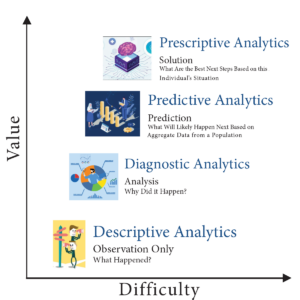
According to experts we speak with, there are many ways to use data analytics. The insurance companies named in the lawsuits use predictive decision making. This way of analyzing data compares a patient to millions of others and deduces what treatment plan might be suitable for one patient, based on what was effective for most previous patients. Opponents of this method have called it “data supported guessing.”
A superior analysis method experts are coming to understand is prescriptive decision making. This is taking all of the available historical and current data surrounding a patient and making a clinical decision specifically designed to that patient’s age, gender, co-morbidities, doctor recommendations, and treatment records.
Until recently, predictive analysis was the preferred method because of its resource efficiency. Examining the data of every individual patient used to be prohibitively labor-intensive, requiring hours of reading hospital records, physician notes, and claims. Today, however, AI tools are able to do that work in seconds, making prescriptive analytics and customized plans of care possible.
Fix May Be in the Works
In a February 6, 2024 memo to all Medicare Advantage Organizations and Medicare-Medicaid Plans, CMS explained the difference between predictive and prescriptive analytics. The memo said these plans may not make coverage determinations based on aggregated data but must look at each individual:
“For Medicare basic benefits, MA organizations must make medical necessity determinations in accordance with all medical necessity determination requirements, outlined at § 422.101(c)1 ; based on the circumstances of each specific individual, including the patient’s medical history, physician recommendations, and clinical notes; and in line with all fully established Traditional Medicare coverage criteria.”
In response to a request for clarification, the CMS memo laid out its rule in specific language:
An algorithm or software tool can be used to assist MA plans in making coverage determinations, but it is the responsibility of the MA organization to ensure that the algorithm or artificial intelligence complies with all applicable rules for how coverage determinations by MA organizations are made. For example, compliance is required with all of the rules at § 422.101(c) for making a determination of medical necessity, including that the MA organization base the decision on the individual patient’s circumstances, so an algorithm that determines coverage based on a larger data set instead of the individual patient’s medical history, the physician’s recommendations, or clinical notes would not be compliant with § 422.101(c).
(emphasis added)
“Therefore, the algorithm or software tool should only be used to ensure fidelity with the posted internal coverage criteria which has been made public under § 422.101(b)(6)(ii).”
In further responses to questions in the same memo, CMS made it clear MA plans must make the same coverage decision original Medicare would make. The only allowable exception is that plans may use their own criteria when Medicare Parts A and B coverage criteria “are not fully established.”
Knowledge of this CMS directive may give Home Health agencies one more arrow in their quiver when going to battle with powerful, profit-oriented insurance companies over harmful, illogical AI algorithm decisions.
For information on the right way to use AI in healthcare, see our complimentary article in this week’s issue.
Tim Rowan is a 30-year home care technology consultant who co-founded and served as Editor and principal writer of this publication for 25 years. He continues to occasionally contribute news and analysis articles under The Rowan Report’s new ownership. He also continues to work part-time as a Home Care recruiting and retention consultant. More information: RowanResources.com
Tim@RowanResources.com
©2024 by The Rowan Report, Peoria, AZ. All rights reserved. This article originally appeared in Healthcare at Home: The Rowan Report.homecaretechreport.com One copy may be printed for personal use: further reproduction by permission only. editor@homecaretechreport.com