HIPAA Compliance in Communication

by Devin Paulin, Skyscape

The Critical Importance of HIPAA Compliance in Home Healthcare Communication

The Rise of Messaging Apps and Healthcare Communication

Nearly 44% of the global population (3.5 billion people) rely on messaging apps to communicate. Unfortunately, available consumer SMS, text, and even “secure” messaging apps like WhatsApp, Apple Message, or Google Messages do not come with safety and security features specifically required to be compliant in the healthcare industry.

Still, consumer SMS apps are quite often used for healthcare communication in which Personal Health Information (PHI) is shared, and many individuals don’t understand the level of risk or that this is a violation of the law.

HIPAA Compliance in Communication Advantages

Group and Individual texting are a proven, timesaving, real-time communication tool in healthcare, and must be done through a HIPAA-compliant messaging platform. Secure platforms can improve privacy and security while maintaining compliance in such a sensitive industry.

There are many reasons why HIPAA compliance is vital for secure communication in home healthcare.

HIPAA Compliance in Communication - Not Just for Doctors and Nurses

HIPAA compliance is not just for medical clinics and hospitals. HIPAA compliance extends to all types of services that hold healthcare information. Physical Therapy, Personal Care, Home Health, Wellness, Behavioral Health, Assisted Living, and many more all fall under HIPAA. Most importantly, ALL providers, staff members (full or part-time), contractors, and third-party partners who come in contact with PHI are subject to HIPAA law, violations, and fines.

HIPAA Compliance in Communication

We're too Small for Violations to be Noticed, Though

Wrong. We regularly speak to many owners and staff members of large and small Home Health Care, Assisted Living, Hospice and Palliative, Mobile Imaging, PT and Rehabilitation, and Behavioral Health across the country. Many openly operate under the false assumption that their business is too small to be noticed by the U.S. Department of Health and Human Services (HHS) and the Office for Civil Rights (OCR), who is responsible for enforcing the HIPAA Privacy and Security Rules. That is not how it works.

Complaints logged by those within or close to your business alert the OCR to possible HIPAA violations. These can be from current and former staff, patients, clients, business partners, or anyone who claims to have witnessed a HIPAA breach. This can include disgruntled employees and whistleblowers. Even for companies that are HIPAA compliant, any breach is to be reported by an employee assigned as the security officer.

HIPAA Compliance in Home Healthcare by Type

HIPAA mandates compliance for all communications involving PHI. Some key examples include:

  • Provider-to-Patient Communication
    • Secure platforms are necessary when caregivers contact patients outside of in-person visits.
  • Provider-to-Provider Communication
    • Sharing PHI within or between departments must meet HIPAA standards.
  • Provider-to-Insurance Communication
    • Insurance companies require sensitive patient data, which must be securely transmitted.
  • Provider-to-Third-Party Communication
    • Any third-party associates handling PHI must have a signed Business Associate Agreement (BAA) and adhere to HIPAA regulations.
  • Provider-to-Public Health Authorities
    • Reporting communicable diseases or pandemics requires secure communication.

Consequence of HIPAA Violations

HIPAA violations can have severe consequences, including:

  • Financial Penalties
    • Fines range from $100 to $50,000 per violation, depending on the level of negligence.
  • Reputational Damage
    • Data breaches erode patient trust, leading to a damaged reputation.
  • Legal Consequences
    • In cases of willful neglect, organizations may face lawsuits or criminal charges.

Final Thoughts

Understanding and adhering to HIPAA regulations is crucial in home healthcare. Compliance not only safeguards sensitive information but also strengthens patient trust and ensures ethical operations.

# # #

Devin Paullin HIPAA Compliance in Home Healthcare

Devin Paullin is an award-winning innovator and executive in Healthcare Technology, having developed successful products, solutions, and partnerships in Life Sciences, Post-Acute Care, SDOH, and Long-Term industries.

He is currently Chief Growth Officer for Skyscape which provides Buzz, an all-in-one, real-time HIPAA-compliant clinical collaboration and communication platform that enables the entire staff (admins, operations, clinicians, caregivers, partners, patients, and families) with the tools to communicate securely, easily, in groups or one to one, and affordable, by any mode they choose. Visit Buzz or contact them to learn more about Buzz by Skyscape today.

©2024 by The Rowan Report, Peoria, AZ. All rights reserved. This article originally appeared in Healthcare at Home: The Rowan Report. One copy may be printed for personal use: further reproduction by permission only. editor@therowanreport.com

Alliance Member Testifies Before Congress

FOR IMMEDIATE RELEASE

Contacts:                                          Elyssa Katz
571-281-0220

Tom Threlkeld
202-547-7424

communications@allianceforcareathome.org

Alliance Member, Jonathan Fleece, Testifies Before Congress on the Value of Care at Home

Ways & Means Health Subcommittee Hearing on “After the Hospital: Ensuring Access to Quality Post-Acute Care”

(Washington, DC and Alexandria, VA) – The National Alliance for Care at Home (the Alliance) released the following statement at the conclusion of a hearing conducted by the House Ways & Means Subcommittee on Health on After the Hospital: Ensuring Access to Quality Post-Acute Care:

“The Alliance thanks Chairman Vern Buchanan (R-FL), Ranking Member Lloyd Doggett (D-TX), and all members of the Health Subcommittee for convening this important discussion on post-acute care. This hearing provided an opportunity to amplify the voices of home health and hospice providers and reinforce the essential role they play in delivering high-quality, patient-centered care in the setting people prefer—at home.”

Dr. Steve Landers

CEO, The Alliance

Alliance Member Testifies: Thank you, Jonathan Fleece

“We are especially grateful to Jonathan Fleece, CEO of Empath Health, for sharing his expertise and for his service on behalf of patients and families. Empath Health has long been a leader in setting the standard for high-quality, patient-centered care, and we appreciate its commitment to advancing care at home.

“As our nation’s population rapidly ages, it is more critical than ever to get these policies right and ensure that home health and hospice remain accessible and protected from harmful cuts and unnecessary administrative burdens. Not only is care at home beloved by patients and families, but it is also cost-efficient, easing strain on the healthcare system by reducing reliance on institutional care and allowing people to heal where they feel most comfortable.”

Jonathan Fleece The Alliance Testifies Before Congress

Continued Advocacy from The Alliance

“Coming out of this hearing, the Alliance remains committed to working with Congress and the Administration to strengthen home health and hospice, safeguard access to these essential services, and advance policies that support their long-term sustainability. We will continue advocating against payment cuts that threaten access, promoting value-based care models, and ensuring regulatory oversight enhances—rather than hinders—the ability of providers to deliver the best possible care.”

To read the full subcommittee hearing testimony of Jonathan Fleece, CEO of Empath Health, click here.

# # #

About the National Alliance for Care at Home

The National Alliance for Care at Home (the Alliance) is a new national organization representing providers of home care, home health, hospice, palliative care, and other health care services mainly delivered in the home. The Alliance brings together two organizations with nearly 90 years of combined experience: NAHC and NHPCO. NAHC and NHPCO have combined operations to better serve members and lead into the future of care offered in the home. Learn more at www.AllianceForCareAtHome.org.    

© 2025 This press release originally appeared on the National Alliance for Home Care website and is reprinted here with permission. For more information, see the contact information above.

Reduce Insurance Claim Denials

by Lynn Labarta, SimiTree

Reduce Insurance Claim Denials

2025 Guide for Home Health and Hospice Agencies

Is your home health or hospice agency struggling with insurance claim denials? You’re in good company. As we move into 2025, claim denials remain the #1 challenge affecting revenue cycles across the industry. But there’s hope – we’ve compiled the latest strategies and insights to help you overcome this persistent challenge.

The Current State of Home Health & Hospice Billing

The healthcare landscape continues to evolve, and with it, so do the complexities of billing and reimbursement. Home health and hospice agencies face unique challenges, from managing PDGM requirements on the home health side to navigating multiple payer systems on the hospice side. Recent data shows that denied claims significantly impact not just revenue but also patient care delivery and operational efficiency.

SimiTree Reduce Claim Denials<br />

Understanding Home Health & Hospice-Specific Denial Triggers

Let’s examine the primary causes of claim denials in our sector:

Home Health Eligibility Challenges

  • Medicare homebound status verification issues
  • Face-to-face documentation gaps
  • PDGM period confusion
  • Medicare Advantage plan authorization complexities

Hospice-Specific Documentation Issues

  • Terminal illness certification problems
  • Level of care documentation gaps
  • Missing physician narratives
  • Notice of Election timing issues

Strategic Solutions to Reduce Insurance Claim Denials in 2025

Optimize Your Intake Process

  • Implement robust homebound status verification- Home health
  • Establish face-to-face documentation protocols
  • Create PDGM period tracking systems- Home health
  • Develop payer-specific authorization workflows

Leverage Technology Effectively

  • Use specialized home health & hospice billing software
  • Implement automated eligibility verification systems
  • Set up PDGM period alerts- Home health
  • Utilize NOE and NOA tracking tools

Build a Specialized Denial Management Approach

  • Create dedicated teams for Medicare vs. non-Medicare appeals
  • Develop PDGM-specific denial protocols- Home Health
  • Establish hospice-specific documentation review processes
  • Implement specialty-focused staff training programs

Pro Tips for Implementation

  1. Focus on specialty-specific staff training in home health and hospice billing requirements
  2. Create separate workflows for different payer types (Medicare, Medicare Advantage (home health), private insurance)
  3. Implement weekly PDGM period reviews- Home Health
  4. Establish clear communication channels between clinical and billing staff

Looking Ahead in 2025

The home health and hospice landscape continues to evolve, but with proper strategies in place, your agency can thrive. Focus on building robust processes that address the unique challenges of our industry while maintaining compliance and optimization.

Action Steps to Reduce Insurance Claim Denials for Your Agency

  1. Evaluate your current denial rates by payer type
  2. Assess your PDGM period management effectiveness- Home Health
  3. Review your hospice documentation protocols
  4. Implement targeted improvements based on your findings

Remember, reducing claim denials isn’t just about better processes – it’s about ensuring your agency’s financial health so you can continue providing essential care to your community.

# # #

Lynn Labarta reduce insurance claim denials

Lynn Labarta, VP of Post Acute RCM and the founder of Imark Billing (now SimiTree) has a wealth of experience in the healthcare industry. Lynn provides comprehensive billing services for home health and hospice agencies, streamlining their revenue cycle management process while supporting and managing billing challenges and compliance with evolving healthcare regulations and managing billing challenges; essentially acting as a key partner to ensure accurate and timely claim submissions and optimal revenue collection for agencies.

©2024 by The Rowan Report, Peoria, AZ. All rights reserved. This article originally appeared in Healthcare at Home: The Rowan Report. One copy may be printed for personal use: further reproduction by permission only. editor@therowanreport.com

Is Medicaid Down for the Count?

by Kristin Rowan, Editor

Medicaid Payment System Goes Dark

On Monday, January 27, President Trump, through the Office of Management and Budget, announced a temporary freeze on federal spending while his newly designated head of the Department of Government Efficiency ensures all spending follows the executive orders the President has signed. The memo was vague and caused widespread confusion across government departments. Almost immediately after the memo was circulated, Medicaid programs could not access the Payment Management Services web portal, the entity responsible for paying Medicaid claims.

The Memo

The language used in the memo on federal spending was broad and overreaching. As such, many federal organizations were unclear as to whether the memo applied to them. The message in the memo was that the administration intended to curb any spending that does not improve the day-to-day lives of the people. Throughout the day Monday, the White House sent clarifications about what programs would not be impacted. Among them were food assistance programs like SNAP, WIC, and Meals on Wheels, and Medicaid. The medicaid payment portal went down, despite this clarification.

Exclusions

Multiple state and federal agencies reached out to the White House for clarification following the release of the memo. Explicitly excluded from the freeze are direct benefit plans like Social Security and Medicare. In addition to the programs named in the memo, clarification on additional programs that would not be impacted included Medicaid. Despite the temporary website outage, claims were still being processed and payments were still being made.

Immediate Lawsuits

Almost simultaneously with the distribution of the memo, several non-profit organizations filed suit against the federal government. They called Trump’s action an “unlawful and unconstitutional” act, even temporarily. The pause on federal spending was set to go into effect at 5 p.m. ET on Tuesday. Minutes before, U.S. District Judge Loren L. AliKhan put a pause on the pause.

Temporary Freeze on the Temporary Freeze

To allow both sides time to construct an argument, the judge stayed the funding freeze until Monday, February 3. That morning, the judge will hear arguments and consider the issue. After the stay, attorneys general from 22 states and D.C. filed their own lawsuit to permanently block the freeze and prevent any future attempts to cut off already approved federal funding.

Then Comes the Thaw

If the judge allows the freeze to move forward, Trump has given every agency until February 10 to account for and explain all spending programs within their departments. Once the accounting has been reviewed, likely the OMB and the Department of Government Efficiency will determine which federal spending programs can resume operation.

There is no indication yet as to whether Trump will extend the February 10 deadline, given the delay in the courts. By the time the judge rules on Monday, however, we hope the White House will have issued additional details and guidance to avoid additional disruption to essential services like Medicare and Medicaid.

Federal Funding Freeze

Final? Ruling

Early Monday, Judge AliKhan said she was not convinced by the argument that nonprofit groups have no case against the funding freeze since the OMB rescinded the memo. The administration argued that a brief pause on funding to align federal spending is within the law. The administration also suggests that the courts have no standing to block it. AliKhan has indicated that she will likely grant a longer temporary order to stay the funding freeze.

# # #

Kristin Rowan, Editor

Kristin Rowan has been working at The Rowan Report since 2008. She is the owner and Editor-in-chief of The Rowan Report, the industry’s most trusted source for care at home news .She also has a master’s degree in business administration and marketing and runs Girard Marketing Group, a multi-faceted boutique marketing firm specializing in content creation, social media management, and event marketing.  Connect with Kristin directly kristin@girardmarketinggroup.com or www.girardmarketinggroup.com

©2025 by The Rowan Report, Peoria, AZ. All rights reserved. This article originally appeared in The Rowan Report. One copy may be printed for personal use: further reproduction by permission only. editor@therowanreport.com


Congress Allows Medicare Advantage to Deny Coverage

by Kristin Rowan, Editor

Medicare Advantage Bill Dies in Congress

The 118th United States Congress, ran from January 3, 2023 to January 3, 2025. This Congress’s first law was passed on March 20, 2023, much later than most previous congressional sessions. In its first year, it passed only 34 bills. In the two years of this congressional run, the 118th passed 209 public laws, almost half the average since 1989. Among the many bills that died on the floor before time ran out was the Improving Seniors’ Timely Access to Care Act (H.R. 8702/S. 4532). Senate and House members introduced the bill on June 12, 2024.

Improving Seniors' Timely Access to Care

In June of 2024, senators and representatives introduced bipartisan legislation that would have curbed Medicare Advantage’s ability to deny claims. The bill included language that allowed CMS the authority to establish standard timeframes for electronic prior authorizations requests including expedited requests and real-time decisions for routinely approved services. The bill also included requirements for transparency and reporting, including:

    • establishing an electronic prior authorization process
    • establishing a process for real-time decisions for routine services
    • providing more detailed reports on use of prior authorization including
      • rates of approvals
      • denials
      • average time for approvals
    • pressing Medicare Advantage providers to incorporate input from health care providers on their authorization processes and decisions
    • adopting prior authorization programs that adhere to evidence-based medical guidelines
    • requiring Medicare Advantage providers to report on the percentage of denied claims that were later overturned

Overwhelming Support

At the time this bill was reintroduced to Congress in June, 135 House co-sponsors and 44 Senate co-sponsors signed on. By the end of July, the bill had been read, sent to the House Ways and Means Committee, and passed. Representative Mike Kelly (R-PA) noted that more than 500 organizations had endorsed the act. 

Urgent Need for Change

In early 2024, an audit from the Office of the Inspector General (OIG) at the U.S. Department of Health and Human Services (HHS) revealed that Medicare Advantage plans eventually approve 75% of authorization requests for services that were initally denied. More recently, HHS OIG released a report showing that MA plans incorrectly denied services to beneficiaries even though they met the requirements for coverage. Following the report, HHS OIG made the following recommendations to CMS:

    • issue new guidance on the use of MAO clinical criteria in medical necessity reviews
    • update audit protocols for Medicare Advantage to address the issues of MAO use of clinical critera and examining service types
    • direct MAOs to indentify and address the causes for manual review errors and system errors.

CMS agreed with all three recommendations.

Dead in the Field

Despite the bipartisan, bicameral support of this much needed overhaul of Medicare Advantage providers, the bill is currently in pile of unaddressed issues that the 118th Congress just didn’t get to. Despite having it in front of them for five months, and despite passing nearly half the legislation of the 17 most recent congressional sessions, the bill that would keep MA beneficiaries from waiting inordinate amounts of time for routine care will have to wait for the next session to resume. Let’s hope the 119th Congress is more productive.

Medicare Advantage 118th Congress

# # #

Kristin Rowan, Editor

Kristin Rowan has been working at The Rowan Report since 2008. She is the owner and Editor-in-chief of The Rowan Report, the industry’s most trusted source for care at home news .She also has a master’s degree in business administration and marketing and runs Girard Marketing Group, a multi-faceted boutique marketing firm specializing in content creation, social media management, and event marketing.  Connect with Kristin directly kristin@girardmarketinggroup.com or www.girardmarketinggroup.com

©2025 by The Rowan Report, Peoria, AZ. All rights reserved. This article originally appeared in The Rowan Report. One copy may be printed for personal use: further reproduction by permission only. editor@therowanreport.com


Good News for Veterans and Care at Home

by Kristin Rowan, Editor

Biden's Final Acts

With only a short number of days left in office, President Joe Biden has been making headlines. Not all of his final decisions have been met with absolute approval, but his latest one will make a difference for our veterans wanting Care at Home. On Thursday, January 3, 2025, President Biden signed into law the Senator Elizabeth Dole 21st Century Veterans Healthcare and Benefits Improvement Act.

The Dole Act

The Elizabeth Dole Act improves upon much of the benefits, programs, and services provided by the Department of Veterans Affairs (VA). Some of these changes include providing protections for care agreements between veterans and clinicians, modifications to educational assistance programs and benefits, expansion of the Native American Direct Loan program, increases per diem rates for veteran transitional housing, and various administrative and oversight tasks.

Elizabeth Dole Home Care Act

The Elizabeth Dole Home Care Act is a bill within the larger act specific to home- and community-based services (HCBS). The home care act aims to enhance veterans’ access to the Program of All-Inclusive Care for the Elderly (PACE) nationwide. The new law also allows the VA to increase funding for HCBS. Prior to this, the VA was able to allocate 65% of nursing home care to home care services.

Additionally, the home care bill will provide support and benefits to caregivers of some disabled veterans, start a pilot to provide non-medical supportive care at home to veterans with limited access to home health aides, and increase access to HCBS for Native American Veterans.

The Industry Responds

The National Alliance for Care at Home responded to the landmark legislation, specifically siting section 301 of the bill, known as Gerald’s Law. Gerald’s is so named for a Michigan veteran who was denied his non-service related burial and plot benefit after he died at home while under VA hospice care. Gerald’s Law requires the VA to provide a burial and funeral allowance for veterans who were receiving VA hospice care in a home or other setting outside a hospital or nursing home.

“We are deeply grateful for the bipartisan support of Gerald’s Law and its inclusion in the Dole Act. This legislation ensures that Veterans and their families can choose hospice care in the setting that best meets their needs without risking the loss of crucial burial benefits. We thank Senators Moran, Tester, and Hassan, Representatives Ciscomani, Bost, Brownley, and Takano, and many others for their leadership, as well as President Biden for signing this important bill into law.”

Dr. Steve Landers

CEO, The Alliance

HCAOA, Leading Age, National PACE Association (NPA), and many others joined the Alliance in applauding Biden for signing the bill into law. They noted that providing care at home and in the community improves the quality of life for veterans and their caregivers. HCBS also come at a much lower cost than hospital and institutional care. 

HCAOA said in a statement that the bill is “…a crucial victory for both veterans and their caregivers.” The President and CEO of NPA said the bill would dramatically increase options for veterans who want to age in place and that Congress can “…easily implement PACE for hundreds of thousands of additional seniors and their families.”

The VA has found that HCBS can delay or remove the need for nursing home or assisted living admission. Care at Home also reduces the risk of preventable rehospitalizations. 

Final Thoughts

Once again, it seems the world is “discovering” that which we have known for ages: Home based care is better, cheaper, and more effective than institutional care. In the last few years, doctors and hospitals have figured this out and implemented hospital at home care. Now, the VA has finally figured it out as well. When this law takes effect, we as an industry will breathe a collective sigh when our veterans see better outcomes, their caregivers are better supported, the cost for their care decreases, and especially when our veterans enjoy a better quality of life in their final days without sacrificing the benefits to which they are so richly entitled. 

One small step for veterans, one giant leap for Care at Home.

# # #

Kristin Rowan, Editor

Kristin Rowan has been working at The Rowan Report since 2008. She is the owner and Editor-in-chief of The Rowan Report, the industry’s most trusted source for care at home news .She also has a master’s degree in business administration and marketing and runs Girard Marketing Group, a multi-faceted boutique marketing firm specializing in content creation, social media management, and event marketing.  Connect with Kristin directly kristin@girardmarketinggroup.com or www.girardmarketinggroup.com

©2025 by The Rowan Report, Peoria, AZ. All rights reserved. This article originally appeared in The Rowan Report. One copy may be printed for personal use: further reproduction by permission only. editor@therowanreport.com


Employee vs Independent Contractor

by Kristin Rowan, Editor

Follow the Rules

The very nature of care at home lends itself to different organizational structures. Hourly vs. per visit compensation. Employee vs. independent contractor. Shift work vs. standard schedules. Each decision can have its own advantages and disadvantages.

Two agencies were in the news this week after the Department of Labor determined they had misclassified employees as independent contractors and failed to pay overtime wages. In addition to back wages, these agencies were ordered to pay damages and civil penalties.

The Rowan Report has researched the 2024 Department of Labor Final Rule: Employee or Independent Contractor Classification Under the Fair Labor Standards Act, RIN 1235-AA43. We’ve provided our synopsis below to help you determine the classification of your workers to avoid similar penalties.

Employee vs Independent Contractor

The Fair Labor Standards Act, from the Department of Labor provides information on how to classify workers. Prior to 2021, the DoL used the economic reality test, used by courts to determine status. This test used economic factors including nature and degree of control over work, and the worker’s opportunity for profit or loss. These two factors weighed more heavily than the remaining three: the amount of skill required, how permanent was the relationship between the worker and the employer, and whether the work is part of an integrated unit of production (meaning all work leads to the same end product that cannot be completed without each person’s part.)  

Totality of the Circumstances

Because the courts openly admitted that the final three factors would likely never outweigh the first two, the DoL moved to establish a different rule, using the five factors to determine a “totality of circumstances” without the predetermined weight. It also bent the final factor to include the work being an integral part of the business, not of production. Also included is the discussion of how scheduling, supervision, price setting, and the ability to work for others are considered within the control factor.

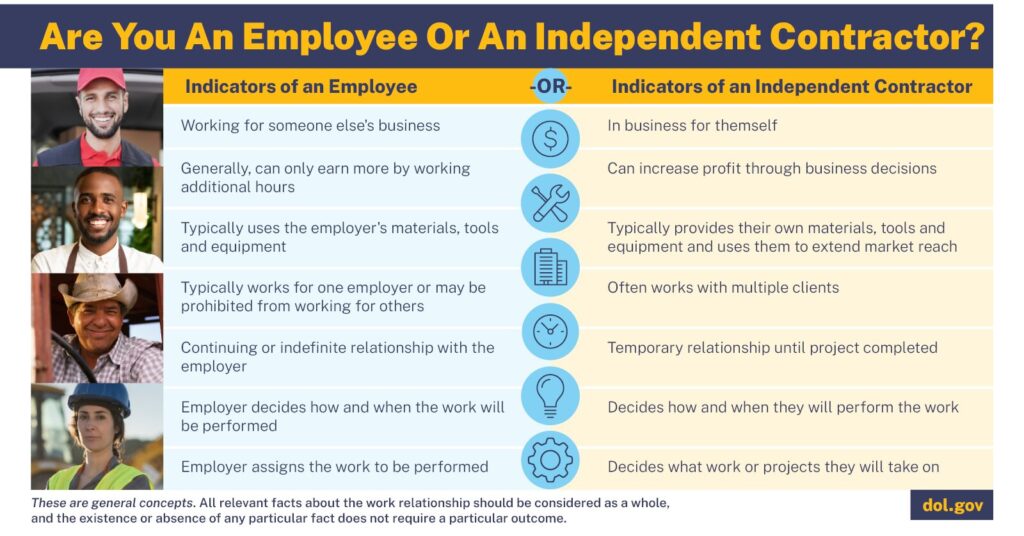
This final change is what will impact most care at home agencies. As defined in the Final Rule (795.110(B)(1)), this factor considers whether a worker has control over their own profit or loss, has control over their own schedule, advertises on their own behalf to get more work, and generally engages in managerial tasks such as hiring, purchasing materials, and/or renting space for themselves.

Qualifying as an Employee vs Independent Contractor

In order to qualify as an independent contractor, a worker:

    • Must have control over their own profit and loss.
        • If a worker can choose to accept or deny and job offered through the agency, therefore making more or less money, they may be an IC.
    • Should be engaged for short-term projects with identified end dates.
        • This is vague in relation to care at home. An employer could argue that each home visit is a short-term engagement. However, the worker might say that the opportunity is on-going with no end date.
    • Invests in the building of their business.
        • If a worker uses all their own equipment, is free to take shifts or jobs from other agencies, and promotes their skills in order to attract more work from outside your agency, they are likely an IC.
        • If, however, the worker takes shifts from other agencies and promotes their skills to others because your business has predictable down-times, rather than of the worker’s own choice, they are likely an employee.
    • Should have control over multiple aspects of the job.
        • A common misperception is that if an employee controls their own schedule, they are automatically an IC. Many employees have flexible scheduling, work from home opportunities, and other controls over their schedule. Care at home workers make less money when they choose to change their schedule, indicating economic dependency on the company. Further, many agencies have a minimum hour requirement with disciplinary action or consequences for not meeting that minimum. These factors, regardless of scheduling flexibility, mean the worker is not an IC.
        • Nurses who have control over their own schedules do not control, for example, the rate they are paid for their services. When the employer controls prices for services, workers are likely employees.
        • How a job is performed should be a considerable factor. If the worker is free to determine how they actually do the work once they take a job, then they are likely an IC. This may be possible for non-medical supportive care at home, but is less likely for home health and hospice settings that are highly regulated.
    • Should not be supervised either in person or by technology, using a device or other electronic means. Ongoing and continuous supervision is not required to classify a worker as an employee, only that the employer maintains the right to supervise. Supervision in this case is not limited to watching the worker during a shift. Supervision also includes training and standards established during hiring, remote monitoring of a job using an electronic visit verification system, and/or the oversight of completed work in the case of a QA audit of documentation.
        • For home health and hospice agencies, this almost assuredly makes all nurses employees. However, exceptions may exist in the case of specialties such as wound care, physical or occupational therapy, ostomy care, and respiratory care.
        • For non-medical care at home, this factor should be weighed based on your agency’s protocols.
    • Must be able to work for others.
        • An employer who limits a worker’s ability to work for other agencies and/or put such constraints on a person’s schedule as to make it impossible to work for others has employees, not ICs.
        • Non-compete clauses and fines for taking clients outside of the agency point to employee status.
        • Working part-time and having the ability to work for another company, also part-time, does not necessarily make someone an IC.
    • Should not be an integral part of the business.
        • If the business cannot function without the service performed by the worker, the worker is an employee.
        • Similarly, if the work itself depends on the existence of the business, the worker is an employee.
        • Generally speaking, if a the primary business is to make a product or provide a service, then any worker involved in making that product or providing that service is integral to the business.
          • This final clarification from the DoL may require all care at home workers to be classified as employees.
Employee vs Independent Contractor

Implications for the Industry

If most care at home workers should be classified as employees, not independent contractors, you should expect to make significant changes if you currently have your workers classified as ICs.

  • Higher expenses in the form of taxes and benefits
  • Negotiations for paid vacation, personal, and sick leave
  • Potential auditing of prior business structure and classification
  • Complete overhaul of back-office hiring processes and software needs for onboarding employees instead of independent contractors

Employee vs Independent Contractor Corrective Action

  1. If your workers are misclassified as independent contractors, take steps to correct this effective January 1st so your new tax year is correct.
  2. Plan ahead to incorporate required taxes coming from your budget.
  3. Determine whether you may have workers who are owed back wages, overtime pay, or other benefits and take steps to rectify the situation before you end up on the Department of Labor radar.
Employee vs Independent Contractor

Final Thoughts

I’ve heard a lot of conversations from home health and non-medical supportive care agency owners about the policies they have in place for their caregivers. The new laws around non-compete clauses as well as this updated Independent Contractor test leads me to this conclusion:

Most workers in care at home are employees, not independent contractors. If you wish to classify your workers as independent contractors, do your research, reorganize your business, and make sure you are following the totality-of-the-circumstances test. 

If organizational change is not possible, look at transitioning your workers to employees before the start of the year and hire a consultant to help you with the changes you need to make.

# # #

Kristin Rowan, Editor

Kristin Rowan has been working at Healthcare at Home: The Rowan Report since 2008. She has a master’s degree in business administration and marketing and runs Girard Marketing Group, a multi-faceted boutique marketing firm specializing in event planning, sales, and marketing strategy. She has recently taken on the role of Editor of The Rowan Report and will add her voice to current Home Care topics as well as marketing tips for home care agencies. Connect with Kristin directly kristin@girardmarketinggroup.com or www.girardmarketinggroup.com

©2024 by The Rowan Report, Peoria, AZ. All rights reserved. This article originally appeared in Healthcare at Home: The Rowan Report. One copy may be printed for personal use: further reproduction by permission only. editor@therowanreport.com

The 4 M Framework for Age-Friendly Care

by Kristin Rowan, Editor

Pitfalls of Care at Home

Patient assessment has largely used the same formula for years. Patient care is more successful and less expensive in the home, but it is not without its frustrations. Agency owners and managers know that patients won’t always follow recommendations. Some patients leave an acute-care setting without understanding their own diagnosis or after care. Disruption from depression, dementia, or delirium impacts recovery. There are a reported 36 million falls among older adults in the U.S. And the list goes on.

Age-Friendly Health Systems

The care provided to older adults both in acute and post-acute settings is not always designed around the patient. Age-Friendly Health Systems is a joint initiative of The John A. Hartford Foundation and the Institute for Healthcare Improvement (IHI) in partnership with the American Hospital Association (AHA) and the Catholic Health Association of the United States (CHA).

Age-Friendly Health Systems, according to the John A. Hartford Foundation, is a movement helping hospitals, medical practices, retail pharmacy clinics, nursing homes, home-care providers, and others deliver age-friendly care. 

Components of an Age-Friendly Health System:

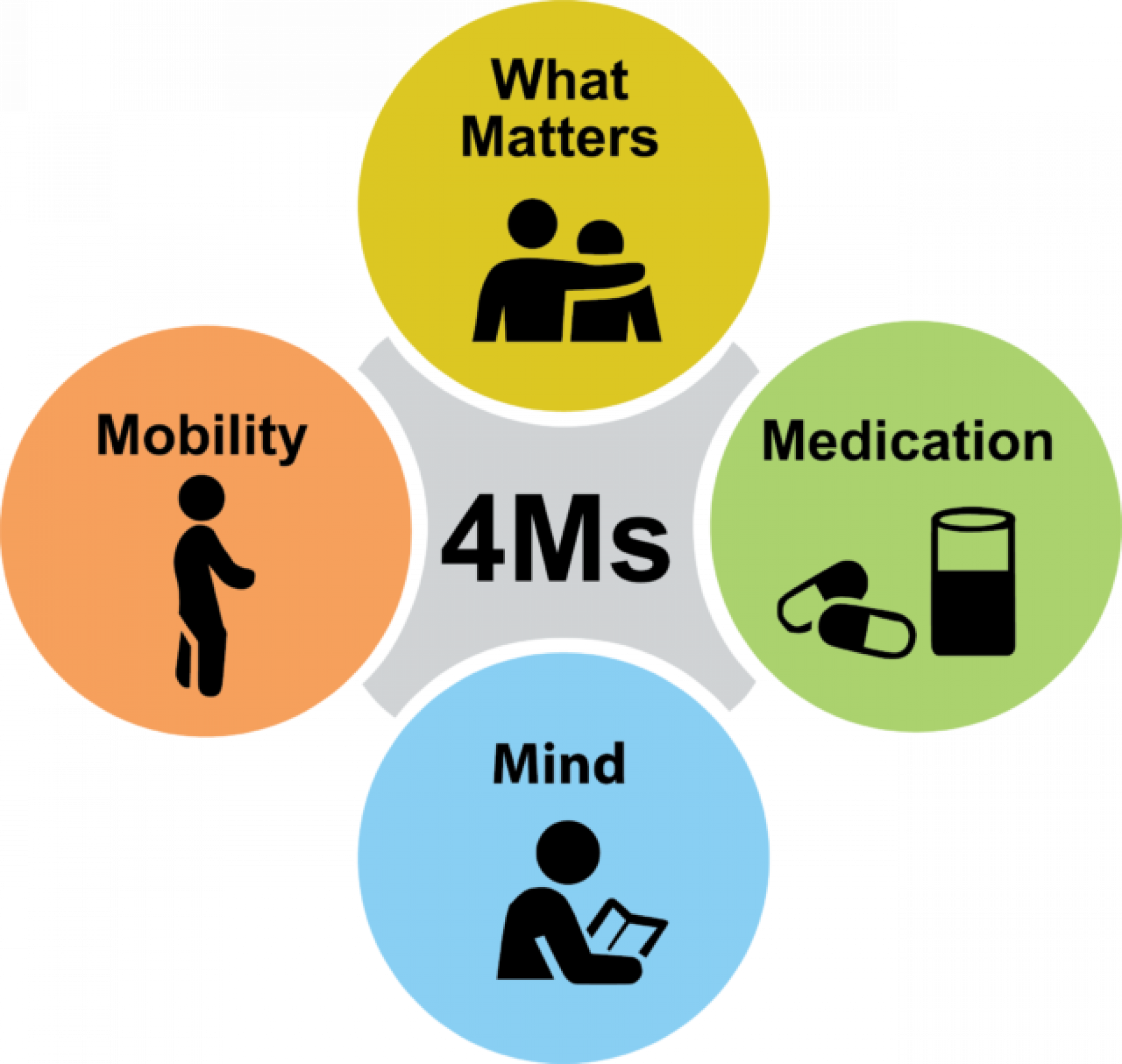
    • Follow an essential set of evidence-based practices in the 4Ms Framework
    • Cause no harm
    • Align with What Matters to older adults and their family caregivers

The 4Ms Framework

What Matters

Know and align care with each older adult’s specific health outcome goals and care preferences including, but not limited to, end-of-life care, and across settings of care.

Medication

If medication is necessary, use Age-Friendly medication that does not interfere with What Matters to the older adult, Mobility, or Mentation across settings of care.

Mentation

Prevent, identify, treat, and manage dementia, depression, and delirium across settings of care.

Mobility

Ensure that older adults move safely every day in order to maintain function and do What Matters.

4Ms Framework CHAP Age-Friendly

CHAP Certification for Age-Friendly Care

The Rowan Report spoke with Teresa Harbour, COO of CHAP, about the 4M Framework. CHAP has developed a standardized form that agencies can use to educate patients and families and find out what matters most to them. The 4Ms Framework changes the perspective on patient care by looking at the 4Ms as a set, rather than as separate assessments. Resources, standards, and learning modules for your agency are also included and can be downloaded. The Age-Friendly Care at Home Certification is included at no charge with your CHAP Accreditation.

First Age-Friendly Certification Awarded

On December 2, 2024, St. Croix Hospice announced its achievement of Age-Friendly Care certification across all 70+ locations. Harbour said in a statement, “This effort not only raises the bar for compassionate, patient-centered care but also underscores St. Croix Hospice’s role as a leader in the hospice field.”

St. Croix Hospice is dedicated to providing compassionate, individualized care tailored to the unique needs of older adults. It’s especially important to us that this certification is recognized across our entire organization, reflecting the unified efforts of our teams to ensure every patient receives the highest quality care they deserve.

Heath Bartness

Founder & CEO, St. Croix Hospice

# # #

Kristin Rowan, Editor

Kristin Rowan has been working at Healthcare at Home: The Rowan Report since 2008. She has a master’s degree in business administration and marketing and runs Girard Marketing Group, a multi-faceted boutique marketing firm specializing in event planning, sales, and marketing strategy. She has recently taken on the role of Editor of The Rowan Report and will add her voice to current Home Care topics as well as marketing tips for home care agencies. Connect with Kristin directly kristin@girardmarketinggroup.com or www.girardmarketinggroup.com

©2024 by The Rowan Report, Peoria, AZ. All rights reserved. This article originally appeared in Healthcare at Home: The Rowan Report. One copy may be printed for personal use: further reproduction by permission only. editor@therowanreport.com

New Way to Approach Care at Home

by Kristin Rowan, Editor

Care For Lives: Empowered Homecare with a Holistic Approach

It’s a familiar story that you’ve heard countless times. A licensed practical nurse (LPN) takes a job in a healthcare setting and continues her education to become a registered nurse (RN). She works tirelessly for two years both at her job and in school with no days off. Moves into the hospital setting, then the clinic setting and suffers from burnout. She sees how much there is to do in healthcare that isn’t being done in the hospitals and clinics. Frustrated with the lack of care, too many patients, and too much stress, she tries her hand at home health. And she falls in love…

The Start of Something New

This is the story of Vanessa Chambers, CEO of Care For Lives PLLC. Her first reaction to home health was “Where has this been all my life?” Although she loved home health care, she felt she didn’t get to spend enough time with her patients. So much of her day was spent on paperwork and running from case to case. Sound familiar? 

Vanessa also found herself unable to recommend treatments that she believed could help her patients. Bound by the script her agency created, she felt as though her opinions were unwanted and her critical thinking skills as an experienced nurse were disregarded. And so the all too familiar tale continues. Vanessa started treating patients on her own and created a business based on how she wanted to treat patients.

In addition to standard patient care, Vanessa implemented patient education. Her patients weren’t taught what they needed to know and it terrified them. Their fear, as much as their illness, was a threat to their recovery. Their mistrust of the healthcare system and hospitals left them without care. When Vanessa realized how much work there was to be done, she started to build an army of caregivers. This was the beginning of Care For Lives.

Care For Lives Vanessa Chambers

Building the Care For Lives Army

“Let’s cultivate something!” This was the siren call Vanessa sent out to people she knew and trusted. She wanted to foster a community where nurses felt valued and could bring that energy to the people in New York. With the help of a business consultant, Vanessa began cultivating her army. At first, she reached out to nurses that she had worked with or for in the past. Those nurses recruited other nurses that they new and trusted. 

A new realization came to Vanessa when she saw how much help her patients needed in areas outside of nursing. Mental and physical well-being and a holistic approach offers better results than treating a condition in a vacuum. As she did more research on treating other areas of a patient’s life, she was introduced to Cognitive Behavioral Therapy.

CBT

Cognitive Behavioral Therapy (CBT) is talk therapy that looks into a patient’s trauma to see how it correlates both physically and mentally and how they connect to each other. Vanessa traveled to England to experience CBT first hand. “I’ve had therapy before,” explains Vanessa, “But, with him I solved problems I didn’t even know were there.” Mark Semple, CBT, Traumatologist, was next to join her army, followed by Sharon Semple, CBT, Traumatologist, and Hanna Commodore, CBT. Along with the therapy, her team will recommend psychiatry and/or medication if needed.

Nutrition

As part of the holistic approach, Vanessa contacted Shawn M. Nisbet, Holistic Group Nutritionist. With a different approach than traditional nutritionist who focus on getting a patient to a desired weight and moving on, Nisbet delves into each portion of a patient’s lifestyle. She assesses the need for supplements like Vitamin D, skin care regiments, as well as issues with a patient’s relationship with food. She offers individual and group therapy for nutrition and wellness.

An Unlikely Addition

The last addition to Vanessa’s Army is not one you would likely think of as a matter of course. But, Vanessa recognized that when patients feel good about the way they look, they are more optimistic about their health. So Vanessa found a hair care therapist. Danni Antenor is a licensed cosmetologist who is more than just a hairdresser. Hair can become matted and tangled after surgery or a hospital stay. Antenor works with all types of hair and comes to the home to clean out any matting or residue from the hospital. She will also find a look that is simple for the patient to maintain, flattering to the patient, and one that prevents hair loss. More than this, Antenor prevents the loss of dignity.

Chambers Army Care For Lives

Armed and Ready

With her team in place, and feeling confident that she could provide not only health and healing, but education to keep patients home and out of facilities, Vanessa official launched Care For Lives PLLC on October 19th. She is still wading through the noise in New York to get word of her business out to the community. She is planning a pop-up clinic event before the end of the year. Care For Lives nurses will provide education to patients and to their families and caregivers.

Operations

Care For Lives is currently a private pay agency. They are looking to start accepting insurance by Q2 of 2025, starting with private payers. They will consider Medicare and Medicaid patients when they feel equipped to do so. 

Care For Lives operates under a concierge service model, with patients paying a monthly flat rate for different tiers of service. Depending on the level of membership, patients get a nursing visit and cosultation, CBT, hair therapy, direct or group nutrition counseling, and weekly or bi-weekly virtual visits. They plan to at physical therapy and additional services over time. 

Longer term goals for Vanessa include hiring a medical director, having a 24/7 call center that is fully staffed, setting up a messaging system to provide patients with access to their care team, and to expand Care For Lives with new locations. 

About Care For Lives

Care for Lives provides empowered homecare. We provide patients, and their support system, with the education needed to ensure patients may enjoy the freedom and peace of mind that comes only from living in the comfort of your own home. We are dedicated to increasing quality care knowledge, and support services, for treatment, prevention, and total wellness where you feel most comfortable. Our services are available in homes, communities, and places of work.

# # #

Kristin Rowan, Editor

Kristin Rowan has been working at Healthcare at Home: The Rowan Report since 2008. She has a master’s degree in business administration and marketing and runs Girard Marketing Group, a multi-faceted boutique marketing firm specializing in event planning, sales, and marketing strategy. She has recently taken on the role of Editor of The Rowan Report and will add her voice to current Home Care topics as well as marketing tips for home care agencies. Connect with Kristin directly kristin@girardmarketinggroup.com or www.girardmarketinggroup.com

©2024 by The Rowan Report, Peoria, AZ. All rights reserved. This article originally appeared in Healthcare at Home: The Rowan Report. One copy may be printed for personal use: further reproduction by permission only. editor@therowanreport.com

Healthcare is Heading Home

Web Golinkin, Forbes Books Author

Healthcare is Heading Home, and That's a Good Thing!

Healthcare is heading home

As the Baby Boomer generation ages, the home healthcare market is expanding. GETTY

During my long career in healthcare, one of the biggest trends in healthcare delivery has been the shift from hospital / inpatient to outpatient care. The compound annual growth rate (CAGR) of outpatient services was roughly 8 percent from 2017 to 2022, while inpatient services grew 1-3 percent during the same period. Outpatient services now represent more than 50 percent of total U.S. healthcare spending.

Particularly during the past 20 years, there has been significant growth in new outpatient facilities and channels, including retail-based and urgent care clinics, freestanding ERs, imaging centers, dialysis centers, ambulatory surgery centers, rehabilitation clinics, behavioral health clinics, and telehealth / virtual care.

The shift towards outpatient care has been driven by multiple factors, including patient desire for convenience, the need to reduce costs, and rapid advances in medical science and technology. Now, however, a new trend in healthcare is pushing the boundaries of outpatient care increasingly into the home.

This article explores the rapid expansion of home healthcare, the factors driving its growth, and the important distinctions between home care, home health care, and hospital-at-home models.

Macro Growth Drivers

The U.S. home healthcare market has experienced exponential growth, projected to reach nearly $510 billion by 2027 (roughly equaling the projected size of the outpatient market), according to various industry reports. This represents a CAGR of approximately 8 percent from 2020 to 2027. Several factors contribute to this rapid expansion:

  1. Aging Population: One of the primary drivers of growth in home health care is the aging population. As the Baby Boomer generation reaches retirement age, there is a significant increase in the need for healthcare services tailored to older adults, many of whom prefer receiving care in the comfort of their homes.
  2. Rising Chronic Conditions: The prevalence of chronic diseases such as diabetes, heart disease, and respiratory illnesses is increasing. Home healthcare services, including skilled nursing and rehabilitation therapies, provide essential support for managing these conditions.
  3. Technological Advancements: Innovations in telehealth and remote monitoring technologies have transformed healthcare delivery. Patients can now receive real-time consultations and monitoring from healthcare professionals, reducing the need for in-person visits and enhancing the appeal of home healthcare .
  4. Cost-Effectiveness: Home healthcare is often more cost effective than traditional hospital care. By providing services at home, patients can avoid expensive hospital stays, and insurance providers are increasingly recognizing the value of home-based care, offering incentives for its use.
  5. Patient Preference: There is a growing preference among patients for receiving care in their own homes. This trend is driven by the desire for comfort, familiarity, and independence, as well as the recognition that home care can lead to better health outcomes.

Main Types of Service

Three basic types of home healthcare have emerged. It is important to understand the differences between them, as each type serves different needs and patient populations and requires different kinds of providers and support:

  1. Home Care: This term typically refers to non-medical assistance provided in a patient’s home. Services may include personal care (such as bathing and grooming), companionship, meal preparation, housekeeping, and transportation. Home Care is often used by individuals who need assistance with daily living activities but do not require regular medical intervention.
  2. Home Health Care: In contrast, Home Health Care involves medical services provided by licensed healthcare professionals. This may include skilled nursing, physical, occupational, and speech therapy, as well as home health aide services. Home Health Care is typically prescribed by a physician and is intended for patients recovering from illness, surgery, or managing chronic health conditions.
  3. Hospital-at-Home: This model represents a more recent innovation in home healthcare, allowing patients to receive acute-level care in their homes instead of in a hospital setting. Hospital-at-home programs provide comprehensive medical services, including monitoring and treatment for serious conditions, under the supervision of healthcare providers. This model aims to reduce hospital congestion, lower healthcare costs, and improve patient satisfaction by delivering hospital-level care in a familiar environment. In addition, there is growing evidence that it improves clinical outcomes and reduces hospital readmissions.

Future Growth Drivers

Several key drivers will underpin further growth of home healthcare:

    • Policy Changes and Regulations: Government policies have increasingly supported home health care. Centers for Medicare & Medicaid Services (CMS) and other government programs incentivize home-based care, reflecting a broader strategy to reduce healthcare costs and improve care quality.
    • Healthcare Provider Initiatives: Many providers are expanding their services to include home healthcare options as part of their overall care continuum. This integrated approach helps streamline patient transitions from hospital to home, improving coordination and outcomes.
    • Market Competition: The growing number of home health care agencies and providers has fostered competition, driving innovation and improvements in service delivery. This competition encourages providers to adopt new technologies and practices that enhance patient care.
    • Public Awareness and Education: Increasing awareness of home health care options has led to more patients and families opting for these services. Educational campaigns and outreach initiatives have helped to demystify home health care, making it a more accepted alternative to traditional care settings.

Obstacles to Growth

Despite its rapid growth, the home healthcare sector faces several challenges:

    • Workforce Shortages: The demand for qualified home health care professionals exceeds supply, leading to staffing shortages. This is exacerbated by the demanding nature of home health work and competitive wages offered by hospitals and other healthcare and non-healthcare settings.
    • Regulatory Hurdles: Navigating the regulatory landscape can be complex and burdensome for home healthcare providers. Compliance with Medicare and Medicaid requirements, as well as with state regulations, often demands significant administrative resources. This can restrict the ability of smaller agencies to scale and compete effectively.
    • Insurance Reimbursement Issues: While insurance providers increasingly cover home health services, reimbursement policies can be inconsistent. Challenges related to payment models, including delays and denials, may hinder access to necessary care for patients and impact the financial viability of home health agencies.
    • Technology Adoption: Although technology is a key growth driver, some providers and patients resist adopting new tools. Ensuring that healthcare professionals are adequately trained in using telehealth platforms and remote monitoring devices is critical for successful implementation.

Positive Future Outlook

The outlook for home health care remains positive, as the sector adapts to evolving consumer needs and preferences. Several trends are expected to shape its future:

  1. Integration of Technology: The continued integration of telehealth and artificial intelligence (AI) into home healthcare will enhance service delivery and patient monitoring. Wearable devices and remote patient monitoring systems will likely become standard tools for managing chronic conditions at home.
  2. Focus on Value-Based Care: As healthcare systems shift toward value-based care models, home healthcare will play a pivotal role in managing patient outcomes and costs. Providers will increasingly be held accountable for the quality of care delivered at home, leading to a greater emphasis on patient engagement and satisfaction.
  3. Expanding Service Lines: Home healthcare providers and agencies will likely expand their service offerings to include mental health support, palliative care, and specialized rehabilitation services. This diversification will cater to the broader needs of patients, particularly those with complex medical conditions.
  4. Enhanced Collaboration: There will be a growing emphasis on interdisciplinary collaboration among healthcare providers, including hospitals, primary care providers, and home health agencies. This collaboration will facilitate smoother transitions of care and improve overall patient outcomes.
  5. Increased Investment: As the demand for home health services continues to escalate, investment in the sector is expected to grow. Venture capital and private equity firms are increasingly recognizing the potential of home healthcare, leading to innovations and improvements in service delivery.

The growth of home healthcare is a testament to the changing landscape of healthcare delivery. Driven by demographic shifts, technological advancements, and evolving consumer preferences, this sector is poised for continued expansion.

As challenges such as workforce shortages and regulatory hurdles persist, the future of home health care will depend on the ability of providers to innovate and adapt.

Nevertheless, healthcare is moving inexorably towards the home. That is good news for millions of patients who need acute, transitional or long-term care in the most comfortable environment, and for providers and third-party payers who are seeking to maximize the value of care being delivered.

# # #

Marcylle Combs Care at Home Worker Safety
Web Golinkin
Web Golinkin has focused his career on making health information and care more accessible and affordable. He has done this as CEO of five companies over the past 35 years, including three he co-founded.

These companies include the largest cable TV network devoted to health (America’s Health Network), one of the nation’s largest operators of retail-based clinics (RediClinic), a leading population health management company (Health Dialog), and one of the nation’s largest operators of urgent care clinics (FastMed). Web also co- founded the Convenient Care Association and served as its Chair for many years. He has been widely covered in the national media and has spoken at numerous healthcare conferences.

A magna cum laude graduate of Harvard, Web grew up in New York City and Long Island but has lived in Houston since 1988, so he is almost a Texan. A longtime runner and fitness enthusiast, Web enjoys tennis and golf—as long as he can walk and carry his bag. Web has been married to the same extraordinary woman for 39 years, and they have two amazing sons who make him proud every day.

©2024 by The Rowan Report, Peoria, AZ. All rights reserved. This article originally appeared in Forbes Author Posts. For more information or to request permission to use, please contact Forbes.