Medicare Advantage Reform

by Kristin Rowan, Editor

Medicare Advantage Reform

Background

Traditional Medicare is available to any U.S. citizen over the age of 65 or with a qualifying disability. Part A covers hospital care, skilled nursing facility care, hospice care, and some medically necessary home health care while Part B covers doctor visits and outpatient care. Medicare is billed through and paid by the federal government.

Medicare Advantage (originally Medicare+Choice) is Medicare coverage offered by private insurance companies who are then reimbursed by the government. The goal was to create competition and lower costs. It has done neither. Medicare Advantage plans are supposed to provide all of the coverage from Parts A, B, & D except hospice care. That is still handled by traditional Medicare.

Hospice Carve-in Plan

Despite the epic failure of the recent hospice carve-in experiment, House representative Schweikert (R-AZ) introduced H.R. 3467 to reform the Medicare Advantage program and included a requirement for hospice care. The goal, according to Schweikert, is to eliminate waste and fraud and stop MA insurance companies from making billions in profits by upcoding. The solutions, outlined in H.R.3467, include requiring MA recipients to stay on the same plan for at least three years and permanently including the hospice benefit in MA plans.

Eight New Bills

On November 19, 2025, Representative Mark Pocan (D-WI), with the support of 12 other members of the House, introduced eight separate bills aimed at Medicare Advantage reform and strengthening traditional Medicare. The eight bills include:

1. Disincentives for delaying and denying lifesaving care due to prior authorization requirements
2. Automatic appeals for any denial of care
3. Visually and audibly disclosing delay and denial rates in advertising
4. Banning participation in MA for any company convicted of defrauding the government
5. Lowering MA reimbursement rates to at or below traditional Medicare rates
6. Limiting the number of MA plans a company can offer to 3 per year
7. Prohibiting MA from being the default option
8. Creating a website listing all doctors by plan

Commentary

In addition to the package cosponsors and six endorsing organizations, Rep Pocan received industry expert support for his bill package.

“Big Insurance has long pitched Medicare Advantage as a key tool to lowering health care costs and delivering better care, but like so much of their rhetoric, this is nothing but bold-faced lies. The truth is, Medicare Advantage is neither Medicare nor an advantage. And it certainly doesn’t exist to lower costs. It exists to help Big Insurance make sky-high profits and enrich shareholders. It is long past time Congress stepped in and protected patients. The legislative package Congressman Pocan is introducing is the most comprehensive plan ever introduced to rein in Medicare Advantage and protect patients. Congress should pass these bills without delay.”

Wendell Potter, President, The Center for Health and Democracy

“Medicare Advantage insurers profit from withholding medically necessary care, and can withhold care with near impunity. So, people enrolling in corporate MA plans are forced to gamble with their health and with their lives. They can’t avoid the bad actors. It’s time Congress protected older Americans and people with disabilities from bad actor Medicare Advantage insurers, as Congressman Pocan’s MA Bill package would do.”

– Diane Archer, President and Founder, Just Care

Rep. Pocan’s bills do not include the hospice carve-in and would leave hospice care under traditional Medicare. 

Faulty Logic?

Medicare Advantage plan payors have been accused of upcoding, fraud, overbilling, delays in care, and denials that circumvent the rule that MA must cover everything traditional Medicare does. It may be naive to assume that passing these bills will force unscrupulous companies to suddenly have integrity.

MA enrollees pay the standard Part B premium and might pay an additional MA premium depending on their income, geographic locations, and/or additional plan benefits. Rep. Pocan’s bill lowers what MA charges the government (aka tax payers) but does not address what the plans charge enrollees. If MA plans are required to lower reimbursement rates by 10%, for example, won’t they just increase premiums, deductibles, and copays or remove additional benefits? Sure, the government spends less, but out-of-pocket costs increase and quality of care drops.

The “Seniors Choice” bill limiting the number of plans to three is unclear in its direction. A 2019 rule removed the meaningful difference requirement for MA plans. This bill seeks to reinstate that requirement, but changes the term to “significantly different” in premiums, benefits, and cost-sharing. There are too many variables in health insurance to limit the choices to three. Three choices per company lessens the competitive need to keep prices low. 

Not so Hidden Agenda

Medicare Advantage reform is sorely needed. MA is largely fraudulent, misleading, and costly both in spending and health. Chipping away at some of these pieces is for the good of the enrollees on their surfaces. But dig just a little deeper and the goal is clear. 

Overwhelmingly, the organizations in support of this bill package are proponents of a single payer system. The prior authorizations disincentive is termination of the entire contract for the year. The disallowing participation bill includes all companies and individuals convicted of any crime, misdemeanor or greater, in any way connected to healthcare, all financial misconduct in or out of healthcare, and all acts of fraud, kickbacks, and misrepresentation of material fact. Any plan charging more than its traditional Medicare counterpart will be eliminated. Given these restrictions, it will not take long for every Medicare Advantage plan to be eliminated entirely.

 The recent government shutdown centered around the ACA subsidies that are set to expire at the end of the year. The elimination of those subsidies could push healthcare insurance premiums to a level that few can afford, furthering the need for a single payer plan.

Final Thoughts

The White House has promised a health care proposal with much speculation but no facts. The proposal has yet to be released. Congress is still negotiating the extension of Covid-era subsidy increases with only a few weeks remaining before they adjourn for the holidays. ACA participants are having to renew their health insurance without knowing what the final cost will be and many believe the number of participants will drop significantly, leaving millions uninsured. 

None of the proposed solutions will fix all the problems with healthcare. But, a temporary stay is better than losing access to healthcare altogether. This is an ongoing issue and The Rowan Report will continue to bring you the latest information as it becomes available.

# # #

Kristin Rowan, Editor

Kristin Rowan has been working at The Rowan Report since 2008. She is the owner and Editor-in-chief of The Rowan Report, the industry’s most trusted source for care at home news, and speaker on Artificial Intelligence and Lone Worker Safety and state and national conferences.

She also runs Girard Marketing Group, a multi-faceted boutique marketing firm specializing in content creation, social media management, and event marketing.  Connect with Kristin directly kristin@girardmarketinggroup.com or www.girardmarketinggroup.com

©2025 by The Rowan Report, Peoria, AZ. All rights reserved. This article originally appeared in The Rowan Report. One copy may be printed for personal use: further reproduction by permission only. editor@therowanreport.com


 

Alliance to Congress: STOP CUTS

by Kristin Rowan, Editor

9% Cut Proposed

CMS proposed home health rule for 2026 includes disastrous cuts. A 3.2% market basket increase, a 0.8% productivity cut, a 5% reduction to recoup prior overpayments, and a 4.1% permanent reduction to prevent further overpayments. CMS proposed an additional 0.5% cut to account for high-risk outliers. In other words, CMS wants to pay less for all patients to make up for the small percentage of patients who need more care.

Deadline Looming

The mandatory comment period ended on August 29. Next, CMS reviews the submitted comments, responds to those comments (generally explaining why they are not going to listen), and then finalizes the 2026 rule. The final rule is due November 1, 2025. Although, that falls on a Saturday, so the deadline may extend to Monday. A good many of us will be in New Orleans for the Alliance annual conference and expo by then.

Group Effort

The National Alliance for Care at Home (Alliance) joined 150+ provider, patient, community, and advocacy groups to write a letter to Congress urging them to prevent the CMS proposed cut.

“The proposed payment reductions for home health pose a serious threat to the health and safety of Medicare beneficiaries and to the broader integrity of our healthcare system. With the 2026 payment rule under review and due by November 1, we urge you to promptly intervene and press CMS to stop the cuts and realign payments.”

Pattern of Payment Reduction

The letter, addressed to Senate Majority Leader John Thune, Senate Minority Leader Chuck Schumer, Speaker Mike Johnson, and House Minority Leader Hakeem Jeffries, asks Congress to look at the consecutive years of pay reductions and how they have impacted home health. Because of the cuts, agencies have gone out of business or downsized, leaving rural areas without care.

Home Health Costs Less

The letter also explains that cutting medicare payments actually costs more. When more patients have access to home health, CMS spends less on unplanned hospital visits and ER trips. Patients have fewer falls and accidents. Risk factors are identified earlier and preventative treatments are used before a patient’s condition requires hospitalization. Home health patients stay home years longer than those not receiving home health before entering a skilled nursing or assisted living facility. 

What's at Risk

The Medicare Trust Fund, funded partially by payroll taxes, includes hospital insurance that pays for hospital (Medicare Part A) services. When these costs increase, the trust fund is at risk being insolvent and taxes are increased to put money back into the fund. Lowering home health payment rates and cutting off millions of people who depend on home health will impact tax payers as well.

CMS home health payment cuts
“The cuts currently proposed to Medicare’s home health benefit are unsustainable and would be deeply harmful to those who depend on care at home. The Alliance will continue to work with policymakers and our stakeholder allies to oppose these harmful cuts and protect access to home health services for millions of older adults, individuals with disabilities, and their families.”
Dr. Steve Landers

CEO, National Alliance for Care at Home

The Alliance issued a press release with the highlights from the letter. You can read the full letter here.

# # #

Kristin Rowan, Editor
Kristin Rowan has been working at The Rowan Report since 2008. She is the owner and Editor-in-chief of The Rowan Report, the industry’s most trusted source for care at home news, and speaker on Artificial Intelligence and Lone Worker Safety and state and national conferences.

She also runs Girard Marketing Group, a multi-faceted boutique marketing firm specializing in content creation, social media management, and event marketing.  Connect with Kristin directly kristin@girardmarketinggroup.com or www.girardmarketinggroup.com

©2025 by The Rowan Report, Peoria, AZ. All rights reserved. This article originally appeared in The Rowan Report. One copy may be printed for personal use: further reproduction by permission only. editor@therowanreport.com

 

Advocacy Week

Advocacy Week

FOR IMMEDIATE RELEASE

Contact:                                                                       Elyssa Katz
communications@allianceforcareathome.org
571-281-0220

Over 240 Advocates Rally in DC for the Future of Care at Home

National Alliance for Care at Home Hosts Inaugural Advocacy Week on Capitol Hill

Alexandria, VA and Washington, D.C., September 12, 2025.

More than 240 care at home care advocates from across the country met with over 275 congressional offices this week to discuss key legislative and regulatory priorities for expanding access to home-based care services. The meetings were part of the 2025 National Alliance for Care at Home’s inaugural Advocacy Week.  

Alliance Advocacy Week brings together leaders, advocates, and supporters to unite as one voice for care at home, driving positive legislative change and shaping the future of care to ensure broader access to the life-changing home care services for all Americans.  

Advocates focused on four key issues during their congressional meetings:

  • Protecting home health care by preventing dangerous payment cuts
  • Safeguarding the Medicare Hospice Benefit by ensuring hospice remains a separate holistic managed care model outside of Medicare Advantage
  • Expanding telehealth access across many care at home services
  • Supporting robust Medicaid HCBS funding to strengthen community-based care
Advocacy Week National Alliance for Care at Home
Advocacy Week Strategy Session<br />
Advocacy Week Strategy Session

In addition to Wednesday’s congressional meetings, Alliance Advocacy Week featured strategy sessions, beginner advocate training featuring a panel discussion with Congressional staffers, and in-depth policy briefings. On Thursday, the Alliance’s Assembly of State Associations – a network of leaders of state home care and hospice organizations – came together for a robust conversation.   

The Alliance celebrates the achievements of this inaugural Advocacy Week on behalf of home-based care providers nationwide and will continue engaging in critical policy dialogue to support and expand access to essential care at home services.  

# # #

About the National Alliance for Care at Home

The National Alliance for Care at Home (the Alliance) is the leading authority in transforming care in the home. As an inclusive thought leader, advocate, educator, and convener, we serve as the unifying voice for providers and recipients of home care, home health, hospice, palliative care, and Medicaid home and community-based services throughout all stages of life. Learn more at www.AllianceForCareAtHome.org.   

©2025. This press release originally appeared on the National Alliance for Care at Home website and is reprinted here with permission. For questions or to request permission to use, please see press contact information above.

Medicaid Cuts Update: Meet the Senate Parliamentarian

by Tim Rowan, Editor Emeritus

Medicaid Cuts Update

Senate Parliamentarian Elizabeth MacDonough

The ongoing negotiations in Congress will impact Medicaid and Medicare. There has been little movement from the Senate since we reported on this last week, but here’s what we know now:

When H.R. 1 was passed by the House of Representatives and forwarded to the Senate, it was immediately subjected to scrutiny by the Senate Parliamentarian, Elizabeth MacDonough. The job of the parliamentarian is to ensure that every proposed bill complies with Senate rules. The story of Ms. MacDonough taking her scissors to the “One Big Beautiful Bill” requires more than a little unpacking, but it is a good story.

Problem with Medicaid Cuts: "One Bill"

It appears that the idea to put all of the President’s legislative agenda into a single bill is acceptable in the House, but the Senate has different rules. The Senate forces itself to live under the filibuster system. When the filibuster is evoked, a bill must receive 60 votes to pass, but there is an exception. “Budget Reconciliation” is a rule that allows expedited passage of certain specific budget-related bills with only a simple majority, 51 votes.

The problem of the week is that H.R. 1 includes dozens of provisions that have nothing to do with spending. The Senate parliamentarian took her scissors to parts of the bill that:

  • change environmental regulations to pave the way to sell public lands
  • reduce the ability of federal judges to block Presidential orders1
  • dissolve the Consumer Financial Protection Bureau
  • change the rules about who can be excluded from receiving Medicare benefits, even after contributing through FICA taxes
Medicaid Cuts

Cutting Medicaid Cuts

Parliamentarian MacDonough has also applied her scissors to the portion of the bill that would reduce Medicaid spending by nearly $800 billion over ten years. Writing for The Hill, Alexander Bolton reported on June 26:

“The Senate’s referee rejected a plan to cap states’ use of health care provider taxes to collect more federal Medicaid funding, a proposal that would have generated hundreds of billions of dollars in savings… The decision could force Senate Majority Leader John Thune (R-S.D.) to reconsider his plan to bring the Senate bill up for a vote this week.”

Alexander Bolton

Journalist, The Hill

The provision, which would have forced states to take over substantially more Medicaid costs, came under strong bipartisan opposition. Sen. Josh Hawley (R-Mo.), Susan Collins (R-Maine), Lisa Murkowski (R-Alaska) and Jerry Moran (R-Kan.) warned deep cuts to federal Medicaid spending could cause dozens of rural hospitals in their states to close. Senate Democrats, led by Jeff Merkley (D-Ore.), the ranking Democratic on the Senate Budget Committee, praised MacDonough’s exclusions.

The Hill reported, “Democrats are fighting back against Republicans’ plans to gut Medicaid, dismantle the Affordable Care Act, and kick kids, veterans, seniors, and folks with disabilities off of their health insurance – all to fund tax breaks for billionaires,” Merkley said in a statement.

The President pushed back against the parliamentarian’s rulings in a June 24 social media post:

“To my friends in the Senate, lock yourself in a room if you must, don’t go home, and GET THE DEAL DONE THIS WEEK. Work with the House so they can pick it up, and pass it, IMMEDIATELY. NO ONE GOES ON VACATION UNTIL IT’S DONE.”

Donald Trump

President of the United States

Sorting out the Complex Immigration Question

If the above seems complicated, it becomes rudimentary compared to the background that sets the stage for the parliamentarian’s next cut. Except for emergencies, most often crisis pregnancies, persons in the country illegally cannot, and do not, receive Medicaid-reimbursed healthcare. According to a study by Kaiser Family Foundation, however, fourteen states plus the District of Columbia use state taxpayer money, not federal funds, to cover children regardless of immigration status, Seven of those fourteen, and D.C., also cover some adults with state funds regardless of immigration status.

In the bill was a provision to punish these fourteen states and D.C. by reducing their federal Medicaid payments from 90 percent to 80 percent. Though there is no accusation in the bill that these states are guilty of improper use of federal funds, the states will lose some of those funds because of the way they have chosen to use their own funds. Parliamentarian MacDonough said that is not a budget line item but an attempt by the federal government to force states to change their own healthcare policies.

Medicare Restrictions also Scrapped

Almost as a postscript, a House restriction on Medicare eligibility also fell victim to the Senate Parliamentarian’s scissors. Non-citizens who work in W-2 wage jobs pay FICA taxes, many of them for 30 years or more. When these workers turn 65, they are eligible for Medicare benefits due to their contributions, regardless of their status. Though H.R. 1, the House version, would eliminate that eligibility, Ms. MacDonough said, “Nope, this is not a budget reconciliation issue.”

Although the White House is pressuring Senators to vote quickly — so that a joint House/Senate negotiating committee can hammer out differences and send their compromise version to the President’s desk by July 4 — that self-imposed deadline is up in the air at the moment. Both President Trump and House Speaker Johnson are adamant that every spending and every non-budgetary policy change they want must be enacted in one big bill. In spite of Ms. MacDonough’s cuts, the Senate it not exactly handcuffed either. Because it makes its own rules, Senators could simply decide, with a 51-49 party-line vote, to ignore the parliamentarian.

The power, as well as the future health of Medicaid, falls into the hands of the four dissenting Republican Senators. Home Health and Home Care folks in Missouri, Maine, Alaska and Kansas take note.

____________________________________

1  From White House correspondent Bart Jansen, writing for USA Today:

  • Currently, judges have discretion to set bonds on plaintiffs who file civil suits. Legal experts say judges often waive bonds in lawsuits against the government because the disputes are typically over policy rather than money.
  • A provision in the House-passed version of the bill would remove that discretion from federal judges and require litigants to post a bond when the issue under consideration is whether to block a Trump policy.
  • So far, judges have blocked Trump policies in 180 cases. All of them would have to be reviewed for bonds if the Senate approves the House provision and Trump signs it into law.
  • The law would effectively kill most of the limitations on Trump policies because bond amounts are determined by the dollar amount of the contested policy. In federal cases involving massive policy changes, those bonds can amount to hundreds of billions.

# # #

Tim Rowan The Rowan Report

Tim Rowan is a 30-year home care technology consultant who co-founded and served as Editor and principal writer of this publication for 25 years. He continues to occasionally contribute news and analysis articles under The Rowan Report’s new ownership. He also continues to work part-time as a Home Care recruiting and retention consultant. More information: RowanResources.com
Tim@RowanResources.com

©2025 by The Rowan Report, Peoria, AZ. All rights reserved. This article originally appeared in The Rowan Report. One copy may be printed for personal use: further reproduction by permission only. editor@therowanreport.com
Medicaid Cuts Still Looming

by Tim Rowan, Editor Emeritus

Medicaid Cuts Looming

Terminal Prognosis

Let me tell you about my brother. In his early 30’s, Tom was diagnosed with a rare disorder, one of the 25 versions of Ataxia. A disorder that is sometimes genetic, sometimes of unknown cause. It damages the part of the brain stem that controls balance, eye-hand coordination, and speech. He was supposed to be confined to a wheelchair by age 45 and not make it to 60.

Medicaid to the Rescue

Tom will celebrate his 71st birthday next week. Some years back, an experimental drug appeared that happened to be effective with his variation of Ataxia. That medication, administered intravenously in his home, is ridiculously expensive. If not for Medicare and Medicaid, those early prognoses would have come true. With the treatments, the disorder does still progress, though much more slowly. During my visits to his home — yes, he still manages on his own for now — he and I talk about the Assisted Living or Skilled Nursing Facility that looms in his future. Always with his head low and a sigh, he says he knows that day will come.

One in 71 Million

The 20 percent of American citizens who qualify for Medicaid are as nervous as Tom is about a bill making its way through Congress. As of May 22, 2025, H.R. 1 passed the House of Representatives by one vote. Today, it is still under debate in the Senate, where several amendments are being considered.

Medicaid Pays More than Medicare

In a February report, the Kaiser Family Foundation explained it this way:

Medicaid road sign "cuts ahead"

Four in ten adults incorrectly believe that Medicare is the primary source of coverage for low-income people. For those who need nursing or home care, Medicaid is the primary payer. Medicaid covered two-thirds of all home care spending in the United States in 2022. With House Republicans considering $2.3 trillion in Medicaid cuts over 10 years, the availability of home care could be affected in future years. Home care cannot afford the loss of almost one-third of the entire Medicaid budget.

Medicaid Cuts Impact

The February report indicates that H.R 1 could fundamentally change how Medicaid financing works. This would consequently impact enrollees’ access to care. The authors assert that “cuts of this magnitude would put states at financial risk, forcing them to raise new revenues or reduce Medicaid spending by eliminating coverage for some people, covering fewer services, and/or cutting rates paid to home care workers and other providers.”

“Such difficult choices would have implications for home care because over half of Medicaid spending finances care for people ages 65 and older and those with disabilities, the enrollees most likely to use home care and related services.”

Mohamed, A.; Burns, A.; O'Malley Watts, M.

Authors, What is Medicaid Home Care (HCBS)?

Medicaid Cuts Proposals

The Center on Budget and Policy Priorities has been listening to Senate debates and reading proposed amendments. In a news release this week, CBPP offered a dismal assessment.

“The health provisions in the Senate Republican leaders’ plan are, alarmingly, even harsher and more damaging than the health provisions in [H.R. 1]. Under both plans, tens of millions of people would face substantially higher health care costs and millions would lose access to life-saving treatments, routine care, and medications they need.”

Medicaid Cuts

Higher Costs, Less Access

Home Care and the Work Requirement

There is much talk in Congress and in social media about able-bodied Medicaid beneficiaries who sit at home and play video games all day. Not only does this indicate a confusion between healthcare and welfare (you can’t eat or sleep in Medicaid), but it also tends to exaggerate the scope of this fraud/waste/abuse target. 

As KFF points out, most Medicaid adults under age 65 are already working but are paid low enough that they still qualify. Many who are not working (12%) serve as caregivers for a family members. If they are removed from the home to go to a job, someone else would have to take over caregiving duties, probably a home care agency. Thus, there would be a net loss to the system. 

Net Loss

The Congressional Budget Office found when examining the House version that work requirements would decrease federal spending by reducing the number of uninsured. However, in the same report, the CBO notes that there would be no increase in employment numbers.

On top of the uncertain benefit of the work requirement, the bill as it stands today would greatly increase reporting requirements. In place of “once qualified, always qualified,” Medicaid eligibility will require regular reporting to prove employment and annual re-qualification paperwork. The new red tape burdens will be especially difficult on seasonal workers or those who frequently change jobs.

Medicaid Cuts and Rural Hospitals

No one is quite sure what the impact on home care will be when Medicaid cuts force rural hospitals to close, as the CBO predicts. Longer journeys to receive hospital care and doctor visits may push more beneficiaries to home care while home care will be struggling to find caregiving staff.

Before the bill becomes law, rural hospitals are already in trouble. The American Hospital Association says that 48 percent of rural hospitals operated at a loss in 2023 and 92 closed their doors over the past 10 years. There are 16.1 million Medicaid beneficiaries living in rural communities, including 65 percent of nursing home residents. Can home care cover the losses if a portion of the estimated $800 billion in Medicaid cuts over 10 years hit home care just as hard?  

Medicaid Support in Congress

There are home care champions on the Republican side of the House and Senate. Some of them have already expressed their doubts about whether cutting home care would decrease or increase overall spending. In the “strange bedfellow” category, conservative icon Josh Hawley of Missouri swore he would “tank any bill that cuts Medicaid benefits.”

Senate Republicans can afford to lose only three votes to get this bill passed and sent back to the House. Today would be the time for all of them to hear from the care at home industry. Call your Senator. All phone numbers start with 202-224-

# # #

Tim Rowan The Rowan Report

Tim Rowan is a 30-year home care technology consultant who co-founded and served as Editor and principal writer of this publication for 25 years. He continues to occasionally contribute news and analysis articles under The Rowan Report’s new ownership. He also continues to work part-time as a Home Care recruiting and retention consultant. More information: RowanResources.com
Tim@RowanResources.com

©2025 by The Rowan Report, Peoria, AZ. All rights reserved. This article originally appeared in The Rowan Report. One copy may be printed for personal use: further reproduction by permission only. editor@therowanreport.com
MedPAC Comments on CY 2026

by Kristin Rowan, Editor

MedPAC Comments on CY 2026

MedPac Sends Recommendations to Congress

 MedPAC makes recommendations to Congress and HHS on issues affecting the Medicare program. The March report for 2025 includes recommendations for hospice, home health, and SNFs, in addition to in-patient and out-patient hospital services.

Hospice

Using the exact terminology from the 2024 report, MedPAC recommends that Congress eliminate the update to the 2025 Medicare base payment rates for hospice. MedPAC pointed to a number of statistics to support the evaluation:

  • The number of hospice providers increased in 2023
  • Some of the growth in hospice providers occurred in states where CMS has concerns over program integrity
  • The percentage of patients using hospice increased by .8 percent nationwide, as did the days of care and visits per week
  • Medicare payments exceeded marginal costs by 14 percent

Opinion

  • The population of the U.S. is aging as more and more Baby Boomers qualify for Medicare; there is an increased need for hospice agencies to accommodate the volume of patients
  • Whether there are more hospices in states where program integrity is questioned does not impact the need for hospice care; program integrity reform changes this, not reimbursement rates
  • The rise in use, length of stay, and days of care explain the increase in the number of hospice; need, not profitability drives this growth
  • The average markup in 2022 was 72 percent above marginal cost

Marginal Cost

Marginal cost is the cost of adding one more unit of production. In simple terms, that would be the overall costs of adding one hour of care for a hospice patient. This would include scheduling, hourly wage, and other operational costs. MedPAC believes that if an agency adds one hour of care and make 14 percent more than their costs, that is sufficient.

Home Health

Keeping with tradition, MedPAC used the same language again from 2024 to recommend that Congress reduce the 205 Medicare base payment rate for home health agencies by 7 percent. 

Home Health & Hospice
  • The number of HHAs participating in Medicare increased by 3.4 percent.
  • Most of the growth in HHAs was in LA County. Outside LA County, the number of HHAs decreased by 2.8 percent.
  • The number of 30-day episodes per beneficiary decreased by 1.8 percent, but is still higher than in prepandemic years
  • MedPAC was unable to compute the marginal profit for 2023
  • Quality of care (percent discharged to community) increased by 1.3 percent
  • The all-payer margin in HHAs was 8.2 percent, attracting investors
  • The projected Medicare payment margin for 2025 is 19 percent
Image of letters spelling health and wealth

Opinion

  • LA County has more HHAs, but the rest of the country has fewer. We believe if you ask The National Alliance for Care at Home, Bill Dombi, or any number of prior HHA owners, low reimbursement rates forced them out of business
  • Pandemic numbers skewed the need for care at home because everyone was at home; if you only look at prepandemic numbers compared with 2023 numbers, the need for home health is increasing
  • HHAs keep patients out of the hospital, which accounts for more Medicare payments and higher costs
  • Again, the average margin across the U.S. is 72 percent, but MedPAC somehow believes 8 percent will attract investors and buyers; volume is attracting buyers, not margins
  • The projected 2025 margin is 19 percent and MedPAC recommends lowering it to 14 percent, matching hospice, and is 58 percent lower margins than the average industry

One Point of Parity

Surprisingly, there is an overlap in thinking between providers and MedPAC. In the February 2025 comment on the CMS notice of proposed rulemaking for 2026, MedPAC addressed the coding intensity and increased Medicare Advantage payments. 

Last summer, Editor Emeritus Tim Rowan reported on the inflated health conditions filed by payers. Medicare Advantage payers also routinely deny care that traditional Medicare plans would cover. MA payers are collecting on both the front and back ends of the “Bank of CMS.” According to the Center for Economic Policy Research, upcoding by MA plans costs CMS 106 percent of traditional Medicare costs. Quality bonus payments add an additional 2 percent. Operating surplus from enrolling healthier beneficiaries adds another 11 percent. Payments to MA plans are 19 percent higher. MedPAC agrees and urges CMS to further investigate coding intensity from MA payers.

Point of Contention

Although we agree with MedPAC’s assessment of MA coding intensity, that is where the similarity ends. Let’s take that recommendation one step further and require that MA plans pay hospice and home health providers a higher percentage of their risk-assessment adjustment and let the payers make their profits elsewhere.

It Could be Worse

Given the recent upheaval in D.C. and the fear that Medicare, Medicare Advantage, Medicaid, Social Security, and other benefits would be done away with completely, we are relieved to see the House Budget Bill passing without the drastic reductions to care at home.

From the Alliance

Following the passing of the House Budget Bill,  The National Alliance for Care at Home issued a response statement. We’ve published the full response here for you.

# # #

Kristin Rowan, Editor

Kristin Rowan has been working at The Rowan Report since 2008. She is the owner and Editor-in-chief of The Rowan Report, the industry’s most trusted source for care at home news. She also has a master’s degree in business administration and marketing and runs Girard Marketing Group, a multi-faceted boutique marketing firm specializing in content creation, social media management, and event marketing.  Connect with Kristin directly kristin@girardmarketinggroup.com or www.girardmarketinggroup.com

©2025 by The Rowan Report, Peoria, AZ. All rights reserved. This article originally appeared in The Rowan Report. One copy may be printed for personal use: further reproduction by permission only. editor@therowanreport.com

 

Congress Allows Medicare Advantage to Deny Coverage

by Kristin Rowan, Editor

Medicare Advantage Bill Dies in Congress

The 118th United States Congress, ran from January 3, 2023 to January 3, 2025. This Congress’s first law was passed on March 20, 2023, much later than most previous congressional sessions. In its first year, it passed only 34 bills. In the two years of this congressional run, the 118th passed 209 public laws, almost half the average since 1989. Among the many bills that died on the floor before time ran out was the Improving Seniors’ Timely Access to Care Act (H.R. 8702/S. 4532). Senate and House members introduced the bill on June 12, 2024.

Improving Seniors' Timely Access to Care

In June of 2024, senators and representatives introduced bipartisan legislation that would have curbed Medicare Advantage’s ability to deny claims. The bill included language that allowed CMS the authority to establish standard timeframes for electronic prior authorizations requests including expedited requests and real-time decisions for routinely approved services. The bill also included requirements for transparency and reporting, including:

    • establishing an electronic prior authorization process
    • establishing a process for real-time decisions for routine services
    • providing more detailed reports on use of prior authorization including
      • rates of approvals
      • denials
      • average time for approvals
    • pressing Medicare Advantage providers to incorporate input from health care providers on their authorization processes and decisions
    • adopting prior authorization programs that adhere to evidence-based medical guidelines
    • requiring Medicare Advantage providers to report on the percentage of denied claims that were later overturned

Overwhelming Support

At the time this bill was reintroduced to Congress in June, 135 House co-sponsors and 44 Senate co-sponsors signed on. By the end of July, the bill had been read, sent to the House Ways and Means Committee, and passed. Representative Mike Kelly (R-PA) noted that more than 500 organizations had endorsed the act. 

Urgent Need for Change

In early 2024, an audit from the Office of the Inspector General (OIG) at the U.S. Department of Health and Human Services (HHS) revealed that Medicare Advantage plans eventually approve 75% of authorization requests for services that were initally denied. More recently, HHS OIG released a report showing that MA plans incorrectly denied services to beneficiaries even though they met the requirements for coverage. Following the report, HHS OIG made the following recommendations to CMS:

    • issue new guidance on the use of MAO clinical criteria in medical necessity reviews
    • update audit protocols for Medicare Advantage to address the issues of MAO use of clinical critera and examining service types
    • direct MAOs to indentify and address the causes for manual review errors and system errors.

CMS agreed with all three recommendations.

Dead in the Field

Despite the bipartisan, bicameral support of this much needed overhaul of Medicare Advantage providers, the bill is currently in pile of unaddressed issues that the 118th Congress just didn’t get to. Despite having it in front of them for five months, and despite passing nearly half the legislation of the 17 most recent congressional sessions, the bill that would keep MA beneficiaries from waiting inordinate amounts of time for routine care will have to wait for the next session to resume. Let’s hope the 119th Congress is more productive.

Medicare Advantage 118th Congress

# # #

Kristin Rowan, Editor

Kristin Rowan has been working at The Rowan Report since 2008. She is the owner and Editor-in-chief of The Rowan Report, the industry’s most trusted source for care at home news .She also has a master’s degree in business administration and marketing and runs Girard Marketing Group, a multi-faceted boutique marketing firm specializing in content creation, social media management, and event marketing.  Connect with Kristin directly kristin@girardmarketinggroup.com or www.girardmarketinggroup.com

©2025 by The Rowan Report, Peoria, AZ. All rights reserved. This article originally appeared in The Rowan Report. One copy may be printed for personal use: further reproduction by permission only. editor@therowanreport.com

 

Pharmacy and PBM Separation Pushed by Congress

by Kristin Rowan, Editor

Bi-Partisan Bill Introduced

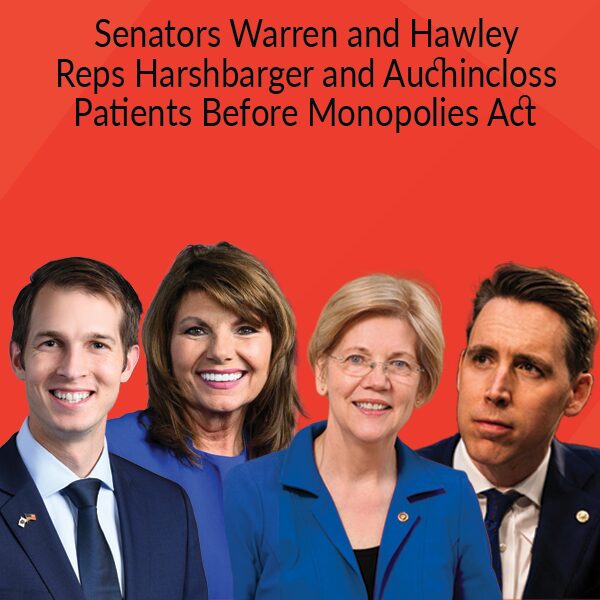
The final session of this Congress may not be as “lame” as anticipated. On December 11, 2024, Senators Elizabeth Warren (D-Mass.) and Josh Hawley (R-Mo.), with the support of Representatives Diana Harshbarger (R-Tenn.) and Jake Auchincloss (D-Mass.) introduced the Patients Before Monopolies Act.

The bill, if passed, would prohibit any company from owning both a Pharmacy Benefit Manager and a Pharmacy. Joint ownership of both creates a “gross conflict of interest” that allows companies to increase their own profits at the expense of patients and independent pharmacies.

Pharmacy Benefit Managers

Pharmacy Benefit Managers (PBMs) act as middlemen between consumers, health insurance companies, drug manufacturers, and pharmacies. They were designed to negotiate reimbursement and dispensing fees in pharmacies, negotiate drug prices from manufacturers, and manage drug costs for insurance companies. The PBM Act claims that PBMs have manipulated the market, increased drug costs, and are driving independent smaller pharmacies out of business. 

In Their Own Words

“PBMs have manipulated the market to enrich themselves — hiking up drug costs, cheating employers, and driving small pharmacies out of business. My new bipartisan bill will untangle these conflicts of interest by reining in these middlemen,” said Senator Warren.

“The PBM industry is rife with self-dealing that raises costs for patients and bankrupts independent pharmacists. No PBM should be allowed to own pharmacies, because it poses an unacceptable conflict of interest when it then sets reimbursement rates for its own versus external pharmacies. Independent pharmacies deserve fair play,” said Representative Auchincloss.

Pharmacy Benefit Managers

“As a life-long pharmacist, I know first-hand how unchecked PBM consolidation and vertical integration have allowed these shadowy middlemen to self-deal and manipulate the system in ways that are driving up drug costs, limiting patient choices, and putting the financial screws to independent community pharmacies,” said Representative Harshbarger.  “I’m a proud conservative Republican, but we have antitrust laws for a reason. That’s why I’m joining my colleagues in introducing the bipartisan Patients Before Monopolies Act, which will protect consumers and taxpayers, and ensure fair competition by breaking-up these anticompetitive, conflict-of-interest arrangements. Federal regulators should never have let this excessive concentration of our healthcare industry happen in the first place, and so it’s up to Congress to get the job done.”

Issues Addressed

The PBM Act aims to address the issues of higher drug costs, fewer independent pharmacies, and larger profits for corporations. The PBM Act would:

    • Disallow the parent company of any PBM or insurer from owning a pharmacy
    • Require any PBM or insurer that also owns a pharmacy to sell the pharmacy business within three years
    • Allow the FTC, DHHS, DOJ Anti-Trust Division, and state attorneys general to issue orders requiring the divestiture of pharmacies by owners of PBMs or insurers
    • Allow the same to sieze revenue made from the pharmacy business from any owner of a PBM or insurer
    • Distribute the funds to communities and consumers who have been overcharged by these pharmacies
    • Mandate the reporting of all divestments of pharmacies to the FTC
    • Allow the FTC to review any and all future acquisitions

PBMs have manipulated the market to enrich themselves — hiking up drug costs, cheating employers, and driving small pharmacies out of business. My new bipartisan bill will untangle these conflicts of interest by reining in these middlemen.

Elizabeth Warren

Senator, D-Mass.

Who is Impacted?

CVS Health, Cigna, and UnitedHealth Group, among others, would be required to sell their pharmacy businesses within three years.

Caremark, owned by CVS, Express Scripts, owned by Cigna, and OptumRX, owned by UnitedHealth Group, are three of the largest PBMs in the country. Together, they control about 80% of all prescription drug claims.

Not surprisingly, the Pharmaceutical Care Management Association, a lobbying group for PBMs, has contested the claims made in the bill and by its supporters. They argue that PBMs offer convenient, affordable access to medications.

Similarly, CVS said that its integrated business model, both a PBM and pharmacy, helps connect people to accessible, affordable care. The pharmaceutical giant claims it has lowered out-of-pocket drug costs more than 25% in the last ten years and that it reimburses independent pharmacies at a higher rate than its own CVS pharmacy locations.

A spokesperson for CVS Caremark said that policies designed to limit their ability to negotiate with drug manufacturers and pharmacies would increase the cost of medicine. He also said these policies would be a “handout” to the pharmaceutical industry.

Supporters

The bipartisan, bicameral Act has support from the American Economic Liberties Project (AELP), National Community Pharmacists Association (NCPA), American Pharmacy Cooperative Inc (APCI), Pharmacists United for Truth and Transparency (PUTT), Patients Rising, and AffirmedRx.

Public statements on behalf of the PBM Act harshly criticize PBMs, private health insurers, and the healthcare system as a whole.

Giant PBMs and insurers owning their own pharmacies has driven independent pharmacies out of business and reduced patient access to quality care. The Patients Before Monopolies Act addresses the root cause of this problem — consolidated market power — by eliminating the inherent conflicts of interest within the big three PBM business model. We are thrilled to see Sen. Warren and Sen. Hawley lead this bipartisan effort to lower drug costs, protect independent retail pharmacies, and improve patient access to care.

Morgan Harper

Director of Policy and Advocacy, American Economic Liberties Project

A particularly egregious result of the vertical integration of PBM-insurers with retail and mail-order pharmacies is that the PBM – which competes with independent pharmacies and others – decides what their rival pharmacy will be reimbursed and which patients will be allowed to use them. There are also countless examples of PBMs paying their pharmacies much higher reimbursement than non-affiliated pharmacies and using patient data to steer patients to their own pharmacies. We’re grateful to Sens. Warren and Hawley and Reps. Harshbarger and Auchincloss for introducing the PBM Act, which will go a long way in eliminating the conflicts of interest that currently exist in this space.

Anne Cassity

Senior VP of Government Affairs, National Community Pharmacists Association

The inherent conflicts of interest between PBMs owning their own retail, mail-order, and specialty pharmacies have resulted in higher drug costs, reduced patient choice and access to care, and unsustainable reimbursements to non-PBM affiliated pharmacies. With retail pharmacies closing at an alarming rate and patients fighting life threatening diseases being steered to PBM owned pharmacies and often overcharged thousands of dollars for medications, Senator Warren’s Patients Before Monopolies Act couldn’t come soon enough. This commonsense legislation strikes at the heart of anti-competitive PBM behavior and roots out conflicts of interest by prohibiting ownership of both a PBM and a pharmacy. American Pharmacy Cooperative, Inc, is grateful to Senator Warren for her work and leadership on this issue and looks forward to fighting for this critically important piece of legislation.

Greg Reybold

VP of Healthcare Policy and General Counsel, American Pharmacy Cooperative, Inc.

While there are a variety of conflicts of interest that can compromise the intended role of PBMs to act as counterweights to inflated drug prices, one of the chief areas of system misalignment arises from PBM ownership of pharmacies. As these large vertically integrated companies serve as both price-setter and price-taker for pharmacy transactions, PBM incentives to reduce drug markups and to manage pharmacy reimbursement and network decisions in an unconflicted manner are significantly undermined. In our work advising government programs and commercial plan sponsors, we stress that minimizing or eliminating these areas of misalignment are foundationally critical in order to achieve greater balance for medicine accessibility and affordability.

Antonio Ciaccia

President, 3 Axis Advisors

For too long vertically integrated PBMs have put profits over patients, driving up costs, limiting access to essential medications and forcing countless independent pharmacies to close their doors. The Patients Before Monopolies Act is a step toward breaking these monopolies, restoring fairness and competition and, most importantly, ensuring patients get the care they need at a price they can afford. At the heart of our mission is the belief that transparency and integrity should be the foundation of health care. I congratulate Senators Warren and Hawley, and Representatives Harshbarger and Auchincloss for putting patients first, and urge Congress to pass this bipartisan bill.

Greg Baker

Pharmacist and CEO, Affirmed Rx, a transparent PBM

This bill is the next step in urgently-needed legislation to eliminate the profiteering and other conflicts of interest that exist when private health insurers and their pharmacy benefit managers are allowed to design and sell health benefit plans while also owning pharmacies, clinics and other point-of-care entitiesm Vertical integration among the largest healthcare insurers has only served to saddle Americans with the priciest possible premiums for impossibly high-deductible plans that provide fewer options and ultimately result in poorer health outcomes. We applaud Senators Warren and Hawley for recognizing the need to dismantle the current system, which has failed consumers and taxpayers at just about every level.

Monique Whitney

Executive Director, Pharmacists United for Truth and Transparency

Across the country, patients feel increasingly disenfranchised by the healthcare system. The culprit: a complex web of powerful health conglomerates including health insurers, Pharmacy Benefit Managers (PBMs), and their affiliated pharmacies. Patients Rising applauds Senators Elizabeth Warren and Josh Hawley, along with Representatives Diana Harshbarger and Jake Auchincloss for putting forward bi-partisan legislation to put patients before monopolies. It is critical we crack down on health conglomerate conflicts of interest and encourage businesses to operate in the interest of patients’ long term health and wellbeing.

MacKay Jimeson

Executive Director, Patients Rising

The New York Times stated their uncertainty over whether this bill would gain any traction. With so much support, both across the aisle, across congress, and from outside entities, it seems likely it will move ahead. However, Congress has run out of time to pass any bill during this term and will have to be reintroduced in January.

The Rowan Report will continue to follow the progress of the PBM Act next year.

# # # 

Kristin Rowan, Editor

Kristin Rowan has been working at Healthcare at Home: The Rowan Report since 2008. She has a master’s degree in business administration and marketing and runs Girard Marketing Group, a multi-faceted boutique marketing firm specializing in event planning, sales, and marketing strategy. She has recently taken on the role of Editor of The Rowan Report and will add her voice to current Home Care topics as well as marketing tips for home care agencies. Connect with Kristin directly kristin@girardmarketinggroup.com or www.girardmarketinggroup.com

©2024 by The Rowan Report, Peoria, AZ. All rights reserved. This article originally appeared in Healthcare at Home: The Rowan Report. One copy may be printed for personal use: further reproduction by permission only. editor@therowanreport.com

Medicare Advantage Stock Prices After Trump Elected

by Kristin Rowan, Editor

Will the Change in Leadership Usher in a Change in Reimbursement Rates?

As in any election year, we have been bombarded with promises, predictions, and pandering from senate and house hopefuls as well as presidential candidates from every party. Each of them found platform issues that resonated with their followers. In turn, they have accused their opponents of all manner of sin. 

Now that the election has passed and the lame duck session of congress has begun, analysts have started looking to January and how election results may impact different industries. Analysts believe Trump, along with congressional Republicans, will aggressively push Medicare Advantage. One researcher predicts that traditional Medicare will “wither on the vine.” 

Privatization

Opposition to our current health care and insurance system often advocate for a single-payer system that is seen in places like England and Canada. Naysayers refer to this as the “socialization” of medicine, referring to socialist and communist governments. Privatization, on the other hand, moves healthcare out of the hands of the government and into the hands of privately held, usually for-profit, health insurance companies. Medicare Advantage has quietly moved more than 50% of all Medicare eligible patients to a privatized system. Senior policy analyst at Paragon Health Institute, Joe Alabanese believes that the Trump administration and a republican Congress would be “more friendly” to the idea of privatized health care. 

Insurer Stock Prices

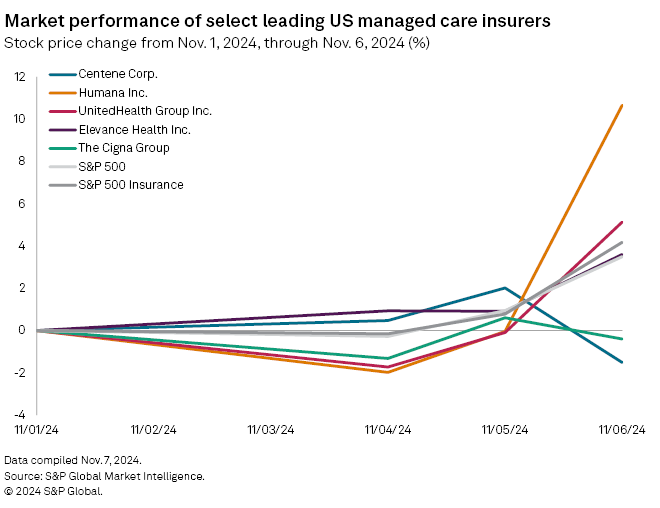
Whether the stock prices just before and after election day are predictive of things to come remains to be seen. For now, the information before us is this:

    • Between Nov 1 and Nov 7, Humana Inc. had the largest increase in stock prices at 10.7%
    • UnitedHealth Group Inc. rose 5.1% in the same time period
    • Both companies had greater stock increases than the average across S&P
    • Elevance Health was in keeping with the rest of the S&P with an increase of 3.6%
    • Molina Healthcare, Inc. and The Cigna Group dropped 0.2% and 0.4%, respectively
Medicare Advantage Stock Trump

Analysts say the jumps are in keeping with expectations that Republican control in Congress and in the White House will be beneficial for Medicare Advantage

Medicare Advantage Stock Trump<br />

Final Thoughts

It’s no secret that The Rowan Report is not a fan of Medicare Advantage. Specifically, the sales tactics used on the elderly and infirmed are predatory and the denial rate is criminal. The more eligible patients sign up for Medicare Advantage the less they will receive the care they need. Further, the more Medicaid has to supplement the cost of Medicare Advantage, the more home care agencies will suffer. Nationally, the more CMS regulates payment rates, pre-authorizations, and denial rates by privatizing Medicaid, the worse off our entire healthcare system will be.

With the state and national associations, we will continue to advocate on behalf of care at home agencies and their patients. And we hope you will too, regardless of who is in office. We have support at the federal level and we will continue to fight the good fight.

# # #

Kristin Rowan, Editor

Kristin Rowan has been working at Healthcare at Home: The Rowan Report since 2008. She has a master’s degree in business administration and marketing and runs Girard Marketing Group, a multi-faceted boutique marketing firm specializing in event planning, sales, and marketing strategy. She has recently taken on the role of Editor of The Rowan Report and will add her voice to current Home Care topics as well as marketing tips for home care agencies. Connect with Kristin directly kristin@girardmarketinggroup.com or www.girardmarketinggroup.com

©2024 by The Rowan Report, Peoria, AZ. All rights reserved. This article originally appeared in Healthcare at Home: The Rowan Report. One copy may be printed for personal use: further reproduction by permission only. editor@therowanreport.com

NAHC NHPCO Town Hall

by Kristin Rowan, Editor

The Alliance

On June 18, 2024, the National Association for Home Care & Hospice (NAHC) and the National Hospice and Palliative Care Organization (NHPCO) announced they had met in Washington D.C. to formally sign an affiliation agreement between the two organizations. After 18 months of meetings, conversations, and compromises, the two groups announced their “Alliance” would be the leading authority of the care at home community.

Bill Dombi Ken Albert Town Hall Alliance

During the opening keynote address at the NAHC Financial Management Conference in July, Bill Dombi, President of NAHC and interim President of The Alliance, and Kenneth Albert, Chair of the Transition Board of Directors overseeing the merger, spoke about the progress they have made.

Albert spoke of the thoughtful consideration the board and members of both organizations have put into this change. They are focusing on the biggest concerns of home health and hospice providers both now and in the future. The unification will create one voice as they advocate for home health and hospice in Washington D.C.

New Leadership

Albert and Dombi shared the stage at the NAHC Financial Management Conference about the ongoing search for a CEO of the new organization. According to Albert, there were some candidates who were very excited about the role, but whom the board did not feel there was a great fit. Contrarily, there were candidates the board eagerly wanted to move forward with who declined to continue the process. According to Dombi, the search has gone outside care at home as they look for the right fit from qualified candidates from multiple industries. Both agreed that they felt the search was close to over and they should have an announcement about the new CEO, and possibly the new name, sometime in August of this year.

New Resources

The conjoined organization promises more than just new leadership. Currently under construction is a new logo and website to encompass both groups. Dombi alluded to new resources for providers, training for quality care, and other tools for the industry. While the organization’s name and leadership are forthcoming, the website is projected to launch sometime in the spring of 2025. 

Operating as One

Since the announcement of the merger last year, and even before the deal was inked, NAHC and NHPCO have already been integrating. Dombi told The Rowan Report in a previous interview that the two groups have already been lobbying together, working on policy together, and integrating the management of the two associations. 

The Last NHPCO Conference and the First Alliance Conference

September, 2024 marks the final standalone event for the NHPCO. The 2024 NHPCO Annual Leadership Conference runs September 16-18, with a pre-conference September 14-15 in Denver, CO. The conference will have on-demand access until December 31, 2024. NAHC members will receive member rates to the NHPCO conference. 

The “2024 Home Care and Hospice Conference and Expo” will be the last conference held solely by NAHC, but we are seeing quite a few hospice companies on the exhibitor list and expect this to be a sneak peek at future conferences. The national conference is scheduled for October 20-24, 2024 in Tampa, Florida. This will also mark the final conference for Bill Dombi as President. Dombi announced earlier this year that he will retire at the end of 2024.

NAHC NHPCO Alliance Town Hall

Town Hall

With quite a few remaining unanswered questions about the future of the two organizations, NAHC and NHPCO hosted a virtual Town Hall on July 31, 2024. With more than 250 association members from both groups in attendance, Bill Dombi and Ben Marcantonio, interim-CEO for NHPCO, along with Kenneth Albert and Melinda Gruber, Vice Chair of the Transition Board of Directors.

Naming "The Alliance"

Albert mentioned that there has been some success using the term Alliance, but it is not a long term solution. The finalization of the name is awaiting some trademark issues to be ironed out and that announcement, which they had hoped to be able to make in July, is coming soon.

CEO Search Update

Gruber thanked the search committee and recruiting firm for their work on the CEO search. Gruber reiterated that they are nearing the final selection phase and after board approval, an announcement will be made. 

Website

Ben Marcantonio, current interim CEO of NHPCO and future CIO of The Alliance confirmed that the new website will allow access to both legacy websites (the current NAHC and NHPCO websites). The new website will have a preliminary version this fall with a fully completed version next spring.

Members of either organization will have full access to the preliminary version of the website this fall. Currently, members can only access information from their own organization, but Marcantonio stressed that if there is information you need, they can help you access it.

Integration

There are eleven committees working together to integrate the two associations. advocacy, programs, education, and HR are a few of these workgroups that each have two to three high priority goals that will most effectively bring about the integration of the two groups. Work plans are now in place to create significant integration by the end of the calendar year. 

Policy and Advocacy

Bill Dombi presented an updated on the joint policy and advocacy issues The Alliance is undertaking. “What stands out for the immediate term has been how the resources have been employed of the two legacy organizations under the banner of The Alliance, focusing on hospice and palliative care,” Dombi said, “In a matter of weeks we saw significant regulatory and legislative action taking place.”

Hospice

The Hospice Final Rule 2025 has undergone an intense review and indepth analysis by members of both teams. The rule will have “tremendous impact” under the Medicare hospice program.

According to Dombi, the two organizations have come together to jointly fund a research project for the Special Focus Program to understand the impact and targeting. Dombi is hopeful that U.S. Representative Earl Blumenauer’s (D-OR) discussion draft will serve as a stepping stone for Hospice reform.

Home Health

The ongoing battle in Congress against CMS is gaining momentum. Dombi said there is a “tremendous amount of support” in Congress to role back the authority of CMS to institute rate changes and rate cuts under the Patient Driven Groupings Model (PDGM). “We have gained a seat at the table, which really helps,” Dombi said. We are continuing with litigation challenging Medicare’s validity of the regulation which has set all these rate cuts in motion.

Medicaid Home and Community-Based Services

The Final Rule modified in a positive way the 80/20 requirement. “We agree with the intentions of improving the status of direct care workers who positively impact so many lives. But in the absence of additional funding, it’s very very difficult to support this rule,” Dombi said. The modification stepped back from the more “draconian” interpretation, but The Alliance is not yet satisfied with the result. There is talk of a joint lawsuit challenging the validity of that rule.

Private Duty

The Private Duty Home Care world, one of the less regulated in the industry, is gaining a lot of attention from Fair Labor Standards as well as Non-Compete Laws. There is currently a joining of forces around solutions that will help Private Duty in the workforce arena, more specifically the Credit for Caring Act, which is gaining some traction, and would offer some financial support for family members who are paying for home care services directly.

The Alliance Needs You

Bill Dombi’s final statement in the Town Hall meeting centered on advocacy. He called for everyone who was in attendance and every member of both legacy organizations to join the fight. Everyone needs to part of that team of advocacy.

Final Thoughts

There is much more news to come out of these to associations as we near the end of 2024, and still more through the first quarter of 2025. The Rowan Report expects additional announcements to be made at both the NHPCO and NAHC annual conferences and we will be there to update everyone on the progress and statements coming out of those two meetings. 

# # #

Kristin Rowan, Editor

Kristin Rowan has been working at Healthcare at Home: The Rowan Report since 2008. She has a master’s degree in business administration and marketing and runs Girard Marketing Group, a multi-faceted boutique marketing firm specializing in event planning, sales, and marketing strategy. She has recently taken on the role of Editor of The Rowan Report and will add her voice to current Home Care topics as well as marketing tips for home care agencies. Connect with Kristin directly kristin@girardmarketinggroup.com or www.girardmarketinggroup.com

©2024 by The Rowan Report, Peoria, AZ. All rights reserved. This article originally appeared in Healthcare at Home: The Rowan Report. One copy may be printed for personal use: further reproduction by permission only. editor@therowanreport.com