Three Choices at the End of Life

by guest author Barbara Karnes, RN

Cure, Life-Sustaining, or Comfort Care

When someone is facing a life-threatening illness, they and their loved ones are often asked to make medical decisions they never expected to face. Unfortunately, most of us don’t fully understand the choices before us. Knowing the difference between cure, life-sustaining treatment, and comfort care can help you make decisions that honor the kind of life – and death – you want.

Cure, life-sustaining treatment, and comfort care. These are the three paths available when we are faced with a life-threatening illness.

Cure

Cure means providing a return to a “normal” functioning life. I put normal in quotes because the word can be misleading. What is normal for one person may not be normal for another. Cure implies being able to participate in and enjoy the activities of everyday living. It means the malady is gone or controlled.

Life-Sustaining Treatment

Life-sustaining treatment means keeping the physical body alive by whatever means are deemed necessary. Many people refer to these treatments simply as “life support.” They can include artificial nutrition and hydration, ventilators, dialysis, respirators, and other advanced medical procedures. The goal becomes preserving life, even when the quality of life is greatly diminished.
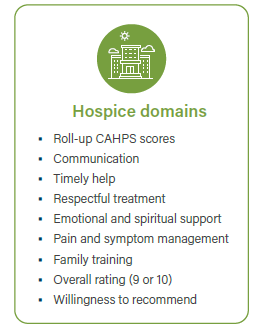
Quality Improvement Project Hospice Domains

Comfort Care

Comfort care focuses on the quality of the life you are living rather than simply the length of that life. It includes physical care along with emotional, mental, and spiritual support. Comfort care addresses what is most important to your well-being now that your body is no longer able to meet all of your needs. It also guides and nurtures your family and those closest to you as everyone prepares for the end of life while continuing to live fully each day.

"Fix" or Provide Care?

We often get so caught up in getting “fixed” at any price that we lose sight of what our goal really is. Treatment does not necessarily mean cure. Yet most of us assume that if we do everything possible, we will get better. Sadly, too often we sacrifice the quality of the life we have today while pursuing a cure that may no longer be possible.

When deciding between cure, life-sustaining treatment, or comfort care, information and knowledge are vital components to making decisions. We need honest conversations about the likely outcome of treatment, the chances of success, life expectancy, and quality of life. Once you’ve had those conversations and decided what kind of living is most important to you, share those wishes with your physician, your family, and those closest to you—and put your decisions in writing.

There is no right or wrong choice. There is only the choice that best reflects your values and how you want to live the time you have.

# # #

Tim Rowan The Rowan Report

Barbara Karnes, RN, is an award-winning end-of-life educator, award-winning nurse, NHPCO Hospice Innovator Award winner 2018, and 2015 International Humanitarian Woman of the Year

While at the bedside of hundreds of people during the dying process, Hospice Pioneer Barbara Karnes noticed that each death was following a near-identical script. Each person was going through the stages of death in almost the same manner, and most families came to her with similar questions. These realizations led Barbara to sit down and write Gone From My Sight, the “Little Blue Book” that changed the hospice industry.

Gone From My Sight is the original, and remains the most widely used, patient/family educational booklet on the signs of approaching death. It has been in print continuously since 1985 and has sold over 35 million copies worldwide. With its publication and distribution, Barbara created one of the most important tools in the end-of-life movement today.

©2026 by The Rowan Report, Peoria, AZ. All rights reserved. This article originally appeared in The Rowan Report. One copy may be printed for personal use: further reproduction by permission only. editor@therowanreport.com


Medicare Advantage Lowers Home Health Care Use

by Kristin Rowan, Editor

End-of-Life Care in Medicare Advantage vs Traditional Medicare

Using research from CMS, researchers from Mt. Sinai in New York and Brown University in Rhode Island studied the data of adults aged 66 and older who passed away and had Medicare coverage in their final year of life. Included in the study were people potentially eligible for home health care and not in a nursing facility, hospital, or hospice care setting. Data from close to 1.8 million people was analyzed. The researchers identified whether the participants received home health care and how many days of end-of-life care they received.

Home Health Higher in Traditional Medicare

Of the nearly 1.8 million participants, the average age was 82. 51.5% were female and 36.5% were enrolled in Medicare Advantage. In the final year of life, home health care use was recorded at 37.5% for MA enrollees and 41.7% for traditional Medicare.

When the researchers looked at different demographic groups within the data sets, home health care usage was higher in traditional Medicare in most groups. However, among American Indian and Alaska Native groups, Medicare Advantage had a slightly higher rate of home health use at 37.9% compared with 37.1% in Traditional Medicare.

Conversely, in the Asian or Pacific Islander demographic, home health use rate was 32.6% in MA and 41.8% in TM. Similarly, the rate of use among the Hispanic group was 33% in MA and 44% in TM. Following a similar trend, in the non-Hispanic Black group home health usage in MA was 38.8% compared with 42.9% in TM. Likewise, among the non-Hispanic White group, home health use in MA was 37.9% versus 41.5% for TM. For those of unknown race, usage was 36.1% in MA compared with 40.1% in TM.

Days of Care Lower in Medicare Advantage

Home health users across all racial and ethnic demographic groups enrolled as Medicare Advantage beneficiaries had fewer days of care in home health than those enrolled in Traditional Medicare. The stand-out group in this part of the research was those of Hispanic descent, who averaged 81.9 days in home health care in Medicare Advantage compared with 111.9 days in Traditional Medicare.

Medicare Advantage Home Health Use

Implications

The researchers indicated some limitations in the study, namely that data was pulled from pre-covid patients because of the changes in home health during covid. The study should be repeated with post-covid data. One of the researchers received personal fees while serving as a senior advisor to CMS. Another received personal fees as a section editor for UpToDate. A third researcher reported receiving personal fees from Abt and UpToDate.

Despite these limitations, the implications of the study show that end-of-life care is not the same between Medicare and Medicare Advantage patients. Medicare Advantage is largely operating on a Value-Based Purchasing Model. The fewer services the beneficiary receives, the more money the primary doctor, hospital, and payer keep. It is not surprising, therefore, that MA patients get fewer services for less time. Patients who switch from Traditional Medicare to Medicare Advantage, especially if they are your patients, should be informed that they are still eligible for home health care and hospice care, but they may have to ask for it.

# # #

Kristin Rowan, Editor

Kristin Rowan has been working at The Rowan Report since 2008. She is the owner and Editor-in-chief of The Rowan Report, the industry’s most trusted source for care at home news .She also has a master’s degree in business administration and marketing and runs Girard Marketing Group, a multi-faceted boutique marketing firm specializing in content creation, social media management, and event marketing.  Connect with Kristin directly kristin@girardmarketinggroup.com or www.girardmarketinggroup.com

©2025 by The Rowan Report, Peoria, AZ. All rights reserved. This article originally appeared in The Rowan Report. One copy may be printed for personal use: further reproduction by permission only. editor@therowanreport.com