Agency Management System for Fractional Home Care

by Tim Rowan, Editor Emeritus

Agency Management System for Fractional Home Care

There is a growing service sector within Home Care to provide in-home care to seniors living in Independent Living and Assisted Living facilities. We described the basics of the way it works in last week’s interview with Jessica Nobles. She pointed out that there was no software available for the kind of scheduling required by this type of home care. She wound up creating her own software to schedule on-site caregivers performing visits that can be anywhere from five-minutes to full, four-hour shifts.

Right after building the customized scheduling tool, Ms. Nobles met Tim and Gina Murray, who had been through an identical experience with their own agency, Aware Home Care. The difference between their stories was that both the Nobles’ and the Murray’s, after selling their respective agencies, embarked on different paths. Jessica and Clint went the consulting route and Tim and Gina formed a software company, CinchCCM, Community Care Made Easy. We spoke to them this week to hear the rest of the story.

Agency Management System Win-Win-Win

At no cost to the residential facility itself, a home care agency places one or more caregivers on the premises. IL or AL residents join a kind of co-op to be eligible to request in-home services. Some agencies who offer this service accept requests for traditional shifts, five-minute check-ins, and pretty much everything in between.

Many request regular morning breakfast help, others tuck-in services. Most agencies in this sector allow registered members to request unscheduled, as-needed help. To accommodate the needs of all members, an agency will add caregivers as the number of participants grows. The Murray’s outlined the benefits to all involved.

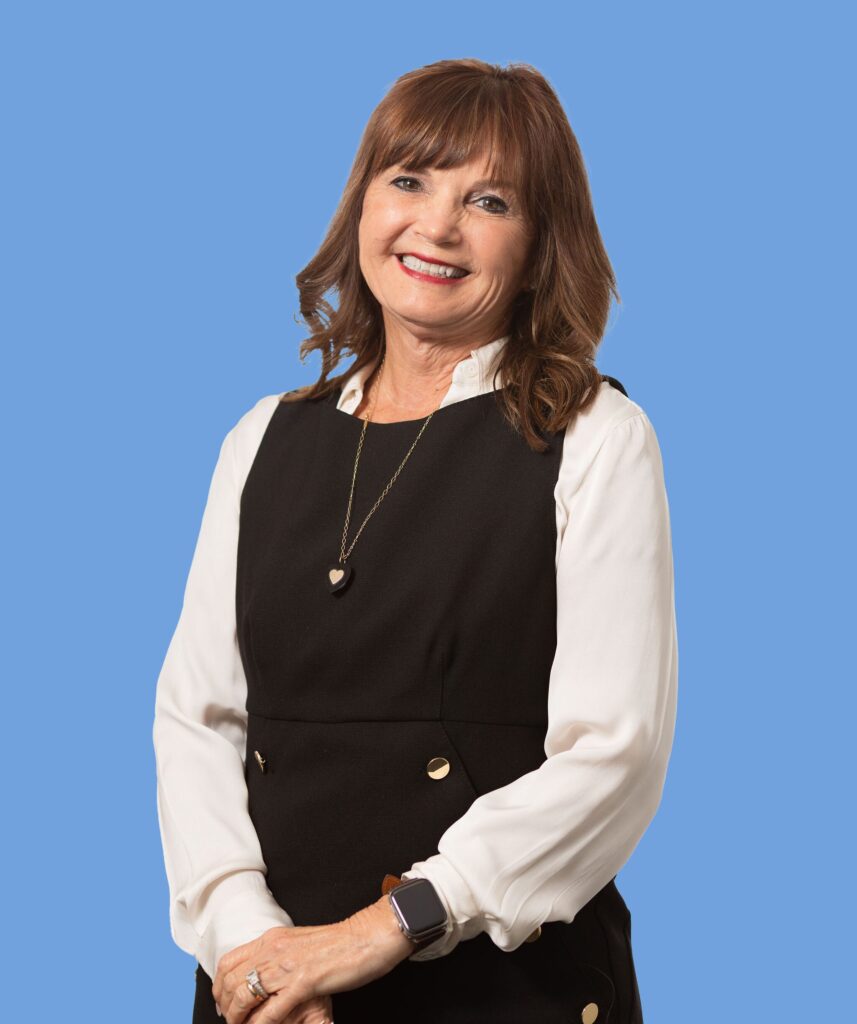
Gina Murray
  • Caregivers like predictable income. They are paid for their entire time on-site, whether they are in a member home or on call between visits.
  • IL and AL owners find that the level of care keeps residents in their facilities longer by delaying the need to move to a nursing facility.
  • Families gain peace of mind, knowing their older loved ones have a caregiver nearby and on call all day, sometimes overnight.
  • Home Care agencies report enhanced caregiver satisfaction and retention, along with a steady, predictable payroll.

Clearly, agency management software was not intended to automate this type of arrangement.  

Not Your Parents' Agency Management System
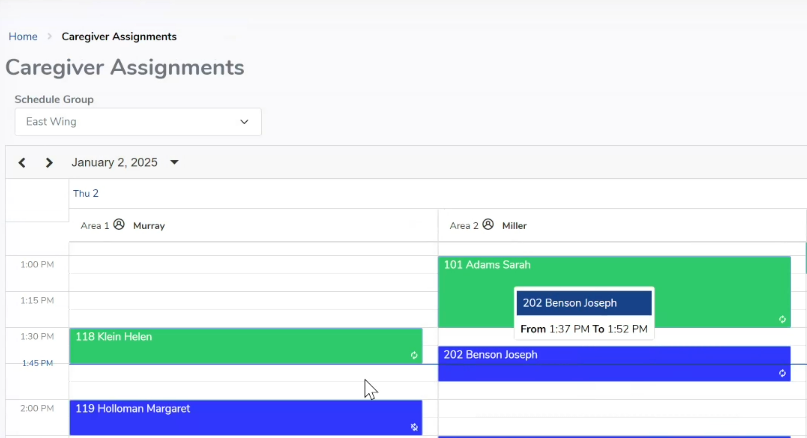
CinchCCM Screenshot

The Murray’s designed a system that displays schedules on a color-coded, calendar grid, with a column for each day and row for each 15-minute unit. Then they began to add features.

  • caregivers can tweak scheduled visits by drag and drop
  • remote family members can see scheduled and completed visits as well as caregiver notes
  • on the system’s mobile app, each caregiver can see the schedule of all other on-site colleagues. If a client unexpectedly needs more time and a caregiver has another visit coming up, that caregiver can find an available colleague and ask, through a secure message on the app, for someone to fill in.
  • on the system’s mobile app, each caregiver can see the schedule of all other on-site colleagues. If a client unexpectedly needs more time and a caregiver has another visit coming up, that caregiver can find an available colleague and ask, through a secure message on the app, for someone to fill in.
  • a management dashboard displays real time charts of caregiver utilization and gross profit. Agencies with multiple sites can report each site’s data separately and roll all sites up into one combined report.

Tim Murray explained that version 5.0 is nearly finished and ready to be released later this year. “It has been a long, slow development process,” he said, “and the first version was functional but simple. Adding the mobile app was a big step forward and very popular with the field staff. Management reports and real-time charts brought CinchCCM from a scheduling application to a full agency management system.”

Pricing, Growth, Evolution

CinchCCM is priced per client, based on average daily census at the end of each month. The Murray’s found this policy to be both manageable and fair. Their customers have a predictable revenue stream if most residents choose the monthly retainer option, and they have a predictable software cost for budgeting.

As word spread and software sales grew, Tim and Gina Murray sold Aware Home Care, formed a corporation, and turned their efforts to feature development, customer support, and sales. Those efforts have led to growth to 60 clients across the country. “As the so-called fractional home care concept grows,” Gina Murray concluded, “we want to be there to make it a smooth experience for those who give it a try.”

# # #

Tim Rowan The Rowan Report

Tim Rowan is a 30-year home care technology consultant who co-founded and served as Editor and principal writer of this publication for 25 years. He continues to occasionally contribute news and analysis articles under The Rowan Report’s new ownership. He also continues to work part-time as a Home Care recruiting and retention consultant. More information: RowanResources.com
Tim@RowanResources.com

©2025 by The Rowan Report, Peoria, AZ. All rights reserved. This article originally appeared in The Rowan Report. One copy may be printed for personal use: further reproduction by permission only. editor@therowanreport.com


Fractional Home Care

by Tim Rowan, Editor Emeritus

Solve Nagging Problems; Raise Revenue

Along with the rest of the Private Pay sector, Jessica Nobles’ Eastern Tennessee agency was struggling with caregiver recruitment and retention. Finding good people is less than half the battle. To keep them, you have to pay a competitive wage and provide enough hours to ensure that wage translates into an attractive and predictable monthly income. We spoke with Jennifer, Founder of Home Care Ops, last week to learn one of her solutions.

Fractional Home Care

What Nobles calls “Fractional Home Care” is providing services in a senior living community with one or more caregivers stationed on site. Residents pay a membership fee or pre-purchase a package of hours. The agency is thus guaranteed a small revenue base and clients are free to request services for a few minutes or a few hours on an as-needed basis.

“Our caregivers love this arrangement because it virtually guarantees them full-time pay. They remain on site at the facility for a contracted shift, which can be their choice of daytime or night hours. If demand warrants it, we will assign more than one caregiver at a time.”

Jessica Nobles

Founder, Home Care Ops

She added that the advantage to the agency is that nearly all of a caregiver’s day is paid hours. There are no mileage reimbursements and no paying for travel time or idle time. “Think of it as a co-op,” she continued. Ten clients can share one caregiver. They get all the care they need and our caregivers are earning for their entire day.”

The benefit accrues to independent living communities as well. Their arrangement with an outside Home Care agency means they no longer have the burden of hiring and retaining a caregiving staff of their own and their residents get better care. The residents pay for the services, not the facility, and they have the option of using the on-site caregivers as needed or through the pre-purchase plan of a block of ten or twenty 15-minute units.

A Typical Scenario

Jessica offered an example of how Fractional Home Care often works. An Assisted Living Facility resident lives independently but occasionally needs help with showers, or help getting to and from the community center, etc. In a typical home care setting, that person would have to bring in a caregiver for four, six, or eight hours, though less than an hour is needed. The family speaks with the onsite agency to arrange for the specific help needed, whether it is a few minutes

Fractional Home Care ALF

every other day or an hour every day. The agency offers a membership at flat fee and both parties get exactly what they need. The caregiver is available to add other residents to his or her schedule, making it possible to achieve a 40-hour work week.

“Some patients might need traditional daily care as they might get from any other agency,” Jessica explained. “They can contract for that for around $1,600 per month. Our caregiver can come multiple times a day since there are no drive time concerns.” She said that not every client needs a membership program. Some prefer pre-sold units, perhaps buying five 15-minute visits in advance. “They never have to pay for down time. Our caregivers never sit idle should their work be done before their shift is up.” 

Jessica Nobles Fractional Home Care

Fractional Home Care Improves Agency Reputation

Jessica has found that her agencies have earned a reputation for such excellent care that they have occasionally replaced franchise home care organizations locally that have national contracts with national ALFs. Some of these facilities have been dissatisfied with the care they were getting with their national organization’s contracted agency. When this happens, they seek a local agency to replace them. Jessica has seen this several times when the franchise was not staying on site.

“We explain our fractional model, with someone on site at specified times when at least three residents have signed on, and one caregiver per 10 clients. The more clients who sign up, the more caregivers we station at the facility. This leads to an additional benefit for the ALF. This level of service delays the day the family decides to move Mom from their community to a nursing facility.”

Fractional Home Care has been so successful, the word spread to other residential communities. Nobles’ company had had to turn some away. When that happened, she and her partner and husband began to teach the system to other agencies.

There was one obstacle, she admits. There were no Agency Management Software systems that could be adapted to the fractional way of providing care. She and her team finally created their own…right before she found one on the market that met their needs. Jessica introduced us to Tim and Gina Murray, co-founders of Cinch CCM. Jessica recommends Cinch CCM to fractional home care agencies. We have scheduled a demo and will have a review in the near future.

# # #

About Jessica Nobles

With over a decade of Private Duty Home Care leadership and knowledge, Jessica Nobles worked her way up through every position from Caregiver, Operations Coordinator, Franchise Developer, and Independent Agency Owner. As the founder and operator of Nobility Care Solutions, she grew her revenue to six figures within the first year of business through grassroots marketing, creative community engagements, and referral partnerships. She is also the Executive Administrator for Home Care Ops where she coaches, consults, and empowers other home care owners and operators to create operational systems and strategies that build lasting business success and consistently increases revenue.

Tim Rowan, Editor Emeritus

Tim Rowan is a 30-year home care technology consultant who co-founded and served as Editor and principal writer of this publication for 25 years. He continues to occasionally contribute news and analysis articles under The Rowan Report’s new ownership. He also continues to work part-time as a Home Care recruiting and retention consultant. More information: RowanResources.com
Tim@RowanResources.com

©2024 by The Rowan Report, Peoria, AZ. All rights reserved. This article originally appeared in Healthcare at Home: The Rowan Report. One copy may be printed for personal use: further reproduction by permission only. editor@therowanreport.com

Is Medicaid Down for the Count?

by Kristin Rowan, Editor

Medicaid Payment System Goes Dark

On Monday, January 27, President Trump, through the Office of Management and Budget, announced a temporary freeze on federal spending while his newly designated head of the Department of Government Efficiency ensures all spending follows the executive orders the President has signed. The memo was vague and caused widespread confusion across government departments. Almost immediately after the memo was circulated, Medicaid programs could not access the Payment Management Services web portal, the entity responsible for paying Medicaid claims.

The Memo

The language used in the memo on federal spending was broad and overreaching. As such, many federal organizations were unclear as to whether the memo applied to them. The message in the memo was that the administration intended to curb any spending that does not improve the day-to-day lives of the people. Throughout the day Monday, the White House sent clarifications about what programs would not be impacted. Among them were food assistance programs like SNAP, WIC, and Meals on Wheels, and Medicaid. The medicaid payment portal went down, despite this clarification.

Exclusions

Multiple state and federal agencies reached out to the White House for clarification following the release of the memo. Explicitly excluded from the freeze are direct benefit plans like Social Security and Medicare. In addition to the programs named in the memo, clarification on additional programs that would not be impacted included Medicaid. Despite the temporary website outage, claims were still being processed and payments were still being made.

Immediate Lawsuits

Almost simultaneously with the distribution of the memo, several non-profit organizations filed suit against the federal government. They called Trump’s action an “unlawful and unconstitutional” act, even temporarily. The pause on federal spending was set to go into effect at 5 p.m. ET on Tuesday. Minutes before, U.S. District Judge Loren L. AliKhan put a pause on the pause.

Temporary Freeze on the Temporary Freeze

To allow both sides time to construct an argument, the judge stayed the funding freeze until Monday, February 3. That morning, the judge will hear arguments and consider the issue. After the stay, attorneys general from 22 states and D.C. filed their own lawsuit to permanently block the freeze and prevent any future attempts to cut off already approved federal funding.

Then Comes the Thaw

If the judge allows the freeze to move forward, Trump has given every agency until February 10 to account for and explain all spending programs within their departments. Once the accounting has been reviewed, likely the OMB and the Department of Government Efficiency will determine which federal spending programs can resume operation.

There is no indication yet as to whether Trump will extend the February 10 deadline, given the delay in the courts. By the time the judge rules on Monday, however, we hope the White House will have issued additional details and guidance to avoid additional disruption to essential services like Medicare and Medicaid.

Federal Funding Freeze

Final? Ruling

Early Monday, Judge AliKhan said she was not convinced by the argument that nonprofit groups have no case against the funding freeze since the OMB rescinded the memo. The administration argued that a brief pause on funding to align federal spending is within the law. The administration also suggests that the courts have no standing to block it. AliKhan has indicated that she will likely grant a longer temporary order to stay the funding freeze.

# # #

Kristin Rowan, Editor

Kristin Rowan has been working at The Rowan Report since 2008. She is the owner and Editor-in-chief of The Rowan Report, the industry’s most trusted source for care at home news .She also has a master’s degree in business administration and marketing and runs Girard Marketing Group, a multi-faceted boutique marketing firm specializing in content creation, social media management, and event marketing.  Connect with Kristin directly kristin@girardmarketinggroup.com or www.girardmarketinggroup.com

©2025 by The Rowan Report, Peoria, AZ. All rights reserved. This article originally appeared in The Rowan Report. One copy may be printed for personal use: further reproduction by permission only. editor@therowanreport.com


New Way to Approach Care at Home

by Kristin Rowan, Editor

Care For Lives: Empowered Homecare with a Holistic Approach

It’s a familiar story that you’ve heard countless times. A licensed practical nurse (LPN) takes a job in a healthcare setting and continues her education to become a registered nurse (RN). She works tirelessly for two years both at her job and in school with no days off. Moves into the hospital setting, then the clinic setting and suffers from burnout. She sees how much there is to do in healthcare that isn’t being done in the hospitals and clinics. Frustrated with the lack of care, too many patients, and too much stress, she tries her hand at home health. And she falls in love…

The Start of Something New

This is the story of Vanessa Chambers, CEO of Care For Lives PLLC. Her first reaction to home health was “Where has this been all my life?” Although she loved home health care, she felt she didn’t get to spend enough time with her patients. So much of her day was spent on paperwork and running from case to case. Sound familiar? 

Vanessa also found herself unable to recommend treatments that she believed could help her patients. Bound by the script her agency created, she felt as though her opinions were unwanted and her critical thinking skills as an experienced nurse were disregarded. And so the all too familiar tale continues. Vanessa started treating patients on her own and created a business based on how she wanted to treat patients.

In addition to standard patient care, Vanessa implemented patient education. Her patients weren’t taught what they needed to know and it terrified them. Their fear, as much as their illness, was a threat to their recovery. Their mistrust of the healthcare system and hospitals left them without care. When Vanessa realized how much work there was to be done, she started to build an army of caregivers. This was the beginning of Care For Lives.

Care For Lives Vanessa Chambers

Building the Care For Lives Army

“Let’s cultivate something!” This was the siren call Vanessa sent out to people she knew and trusted. She wanted to foster a community where nurses felt valued and could bring that energy to the people in New York. With the help of a business consultant, Vanessa began cultivating her army. At first, she reached out to nurses that she had worked with or for in the past. Those nurses recruited other nurses that they new and trusted. 

A new realization came to Vanessa when she saw how much help her patients needed in areas outside of nursing. Mental and physical well-being and a holistic approach offers better results than treating a condition in a vacuum. As she did more research on treating other areas of a patient’s life, she was introduced to Cognitive Behavioral Therapy.

CBT

Cognitive Behavioral Therapy (CBT) is talk therapy that looks into a patient’s trauma to see how it correlates both physically and mentally and how they connect to each other. Vanessa traveled to England to experience CBT first hand. “I’ve had therapy before,” explains Vanessa, “But, with him I solved problems I didn’t even know were there.” Mark Semple, CBT, Traumatologist, was next to join her army, followed by Sharon Semple, CBT, Traumatologist, and Hanna Commodore, CBT. Along with the therapy, her team will recommend psychiatry and/or medication if needed.

Nutrition

As part of the holistic approach, Vanessa contacted Shawn M. Nisbet, Holistic Group Nutritionist. With a different approach than traditional nutritionist who focus on getting a patient to a desired weight and moving on, Nisbet delves into each portion of a patient’s lifestyle. She assesses the need for supplements like Vitamin D, skin care regiments, as well as issues with a patient’s relationship with food. She offers individual and group therapy for nutrition and wellness.

An Unlikely Addition

The last addition to Vanessa’s Army is not one you would likely think of as a matter of course. But, Vanessa recognized that when patients feel good about the way they look, they are more optimistic about their health. So Vanessa found a hair care therapist. Danni Antenor is a licensed cosmetologist who is more than just a hairdresser. Hair can become matted and tangled after surgery or a hospital stay. Antenor works with all types of hair and comes to the home to clean out any matting or residue from the hospital. She will also find a look that is simple for the patient to maintain, flattering to the patient, and one that prevents hair loss. More than this, Antenor prevents the loss of dignity.

Chambers Army Care For Lives

Armed and Ready

With her team in place, and feeling confident that she could provide not only health and healing, but education to keep patients home and out of facilities, Vanessa official launched Care For Lives PLLC on October 19th. She is still wading through the noise in New York to get word of her business out to the community. She is planning a pop-up clinic event before the end of the year. Care For Lives nurses will provide education to patients and to their families and caregivers.

Operations

Care For Lives is currently a private pay agency. They are looking to start accepting insurance by Q2 of 2025, starting with private payers. They will consider Medicare and Medicaid patients when they feel equipped to do so. 

Care For Lives operates under a concierge service model, with patients paying a monthly flat rate for different tiers of service. Depending on the level of membership, patients get a nursing visit and cosultation, CBT, hair therapy, direct or group nutrition counseling, and weekly or bi-weekly virtual visits. They plan to at physical therapy and additional services over time. 

Longer term goals for Vanessa include hiring a medical director, having a 24/7 call center that is fully staffed, setting up a messaging system to provide patients with access to their care team, and to expand Care For Lives with new locations. 

About Care For Lives

Care for Lives provides empowered homecare. We provide patients, and their support system, with the education needed to ensure patients may enjoy the freedom and peace of mind that comes only from living in the comfort of your own home. We are dedicated to increasing quality care knowledge, and support services, for treatment, prevention, and total wellness where you feel most comfortable. Our services are available in homes, communities, and places of work.

# # #

Kristin Rowan, Editor

Kristin Rowan has been working at Healthcare at Home: The Rowan Report since 2008. She has a master’s degree in business administration and marketing and runs Girard Marketing Group, a multi-faceted boutique marketing firm specializing in event planning, sales, and marketing strategy. She has recently taken on the role of Editor of The Rowan Report and will add her voice to current Home Care topics as well as marketing tips for home care agencies. Connect with Kristin directly kristin@girardmarketinggroup.com or www.girardmarketinggroup.com

©2024 by The Rowan Report, Peoria, AZ. All rights reserved. This article originally appeared in Healthcare at Home: The Rowan Report. One copy may be printed for personal use: further reproduction by permission only. editor@therowanreport.com

Here We Go Again

by Tim Rowan, Editor Emeritus

OIG Accuses Medicare Advantage Providers of Padding Patient Assessments...Again

“Hello, this is your Medicare Advantage company calling. I am one of their clinicians and it is time for us to update your health assessment. If you will agree to a home visit, we will send you a $50 gift card to CVS.”

This phone call my brother received is typical, increasingly common, and not necessarily on the up-and-up, according to a new report to CMS from the Department of Health and Human Services Office of the Inspector General (OIG). OIG found that these home visits, known in the insurance industry as “Health Risk Assessments,” (HRA) when coupled with HRA-related claims data, increased Medicare Trust Fund payments to MA companies $7.5 billion in 2022 and twice that in 2023. Most of it went to the top 20 companies.

Concerned woman on a telephone call

The October 2024 report, “Medicare Advantage: Questionable Use of Health Risk Assessments Continues to Drive Up Payments to Plans by Billions,” accuses the industry as a whole of improperly padding payments by “finding” new health conditions during these HRA’s that may indicate the need for additional care at additional cost to the company. It questions the use of MA plan employees doing these assessments instead of relying on the customer’s primary care physician’s reports.

OIG references CMS’s own report, Part C Improper Payment Measure (Part C IPM) Fiscal Year 2023 (FY 2023) Payment Error Rate Results,” to determine that gross overpayments to Medicare Part C plans in 2023 amounted to just over six percent of total payments, or $14.6 billion. The net increase to MA plans, after adjusting for underpayments, brought the percentage to 4.62. Total 2023 payments to MA plans came to $275,605,962,817.

The report also points out that identifying additional customer need during an HRA does not necessarily translate into the insurance company paying for additional care.

OIG Recommendations

In addition to implementing prior OIG recommendations, the new report asks CMS to:

    • Impose additional restrictions on the use of diagnoses reported only on in-home HRAs or chart reviews that are linked to in-home HRAs for risk-adjusted payments,
    • Conduct audits to validate diagnoses reported only on in-home HRAs and HRA-linked chart reviews, and
    • Determine whether select health conditions that drove payments from in-home HRAs and HRA-linked chart reviews may be more susceptible to misuse among MA companies.

CMS concurred with OIG’s third recommendation but rejected the other two.

While the entire 38-page report is well-worth reading, OIG has also published a one-page summary.

At this year’s annual conference of The National Alliance for Care at Home, the new merger of NAHC and NHPCO, a number of education sessions were devoted to teaching Home Health agency owners how to negotiate with Medicare Advantage plans in order to minimize losses and better care for patients who chose those plans. Comments included the high rate of care denial, unreasonable prior authorization policies, and slow payments as compared to traditional Medicare. Other healthcare entities have chosen a potentially more effective response: Just Say No. 

Hospital systems have had enough

According to a roundup of recent decisions by large and small healthcare systems in Becker’s Hospital CFO Report (10/25/24), no fewer than 30 healthcare providers are severing their relationships with one or more MA plans, with another 60 who told Beckers they are seriously considering the same move.

Doctor tears up contract

States Have as Well

A sister publication, Becker’s Payer Issues, reported in its October 23 edition that more and more states are issuing fines against MA plans for violations ranging from excessive denied claims to collection of co-pays when none was required.

How Much Longer?

All of this demands a serious question. How much longer will Home Health continue to tolerate abuse by these giant, for-profit payers now that a different path forward has been paved by hospital systems and state regulatory arms? The loudest voice for Home Health to join the “Just Say No” movement over the last few years has been that of Bruce Greenstein, CTO of LHC Group. Following his company’s acquisition by UnitedHealth’s Medicare Advantage division, Optum, his less loud message is to work with MA plans to teach them what Home Health is and what it can do for them.

Statement from Dr. Landers

In his inaugural address to The Alliance last month, new CEO Dr. Steven Landers called for our entire industry and everyone taking a paycheck from it to join him in advocacy. We fully support that call to action, recognizing that no national association can influence lawmakers and CMS regulators without member support, but he was referring to Medicare rules and payment structures. As we know, that includes less than half of Medicare beneficiaries today. Thanks to deceptive TV ads during open enrollment every year, that number will continue to shrink.

Widespread Advocacy

We need to turn at least part of our advocacy focus to the dominant payers, the MA divisions of insurance companies. Read the Beckers report on the 30 healthcare systems that have torn up their MA contracts. Read the companion report about the epidemic of care denials. Yes, it is a David vs. Goliath story, with even the largest organizations in Home Health dwarfed by the size of the payers. As so many hospital systems have shown, however, it is possible to switch from begging for a few more cents per visit to forcing a plan to beg you to take their patients.

It will only work though if everyone does it. We have already lost LHC Group, and Optum is in the final stages of adding Amedisys to their stable. Out of 11,000 HHAs, there is still a chance we have a united voice loud enough to be heard and taken seriously.

Final Thoughts

One of their improper cost-cutting tactics is routine care denial. For example, the Labor Department alleged that UnitedHealth subsidiary UMR denied all urine drug screen claims from August 2015 to August 2018 without determining whether a claim was medically necessary. In my brother’s case, following his wife’s HRA by her MA company, with no additional care offered, he made the tough choice to put her on in-home hospice care. The assessing nurse immediately detected she had a UTI and ordered the appropriate antibiotics. She responded quickly and may be discharged from hospice soon. Hospice care, of course, is paid by traditional Medicare, not Medicare Advantage.

Tim Rowan, Editor Emeritus

Tim Rowan is a 30-year home care technology consultant who co-founded and served as Editor and principal writer of this publication for 25 years. He continues to occasionally contribute news and analysis articles under The Rowan Report’s new ownership. He also continues to work part-time as a Home Care recruiting and retention consultant. More information: RowanResources.com or contact Tim at Tim@RowanResources.com

©2024 by The Rowan Report, Peoria, AZ. All rights reserved. This article originally appeared in Healthcare at Home: The Rowan Report.homecaretechreport.com One copy may be printed for personal use: further reproduction by permission only. editor@homecaretechreport.com

Safeguarding Home Care Heroes

by Marcylle Combs, BS, MS, RN, CHCE

This article is part 1 of a 2-part series. Check back for part 2 on November 7th.

Protecting our Care at Home Heroes

Building Emotional Strength & Ensuring Workplace Safety

In the fast-paced, ever-changing world of home health and hospice care, paying attention to care at home worker safety—both physically and emotionally—is critical. These “care at home heroes” offer life-saving care to people in need. The environments they work in, including patients’ homes and their surrounding neighborhoods, can be unpredictable and uniquely risky.

Agencies must put more focus on their caregivers’s emotional well-being and physical safety to help them provide the best care possible. Developing strong safety policies and creating a supportive work atmosphere are key strategies to ensure they can focus on what matters most: caring for their patients.

Care at Home Worker Safety Hidden Dangers

Understanding the Risks

Care at home workers face a wide range of hazards, many of which are heightened by the fact that they’re working in spaces they can’t fully control. These dangers range from exposure to bloodborne pathogens and other biological risks to dealing with physical strains, like lifting patients in cramped spaces. There’s also the issue of unclean home conditions, aggressive pets, crime-ridden neighborhoods, and the risks involved in driving between homes.

By the Numbers

Statistics show that care at home workers are five times more likely to experience nonfatal workplace violence compared to people in other industries. More than 60% of these workers have reported experiencing at least one incident of violence in the past year. Registered nurses (RNs) specifically have reported high levels of verbal abuse (up to 65%), physical assault (44%), and sexual harassment (41%) on the job. In addition, these caregivers often deal with musculoskeletal injuries, with injury rates being 50% higher than those in hospitals due to patient handling tasks.

Common Incidents and the Problem of Underreporting

Many of these incidents go unreported, which only adds to the dangers care at home workers face. Since they’re constantly on the move, it’s tough to track these events. Still, reports clearly show that violence, harassment, and injuries occur more frequently and are more severe in care at home than in many other fields.

Care at Home Safety

Threats Aren't Always From the Patient

On top of dealing with violent patients, care at home workers may also face threats from family members. Tensions and emotional stress in the home—often tied to a patient’s declining health—can sometimes escalate into verbal or physical threats toward caregivers. These situations can make workers feel unsafe, even if no direct threat is made.

Real-World Relevance

For example, I once had a patient’s family member follow me to my car while talking about his pet venomous snakes. He didn’t threaten me directly. I definitely felt uneasy, though, but I didn’t report it. As I look back on this encounter, I believe I truly should have reported this and recorded it for future review.  It just highlights what we should teach our employees on how and when to report incidents.

Hidden Threats

Chemical exposure is another issue. Care at home workers often encounter dangerous cleaning or other chemicals that aren’t stored or used properly. Sadly, there was a tragic case where a home health nurse in Los Angeles died after being exposed to hazardous chemicals stored incorrectly in a patient’s home. Other in-home hazards include fall risks, aggressive animals, weapons hidden in the home, and illegal substances. These hidden risks make it crucial for workers to follow safety protocols when entering patient homes.

Care at Home Safety

# # #

Marcylle Combs Care at Home Worker Safety

Marcylle has faithfully served and advocated on behalf of home health and hospice patients for over 30 years. She started her career as a nurse, worked diligently to strengthen her leadership skills and ultimately became the owner/president of a successful home health and hospice company. She has served the home care industry in Texas and nationally throughout her years on multiple committees, boards, associations and dedicated lobbying efforts. Currently, Marcylle serves on the board of directors for The National Association for Home Care & Hospice (NAHC), the Home Care and Hospice Financial Managers Association (HHFMA) and the Industry Advisory Board. Additionally, she serves on NAHC’s Governance and Nominating Committee, the HHFMA workgroup, Innovations Committee and chairs the Women in Leadership Committee for HHFMA.

As a wife, mother of 5 adult children and as a female in the workplace she aspires to grow and lead others until her last breath on this earth. She continues this quest through three new business ventures she has founded: MAC Legacy, MAC Legacy Investments and The Marcylle Combs Company.     

©2024 by The Rowan Report, Peoria, AZ. All rights reserved. This article originally appeared in Healthcare at Home: The Rowan Report. One copy may be printed for personal use: further reproduction by permission only. editor@therowanreport.com

National Alliance for Care at Home: An Interview with Dr. Steve Landers Part 1

by Kristin Rowan, Editor

Alliance CEO Landers

For more than a year now, The Rowan Report has been providing updates on the merger between the National Hospice and Palliative Care Organization (NHPCO) and the National Association for Home Care & Hospice (NAHC). This week, we attended the first National Alliance for Care at Home (The Alliance) Annual Home Care and Hospice Conference and Expo. We had the opportunity to sit down with Dr. Steve Landers, inaugural Chief Executive Officer of The Alliance.

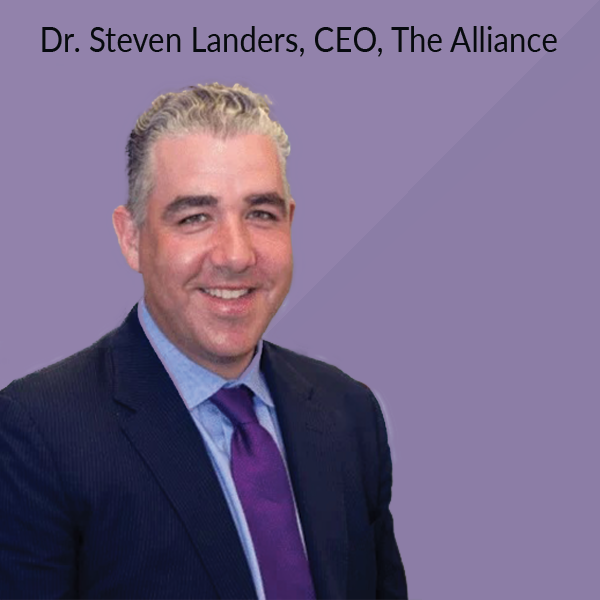
Dr. Steven "Steve" Landers

Dr. Steven Landers brings his almost 20 years of experience to The Alliance as its first CEO. Dr. Landers is a board-certified physician in family medicine, geriatric medicine, and hospice and palliative medicine. He has dedicated his career to seeking home- and community-based solution to traditional healthcare. His focus is on providing compassionate, dignified, and cost-effective care to patients.

Dr. Landers graduated from Case Western Reserve University School of Medicine, where he completed a geriatric medicine fellowship at the Cleveland Clinic.

Dr. Landers is no stranger to NAHC and NHPCO, having previously served on the board of directors for NAHC.  He has met with Congress, state legislatures, CMS, and PAC officials, providing testimonies, discussing home care policy and regulation, and advocating for care at home.

Steve lives in Little Silver, New Jersey, with his wife, Allison, and their three sons. His hobbies include golfing, fishing, hiking, traveling, enjoying good food and watching horse racing. When he is not taking part in these activities, you can find him cheering on his sports teams — the Browns, Cavaliers, Guardians and Indiana Hoosiers.

The Alliance Landers

Dr. Steven Landers: On the Record

The Alliance Landers
The Rowan Report:

What do you know about the status of the ongoing lawsuits, going back to the 2024 final rule?

Dr. Steven Landers:

One, we should probably bring Bill [Dombi] into it because he’s truly a technical expert on it and I’m still getting up to speed on it. My understanding is there is no active lawsuit at the moment. We were asked to go back and take some additional administrative steps, which we’re doing. Then we’ll be able to evaluate what further legal paths are possible.

RR: 

That leads me to, not a question, but an observation I’d like you to comment on, Steve. For 45 years, the organization has been run by attorneys and the emphasis in lobbying and advocacy has been ‘you need to stop this cut because it’s hurting businesses and also it’s hurting patients.’ The way you’re talking, you emphasize as you begin with how it’s hurting patients. And so I’m wondering if the organization being run by a physician and not an attorney indicates that different emphasis going forward.

Steve: 

I certainly am going to do everything I can to tell the story of how policies impact patients and families. That will be part of what I try to do every single day using my experiences as a physician to do that.

RR:

Would it be exaggerating to say “new day, new emphasis” at The Alliance?

Steve:

Well, The Alliance is new in and of itself, so The Alliance is a new day for the industry, a hundred percent. We brought together two legacy organizations. The opportunity to have a stronger voice is very real and certainly I am going to bring a clinical perspective. I’m also a family caregiver. I have my own personal experiences with home care and hospice that have instructed how I think about these things.

And there is every opportunity here to get stronger, to try to make a bigger impact. I would not diminish the truly heroic work that’s been done by advocates within our associations in the past. There’s a lot of love and care that’s happening out in our country because of the leadership that’s been in place. But as you can see by some of the things that we’re talking about, we need to do better. We need to find another way to tell these stories to somehow get somebody to listen.

The Alliance
RR:

You recently released a statement about your position as CEO of The Alliance and your vision going forward. There was a commitment attached to that. Can you speak to that?


Steve: 

Yeah, so that’s one of the things that I’m really happy we’re doing very early in our work with the Alliance. For membership, whether to join or to renew membership, we are requiring an attestation from our members around their commitment to quality and to compliance. We’re requiring any provider member to attest to having a program in place for quality and compliance. And we’re requiring that they attest that they monitor the OIG exclusion list and don’t take referrals for employees that are people that are on that list. Also for home health and hospice providers, we’re asking that they attest that they do their level best to participate in the Medicare Home Health and the Medicare Hospice Quality Reporting program.

In order to make a difference on behalf of our members and make a difference on behalf of the people that need care at home, we have to have as credible and high integrity of a voice as possible. And so this is just one simple step of additional things that we’ll consider going forward. We want to make sure that our alliance, our coalition is high integrity and has a deep commitment to quality and compliance.

RR:

It’s one thing to ask people to sign an attestation. It’s another to find the bad players and help CMS to get rid of them.

Steve:

And we’re right there as a partner in that. I think you’ll see more announcements from us in the future about what we’re doing to help with that. I mean, on one hand, we’ve made many proposals around fighting fraud and hospice in particular. If you followed the hospice policymaking, both Legacy NAHC and Legacy NHPCO over the last year have made many policy recommendations. And you’ll definitely see us both advocating for anti-fraud measures as well as having resources within our association to focus on those topics.

The Alliance Landers
Interviewer 1:

Just to clarify, did either of the legacy organizations have this same kind of attestation?

Steve:

No, this is new. The impact of the legacy organizations cannot be questioned. It’s been amazing. But, it’s a new day and we are looking at ways to increase our impact. So, this is a new part of our membership process that we feel strongly about to just take another step to ensure that our coalition, our membership, is of the highest integrity possible. We are walking the walk and talking the talk with respect to quality and compliance.

RR:

Thank you, Dr. Landers

This article is part 1 of 2 interviewing Dr. Steven Landers. Read the rest of the interview here.

# # #

Kristin Rowan, Editor

Kristin Rowan has been working at Healthcare at Home: The Rowan Report since 2008. She has a master’s degree in business administration and marketing and runs Girard Marketing Group, a multi-faceted boutique marketing firm specializing in event planning, sales, and marketing strategy. She has recently taken on the role of Editor of The Rowan Report and will add her voice to current Home Care topics as well as marketing tips for home care agencies. Connect with Kristin directly kristin@girardmarketinggroup.com or www.girardmarketinggroup.com

©2024 by The Rowan Report, Peoria, AZ. All rights reserved. This article originally appeared in Healthcare at Home: The Rowan Report. One copy may be printed for personal use: further reproduction by permission only. editor@therowanreport.com

Patient Preference by Race or Nationality

This article provides updated information about a discrimination case filed against a home care agency by the EEOC. The Rowan Report published the initial press release and article last year.

by Elizabeth E. Hogue, Esq.

What to do When Patients Don't Want Caregivers of Certain Races or Nationalities

The Equal Employment Opportunity Commission (EEOC) sued ACARE HHC, Inc.; doing business as Four Seasons Licensed Home Health Care Agency in Brooklyn, New York. The EEOC claimed that the Agency removed home health aides from work assignments based on their race and national origin to accommodate clients’ preferences in violation of the Civil Rights Act of 1964 [EEOC v. ACARE HHC d/b/a/ Four Seasons Licensed Home Health Care, 23-cv-5760 (U.S. District Court for the Eastern District of New York)]. 

This case recently settled, and Four Seasons will pay a whopping $400,000 in monetary relief to affected home health aides! The Agency must also update its internal policies and training processes related to requirements of the Civil Rights Act, stop assigning home health aides based on clients’ racial or nationality preferences, and provide semi-annual reports to the EEOC about any reports or complaints received about discrimination.

Aides Removed from Assignments

According to the EEOC, Four Seasons routinely responded to patients’ preferences by removing African American and Latino home health aides based on clients’ preferences regarding race and national origin. Aides removed from their assignments would be transferred to new assignments, if available, or, if no other assignments were available, would lose their employment altogether. The lawsuit asked for both compensatory and punitive damages, and for an injunction to prevent future discrimination based on race and national origin. The EEOC says that “Making work assignment decisions based on an employee’s race or national origin is against the law, including when these decisions are grounded in preferences of the employer’s clients.”

Patient Preference Race Nationality

As many providers know, patients’ preferences for certain types of caregivers are common. Experienced managers have been asked by patients not to provide caregivers who are, for example, “foreign.” Such requests should generally be rejected, especially when they involve discrimination based upon race, national origin, religion, or any other basis commonly used to treat groups of people differently. Legally and ethically, providers should not engage in such practices.

Exception to the Rule

There is one exception to this general rule that occurs when patients ask for caregivers of the same sex as the patient based upon concerns about bodily privacy. It is then acceptable to assign only same-sex caregivers to patients who have made such requests.

Risk Management

In addition to concerns about discrimination, providers must also be concerned about risk management when they honor such requests. Especially in view of increasing staff shortages, limitations on available caregivers may mean that patients’ needs cannot be met by staff members who are acceptable to patients. In view of staffing shortages, the fewer caregivers who are permitted to care for certain patients, the more likely it is that patients’ needs will go unmet. Unmet patient needs are, in turn, likely to significantly enhance the risk associated with providing care to patients.

Preferences at Home

Perhaps the pressure to honor patients’ requests is at its greatest when patients receive services at home. Patients who will accept any caregiver assigned to them in institutional settings somehow feel that they have the right to decide who may provide services in their homes. On the contrary, with the exception noted above, staff assignments should be made without regard to client preferences for services rendered at home, just as assignments are made in institutional settings.

Agency Response

How should managers respond when patients tell them not to assign any “foreign” nurses to them? First, they should explain that the organization does not discriminate and that to avoid assignments based on cultural or racial background may constitute unlawful discrimination. Then staff should explain that if limitations on caregivers were acceptable, the provider may be unable to render services to the patient at all because they may not have enough staff. The bottom line is that staff will be assigned without regard to patient preferences in order to prevent discrimination and to help ensure quality of care.  

Patients’ requests and managers’ responses must be specifically documented in patients’ charts. Documentation that says patients expressed preferences for certain caregivers or rejected certain types of caregivers is too general. Specific requests and responses of management must be documented. 

Monitoring the Patient

After patients have expressed what may amount to prejudice against certain groups of caregivers, managers must follow up and monitor for inappropriate behavior by patients directed at caregivers who are not preferred. Managers should be alert to the potential for this problem and should follow up with patients and caregivers to help ensure that caregivers are receiving the respect they deserve. Follow-up activities and on-going monitoring should also be specifically documented.

From the EEOC

“Employers cannot make job assignment decisions based on a client’s preference for a worker of a particular race or national origin. It is imperative for employers to have policies, training and other safeguards in place that help prevent a client’s prejudices from influencing their employment decisions.”

-EEOC Representative

Final Thoughts

Caregivers are a scarce commodity. Providers cannot afford to lose or alienate a single caregiver based upon discrimination or inappropriate behavior by patients.


# # #

Elizabeth E. Hogue, Esq.

Elizabeth Hogue is an attorney in private practice with extensive experience in health care. She represents clients across the U.S., including professional associations, managed care providers, hospitals, long-term care facilities, home health agencies, durable medical equipment companies, and hospices.

©2024 by The Rowan Report, Peoria, AZ. All rights reserved. This article originally appeared in Healthcare at Home: The Rowan Report. One copy may be printed for personal use: further reproduction by permission only. editor@therowanreport.com

©2024 Elizabeth E. Hogue, Esq. All rights reserved.

No portion of this material may be reproduced in any form without the advance written permission of the author.

BREAKING NEWS – HHAeXchange Acquires Sandata

HHAeXchange Acquires Sandata

FOR IMMEDIATE RELEASE

Contact:                                       Michelle Rand
Alloy on behalf of HHAeXchange
855-300-8209
hhaexchange@alloycrew.com

HHAeXchange Acquires Sandata Technologies, Enhancing Ability to Serve Homecare Providers, Payers, and Caregivers Nationwide

Best positioned to deliver transformative technology that accelerates the industry’s evolution and its ability to improve health outcomes

NEW YORK and PORT WASHINGTON, N.Y., Oct. 03, 2024  — HHAeXchange, a leader in homecare management solutions for providers, caregivers, managed care organizations (MCOs), and state Medicaid programs, today announced that it has acquired Sandata Technologies. With four decades of experience, Sandata provides solutions that serve the homecare industry. Together, HHAeXchange and Sandata are well-positioned to meet the growing need for home and community-based services (HCBS), with demand for personal care aides expected to rise by 43% between 2020 and 2035.

From HHAeXchange

We are excited to join forces with Sandata, who shares our commitment to enabling homecare stakeholders to deliver the highest quality of care to their members,” said Paul Joiner, Chief Executive Officer of HHAeXchange. “This acquisition further demonstrates our commitment to investing in and raising the bar for our customers, while leading the transformation of an industry that deserves best-in-class technology and a superior experience. We will leverage our expanded platform by innovating with states and health plans to enable providers and better health outcomes. By doing so, we will further empower the devoted caregivers who are at the heart of our industry.”

“Now is the time to harness the power of advanced technology to truly support providers and payers with their billing needs and compliance requirements – and ultimately, deliver on the promise of our industry.”

Paul Joiner

Chief Executive Officer, HHAeXchange

From Sandata

“For decades, Sandata has been dedicated to ensuring providers and payers can seamlessly work together to increase compliance, improve efficiency, and deliver high-quality care,” said Sandata’s Chief Executive Officer, Emmet O’Gara. “Joining HHAeXchange strengthens our commitment and represents an exciting new chapter for Sandata, positioning the new combined company for continued growth and innovation by enhancing the value we can deliver to our customers.” 

HHAeXchange Acquires Sandata

HHAeXchange’s transaction with Sandata builds on the company’s recent strategic acquisitions of Cashé and Generations. These investments collectively support HHAeXchange’s ongoing advancement of its mission to enable caregivers, families, providers, and payers to deliver the best care in the home. Paul Joiner, HHAeXchange’s CEO, will lead the combined business moving forward.

Financial terms of the transaction were not disclosed.

# # #

About Sandata

Sandata, now part of HHAeXchange, is the pioneering force in home and community-based care, consistently leading the way with innovative technology solutions. As a trusted leader, Sandata is deeply committed to addressing critical challenges in the sector by expertly connecting the homecare ecosystem. This commitment creates a positive and lasting impact on payers, providers, caregivers, and those who receive care.

Sandata’s industry-leading software, systems, and services optimize billing and claims processing for payers, streamline administrative processes for providers, and facilitate better experiences for caregivers and those who receive care. Sandata’s vision and commitment to transforming the industry continue to shape the future of care at home and in our communities, ensuring better outcomes for all involved.

About HHAeXchange

Founded in 2008, HHAeXchange is the leading technology platform for homecare and self-direction program management. Developed specifically for Medicaid home and community-based services (HCBS), HHAeXchange connects state agencies, managed care organizations, providers, and caregivers through its intuitive web-based platform, enabling unparalleled communication, transparency, efficiency, and compliance. For more information, visit hhaexchange.com or follow the company on TwitterLinkedIn and Facebook.

This information originally appeared on the HHAeXchange website and it reprinted with permission.

Managed Care Support

Axxess<br />

FOR IMMEDIATE RELEASE

Contact:                  Christine Stein
(214) 435-6731
cstein@axxess.com

Axxess Partners with strategic health care to offer Managed care support to clients

DALLAS, September 26, 2024 – Axxess, the leading global technology innovator for healthcare at home, has partnered with Strategic Health Care, a leading provider of managed care solutions, to offer Axxess clients managed care support, helping them enhance profitability and drive business optimization.

Through this collaboration Axxess clients have access to services provided by Strategic Health Care, including managed care contracting and credentialing, value-based reimbursement, revenue optimization and network development.

“Through this partnership we are providing our clients with the tools needed to thrive in the ever-evolving managed care landscape,” said Chris Taylor, senior vice president of channel partnerships at Axxess. “These services are designed to provide Axxess clients the support needed to succeed in managed care, helping them navigate industry challenges and enabling them to focus on care delivery.”

Strategic Health Care<br />

Strategic Health Care and Axxess are focused on helping clients scale their business and increase profits.

“Even the best care at home providers are struggling to make managed care work,” said Joe Russell, vice president of network management and contracting at Strategic Health Care. “We want to show providers that there’s a world where providers can win and win big. That’s why we’re so excited for the partnership with Axxess. When Axxess clients have managed care related issues, we want them to know they have partner they can rely on where it matters most.”

# # #

About Axxess

Axxess is the leading global technology innovator for healthcare at home, focused on solving the most complex industry challenges. Trusted by more than 9,000 organizations that serve more than 5 million patients worldwide, Axxess offers a complete suite of easy-to-use software solutions that empower home health, home care, hospice, and palliative providers to make healthcare in the home human again. Multiple independent certifications have confirmed that Axxess has the most secure and industry-compliant software available for providers. The company’s collaborative culture focused on innovation and excellence is recognized nationally as a “Best Place to Work.”

About Strategic Health Care

For over twenty-five years, Strategic Health Care has earned a reputation in the health plan industry as a knowledgeable and fair representative for provider clients. The highly experienced team of contracting experts at Strategic Health Care ensure providers have access to the reimbursement they need to continue to provide quality patient care.