Home Health and Hospice Face Another Election Year

by Tim Rowan, Editor Emeritus

Home Health Hospice and the Election

It happens every four years. Once the Olympic torch has been extinguished, Americans turn their attention from athletics to politics, specifically to choosing their next President. While watching the Harris/Trump debate this week, my thoughts turned to the dilemma faced by Home Health, Hospice, and Home Care owners, managers, and field staff.

U.S. voters can make their voting decision after taking into consideration the policy proposals of each candidate and analyzing which policies might better benefit themselves or their businesses. Voters can also vote along party lines, regardless of the candidate or their policies. And then, there is always a percentage who set their personal advantages aside and vote for the candidate they believe to be better for the nation as a whole.

home health hospice election

Choice 2024

This may be where our healthcare sector finds itself this year. Is what is best for the country also best for Home Health, Hospice, Palliative Care, and Home Care? Or might the needs of one diverge from the needs of the other? If the latter, which choice is the higher calling?

In this week’s debate, the broad healthcare issue merited little more than a mention and some vague promises. Post-acute care was apparently unimportant or unknown to both candidates. Had a clever writer been tasked with summarizing that moment, it might have read, “Unhealthy Healthcare Debate Fails to Heal.” What did we learn, and where does it leave us?

Balancing Your Responsibilities

Voters have twin responsibilities, each as simple as it is profound. First, to decide whether to base their choice on party alone, on personal or business gain, or for the benefit of all. This includes whether the same vote will accomplish both or whether it is necessary to pick one or the other. The second responsibility is to research the issues and each candidate’s position on each issue. An informed voter is a patriotic voter.

Taylor Knows Best?

home health hospice election
Once a voter has committed to the basis for their choice, the second responsibility is met by reading. Oddly, this retired grandfather cannot express that idea any better than a 34-year-old pop singer. In her September 10 endorsement statement, Taylor Swift said:

“Now is a great time to do your research on the issues at hand and the stances these candidates take on the topics that matter to you the most. As a voter, I make sure to watch and read everything I can about their proposed policies and plans for this country. I’ve done my research, and I’ve made my choice. Your research is all yours to do, and the choice is yours to make.”

History May Repeat Itself

Home Health and Hospice are deeply dependent on government spending. In the immediate future, MedPAC and CMS can be counted upon to continue to squeeze profit margins as they shift their gaze from services to outcomes. For more than two decades, CMS has enacted rules that shrink the total number of Home Health agencies. This happened across four administrations with different political ideologies. The result is agencies serving the same number of beneficiaries with the same number of nurses while supporting fewer executives.

The meeting of self-interest and national interest may be stronger in the Home Care sector. Caregiver shortage pushes higher hourly pay rates, which pushes higher hourly fees, which decreases the number of clients willing and able to pay. An economy that creates more spendable income or savings means the threshold between “can’t afford it” and “we’ll make it work” lowers.

No, This is not an Endorsement

I guess the bottom line is that I agree with the young pop singer. Like her, I have done my research and made my decision. I urge you to do the same. Read everything you can from the source, if you can. Avoid the temptation to rely on anyone else’s summaries of candidate positions and plans. Think “patriotism” first and “what’s in it for me” second. When in doubt, revisit the words of speechwriter Ted Sorensen, whose brilliant poetry was etched permanently into American history through the voice of John F. Kennedy. “And so, my fellow Americans, ask not what your country can do for you; ask what you can do for your country.”

# # #

Tim Rowan, Editor Emeritus

Tim Rowan is a 30-year home care technology consultant who co-founded and served as Editor and principal writer of this publication for 25 years. He continues to occasionally contribute news and analysis articles under The Rowan Report’s new ownership. He also continues to work part-time as a Home Care recruiting and retention consultant. More information: RowanResources.com
Tim@RowanResources.com

©2024 by The Rowan Report, Peoria, AZ. All rights reserved. This article originally appeared in Healthcare at Home: The Rowan Report. One copy may be printed for personal use: further reproduction by permission only. editor@therowanreport.com


NonCompete Agreements and What to do About Them

by Elizabeth E. Hogue, Esq.

What to do About Noncompete Agreements

The Federal Trade Commission (FTC) published a final rule earlier this year that banned noncompete agreements. The final rule was effective on September 4, 2024.

 Requirements of the rule included:

    • A ban on new concompete agreements with all workers, including senior executives
    • Existing noncompete agreements could remain in force for senior executives if
      • they make more than $151,164 per year including salary, commissions, and performance bonuses but not including benefits, board and lodging; and
      • senior executives have authority to make policy decisions for the entire company
    • Existing noncompete agreements with workers other than senior executives are unenforceable after the rule is effective

There are a number of exceptions to the rule.

In the meanwhile, litigation

On July 23, 2024, a federal court in Pennsylvania refused to issue a preliminary injunction to prevent implementation of the final FTC rule. The U.S. District Court for the Eastern District of Pennsylvania said that the statutory authority of the FTC to prevent unfair methods of competition under Section 5 of the FTC Act is not limited to procedural rules for adjudications and extends to substantive rulemaking [See ATS Tree Servs. v. Fed. Trade Comm’n, No. 24-1743 (E.D. Pa. July 23, 2024)].

Noncompete Agreements

But...

In early July, a federal court in Texas granted a preliminary injunction that delayed the effective date of the final rule. The Court declined to issue a nationwide injunction [See Ryan LLC v. Federal Trade Comm’n, No. 3:24-CV-00986-E (N.D. Tex. July 3, 2024)]. 

Then, on August 20, 2024, the Judge issued an order in the Ryan case that included a nationwide prohibition on implementation of the FTC rule. The basis of this decision is that the FTC does not have authority to order a ban, and that the rule was arbitrary and capricious. Based on this ruling, employers may continue to enter into and enforce non-compete agreements with workers.


Another but...

A number of state legislatures have enacted restrictions on use of noncompete agreements. As of August 21, 2024, four states ban the use of noncompete agreements and thirty-three states plus the District of Columbia restrict the use of these agreements. 

Providers must comply with applicable requirements in the states in which they conduct business. Providers who fail to do so risk enforcement action.  

Comfort Keepers, for example, agreed to pay $500,000 to resolve claims that it unfairly restricted workers’ mobility according to the California Department of Justice. Comfort Keepers’ Client Care Agreement that clients were required to sign before receiving care prevented clients from using, hiring, or soliciting current and former Comfort Keepers’ caregivers for up to one year after the termination of services. Violations required payment of $12,500.

So...

The current bottom line is that the FTC rule banning noncompete agreements is not in effect, but providers must comply with applicable state requirements or risk enforcement action.

Stay tuned for more!

# # #

Elizabeth E. Hogue, Esq.

Elizabeth Hogue is an attorney in private practice with extensive experience in health care. She represents clients across the U.S., including professional associations, managed care providers, hospitals, long-term care facilities, home health agencies, durable medical equipment companies, and hospices.

©2024 by The Rowan Report, Peoria, AZ. All rights reserved. This article originally appeared in Healthcare at Home: The Rowan Report. One copy may be printed for personal use: further reproduction by permission only. editor@therowanreport.com

©2024 Elizabeth E. Hogue, Esq. All rights reserved.

No portion of this material may be reproduced in any form without the advance written permission of the author.

AlayaCare to Work With Multi-State Provider

FOR IMMEDIATE RELEASE

Contact:                                     Steph Davidson

steph.davidson@alayacare.com

AlayaCare Selected as Agency Management Platform of Record by Premier Home Health Care

NEW YORK, NY – August 14, 2024 – AlayaCare, a global technology platform for home and community-based care, announced today that it has been chosen as the end-to-end Electronic Health Record (EHR) of choice by Premier Home Health Care Services, Inc., a comprehensive Licensed Home Care Services Agency (LHCSA) and home health care provider based in New York and serving clients across multiple states, including New York, New Jersey, Connecticut, Massachusetts, Florida, Illinois, and North Carolina. 

Premier, which provides high-quality care to over 15,000 people under service weekly, will be migrating its legacy EHR software to AlayaCare’s modern, cloud-based home care platform. This partnership is founded on AlayaCare’s support for multiple service lines to fuel Premier’s growth across its Medicaid skilled and personal care businesses, with the caregiver experience at the heart of it all. 

AlayaCare’s commitment to leveraging data and technology to optimize care delivery for caregivers and clients aligns with Premier’s focus on the employee experience. “Engaging and retaining our workforce is not just about numbers; it’s about nurturing a supportive environment where every caregiver feels valued and empowered,” said Dr. Marshalina Ramos, President and COO at Premier.  

With AlayaCare as its EHR partner, Premier will be able to utilize a modern technology stack to handle scale and to drive better care coordination using best practices in Artificial Intelligence (AI), advanced workflow automation capabilities, and an industry-leading open-API architecture to streamline administrative operations. AlayaCare will transform everything from intake and care plans through to compliance, scheduling, and eligibility monitoring, driving growth and improving experiences for both the care team and the client.  

“At Premier Home Health Care Services, we are dedicated to continuous innovation in our care delivery,” said Dr. Ramos. “Partnering with AlayaCare represents a significant step forward in our mission to revolutionize home-based care through advanced technology. By leveraging cutting-edge solutions and fostering ease of partnerships, we are poised to disrupt the market and set new standards in the quality and efficiency of care. This collaboration underscores our commitment to enhancing the caregiver experience and ensuring exceptional outcomes for our clients.” 

“We are thrilled to partner with Premier Home Health Care Services as their EHR of choice,” said Adrian Schauer, CEO and Founder of AlayaCare. “This collaboration is a testament to our shared vision of harnessing cutting-edge technology to revolutionize home-based care. By digitizing and modernizing care delivery, we ensure that caregivers are equipped with the tools they need to provide exceptional care, and clients receive the highest quality of care in the comfort of their homes. Together, we are not only improving operational efficiency but also transforming the very experience of care for both caregivers and clients.” 

# # #

About AlayaCare

AlayaCare is an end-to-end software platform for public, private, non-profit, and community home-based care organizations that manages the entire client lifecycle, including needs assessments, care plans, scheduling, visit and route optimization, and visit verification. Founded in 2014 and now with over 500 employees, AlayaCare combines traditional in-home and virtual care solutions that enable care providers to lower the cost of care and achieve better outcomes for their clients. For more information, visit: AlayaCare.com

About Premier Home Health Care Services, Inc.

Premier Home Health Care Services, Inc. is a clinician-run organization and a leading provider of personalized home health care, dedicated to improving the quality of life for individuals and families across multiple states. With a focus on compassionate care and innovation, Premier delivers tailored health care solutions that enhance patient outcomes in the comfort of their homes. 

Our comprehensive care management approach ensures that each client receives coordinated and continuous care, designed to meet their unique needs and support their overall well-being. As an Article 49 Care Management organization, Premier also assists health plans, providers, and individuals in navigating the complexities of the health care system, ensuring seamless access to the necessary services and support. 

Operating in New York, New Jersey, Massachusetts, Florida, Illinois, North Carolina, and Connecticut, Premier fosters a family-like environment for both clients and staff, offering union representation in New York to support our team members. 

© 2024 AlayaCare All Rights Reserved

Patient Relationships Drive Satisfaction

by Kristin Rowan, Editor

Caregiver Motivation

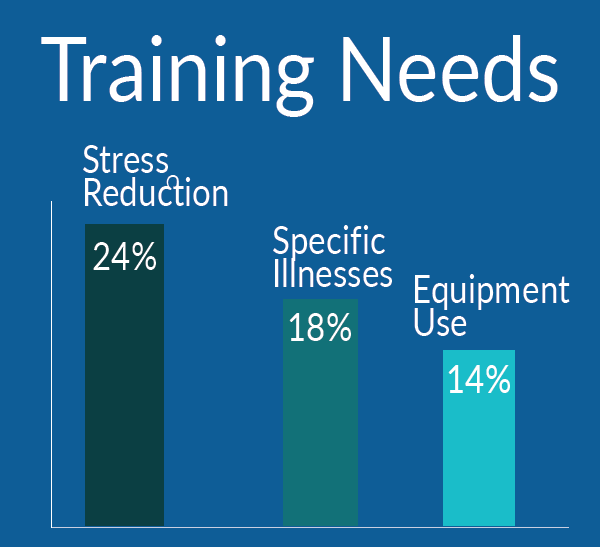
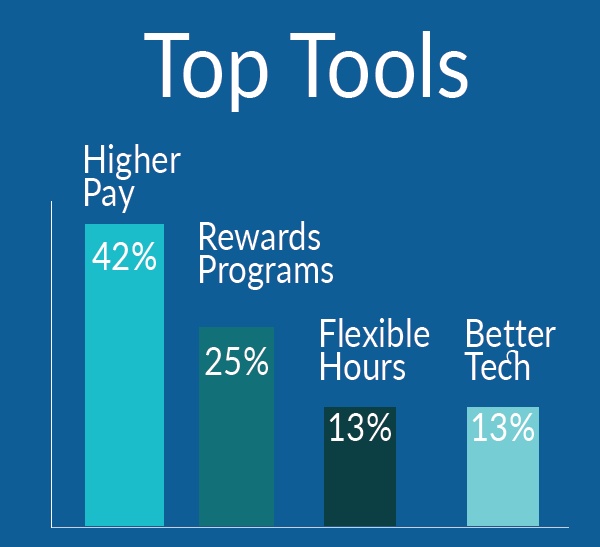
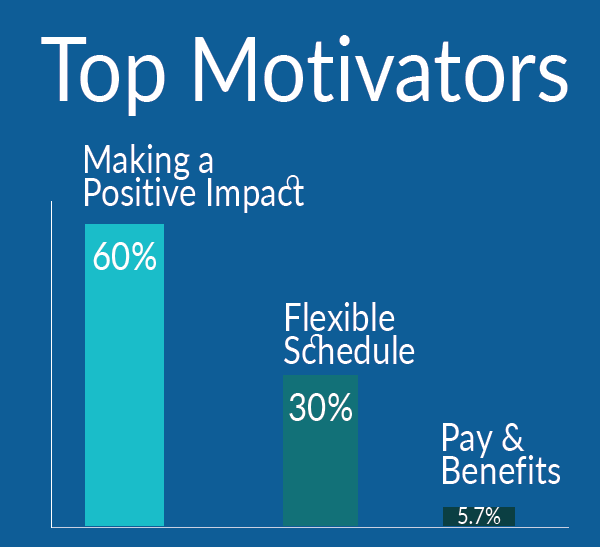
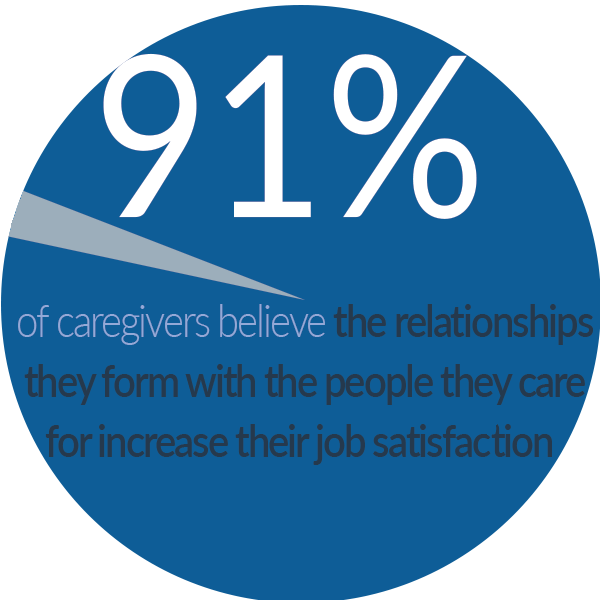
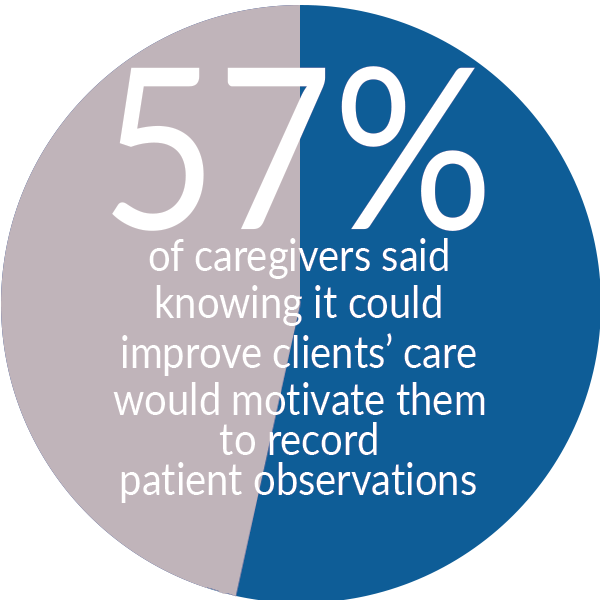
HHAeXchange recently conducted a survey of more than 3,900 caregivers. The company set out to understand caregiver motivation and to use this information to increase caregiver satisfaction and improve outcomes.

Highlights

This data highlights the motivations of caregivers to improving health and wellness for their patients

Caregiver Motivation Relationships
Caregiver Motivation client care
Caregiver Motivation Survey Training
Insights Survey Top Tools<br />
Insights Survey Top Motivators<br />

From HHAeXchange

While the challenges and demands of being a caregiver still remain – low compensation, feelings of stress and exhaustion, and risk of catching infectious diseases – this survey shows that caregivers remain committed to their work to improve the lives of their patients. As more individuals seek homecare options, the homecare industry must continue to evolve to ensure caregivers are given the resources and recognition they need to remain motivated and focused on patient care.

Stephen Vaccaro, President, HHAeXchange

For more details and information about the study, see the HHAeXchange press release.

Kristin Rowan, Editor

Kristin Rowan has been working at Healthcare at Home: The Rowan Report since 2008. She has a master’s degree in business administration and marketing and runs Girard Marketing Group, a multi-faceted boutique marketing firm specializing in event planning, sales, and marketing strategy. She has recently taken on the role of Editor of The Rowan Report and will add her voice to current Home Care topics as well as marketing tips for home care agencies. Connect with Kristin directly kristin@girardmarketinggroup.com or www.girardmarketinggroup.com

©2024 by The Rowan Report, Peoria, AZ. All rights reserved. This article originally appeared in Healthcare at Home: The Rowan Report. One copy may be printed for personal use: further reproduction by permission only. editor@therowanreport.com
M&A: HHAeXchange Acquires Generations Homecare System

FOR IMMEDIATE RELEASE

Contact:                                       Michelle Rand

855.300.8209

Michelle.rand@alloycrew.com

HHAeXchange Acquires Generations Homecare System, Enhancing its Software Platform for Homecare Stakeholders

Through the acquisition, HHAeXchange will expand footprint into new states and gain talent with deep homecare technology experience

NEW YORK, July 8, 2024 – HHAeXchange, a leader in homecare management solutions for providers, managed care organizations (MCOs), state Medicaid agencies, and fiscal intermediaries, today announced its acquisition of Generations Homecare System. Generations provides an all-in-one homecare agency management software solution that gives providers the ability to connect care teams, simplify daily tasks, and maintain compliance. This acquisition brings together two companies sharing a common vision and values, aimed at driving innovation and excellence in homecare.

The homecare industry is poised for tremendous additional growth, with demand for personal care aides expected to rise by 43% between 2020 and 2035. Industry stakeholders need a software platform that can rapidly evolve to meet the requirements and growing needs of providers, caregivers, and payers – particularly when it comes to compliance and usability.

“As HHAeXchange remains focused on building a better product that supports our dynamic industry, we’re thrilled to combine forces with the Generations team, which is known for its homecare technology expertise,” said Paul Joiner, HHAeXchange’s Chief Executive Officer. “This deeper talent bench, along with an expanded geographic footprint, will move us closer to fulfilling our mission of enabling caregivers, families, providers, and payers to deliver the best care in the home.”

Building on HHAeXchange’s recent acquisition of Cashé Software, a leading Minnesota-based solution for homecare operations and billing, the Generations acquisition will enable HHAeXchange to further expand its footprint into new states and add talent with deep expertise in homecare technology – ultimately driving more value for clients, partners, and others across the industry.

“At HHAeXchange, we’re dedicated to revolutionizing homecare by empowering providers with the best tools and solutions. Our recent acquisitions of Cashé Software and Generations Homecare System represent a significant milestone in this journey, underscoring our commitment to enhancing the care experience for caregivers and members nationwide. With this newly fortified combination of expertise and values, we’re strategically positioned to drive meaningful change in the industry and make a lasting impact on the lives we serve,” Joiner added.

Generations has been dedicated to creating a quality homecare software service for the growing homecare industry since it was founded in 2002. Committed to the promise of providing exceptional technology, Generations is used by over 700 customers in 48 states across the U.S.

Lisa Ferden, Generations Co-Founder and COO, and Lance Ferden, Generations Co-Founder and CTO, will work in advisory roles over the coming months to ensure a smooth transition.

“Generations was built on the foundation of providing exceptional technology, always keeping usability and intuitiveness at the forefront of our homecare software service,” said Lisa Ferden, COO and co-founder of Generations Homecare System. “But what has always set us apart is our commitment to providing an unparalleled customer experience. From our onboarding process to our help system and our customer success team we care deeply about doing our best with every customer interaction. We are thrilled to combine this passion with HHAeXchange’s strengths and push the homecare industry forward.”

# # #

About HHAeXchange

Founded in 2008, HHAeXchange is the leading technology platform for homecare and self-direction program management. Developed specifically for Medicaid home and community-based services (HCBS), HHAeXchange connects state agencies, managed care organizations, providers, and caregivers through its intuitive web-based platform, enabling unparalleled communication, transparency, efficiency, and compliance. For more information, visit hhaexchange.com or follow the company on TwitterLinkedIn and Facebook.

HHAeXchange Opens Minnesota Office

FOR IMMEDIATE RELEASE

Contact:                                       Michelle Rand

855.300.8209

Michelle.rand@alloycrew.com

HHAeXchange Opens Minnesota Office and Call Center, Expanding Technical Support Team

The office and call center opening will strengthen HHAeXchange’s technical support and fuel job creation in Minnesota

NEW YORK, July 18, 2024 – HHAeXchange, a leader in homecare management solutions for providers, managed care organizations (MCOs), and state Medicaid agencies, today announced the opening of a new Minnesota office and call center for its Technical Customer Care team and local company employees. The strategically located call center in Bloomington, MN will offer localized, skilled agents to provide timely, efficient, and responsive customer support.

This investment is one of many designed to enhance HHAeXchange’s customer care capabilities, while also creating job opportunities and growth in the local area. Minnesota is ripe for technology expansion, particularly within the medical technology industry, accounting for 380,263 jobs in 2019 and ranking 13th highest in high-tech jobs among all states, making it a perfect fit for HHAeXchange’s new location. 

This announcement comes on the heels of HHAeXchange’s recent acquisition of Cashé Software, a leading Minnesota-based solution for homecare operations and billing. Integrating Cashé talent with deep domain and regional expertise will further support HHAeXchange in creating a leading homecare software platform and a strengthened presence in Minnesota.

“As HHAeXchange continues to advance its homecare management solutions to best meet the needs of today’s customers, we also remain focused on our service and support capabilities to ensure caregivers, families, providers, and payers are able to provide the best care in the home,” said Paul Joiner, HHAeXchange’s Chief Executive Officer. “Both the acquisition of Cashé and our increased presence in Minnesota will help us make this vision possible.”

In tandem with the new office and call center opening, HHAeXchange is launching multiple customer experience initiatives across its business, including:

    • Streamlined support processes to ensure swift and accurate issue resolution, minimizing delays that might impact service delivery.

    • Enhanced focus on workforce optimization aiming for peak efficiency across all call centers.

    • Increased investment in training and onboarding to resolve technical issues as they arise.

Tammy Prause, VP of Technical Customer Care for HHAeXchange, will be spearheading these initiatives to improve HHAeXchange’s overall technical support. 

“Through my 30 years of experience, I’ve gained a deep understanding of what truly drives customer satisfaction, and in my newly appointed position, I am dedicated to elevating the support HHAeXchange provides its customers,” said Prause. “These company-wide initiatives, coupled with our expanded presence in Minnesota, further our commitment to fulfilling our customers’ needs and exceeding their expectations.”

# # #

About HHAeXchange

Founded in 2008, HHAeXchange is the leading technology platform for homecare and self-direction program management. Developed specifically for Medicaid home and community-based services (HCBS), HHAeXchange connects state agencies, managed care organizations, providers, and caregivers through its intuitive web-based platform, enabling unparalleled communication, transparency, efficiency, and compliance. For more information, visit hhaexchange.com or follow the company on TwitterLinkedIn and Facebook.

Recruitment, Retention, and Reward: Product Review

by Kristin Rowan, Editor

Caregiver Recruitment, Retention, & Reward

The workforce shortage, caregiver burnout, after effects of the pandemic, and the advent of “quiet quitting” have impacted home care agencies’s ability to fully staff and care for their patients. Hiring new caregivers is not always an options. Agencies must put time and effort into recognizing, rewarding, and retaining their existing caregivers and clinicians.

The Rowan Report recently came across a company that is helping agencies do just that and we had an opportunity to sit down with their founder.

How it Started

Victor Hunt’s grandmother was a career nurse who started her own home care agency. However, the operation was too hard for her to handle on her own. She made the difficult decision to close the agency and go back to shift work. Victor realized that we need more home care agencies. But, he knew there had to be a way to help the people who have “home care heart” and can provide great care. There had to be an easier way.

Home Care Immersion

Before Victor and his team could address the difficulties faced by home care agency owners, they first had to understand them. With his co-founder Dan, Victor embedded himself into home care agencies. They took shifts, followed schedulers and recruiters, and experienced the problems up close. During this process, they got to know one agency in particular and one caregiver who was a rockstar. She picked up shifts, did training, contributed the company culture, visited patients in the hospital, and had referred more than 100 caregivers to the agency. In short, she was the home care clinician all agency owners want.

Her Name was Ava

Using this rockstart clinician, Victor and Dan set out to create a system that could turn every caregiver into an “Ava” and make every agency one that caregivers like Ava would want to work for. The mission of Victor’s and Dan’s company is to “make home care agencies destination employers.”

The Problem Statement

Home care agencies suffer from high turnover rates and performance challenges. THere is a lot of legwork that needs to be done to fill in the gaps and fix what isn’t done well. According to Victor, it comes down to a challenge of engagement and morale. Being a home care clinician is a lonely and thankless task. Caregivers can feel stuck in their career track unless they are actively pursuing higher credentials. The problem home care agency owners face is:

“How do we engage employees so their work feels recognized and meaningful?”

The Solution is Ava

The Ava team surmised that in order for caregivers to feel valued and appreciated, something had to give. The question, they wondered, was whether it would be margins or administrative overhead. AI was at the center of these conversations. But, traditional EMRs limit the implementation of AI solutions.

Recognition and Rewards

Because EMRs limit AI applications, Ava is an app but is also a stand-alone system that operates in a mobile browser. No download is required for use, yielding an 85-90% adoption rate within agencies offering Ava.

Ava connects to the existing EMR first to import data. Then, agency owners create their own rule sets. This offers incentives and engagement around specific metrics the agency wants to see. Examples include attendance, timeliness, number of hours, documentation, and completed training. 

Ava will then assign, track, and reward milestones based on the rules set for the agency. Clinicians earn points that can be redeemed directly from the Ava store with more than 100 participating vendors. Agencies can also add internal rewards like branded merchandise, PTO, and raffle tickets. Rewards can be redeemed in $5 increments. 

Recruitment, retention, and reward AVA

Communication

Ava includes automated messaging to recognize employees without taking valuable time away from administrators. The app sends recognition texts to all staff to congratulate clinicians for reaching certain benchmarks. Announcements can be sent by email or SMS to all employees at once. Additionally, Ava includes HIPAA compliant two-way communication between agency and staff.

Additionally, administrators can create groups within the system to send mass reminders to specific people. For example, you may create a group that includes all employees whose driver’s license will expire in the next 60 days. Within that group, reminders are sent to ensure updated information is added to the employee file. The system updates automatically each week, adding and removing employees from the group based on the criteria created. 

Surveys are a great way to keep a pulse on the level of commitment and satisfaction your employees have. Studies suggest that engagement is a large factor in why employees leave their workplace. Ava includes pre-built survey templates but also allows you to crete a survey using an AI query. The survey questions and answers are customizable, can be “required”, set to “read only”, and can include a comment box to gain additional insights. Administators can filter survey responses to only see a certain type of answer.

Marketing

Recruitment, retention, and reward AVA

Referrals from employees is not a new concept. However, it is not always a visible part of your recruiting strategies. Ava has a referral bonus program with automated milestones. The bonus program spreads the referral bonus out across multiple agency milestones. 

Ava also allows for manual tracking of Google Reviews or any other event or milestone where clinicians can be measured, tracked, and rewarded. 

Customizable on Multiple Fronts

In addition to the custom survey questions and benchmarks, Ava includes custom naming conventions to track clinicians. One agency uses the term “activity tag” to categorize achievements. If your agency already uses different terminology, that can be added to the system. 

Currently, Ava operates and switches between seven different languages. Additional languages can be added to the system and Ava can support those as well. 

Recruitment processes are also customizable. Agencies can give candidates access to the system during the hiring process and they can earn points for attending the interview, completing onboarding paperwork, finishing the first training shift, or other measures. This allows the agency to reward a new employee with, for example, a coffee gift card by the end of their first day. 

Track and Reward Your Top Employees

When your agency finds an exemplary employee, the unicorn, the “Ava”, keeping them becomes a top priority. Finding and training new employees is costly and time consuming. It is far easier and less expensive to reward your current high-achievers.

Badges

In addition to daily, weekly, and monthly goals, Ava has a tier system called “Badges.” Badges are long-term drivers of engagement, satisfaction, and success. The current badges are Orange (Avas brand), Silver, and Gold. There are points multipliers at each level. 

Once an employee reaches a badge level, they have to maintain a consistent 90% goal completion rate in daily, weekly, and monthly goals in order to maintain their badge level. Loss aversion to lowering back down a level encourages a high completion rate of other tasks. 

Training

Caregivers and clinicians should be constantly learning to stay ahead of the newest trends and technologies in the industry. Ava includes learning management system (LMS) integrations with several of the top training companies in the industry. Clinicians can access learning modules through the app or browser and can earn rewards by completing training modules based on individual agency settings. 

Reporting

Reports within the system go beyond badges and benchmarks. The system consolidates reporting from various data sources and allows you to see your business health at a glance. These reports can help catch burnouts before they happen, focus performance improvement plans, and automate process than can save an agency hundreds of thousands, if not millions, of dollars per year.

Limitations

Like most software solutions, the first iteration of a usable system is never the last version. Ava has already integrated with WellSky and can access several other EMRs. As they continue onboarding customers, the team at Ava is very open to the suggestions of their users and will continue adding features.

Some current limitations we noticed in our intial demo:

The badge system has only three levels. Longer term employees may want to see higher badge levels to maintain motivation. Victor noted that AI systems can help add account-specific customizations.

The app is designed for caregivers and clinicians. There is not currently a model for back-office administrators and support staff. While some customization could make the app usable for the back-office, it is not designed with them in mind.

Mass messaging through email or SMS is limited to one-way, read-only communication. There is an option to add “likes,” but currently there is no option for a group or individual to respond, even privately to a company-wide announcement.

The two-way communication is limited to internal staff. Employees cannot communicate with patients from the app to advise them of their arrival time, reschedule an appointment, or ask questions before an appointment.

The manual tracking of Google reviews is not scalable.

When The Rowan Report sat down with the team at Ava, we asked about some of these limitations and additional ideas for future iterations of the program. Victor and his team have already hired at least one person to focus on new feature requests.

Final Thoughts

Gamification is not a new concept in many industries. In fact, most of us probably have a memory of a teacher or parent with an activity board to earn stars for tasks completed. We’ve been unknowingly using gamification for many years. 

Smart phones, advancing technologies, and AI have increased the adoption of gamification and is infiltrating the care at home world quickly. The ongoing workforce shortage will make implementing these types of gamified systems even more important for an agency’s financial well-being. 

Ava may not be the first of its kind, but it has shown innovation and ingenuity in it application. If your agency is looking for ways to reward employees, needs to stand out among rival employers, is looking to reduce administrative costs, or needs a simpler way to see reports and statistics from multiple sources, Ava may be a viable solution. 

We see great things coming with future iterations of the app and the software and I’m sure this is not the last we will here of Ava. For more information, visit joinava.com.

# # #

Kristin Rowan, Editor

Kristin Rowan has been working at Healthcare at Home: The Rowan Report since 2008. She has a master’s degree in business administration and marketing and runs Girard Marketing Group, a multi-faceted boutique marketing firm specializing in event planning, sales, and marketing strategy. She has recently taken on the role of Editor of The Rowan Report and will add her voice to current Home Care topics as well as marketing tips for home care agencies. Connect with Kristin directly kristin@girardmarketinggroup.com or www.girardmarketinggroup.com

©2024 by The Rowan Report, Peoria, AZ. All rights reserved. This article originally appeared in Healthcare at Home: The Rowan Report. One copy may be printed for personal use: further reproduction by permission only. editor@therowanreport.com
HIPAA Violations

by Elizabeth E. Hogue, Esq.

Mom Needs More Fiber?

Imagine that a celebrity receives care where you work and curiosity gets the better of you, or someone you know is admitted and you would love to know the details. It’s oh so very tempting! So, you access records of care provided to patients that you have no legitimate need to view. The HIPAA police are on it! Because let’s not forget that the HIPAA Privacy Rule is a criminal statute.

An emergency room physician, for example, pled guilty to illegally obtaining the personal health information of multiple individuals. He was convicted of one count of wrongfully obtaining individually identifiable health information under false pretenses. The physician received a resident physician license and participated in an emergency medicine residency program at a university hospital. He worked in the emergency room of two hospitals in the university system.

The doctor used his access as a resident physician to the hospitals’ electronic health record to access the records of two patients without their knowledge or consent. He was never the patients’ physician. The patients were not receiving care in the emergency rooms where the doctor worked at the time he accessed the records.

HIPAA Violations Oops

The doctor also admitted that he sent a photograph to someone else of one of the patients wearing a hospital gown in which the patient’s rectum was hanging out of the patient’s body. And now for the “best” part: the doctor also admitted that he falsely wrote in a letter that he sent the picture of the patient with a prolapsed rectum to his mother to remind her of the importance of fiber intake! 

Do you remember the comedian, Flip Wilson, who repeatedly claimed that the devil made him do it? When it comes to accessing patients’ medical records in violation of HIPAA, you must “put the devil behind you!” Protecting patients’ private health information is serious business – serious criminal business. Be vigilant! 

By the same token, providers must also always remember that the HIPAA Privacy Rule isn’t just about protecting health information; it’s also about giving appropriate access to it. In the zeal to protect information, it anecdotally seems that practitioners have lost sight of the fact that access to information is at least as important as protection of information. In fact, the Office for Civil Rights, the federal enforcer of HIPAA violations, has focused on denial of access in enforcement actions for the past several years. 

Remember that, however tempting the information you would like to have may be, temptation pales in comparison to jail time!

# # #

Elizabeth E. Hogue, Esq.

Elizabeth Hogue is an attorney in private practice with extensive experience in health care. She represents clients across the U.S., including professional associations, managed care providers, hospitals, long-term care facilities, home health agencies, durable medical equipment companies, and hospices.

©2024 Elizabeth E. Hogue, Esq. All rights reserved.

No portion of this material may be reproduced in any form without the advance written permission of the author.

Chevron Deference Derailed

by Kristin Rowan, Editor

Chevron Deference

“A government agency must conform to any clear legislative statements when interpreting and applying a law, but courts will give the agency deference in ambiguous situations as long as its interpretation is reasonable.”

This statement followed the unanimous (minus the three who did not take part in the decision) U.S. Supreme Court decision in the Chevron U.S.A., Inc. v. National Resources Defense Council. The case is known for establishing the extent to which a federal court should defer to a government agency’s interpretation of an ambiguous statement when constructing statutes.

Breaking Down Chevron Deference

For those of you who don’t have a law degree, here’s what that means:

  • When a statutory term (required by law) is not explicitly defined and explained by Congress, there is room for interpretation
  • When a government agency interprets that statutory term, the interpretation may come under question
  • As long as the interpretation is not arbitrary (random), capricious (impulsive or unpredictable), or contrary to the statute (opposite the intent when put into practice), federal courts should give more weight to the government agency’s interpretation than to any other interpretation

Implications

At the time, the Supreme Court argued that if Congress leaves a term open to interpretation, it is either stated openness to interpretation, or an implied openness to interpretation. If a statute is implicity open, the intent of Congress is to allow a government agency to create provisions and regulations from that statute as they see fit. 

No one foresaw the impact this ruling would have on commerce and regulation in the U.S. To date, the Chevron Doctrine has been cited nearly 18,000 times in federal court decisions. The application of a statute based on agency interpretation could no longer be questioned or changed by judicial review.

Chevron Deference in Home Health

Since the advent of the PDGM model, CMS has calculated payment rates based on its interpretation of budget neutrality. The National Association for Home Care and Hospice has disputed the validity of both the interpretation of budget neutrality and the formulas used to calculate it.

Last year’s 2024 CMS Proposed Rule cut payment rates even further with a 2.890% Budget Neutrality permanent payment rate adjustment and a temporary rate adjustment to account for alleged overpayments from 2020-2022.

The lawsuit filed against CMS in response to the 2024 Final Rule was dismissed. NAHC began pursuing an administrative review with CMS. However, CMS has already stated that their final position is that budget neutrality has been calculated within the law. 

NAHC Comment: 2023 CMS Rule

“That proposal also fails logically in that it puts care access in severe jeopardy in applying a budget neutrality reconciliation methodology that takes PDGM-induced behavior changes to assess what otherwise would have been expended by Medicare in the absence of PDGM. In doing so, CMS fully fails to meet its obligation to ensure that the transition to a new payment model is budget neutral.”

  1. NAHC Comment Source

Chevron Deference Repealed

In a landmark ruling on Friday, June 28. 2024, the Supreme Court removed the power of federal agencies to interpret laws and ruled that the courts should rely on their own intrepretation of ambiguous laws. Justice Elena Kagan, who dissented the ruling, predicts this change “will cause a massive shock to the legal system.”

Chief Justice John Roberts explained in his opinion that the Chevron Deference is inconsistent with the Administrative Procedure Act (APA). The APA is a federal law which contains instructions for courts to review actions by federal agencies. According to Roberts, the APA directs courts to decide legal questions using their own judgment. Therefore, he noted, agency interpretations of statutes are not entitled to deference. “…it remains the responsibility of the court to decide whether the law means what the agency says,” concluded Roberts.

NAHC to Refile Lawsuit after Chevron Deference Repeal

2024 Final Rule

In April, 2024, the lawsuit filed against CMS regarding the methodology for calculating budget neutrality was dismissed. Now, NAHC can refile the lawsuit and force CMS to justify its decision to enact repeated reimbursement cuts for home health.

In an interview on Wednesday, Bill Dombi told The Rowan Report, “This improves the chances of success for our lawsuit. CMS is going to have to support their regulatory interpretations going forward. Congress is going to have to offer more detail in its legislative language, leaving less to being open to interpretation.” Regarding the PDGM lawsuit, CMS argued that the law was clear and the agency’s interpretation was valid. The overturning of Chevron Deference allows the possibility of arguing that CMS’s interpretation of the law is flawed. 

80/20 Rule

Dombi also explained that the Ensuring Access to Medicaid Services rule, also known as the 80/20 rule, was “drawn out of a whole cloth.” Previously, there were limited avenues available to challenge this rule. The repeal of Chevron Deference significantly improves the ability to challenge the 80/20 rule. The argument now, Dombi told The Rowan Report, is “Does CMS even have the authority to do this?”

More to Come

The Rowan Report anticipates more news coming out of Washington D.C. and the NAHC office regarding the 2024 pay cuts and the 80/20 rule. We will provide ongoing updates and information as it becomes available.

# # #

Kristin Rowan, Editor

Kristin Rowan has been working at Healthcare at Home: The Rowan Report since 2008. She has a master’s degree in business administration and marketing and runs Girard Marketing Group, a multi-faceted boutique marketing firm specializing in event planning, sales, and marketing strategy. She has recently taken on the role of Editor of The Rowan Report and will add her voice to current Home Care topics as well as marketing tips for home care agencies. Connect with Kristin directly kristin@girardmarketinggroup.com or www.girardmarketinggroup.com

©2024 by The Rowan Report, Peoria, AZ. All rights reserved. This article originally appeared in Healthcare at Home: The Rowan Report. One copy may be printed for personal use: further reproduction by permission only. editor@therowanreport.com
Department of Labor Changes Exemption and Overtime Thresholds

by Tim Rowan, Editor Emeritus

Overtime and exemption thresholds impact employers trying to balance cost-effective policies with employee fairness. As such, they keep a close eye on rules they must follow that come down from the U.S. Department of Labor. When those rules change, remaining compliant requires a company HR leader to adapt those policies. One of those times is at hand.


Exemption and Overtime Thresholds for Hourly and Salaried Earners

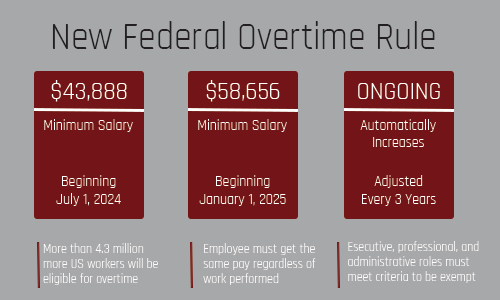
Effective last week, July 1, the annual salary threshold for overtime exemption increased from $35,568 to $43,888. The DoL’s final rule does not stop there but sets another increase on January 1, 2025, to $58,656 per year or $1,128 per week. Salaries below those thresholds cannot be declared “exempt,” meaning they must be paid overtime rates for hours worked over eight per day and forty per week.


Executive Salaries also Affected

In addition to overtime and exemption thresholds, the new rule increases the highly compensated employee threshold twice as well. On July 1, the annual salary threshold increased from $107,432 to $132,964. That annual threshold will increase again on January 1 to $151,164.

Going forward, the DOL will increase all thresholds every three years starting July 1, 2027, relying on up-to-date wage data.

We learned these DoL rule details from Angelo Spinola, Executive Director and lead home care attorney with Polsinelli, a national law firm. 

Federal Overtime Rule

Angelo Spinola Comments

“Home care providers that have been making adjustments to comply with the July 1 deadline may have heard about a recent case out of Texas blocking the July 1 increases. While the Texas court did use a partial injunction blocking the July 1 increase, it only applies to Texas government employees. It does not affect any private employers.”

He recommended that all home health and home care employers continue to make changes as planned to comply with the July 1 increases. Spinola stated that his statements are for informational purposes only and are not intended to be legal advice. His comments quoted here should not be relied upon or used without consulting a lawyer to consider your specific circumstances, possible changes to applicable laws, rules and regulations and other legal issues.

Spinola Concludes

“There are still challenges pending that could affect the January 1, 2025 increases, however, those decisions are not expected for several months, and it is too soon to predict whether that deadline will be affected. We will continue to monitor these cases and provide any updates that may have an effect on the home care industry.”

Angelo Spinola can be reached via email at onlinesolutions@polsinelli.com

NAHC Comments on Exemption and Overtime Thresholds

“The long-awaited U.S. Department of Labor rule regulating minimum salaries levels to qualify for exemption to the Fair Labor Standards Act was issued today. We strongly advise the home care community to gain a comprehensive understanding of the rule and institute steps for timely compliance. While the changes may have limited impact on most home care companies, noncompliance comes with serious penalties.” – NAHC President Bill Dombi

# # #

Tim Rowan, Editor Emeritus

Tim Rowan is a 30-year home care technology consultant who co-founded and served as Editor and principal writer of this publication for 25 years. He continues to occasionally contribute news and analysis articles under The Rowan Report’s new ownership. He also continues to work part-time as a Home Care recruiting and retention consultant. More information: RowanResources.com
Tim@RowanResources.com

©2024 by The Rowan Report, Peoria, AZ. All rights reserved. This article originally appeared in Healthcare at Home: The Rowan Report.homecaretechreport.com One copy may be printed for personal use: further reproduction by permission only. editor@homecaretechreport.com