by Kristin Rowan | Jun 13, 2024 | Admin, Editorial, Marketing, Privacy and Security
Access to Information: Pro & Con
The advent of social media has allowed millions upon millions of users worldwide to connect with distant friends and family, meet new people, and share information among followers. From Six Degrees in 1997 to BlueSky in 2023, social media has evolved over time. Some say social media has brought us closer together and created more opportunities for small business marketing and branding. Others argue it has replaced human interaction and created overuse of mobile devices, addictions to “likes”, and a host of fake news and propaganda. Whatever your particular outlook on social media, it’s probably here to stay.
Having a profile on a social media platform (or several as most people have), allows friends, family, and colleagues to connect quickly and easily. This easy access to user information can be great for social networking and branding. Recently, however, the social media platforms have started gathering the information from your profile to enhance the paid marketing campaigns you see in “Sponsored” posts. If you’ve never noticed it before, pay attention to how often a sponsored post appears on your social media feed that happens to match a recent browser search, email, or, scarily enough, conversation, you are part of.
Social Media Access to Outside Information
We’ve all seen the warning pop-ups on websites that read “This site uses cookies.” Cookies store your browser information and history, page visits, keyword searches, and other information. This information is accessible to other websites. This is why Amazon sends you an email for sale items you recently searched for, even if you didn’t search on Amazon. Most of us know we have the option to allow only necessary cookies and to opt out of everything else. However, most people rarely take this extra step. Rather than selecting from a list of allowable cookies, the default action is to “allow all.” We are just one click away from continuing our browsing, reading, or shopping.
PHI Information Accessed by Social Media
We accept that when we allow cookies, our information will be shared. However, when you share personal information with your doctor, you assume that information is not subject to the cookie preferences, even if the information is uploaded digitally. The federal Health Insurance Portability and Accountability Act (HIPAA), in fact, requires that this information not be shared. Ron Prosky that the Palm Beach Health Network, the largest health care network in Palm Beach County, Florida, did just that. Palm Beach Health Network allegedly used Meta’s pixel code in their website, allowing Facebook to target patients with personalized ads based on their medical condition and other sensitive information.
Similar lawsuits alleged the same action against Atrium Health in North Carolina and against Kaiser Permanente, both in April of 2024. Kaiser Permanente claimed an “accidental breach” after knowingly using website trackers from Microsoft, Meta, and Google. Kaiser alleged they were unaware that the website trackers would send private information. Website trackers gather information that includes the user’s name and IP address. This information does not necessarily violate HIPAA laws. However, because the “cookies” attach to the IP address, they follow the user around the web. This makes it fairly easy for the data to infer a diagnosis or illness and use that to market to patients.
A Word of Caution for Agencies Using Tracking Data
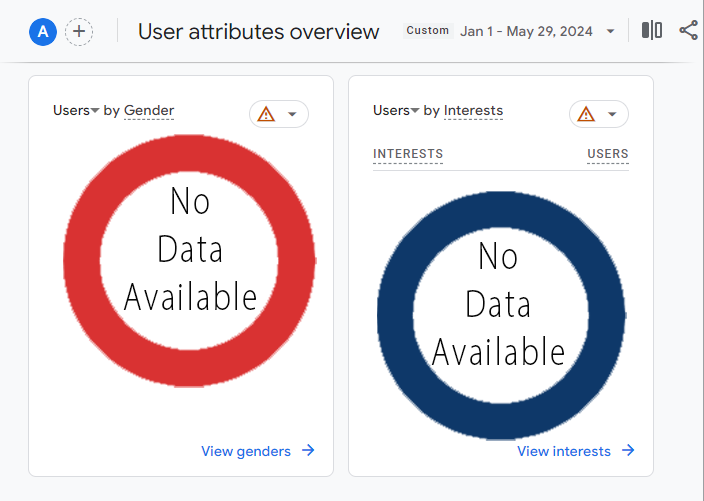
If your website is set up to track users through partner codes from Google Analytics, Facebook Pixel, or any other tech provider, you may be inadvertently sharing protected patient data with any of these companies.
If you are tracking landing page and link clicks through Google Analytics, you may be sharing sensitive data. Here is an easy to follow article to prevent sharing Personally Identifiable Information (PII).
A Word of Caution for all Social Media and Internet Users
The digital world is one in which we all live. Whether you are engaging with social media content, shopping in an app, or browsing online, protect your personal information.
Opt out of cookies whenever possible. If it’s not possible, limit access to only necessary cookies and don’t allow your information to be sold. Only use websites that are secure. Delete your browser history or use incognito mode as often as possible.
Kristin Rowan has been working at Healthcare at Home: The Rowan Report since 2008. She has a master’s degree in business administration and marketing and runs Girard Marketing Group, a multi-faceted boutique marketing firm specializing in event planning, sales, and marketing strategy. She has recently taken on the role of Editor of The Rowan Report and will add her voice to current Home Care topics as well as marketing tips for home care agencies. Connect with Kristin directly kristin@girardmarketinggroup.com or www.girardmarketinggroup.com
©2024 by The Rowan Report, Peoria, AZ. All rights reserved. This article originally appeared in Healthcare at Home: The Rowan Report. One copy may be printed for personal use: further reproduction by permission only. editor@therowanreport.com
by Kristin Rowan | Feb 21, 2024 | Clinical, Regulatory
By Kristin Rowan, Editor
Federal Waiver Program
In 2020, CMS launched a hospital care at home program to help increase patient capacity during the height of the Covid-19 pandemic. The study included 300 hospitals and thousands of patients receiving care in their home using a hospital at home waiver. Outcomes of the study showed that patients had greater ability to stand up and move around at home than would have had in a hospital and that in-home caregivers were better able to educate patients on home to care for themselves once they were able to see the social determinants of care in the home. CMS also reports only 7.2% of patients were required to be transferred to a hospital.
Hospital Study
Mass General Brigham conducted its own study alongside CMS and analyzing outcomes of diverse patients, including socially vulnerable and medically complex patients. The findings of their national analysis showed that within 30 days of discharge, 2.6% of patients used a SNF, 3.2% died, and 15.6% were readmitted. Findings were consistent among all groups, including those who generally have worse outcomes: patients of Black and Latine race and ethnicity, dual-eligible patients, and patients with disabilities.
Health System Study
In April of 2020, Kaiser Permanente conducted an 18-month study on the scalability of “Advanced Care at Home” (ACAH). The patients all required hospital-level care and were first admitted to the program through the emergency department. Some were admitted to the hospital, and some were instead admitted to the Kaiser ACAH program, where a team of nurses, physicians, nurse practitioners, and a pharmacist developed a care plan.
This study increased its daily census from 7.2 per day to 12.7 per day at the end of study. The average episode of care decreased from 7.43 days to 5.46 days and readmission rates dropped from 11.52 percent to 9.24 percent. These patients were less likely to experience delirium than patients admitted to traditional hospital settings. The researchers noted the limitation of the study as being too small to develop precise comparisons.
Limitations of Acute Hospital Care at Home
Currently, the only patients eligible for AHCaH are those who have been evaluated in a hospital or emergency department. Kaiser has extended this to patients seen in their own urgent care offices in areas where they don’t own a hospital. Kaiser has served a few thousand patients through this program, but they estimate there are more than 1.1 million eligible patients. Rural patients who don’t live near a hospital or emergency department have the same trouble accessing AHCaH that they do accessing hospital and physician care now.
The CMS waiver for AHCaH has been extended through December 2024. Beyond that, it is unclear how hospital care at home will be reimbursed. Some providers have offered hospital care at home to risk-based patients in a VBC model. Not all eligible patients will qualify for the waiver or VBC reimbursement. Without specific provisions from CMS to reimburse hospital care at home for all Medicare and Medicaid patients and coverage from private insurance, the hospital at home program will remain limited.
The current model for AHCaH includes technology support for the patient using a tablet, smartphone, or other device. This requires that the patient have a broadband internet connection in the home, which eliminates eligibility for rural patients who are already underserved.
Final Thoughts
There is a lot of support for Hospital Care at Home among providers, health systems, and consumer insurance companies. Support for home health, hospice, palliative care, and supportive home care has not been as strong. As these larger players start to see the cost and outcome benefits of care in the home, a few things may happen.
First, hospitals, payers, and physician groups may start to recognize the value of care at home and be more open to creating referral partnerships with care at home agencies. Home care is a small percentage of total care reimbursed by Medicare and Medicaid and we could see that increase.
Conversely, these providers may realize that care at home is lucrative and will extend their own AHCaH models to include post-acute and hospice care, cutting out home care agencies altogether. Care teams are constructed around a Hospital Care at Home patient. Including a post-acute nurse who is familiar with the patient history would provide additional continuity of care.
Either way, I see the support for the Hospital Care at Home program as beneficial to home health. Branches of health care that were previously averse to extending patient care into the home are now supporting it. Increased adoption of telehealth and other technology platforms increase the possibilities for integrating with home health and hospice providers. Interoperability between Hospital Care at Home and Post-Acute Care at Home may finally become a reality.
We will continue to report on the AHCaH waiver as the deadline to renew comes closer.
# # #
Kristin Rowan has been working at Healthcare at Home: The Rowan Report since 2008. She has a master’s degree in business administration and marketing and runs Girard Marketing Group, a multi-faceted boutique marketing firm specializing in event planning, sales, and marketing strategy. She has recently taken on the role of Editor of The Rowan Report and will add her voice to current Home Care topics as well as marketing tips for home care agencies. Connect with Kristin directly kristin@girardmarketinggroup.com or www.girardmarketinggroup.com
©2024 by The Rowan Report, Peoria, AZ. All rights reserved. This article originally appeared in Healthcare at Home: The Rowan Report.homecaretechreport.com One copy may be printed for personal use: further reproduction by permission only. editor@homecaretechreport.com
Sources:
CMS (2024) Acute Hospital Care at Home Data Release Fact Sheet. Retrieved from: https://www.cms.gov/newsroom/fact-sheets/acute-hospital-care-home-data-release-fact-sheet#:~:text=In%20response%20to%20challenges%20faced,inpatient%2Dlevel%20care%20at%20home.
Mass General Brigham (2024) Study of National Data Demonstrates the Value of Acute Hospital Care at Home. Retrieved from: https://www.massgeneralbrigham.org/en/about/newsroom/press-releases/study-of-national-data-demonstrates-the-value-of-acute-hospital-care-at-home#:~:text=In%20addition%2C%20within%2030%20days,and%20have%20fewer%20adverse%20events.%E2%80%9D
mHealth Intelligence (2023) Kaiser Permanente Study Shows Scalability of Hospital-at-Home model