Good News for Veterans and Care at Home

by Kristin Rowan, Editor

Biden's Final Acts

With only a short number of days left in office, President Joe Biden has been making headlines. Not all of his final decisions have been met with absolute approval, but his latest one will make a difference for our veterans wanting Care at Home. On Thursday, January 3, 2025, President Biden signed into law the Senator Elizabeth Dole 21st Century Veterans Healthcare and Benefits Improvement Act.

The Dole Act

The Elizabeth Dole Act improves upon much of the benefits, programs, and services provided by the Department of Veterans Affairs (VA). Some of these changes include providing protections for care agreements between veterans and clinicians, modifications to educational assistance programs and benefits, expansion of the Native American Direct Loan program, increases per diem rates for veteran transitional housing, and various administrative and oversight tasks.

Elizabeth Dole Home Care Act

The Elizabeth Dole Home Care Act is a bill within the larger act specific to home- and community-based services (HCBS). The home care act aims to enhance veterans’ access to the Program of All-Inclusive Care for the Elderly (PACE) nationwide. The new law also allows the VA to increase funding for HCBS. Prior to this, the VA was able to allocate 65% of nursing home care to home care services.

Additionally, the home care bill will provide support and benefits to caregivers of some disabled veterans, start a pilot to provide non-medical supportive care at home to veterans with limited access to home health aides, and increase access to HCBS for Native American Veterans.

The Industry Responds

The National Alliance for Care at Home responded to the landmark legislation, specifically siting section 301 of the bill, known as Gerald’s Law. Gerald’s is so named for a Michigan veteran who was denied his non-service related burial and plot benefit after he died at home while under VA hospice care. Gerald’s Law requires the VA to provide a burial and funeral allowance for veterans who were receiving VA hospice care in a home or other setting outside a hospital or nursing home.

“We are deeply grateful for the bipartisan support of Gerald’s Law and its inclusion in the Dole Act. This legislation ensures that Veterans and their families can choose hospice care in the setting that best meets their needs without risking the loss of crucial burial benefits. We thank Senators Moran, Tester, and Hassan, Representatives Ciscomani, Bost, Brownley, and Takano, and many others for their leadership, as well as President Biden for signing this important bill into law.”

Dr. Steve Landers

CEO, The Alliance

HCAOA, Leading Age, National PACE Association (NPA), and many others joined the Alliance in applauding Biden for signing the bill into law. They noted that providing care at home and in the community improves the quality of life for veterans and their caregivers. HCBS also come at a much lower cost than hospital and institutional care. 

HCAOA said in a statement that the bill is “…a crucial victory for both veterans and their caregivers.” The President and CEO of NPA said the bill would dramatically increase options for veterans who want to age in place and that Congress can “…easily implement PACE for hundreds of thousands of additional seniors and their families.”

The VA has found that HCBS can delay or remove the need for nursing home or assisted living admission. Care at Home also reduces the risk of preventable rehospitalizations. 

Final Thoughts

Once again, it seems the world is “discovering” that which we have known for ages: Home based care is better, cheaper, and more effective than institutional care. In the last few years, doctors and hospitals have figured this out and implemented hospital at home care. Now, the VA has finally figured it out as well. When this law takes effect, we as an industry will breathe a collective sigh when our veterans see better outcomes, their caregivers are better supported, the cost for their care decreases, and especially when our veterans enjoy a better quality of life in their final days without sacrificing the benefits to which they are so richly entitled. 

One small step for veterans, one giant leap for Care at Home.

# # #

Kristin Rowan, Editor

Kristin Rowan has been working at The Rowan Report since 2008. She is the owner and Editor-in-chief of The Rowan Report, the industry’s most trusted source for care at home news .She also has a master’s degree in business administration and marketing and runs Girard Marketing Group, a multi-faceted boutique marketing firm specializing in content creation, social media management, and event marketing.  Connect with Kristin directly kristin@girardmarketinggroup.com or www.girardmarketinggroup.com

©2025 by The Rowan Report, Peoria, AZ. All rights reserved. This article originally appeared in The Rowan Report. One copy may be printed for personal use: further reproduction by permission only. editor@therowanreport.com
 

End of an Era

by Kristin Rowan, Editor

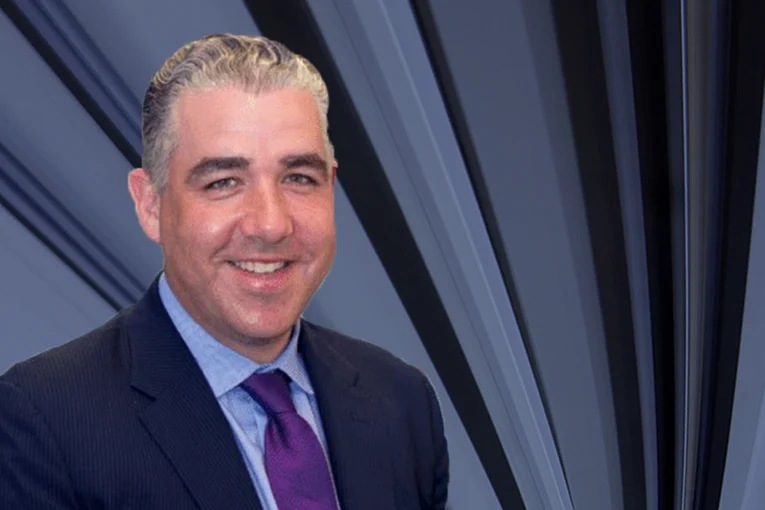
NAHC President Bill Dombi Retires

Earlier this year, with the announcement of the merging of NAHC and NHPCO, Bill Dombi announced his retirement from his position as President of the Association. Shortly after that announcement, The Rowan Report interviewed Bill and asked about the ongoing litigation against CMS as well as his thoughts on his tenure at NAHC. At the time, Bill was not prepared to speak about his upcoming retirement.

Remembering the Past

This week, at his final Annual Convention & Expo as association President, Bill shared his vision for the future of home health and hospice. Bill shared the story of the first time he faced an adversary…way back in kindergarten. He met his first bully and it took only a day for him to stand up to his nemesis and fight back. His bully walked away with a broken nose and Bill spent time with his nose in a corner.

“I was smiling the entire time,” Dombi shared, “and learning that’s not the way to do it. You’ve got to go to law school instead.”

How it Began

A young litigator, bright-eyed and ready to take on the world, Bill was initially hired to tackle a lawsuit against the Medicare program for denying care that should have been offered. He walked into the office that day and found boxes upon boxes with thousands of patient records and denied claims. Bill had to comb through each of these to select the 12 best plaintiffs to be named in the case. The amount of information was overwhelming, he recalled. It got a little easier when he was able to add members of Congress to the plaintiff list.

Nearly 40 years have passed since that day. “That day that I said yes was the beginning of a stunning opportunity that I had to be a part of an incredible team of people,” Bill reminisced.

First Steps Forward

That day will live in NAHC history as the first day of Bill’s tenure with the association. He promised his wife and children they’d be in Washinton D.C. for “just three or four years.” They stayed for 37. This day led to his first case against Medicare, Duggan v. Bowen. A case that rewrote the Medicare home health benefit. “It’s not perfect, but it was a monumental move forward,” Bill stated.

A Career Marked by Achievements

While is Bill is often hesitant to take full credit for what he has accomplished, and regularly credits his team for the strides made for home health and hospice patients, there is no doubt that he has been a driving force behind NAHC’s momentum and a key player in its advances at state and federal levels. 

Among Bill’s many accomplishments are:

  • Creating the Medicare Hospice Benefit. Today, one out of every two decedents have used hospice in the last 12 months of their life, which is an enormous increase since its launch.
  • The growth of the Medicaid program. The program went from having no home services in 1965, to being the largest home health program in the world.
  • Increasing access of care for pediatric patients, those receiving private duty nursing, the severely disabled and the elderly.
  • The transition of making hospital-at-home care permanent in Medicare.
  • Ever-growing technologies and improving the focus on in-home care.
  • Several lawsuits that Dombi led at NAHC against private insurers and others, to ensure that specific patients—including several with amyotrophic lateral sclerosis (ALS)—weren’t arbitrarily denied the coverage they needed.
NAHC President Bill Dombi Retires

“That’s where my heart, my soul is; that’s where my aggressiveness is born, representing those very vulnerable people.”

Bill Dombi

President Emeritus, National Association for Home Care & Hospice

Where it's Going

As Bill wrapped up his final appearance on stage as NAHC President, he made some predictions and shared his hopes for the future of care at home. “I see a future where we see a whole transformation of health care. A future where the minds, hearts, operations, payments, and everything else are focused arund a home care direction,” he shared, “Not everyone can or should receive care at home, but it would be the ideal default before someone is hospitalized or moved to a nursing facility.”

Bill’s more specific hopes for the future of care at home include:

  • Nursing school curricula specific to care at home
  • Physician education including care at home
  • The leaders of CMS and/or DHHS have backgrounds in or a deep understanding of care at home
  • Technology visionaries working on tech solutions for care at home
  • Every state of the union and Presidential debate includes a discussion on care at home

Dream Big

Bill openly admits that his “wish list” for care at home may be fantastical, but he will continue to encourage all those who work in the care at home industry to continue to fight to move in that direction.

“We have to stand ready and be capable of working in all forms to defend ourselves against being bullied around,” he said. In typical fashion, Bill’s statements brought the crowd to its feet. He fittingly exited the stage to a standing ovation with Tom Petty’s “I Won’t Back Down” echoing through the hall. 

As the music faded on Bill’s tenure, The Alliance CEO Steve Landers offered, “Bill, we won’t back down. Just so you know, we’re not going anywhere.”

The Legacy Lives On

Bill may be retiring from his post as President of NAHC, but his accomplishments, his passion for care at home, and his legacy will live on. National Alliance for Care at Home has established The William A. Dombi Scholarship Fund at his alma mater, the University of Connecticut. Bill’s contributions to care at home can hardly be overlooked when the scholarship fund has nearly doubled its initial goal of $50,000. 

Incoming and continuing students at UCONN who are majoring in political science can apply for the scholarship. The scholarship prioritizes awarding money to students focused on public policy and/or health care policy. Contributions to the scholarship fund can be made here

On a Personal Note

I spoke with Bill briefly during this week’s national convention & expo. I couldn’t let the event pass without acknowledging his contributions personally. When I started working in the care at home industry nearly 16 years ago, I saw Bill speak at a convention. Most of what he said was beyond my limited knowledge of care at home at the time. But, when I introduced myself afterward, he was gracious and offered any assistance he could offer in the future. Since then, as I have delved deeper into the world of care at home, Bill has been a voice of reason, of passion, of resilience, and of steadfast commitment to advocating for the current and future recipients of care at home. He has impacted countless lives. For his guidance, for his character, and for his relentless pursuit of reform for care at home, I can only echo the sentiments of my colleagues and friends:

“Thank you, Bill, for everything.”

# # #

Kristin Rowan, Editor

Kristin Rowan has been working at Healthcare at Home: The Rowan Report since 2008. She has a master’s degree in business administration and marketing and runs Girard Marketing Group, a multi-faceted boutique marketing firm specializing in event planning, sales, and marketing strategy. She has recently taken on the role of Editor of The Rowan Report and will add her voice to current Home Care topics as well as marketing tips for home care agencies. Connect with Kristin directly kristin@girardmarketinggroup.com or www.girardmarketinggroup.com

©2024 by The Rowan Report, Peoria, AZ. All rights reserved. This article originally appeared in Healthcare at Home: The Rowan Report. One copy may be printed for personal use: further reproduction by permission only. editor@therowanreport.com
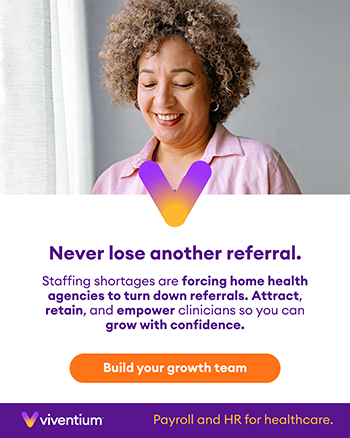
It’s Official! NAHC NHPCO Alliance Name New CEO

WASHINGTON D.C. Steven Landers, MD, MPH, has been named the inaugural Chief Executive Officer of the newly merged NAHC-NHPCO Alliance (The Alliance). A recognized national leader and innovator in home health, primary care and aging services, Dr. Landers brings almost two decades of experience as a physician, executive leader and health policy advocate to The Alliance, which represents care at home and community providers across the country. (Read more about Dr. Landers at our accompanying article in this week’s issue.)

Dr. Landers has dedicated his career to seeking home- and community-based health care solutions for people of all ages. As a board-certified physician in family medicine, geriatric medicine, and hospice and palliative medicine, he is a champion of the impactful role health care at home plays in the health and wellbeing of communities, acknowledging that as an aging nation, providing compassionate, dignified and cost-effective systems of care to patients is critical.

“The Alliance members provide a wide range of high-quality home- and community-based services that promote comfort, dignity and independence. I’m so proud to become a part of this organization, and am eager to serve,” said Dr. Landers. “I’ve had the opportunity in my career to see the health care industry from many vantage points, and in this new role with The Alliance, I will use all that I have learned to make a difference for our members as we continue to expand to meet the growing public needs for our care.”

Prior to joining The Alliance, Dr. Landers served in several executive leadership roles. He was the director of home care at the Cleveland Clinic, and for more than 11 years was the president and CEO of the Visiting Nurse Association Health Group, Inc. — one of the oldest, largest and highly respected home health, hospice and community health organizations in the country. During his most recent tenure as the president and CEO of Hebrew SeniorLife, he led an organization known for superior senior living, geriatric health care, research and teaching.

Dr. Landers has served on numerous boards and committees in the care at home space and has represented organizations by engaging policymakers, including meeting with members of Congress; providing committee testimonies for Congress and state legislatures; and discussing home care policies and regulations with the U.S. Secretary of Health and Human Services, the administrator of the Centers for Medicare & Medicaid Services, Medicare Payment Advisory Commission officials, and federal agency staff.

“Providing leadership around policy and advocacy efforts is critical to our mission at The Alliance,” said Transition Board Chair Ken Albert. “Throughout his career, Dr. Landers served the field as an effective policy advocate, shaping policy at both the state and federal levels. We are thrilled to welcome him as our inaugural CEO, and I know he will build an extraordinary team to offer value for our members.”

Steve Landers NAHC NHPCO Alliance CEO

Early in his career, Dr. Landers based his clinical practice on providing health care through house calls and thousands of home visits, primarily to low-mobility patients. While in this setting, he saw the need to connect home care and hospice to the broader health care system and medical community. He understood that to improve patient care, health care providers need to explore and thrive at the intersection of clinical work, health policy and systems of care. He pursued a master’s degree in public health, which contributed to his passion for influencing federal and state legislation to improve health care delivery to home-based patients.

“Dr. Landers’ rich and diversified experience makes him the ideal candidate to lead our membership as our organization evolves,” said Alliance Transition Board Vice Chair Melinda Gruber. “Working alongside community health workers and within our patients’ homes, he understands what we need as frontline caregivers and advocates.”

Dr. Landers is a graduate of Case Western Reserve University School of Medicine, where his training included a family medicine residency at Case Western and a geriatric medicine fellowship at the Cleveland Clinic. He also attended the Johns Hopkins Bloomberg School of Public Health, where he focused on health policy and management. Additionally, he received a bachelor of arts in political science from Indiana University in Bloomington.

# # #

About the NAHC-NHPCO Alliance 

The NAHC-NHPCO Alliance brings together the National Association for Home Care & Hospice (NAHC) and the National Hospice and Palliative Care Organization (NHPCO), two organizations with more than 90 years of combined experience serving providers of quality care in the home to form one new association. This historic alliance creates a national organization representing providers of home care, home health, hospice, and palliative care, forming the most powerful voice and resource the care-at-home community has seen. The integration process underway is expected to continue through the beginning of 2025. While leadership explores a permanent name, the new organization is operating under the interim name the NAHC-NHPCO Alliance.

Keep track of updated news on the NAHC and NHPCO websites.

This news release originally appeared in The Rowan Report. by permission of the National Association for Home Health and Hospice. It may be freely reprinted.