Exclusive Inside Scoop: PocketRN and Assisting Hands

FOR IMMEDIATE RELEASE

Contact:                           William Leiner
COO
will.leiner@pocketrn.com

PocketRN and Assisting Hands® Home Care Announce a National Strategic Partnership to Test Medicare Dementia Care Model

Guiding an Improved Dementia Experience (GUIDE) Model, a CMMI Program, Aims to Increase Care Coordination, Support for Caregivers

WASHINGTON, DC, UNITED STATES, January 16, 2025. Today, PocketRN, a leader in virtual nursing, and Assisting Hands, a leading home care company, announced they will form a National Strategic Partnership to test the Centers for Medicare & Medicaid Services (CMS) alternative payment model designed to support people living with dementia and their caregivers. Under CMS’ Guiding an Improved Dementia Experience (GUIDE) Model, PocketRN will be one of almost 400 participants building Dementia Care Programs (DCPs) across the country, working to increase care coordination and improve access to services and supports, including respite care, for people living with dementia and their caregivers.

Partnership Foundation

Assisting Hands’ partnership with PocketRN is rooted in the fact that a significant portion of their client base has a dementia diagnosis. Their franchised locations nationwide provide daily care and respite care for caregivers in the homes of people living with dementia, making this alliance a strategic and logical decision.

PocketRN Assisting Hands

PocketRN Assisting HandsLaunched on July 1, 2024, the GUIDE Model will test a new payment approach for key supportive services furnished to people living with dementia, including: comprehensive, person-centered assessments and care plans; care coordination; 24/7 access to an interdisciplinary care team member or help line; and certain respite services to support caregivers. People with dementia and their caregivers will have the assistance and support of a Care Navigator to help them access clinical and non-clinical services such as meals and transportation through community-based organizations.

PocketRN CEO

“We couldn’t be more thrilled to bring our revolutionary nurse-led care model to the millions of dementia patients and families who need it most,” said PocketRN CEO, Jenna Morgenstern-Gaines. “With PocketRN, patients and families get unwavering support from a ‘virtual nurse for life’ as they navigate the complexities of managing dementia at NO cost to them. Nurses are hands-down the best clinicians to be the ‘glue’ for patients and their families throughout their dementia journey–they’ve been doing so forever, and it’s high-time their work is valued by our system.”

“Assisting Hands is proud to announce our partnership with PocketRN. This collaboration reinforces our dedication to providing exceptional home care and respite services for individuals living with dementia and their caregivers. Together, we aim to enhance caregiver support and improve quality of life by offering comprehensive home care solutions and respite care, allowing caregivers to manage their responsibilities more effectively while ensuring their loved ones receive the best care possible.”

Deanna Keppel

Vice President of Operations, Assisting Hands

PocketRN Participation

PocketRN’s participation in the GUIDE Model will help people living with dementia and their caregivers have access to education and support, such as training programs on best practices for caring for a loved one living with dementia. The GUIDE Model also provides respite services for certain people, enabling caregivers to take temporary breaks from their caregiving responsibilities. Respite is being tested under the GUIDE Model to assess its effect on helping caregivers continue to care for their loved ones at home, preventing or delaying the need for facility care.

This model delivers on a promise in the Biden Administration’s Executive Order on Increasing Access to High-Quality Care and Supporting Caregivers and aligns with the National Plan to Address Alzheimer’s Disease. For more information on CMS’ GUIDE Model, please visit: https://www.cms.gov/priorities/innovation/innovation-models/guide.

# # #

About Assisting Hands® Home Care

Assisting Hands is a leading provider of in-home care services for seniors, individuals with disabilities, and those recovering from illness or injury. With over a decade of experience, Assisting Hands provides high-quality care in the comfort of the home, offering a range of services including personal care, companion care, and respite care. The company’s franchise system has grown rapidly, with locations across the United States.

About PocketRN

PocketRN gives patients, families, and caregivers a “virtual nurse for life.” Its mission is to close the gap between home and healthcare by: enabling nurses to care proactively and continuously at the top of their license, enabling caregivers with peace of mind and the confidence to support others, and enabling patients to access whole-person, trusted, empathetic care when and where they want it. PocketRN is the glue that holds together fragmented experiences in care so that partners, clinicians, patients, and families get back more of what they need: quality time. For more information, visit www.pocketrn.com

This press release will appear on EIN Presswire and was submitted to The Rowan Report as an exlusive advanced release, printed with permission.


Proposal to Update HIPAA Security Rule

HHS OCR Proposes Updates to the HIPAA Security Rule to Respond to Emerging Threats

by Paul F. Schmeltzer and John F. Howard, Clark Hill PLC

HHS Proposal

On Dec. 27, the Department of Health and Human Services (HHS) issued proposed updates to the HIPAA Security Rule to address evolving cybersecurity threats in healthcare. Introduced through a Notice of Proposed Rulemaking (NPRM) by the Office for Civil Rights (OCR), the substantial updates aim to enhance the protection of electronic protected health information (ePHI) while aligning the two-decade-old regulations with current technological advancements. These changes are especially crucial in a healthcare environment increasingly reliant on electronic health records (EHRs), online patient portals, telehealth platforms, and interconnected medical devices.

Since its adoption in 2003, the HIPAA Security Rule has served as the foundation for safeguarding ePHI. However, the healthcare landscape has changed dramatically with the rise of cyber threats like ransomware, phishing attacks, and hacking incidents that result in data breaches. OCR’s investigations into HIPAA compliance across the healthcare industry have also revealed significant inconsistencies, underscoring the need for updated regulations that provide clarity and enforceability.

Revisiting “Addressable” vs. “Required” Specifications

Among the most significant aspects of the proposed changes in the NPRM is the reconsideration of the distinction between “required” and “addressable” implementation specifications, a hallmark of the original Security Rule that has often caused confusion. Required specifications must be implemented as outlined, with no exceptions. Addressable specifications, on the other hand, give entities the flexibility to evaluate their feasibility and adopt alternative measures if implementing the original specification is deemed unreasonable or inappropriate. This flexibility has often been relied on by mid and small-sized HIPAA-covered entities in their compliance efforts.

The NPRM proposes eliminating the concept of “addressable” implementation specifications and making all implementation specifications required, with limited exceptions. This includes reclassifying encryption of ePHI at rest and in transit as a required specification, reflecting its essential role in mitigating cyber risks and its widespread availability. Previously, entities could justify not using encryption if they documented their rationale and implemented alternative measures. The proposed change eliminates this flexibility, simplifying compliance expectations and reinforcing encryption as a baseline safeguard for ePHI. This same change would follow for other specifications under the rule, highlighting OCR’s desire to strengthen and simplify the Security Rule.

Strengthened Administrative Safeguards

The NPRM introduces several enhancements to administrative safeguards to address modern security risks. Comprehensive risk analysis remains a cornerstone of HIPAA compliance, but the proposed updates add specificity to these requirements. Entities will be required to maintain a detailed inventory of all technology assets that interact with ePHI and map how ePHI flows within their systems. This mapping ensures visibility into where sensitive data resides and how it is accessed, helping organizations proactively identify and address vulnerabilities. The inventory and map would then be required to be reviewed every 12 months as part of an entity’s risk assessment and risk management processes.

Incident response planning is also emphasized. Entities must develop robust written plans that include protocols for detecting, containing, and recovering from cyberattacks or breaches. These plans should be regularly updated to align with emerging threats and best practices. Workforce training requirements are also expanded under the NPRM, with a focus on providing comprehensive and role-specific education. These programs must address unique vulnerabilities tied to specific job functions and be updated regularly to combat threats like phishing and social engineering.

Strengthened Physical and Technical Safeguards

Physical and technical safeguards also receive significant attention in the NPRM. To secure ePHI, physical access to facilities and devices must be tightly controlled through advanced measures such as biometric authentication, badge systems, and video surveillance. These controls aim to protect ePHI from unauthorized access, theft, or tampering.

The NPRM proposes a definition of the term “multi-factor authentication” (MFA) that entities would be required to apply when implementing the proposed rule’s specific requirements for authenticating users’ identities through verification of at least two of three categories of factors of information about the user, such as passwords combined with biometrics, to secure access to systems containing ePHI. Additionally, the NPRM encourages using advanced threat detection tools like intrusion detection systems, AI-powered anomaly detection, and real-time breach alerts to proactively address security risks.

Addressing Challenges for Small and Rural Providers

HHS recognizes the unique challenges faced by smaller healthcare providers, particularly those in rural and tribal areas, where resources for implementing complex security measures are often limited. The NPRM seeks to provide scalability, allowing entities to implement solutions proportional to their size and complexity. Tailored guidance and tools are expected to support these providers, and regional collaborations are encouraged to pool resources and expertise for improved cybersecurity.

Implications for Stakeholders

For healthcare providers and business associates, the proposed updates necessitate significant investment in technology, training, and compliance infrastructure. Allocating budgets for tools like encryption and MFA, revising and drafting policies and procedures, and updating vendor contracts to ensure alignment with new standards are critical steps. Failure to comply with these updated requirements could lead to stricter enforcement actions and penalties. Fortunately, the proposed changes also remove some of the guesswork needed to comply with the Security Rule. Making areas where investment is needed easier to identify.

Patients stand to benefit significantly from the proposed changes, as stronger protections for sensitive health information can help rebuild trust in healthcare systems. By reducing the frequency and severity of breaches, the NPRM supports greater patient engagement and the adoption of digital health technologies. Regulators, equipped with clearer enforcement guidelines, will be better positioned to ensure compliance and address violations effectively.

Alignment with Broader Cybersecurity Efforts

The proposed updates align with national and international cybersecurity frameworks, including the NIST Cybersecurity Framework and the General Data Protection Regulation (GDPR). These alignments position the U.S. healthcare sector as a global leader in data security while promoting best practices like continuous monitoring, risk management, and strong encryption.

Implementation Timeline and Next Steps

The NPRM is to be published in the Federal Register on Jan. 6, 2025, after which a 60-day public comment period will follow. The final rule will take effect 60 days post-publication. Entities will have 180 days to achieve compliance, with additional time provided to update business associate agreements. The NPRM encourages stakeholders to provide feedback on the practicality and cost-effectiveness of the proposed changes during the comment period.

Conclusion: A Necessary Evolution in Cybersecurity

The proposed updates to the HIPAA Security Rule represent a critical step forward in securing ePHI against today’s sophisticated cyber threats. By reclassifying key specifications, enhancing safeguards, and providing greater clarity for compliance, the NPRM builds a robust framework for protecting both patients and providers. While these changes may pose challenges for some organizations, they are an essential evolution in safeguarding sensitive data in an increasingly digital world. As healthcare continues its digital transformation, these updates underscore the importance of cybersecurity as a cornerstone of quality care and public trust. Investment in a strong cybersecurity posture up front will prove valuable and ultimately save the entire healthcare industry in the long run.

# # #

This publication is intended for general informational purposes only and does not constitute legal advice or a solicitation to provide legal services. The information in this publication is not intended to create, and receipt of it does not constitute, a lawyer-client relationship. Readers should not act upon this information without seeking professional legal counsel. The views and opinions expressed herein represent those of the individual author only and are not necessarily the views of Clark Hill PLC. Although we attempt to ensure that postings on our website are complete, accurate, and up to date, we assume no responsibility for their completeness, accuracy, or timeliness.

©2025 This article originally appeared on the Clark Hill website and is reprinted with permission.

UnitedHealth Group Amedisys Merger Faces Further Delays

by Kristin Rowan, Editor

UHG and Amedisys Waive Termination

The UnitedHealth Group and Amedisys merger has been an ongoing story since the initial merger agreement was signed in June of 2023. The proposed merger came under scrutiny by the Federal Trade Commission (FTC) and the Department of Justice (DOJ). UnitedHealth Group and Amedisys are competitors in the home healthcare market and the merger would hurt patients.

“UnitedHealth’s plan to extinguish Amedisys as a competitor is the result of an intentional, sustained strategy of acquiring, rather than beating, competition.”

Department of Justice

DOJ Pushes Back

Late in 2024, the DOJ filed a lawsuit against the merger, claiming that both companies have acknowledged that their competition helps keep them honest and drive quality both in patient and employee care. The DOJ noted that the acquisition would be presumptively illegal in multiple markets. UHG, Amedisys, and Optum proposed selling off some of its care centers to address the concerns about competition. 

Merger Deadline Reached

Under the initial merger agreement, UHG would pay $3.3 billion to acquire Amedisys, which would remain as a subsidiary of UHG. That agreement was set to be finalized on December 27, 2024. There has been no decision made on the DOJ lawsuit, so the merger could not be completed. UHG and Amedisys have mutually agreed to extend the merger and added a break fee of $275 million.

Indefinite Merger Extension Through 2025

The new agreement has an indefinite ending. According to the wording, the merger agreement will now expire either on December 31, 2025 or 10 days after a final court decision in the lawsuit, whichever comes first.

According to the new filing with the SEC, UnitedHealth and Amedisys will be divesting assets to secure the merger and satisfy the DOJ. If not, they will incur a break fee of up to $325 million. Both companies have an agreement with VitalCaring Group to acquire the necessary assets.

UnitedHealth Group Amedisys Merger

What If?

If…The Trump administration is less stringent in antitrust matters, as expected.

The lawsuits currently at the U.S. District Court and five states will likely fail.

If…the U.S. District Court for the District of Maryland either decides to block the merger permanently or does not reach a final order by the end of the year…

The merger agreement will expire.

If…UnitedHealth Group, Optum, and/or Amedisys fails to divest holdings…

The merger agreement will not satisfy the antitrust regulations and the failing party will pay hundreds of millions in damages, and the merger agreement will end.

This is an ongoing story and we will continue to report on updates as they occur. See our accompanying BREAKING NEWS story.

# # #

Kristin Rowan, Editor

Kristin Rowan has been working at Healthcare at Home: The Rowan Report since 2008. She has a master’s degree in business administration and marketing and runs Girard Marketing Group, a multi-faceted boutique marketing firm specializing in event planning, sales, and marketing strategy. She has recently taken on the role of Editor of The Rowan Report and will add her voice to current Home Care topics as well as marketing tips for home care agencies. Connect with Kristin directly kristin@girardmarketinggroup.com or www.girardmarketinggroup.com

©2025 by The Rowan Report, Peoria, AZ. All rights reserved. This article originally appeared in The Rowan Report. One copy may be printed for personal use: further reproduction by permission only. editor@therowanreport.com

Pharmacy and PBM Separation Pushed by Congress

by Kristin Rowan, Editor

Bi-Partisan Bill Introduced

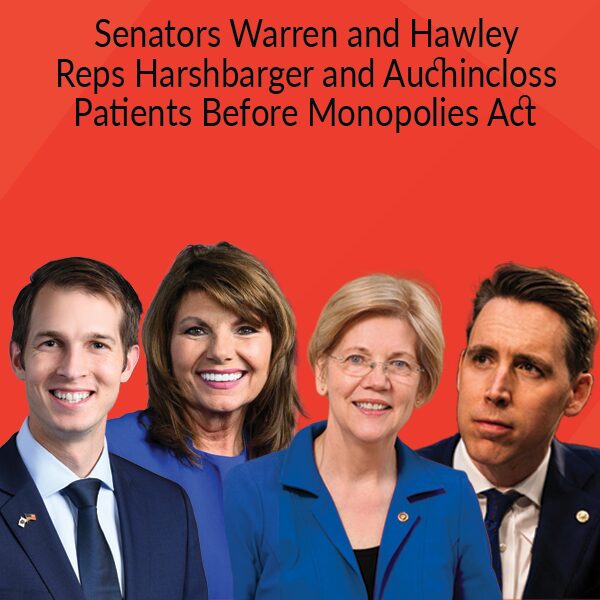
The final session of this Congress may not be as “lame” as anticipated. On December 11, 2024, Senators Elizabeth Warren (D-Mass.) and Josh Hawley (R-Mo.), with the support of Representatives Diana Harshbarger (R-Tenn.) and Jake Auchincloss (D-Mass.) introduced the Patients Before Monopolies Act.

The bill, if passed, would prohibit any company from owning both a Pharmacy Benefit Manager and a Pharmacy. Joint ownership of both creates a “gross conflict of interest” that allows companies to increase their own profits at the expense of patients and independent pharmacies.

Pharmacy Benefit Managers

Pharmacy Benefit Managers (PBMs) act as middlemen between consumers, health insurance companies, drug manufacturers, and pharmacies. They were designed to negotiate reimbursement and dispensing fees in pharmacies, negotiate drug prices from manufacturers, and manage drug costs for insurance companies. The PBM Act claims that PBMs have manipulated the market, increased drug costs, and are driving independent smaller pharmacies out of business. 

In Their Own Words

“PBMs have manipulated the market to enrich themselves — hiking up drug costs, cheating employers, and driving small pharmacies out of business. My new bipartisan bill will untangle these conflicts of interest by reining in these middlemen,” said Senator Warren.

“The PBM industry is rife with self-dealing that raises costs for patients and bankrupts independent pharmacists. No PBM should be allowed to own pharmacies, because it poses an unacceptable conflict of interest when it then sets reimbursement rates for its own versus external pharmacies. Independent pharmacies deserve fair play,” said Representative Auchincloss.

Pharmacy Benefit Managers

“As a life-long pharmacist, I know first-hand how unchecked PBM consolidation and vertical integration have allowed these shadowy middlemen to self-deal and manipulate the system in ways that are driving up drug costs, limiting patient choices, and putting the financial screws to independent community pharmacies,” said Representative Harshbarger.  “I’m a proud conservative Republican, but we have antitrust laws for a reason. That’s why I’m joining my colleagues in introducing the bipartisan Patients Before Monopolies Act, which will protect consumers and taxpayers, and ensure fair competition by breaking-up these anticompetitive, conflict-of-interest arrangements. Federal regulators should never have let this excessive concentration of our healthcare industry happen in the first place, and so it’s up to Congress to get the job done.”

Issues Addressed

The PBM Act aims to address the issues of higher drug costs, fewer independent pharmacies, and larger profits for corporations. The PBM Act would:

    • Disallow the parent company of any PBM or insurer from owning a pharmacy
    • Require any PBM or insurer that also owns a pharmacy to sell the pharmacy business within three years
    • Allow the FTC, DHHS, DOJ Anti-Trust Division, and state attorneys general to issue orders requiring the divestiture of pharmacies by owners of PBMs or insurers
    • Allow the same to sieze revenue made from the pharmacy business from any owner of a PBM or insurer
    • Distribute the funds to communities and consumers who have been overcharged by these pharmacies
    • Mandate the reporting of all divestments of pharmacies to the FTC
    • Allow the FTC to review any and all future acquisitions

PBMs have manipulated the market to enrich themselves — hiking up drug costs, cheating employers, and driving small pharmacies out of business. My new bipartisan bill will untangle these conflicts of interest by reining in these middlemen.

Elizabeth Warren

Senator, D-Mass.

Who is Impacted?

CVS Health, Cigna, and UnitedHealth Group, among others, would be required to sell their pharmacy businesses within three years.

Caremark, owned by CVS, Express Scripts, owned by Cigna, and OptumRX, owned by UnitedHealth Group, are three of the largest PBMs in the country. Together, they control about 80% of all prescription drug claims.

Not surprisingly, the Pharmaceutical Care Management Association, a lobbying group for PBMs, has contested the claims made in the bill and by its supporters. They argue that PBMs offer convenient, affordable access to medications.

Similarly, CVS said that its integrated business model, both a PBM and pharmacy, helps connect people to accessible, affordable care. The pharmaceutical giant claims it has lowered out-of-pocket drug costs more than 25% in the last ten years and that it reimburses independent pharmacies at a higher rate than its own CVS pharmacy locations.

A spokesperson for CVS Caremark said that policies designed to limit their ability to negotiate with drug manufacturers and pharmacies would increase the cost of medicine. He also said these policies would be a “handout” to the pharmaceutical industry.

Supporters

The bipartisan, bicameral Act has support from the American Economic Liberties Project (AELP), National Community Pharmacists Association (NCPA), American Pharmacy Cooperative Inc (APCI), Pharmacists United for Truth and Transparency (PUTT), Patients Rising, and AffirmedRx.

Public statements on behalf of the PBM Act harshly criticize PBMs, private health insurers, and the healthcare system as a whole.

Giant PBMs and insurers owning their own pharmacies has driven independent pharmacies out of business and reduced patient access to quality care. The Patients Before Monopolies Act addresses the root cause of this problem — consolidated market power — by eliminating the inherent conflicts of interest within the big three PBM business model. We are thrilled to see Sen. Warren and Sen. Hawley lead this bipartisan effort to lower drug costs, protect independent retail pharmacies, and improve patient access to care.

Morgan Harper

Director of Policy and Advocacy, American Economic Liberties Project

A particularly egregious result of the vertical integration of PBM-insurers with retail and mail-order pharmacies is that the PBM – which competes with independent pharmacies and others – decides what their rival pharmacy will be reimbursed and which patients will be allowed to use them. There are also countless examples of PBMs paying their pharmacies much higher reimbursement than non-affiliated pharmacies and using patient data to steer patients to their own pharmacies. We’re grateful to Sens. Warren and Hawley and Reps. Harshbarger and Auchincloss for introducing the PBM Act, which will go a long way in eliminating the conflicts of interest that currently exist in this space.

Anne Cassity

Senior VP of Government Affairs, National Community Pharmacists Association

The inherent conflicts of interest between PBMs owning their own retail, mail-order, and specialty pharmacies have resulted in higher drug costs, reduced patient choice and access to care, and unsustainable reimbursements to non-PBM affiliated pharmacies. With retail pharmacies closing at an alarming rate and patients fighting life threatening diseases being steered to PBM owned pharmacies and often overcharged thousands of dollars for medications, Senator Warren’s Patients Before Monopolies Act couldn’t come soon enough. This commonsense legislation strikes at the heart of anti-competitive PBM behavior and roots out conflicts of interest by prohibiting ownership of both a PBM and a pharmacy. American Pharmacy Cooperative, Inc, is grateful to Senator Warren for her work and leadership on this issue and looks forward to fighting for this critically important piece of legislation.

Greg Reybold

VP of Healthcare Policy and General Counsel, American Pharmacy Cooperative, Inc.

While there are a variety of conflicts of interest that can compromise the intended role of PBMs to act as counterweights to inflated drug prices, one of the chief areas of system misalignment arises from PBM ownership of pharmacies. As these large vertically integrated companies serve as both price-setter and price-taker for pharmacy transactions, PBM incentives to reduce drug markups and to manage pharmacy reimbursement and network decisions in an unconflicted manner are significantly undermined. In our work advising government programs and commercial plan sponsors, we stress that minimizing or eliminating these areas of misalignment are foundationally critical in order to achieve greater balance for medicine accessibility and affordability.

Antonio Ciaccia

President, 3 Axis Advisors

For too long vertically integrated PBMs have put profits over patients, driving up costs, limiting access to essential medications and forcing countless independent pharmacies to close their doors. The Patients Before Monopolies Act is a step toward breaking these monopolies, restoring fairness and competition and, most importantly, ensuring patients get the care they need at a price they can afford. At the heart of our mission is the belief that transparency and integrity should be the foundation of health care. I congratulate Senators Warren and Hawley, and Representatives Harshbarger and Auchincloss for putting patients first, and urge Congress to pass this bipartisan bill.

Greg Baker

Pharmacist and CEO, Affirmed Rx, a transparent PBM

This bill is the next step in urgently-needed legislation to eliminate the profiteering and other conflicts of interest that exist when private health insurers and their pharmacy benefit managers are allowed to design and sell health benefit plans while also owning pharmacies, clinics and other point-of-care entitiesm Vertical integration among the largest healthcare insurers has only served to saddle Americans with the priciest possible premiums for impossibly high-deductible plans that provide fewer options and ultimately result in poorer health outcomes. We applaud Senators Warren and Hawley for recognizing the need to dismantle the current system, which has failed consumers and taxpayers at just about every level.

Monique Whitney

Executive Director, Pharmacists United for Truth and Transparency

Across the country, patients feel increasingly disenfranchised by the healthcare system. The culprit: a complex web of powerful health conglomerates including health insurers, Pharmacy Benefit Managers (PBMs), and their affiliated pharmacies. Patients Rising applauds Senators Elizabeth Warren and Josh Hawley, along with Representatives Diana Harshbarger and Jake Auchincloss for putting forward bi-partisan legislation to put patients before monopolies. It is critical we crack down on health conglomerate conflicts of interest and encourage businesses to operate in the interest of patients’ long term health and wellbeing.

MacKay Jimeson

Executive Director, Patients Rising

The New York Times stated their uncertainty over whether this bill would gain any traction. With so much support, both across the aisle, across congress, and from outside entities, it seems likely it will move ahead. However, Congress has run out of time to pass any bill during this term and will have to be reintroduced in January.

The Rowan Report will continue to follow the progress of the PBM Act next year.

# # # 

Kristin Rowan, Editor

Kristin Rowan has been working at Healthcare at Home: The Rowan Report since 2008. She has a master’s degree in business administration and marketing and runs Girard Marketing Group, a multi-faceted boutique marketing firm specializing in event planning, sales, and marketing strategy. She has recently taken on the role of Editor of The Rowan Report and will add her voice to current Home Care topics as well as marketing tips for home care agencies. Connect with Kristin directly kristin@girardmarketinggroup.com or www.girardmarketinggroup.com

©2024 by The Rowan Report, Peoria, AZ. All rights reserved. This article originally appeared in Healthcare at Home: The Rowan Report. One copy may be printed for personal use: further reproduction by permission only. editor@therowanreport.com

HH Accessibility Report

FOR IMMEDIATE RELEASE

Contact:                  Lauren Corcoran

press@trellahealth.com

Trella Health Launches Special Report on Home Health Accessibility for Medicare Fee-for-Service (FFS) Beneficiaries

An analysis of the key trends shaping access to care for Medicare patients

ATLANTA, Dec. 16, 2024. Trella Health, the leading provider of market intelligence and integrated customer relationship management (CRM) solutions to the post-acute care industry, released its Special Edition Report on Home Health Accessibility Among Medicare Fee-for-Service (FFS) Beneficiaries.

Access to Services

This report investigates trends shaping home health accessibility, revealing how the expanding Medicare-eligible population – and other factors – continues to strain access to home health services.

Below are a few key insights from this special report:

Home Health Accessibility Report
    • 49.9% of counties had five or fewer home health agencies per 1,000 square miles in 2023.
    • 94.1% of counties experienced either a decrease or no change in the number of skilled home health agencies treating more than 10 FFS patients in the post-pandemic period.
    • 83.3% of counties experienced a decrease in the number of FFS home health admissions per 1,000 beneficiaries in the post-pandemic period.
    • 87.4% of counties experienced a decrease in the average number of home health visits in the post-pandemic period, and the number of home health visits per patient day decreased by 17.3% between 2017 and 2023.

Urgent Need for Change

“Our analysis of Medicare Fee-for-Service claims indicates a concerning trend: decreasing accessibility to skilled home health care at a time when we are experiencing the largest growth in the Medicare population,” stated Carter Bakkum, Senior Data Analyst at Trella Health. “This report underscores the urgent need for healthcare leaders to address these disparities and ensure that Medicare beneficiaries receive the care they need.”

# # #

About Trella Health

Trella Health‘s unmatched market intelligence and purpose-built CRM allow post-acute providers, HME, and Infusion organizations to drive more effective performance and growth. Trella’s solutions allow post-acute, HME, and Infusion organizations to identify the highest-potential referral targets, evaluate new market opportunities, and monitor performance metrics. Paired with CRM and EHR integrations, business development teams can better manage referral relationships to advance their organizations with certainty by improving their sales and marketing strategy.

This press release was submitted by Trella Health and was reprinted by The Rowan Report with permission. For more information, or to request permission to use this content, please use the press contact above.

Employee vs Independent Contractor

by Kristin Rowan, Editor

Follow the Rules

The very nature of care at home lends itself to different organizational structures. Hourly vs. per visit compensation. Employee vs. independent contractor. Shift work vs. standard schedules. Each decision can have its own advantages and disadvantages.

Two agencies were in the news this week after the Department of Labor determined they had misclassified employees as independent contractors and failed to pay overtime wages. In addition to back wages, these agencies were ordered to pay damages and civil penalties.

The Rowan Report has researched the 2024 Department of Labor Final Rule: Employee or Independent Contractor Classification Under the Fair Labor Standards Act, RIN 1235-AA43. We’ve provided our synopsis below to help you determine the classification of your workers to avoid similar penalties.

Employee vs Independent Contractor

The Fair Labor Standards Act, from the Department of Labor provides information on how to classify workers. Prior to 2021, the DoL used the economic reality test, used by courts to determine status. This test used economic factors including nature and degree of control over work, and the worker’s opportunity for profit or loss. These two factors weighed more heavily than the remaining three: the amount of skill required, how permanent was the relationship between the worker and the employer, and whether the work is part of an integrated unit of production (meaning all work leads to the same end product that cannot be completed without each person’s part.)  

Totality of the Circumstances

Because the courts openly admitted that the final three factors would likely never outweigh the first two, the DoL moved to establish a different rule, using the five factors to determine a “totality of circumstances” without the predetermined weight. It also bent the final factor to include the work being an integral part of the business, not of production. Also included is the discussion of how scheduling, supervision, price setting, and the ability to work for others are considered within the control factor.

This final change is what will impact most care at home agencies. As defined in the Final Rule (795.110(B)(1)), this factor considers whether a worker has control over their own profit or loss, has control over their own schedule, advertises on their own behalf to get more work, and generally engages in managerial tasks such as hiring, purchasing materials, and/or renting space for themselves.

Qualifying as an Employee vs Independent Contractor

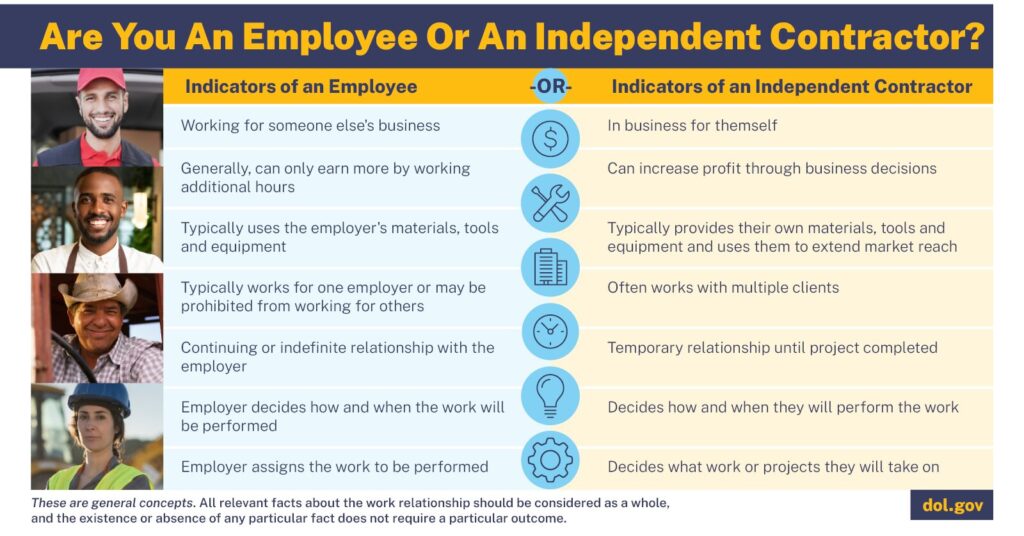
In order to qualify as an independent contractor, a worker:

    • Must have control over their own profit and loss.
        • If a worker can choose to accept or deny and job offered through the agency, therefore making more or less money, they may be an IC.
    • Should be engaged for short-term projects with identified end dates.
        • This is vague in relation to care at home. An employer could argue that each home visit is a short-term engagement. However, the worker might say that the opportunity is on-going with no end date.
    • Invests in the building of their business.
        • If a worker uses all their own equipment, is free to take shifts or jobs from other agencies, and promotes their skills in order to attract more work from outside your agency, they are likely an IC.
        • If, however, the worker takes shifts from other agencies and promotes their skills to others because your business has predictable down-times, rather than of the worker’s own choice, they are likely an employee.
    • Should have control over multiple aspects of the job.
        • A common misperception is that if an employee controls their own schedule, they are automatically an IC. Many employees have flexible scheduling, work from home opportunities, and other controls over their schedule. Care at home workers make less money when they choose to change their schedule, indicating economic dependency on the company. Further, many agencies have a minimum hour requirement with disciplinary action or consequences for not meeting that minimum. These factors, regardless of scheduling flexibility, mean the worker is not an IC.
        • Nurses who have control over their own schedules do not control, for example, the rate they are paid for their services. When the employer controls prices for services, workers are likely employees.
        • How a job is performed should be a considerable factor. If the worker is free to determine how they actually do the work once they take a job, then they are likely an IC. This may be possible for non-medical supportive care at home, but is less likely for home health and hospice settings that are highly regulated.
    • Should not be supervised either in person or by technology, using a device or other electronic means. Ongoing and continuous supervision is not required to classify a worker as an employee, only that the employer maintains the right to supervise. Supervision in this case is not limited to watching the worker during a shift. Supervision also includes training and standards established during hiring, remote monitoring of a job using an electronic visit verification system, and/or the oversight of completed work in the case of a QA audit of documentation.
        • For home health and hospice agencies, this almost assuredly makes all nurses employees. However, exceptions may exist in the case of specialties such as wound care, physical or occupational therapy, ostomy care, and respiratory care.
        • For non-medical care at home, this factor should be weighed based on your agency’s protocols.
    • Must be able to work for others.
        • An employer who limits a worker’s ability to work for other agencies and/or put such constraints on a person’s schedule as to make it impossible to work for others has employees, not ICs.
        • Non-compete clauses and fines for taking clients outside of the agency point to employee status.
        • Working part-time and having the ability to work for another company, also part-time, does not necessarily make someone an IC.
    • Should not be an integral part of the business.
        • If the business cannot function without the service performed by the worker, the worker is an employee.
        • Similarly, if the work itself depends on the existence of the business, the worker is an employee.
        • Generally speaking, if a the primary business is to make a product or provide a service, then any worker involved in making that product or providing that service is integral to the business.
          • This final clarification from the DoL may require all care at home workers to be classified as employees.
Employee vs Independent Contractor

Implications for the Industry

If most care at home workers should be classified as employees, not independent contractors, you should expect to make significant changes if you currently have your workers classified as ICs.

  • Higher expenses in the form of taxes and benefits
  • Negotiations for paid vacation, personal, and sick leave
  • Potential auditing of prior business structure and classification
  • Complete overhaul of back-office hiring processes and software needs for onboarding employees instead of independent contractors

Employee vs Independent Contractor Corrective Action

  1. If your workers are misclassified as independent contractors, take steps to correct this effective January 1st so your new tax year is correct.
  2. Plan ahead to incorporate required taxes coming from your budget.
  3. Determine whether you may have workers who are owed back wages, overtime pay, or other benefits and take steps to rectify the situation before you end up on the Department of Labor radar.
Employee vs Independent Contractor

Final Thoughts

I’ve heard a lot of conversations from home health and non-medical supportive care agency owners about the policies they have in place for their caregivers. The new laws around non-compete clauses as well as this updated Independent Contractor test leads me to this conclusion:

Most workers in care at home are employees, not independent contractors. If you wish to classify your workers as independent contractors, do your research, reorganize your business, and make sure you are following the totality-of-the-circumstances test. 

If organizational change is not possible, look at transitioning your workers to employees before the start of the year and hire a consultant to help you with the changes you need to make.

# # #

Kristin Rowan, Editor

Kristin Rowan has been working at Healthcare at Home: The Rowan Report since 2008. She has a master’s degree in business administration and marketing and runs Girard Marketing Group, a multi-faceted boutique marketing firm specializing in event planning, sales, and marketing strategy. She has recently taken on the role of Editor of The Rowan Report and will add her voice to current Home Care topics as well as marketing tips for home care agencies. Connect with Kristin directly kristin@girardmarketinggroup.com or www.girardmarketinggroup.com

©2024 by The Rowan Report, Peoria, AZ. All rights reserved. This article originally appeared in Healthcare at Home: The Rowan Report. One copy may be printed for personal use: further reproduction by permission only. editor@therowanreport.com

Year of the Caregiver

by Kristin Rowan, Editor

Year of the Caregiver

Medical and non-medical caregivers in home health, hospice, palliative, and home care are the life-blood of the industry, without whom Care at Home would not exist. 

Agency owners are limited in their capacity to compensate caregivers, working with CMS reimbursement rates, PDGM, and VBPM. However, Agency owners also know that caregivers are selfless, caring, empathetic, and dedicated. They also spend hours upon hours on documentation, drive billions of miles per year (literally), and adapt to changing industry regulations regularly. 

So, how do you, as an agency owner, executive, or manager, care for your caregivers in a meaningful way to express your appreciation for all that they do? How can you impact the high turnover rate? Pay raises are limited by CMS and insurance companies. Benefits are expensive for an already low-margin industry. Extended vacations limit the care you can provide your clients.

The Advantages of Employee Recognition

When your employees are engaged and feel appreciated, they are more loyal. Loyal employees are less likely to leave for another job, even if the pay rate is slightly higher. Employee recognition helps retain your best employees, increases their engagement, encourages best practices, and can be used as a recruitment tool when you need more staff.

A 2023 study highlights the importance of employee recognition. Employees who are likely to be recognized are more than twice as likely to go above and beyond their regular duties. Hearing a sincere “thank you” from the boss yields a 69% increase in extra effort. Personal recognition would encourage 37% of respondents to do better work more often.

Year of the Caregiver

Simple Start

Employee recognition programs don’t have to overhaul your organization, take a lot of time, or cost a lot of money. Start simple and see where it takes you. 

Celebrate Major Achievements and Small Wins

It’s important to recognize major achievements like gaining a new licensure, getting a referral for a new client, a positive online review, or a great star rating. How long an employee is with the company is an easy milestone to celebrate. Accolades for 30, 60, & 90 days, one year, five years, 10 years go a long way.

Equally important is celebrating smaller victories like completing a training, submitting accurate documentation, picking up an open visit, and birthdays.

Peer-to-Peer Recognition

Giving your employees the opportunity to recognize and celebrate each other creates a culture of appreciation within your agency, even when your employees are rarely together. Picking up a shift, trading a day off, helping answer a question, or simply encouraging a new employee during training are things you might not see, but your employees will. Give them an outlet to celebrate each other. 

Peer-to-peer recognition can be done with group text messages or an internal IM system like Slack or Microsoft Teams. For employees who are in the office, you can create a message board for notes, encouragement, and thanks. Create a monthly gift and let employees nominate someone for an act of kindness or helpfulness.

Year of the Caregiver

Organizational Change

Once you’ve established a Culture of Caring, ask your employees what they want and need. If recognition isn’t meaningful, it may not have the desired effect. 

Scheduling

A study out of the Leonard Davis Institute of Health Economics, 30% of registered nurses and 25% of licensed practical nurses left their positions in a home care agency in the course of one year. Part of the reason for the high turnover rate is schedule volatility. Another study concluded that high schedule variability in just 30 days increased the risk of turnover by 20%.

No change will eliminate client cancellations or immediate starts-of-care under the acceptance-to-service policy. But, that doesn’t mean you can’t minimize the volatility of a schedule. 

Automating the scheduling process using existing technology now allows home care agencies to offer open appointments in a “gig economy” style. Caregivers are notified by AI of a visit that needs to be covered, giving them the option to change their schedule. That autonomy reduces the feeling of stress caregivers have over schedule changes.

Stand-alone software options for automated scheduling and reduced schedule changes include Axle Health and Caring on Demand for home health and CareSmartz360 for non-medical supportive care. AI powered scheduling inside EMRs and agency management software include AlayaCare, HomeCare Homebase, CareVoyant, Axxess, Careswitch, and AxisCare, among others.

Documentation

Some sources suggest that home health workers spend up to three hours per shift at home finishing documentation. Visit times increase when employees are documenting on paper or on a device during the visit. 

One of the latest innovations in care at home software is AI powered talk-to-text scribe tools. Mobile applications using artificial intelligence record visits and transcribe conversations. The documentation tool scans the transcript as well as all patient data from the EMR and creates the needed documentation. Once a visit is over, the AI tool can finish documentation sometimes within minutes, requiring just a quick review by the visiting caregiver before submitting for QA.

Year of the Caregiver

Talk-to-text scribe tools are both stand-alone voice capture and integrated documentation tools. Some of the best talk-to-text scribe tools we’ve found are Athelas Scribe, Ybot, Andy, and Nvoq. OASIS and documentation automation reduces the burden on caregivers even more, almost eliminating the additional time spent at home reviewing charts and documentation. Some of the best OASIS and documentation automated software we’ve reviewed are Andy, Enzo, and Brellium. The Rowan Report will have reviews of these products in 2025. 

Communication and Connection

Care at home workers are a disparate group, rarely being in the same place at the same time, missing out on company culture, office parties, trading stories around the water cooler, and engaging with fellow employees, managers, and executives. Access to colleagues and management is an integral part of employee engagement and satisfaction.

Before you share the personal cell phone numbers of your entire agency, remember that all communication between employees, management, and clients should be secure and HIPAA compliant. Agencies have already seen the consequences both to their bottom line and with government agencies for failure to comply with secure messaging requirements.

Luckily, there are plenty of secure messaging platforms available for agencies to use. Employing messaging technology not only increases employee engagement, but also provides a level of security between caregivers and their patients and families. If you’ve now realized that you’ve been communicating on insecure platforms, check out Buzz, Qliqsoft, and Zingage.

Final Thoughts

Whether you start with a simple calendar to remind yourself which employees have been with you the longest, or invest in every AI tool available, the key here is to recognize that your caregivers are giving their all every day for their primary purpose of excellent patient-centered care.

No matter how you decide to do it, make 2025 the Year of the Caregiver and show your appreciation for all that they do for you. We couldn’t do what we do without them.

# # #

Kristin Rowan, Editor

Kristin Rowan has been working at Healthcare at Home: The Rowan Report since 2008. She has a master’s degree in business administration and marketing and runs Girard Marketing Group, a multi-faceted boutique marketing firm specializing in event planning, sales, and marketing strategy. She has recently taken on the role of Editor of The Rowan Report and will add her voice to current Home Care topics as well as marketing tips for home care agencies. Connect with Kristin directly kristin@girardmarketinggroup.com or www.girardmarketinggroup.com

©2024 by The Rowan Report, Peoria, AZ. All rights reserved. This article originally appeared in Healthcare at Home: The Rowan Report. One copy may be printed for personal use: further reproduction by permission only. editor@therowanreport.com

Updates on UnitedHealthcare CEO Shooting

by Kristin Rowan, Editor

Last Week

As most of the U.S. now knows, last week, UnitedHealthcare CEO Brian Thompson was shot and killed outside a hotel in Manhattan just hours before the UnitedHealth Group Investor Event. The Rowan Report provided the breaking news story with the information available at the time.

Manhunt

According to reports, after the shooting, a man fled the scene on foot and then rode an e-bike toward Central Park. Police were in pursuit based on early descriptions of the shooter and later on video footage of the shooting. The suspect was wearing a hoodie in the images of the shooting. Further investigation found a photo of the suspect in the lobby of a hostel where it is believed he stayed, smiling. Police followed the suspect into Central Park, where it is believed he got into a taxi and left the park.

He was later spotted at a bus station near the George Washington bridge.

Conflicting Images

Images obtained of the suspect taken inside the hotel show a man appearing to be in his 20s, wearing a dark  jacket with the hood up and a black face mask resting under his chin. An image of the suspect at a nearby Starbucks puts the suspect in a dark jacket with a black mask covering his mouth. Twenty minutes after the shooting, he is spotted getting into a taxi wearing a black jacket and a white surgical mask covering his mouth and nose. Conspiracy theories about why he would change his mask started circulating quickly.

Ongoing Investigation

A video shows the suspect entering the bus station near the George Washington Bridge. There is no video of him exiting the station. Police believe he got on a bus.

Meanwhile, police found a backpack in Central Park they believe belonged to the suspect. The investigation also discovered a cell phone that may be linked to the shooting. Early on Monday, December 9, police returned to Central Park with dive crews to search for evidence.

Delay, Deny, Defend

Delay Deny Defend by Jay M. Feinman is a book criticizing health insurance companies. The sub-title, “Why Insurance Companies Don’t Pay Claims and What YOu can Do About It,” supports the description of the book indicating that Feinman explains how to be more custios when shopping for policies and what to do when you have a disputed claim. Feinman also includes a play for the legal reforms he feels are needed to end the abuse.

NYPD officers found writing on the three shell casings left at the scene of the shooting. Initially reported as “Deny, Defend, & Depose”, police have now clarified that the permanent marker found on the casings read “Deny, Delay, & Depose.”

Former FBI agent Brad Garrett said he believes the shooter is “trying to send a message.” Police have not commented on what they think the words might mean. Meanwhile, “Deny Defend Depose merchandise appeared overnight, followed quickly by the corrected “Deny Delay Depose.”

Person of Interest

Around the time the dive crews arrived to search for clues in Central Park, a man entered a McDonald’s in Altoona, PA, nearly 280 miles away. An employee recognized him as the man from the photos and alerted local police. The person of interest, now identified as Luigi Nicholas Mangione, had a weapon, a mask, and writings that linked him to the shooting. The writings suggest he has issues with corporate America in general, and named several other people in the document in addition to Brian Thompson. He also had a fake ID that matches the one used to check in to the hostel in New York. Mangione has now been charged with Thompson’s murder.

unitedhealthcare CEO Thompson Person of Interest

Mangione was taken into custody by local police. Several members of the NYPD were later seen entering the police station in Altoona. As of Monday afternoon, Mangione was refusing to talk to police and did not have an attorney.

A DNA swab was taken and will be compared with DNA from a Starbucks cup found near the scene. Reports indicate Mangione will be extradited to New York. Mangione was denied bail and will remain in the Pennsylvania prison while he and his attorney fight the extradition to New York.

Additional information about Mangione surfaced on December 11. Mangione’s grandfather founded Lorien Health Services. The company, based in Maryland, operates six ALFs and eight nursing homes. Mangione often volunteered with the company in high school. Additionally, Mangione’s former roommate said in an interview that Mangione recently had surgery that was “heinous” and left him with multiple screws in his body. 

Public Outcry

The customary sentiments of comfort, sympathy, and condolences were pointedly absent in the days after Thompson’s death. Instead, stories of denied claims, limitations on access to care, and other frustrations with the industry flooded social media. Of the 60,000 reactions to the UnitedHealth Group post about Thompson’s death, 57,000 were laugh emojis.

Many industry professionals noted that the incident has brought up bigger issues with healthcare insurance in general. The Rowan Report previously wrote about UnitedHealthcare using AI in place of medical professionals to determine medical necessity. This resulted in a much higher than expected denial rate and more than 90% reversal of denials on appeal.

For more information on how healthcare might change after the shooting death of Brian Thompson, please see our complimentary article this week, “Will Thompson’s death change healthcare?”

# # #

Kristin Rowan, Editor

Kristin Rowan has been working at Healthcare at Home: The Rowan Report since 2008. She has a master’s degree in business administration and marketing and runs Girard Marketing Group, a multi-faceted boutique marketing firm specializing in event planning, sales, and marketing strategy. She has recently taken on the role of Editor of The Rowan Report and will add her voice to current Home Care topics as well as marketing tips for home care agencies. Connect with Kristin directly kristin@girardmarketinggroup.com or www.girardmarketinggroup.com

©2024 by The Rowan Report, Peoria, AZ. All rights reserved. This article originally appeared in Healthcare at Home: The Rowan Report. One copy may be printed for personal use: further reproduction by permission only. editor@therowanreport.com

Health Insurance Impact after Thompson’s Death

by Kristin Rowan, Editor

Will Thompson's death change healthcare?

It's all Relative

On the same day that Brian Thompson died, Blue Cross Blue Shield announced a reversal of an earlier planned policy change. In November, the insurance giant announced it would change its process for anesthesia claims. The change would start in three states and begin on February 1st, 2025. The new process would limit the amount of time the company would cover anesthesia for surgeries and other procedures that called for anesthetization.

The announcements said the company would deny any claim for a surgery or procedure needing anesthesia that goes beyond the time limit they established. Reportedly, the policy would not apply to people under 22 or any maternity related care. A press release from the American Society of Anesthesiologists criticized the policy. It said BCBS “will no longer pay for anesthesia care if the surgery or procedure goes beyond an arbitrary time limit, regardless of how long the procedure takes.”

The new policy was confusing. Some reports indicated there would be a time limit set by the insurer and all claims over that time limit would be denied. Another interpretation said the company would initially approve the claim but would only cover the anesthesia up to a point, leaving the balance to the insured. Yet another report implied BCBS shield would still pay for the surgery, surgeon, and facility, but not for any of the anesthesia.

Reversal of Fortune

Though the initial announcement received backlash from anesthetists, surgeons, insured patients, and Connecticut Senator Chris Murphy, the policy was not widespread news. That is, until the shooting of Brian Thompson shed light on all health insurance company policies. Citing “misinformation” the company announced on Thursday, December 4, that it would not proceed with the policy change.

To be clear, it never was and never will be the policy of Anthem Blue Cross Blue Shield to not pay for medically necessary anesthesia services. The proposed update to the policy was only designed to clarify the appropriateness of anesthesia consistent with well-established clinical guidelines.

Spokesperson

Anthem Blue Cross Blue Shield

Social Media Backlash

The New York Times referred to the reactions to Thompson’s death as “morbid glee.” Comments on social media posts, videos, and news stories include:

“Thoughts and deductibles to the family.”

“Unfortunately my condolences are out-of-network.”

“I pay $1,300 a month for health insurance with an $8,000 deductible. When I finally reached that deductible, they denied my claims. He was making a million dollars a month.”

“Cause of death: Lead poisoning! It’s a pre-meditated condition. Payout denied.” 

UnitedHealth Group Responds

UnitedHealth Group CEO Andrew Witty called the media interest in Thompson’s death “aggressive” and “frankly offensive.” In a video to UnitedHealth Group employees, Witty said, “I’m sure everybody has been disturbed by the amount of negative and in many cases citriolic media and commentary…particulary in the social media environment.” Witty noted there were few poeple who had a “bigger positive effect” on the U.S. healthcare system than Thompson.

From Bad to Worse

Witty’s leaked internal video compounded the negativity towards health insurance companies. Witty decryied the media and public vitriol. He then praised Thompson’s impact on healthcare and defended the company policy.

“Our role is a critical role, and we make sure that care is safe, appropriate, and is delivered when people need it,” Witty said, “What we know to be true is the health system needs a company like UnitedHealth Group.” Witty followed his seemingly innocuous statement with, “We guard against the pressures that exist for unsafe care or for unnecessary care to be delivered in a way which makes the whole system too complex and ultimately unsustainable.” Public outcry was amplified after the video was leaked, with insured persons using this as proof that the company’s policy is to deny care.

Health Insurance Impact

Experts Weigh In

Ron Culp, a public relations consultant at DePaul University said if the attack is related to health insurance policies it “could cause companies in the sector to make some changes,” noting that, “empathy and potential alternative solutions will play greater roles.”

Fortune predicts that the incident will cause fewer people to aim for the corner office.

While disgruntlement with corporate America is not new, The Wall Street Journal said this incident is “tinged with class rage and anti-corporate venom….[The] current outpouring is on a grander scale….”

Loss of Faith in Insurance Stock

Between close of business on Tuesday, December 3, the day before Thompson’s shooting, and Tuesday, December 10, major insurance stocks have dropped more than 6%. This includes UnitedHealth, CVS Health, and Cigna, three of the largest private health insurers in the country.

Jared Holz, a health-care equity strategist, said the stock performance appears to be in response to the rhetoric condemning health insurance business models that include denied claims in deference to higher profits.

Final Thoughts

After just one week, the public is still uncovering and pronouncing issues with the healthcare insurance industry. The long-term health insurance impact regarding company policies, denial rates, or anything else remains to be seen. The Rowan Report will never condone violence against another person. However, if Thompson’s death brings about changes in the corruption of for-profit insurance companies, we will all be the better for it.

This is an ongoing story. The Rowan Report will continue to provide updates as they become available.

# # #

Kristin Rowan, Editor

Kristin Rowan has been working at Healthcare at Home: The Rowan Report since 2008. She has a master’s degree in business administration and marketing and runs Girard Marketing Group, a multi-faceted boutique marketing firm specializing in event planning, sales, and marketing strategy. She has recently taken on the role of Editor of The Rowan Report and will add her voice to current Home Care topics as well as marketing tips for home care agencies. Connect with Kristin directly kristin@girardmarketinggroup.com or www.girardmarketinggroup.com

©2024 by The Rowan Report, Peoria, AZ. All rights reserved. This article originally appeared in Healthcare at Home: The Rowan Report. One copy may be printed for personal use: further reproduction by permission only. editor@therowanreport.com

St. Croix Hospice Receives Age-Friendly Certification

FOR IMMEDIATE RELEASE

Contact:                              Bronwyn Pope

851-767-2800

bpope@stcroixhospice.com

St. Croix Hospice Becomes First Hospice Agency to Receive Age-Friendly Care Certification Agency-Wide

OAKDALE, Minn.Dec. 2, 2024 /PRNewswire/ — St. Croix Hospice is proud to announce its achievement of Age-Friendly Care certification, a testament to its unwavering dedication to delivering exceptional, patient-centered care designed to meet the unique needs of older adults at every stage of life.

Age-Friendly Certification

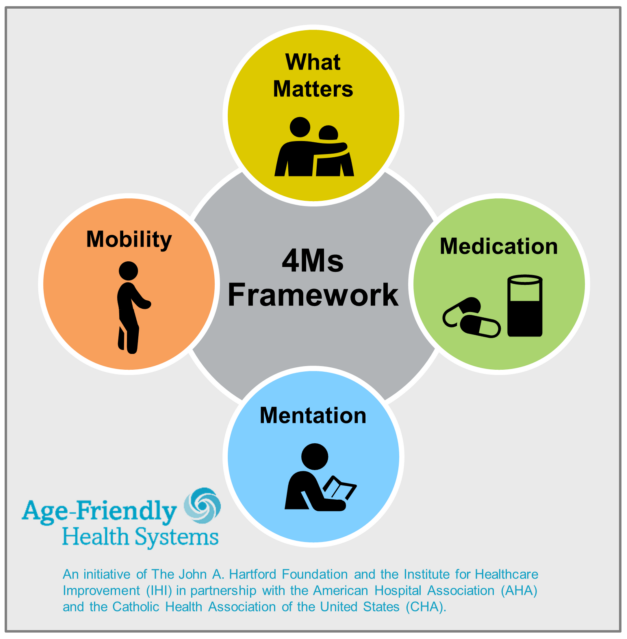
The Age-Friendly Care certification, awarded by Community Health Accreditation Partner, Inc. (CHAP), recognizes providers that implement evidence-based practices designed to meet the specific needs of aging patients. St. Croix has successfully embedded the “4Ms Framework” – What Matters, Medication, Mentation and Mobility – into its care model, ensuring every patient receives comprehensive care aligned with their personal goals and well-being.

“St. Croix Hospice is dedicated to providing compassionate, individualized care tailored to the unique needs of older adults,” said Heath Bartness, Founder CEO of St. Croix Hospice. “The Age-Friendly Care certification further recognizes our long-standing commitment to enhancing quality of life for aging individuals and their families through a compassionate, patient-centered approach. It’s especially important to us that this certification is recognized across our entire organization, reflecting the unified efforts of our teams to ensure every patient receives the highest quality care they deserve.”

4M St. Croix Hospice

Achieving Age-Friendly Care certification required all St. Croix locations to complete specialized training and implement best practices in geriatric care. This ensures that patients’ wishes are honored while prioritizing proper medication use, mental health support, and safe mobility.

The Age-Friendly Care certification aligns with our ongoing efforts to lead the industry in innovation and quality. With more than 90% of our patients aged 65 or older, this national recognition underscores the importance of our commitment to meeting the unique needs of older adults. It validates our clinical practices and serves as a testament to the dedication of our care teams who strive to make a difference for patients and families every day.

Ashley Arnold

Senior VP of Quality, St. Croix

St. Croix Recognized by CHAP

“St. Croix Hospice’s implementation of Age-Friendly Care across their 70+ locations is truly inspiring,” said CHAP Chief Operating Officer Teresa Harbour. “Their integration of the 4Ms Framework—What Matters, Medication, Mentation and Mobility—into daily practices reflects a deep commitment to honoring what matters most to their patients and families. This effort not only raises the bar for compassionate, patient-centered care but also underscores St. Croix Hospice’s role as a leader in the hospice field. At CHAP, we are proud to partner with organizations like St. Croix Hospice that prioritize innovation and excellence at such an impressive scale.”

St. Croix serves 5400 patients daily across the Midwest. Taking an integrated approach to hospice care, the expert team at St. Croix provides physical, emotional and spiritual support that meets the unique needs of each patient. St. Croix teams are stationed in more than 75 branches throughout ten states, ensuring responsive, proximate service to wherever patients call home.

# # #

About CHAP

CHAP is an independent, nonprofit organization accrediting providers of home and community-based care. Founded in 1965, CHAP was first to recognize the need for and value of home and community-based care standards and accreditation. As a Centers for Medicare & Medicaid Services (CMS)–approved accrediting organization, CHAP surveys organizations providing home health, hospice, and home medical equipment services to establish if Medicare Conditions of Participation and DMEPOS Quality Standard are met and recommend certification to CMS. CHAP’s purpose is to partner with organizations nationwide to advance quality in the delivery of care and services in the home and community. 

About St. Croix Hospice

St. Croix Hospice supports patients, their families and caregivers, providing compassionate care when it’s needed most. Celebrating 15 years of service, St. Croix Hospice delivers exceptional hospice services 24 hours a day, 365 days a year and wherever a patient calls home. With branches in IllinoisIndianaIowaKansasMichiganMinnesotaMissouriNebraskaSouth Dakota and Wisconsin, St. Croix Hospice takes pride in round-the-clock availability, prompt response times and same-day admissions – including during evenings, weekends and holidays. Contact St. Croix Hospice 24/7 at 855-278-2764 or stcroixhospice.com