Product Review: Plan-of-Care Documentation

by Kristin Rowan, Editor

OASIS Assessment is a Time Suck

Regulatory requirements for home health quality assurance are designed to monitor and improve quality of care. QA focuses on ensuring that patients get safe, effective, compassionate care that meets their individual needs. QA also improves patient outcomes and reduces adverse events like ER visits and rehospitalizations. OASIS includes 79 standardized medical, nursing, and rehab data elements for a comprehensive assessment. Typical OASIS assessments take 1-2 hours to complete, depending on the patient’s complexity and the assessment type. 

Artificial Intelligence in OASIS coding

The Rowan Report recently came across a tool that addresses the complexities of OASIS coding. We sat down with Zach Newman (CEO) and Dan Conger (Founder) at Enzo Health to learn more about their AI powered QA tool with customizable workflows.

Co-pilot for Your Agency

Enzo Health is a documentation tool that automates workflows, acting as a co-pilot for your agency. Some of the workflows that Enzo Health supports include intake, OASIS, and QA reviews. Automating these processes can reduce errors and clawbacks, save your clinicians hours of paperwork, and offer cost savings to your agency.

QA Process

With the Enzo health QA tool, users upload all documents related to an episode. This will include the referral, initial visit notes, patient information, medical history, and form 485. Enzo calls out any issues it finds in the documentation.

In Face-to-Face encounters, Enzo looks for dates, signatures from qualifying clinicians, a valid primary diagnosis, and other qualifying information.

For ICD-10 Coding, Enzo assesses primary and secondary diagnoses, and adds notes with links to where the information can be found in the uploaded documentation.

Enzo then provides functional limitations and improvements that can be made. Using a team of clinicians that are trained as home health coders, Enzo provides a proxy for internal teams. These coders review charts and finalize diagnosis coding and OASIS answers.

Episode of Care

Qualification for an episode of care is required before anything else happens with a referral. Enzo’s intake automation tool reviews the referral package in advance of the initial F2F. Mirroring the agency’s internal intake process, Enzo determines whether the patient will be admitted to care, whether their insurance will cover the episode, and whether the patient’s psych history may impact the plan of care.
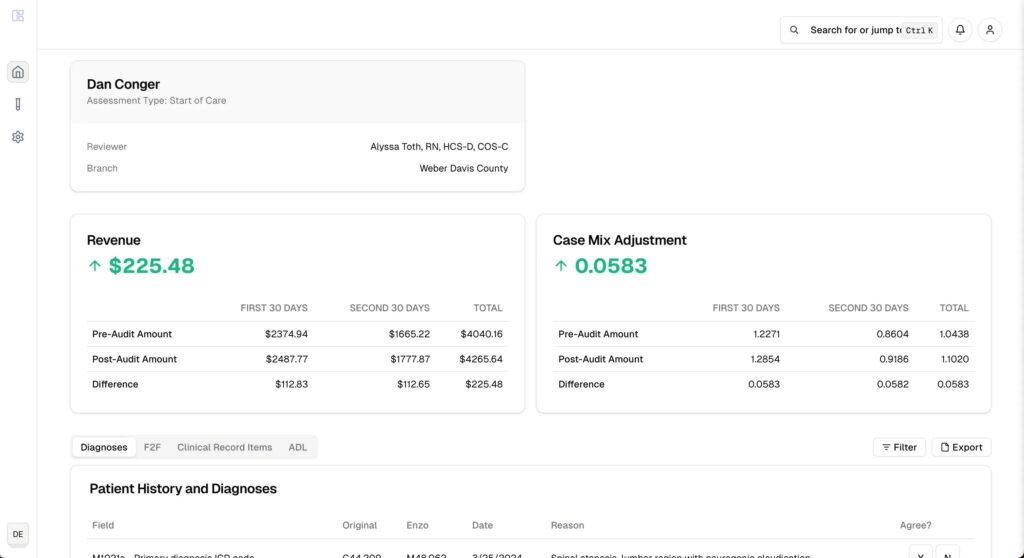
Enzo Health QA Automation

Clinical Assistance

The Rowan Report has often stated, and will continue to stand by this fact, that there is no substitute for face-to-face care and the expertise of the nurses and clinicians in the home. We have also seen the advancement of artificial intelligence that provides assistance and guidance at the point-of-care that can be useful. Enzo health includes a chat tool that pulls evidence-based information to provide guidance, coding instructions, and other help to nurses.

QA Tool Integration with Scribe Tool

Enzo Health has developed a talk-to-text scribe tool that integrates directly with the QA tool. The use of both products together would likely save more time as well as reduce errors. The Rowan Report will provide a thorough product review of the scribe tool at a later date. Enzo Health charges a flat fee determined by volume and offers bundle pricing for using both the QA and Scribe tools.

Final Thoughts

Costs are increasing, the workforce shortage is ongoing, nurses are suffering from burnout, and employees are stretched about as thin as they can go. Any tool that alleviates paperwork, stress, unpaid work at home to finish documentation, and the need for additional back-office staff is worth looking into. Enzo differentiates its tool from other QA software with their team of clinicians trained in home health coding to review the documentation. This end-to-end tool boasts a 95% accuracy rate and do date has no clawbacks or ADRs. 

In my conversation with Zach and Dan, their coding expertise and knowledge of the home health industry were evident. They are excited about the tools they are creating and passionate about helping agencies to provide patient care, a task they referred to as “very noble.” They continue to improve upon their software and conceive of innovative additions. If they continue as they started, Enzo Health will be one to watch.


GUIDE Model Expanding

by Kristin Rowan, Editor

GUIDE Launched with 390 Participants

On July 1, 204, CMS launched the GUIDE Model and announced that 390 organizations had signed on to participate. The Guiding an Improved Dementia Experience (GUIDE) Model is a voluntary model test amied at supporting people with dementia and their unpaid caregivers (family members).

Overview

The GUIDE Model focuses on comprehensive, coordinated dementia care to improve the quality of life for people with dementia. It also hopes to reduce the strain on family caregivers and keep patients in their homes and communities longer. Medicare payments cover the package of care coordination, care management, caregiver education and support, and respite care.

Poor-Quality Dementia Care

The GUIDE Model aims to address the key drivers of poor-quality dementia care in five ways:

    • Defining a standardized approach to dementia care delivery for model participants – this includes staffing considerations, services for people with dementia and their unpaid caregivers, and quality standards.
    • Providing an alternative payment methodology to model participants – CMS provides a monthly per-beneficiary payment to support a team-based collaborative care approach.
    • Addressing unpaid caregiver needs – the model aims to address the burden experienced by unpaid caregivers by requiring model participants to provide caregiver training and support services, including 24/7 access to a support line, as well as connections to community-based providers.
    • Respite services – CMS pays model participants for respite services, which are temporary services provided to a beneficiary in their home, at an adult day center, or at a facility that can provide 24-hour care for the purpose of giving the unpaid caregiver  temporary breaks from their caregiving responsibilities.
    • Screening for Health-Related Social Needs – model participants are required to screen beneficiaries for psychosocial needs and health-related social needs (HRSNs) and help navigate them to local, community-based organizations to address these needs.

Health Equity

Aspects of GUIDE designed to improve health equity include:

    • Requiring participating providers to implement HRSN screenings and referrals.
    • Offering financial and technical support for development of new dementia care programs targeted to underserved areas with less access to specialty dementia care.
    • Annual reporting by participants on progress towards health equity objectives, strategies, and targets.
    • Using data from the model to identify disparities and target improvement activities.
    • A health equity adjustment to the model’s monthly care management payment to provide additional resources to care for underserved beneficiaries.

Exclusive Inside Scoop

PocketRN gives patients, families, and caregivers a “nurse for life,” closing the gap between healthcare and care at home. This whole-person support allows patients and their caregivers to have access to medical care through their virtual nurse, who establishes a relationship with the patients and families.

On January 13, 2025, PocketRN announced a Strategic Partnership with Nevvon to pilot the GUIDE Model.

Nevvon is a global home and health care training tech company that certifies caregivers for continuing education. The app-based learning allows caregivers to go at their own pace, simplifying compliance, and empowering agencies to deliver exceptional care.

On January 15, 2025, PocketRN announced a Strategic Partnership with Right at Home to provide support to eligible Medicare beneficiaries with dementia.

Right at Home is a nationwide provider of in-home care and will provide care and safety assessments for eligible beneficiaries to evaluate the safety of the home environment, the ability of the patient to manage and function at home, and report back to PocketRN any other factors that might impact the patient and their family caregiver.

Later today, PocketRN will announce a National Strategic Partnership with with Assisting Hands® Home Care to test the care model. 

Assisting Hands provides in-home care to seniors, individuals with disabilities, and people recovering from illness or injury. The agency has a significant portion of their client base with a dementia diagnosis. Their franchise system has locations across the United States.


“We couldn’t be more thrilled to bring our revolutionary nurse-led care model to the millions of dementia patients and families who need it most. With PocketRN, patients and families get unwavering support from a ‘virtual nurse for life’ as they navigate the complexities of managing dementia at NO cost to them. Nurses are hands-down the best clinicians to be the ‘glue’ for patients and their families throughout their dementia journey–they’ve been doing so forever, and it’s high-time their work is valued by our system.”

Jenna Morgenstern-Gaines

CEO, PocketRN

In Their Own Words

The Rowan Report spoke with Nancy Gillette, Chief Growth Officer at PocketRN for this exclusive scoop. Nancy explained that with this program, PocketRN will be able to provide a nurse to dementia patients, provide a clinical overlay to care at home, work with care at home partners for respite benefits, and become a referral source when a home care agency has an eligible patient.

GUIDE Model PocketRN

Existing models and studies using PocketRN have shown up to a 30% reduction in urgent care visits, ER visits, and hospitalizations. The company is focusing on finding new strategic partners for a greater understanding of patient engagement from a home care agency standpoint.

Nancy gave us this inside information: 

The three recent announcements are just the beginning. Expect more announcements in the next 30-60 days and then continuing throughout the year.

PocketRN will eventually be applying the GUIDE Model in agencies, patients already using PocketRN, and direct referrals across all 50 states.

# # #

Kristin Rowan, Editor

Kristin Rowan has been working at The Rowan Report since 2008. She is the owner and Editor-in-chief of The Rowan Report, the industry’s most trusted source for care at home news .She also has a master’s degree in business administration and marketing and runs Girard Marketing Group, a multi-faceted boutique marketing firm specializing in content creation, social media management, and event marketing.  Connect with Kristin directly kristin@girardmarketinggroup.com or www.girardmarketinggroup.com

©2025 by The Rowan Report, Peoria, AZ. All rights reserved. This article originally appeared in The Rowan Report. One copy may be printed for personal use: further reproduction by permission only. editor@therowanreport.com


AI and Communication in Healthcare

An exerpt of “How AI is Enhancing Healthcare Communication” by Sandeep Shah, Founder and CEO, Skyscape

Edited by Kristin Rowan

How AI is Enhancing Communication

Artificial intelligence isn’t a new concept. In the healthcare industry alone, AI has been used to some degree since the 1970’s. It was first implemented to help identify blood infection treatments and showed promising results. This led to further curiosity about what it could do for healthcare professionals.

Today, AI is commonly used in several aspects of care, especially regarding radiology, screening tests, psychiatry, disease diagnosis, and predictive and preventative care. However, one lesser-known way AI tools are impacting our industry is through enhanced communication. AI is reshaping how care at home professionals interact with patients and care teams.

Challenges in Medical Communication

Electronic Health records have reduced the incidence of medical errors by improving the accuracy and clarity of medical records. However, they do not address the communication challenges today’s healthcare organizations still face. Communication channels, especially in care at home, are often fragmented, leaving gaps in patient care, follow-up, and department collaboration. Moreover, patient engagement is increasingly tricky without good communication, resulting in disruptive care plans or gaps in their treatment.

Effective communication is paramount to enhancing patient outcomes, revenue growth, and operational efficiency. Thanks to advancements in technology, AI has the potential to bridge these gaps and create a better experience for both healthcare providers and the patients they care for.

AI Communication

AI Communication Improving Patient Care

Communication within a HH agency is becoming increasingly complex. With more patients and a shortage of nurses, your team may be overwhelmed with tasks, applications, and health information. Luckily, there are several ways that you and your team can leverage artificial intelligence to better communication with patients and care teams (physicians, nurses, surgeons, lab technicians, administrative staff, etc.)

Here are some AI applications that will have the most impact on your agency:

Scheduling and Follow-ups

AI can improve both scheduling and follow-up processes, where there are often delays and miscommunications. AI software can automate appointment reminders and confirmations as well as rescheduling appointments if needed. These automated systems increase patient engagment with your agency and in their treatment. Some AI platforms can analyze patient data to give you a better look at patients who may have additional needs, which could also increase your billings.

Real-Time Support

Care at home nurses and caregivers report burnout due to increased requirements and tasks, including patient communication. AI should not replace your caregivers, but it can be helpful for simple questions, appointment reminders, and other routine tasks.

Future uses may include assistance with medical questions and creating a plan of care. AI is becoming more powerful in learning predetermined information, including scientifically reviewed medical information. Having real-time access to evidence-based, clinical information can accelerate care decisions at the point-of-care.

Less Paperwork, Less Burnout

Care at home nurses and caregivers can spend hours per day on documentation and patient communication. AI cannot and should not completely replace human interaction and communication, but it can significantly reduce the administrative burden of your employees.

Documentation, care notes, intake, and patient emails consume a significant portion of the day. A study from the University of California San Diego School of Medicine found that AI-generated emails and replies significantly reduce the mental strain on medical professionals. The study focused on communication between doctors and patients, but suggests that is can ease the workload of nurses and other healthcare professionals.

Efficient Workflows

Streamlining workflows seems to be one of the most promising applications of AI. Generative AI can interpret the information it is given to create something new. For care at home, this means the eventual use of AI for OASIS coding, plan-of-care, NTUC documentation, and more. 

Removing Language and Cultural Barriers

Language translation creates the possibility for any of your caregivers to care for any patient, regardless of the language they speak. AI translators bridge gaps in communication, especially when it comes to care plans and symptoms that are not generally part of the vocabulary taught when learning a language.

AI can also adjust communication for certain cultural backgrounds, improving patient trust and satisfaction, which can impact your star rating.

Care Collaboration

Using digital secure platforms, you can create communication channels with patients, family members, family caregivers, doctors, specialists, lab technicians, and anyone else involved in patient care. Instant updates to all the members of a patient’s care team relays critical information when it’s needed most. 

Save Time and Money

Not only do these AI applications improve patient satisfaction and reduce the workload for your nurses, AI can save you money. By automating operations like scheduling, shift fulfillment, billing, and other routine, repetitive tasks, your agency can scale without adding additional administrative personnel. With minimal profit margins, automation can help ensure your agency can continuing putting effort where it matters most, into patient care.

The Platform Matters

AI sounds great, and the applications for improving efficiency, better patient satisfaction, better employee satisfaction, and lower costs are appealing to care at home agency owners. However, spending your time, effort, and money on the wrong AI platform can be worse than doing nothing at all. 

AI platforms should enhance, not replace, any task it is designed to perform. If an AI platform promises to handle 100% of any task, run, don’t walk, in any direction. 

With so many AI applications available, you could onboard dozens of platforms and still have room for more automation. Look for AI applications that perform multiple tasks and/or integrate with other AI software companies. 

When you’re ready to let AI simplify your agency and make your staff and patients happier, it may be a good idea to find a consultant who is an expert in software and AI applications to recommend the right fit for your agency.

# # #

About Buzz

Buzz is a HIPAA-secure platform that simplifies real-time on-the-go communications between all stakeholders in an organization’s healthcare ecosystem (administrators, operations, billing, payors, providers and patients). It supports commonly used communication modalities, including texts, dictation, private calls, audio, images, reports, and video sharing. By consolidating these features into a single platform, Buzz eliminates the need for multiple communication tools, reducing confusion and burnout and enabling healthcare teams to focus on delivering exceptional patient care. 

AI Communication
AI Communication

Sandeep Shah is a pioneering technology entrepreneur, educator, and innovator, combining vision with strong technical expertise to transform healthcare delivery. Track record delivering innovative technologies to Harvard’s hospital network, and developing the first, truly usable mHealth application. Technical interests in telehealth, Clinical Communication and Collaboration (CC&C), and business leadership. Educational background in electrical engineering (B.Tech) and computer science (M.Tech), both from the Indian Institute of Technology, Bombay.

©2025 by The Rowan Report, Peoria, AZ. All rights reserved. This article originally appeared in The Rowan Report. One copy may be printed for personal use: further reproduction by permission only. editor@therowanreport.com

Whistleblower Case Impedes Lawsuits

by Kristin Rowan, Editor

Whistleblower Action

A United States District Court in Tampa, Florida ruled against a whistleblower action under the False Claims Act (FCA) against her former employer. In 2019, a family care physician filed a whistleblower, or qui tam, action against her employer for increasing the risk adjustment scores of Medicare Advantage patients in order to receive higher payments.

Whistleblower Protection

When an employee or person with information about a company’s wrongdoing, they can file a lawsuit against that company. Whistleblowers are protected under OSHA, EEOC, and several federal and state regulations against retaliation from their employer. A whistleblower, the person who brings evidence of wrongdoing to the court, is called a “relator.”

Whistleblower

Before the Ruling

The False Claims Act is the first and one of the strongest whistleblower laws in the U.S. Under the FCA whistleblower rules, any private citizen can sue any individual, company, or other entity that is defrauding the government and recover damages and penalties on the government’s behalf. Whistleblowers also receive compensation when these suits are settled between 15% and 30% of the total proceeds. As the FCA has expanded since its passing in 1863, the law made it possible for anyone to serve as a whistleblower.

The Ruling

In the case noted above, the court ruled that FCA whistleblowers act as officers of the United States when they sue on behalf of the federal government. The decision reasoned that whistleblowers are appointing themselves as officers of the federal government by bringing these lawsuits.

Article II, Section 2, Clause 2 of the Constitution states that the President can appoint officers and officials to the government and that they require Senate approval for some of these. Cabinet appointments, judicial appointments, and other high ranking positions are often the subject of news stories during Senate hearings to confirm these appointments.

The court ruled that an FCA whistleblower becomes an officer of the federal government through self-appointment, violating the Appointment Clause of the Constitution. The court further ruled that the False Claims Act in itself is a violation of the Constitution, effectively nullifying the FCA, at least in Florida for now.

Widespread Implications

Any company who has lost a False Claims Act suit may now be able to challenge those rulings, using this case as precedent. However, there are some hoops they would need to jump in order to do so, depending on how this case is interpreted. Ironically, this case states that whistleblowers cannot be officers of the government without appointment, but if that’s true, then all False Claims Act decisions become easier to challenge. 

If this decision stands and is adopted as precedent across the U.S., it could completely nullify the False Claims Act. It may even be considered for a Supreme Court ruling. In 2023, the U.S. government recouped $2.6 billion from FCA suits, nearly $2.3 billion of which were claims brought by whistleblowers.

Care at Home Implications

Medicare and Medicare Advantage are rife with fraudulent claims, “coding intensity“, upcoding, and predatory marketing. In 2024, CMS announced changes to the risk adjustment model in the Risk Adjustment Validation Final Rule after seeing higher-than-expected risk scores. The changes could help CMS recoup up to $4.7 billion in the next ten years. 

MedPAC estimates that Medicare Advantage plans received as much at $88 billion in excess payments in 2024. The lowest share of overpayment reimbursement through the Fraudulent Claims Act would give whistleblowers a combined $13.2 billion. Eliminating the FCA may discourage employees and contractors from reporting fraudulent claims and overbilling through Medicare and Medicare Advantage.

Final Thoughts

A safeguard for people trying to do the right thing, a means to save the federal government billions of dollars that can be spent elsewhere, and ultimately better care for patients are all at risk if the FCA is struck down. A law that has been in place for more than 150 years should carry more weight than the ruling of one district court who applies a new definition to a long-standing term. 

Whistleblowers and the federal government have generally been considered co-defendants in these suits. Two parties with separate interests in the same suit, acting independently, not a joint case like a class action suit would be. I anticipate an appeal on this decision and hopefully a panel of judges who better understand the necessity of the False Claims Act and the Whistleblower provisions.

# # #

Kristin Rowan, Editor

Kristin Rowan has been working at The Rowan Report since 2008. She is the owner and Editor-in-chief of The Rowan Report, the industry’s most trusted source for care at home news .She also has a master’s degree in business administration and marketing and runs Girard Marketing Group, a multi-faceted boutique marketing firm specializing in content creation, social media management, and event marketing.  Connect with Kristin directly kristin@girardmarketinggroup.com or www.girardmarketinggroup.com

©2025 by The Rowan Report, Peoria, AZ. All rights reserved. This article originally appeared in The Rowan Report. One copy may be printed for personal use: further reproduction by permission only. editor@therowanreport.com


VitalCaring Pulls Agreement

by Kristin Rowan, Editor

Just as we were setting the article on UnitedHealth Group and Amedisys for publication, we received the following breaking news story:

VitalCaring Divestment Agreement Cancelled

VitalCaring entered into the agreement on June 28, 2024, just after the merger announcement and initial pushback from the Department of Justice. The DOJ approved the divestiture, despite some misgivings about the quality of care. VitalCaring said at the time that it believed the merger and the divestment were in the “best interest of patients and stakeholders.”

VitalCaring has been under its own scrutiny since 2022 when Encompass Health and its home health and hospice arm, Enhabit, Inc. accused VitalCaring CEO April Anthony of using unethical practices to establish the company. Anthony is the founder of Encompass Home Health & Hospice, the previous owner and CEO of Liberty Health Services, and founder and former CEO of Homecare Homebase.

She Who Shall Not be Named

Encompass Health filed an injunction against April Anthony, and her partners Vistria Group and Nautic Partners in 2021 for violation of the terms of her employment agreement, non-competition agreement, non-solicitation, and misappropriation of trade secrets.

Anthony and her partners purchased a small home health agency in Louisiana and started plan for its growth while Anthony was still CEO of Encompass. Additionally, Anthony recruited employees of Encompass to work at her new venture using a fake recruiter to cover her tracks. Anthony used fake names, spouses’ phones, and her personal laptop to remain undetected during this time. Anthony asked her partners and recruits to refer to her as Voldemort.

Judgment Day

In August of 2022, a judge called the actions of Anthony and her partners “willful misconduct” and agreed with almost all of Encompass’s allegations. The judge found that Anthony was in violation of her non-compete agreement and that she was actively running a direct competitor while still serving as CEO of Encompass. The judge stated, “These are not the actions of a person complying with her contractual obligations.” Although Encompass’s injunction asked to have the non-compete agreement extended, the judge only enforced the existing non-compete agreement, and found that that Anthony had violated the covenant.

Pay the Piper

The Delaware Court of Chancery, in December of 2024, agreed with the earlier findings of the court and found that Anthony, two former senior officers of Encompass, and the investment companies were complicit in their miconduct and that VitalCaring was a result of their deceit.

The court awarded an upfront payment for mitigation damages of $1.62 million dollars plus attorneys’ fees. The court also imposed a trust entitling Encompass Health and Enhabit to 43% of al of VitalCaring Group’s future profits, paid quarterly as well as 43% of proceeds if and when the company is sold.

Divorce Proceedings

Depending on the source, each of the companies involved in the divestiture agreement are claiming credit for filing for divorce. 

  • An equity analyst for UnitedHealth Group said, “UNH has abandoned VitalCaring as a divestiture buyer after the Delaware Chancery decision against VitalCaring’s executives.”
  • An article from a hospice website stated, “Amedisys has halted the divestiture of some of its home health and hospice locations to Texas-based VitalCaring. 
  • A stock market website reported “VitalCaring Group cancelled the acquisition of certain home health care centers from UnitedHealth Group, Inc.”

Regardless of who filed for divorce, UnitedHealth Group and Amedisys are courting new partners to acquire the home health centers that need to be divested before their marriage can be blessed by the DOJ.

# # #

Kristin Rowan, Editor

Kristin Rowan has been working at The Rowan Report since 2008. She is the owner and Editor-in-chief of The Rowan Report, the industry’s most trusted source for care at home news .She also has a master’s degree in business administration and marketing and runs Girard Marketing Group, a multi-faceted boutique marketing firm specializing in content creation, social media management, and event marketing.  Connect with Kristin directly kristin@girardmarketinggroup.com or www.girardmarketinggroup.com

©2025 by The Rowan Report, Peoria, AZ. All rights reserved. This article originally appeared in The Rowan Report. One copy may be printed for personal use: further reproduction by permission only. editor@therowanreport.com


Congress Allows Medicare Advantage to Deny Coverage

by Kristin Rowan, Editor

Medicare Advantage Bill Dies in Congress

The 118th United States Congress, ran from January 3, 2023 to January 3, 2025. This Congress’s first law was passed on March 20, 2023, much later than most previous congressional sessions. In its first year, it passed only 34 bills. In the two years of this congressional run, the 118th passed 209 public laws, almost half the average since 1989. Among the many bills that died on the floor before time ran out was the Improving Seniors’ Timely Access to Care Act (H.R. 8702/S. 4532). Senate and House members introduced the bill on June 12, 2024.

Improving Seniors' Timely Access to Care

In June of 2024, senators and representatives introduced bipartisan legislation that would have curbed Medicare Advantage’s ability to deny claims. The bill included language that allowed CMS the authority to establish standard timeframes for electronic prior authorizations requests including expedited requests and real-time decisions for routinely approved services. The bill also included requirements for transparency and reporting, including:

    • establishing an electronic prior authorization process
    • establishing a process for real-time decisions for routine services
    • providing more detailed reports on use of prior authorization including
      • rates of approvals
      • denials
      • average time for approvals
    • pressing Medicare Advantage providers to incorporate input from health care providers on their authorization processes and decisions
    • adopting prior authorization programs that adhere to evidence-based medical guidelines
    • requiring Medicare Advantage providers to report on the percentage of denied claims that were later overturned

Overwhelming Support

At the time this bill was reintroduced to Congress in June, 135 House co-sponsors and 44 Senate co-sponsors signed on. By the end of July, the bill had been read, sent to the House Ways and Means Committee, and passed. Representative Mike Kelly (R-PA) noted that more than 500 organizations had endorsed the act. 

Urgent Need for Change

In early 2024, an audit from the Office of the Inspector General (OIG) at the U.S. Department of Health and Human Services (HHS) revealed that Medicare Advantage plans eventually approve 75% of authorization requests for services that were initally denied. More recently, HHS OIG released a report showing that MA plans incorrectly denied services to beneficiaries even though they met the requirements for coverage. Following the report, HHS OIG made the following recommendations to CMS:

    • issue new guidance on the use of MAO clinical criteria in medical necessity reviews
    • update audit protocols for Medicare Advantage to address the issues of MAO use of clinical critera and examining service types
    • direct MAOs to indentify and address the causes for manual review errors and system errors.

CMS agreed with all three recommendations.

Dead in the Field

Despite the bipartisan, bicameral support of this much needed overhaul of Medicare Advantage providers, the bill is currently in pile of unaddressed issues that the 118th Congress just didn’t get to. Despite having it in front of them for five months, and despite passing nearly half the legislation of the 17 most recent congressional sessions, the bill that would keep MA beneficiaries from waiting inordinate amounts of time for routine care will have to wait for the next session to resume. Let’s hope the 119th Congress is more productive.

Medicare Advantage 118th Congress

# # #

Kristin Rowan, Editor

Kristin Rowan has been working at The Rowan Report since 2008. She is the owner and Editor-in-chief of The Rowan Report, the industry’s most trusted source for care at home news .She also has a master’s degree in business administration and marketing and runs Girard Marketing Group, a multi-faceted boutique marketing firm specializing in content creation, social media management, and event marketing.  Connect with Kristin directly kristin@girardmarketinggroup.com or www.girardmarketinggroup.com

©2025 by The Rowan Report, Peoria, AZ. All rights reserved. This article originally appeared in The Rowan Report. One copy may be printed for personal use: further reproduction by permission only. editor@therowanreport.com


Good News for Veterans and Care at Home

by Kristin Rowan, Editor

Biden's Final Acts

With only a short number of days left in office, President Joe Biden has been making headlines. Not all of his final decisions have been met with absolute approval, but his latest one will make a difference for our veterans wanting Care at Home. On Thursday, January 3, 2025, President Biden signed into law the Senator Elizabeth Dole 21st Century Veterans Healthcare and Benefits Improvement Act.

The Dole Act

The Elizabeth Dole Act improves upon much of the benefits, programs, and services provided by the Department of Veterans Affairs (VA). Some of these changes include providing protections for care agreements between veterans and clinicians, modifications to educational assistance programs and benefits, expansion of the Native American Direct Loan program, increases per diem rates for veteran transitional housing, and various administrative and oversight tasks.

Elizabeth Dole Home Care Act

The Elizabeth Dole Home Care Act is a bill within the larger act specific to home- and community-based services (HCBS). The home care act aims to enhance veterans’ access to the Program of All-Inclusive Care for the Elderly (PACE) nationwide. The new law also allows the VA to increase funding for HCBS. Prior to this, the VA was able to allocate 65% of nursing home care to home care services.

Additionally, the home care bill will provide support and benefits to caregivers of some disabled veterans, start a pilot to provide non-medical supportive care at home to veterans with limited access to home health aides, and increase access to HCBS for Native American Veterans.

The Industry Responds

The National Alliance for Care at Home responded to the landmark legislation, specifically siting section 301 of the bill, known as Gerald’s Law. Gerald’s is so named for a Michigan veteran who was denied his non-service related burial and plot benefit after he died at home while under VA hospice care. Gerald’s Law requires the VA to provide a burial and funeral allowance for veterans who were receiving VA hospice care in a home or other setting outside a hospital or nursing home.

“We are deeply grateful for the bipartisan support of Gerald’s Law and its inclusion in the Dole Act. This legislation ensures that Veterans and their families can choose hospice care in the setting that best meets their needs without risking the loss of crucial burial benefits. We thank Senators Moran, Tester, and Hassan, Representatives Ciscomani, Bost, Brownley, and Takano, and many others for their leadership, as well as President Biden for signing this important bill into law.”

Dr. Steve Landers

CEO, The Alliance

HCAOA, Leading Age, National PACE Association (NPA), and many others joined the Alliance in applauding Biden for signing the bill into law. They noted that providing care at home and in the community improves the quality of life for veterans and their caregivers. HCBS also come at a much lower cost than hospital and institutional care. 

HCAOA said in a statement that the bill is “…a crucial victory for both veterans and their caregivers.” The President and CEO of NPA said the bill would dramatically increase options for veterans who want to age in place and that Congress can “…easily implement PACE for hundreds of thousands of additional seniors and their families.”

The VA has found that HCBS can delay or remove the need for nursing home or assisted living admission. Care at Home also reduces the risk of preventable rehospitalizations. 

Final Thoughts

Once again, it seems the world is “discovering” that which we have known for ages: Home based care is better, cheaper, and more effective than institutional care. In the last few years, doctors and hospitals have figured this out and implemented hospital at home care. Now, the VA has finally figured it out as well. When this law takes effect, we as an industry will breathe a collective sigh when our veterans see better outcomes, their caregivers are better supported, the cost for their care decreases, and especially when our veterans enjoy a better quality of life in their final days without sacrificing the benefits to which they are so richly entitled. 

One small step for veterans, one giant leap for Care at Home.

# # #

Kristin Rowan, Editor

Kristin Rowan has been working at The Rowan Report since 2008. She is the owner and Editor-in-chief of The Rowan Report, the industry’s most trusted source for care at home news .She also has a master’s degree in business administration and marketing and runs Girard Marketing Group, a multi-faceted boutique marketing firm specializing in content creation, social media management, and event marketing.  Connect with Kristin directly kristin@girardmarketinggroup.com or www.girardmarketinggroup.com

©2025 by The Rowan Report, Peoria, AZ. All rights reserved. This article originally appeared in The Rowan Report. One copy may be printed for personal use: further reproduction by permission only. editor@therowanreport.com


UnitedHealth Group Amedisys Merger Faces Further Delays

by Kristin Rowan, Editor

UHG and Amedisys Waive Termination

The UnitedHealth Group and Amedisys merger has been an ongoing story since the initial merger agreement was signed in June of 2023. The proposed merger came under scrutiny by the Federal Trade Commission (FTC) and the Department of Justice (DOJ). UnitedHealth Group and Amedisys are competitors in the home healthcare market and the merger would hurt patients.

“UnitedHealth’s plan to extinguish Amedisys as a competitor is the result of an intentional, sustained strategy of acquiring, rather than beating, competition.”

Department of Justice

DOJ Pushes Back

Late in 2024, the DOJ filed a lawsuit against the merger, claiming that both companies have acknowledged that their competition helps keep them honest and drive quality both in patient and employee care. The DOJ noted that the acquisition would be presumptively illegal in multiple markets. UHG, Amedisys, and Optum proposed selling off some of its care centers to address the concerns about competition. 

Merger Deadline Reached

Under the initial merger agreement, UHG would pay $3.3 billion to acquire Amedisys, which would remain as a subsidiary of UHG. That agreement was set to be finalized on December 27, 2024. There has been no decision made on the DOJ lawsuit, so the merger could not be completed. UHG and Amedisys have mutually agreed to extend the merger and added a break fee of $275 million.

Indefinite Merger Extension Through 2025

The new agreement has an indefinite ending. According to the wording, the merger agreement will now expire either on December 31, 2025 or 10 days after a final court decision in the lawsuit, whichever comes first.

According to the new filing with the SEC, UnitedHealth and Amedisys will be divesting assets to secure the merger and satisfy the DOJ. If not, they will incur a break fee of up to $325 million. Both companies have an agreement with VitalCaring Group to acquire the necessary assets.

UnitedHealth Group Amedisys Merger

What If?

If…The Trump administration is less stringent in antitrust matters, as expected.

The lawsuits currently at the U.S. District Court and five states will likely fail.

If…the U.S. District Court for the District of Maryland either decides to block the merger permanently or does not reach a final order by the end of the year…

The merger agreement will expire.

If…UnitedHealth Group, Optum, and/or Amedisys fails to divest holdings…

The merger agreement will not satisfy the antitrust regulations and the failing party will pay hundreds of millions in damages, and the merger agreement will end.

This is an ongoing story and we will continue to report on updates as they occur. See our accompanying BREAKING NEWS story.

# # #

Kristin Rowan, Editor

Kristin Rowan has been working at Healthcare at Home: The Rowan Report since 2008. She has a master’s degree in business administration and marketing and runs Girard Marketing Group, a multi-faceted boutique marketing firm specializing in event planning, sales, and marketing strategy. She has recently taken on the role of Editor of The Rowan Report and will add her voice to current Home Care topics as well as marketing tips for home care agencies. Connect with Kristin directly kristin@girardmarketinggroup.com or www.girardmarketinggroup.com

©2025 by The Rowan Report, Peoria, AZ. All rights reserved. This article originally appeared in The Rowan Report. One copy may be printed for personal use: further reproduction by permission only. editor@therowanreport.com

Pharmacy and PBM Separation Pushed by Congress

by Kristin Rowan, Editor

Bi-Partisan Bill Introduced

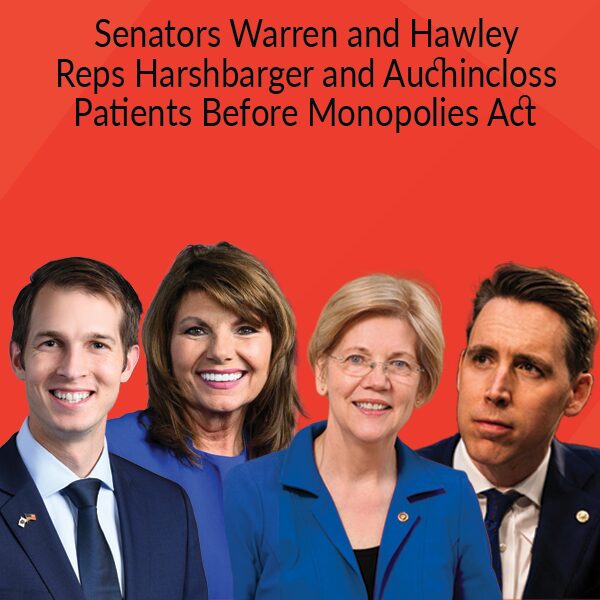
The final session of this Congress may not be as “lame” as anticipated. On December 11, 2024, Senators Elizabeth Warren (D-Mass.) and Josh Hawley (R-Mo.), with the support of Representatives Diana Harshbarger (R-Tenn.) and Jake Auchincloss (D-Mass.) introduced the Patients Before Monopolies Act.

The bill, if passed, would prohibit any company from owning both a Pharmacy Benefit Manager and a Pharmacy. Joint ownership of both creates a “gross conflict of interest” that allows companies to increase their own profits at the expense of patients and independent pharmacies.

Pharmacy Benefit Managers

Pharmacy Benefit Managers (PBMs) act as middlemen between consumers, health insurance companies, drug manufacturers, and pharmacies. They were designed to negotiate reimbursement and dispensing fees in pharmacies, negotiate drug prices from manufacturers, and manage drug costs for insurance companies. The PBM Act claims that PBMs have manipulated the market, increased drug costs, and are driving independent smaller pharmacies out of business. 

In Their Own Words

“PBMs have manipulated the market to enrich themselves — hiking up drug costs, cheating employers, and driving small pharmacies out of business. My new bipartisan bill will untangle these conflicts of interest by reining in these middlemen,” said Senator Warren.

“The PBM industry is rife with self-dealing that raises costs for patients and bankrupts independent pharmacists. No PBM should be allowed to own pharmacies, because it poses an unacceptable conflict of interest when it then sets reimbursement rates for its own versus external pharmacies. Independent pharmacies deserve fair play,” said Representative Auchincloss.

Pharmacy Benefit Managers

“As a life-long pharmacist, I know first-hand how unchecked PBM consolidation and vertical integration have allowed these shadowy middlemen to self-deal and manipulate the system in ways that are driving up drug costs, limiting patient choices, and putting the financial screws to independent community pharmacies,” said Representative Harshbarger.  “I’m a proud conservative Republican, but we have antitrust laws for a reason. That’s why I’m joining my colleagues in introducing the bipartisan Patients Before Monopolies Act, which will protect consumers and taxpayers, and ensure fair competition by breaking-up these anticompetitive, conflict-of-interest arrangements. Federal regulators should never have let this excessive concentration of our healthcare industry happen in the first place, and so it’s up to Congress to get the job done.”

Issues Addressed

The PBM Act aims to address the issues of higher drug costs, fewer independent pharmacies, and larger profits for corporations. The PBM Act would:

    • Disallow the parent company of any PBM or insurer from owning a pharmacy
    • Require any PBM or insurer that also owns a pharmacy to sell the pharmacy business within three years
    • Allow the FTC, DHHS, DOJ Anti-Trust Division, and state attorneys general to issue orders requiring the divestiture of pharmacies by owners of PBMs or insurers
    • Allow the same to sieze revenue made from the pharmacy business from any owner of a PBM or insurer
    • Distribute the funds to communities and consumers who have been overcharged by these pharmacies
    • Mandate the reporting of all divestments of pharmacies to the FTC
    • Allow the FTC to review any and all future acquisitions

PBMs have manipulated the market to enrich themselves — hiking up drug costs, cheating employers, and driving small pharmacies out of business. My new bipartisan bill will untangle these conflicts of interest by reining in these middlemen.

Elizabeth Warren

Senator, D-Mass.

Who is Impacted?

CVS Health, Cigna, and UnitedHealth Group, among others, would be required to sell their pharmacy businesses within three years.

Caremark, owned by CVS, Express Scripts, owned by Cigna, and OptumRX, owned by UnitedHealth Group, are three of the largest PBMs in the country. Together, they control about 80% of all prescription drug claims.

Not surprisingly, the Pharmaceutical Care Management Association, a lobbying group for PBMs, has contested the claims made in the bill and by its supporters. They argue that PBMs offer convenient, affordable access to medications.

Similarly, CVS said that its integrated business model, both a PBM and pharmacy, helps connect people to accessible, affordable care. The pharmaceutical giant claims it has lowered out-of-pocket drug costs more than 25% in the last ten years and that it reimburses independent pharmacies at a higher rate than its own CVS pharmacy locations.

A spokesperson for CVS Caremark said that policies designed to limit their ability to negotiate with drug manufacturers and pharmacies would increase the cost of medicine. He also said these policies would be a “handout” to the pharmaceutical industry.

Supporters

The bipartisan, bicameral Act has support from the American Economic Liberties Project (AELP), National Community Pharmacists Association (NCPA), American Pharmacy Cooperative Inc (APCI), Pharmacists United for Truth and Transparency (PUTT), Patients Rising, and AffirmedRx.

Public statements on behalf of the PBM Act harshly criticize PBMs, private health insurers, and the healthcare system as a whole.

Giant PBMs and insurers owning their own pharmacies has driven independent pharmacies out of business and reduced patient access to quality care. The Patients Before Monopolies Act addresses the root cause of this problem — consolidated market power — by eliminating the inherent conflicts of interest within the big three PBM business model. We are thrilled to see Sen. Warren and Sen. Hawley lead this bipartisan effort to lower drug costs, protect independent retail pharmacies, and improve patient access to care.

Morgan Harper

Director of Policy and Advocacy, American Economic Liberties Project

A particularly egregious result of the vertical integration of PBM-insurers with retail and mail-order pharmacies is that the PBM – which competes with independent pharmacies and others – decides what their rival pharmacy will be reimbursed and which patients will be allowed to use them. There are also countless examples of PBMs paying their pharmacies much higher reimbursement than non-affiliated pharmacies and using patient data to steer patients to their own pharmacies. We’re grateful to Sens. Warren and Hawley and Reps. Harshbarger and Auchincloss for introducing the PBM Act, which will go a long way in eliminating the conflicts of interest that currently exist in this space.

Anne Cassity

Senior VP of Government Affairs, National Community Pharmacists Association

The inherent conflicts of interest between PBMs owning their own retail, mail-order, and specialty pharmacies have resulted in higher drug costs, reduced patient choice and access to care, and unsustainable reimbursements to non-PBM affiliated pharmacies. With retail pharmacies closing at an alarming rate and patients fighting life threatening diseases being steered to PBM owned pharmacies and often overcharged thousands of dollars for medications, Senator Warren’s Patients Before Monopolies Act couldn’t come soon enough. This commonsense legislation strikes at the heart of anti-competitive PBM behavior and roots out conflicts of interest by prohibiting ownership of both a PBM and a pharmacy. American Pharmacy Cooperative, Inc, is grateful to Senator Warren for her work and leadership on this issue and looks forward to fighting for this critically important piece of legislation.

Greg Reybold

VP of Healthcare Policy and General Counsel, American Pharmacy Cooperative, Inc.

While there are a variety of conflicts of interest that can compromise the intended role of PBMs to act as counterweights to inflated drug prices, one of the chief areas of system misalignment arises from PBM ownership of pharmacies. As these large vertically integrated companies serve as both price-setter and price-taker for pharmacy transactions, PBM incentives to reduce drug markups and to manage pharmacy reimbursement and network decisions in an unconflicted manner are significantly undermined. In our work advising government programs and commercial plan sponsors, we stress that minimizing or eliminating these areas of misalignment are foundationally critical in order to achieve greater balance for medicine accessibility and affordability.

Antonio Ciaccia

President, 3 Axis Advisors

For too long vertically integrated PBMs have put profits over patients, driving up costs, limiting access to essential medications and forcing countless independent pharmacies to close their doors. The Patients Before Monopolies Act is a step toward breaking these monopolies, restoring fairness and competition and, most importantly, ensuring patients get the care they need at a price they can afford. At the heart of our mission is the belief that transparency and integrity should be the foundation of health care. I congratulate Senators Warren and Hawley, and Representatives Harshbarger and Auchincloss for putting patients first, and urge Congress to pass this bipartisan bill.

Greg Baker

Pharmacist and CEO, Affirmed Rx, a transparent PBM

This bill is the next step in urgently-needed legislation to eliminate the profiteering and other conflicts of interest that exist when private health insurers and their pharmacy benefit managers are allowed to design and sell health benefit plans while also owning pharmacies, clinics and other point-of-care entitiesm Vertical integration among the largest healthcare insurers has only served to saddle Americans with the priciest possible premiums for impossibly high-deductible plans that provide fewer options and ultimately result in poorer health outcomes. We applaud Senators Warren and Hawley for recognizing the need to dismantle the current system, which has failed consumers and taxpayers at just about every level.

Monique Whitney

Executive Director, Pharmacists United for Truth and Transparency

Across the country, patients feel increasingly disenfranchised by the healthcare system. The culprit: a complex web of powerful health conglomerates including health insurers, Pharmacy Benefit Managers (PBMs), and their affiliated pharmacies. Patients Rising applauds Senators Elizabeth Warren and Josh Hawley, along with Representatives Diana Harshbarger and Jake Auchincloss for putting forward bi-partisan legislation to put patients before monopolies. It is critical we crack down on health conglomerate conflicts of interest and encourage businesses to operate in the interest of patients’ long term health and wellbeing.

MacKay Jimeson

Executive Director, Patients Rising

The New York Times stated their uncertainty over whether this bill would gain any traction. With so much support, both across the aisle, across congress, and from outside entities, it seems likely it will move ahead. However, Congress has run out of time to pass any bill during this term and will have to be reintroduced in January.

The Rowan Report will continue to follow the progress of the PBM Act next year.

# # # 

Kristin Rowan, Editor

Kristin Rowan has been working at Healthcare at Home: The Rowan Report since 2008. She has a master’s degree in business administration and marketing and runs Girard Marketing Group, a multi-faceted boutique marketing firm specializing in event planning, sales, and marketing strategy. She has recently taken on the role of Editor of The Rowan Report and will add her voice to current Home Care topics as well as marketing tips for home care agencies. Connect with Kristin directly kristin@girardmarketinggroup.com or www.girardmarketinggroup.com

©2024 by The Rowan Report, Peoria, AZ. All rights reserved. This article originally appeared in Healthcare at Home: The Rowan Report. One copy may be printed for personal use: further reproduction by permission only. editor@therowanreport.com

Employee vs Independent Contractor

by Kristin Rowan, Editor

Follow the Rules

The very nature of care at home lends itself to different organizational structures. Hourly vs. per visit compensation. Employee vs. independent contractor. Shift work vs. standard schedules. Each decision can have its own advantages and disadvantages.

Two agencies were in the news this week after the Department of Labor determined they had misclassified employees as independent contractors and failed to pay overtime wages. In addition to back wages, these agencies were ordered to pay damages and civil penalties.

The Rowan Report has researched the 2024 Department of Labor Final Rule: Employee or Independent Contractor Classification Under the Fair Labor Standards Act, RIN 1235-AA43. We’ve provided our synopsis below to help you determine the classification of your workers to avoid similar penalties.

Employee vs Independent Contractor

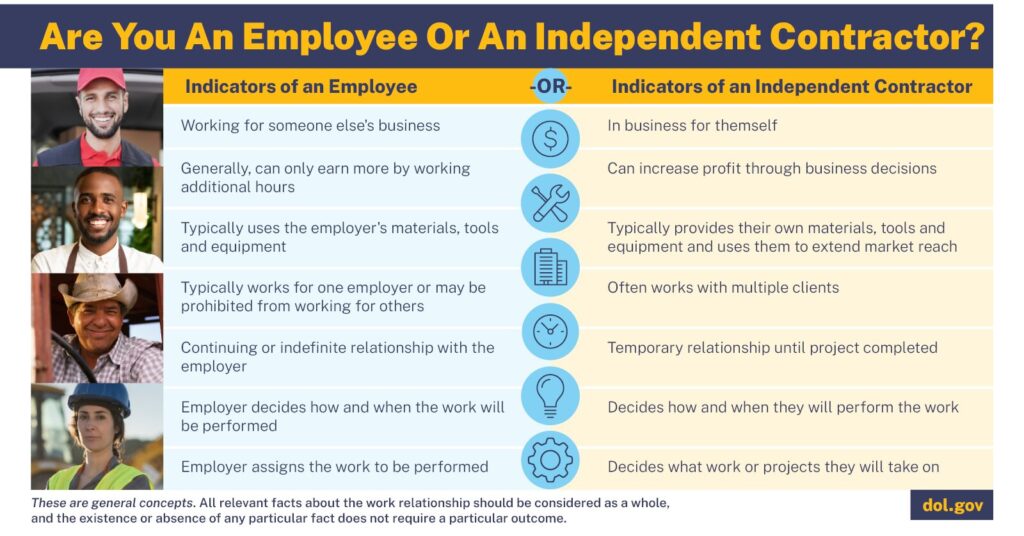
The Fair Labor Standards Act, from the Department of Labor provides information on how to classify workers. Prior to 2021, the DoL used the economic reality test, used by courts to determine status. This test used economic factors including nature and degree of control over work, and the worker’s opportunity for profit or loss. These two factors weighed more heavily than the remaining three: the amount of skill required, how permanent was the relationship between the worker and the employer, and whether the work is part of an integrated unit of production (meaning all work leads to the same end product that cannot be completed without each person’s part.)  

Totality of the Circumstances

Because the courts openly admitted that the final three factors would likely never outweigh the first two, the DoL moved to establish a different rule, using the five factors to determine a “totality of circumstances” without the predetermined weight. It also bent the final factor to include the work being an integral part of the business, not of production. Also included is the discussion of how scheduling, supervision, price setting, and the ability to work for others are considered within the control factor.

This final change is what will impact most care at home agencies. As defined in the Final Rule (795.110(B)(1)), this factor considers whether a worker has control over their own profit or loss, has control over their own schedule, advertises on their own behalf to get more work, and generally engages in managerial tasks such as hiring, purchasing materials, and/or renting space for themselves.

Qualifying as an Employee vs Independent Contractor

In order to qualify as an independent contractor, a worker:

    • Must have control over their own profit and loss.
        • If a worker can choose to accept or deny and job offered through the agency, therefore making more or less money, they may be an IC.
    • Should be engaged for short-term projects with identified end dates.
        • This is vague in relation to care at home. An employer could argue that each home visit is a short-term engagement. However, the worker might say that the opportunity is on-going with no end date.
    • Invests in the building of their business.
        • If a worker uses all their own equipment, is free to take shifts or jobs from other agencies, and promotes their skills in order to attract more work from outside your agency, they are likely an IC.
        • If, however, the worker takes shifts from other agencies and promotes their skills to others because your business has predictable down-times, rather than of the worker’s own choice, they are likely an employee.
    • Should have control over multiple aspects of the job.
        • A common misperception is that if an employee controls their own schedule, they are automatically an IC. Many employees have flexible scheduling, work from home opportunities, and other controls over their schedule. Care at home workers make less money when they choose to change their schedule, indicating economic dependency on the company. Further, many agencies have a minimum hour requirement with disciplinary action or consequences for not meeting that minimum. These factors, regardless of scheduling flexibility, mean the worker is not an IC.
        • Nurses who have control over their own schedules do not control, for example, the rate they are paid for their services. When the employer controls prices for services, workers are likely employees.
        • How a job is performed should be a considerable factor. If the worker is free to determine how they actually do the work once they take a job, then they are likely an IC. This may be possible for non-medical supportive care at home, but is less likely for home health and hospice settings that are highly regulated.
    • Should not be supervised either in person or by technology, using a device or other electronic means. Ongoing and continuous supervision is not required to classify a worker as an employee, only that the employer maintains the right to supervise. Supervision in this case is not limited to watching the worker during a shift. Supervision also includes training and standards established during hiring, remote monitoring of a job using an electronic visit verification system, and/or the oversight of completed work in the case of a QA audit of documentation.
        • For home health and hospice agencies, this almost assuredly makes all nurses employees. However, exceptions may exist in the case of specialties such as wound care, physical or occupational therapy, ostomy care, and respiratory care.
        • For non-medical care at home, this factor should be weighed based on your agency’s protocols.
    • Must be able to work for others.
        • An employer who limits a worker’s ability to work for other agencies and/or put such constraints on a person’s schedule as to make it impossible to work for others has employees, not ICs.
        • Non-compete clauses and fines for taking clients outside of the agency point to employee status.
        • Working part-time and having the ability to work for another company, also part-time, does not necessarily make someone an IC.
    • Should not be an integral part of the business.
        • If the business cannot function without the service performed by the worker, the worker is an employee.
        • Similarly, if the work itself depends on the existence of the business, the worker is an employee.
        • Generally speaking, if a the primary business is to make a product or provide a service, then any worker involved in making that product or providing that service is integral to the business.
          • This final clarification from the DoL may require all care at home workers to be classified as employees.
Employee vs Independent Contractor

Implications for the Industry

If most care at home workers should be classified as employees, not independent contractors, you should expect to make significant changes if you currently have your workers classified as ICs.

  • Higher expenses in the form of taxes and benefits
  • Negotiations for paid vacation, personal, and sick leave
  • Potential auditing of prior business structure and classification
  • Complete overhaul of back-office hiring processes and software needs for onboarding employees instead of independent contractors

Employee vs Independent Contractor Corrective Action

  1. If your workers are misclassified as independent contractors, take steps to correct this effective January 1st so your new tax year is correct.
  2. Plan ahead to incorporate required taxes coming from your budget.
  3. Determine whether you may have workers who are owed back wages, overtime pay, or other benefits and take steps to rectify the situation before you end up on the Department of Labor radar.
Employee vs Independent Contractor

Final Thoughts

I’ve heard a lot of conversations from home health and non-medical supportive care agency owners about the policies they have in place for their caregivers. The new laws around non-compete clauses as well as this updated Independent Contractor test leads me to this conclusion:

Most workers in care at home are employees, not independent contractors. If you wish to classify your workers as independent contractors, do your research, reorganize your business, and make sure you are following the totality-of-the-circumstances test. 

If organizational change is not possible, look at transitioning your workers to employees before the start of the year and hire a consultant to help you with the changes you need to make.

# # #

Kristin Rowan, Editor

Kristin Rowan has been working at Healthcare at Home: The Rowan Report since 2008. She has a master’s degree in business administration and marketing and runs Girard Marketing Group, a multi-faceted boutique marketing firm specializing in event planning, sales, and marketing strategy. She has recently taken on the role of Editor of The Rowan Report and will add her voice to current Home Care topics as well as marketing tips for home care agencies. Connect with Kristin directly kristin@girardmarketinggroup.com or www.girardmarketinggroup.com

©2024 by The Rowan Report, Peoria, AZ. All rights reserved. This article originally appeared in Healthcare at Home: The Rowan Report. One copy may be printed for personal use: further reproduction by permission only. editor@therowanreport.com