Fraud, Waste, and Abuse

Clinical

by Kristin Rowan, Editor

Fraud, Waste, and Abuse

DOJ, HHS False Claims Act

Fraud, Waste, and Abuse has become something of a mantra within the Department of Health and Human Services (HHS). Secretary Kennedy has committed to combatting fraud, waste, and abuse within the federal healthcare system. The Department of Justice (DOJ) and HHS have a long history of working together to combat healthcare frauding under the False Claims Act (FCA).

Working Group

In furtherance of their goal to combat healthcare fraud, HHS and DOJ have formed the DOJ-HHS False Claims Act Working Group. The Working Group will include leadership from the HHS Office of General Counsel, CMS Center for Program Integrity, the Office of Counsel for the OIG, and the DOJ Civil Division.

Working Group Priorities to Combat Fraud, Waste, and Abuse

1. HHS will refer potential False Claims Act violations to the DOJ that are in line with the Working Group priority enforcement areas:

  • Medicare Advantage
  • Drug, device, or biologics pricing
    • arrangements for discounts, rebates, service fees, and formulary placement and pricing reporting
  • Barriers to patient access to care
    • violations of network adequacy requirements
  • Kickbacks related to drugs, medical decives, DME, and other products paid for by federal healthcare programs
  • Materially defective medical devices that impact patient safety
  • Manipulation of Electronic Health Records systems to drive inappropriate utilization of Medicare covered products and services

2. The Working Group will maximize collaboration to expedite investigations and identify new leads. They will leverage HHS resources using data mining and assessment of findings.

3. The Working Group will discuss implementing payment suspension according to the CMS Medicare Program Code of Federal Regulations¹

4. The Working Group will discuss whether DOJ will dismiss a whistleblower case under the U.S. Code for Civil actions for False Claims, pursuant to the DOJ Manual for Civil Fraud Litigation²

Report Fraud, Waste, and Abuse

The Working Group encourages whistleblowers to report violations of the False Claims Act within the priority areas. Tips and complaints from all sources about potential fraud, waste, abuse, and mismanagement can be reported to HHS at 800-HHS-TIPS (800-447-8477). Similarly, the Working Group encourages healthcare companies to identify and report such violations.

Fraud, Waste, and Abuse

²DOJ Dismissal of a Civil Qui Tam Action. When evaluating a recommendation to decline intervention in a qui tam action, attorneys should also consider whether the government’s interests are served, in addition, by seeking dismissal pursuant to 31 U.S.C. § 3730(c)(2)(A).

¹Suspension of payment. The withholding of payment by a Medicare contractor from a provider or supplier of an approved Medicare payment amount before a determination of the amount of the overpayment exists, or until the resolution of an investigation of a credible allegation of fraud.

# # #

Kristin Rowan, Editor

Kristin Rowan has been working at The Rowan Report since 2008. She is the owner and Editor-in-chief of The Rowan Report, the industry’s most trusted source for care at home news, and speaker on Artificial Intelligence and Lone Worker Safety and state and national conferences.

She also runs Girard Marketing Group, a multi-faceted boutique marketing firm specializing in content creation, social media management, and event marketing.  Connect with Kristin directly kristin@girardmarketinggroup.com or www.girardmarketinggroup.com

©2025 by The Rowan Report, Peoria, AZ. All rights reserved. This article originally appeared in The Rowan Report. One copy may be printed for personal use: further reproduction by permission only. editor@therowanreport.com


 

Planned Parenthood Cut Halted

CMS

by Kristin Rowan, Editor

Part of Big Beautiful Bill Halted

Medicaid Cuts to Planned Parenthood Blocked

The tax and immigration bill, dubbed “One Big Beautiful Bill,” signed by President Trump on July 4th, included removing all Medicaid payments to any nonprofit organization that provides medical services, received more than $800,000 in federal funding in 2023, and also provides abortions.

On Monday, July 7th, the first business day after the bill was signed into law, U.S. District Judge Indira Talwani granted a temporary halt to Medicaid funding cuts to Planned Parenthood.

Planned Parenthood Claims Unfavorable Treatment

The portion of the bill in question does not specifically name Planned Parenthood. The bill cuts Medicaid funding to groups “primarily engaged in family planning services, reproductive health, and related medical care” that also provide abortions and abortion education. According to the lawsuit, however, because of the federal funding threshold of $800,000, Planned Parentood locations comprise almost all of the impact. 

[It’s a] “naked attempt to leverage the government’s spending power to attack and penalize Planned Parenthood and impermissibly single it out for unfavorable treatment.”

Planned Parenthood

Immediate Decision

The decision came before the federal government responded. Judge Talwani ruled within hours and provided no explanation other than a brief note stating that Planned Parenthood showed good cause for immediate intervention.

Decision Unlikely to Stand

  • The decision came within hours of the lawsuit filing
  • Congress is generally lawfully allowed to make determinations on spending
  • This was an egregious judicial usurpation of legislative power
  • This makes her court look like a fast food drive-through
  • The House could initiate impeachment proceedings against the judge for this decision

These are just a few of the statements made in opposition to the injunction, mostly claiming that the judge did not have the authority to make the decision. Talwani set a hearing for July 21 to hear from both Planned Parenthood and the agencies named in the lawsuit, HHS, and CMS.

Precedent

A previous ruling from the Supreme Court in June of this year provides that any state can remove any provider from the list of “Qualified Providers” using its own Medicaid criteria. The court further ruled that, although patients have the right to choose their own provider, patients do not have the right to sue based on who those qualified providers are.

This lawsuit is the first against the tax and immigration bill, but it is most likely not the last. We will continue to report on this and other lawsuits as they arise.

# # #

Kristin Rowan, Editor

Kristin Rowan has been working at The Rowan Report since 2008. She is the owner and Editor-in-chief of The Rowan Report, the industry’s most trusted source for care at home news, and speaker on Artificial Intelligence and Lone Worker Safety and state and national conferences.

She also runs Girard Marketing Group, a multi-faceted boutique marketing firm specializing in content creation, social media management, and event marketing.  Connect with Kristin directly kristin@girardmarketinggroup.com or www.girardmarketinggroup.com

©2025 by The Rowan Report, Peoria, AZ. All rights reserved. This article originally appeared in The Rowan Report. One copy may be printed for personal use: further reproduction by permission only. editor@therowanreport.com

 

Bill Cuts Medicaid Directly, Medicare Indirectly

Admin

by Tim Rowan, Editor Emeritus

Bill Cuts Medicaid Directly, Medicare Indirectly

This is what online publishers call a “living article.” With the House and Senate passing different bills, progress toward the President’s desk changes by the hour. What follows is everything we knew to be true on Tuesday evening, July 1. However, this bill will impact Home Health, Home Care, and Hospice. To keep readers informed, we will continuously update this article as need through the weekend. We will not send our usual emails to subscribers with every update, so we urge you to return here from time to time for updates to this breaking news item. We will add the date and time to each update.

July 3: Bill Passes, The Alliance Responds

Nearly as soon as House Republicans began their celebration, Alliance President Dr. Steve Landers issued a response from the National Alliance for Care at Home. We reprinted the complete statement from The Alliance here.

“As these Medicaid provisions become law, the Alliance will work tirelessly to monitor their implementation and advocate for the protection of Medicaid enrollees, families, and providers nationwide. We will continue to champion the delivery of HCBS – proven services that are preferred by beneficiaries and save the system money.” 

Dr. Steve Landers

CEO, The National Alliance for Care at Home

Final House Vote: July 3

In spite of a couple of Republican holdouts, H.R. 1 passed the House on a 2018-2014 vote on Thursday afternoon. All of the Senate’s changes were approved, meaning the bill does not have to go back to Senate for re-approval. Now begin final assessments of the impact on Medicaid and SNAP. Changes made in the Senate, approved by the House, increased the size of spending cuts for those two programs. As analysts inside and away from our home care community weigh in, we will post them here.

As of the end of the day, July 1

It appears as though the stalemate, if there is to be one, will center around Medicaid and SNAP cuts. There are some House Republicans who are upset that the Senate increased their H.R. 1 proposed cuts to nearly $1 Trillion. Contrarily, other House Republicans threaten to vote no because cuts are not deep enough. They point to the predicted $3.3 trillion addition to the national debt over ten years. As of the evening of July 1, the House Rules Committee continues the debate. We will update this page as often as possible for you.

As of the morning of July 1

Early Tuesday morning, the Senate passed its version of Donald Trump’s bill. Among its changes are increased cuts to Medicaid. The Congressional Budget Office calculated that the House version would have resulted in $700 billion in spending reductions. It would also have removed health insurance from 10.9 million people over 10 years. The version the Senate sent back to the House Tuesday, according to the CBO, increases those cuts to $930 billion and 11.8 million people.

Senate passes bill

June 29th

The Senate reconciliation bill would cut gross federal Medicaid and Children’s Health Insurance Program (CHIP) spending by $1.02 trillion over the next ten years.  These cuts are $156.1 billion (18%) larger than even the House-passed bill’s draconian cuts of $863.4 billion over ten years.

  • These larger gross Medicaid and CHIP cuts are driven by changes to the House-passed bill that would:

    • further restrict state use of provider taxes to finance Medicaid
    • eliminate eligibility for many lawfully present immigrants
    • cut federal funding for payments to hospitals furnishing emergency Medicaid services
    • further reduce certain supplemental payments to hospitals and other providers (known as state-directed payments)
  • The spending effect of these additional cuts is modestly offset by increased Medicaid and CHIP spending from provisions not in the House-passed bill

    • a rural health transformation program
    • increased federal Medicaid funding for Alaska and Hawaii (Already ruled out by the parliamentarian)
    • expanded waiver authority for home- and community-based services
  • Overall, the Senate Republican reconciliation bill’s Medicaid, CHIP, Affordable Care Act marketplace, and Medicare provisions would increase the number of uninsured by 11.8 million in 2034, relative to current law

    • In comparison, the House-passed bill would increase the number of uninsured by 10.9 million in 2034.
    • More detailed CBO estimates of the specific Medicaid health coverage effects under the Senate Republican reconciliation bill are not yet available
    • CBO estimates the House-passed bill’s Medicaid and CHIP provisions would cut Medicaid enrollment by 10.5 million by 2034 and by themselves, increase the number of uninsured by 7.8 million by 2034

How the Senate Pushed the Bill Through

Majority leader Thune could only afford to lose three Republican votes. With GOP Senators Thom Tillis (N.C.), Rand Paul (Ky.) and Susan Collins (Maine) voting against the measure, along with every Democrat, centrist Lisa Murkowski of Alaska became the sole target of Republican pressure. The tactic used to get the vote close enough for VP Vance to cast the deciding vote is disturbing. 

First, leadership wrote an amendment that would have exempted Alaska from Medicaid and SNAP cuts. The parliamentarian killed that idea, saying it violated the Senate’s “Byrd Rule.” Next, marathon negotiations brought Murkowski and Parliamentarian MacDonough together to appease both. The compromise became exceptions to Medicaid and SNAP cuts that had less of an appearance of a bribe. They devised a formula that delayed cuts to states with a history of high error rates in calculating who is entitled to benefits. The CBO said that would cover as many as 10 states. The parliamentarian decided this did not violate Senate rules because it did not specifically benefit one state. They also increased the federal subsidy for rural hospitals that will be harmed by the bill from $25 billion to $50 billion.

In agreeing to vote ‘yes,’ Murkowski essentially declared that she knows the cuts will be bad for most states but will be good for her state. With the Alaska Senator’s vote secured, the final count was 50-50, leaving the final decision up to the vice president.

# # #

Tim Rowan The Rowan Report

Tim Rowan is a 30-year home care technology consultant who co-founded and served as Editor and principal writer of this publication for 25 years. He continues to occasionally contribute news and analysis articles under The Rowan Report’s new ownership. He also continues to work part-time as a Home Care recruiting and retention consultant. More information: RowanResources.com
Tim@RowanResources.com

©2025 by The Rowan Report, Peoria, AZ. All rights reserved. This article originally appeared in The Rowan Report. One copy may be printed for personal use: further reproduction by permission only. editor@therowanreport.com

Monthly Stipends Not Allowed

Admin

by Elizabeth E. Hogue, Esq.

Medical Directors:

Monthly Stipends Not Allowed

Monthly stipends to Medical Directors for referrals of patients could cost you. Earlier this month, a hospice provider in Georgia settled claims of violation of the federal Anti-Kickback statute (AKS) and the federal False Claims Act (FCA) by agreeing to pay $9.2 million. The allegations include payments of kickbacks, including monthly stipends, to Medical Directors in exchange for referrals of patients. These practices resulted in three whistleblower lawsuits against the hospice by former employees. They will receive $1.5 million.

Marketing, not Monthly Stipends

In the meanwhile, marketing strategies utilized by post-acute providers are generating fierce competition for referrals, especially Medicare beneficiaries who need home health services! As a result, providers are appropriately committing more and more resources to marketing activities. Providers are, for example, entering into agreements with referring physicians to provide consulting services to their organizations. These legitimate relationships may easily be misunderstood by enforcers.

Consulting Physicians

First, it is important to acknowledge that providers of services in patients’ residences need consulting physicians’ services. Examples of services that are genuinely needed, from a business perspective, may include the following:

  • Consultation regarding clinically complex cases
  • Assistance with the development and maintenance of specialty programs
  • Communication with physicians who provide inappropriate orders for care, do not return signed orders on time, or are unresponsive to staff members who are seeking modifications to treatment plans

As providers know, however, these types of arrangements raise important legal issues related to potential violations of the AKS, the federal so-called Stark laws, the FCA, and state statutes that are probably similar to these federal statutes. 

Monthly Stipend Physician Consultation

Avoid Trouble with Specific Contracts

Providers are likely to avoid violations if they meet the requirements of the personal services “safe harbor” under the AKS and the contractual exception under the Stark laws. The safe harbor and exception generally require providers to pay consulting physicians who also make referrals to them based upon written agreements that require payments at fair market value for services actually rendered without regard to the volume or value of referrals received.

Practically, Providers Should:

  • Pay physicians who also make referrals
    • on an hourly basis
    • not a set monthly amount of stipends
  • Develop standardized agreements and use them consistently with all referring physicians who receive consulting fees
    • Providers cannot afford to use a variety of different agreements that may not meet applicable requirements
    • Staff must understand that they can use only the standard approved agreement and cannot modify it without advance written approval from a designated, knowledgeable individual
  • Document services rendered and the amount of time spent on these activities.
    • Documentation is crucial
    • Providers should develop and implement policies and procedures that permit payments to physicians only after appropriate documentation to support payments has been received and reviewed

  • Avoid agreements for consulting services with physicians whose services they do not actually use
    • even if they make no payments to them
    • terminate these agreements if they do not need the services covered by them or it may appear that the only purpose for the agreements is to induce referrals as opposed to a documented need for services
  • Avoid having numerous consulting physicians/medical directors
    • Although there are usually no limits on the number of consulting physicians/medical directors that providers can have at any given time, a very large number is likely to invite scrutiny by regulators and should be avoided
    • How many is too many? The number should certainly bear some relationship to the size of the provider organization and the geographic area served.
    • Beyond this general guideline, common sense must prevail. The bottom line is: does the provider have legitimate work for every consulting physician?
  • Avoid asking consulting physicians to perform commercially reasonable services that are related to the volume and value of referrals made
    • Providers cannot, for example, ask referring physicians to assist with quality assurance activities that
      • Entail their review of charts of patients whom they referred to the provider
      • Ensure the more referrals made, the more money consulting physicians make

Final Thoughts

Providers are more likely to avoid enforcement activities when they follow these practical guidelines. Violations hurt providers and referral sources alike. In view of the possible adverse consequences, expenditures of financial and other resources are certainly justified to get it right.

# # #

Elizabeth E. Hogue, Esq.

Elizabeth Hogue is an attorney in private practice with extensive experience in health care. She represents clients across the U.S., including professional associations, managed care providers, hospitals, long-term care facilities, home health agencies, durable medical equipment companies, and hospices.

©2025 Elizabeth E. Hogue, Esq. All rights reserved.

No portion of this material may be reproduced in any form without the advance written permission of the author.

BREAKING NEWS: Intrepid USA Files Bankruptcy

Breaking News

by Kristin Rowan, Editor

*Editor’s note: This article has been updated to remove inaccurate information from the Intrepid USA website.

Intrepid USA Files Bankruptcy

Intrepid USA, once among the largest providers of home health and hospice services, files bankruptcy in Texas. With more than $90 million in revenue in 2023, Intrepid operated more than 60 home health and hospice locations in 17 states. The Chapter 7 filing leaves no road to recovery. Chapter 7 allows the company to liquidate assets and distribute the proceeds. According to the Texas Southern Bankruptcy Court, Intrepid USA filed a voluntary petition for Chapter 7 bankruptcy on May 29, 2025.

Troubled History Plagues Company

Intrepid USA has a troubled past that it seems may have caught up with them. The U.S. Department of Justice (DoJ) alleges that between 2016 and 2021, Intrepid home healthcare agencies engaged in fraud. In violation of the False Claims Act, Intrepid filed Medicare claims for patients who did not qualify for home health, services that were not medically necessary, services provided by untrained staff, and services that were never provided. In August, 2024, Intrepid agreed to pay $3.85 million to resolve the allegations. The allegations were brought to the DoJ by two former employees of Intrepid under whistleblower provisions.

This is not the first DoJ lawsuit against Intrepid USA. In 2006, when Intrepid owned 150 agencies across the country, the company entered into an $8 million settlement agreement to resolve similar allegations. The DoJ alleged that from 1997 to 2004 Intrepid violated the False Claims Act by billing Medicare and TRICARE for services not provided by a qualified person, failing to maintain complete documentation for its claims, and other violations of Medicare regulations. Additionally, the DoJ alleged that Intrepid, in 2002 and 2003, fraudulently billed Medicaid for home care services provided to patients who were hospitalized at the time of the supposed care.

Private Equity Backing

Sometime around Q3 of 2006, Intrepid USA received financial backing from Patriarch Partners, led by Lynn Tilton. In August of 2020, Patriarch filed a notice of removal with the Supreme Court of New York. In 2021, Intrepid announced it was gearing up for rapid growth fueled by new private equity investors. Then CEO John Kunysz indicated the infusion of capital would fund opportunities for growth through acquisition.

Divest, not Acquire

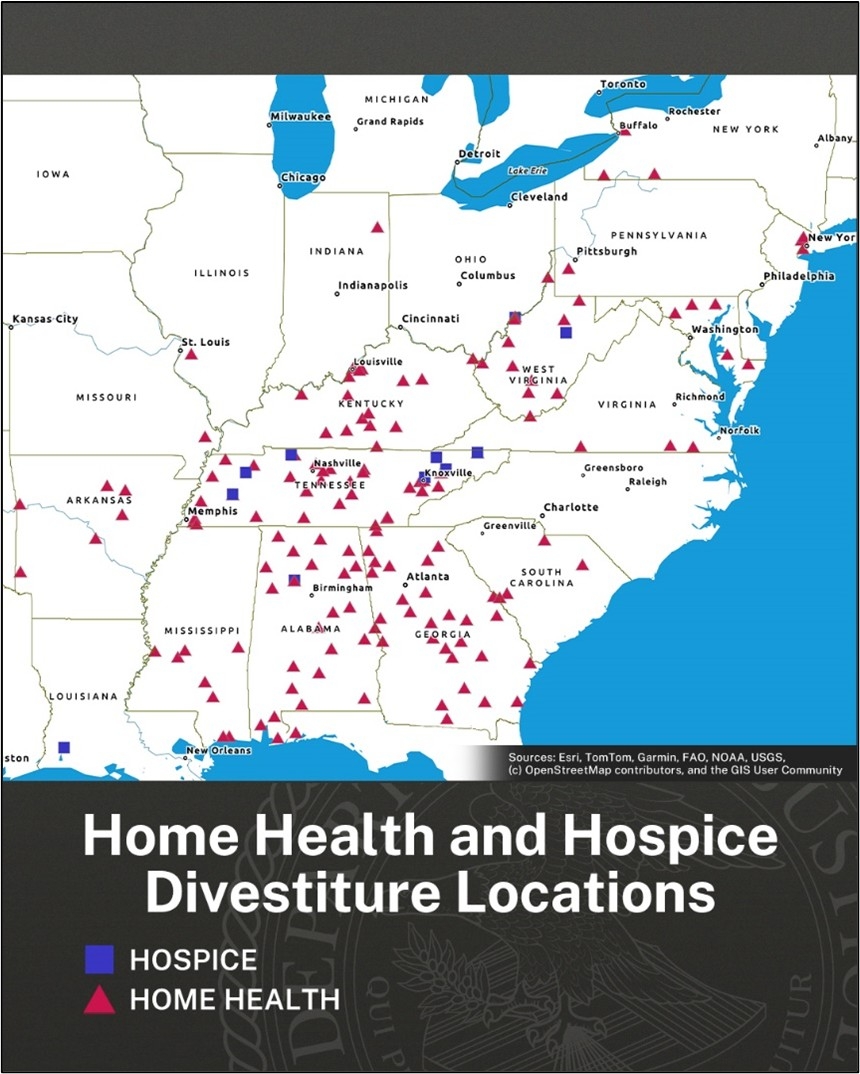
Despite the influx of capital and the plan to grow through acquisition, by 2024, Intrepid was selling its assets. In August of 2024, Humana acquired 30 Intrepid branch locations and rebranded them under the CenterWell Home Health brand. The sale was part of Patriarch Partners’s Zohar Funds bankruptcy case. In November of 2024, New Day Healthcare acquired Intrepid’s hospice locations in Missouri and Texas.

$0 Revenue; 0 Value

The bankruptcy filing shows that Intrepid USA had $90 million in revenue in 2023, $50 million in revenue in 2024, and $0 in revenue so far in 2025. Chapter 7 bankruptcy is usually supervised by the court, allowing the filing company to sell assets without having to use the revenue generated by the sale to pay off debts. Intrepid listed $1 to $10 million in assets and $88 million in debts at the time of the filing. 

Intrepid USA files bankruptcy
Intrepid USA Files Chapter 7 Bankruptcy

Who will take the loss?

The Intrepid USA website still lists 55 active home health and hospice locations in 11 states. However, 30 of those locations are now listed on the CenterWell website and at least 5 other locations were part of the sale to New Day Healthcare. It is unknown if Intrepid has any locations still in operation. The company did not respond to our request for a statement.

The website also has a list of partners and investors. The Rowan Report reached out to the partners with whom we are familiar for more information. We will provide updates from them once we reach them.

Final Thoughts

The recent divestiture of home health and hospice locations to New Day and CenterWell will hopefully minimize the number of patients who are losing their home health or hospice provider. Millions of dollars in future fraudulent claims will remain in the Medicare, TRICARE, and Medicaid coffers. Conversely, the partners and investors in Intrepid USA may face some loss. We will provide any important updates and comments from the impacted companies as available.

# # #

Kristin Rowan, Editor

Kristin Rowan has been working at The Rowan Report since 2008. She is the owner and Editor-in-chief of The Rowan Report, the industry’s most trusted source for care at home news, and speaker on Artificial Intelligence and Lone Worker Safety and state and national conferences.

She also runs Girard Marketing Group, a multi-faceted boutique marketing firm specializing in content creation, social media management, and event marketing.  Connect with Kristin directly kristin@girardmarketinggroup.com or www.girardmarketinggroup.com

©2025 by The Rowan Report, Peoria, AZ. All rights reserved. This article originally appeared in The Rowan Report. One copy may be printed for personal use: further reproduction by permission only. editor@therowanreport.com