Planned Parenthood Cut Halted

by Kristin Rowan, Editor

Part of Big Beautiful Bill Halted

Medicaid Cuts to Planned Parenthood Blocked

The tax and immigration bill, dubbed “One Big Beautiful Bill,” signed by President Trump on July 4th, included removing all Medicaid payments to any nonprofit organization that provides medical services, received more than $800,000 in federal funding in 2023, and also provides abortions.

On Monday, July 7th, the first business day after the bill was signed into law, U.S. District Judge Indira Talwani granted a temporary halt to Medicaid funding cuts to Planned Parenthood.

Planned Parenthood Claims Unfavorable Treatment

The portion of the bill in question does not specifically name Planned Parenthood. The bill cuts Medicaid funding to groups “primarily engaged in family planning services, reproductive health, and related medical care” that also provide abortions and abortion education. According to the lawsuit, however, because of the federal funding threshold of $800,000, Planned Parentood locations comprise almost all of the impact. 

[It’s a] “naked attempt to leverage the government’s spending power to attack and penalize Planned Parenthood and impermissibly single it out for unfavorable treatment.”

Planned Parenthood

Immediate Decision

The decision came before the federal government responded. Judge Talwani ruled within hours and provided no explanation other than a brief note stating that Planned Parenthood showed good cause for immediate intervention.

Decision Unlikely to Stand

  • The decision came within hours of the lawsuit filing
  • Congress is generally lawfully allowed to make determinations on spending
  • This was an egregious judicial usurpation of legislative power
  • This makes her court look like a fast food drive-through
  • The House could initiate impeachment proceedings against the judge for this decision

These are just a few of the statements made in opposition to the injunction, mostly claiming that the judge did not have the authority to make the decision. Talwani set a hearing for July 21 to hear from both Planned Parenthood and the agencies named in the lawsuit, HHS, and CMS.

Precedent

A previous ruling from the Supreme Court in June of this year provides that any state can remove any provider from the list of “Qualified Providers” using its own Medicaid criteria. The court further ruled that, although patients have the right to choose their own provider, patients do not have the right to sue based on who those qualified providers are.

This lawsuit is the first against the tax and immigration bill, but it is most likely not the last. We will continue to report on this and other lawsuits as they arise.

# # #

Kristin Rowan, Editor

Kristin Rowan has been working at The Rowan Report since 2008. She is the owner and Editor-in-chief of The Rowan Report, the industry’s most trusted source for care at home news, and speaker on Artificial Intelligence and Lone Worker Safety and state and national conferences.

She also runs Girard Marketing Group, a multi-faceted boutique marketing firm specializing in content creation, social media management, and event marketing.  Connect with Kristin directly kristin@girardmarketinggroup.com or www.girardmarketinggroup.com

©2025 by The Rowan Report, Peoria, AZ. All rights reserved. This article originally appeared in The Rowan Report. One copy may be printed for personal use: further reproduction by permission only. editor@therowanreport.com

 

Alliance Statement on House Passage of Reconciliation Bill

FOR IMMEDIATE RELEASE

Contact:                                                       Elyssa Katz
571-281-0220
communications@allianceforcareathome.org

Medicaid Provisions Threaten Home and Community-Based Services for Millions of Vulnerable Americans

Alexandria, VA and Washington, DC, July 3, 2025. The National Alliance for Care at Home (the Alliance) issued the following statement today in response to the House’s passage of the “One Big Beautiful Bill Act,” also known as the Reconciliation bill, which now heads to President Trump’s desk for his signature.

“The Alliance is deeply troubled by the Medicaid provisions within the One Big Beautiful Bill Act, which has passed both chambers of Congress and now awaits President Trump’s signature,” said Alliance CEO Dr. Steve Landers. “These provisions—including work requirements, reduced provider taxes, and new cost-sharing mandates—prioritize short-sighted budget savings over the health and wellbeing of our most vulnerable citizens who rely on home and community-based services (HCBS).”

Dr. Steve Landers

CEO, The National Alliance for Care at Home

The Alliance Advocates for Care at Home

The home care community advocated throughout the legislative process for Congress to mitigate these harmful Medicaid provisions. The legislation will reduce state provider tax rates, cutting funding that states rely on to support HCBS programs. New work requirements and mandatory cost-sharing will also create administrative burdens for both providers and beneficiaries, likely resulting in coverage losses that extend beyond those directly targeted by these policies. Further, new limits on home equity for long-term care recipients will force older adults to sell their homes, leading to unnecessary institutionalization.

Continued Advocacy

“As these Medicaid provisions become law, the Alliance will work tirelessly to monitor their implementation and advocate for the protection of Medicaid enrollees, families, and providers nationwide,” said Dr. Landers. “We will continue to champion the delivery of HCBS – proven services that are preferred by beneficiaries and save the system money.”

Careful Consideration Needed

Landers CEO The Alliance Reconciliation Bill

The Alliance calls on federal and state officials to implement these new requirements with careful consideration of their impact on vulnerable populations and to work collaboratively with providers to minimize disruption to essential services.

# # #

About the National Alliance for Care at Home

The National Alliance for Care at Home (the Alliance) is the leading authority in transforming care in the home. As an inclusive thought leader, advocate, educator, and convener, we serve as the unifying voice for providers and recipients of home care, home health, hospice, palliative care, and Medicaid home and community-based services throughout all stages of life. Learn more at www.AllianceForCareAtHome.org.

© 2025 The National Alliance for Care at Home. This press release originally appeared on The Alliance website and is reprinted here with permission. For additional information or to request permission to print, please see the contact information above.

Follow our continuous updates on the bill passage, what it means for Medicare and Medicaid, and how the provisions of the bill will be rolled out in our accompanying article here.

Bill Cuts Medicaid Directly, Medicare Indirectly

by Tim Rowan, Editor Emeritus

Bill Cuts Medicaid Directly, Medicare Indirectly

This is what online publishers call a “living article.” With the House and Senate passing different bills, progress toward the President’s desk changes by the hour. What follows is everything we knew to be true on Tuesday evening, July 1. However, this bill will impact Home Health, Home Care, and Hospice. To keep readers informed, we will continuously update this article as need through the weekend. We will not send our usual emails to subscribers with every update, so we urge you to return here from time to time for updates to this breaking news item. We will add the date and time to each update.

July 3: Bill Passes, The Alliance Responds

Nearly as soon as House Republicans began their celebration, Alliance President Dr. Steve Landers issued a response from the National Alliance for Care at Home. We reprinted the complete statement from The Alliance here.

“As these Medicaid provisions become law, the Alliance will work tirelessly to monitor their implementation and advocate for the protection of Medicaid enrollees, families, and providers nationwide. We will continue to champion the delivery of HCBS – proven services that are preferred by beneficiaries and save the system money.” 

Dr. Steve Landers

CEO, The National Alliance for Care at Home

Final House Vote: July 3

In spite of a couple of Republican holdouts, H.R. 1 passed the House on a 2018-2014 vote on Thursday afternoon. All of the Senate’s changes were approved, meaning the bill does not have to go back to Senate for re-approval. Now begin final assessments of the impact on Medicaid and SNAP. Changes made in the Senate, approved by the House, increased the size of spending cuts for those two programs. As analysts inside and away from our home care community weigh in, we will post them here.

As of the end of the day, July 1

It appears as though the stalemate, if there is to be one, will center around Medicaid and SNAP cuts. There are some House Republicans who are upset that the Senate increased their H.R. 1 proposed cuts to nearly $1 Trillion. Contrarily, other House Republicans threaten to vote no because cuts are not deep enough. They point to the predicted $3.3 trillion addition to the national debt over ten years. As of the evening of July 1, the House Rules Committee continues the debate. We will update this page as often as possible for you.

As of the morning of July 1

Early Tuesday morning, the Senate passed its version of Donald Trump’s bill. Among its changes are increased cuts to Medicaid. The Congressional Budget Office calculated that the House version would have resulted in $700 billion in spending reductions. It would also have removed health insurance from 10.9 million people over 10 years. The version the Senate sent back to the House Tuesday, according to the CBO, increases those cuts to $930 billion and 11.8 million people.

Senate passes bill

June 29th

The Senate reconciliation bill would cut gross federal Medicaid and Children’s Health Insurance Program (CHIP) spending by $1.02 trillion over the next ten years.  These cuts are $156.1 billion (18%) larger than even the House-passed bill’s draconian cuts of $863.4 billion over ten years.

  • These larger gross Medicaid and CHIP cuts are driven by changes to the House-passed bill that would:

    • further restrict state use of provider taxes to finance Medicaid
    • eliminate eligibility for many lawfully present immigrants
    • cut federal funding for payments to hospitals furnishing emergency Medicaid services
    • further reduce certain supplemental payments to hospitals and other providers (known as state-directed payments)
  • The spending effect of these additional cuts is modestly offset by increased Medicaid and CHIP spending from provisions not in the House-passed bill

    • a rural health transformation program
    • increased federal Medicaid funding for Alaska and Hawaii (Already ruled out by the parliamentarian)
    • expanded waiver authority for home- and community-based services
  • Overall, the Senate Republican reconciliation bill’s Medicaid, CHIP, Affordable Care Act marketplace, and Medicare provisions would increase the number of uninsured by 11.8 million in 2034, relative to current law

    • In comparison, the House-passed bill would increase the number of uninsured by 10.9 million in 2034.
    • More detailed CBO estimates of the specific Medicaid health coverage effects under the Senate Republican reconciliation bill are not yet available
    • CBO estimates the House-passed bill’s Medicaid and CHIP provisions would cut Medicaid enrollment by 10.5 million by 2034 and by themselves, increase the number of uninsured by 7.8 million by 2034

How the Senate Pushed the Bill Through

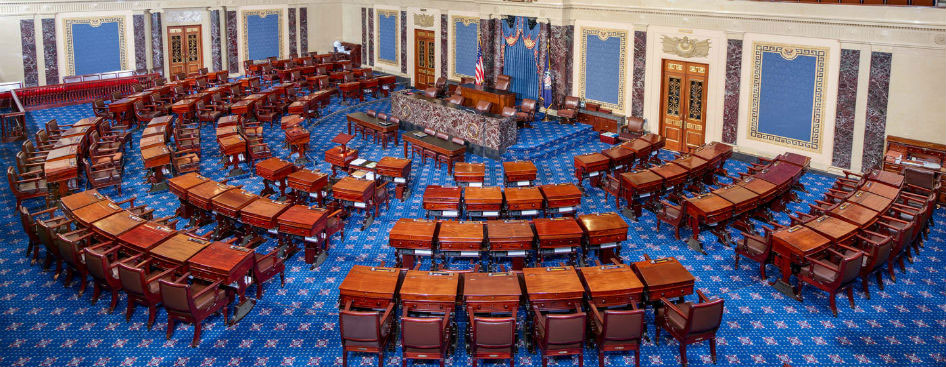
Majority leader Thune could only afford to lose three Republican votes. With GOP Senators Thom Tillis (N.C.), Rand Paul (Ky.) and Susan Collins (Maine) voting against the measure, along with every Democrat, centrist Lisa Murkowski of Alaska became the sole target of Republican pressure. The tactic used to get the vote close enough for VP Vance to cast the deciding vote is disturbing. 

First, leadership wrote an amendment that would have exempted Alaska from Medicaid and SNAP cuts. The parliamentarian killed that idea, saying it violated the Senate’s “Byrd Rule.” Next, marathon negotiations brought Murkowski and Parliamentarian MacDonough together to appease both. The compromise became exceptions to Medicaid and SNAP cuts that had less of an appearance of a bribe. They devised a formula that delayed cuts to states with a history of high error rates in calculating who is entitled to benefits. The CBO said that would cover as many as 10 states. The parliamentarian decided this did not violate Senate rules because it did not specifically benefit one state. They also increased the federal subsidy for rural hospitals that will be harmed by the bill from $25 billion to $50 billion.

In agreeing to vote ‘yes,’ Murkowski essentially declared that she knows the cuts will be bad for most states but will be good for her state. With the Alaska Senator’s vote secured, the final count was 50-50, leaving the final decision up to the vice president.

# # #

Tim Rowan The Rowan Report

Tim Rowan is a 30-year home care technology consultant who co-founded and served as Editor and principal writer of this publication for 25 years. He continues to occasionally contribute news and analysis articles under The Rowan Report’s new ownership. He also continues to work part-time as a Home Care recruiting and retention consultant. More information: RowanResources.com
Tim@RowanResources.com

©2025 by The Rowan Report, Peoria, AZ. All rights reserved. This article originally appeared in The Rowan Report. One copy may be printed for personal use: further reproduction by permission only. editor@therowanreport.com

Medicaid Cuts Update: Meet the Senate Parliamentarian

by Tim Rowan, Editor Emeritus

Medicaid Cuts Update

Senate Parliamentarian Elizabeth MacDonough

The ongoing negotiations in Congress will impact Medicaid and Medicare. There has been little movement from the Senate since we reported on this last week, but here’s what we know now:

When H.R. 1 was passed by the House of Representatives and forwarded to the Senate, it was immediately subjected to scrutiny by the Senate Parliamentarian, Elizabeth MacDonough. The job of the parliamentarian is to ensure that every proposed bill complies with Senate rules. The story of Ms. MacDonough taking her scissors to the “One Big Beautiful Bill” requires more than a little unpacking, but it is a good story.

Problem with Medicaid Cuts: "One Bill"

It appears that the idea to put all of the President’s legislative agenda into a single bill is acceptable in the House, but the Senate has different rules. The Senate forces itself to live under the filibuster system. When the filibuster is evoked, a bill must receive 60 votes to pass, but there is an exception. “Budget Reconciliation” is a rule that allows expedited passage of certain specific budget-related bills with only a simple majority, 51 votes.

The problem of the week is that H.R. 1 includes dozens of provisions that have nothing to do with spending. The Senate parliamentarian took her scissors to parts of the bill that:

  • change environmental regulations to pave the way to sell public lands
  • reduce the ability of federal judges to block Presidential orders1
  • dissolve the Consumer Financial Protection Bureau
  • change the rules about who can be excluded from receiving Medicare benefits, even after contributing through FICA taxes
Medicaid Cuts

Cutting Medicaid Cuts

Parliamentarian MacDonough has also applied her scissors to the portion of the bill that would reduce Medicaid spending by nearly $800 billion over ten years. Writing for The Hill, Alexander Bolton reported on June 26:

“The Senate’s referee rejected a plan to cap states’ use of health care provider taxes to collect more federal Medicaid funding, a proposal that would have generated hundreds of billions of dollars in savings… The decision could force Senate Majority Leader John Thune (R-S.D.) to reconsider his plan to bring the Senate bill up for a vote this week.”

Alexander Bolton

Journalist, The Hill

The provision, which would have forced states to take over substantially more Medicaid costs, came under strong bipartisan opposition. Sen. Josh Hawley (R-Mo.), Susan Collins (R-Maine), Lisa Murkowski (R-Alaska) and Jerry Moran (R-Kan.) warned deep cuts to federal Medicaid spending could cause dozens of rural hospitals in their states to close. Senate Democrats, led by Jeff Merkley (D-Ore.), the ranking Democratic on the Senate Budget Committee, praised MacDonough’s exclusions.

The Hill reported, “Democrats are fighting back against Republicans’ plans to gut Medicaid, dismantle the Affordable Care Act, and kick kids, veterans, seniors, and folks with disabilities off of their health insurance – all to fund tax breaks for billionaires,” Merkley said in a statement.

The President pushed back against the parliamentarian’s rulings in a June 24 social media post:

“To my friends in the Senate, lock yourself in a room if you must, don’t go home, and GET THE DEAL DONE THIS WEEK. Work with the House so they can pick it up, and pass it, IMMEDIATELY. NO ONE GOES ON VACATION UNTIL IT’S DONE.”

Donald Trump

President of the United States

Sorting out the Complex Immigration Question

If the above seems complicated, it becomes rudimentary compared to the background that sets the stage for the parliamentarian’s next cut. Except for emergencies, most often crisis pregnancies, persons in the country illegally cannot, and do not, receive Medicaid-reimbursed healthcare. According to a study by Kaiser Family Foundation, however, fourteen states plus the District of Columbia use state taxpayer money, not federal funds, to cover children regardless of immigration status, Seven of those fourteen, and D.C., also cover some adults with state funds regardless of immigration status.

In the bill was a provision to punish these fourteen states and D.C. by reducing their federal Medicaid payments from 90 percent to 80 percent. Though there is no accusation in the bill that these states are guilty of improper use of federal funds, the states will lose some of those funds because of the way they have chosen to use their own funds. Parliamentarian MacDonough said that is not a budget line item but an attempt by the federal government to force states to change their own healthcare policies.

Medicare Restrictions also Scrapped

Almost as a postscript, a House restriction on Medicare eligibility also fell victim to the Senate Parliamentarian’s scissors. Non-citizens who work in W-2 wage jobs pay FICA taxes, many of them for 30 years or more. When these workers turn 65, they are eligible for Medicare benefits due to their contributions, regardless of their status. Though H.R. 1, the House version, would eliminate that eligibility, Ms. MacDonough said, “Nope, this is not a budget reconciliation issue.”

Although the White House is pressuring Senators to vote quickly — so that a joint House/Senate negotiating committee can hammer out differences and send their compromise version to the President’s desk by July 4 — that self-imposed deadline is up in the air at the moment. Both President Trump and House Speaker Johnson are adamant that every spending and every non-budgetary policy change they want must be enacted in one big bill. In spite of Ms. MacDonough’s cuts, the Senate it not exactly handcuffed either. Because it makes its own rules, Senators could simply decide, with a 51-49 party-line vote, to ignore the parliamentarian.

The power, as well as the future health of Medicaid, falls into the hands of the four dissenting Republican Senators. Home Health and Home Care folks in Missouri, Maine, Alaska and Kansas take note.

____________________________________

1  From White House correspondent Bart Jansen, writing for USA Today:

  • Currently, judges have discretion to set bonds on plaintiffs who file civil suits. Legal experts say judges often waive bonds in lawsuits against the government because the disputes are typically over policy rather than money.
  • A provision in the House-passed version of the bill would remove that discretion from federal judges and require litigants to post a bond when the issue under consideration is whether to block a Trump policy.
  • So far, judges have blocked Trump policies in 180 cases. All of them would have to be reviewed for bonds if the Senate approves the House provision and Trump signs it into law.
  • The law would effectively kill most of the limitations on Trump policies because bond amounts are determined by the dollar amount of the contested policy. In federal cases involving massive policy changes, those bonds can amount to hundreds of billions.

# # #

Tim Rowan The Rowan Report

Tim Rowan is a 30-year home care technology consultant who co-founded and served as Editor and principal writer of this publication for 25 years. He continues to occasionally contribute news and analysis articles under The Rowan Report’s new ownership. He also continues to work part-time as a Home Care recruiting and retention consultant. More information: RowanResources.com
Tim@RowanResources.com

©2025 by The Rowan Report, Peoria, AZ. All rights reserved. This article originally appeared in The Rowan Report. One copy may be printed for personal use: further reproduction by permission only. editor@therowanreport.com

Medicaid Cuts Still Looming

by Tim Rowan, Editor Emeritus

Medicaid Cuts Looming

Terminal Prognosis

Let me tell you about my brother. In his early 30’s, Tom was diagnosed with a rare disorder, one of the 25 versions of Ataxia. A disorder that is sometimes genetic, sometimes of unknown cause. It damages the part of the brain stem that controls balance, eye-hand coordination, and speech. He was supposed to be confined to a wheelchair by age 45 and not make it to 60.

Medicaid to the Rescue

Tom will celebrate his 71st birthday next week. Some years back, an experimental drug appeared that happened to be effective with his variation of Ataxia. That medication, administered intravenously in his home, is ridiculously expensive. If not for Medicare and Medicaid, those early prognoses would have come true. With the treatments, the disorder does still progress, though much more slowly. During my visits to his home — yes, he still manages on his own for now — he and I talk about the Assisted Living or Skilled Nursing Facility that looms in his future. Always with his head low and a sigh, he says he knows that day will come.

One in 71 Million

The 20 percent of American citizens who qualify for Medicaid are as nervous as Tom is about a bill making its way through Congress. As of May 22, 2025, H.R. 1 passed the House of Representatives by one vote. Today, it is still under debate in the Senate, where several amendments are being considered.

Medicaid Pays More than Medicare

In a February report, the Kaiser Family Foundation explained it this way:

Medicaid road sign "cuts ahead"

Four in ten adults incorrectly believe that Medicare is the primary source of coverage for low-income people. For those who need nursing or home care, Medicaid is the primary payer. Medicaid covered two-thirds of all home care spending in the United States in 2022. With House Republicans considering $2.3 trillion in Medicaid cuts over 10 years, the availability of home care could be affected in future years. Home care cannot afford the loss of almost one-third of the entire Medicaid budget.

Medicaid Cuts Impact

The February report indicates that H.R 1 could fundamentally change how Medicaid financing works. This would consequently impact enrollees’ access to care. The authors assert that “cuts of this magnitude would put states at financial risk, forcing them to raise new revenues or reduce Medicaid spending by eliminating coverage for some people, covering fewer services, and/or cutting rates paid to home care workers and other providers.”

“Such difficult choices would have implications for home care because over half of Medicaid spending finances care for people ages 65 and older and those with disabilities, the enrollees most likely to use home care and related services.”

Mohamed, A.; Burns, A.; O'Malley Watts, M.

Authors, What is Medicaid Home Care (HCBS)?

Medicaid Cuts Proposals

The Center on Budget and Policy Priorities has been listening to Senate debates and reading proposed amendments. In a news release this week, CBPP offered a dismal assessment.

“The health provisions in the Senate Republican leaders’ plan are, alarmingly, even harsher and more damaging than the health provisions in [H.R. 1]. Under both plans, tens of millions of people would face substantially higher health care costs and millions would lose access to life-saving treatments, routine care, and medications they need.”

Medicaid Cuts

Higher Costs, Less Access

Home Care and the Work Requirement

There is much talk in Congress and in social media about able-bodied Medicaid beneficiaries who sit at home and play video games all day. Not only does this indicate a confusion between healthcare and welfare (you can’t eat or sleep in Medicaid), but it also tends to exaggerate the scope of this fraud/waste/abuse target. 

As KFF points out, most Medicaid adults under age 65 are already working but are paid low enough that they still qualify. Many who are not working (12%) serve as caregivers for a family members. If they are removed from the home to go to a job, someone else would have to take over caregiving duties, probably a home care agency. Thus, there would be a net loss to the system. 

Net Loss

The Congressional Budget Office found when examining the House version that work requirements would decrease federal spending by reducing the number of uninsured. However, in the same report, the CBO notes that there would be no increase in employment numbers.

On top of the uncertain benefit of the work requirement, the bill as it stands today would greatly increase reporting requirements. In place of “once qualified, always qualified,” Medicaid eligibility will require regular reporting to prove employment and annual re-qualification paperwork. The new red tape burdens will be especially difficult on seasonal workers or those who frequently change jobs.

Medicaid Cuts and Rural Hospitals

No one is quite sure what the impact on home care will be when Medicaid cuts force rural hospitals to close, as the CBO predicts. Longer journeys to receive hospital care and doctor visits may push more beneficiaries to home care while home care will be struggling to find caregiving staff.

Before the bill becomes law, rural hospitals are already in trouble. The American Hospital Association says that 48 percent of rural hospitals operated at a loss in 2023 and 92 closed their doors over the past 10 years. There are 16.1 million Medicaid beneficiaries living in rural communities, including 65 percent of nursing home residents. Can home care cover the losses if a portion of the estimated $800 billion in Medicaid cuts over 10 years hit home care just as hard?  

Medicaid Support in Congress

There are home care champions on the Republican side of the House and Senate. Some of them have already expressed their doubts about whether cutting home care would decrease or increase overall spending. In the “strange bedfellow” category, conservative icon Josh Hawley of Missouri swore he would “tank any bill that cuts Medicaid benefits.”

Senate Republicans can afford to lose only three votes to get this bill passed and sent back to the House. Today would be the time for all of them to hear from the care at home industry. Call your Senator. All phone numbers start with 202-224-

# # #

Tim Rowan The Rowan Report

Tim Rowan is a 30-year home care technology consultant who co-founded and served as Editor and principal writer of this publication for 25 years. He continues to occasionally contribute news and analysis articles under The Rowan Report’s new ownership. He also continues to work part-time as a Home Care recruiting and retention consultant. More information: RowanResources.com
Tim@RowanResources.com

©2025 by The Rowan Report, Peoria, AZ. All rights reserved. This article originally appeared in The Rowan Report. One copy may be printed for personal use: further reproduction by permission only. editor@therowanreport.com
BREAKING NEWS: House Passes Bill

by Kristin Rowan, Editor

House Passes Bill

House passes bill in early-morning vote. The House of Representatives, predictably split along party lines, passed the “Big, Beautiful Bill” in a 215-214 narrow win. All but three Republican representatives cheered at its passing. Republicans who previously stated they would not vote for a higher deficit caved and voted along party lines. The House expects an uphill battling getting the bill passed through the Senate.

House Objections

All House Democrats and two House Republicans voted against the bill. One Republican voted “present.” Democrats were vocal in their opposition.

“Children will get hurt. Women will get hurt. Older Americans who rely on Medicaid for nursing home care and for home care will get hurt. People with disabilities who rely on Medicaid to survive will get hurt. Hospitals in your districts will close. Nursing homes will shut down. And people will die. That’s not hype. That’s not hyperbole. That’s not a hypothetical.”

Hakeem Jeffries

Representative, D-NY

Medicaid Changes

Work Requirement

One controversial change in Medicaid is the community engagement requirement for eligibility. Eligibility is at least one of the following:

  • Working at least 80 hours in a month
  • Completing at least 80 hours of community service
  • Participating in a work program for at least 80 hours
  • Enrolling at least part-time in an educational program
  • Any combination of the above totaling at least 80 hours
  • Having a monthly income greater than minimum wage for 80 hours per month

Exceptions

This rule applies to all eligible individuals at least 19 years old and is under 65 years old, is not pregnant, does not have children under age 7, and is not enrolled in or eligible for Social Security benefits. Mandatory exceptions to the community engagement requirement are:

  • Indian, Urban Indian, California Indian, or eligible as an Indian for the Indian Health Service
  • The parent, guardian, or caretaker of a disabled individual or dependent child
  • A veteran with a total disability rate
  • Medically frail or has special medical needs including those who:
    • are blind or disabled
    • have a substance use disorder
    • have a disabling mental disorder
    • live with a physical, intellectual, or developmental disorder that impairs 1 or more activities of daily living
    • live with a serious and complex medical condition
    • have any other medical condition approved, but not listed here
  • In compliance with requirements imposed by the State
  • The member of a household receiving SNAP benefits
  • Participating in a drug or alcohol rehabilitation program
  • An inmate of a public institution
  • Meet other criteria deemed appropriate

Senate Poised for a Fight

After the vote, the Senate made it clear that it will not send the bill to the President without “major changes.” The problem, however, is that different members of the Senate are calling for different changes. Some want even more spending reductions, others want to keep more of Biden’s green-energy incentives, and still others want to soften the Medicaid cuts. Here is some of the feedback from Senators:

Ron Johnson, Senator (R-Wis.) wants to take the bill “line by line” to find $6.5 trillion in cuts over 10 years.

Rand Paul, Senator (R-Ky.) supports the tax agenda, but not the debt ceiling hike.

Lisa Murkowski, Senator (R-Alaska) is expecting significant changes and wants to address the Medicaid cuts, call them “challenging.”

Patty Murray, Senator (D-WA) called the bill a “scam” and urged Republican senators to vote against it.

“House Republicans don’t want you to know they just passed a bill that makes health care MORE expensive and kicks MILLIONS off Medicaid, all to pass tax cuts for billionaires & giant corporations. We need to make sure America knows. And we need to kill this bill in the Senate.”

Patty Murray

Senator, D-WA

House Passes Bill to Senate

Because of the way the House presented the bill, designed to prevent a filibuster, there are constraints on what can be included.

First, everything included in the bill has to be about the budget. Challenges to parts of the bill and whether they are directly related to the budget go to the Senate parlimentarian. A non-partisan advisor, the parlimentarian advises the Senate if a provision is challenged. Elizabeth MacDonough is the current Senate parlimentarian and has served under Senate Majority Leaders from both parties.

Second, the Senate gets to make its own changes to the bill. If the House does not accept those changes, the debt ceiling will not go up. An impasse means the government defaults on its debt. Congress has to raise the debt ceiling by the summer to avoid default. This could put pressure on the House to accept whatever changes the Senate makes.

More to Come

This is an ongoing story and The Rowan Report will continue to provide updates as they become available. Read our accompanying article this week on organizations and courts attempting to stop Trump’s sweeping changes.

# # #

Kristin Rowan, Editor

Kristin Rowan has been working at The Rowan Report since 2008. She is the owner and Editor-in-chief of The Rowan Report, the industry’s most trusted source for care at home news, and speaker on Artificial Intelligence and Lone Worker Safety and state and national conferences.

She also runs Girard Marketing Group, a multi-faceted boutique marketing firm specializing in content creation, social media management, and event marketing.  Connect with Kristin directly kristin@girardmarketinggroup.com or www.girardmarketinggroup.com

©2025 by The Rowan Report, Peoria, AZ. All rights reserved. This article originally appeared in The Rowan Report. One copy may be printed for personal use: further reproduction by permission only. editor@therowanreport.com

 

Pushback on Trump Initiatives

by Kristin Rowan, Editor

Pushback on Trump Initiatives From All Sides

Pushback on Trump initiatives, including the steep cuts to Medicare, Medicaid, Social Security, and VA benefits erupted this week. Coalitions, associations, and members of Congress seek to stop the cuts before the new bill is passed. The Republican-backed bill, under direction from President Trump, called the “Big, Beautiful Bill” would cut federal spending by billions of dollars over ten years. Pushback on Trump’s executive orders is also making headway, with temporary and preliminary injunctions.

Protect Our Healthcare Coalition

Protect Our Healthcare Coalition is a group of consumer and non-profit organizations in Rhode Island. This week, they joined with Medicaid members and Senators Reed and Whitehouse to speak out against the Medicaid cuts in the bill. The coalition also released a report on the impact of Medicaid services in the state.

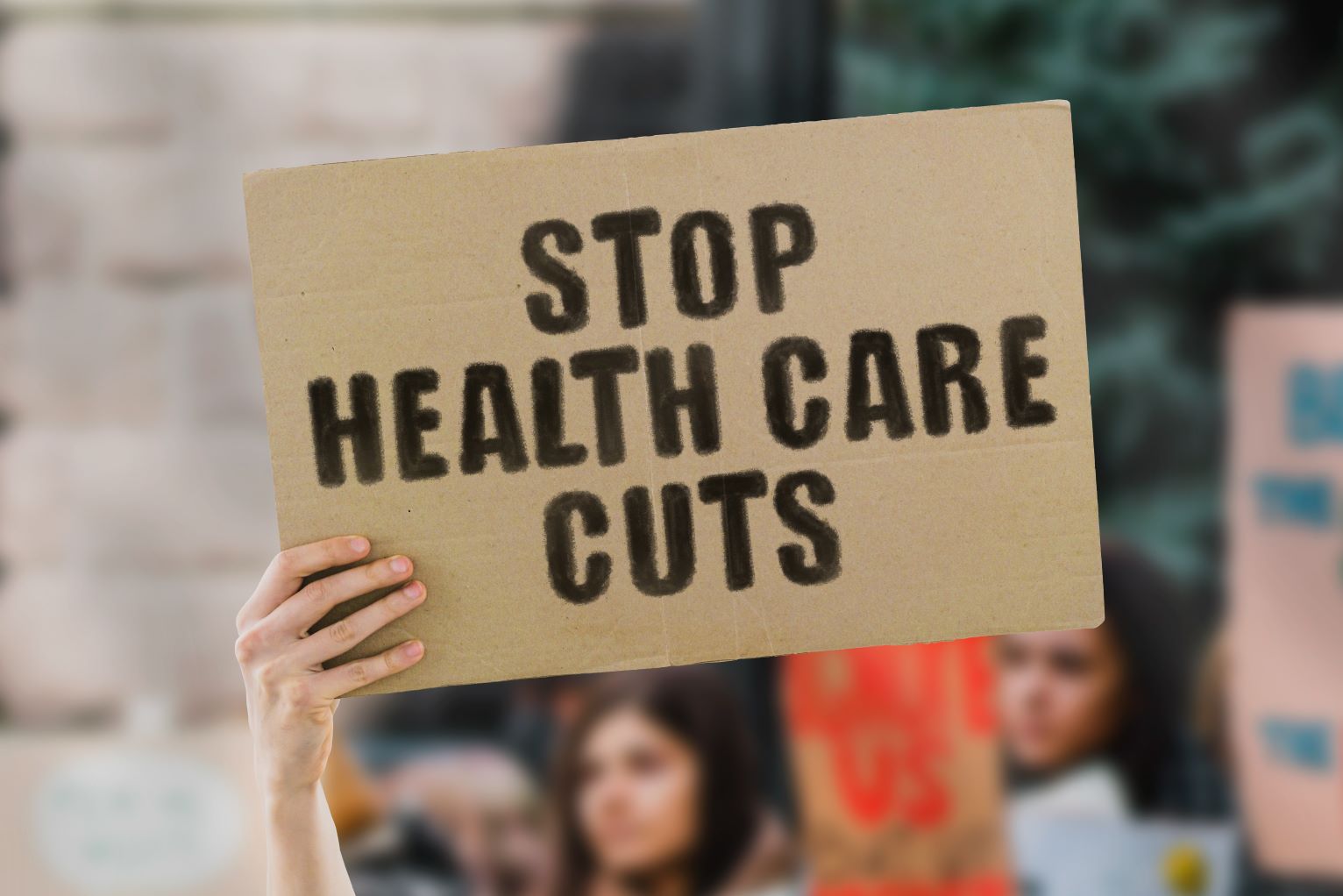
“Republicans…want to whack Medicaid so fewer people have coverage and costs go up. These cuts will do real harm, pushing seniors out of nursing homes, increasing hospital closures, and denying families access to preventative care. If you think the emergency room is crowded now, just wait until Trump’s Medicaid cuts happen.”

Jack Reed

Senator, (D) Rhode Island

Protecting Retirement and Health Benefits

Congresswoman Mikie Sherrill (NJ-11) introduced the Protecting Retirement and Health Benefits for Working Families Act. The bill is in response to the recent federal program and job cuts. The legislation requires that before any cuts are made to jobs or programs that the administration can prove those cuts won’t harm to benefits and those who rely on them. It also requires a study within one year of any mass layoffs or closures to ensure no harm was done.

Federal Judge Blocks...

DoE Layoffs

More than 1,300 employees of the Department of Education received notice of termination in March from then-Secretary of Education Linda McMahon. The layoffs reduced the staff by nearly half. McMahon initially said they were part of the plan to reorganize and streamline the department for efficiency and accountability. Trump later revealed the layoffs to be the first step in dismantling the Department of Education altogether. District Judge Myong Joun, a Biden appointee, said, “The record abundantly reveals that defendants’ true intention is to effectively dismantle the department without an authorizing statute.” Judge Joun issued an injunction blocking the mass layoff.

Sweeping Agency Changes

In February, the Trump administration issued an executive order, followed by a number of memos, instructing multiple federal agencies to cut staff. The executive order called for the immediate dismissal of temporary and reemployed annuitant staff members. Specifically, it called out those performing functions not mandated by statute or other law, not designated as essential, or is not suited to federal service due to failure to comply with federal employment requirements. The order also reduced hiring ratios to 1:4, permitting agencies not under a hiring freeze to hire one person for every four that leave.

U.S. District Judge Susan Illston, in San Francisco, as part of a lawsuit filed by labor unions, nonprofits, and local governments, issued a temporary block on the overhaul. The lawsuit alleges that Trump needs authorization from Congress to restructure the federal government. Judge Illston says the office of the president can seek changes to agencies, but only through Congress. Illston also issued a temporary restraining order barring agencies from any further implementation of the executive order. This includes the final dismissal of employees who have received layoff notices that have not yet been executed. The temporary restraining order expires May 23, 2025. Additionally, Illston ordered the administration to submit restructuring plans to the court.

Revoking Student Status

The administration attempted end the legal status of international students. This would effectively nullify their right to stay in the United States. Some individual students challenged the action successfully. On May 22, 2025, a federal judge in California blocked the action. He prohibited the administration from arresting or detaining foreign-born students on the basis of their immigration status. The administration insists the immigration status was only revoked for students who had criminal charges.

Pushback on Trump Initiatives is Ongoing

Along with the passing of the “Big, Beautiful Bill,” these issues are ongoing and The Rowan Report will provide updates as they become available.

# # #

Kristin Rowan, Editor

Kristin Rowan has been working at The Rowan Report since 2008. She is the owner and Editor-in-chief of The Rowan Report, the industry’s most trusted source for care at home news, and speaker on Artificial Intelligence and Lone Worker Safety and state and national conferences.

She also runs Girard Marketing Group, a multi-faceted boutique marketing firm specializing in content creation, social media management, and event marketing.  Connect with Kristin directly kristin@girardmarketinggroup.com or www.girardmarketinggroup.com

©2025 by The Rowan Report, Peoria, AZ. All rights reserved. This article originally appeared in The Rowan Report. One copy may be printed for personal use: further reproduction by permission only. editor@therowanreport.com