AI Adoption Risk in Home Health and Hospice

by Bill Dombi and Jason Bring, Arnall Golden Gregory LLP

AI Adoption in Home Health and Hospice

Accelerating Regulatory Risk

Law firm Arnall Golden Gregory LLP, Bill A. Dombi, Senior Counsel and Jason E. Bring, Partner, recently published an article on navigating the AI frontier. The article proposes legal guardrails for Home Health and Hospice providers. As AI adoption becomes more prevalent, so too does the risk of regulatory errors in nondiscrimination, HIPAA, and CMS reimbursement, among others.

by Bill Dombi and Jason Bring – Arnall Golden Gregory, LLP

Key Takeaways

AI adoption in home health and hospice...

Is accelerating regulatory risk with Section 1557 nondiscrimination rules, HIPAA obligations, and CMS reimbursement scrutiny creating new exposure around bias, PHI handling, ambient listening, AI-generated documentation, and improper reliance on predictive models

Common AI failure points

Unauthorized tools, biased algorithms, ambient-recording missteps, hallucinated documentation, and eligibility-prediction “coding bias,” now trigger audits, denials, False Claims Act exposure, breach allegations, and malpractice risk, especially where human oversight is weak or documentation is inconsistent.

Providers must strengthen AI governance and transparency

Including enterprise-grade vendor controls, business associate agreements, patient disclosure and consent protocols, model-bias testing, workforce training, documentation review, and a comprehensive AI Acceptable Use Policy backed by ongoing monitoring and interdisciplinary oversight.

Read the full article here

# # #

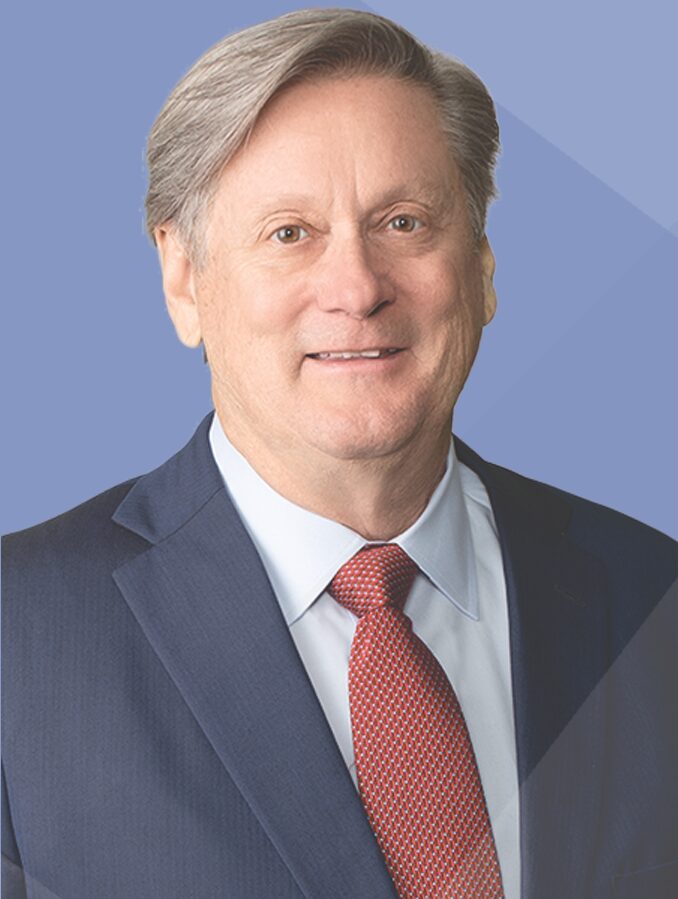
AI Adoption Risk Dombi
AI adoption risk Bring

AGG Healthcare and Post-Acute & Long-Term Care attorneys, Jason Bring and Bill Dombi, advise home health agencies, hospices, and technology vendors nationwide on AI governance, compliance, and reimbursement strategy. For questions about these issues or in general, please contact Jason and Bill.

Appeals Court Filing

by Kristin Rowan, Editor

Appeals Court Filing

Hospice ALJ

A hospice claim may fall under review either before or after the claim has been paid. A hospice agency with a denied claim must file appeals until the claim is approved or the appeals are exhausted. First, they file a written request to reconsider. Then, they file an appeal to a Qualified Independent Contractor (QIC) who employs medical professionals to assess the case. Next, they file an appeal to an Administrative Law Judge (ALJ).

The ALJ is meant to review the documentation to determine whether it satisfies Medicare requirements. That’s all. There are two sets of criteria: the Medicare requirements and the patient record. If they match, the claim is paid. However, a recent ALJ decision and subsequent challenge suggests that the ALJ ignored expert testimony and decided independently that the patient did not qualify for hospice care.

Request to File

The hospice agency in this case filed suit against the ALJ, arguing that physician expertise should be shown deference in these cases. The National Alliance for Care at Home (the Alliance), joined by the American Academy of Hospice and Palliative Medicine (AAHPM), represented by William A. Dombi of Arnall Golden Gregory (AGG), has requested the right to file an amicus brief. An amicus brief provides extra information in a court case from an individual or group that is not part of the lawsuit, but has a vested interest in the outcome.

The Dispute

The Alliance puts at the heart of the case several issues, including:

  • Predicting death is inherently difficult
  • Physicians are the experts and their opinion should carry more weight
  • Oversight from non-qualified third parties add confusion, increase costs, and limit care

The Argument

The wording in multiple parts of the hospice benefit recognizes the expertise and importance of the physician. It is the physician who determines terminal illness. Physicians must have a face-to-face for continued eligibility. And it is the physician’s clinical judgment makes these determinations based on a patient’s individual circumstances, not an arbitrary set of standards.

If an ALJ, or any non-medical person, can overrule the treating physician’s assessment of a patient, they are effectively usurping the role of the doctor in providing a treatment plan. Medical care is subjective, which is why CMS has repeatedly considered and rejected defined criteria that would overrule a physician.

Broader Implications

The brief argues that medical professionals are better able to make care determinations. Further, the brief includes the complexity of health care prognosis, particularly in terminal illnesses. Previous court decisions have noted that “clinical judgments must be tethered to a patient’s valid medical records….” which already eliminates the need for this oversight. The Alliance stated a high probability that the decision in this case will carry substantial weight and influence both in the Sixth Circuit and in courts nationwide.

In fact, the implications may be farther reaching than that. Payors in and out of hospice deny claims deemed “unnecessary” regularly. Claims denials range from about 19% in the ACA Marketplace to as much as 49% from private payers. Even though about 80% of appeals are later accepted, only about 1% of denied claims are appealed.

Not only could this case help more patients get the hospice care they need, it could also lay the groundwork to require insurance companies to rely more heavily on the treating physician’s recommendation. We could see lower denials from prior authorization requests, unconventional treatment plans, VA benefits, and more. 

Final Thoughts

The Rowan Report supports the Alliance’s efforts in this case and wholeheartedly agrees that a physician knows better the care his patient needs than a judge ever could. We are hopeful that Bill Dombi and his team at AGG will be successful in this case and that hospice providers can get back to the  business of patient care. Read the statement from the Alliance here.

# # #

Kristin Rowan, Editor

Kristin Rowan has been working at The Rowan Report since 2008. She is the owner and Editor-in-chief of The Rowan Report, the industry’s most trusted source for care at home news, and speaker on Artificial Intelligence and Lone Worker Safety and state and national conferences.

She also runs Girard Marketing Group, a multi-faceted boutique marketing firm specializing in content creation, social media management, and event marketing.  Connect with Kristin directly kristin@girardmarketinggroup.com or www.girardmarketinggroup.com

©2025 by The Rowan Report, Peoria, AZ. All rights reserved. This article originally appeared in The Rowan Report. One copy may be printed for personal use: further reproduction by permission only. editor@therowanreport.com


Bill Dombi to Continue the Care at Home Fight in D.C.

by Kristin Rowan, Editor

Bill Dombi Key Supporter of Care at Home

The end of 2024 and the official merger of NAHC and NHPCO also brought to a close the extensive service to the care at home industry by former NAHC President Bill Dombi. Dombi served as vice president for law from 1987 to 2017. He was named interim presidnt in 2017 and president in 2018, where he served until 2024.

Bill has been instrumental in the advancement of care at home policies at the federal level, a champion for advocacy for care at home at local, state, and national conferences and organizations, and spearheaded lawsuits and challenges to CMS rulings for year. His retirement, though well-earned, was a great loss to the industry.

Back in Action

On February 4, 2025, Arnall Golden Gregory law firm, of Atlanta and Washington D.C. an Am Law 200 law firm with a client-service model of “business sensibility” announced the additional of Bill Dombi to the firm as senior counsel. With more than 40 years of experience with litigation and policy in the care at home industry, Bill will continue his fight to advance care at home in D.C.

“It’s not a stretch to say that Bill is the face of the home healthcare space and the standard-bearer for advocating on its behalf, whether in state or federal court or through his deep-rooted experience and relationships within Congress and various federal agencies. In addition to tackling major policy issues, Bill has fiercely defended providers and patients in litigation across the country. His broad perspective and exceptional legal acumen will be invaluable to our already outstanding Healthcare practice, particularly in the areas of home health, hospice, and post-acute and long-term care litigation, benefitting both our teams and the clients we serve.”

Jason E. Bring

Healthcare Litigation co-chair, Arnall Golden Gregory LLP

BIll Dombi Returns

From AGG

Bill has been actively involved with significant litigation matters affecting home health policy since 1976. Notably, he served as lead counsel in the lawsuit that resulted in the expansion of Medicare home health coverage in 1980, and he was pivotal in the creation of the Medicare hospice benefit in 1983, the institution of the Medicare Prospective Payment System (PPS) for home health in 2000, and national healthcare reform legislation in 2010. In 2017, Bill was selected as NAHC’s president and served through 2024, ultimately concluding his tenure as president emeritus and counsel of the National Alliance for Care at Home, the combined organization of NAHC and the National Hospice and Palliative Care Organization.

“To call Bill a major addition to AGG’s Healthcare practice would be an understatement,” said Sean P. Fogarty, AGG’s managing partner. “Bill has been a pillar in the home health industry for years, and I know I speak on behalf of the entire firm when I say we we’re thrilled to have him join our team.”

Bill is renowned for his commitment to advancing care at home through legal, legislative, and regulatory advocacy. His background spans all key advocacy forums, including Congress, regulatory bodies, and the courts, where he has engineered laws and regulations that directly impact home health and hospice providers. This breadth of experience empowers his private practice to offer clients with a practical framework for compliance standards and operational excellence.

“As I look to the next chapter of my career after almost 40 years at NAHC, it’s exciting to join such an impressive firm and group of professionals with a well-established and supportive culture. AGG is so unique in its earnest focus on collegiality and collaboration, and I look forward to continuing my hard work with my new colleagues on behalf of the dedicated home health providers we serve.”

Bill Dombi

Senior Counsel, AGG

A hall of famer among several home care and hospice organizations, Bill has also served as executive director for the Center of Health Care Law and Home Care and Hospice Financial Managers Association at NAHC. He continues to serve the industry as a member of the board of directors of the Research Institute for Home Care and the Hospice and Home Care Foundation of North Carolina. With Medicaid expenditures now exceeding $130 billion annually and Medicare home health services growing from $300 million to over $25 billion, Bill’s work has seen the evolution of home care from a cottage industry to a cornerstone of long-term care in the U.S.

Bill attended the University of Connecticut, where he earned his law degree, as well as a B.A. in political science.

About Arnall Golden Gregory LLP

Arnall Golden Gregory (AGG) is an Am Law 200 law firm with offices in Atlanta and Washington, D.C. Our client-service model is rooted in taking a “business sensibility” approach of fully understanding how our clients’ legal matters fit into their overall business objectives. Our transaction, litigation, regulatory, and privacy counselors serve clients in healthcare, real estate, retail, technology, fintech/payment systems, global commerce/global mobility, life sciences, logistics and transportation, government investigations, and government contracts. With our rich experience and know-how, we don’t ask “if,” we figure out “how.” Visit us at www.agg.com.

# # #

Kristin Rowan, Editor

Kristin Rowan has been working at The Rowan Report since 2008. She is the owner and Editor-in-chief of The Rowan Report, the industry’s most trusted source for care at home news .She also has a master’s degree in business administration and marketing and runs Girard Marketing Group, a multi-faceted boutique marketing firm specializing in content creation, social media management, and event marketing.  Connect with Kristin directly kristin@girardmarketinggroup.com or www.girardmarketinggroup.com

©2025 by The Rowan Report, Peoria, AZ. All rights reserved. This article originally appeared in The Rowan Report. One copy may be printed for personal use: further reproduction by permission only. editor@therowanreport.com


2025 Final Rule

by Kristin Rowan, Editor

CMS Releases Home Health Final Rule 2025

Last week, the Centers for Medicare & Medicaid Services (CMS) released the Calendar Year (CY) 2025 Home Health Prospective Payment System (HH PPS) final rule. Included in the final rule are updates the Medicare payment policies and rates for Home Health Agencies (HHAs), intravenous immune globulin (IVIG) items, and payment rates for Durable Medical Equipment (DME) suppliers. Estimates indicate that CMS payments to HHAs will increase by 0.5% over 2024.

Partnership for Quality Home Healthcare

The Partnership for Quality Home Healthcare issued a press release in response to the final rule.

[We] were again disappointed that the Centers for Medicare & Medicaid Services (CMS) continued its policy of cuts by finalizing a -1.975 percent permanent cut to home health.

The Partnership for Quality Home Healthcare

The Partnership urged Congress to intervene to “fix the broken payment system” that continues making payment rate cuts year after year. The cuts are reducing patient access. According to recent data, patient visits per 30 days are down nearly 20 percent. The partnership notes workforce shortages, capacity limitations, and closures of providers as the primary reasons behind the decline in patient visits. 

Legislative Action

As we have reported previously, a number of organizations have worked together to advocate for home health with members of Congress. NAHC and NHPCO (Now The National Alliance for Care at Home), The Partnership for Quality Home Healthcare, and others, have proposed bipartisan legislation, the Preserving Access to Home Health Act (S. 2137/H.R. 5159).

NAHC last year filed a lawsuit claiming that CMS used flawed formulae in their calculations of budget-neutrality. That lawsuit has been paused while NAHC/NHPCO follow administrative processes required by the judge. Once those administrative paths are exhausted, The Alliance will look at next steps to continue their objections to the pay cuts. The overturning of “Chevron Deference” will open new avenues for The Alliance as well.

CMS Facts

CMS published its Final Rule Fact Sheet after the issuance of the final rule for CY 2025. According to the fact sheet, the 2025 rule:

    • Finalizes a permanent prospective adjustment of -1.975% (half of the calculated permanent adjustment of -3.95%) to the CY 2025 home health payment rate to account for the impact of implementing the Patient-Driven Groupings Model (PDGM)
    • Includes the final CY 2025 home health payment update of 2.7%
    • Adds an estimated 1.8% decrease to reflect the permanent behavior adjustment
    • Also has an estimated 0.4% decrease that reflects the updated FDL

This yields an aggregated 0.5% increase in payment rates over 2024. 

Increase=Decrease

Despite the overall 0.5% increase in payment rates, PQHH, The Alliance, and many other organizations see this as a drastic pay cut. The increase will not account for inflation, higher operating costs, or any other adjustments. These organizations continue to call upon you to contact your Senators and Representatives as well as to support them in their ongoing efforts with the bipartisan bills and the lawsuit. 

CMS Proposed Rule CY 2025

Ongoing Updates

The information in the 2025 final rule is still being analyzed and is further complicated by the change in leadership at the national and local levels after this week’s election. Please see our Upcoming Events section on the website for several webinars discussing these issues. The Rowan Report will continue to bring additional insights as they become available.

# # #

Kristin Rowan, Editor

Kristin Rowan has been working at Healthcare at Home: The Rowan Report since 2008. She has a master’s degree in business administration and marketing and runs Girard Marketing Group, a multi-faceted boutique marketing firm specializing in event planning, sales, and marketing strategy. She has recently taken on the role of Editor of The Rowan Report and will add her voice to current Home Care topics as well as marketing tips for home care agencies. Connect with Kristin directly kristin@girardmarketinggroup.com or www.girardmarketinggroup.com

©2024 by The Rowan Report, Peoria, AZ. All rights reserved. This article originally appeared in Healthcare at Home: The Rowan Report. One copy may be printed for personal use: further reproduction by permission only. editor@therowanreport.com

End of an Era

by Kristin Rowan, Editor

NAHC President Bill Dombi Retires

Earlier this year, with the announcement of the merging of NAHC and NHPCO, Bill Dombi announced his retirement from his position as President of the Association. Shortly after that announcement, The Rowan Report interviewed Bill and asked about the ongoing litigation against CMS as well as his thoughts on his tenure at NAHC. At the time, Bill was not prepared to speak about his upcoming retirement.

Remembering the Past

This week, at his final Annual Convention & Expo as association President, Bill shared his vision for the future of home health and hospice. Bill shared the story of the first time he faced an adversary…way back in kindergarten. He met his first bully and it took only a day for him to stand up to his nemesis and fight back. His bully walked away with a broken nose and Bill spent time with his nose in a corner.

“I was smiling the entire time,” Dombi shared, “and learning that’s not the way to do it. You’ve got to go to law school instead.”

How it Began

A young litigator, bright-eyed and ready to take on the world, Bill was initially hired to tackle a lawsuit against the Medicare program for denying care that should have been offered. He walked into the office that day and found boxes upon boxes with thousands of patient records and denied claims. Bill had to comb through each of these to select the 12 best plaintiffs to be named in the case. The amount of information was overwhelming, he recalled. It got a little easier when he was able to add members of Congress to the plaintiff list.

Nearly 40 years have passed since that day. “That day that I said yes was the beginning of a stunning opportunity that I had to be a part of an incredible team of people,” Bill reminisced.

First Steps Forward

That day will live in NAHC history as the first day of Bill’s tenure with the association. He promised his wife and children they’d be in Washinton D.C. for “just three or four years.” They stayed for 37. This day led to his first case against Medicare, Duggan v. Bowen. A case that rewrote the Medicare home health benefit. “It’s not perfect, but it was a monumental move forward,” Bill stated.

A Career Marked by Achievements

While is Bill is often hesitant to take full credit for what he has accomplished, and regularly credits his team for the strides made for home health and hospice patients, there is no doubt that he has been a driving force behind NAHC’s momentum and a key player in its advances at state and federal levels. 

Among Bill’s many accomplishments are:

  • Creating the Medicare Hospice Benefit. Today, one out of every two decedents have used hospice in the last 12 months of their life, which is an enormous increase since its launch.
  • The growth of the Medicaid program. The program went from having no home services in 1965, to being the largest home health program in the world.
  • Increasing access of care for pediatric patients, those receiving private duty nursing, the severely disabled and the elderly.
  • The transition of making hospital-at-home care permanent in Medicare.
  • Ever-growing technologies and improving the focus on in-home care.
  • Several lawsuits that Dombi led at NAHC against private insurers and others, to ensure that specific patients—including several with amyotrophic lateral sclerosis (ALS)—weren’t arbitrarily denied the coverage they needed.
NAHC President Bill Dombi Retires

“That’s where my heart, my soul is; that’s where my aggressiveness is born, representing those very vulnerable people.”

Bill Dombi

President Emeritus, National Association for Home Care & Hospice

Where it's Going

As Bill wrapped up his final appearance on stage as NAHC President, he made some predictions and shared his hopes for the future of care at home. “I see a future where we see a whole transformation of health care. A future where the minds, hearts, operations, payments, and everything else are focused arund a home care direction,” he shared, “Not everyone can or should receive care at home, but it would be the ideal default before someone is hospitalized or moved to a nursing facility.”

Bill’s more specific hopes for the future of care at home include:

  • Nursing school curricula specific to care at home
  • Physician education including care at home
  • The leaders of CMS and/or DHHS have backgrounds in or a deep understanding of care at home
  • Technology visionaries working on tech solutions for care at home
  • Every state of the union and Presidential debate includes a discussion on care at home

Dream Big

Bill openly admits that his “wish list” for care at home may be fantastical, but he will continue to encourage all those who work in the care at home industry to continue to fight to move in that direction.

“We have to stand ready and be capable of working in all forms to defend ourselves against being bullied around,” he said. In typical fashion, Bill’s statements brought the crowd to its feet. He fittingly exited the stage to a standing ovation with Tom Petty’s “I Won’t Back Down” echoing through the hall. 

As the music faded on Bill’s tenure, The Alliance CEO Steve Landers offered, “Bill, we won’t back down. Just so you know, we’re not going anywhere.”

The Legacy Lives On

Bill may be retiring from his post as President of NAHC, but his accomplishments, his passion for care at home, and his legacy will live on. National Alliance for Care at Home has established The William A. Dombi Scholarship Fund at his alma mater, the University of Connecticut. Bill’s contributions to care at home can hardly be overlooked when the scholarship fund has nearly doubled its initial goal of $50,000. 

Incoming and continuing students at UCONN who are majoring in political science can apply for the scholarship. The scholarship prioritizes awarding money to students focused on public policy and/or health care policy. Contributions to the scholarship fund can be made here

On a Personal Note

I spoke with Bill briefly during this week’s national convention & expo. I couldn’t let the event pass without acknowledging his contributions personally. When I started working in the care at home industry nearly 16 years ago, I saw Bill speak at a convention. Most of what he said was beyond my limited knowledge of care at home at the time. But, when I introduced myself afterward, he was gracious and offered any assistance he could offer in the future. Since then, as I have delved deeper into the world of care at home, Bill has been a voice of reason, of passion, of resilience, and of steadfast commitment to advocating for the current and future recipients of care at home. He has impacted countless lives. For his guidance, for his character, and for his relentless pursuit of reform for care at home, I can only echo the sentiments of my colleagues and friends:

“Thank you, Bill, for everything.”

# # #

Kristin Rowan, Editor

Kristin Rowan has been working at Healthcare at Home: The Rowan Report since 2008. She has a master’s degree in business administration and marketing and runs Girard Marketing Group, a multi-faceted boutique marketing firm specializing in event planning, sales, and marketing strategy. She has recently taken on the role of Editor of The Rowan Report and will add her voice to current Home Care topics as well as marketing tips for home care agencies. Connect with Kristin directly kristin@girardmarketinggroup.com or www.girardmarketinggroup.com

©2024 by The Rowan Report, Peoria, AZ. All rights reserved. This article originally appeared in Healthcare at Home: The Rowan Report. One copy may be printed for personal use: further reproduction by permission only. editor@therowanreport.com

National Alliance for Care at Home: An Interview with Dr. Steve Landers Part 1

by Kristin Rowan, Editor

Alliance CEO Landers

For more than a year now, The Rowan Report has been providing updates on the merger between the National Hospice and Palliative Care Organization (NHPCO) and the National Association for Home Care & Hospice (NAHC). This week, we attended the first National Alliance for Care at Home (The Alliance) Annual Home Care and Hospice Conference and Expo. We had the opportunity to sit down with Dr. Steve Landers, inaugural Chief Executive Officer of The Alliance.

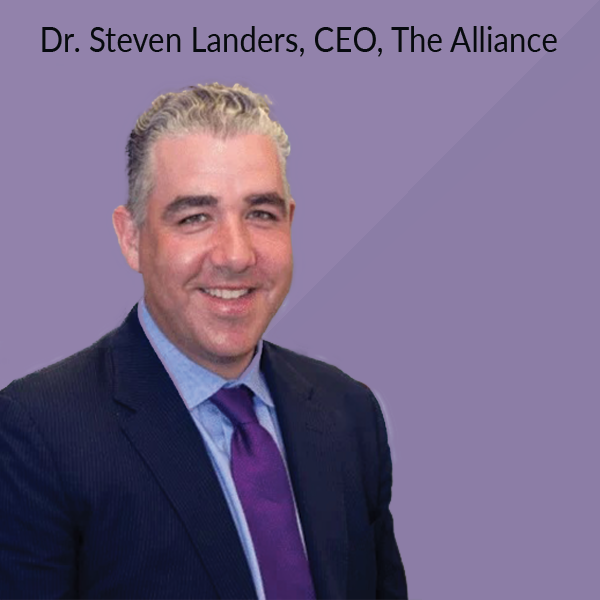
Dr. Steven "Steve" Landers

Dr. Steven Landers brings his almost 20 years of experience to The Alliance as its first CEO. Dr. Landers is a board-certified physician in family medicine, geriatric medicine, and hospice and palliative medicine. He has dedicated his career to seeking home- and community-based solution to traditional healthcare. His focus is on providing compassionate, dignified, and cost-effective care to patients.

Dr. Landers graduated from Case Western Reserve University School of Medicine, where he completed a geriatric medicine fellowship at the Cleveland Clinic.

Dr. Landers is no stranger to NAHC and NHPCO, having previously served on the board of directors for NAHC.  He has met with Congress, state legislatures, CMS, and PAC officials, providing testimonies, discussing home care policy and regulation, and advocating for care at home.

Steve lives in Little Silver, New Jersey, with his wife, Allison, and their three sons. His hobbies include golfing, fishing, hiking, traveling, enjoying good food and watching horse racing. When he is not taking part in these activities, you can find him cheering on his sports teams — the Browns, Cavaliers, Guardians and Indiana Hoosiers.

The Alliance Landers

Dr. Steven Landers: On the Record

The Alliance Landers
The Rowan Report:

What do you know about the status of the ongoing lawsuits, going back to the 2024 final rule?

Dr. Steven Landers:

One, we should probably bring Bill [Dombi] into it because he’s truly a technical expert on it and I’m still getting up to speed on it. My understanding is there is no active lawsuit at the moment. We were asked to go back and take some additional administrative steps, which we’re doing. Then we’ll be able to evaluate what further legal paths are possible.

RR: 

That leads me to, not a question, but an observation I’d like you to comment on, Steve. For 45 years, the organization has been run by attorneys and the emphasis in lobbying and advocacy has been ‘you need to stop this cut because it’s hurting businesses and also it’s hurting patients.’ The way you’re talking, you emphasize as you begin with how it’s hurting patients. And so I’m wondering if the organization being run by a physician and not an attorney indicates that different emphasis going forward.

Steve: 

I certainly am going to do everything I can to tell the story of how policies impact patients and families. That will be part of what I try to do every single day using my experiences as a physician to do that.

RR:

Would it be exaggerating to say “new day, new emphasis” at The Alliance?

Steve:

Well, The Alliance is new in and of itself, so The Alliance is a new day for the industry, a hundred percent. We brought together two legacy organizations. The opportunity to have a stronger voice is very real and certainly I am going to bring a clinical perspective. I’m also a family caregiver. I have my own personal experiences with home care and hospice that have instructed how I think about these things.

And there is every opportunity here to get stronger, to try to make a bigger impact. I would not diminish the truly heroic work that’s been done by advocates within our associations in the past. There’s a lot of love and care that’s happening out in our country because of the leadership that’s been in place. But as you can see by some of the things that we’re talking about, we need to do better. We need to find another way to tell these stories to somehow get somebody to listen.

The Alliance
RR:

You recently released a statement about your position as CEO of The Alliance and your vision going forward. There was a commitment attached to that. Can you speak to that?


Steve: 

Yeah, so that’s one of the things that I’m really happy we’re doing very early in our work with the Alliance. For membership, whether to join or to renew membership, we are requiring an attestation from our members around their commitment to quality and to compliance. We’re requiring any provider member to attest to having a program in place for quality and compliance. And we’re requiring that they attest that they monitor the OIG exclusion list and don’t take referrals for employees that are people that are on that list. Also for home health and hospice providers, we’re asking that they attest that they do their level best to participate in the Medicare Home Health and the Medicare Hospice Quality Reporting program.

In order to make a difference on behalf of our members and make a difference on behalf of the people that need care at home, we have to have as credible and high integrity of a voice as possible. And so this is just one simple step of additional things that we’ll consider going forward. We want to make sure that our alliance, our coalition is high integrity and has a deep commitment to quality and compliance.

RR:

It’s one thing to ask people to sign an attestation. It’s another to find the bad players and help CMS to get rid of them.

Steve:

And we’re right there as a partner in that. I think you’ll see more announcements from us in the future about what we’re doing to help with that. I mean, on one hand, we’ve made many proposals around fighting fraud and hospice in particular. If you followed the hospice policymaking, both Legacy NAHC and Legacy NHPCO over the last year have made many policy recommendations. And you’ll definitely see us both advocating for anti-fraud measures as well as having resources within our association to focus on those topics.

The Alliance Landers
Interviewer 1:

Just to clarify, did either of the legacy organizations have this same kind of attestation?

Steve:

No, this is new. The impact of the legacy organizations cannot be questioned. It’s been amazing. But, it’s a new day and we are looking at ways to increase our impact. So, this is a new part of our membership process that we feel strongly about to just take another step to ensure that our coalition, our membership, is of the highest integrity possible. We are walking the walk and talking the talk with respect to quality and compliance.

RR:

Thank you, Dr. Landers

This article is part 1 of 2 interviewing Dr. Steven Landers. Read the rest of the interview here.

# # #

Kristin Rowan, Editor

Kristin Rowan has been working at Healthcare at Home: The Rowan Report since 2008. She has a master’s degree in business administration and marketing and runs Girard Marketing Group, a multi-faceted boutique marketing firm specializing in event planning, sales, and marketing strategy. She has recently taken on the role of Editor of The Rowan Report and will add her voice to current Home Care topics as well as marketing tips for home care agencies. Connect with Kristin directly kristin@girardmarketinggroup.com or www.girardmarketinggroup.com

©2024 by The Rowan Report, Peoria, AZ. All rights reserved. This article originally appeared in Healthcare at Home: The Rowan Report. One copy may be printed for personal use: further reproduction by permission only. editor@therowanreport.com

Introducing “The National Alliance for Care at Home”

by Tim Rowan, Editor Emeritus

National Alliance for Care at Home

The merger of the National Association for Home Care and Hospice and the National Hospice and Palliative Care Organization, which was inked on July 1, became official this week in Tampa, Florida. The new National Alliance for Care at Home said farewell to retiring NAHC President Bill Dombi and gave a rousing welcome to incoming Alliance CEO, Steven Landers, MD. Both Bill’s farewell address and Dr. Landers’ introduction speech ended with the same theme. We do what we do for the good of our patients. Yes, there is money. Yes, there are politics. In the end, our legacy and our future are about people.

Dr. Steven Landers

Integrity, Quality and Compliance

That future will begin with a commitment to patient care excellence. Dr. Landers closed his opening address with an announcement. From now on, every member, upon beginning or renewing their annual membership, will be asked to sign an attestation pledging their company and themselves personally to commit to Integrity, Quality, and Compliance. “Our members will be known to the world as the best in the industry,” he proclaimed. “They will assure patients, families, and payers that they participate in Medicare and Medicaid quality performance standards.”

In a press conference the next day, Dr. Landers elaborated that NAHC and NHPCO have always worked with public and private payers and law enforcement agencies to rid our industry of those who are not in it for noble reasons. Those cooperative efforts will continue, he told the reporters. The new attestation will further assure the world that members of The Alliance publicly join that mission. One is reminded of a code of conduct common to all our national military academies. “We will not lie, steal, or cheat, nor tolerate among us anyone who does.”

Emphasis on Advocacy

The Alliance is new, and Dr. Landers candidly admits he is gradually learning his new role as he goes along. But he is guided by a commitment to care in the home that has been with him since medical school. “I didn’t want to be just another cog in the system,” he told 2,000+ attendees. “The first time I went along on a home visit, I immediately realized that this is what I wanted to commit my career to.” Through his years at the VNA and Cleveland Clinic, he saw the power of in-home care, including its ability to extend live expectancy and reduce the total cost of care.

Bill Dombi

A Semi-Farewell at Best

National Alliance for Care at Home Dombi

Bill Dombi will serve the new Alliance through the end of this year before fully entering retirement. Following his closing address on the last day of the conference, during which he summarized his 38 years with NAHC (years that began with a promise to his wife Lynn that they would only have to leave their home in Connecticut for the DC area for three to four years), I asked him what he planned to do that first day in January. He said that he accumulated a ton of frequent flyer miles during his career and that they would love to travel somewhere other than state and national association conference cities.

He also mentioned the ongoing legal actions he initiated to force CMS to develop more honest formulae for calculating Home Health reimbursement and added, “It is very difficult to change litigators in the middle of a lawsuit.” Draw your own conclusion but take it from one who knows how difficult it is to completely walk away from this mission and its people. We may not have heard the last of William A. Dombi.

# # #

Tim Rowan, Editor Emeritus

Tim Rowan is a 30-year home care technology consultant who co-founded and served as Editor and principal writer of this publication for 25 years. He continues to occasionally contribute news and analysis articles under The Rowan Report’s new ownership. He also continues to work part-time as a Home Care recruiting and retention consultant. More information: RowanResources.com
Tim@RowanResources.com

©2024 by The Rowan Report, Peoria, AZ. All rights reserved. This article originally appeared in Healthcare at Home: The Rowan Report. homecaretechreport.com One copy may be printed for personal use: further reproduction by permission only. editor@homecaretechreport.com

BREAKING NEWS: Blumenauer Proposes Hospice Overhaul

FOR IMMEDIATE RELEASE

Contact:      Portland District Office
503-231-2300

blumenauer proposes overhaul to hospice benefit

If enacted, the legislation would be the single most significant update to the hospice benefit and payment structure since its inception in 1982

WASHINGTON, D.C., SEPTEMBER 26, 2024 – Today, Congressman Earl Blumenauer (D-OR), a senior member of the Ways and Means Committee, introduced the Hospice Care Accountability, Reform and Enforcement Act (Hospice CARE Act) to modernize Medicare’s hospice benefit, which has remained largely unchanged since its inception in 1982. The proposal comes as egregious reports of fraud and abuse within the benefit persist, despite action from Centers for Medicare & Medicaid Services (CMS). The legislation is the product of years of collaboration between stakeholders, lawmakers, and industry leaders. It builds on Blumenauer’s decades-long commitment to ensure the federal government supports families at a time of great stress and vulnerability: the end of life. 

“The United States spends significantly more on health care than other developed nations for worse outcomes. Nowhere is this more egregious than in the hospice industry,” said Congressman Earl Blumenauer. “Patients and families deserve better. We need a reset. It is past time for Congress to act to end the fraud, waste, and abuse within the hospice benefit and bring it into the 21st century.”

To protect patients and taxpayers, the Hospice CARE Act would institute a number of long overdue reforms to crackdown on fraud while incentivizing high-quality care. Critically, it would:

    • Reform the payment structure: The underlying hospice per-diem payment structure—which generally pays hospices for each day of care regardless of if care is provided on a given day—rewards bad actors who exploit the benefit for financial gain. The legislation revises the payment structure to ensure that providers are incentivized to deliver high-quality care and meet the current needs of individuals and their families.
    • Bolster program integrity: Additional safeguards and oversight is needed to prevent fraudulent providers from enrolling in Medicare, especially for new hospices. That includes temporarily preventing new hospices from enrolling in Medicare, with exceptions where additional access to care is needed, increasing survey frequency, and increasing ownership transparency

A one-page fact sheet can be found here. Bill text here

“The hospice benefit, while unique, is ripe for change. This legislation is a first-of-its-kind opportunity to improve it,” said Katie Smith Sloan, president and CEO, LeadingAge, the association of nonprofit providers of aging services, including hospice, on the Hospice Care Accountability, Reform and Enforcement (CARE) Act of 2024. “Revising a benefit that has not been altered significantly since its creation in 1982 is a formidable undertaking – but a necessary one. Done right, changes will expand the benefit to support the realities of modern-day hospice care and address vulnerabilities that are currently being exploited.  There is more work to do and we look forward to continuing our productive partnership to ensure this bill achieves these goals.” 

 “The National Partnership for Healthcare and Hospice Innovation (NPHI) is thankful for the work of Congressman Blumenauer, his staff, and the Ways and Means Committee staff who worked with the hospice and advanced illness community to put forward the Hospice Care Accountability, Reform, and Enforcement (CARE) Act. This legislation is an encouraging and unique opportunity to consider reforms that would strengthen the Medicare hospice benefit by ensuring it continues to support patients, families, and the non-profit providers who were the original foundation of hospice care,” said Tom Koutsoumpas, CEO and founder of NPHI. “We look forward to continuing to work closely with Congress and relevant stakeholders on efforts to modernize the hospice benefit and improve care of those at the end-of-life.

“The Coalition to Transform Advanced Care (C-TAC), truly appreciates the introduction of the Hospice Care Accountability, Reform, and Enforcement (Hospice CARE) Act. We commend Representative Earl Blumenauer (D-OR-3rd) for this important work and for his decades of support for compassionate end-of-life care and for bringing policies to the national stage with bi-partisan support,” stated Jon Broyles, C-TAC CEO.  “We have had the privilege to work with the Congressman, his staff, Ways & Means Committee staff and other advocates on this bill and it is an important starting point for ideas that will lead to modernizing the hospice program and improving the lives of people with serious illness and their family caregivers.”

# # #

This press release was issued by the office of U.S. Congressman Earl Blumenauer, representing the 3rd district of Oregon. The original press release can be found here. The Rowan Report has reached out to The Alliance for Care at Home for comment.

NHPCO and NAHC Announce New Name and Website

by Kristin Rowan, Editor

The Alliance

Since the announcement that the National Hospice and Palliative Care Organization and the National Association for Home Care and Hospice would merge, the default name for the combined entities has been “The Alliance.” NAHC President Bill Dombi and Interim NHPCO CEO Ben Marcantonio, along with a transition board and other members have been working since August of 2023 on the merger. In June of 2024, the two organizations signed an official affiliation agreement.

Alliance Updates

In the last year, the two organizations have spoken about the work they’ve been doing to create the new affiliation. They jointly hosted a town hall to answer questions, and Bill Dombi has spoken at state and national association meetings about the merger. On August 26, 2024, The Alliance named its inaugural CEO, Dr. Steven Landers.

National Association for Care at Home (NACH)

Our industry loves its acronyms and this one rolls off the tongue like we’ve been using it for years. Although, we may all need to perfect the German guttural sound to differentiate it from NAHC.

In a press release on Sept. 5, 2024, the two associations officially announced that The National Alliance for Care at Home (NACH) is the new name of the combined organizations. Along with this announcement, The Alliance has also launched its new logo (below) and new website at www.AllianceForCareAtHome.org.

From The Alliance

Statements from both organizations outline the path forward and the mission and vision for the new affiliation:

    • The National Alliance for Care at Home will Combine the Strengths of the Two Largest National Organizations Representing Healthcare Providers Delivering Care Primarily in Homes
    • The Alliance Will Provide Unparalleled Resources and Representation to Support the Care-at-Home Community
    • This Alliance will be the leading authority on transforming care in the home. We will implement that mission under a new name that welcomes providers across the care continuum to join – the National Alliance for Care at Home
    • The Alliance will be your advocate, your resource, and your network to help you reach your goals

The new logo for NACH is, according to the press release, both an homage to the past and a symbol for the future. It creates a visual representation of both NAHC and NHPCO. The star shape of the logo is representative of the stars on the American flag, part of the NAHC logo. The visual aesthetic of the logo is reminiscent of the lotus flower from the NHPCO logo. The individual sections of the logo represent people holding hands, the visual representation of the coming together of types of care. The white space in the middle is meant to symbolize a house or home.

The logo is based on guidance from a workgroup comprised of members from both organizations, whose input has helped shape the Alliance brand.

The National Alliance for Care at Home

About Us

This press release also included a new boilerplate, describing the National Association for Care at Home, rather than two separate descriptions of each organization. This is probably still a temporary description, as it mentions that they are still in the process of combining operations and Communications Officers from both separate organizations are listed as press contacts. 

More to Come

Despite the announcement of the new CEO and the new name, the merger is far from over. There are logistical and operational hurdles still to overcome, a new board to enstate, the combining of assets and competencies, and a restructuring of existing employees. We will continue to report on press releases coming from NACH.

# # #

Kristin Rowan, Editor

Kristin Rowan has been working at Healthcare at Home: The Rowan Report since 2008. She has a master’s degree in business administration and marketing and runs Girard Marketing Group, a multi-faceted boutique marketing firm specializing in event planning, sales, and marketing strategy. She has recently taken on the role of Editor of The Rowan Report and will add her voice to current Home Care topics as well as marketing tips for home care agencies. Connect with Kristin directly kristin@girardmarketinggroup.com or www.girardmarketinggroup.com

©2024 by The Rowan Report, Peoria, AZ. All rights reserved. This article originally appeared in Healthcare at Home: The Rowan Report. One copy may be printed for personal use: further reproduction by permission only. editor@therowanreport.com

Chevron Deference Derailed

by Kristin Rowan, Editor

Chevron Deference

“A government agency must conform to any clear legislative statements when interpreting and applying a law, but courts will give the agency deference in ambiguous situations as long as its interpretation is reasonable.”

This statement followed the unanimous (minus the three who did not take part in the decision) U.S. Supreme Court decision in the Chevron U.S.A., Inc. v. National Resources Defense Council. The case is known for establishing the extent to which a federal court should defer to a government agency’s interpretation of an ambiguous statement when constructing statutes.

Breaking Down Chevron Deference

For those of you who don’t have a law degree, here’s what that means:

  • When a statutory term (required by law) is not explicitly defined and explained by Congress, there is room for interpretation
  • When a government agency interprets that statutory term, the interpretation may come under question
  • As long as the interpretation is not arbitrary (random), capricious (impulsive or unpredictable), or contrary to the statute (opposite the intent when put into practice), federal courts should give more weight to the government agency’s interpretation than to any other interpretation

Implications

At the time, the Supreme Court argued that if Congress leaves a term open to interpretation, it is either stated openness to interpretation, or an implied openness to interpretation. If a statute is implicity open, the intent of Congress is to allow a government agency to create provisions and regulations from that statute as they see fit. 

No one foresaw the impact this ruling would have on commerce and regulation in the U.S. To date, the Chevron Doctrine has been cited nearly 18,000 times in federal court decisions. The application of a statute based on agency interpretation could no longer be questioned or changed by judicial review.

Chevron Deference in Home Health

Since the advent of the PDGM model, CMS has calculated payment rates based on its interpretation of budget neutrality. The National Association for Home Care and Hospice has disputed the validity of both the interpretation of budget neutrality and the formulas used to calculate it.

Last year’s 2024 CMS Proposed Rule cut payment rates even further with a 2.890% Budget Neutrality permanent payment rate adjustment and a temporary rate adjustment to account for alleged overpayments from 2020-2022.

The lawsuit filed against CMS in response to the 2024 Final Rule was dismissed. NAHC began pursuing an administrative review with CMS. However, CMS has already stated that their final position is that budget neutrality has been calculated within the law. 

NAHC Comment: 2023 CMS Rule

“That proposal also fails logically in that it puts care access in severe jeopardy in applying a budget neutrality reconciliation methodology that takes PDGM-induced behavior changes to assess what otherwise would have been expended by Medicare in the absence of PDGM. In doing so, CMS fully fails to meet its obligation to ensure that the transition to a new payment model is budget neutral.”

  1. NAHC Comment Source

Chevron Deference Repealed

In a landmark ruling on Friday, June 28. 2024, the Supreme Court removed the power of federal agencies to interpret laws and ruled that the courts should rely on their own intrepretation of ambiguous laws. Justice Elena Kagan, who dissented the ruling, predicts this change “will cause a massive shock to the legal system.”

Chief Justice John Roberts explained in his opinion that the Chevron Deference is inconsistent with the Administrative Procedure Act (APA). The APA is a federal law which contains instructions for courts to review actions by federal agencies. According to Roberts, the APA directs courts to decide legal questions using their own judgment. Therefore, he noted, agency interpretations of statutes are not entitled to deference. “…it remains the responsibility of the court to decide whether the law means what the agency says,” concluded Roberts.

NAHC to Refile Lawsuit after Chevron Deference Repeal

2024 Final Rule

In April, 2024, the lawsuit filed against CMS regarding the methodology for calculating budget neutrality was dismissed. Now, NAHC can refile the lawsuit and force CMS to justify its decision to enact repeated reimbursement cuts for home health.

In an interview on Wednesday, Bill Dombi told The Rowan Report, “This improves the chances of success for our lawsuit. CMS is going to have to support their regulatory interpretations going forward. Congress is going to have to offer more detail in its legislative language, leaving less to being open to interpretation.” Regarding the PDGM lawsuit, CMS argued that the law was clear and the agency’s interpretation was valid. The overturning of Chevron Deference allows the possibility of arguing that CMS’s interpretation of the law is flawed. 

80/20 Rule

Dombi also explained that the Ensuring Access to Medicaid Services rule, also known as the 80/20 rule, was “drawn out of a whole cloth.” Previously, there were limited avenues available to challenge this rule. The repeal of Chevron Deference significantly improves the ability to challenge the 80/20 rule. The argument now, Dombi told The Rowan Report, is “Does CMS even have the authority to do this?”

More to Come

The Rowan Report anticipates more news coming out of Washington D.C. and the NAHC office regarding the 2024 pay cuts and the 80/20 rule. We will provide ongoing updates and information as it becomes available.

# # #

Kristin Rowan, Editor

Kristin Rowan has been working at Healthcare at Home: The Rowan Report since 2008. She has a master’s degree in business administration and marketing and runs Girard Marketing Group, a multi-faceted boutique marketing firm specializing in event planning, sales, and marketing strategy. She has recently taken on the role of Editor of The Rowan Report and will add her voice to current Home Care topics as well as marketing tips for home care agencies. Connect with Kristin directly kristin@girardmarketinggroup.com or www.girardmarketinggroup.com

©2024 by The Rowan Report, Peoria, AZ. All rights reserved. This article originally appeared in Healthcare at Home: The Rowan Report. One copy may be printed for personal use: further reproduction by permission only. editor@therowanreport.com