Trouble in MA Paradise?

by Kristin Rowan, Editor

Medicare Advantage

It’s no secret within the care at home community that Medicare Advantage is not without its problems. Coverage and care are good when the beneficiary is relatively healthy. When it’s really needed, MA plans deny coverage. Multiple insurance companies have upcoded patient care for higher reimbursements. And predatory marketing tactics target our most vulnerable.

Predatory Marketing

Medicare Advantage payers use unethical marketing to target seniors, sometimes going as far as to call unwitting customers and strong-arm them into changing from their traditional Medicare plans to MA. Anecdotally, a family friend was convinced to switch to Medicare Advantage three times. Each time, his family caregiver reversed that change before any real damage was done. Similarly, our own Editor Emeritus, Tim Rowan, fielded calls aimed at his disabled, grieving brother, urging him to change to a MA plan. Luckily, those calls were deflected by someone who knew better. Not everyone is as lucky.

UHC Projects Lower Earnings

Despite a 9.8 billion dollar year-over-year increase in revenue in the first quarter of 2025, UnitedHealth Group last week submitted a lower earnings outlook for 2025. UHG attributed the revision to “increased care activity” in its Medicare Advantage business. 

UHG has strong growth in providing benefits and services to more members. In Massachusetts, for example, the company reported 100% growth in care activity. Simultaneously, Optum Health, the arm responsible for home health, took on more clients with lower reimbursement rates, impacting overall revenue. Optum cites changes to the CMS risk adjustment model particularly for complex patients as a contributor to the problem.

Breaking it Down

UHG initially projected strong growth through 2025. The projection was partly based on the expection of a gradual increase in care activity. More members should increase revenue. What UHG did not account for was rapid growth of high-risk members in a risk-adjustment model that had not yet been thoroughly tested. Medicare Advantage is a money losing model that is propped up by Traditional Medicare. UHG is finally feeling that impact and it will only get worse as HHS cracks down on waste, fraud, and abuse in MA.  

Elevance Pulls Plug on MA Marketing

One week after UHG revised its earnings projections for 2025, Elevance announced plans to cut is Medicare Advantage marketing. EVP of payer solutions at ATI Advisory, a consulting firm in the healthcare space, says cutting spending on MA marketing happens for different reasons. 

“It’s often a temporary decision to give an MAO a year to ‘catch up’ or right-size impacts from the prior year. For example, it might be in response to larger-than-expected enrollment during the prior year, higher-than-expected utilization the plan is trying to get under control, or a change in federal policy.”

Breaking it Down

Elevance reported better earnings in Q1 2025 than were expected. The company listed home health as one of its key revenue drivers. The operating revenue increase came from higher premiums and growth in MA membership. The announcement to cut marketing spend came less than a week later. 

In other words, the company had a surge of MA sign-ups at the beginning of the year when plan coverage started after open-enrollment. Now that the company is seeing how many of those members actually need care and how much they will have to spend to provide that care, they no longer want to enroll additional MA members.

Opposition

The National Association of Benefits and Insurance Professionals expressed “deep concern” over Elevance’s announcement. NABIP represents licensed health insurance agents and brokers with a stated goal of promoting access to affordable health insurance coverage. 

“This decision directly harms Medicare beneficiaries by limiting their access to essential healthcare options and support during Medicare’s enrollment period,” NABIP CEO Jessica Brooks-Woods said.

NABIP asked CMS, Congress, and health plans to mitigate the effects of this announcement. They urged CMS to “freeze any carrier-initiated changes after October 1 that would limit agent access. 

Breaking it Down

NABIP represents agents and brokers who sell insurance plans to eligible members. They are membership based and rely on member fees as a main revenue stream along with fees collected for education, advertising, and sponsorships. Their PAC raises money from members to support political candidates.

Agents and brokers make money from commissions on sales of healthcare plans. The commission on Medicare Part D is around $109 per member per year. The commission on Medicare Advantage plans varies by state and carrier, but is as high as $780 per member per year. Commissions for Medicare Supplement plans are a percentage of premiums. The average commission for supplement plans is $322. 

But, of Course...

According to The Commonwealth Fund, average supplement plan premiums dropped from 2016 to 2020, decreasing agent compensation. In the same period, Medicare Advantage premiums have decreased, but agency compensation has increased at a rate higher than inflation.

It is not surprising, then, that the member-based advocacy group on behalf of sales people who earn nearly 7 times the commission on MA plans wouldn’t want companies like Elevance to stop marketing them.

Final Thoughts

I don’t believe Medicare Advantage is going anywhere anytime soon. I also don’t believe any government agency can monitor itself for fraud, waste, and abuse. Further, I don’t believe an association that makes its living on commissions has the best interest of its customers as its first priority. 

Perhaps fewer beneficiaries will be subjected to the predatory marketing and sales calls pushing them into Medicare Advantage plans. Perhaps knowledgeable, well-intentioned individuals and associations can shed light on the real advantages of Traditional Medicare. Perhaps CMS, under the direction of HHS, will turn the “waste, fraud, and abuse” mirror in the direction it belongs. 

# # #

Kristin Rowan, Editor

Kristin Rowan has been working at The Rowan Report since 2008. She is the owner and Editor-in-chief of The Rowan Report, the industry’s most trusted source for care at home news, and speaker on Artificial Intelligence and Lone Worker Safety and state and national conferences.

She also runs Girard Marketing Group, a multi-faceted boutique marketing firm specializing in content creation, social media management, and event marketing.  Connect with Kristin directly kristin@girardmarketinggroup.com or www.girardmarketinggroup.com

©2025 by The Rowan Report, Peoria, AZ. All rights reserved. This article originally appeared in The Rowan Report. One copy may be printed for personal use: further reproduction by permission only. editor@therowanreport.com


 

Vision for CMS

by Kristin Rowan, Editor

Vision for CMS from Dr. Oz

Last week, Dr. Mehmet Oz issued a statement on his vision for the future of CMS. Dr. Mehmet Oz is a cardiothoracic surgeon and former host of his own TV show. Under the Department of Health and Human Services, CMS has a $1.7 trillion budget and oversees the health outcomes of more than 160 million people.

“I want to thank President Trump and Secretary Kennedy for their confidence in my ability to lead CMS in achieving their vision to Make America Healthy Again. Great societies protect their most vulnerable. As stewards of the health of so many Americans – especially disadvantaged youth, those with disabilities, and our seniors, the CMS team is dedicated to delivering superior health outcomes across each program we administer. America is too great for small dreams, and I’m ready to get work on the President’s agenda.”

Dr. Mehmet Oz

Administrator of CMS, Department of Health and Human Services

Make America Healthy Again

With HHS Secretary Kennedy, Oz is throwing his support behind Make America Healthy Again, under direction from President Trump. Senator Kennedy says that, under the leadership of Dr. Oz, CMS will work to modernize Medicare, the Marketplaces, and Medicaid. The goal is to get Americans the care they want, need, and deserve. The agenda includes:

  • Empowering the American People with personalized solutions with which they can better manage their health and navigate the complex health care system. As a first step, CMS will implement the President’s Executive Order on Transparency to give Americans the information they need about costs.
  • Equipping health care providers with better information about the patients they serve and holding them accountable for health outcomes, rather than unnecessary paperwork that distracts them from their mission. For example, CMS will work to streamline access to life-saving treatments.
  • Identifying and eliminating fraud, waste, and abuse to stop unscrupulous people who are stealing from vulnerable patients and taxpayers.
  • Shifting the paradigm for health care from a system that focuses on sick care to one that fosters prevention, wellness, and chronic disease management.  For example, CMS operates many programs that can be used to focus on improving holistic health outcomes. 

Letter to Medicaid

Following the vision statement, Dr. Oz released a letter to state Medicaid Agencies outlining the use of Medicaid dollars during his tenure as Administrator. The two-page letter, citing recent studies on gender dysphoria, directed Medicaid agencies to eliminate gender reassignment surgery from covered procedures, opting instead for psychotherapy. Hormonal interventions will be reserved for exceptional cases.

“My top priority is protecting children and upholding the law. Medicaid dollars are not to be used for gender reassignment surgeries or hormone treatments in minors – procedures that can cause permanent, irreversible harm, including sterilization. We have a duty to ensure medical care is lawful, necessary, and truly in the best interest of patients. CMS will not support services that violate this standard or place vulnerable children at risk.”

Read the full letter here.

Final Thoughts

We believe this will be the first of many changes made to Medicare and Medicaid rules under Dr. Oz. We will continue to share updates from the CMS newsdesk.

# # #

Kristin Rowan, Editor

Kristin Rowan has been working at The Rowan Report since 2008. She is the owner and Editor-in-chief of The Rowan Report, the industry’s most trusted source for care at home news, and speaker on Artificial Intelligence and Lone Worker Safety and state and national conferences.

She also runs Girard Marketing Group, a multi-faceted boutique marketing firm specializing in content creation, social media management, and event marketing.  Connect with Kristin directly kristin@girardmarketinggroup.com or www.girardmarketinggroup.com

©2025 by The Rowan Report, Peoria, AZ. All rights reserved. This article originally appeared in The Rowan Report. One copy may be printed for personal use: further reproduction by permission only. editor@therowanreport.com
 

MedPAC Comments on CY 2026

by Kristin Rowan, Editor

MedPAC Comments on CY 2026

MedPac Sends Recommendations to Congress

 MedPAC makes recommendations to Congress and HHS on issues affecting the Medicare program. The March report for 2025 includes recommendations for hospice, home health, and SNFs, in addition to in-patient and out-patient hospital services.

Hospice

Using the exact terminology from the 2024 report, MedPAC recommends that Congress eliminate the update to the 2025 Medicare base payment rates for hospice. MedPAC pointed to a number of statistics to support the evaluation:

  • The number of hospice providers increased in 2023
  • Some of the growth in hospice providers occurred in states where CMS has concerns over program integrity
  • The percentage of patients using hospice increased by .8 percent nationwide, as did the days of care and visits per week
  • Medicare payments exceeded marginal costs by 14 percent

Opinion

  • The population of the U.S. is aging as more and more Baby Boomers qualify for Medicare; there is an increased need for hospice agencies to accommodate the volume of patients
  • Whether there are more hospices in states where program integrity is questioned does not impact the need for hospice care; program integrity reform changes this, not reimbursement rates
  • The rise in use, length of stay, and days of care explain the increase in the number of hospice; need, not profitability drives this growth
  • The average markup in 2022 was 72 percent above marginal cost

Marginal Cost

Marginal cost is the cost of adding one more unit of production. In simple terms, that would be the overall costs of adding one hour of care for a hospice patient. This would include scheduling, hourly wage, and other operational costs. MedPAC believes that if an agency adds one hour of care and make 14 percent more than their costs, that is sufficient.

Home Health

Keeping with tradition, MedPAC used the same language again from 2024 to recommend that Congress reduce the 205 Medicare base payment rate for home health agencies by 7 percent. 

Home Health & Hospice
  • The number of HHAs participating in Medicare increased by 3.4 percent.
  • Most of the growth in HHAs was in LA County. Outside LA County, the number of HHAs decreased by 2.8 percent.
  • The number of 30-day episodes per beneficiary decreased by 1.8 percent, but is still higher than in prepandemic years
  • MedPAC was unable to compute the marginal profit for 2023
  • Quality of care (percent discharged to community) increased by 1.3 percent
  • The all-payer margin in HHAs was 8.2 percent, attracting investors
  • The projected Medicare payment margin for 2025 is 19 percent
Image of letters spelling health and wealth

Opinion

  • LA County has more HHAs, but the rest of the country has fewer. We believe if you ask The National Alliance for Care at Home, Bill Dombi, or any number of prior HHA owners, low reimbursement rates forced them out of business
  • Pandemic numbers skewed the need for care at home because everyone was at home; if you only look at prepandemic numbers compared with 2023 numbers, the need for home health is increasing
  • HHAs keep patients out of the hospital, which accounts for more Medicare payments and higher costs
  • Again, the average margin across the U.S. is 72 percent, but MedPAC somehow believes 8 percent will attract investors and buyers; volume is attracting buyers, not margins
  • The projected 2025 margin is 19 percent and MedPAC recommends lowering it to 14 percent, matching hospice, and is 58 percent lower margins than the average industry

One Point of Parity

Surprisingly, there is an overlap in thinking between providers and MedPAC. In the February 2025 comment on the CMS notice of proposed rulemaking for 2026, MedPAC addressed the coding intensity and increased Medicare Advantage payments. 

Last summer, Editor Emeritus Tim Rowan reported on the inflated health conditions filed by payers. Medicare Advantage payers also routinely deny care that traditional Medicare plans would cover. MA payers are collecting on both the front and back ends of the “Bank of CMS.” According to the Center for Economic Policy Research, upcoding by MA plans costs CMS 106 percent of traditional Medicare costs. Quality bonus payments add an additional 2 percent. Operating surplus from enrolling healthier beneficiaries adds another 11 percent. Payments to MA plans are 19 percent higher. MedPAC agrees and urges CMS to further investigate coding intensity from MA payers.

Point of Contention

Although we agree with MedPAC’s assessment of MA coding intensity, that is where the similarity ends. Let’s take that recommendation one step further and require that MA plans pay hospice and home health providers a higher percentage of their risk-assessment adjustment and let the payers make their profits elsewhere.

It Could be Worse

Given the recent upheaval in D.C. and the fear that Medicare, Medicare Advantage, Medicaid, Social Security, and other benefits would be done away with completely, we are relieved to see the House Budget Bill passing without the drastic reductions to care at home.

From the Alliance

Following the passing of the House Budget Bill,  The National Alliance for Care at Home issued a response statement. We’ve published the full response here for you.

# # #

Kristin Rowan, Editor

Kristin Rowan has been working at The Rowan Report since 2008. She is the owner and Editor-in-chief of The Rowan Report, the industry’s most trusted source for care at home news. She also has a master’s degree in business administration and marketing and runs Girard Marketing Group, a multi-faceted boutique marketing firm specializing in content creation, social media management, and event marketing.  Connect with Kristin directly kristin@girardmarketinggroup.com or www.girardmarketinggroup.com

©2025 by The Rowan Report, Peoria, AZ. All rights reserved. This article originally appeared in The Rowan Report. One copy may be printed for personal use: further reproduction by permission only. editor@therowanreport.com


Dementia Care Model Test

FOR IMMEDIATE RELEASE

Contacts:                                  PocketRN
William Leiner
Chief Operating Officer
will.leiner@pocketrn.com

Daughterhood
Becca Dittrich
becca@daughterhood.org

PocketRN and Daughterhood Announce a National Strategic Partnership to Test Medicare Dementia Care Model Developed by Centers for Medicare & Medicaid Services

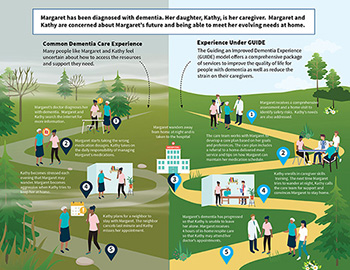
Guiding an Improved Dementia Experience (GUIDE) Model, a Centers for Medicare & Medicaid Services Innovation Program, Aims to Increase Care Coordination, Support for Caregivers

WASHINGTON, D.C., MARCH 18, 2025 – Today, PocketRN, a leader in virtual nursing, and Daughterhood, a leading non-profit organization empowering family caregivers with community and resources, announced they will form a National Strategic Partnership to test the Centers for Medicare & Medicaid Services (CMS) alternative payment model designed to support people living with dementia and their caregivers.

Under CMS’ Guiding an Improved Dementia Experience (GUIDE) Model, PocketRN will be one of almost 400 participants building Dementia Care Programs (DCPs) across the country, working to increase care coordination and improve access to services and supports, including respite care, for people living with dementia and their caregivers.

Launched on July 1, 2024, the GUIDE Model will test a new payment approach for key supportive services furnished to people living with dementia, including: comprehensive, person-centered assessments and care plans; care coordination; 24/7 access to an interdisciplinary care team member or help line; and certain respite services to support caregivers. People with dementia and their caregivers will have the assistance and support of a Care Navigator to help them access clinical and non-clinical services such as meals and transportation through community-based organizations.

PocketRN Daughterhood Guide Model

“We couldn’t be more thrilled to bring our revolutionary nurse-led care model to the millions of dementia patients and families who need it most. With PocketRN, patients and families get unwavering support from a Nurse for Life as they navigate the complexities of managing dementia at NO cost to them. Nurses are hands-down the best clinicians to be the ‘glue’ for patients and their families throughout their dementia journey–they’ve been doing so forever, and it’s high-time their work is valued by our system.”

Jenna Morgenstern-Gaines

CEO, PocketRN

“We are so excited to embark on this partnership that will bring invaluable expertise and resources to the dedicated dementia caregivers in our Daughterhood community. Dementia caregiving is a uniquely complex and deeply emotional journey—one that requires not only knowledge and support but also compassion and resilience. This partnership will further empower caregivers with the tools, guidance, and encouragement they need to navigate this journey with confidence, connectivity, and care.”

Anne Tumlinson

Founder, Daughterhood

PocketRN and Daughterhood’s partnership in delivering the GUIDE Model will help people living with dementia and their caregivers have access to the education, supports, and services they need to feel more empowered and less alone in their journey – including unique “circle” community groups, podcasts, educational videos, and other curated resources. The GUIDE Model also provides respite services for certain people, enabling caregivers to take temporary breaks from their caregiving responsibilities. Respite is being tested under the GUIDE Model to assess its effect on helping caregivers continue to care for their loved ones at home, preventing or delaying the need for facility care.

More information on CMS’ GUIDE Model 

# # #

About Daughterhood

Daughterhood is a 501(c)(3) organization that fosters community that empowers individuals to navigate the practical and emotional complexity of caregiving. Its unique blend of “circle” community groups, blogs, podcasts, and curated partner resources gives family caregivers emotional relief along with real, practical, and tangible solutions to navigate the stress, overwhelm, and confusion they often face – and to do so with the support of others on a similar path. For more information, visit https://daughterhood.org/ or engage with Daughterhood on LinkedIn, Facebook, and Instagram.

About PocketRN

PocketRN gives patients, families, and caregivers a Nurse for Life. Its mission is to close the gap between home and healthcare by: enabling nurses to care proactively and continuously at the top of their license, enabling caregivers with peace of mind and the confidence to support others, and enabling patients to access whole-person, trusted, empathetic care when and where they want it. PocketRN is the glue that holds together fragmented experiences in care so that partners, clinicians, patients, and families get back more of what they need: quality time. For more information, visit www.pocketrn.com or engage with PocketRN on LinkedIn, Facebook, and Instagram.

© 2025 This press release originally appeared on the PocketRN website and is reprinted here with permission. For more information, please see press contact information above.

Underlying Causes of Health Issues

by Kristin Rowan, Editor

Underlying Causes of Health Issues

Underlying causes of health issues are common. Not all health issues come directly from infections, medical conditions, or genetics. Lifestyle, environmental factors, and social determinants can cause and/or increase the severity of health issues. Beginning in the winter of 2023, the Centers for Medicare and Medicaid Services posted guidance on approving coverage for these social needs, acknowledging that they contribute to poor health outcomes. CMS named the social needs that could be covered by Medicaid, CHIP, Section 1115, and Home and Community Based Services. These include help finding new housing, one-time moving costs, eviction prevention, respite care, sober centers, home improvements, meals, and case management.

Guidance Rescinded

CMS referred to both the 2023 and 2024 documents as “Center Informational Bulletins” (CIB) meant as guidance, not rule of law. The 2024 document provided updates and clarifications to the 2023 document. According to the statement from CMS, dated March 4, 2025, they have rescinded both CIBs “to evaluate policy options consistent with Medicaid and CHIP progam requirements and objectives.” Moving forward, CMS will consider each application to cover these services on a case-by-case basis using the Social Security Act, not the HRSN Framework or the CIBs.

Opposition

Former chief medical officer of the US Medicaid program Andrey Ostrovsky, MD, FAAP said that removing coverage for social determinants of health will harm patients and taxpayers.

Sen Ron Wyden (D, Oregon) agrees, stating that addressing the underlying causes of health issues is key to keeping America healthy.

Underlying Causes of Health Issues Andrey Ostrovsky

“It’s unlikely we see an easy, smooth approval process for such services moving forward….I think that the bar to getting it approved will be higher. States are going to have to make individualized decisions around where their priorities are and where they want to continue to focus on expansion — and maybe focus a little bit more on cost constraint and financially effective services under the new administrative priorities.”

Damon Terzaghi

Senior Director of Medicaid Advocacy, National Alliance for Care at Home

On the Other Hand

Despite the opposition to this change, there does seem to be some validity to the move. There should be some discussion about where Medicaid services should end and another department begins. The question here is whether a different federal program should be providing coverage for these social determinants of health. According to Terzaghi, this could be the beginning of an improvement to the system, rather than the dismantling of it.

Final Thoughts

The changes coming out of D.C. recently seem to be coming like rapid fire. See this weeks related press release on the continuing resolution passed by Congress. As with most of these edicts, executive orders, and other changes, the long-term impact and the eventual goal remain to be seen. We will continue to follow these and other stories as new information becomes available.

# # #

Kristin Rowan, Editor

Kristin Rowan has been working at The Rowan Report since 2008. She is the owner and Editor-in-chief of The Rowan Report, the industry’s most trusted source for care at home news .She also has a master’s degree in business administration and marketing and runs Girard Marketing Group, a multi-faceted boutique marketing firm specializing in content creation, social media management, and event marketing.  Connect with Kristin directly kristin@girardmarketinggroup.com or www.girardmarketinggroup.com

©2025 by The Rowan Report, Peoria, AZ. All rights reserved. This article originally appeared in The Rowan Report. One copy may be printed for personal use: further reproduction by permission only. editor@therowanreport.com
 

Update on Public Participation in Rule Making

by Kristin Rowan, Editor

Update

Last week, we reached out to some of our contacts for responses to this change.

Former President of NAHC and current Senior Counsel at Arnall Golden Gregory Bill Dombi said:

It is difficult to discern the impact of the rescission of the waiver. One concern is whether the administration considers Medicaid  a grant or benefit program thereby exempting it from APA public notice and comment rulemaking.  

With respect to Medicare, if it is considered a benefit, there is still a Medicare statutory requirement of public notice and opportunity for comment through formal rulemaking that should effectively nullify the practical impact of the rescission of the waiver. All that said, we will need to see more before being to judge the impact.

Frequent guest author and Fellow, American Health Law Association, Elizabeth E. Hogue, Esq. had this to say:

Recission of the Richardson Waiver is not good news for providers. 

Many federal agencies voluntarily committed to give notice and comment for actions that otherwise would be exempt. The US Department of Health and Human Services was one of the federal agencies that adopted this policy in October, 1970, in a memorandum commonly referred to as the “Richardson Waiver.”  This policy was published in the Federal Register in 1971.  HHS did not, however, promulgate the Waiver through notice and comment rulemaking. 

The open process of give and take between agencies and providers under the Richardson Waiver resulted in resolution of important issues relatively informally.  Now it appears that only policies mandated by statute will go through the rulemaking process.  In other words, opportunities to resolve issues without formal resolution will be compromised. 

The recission of the Waiver may also make administration of both the Medicaid and Medicare programs more complicated and less effective, especially in view of US Supreme Court decisions that say everything that hasn’t gone through the notice and comment process is not binding on providers.

# # #

Below is the original article, published March 6, 2025

Public Participation Rescinded

The Administrative Procedure Act (APA) requires that an agency public a notice of proposed rulemaking in the Federal Register; allow sufficient time for public participation via written data, views, or arguments; and then publish a final rule. Matters relating to agency management, personnel, or public property; loans, grants, benefits, or contracts; and for “good cause” are exempt from the reporting requirements. The Richardson Waiver, adopted in 1971, waived the exemption and instructed agencies to use the good cause exemption sparingly. Effective immediately, the Richardson Waiver is rescinded.

“The policy waiving the statutory exemption…imposes on the Department obligations beyond the maximum procedural requirements specified by the APA, adds costs [that] are contrary to the efficient operation of the Department, and impedes the Department’s flexibility to adapt quickly to legal and policy mandates.”

Robert F. Kennedy, Jr.

Secretary, Department of Health and Human Services

What it Means

Public participation is now optional. Agencies and offices of the Department of HHS can, if desired, use the public notice and comment procedures for these matters, but are no longer required to do so. The Department will continue to follow these procedures in all circumstances in which they are required to do so.

Law firm Hogan Lovells, experts in healthcare law, wrote about the potential implications for the health care industry in a recent blog post. According to the firm, it is unclear how HHS will interpret the “benefits” portion of the exemption. HHS, and specifically CMS, currently uses the notice and comment procedure for various benefits programs, including Medicare and Medicaid. Secretary Kennedy’s statement clearly calls out the limitation in impacting any other law requiring notice and comment periods.

Public Participation in Medicare Rules

Hogan Lovells indicates that few if any policies written under the Medcare Act will be impacted by this change. The Medicare Act operates under additional rulemaking requirements under section 1871(a) of the SSA. Additionally, Azar v. Allina Health Services, 587 U.S. 566 (2019) confirms that Medicare rulemaking is independent from the APA. Some policies are currently exempt from the notice and comment obligations under the Medicare Act and will remain exempt.

Public Participation in Medicaid and CHIP rules

Medicare and CHIP fall under Title XIX of the SSA, which does not contain its own notice and comment requirements separate from the APA. HHS has used the APA notice and comment rules for many of the changes made to the Medicaid program. HHS could interpret the “benefits” clause as exempting Medicaid changes from the rule. Hogan Lovells states it is currently unclear whether HHS will take this route. They also purport the courts have not ruled on whether APA excludes Medicaid from the notice and comment requirements, and may not agree with that exclusion. Until the term “benefits” is better defined, Medicaid, CHIP, the insurance exchange marketplace, and TANF, among others, may be impacted.

Department of Veterans Affairs

A notable exception to these changes is the rulemaking in the Department of Veterans Affairs as it relates to the Veterans Health Care act of 1992. This program implemented Federal contractor requirements that established pricing and contracting standards for drug manufacturers. The VA policies and rules have historically been enacted using guidance letters, avoiding the rulemaking process altogether.

Final Thoughts

There is too much that is yet unknown regarding this change to understand its full impact. There will be immediate changes, court rulings, further changes, and likely a lot of advocacy from national organizations fighting for transparency for Medicare, Medicaid, and other “benefit” programs. This will be an ongoing story and The Rowan Report will bring updates as they happen.

# # # 

Kristin Rowan, Editor

Kristin Rowan has been working at The Rowan Report since 2008. She is the owner and Editor-in-chief of The Rowan Report, the industry’s most trusted source for care at home news .She also has a master’s degree in business administration and marketing and runs Girard Marketing Group, a multi-faceted boutique marketing firm specializing in content creation, social media management, and event marketing.  Connect with Kristin directly kristin@girardmarketinggroup.com or www.girardmarketinggroup.com

©2025 by The Rowan Report, Peoria, AZ. All rights reserved. This article originally appeared in The Rowan Report. One copy may be printed for personal use: further reproduction by permission only. editor@therowanreport.com

 

Prior Authorization Requirement Removed by UnitedHealthcare

by Kristin Rowan, Editor

Easier Access to Home Health

Prior authorization requirements can be cumbersome, delaying or even preventing care in some cases. Patients who need prior authorization to get he care they need also generally have form after form to fill out or to have completed by their PCP or hospital physician, who doesn’t have time for adequate visits, much less more paperwork.

As part of their ongoing efforts to reduce prior authorization volume by 10%, UnitedHealthcare has just announced a change in their home health services requirements.

Limits on Where Changes Apply

Beginning April 1, 2025, UHC will no longer require prior authorization or concurrent reviews for home health services managed by Home & Community (formerly naviHealth). This is the next step in an ongoing effort to modernize the authorization process and simplify health care for its members and providers. 

These changes will apply to Medicare Advantage and Dual Special Needs Plan (D-SNP) beneficiaries in 36 states and the District of Columbia.

  • Alabama
  • Alaska
  • Arkansas
  • California
  • Colorado
  • Connecticut
  • Florida*
  • Georgia
  • Idaho
  • Illinois
  • Indiana
  • Iowa
  • Kansas
  • Kentucky
  • Louisiana
  • Maine
  • Maryland
  • Massachusetts
  • Nebraska
  • Nevada
  • New Mexico
  • North Carolina
  • North Dakota
  • Ohio
  • Oklahoma
  • Oregon
  • Pennsylvania
  • Rhode Island
  • South Carolina
  • Tennessee*
  • Texas
  • Utah
  • Virginia
  • Washington
  • Wisconsin
  • Wyoming
  • Washington, D.C.

*In Florida and Tennessee, the changes will not apply to D-SNP plans that are not managed by Home & Community.

Prior Authorization Additional Information

You should continue to request prior authorization and concurrent review through March 31, 2025. UHC reminds all providers that following CMS guidelines for providing home health care services is still required. And in states where a Medicare denial is required to get Medicaid prior authorizations, providers should submit their requests through the UHC provider portal. 

The available information on this pending change is limited. We will provide updates should they become available. Please contact UHC directly through the provider portal if you have specific questions.

# # #

Kristin Rowan, Editor

Kristin Rowan has been working at The Rowan Report since 2008. She is the owner and Editor-in-chief of The Rowan Report, the industry’s most trusted source for care at home news .She also has a master’s degree in business administration and marketing and runs Girard Marketing Group, a multi-faceted boutique marketing firm specializing in content creation, social media management, and event marketing.  Connect with Kristin directly kristin@girardmarketinggroup.com or www.girardmarketinggroup.com

©2025 by The Rowan Report, Peoria, AZ. All rights reserved. This article originally appeared in The Rowan Report. One copy may be printed for personal use: further reproduction by permission only. editor@therowanreport.com

 

BREAKING NEWS: Kennedy Rescinds Public Participation in Rule Making

by Kristin Rowan, Editor

Public Participation Rescinded

The Administrative Procedure Act (APA) requires that an agency publish a notice of proposed rulemaking in the Federal Register; allow sufficient time for public participation via written data, views, or arguments; and then publish a final rule. Matters relating to agency management, personnel, or public property; loans, grants, benefits, or contracts; and for “good cause” are exempt from the reporting requirements. The Richardson Waiver, adopted in 1971, waived the exemption and instructed agencies to use the good cause exemption sparingly. Effective immediately, the Richardson Waiver is rescinded.

“The policy waiving the statutory exemption…imposes on the Department obligations beyond the maximum procedural requirements specified by the APA, adds costs [that] are contrary to the efficient operation of the Department, and impedes the Department’s flexibility to adapt quickly to legal and policy mandates.”

Robert F. Kennedy, Jr.

Secretary, Department of Health and Human Services

What it Means

Public participation is now optional. Agencies and offices of the Department of HHS can, if desired, use the public notice and comment procedures for these matters, but are no longer required to do so. The Department will continue to follow these procedures in all circumstances in which they are required to do so.

Law firm Hogan Lovells, experts in healthcare law, wrote about the potential implications for the health care industry in a recent blog post. According to the firm, it is unclear how HHS will interpret the “benefits” portion of the exemption. HHS, and specifically CMS, currently uses the notice and comment procedure for various benefits programs, including Medicare and Medicaid. Secretary Kennedy’s statement clearly calls out the limitation in impacting any other law requiring notice and comment periods.

Public Participation in Medicare Rules

Hogan Lovells indicates that few if any policies written under the Medcare Act will be impacted by this change. The Medicare Act operates under additional rulemaking requirements under section 1871(a) of the SSA. Additionally, Azar v. Allina Health Services, 587 U.S. 566 (2019) confirms that Medicare rulemaking is independent from the APA. Some policies are currently exempt from the notice and comment obligations under the Medicare Act and will remain exempt.

Public Participation in Medicaid and CHIP rules

Medicare and CHIP fall under Title XIX of the SSA, which does not contain its own notice and comment requirements separate from the APA. HHS has used the APA notice and comment rules for many of the changes made to the Medicaid program. HHS could interpret the “benefits” clause as exempting Medicaid changes from the rule. Hogan Lovells states it is currently unclear whether HHS will take this route. They also purport the courts have not ruled on whether APA excludes Medicaid from the notice and comment requirements, and may not agree with that exclusion. Until the term “benefits” is better defined, Medicaid, CHIP, the insurance exchange marketplace, and TANF, among others, may be impacted.

Department of Veterans Affairs

A notable exception to these changes is the rulemaking in the Department of Veterans Affairs as it relates to the Veterans Health Care act of 1992. This program implemented Federal contractor requirements that established pricing and contracting standards for drug manufacturers. The VA policies and rules have historically been enacted using guidance letters, avoiding the rulemaking process altogether.

Final Thoughts

There is too much that is yet unknown regarding this change to understand its full impact. There will be immediate changes, court rulings, further changes, and likely a lot of advocacy from national organizations fighting for transparency for Medicare, Medicaid, and other “benefit” programs. This will be an ongoing story and The Rowan Report will bring updates as they happen.

# # # 

Kristin Rowan, Editor

Kristin Rowan has been working at The Rowan Report since 2008. She is the owner and Editor-in-chief of The Rowan Report, the industry’s most trusted source for care at home news .She also has a master’s degree in business administration and marketing and runs Girard Marketing Group, a multi-faceted boutique marketing firm specializing in content creation, social media management, and event marketing.  Connect with Kristin directly kristin@girardmarketinggroup.com or www.girardmarketinggroup.com

©2025 by The Rowan Report, Peoria, AZ. All rights reserved. This article originally appeared in The Rowan Report. One copy may be printed for personal use: further reproduction by permission only. editor@therowanreport.com


Special Focus Program Ends

by Kristin Rowan, Editor

Special Focus Program Not Well Received

When the Hospice Special Focus Program (SFP) first appeared, the industry was told the program would help CMS identify and improve the performance of hospice providers that were struggling to meet quality standards. CMS developed the program to strenthen oversight, promote quality improvements, and ensure compliance for underperforming hospice agencies.

Soon after its inception and implementation in 2022, numerous concerns emerged. The National Alliance for Care at Home (then NAHC and NHPCO) voiced concerns over the program’s reliance on incomplete data as well as the potential for the program to unfairly targed providers in underserved communities.

Between February 2020 and January 2025, numerous state and national organizations have introduced Hospice Acts to Congress, given feedback to CMS on improvements to SFP, and filed lawsuits against the CMS.

Ramping Up the Opposition

In mid-2024, following the Council of States meeting, monthly opposition to the SFP became standard:

  • The McDermott Report highlighted significant flaws in the algorithm used for the program. Again, there was an objection over the use of incomplete and inconsistent data.
  • Bi-partisan Congress members sent a letter to CMS requesting revisions to SFP, criticizing outdated survey data and suggested that the quality metrics were inappropriately weighted.
  • Alliance CEO Steve Landers publicly criticized the implementation of SFP in his op-ed.
  • Representatives introduced Bill H.R. 10097 to delay SFP implementation, stating it would give CMS time to address the problems with the program and ensure fair application of standards for low-performing hospices without impacting quality programs.
  • The Texas Association for Home Care & Hospice; Indiana Association for Home & Hospice Care; Association for Home & Hospice Care of North Carolina; South Carolina Home Care & Hospice Association; and Houston Hospice filed a lawsuit challenging the SFP as unlawful and arbitrary.

CMS Backs Down

This week, CMS announced that it has paused the implementation of SFP for the calendar year 2025. The CMS statement say the pause will allow CMS to “further evaluate the program.” There is no mention of the opposition or the ongoing lawsuits.

The hospice special focus program page on the CMS website reads:

 Effective February 14, 2025, implementation of the Hospice Special Focus Program for CY 2025 has ceased so that CMS may further evaluate the program. Please contact QSOG_Hospice@cms.hhs.gov for policy questions.

All additional information about the program has been removed from the website page.

Special Focus Program gets First Positive Feedback

For the first time since 2020, industry leaders are applauding a CMS move regarding SFP. The move is halting the program altogether, but at least its positive feedback. 

“This decision is a positive move acknowledging that the current approach is not working as intended. The hospice community has long advocated for strong oversight and patient protections, but the SFP, as implemented, was deeply flawed, unlawful, and harmful to the very patients it was meant to protect.”

National Alliance for Care at Home

You can read the full statement from The Alliance in their press release.

Final Thoughts

It seems it is not often that CMS hears what the industry tells them. Reimbursement rates continue to drop, documentation is increasingly complex, and the industry has suffered from their misconceptions about what we need.  This time, at least, there was enough pressure and advocacy from Congress and from you, the people who are impacted daily by their decisions, to cause them to rethink this program. Keep up the good work and continue to advocate for yourself and for care at home. Perhaps this is not the last time CMS will listen.

# # #

Kristin Rowan, Editor

Kristin Rowan has been working at The Rowan Report since 2008. She is the owner and Editor-in-chief of The Rowan Report, the industry’s most trusted source for care at home news .She also has a master’s degree in business administration and marketing and runs Girard Marketing Group, a multi-faceted boutique marketing firm specializing in content creation, social media management, and event marketing.  Connect with Kristin directly kristin@girardmarketinggroup.com or www.girardmarketinggroup.com

©2025 by The Rowan Report, Peoria, AZ. All rights reserved. This article originally appeared in The Rowan Report. One copy may be printed for personal use: further reproduction by permission only. editor@therowanreport.com


Creditable Coverage for Medicare Part D

by Kristin Rowan, Editor

CMS 2026 Updates to Prescription Plan

The Centers for Medicare & Medicaid Services (CMS), as part of the Inflation Reduction Act of 2022 (IRA), released a draft of the calendar year 2026 redesign program instructions. The new provisions for Medicare Part D include:

  • An annual out-of-pocket maximum of $2,100, up from $2,000 in 2025
  • A selected drug subsidy program
  • The requirement that Part D plans offer enrollees the option to spread out their out-of-pocket costs over the year
  • Maximum charge of $35 for insulin regardless of deductible, co-pay, or out-of-pocket spending reached
  • No out-of-pocket costs for recommended vaccines
  • New requirements for Creditable Coverage

Current Creditable Coverage Determination

The current simplified determinations method is as follows:

  1. The plan provides coverage for brand and generic prescriptions;
  2. The plan provides reasonable access to retail providers;
  3. The plan is designed to pay on average at least 60% of participants’ prescription drug expenses; and
  4. The plan satisfies at least one of the following:
    • The coverage has no annual benefit maximum or maximum annual benefit payable by the plan of at least $25,000;
    • The coverage has an actuarial expectation that the amount payable by the plan will be at least $2,000 annually per Medicare-eligible individual; or
    • For employer plan sponsors that have integrated prescription drug and health coverage, the integrated plan has no more than a $250 deductible per year, has no annual benefit maximum or a maximum annual benefit of at least $25,000, and has no less than a $1,000,000 lifetime combined benefit maximum.

Creditable Coverage

Medicare beneficiaries must enroll in Medicare Part D, unless they have other prescription coverage. If a beneficiary goes more than 63 days without prescription coverage, they may incur a late enrollment penalty. Creditable coverage has to have a value equal to or greater than the defined coverage for Part D. This requirement is not new. Group health plans have been calculating creditable coverage since the inception of the Part D program. What is new is that CMS has determined that the simplified method of determining creditable coverage is no longer accurate. The revised method must include all of the following:

  • Provide reasonable coverage for brand name and generic prescription drugs and biological products
  • Provide reasonable access to retail pharmacies
  • Is designed to pay on average at least 72% of participants’ prescription drug expenses

Impact

Persons over the age of 65 who qualify for Medicare, but who are still employed may have an employer sponsored or paid health insurance plan. Many of these plans have combined health and drug coverage. These plans will now have to provide creditable coverage, presumably for all beneficiaries, not just those who are eligible for Medicare. 

  • The coverage has no annual benefit maximum or maximum annual benefit payable by the plan of at least $25,000;
  • The coverage has an actuarial expectation that the amount payable by the plan will be at least $2,000 annually per Medicare-eligible individual; or
  • For employer plan sponsors that have integrated prescription drug and health coverage, the integrated plan has no more than a $250 deductible per year, has no annual benefit maximum or a maximum annual benefit of at least $25,000, and has no less than a $1,000,000 lifetime combined benefit maximum.

For Additional Information

If you are currently offering an employee sponsored health plan, or need more information on Part D coverage, refer to the CMS Fact Sheet and the Program Instructions.

# # #

Kristin Rowan, Editor

Kristin Rowan has been working at The Rowan Report since 2008. She is the owner and Editor-in-chief of The Rowan Report, the industry’s most trusted source for care at home news .She also has a master’s degree in business administration and marketing and runs Girard Marketing Group, a multi-faceted boutique marketing firm specializing in content creation, social media management, and event marketing.  Connect with Kristin directly kristin@girardmarketinggroup.com or www.girardmarketinggroup.com

©2025 by The Rowan Report, Peoria, AZ. All rights reserved. This article originally appeared in The Rowan Report. One copy may be printed for personal use: further reproduction by permission only. editor@therowanreport.com