MedPAC Finalizes Recommendation to CMS

by Kristin Rowan, Editor

MedPAC Recommends 7% Cut

Vote Finalized

In December, MedPAC published a proposed recommendation for calendar year 2027 that included a 7% cut to home health reimbursement rates and no increase for hospice. Last week, MedPAC voted to finalize that recommendation and send it to CMS. 

Industry Objection

Both the proposal and final recommendation met with strong industry backlash.

“MedPAC’s dangerous and misguided recommendations to reduce the Medicare home health base payment rate by 7% for CY 2027 and eliminate the update to the 2026 Medicare base payment rate for hospice do not reflect both home health and hospice agencies’ operating realities as well as the cumulative impact of recent policy changes. For home health agencies, any cut – let alone one of such great magnitude – will threaten the ability to meet individuals’ healthcare needs. Yet again, the Commission is failing to understand the operating reality providers face and the potential patient harm that any further payment cuts pose.”

Dr. Steve Landers

CEO, National Alliance for Care at Home

Consistently Wrong

The MedPAC recommendation may not be built on solid data, use accurate calculations, consider Medicare Advantage and Medicaid rates along with Traditional Medicare FFS, consider the number of agencies that will go out of business, have any recommendations for maintaining nurse and caregiver hourly rates, or fairly distribute Medicare funds across disciplines, but, wait…where was I going with this? Oh, right! At least they’re consistent. MedPAC recommended a 7% decrease in Medicare payments for 2027, 2026, 2025, 2024, and 2023. They may be completely wrong, but they are dedicated to maintaining their wrongness.

Final Thoughts

Despite the years of 7% cut recommendations from MedPAC, the final numbers from CMS are rarely in line with those recommendations. We will, of course, know more when CMS publishes their proposal later this year. LeadingAge, National Association for Care at Home, individual and corporate HHAs and Hospices, and anyone else with a stake in the care at home industry, should contact their congressional representatives and CMS directly to voice concerns over these cuts.

# # #

Kristin Rowan Editor The Rowan Report

Kristin Rowan is the owner and Editor-in-chief of The Rowan Report, the industry’s most trusted source for care at home news. She is also a sought-after speaker on Artificial Intelligence, Technology Adoption and Lone Worker Safety. She is available to speak at state and national conferences as well as software user-group meetings.

Kristin also runs Girard Marketing Group, a multi-faceted boutique marketing firm specializing in content creation, social media management, and event marketing. She works with care at home software providers to create dynamic content that increases conversions for direct e-mail, social media, and websites.  Connect with Kristin directly at kristin@girardmarketinggroup.com or www.girardmarketinggroup.com

©2026 by The Rowan Report, Peoria, AZ. All rights reserved. This article originally appeared in The Rowan Report. One copy may be printed for personal use: further reproduction by permission only. editor@therowanreport.com


 

LeadingAge and Alliance Join Dr. Oz

LeadingAge and Alliance Join Dr. Oz

CMS hosts listening session in LA

On January 9, 2026, CMS Administrator Dr. Mehmet Oz hosted a listening session in Los Angeles to discuss fraud, waste, and abuse in home health and hospice. Dr. Oz was joined by CMS Director of the Center for Program Integrity Kim Brandt and Director of the Center for Medicare Chris Klomp.

Statement to Dr. Oz

Representatives from both LeadingAge and the National Alliance for Care at Home attended the session. As part of their ongoing collaboration and participation in combatting fraud, waste, and abuse, the two organizations sent a joint letter to Dr. Oz regarding recommendations to strengthen program integrity.

“We strongly support CMS’s ongoing efforts to strengthen program integrity and believe that fraud, waste, and abuse can be effectively prevented and addressed while reducing burden on legitimate providers furnishing critical services in the home. As CMS continues to refine its oversight strategies, we encourage the agency to adopt measures that are analytically rigorous, operationally feasible, and take a targeted risk-based approach, consistent with CMS’s statutory authorities.” 

LeadingAge and the Alliance

CMS Fraud Prevention

CMS has identified areas of waste fraud and abuse they are actively working to combat. In 2025, CMS imposed nearly 500 payment suspension, stopping nearly $5 billion in payments. CMS identified $2.3 billion in overpayments and implemented automated edits to guard against improper payment. They also revoked Medicare billing from 4,780 providers and denied almost 112,000 claims for unnecessary services.

The Alliance

Members of National Alliance for Care at Home (The Alliance) attended the listening session with Dr. OZ, stating that program integrity is a key priority for the organization. The alliance continues to work closely with lawmakers and regulators to ensure providers are putting patients’ needs first without unnecessary or fraudulent claims.

“The Alliance appreciates the opportunity to continue our dialogue with CMS about ensuring program integrity across these essential home-based services. We share the administration’s goal of eliminating fraud, waste, and abuse in home health and hospice care, and will continue to partner with the agency as it pursues solutions that reduce the burden on legitimate providers and protect patient access to care at home.” 

Dr. Steve Landers

President, The Alliance

LeadingAge

Members from LeadingAge also attended the listening session stating that fraud in any care setting is concerning and preventable. The organization continues to work with CMS to address fraud and strengthen regulatory safeguards.

“We thank CMS for initiating this productive meeting, and for the input from Administrator Oz, Deputy Administrator and Chief Operating Officer Kim Brandt, and Deputy Administrator and Director of Medicare Chris Klomp. We look forward to continuing collaboration on this important issue.”

Katie Smith Sloan

President and CEO, LeadingAge

Interview with LeadingAge

The Rowan Report reached out to LeadingAge for a comment on the listening session with CMS. We are scheduled to speak with Mollie Gurian, VP of Policy and Government Affairs, this afternoon. We will update this article with that information immediately following the interview.

# # #

Kristin Rowan Editor The Rowan Report

Kristin Rowan is the owner and Editor-in-chief of The Rowan Report, the industry’s most trusted source for care at home news. She is also a sought-after speaker on Artificial Intelligence, Technology Adoption and Lone Worker Safety. She is available to speak at state and national conferences as well as software user-group meetings.

Kristin also runs Girard Marketing Group, a multi-faceted boutique marketing firm specializing in content creation, social media management, and event marketing. She works with care at home software providers to create dynamic content that increases conversions for direct e-mail, social media, and websites.  Connect with Kristin directly at kristin@girardmarketinggroup.com or www.girardmarketinggroup.com

©2026 by The Rowan Report, Peoria, AZ. All rights reserved. This article originally appeared in The Rowan Report. One copy may be printed for personal use: further reproduction by permission only. editor@therowanreport.com

 

LEAD Replaces REACH

by Kristin Rowan, Editor

LEAD Replaces REACH

CMS Launches 10-Year Model Test

LEAD replaces REACH in new 10-year CMS model. The Long-term Enhanced ACO Design (LEAD) model is scheduled to launched at the end of 2026, following the end of ACO Realizing Equity, Access, and Community Health  (REACH). LEAD is a voluntary model that will run January 1, 2027 thorugh December 31, 2036, the longest CMS has ever run a test.

Key Takeaways

CMS provides the following information:

  • Problem: Many health care providers have not historically participated in or dropped out of ACOs because of financial and administrative obstacles to success.
  • Solution: LEAD is designed to address such barriers to support both established and newly created ACOs by providing them enhanced, flexible cash flow payments; and greater freedom and tools to support spending time with and meeting patient needs, including those with specialized care needs.
  • Outcomes: Through ACOs, health care providers will be empowered to deliver coordinated, accountable care and preventive services — keeping patients healthier and helping to reduce health care costs and unnecessary emergency room visits and hospitalizations.
  • Strategy: LEAD advances the Innovation Center’s commitment to 1) building opportunities for independent health care providers and practices to be rewarded for delivering better care, 2) promoting and empowering patient choice in both coverage and sites of care, and 3) making it easier for health care providers and patients to engage in preventive care that supports healthier living.

LEAD Goals

According to CMS, the LEAD Model will improve care coordination among a broad range of healthcare providers, including hospices. The model will also appeal to providers with specialized patients and those who are newer to ACOs like small, independent, or rural-based practices. The LEAD model intends to incentivize providers downstream such as home health agencies, palliative care, and hospices, to engage with the providers upstream. It is particularly aimed at complex patients with high needs.

CMS has outlined a 3-part framework for its goals:

  • Increase the scope of ACOs to include rural, small, and independent providers and health centers
  • Enhance evidence-based prevention and care coordination for more patients
  • Empower patient choice and encourage patient participation in care

Planning Phase

The LEAD Model will begin its planning stage in March of 2026 and run through December of 2027. During that time, CMS will identify two states to partner with for developing the framework for Medicaid partnerships. The framework will include how ACOs and Medicaid organizations can share data and coordinate care.

CARA

Among the more prominent changes in the LEAD Model is the CMS Administered Risk Arrangements (CARA). CMS will assist LEAD ACOs in designing episode-based risk payment arrangments with other health care providers. According to CMS, CARA will facilitate stronger preferred provider relationships. Building these strong care networks and partnerships between ACOs and hospice and palliative care providers will improve care for high-needs patients. 

Hospice and palliative care organizations will need to demonstrate partnership value to ACO organizations by supporting smooth care transitions, reducing unnecessary hospitalizations, and ensuring patients receive the right care at the right time, according to a statement from The Alliance.

Final Thoughts

This new model may provide some opportunities for hospice agencies. It may also pave the way for a reimbursement model for palliative care. Although the statements from CMS focus on hospice and palliative care, there may be opportunities for home health agencies as well. These opportunities may become more apparent once the model demonstration begins in 2027. If they are not immediately apparent, we have 10 years to figure them out.

Applications for participation will open in March. To stay connected and receive updates from CMS, join the LEAD Model List or contact the LEAD Model team.

# # #

Kristin Rowan Editor The Rowan Report

Kristin Rowan is the owner and Editor-in-chief of The Rowan Report, the industry’s most trusted source for care at home news. She is also a sought-after speaker on Artificial Intelligence, Technology Adoption and Lone Worker Safety. She is available to speak at state and national conferences as well as software user-group meetings.

Kristin also runs Girard Marketing Group, a multi-faceted boutique marketing firm specializing in content creation, social media management, and event marketing. She works with care at home software providers to create dynamic content that increases conversions for direct e-mail, social media, and websites.  Connect with Kristin directly at kristin@girardmarketinggroup.com or www.girardmarketinggroup.com

©2026 by The Rowan Report, Peoria, AZ. All rights reserved. This article originally appeared in The Rowan Report. One copy may be printed for personal use: further reproduction by permission only. editor@therowanreport.com
 

CMS Proposed Changes

by Kristin Rowan, Editor

CMS is Making Changes

Good or Bad?

CMS is making changes across Medicare and Medicare Advantage. From Star Ratings to Prescription Drug Prices to the Hospice benefit, CMS is embracing Make America Healthy Again. Will these initiatives benefit Medicare and Medicare Advantage recipients or the insurance companies who provide the plans?

Drug Payment Model

In early November, CMS announced a plan to lower prescription drug costs for Medicaid recipients. State Medicaid programs can opt in to the GENErating cost Reductions fOr U.S. Medicaid Model (GENEROUS). The pilot program is using the most-favored-nation pricing that was recently negotiated and announced by President Trump. Most-favored-nation pricing requires prescription drug manufacturers to charge the same low rate paid in other countries.

Limited Pilot

Beginning in 2026, CMS will negotiate with manufacturers of select drugs for lower pricing. Participating states will start using uniform, transparent coverage criteria. This is not criteria for inital coverage in Medicaid, but for standardizing access to high-cost medications.

Manufacturers are not required to participate in the GENEROUS Model, but can voluntarily apply. Participating manufacturers agree NOT to seek additional supplemental rebates or discounts outside the model price.

New Medicare Advantage Policies

CMS has proposed updates to the Medicare Advantage and Medicare Part D programs. The new plan would begin in CY 2027 and includes major changes to the Star Ratings system. CMS is also seeking feedback on new ways to modernize MA. 

Star Rating Changes

The proposed changes are supposed to incentivize plans to improve care. CMS suggests removing 12 unique measures that look at administrative processes and those that don’t highlight differences between plans. Star Rating measurements of care, outcomes, and patient experience will remain. 

Request for Feedback

CMS is seeking feedback on Medicare Advantage changes, including improving competition, refining risk adjustment, and aligning quality incentives to deliver greater value. CMS is open to either a limited model test or program-wide changes. Interested parties can submit feedback through January 26, 2026. Read the Proposed Rule here. Submit your comments.

Expanding Technology-Enabled Care

CMS may finally be recognizing what we’ve been promoting for 25 years: Care improves with technology support. 

CMS Proposed Changes<br />
Technology-based Care

The ACCESS model tests a new payment approach in original Medicare to expand access to technology-supported care options. CMS aims to increase technology-supported care options to improve health and prevent and manage chronic diseases. More than two-thirds of Medicare beneficiaries are dealing with high blood pressure, diabetes, chronic musculoskeletal pain, and depression.

An interest form is now available for the 10-year Advancing Chronic Care with Effective, Scalable Solutions (ACCESS) Model test. The model test begins July 1, 2026. The application to participate must be received by April 1, 2026.

Impact

As these programs roll out between now and 2029, the impact on insurance plans, payors, beneficiaries, and taxpayers will unfold. Will lower cost prescriptions and technology-based care lower insurance rates? Payor reform may be necessary to change out-of-pocket costs. Regulations may have to further incentivize payors to increase care when costs go down, particularly with value-based care models. 

Please take a few minutes to read the details on each of these proposals, add your comments, and sign up to participate. The industry needs reform and our aging family members deserve better.

# # #

Kristin Rowan, Editor

Kristin Rowan has been working at The Rowan Report since 2008. She is the owner and Editor-in-chief of The Rowan Report, the industry’s most trusted source for care at home news, and speaker on Artificial Intelligence and Lone Worker Safety and state and national conferences.

She also runs Girard Marketing Group, a multi-faceted boutique marketing firm specializing in content creation, social media management, and event marketing.  Connect with Kristin directly kristin@girardmarketinggroup.com or www.girardmarketinggroup.com

©2025 by The Rowan Report, Peoria, AZ. All rights reserved. This article originally appeared in The Rowan Report. One copy may be printed for personal use: further reproduction by permission only. editor@therowanreport.com

 

MedPAC Proposes Drastic Cut

by Kristin Rowan, Editor

MedPAC Proposes Drastic Cuts

Five Year Decrease Not Enough

The onset of PDGM and the recalculations of payments in 2020 have led to an overall decrease in Medicare reimbursement rates for home health by approximately 12%. CMS continues to calculate budget neutrality with flawed formulas. The Alliance, along with several other advocacy groups as well as agencies and individuals, continues to fight against the formula and the pay cuts, estimating that nearly half of all home health agencies will be losing money in order to stay open. 

Industry Report

Despite the continual decrease in payment rates, MedPAC recommends additional steep cuts. Highlights from the MedPAC report include:

  • 97% of beneficiaries have access to 2 or more HHAs
  • The total number of HHAs declined 1% in 2024 (excluding CA)
  • Only 7.9% of beneficiaries used HH in 2024
  • Number of 30-day periods per beneficiary increased 2.6%
  • The overall profit margin for Traditional Medicare is 21.2%
  • The overall profit margin for all payers is 5%
  • Anticipated profit margin for 2026 is 19% for Traditional Medicare (3% overall)

Less than 0

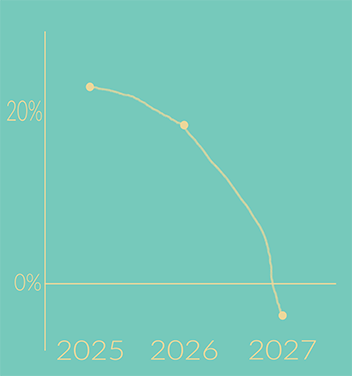
The Traditional Medicare profit margin in 2026 is projected at 19%. This is offset by the negative profit margin from Medicare Advantage and private insurance plans. It may not be realistic or fair for the taxpayer to offset poor policies in Medicare Advantage and private insurance plans, but that has been the reality for years. Medicare Advantage plans yield high profits for insurance payors, and negative margins for HHAs. With an overall profit margin of 3%, lowering the Medicare reimbursement rate by more than 3% will put all HHAs in the red.

The Math Isn't Mathing

The numbers are there. HHAs earn 5% now, 3% next year. MedPAC recommends that CMS reduce the 2026 rate by an additional 7%.

NET PROFIT MARGIN -4%

Conclusion from MedPAC: This will not impact care; providers will still be willing to treat Traditional Medicare beneficiaries.

MedPAC proposes drastic cuts

That statement may be true. However, in order for HHAs to survive, they will have to drop all MA plans. More than 50% of Medicare beneficiaries are on MA plans. 40% of MA patients use HH care after hospitalization. Medicare Advantage will survive through hospitals and physicians, but the Home Health benefit won’t have any providers.

Hospice Tie-In

CMS is currently weighing the option of the hospice carve-in to Medicare Advantage plans. The pilot plan failed miserably and yet rolling this out across all plans is an option, somehow. CMS and MedPAC must not be able to see what has happened to Home Health under MA plans. Hospice will suffer the same fate through the carve-in. It is irresponsible and destructive to add Hospice to MA. For that matter, it is irresponsible and destructive NOT to remove Home Health from MA. Move it all back to Traditional Medicare where at least the profit margin is above 0.

May Cooler Heads Prevail

From the proposed rule in July to the final rule in November, CMS lessened the permanent rate cut by about 5%, finally hearing the concerns of advocates who told them HHAs would go out of business. We certainly hope CMS will keep that in mind when considering the MedPAC recommendation.

# # #

Kristin Rowan, Editor

Kristin Rowan has been working at The Rowan Report since 2008. She is the owner and Editor-in-chief of The Rowan Report, the industry’s most trusted source for care at home news, and speaker on Artificial Intelligence and Lone Worker Safety and state and national conferences.

She also runs Girard Marketing Group, a multi-faceted boutique marketing firm specializing in content creation, social media management, and event marketing.  Connect with Kristin directly kristin@girardmarketinggroup.com or www.girardmarketinggroup.com

©2025 by The Rowan Report, Peoria, AZ. All rights reserved. This article originally appeared in The Rowan Report. One copy may be printed for personal use: further reproduction by permission only. editor@therowanreport.com

 

Feedback Adjusts Final Rule

FOR IMMEDIATE RELEASE
November 28, 2025

Contact:                                                        Hannah Kristan
communications@allianceforcareathome.org
202-355-1647

National Alliance for Care at Home: CMS Modifies Final Payment Rule Based on Stakeholder Feedback, but 1.3% Cut Still Undermines Access

Despite positive changes in final rule, home health leaders remain deeply concerned payment cuts will continue to impact patient access to care at home 

ALEXANDRIA, VA and WASHINGTON, D.C. The National Alliance for Care at Home (the Alliance) today acknowledged that the Centers for Medicare & Medicaid Services (CMS) made significant adjustments in the Home Health Perspective Payment System (HH PPS) Final Rule for CY 2026 in response to community concerns regarding patient access and data integrity. 

However, the Alliance remains concerned that any payment cut for home health providers will continue to compromise access for the millions of Medicare beneficiaries who rely on these services to age and recover from illness or injury safely at home.

Since 2019, Medicare home health providers have experienced severe cuts that have already led to a cascade of home health agency closures and reduced patient access to care, especially in rural and underserved communities. The cuts finalized by CMS today – 1.023% permanent and 3% temporary – will likely continue to exacerbate these trends.

Medicare Advantage Home Health Use

“While the Alliance acknowledges that CMS took into account some of the home health community’s recommended changes in its final rule, resulting in a lower payment cut for next year, a 1.3% overall reduction in payments compared to 2025 will likely result in continued reductions in patient access, the closure of more home health agencies, and more patients waiting in costly hospital settings instead of recovering safely at home.”

– Dr. Steve Landers, CEO for the Alliance

The Alliance commends CMS for revisiting aspects of its flawed payment approach, including the conclusion of permanent payment adjustments with CY 2026 (using data from CY 2020 through 2022) based on issues that CMS acknowledged with isolating PDGM behavior changes from non-PDGM behavior changes in CYs 2023 and beyond. In total, CMS’s changes from proposed to final rule amount to approximately $915 million more in payments to home health agencies for 2026. However, any cut will be detrimental in the face of years of compounding decreases, and more action is needed to help preserve integrity, stability, and predictability in Medicare’s home health benefit. While CMS reduced the amount of overpayments that inform the temporary payment adjustments down to 4.7 billion for CYs 2020 through 2024, home health agencies will continue to face several more years of temporary adjustments without additional action. 

“Home health care is among the most trusted, cost-effective, and patient-centered services in the Medicare program. The Alliance thanks its members, the broader home health community, and allied organizations and leaders for their advocacy to help achieve this substantial improvement for home health providers and patients nationwide. Congress must take further action to enact lasting reforms to the system that protect patient access to these services and ensure the sustainability of the Medicare home health benefit.” 

Steve Landers

CEO, National Alliance for Care at Home

Expanding access to home health care is essential to improving health outcomes, enhancing patient independence, and reducing healthcare costs. Research shows that when patients are unable to access clinically appropriate home health services, hospital readmissions are 35% higher, mortality rates are 43% greater, emergency department utilization grows by 16%, and total spending is 5.4% more than if patients were able to access the services they need. Protecting this vital benefit is also popular as 70% of U.S. voters are opposed to Medicare home health cuts. 

# # #

About the National Alliance for Care at Home

The National Alliance for Care at Home (the Alliance) is the leading authority in transforming care in the home. As an inclusive thought leader, advocate, educator, and convener, we serve as the unifying voice for providers and recipients of home care, home health, hospice, palliative care, and Medicaid home and community-based services throughout all stages of life. Learn more at www.AllianceForCareAtHome.org. 

© 2025 by National Alliance for Care at Home. This press release originally appeared on the Alliance website and is reprinted here with permission. For more information or to request reprint permission, please see press contact information above.

Appeals Court Filing

by Kristin Rowan, Editor

Appeals Court Filing

Hospice ALJ

A hospice claim may fall under review either before or after the claim has been paid. A hospice agency with a denied claim must file appeals until the claim is approved or the appeals are exhausted. First, they file a written request to reconsider. Then, they file an appeal to a Qualified Independent Contractor (QIC) who employs medical professionals to assess the case. Next, they file an appeal to an Administrative Law Judge (ALJ).

The ALJ is meant to review the documentation to determine whether it satisfies Medicare requirements. That’s all. There are two sets of criteria: the Medicare requirements and the patient record. If they match, the claim is paid. However, a recent ALJ decision and subsequent challenge suggests that the ALJ ignored expert testimony and decided independently that the patient did not qualify for hospice care.

Request to File

The hospice agency in this case filed suit against the ALJ, arguing that physician expertise should be shown deference in these cases. The National Alliance for Care at Home (the Alliance), joined by the American Academy of Hospice and Palliative Medicine (AAHPM), represented by William A. Dombi of Arnall Golden Gregory (AGG), has requested the right to file an amicus brief. An amicus brief provides extra information in a court case from an individual or group that is not part of the lawsuit, but has a vested interest in the outcome.

The Dispute

The Alliance puts at the heart of the case several issues, including:

  • Predicting death is inherently difficult
  • Physicians are the experts and their opinion should carry more weight
  • Oversight from non-qualified third parties add confusion, increase costs, and limit care

The Argument

The wording in multiple parts of the hospice benefit recognizes the expertise and importance of the physician. It is the physician who determines terminal illness. Physicians must have a face-to-face for continued eligibility. And it is the physician’s clinical judgment makes these determinations based on a patient’s individual circumstances, not an arbitrary set of standards.

If an ALJ, or any non-medical person, can overrule the treating physician’s assessment of a patient, they are effectively usurping the role of the doctor in providing a treatment plan. Medical care is subjective, which is why CMS has repeatedly considered and rejected defined criteria that would overrule a physician.

Broader Implications

The brief argues that medical professionals are better able to make care determinations. Further, the brief includes the complexity of health care prognosis, particularly in terminal illnesses. Previous court decisions have noted that “clinical judgments must be tethered to a patient’s valid medical records….” which already eliminates the need for this oversight. The Alliance stated a high probability that the decision in this case will carry substantial weight and influence both in the Sixth Circuit and in courts nationwide.

In fact, the implications may be farther reaching than that. Payors in and out of hospice deny claims deemed “unnecessary” regularly. Claims denials range from about 19% in the ACA Marketplace to as much as 49% from private payers. Even though about 80% of appeals are later accepted, only about 1% of denied claims are appealed.

Not only could this case help more patients get the hospice care they need, it could also lay the groundwork to require insurance companies to rely more heavily on the treating physician’s recommendation. We could see lower denials from prior authorization requests, unconventional treatment plans, VA benefits, and more. 

Final Thoughts

The Rowan Report supports the Alliance’s efforts in this case and wholeheartedly agrees that a physician knows better the care his patient needs than a judge ever could. We are hopeful that Bill Dombi and his team at AGG will be successful in this case and that hospice providers can get back to the  business of patient care. Read the statement from the Alliance here.

# # #

Kristin Rowan, Editor

Kristin Rowan has been working at The Rowan Report since 2008. She is the owner and Editor-in-chief of The Rowan Report, the industry’s most trusted source for care at home news, and speaker on Artificial Intelligence and Lone Worker Safety and state and national conferences.

She also runs Girard Marketing Group, a multi-faceted boutique marketing firm specializing in content creation, social media management, and event marketing.  Connect with Kristin directly kristin@girardmarketinggroup.com or www.girardmarketinggroup.com

©2025 by The Rowan Report, Peoria, AZ. All rights reserved. This article originally appeared in The Rowan Report. One copy may be printed for personal use: further reproduction by permission only. editor@therowanreport.com

 

BREAKING NEWS: Home Health Final Rule

by Kristin Rowan, Editor

BREAKING NEWS

Home Health Final Rule

While most of us were still recovering from our Thanksgiving feast overload, CMS quietly released the CY 2026 Home Health Prospective Payment System Final Rule (HH Final Rule). In past years, CMS published the HH Final Rule on or about November 1. The HH Final Rule was delayed this year due to the government shutdown.

Payment & Policy Updates

The payment rate for 2026 will change based on multiple factors:

  • HH payment update of +2.4%
  • The final permanent rate adjustment of -0.9%
  • The final temporary adjustment of -2.7%
  • Fixed-dollar loss ratio for outlier payments update of -0.1%

The aggregated payment update for 2026 is a net decrease of 1.3%

Read the CMS Fact Sheet

Face-to-Face

The CARES Act allows Nurse Practitioners, Certified Nurse Specialists, and Physicians Assistants to order and certify eligibility for Medicare HH and establish a plan of care. CMS has updated face-to-face encounters to now allow NPs, CNSs, PAs and physicians to perform face-to-face encounters whether or not they were the certifying practitioner or one who cared for the patient prior to home health care.

Home Health VBPM

Effective in April 2026, the HHCAHPS survey will undergo changes. CMS is removing these three survey-based measures:

  • Care of Patients
  • Communications between Providers and Patients
  • Specific Care Issues

CMS is adding four measures to them measure set. These include three measures related to bathing and dressing and the Medicare Spending per Beneficiary setting measure. These changes also prompted alterations to the weights of each measure and measure category. 

The expanded model has built-in criteria for the removal of any quality measure. CMS is adding an additional criteria to the list of factors. Factor 9 reads that CMS may remove a quality measure if it is not feasible to implement the measure specificiations.

Medicare Provider Enrollment Revocation

Currently, any provider must enroll and be approved to become a Medicare provider. CMS has the authority to both approve and revoke provider Medicare enrollment. When CMS revokes a provider’s Medicare enrollment, the revocation is effective 30 days after CMS mails notification to the provider. In certain circumstances, CMS can revoke enrollment retroactively to the first date of non-compliance and consequently collect any money paid to that provider back to the retroactive date. CMS is adding to the allowable grounds for retroactive revocation.

  • If an enrolled physician or practitioner has not ordered or certified services for 12 consective months
  • If a beneficiary attests that a provider did not actually perform the services they billed

Additional Changes

CMS is recalibrating case-mix weights under PDGM and LUPA thresholds.

DMEPOS accreditation regulations will now require suppliers to be resurveyed and reaccredited annually. Additionally, CMS is increasing the amount and frequency of data accrediting organizations (AOs) submit, expanding their ability to monitor AOs, and strengthening their ability to address poorly performing AOs.

The DMEPOS Competitive Bidding Program will change, but we are still waiting for the finalized improvements. CMS will begin paying for all continuous glucose monitors and insulin infusion pumps.

Read the Final Rule and additional Documents

Final Thoughts

A decrease in pay of any amount is unfortunate. However, we applaud CMS for listening to the feedback. CMS stated, “…commenters raised concers that behavior change after CY 2022 might [attribute] to factors unrelated to…PDGM.” Changes since 2020 include the introduction of OASIS-E, the expansion of value-based purchasing, and the large increase in the percentage of Medicare Advantage enrollees.

Whatever the reason, The Rowan Report joins the National Alliance for Care at Home in commending CMS for adjusting its payment calculations. The permanent pay adjustment for 2026 is listed as the final adjustment, a positive for HH moving forward. The proposed rule issued mid-year had a net -6.4% decrease in payments for a net decrease of more than $1 billion dollars. The final rule payment adjustment has a net decrease of $220 million. Still a decrease, but much more palatable.

CMS will continue to assess the need for temporary payment adjustments for several more years. Additional adjustments (read decreases) to the payment rate will impact patient access to care. The Alliance will continue to advocate and educate members of Congress and HHS to lower or eliminate they reductions. Your advocacy and support is needed to ensure the future of Care at Home. The Rowan Report will continue to support the Alliance and other advocacy groups and share with you opportunities for advovacy.

# # #

Kristin Rowan, Editor

Kristin Rowan has been working at The Rowan Report since 2008. She is the owner and Editor-in-chief of The Rowan Report, the industry’s most trusted source for care at home news, and speaker on Artificial Intelligence and Lone Worker Safety and state and national conferences.

She also runs Girard Marketing Group, a multi-faceted boutique marketing firm specializing in content creation, social media management, and event marketing.  Connect with Kristin directly kristin@girardmarketinggroup.com or www.girardmarketinggroup.com

©2025 by The Rowan Report, Peoria, AZ. All rights reserved. This article originally appeared in The Rowan Report. One copy may be printed for personal use: further reproduction by permission only. editor@therowanreport.com

 

Medicare Advantage Reform

by Kristin Rowan, Editor

Medicare Advantage Reform

Background

Traditional Medicare is available to any U.S. citizen over the age of 65 or with a qualifying disability. Part A covers hospital care, skilled nursing facility care, hospice care, and some medically necessary home health care while Part B covers doctor visits and outpatient care. Medicare is billed through and paid by the federal government.

Medicare Advantage (originally Medicare+Choice) is Medicare coverage offered by private insurance companies who are then reimbursed by the government. The goal was to create competition and lower costs. It has done neither. Medicare Advantage plans are supposed to provide all of the coverage from Parts A, B, & D except hospice care. That is still handled by traditional Medicare.

Hospice Carve-in Plan

Despite the epic failure of the recent hospice carve-in experiment, House representative Schweikert (R-AZ) introduced H.R. 3467 to reform the Medicare Advantage program and included a requirement for hospice care. The goal, according to Schweikert, is to eliminate waste and fraud and stop MA insurance companies from making billions in profits by upcoding. The solutions, outlined in H.R.3467, include requiring MA recipients to stay on the same plan for at least three years and permanently including the hospice benefit in MA plans.

Eight New Bills

On November 19, 2025, Representative Mark Pocan (D-WI), with the support of 12 other members of the House, introduced eight separate bills aimed at Medicare Advantage reform and strengthening traditional Medicare. The eight bills include:

1. Disincentives for delaying and denying lifesaving care due to prior authorization requirements
2. Automatic appeals for any denial of care
3. Visually and audibly disclosing delay and denial rates in advertising
4. Banning participation in MA for any company convicted of defrauding the government
5. Lowering MA reimbursement rates to at or below traditional Medicare rates
6. Limiting the number of MA plans a company can offer to 3 per year
7. Prohibiting MA from being the default option
8. Creating a website listing all doctors by plan

Commentary

In addition to the package cosponsors and six endorsing organizations, Rep Pocan received industry expert support for his bill package.

“Big Insurance has long pitched Medicare Advantage as a key tool to lowering health care costs and delivering better care, but like so much of their rhetoric, this is nothing but bold-faced lies. The truth is, Medicare Advantage is neither Medicare nor an advantage. And it certainly doesn’t exist to lower costs. It exists to help Big Insurance make sky-high profits and enrich shareholders. It is long past time Congress stepped in and protected patients. The legislative package Congressman Pocan is introducing is the most comprehensive plan ever introduced to rein in Medicare Advantage and protect patients. Congress should pass these bills without delay.”

Wendell Potter, President, The Center for Health and Democracy

“Medicare Advantage insurers profit from withholding medically necessary care, and can withhold care with near impunity. So, people enrolling in corporate MA plans are forced to gamble with their health and with their lives. They can’t avoid the bad actors. It’s time Congress protected older Americans and people with disabilities from bad actor Medicare Advantage insurers, as Congressman Pocan’s MA Bill package would do.”

– Diane Archer, President and Founder, Just Care

Rep. Pocan’s bills do not include the hospice carve-in and would leave hospice care under traditional Medicare. 

Faulty Logic?

Medicare Advantage plan payors have been accused of upcoding, fraud, overbilling, delays in care, and denials that circumvent the rule that MA must cover everything traditional Medicare does. It may be naive to assume that passing these bills will force unscrupulous companies to suddenly have integrity.

MA enrollees pay the standard Part B premium and might pay an additional MA premium depending on their income, geographic locations, and/or additional plan benefits. Rep. Pocan’s bill lowers what MA charges the government (aka tax payers) but does not address what the plans charge enrollees. If MA plans are required to lower reimbursement rates by 10%, for example, won’t they just increase premiums, deductibles, and copays or remove additional benefits? Sure, the government spends less, but out-of-pocket costs increase and quality of care drops.

The “Seniors Choice” bill limiting the number of plans to three is unclear in its direction. A 2019 rule removed the meaningful difference requirement for MA plans. This bill seeks to reinstate that requirement, but changes the term to “significantly different” in premiums, benefits, and cost-sharing. There are too many variables in health insurance to limit the choices to three. Three choices per company lessens the competitive need to keep prices low. 

Not so Hidden Agenda

Medicare Advantage reform is sorely needed. MA is largely fraudulent, misleading, and costly both in spending and health. Chipping away at some of these pieces is for the good of the enrollees on their surfaces. But dig just a little deeper and the goal is clear. 

Overwhelmingly, the organizations in support of this bill package are proponents of a single payer system. The prior authorizations disincentive is termination of the entire contract for the year. The disallowing participation bill includes all companies and individuals convicted of any crime, misdemeanor or greater, in any way connected to healthcare, all financial misconduct in or out of healthcare, and all acts of fraud, kickbacks, and misrepresentation of material fact. Any plan charging more than its traditional Medicare counterpart will be eliminated. Given these restrictions, it will not take long for every Medicare Advantage plan to be eliminated entirely.

 The recent government shutdown centered around the ACA subsidies that are set to expire at the end of the year. The elimination of those subsidies could push healthcare insurance premiums to a level that few can afford, furthering the need for a single payer plan.

Final Thoughts

The White House has promised a health care proposal with much speculation but no facts. The proposal has yet to be released. Congress is still negotiating the extension of Covid-era subsidy increases with only a few weeks remaining before they adjourn for the holidays. ACA participants are having to renew their health insurance without knowing what the final cost will be and many believe the number of participants will drop significantly, leaving millions uninsured. 

None of the proposed solutions will fix all the problems with healthcare. But, a temporary stay is better than losing access to healthcare altogether. This is an ongoing issue and The Rowan Report will continue to bring you the latest information as it becomes available.

# # #

Kristin Rowan, Editor

Kristin Rowan has been working at The Rowan Report since 2008. She is the owner and Editor-in-chief of The Rowan Report, the industry’s most trusted source for care at home news, and speaker on Artificial Intelligence and Lone Worker Safety and state and national conferences.

She also runs Girard Marketing Group, a multi-faceted boutique marketing firm specializing in content creation, social media management, and event marketing.  Connect with Kristin directly kristin@girardmarketinggroup.com or www.girardmarketinggroup.com

©2025 by The Rowan Report, Peoria, AZ. All rights reserved. This article originally appeared in The Rowan Report. One copy may be printed for personal use: further reproduction by permission only. editor@therowanreport.com

 

Alliance to Congress: STOP CUTS

by Kristin Rowan, Editor

9% Cut Proposed

CMS proposed home health rule for 2026 includes disastrous cuts. A 3.2% market basket increase, a 0.8% productivity cut, a 5% reduction to recoup prior overpayments, and a 4.1% permanent reduction to prevent further overpayments. CMS proposed an additional 0.5% cut to account for high-risk outliers. In other words, CMS wants to pay less for all patients to make up for the small percentage of patients who need more care.

Deadline Looming

The mandatory comment period ended on August 29. Next, CMS reviews the submitted comments, responds to those comments (generally explaining why they are not going to listen), and then finalizes the 2026 rule. The final rule is due November 1, 2025. Although, that falls on a Saturday, so the deadline may extend to Monday. A good many of us will be in New Orleans for the Alliance annual conference and expo by then.

Group Effort

The National Alliance for Care at Home (Alliance) joined 150+ provider, patient, community, and advocacy groups to write a letter to Congress urging them to prevent the CMS proposed cut.

“The proposed payment reductions for home health pose a serious threat to the health and safety of Medicare beneficiaries and to the broader integrity of our healthcare system. With the 2026 payment rule under review and due by November 1, we urge you to promptly intervene and press CMS to stop the cuts and realign payments.”

Pattern of Payment Reduction

The letter, addressed to Senate Majority Leader John Thune, Senate Minority Leader Chuck Schumer, Speaker Mike Johnson, and House Minority Leader Hakeem Jeffries, asks Congress to look at the consecutive years of pay reductions and how they have impacted home health. Because of the cuts, agencies have gone out of business or downsized, leaving rural areas without care.

Home Health Costs Less

The letter also explains that cutting medicare payments actually costs more. When more patients have access to home health, CMS spends less on unplanned hospital visits and ER trips. Patients have fewer falls and accidents. Risk factors are identified earlier and preventative treatments are used before a patient’s condition requires hospitalization. Home health patients stay home years longer than those not receiving home health before entering a skilled nursing or assisted living facility. 

What's at Risk

The Medicare Trust Fund, funded partially by payroll taxes, includes hospital insurance that pays for hospital (Medicare Part A) services. When these costs increase, the trust fund is at risk being insolvent and taxes are increased to put money back into the fund. Lowering home health payment rates and cutting off millions of people who depend on home health will impact tax payers as well.

CMS home health payment cuts
“The cuts currently proposed to Medicare’s home health benefit are unsustainable and would be deeply harmful to those who depend on care at home. The Alliance will continue to work with policymakers and our stakeholder allies to oppose these harmful cuts and protect access to home health services for millions of older adults, individuals with disabilities, and their families.”
Dr. Steve Landers

CEO, National Alliance for Care at Home

The Alliance issued a press release with the highlights from the letter. You can read the full letter here.

# # #

Kristin Rowan, Editor
Kristin Rowan has been working at The Rowan Report since 2008. She is the owner and Editor-in-chief of The Rowan Report, the industry’s most trusted source for care at home news, and speaker on Artificial Intelligence and Lone Worker Safety and state and national conferences.

She also runs Girard Marketing Group, a multi-faceted boutique marketing firm specializing in content creation, social media management, and event marketing.  Connect with Kristin directly kristin@girardmarketinggroup.com or www.girardmarketinggroup.com

©2025 by The Rowan Report, Peoria, AZ. All rights reserved. This article originally appeared in The Rowan Report. One copy may be printed for personal use: further reproduction by permission only. editor@therowanreport.com