Fraud and Abuse Compliance

by Elizabeth E. Hogue, Esq.

Fraud and Abuse Compliance

Why All Providers Should Have One

Providers may have heard or read about the importance of Fraud and Abuse Compliance Programs in their organizations. Despite the wealth of available information about Compliance Programs, many providers continue to express uncertainty about their value. 

Coincidentally, as we are preparing to publish this article, HHS publishes this report on the compliance audit of Guardian Home Care, LLC. 

Here are some of the questions providers often ask about Compliance Programs:

Why should we have a Fraud and Abuse Compliance Program?

First

The Office of Inspector General (OIG) of the U.S. Department of Health and Human Services (HHS) has clearly stated that all providers are now required to have current Compliance Programs that are fully implemented. 

Next

As a practical matter, when providers establish and maintain Compliance Programs, it clearly discourages regulators from pursuing allegations of fraud and abuse violations. Jody Hunt, formerly of the DOJ, says providers should create robust fraud and abuse compliance programs. Then providers can argue that they shouldn’t be liable for violations because their compliance programs demonstrate that they had no intent to commit fraud.

Technically speaking, the Federal Sentencing Guidelines make it clear that establishment and implementation of Compliance Programs is considered to be a mitigating factor. That is, if accusations of criminal conduct are made, the consequences may be substantially less severe as a result of a fully implemented Compliance Program.

Additionally

Providers with Compliance Programs are more likely to avoid fraud and abuse. This is because Programs routinely establish an obligation on the part of every employee to report possible instances of fraud and abuse and include training for all employees.

Compliance Programs may also help to prevent qui tam or so-called “whistleblower” lawsuits by private individuals, rather than by government enforcers, who believe that they have identified instances of fraud and abuse. There are significant incentives to bring these legal actions since “whistleblowers” receive a share of monies recovered as a result of their efforts. Some “whistleblowers” have received millions of dollars.  Compliance Programs make it clear that employees have an obligation to bring any potential fraud and abuse issues to the attention of their employers first.

Also…

The federal Affordable Care Act (ACA) requires providers to have Compliance Programs. In short, it’s the law!

Finally

The Deficit Reduction Act (DRA) requires providers who receive more than $5 million in monies from state Medicaid Programs per year to implement policies and procedures, provide education to employees and put information in their employee handbooks about fraud and abuse compliance. These requirements can be met through implementation of Fraud and Abuse Compliance Programs.

We don't receive reimbursement from the Medicare or Medicaid Programs.

Do we still need a Compliance Program?

Statutes and regulations governing fraud and abuse also apply to providers who receive payments from any federal and state healthcare programs, including Medicaid, Medicaid waiver and other federal and state health care programs, such as Tri-Care. Many private insurers have followed the federal government’s “lead” in terms of fraud and abuse enforcement.  So private duty providers must have compliance programs, too.

Should we just use the model guidance that is applicable to us?

We hear that the OIG has provided guidance for various segments of the healthcare industry regarding Compliance Programs. Specifically, the OIG has already published guidance for clinical laboratories, hospitals, home health agencies, skilled nursing facilities (SMFs), hospices, physicians’ practices, third-party billing companies and home medical equipment companies. The OIG will publish updated guidance for all providers, It has already done so for SNFs.

The answer is “No!” Guidance from the OIG is not a model Compliance Program. Guidance from the OIG consists of general guidelines and does not constitute a valid Compliance Program. In addition, the OIG has made it clear that Programs must be customized for each organization. 

Do we have to conduct internal audits first?

We have read that, before implementing Compliance Programs, providers must conduct expensive internal audits that can take many months to complete. Is this true?

While beginning the compliance process with an extensive internal audit is certainly one way to proceed, it is not the only viable way to work toward compliance. It is equally valid to begin with Compliance Programs that are customized for the organization that includes training for all employees about fraud and abuse and Compliance Programs. Then all staff members can subsequently participate in internal compliance activities, including audits, with a process in place to handle any issues that arise as a result of the audits.

We already have policies. Why do we need a Compliance Program too?

Compliance Programs are specific types of documents that routinely address issues that providers do not usually cover in internal policies and procedures. In addition, providers may not gain benefits under the Federal Sentencing Guidelines described in the first question above if there is no formal document called a Compliance Program.

We're accredited. Doesn't that mean we are in compliance?

On the contrary, Compliance Programs appropriately address potential fraud and abuse issues. They also include mechanisms for helping to ensure compliance such as processes for identification and correction of potential problems that are not addressed during the certification process. In other words, organizations may be accredited but fail to meet applicable compliance standards for fraud and abuse.

Will it help with investigations?

Will the fact that our organization has a Compliance Program make any difference with regard to the outcome of fraud and abuse investigations and the imposition of Corporate Integrity Agreements (CIA’s)? 

Yes, it may make a considerable difference based on statements from the OIG. If providers have Compliance Programs in place that are current and fully implemented, the OIG may be less aggressive in pursuing potential violations. When the OIG actually discovers problems with fraud and abuse in organizations, providers are usually asked to develop and implement a Corporate Integrity Agreement (CIA). The OIG often requires CIA’s to include a process for stringent monitoring by the OIG on a continuous basis. These monitoring activities can be extremely burdensome to providers in terms of both time and money. Providers with valid Compliance Programs are not necessarily asked to develop and implement CIA’s. 
Fraud and Abuse Compliance

Final Thoughts

Now is the time for all providers to recognize and act upon the need to establish and maintain Compliance Programs. “Working on it” is no longer good enough.


Elizabeth E. Hogue, Esq.

Elizabeth Hogue is an attorney in private practice with extensive experience in health care. She represents clients across the U.S., including professional associations, managed care providers, hospitals, long-term care facilities, home health agencies, durable medical equipment companies, and hospices.

©2025 Elizabeth E. Hogue, Esq. All rights reserved.

No portion of this material may be reproduced in any form without the advance written permission of the author.

©2025 by The Rowan Report, Peoria, AZ. All rights reserved. 
DOJ Settles with UnitedHealth and Amedisys

by Kristin Rowan, Editor

DOJ Settles with UnitedHealth and Amedisys

Judge to Weigh In

DOJ settles with UnitedHealth and Amedisys after almost nine months of negotiations. The Department of Justice (DOJ) initially blocked the proposed merger between UnitedHealth and Amedisys, citing concerns over eliminating competition in home health and hospice services in some areas of the U.S. After the most recent settlement hearing, the merger seems to be back on track.

Public Comment Period and Judicial Review

Now that the DOJ hurdle has been passed, there is a public comment period. Following the public comment period, the U.S. District Court for the District of Maryland will enter final judgement. From the Justice Department website:

As required by the Tunney Act, the proposed settlement, along with a competitive impact statement, will be published in the Federal Register. Any interested person should submit written comments concerning the proposed settlement within 60 days following the publication to Jill Maguire, Acting Chief, Healthcare and Consumer Products Section, Antitrust Division, U.S. Department of Justice, 450 Fifth Street NW, Suite 4100, Washington, DC 20530. 

Antitrust Division Statement

“In no sector of our economy is competition more important to Americans’ well-being than healthcare. This settlement protects quality and price competition for hundreds of thousands of vulnerable patients and wage competition for thousands of nurses. I commend the Antitrust Division’s Staff for doggedly investigating and prosecuting this case on behalf of seniors, hospice patients, nurses, and their families.”

Abigail Slater

Assistant Attorney General, Justice Department Antitrust Division

Divestiture Agreement

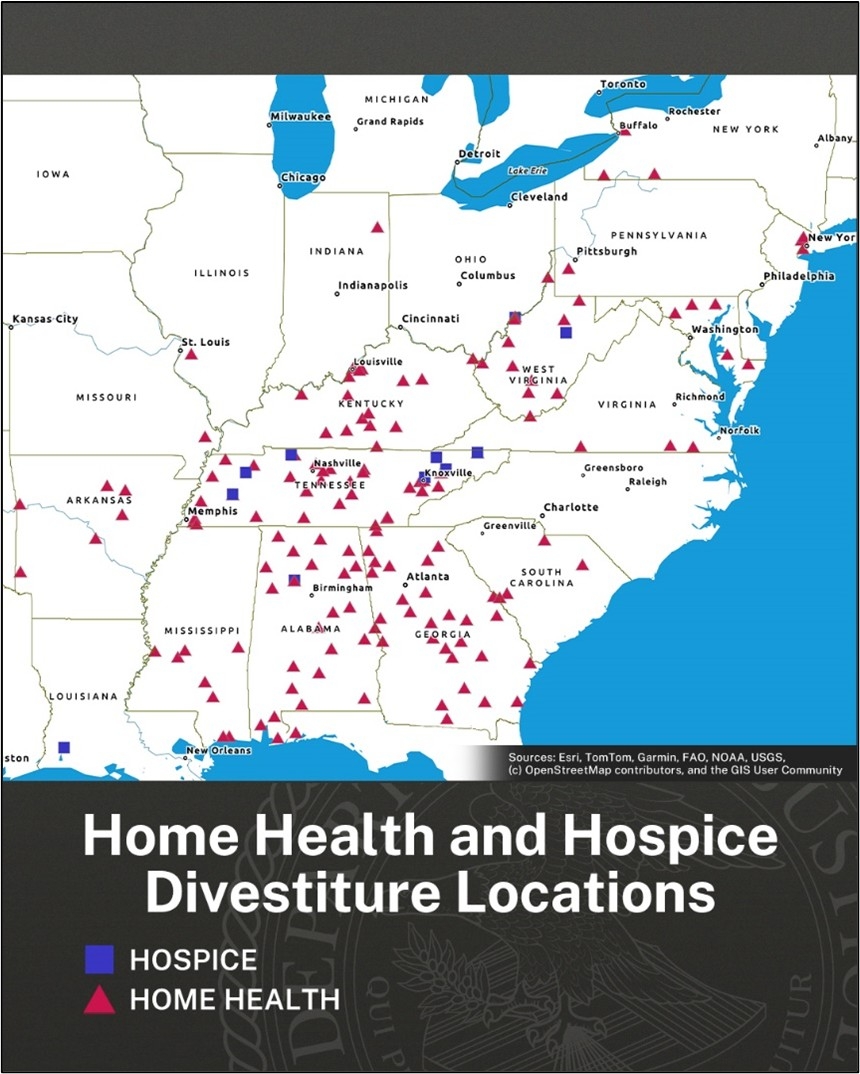
According to the new agreement, UnitedHealth will sell 164 home health and hospice locations across 19 states. In addition to the sale, the agreement provides the buyers of these locations with assets, personnel, and relationships to help them compete with remaining UnitedHealth locations. Also included are protections to deter UnitedHealth from interfering with the new owners’ ability to compete.

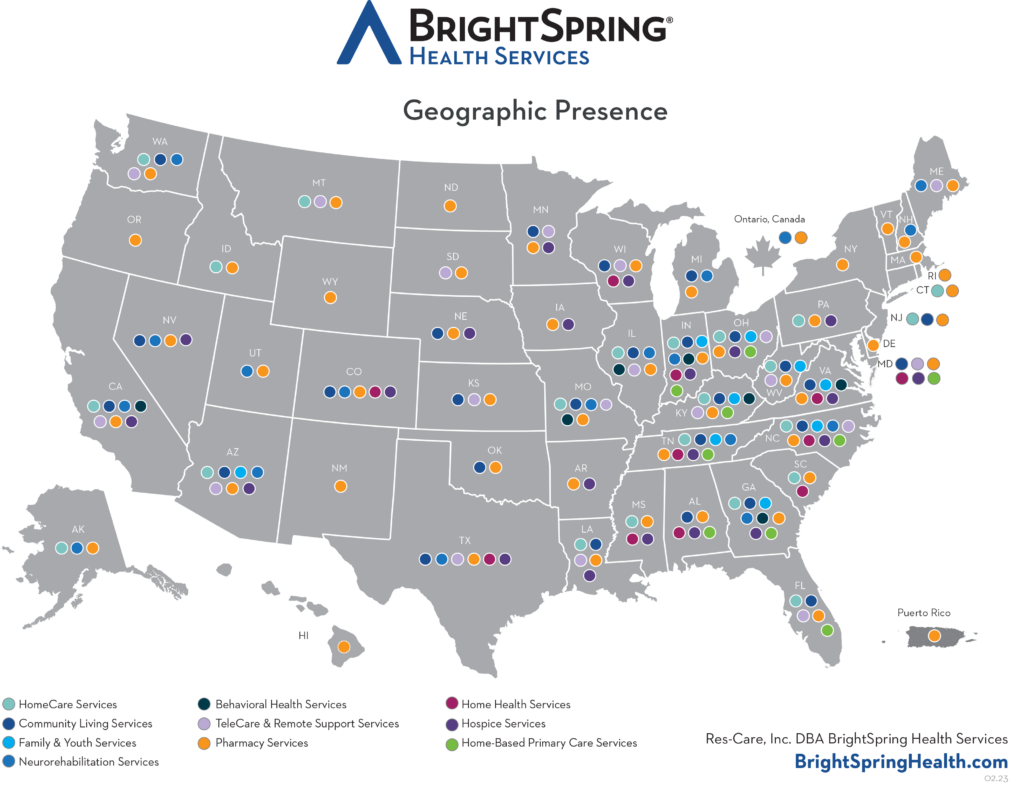
BrightSpring Health Services and Pennant Group will acquire the 164 locations. Slater said the settlement, which includes the largest ever divestiture of outpatient healthcare, protects quality and price competition patients as well as wage competition for nurses. However, antitrust specialist Robin Crauthers, a partner with McCarter & English, says it doesn’t go far enough. According to Crauthers, the settlement agreement does not address all of the markets that would have less competition and that the DOJ accepted less than they wanted in the agreement.

Additionally, critics argue the divestiture moves 164 home health and hospice agencies from one large player to two other large players in the space. Arguably, rather than preserve competition, this divestiture agreement will only serve to strengthen the largest players in the market, giving them a substantial advantage over smaller agencies in these areas.

UnitedHealth Amedisys divestiture locations

Not the Only Concern

Vertical Integration

Joe Widmar, Director of M&A at West Monroe consulting firm, says that the number of home health and hospice agencies is not the tipping factor in competition. Rather, it is UnitedHealth’s vertical integration. A health insurance company that also owns nearly 2,700 subsidiaries, including pharmacies, home health and hospice, behavioral health, consulting for healthcare organizations, surgery centers, hospitals, mental health, managed care for Medicaid and Medicare, and specialty care. Virtually any referral from a PCP to any other health professional puts more money into the health care giant’s pockets. The lack of competition is across all forms of healthcare, leaving patients no choice buy to support UnitedHealth Group in areas where all local healthcare providers are subsidiaries. I 2024, UnitedHealth insurance paid $150.9 million to its subsidiaries for care. These provider companies are not counted in the profit caps placed on insurance companies.

Upcoding

In addition to side-stepping profit caps, vertical integration aids in upcoding. Upcoding is the practice of digging into a patient’s life to find (or create) additional patient needs. Insurers add as many codes as possible for the greatest reimbursement rates. According to a recent study, UnitedHealthcare overbilled Medicare Advantage by $14 billion through upcoding. 

In-home health risk assessments and patient reviews, often offered to beneficiaries as a free service, result in an average risk score 7% higher than in patients seen in medical practices and hospitals. UnitedHealth generates more income from patient review diagnoses than any other MA insurer. The Department of Justice is currently investigating UnitedHealth’s Medicare billing practices.

Final Thoughts

If you own a home health, hospice, or palliative care agency in any of the states shown in the graphic above, write to Jill Maguire with comments and concerns. Our primary objective is providing quality care to patients in their homes. We know that home care is less expensive for the patient and government-funded insurance. But not when all the home care agencies in an area are owned by only a few of the largest home health agencies in the country. And not when the insurer is adding diagnostic codes to pad their bill. 

# # #

Kristin Rowan, Editor

Kristin Rowan has been working at The Rowan Report since 2008. She is the owner and Editor-in-chief of The Rowan Report, the industry’s most trusted source for care at home news, and speaker on Artificial Intelligence and Lone Worker Safety and state and national conferences.

She also runs Girard Marketing Group, a multi-faceted boutique marketing firm specializing in content creation, social media management, and event marketing.  Connect with Kristin directly kristin@girardmarketinggroup.com or www.girardmarketinggroup.com

©2025 by The Rowan Report, Peoria, AZ. All rights reserved. This article originally appeared in The Rowan Report. One copy may be printed for personal use: further reproduction by permission only. editor@therowanreport.com

 

Fraud, Waste, and Abuse

by Kristin Rowan, Editor

Fraud, Waste, and Abuse

DOJ, HHS False Claims Act

Fraud, Waste, and Abuse has become something of a mantra within the Department of Health and Human Services (HHS). Secretary Kennedy has committed to combatting fraud, waste, and abuse within the federal healthcare system. The Department of Justice (DOJ) and HHS have a long history of working together to combat healthcare frauding under the False Claims Act (FCA).

Working Group

In furtherance of their goal to combat healthcare fraud, HHS and DOJ have formed the DOJ-HHS False Claims Act Working Group. The Working Group will include leadership from the HHS Office of General Counsel, CMS Center for Program Integrity, the Office of Counsel for the OIG, and the DOJ Civil Division.

Working Group Priorities to Combat Fraud, Waste, and Abuse

1. HHS will refer potential False Claims Act violations to the DOJ that are in line with the Working Group priority enforcement areas:

  • Medicare Advantage
  • Drug, device, or biologics pricing
    • arrangements for discounts, rebates, service fees, and formulary placement and pricing reporting
  • Barriers to patient access to care
    • violations of network adequacy requirements
  • Kickbacks related to drugs, medical decives, DME, and other products paid for by federal healthcare programs
  • Materially defective medical devices that impact patient safety
  • Manipulation of Electronic Health Records systems to drive inappropriate utilization of Medicare covered products and services

2. The Working Group will maximize collaboration to expedite investigations and identify new leads. They will leverage HHS resources using data mining and assessment of findings.

3. The Working Group will discuss implementing payment suspension according to the CMS Medicare Program Code of Federal Regulations¹

4. The Working Group will discuss whether DOJ will dismiss a whistleblower case under the U.S. Code for Civil actions for False Claims, pursuant to the DOJ Manual for Civil Fraud Litigation²

Report Fraud, Waste, and Abuse

The Working Group encourages whistleblowers to report violations of the False Claims Act within the priority areas. Tips and complaints from all sources about potential fraud, waste, abuse, and mismanagement can be reported to HHS at 800-HHS-TIPS (800-447-8477). Similarly, the Working Group encourages healthcare companies to identify and report such violations.

Fraud, Waste, and Abuse

²DOJ Dismissal of a Civil Qui Tam Action. When evaluating a recommendation to decline intervention in a qui tam action, attorneys should also consider whether the government’s interests are served, in addition, by seeking dismissal pursuant to 31 U.S.C. § 3730(c)(2)(A).

¹Suspension of payment. The withholding of payment by a Medicare contractor from a provider or supplier of an approved Medicare payment amount before a determination of the amount of the overpayment exists, or until the resolution of an investigation of a credible allegation of fraud.

# # #

Kristin Rowan, Editor

Kristin Rowan has been working at The Rowan Report since 2008. She is the owner and Editor-in-chief of The Rowan Report, the industry’s most trusted source for care at home news, and speaker on Artificial Intelligence and Lone Worker Safety and state and national conferences.

She also runs Girard Marketing Group, a multi-faceted boutique marketing firm specializing in content creation, social media management, and event marketing.  Connect with Kristin directly kristin@girardmarketinggroup.com or www.girardmarketinggroup.com

©2025 by The Rowan Report, Peoria, AZ. All rights reserved. This article originally appeared in The Rowan Report. One copy may be printed for personal use: further reproduction by permission only. editor@therowanreport.com

 

DOJ Rejects Plan

by Kristin Rowan, Editor

DOJ Rejects Plan to Divest Assets

DOJ rejects plans to divest assets from UnitedHealth and Amedisys to BrightSpring Health Services and the Pennant Group. Last week, we reported that Amedisys and UnitedHealth had entered an agreement to divest certain home health and hospice agencies to satisfy anti-trust concerns. The plan is contingent on the finalization of the merger between UnitedHealth and Amedisys.

Divesting Assets

The merger between UnitedHealth and Amedisys has been ongoing since last summer. Shortly after the announcement, the Department of Justice sued under anti-trust allegations to stop the merger. According to the DOJ, even if the companies offload the 120 planned locations, it would not safeguard competition in home health and hospice markets. The DOJ cited overlap in certain markets where UnitedHealth and Amedisys both currently have agencies.

This could spell T-R-O-U-B-L-E

Following the lawsuit, Amedisys and UnitedHealth started talks with VitalCaring to divest properties. That deal fell through after VitalCaring lost its own lawsuit last year. This latest blow could stall the merger altogether. The DOJ reportedly rejected the divestiture stating that it wasn’t enough. Unless Amedisys and UnitedHealth divest more properties in certain markets, the DOJ is unlikely to approve the merger. 

Mediation

The parties are scheduled to enter mediation on August 18th. The judge has now scheduled a follow-up mediation appointment on August 25th, anticipating that one day of mediation will not resolve the lawsuit. Amedisys and UnitedHealth have 90 days to secure additional divestiture that will satisfy the DOJ before mediation begins. 

DOJ Rejects Plan

This is an ongoing story and The Rowan Report will continue to bring you the latest news on the merger. Please see our accompanying articles this week on the new UnitedHealth CEO and the new DOJ investigation on UnitedHealth Group.

# # #

Kristin Rowan, Editor

Kristin Rowan has been working at The Rowan Report since 2008. She is the owner and Editor-in-chief of The Rowan Report, the industry’s most trusted source for care at home news, and speaker on Artificial Intelligence and Lone Worker Safety and state and national conferences.

She also runs Girard Marketing Group, a multi-faceted boutique marketing firm specializing in content creation, social media management, and event marketing.  Connect with Kristin directly kristin@girardmarketinggroup.com or www.girardmarketinggroup.com

©2025 by The Rowan Report, Peoria, AZ. All rights reserved. This article originally appeared in The Rowan Report. One copy may be printed for personal use: further reproduction by permission only. editor@therowanreport.com

 

New Deal to Sell HH & Hospice Agencies

by Kristin Rowan, Editor

UnitedHealth, Amedisys to Divest Home Health & Hospice...Again

History

UnitedHealth, Amedisys to divest home health and hospice properties to satisfy DOJ. Almost two years ago, the health services division of UnitedHealth Group, Optum, announced plans to by Amedisys. The purchase announcement came after Optum outbid Option Care Health with an unsolicited offer. The Department of Justice launched an anti-trust probe shortly after the announcement. To satisfy the DOJ, UnitedHealth and Amedisys plan to divest some of its businesses as part of the acquisition agreement.

Anti Anti-Trust

We previously reported that Amedisys entered into an agreement with VitalCaring to divest some of its home health and hospice locations. This agreement was meant to satisfy the DOJ concerns raised in its anti-trust lawsuit against Amedisys and UnitedHealth. 

In January of 2025, VitalCaring lost a lawsuit filed by Encompass Health and Enhabit and were ordered to pay 43% of all future profits to the two companies. In the wake of that court decision, VitalCaring pulled the agreement and signed a mutual release with UnitedHealth, with all parties walking away from the deal.

BrightSpring

BrightSpring Health Services is an $11.5B company with locations across the United States and employing more than 37,000 people. In January of this year, BrightSpring sold is Community Living Business to Sevita. BrightSprings intends to acquire additional properties, focusing on its home- and community-based businesses. According to the BrightSpring President and CEO Jon Rousseau, BrightSpring is “focused on getting to 3x leverage within the next two years.”

Amedisys operates in 38 states with more than 500 locations. The document Amedisys submitted to the SEC does not indicate how many of its properties and those of UnitedHealth will be divested. A UnitedHealth statement said the company plans to divest at least 128 home health and hospice facilities.

One has to wonder whether we are trading one monopoly for another.

BrightSpring Health Services

New Deal

As the DOJ lawsuit enters mediation this August, UnitedHealth and Amedisys search for another way to divest its properties. Enter the New Deal. BrightSpring Health Services, parent company to Adoration Home Health Acquisition LLC, Adoration Hospice Care Acquisitions LLC and Senescence LLC, DBA All Saints Hospice will purchase some of the properties from both Amedisys and UnitedHealth. The Pennant Group, parent company to Cornerstone Healthcare, Inc. and Tensaw River Healthcare, LLC, will purchase additional properties from bother companies.

According to documents submitted to the Securities and Exchange Commission (SEC), both agreements have mulitple contingencies, including the finalization of the UnitedHealth/Amedisys merger. Financial information on the two deals was not included in the Amedisys SEC filing. In a separate filing, Pennant valued their part of the agreement at nearly $102.5 million.

No Deal Yet

The sale of properties to BrightSpring and Pennant Group relies on the finalization of the merger between Amedisys and UnitedHealth. A magistrate will oversee mediation between the two companies and the DOJ beginning this August.

The SEC and the DOJ have not yet responded to the intent to divest to BrightSpring and Pennant Group.

Final Thoughts

The proposed merger between UnitedHealth and Amedisys has been ongoing for two years. The two companies, who previously stated their competition helped keep them honest and keep costs low, now state that the merger will lower costs even more. The DOJ disagrees. To alleviate concerns, the merger includes the release of properties anywhere the merger would create an unfair advantage. Mediation in August will reveal more on the position of the DOJ, the response from UnitedHealth and Amedisys, and the specifics of the divestment of home health and hospice agencies. The merger proposal expires December 31, 2025. We will continue to follow the story as the parties enter mediation.

# # #

Kristin Rowan, Editor

Kristin Rowan has been working at The Rowan Report since 2008. She is the owner and Editor-in-chief of The Rowan Report, the industry’s most trusted source for care at home news, and speaker on Artificial Intelligence and Lone Worker Safety and state and national conferences.

She also runs Girard Marketing Group, a multi-faceted boutique marketing firm specializing in content creation, social media management, and event marketing.  Connect with Kristin directly kristin@girardmarketinggroup.com or www.girardmarketinggroup.com

©2025 by The Rowan Report, Peoria, AZ. All rights reserved. This article originally appeared in The Rowan Report. One copy may be printed for personal use: further reproduction by permission only. editor@therowanreport.com

 

VitalCaring Pulls Agreement

by Kristin Rowan, Editor

Just as we were setting the article on UnitedHealth Group and Amedisys for publication, we received the following breaking news story:

VitalCaring Divestment Agreement Cancelled

VitalCaring entered into the agreement on June 28, 2024, just after the merger announcement and initial pushback from the Department of Justice. The DOJ approved the divestiture, despite some misgivings about the quality of care. VitalCaring said at the time that it believed the merger and the divestment were in the “best interest of patients and stakeholders.”

VitalCaring has been under its own scrutiny since 2022 when Encompass Health and its home health and hospice arm, Enhabit, Inc. accused VitalCaring CEO April Anthony of using unethical practices to establish the company. Anthony is the founder of Encompass Home Health & Hospice, the previous owner and CEO of Liberty Health Services, and founder and former CEO of Homecare Homebase.

She Who Shall Not be Named

Encompass Health filed an injunction against April Anthony, and her partners Vistria Group and Nautic Partners in 2021 for violation of the terms of her employment agreement, non-competition agreement, non-solicitation, and misappropriation of trade secrets.

Anthony and her partners purchased a small home health agency in Louisiana and started plan for its growth while Anthony was still CEO of Encompass. Additionally, Anthony recruited employees of Encompass to work at her new venture using a fake recruiter to cover her tracks. Anthony used fake names, spouses’ phones, and her personal laptop to remain undetected during this time. Anthony asked her partners and recruits to refer to her as Voldemort.

Judgment Day

In August of 2022, a judge called the actions of Anthony and her partners “willful misconduct” and agreed with almost all of Encompass’s allegations. The judge found that Anthony was in violation of her non-compete agreement and that she was actively running a direct competitor while still serving as CEO of Encompass. The judge stated, “These are not the actions of a person complying with her contractual obligations.” Although Encompass’s injunction asked to have the non-compete agreement extended, the judge only enforced the existing non-compete agreement, and found that that Anthony had violated the covenant.

Pay the Piper

The Delaware Court of Chancery, in December of 2024, agreed with the earlier findings of the court and found that Anthony, two former senior officers of Encompass, and the investment companies were complicit in their miconduct and that VitalCaring was a result of their deceit.

The court awarded an upfront payment for mitigation damages of $1.62 million dollars plus attorneys’ fees. The court also imposed a trust entitling Encompass Health and Enhabit to 43% of al of VitalCaring Group’s future profits, paid quarterly as well as 43% of proceeds if and when the company is sold.

Divorce Proceedings

Depending on the source, each of the companies involved in the divestiture agreement are claiming credit for filing for divorce. 

  • An equity analyst for UnitedHealth Group said, “UNH has abandoned VitalCaring as a divestiture buyer after the Delaware Chancery decision against VitalCaring’s executives.”
  • An article from a hospice website stated, “Amedisys has halted the divestiture of some of its home health and hospice locations to Texas-based VitalCaring. 
  • A stock market website reported “VitalCaring Group cancelled the acquisition of certain home health care centers from UnitedHealth Group, Inc.”

Regardless of who filed for divorce, UnitedHealth Group and Amedisys are courting new partners to acquire the home health centers that need to be divested before their marriage can be blessed by the DOJ.

# # #

Kristin Rowan, Editor

Kristin Rowan has been working at The Rowan Report since 2008. She is the owner and Editor-in-chief of The Rowan Report, the industry’s most trusted source for care at home news .She also has a master’s degree in business administration and marketing and runs Girard Marketing Group, a multi-faceted boutique marketing firm specializing in content creation, social media management, and event marketing.  Connect with Kristin directly kristin@girardmarketinggroup.com or www.girardmarketinggroup.com

©2025 by The Rowan Report, Peoria, AZ. All rights reserved. This article originally appeared in The Rowan Report. One copy may be printed for personal use: further reproduction by permission only. editor@therowanreport.com
 

UnitedHealth Group Amedisys Merger Faces Further Delays

by Kristin Rowan, Editor

UHG and Amedisys Waive Termination

The UnitedHealth Group and Amedisys merger has been an ongoing story since the initial merger agreement was signed in June of 2023. The proposed merger came under scrutiny by the Federal Trade Commission (FTC) and the Department of Justice (DOJ). UnitedHealth Group and Amedisys are competitors in the home healthcare market and the merger would hurt patients.

“UnitedHealth’s plan to extinguish Amedisys as a competitor is the result of an intentional, sustained strategy of acquiring, rather than beating, competition.”

Department of Justice

DOJ Pushes Back

Late in 2024, the DOJ filed a lawsuit against the merger, claiming that both companies have acknowledged that their competition helps keep them honest and drive quality both in patient and employee care. The DOJ noted that the acquisition would be presumptively illegal in multiple markets. UHG, Amedisys, and Optum proposed selling off some of its care centers to address the concerns about competition. 

Merger Deadline Reached

Under the initial merger agreement, UHG would pay $3.3 billion to acquire Amedisys, which would remain as a subsidiary of UHG. That agreement was set to be finalized on December 27, 2024. There has been no decision made on the DOJ lawsuit, so the merger could not be completed. UHG and Amedisys have mutually agreed to extend the merger and added a break fee of $275 million.

Indefinite Merger Extension Through 2025

The new agreement has an indefinite ending. According to the wording, the merger agreement will now expire either on December 31, 2025 or 10 days after a final court decision in the lawsuit, whichever comes first.

According to the new filing with the SEC, UnitedHealth and Amedisys will be divesting assets to secure the merger and satisfy the DOJ. If not, they will incur a break fee of up to $325 million. Both companies have an agreement with VitalCaring Group to acquire the necessary assets.

UnitedHealth Group Amedisys Merger

What If?

If…The Trump administration is less stringent in antitrust matters, as expected.

The lawsuits currently at the U.S. District Court and five states will likely fail.

If…the U.S. District Court for the District of Maryland either decides to block the merger permanently or does not reach a final order by the end of the year…

The merger agreement will expire.

If…UnitedHealth Group, Optum, and/or Amedisys fails to divest holdings…

The merger agreement will not satisfy the antitrust regulations and the failing party will pay hundreds of millions in damages, and the merger agreement will end.

This is an ongoing story and we will continue to report on updates as they occur. See our accompanying BREAKING NEWS story.

# # #

Kristin Rowan, Editor

Kristin Rowan has been working at Healthcare at Home: The Rowan Report since 2008. She has a master’s degree in business administration and marketing and runs Girard Marketing Group, a multi-faceted boutique marketing firm specializing in event planning, sales, and marketing strategy. She has recently taken on the role of Editor of The Rowan Report and will add her voice to current Home Care topics as well as marketing tips for home care agencies. Connect with Kristin directly kristin@girardmarketinggroup.com or www.girardmarketinggroup.com

©2025 by The Rowan Report, Peoria, AZ. All rights reserved. This article originally appeared in The Rowan Report. One copy may be printed for personal use: further reproduction by permission only. editor@therowanreport.com