Interoperability: The Unreachable Dream

by Kristin Rowan, Editor

Interoperability

The Unreachable Dream

Healthcare and care at home have been reaching for interoperability for decades. When I started working in the care at home industry, there was a learning curve for terminologies, abbreviations (oy! with the abbreviations already!), and the pain points experienced by agencies and vendors. Interoperability was at the top of that list. 2009, the first full year I worked in care at home, was the year Congress mandated EHRs and data exchange. The mandate did not accomplish much. Incompatible data structures limit post-acute care data to the most recent health event, not the patient’s full medical record.

Data Exchange

Interoperability

Following the EHR mandate, Congress continued to add regulations and rules to advance data exchange. Starting with HIPAA in 1996, interoperability advanced as follows:

Health Insurance Portability and Accountability Act ensures patient data stays private both within a healthcare system and during data exchange

Congress mandated the use of EHRs throughout healthcare

HITECH Act launched Health Information Exchanges (HIEs) that support secure exchange of information between health systems

Health Level 7 (HL7) designed a framework that establishes protocols for data exchange

Fast Healthcare Interoperability Resources (FHIR), an updated of HL7, enables processes in 84% of hospitals and 61% of clinician offices

21st Century Care Act allows patients to access their own medical information and requires developers to publish APIs and ensure all data in the patient health record is accessible through that API

Trusted Exchange Framework and Common Agreement (TEFCA) lists principles, terms, and conditions to standardize data

CMS Interoperability Framework pushes interoperability nationwide through improved data quality; advanced technology; data aggregation; and alignment of data, tools, and measures

Following the EHR mandate, Congress continued to add regulations and rules to advance data exchange. Starting with HIPAA in 1996, interoperability advanced as follows:Interoperability

  • Health Insurance Portability and Accountability Act ensures patient data stays private both within a healthcare system and during data exchange
  • Congress mandated the use of EHRs throughout healthcare
  • HITECH Act launched Health Information Exchanges (HIEs) that support secure exchange of information between health systems
  • Health Level 7 (HL7) designed a framework that establishes protocols for data exchange
  • Fast Healthcare Interoperability Resources (FHIR), an updated of HL7, enables processes in 84% of hospitals and 61% of clinician offices
  • 21st Century Care Act allows patients to access their own medical information and requires developers to publish APIs and ensure all data in the patient health record is accessible through that API
  • Trusted Exchange Framework and Common Agreement (TEFCA) lists principles, terms, and conditions to standardize data
  • CMS Interoperability Framework pushes interoperability nationwide through improved data quality; advanced technology; data aggregation; and alignment of data, tools, and measures

Thirty Years Later

Despite the laws, regulations, frameworks, and mandates, interoperability is not much better than it was in 1996. I had an experience this year that both enlightened and infuriated me. I switched health insurance plans for a variety of reasons. My new plan didn’t cover most of the doctors, hospitals, and health systems I had been using for many many years. So in February, I found a new PCP and had the standard start of care visit to establish my health history: current conditions, past conditions, past surgeries & procedures, current medications, etc. I requested referrals to new specialists and updates to prescriptions. My PCP performed a “complete physical” that was nothing more than a cursory overview. And then I waited.

Interoperability

The Waiting Game

And waited…and waited…. I thought all these organizations and standards were supposed to make this easier. Still, I waited.

  • I waited for an “invitation” to my PCPs portal to see my visit notes and test results
  • I waited for my PCP to send referrals to new specialists
  • I waited for my health insurance provider to inevitably tell me the specialist wasn’t covered under my plan
  • I waited for a new referral from my PCP
  • I waited for appointments, results, and recommendations
  • I waited for access to new patient portals
  • I waited for the portal to figure out how to give me access to three different providers in the same app
    • (spoiler alert: I have to log in to the same app three different ways to access three different providers; my providers can see all the information in one place, but I can’t)
  • I waited for test results to appear in each portal; some I had to call and request, some I’m still waiting for

Data Exchange "Advancements"

According to my research, 84% of hospitals and 61% of clinicians are currently using FHIR, designed to improve interoperability between different health systems using standard data formats and APIs.

Last month I had an appointment. Correction: I thought I had an appointment for an imaging scan. I thought this because the scheduling nurse called me to confirm the appointment day, time, and location. When I arrived, the check-in nurse couldn’t find me in their system.

It wasn’t just that she didn’t see my appointment. No, it was that she couldn’t find me at all. (We later discovered it was still pending because the imaging department never confirmed the appointment after the scheduling nurse added it.) 

She could see no current or future appointments. She could see no past appointments because they were booked a different way. She couldn’t find any record of me at all. You see, my record started in the next building over.

Error 404: Not Found

Every one of these facilities is in the same healthcare system. (Think ACME hospital, ACME imaging, ACME specialist doctor, and ACME lab) Every office is part of the same healthcare system and none of them can see each other’s information. ACME hospital can’t see the schedule for ACME imaging and can’t schedule imaging appointments outside the hospital. For that, I have to call ACME imaging.

  • But wait! The doctor wrote my referral for ACME hospital, not ACME imaging. I need a new referral.
  • But wait! Neither the healthcare system nor the specialist can write a new referral. My payer will only accept a referral from my PCP.
  • But wait! My PCP has no idea what the referral is for, how it was written, or where it’s supposed to go because my PCP can’t access my records from the healthcare system.

This is advanced data exchange using FHIR, HIE, TEFCA, and QHIN. My health system uses our local HIE and CommonWell Health Alliance, an interoperability network designated as a federal QHIN. Apparently, this ensures the health system can share data with participating providers, but not with themselves.

Home Health is Even Further Behind the Curve

After so many years, so many advancements, and so many regulations, interoperability is no more “solved” than it was in 2009. Even the health systems that are using all the tools aren’t even internally interoperable.

Home Health has an even harder time attaining interoperability. 

  • It is more difficult for HHAs to access patient information, which usually has to be manually imported into the home health EHR
  • Patient consent is required, but HHAs often deal with patients who don’t have the capacity to consent
  • Despite the requirement of APIs, most health information is spread out across multiple systems and the HHA only get information from the referring facility
  • Nearly 80% of HHAs use an EHR
  • Only 28% of HHAs are electronically exchanging information with outside facilities
  • Only 18% can integrate shared data into automated workflows
  • HHAs did not receive the financial incentives that larger healthcare systems got to push interoperability
  • TEFCA participation is not mandatory, slowing down the process of approving a data connection and exchange

Many legacy EHRs have met significant challenges moving into interoperability. Competitors in the space had no financial incentive to create standard languages and formatting designed to share information. HHAs are left with two choices: 

The costly, time-consuming task of reviewing, selecting, and onboarding an entirely new EHR –or–

Piece together workarounds with multiple 3rd party or internal solutions haphazardly strung together to resemble interoperability

Time is Up

The call for interoperability started in 1996. With little advancement and not much hope on the horizon, we (your patients) are looking for other ways to get what we need. Next week, I’ll talk about my predictions for how interoperability will progress for the next generation.

# # #

Kristin Rowan, Editor

Kristin Rowan has been working at The Rowan Report since 2008. She is the owner and Editor-in-chief of The Rowan Report, the industry’s most trusted source for care at home news, and speaker on Artificial Intelligence and Lone Worker Safety and state and national conferences.

She also runs Girard Marketing Group, a multi-faceted boutique marketing firm specializing in content creation, social media management, and event marketing.  Connect with Kristin directly kristin@girardmarketinggroup.com or www.girardmarketinggroup.com

©2025 by The Rowan Report, Peoria, AZ. All rights reserved. This article originally appeared in The Rowan Report. One copy may be printed for personal use: further reproduction by permission only. editor@therowanreport.com


TEFCA and QHINs: Interoperability 2

by Ben Rosen, Sr. Client Success Manager, Netsmart

Interoperability

What you need to know and how it affects you Part 2

For over two decades, tech companies and government agencies have been moving toward the goal of interoperability in healthcare technology. At long last, standards and protocols are in place — and continually being improved — to support open data exchange networks. As a result, healthcare providers, including human services, post-acute providers, and specialty practices, have more opportunities to participate in alternative payment models and adapt more readily to the evolving payment landscape.

This is part two of a four-part series covering the forces that are driving interoperability, as well as the future vision of open networks, and what it all could mean to your organization. Read Part One Here.

Interoperability in Healthcare

The creation of TEFCA and QHINs

TEFCA (Trusted Exchange Framework and Common Agreement) is a national framework designed to enable seamless, secure sharing of health information across organizations. With respect to EHRs, this framework simplifies data exchange with other providers, payers and public health entities while enhancing compliance with interoperability requirements. TEFCA is touted as a nationwide federal and private data exchange network.

End goal

One of TEFCA’s main goals is to standardize data sharing, therefore reducing the complexity of managing multiple connections and enhancing the interoperability of your EHR with other systems nationwide.

TEFCA was created by the U.S. Department of Health and Human Services’ Assistant Secretary for Technology Policy (ASTP). The ASTP is contracting with the Recognized Coordinating Entity (RCE), The Sequoia Project. The RCE is tasked with governing and maintaining the operations of the entities who are electing to implement the TEFCA network, these entities are referred to as Qualified Health Information Networks (QHINs).

Interoperability
Interoperability TEFCA QHIN

QHINs

The certification process

QHINs are the entities that build the frameworks to allow data exchange as specified by TEFCA and facilitate the national exchange of health information. A single QHIN may represent dozens or even hundreds of healthcare providers, referred to as participants or sub-participants, across sectors (i.e., acute, human services, post-acute) public health agencies, health IT vendors and payers.

Applicants must build their TEFCA connection, which is then subjected to rigorous technology and security testing. QHIN applicants must also sign the Common Agreement that is countersigned by The Sequoia Project. These rigorous standards have a time limit: Each QHIN who applies must have their network built, tested and designated by the ASTP and RCE within 12 months of the application acceptance date. As of this writing there are eight designated QHINs and two candidate QHINs.

Benefits of participating in a QHIN

  • Streamlined Data Exchange
  • Compliance with Federal Interoperability Mandates
  • Access to Broader Patient Data
  • Improved Care Coordination

The market is already seeing regulatory rules and guidance tied directly to TEFCA. For instance, HTI 1 rule laid the groundwork for TEFCA and the HTI 2 rule is expanding on the process for designation, as well as codifying definitions and use cases to be exchanged via QHINs. Overwhelmingly, one of the biggest benefits to using a QHIN will be the increased types of data exchanged via the network.

The Same, but Different

Data exchange via TEFCA will look different than what we are used to with other nationwide networks today, such as Carequality, EHealthExchange or CommonWell. Via TEFCA, QHINs will exchange more robust types of data, referred to as Exchange Purposes, and will deal with higher volumes as a network. A few examples of these Exchange Purposes are clinical documentation (CCD-A), benefits determination data, public health research data, and even lab data, just to name a few.

Another benefit will be seamless connectivity. Other QHINs should integrate with EHRs to facilitate data exchange, acting as a hub that connects your system with other networks, providers and stakeholders.

Coming soon in Interoperability Part 3: Not all QHINs are created equal. How to choose the one that’s right for you.

# # #

Interoperability Ben Rosen Netsmart

Ben Rosen is a senior client success manager and business unit owner for the interoperability solution suite at Netsmart. With more than a decade of healthcare experience, Ben has led numerous initiatives to integrate healthcare systems and enhance data sharing across the care continuum. His dedication to advancing healthcare interoperability drives his active involvement in industry initiatives and standards organizations, where he provides insight for frameworks such as HL7 FHIR, USCDI and others. Ben holds a Bachelor of Science in kinesiology from Kansas State University and a Bachelor of Science in nursing degree from the University of Nebraska Medical Center.

©2025 by The Rowan Report, Peoria, AZ. All rights reserved. This article originally appeared in the Netsmart blog and is reprinted here with permission. For more information or to request permission to print, please contact Netsmart.

Product Review: Startup Reimagines the EMR

by Tim Rowan, Editor Emeritus

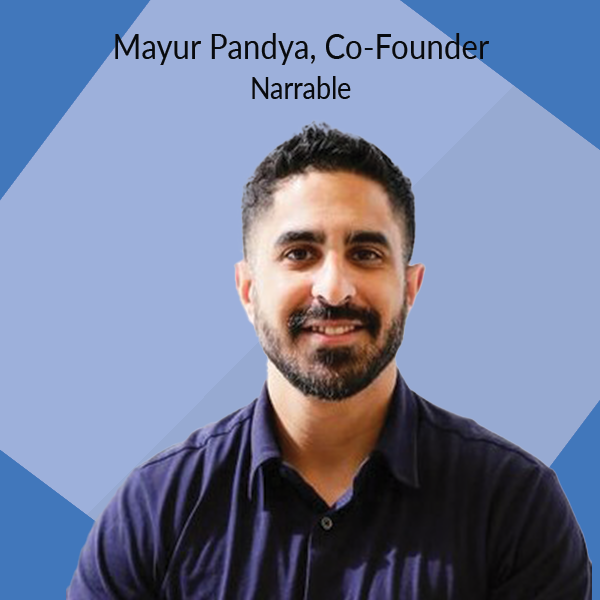
Catherine Zhang was thriving in product engineering while Mayur Pandya held a similar leadership role for Silicon Valley’s Workday. Their futures were predictable and bright until Catherine’s close friend unexpectedly passed away, changing her career goals as profoundly as her heart.

Over a cup of coffee, Zhang and Pandya learned they both had close family working in health care. The conversation turned to how they might apply their product development expertise to, as they put it today, “improve patient outcomes, empower care teams, and reduce the cost of care in the U.S.”

Their first task was to identify which healthcare sector had a pain point that needed their talents most. Naturally, they found their way to the $129 billion Home Health sector. Ms. Zhang told us they were taken aback by the severity of the harm done to Home Health by Medicare Advantage plans.

Catherine Zhang Narrable

“We learned that over 600 HHAs had closed their doors in the previous five years. MA reimbursement ranges from 60% to 70% of what Medicare pays, and the administrative burden imposed by MA plans is seven to eight times what it is for traditional Medicare. Making matters worse, or perhaps because of these pressures, we found the turnover rate among HHA nurses to be 31%.”

Mayur Pandya Narrable

Fast Forward Two Years

Working together, the pair attracted investors, additional coders, and, most importantly, experienced Home Health advisors and product designers. What began as an idea to ease the workload on the nurse in the field grew into a full-fledged electronic medical record system, complete with AI-enabled intake, scheduling, revenue management, physician signatures, and quality control. Naturally, created in the 2020’s, the new system is built around Artificial Intelligence tools. They dubbed it “Narrable.”

“What we wanted to do,” Ms. Zhang continued, “was to harness the power of AI to eliminate the inefficiencies we were learning from owners and nurses within HHAs. Some spend hours completing assessments and visit notes in the evening because ‘it is too hard to document in the patient’s home.’ Many told us that intake, scheduling, chasing physician signatures, and productivity tracking are too unpredictable or too complex for their existing EMR and they resort to multiple spreadsheets.” One HHA owner told Zhang that he “spent $500,000 last year on double data entry.”

Narrable Features We Saw

Narrable’s roots are in the field nurse’s experience. Ms. Zhang explained that the system’s clinician-centric design can eliminate tens of thousands of “invisible” clinician work. In the product demonstration she walked us through, we were able to understand how an AI engine might save work by eliminating both steps and errors.

    • Scheduler analyzes each clinician’s capacity, ability to accept an additional patient, and geographic location, automatically recommending the best person to take a new case. Still, a human makes the final decision.
    • OASIS assessment answers are automatically checked against referral documents and internal logic quality checks are performd.
    • Clinical notes benefit from AI pre-filling demographic data, reminding the clinician of OASIS determinations and goals stated on the Plan of Care.
    • Eligibility is checked against payer data and prior Home Health admissions
    • Physician PECOS integration auto-fills fields, eliminating repetitive data entry
    • Claims management includes:
      • alerts to find uncompleted tasks that may delay billing
      • automated claims submission
      • automatic monitored and posted remittances

Lastly, Narrable offers a suite of configurable management reports that check for maximum allowable PDGM revenue, HHVBP outcomes that may affect adjustments, and real-time financials. A configurable financial report displays paid vs expected revenue, A/R, adjustments, and denials.

Our Narrable Recommendation

At last month’s inaugural conference of the new National Alliance for Care at Home, we witnessed a virtual AI explosion. Every established tech company and a plethora of startups are diligently experimenting to identify the appropriate role for artificial intelligence in Home Health and Hospice. As with all breakthrough technologies, there will be a race to the finish line, with the large, established companies enjoying a head start and others scrappily inventing and innovating with no legacy products acting as a ball and chain.

In this writer’s opinion, Zhang and Pandya have come up with something different. Any HHA thinking about launching an EMR search and evaluation project would not regret the time invested in giving Narrable a look.

# # #

Tim Rowan, Editor Emeritus

Tim Rowan is a 30-year home care technology consultant who co-founded and served as Editor and principal writer of this publication for 25 years. He continues to occasionally contribute news and analysis articles under The Rowan Report’s new ownership. He also continues to work part-time as a Home Care recruiting and retention consultant. More information: RowanResources.com
Tim@RowanResources.com

©2024 by The Rowan Report, Peoria, AZ. All rights reserved. This article originally appeared in Healthcare at Home: The Rowan Report. One copy may be printed for personal use: further reproduction by permission only. editor@therowanreport.com