LEAD Replaces REACH

by Kristin Rowan, Editor

LEAD Replaces REACH

CMS Launches 10-Year Model Test

LEAD replaces REACH in new 10-year CMS model. The Long-term Enhanced ACO Design (LEAD) model is scheduled to launched at the end of 2026, following the end of ACO Realizing Equity, Access, and Community Health  (REACH). LEAD is a voluntary model that will run January 1, 2027 thorugh December 31, 2036, the longest CMS has ever run a test.

Key Takeaways

CMS provides the following information:

  • Problem: Many health care providers have not historically participated in or dropped out of ACOs because of financial and administrative obstacles to success.
  • Solution: LEAD is designed to address such barriers to support both established and newly created ACOs by providing them enhanced, flexible cash flow payments; and greater freedom and tools to support spending time with and meeting patient needs, including those with specialized care needs.
  • Outcomes: Through ACOs, health care providers will be empowered to deliver coordinated, accountable care and preventive services — keeping patients healthier and helping to reduce health care costs and unnecessary emergency room visits and hospitalizations.
  • Strategy: LEAD advances the Innovation Center’s commitment to 1) building opportunities for independent health care providers and practices to be rewarded for delivering better care, 2) promoting and empowering patient choice in both coverage and sites of care, and 3) making it easier for health care providers and patients to engage in preventive care that supports healthier living.

LEAD Goals

According to CMS, the LEAD Model will improve care coordination among a broad range of healthcare providers, including hospices. The model will also appeal to providers with specialized patients and those who are newer to ACOs like small, independent, or rural-based practices. The LEAD model intends to incentivize providers downstream such as home health agencies, palliative care, and hospices, to engage with the providers upstream. It is particularly aimed at complex patients with high needs.

CMS has outlined a 3-part framework for its goals:

  • Increase the scope of ACOs to include rural, small, and independent providers and health centers
  • Enhance evidence-based prevention and care coordination for more patients
  • Empower patient choice and encourage patient participation in care

Planning Phase

The LEAD Model will begin its planning stage in March of 2026 and run through December of 2027. During that time, CMS will identify two states to partner with for developing the framework for Medicaid partnerships. The framework will include how ACOs and Medicaid organizations can share data and coordinate care.

CARA

Among the more prominent changes in the LEAD Model is the CMS Administered Risk Arrangements (CARA). CMS will assist LEAD ACOs in designing episode-based risk payment arrangments with other health care providers. According to CMS, CARA will facilitate stronger preferred provider relationships. Building these strong care networks and partnerships between ACOs and hospice and palliative care providers will improve care for high-needs patients. 

Hospice and palliative care organizations will need to demonstrate partnership value to ACO organizations by supporting smooth care transitions, reducing unnecessary hospitalizations, and ensuring patients receive the right care at the right time, according to a statement from The Alliance.

Final Thoughts

This new model may provide some opportunities for hospice agencies. It may also pave the way for a reimbursement model for palliative care. Although the statements from CMS focus on hospice and palliative care, there may be opportunities for home health agencies as well. These opportunities may become more apparent once the model demonstration begins in 2027. If they are not immediately apparent, we have 10 years to figure them out.

Applications for participation will open in March. To stay connected and receive updates from CMS, join the LEAD Model List or contact the LEAD Model team.

# # #

Kristin Rowan Editor The Rowan Report

Kristin Rowan is the owner and Editor-in-chief of The Rowan Report, the industry’s most trusted source for care at home news. She is also a sought-after speaker on Artificial Intelligence, Technology Adoption and Lone Worker Safety. She is available to speak at state and national conferences as well as software user-group meetings.

Kristin also runs Girard Marketing Group, a multi-faceted boutique marketing firm specializing in content creation, social media management, and event marketing. She works with care at home software providers to create dynamic content that increases conversions for direct e-mail, social media, and websites.  Connect with Kristin directly at kristin@girardmarketinggroup.com or www.girardmarketinggroup.com

©2026 by The Rowan Report, Peoria, AZ. All rights reserved. This article originally appeared in The Rowan Report. One copy may be printed for personal use: further reproduction by permission only. editor@therowanreport.com


 

Appeals Court Filing

by Kristin Rowan, Editor

Appeals Court Filing

Hospice ALJ

A hospice claim may fall under review either before or after the claim has been paid. A hospice agency with a denied claim must file appeals until the claim is approved or the appeals are exhausted. First, they file a written request to reconsider. Then, they file an appeal to a Qualified Independent Contractor (QIC) who employs medical professionals to assess the case. Next, they file an appeal to an Administrative Law Judge (ALJ).

The ALJ is meant to review the documentation to determine whether it satisfies Medicare requirements. That’s all. There are two sets of criteria: the Medicare requirements and the patient record. If they match, the claim is paid. However, a recent ALJ decision and subsequent challenge suggests that the ALJ ignored expert testimony and decided independently that the patient did not qualify for hospice care.

Request to File

The hospice agency in this case filed suit against the ALJ, arguing that physician expertise should be shown deference in these cases. The National Alliance for Care at Home (the Alliance), joined by the American Academy of Hospice and Palliative Medicine (AAHPM), represented by William A. Dombi of Arnall Golden Gregory (AGG), has requested the right to file an amicus brief. An amicus brief provides extra information in a court case from an individual or group that is not part of the lawsuit, but has a vested interest in the outcome.

The Dispute

The Alliance puts at the heart of the case several issues, including:

  • Predicting death is inherently difficult
  • Physicians are the experts and their opinion should carry more weight
  • Oversight from non-qualified third parties add confusion, increase costs, and limit care

The Argument

The wording in multiple parts of the hospice benefit recognizes the expertise and importance of the physician. It is the physician who determines terminal illness. Physicians must have a face-to-face for continued eligibility. And it is the physician’s clinical judgment makes these determinations based on a patient’s individual circumstances, not an arbitrary set of standards.

If an ALJ, or any non-medical person, can overrule the treating physician’s assessment of a patient, they are effectively usurping the role of the doctor in providing a treatment plan. Medical care is subjective, which is why CMS has repeatedly considered and rejected defined criteria that would overrule a physician.

Broader Implications

The brief argues that medical professionals are better able to make care determinations. Further, the brief includes the complexity of health care prognosis, particularly in terminal illnesses. Previous court decisions have noted that “clinical judgments must be tethered to a patient’s valid medical records….” which already eliminates the need for this oversight. The Alliance stated a high probability that the decision in this case will carry substantial weight and influence both in the Sixth Circuit and in courts nationwide.

In fact, the implications may be farther reaching than that. Payors in and out of hospice deny claims deemed “unnecessary” regularly. Claims denials range from about 19% in the ACA Marketplace to as much as 49% from private payers. Even though about 80% of appeals are later accepted, only about 1% of denied claims are appealed.

Not only could this case help more patients get the hospice care they need, it could also lay the groundwork to require insurance companies to rely more heavily on the treating physician’s recommendation. We could see lower denials from prior authorization requests, unconventional treatment plans, VA benefits, and more. 

Final Thoughts

The Rowan Report supports the Alliance’s efforts in this case and wholeheartedly agrees that a physician knows better the care his patient needs than a judge ever could. We are hopeful that Bill Dombi and his team at AGG will be successful in this case and that hospice providers can get back to the  business of patient care. Read the statement from the Alliance here.

# # #

Kristin Rowan, Editor

Kristin Rowan has been working at The Rowan Report since 2008. She is the owner and Editor-in-chief of The Rowan Report, the industry’s most trusted source for care at home news, and speaker on Artificial Intelligence and Lone Worker Safety and state and national conferences.

She also runs Girard Marketing Group, a multi-faceted boutique marketing firm specializing in content creation, social media management, and event marketing.  Connect with Kristin directly kristin@girardmarketinggroup.com or www.girardmarketinggroup.com

©2025 by The Rowan Report, Peoria, AZ. All rights reserved. This article originally appeared in The Rowan Report. One copy may be printed for personal use: further reproduction by permission only. editor@therowanreport.com
 

Government Shutdown

by Kristin Rowan, Editor

Government Shutdown Threatens Care at Home

Lawmakers on opposite sides of the aisle failed to come to a budget agreement by the deadline. This causes an immediate cease to all non-essential government functions and many government employees aren’t being paid. 

UPDATE: Shutdown, Day 16

–As of October 16, 2025–

What it Means for Care at Home

After 10 attempts, the government is no closer to an agreement than they were on September 30th. The Senate is expected to break at the end of the day, leaving the next opportunity to negotiate until at least Monday. 

Telehealth

The biggest impact on care at home during the government shut down is the ability to complete required face-to-face visits using telehealth appointments. Both home health and hospice have employed telehealth for face-to-face encounters since the COVID-era waiver, which has now been extended several times. The most recent extension, which we anticipated Congress to extend in this budget, expired on September 30th.

All face-to-face encounters occurring after October 1, 2025 must be in person.

According to home health expert Melinda A. Gaboury of Healthcare Provider Solutions says it is unlikely an extension would be retroactive even if Congress includes an extension in the finalized budget.

Payments

Conflicting information on Medicare payments leave us unsure of the actual impact. Some reports say there will be no delay while others mention 10-day holds. It is unclear whether this is in addition to the standard 14-day hold. Either way, we are anticipating (and hoping for) minimal payment disruptions.

Surveys

Initial Medicare certification for home health and hospice as well as recertifications will be delayed. If ACHA, CHAP, or another accrediting body is conducting your survey, however, there should be no delay. These accrediting bodies are continuing without interruption. State agency surbveys will be delayed until after the budget is finalized and the shutdown ends.

Look for continued updates from The Rowan Report as the shutdown and negotiations continue.

–As of October 9, 2025–

The Disagreement

Reporters and spokespoeople from both sides of the debate have suggested various reasons for the shutdown. Equally, both sides claim they are not the holdouts. What we do know for sure is that one of the primary points of contention is the continuation of subsidies for Affordable Care Act Marketplace Insurance plans. One group wants an extension written into the current budget while the other says it’s not necessary since the subsidies currently run through the end of the calendar year.

Push to Extend

The lawmakers who are pushing to get the subsidy issue resolved believe that marketplace users are not going to sign up for insurance in November and do it again in January when the subsidies are fixed. Instead, insurance commissioners warn that without the subsidies, many people will opt not to have insurance at all and others will select substandard plans based on affordability. They will be priced out of the plans they want without the subsidies in place.

Priced Out

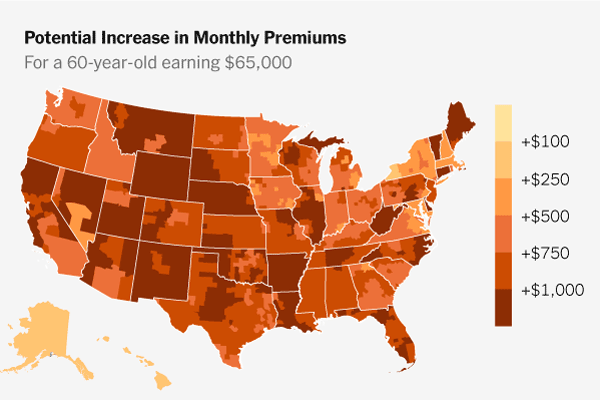
In 2025, even with the subsidies, the average family was paying $800 per month on health insurance through the marketplace. When the subsidies expire, those same families will see their existing plan rates jump to $3,000 per month. KFF, the nonpartisan health research organization, estimates that most users will have a 114% rate increase. 

Government Shutdown

Photo Credit – The New York Times

Counter

According to ND insurance commissioner Jon Godfread, lawmakers who oppose the subsidies are actually opposing the cost of health care and insurance across the board. They insist the subsidies aren’t necessary if healthcare and insurance costs drop instead. Proponents of the subsidies agree, but say that is a longer discussion that will take a lot of time to resolve and the subsidies provide an immediate solution to a bigger problem. They are urging the holdouts to include the subsidies in the budget and tackle the rising cost of healthcare later.

Open Enrollment

The clock is ticking. Open enrollment for 2026 begins November first in every state except Idaho, where open enrollment starts next week. Insurers have already locked in their 2026 premium rates, which will likely cause sticker shock for most marketplace users. Most insurers have prepared subsidy and non-subsidy rates, but without the extension, we will only see the much higher non-subsidy rates. These rates are unlikely to change before enrollment starts and the only hope for marketplace buyers is for Congress to extend the subsidies.

Home Health & Hospice

Care at Home Impact

There are several ways in which the shutdown and the loss of the subsidy may impact care at home.

Payment delays are the most pressing risk. Government officials have promised no delay for some essential services like SNAP and WIC. It is likely Medicare and Medicaid payments will be delayed. While those payments will come through eventually, care at home agencies have to operate without payment or hope the

payers will process payments locally while waiting on the government to reopen. The longer the shutdown lasts, the more likely it is that payments will be delayed. The 6th Senate budget vote failed today, sending the shutdown to day 8.

The longer term impact for care at home will come if the subsidies are not renewed. If insurance rates increase by more than 100% on November 1, users will opt for lower priced coverage, which may no longer include care at home benefits. Fewer patients seeking care at home means less money for agencies. Long-term, it also means higher hospital and ER usage and costs, which increases government spending and usually leads to additional care at home cuts to offset the costs.

National Alliance for Care at Home has identifed current and potential implications of the shutdown. Read their analysis here.

This is an ongoing story and we will continue to provide additional information as it happens. 

# # #

Kristin Rowan, Editor

Kristin Rowan has been working at The Rowan Report since 2008. She is the owner and Editor-in-chief of The Rowan Report, the industry’s most trusted source for care at home news, and speaker on Artificial Intelligence and Lone Worker Safety and state and national conferences.

She also runs Girard Marketing Group, a multi-faceted boutique marketing firm specializing in content creation, social media management, and event marketing.  Connect with Kristin directly kristin@girardmarketinggroup.com or www.girardmarketinggroup.com

©2025 by The Rowan Report, Peoria, AZ. All rights reserved. This article originally appeared in The Rowan Report. One copy may be printed for personal use: further reproduction by permission only. editor@therowanreport.com

 

AI Eases Clinician Burnout

by Curantis Solutions

AI in Hospice and Palliative Care

Eases Clinician Burnout and Drives Retention

In hospice and palliative care, clinicians are your most valuable and most vulnerable resource. They’re the heart of care delivery, and often the largest expense line item on your budget. But today, many are walking a tightrope between compassion fatigue and after-hours documentation burnout. Hospice organizations can’t afford to lose them. And with AI-powered tools, you don’t have to.

Clinician burnout Is a crisis and a cost center

Hospice nurses and interdisciplinary team members are burning out at unsustainable rates. The emotional weight of their work is immense, but it’s the after-hours charting, documentation delays, and system inefficiencies that often push them over the edge. The cost of clinician turnover is staggering. Onboarding and training a new hospice nurse takes time, money, and trust, and patients feel the impact, too. 

AI bridges the gap without replacing the human touch

Curantis Solutions is leading the way with AI that lightens the load. Our embedded AI assistant, EVA, supports clinicians in real-time, reducing documentation friction and eliminating the need to chart late into the evening. 

How AI may help

  • Voice-to-text documentation
    • captures patient-specific details naturally, as they happen
  • Smart prompts and reminders
    • prevent missed data points and reduce rework
  • Less screen time after shifts
    • improves work-life balance and job satisfaction
  • Clinicians feel more supported and less likely to leave
AI in Hospice and Palliative Care Curantis Solutions

Retain the staff you've worked so hard to hire

When your staff hears that another organization doesn’t have modern tech or AI tools? They stay. Providing intuitive, hospice-specific tools isn’t just about efficiency. It’s about creating a culture that respects their time, honors their energy, and values their expertise. 

AI as a strategic investment in care and culture

Hospice leaders are being called to solve two problems at once:

  • Deliver exceptional, person-centered care
  • Do it with fewer resources and higher costs

AI-powered software like Curantis helps close this gap. By streamlining documentation and workflow, we help you preserve the well-being of your clinicians, which, in turn, protects your operations and your outcomes. 

Imagine this...

  • No more nurses charting late into the night
  • Fewer resignations and higher morale
  • Patients receiving care from clinicians who aren’t drained, but present and energized

# # #

Let's make clinician burnout a thing of the past

Explore how Curantis Solutions empowers your team and strengthens your bottom line. Contact us today to schedule a demo and see how we are making your software experience refreshingly simple with ChartBoost AI. 

Contact us today to see a demo and learn how we are making your software experience refreshingly simple. 

© 2025 This blog article originally appeared on the Curantis Solutions website and is reprinted with permission. For more information, please contact Curantis Solutions directly.

AI in Hospice: 3 Questions Before Adopting

by Curantis Solutions

AI in Hospice

3 question to ask before adoption

AI in healthcare

Artificial intelligence (AI) is transforming healthcare. From voice-to-text documentation to predictive analytics, AI promises to streamline operations, reduce clinician burden, and improve outcomes. However, in hospice and palliative care, where care is deeply personal and the margin for error is razor thin, adopting AI cannot be treated as just another trend. It must be thoughtful, mission-aligned, and clinically appropriate.

AI in hospice

Hospice leaders are under pressure. Staff shortages are real. Regulatory demands like Hospice HOPE are intensifying. Vendor inboxes are flooded with promises of automation, optimization, and return on investment (ROI). It is easy to feel like you must adopt AI quickly just to keep up.

But the truth is, not all AI is ready for hospice and palliative care. And not all hospice organizations are ready to implement it effectively. The stakes are too high to rush.

If your hospice or palliative care organization is exploring AI, here are three critical questions to ask before making a decision:

1. Is the AI built for the way hospice and palliative care work?

Hospice and palliative care are fundamentally different from other healthcare environments. The workflows are interdisciplinary. Much of the documentation relies on narrative detail. Clinicians manage complex emotional, spiritual, and medical needs at the same time. Care is not episodic or transactional. It is longitudinal, values-driven, and highly individualized.

Many AI tools on the market today were built for hospitals or outpatient clinics. They may offer efficiencies in acute care but fail in hospice because they do not understand the subtleties of team-based care, psychosocial documentation, or end-of-life symptom management.

AI for Hospice

Ask the vendor: Has your AI been developed specifically for hospice or palliative care? Or are you expecting our team to adapt to your tool?

Healthcare isn't hospice

Some hospices have tried generic AI dictation tools and found them inadequate. They could not capture the nuance of hospice documentation, especially when it comes to describing spiritual distress, family dynamics, or legacy work. Other teams tried predictive tools that produced frequent, non-actionable alerts that distracted the clinical team and created more work, not less.

Hospice AI must be purpose-built. It needs to support interdisciplinary team meetings, comply with documentation standards like HOPE, and align with Medicare Conditions of Participation. If the tool does not understand your workflow, it will only add friction.

2. Will this AI solution actually save time, or will it create more work?

AI should make your clinicians’ lives easier, not harder. Unfortunately, many solutions promise time savings but fail to deliver because they are poorly implemented or require too much manual oversight.

Here is where hidden costs show up. If your team needs to log into separate platforms, copy and paste information, or manually verify AI-generated content line by line, the benefits quickly disappear. Add in the time it takes to train staff, troubleshoot bugs, and manage updates, and you might find you are investing more time than you are saving.

Ask the vendor: What does your implementation and training process look like? What kind of support do you provide after go-live?

AI in Hospice<br />

Responsible AI vendors should provide more than software. They should offer a clear rollout plan with defined milestones, retraining sessions for staff turnover, and a roadmap for future enhancements. Without this, even the most impressive AI tool will fail to achieve meaningful ROI.

You also want to ensure that your team can trust the AI. If it produces content that needs to be heavily edited or raises questions about accuracy, clinicians will disengage. The best AI makes documentation feel intuitive, not burdensome.

Ultimately, the right solution should reduce charting time, improve documentation quality, and give your clinicians more time for direct patient care. Do not just ask 

what the AI can do. Ask what the experience of using it will be like for your team on day one, day 30, and day 365.

3. Does the AI preserve your mission and center the patient?

This is perhaps the most important question of all. Hospice care is defined by its human connection. Patients and families count on your team to be present, compassionate, and attentive during the most vulnerable moments of life. Any technology you introduce must uphold that standard.

Ask yourself: Does this tool enhance our ability to serve patients meaningfully? Or does it get in the way?

AI should never replace the clinician’s presence. It should support that presence by taking on administrative tasks, summarizing clinical notes, or preparing IDG summaries. It should make care feel more personal, not less.

There is a real risk in adopting tools that do not align with your mission. Some AI solutions are focused solely on efficiency. Others may depersonalize care by reducing complex human experiences into checkboxes or canned phrases. If the technology distances your team from the bedside, it is not the right fit.

Ethical, mission-aligned AI empowers your team. It helps clinicians spend less time documenting and more time connecting. For chaplins, it supports spiritual care providers in crafting better notes. It assists social workers in capturing family dynamics. Finally, it helps the entire team stay informed without increasing their cognitive load.

AI in Hospice

Final Thoughts

Thoughtful evaluation and the right questions make all the difference

The conversation about AI in hospice and palliative care is just beginning. There is enormous potential to reduce burnout, improve quality, and strengthen compliance. But realizing that potential requires more than excitement. It requires asking the right questions, involving the right stakeholders, and choosing tools that are built for this environment.

Before you adopt AI, pause and evaluate:

  • Is this solution designed for how we deliver care?
  • Will this save time or increase workload?
  • Does this align with our mission and center the patient?

If you can answer yes to all three, then you are on the path to responsible, effective AI adoption.
Hospice and palliative care deserve nothing less.

Non-Compliance Notifications & HOPE Training

by Kristin Rowan, Editor

Hospice Non-Compliance Notifications

On July 21, 2025, the CMS Hospice QRP Announcements page added an update titled “Hospice Quality Reporting Program: Non-Compliance Notifications.”

The Update Reads:

The Centers for Medicare & Medicaid Services (CMS) is providing notifications to hospices that were determined to be out of compliance with Hospice Quality Reporting Program (HQRP) requirements for calendar year (CY) 2024…. This will affect their fiscal year (FY) 2026 Annual Payment Update (APU). The Medicare Administrative Contractors (MACs) will distribute Non-compliance notifications and place them into hospices’ Certification and Survey Enhanced Reporting (CASPER) folders in QIES on July 21, 2025. Hospices that receive a letter of non-compliance may submit a request for reconsideration to CMS via email no later than 11:59 pm, August 26, 2025. If you receive a notice of non-compliance and would like to request a reconsideration, see the instructions in your notification and on the Reconsideration Requests webpage.

Details

Any reconsiderations containing protected health information (PHI) will not be processed. All PHI must be removed for a reconsideration to be reviewed.

Additionally, all submissions must be less than 20 MB overall (email message and attachments). Submissions that are greater than 20 MB in size cannot be processed.

HOPE Training

As the implementation date for the HOPE tool drew nearer, advocacy groups and hospice agencies expressed concern over it’s readiness. On June 6, 2025, The Rowan Report shared that three of the largest organizations urged CMS to delay the tool. The groups asked for proper information, education, and training. 

CMS Response

As of now, CMS is not delaying the implementation of the HOPE tool. They have, however, published training tools for hospice providers. The first series of videos is Didactic Training. They cover an introduction to the tool, admin information, preferences and active diagnoses, health conditions, skin conditions, and medications.

On July 21, 2025, CMS announced the opening of registration for live HOPE training. “Hospice Outcomes and Patient Evaluation (HOPE) National Implementation Virtual Training Program Course 2: Coding Workshop.” CMS recommends completing The Didactic Training as a prerequisite to the Coding Workshop.

The Centers for Medicare & Medicaid Services (CMS) is offering a live coding workshop on August 5, 2025…. It will provide coding practice for items that are new for HOPE, as well as the existing and updated items carried over from the Hospice Item Set (HIS).

Register now at:The Hospice Outcomes and Patient Evaluation (HOPE) National Implementation Coding Workshop

Find the Didactic Recorded Training Series here.

Data Collection Starts Soon

The HOPE tool begins data collection on October 1, 2025. Key items hospice providers should understand:

  • More Frequent Assessments: HOPE introduces up to four assessment points per patient, capturing care from multiple angles during the first 30 days and at discharge.
  • Real-Time Data Capture: Unlike the retrospective nature of HIS, HOPE assessments are completed during live patient encounters, providing richer and more immediate insights.
  • Higher Stakes for Compliance: To avoid a reimbursement cut of up to 4%, agencies must ensure that at least 90% of HOPE assessments are submitted on time—a notable increase from the previous 2% penalty under HIS.
  • Public Reporting Timeline: While HIS data has been publicly available, HOPE data will not be released for public comparison until fiscal year 2028 or later, giving providers time to adapt.

*from the SimiTree blog: Understanding the Transition from HIS to HOPE

As the implementation of the HOPE tool gets closer, we will continue to share training information from CMS and other sources as it becomes available. If you need a referral to a hospice consultant to navigate the transition, please reach out to The Rowan Report.

# # #

Kristin Rowan, Editor

Kristin Rowan has been working at The Rowan Report since 2008. She is the owner and Editor-in-chief of The Rowan Report, the industry’s most trusted source for care at home news, and speaker on Artificial Intelligence and Lone Worker Safety and state and national conferences.

She also runs Girard Marketing Group, a multi-faceted boutique marketing firm specializing in content creation, social media management, and event marketing.  Connect with Kristin directly kristin@girardmarketinggroup.com or www.girardmarketinggroup.com

©2025 by The Rowan Report, Peoria, AZ. All rights reserved. This article originally appeared in The Rowan Report. One copy may be printed for personal use: further reproduction by permission only. editor@therowanreport.com
 

Bill to Strengthen Hospice

From the office of Earl L. “Buddy” Carter (R-GA)

Carter, Bera introduce Bill to Strengthen Palliative and Hospice Care Workforce

Reps. Earl L. “Buddy” Carter (R-GA) and Ami Bera, M.D. (D-CA) today introduced the Palliative Care and Hospice Education and Training Act (PCHETA), bipartisan legislation to invest in training, education, and research for the palliative care and hospice workforce, allowing more practitioners to enter these in-demand fields. 

Palliative and hospice care focus on providing comfort and quality of life improvements for those seriously ill, extending quality of life and reducing the length of hospital stays for many patients.

Earl L. "Buddy" Carter

“Caring for someone living with serious illness or at the end of their life is one of the most compassionate, selfless things one can do, and we must ensure that these heroes have the assistance, training, education, and tools available to provide the highest quality care possible. As a pharmacist, I understand the toll burnout takes on the health care industry, and I am committed to bolstering the workforce so nurses, doctors, and all health care workers can continue to pursue their passion for helping others.”

Earl L. "Buddy" Carter

(R-GA), U.S. House of Representatives

Ami Bera, M.D.

“As a doctor, I know how important it is to provide patients with comfort, clarity, and support when they’re facing serious illness,” said Rep. Bera. “The Palliative Care and Hospice Education and Training Act is a smart, bipartisan step to ensure more health care professionals are trained to deliver this kind of care. By expanding training programs and strengthening our health care workforce, we will make sure that patients and families have access to the care they need to manage pain, make informed decisions, and live with dignity.”

Workforce Shortage

In 2001, just 7% of U.S. hospitals with more than 50 beds had a palliative care program, compared with 72% in 2019. Those working in the field, 40% of whom are 56 years of age or older, report high rates of burnout, in response to the increasing number of patients requiring treatment. 

Reps. Carter and Bera’s bill, which has a Senate companion led by Senators Baldwin and Capito, alleviates these strains through workforce training, education and awareness, and enhanced research.

Widespread Support

“As we face a critical shortage of health professionals with expert knowledge and skills in palliative care, AAHPM applauds Representatives Carter and Bera for their leadership in introducing the Palliative Care and Hospice Education and Training Act to ensure all patients facing serious illness or at the end of life can receive high-quality care. We urge Congress to recognize the importance of a well-trained, interprofessional healthcare team to providing coordinated, person-centered serious illness care and to act now to build a healthcare workforce more closely aligned with America’s evolving healthcare needs. Advancing PCHETA will go a long way towards improving quality of care and quality of life for our nation’s sickest and most vulnerable patients, along with their families and caregivers.”

Kristina Newport, MD FAAHPM, HMDC

Chief Medical Officer, American Academy of Hospice and Palliative Medicine

“Palliative care treats the whole person, not just the disease. Ensuring health care providers can be trained in this specialized, coordinated form of care and providing funding for robust public education through the Palliative Care Education and Training Act can help increase access to palliative care for cancer patients and make their cancer journey less difficult. We commend Reps. Carter and Bera for their leadership and steadfast commitment to palliative care and to improving quality of life for patients, including those impacted by cancer.”

Lisa A. Lacasse

President, American Cancer Society Cancer Action Network

“Every person living with serious illness or facing the end of life deserves compassionate, expert care that honors their choices and helps them live comfortably on their own terms. The Alliance celebrates Representatives Carter and Bera’s leadership in introducing the Palliative Care and Hospice Education and Training Act, which will ensure families have access to the trained professionals they need during life’s most difficult moments. As our population ages, this critical investment in education and training will help us meet the growing demand for quality palliative and hospice care

Dr. Steve Landers

CEO, National Alliance for Care at Home

Supporting Organizations

Alzheimer’s Association, Alzheimer’s Disease Resource Center, Alzheimer’s Impact Movement, American Academy of Hospice and Palliative Medicine, American Academy of Pediatrics, American Academy of Physician Associates, American Cancer Society Cancer Action Network, American College of Surgeons, American Geriatrics Society, American Heart Association, American Psychological Association, American Psychosocial Oncology Society, The American Society of Pediatric Hematology/Oncology, Association for Clinical Oncology, Association of Oncology Social Work, Association of Pediatric Hematology/ Oncology Nurses, Association of Professional Chaplains, The California State University Shiley Haynes Institute for Palliative Care, Cambia Health Solutions, Cancer Support Community, CaringKind, Catholic Health Association of the United States, Center to Advance Palliative Care, Children’s National Health System, Coalition for Compassionate Care of California, Colorectal Cancer Alliance, Courageous Parents Network, The George Washington Institute for Spirituality and Health, GO2 for Lung Cancer, The HAP Foundation, HealthCare Chaplaincy Network, Hospice and Palliative Nurses Association, LEAD Coalition, LeadingAge, The Leukemia & Lymphoma Society, Motion Picture & Television Fund, National Alliance for Care at Home, National Alliance for Caregiving, National Brain Tumor Society, National Coalition for Cancer Survivorship, National Coalition for Hospice and Palliative Care, National Comprehensive Cancer Network, National Marrow Donor Program, National Palliative Care Research Center, National Partnership for Healthcare and Hospice Innovation, National Patient Advocate Foundation, National POLST Paradigm, Oncology Nursing Society, Pediatric Palliative Care Coalition, PAs in Hospice and Palliative Medicine, Prevent Cancer Foundation, Second Wind Dreams, Social Work Hospice & Palliative Care Network, Society of Pain and Palliative Care Pharmacists, St. Baldrick’s Foundation, Supportive Care Matters, Susan G. Komen, Trinity Health, West Health Institute, The Alliance for the Advancement of End-of-Life Care, Alzheimer’s Los Angeles, Alzheimer’s Orange County, Arizona Association for Home Care, Arizona Hospice & Palliative Care Organization, Association for Home & Hospice Care of North Carolina, California Association for Health Services at Home, The Center for Optimal Aging at Marymount University, Children’s Hospice and Palliative Care Coalition, Delaware Association for Home & Community Care, Florida Hospice & Palliative Care Association, Georgia Association for Home Health Agencies, Georgia Hospice and Palliative Care Organization, Granite State Home Health & Hospice Association (NH), Healthcare Association of Hawaii, Home Care Association of Florida, Home Care Association of NYS, Home Care Association of Washington, Home Care and Hospice Association of Colorado, Homecare and Hospice Association of Utah, Hospice and Palliative Care Association of Iowa, Hospice and Palliative Care Association of New York, Hospice Care and Kentucky Home Care Association, Hospice Council of West Virginia, Hospice & Palliative Care Federation of Massachusetts, Idaho Health Care Association, Illinois Hospice and Palliative Care Organization, Indiana Association for Home, Kokua Mau, LeadingAge California, LeadingAge Georgia, LeadingAge New Jersey/Delaware, LeadingAge Ohio, LifeCircle-South Dakota’s Hospice and Palliative Care Network, Louisiana Mississippi Hospice and Palliative Care Organization, Maryland-National Capital Homecare Association, Michigan HomeCare and Hospice Association, Minnesota Network of Hospice and Palliative Care, Missouri Alliance for Home Care, Missouri Hospice & Palliative Care Association, Nebraska Association for Home Healthcare and Hospice, Nebraska Home Care Association, Ohio Council for Home Care & Hospice, Ohio Health Care Association, Oklahoma Association for Home Care and Hospice, South Carolina Home Care & Hospice Association, The Oregon Hospice & Palliative Care Association, Texas Association for Home Care & Hospice, Texas ~ New Mexico Hospice and Palliative Care Organization, Virginia Association for Home Care and Hospice, VNAs of Vermont, The Washington State Hospice and Palliative Care Organization, and West Virginia Council for Home Care and Hospice.

Read full bill text here.

# # #

Earl L. Earl L. “Buddy” Carter is an experienced businessman, health care professional and faithful public servant. For over 32 years Buddy owned Carter’s Pharmacy, Inc. where South Georgians trusted him with their most valuable assets: their health, lives and families. While running his business, he learned how to balance a budget and create jobs. He also saw firsthand the devastating impacts of government overregulation which drives his commitment to ensuring that the federal government creates policies to empower business instead of increasing burdens on America’s job creators.

A committed public servant, Buddy previously served as the Mayor of Pooler, Georgia and in the Georgia General Assembly where he used his business experience to make government more efficient and responsive to the people. Buddy is serving his fifth term in the United States House of Representatives and is a member of the House Energy and Commerce (E&C) Committee and the House Budget Committee. As a pharmacist serving in Congress, Buddy is dedicated to working towards a health care system that provides more choices, less costs and better services.

A lifelong resident of the First District, Buddy was born and raised in Port Wentworth, Georgia and is a proud graduate of Young Harris College and the University of Georgia where he earned his Bachelor of Science in Pharmacy. Buddy married his college sweetheart, Amy. Buddy and Amy have three sons, three daughters-in-law and eight grandchildren.

Ami Bera, M.D. (D-CA)Congressman Ami Bera, M.D. has represented Sacramento County in the U.S. House of Representatives since 2013. The 6th Congressional District is located just east and north of California’s capitol city, Sacramento, and lies entirely within

Sacramento County.

During Congressman Bera’s twenty-year medical career, he worked to improve the availability, quality, and affordability of healthcare. After graduating from medical school in 1991, he did his residency in internal medicine at California Pacific Medical Center, eventually becoming chief resident. He went on to practice medicine in the Sacramento area, serving in various leadership roles for MedClinic Medical Group. Chief among his contributions was improving the clinical efficiency of the practice. He then served as medical director of care management for Mercy Healthcare, where he developed and implemented a comprehensive care management strategy for the seven-hospital system.

In Congress, Bera uses the skills he learned as a doctor to listen to the people of Sacramento County and put people ahead of politics to move our country forward. His priority is to work alongside people in both parties to address our nation’s most pressing challenges and make government work. Bera believes Congress should be a place for service, not for politicians who only look out to protect their own careers, pay, and perks.

Hospice Hope

by Peggy Rattarree, Principle Product Manager, Curantis Solutions

Hospice HOPE

The importance of documenting symptom impact for patient-centered care

In hospice care, the focus isn’t just on treating symptoms; it’s on improving the quality of life for patients and their families. This is where Hospice HOPE takes center stage, emphasizing the importance of documenting symptom impact to deliver truly patient-centered care. By understanding how symptoms affect each patient’s physical, emotional, and psychosocial well-being, hospice teams can provide care that aligns with their unique needs and goals.

What is hospice HOPE?

Hospice HOPE stands for Hospice Outcomes and Patient Evaluation. It’s a philosophy that places the patient’s comfort, dignity, and goals at the forefront of care delivery. Documenting symptom impact is a critical part of this approach because it provides a detailed understanding of how symptoms affect the patient’s overall quality of life.

In hospice care, every patient’s journey is unique. By actively tracking and documenting symptom impact, care providers can move beyond generic treatments and embrace a truly individualized approach that prioritizes what matters most to the patient.

Why documenting symptom impact matters?

Moves us to patient-centered care

Documenting symptom impact allows hospice teams to focus on what truly matters to the patient. Instead of simply addressing symptoms like pain, nausea, or fatigue in isolation, it provides a holistic view of how these symptoms affect the patient’s daily life. For example:

  • Pain
    • How does it limit mobility or the ability to participate in meaningful activities?
  • Fatigue
    • Is it preventing patients from spending time with loved ones?
  • Nausea
    • Is it reducing their ability to eat or enjoy meals?
Curantis Solutions Hospice HOPE

By asking these questions and recording the answers, hospice providers can better tailor interventions to manage not just symptom management but the overall patient experience.

Improves communication across the care team

In hospice care, communication is everything. Documenting symptom impact ensures that every member of the interdisciplinary team (IDT), from nurses and physicians to social workers and chaplains, has access to the same comprehensive information.

This documentation:

  • Creates a shared understanding of the patient’s condition
  • Helps align the team’s goals with the patient’s priorities
  • Reduces duplication of efforts and enhances care coordination

When everyone is on the same page, patients and families receive more seamless, cohesive care.

Hospice HOPE Communication

Supports compliance and quality standards

Regulatory bodies like CMS (Centers for Medicare & Medicaid Services) require hospices to document and monitor patient symptoms to ensure care quality. But beyond compliance, tracking symptom impact demonstrates a commitment to continuous improvement.

Documenting symptom impact allows hospices to:

  • Identify trends and gaps in care
  • Measure the effectiveness of interventions
  • Use data to advocate for better resources or innovations in care delivery

Empowers families and caregivers

When symptom impact is documented, families and caregivers gain a clearer understanding of their loved one’s condition. This transparency fosters trust and collaboration between the hospice team and the family, ensuring everyone is working toward the same goals.

For example, a caregiver might better understand why a loved one sleeps more during the day or avoids certain foods. These insights can help families feel more prepared and supported during a challenging time.

Final Thoughts

With CMS rolling out Hospice HOPE, documenting symptom impact is no longer optional. It’s the standard for compassionate, high-quality care. This shift helps hospice organizations go beyond symptom control and into whole-person care that honors each patient’s life journey.

This is part one in a two-part series on Hospice HOPE. Check back next week for part two.

# # #

Peggy Rattarree Curantis Solutions Hospice HOPE

Peggy is an IT professional with over 30 years’ experience. She has defined and developed software products in industries such as grocery management, financial services, and reporting and analytics. In her 2.5 years with Curantis, Peggy has helped to shape the definition and delivery of the application. She brings a passion for agility and has been integral in transitioning Curantis to an environment of delivery on cadence, release on demand.

Peggy has a Bachelor of Music degree from University of North Texas.

©2025 by The Rowan Report, Peoria, AZ. All rights reserved. This article originally appeared in the Curantis Solutions blog and is reprinted here with permission. For more information or to request permission to print, please contact Curantis Solutions.

The Alliance Responds

by Kristin Rowan, Editor

The Alliance Responds to CMS Hospice Update

The Alliance responds to CMS-1835-P, the FY 2026 Hospice Wage Index, Conditions of Participation, and Quality Reporting Program Requirements updates. On June 10, 2025, in a 25 page letter to Dr. Mehemet Oz, CEO for The National Alliance for Care at Home Steve Landers, MD, MPH lays out the constraints and financial burdens hospice agencies will face if these updates are enacted. 

Payment Rate Update

Increase Less than Inflation

In the rule for FY 2026, CMS proposes a 3.2 percent market basket increase and a .8 percent productivity decrease, yielding a 2.4 percent increase overall. According to the letter, inflation has raised medical care prices by 3.1 percent, leaving a shortfall of .7 percent. Hospices are also plagued by the same workforce shortage the rest of the medical industry faces. Workforce shortages result in fewer qualified people than there are available positions, which drives wages up. BLS data indicates the wage increase for 2025 was 4.4%. The Alliance argues that the 2.4% net increase falls well short of the actual expense increase.

Faulty Data

In a recent article, we outlined the process that CMS uses to determine the market basket update. The Alliance echos our information, showing the market basket forecast is well below actual increases. The Alliance further argues that the shortfall compounds, leaving the base rate increasingly smaller with each forecast. The current estimate is a 4.9% pay rate gap. CMS contends there is no way to adjust for forecast errors. The Alliance has a simple solution: manually adjust the payment rate every year when the finalized number are above the forecasted numbers BEFORE adding the next year’s payment rate increase.

Likewise, The Alliance concurs with The Rowan Report sentiment that productivity cannot increase in hospice like it does in less labor-intensive sectors. Landers also mentions the failure to consider travel costs, the wage differences in rural areas, and the lack of reclassification options in hospice care.

Payment Rate Recommendations

As any well-drafted response should, The Alliance provides actionable recommendations in each section. For payment rate updates, The Alliance recommends:

  • We recommend CMS examine closely more recent data and increase final payment rates for FY 2026.
  • We urge CMS to explore all available avenues to address the forecast error shortfall, such as through a one-time adjustment.
  • We encourage CMS to collaborate with stakeholders to address the shortcomings of relying upon hospital data to determine hospice payment rates, and ways to achieve parity across provider types with respect to geographic area wage adjustments.

HIS to HOPE Transition

Also addressed in the letter is opposition to the timeline of the HIS to HOPE transition. The Alliance restates much of what was in the joint letter to CMS urging the delay of the HOPE tool adoption. That letter was a joint venture between The National Alliance for Care at Home (The Alliance), LeadingAge, and the National Partnership for Healthcare and Hospice Innovation (NPHI).

The consequence of adverse outcomes cannot be understated. The risk of negative financial consequences for hospice providers is
largely dependent this year on the success of two transitions—iQIES and HOPE— neither of which are within their control.

Steve Landers, MD, MPH

CEO, National Alliance for Care at Home

HOPE Transition Recommendations

  • Considering the volatility inherent in a reporting transition of this magnitude and the lack of clear information provided to date, we respectfully request CMS waive the HOPE timeliness submission requirement for two calendar quarters post implementation.
  • We further respectfully request that CMS delay the HOPE implementation date until at least six months after CMS education and training, beyond that which is introductory and that is scheduled for spring/summer 2025, the final validation utility tool specifications are available and the application for iQIES access has been opened for hospices.

Digital and Future Hospice Measurements

Among the digital hospice measurements is an interoperability measurement. The Alliance supports interoperability and data exchange across medical care entities, but stresses to CMS that many hospices do not have digital EHR systems, cannot afford to maintain such systems, and have not received the federal financial support necessary to meet this objective.

The Alliance also objects, not in theory, but in practical application, to the nutrition measure noted in future hospice measures. Nutrition for a hospice patient is vastly different than for other patients and should be implemented as a process measure, rather than having specific goals for food intake and nutrition.

Similarly, the well-being measure is not designed for hospice care. In other sectors of healthcare, well-being incorporates measures for mental, social and physical health and focuses on curative plans. Hospice care focuses on person-centered care, emphasizing the desires of the patient as they are balanced against religious, cultural, and personal beliefs. The well-being measure must be curated to fit hospice care.

The Alliance - Conclusion

The Alliance values CMS’s ongoing commitment to enhancing hospice care quality,
ensuring program integrity, and improving patient outcomes. We appreciate your
consideration of our comments and look forward to ongoing dialogue to achieve these
shared objectives.

The Rowan Report - Conclusion

The Alliance has, as always, done an exemplary job at explaining the industry position on the CMS rule. Likewise, it has outlined each step CMS should take to view the updates through a hospice lens rather than a hospital lens. We commend and support The Alliance statement and position. As this is an ongoing topic until the final rule is implemented, we will continue to provide updates as they become available. 

If you are a member of The Alliance, you can read the full 25 page letter here.

# # #

Kristin Rowan, Editor

Kristin Rowan has been working at The Rowan Report since 2008. She is the owner and Editor-in-chief of The Rowan Report, the industry’s most trusted source for care at home news, and speaker on Artificial Intelligence and Lone Worker Safety and state and national conferences.

She also runs Girard Marketing Group, a multi-faceted boutique marketing firm specializing in content creation, social media management, and event marketing.  Connect with Kristin directly kristin@girardmarketinggroup.com or www.girardmarketinggroup.com

©2025 by The Rowan Report, Peoria, AZ. All rights reserved. This article originally appeared in The Rowan Report. One copy may be printed for personal use: further reproduction by permission only. editor@therowanreport.com

 

A New Path for Hospice Care

FOR IMMEDIATE RELEASE

Contact:        press@empathhealth.org
EmpathHealth.org

Empath Health Introduces One Hospice Model, Bringing Together Florida's Established Not-for-Profit Hospices Under One Mission

CLearwater, FL, May 5, 2025. Empath Health, one of the nation’s largest 501(c)(3) integrated care networks, today unveiled its One Hospice Model—a first-of-its-kind framework that preserves community-based hospice while adding the scale, innovation and accountability of a statewide system. “Families deserve hospice that puts mission before margin,” said Jonathan D. Fleece, President & CEO of Empath Health. “By uniting Florida’s most trusted not-for-profit hospices under one model, we keep local relationships intact and ensure every person facing serious illness receives Full Life Care—supported by the strength and expertise of an entire network.”

The model integrates seven locally known hospice brands—Empath Hospice, Hospice of Marion County, Suncoast Hospice, Suncoast Hospice of Hillsborough, Tidewell Hospice and Trustbridge (Hospice by the Sea and Hospice of Palm Beach County)—which collectively care for one in five hospice patients statewide. Five of these affiliates have served their communities for more than 40 years, delivering generations of compassionate, not-for-profit care.

Regional hubs in Tampa Bay, Sarasota, Palm Beach and Ocala keep decision-making local while enterprise teams provide centralized quality, technology and research support. Regional presidents Travis Fogle (Tampa Bay), Brad Perkins (Sarasota) and Tony Maxwell, PA (Ocala/Palm Beach) oversee clinical operations and community partnerships.

“By uniting Florida’s most trusted not-for-profit hospices under one model, we keep local relationships intact and ensure every person facing serious illness receives Full Life Care – supported by the strength and expertise of an entire network.”

While all Empath Health services are available through direct community access, families who begin care with an Empath-affiliated hospice gain direct referral into the wider Empath network of services—available regionally, when needed. This integrated approach allows patients to easily access Empath Home Health for skilled nursing at home; Empath Palliative Care for earlier symptom relief; Empath LIFE / PACE for comprehensive elder day-center support; Empath GUIDE for dementia education and caregiver coaching; EPIC HIV/AIDS Services for prevention, case management and housing; and Empath Grief Care, including Empath Blue Butterfly programs for children. The result is a coordinated Full Life Care journey—from the first serious illness conversations through loss and healing—thoughtfully adapted to each community’s resources and needs.

As policymakers and the public scrutinize hospice ownership, Empath offers a scalable not-for-profit alternative. The organization reinvests much of its revenue into care, workforce development and community programs, and publicly reports quality metrics that exceed national benchmarks. By pairing local leadership with statewide strength, the One Hospice Model offers a blueprint for mission-driven innovation at scale.

# # #

About Empath Health

Empath Health is a pioneering not-for-profit health network redefining healthcare through Full Life Care—supporting chronic, post-acute, end-of-life, and grief care needs across Florida. Its full spectrum of services includes home health, palliative care, all-inclusive elder care (PACE), HIV/STI prevention, grief support, and compassionate hospice care through seven programs: Empath Hospice, Hospice of Marion County, Suncoast Hospice, Suncoast Hospice of Hillsborough, Tidewell Hospice and Trustbridge (Hospice by the Sea and Hospice of Palm Beach County). With decades of trusted service and deep community roots, Empath Health reaches more than 81,000 people each year and serves one in five hospice patients statewide.

© 2025 This press release orginally appeared on Business Wire and is reprinted with permission. For more information or to request permission to print, please use the media contact above.