





Preventing Violence: More Action Items

By Elizabeth E. Hogue, Esq.

Violence in Healthcare

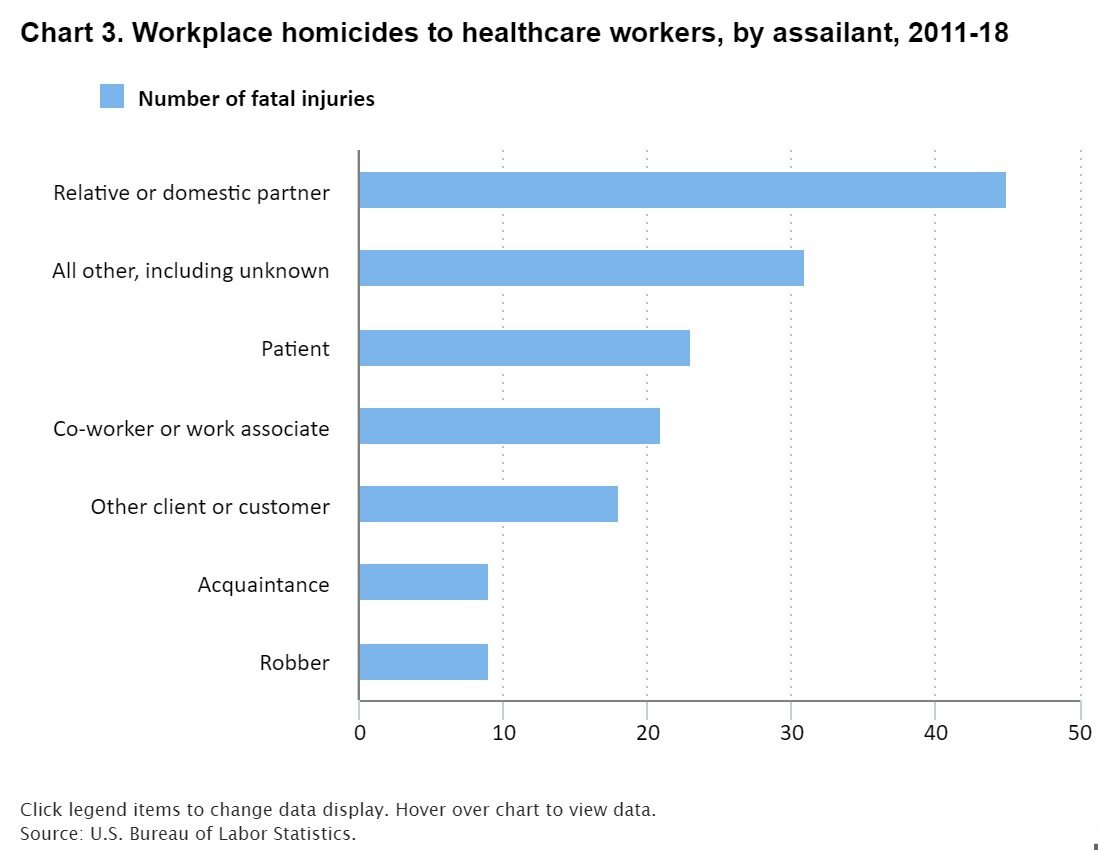
According to a recent analysis of Bureau of Labor Statistics data, healthcare is one of the most dangerous places to work. Homecare field staff members who provide services on behalf of private duty agencies, hospices, Medicare-certified home health agencies, and home medical equipment (HME) companies may be especially vulnerable. Contributing to their vulnerability is the fact that they work alone on territory that may be unfamiliar and over which they have little control. Staff members certainly need as much protection as possible.


Preventing Violence Bureau of Statistics Graph

Must-Haves

First, regardless of practice setting, management should develop a written policy of zero tolerance for all incidents of violence, regardless of source. The policy should include animals. The policy must require employees and contractors to report and document all incidents of threatened or actual violence, no matter how minor. Emphasis should be placed on both reporting and documenting. Employees must provide as much detail as possible. The policy should also include zero tolerance for visible weapons. Caregivers must be required to report the presence of visible weapons.

Below are some additional important actions for healthcare organizations to take that are based on UCHealth’s SAFE Program:

  • Encourage staff members to STOP if they feel unsafe for any reason.
  • Workers should pause to generally ASSESS their environments. Staff members should think about what has happened and observe what is currently occurring. Is there, for example, mounting frustration or anger?
  • Staff should then FAMILIARIZE themselves with the room. Who is the patient? Where is the patient? Are there any factors that might escalate behaviors? Staff members should also consider putting themselves in positions where they have a route to escape, if necessary.
  • Practitioners should also ENLIST help. Getting help may, for example, include pushing panic buttons on mobile devices.

Here is what Chris Powell, Chief of Security at UCHealth said in Becker’s Hospital Review on June 4, 2024:

“You can’t just talk about the shrimp and give you a good picture. We have to talk about the roux and the rice and everything else that goes into this for a good picture to be painted so people have an understanding. We want to solve this with an electronic learning or a 15-minute huddle, but we can’t. This is continuous and a persistent pursuit toward educating, communicating, recognizing, responding to, reporting and recovering from workplace violence.”

Every caregiver matters. The healthcare industry has lost caregivers to violence on the job in the past. Let’s not repeat these terrible events.

©2024 Elizabeth E. Hogue, Esq. All rights reserved.
No portion of this material may be reproduced in any form without the advance written permission of the author.

Florida Hospice Teaches Dementia Care by Simulating Dementia

by Tim Rowan, Editor Emeritus

“This [virtual dementia] tour opened my eyes to the reality of what a dementia patient lives with every day. It is completely different when you walk in their shoes. I highly recommend this program for caregivers.” 
“I can’t tell you how the dementia tour workshop has impacted my daily journey with my husband. He is 64 and suffers from a combination of Lewy Body and Frontal Temporal Dementia. We have been navigating this as a family for 7 years. I thought I understood his struggle, but the virtual tour has opened my eyes completely. It was a very emotional experience for me. You have changed our lives.”
“Thanks to this training, I will be a better caregiver starting today!”

These are a few of the comments from caregivers and family members who were trained by the Hospice of Marion County (HMC) in Ocala, Florida. HMC offers training based on research conducted by P.K. Beville, geriatric specialist and founder of Second Wind Dreams®. Second Wind is an international organization offering services to caregivers. Known as “The Virtual Dementia Tour,” the training is a patented, evidence-based, scientific method of building a greater understanding of dementia for clinicians, caregivers, and family members.

Virtual Dimentia Tour

Virtual Dementia Tour

Trained facilitators outfit trainees with patented devices that alter their senses. They then guide participants while they try to complete common everyday tasks and exercises. The Virtual Dementia Tour enables caregivers to experience for themselves the physical and mental challenges those with dementia face. This experience helps to provide better person-centered care.

HMC began The Virtual Dementia Tour in 2020 following an endowment from the widower of an Alzheimer’s patient who had been under MCH care. Named after his late wife, the Nancy Renyhart Dementia Education Program offers trainings through the hospice. The training is not only for hospice patient families and care teams, but to others who request it.

Meet the Team

DJ Ryan, Dementia Education RN, is certified by Second Wind Dreams as a Certified Dementia Practitioner. He has been with HMC since 2015 and provides trainings at the hospice offices and in the community. Chief Medical Officer Mery J. Lossada is dual certified in neurology and psychiatry. She has been with HMC since 2007. She works with local police, EMS providers, the department of Children and Family Services, and mental health providers to coordinate healthcare services to the community, including dementia patients and their families.

In its first three and a half years, the Nancy Renyhart Dementia Education Program has provided dementia education to 9,968 people. This number includes 926 first responders and 482 caregivers who have gone through the Virtual Dementia Tour® in the last two years. It also includes 2,026 healthcare professionals and first responders who have gone through the Tour since the inception of the program in January, 2021. 6,534 people have attended 167 dementia presentations. HMC provides all these services at no charge to the individuals or their employers.

Dr. Lossada told us, “We are a non-profit organization, and we have identified the three most common diagnoses leading to admission to hospice care: cardiological, pulmonary, and dementia. We have a specific program for each one of those disorders, each one intended to improve quality of life for the patient and the caregiver. We have seen that these dementia disorders are causing the most distress. Our training program helps with that.”

Outcomes

Nurse DJ Ryan said the reduction in hospitalizations, emergency department visits, and transfers to residential memory care facilities is impossible to translate into a mere financial advantage. He is more familiar with the impact of the training on individuals and families. “In the case of Lewy Body Dementia, which includes hallucinations, we have seen people believe they were being watched, attacked, or had bad guys coming in through the heating vents. One person called 911 475 times one year. Once we get involved with our part of the task force, we get them the resources that they need and get them connected with support to reduce those 911 calls. And the numbers are astounding.”

Ryan told us he has been receiving calls from all over the country inquiring about participating in or duplicating his training program. This interest comes without having engaged in any promotional efforts outside of the HMC web site. DJ can be reached via the HMC web site, hospiceofmarion.org/dementia.

# # #

Tim Rowan, Editor Emeritus

Tim Rowan is a 30-year home care technology consultant who co-founded and served as Editor and principal writer of this publication for 25 years. He continues to occasionally contribute news and analysis articles under The Rowan Report’s new ownership. He also continues to work part-time as a Home Care recruiting and retention consultant. More information: RowanResources.com or Tim@RowanResources.com

©2024 by The Rowan Report, Peoria, AZ. All rights reserved. This article originally appeared in Healthcare at Home: The Rowan Report. One copy may be printed for personal use: further reproduction by permission only. editor@homecaretechreport.com

New Resources for Home Health Value-Based Purchasing Model

by Kristin Rowan, Editor

The Home Health Value-Based Purchasing (HHVBP) Model began in 2016 as part of the Home Health Prospective Payment System (HH PPS) final rule. The original model aimed to:

  • Incentivize better quality and more efficient care
  • Study potential quality and efficiency measures
  • Enhance the public reporting process

HHVBP Model Outcomes

The original model had an average 4.6 percent improvement in Total Performance Scores (TPS). The model also saved Medicare $141 million annually, on average. There were no adverse risks with these savings. 

Additionally, the model reduced the number of unplanned hospitalizations and stays at Skilled Nursing Facilities (SNF). This provided additional savings from lower inpatient and SNF spending. 

home health value-based purchasing<br />
outcomes

HHVBP Expansion Model

HHVBP Measures

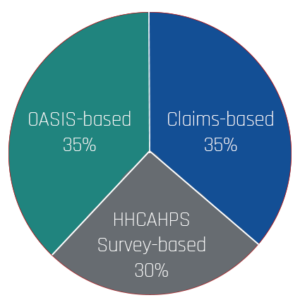
The HHVBP model expanded in 2022. The model includes HHAs in all 50 states, D.C., and the U.S. territories. The model adjusts Medicare payments from the fee-for-service (FFS) model.  Quality measures in a Performance Year impact adjustments in the Payment Year. These adjustments range from -5% to 5% and are based on quality measures relative to peer performance. HHA peers are pre-assigned cohorts with HHAs of similar size.

The expanded HHVBP model uses data from the Home Health Quality Reporting Program (HH QRP), Medicare claims, and HHCAHPS surveys. The expanded model does not require any additional data at this time.

Additional information on the quality  measures, cohorts, guides, and recordings from CMS can be found here.

We will continue to follow this story and provide updates on the new expanded model as they come in.

# # #

Kristin Rowan, Editor

Kristin Rowan has been working at Healthcare at Home: The Rowan Report since 2008. She has a master’s degree in business administration and marketing and runs Girard Marketing Group, a multi-faceted boutique marketing firm specializing in event planning, sales, and marketing strategy. She has recently taken on the role of Editor of The Rowan Report and will add her voice to current Home Care topics as well as marketing tips for home care agencies. Connect with Kristin directly kristin@girardmarketinggroup.com or www.girardmarketinggroup.com

©2024 by The Rowan Report, Peoria, AZ. All rights reserved. This article originally appeared in Healthcare at Home: The Rowan Report. One copy may be printed for personal use: further reproduction by permission only. editor@therowanreport.com

Advocacy Continues on Capitol Hill

ROAD TO THE TELEHEALTH “SUPER BOWL”: ATA ACTION CAPITOL HILL DRIVE

WASHINGTON, DC, JUNE 12, 2024 – ATA Action, the American Telemedicine Association’s affiliated trade association focused on advocacy, hosted its 2nd annual Hill Day, bringing nearly two dozen ATA Action members to Capitol Hill for meetings with Congressional leaders to discuss top federal telehealth policy priorities. ATA Action members underscored the ATA and ATA Action playbook for comprehensive, permanent telehealth reform, including passage of the CONNECT for Health Act  (H.R. 4189S. 2016), the Telehealth Modernization Act (HR 7623S.3967) and the Advancing Access to Telehealth Act (HR 7711).

“This well-timed Hill Day accomplished our goal, to keep telehealth access front-and-center in the minds of our Congressional champions and underscore the urgent need for Congress to act now to give patients and providers certainty about the continued availability of telehealth services,” said Kyle Zebley, senior vice president, public policy, the ATA and executive director, ATA Action. “We continue to hammer home the fact that access to telehealth is essential for delivering safe, effective, quality care to all individuals, including those in rural and underserved communities, as part of a modernized healthcare system.

“As we continue to seek permanent access to virtual care services, we remain grateful to the unwavering bipartisan, bicameral support for appropriate and necessary policies to ensure citizens have access to often life-saving telehealth services, when and where they need it. But the clock is ticking. We need Congress to act now, so that appropriate telehealth policies are implemented in a timely manner without arbitrary and unnecessary barriers to care such as in-person, brick-and-mortar, or geographic requirements,” Zebley added. “We are also eager to see our Senate champions act on these important telehealth policies.”

ATA Action members participating in Hill Day included a diverse range of organizations advocating for telehealth. Members of ATA Action’s Patient Voices for Telehealth Coalition also joined Hill Day meetings.

About ATA ActionTelemedicine Advocacy

ATA Action recognizes that telehealth and virtual care have the potential to transform the healthcare delivery system by improving patient outcomes, enhancing the safety and effectiveness of care, addressing health disparities, and reducing costs. ATA Action is a registered 501c6 entity and an affiliated trade organization of the American Telemedicine Association (ATA).

#     #     #

CONTACT:

Gina Cella
gcella@americantelemed.org
t: 781-799-3137

WellSky® and Ava Launch Groundbreaking Solution to Combat Staffing Crisis for Home-Based Care Agencies

WellSky® and Ava Launch Groundbreaking Solution to Combat Staffing Crisis for Home-Based Care Agencies

The new innovation helps improve healthcare employee retention and engagement through incentive-based rewards

WellSky, a leading health and community care technology company, today announced the release of WellSky TeamEngage powered by Ava, a new innovation for home-based care providers aimed at increasing employee retention, reliability, and recruitment through gamification. The solution incentivizes and rewards caregivers for completing targeted activities and achieving performance goals, fostering a culture of appreciation while improving staff retention rates and agency differentiation.

WellSky TeamEngage

The solution comes at a time when home-based care providers face a growing workforce shortage crisis. The turnover rate for home care providers is 77%, challenging agencies to meet a growing demand for services with a shrinking supply of caregivers. This can result in higher rates of referral and client case rejection. With WellSky TeamEngage, agencies can implement customizable, data-driven incentives to attract and retain talent at scale, while shifting focus toward other operational priorities and providing exceptional care.

Using WellSky and Ava’s integrated technology, Griswold — one of the country’s largest home care franchises with more than 170 locations in 32 states and over 9,000 caregivers — reduced the turnover rate in its eight company-owned offices by 13% in just seven months and helped a large majority of caregivers reach key goals, such as clocking in and out on time and meeting minimum weekly hour requirements. The company has since rolled out the technology to its franchise network and expects significant adoption.

“We have seen tremendous benefit from using WellSky TeamEngage powered by Ava, both in the retainment of talented staff members and in the differentiation of our agency,” said Caitlin Griffith, Director of People & Culture at Griswold. “Our organization believes that care professionals are the foundation of our success, with innovation being key to improving the lives of those we serve. We have been pleased with the adoption and staff satisfaction with the solution, and we look forward to further benefiting from a comprehensive set of insights to guide our approach to workforce engagement strategies.”

Ava acts as an AI-powered Chief Engagement Officer

Its average customer improves employee retention rates by 45% in six months. Ava improves employee engagement so healthcare providers and administrators can redirect attention to scaling their businesses. Now in partnership with WellSky, the organizations will extend this technology to providers across the U.S., with the Ava platform integrated within WellSky electronic health records (EHR) technologies and the WellSky TeamInsights solution. TeamEngage will provide a comprehensive flow of data between systems and a seamless end-user experience.

“Ava works to remove the burden of administrative work and reconnect caregivers and home care administrators with why they chose a healthcare career in the first place,” said Victor Hunt, chief executive officer and co-founder of Ava. “We are excited to lend Ava’s Enterprise AI technologies to TeamEngage and, in doing so, tackle one of the greatest crises facing healthcare.”

Leveraging data directly from WellSky Personal Care

WellSky TeamEngage incorporates specific caregiver actions, such as taking open shifts and performing timely clock-ins, into the agency’s defined incentive model, which stores all actions and awards points that caregivers can redeem for monetary or other agency-defined rewards. These day-to-day behaviors combined with pulse survey results, gamified referrals, and other engagement metrics are all tracked within WellSky TeamInsights for Personal Care, where powerful algorithms help predict caregiver turnover risk to proactively guide retention strategies.

“The staffing crisis facing our clients and the industry at large is a major concern, both for people seeking care in the home and for agencies trying to meet that need,” said Wes Little, chief analytics officer at WellSky. “We are thrilled to bring WellSky TeamEngage to our clients to not only provide them a tool to incentivize and reward caregivers, but to also gain the insights needed to run their operations at scale in today’s challenging environment.”

To learn more about how WellSky is powering agency staff retention and engagement, visit WellSky.com.

About WellSky®

Wellsky and AvaWellSky is one of America’s largest and most innovative healthcare technology companies leading the movement for intelligent, coordinated care. Our proven software, analytics, and services power better outcomes and lower costs for stakeholders across the health and community care continuum. In today’s value-based care environment, WellSky helps providers, payers, health systems, and community organizations scale processes, improve collaboration for growth, harness the power of data analytics, and achieve better outcomes by further connecting clinical and social care. WellSky serves more than 20,000 client sites — including the largest hospital systems, blood banks, cell therapy labs, home health and hospice franchises, post-acute providers, government agencies, and human services organizations. Informed by more than 40 years of providing software and expertise, WellSky anticipates clients’ needs and innovates relentlessly to build healthy, thriving communities. For more information, visit wellsky.com.

About Ava

Wellsky and AvaAva is an enterprise AI platform helping healthcare providers streamline administrative busywork so that they can get back to care. In an industry where employee engagement and retention are crucial yet increasingly challenging to maintain, Ava provides an effective AI-driven solution that’s beneficial for clients, caregivers, and providers. Integrating seamlessly with Electronic Health Records (EHRs), Ava offers an engaging experience for caregivers and clinicians while providing administrators with a robust suite of tools for business intelligence, employee management, and gamified incentives. For more information, visit joinava.com.

WellSky Media Contact
Emma Neal
Phone: 617.401.3131
Email: emma.neal@allisonworldwide.com

Ava Media Contact
Deanna Carbone
Phone: 914.523.7865
Email: ava@hirschleatherwood.com
Curantis Solutions Partners with Amazon HealthLake

by Kristin Rowan, Editor

Having a lot of data can help grow your business, streamline processes, improve efficiencies, and make your agency more profitable. But, if you don’t know how to use the data, or simply don’t have the time and man-power to analyze the data, then those hidden treasures waiting in all that data remain hidden. Understanding the value of that data, Curantis Solutions partners with Amazon HealthLake to help you harness it.

Curantis Solutions is a Texas based company delivering value to hospice and palliative care agencies. Their cloud-based management solutions help you increase operational and financial efficiencies while still offering well-coordinated and high quality patient care. The platform works to address two common pain points in our industry: siloed data and software systems that operate separate from each other. Curantis Solutions re-imagines workflows to reduce hours spent on tasks outside of direct patient care.

The Impetus for Change

New CMS regulations and the HL7 Fast Healthcare Interoperability Resources (FHIR) create standards that providers and health care plans must meet. This could help home health and hospice agencies with clinical data issues. FHIR imagines a unified EMR system for greater interoperability. Facing FHIR compliance, Curantis Solutions turned to AWS to help centralize their data. Using Amazon HealthLake, a fully managed FHIR service, Curantis was able to make their client data interoperable.

The Solution for Curantis Solutions

Using Amazon’s Working Backwards process, Curantis found a customer-centric solution. AWS helped Curantis work through:

  • Business objectives
  • A free, introductory program, “Gain Insights”
  • Cloud set-up and solution design

Curantis also implemented Amazon Kinesis to help collect, process, and analyze real-time data. All of Curantis’s data is now easily accessible, opening the door for AI, analytics, and business intelligence.

Curantis Solutions and Amazon HealthLake Data Processing and Analytics

Curantis Solutions Amazon HealthLake

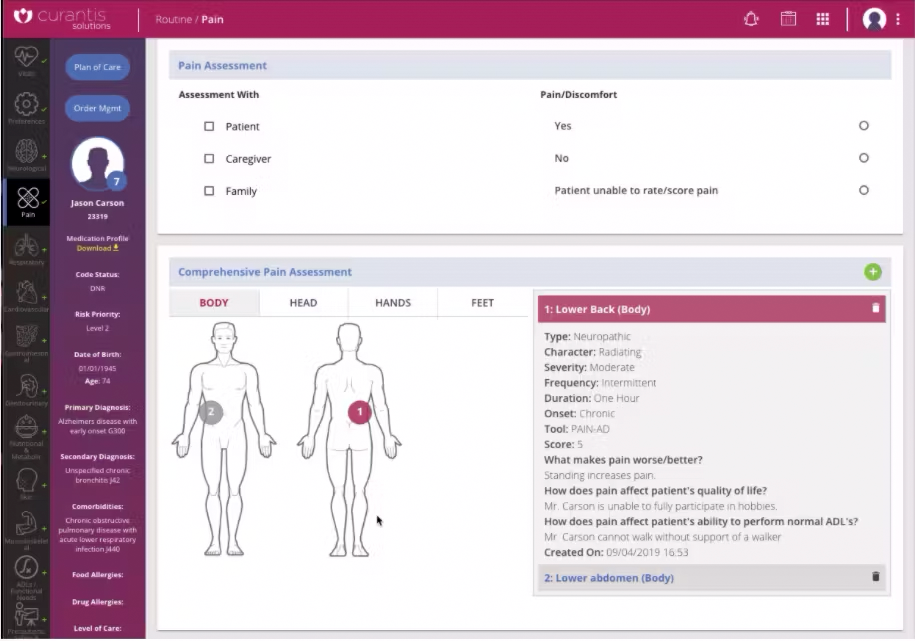
Using Amazon, Curantis Solutions can build visual dashboards and reports. The visual reports help agency administrators understand and apply the data at a glance without spending hours analyzing the data points. The integration allows data analysis in almost real time. The Amazon suite of services aids Curantis in growth and enhanced data processing for their clients. It also allows Curantis to highlight powerful industry and patient data trends. These key indicators will help with critical decision making for continued high quality patient care.

    This new platform adds expanded abilities to meet customer needs:

    • Enhanced partner integrations
    • Diverse way to prensent a patient-focused view
    • The power to make predictions about a patient’s decline based upon chart data
    • The ability for customers and internal stakeholders to easily explore data


    About Curantis Solutions

    Curantis Solutions was born from a desire to put hospice and palliative care first. With a genuine culture of caring, our team is dedicated to creating a refreshingly simple software experience that utilizes emerging technology, smart design and a cloud-native/serverless architecture to create an experience that is congruent with the technology you utilize in your everyday life. It’s time for hospice and palliative care software to make life easier vs creating arduous workarounds and added frustration. It’s time you experience Curantis Solutions!

    About Amazon HealthLake

    AWS HealthLake is a HIPAA-eligible service offering healthcare companies a complete view of individual and patient population health data using FHIR (Fast Healthcare Interoperable Resources) API based transactions to securely store and transform their data into a queryable format at petabyte scale, and further analyze this data using machine learning (ML) models. Using the HealthLake FHIR-based APIs, healthcare organizations can easily import large volumes of health data, including medical reports or patient notes, from on-premises systems to a secure, compliant, and pay-as-you-go service in the cloud. HealthLake offers built-in natural language processing (NLP) models to help customers understand and extract meaningful medical information from a single copy of raw health data, such as medications, procedures, and diagnoses.

    Curantis Solutions Amazon HealthLake

    # # #

    Kristin Rowan, Editor
    Kristin Rowan, Editor

    Kristin Rowan has been working at Healthcare at Home: The Rowan Report since 2008. She has a master’s degree in business administration and marketing and runs Girard Marketing Group, a multi-faceted boutique marketing firm specializing in event planning, sales, and marketing strategy. She has recently taken on the role of Editor of The Rowan Report and will add her voice to current Home Care topics as well as marketing tips for home care agencies. Connect with Kristin directly kristin@girardmarketinggroup.com or www.girardmarketinggroup.com

    ©2024 by The Rowan Report, Peoria, AZ. All rights reserved. This article originally appeared in Healthcare at Home: The Rowan Report. One copy may be printed for personal use: further reproduction by permission only. editor@therowanreport.com

    NLRB Targets Non-Compete Agreements

    by Elizabeth E. Hogue, Esq.

    The National Labor Relations Board (NLRB) has now joined the Federal Trade Commission (FTC) and some state legislatures to target non-compete agreements. The general counsel for the NLRB argued in a recent memo that non-compete agreements violate the National Labor Relations Act because they interfere with employees’ right to engage in protected concerted activity. Two recent actions by the Board provide more information about efforts of the NLRB to limit use of non-compete agreements.

    Juvly Aesthetics Non-Compete Agreement Settlement

    In February of 2024, the regional office of the Board in Cincinnati approved a settlement agreement between Juvly Aesthetics and three former employees. The Board claimed that Juvly, an operator of medical clinics, violated the rights of employees through the use of confidentiality, non-disparagement, non-competition, non-solicitation and requirements to repay training expenses under certain conditions. 

    According to the NLRB, Juvly prohibited employees from discussing their rates of pay. The Company also required some employees to sign a non-compete agreement that was in effect for a period of twenty-four months for any competing medical practice within twenty miles of any location of the Company.

    Juvly agreed to a settlement agreement that required:

    • Payment of back pay to some employees
    • Termination of unlawful policies and procedures
    • Release of employees from unlawful agreements
    • Posting of all of requirements of the settlement agreements for review by employees
    Non-compete agreements juvly aesthetics<br />

    NLRB Division of Advice

    non-compete agreements

    In December, the NLRB Division of Advice issued guidance that evaluated the legality of these issues:

    • Customer non-solicitation provisions do not violate the Act because they only prevent employees from soliciting existing customers for one year so that employees are likely not barred from other employment opportunities for more than one year.
    • Confidentiality agreements do not violate the Act because they prohibit only disclosure of trade secrets, marketing plans, customer lists, and other proprietary information, as opposed to information that could involve employee activity regulated by the Act, such as wage information. 
    • Provisions requiring the return of company property do not violate the Act.

    Providers are now clearly operating in an environment that prohibits employers from restricting employee activities that were fair game in the past. The specifics of efforts to limit the actions of employers remain unclear, but will likely be “fleshed out” in enforcement actions.

    ©2024 Elizabeth E. Hogue, Esq. All rights reserved.

    No portion of this material may be reproduced in any form without the advance written permission of the author.

    ©2024 by The Rowan Report, Peoria, AZ. All rights reserved. This article appeared in Healthcare at Home: The Rowan Report. Reproduction by permission only.

    editor@therowanreport.com

    The Future of NAHC: An Interview with Bill Dombi

    by Kristin Rowan, Editor

    NAHC President Bill Dombi announced at last week’s CAHSAH annual meeting and expo that he would end his tenure at NAHC and retire at the end of 2024. We reached had an interview with Dombi on Thursday, May 23rd. He said he was not prepared to speak yet about his upcoming retirement, but we should hear more about that soon.

    In the meantime, he provided additional details from his session at CAHSAH. We also discussed updates on the lawsuit against CMS and the status of the merger between NAHC and NHPCO. Tim’s article from last week talks about Dombi’s progress with Senator Wyland.

    Ongoing Litigation

    When we last spoke with Bill, he told us about the lawsuits filed against CMS. The suit claims that the budget-neutral calculations were based on faulty data and outdated software. These calculations determined the reimbursement rate reductions. Dombi explained the process for those lawsuits.

    “The first round of the battle is around whether the court has the power to hear the case either at all or at that point in time. The courts are littered with litigation that have been dismissed on jurisdictional grounds,” Dombi offered. The court dismissed the lawsuit and the case is now closed. The Department of Justice (DoJ) attacked jurisdiction to get the case dismissed. Most concerning, according to Dombi, was the DoJ’s question of whether the statute passed by Congress precluded any litigation. If the courts had found in their favor, they would have dismissed the lawsuit no further suits could be filed. Luckily, that argument didn’t hold. The second attack was whether NAHC had expedited administrative review, which is the argument that caused the dismissal. Now, they have to establish that it would be futile to get CMS to agree to expedited judicial review.

    Next Steps

    In light of the dismissal, NAHC had to decide whether to appeal the ruling, exhaust the expedited review step with CMS, or both. Ultimately, they decided not to appeal and is pursing the review with CMS. This process could take up to 6 months, according to Dombi. Although they are pursuing the review, CMS has already stated that their final position is that the budget neutrality has been calculated within the law. Dombi feels the review is futile because CMS is not going to change their position. Now, they just have to prove the futility.

    Two-Step Approach

    Advocacy from NAHC, NHPCO, and other individuals and organizations was always intended to be a two-pronged effort: Litigation and Congress. The two do not interfere with each other. Even though the court dismissed the litigation suit in favor of judicial review, the approach in Congress continues. Of Senator Wyland, Dombi said, “A year ago at this time, his view was that home health agencies needed no relief. Now, he’s indicated a willingness to find a way to help home health agencies and recognizes that the cuts have been harmful to home health agencies and others that provide care.” According to Dombi, it was the personal stories and individual provider information that was crucial in swaying Wyland. The organizations continue to meet with other members of Congress to persuade them in the same way.

    Dombi Provides Merger Update

    Last year, NAHC and NHPCO announced they would join forces and merge into a new, as yet to be named, organization. That merger is still moving forward, but there are a lot of odds and ends to tie up. Dombi told us, “Nothing is final, final, but I don’t see anything but tailwinds moving forward.” The two organizations are still hoping for a July 1, 2024 launch of the organization. There is an active, open search for a new CEO to actively run both organizations as one. According to Dombi, no one has been slated for that position yet, so they may end up launching before there is a CEO in place.

    The two organizations have already started integrating. They have lobbied together and they have worked on policy together. Additionally, they are integrating the association management system and building a website. “We feel confident enough that it’s going to reach the finish line that we’re investing time and money in these elements,” Dombi said. The two organizations can continue to operate together without a CEO, but there are a lot of decisions that need to be made that won’t be made until after there is a CEO.

    After the Merger

    Once the merger is complete and the two organizations operate under a new name with a new CEO, Dombi and his counterpart Bill Marcantonio of NHPCO will stay on for some time. Dombi will take the title President Emeritus and Council to the organization and Marcantonio will become the Chief Integration Officer. The new name of the organization has not been announced. Dombi says a lot of things are tied together, from an action standpoint, and it’s better to announce all of those details together along with the new name.

    Reflections From Bill Dombi

    When asked what was next for him after the merger is completed and he moves to retirement, Dombi reflected on his career:


    “I’m proud of what I’ve accomplished in my life, but I’m more proud of what the people I work with I have accomplished. It’s not the first time we’ve tried to merge the two organizations, but this time, we had all the right ingredients and I’m proud of that. I live with the confidence that my constituency is up to the challenge. Every time they get kicked back, they’re right back at it.

    To see where we are today compared to the 70s, we are so many light years ahead of where we were then. I mean, we’re talking about a hospital level of care at home. That was part of the dream. The fore-runners of healthcare at home truly believed those things were possible. The problems that caused the workforce shortage are multi-faceted, so the solutions are multi-pronged.”

    Bill Dombi Spring Tour
    We will continue following the story of both the lawsuits and the merger and update you as soon as there is more information.
    Kristin Rowan, Editor
    Kristin Rowan, Editor
    Kristin Rowan has been working at Healthcare at Home: The Rowan Report since 2008. She has a master’s degree in business administration and marketing and runs Girard Marketing Group, a multi-faceted boutique marketing firm specializing in event planning, sales, and marketing strategy. She has recently taken on the role of Editor of The Rowan Report and will add her voice to current Home Care topics as well as marketing tips for home care agencies. Connect with Kristin directly kristin@girardmarketinggroup.com or www.girardmarketinggroup.com

    ©2024 by The Rowan Report, Peoria, AZ. All rights reserved. This article originally appeared in Healthcare at Home: The Rowan Report. One copy may be printed for personal use: further reproduction by permission only.
    editor@therowanreport.com

    Use of Preferred Provider Agreements

    by Elizabeth E. Hogue, Esq.

    Preferred Provider Agreements as Referral Source

    In a highly competitive marketplace, home care providers of all types, including home health agencies, hospices, private duty/home care companies and home medical equipment (HME) suppliers are looking for a “leg up,” especially for patients with certain types of payors. Providers may be able to cement important referral sources using Preferred Provider Agreements. For example, a provider may wish to approach an assisted living facility (ALF) to see if it is interested in a preferred provider relationship. If so, then management of the ALF may want to sign a Preferred Provider Agreement in order to further a relationship with this provider.

    Problems with Preferred Provider Agreements

    The anti-kickback statute may apply if providers involved in referral arrangements receive any type of federal or state funds, including, but not limited to, payments for services provided from Medicaid waiver programs, managed Medicaid programs, the Tri-Care Program, the VA, or any other state or federal programs. The anti-kickback statute generally says that anyone who either offers to give or actually gives anyone anything in order to induce referrals has engaged in criminal conduct. There are, however, several exceptions to this statute that may be applicable.

    How to Assess Your Preferred Provider Agreements

    Providers should ask two crucial questions about the application of the anti-kickback statute to referral arrangements:

    1. Is there a kickback or rebate?
    2. If so, is there an exception or “safe harbor” that permits the arrangement even though it would otherwise violate the statute?

     kickback or rebate occurs when a provider receives referrals from another provider and something flows back to the referral source from the provider who received referrals. If there is a kickback or rebate, providers must automatically ask the second question listed above. If they fail to utilize applicable exceptions, they may miss out on useful marketing strategies that are likely to result in numerous referrals.

    With regard to Preferred Provider Agreements, however, it is important to note that they can be structured so that no money or anything of value changes hands between providers and the other party involved. If so, there is no kickback or rebate.

    Patient Choice

    The parties to Preferred Provider Agreements must also make certain that they honor patients’ choices of providers. There are a number of sources of patients’ right to freedom of choice of providers applicable to preferred provider arrangements, including:

    • Court decisions or the common law says that all patients – regardless of payor source, type of care rendered, or types of providers involved – have the right to control the care they receive and who provides it.
    • A federal statute that guarantees all Medicare and Medicaid patients the right to freedom of choice of providers. This statute may be applicable if either party receives reimbursement from the Medicare or Medicaid Programs.

    When patients express preferences for certain providers, however, their choices must be honored despite the existence of Preferred Provider Agreements. The agreement of the parties to honor patients’ choices should be included in Preferred Provider Agreements.

    Final Thoughts

    The market to provide services to patients in their homes is expanding, but the competition for referrals among providers seems to be extremely fierce. Providers are well advised to utilize Preferred Provider Agreements to help them to increase and/or maintain referrals in order to help ensure profitability.

    ©2024 Elizabeth E. Hogue, Esq. All rights reserved.

    No portion of this material may be reproduced in any form without the advance written permission of the author.

    Bill Dombi Spring Tour has two Major Announcements

    by Tim Rowan, Editor Emeritus

    Bill Dombi Spring Tour

    For the last time, NAHC President Bill Dombi is spending another Spring on airplanes. It is state association meeting season, and the Bill Dombi Spring Tour has been bringing his regular Capitol Hill update from coast to coast, this time adding the announcement that he will retire at the end of the year.

    After 40 years with NAHC, the lengthy standing ovation Californians gave him at the end of his Tuesday speech was well-deserved.

    Advocacy and Change

    Bill’s core message has not changed, though the details of his ongoing battle to force CMS to take HHAs and Hospices more seriously has its 2024-2025 nuances. “Letting Congress know that you are an important healthcare sector, and clearly the most popular sector, is not NAHC’s job alone. Every one of you has power. Use it. Make your voices heard.”

    Meetings with the Senate Finance Committee

    To illustrate the point, he related a story about his recent visit to Portland to meet with the Chair of the Senate Finance Committee, Ron Wyland (D-OR).

    “Senator Wyden has been one of the major roadblocks to Medicare agencies getting fair payment rates. I went to see him with a group of agency owners and workers to describe the hardships the current and planned pay rate cuts will impose, and to explain the exact problems with the dumb formula CMS is using to calculate those pay rates.

    “The Senator said, ‘But MedPAC says you make too much money and rates should be cut. Were they wrong? Or has something changed?’

    Reaching Agreement…Almost

    “Both, the group and I harmonized. One by one, each agency representative told him about the growing demand of an aging population, the difficulty hiring staff with the salaries our low pay rates allow them to pay, and a full litany of all the problems with Medicare Advantage.

    “By the end of our meeting, we hadn’t turned him 180 degrees, but I could see he was beginning to turn.”Later, Dombi added, he met with Senator Debbie Stabenow (D-MI), who is not only a member of the same Finance Committee but the fourth in line in the Senate pecking order. She offered to have a conversation with her colleague, and that turned Senator Wyden the rest of the way toward changing his position 180 degrees.

    You Can Make a Difference

    “If you think you as an individual owner have no power in Sacramento, Congress, or the White House,” Dombi concluded, “think again.”

    See sidebar for the complete list of Finance Committee members. Everyone has power, but if you are a voter in one of their states, you have an even more powerful voice.

    The Bill Dombi Spring Tour will continue throughout the year until his retirement. Join Dombi at the 2024 Financial Management Conference & Expo in Las Vegas, July 21-23 and at the 2024 Home Care and Hospice Conference and Expo in Tampa, October 20-22.

    Bill Dombi Senator Wyden

    Senator Ron Wyland (D-OR)

    SENATE FINANCE COMMITTEE MEMBERS

    Chair: Ron Wyland (D-OR)
    Ranking Member: Mike Crapo (R-ID)
    Debbie Stabenow (D-MI)
    Chuck Grassley (R-IA)
    Maria Cantwell (D-WA)
    John Cornyn (R-TX)
    Robert Menendez (D-NJ)
    John Thune (R-SD)
    Thomas Carper (D-DE)D-
    Tim Scott (R-SC)
    Benjamin Cardin (D-MD)
    Bill Cassidy (R-LA)
    Sherrod Brown (D-OH)
    James Lankford (R-OK)
    Michael Bennet (D-CO)
    Steve Daines (R-MT)
    Bob Casey (D-PA)
    Todd Young (R-IN)
    Mark Warner (D-VA)
    John Barrasso (R-WY)
    Sheldon Whitehouse (D-RI)
    Ron Johnson (R-WI)
    Maggie Hassan (D-NH)
    Thom Tillis (R-NC)
    Catherine Cortez Masto (D-NV)
    Marsha Blackburn (R-TN)
    Elizabeth Warren (D-MA)

    # # #

    Tim Rowan, Editor Emeritus

    Tim Rowan is a 30-year home care technology consultant who co-founded and served as Editor and principal writer of this publication for 25 years. He continues to occasionally contribute news and analysis articles under The Rowan Report’s new ownership. He also continues to work part-time as a Home Care recruiting and retention consultant. More information: RowanResources.com
    Tim@RowanResources.com

    ©2024 by The Rowan Report, Peoria, AZ. All rights reserved. This article originally appeared in Healthcare at Home: The Rowan Report.homecaretechreport.com One copy may be printed for personal use: further reproduction by permission only. editor@homecaretechreport.com