St. Croix Hospice Receives Age-Friendly Certification

FOR IMMEDIATE RELEASE

Contact:                              Bronwyn Pope

851-767-2800

bpope@stcroixhospice.com

St. Croix Hospice Becomes First Hospice Agency to Receive Age-Friendly Care Certification Agency-Wide

OAKDALE, Minn.Dec. 2, 2024 /PRNewswire/ — St. Croix Hospice is proud to announce its achievement of Age-Friendly Care certification, a testament to its unwavering dedication to delivering exceptional, patient-centered care designed to meet the unique needs of older adults at every stage of life.

Age-Friendly Certification

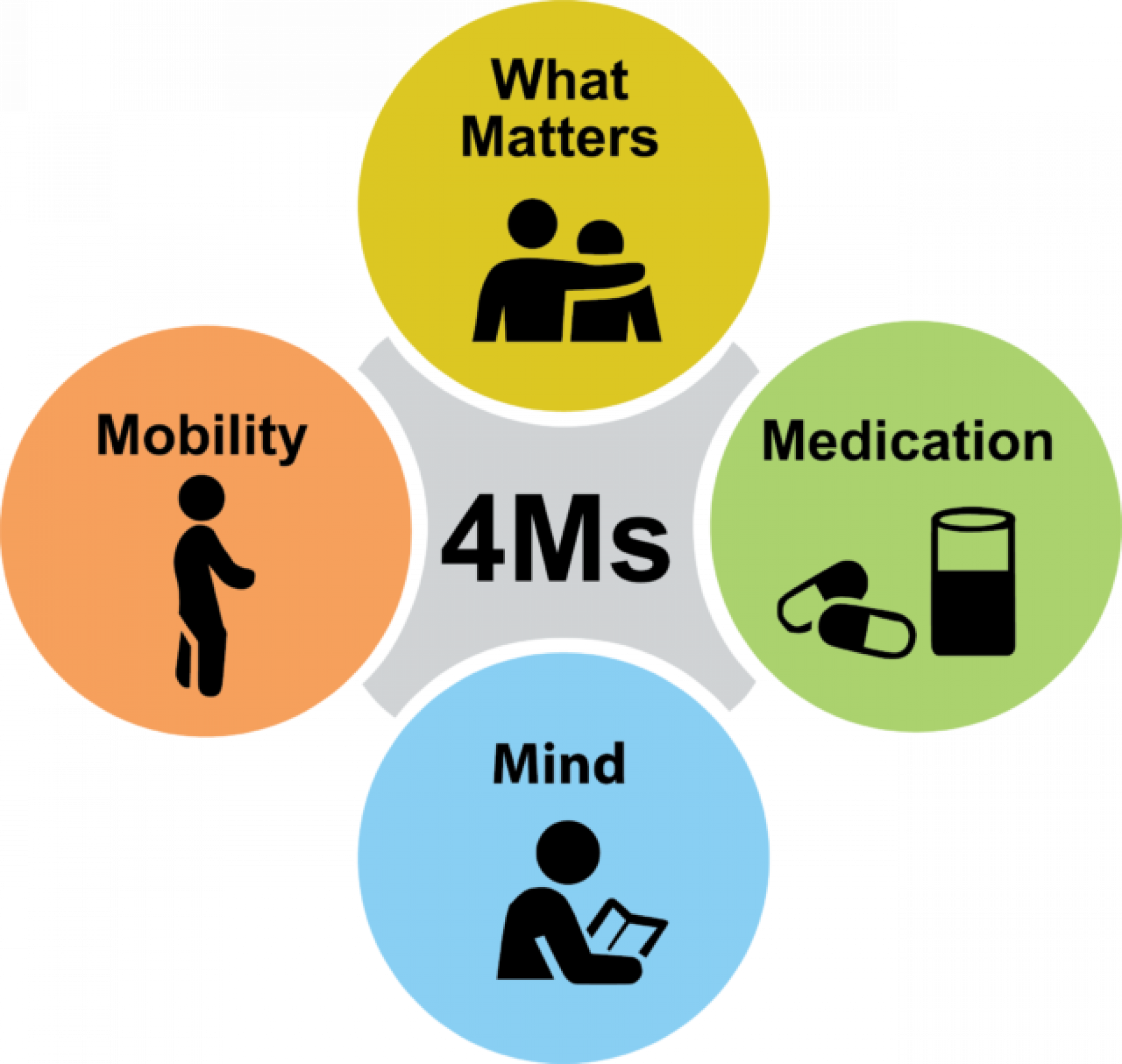
The Age-Friendly Care certification, awarded by Community Health Accreditation Partner, Inc. (CHAP), recognizes providers that implement evidence-based practices designed to meet the specific needs of aging patients. St. Croix has successfully embedded the “4Ms Framework” – What Matters, Medication, Mentation and Mobility – into its care model, ensuring every patient receives comprehensive care aligned with their personal goals and well-being.

“St. Croix Hospice is dedicated to providing compassionate, individualized care tailored to the unique needs of older adults,” said Heath Bartness, Founder CEO of St. Croix Hospice. “The Age-Friendly Care certification further recognizes our long-standing commitment to enhancing quality of life for aging individuals and their families through a compassionate, patient-centered approach. It’s especially important to us that this certification is recognized across our entire organization, reflecting the unified efforts of our teams to ensure every patient receives the highest quality care they deserve.”
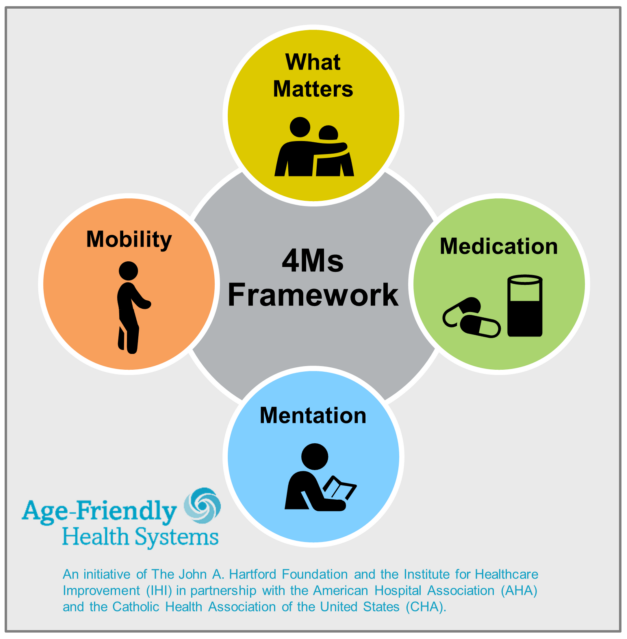
4M St. Croix Hospice

Achieving Age-Friendly Care certification required all St. Croix locations to complete specialized training and implement best practices in geriatric care. This ensures that patients’ wishes are honored while prioritizing proper medication use, mental health support, and safe mobility.

The Age-Friendly Care certification aligns with our ongoing efforts to lead the industry in innovation and quality. With more than 90% of our patients aged 65 or older, this national recognition underscores the importance of our commitment to meeting the unique needs of older adults. It validates our clinical practices and serves as a testament to the dedication of our care teams who strive to make a difference for patients and families every day.

Ashley Arnold

Senior VP of Quality, St. Croix

St. Croix Recognized by CHAP

“St. Croix Hospice’s implementation of Age-Friendly Care across their 70+ locations is truly inspiring,” said CHAP Chief Operating Officer Teresa Harbour. “Their integration of the 4Ms Framework—What Matters, Medication, Mentation and Mobility—into daily practices reflects a deep commitment to honoring what matters most to their patients and families. This effort not only raises the bar for compassionate, patient-centered care but also underscores St. Croix Hospice’s role as a leader in the hospice field. At CHAP, we are proud to partner with organizations like St. Croix Hospice that prioritize innovation and excellence at such an impressive scale.”
St. Croix serves 5400 patients daily across the Midwest. Taking an integrated approach to hospice care, the expert team at St. Croix provides physical, emotional and spiritual support that meets the unique needs of each patient. St. Croix teams are stationed in more than 75 branches throughout ten states, ensuring responsive, proximate service to wherever patients call home.

# # #

About CHAP

CHAP is an independent, nonprofit organization accrediting providers of home and community-based care. Founded in 1965, CHAP was first to recognize the need for and value of home and community-based care standards and accreditation. As a Centers for Medicare & Medicaid Services (CMS)–approved accrediting organization, CHAP surveys organizations providing home health, hospice, and home medical equipment services to establish if Medicare Conditions of Participation and DMEPOS Quality Standard are met and recommend certification to CMS. CHAP’s purpose is to partner with organizations nationwide to advance quality in the delivery of care and services in the home and community. 

About St. Croix Hospice

St. Croix Hospice supports patients, their families and caregivers, providing compassionate care when it’s needed most. Celebrating 15 years of service, St. Croix Hospice delivers exceptional hospice services 24 hours a day, 365 days a year and wherever a patient calls home. With branches in IllinoisIndianaIowaKansasMichiganMinnesotaMissouriNebraskaSouth Dakota and Wisconsin, St. Croix Hospice takes pride in round-the-clock availability, prompt response times and same-day admissions – including during evenings, weekends and holidays. Contact St. Croix Hospice 24/7 at 855-278-2764 or stcroixhospice.com

The 4 M Framework for Age-Friendly Care

by Kristin Rowan, Editor

Pitfalls of Care at Home

Patient assessment has largely used the same formula for years. Patient care is more successful and less expensive in the home, but it is not without its frustrations. Agency owners and managers know that patients won’t always follow recommendations. Some patients leave an acute-care setting without understanding their own diagnosis or after care. Disruption from depression, dementia, or delirium impacts recovery. There are a reported 36 million falls among older adults in the U.S. And the list goes on.

Age-Friendly Health Systems

The care provided to older adults both in acute and post-acute settings is not always designed around the patient. Age-Friendly Health Systems is a joint initiative of The John A. Hartford Foundation and the Institute for Healthcare Improvement (IHI) in partnership with the American Hospital Association (AHA) and the Catholic Health Association of the United States (CHA).

Age-Friendly Health Systems, according to the John A. Hartford Foundation, is a movement helping hospitals, medical practices, retail pharmacy clinics, nursing homes, home-care providers, and others deliver age-friendly care. 

Components of an Age-Friendly Health System:

    • Follow an essential set of evidence-based practices in the 4Ms Framework
    • Cause no harm
    • Align with What Matters to older adults and their family caregivers

The 4Ms Framework

What Matters

Know and align care with each older adult’s specific health outcome goals and care preferences including, but not limited to, end-of-life care, and across settings of care.

Medication

If medication is necessary, use Age-Friendly medication that does not interfere with What Matters to the older adult, Mobility, or Mentation across settings of care.

Mentation

Prevent, identify, treat, and manage dementia, depression, and delirium across settings of care.

Mobility

Ensure that older adults move safely every day in order to maintain function and do What Matters.

4Ms Framework CHAP Age-Friendly

CHAP Certification for Age-Friendly Care

The Rowan Report spoke with Teresa Harbour, COO of CHAP, about the 4M Framework. CHAP has developed a standardized form that agencies can use to educate patients and families and find out what matters most to them. The 4Ms Framework changes the perspective on patient care by looking at the 4Ms as a set, rather than as separate assessments. Resources, standards, and learning modules for your agency are also included and can be downloaded. The Age-Friendly Care at Home Certification is included at no charge with your CHAP Accreditation.

First Age-Friendly Certification Awarded

On December 2, 2024, St. Croix Hospice announced its achievement of Age-Friendly Care certification across all 70+ locations. Harbour said in a statement, “This effort not only raises the bar for compassionate, patient-centered care but also underscores St. Croix Hospice’s role as a leader in the hospice field.”

St. Croix Hospice is dedicated to providing compassionate, individualized care tailored to the unique needs of older adults. It’s especially important to us that this certification is recognized across our entire organization, reflecting the unified efforts of our teams to ensure every patient receives the highest quality care they deserve.

Heath Bartness

Founder & CEO, St. Croix Hospice

# # #

Kristin Rowan, Editor

Kristin Rowan has been working at Healthcare at Home: The Rowan Report since 2008. She has a master’s degree in business administration and marketing and runs Girard Marketing Group, a multi-faceted boutique marketing firm specializing in event planning, sales, and marketing strategy. She has recently taken on the role of Editor of The Rowan Report and will add her voice to current Home Care topics as well as marketing tips for home care agencies. Connect with Kristin directly kristin@girardmarketinggroup.com or www.girardmarketinggroup.com

©2024 by The Rowan Report, Peoria, AZ. All rights reserved. This article originally appeared in Healthcare at Home: The Rowan Report. One copy may be printed for personal use: further reproduction by permission only. editor@therowanreport.com

UnitedHealth Group Acquisition of Amedisys Under Fire by DOJ

by Kristin Rowan, Editor

Justice Department Sues

In September of 2023, UnitedHealth Group made a bid to purchase Amedysis. That acquisition has been under scrutiny since last year. When the bid was announced, the Department of Justice began an inquiry, asking for additional information. At the time, Amedysis indicated that they anticipated the inquiry.

Now, more than a year later, the Department of Justice, along with the Attorneys General of Maryland, New York, New Jersey, and Illinois, have filed an antitrust lawsuit to block the acquisition. The proposed $3.3 billion acquisition would eliminate competition between the two companies. It would also give too much control to UnitedHealth Group, according to the suit.

Statement from the Department of Justice

The DOJ and the Attorneys General stated that the merger is illegal. The two companies own so much of the market share in the space already that combining the two would mean less choice for patients and fewer employment options for nurses seeking competitive pay and benefits. 

UnitedHealth Group already acquired Amedisys’s biggest home health and hospice rival, LHC Group. Since that acquisition, UnitedHealth Group and Amedisys have been two of the largest providers of home health and hospice care in the United States.

DOJ Blocks United Amedisys

American healthcare is unwell. Unless this $3.3 billion transaction is stopped, UnitedHealth Group will further extend its grip to home health and hospice care, threatening seniors, their families and nurses.

Jonathan Kanter

Assistant Attorney General, Justice Department anti-trust division

Surprisingly, the former CEO and current board chairman of Amedisys acknowledged the problems. He said that the competition between the two companies has helped keep them honest. He also said it has driven better quality to the benefit of their respective patients. The former CEO went on to say that the companies also compete for nurses and the merger may threaten the benefits nurses receive. It seems even the heads of the companies involved know this is a bad idea.

UnitedHealth Group's Proposed Solution

In response to the concerns voiced by the DOJ, UnitedHealth proposed to divest some of its facilities to VitalCaring Group. UnitedHealth said this would prevent the monopoly the merger creates. The DOJ responded to that proposal somewhat harshly.

The complaint alleges that the UnitedHealth Group’s market share would be illegal in home health markets in 23 states and the District of Columbia. It would also be illegal in hospice markets in 8 states, and in the nurse labor market in 24 states.

UnitedHealth’s proposed divestiture would only alleviate the monopoly in a few areas. This leaves hundreds of markets across the U.S. in jeopardy. Further, VitalCaring Group has poor quality scores and is facing its own legal judgement of close to half a billion dollars. Allegedly, the current CEO of VitalCaring Group was the CEO of a competitor while running VitalCaring behind the scenes.

Good News for Home Health and Hospice

The complaint describes home health and hospice services as “critically important parts of the American healthcare system….Patients rely on the skill and expertise of home health and hospice nurses, who must effectively treat patients at home.

Millions of patients depend on United and Amedisys to receive home health and hospice care in the comfort of their homes. The Department’s lawsuit demonstrates our commitment to ensuring that consolidation does not threaten quality, affordability, or wages in these vital healthcare markets.

Benjamin C. Mizer

Principal Deputy Associate Attorney General

Attorney General Merrick B. Garland said, “We are challenging this merger because home health and hospice patients and their families experiencing some of the most difficult moments of their lives deserve affordable, high quality care options. The Justice Department will not hesitate to check unlawful consolidation and monopolization in the healthcare market that threatens to harm vulnerable patients, their families, and health care workers.”

Final Thoughts

Mister Attorney General, please turn your attention to CMS and Medicare Advantage, as they continue to threaten the safety and well-being of patients, families, and caregivers with increasingly low reimbursement rates and denials of coverage.

# # #

Kristin Rowan, Editor

Kristin Rowan has been working at Healthcare at Home: The Rowan Report since 2008. She has a master’s degree in business administration and marketing and runs Girard Marketing Group, a multi-faceted boutique marketing firm specializing in event planning, sales, and marketing strategy. She has recently taken on the role of Editor of The Rowan Report and will add her voice to current Home Care topics as well as marketing tips for home care agencies. Connect with Kristin directly kristin@girardmarketinggroup.com or www.girardmarketinggroup.com

©2024 by The Rowan Report, Peoria, AZ. All rights reserved. This article originally appeared in Healthcare at Home: The Rowan Report. One copy may be printed for personal use: further reproduction by permission only. editor@therowanreport.com

Medicare Advantage Stock Prices After Trump Elected

by Kristin Rowan, Editor

Will the Change in Leadership Usher in a Change in Reimbursement Rates?

As in any election year, we have been bombarded with promises, predictions, and pandering from senate and house hopefuls as well as presidential candidates from every party. Each of them found platform issues that resonated with their followers. In turn, they have accused their opponents of all manner of sin. 

Now that the election has passed and the lame duck session of congress has begun, analysts have started looking to January and how election results may impact different industries. Analysts believe Trump, along with congressional Republicans, will aggressively push Medicare Advantage. One researcher predicts that traditional Medicare will “wither on the vine.” 

Privatization

Opposition to our current health care and insurance system often advocate for a single-payer system that is seen in places like England and Canada. Naysayers refer to this as the “socialization” of medicine, referring to socialist and communist governments. Privatization, on the other hand, moves healthcare out of the hands of the government and into the hands of privately held, usually for-profit, health insurance companies. Medicare Advantage has quietly moved more than 50% of all Medicare eligible patients to a privatized system. Senior policy analyst at Paragon Health Institute, Joe Alabanese believes that the Trump administration and a republican Congress would be “more friendly” to the idea of privatized health care. 

Insurer Stock Prices

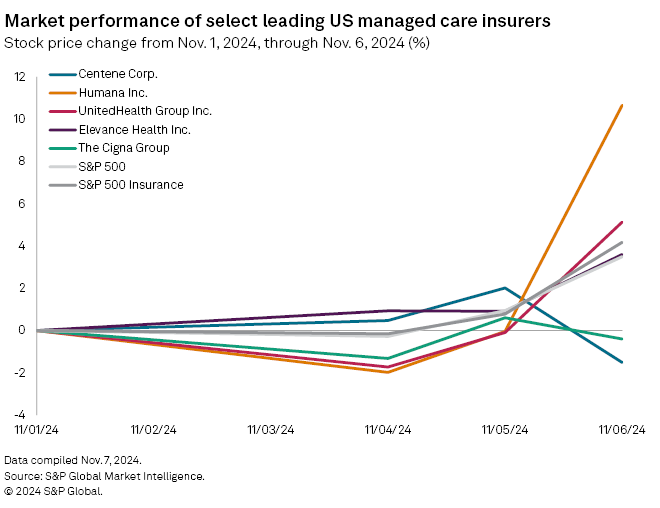
Whether the stock prices just before and after election day are predictive of things to come remains to be seen. For now, the information before us is this:

    • Between Nov 1 and Nov 7, Humana Inc. had the largest increase in stock prices at 10.7%
    • UnitedHealth Group Inc. rose 5.1% in the same time period
    • Both companies had greater stock increases than the average across S&P
    • Elevance Health was in keeping with the rest of the S&P with an increase of 3.6%
    • Molina Healthcare, Inc. and The Cigna Group dropped 0.2% and 0.4%, respectively
Medicare Advantage Stock Trump

Analysts say the jumps are in keeping with expectations that Republican control in Congress and in the White House will be beneficial for Medicare Advantage

Medicare Advantage Stock Trump<br />

Final Thoughts

It’s no secret that The Rowan Report is not a fan of Medicare Advantage. Specifically, the sales tactics used on the elderly and infirmed are predatory and the denial rate is criminal. The more eligible patients sign up for Medicare Advantage the less they will receive the care they need. Further, the more Medicaid has to supplement the cost of Medicare Advantage, the more home care agencies will suffer. Nationally, the more CMS regulates payment rates, pre-authorizations, and denial rates by privatizing Medicaid, the worse off our entire healthcare system will be.

With the state and national associations, we will continue to advocate on behalf of care at home agencies and their patients. And we hope you will too, regardless of who is in office. We have support at the federal level and we will continue to fight the good fight.

# # #

Kristin Rowan, Editor

Kristin Rowan has been working at Healthcare at Home: The Rowan Report since 2008. She has a master’s degree in business administration and marketing and runs Girard Marketing Group, a multi-faceted boutique marketing firm specializing in event planning, sales, and marketing strategy. She has recently taken on the role of Editor of The Rowan Report and will add her voice to current Home Care topics as well as marketing tips for home care agencies. Connect with Kristin directly kristin@girardmarketinggroup.com or www.girardmarketinggroup.com

©2024 by The Rowan Report, Peoria, AZ. All rights reserved. This article originally appeared in Healthcare at Home: The Rowan Report. One copy may be printed for personal use: further reproduction by permission only. editor@therowanreport.com

Safeguarding Home Care Heroes Part 2

by Marcylle Combs, BS, MS, RN, CHCE

This article is part 2 of 2-part series. Read part 1 here

Protecting our Care at Home Heroes

Preventive Measures and Safety Protocols

To deal with these dangers, several preventive steps have been recommended.

Personal Protection

Personal Protective Equipment (PPE) and hand hygiene are basic but important ways to prevent disease spread. Making sure workers are up to date on vaccinations, following cleaning protocols, and safely handling sharp objects and hazardous materials can also significantly reduce risks.

Beyond PPE

Safety policies personal protective equipment

But safety isn’t just about using PPE. There’s also a need for ergonomic tools to prevent injuries, regular safety checks of patient homes, and ensuring safe driving practices for workers who spend a lot of time on the road. Just as important are communication and conflict de-escalation strategies to help healthcare workers manage tense situations with patients or their families.

Safety policies de-escalation

Training

Training home health workers to spot signs of potential violence or aggression, whether from patients or their families, is vital. They should also have strategies to defuse conflicts and a clear plan to exit safely if a situation turns dangerous. Since hazardous chemicals in the home can be a real threat, agencies should train workers to recognize unsafe conditions and take the necessary steps, like reporting the problem or moving the patient to a safer environment.

Emotional Resilience

A Must-Have for Care at Home Workers

Physical safety is important, but emotional well-being is just as crucial. Feeling emotionally secure—valued, supported, and heard at work—is key to keeping employees engaged and satisfied with their jobs. It helps reduce burnout, absenteeism, and turnover.

Creating a culture of psychological safety starts with good leadership. Managers need to actively listen to their employees’ concerns and encourage open communication. When workers feel that their voices are heard and their opinions matter, they’re more likely to stay proactive and engaged.

Real-Life Examples and the Importance of Strong Policies

The dangers faced by home health workers aren’t just theoretical—they’re very real. I’ve seen this firsthand. As both an owner, administrator, and nurse, there were times we felt unsafe.

One instance that sticks out happened a few years ago

A nurse on a routine visit encountered the patient’s grandson breaking into the house, clearly high on some kind of drug. She and the patient managed to block the bedroom door while she called 911, and thankfully, the police arrived before the grandson could get to them. He was carrying a gun, though she didn’t know that at the time.

Safety policies awareness

Putting Comprehensive Policies in Place

A solid safety program that meets the unique needs of home health workers is a must. This includes having zero-tolerance policies for workplace violence, infection control measures, and clear guidelines for handling dangerous materials. Ongoing education and training are essential to make sure staff follow these protocols.

In addition, there should be regular assessments to gauge how effective safety policies are. Gathering feedback from workers on the ground is crucial to making sure these policies address real-world challenges.

Final Thoughts: Safety is a Mindset

Workplace safety isn’t just about following rules or checking boxes. It’s something that should be part of the culture of every organization. By putting in place measures that protect both the physical and emotional well-being of home health workers, we can ensure that these “home care heroes” continue to provide the critical care that so many people rely on. As Eleanor Everet wisely said, “Safety is not a gadget, but a state of mind.”

# # #

Marcylle Combs Care at Home Worker Safety

Marcylle has faithfully served and advocated on behalf of home health and hospice patients for over 30 years. She started her career as a nurse, worked diligently to strengthen her leadership skills and ultimately became the owner/president of a successful home health and hospice company. She has served the home care industry in Texas and nationally throughout her years on multiple committees, boards, associations and dedicated lobbying efforts. Currently, Marcylle serves on the board of directors for The National Association for Home Care & Hospice (NAHC), the Home Care and Hospice Financial Managers Association (HHFMA) and the Industry Advisory Board. Additionally, she serves on NAHC’s Governance and Nominating Committee, the HHFMA workgroup, Innovations Committee and chairs the Women in Leadership Committee for HHFMA.

As a wife, mother of 5 adult children and as a female in the workplace she aspires to grow and lead others until her last breath on this earth. She continues this quest through three new business ventures she has founded: MAC Legacy, MAC Legacy Investments and The Marcylle Combs Company.     

©2024 by The Rowan Report, Peoria, AZ. All rights reserved. This article originally appeared in Healthcare at Home: The Rowan Report. One copy may be printed for personal use: further reproduction by permission only. editor@therowanreport.com

Here We Go Again

by Tim Rowan, Editor Emeritus

OIG Accuses Medicare Advantage Providers of Padding Patient Assessments...Again

“Hello, this is your Medicare Advantage company calling. I am one of their clinicians and it is time for us to update your health assessment. If you will agree to a home visit, we will send you a $50 gift card to CVS.”

This phone call my brother received is typical, increasingly common, and not necessarily on the up-and-up, according to a new report to CMS from the Department of Health and Human Services Office of the Inspector General (OIG). OIG found that these home visits, known in the insurance industry as “Health Risk Assessments,” (HRA) when coupled with HRA-related claims data, increased Medicare Trust Fund payments to MA companies $7.5 billion in 2022 and twice that in 2023. Most of it went to the top 20 companies.

Concerned woman on a telephone call

The October 2024 report, “Medicare Advantage: Questionable Use of Health Risk Assessments Continues to Drive Up Payments to Plans by Billions,” accuses the industry as a whole of improperly padding payments by “finding” new health conditions during these HRA’s that may indicate the need for additional care at additional cost to the company. It questions the use of MA plan employees doing these assessments instead of relying on the customer’s primary care physician’s reports.

OIG references CMS’s own report, Part C Improper Payment Measure (Part C IPM) Fiscal Year 2023 (FY 2023) Payment Error Rate Results,” to determine that gross overpayments to Medicare Part C plans in 2023 amounted to just over six percent of total payments, or $14.6 billion. The net increase to MA plans, after adjusting for underpayments, brought the percentage to 4.62. Total 2023 payments to MA plans came to $275,605,962,817.

The report also points out that identifying additional customer need during an HRA does not necessarily translate into the insurance company paying for additional care.

OIG Recommendations

In addition to implementing prior OIG recommendations, the new report asks CMS to:

    • Impose additional restrictions on the use of diagnoses reported only on in-home HRAs or chart reviews that are linked to in-home HRAs for risk-adjusted payments,
    • Conduct audits to validate diagnoses reported only on in-home HRAs and HRA-linked chart reviews, and
    • Determine whether select health conditions that drove payments from in-home HRAs and HRA-linked chart reviews may be more susceptible to misuse among MA companies.

CMS concurred with OIG’s third recommendation but rejected the other two.

While the entire 38-page report is well-worth reading, OIG has also published a one-page summary.

At this year’s annual conference of The National Alliance for Care at Home, the new merger of NAHC and NHPCO, a number of education sessions were devoted to teaching Home Health agency owners how to negotiate with Medicare Advantage plans in order to minimize losses and better care for patients who chose those plans. Comments included the high rate of care denial, unreasonable prior authorization policies, and slow payments as compared to traditional Medicare. Other healthcare entities have chosen a potentially more effective response: Just Say No. 

Hospital systems have had enough

According to a roundup of recent decisions by large and small healthcare systems in Becker’s Hospital CFO Report (10/25/24), no fewer than 30 healthcare providers are severing their relationships with one or more MA plans, with another 60 who told Beckers they are seriously considering the same move.

Doctor tears up contract

States Have as Well

A sister publication, Becker’s Payer Issues, reported in its October 23 edition that more and more states are issuing fines against MA plans for violations ranging from excessive denied claims to collection of co-pays when none was required.

How Much Longer?

All of this demands a serious question. How much longer will Home Health continue to tolerate abuse by these giant, for-profit payers now that a different path forward has been paved by hospital systems and state regulatory arms? The loudest voice for Home Health to join the “Just Say No” movement over the last few years has been that of Bruce Greenstein, CTO of LHC Group. Following his company’s acquisition by UnitedHealth’s Medicare Advantage division, Optum, his less loud message is to work with MA plans to teach them what Home Health is and what it can do for them.

Statement from Dr. Landers

In his inaugural address to The Alliance last month, new CEO Dr. Steven Landers called for our entire industry and everyone taking a paycheck from it to join him in advocacy. We fully support that call to action, recognizing that no national association can influence lawmakers and CMS regulators without member support, but he was referring to Medicare rules and payment structures. As we know, that includes less than half of Medicare beneficiaries today. Thanks to deceptive TV ads during open enrollment every year, that number will continue to shrink.

Widespread Advocacy

We need to turn at least part of our advocacy focus to the dominant payers, the MA divisions of insurance companies. Read the Beckers report on the 30 healthcare systems that have torn up their MA contracts. Read the companion report about the epidemic of care denials. Yes, it is a David vs. Goliath story, with even the largest organizations in Home Health dwarfed by the size of the payers. As so many hospital systems have shown, however, it is possible to switch from begging for a few more cents per visit to forcing a plan to beg you to take their patients.

It will only work though if everyone does it. We have already lost LHC Group, and Optum is in the final stages of adding Amedisys to their stable. Out of 11,000 HHAs, there is still a chance we have a united voice loud enough to be heard and taken seriously.

Final Thoughts

One of their improper cost-cutting tactics is routine care denial. For example, the Labor Department alleged that UnitedHealth subsidiary UMR denied all urine drug screen claims from August 2015 to August 2018 without determining whether a claim was medically necessary. In my brother’s case, following his wife’s HRA by her MA company, with no additional care offered, he made the tough choice to put her on in-home hospice care. The assessing nurse immediately detected she had a UTI and ordered the appropriate antibiotics. She responded quickly and may be discharged from hospice soon. Hospice care, of course, is paid by traditional Medicare, not Medicare Advantage.

Tim Rowan, Editor Emeritus

Tim Rowan is a 30-year home care technology consultant who co-founded and served as Editor and principal writer of this publication for 25 years. He continues to occasionally contribute news and analysis articles under The Rowan Report’s new ownership. He also continues to work part-time as a Home Care recruiting and retention consultant. More information: RowanResources.com or contact Tim at Tim@RowanResources.com

©2024 by The Rowan Report, Peoria, AZ. All rights reserved. This article originally appeared in Healthcare at Home: The Rowan Report.homecaretechreport.com One copy may be printed for personal use: further reproduction by permission only. editor@homecaretechreport.com

The Great Hospital/Home Health Divorce Movement

by Tim Rowan, Editor Emeritus

Hospitals Divesting Home Health Departments

Is this an early omen of two related trends? A number of hospitals are divesting their home health departments, while large health insurance companies are swallowing up large home health companies.

Beckers reported on October 23 that Providence Health plans to spin off its home-health services along with hospice and palliative care into a new joint venture that will be managed by Compassus, a for-profit, Tennessee-based provider of home care services in 30 states. The move will affect about 700 patients receiving care every day in Spokane County.

The Catholic not-for-profit health system’s agreement with Compassus will be known as “Providence at Home with Compassus.”

After a regulatory review, the deal is expected to close in early 2025. Providence and Compassus will each own a 50% stake. The new venture is part of a strategy to expand and improve home-based services, but also to cut costs. Providence, which operates Sacred Heart Medical Center and Holy Family Hospital in Spokane, declined to disclose the financial details of the joint venture.

LHC Group Was Not Enough

A news release that surfaced on October 25 said that UnitedHealth Group representatives are set to meet with Justice Department officials to make the case for the insurance giant’s acquisition of Amedisys to be approved. The meeting is often the last step before the Justice Department decides whether to file a lawsuit challenging an acquisition, according to the news outlet

Amedisys operates more than 500 facilities in 37 states. Shareholders approved the acquisition in September 2023, but the deal has been held up by regulatory scrutiny. Justice Department officials are concerned the deal could increase prices for home health, according to Bloomberg. 

Hospitals Divesting Home Health

If approved, this would be phase two of UnitedHealth’s historic foray into our sector. United acquired LHC Group, a home health provider with more than 900 locations, in February 2023. If UnitedHealth’s acquisition of Amedisys is approved, the company would own 10% of the entire home health market, with significant overlap between Amedisys and LHC acquisitions in some Southern states, according to Bloomberg. 

Regulators could approve the deal with some changes to address competition concerns, Bloomberg reported. In August, Amedisys and UnitedHealth agreed to sell a reported 100 home health and hospice care centers to VitalCaring Group if the merger is approved.

Three or More is a Trend

UnitedHealth is not the only insurance company interested in owning home health agencies and hospices:

  1. Humana acquired Kindred, one of the nation’s largest HHAs, and rebranded it CenterWell Home Health. Today it operates more than 360 home health locations in 38 states. In 2023, the company said it would expand into in-home primary care in several states.
  2. In 2023, CVS Health acquired home health provider Signify Health for $8 billion. The company won a bidding war for Signify over UnitedHealth Group, Amazon and Option Care Health. Signify Health has more than 10,000 clinicians.
  3. Evernorth, Cigna’s health services arm, offers home health services with a staff of more than 430. In January, Cigna CEO David Cordani said home health was one area where it would focus on future acquisitions.
  4. In 2021, Centene sold its majority stake in home-based primary care provider U.S. Medical Management. Centene retained a minority stake in the company.

Our healthcare sector is changing as the entire U.S. healthcare scene changes. Next week we will delve further into the ramifications of the CMS 2025 final rule and of course the political events of this week.

# # #

Tim Rowan, Editor Emeritus
Tim Rowan is a 30-year home care technology consultant who co-founded and served as Editor and principal writer of this publication for 25 years. He continues to occasionally contribute news and analysis articles under The Rowan Report’s new ownership. He also continues to work part-time as a Home Care recruiting and retention consultant. More information: RowanResources.com
Tim@RowanResources.com

©2024 by The Rowan Report, Peoria, AZ. All rights reserved. This article originally appeared in Healthcare at Home: The Rowan Report. One copy may be printed for personal use: further reproduction by permission only. editor@therowanreport.com

New Features for Quality and Compliance Software Solution

FOR IMMEDIATE RELEASE

Contact:                    Norbert Hudak
818-523-8125
norbert@qapiplus.com

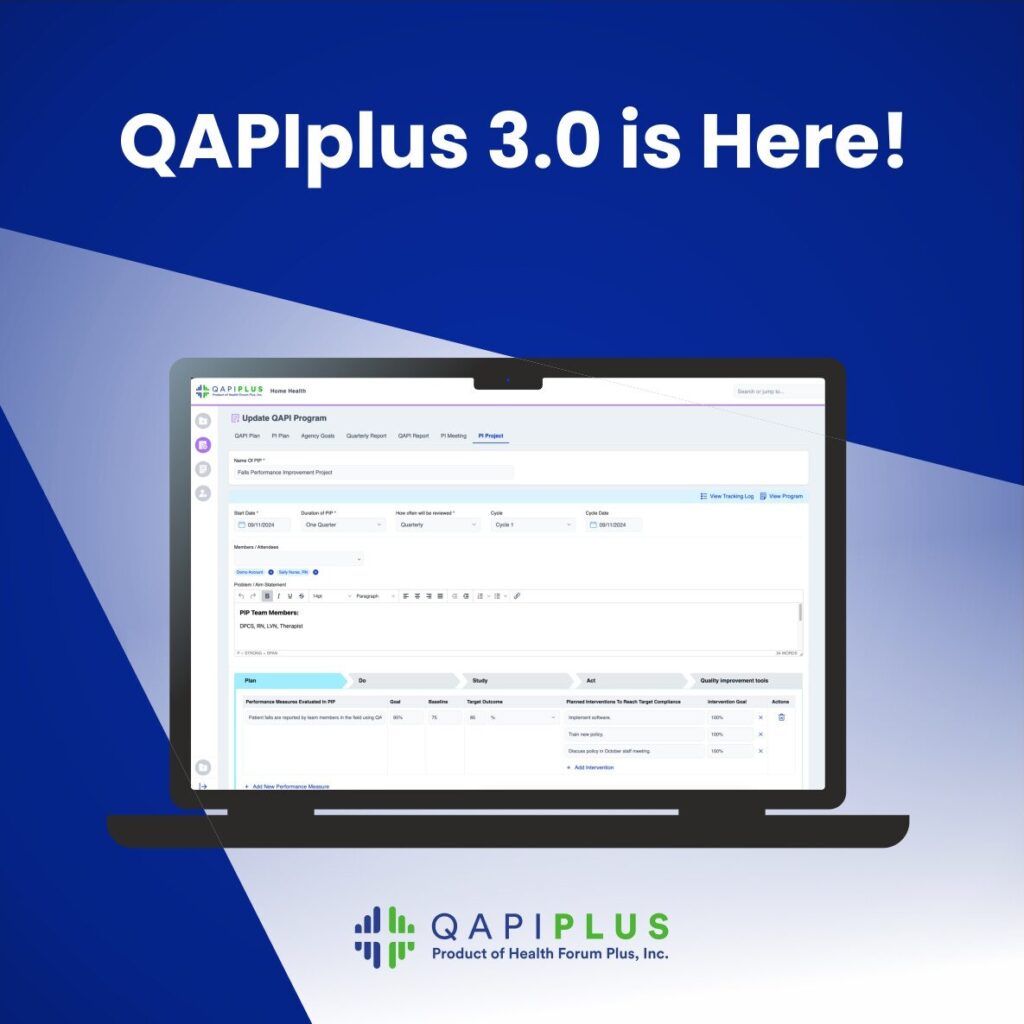
QAPIplus Launches 3.0 Platform, Enhancing Quality and Compliance for Home Health and Hospice Providers

New user interface, more customizations, enhanced PIPs and EMR integrations make managing quality and compliance programs even easier for home health and hospice organizations.

GLENDALE, Calif.Oct. 14, 2024 — QAPIplus, the first and only comprehensive quality and compliance management solution for home health and hospice, is excited to announce the launch of QAPIplus 3.0.

This significant update introduces a modernized user interface, enhanced features for managing Performance Improvement (PI) projects, and deeper integrations with leading electronic medical record (EMR) systems. These enhancements are designed to streamline workflows, save even more time, and provide an improved user experience for agencies focused on delivering the highest standards of care.

“We listened carefully to feedback from our customers, and QAPIplus 3.0 reflects their needs and priorities. Our users asked for a more intuitive interface and better ways to manage their compliance and quality workflows. With these enhancements, we’re delivering the tools they need to succeed.”

Armine Khudanyan

Co-Founder and CEO, QAPIplus

“This update streamlines the entire quality and compliance workflow even more than before,” said Lara Koraian, Co-Founder and CTO of QAPIplus. “By automating repetitive tasks and improving user management, QAPIplus 3.0 saves agencies valuable time while ensuring that critical compliance needs are met efficiently.”

Top Benefits of QAPIplus 3.0 Include

    • Time Savings: Automated PIPs workflows including progress tracking, assigning specific users, and delegating tasks.
    • Easier Navigation: A modern, streamlined design makes the platform more intuitive and easier to navigate.
    • More Customization: Enhanced control over notifications allows for a more tailored experience for each user.
    • Seamless Data Flow: Enhanced integrations with leading EMR platforms to automatically populate incident data in the QAPIplus platform.
QAPIplus 3.0

With QAPIplus 3.0, home health and hospice agencies can continue to elevate their quality and compliance programs while reducing the administrative burden on staff.

# # #

About QAPIplus

As the only software solution created specifically for home health and hospice organizations that digitizes and automates your quality and compliance programs, QAPIplus empowers you to achieve your highest performance, minimize burden, and improve your bottom line.

QAPIplus is the only quality management software solution to earn CHAP Verification and ACHC Certification for home health and hospice organizations.

This press release originally appeared on PRNewswire and reprinted with permission from QAPIplus. For more information or to request permission to print, use the media contact above.

New EVP for Talent Acquisition

Axxess

FOR IMMEDIATE RELEASE

Contact:                 Johnathan Eaves
(903) 445-6969
jeaves@axxess.com

Axxess Names Tim Ingram Executive Vice President for Talent Acquisition

His Appointment Will Ensure New Hires Reinforce Its Award-Winning Culture As Company Grows Worldwide

DALLAS, October 21, 2024 – Longtime Axxess leader Tim Ingram has been named Executive Vice President for Talent Acquisition to work closely with company leaders around the world to ensure new hires continue to reinforce the award-winning culture known as The Axxess Way.

A Message from Axxess CEO

“Beyond our industry-leading solutions, our foundational strength has always been and will always continue to be our unique culture,” said John Olajide, founder and CEO of Axxess, the industry leader in care at home technology solutions. “Tim’s demonstrated commitment to excellence and his collaborative and cooperative nature make him the perfect choice to represent our unique culture and work with our team to ensure new hires also embody The Axxess Way as we continue to grow around the world.”

Tim Ingram, in His Own Words

“Axxess is easily the most dynamic and collaborative culture I have ever been part of, and it’s an honor to be responsible for ensuring we find only the smartest, highest-quality team players who can help take Axxess to the next level,” said Ingram, who joined Axxess in 2016 and will continue to serve as Executive Vice President for Interoperability, partnering with industry-changing technology companies to enhance Axxess’ solutions. “Our vision is to be the global home healthcare technology leader, and most admired for our people, partnerships and solutions. Ensuring we achieve our vision starts at the interview.”

Tim's Background

Ingram has more than 20 years of experience in healthcare, including working in software, as well as regulatory and mergers and acquisitions environments. He serves as an ambassador for the National Hospice and Palliative Care Organization’s My Hospice Ambassador program; a member of several committees and councils for both NHPCO and National Association for Home Care and Hospice and is a past board member for the California Hospice and Palliative Care Association. He was named one of DirectTrust’s Interoperability Heroes in 2022.

Tim Ingram Talent Acquisition

# # #

About Axxess

Axxess is the leading global technology platform for healthcare at home. The company offers a robust ecosystem that empowers healthcare organizations and professionals to deliver the highest quality care. By integrating with partners and payers from across the healthcare continuum, more than 9,000 organizations trust the Axxess network to care for more than 5 million patients worldwide. Multiple independent certifications have confirmed that Axxess has the most secure and industry-compliant software solutions. The company’s collaborative culture focused on innovation and excellence is recognized nationally as a “Best Place to Work.”

This press release was originally published by Axxess and is reprinted with permission. For more information or for permission to use this material, please use the media contact above.

Situational Awareness Training

by Lauren Rogers and Bobby McLain

Enhancing Safety Through Situational Awareness

For home-health, hospice, and social workers, maintaining safety in unpredictable environments is crucial. Situational awareness is a key tool in ensuring personal safety and effective response to potential threats. It involves four main characteristics: observation, orientation, decision, and action. Here’s a brief guide on how to apply these principles in your daily work.

Observation

For home-health, hospice, and social workers, maintaining safety in unpredictable environments is crucial. Situational awareness is a key tool in ensuring personal safety and effective response to potential threats. It involves four main characteristics: observation, orientation, decision, and action. Here’s a brief guide on how to apply these principles in your daily work.

Situational Awareness

Orientation

Orientation involves understanding and processing the information you’ve observed based on your own experience and knowledge. Think about what is around you—consider the layout of the environment and how it affects your safety. If you find yourself in a difficult situation, where will you seek help? Familiarize yourself with exit routes and safe locations within the home or area.

Decision

Once you’ve gathered and processed information, it’s time to make decisions. Weigh your options carefully to determine the best course of action. Consider what you can do within your capabilities to mitigate any risks. Your decisions should aim to ensure your safety while also maintaining the well-being of those you serve.

Situational Awareness

Action

Action is the final step, where you use all the information and decisions you’ve made to execute a plan for safety. If you’ve identified a potential danger, act quickly and decisively. This might involve leaving the situation, calling for help, or using safety tools and protocols designed for emergencies.

Situational Awareness Final Thoughts

Applying situational awareness can significantly enhance your safety and effectiveness as a home-health, hospice, or social worker. By mastering observation, orientation, decision, and action, you’ll be better equipped to navigate challenging situations and ensure a safer work environment. Stay alert, make informed decisions, and take proactive steps to protect yourself and those you serve.

# # #

Lauren Rogers

Lauren Rogers serves as the Director of Healthcare at Katana Safety, where she leverages her experience to enhance workplace safety in healthcare environments. She focuses  on post-acute care providers and is dedicated to integrating innovative safety solutions that protect healthcare professionals.

She is passionate about creating safer environments, reducing risks for healthcare workers, and driving positive industry change. At Katana Safety, Lauren is committed to developing strategies that prioritize the well-being and safety of healthcare teams.

Bobby McLain

Bobby McLain is Chief Experience Officer for KATANA Safety, the Premier Provider of Lone and Workforce Safety Solutions.  McLain’s previous roles include interim marketing leadership for multiple companies and executive positions at ScanSource, Inc., working in the company’s global marketing and strategic expansion efforts. McLain’s career began in event management and marketing, supported by a Bachelor of Arts in Journalism with a focus on Advertising/PR from the University of South Carolina. He can be reached at bobby@katanasafety.com or 864-630-9016   KATANA Safety: Never A Lone Worker

©2024 by The Rowan Report, Peoria, AZ. All rights reserved. This article originally appeared in Healthcare at Home: The Rowan Report. One copy may be printed for personal use: further reproduction by permission only. editor@therowanreport.com