Medicare Advantage Reform

by Kristin Rowan, Editor

Medicare Advantage Reform

Background

Traditional Medicare is available to any U.S. citizen over the age of 65 or with a qualifying disability. Part A covers hospital care, skilled nursing facility care, hospice care, and some medically necessary home health care while Part B covers doctor visits and outpatient care. Medicare is billed through and paid by the federal government.

Medicare Advantage (originally Medicare+Choice) is Medicare coverage offered by private insurance companies who are then reimbursed by the government. The goal was to create competition and lower costs. It has done neither. Medicare Advantage plans are supposed to provide all of the coverage from Parts A, B, & D except hospice care. That is still handled by traditional Medicare.

Hospice Carve-in Plan

Despite the epic failure of the recent hospice carve-in experiment, House representative Schweikert (R-AZ) introduced H.R. 3467 to reform the Medicare Advantage program and included a requirement for hospice care. The goal, according to Schweikert, is to eliminate waste and fraud and stop MA insurance companies from making billions in profits by upcoding. The solutions, outlined in H.R.3467, include requiring MA recipients to stay on the same plan for at least three years and permanently including the hospice benefit in MA plans.

Eight New Bills

On November 19, 2025, Representative Mark Pocan (D-WI), with the support of 12 other members of the House, introduced eight separate bills aimed at Medicare Advantage reform and strengthening traditional Medicare. The eight bills include:

1. Disincentives for delaying and denying lifesaving care due to prior authorization requirements
2. Automatic appeals for any denial of care
3. Visually and audibly disclosing delay and denial rates in advertising
4. Banning participation in MA for any company convicted of defrauding the government
5. Lowering MA reimbursement rates to at or below traditional Medicare rates
6. Limiting the number of MA plans a company can offer to 3 per year
7. Prohibiting MA from being the default option
8. Creating a website listing all doctors by plan

Commentary

In addition to the package cosponsors and six endorsing organizations, Rep Pocan received industry expert support for his bill package.

“Big Insurance has long pitched Medicare Advantage as a key tool to lowering health care costs and delivering better care, but like so much of their rhetoric, this is nothing but bold-faced lies. The truth is, Medicare Advantage is neither Medicare nor an advantage. And it certainly doesn’t exist to lower costs. It exists to help Big Insurance make sky-high profits and enrich shareholders. It is long past time Congress stepped in and protected patients. The legislative package Congressman Pocan is introducing is the most comprehensive plan ever introduced to rein in Medicare Advantage and protect patients. Congress should pass these bills without delay.”

Wendell Potter, President, The Center for Health and Democracy

“Medicare Advantage insurers profit from withholding medically necessary care, and can withhold care with near impunity. So, people enrolling in corporate MA plans are forced to gamble with their health and with their lives. They can’t avoid the bad actors. It’s time Congress protected older Americans and people with disabilities from bad actor Medicare Advantage insurers, as Congressman Pocan’s MA Bill package would do.”

– Diane Archer, President and Founder, Just Care

Rep. Pocan’s bills do not include the hospice carve-in and would leave hospice care under traditional Medicare. 

Faulty Logic?

Medicare Advantage plan payors have been accused of upcoding, fraud, overbilling, delays in care, and denials that circumvent the rule that MA must cover everything traditional Medicare does. It may be naive to assume that passing these bills will force unscrupulous companies to suddenly have integrity.

MA enrollees pay the standard Part B premium and might pay an additional MA premium depending on their income, geographic locations, and/or additional plan benefits. Rep. Pocan’s bill lowers what MA charges the government (aka tax payers) but does not address what the plans charge enrollees. If MA plans are required to lower reimbursement rates by 10%, for example, won’t they just increase premiums, deductibles, and copays or remove additional benefits? Sure, the government spends less, but out-of-pocket costs increase and quality of care drops.

The “Seniors Choice” bill limiting the number of plans to three is unclear in its direction. A 2019 rule removed the meaningful difference requirement for MA plans. This bill seeks to reinstate that requirement, but changes the term to “significantly different” in premiums, benefits, and cost-sharing. There are too many variables in health insurance to limit the choices to three. Three choices per company lessens the competitive need to keep prices low. 

Not so Hidden Agenda

Medicare Advantage reform is sorely needed. MA is largely fraudulent, misleading, and costly both in spending and health. Chipping away at some of these pieces is for the good of the enrollees on their surfaces. But dig just a little deeper and the goal is clear. 

Overwhelmingly, the organizations in support of this bill package are proponents of a single payer system. The prior authorizations disincentive is termination of the entire contract for the year. The disallowing participation bill includes all companies and individuals convicted of any crime, misdemeanor or greater, in any way connected to healthcare, all financial misconduct in or out of healthcare, and all acts of fraud, kickbacks, and misrepresentation of material fact. Any plan charging more than its traditional Medicare counterpart will be eliminated. Given these restrictions, it will not take long for every Medicare Advantage plan to be eliminated entirely.

 The recent government shutdown centered around the ACA subsidies that are set to expire at the end of the year. The elimination of those subsidies could push healthcare insurance premiums to a level that few can afford, furthering the need for a single payer plan.

Final Thoughts

The White House has promised a health care proposal with much speculation but no facts. The proposal has yet to be released. Congress is still negotiating the extension of Covid-era subsidy increases with only a few weeks remaining before they adjourn for the holidays. ACA participants are having to renew their health insurance without knowing what the final cost will be and many believe the number of participants will drop significantly, leaving millions uninsured. 

None of the proposed solutions will fix all the problems with healthcare. But, a temporary stay is better than losing access to healthcare altogether. This is an ongoing issue and The Rowan Report will continue to bring you the latest information as it becomes available.

# # #

Kristin Rowan, Editor

Kristin Rowan has been working at The Rowan Report since 2008. She is the owner and Editor-in-chief of The Rowan Report, the industry’s most trusted source for care at home news, and speaker on Artificial Intelligence and Lone Worker Safety and state and national conferences.

She also runs Girard Marketing Group, a multi-faceted boutique marketing firm specializing in content creation, social media management, and event marketing.  Connect with Kristin directly kristin@girardmarketinggroup.com or www.girardmarketinggroup.com

©2025 by The Rowan Report, Peoria, AZ. All rights reserved. This article originally appeared in The Rowan Report. One copy may be printed for personal use: further reproduction by permission only. editor@therowanreport.com
 

Second Longest Shutdown Since 1980

by Kristin Rowan, Editor

Second Longest Shutdown Since 1980

–As of October 30, 2025–

Shutdown day 30

Subsidy Standoff

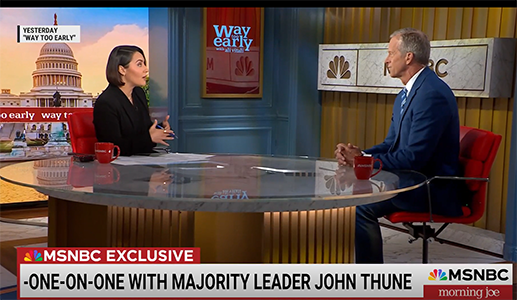
Senate Majority Leader John Thune spoke with MSNBC about the shutdown and the subsidy expiration. “Shouldn’t people who are signing up during open enrollment know what they’re signing up for?,” MSNBC asked. Thune said the first step has to be opening the government before that conversation happens, not in the context of the budget talks. According to Thune, the Republican party objects to the current operation of the subsidy program and the incentive structure needs reform.

Subsidy Standoff Not to Blame

Current estimates show insurance premiums rising by 18% – 22% in 2026. Leader Thune suggests that only a “tiny percentage” of that increase is due to the expiration of the enhanced subsidies and the rest is coming from the insurance companies. He says premiums should not being going up by this much and the extreme rate increase is because of waste, fraud, and abuse, and the lack of incentives for insurance companies to lower costs.

No Reform, No Subsidy

Throughout the interview, Leader Thune would not commit to 

Government Shutdown Senate Majority Leader John Thune

negotiating with Democrats, would not guarantee subsidies would be saved, and would not commit to voting for any extension without at least lowering income caps back to pre-COVID levels.

After the Senate session today, Thune spoke to reporters, indicating there was a “higher level of communication” happening. He went on to repeat his earlier statement to MSNBC.

“…there are a lot of rank-and-file members that continue, I think, to want to pursue solutions and to be able to address the issues they care about, including health care, which … we’re willing to do, but it obviously is contingent upon them opening up the government.”

John Thune

Senate Majority Leader

(Un)lucky Number 13

October 28th marked the 13th vote put to the Senate to reopen the government in 28 days. The Senate reconvened yesterday and plan to vote again today, October 30th. Senators have mixed opinions about the likelihood of an agreement now that deadlines for military pay, SNAP benefits, and other programs close in.

Senate Minority Leader Chuck Schumer (D) said negotiations were “occasional” and that Republicans haven’t offered anything different from the original House-passed budget.

Senator Lindsey Graham (R) said resolving the differences on health care would come after the government reopens. “I’m hoping next week, hopefully after the election, that we can get the government back open, talking about our differences on health care.”

Senator Thom Tillis (R) states there is no evidence that formal negotiations are happening, just discussions. 

When Will it End?

The Senate is expected to vote today, October 30th. The measure needs 60 affirmative votes to pass. The vote to automatically continue without discussion failed 37-61. The subsequent votes to temporarily fund the government through November 21st failed 55-45 on October 1 and 54-45 on October 28. Senator Jim Justice (R-WV) voted yes in the first vote, but did not vote yesterday.

If I Were a Gambler...

The rumors and accusations fly on both sides about who is to blame for the shutdown. There are betting sites placing odds on the date the standoff will end. I’m no political expert, but I think there’s something else going on. I believe both sides are playing risky games and that neither side knows the rules to the other’s game. I think both sides know the exact date they will each agree to end this standoff. And I’m sure there are underlying motives that have nothing to do with what they’re telling us.

We will continue to report on this ongoing story as more information becomes available.

# # #

Kristin Rowan, Editor

Kristin Rowan has been working at The Rowan Report since 2008. She is the owner and Editor-in-chief of The Rowan Report, the industry’s most trusted source for care at home news, and speaker on Artificial Intelligence and Lone Worker Safety and state and national conferences.

She also runs Girard Marketing Group, a multi-faceted boutique marketing firm specializing in content creation, social media management, and event marketing.  Connect with Kristin directly kristin@girardmarketinggroup.com or www.girardmarketinggroup.com

©2025 by The Rowan Report, Peoria, AZ. All rights reserved. This article originally appeared in The Rowan Report. One copy may be printed for personal use: further reproduction by permission only. editor@therowanreport.com

 

Government Shutdown

by Kristin Rowan, Editor

Government Shutdown Threatens Care at Home

Lawmakers on opposite sides of the aisle failed to come to a budget agreement by the deadline. This causes an immediate cease to all non-essential government functions and many government employees aren’t being paid. 

UPDATE: Shutdown, Day 16

–As of October 16, 2025–

What it Means for Care at Home

After 10 attempts, the government is no closer to an agreement than they were on September 30th. The Senate is expected to break at the end of the day, leaving the next opportunity to negotiate until at least Monday. 

Telehealth

The biggest impact on care at home during the government shut down is the ability to complete required face-to-face visits using telehealth appointments. Both home health and hospice have employed telehealth for face-to-face encounters since the COVID-era waiver, which has now been extended several times. The most recent extension, which we anticipated Congress to extend in this budget, expired on September 30th.

All face-to-face encounters occurring after October 1, 2025 must be in person.

According to home health expert Melinda A. Gaboury of Healthcare Provider Solutions says it is unlikely an extension would be retroactive even if Congress includes an extension in the finalized budget.

Payments

Conflicting information on Medicare payments leave us unsure of the actual impact. Some reports say there will be no delay while others mention 10-day holds. It is unclear whether this is in addition to the standard 14-day hold. Either way, we are anticipating (and hoping for) minimal payment disruptions.

Surveys

Initial Medicare certification for home health and hospice as well as recertifications will be delayed. If ACHA, CHAP, or another accrediting body is conducting your survey, however, there should be no delay. These accrediting bodies are continuing without interruption. State agency surbveys will be delayed until after the budget is finalized and the shutdown ends.

Look for continued updates from The Rowan Report as the shutdown and negotiations continue.

–As of October 9, 2025–

The Disagreement

Reporters and spokespoeople from both sides of the debate have suggested various reasons for the shutdown. Equally, both sides claim they are not the holdouts. What we do know for sure is that one of the primary points of contention is the continuation of subsidies for Affordable Care Act Marketplace Insurance plans. One group wants an extension written into the current budget while the other says it’s not necessary since the subsidies currently run through the end of the calendar year.

Push to Extend

The lawmakers who are pushing to get the subsidy issue resolved believe that marketplace users are not going to sign up for insurance in November and do it again in January when the subsidies are fixed. Instead, insurance commissioners warn that without the subsidies, many people will opt not to have insurance at all and others will select substandard plans based on affordability. They will be priced out of the plans they want without the subsidies in place.

Priced Out

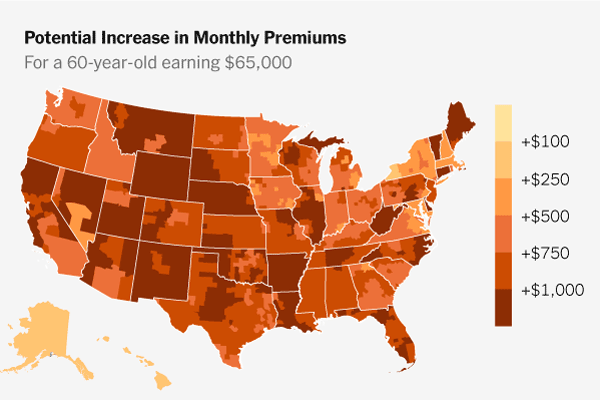
In 2025, even with the subsidies, the average family was paying $800 per month on health insurance through the marketplace. When the subsidies expire, those same families will see their existing plan rates jump to $3,000 per month. KFF, the nonpartisan health research organization, estimates that most users will have a 114% rate increase. 

Government Shutdown

Photo Credit – The New York Times

Counter

According to ND insurance commissioner Jon Godfread, lawmakers who oppose the subsidies are actually opposing the cost of health care and insurance across the board. They insist the subsidies aren’t necessary if healthcare and insurance costs drop instead. Proponents of the subsidies agree, but say that is a longer discussion that will take a lot of time to resolve and the subsidies provide an immediate solution to a bigger problem. They are urging the holdouts to include the subsidies in the budget and tackle the rising cost of healthcare later.

Open Enrollment

The clock is ticking. Open enrollment for 2026 begins November first in every state except Idaho, where open enrollment starts next week. Insurers have already locked in their 2026 premium rates, which will likely cause sticker shock for most marketplace users. Most insurers have prepared subsidy and non-subsidy rates, but without the extension, we will only see the much higher non-subsidy rates. These rates are unlikely to change before enrollment starts and the only hope for marketplace buyers is for Congress to extend the subsidies.

Home Health & Hospice

Care at Home Impact

There are several ways in which the shutdown and the loss of the subsidy may impact care at home.

Payment delays are the most pressing risk. Government officials have promised no delay for some essential services like SNAP and WIC. It is likely Medicare and Medicaid payments will be delayed. While those payments will come through eventually, care at home agencies have to operate without payment or hope the

payers will process payments locally while waiting on the government to reopen. The longer the shutdown lasts, the more likely it is that payments will be delayed. The 6th Senate budget vote failed today, sending the shutdown to day 8.

The longer term impact for care at home will come if the subsidies are not renewed. If insurance rates increase by more than 100% on November 1, users will opt for lower priced coverage, which may no longer include care at home benefits. Fewer patients seeking care at home means less money for agencies. Long-term, it also means higher hospital and ER usage and costs, which increases government spending and usually leads to additional care at home cuts to offset the costs.

National Alliance for Care at Home has identifed current and potential implications of the shutdown. Read their analysis here.

This is an ongoing story and we will continue to provide additional information as it happens. 

# # #

Kristin Rowan, Editor

Kristin Rowan has been working at The Rowan Report since 2008. She is the owner and Editor-in-chief of The Rowan Report, the industry’s most trusted source for care at home news, and speaker on Artificial Intelligence and Lone Worker Safety and state and national conferences.

She also runs Girard Marketing Group, a multi-faceted boutique marketing firm specializing in content creation, social media management, and event marketing.  Connect with Kristin directly kristin@girardmarketinggroup.com or www.girardmarketinggroup.com

©2025 by The Rowan Report, Peoria, AZ. All rights reserved. This article originally appeared in The Rowan Report. One copy may be printed for personal use: further reproduction by permission only. editor@therowanreport.com
 

Advocacy Week

Advocacy Week

FOR IMMEDIATE RELEASE

Contact:                                                                       Elyssa Katz
communications@allianceforcareathome.org
571-281-0220

Over 240 Advocates Rally in DC for the Future of Care at Home

National Alliance for Care at Home Hosts Inaugural Advocacy Week on Capitol Hill

Alexandria, VA and Washington, D.C., September 12, 2025.

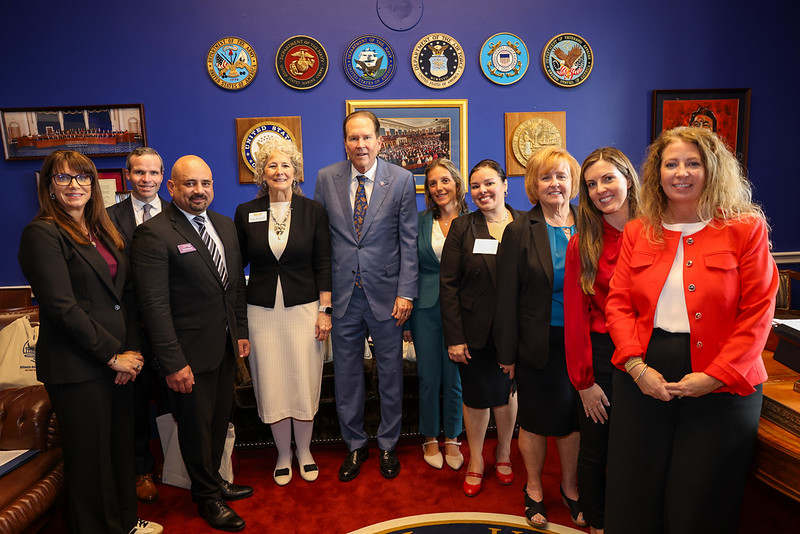
More than 240 care at home care advocates from across the country met with over 275 congressional offices this week to discuss key legislative and regulatory priorities for expanding access to home-based care services. The meetings were part of the 2025 National Alliance for Care at Home’s inaugural Advocacy Week.  

Alliance Advocacy Week brings together leaders, advocates, and supporters to unite as one voice for care at home, driving positive legislative change and shaping the future of care to ensure broader access to the life-changing home care services for all Americans.  

Advocates focused on four key issues during their congressional meetings:

  • Protecting home health care by preventing dangerous payment cuts
  • Safeguarding the Medicare Hospice Benefit by ensuring hospice remains a separate holistic managed care model outside of Medicare Advantage
  • Expanding telehealth access across many care at home services
  • Supporting robust Medicaid HCBS funding to strengthen community-based care
Advocacy Week National Alliance for Care at Home
Advocacy Week Strategy Session<br />
Advocacy Week Strategy Session

In addition to Wednesday’s congressional meetings, Alliance Advocacy Week featured strategy sessions, beginner advocate training featuring a panel discussion with Congressional staffers, and in-depth policy briefings. On Thursday, the Alliance’s Assembly of State Associations – a network of leaders of state home care and hospice organizations – came together for a robust conversation.   

The Alliance celebrates the achievements of this inaugural Advocacy Week on behalf of home-based care providers nationwide and will continue engaging in critical policy dialogue to support and expand access to essential care at home services.  

# # #

About the National Alliance for Care at Home

The National Alliance for Care at Home (the Alliance) is the leading authority in transforming care in the home. As an inclusive thought leader, advocate, educator, and convener, we serve as the unifying voice for providers and recipients of home care, home health, hospice, palliative care, and Medicaid home and community-based services throughout all stages of life. Learn more at www.AllianceForCareAtHome.org.   

©2025. This press release originally appeared on the National Alliance for Care at Home website and is reprinted here with permission. For questions or to request permission to use, please see press contact information above.

BREAKING NEWS: House Passes Bill

by Kristin Rowan, Editor

House Passes Bill

House passes bill in early-morning vote. The House of Representatives, predictably split along party lines, passed the “Big, Beautiful Bill” in a 215-214 narrow win. All but three Republican representatives cheered at its passing. Republicans who previously stated they would not vote for a higher deficit caved and voted along party lines. The House expects an uphill battling getting the bill passed through the Senate.

House Objections

All House Democrats and two House Republicans voted against the bill. One Republican voted “present.” Democrats were vocal in their opposition.

“Children will get hurt. Women will get hurt. Older Americans who rely on Medicaid for nursing home care and for home care will get hurt. People with disabilities who rely on Medicaid to survive will get hurt. Hospitals in your districts will close. Nursing homes will shut down. And people will die. That’s not hype. That’s not hyperbole. That’s not a hypothetical.”

Hakeem Jeffries

Representative, D-NY

Medicaid Changes

Work Requirement

One controversial change in Medicaid is the community engagement requirement for eligibility. Eligibility is at least one of the following:

  • Working at least 80 hours in a month
  • Completing at least 80 hours of community service
  • Participating in a work program for at least 80 hours
  • Enrolling at least part-time in an educational program
  • Any combination of the above totaling at least 80 hours
  • Having a monthly income greater than minimum wage for 80 hours per month

Exceptions

This rule applies to all eligible individuals at least 19 years old and is under 65 years old, is not pregnant, does not have children under age 7, and is not enrolled in or eligible for Social Security benefits. Mandatory exceptions to the community engagement requirement are:

  • Indian, Urban Indian, California Indian, or eligible as an Indian for the Indian Health Service
  • The parent, guardian, or caretaker of a disabled individual or dependent child
  • A veteran with a total disability rate
  • Medically frail or has special medical needs including those who:
    • are blind or disabled
    • have a substance use disorder
    • have a disabling mental disorder
    • live with a physical, intellectual, or developmental disorder that impairs 1 or more activities of daily living
    • live with a serious and complex medical condition
    • have any other medical condition approved, but not listed here
  • In compliance with requirements imposed by the State
  • The member of a household receiving SNAP benefits
  • Participating in a drug or alcohol rehabilitation program
  • An inmate of a public institution
  • Meet other criteria deemed appropriate

Senate Poised for a Fight

After the vote, the Senate made it clear that it will not send the bill to the President without “major changes.” The problem, however, is that different members of the Senate are calling for different changes. Some want even more spending reductions, others want to keep more of Biden’s green-energy incentives, and still others want to soften the Medicaid cuts. Here is some of the feedback from Senators:

Ron Johnson, Senator (R-Wis.) wants to take the bill “line by line” to find $6.5 trillion in cuts over 10 years.

Rand Paul, Senator (R-Ky.) supports the tax agenda, but not the debt ceiling hike.

Lisa Murkowski, Senator (R-Alaska) is expecting significant changes and wants to address the Medicaid cuts, call them “challenging.”

Patty Murray, Senator (D-WA) called the bill a “scam” and urged Republican senators to vote against it.

“House Republicans don’t want you to know they just passed a bill that makes health care MORE expensive and kicks MILLIONS off Medicaid, all to pass tax cuts for billionaires & giant corporations. We need to make sure America knows. And we need to kill this bill in the Senate.”

Patty Murray

Senator, D-WA

House Passes Bill to Senate

Because of the way the House presented the bill, designed to prevent a filibuster, there are constraints on what can be included.

First, everything included in the bill has to be about the budget. Challenges to parts of the bill and whether they are directly related to the budget go to the Senate parlimentarian. A non-partisan advisor, the parlimentarian advises the Senate if a provision is challenged. Elizabeth MacDonough is the current Senate parlimentarian and has served under Senate Majority Leaders from both parties.

Second, the Senate gets to make its own changes to the bill. If the House does not accept those changes, the debt ceiling will not go up. An impasse means the government defaults on its debt. Congress has to raise the debt ceiling by the summer to avoid default. This could put pressure on the House to accept whatever changes the Senate makes.

More to Come

This is an ongoing story and The Rowan Report will continue to provide updates as they become available. Read our accompanying article this week on organizations and courts attempting to stop Trump’s sweeping changes.

# # #

Kristin Rowan, Editor

Kristin Rowan has been working at The Rowan Report since 2008. She is the owner and Editor-in-chief of The Rowan Report, the industry’s most trusted source for care at home news, and speaker on Artificial Intelligence and Lone Worker Safety and state and national conferences.

She also runs Girard Marketing Group, a multi-faceted boutique marketing firm specializing in content creation, social media management, and event marketing.  Connect with Kristin directly kristin@girardmarketinggroup.com or www.girardmarketinggroup.com

©2025 by The Rowan Report, Peoria, AZ. All rights reserved. This article originally appeared in The Rowan Report. One copy may be printed for personal use: further reproduction by permission only. editor@therowanreport.com