Interoperability and Gen X

by Kristin Rowan, Editor

Interoperability and Gen X

Your Song

Part 1 of this series discussed the timeline and history of interoperability and the slow progress that has been made so far. Both in care at home and the broader health care system, interoperability seems to stall despite regulations and incentives for data sharing. Part 2 takes the discussion into the future when the next generation of care at home patients deals with data silos.

We Didn't Start the Fire

We (Gen Xers) have waited 15 years for HIEs to solve the free exchange of information between health systems. We have also watched and participated in the disparate system for our own healthcare and that of our parents and our children. We are in the unique predicament of needing care for three generations simultaneously. That in-between position gave us the nickname “The Sandwich Generation.” And we are ready to rock this boat!

For What It's Worth

  • More than 65% of us feel like there are barriers to accessing healthcare1
  • More than 70% are using or interested in using AI-assisted diagnosis
  • Almost 75% want Ai-powered care tools
  • 45% believe healthcare will improve in the next 10 years
  • 80% believe that improvement will come from AI-integration and better virtual access
Interoperability Gen X 80s technology

Teach Your Children

Home care patients are still primarily baby boomers who did not grow up with technology embedded in everything they do. Their children, however, did. These are the adult children making decisions for their parents. They are the ones watching their parents sit through hours of Q&A to relay medical history that countless other doctors already have. They are the ones asking “why?”. They know there’s a better way and they expect you to find it.

But, Gen Xers are also independent, resourceful, and adaptable. We are tech-savvy and have a no-nonsense attitude toward authority. We are the generation that doesn’t wait for technology to get better; we create our own. And since our young employees (and our children) eat, sleep, and breathe technology, you can bet the solution will be innovative and quick.

Interoperability and Gen X

It's Now or Never

The next generation of home health patients are approaching 60 and will be eligible for Medicare in 5 years. 2030 is your deadline for interoperability. When our doctors, insurance providers, and home health agencies tell them that information portability isn’t possible, they will not take that answer lying down. When the hospital asks them to drive across town to their imaging center, wait for the imaging center to transfer their results to a CD, and then deliver the physical copy to the hospital (yes, my hospital system made me do this), we will demand to know why.

I'm a Believer

The AI solutions that I’ve seen in the last few years have been innovative, creative, and fascinating. I believe in my fellow Gen Xers and the possibilities that lay before us. I believe that we all have the right to access our own health information, including visits, test results, imaging, notes, and recommendations. And I believe we have the building blocks to unify health records for every patient in real time. If I only I had the coding skills to build it. Maybe I should ask my kids. 

# # #

Kristin Rowan, Editor

Kristin Rowan has been working at The Rowan Report since 2008. She is the owner and Editor-in-chief of The Rowan Report, the industry’s most trusted source for care at home news, and speaker on Artificial Intelligence and Lone Worker Safety and state and national conferences.

She also runs Girard Marketing Group, a multi-faceted boutique marketing firm specializing in content creation, social media management, and event marketing.  Connect with Kristin directly kristin@girardmarketinggroup.com or www.girardmarketinggroup.com

©2025 by The Rowan Report, Peoria, AZ. All rights reserved. This article originally appeared in The Rowan Report. One copy may be printed for personal use: further reproduction by permission only. editor@therowanreport.com


 

Interoperability: The Unreachable Dream

by Kristin Rowan, Editor

Interoperability

The Unreachable Dream

Healthcare and care at home have been reaching for interoperability for decades. When I started working in the care at home industry, there was a learning curve for terminologies, abbreviations (oy! with the abbreviations already!), and the pain points experienced by agencies and vendors. Interoperability was at the top of that list. 2009, the first full year I worked in care at home, was the year Congress mandated EHRs and data exchange. The mandate did not accomplish much. Incompatible data structures limit post-acute care data to the most recent health event, not the patient’s full medical record.

Data Exchange

Interoperability

Following the EHR mandate, Congress continued to add regulations and rules to advance data exchange. Starting with HIPAA in 1996, interoperability advanced as follows:

Health Insurance Portability and Accountability Act ensures patient data stays private both within a healthcare system and during data exchange

Congress mandated the use of EHRs throughout healthcare

HITECH Act launched Health Information Exchanges (HIEs) that support secure exchange of information between health systems

Health Level 7 (HL7) designed a framework that establishes protocols for data exchange

Fast Healthcare Interoperability Resources (FHIR), an updated of HL7, enables processes in 84% of hospitals and 61% of clinician offices

21st Century Care Act allows patients to access their own medical information and requires developers to publish APIs and ensure all data in the patient health record is accessible through that API

Trusted Exchange Framework and Common Agreement (TEFCA) lists principles, terms, and conditions to standardize data

CMS Interoperability Framework pushes interoperability nationwide through improved data quality; advanced technology; data aggregation; and alignment of data, tools, and measures

Following the EHR mandate, Congress continued to add regulations and rules to advance data exchange. Starting with HIPAA in 1996, interoperability advanced as follows:Interoperability

  • Health Insurance Portability and Accountability Act ensures patient data stays private both within a healthcare system and during data exchange
  • Congress mandated the use of EHRs throughout healthcare
  • HITECH Act launched Health Information Exchanges (HIEs) that support secure exchange of information between health systems
  • Health Level 7 (HL7) designed a framework that establishes protocols for data exchange
  • Fast Healthcare Interoperability Resources (FHIR), an updated of HL7, enables processes in 84% of hospitals and 61% of clinician offices
  • 21st Century Care Act allows patients to access their own medical information and requires developers to publish APIs and ensure all data in the patient health record is accessible through that API
  • Trusted Exchange Framework and Common Agreement (TEFCA) lists principles, terms, and conditions to standardize data
  • CMS Interoperability Framework pushes interoperability nationwide through improved data quality; advanced technology; data aggregation; and alignment of data, tools, and measures

Thirty Years Later

Despite the laws, regulations, frameworks, and mandates, interoperability is not much better than it was in 1996. I had an experience this year that both enlightened and infuriated me. I switched health insurance plans for a variety of reasons. My new plan didn’t cover most of the doctors, hospitals, and health systems I had been using for many many years. So in February, I found a new PCP and had the standard start of care visit to establish my health history: current conditions, past conditions, past surgeries & procedures, current medications, etc. I requested referrals to new specialists and updates to prescriptions. My PCP performed a “complete physical” that was nothing more than a cursory overview. And then I waited.

Interoperability

The Waiting Game

And waited…and waited…. I thought all these organizations and standards were supposed to make this easier. Still, I waited.

  • I waited for an “invitation” to my PCPs portal to see my visit notes and test results
  • I waited for my PCP to send referrals to new specialists
  • I waited for my health insurance provider to inevitably tell me the specialist wasn’t covered under my plan
  • I waited for a new referral from my PCP
  • I waited for appointments, results, and recommendations
  • I waited for access to new patient portals
  • I waited for the portal to figure out how to give me access to three different providers in the same app
    • (spoiler alert: I have to log in to the same app three different ways to access three different providers; my providers can see all the information in one place, but I can’t)
  • I waited for test results to appear in each portal; some I had to call and request, some I’m still waiting for

Data Exchange "Advancements"

According to my research, 84% of hospitals and 61% of clinicians are currently using FHIR, designed to improve interoperability between different health systems using standard data formats and APIs.

Last month I had an appointment. Correction: I thought I had an appointment for an imaging scan. I thought this because the scheduling nurse called me to confirm the appointment day, time, and location. When I arrived, the check-in nurse couldn’t find me in their system.

It wasn’t just that she didn’t see my appointment. No, it was that she couldn’t find me at all. (We later discovered it was still pending because the imaging department never confirmed the appointment after the scheduling nurse added it.) 

She could see no current or future appointments. She could see no past appointments because they were booked a different way. She couldn’t find any record of me at all. You see, my record started in the next building over.

Error 404: Not Found

Every one of these facilities is in the same healthcare system. (Think ACME hospital, ACME imaging, ACME specialist doctor, and ACME lab) Every office is part of the same healthcare system and none of them can see each other’s information. ACME hospital can’t see the schedule for ACME imaging and can’t schedule imaging appointments outside the hospital. For that, I have to call ACME imaging.

  • But wait! The doctor wrote my referral for ACME hospital, not ACME imaging. I need a new referral.
  • But wait! Neither the healthcare system nor the specialist can write a new referral. My payer will only accept a referral from my PCP.
  • But wait! My PCP has no idea what the referral is for, how it was written, or where it’s supposed to go because my PCP can’t access my records from the healthcare system.

This is advanced data exchange using FHIR, HIE, TEFCA, and QHIN. My health system uses our local HIE and CommonWell Health Alliance, an interoperability network designated as a federal QHIN. Apparently, this ensures the health system can share data with participating providers, but not with themselves.

Home Health is Even Further Behind the Curve

After so many years, so many advancements, and so many regulations, interoperability is no more “solved” than it was in 2009. Even the health systems that are using all the tools aren’t even internally interoperable.

Home Health has an even harder time attaining interoperability. 

  • It is more difficult for HHAs to access patient information, which usually has to be manually imported into the home health EHR
  • Patient consent is required, but HHAs often deal with patients who don’t have the capacity to consent
  • Despite the requirement of APIs, most health information is spread out across multiple systems and the HHA only get information from the referring facility
  • Nearly 80% of HHAs use an EHR
  • Only 28% of HHAs are electronically exchanging information with outside facilities
  • Only 18% can integrate shared data into automated workflows
  • HHAs did not receive the financial incentives that larger healthcare systems got to push interoperability
  • TEFCA participation is not mandatory, slowing down the process of approving a data connection and exchange

Many legacy EHRs have met significant challenges moving into interoperability. Competitors in the space had no financial incentive to create standard languages and formatting designed to share information. HHAs are left with two choices: 

The costly, time-consuming task of reviewing, selecting, and onboarding an entirely new EHR –or–

Piece together workarounds with multiple 3rd party or internal solutions haphazardly strung together to resemble interoperability

Time is Up

The call for interoperability started in 1996. With little advancement and not much hope on the horizon, we (your patients) are looking for other ways to get what we need. Next week, I’ll talk about my predictions for how interoperability will progress for the next generation.

# # #

Kristin Rowan, Editor

Kristin Rowan has been working at The Rowan Report since 2008. She is the owner and Editor-in-chief of The Rowan Report, the industry’s most trusted source for care at home news, and speaker on Artificial Intelligence and Lone Worker Safety and state and national conferences.

She also runs Girard Marketing Group, a multi-faceted boutique marketing firm specializing in content creation, social media management, and event marketing.  Connect with Kristin directly kristin@girardmarketinggroup.com or www.girardmarketinggroup.com

©2025 by The Rowan Report, Peoria, AZ. All rights reserved. This article originally appeared in The Rowan Report. One copy may be printed for personal use: further reproduction by permission only. editor@therowanreport.com

 

Integrating Home Care with Hospital Systems

FOR IMMEDIATE RELEASE

Contact:                                   Steph Davidson
647-668-6369
steph.davidson@alayacare.com

Integrating Home Care with Hospital Systems

Health PEI becomes first province to integrate home care with hospital systems using AlayaCare

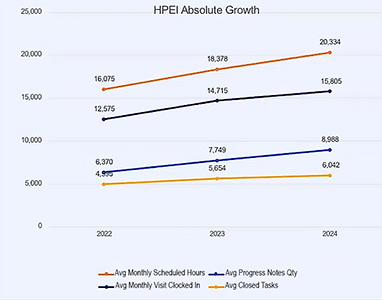
TORONTO, Sept. 24, 2025. Health PEI, Prince Edward Island’s single health authority, has successfully transformed its home care delivery system through a comprehensive digital modernization initiative powered by AlayaCare’s integrated platform. The implementation has delivered remarkable results, including an 18% increase in scheduling productivity, 216% growth in assessments, and a 50% reduction in administrative paperwork for nursing staff.

Digital transformation

This strategic transformation was driven by Health PEI’s commitment under the Pan-Canadian Health Accord to modernize home care services across the province. Previously, the organization faced significant operational challenges with outdated assessment tools, manual scheduling processes, and limited system integration that disrupted care coordination and diverted clinical staff from direct patient care.

By implementing AlayaCare in 2022, the organization replaced its legacy Seniors Assessment Screening Tool (SAST) with interRAI HC, adopted digital scheduling, and enabled mobile access for real-time charting. The solution also integrated directly with provincial systems, including Oracle Health (Cerner) and the Provincial Client Registry, enabling seamless client transitions and province-wide care coordination.

Integrating Home Care with Hospital Systems AlayaCare HealthPEI

“At first, we were just looking for software to help with interRAI-HC assessments. But with AlayaCare, we got so much more. It’s been a big leap forward in modernizing home care in our province. We’ve integrated with the provincial clinical information system and client registry, streamlined our operations, and scaled up client assessments. That’s helped us smooth client transition from hospital to home and strengthen care planning. Most importantly, it’s given us clear visibility into our metrics so we can scale more intentionally and efficiently into new programs.”

Mary Jane Callaghan

Former Project Lead, Health PEI

Outcomes

Since go-live, Health PEI has achieved significant outcomes:

  • Better care delivery: Annual assessments grew by 216% by replacing SAST with AlayaCare’s interRAI HC assessment tool and 100% of clients now have multidisciplinary care plans. Every individual receives integrated, person-centered care with a focus on care coordination across health and social services.
  • Greater system capacity: 15% increase in caseloads ensures more clients can access the support they need without long delays.
  • Enhanced workforce efficiency and staff experience: Scheduling productivity rose 18% and paperwork was cut in half, giving care teams more time with clients and improving work-life balance.
  • Improved data visibility: Health PEI became the first province to achieve 
Health PEI Growth Integrating home health with hospital systems

province-wide hospital integration for its home care system, enabling real-time updates, proactive system planning and real-time submissions to the Canadian Institute for Health Information (CIHI).

“With AlayaCare, everything I need is on my laptop or phone. I can document during the visit and submit forms on the spot. Having that flexibility is a game changer.”

-Deina Perry, Home Care Physiotherapist at Health PEI. 

The transformation also reduced scheduling delays and optimized staffing through direct integration with Oracle Health (Cerner). Admission, discharge, and transfer updates now automatically adjust home care schedules, ensuring continuity of care and reducing unnecessary travel. 

“The real-time schedule is incredibly helpful. Our whole team can quickly see if a client is in hospital or at a facility respite, thanks to the integration with Cerner. It saves us from making endless phone calls just to track clients down.”

-Joanne McLaughlin, RN interRAI Assessor at Health PEI. 

By adopting AlayaCare, Health PEI has set a benchmark for provincial-scale modernization of home care in Canada. The initiative has strengthened care coordination, supported evidence-based planning, and expanded access for older adults across Prince Edward Island. 

“Health PEI’s vision went far beyond simply replacing an assessment tool. Together, we’ve built an integrated, province-wide home care platform that connects directly with hospital systems, streamlines operations, and scales assessments at a level never before possible. This transformation is strengthening care transitions, improving planning, and giving leaders the data visibility they need to expand programs with confidence and efficiency. It’s a powerful example of how digital innovation can reshape home and community care.”

Adrian Schauer

CEO, AlayaCare

# # #

About Health PEI

Health PEI is the single health authority for Prince Edward Island, responsible for delivering publicly funded healthcare services across the province. Its mandate includes hospitals, primary care, long-term care, home and community care, mental health and addictions, and public health. By integrating services across the continuum of care, Health PEI is committed to providing safe, equitable, and high-quality healthcare that meets the needs of Islanders today and into the future. 

About AlayaCare

AlayaCare is an end-to-end platform designed to serve public, private, and non-profit home and community care organizations that manages the entire client lifecycle, including needs assessments, care plans, scheduling, visit and route optimization, and visit verification. Founded in 2014 and now with over 600 employees, AlayaCare combines traditional in-home and virtual care solutions that enable care providers to lower the cost of care and achieve better outcomes for their clients. For more information, visit: AlayaCare.com 

© 2025 This press release originally appeared on the AlayaCare website and is reprinted with permission. For more information or for permission, please see press contact above.

Implementing QHINs Interoperability Part 4

by Ben Rosen, Sr. Client Success Manager, Netsmart

Interoperability

What You Need to Know About Interoperability and How it Affects You: Part 4

For over two decades, tech companies and government agencies have been moving toward the goal of interoperability in healthcare technology. At long last, standards and protocols are in place—and continually being improved—to support open data exchange networks. As a result, healthcare providers, including human services, post-acute providers and specialty practices, have more opportunities to participate in alternative payment models and adapt more readily to the evolving payment landscape.

This is part four of a four-part series covering the forces that are driving interoperability, as well as the future vision of open networks, and what it all could mean to your organization. Read Part One HereRead Part Two Here; Read Part Three Here.

Interoperability in Healthcare

QHIN Implementation, Use Cases, and Benefits

Qualified Health Information Networks (QHIN) can support a range of use cases, including treatment, payment, healthcare operations, public health reporting and patient access to their records. These are referred to as Exchange Purposes (XPs), and all QHINs must facilitate a request for this data. The difference lies with how QHINs facilitate those requests and provide that information to you as a participant. The data uses the same network that all QHINs have built too, but there is value in what your current technology vendor can do with the data.

Complete Information Supports Decision-Making and Compliance

By enabling data exchange, QHINs help ensure providers have access to complete, up-to-date information that has the potential to improve decision-making and reduce redundant tests. The Trusted Exchange Framework and Common Agreement™ (TEFCA) network also supports the exchange of more robust types of data than before, offering participants more holistic views of individuals to support a whole-person care approach.

A QHIN can help your organization stay compliant with interoperability mandates designed to align technology with regulatory requirements, such as the 21st Century Cures Act and TEFCA. As the data exchange landscape shifts toward a more regulatory-based landscape with TEFCA at the core, remaining in compliance with certification requirements becomes increasingly important.

Complete Information Interoperability QHIN

Preparing for TEFCA and QHIN Participation

As outlined in Part 3 of this blog series, getting the most out of joining a QHIN starts with assessing your current interoperability capabilities:

  • Identify gaps in your data exchange processes and data needs
  • Collaborate with your EHR vendor to ensure technical readiness and ensure they can accommodate the QHIN data to be used with your EHR
  • Explore QHIN options and compare their offerings for your current EHR features and functionality
  • Understand and create a plan for your organization to use or increase the use of FHIR-based integrations

Once you’ve determined which QHIN will work best for your organization, you can begin nailing down specifics and start planning implementation.

Costs, Implementation and Onboarding

Costs vary by QHIN vendor and may include membership fees, transaction fees and additional charges for optional services.

Onboarding typically includes:

  • Technical integration into your EHR
  • Staff training
  • Testing and validation of data exchange
  • Establishing compliance with TEFCA requirements/signing agreements to participate

Joining the TEFCA network is built into some existing integration processes and capabilities. There are legal agreements specific to TEFCA to sign, but all technical implementations are much easier to facilitate as an already existing EHR client, assimilating into already existing workflows.

Security and Privacy

QHINs are required to meet strict security and privacy standards under TEFCA, including compliance with HIPAA and other relevant regulations. All QHINs are HITRUST-certified and ensure robust security backing for all network transactions and therefore must have incident response and mitigation procedures in place in case of a security incident. It’s important to understand the full enterprise security plan for the QHIN you decide to use and how they protect all of their solutions/programs, not just QHIN.

It’s important to understand the full enterprise security plan for the QHIN you choose and how they protect all their solutions/programs, not just QHIN. Choose a partner with a robust history as an ONC-certified EHR vendor so your data is protected in all facets of exchange. Verify enterprise-wide security procedures and incident response plans.

Regulatory Benefits and Use Cases

By selecting a QHIN and participating in a nationwide interoperability framework, your organization can stay ahead of regulatory changes, improve patient outcomes and reduce the administrative burden of managing multiple data exchange partners. With the changing regulatory landscape, including the HTI-1 and HTI-2 rules, all ONC-certified vendors must abide by those parameters. TEFCA is taking a more central role in helping to prep organizations and users to be compliant with those regulatory standards. For this reason, QHINs with a rich history of ONC certification and who have regulatory staff will have an advantage.

Exchange Purposes

Under TEFCA, QHINs will facilitate the exchange of multiple types of data, referred to as Exchange Purposes (XPs). Initially, there were six core XPs that were revealed for TEFCA:

  • Treatment –To support the provision, coordination or management of healthcare among providers
  • Payment–For activities related to billing, claims and reimbursement under HIPAA
  • Healthcare Operations–For administrative, quality improvement and other operational functions
  • Public Health–To support public health authorities in disease surveillance, reporting and response
  • Government Benefits Determination – To help determine eligibility for government programs, such as Medicaid
  • Individual Access Services – To empower individuals to access their own health data securely and conveniently

These XPs have now been expanded to include subtypes that can be read about here, via the RCE approved resource and SOP. As mentioned previously, all QHINs will be required to support the exchange of these XP’s, and all participants of QHINs will be required to respond to Treatment and Individual Access Services. An important deciding factor when choosing a QHIN is to understand the workflows to receive this information into your EHR, as well as the capabilities to persist and action the information.

# # #

Interoperability Ben Rosen Netsmart

Ben Rosen is a senior client success manager and business unit owner for the interoperability solution suite at Netsmart. With more than a decade of healthcare experience, Ben has led numerous initiatives to integrate healthcare systems and enhance data sharing across the care continuum. His dedication to advancing healthcare interoperability drives his active involvement in industry initiatives and standards organizations, where he provides insight for frameworks such as HL7 FHIR, USCDI and others. Ben holds a Bachelor of Science in kinesiology from Kansas State University and a Bachelor of Science in nursing degree from the University of Nebraska Medical Center.

©2025 by The Rowan Report, Peoria, AZ. All rights reserved. This article originally appeared in the Netsmart blog and is reprinted here with permission. For more information or to request permission to print, please contact Netsmart.

Evaluating QHINs Interoperability 3

by Ben Rosen, Sr. Client Success Manager, Netsmart

Interoperability

What you need to know and how it affects you Part 3

For over two decades, tech companies and government agencies have been moving toward the goal of interoperability in healthcare technology. At long last, standards and protocols are in place—and continually being improved—to support open data exchange networks. As a result, healthcare providers, including human services, post-acute providers and specialty practices, have more opportunities to participate in alternative payment models and adapt more readily to the evolving payment landscape.

This is part three of a four-part series covering the forces that are driving interoperability, as well as the future vision of open networks, and what it all could mean to your organization. Read Part One Here; Read Part Two Here.

Interoperability in Healthcare

Evaluating QHINs for your Organization

As outlined in Part Two of this series, all Qualified Health Information Networks (QHINs) must apply and be accepted according to the baseline requirements outlined by the Trusted Exchange Framework and Common Agreement (TEFCA). While the rigorous testing and project tasks for each QHIN are the same, they may differ in services offered, geographic focus, technical capabilities, pricing and specific target markets. This blog will explore similarities and differences between QHINs, to provide insights that will arm organizations with the knowledge needed to make informed decisions about selecting a QHIN.

How to choose the right QHIN for your organization

As with any major business decision, consider what your organization is currently doing for data exchange and connectivity and how these factors are likely to change in the next 18 to 24 months:

  • The services you provide today and with whom you exchange data.
  • The communities you serve.

Prospective QHINs should have experience in serving the technology needs of the communities you serve and exhibit an understanding of how your service lines could impact the types of data transactions you use. If your strategic plan calls for expanding your services or community footprint – either organically or through partnerships with other providers – you’ll need to consider how your current needs will evolve and how that will affect your QHIN criteria.

QHIN candidates should have experience working with your electronic health record (EHR) vendor and be able to manage a smooth integration with your existing technology. Compatibility with your

EHR will help simplify implementation and further establish the network as a good fit for your organization. Integration capabilities of the QHIN should lend well to your current EHR build, such as being able to integrate the QHIN data directly to your EHR workflows.

Consider technical requirements

Each QHIN will have to build to and abide by the same standards for exchange via TEFCA. These requirements are outlined in the Common Agreement and the QHIN Technical Framework documents. Differentiation among QHINs will come from doing an analysis of your organization’s data exchange requirements and then determining how well they match up with the technical infrastructure and capabilities of the QHINs.

If your service lines require special consent practices or you do business in a state with strict data laws, it is paramount that your QHIN be technically capable of handling your most complicated information sharing needs from day one. Network 

Technology

size and geographic coverage should also factor into your decision as well as the QHIN business itself. QHINs today fall into categories such as developer platforms, data exchanges, and EHRs.

Questions to ask your QHIN short list candidates

Use the previously mentioned factors to focus on your top candidates, then it’s time to start asking about specifics:

  • Cost structure and pricing
  • QHINs may charge a per-transaction fee for their connectivity services. The specific services they can charge for are outlined by TEFCA, but the amount they can charge is not. Be sure to ask about ongoing costs and transaction fees so you can accurately project costs.

  • Additional services, such as analytics or public health reporting
  • All QHINs can provide you with connectivity for data exchange. But you should also explore each QHIN’s ability to provide reporting, analytics and other value-added services that will help you relate that data to your organizational goals.

  • Customer support and ease of onboarding
  • Ask about the onboarding process, how long it typically takes and the level of support you can expect from start to finish.

  • Plans to implement FHIR
  • QHINs will all be held to the same FHIR (Fast Healthcare Interoperability Resources) standards for exchange via TEFCA. When evaluating FHIR capabilities for QHINs, it’s important to understand what the QHIN’s strategy is around subscription services and bulk data access. This also ties into the consideration that even though a QHIN may support FHIR standards, you need to evaluate how well those pieces of information are actually integrated so you receive the information in a usable form.

  • Ongoing compliance with TEFCA and security standards
  • Technology companies must meet strict standards to become a QHIN. But you should also inquire about further monitoring and safety measures that guard against breeches of security and other concerns.

  • Total transactions and how different kinds of transactions are managed
  • Ask vendors for metrics around total transactions facilitated on their network and how they manage the different exchange types that are available via TEFCA. You also should find out ratio of errors to successes they have with their current network participants.

Final Thoughts

Due diligence is always essential whenever you choose technology. Scrutinizing all the factors outlined above for QHINs is particularly important because of the potential they will have for enhancing data sharing throughout your organization. In the final part of this blog series, we will explore actual QHIN use cases and the benefits they may offer.

Coming soon in Interoperability Part 4:QHIN implementation, use cases, and benefits.

# # #

Interoperability Ben Rosen Netsmart

Ben Rosen is a senior client success manager and business unit owner for the interoperability solution suite at Netsmart. With more than a decade of healthcare experience, Ben has led numerous initiatives to integrate healthcare systems and enhance data sharing across the care continuum. His dedication to advancing healthcare interoperability drives his active involvement in industry initiatives and standards organizations, where he provides insight for frameworks such as HL7 FHIR, USCDI and others. Ben holds a Bachelor of Science in kinesiology from Kansas State University and a Bachelor of Science in nursing degree from the University of Nebraska Medical Center.

©2025 by The Rowan Report, Peoria, AZ. All rights reserved. This article originally appeared in the Netsmart blog and is reprinted here with permission. For more information or to request permission to print, please contact Netsmart.

TEFCA and QHINs: Interoperability 2

by Ben Rosen, Sr. Client Success Manager, Netsmart

Interoperability

What you need to know and how it affects you Part 2

For over two decades, tech companies and government agencies have been moving toward the goal of interoperability in healthcare technology. At long last, standards and protocols are in place — and continually being improved — to support open data exchange networks. As a result, healthcare providers, including human services, post-acute providers, and specialty practices, have more opportunities to participate in alternative payment models and adapt more readily to the evolving payment landscape.

This is part two of a four-part series covering the forces that are driving interoperability, as well as the future vision of open networks, and what it all could mean to your organization. Read Part One Here.

Interoperability in Healthcare

The creation of TEFCA and QHINs

TEFCA (Trusted Exchange Framework and Common Agreement) is a national framework designed to enable seamless, secure sharing of health information across organizations. With respect to EHRs, this framework simplifies data exchange with other providers, payers and public health entities while enhancing compliance with interoperability requirements. TEFCA is touted as a nationwide federal and private data exchange network.

End goal

One of TEFCA’s main goals is to standardize data sharing, therefore reducing the complexity of managing multiple connections and enhancing the interoperability of your EHR with other systems nationwide.

TEFCA was created by the U.S. Department of Health and Human Services’ Assistant Secretary for Technology Policy (ASTP). The ASTP is contracting with the Recognized Coordinating Entity (RCE), The Sequoia Project. The RCE is tasked with governing and maintaining the operations of the entities who are electing to implement the TEFCA network, these entities are referred to as Qualified Health Information Networks (QHINs).

Interoperability
Interoperability TEFCA QHIN

QHINs

The certification process

QHINs are the entities that build the frameworks to allow data exchange as specified by TEFCA and facilitate the national exchange of health information. A single QHIN may represent dozens or even hundreds of healthcare providers, referred to as participants or sub-participants, across sectors (i.e., acute, human services, post-acute) public health agencies, health IT vendors and payers.

Applicants must build their TEFCA connection, which is then subjected to rigorous technology and security testing. QHIN applicants must also sign the Common Agreement that is countersigned by The Sequoia Project. These rigorous standards have a time limit: Each QHIN who applies must have their network built, tested and designated by the ASTP and RCE within 12 months of the application acceptance date. As of this writing there are eight designated QHINs and two candidate QHINs.

Benefits of participating in a QHIN

  • Streamlined Data Exchange
  • Compliance with Federal Interoperability Mandates
  • Access to Broader Patient Data
  • Improved Care Coordination

The market is already seeing regulatory rules and guidance tied directly to TEFCA. For instance, HTI 1 rule laid the groundwork for TEFCA and the HTI 2 rule is expanding on the process for designation, as well as codifying definitions and use cases to be exchanged via QHINs. Overwhelmingly, one of the biggest benefits to using a QHIN will be the increased types of data exchanged via the network.

The Same, but Different

Data exchange via TEFCA will look different than what we are used to with other nationwide networks today, such as Carequality, EHealthExchange or CommonWell. Via TEFCA, QHINs will exchange more robust types of data, referred to as Exchange Purposes, and will deal with higher volumes as a network. A few examples of these Exchange Purposes are clinical documentation (CCD-A), benefits determination data, public health research data, and even lab data, just to name a few.

Another benefit will be seamless connectivity. Other QHINs should integrate with EHRs to facilitate data exchange, acting as a hub that connects your system with other networks, providers and stakeholders.

Coming soon in Interoperability Part 3: Not all QHINs are created equal. How to choose the one that’s right for you.

# # #

Interoperability Ben Rosen Netsmart

Ben Rosen is a senior client success manager and business unit owner for the interoperability solution suite at Netsmart. With more than a decade of healthcare experience, Ben has led numerous initiatives to integrate healthcare systems and enhance data sharing across the care continuum. His dedication to advancing healthcare interoperability drives his active involvement in industry initiatives and standards organizations, where he provides insight for frameworks such as HL7 FHIR, USCDI and others. Ben holds a Bachelor of Science in kinesiology from Kansas State University and a Bachelor of Science in nursing degree from the University of Nebraska Medical Center.

©2025 by The Rowan Report, Peoria, AZ. All rights reserved. This article originally appeared in the Netsmart blog and is reprinted here with permission. For more information or to request permission to print, please contact Netsmart.

Interoperability

by Ben Rosen, Sr. Client Success Manager, Netsmart

Interoperability

What you need to know and how it affects you

For over two decades, tech companies and government agencies have been moving toward the goal of interoperability in healthcare technology. At long last, standards and protocols are in place — and continually being improved — to support open data exchange networks. As a result, healthcare providers, including human services, post-acute providers, and specialty practices, have more opportunities to participate in alternative payment models and adapt more readily to the evolving payment landscape.

Interoperability in Healthcare

What's driving the need for change?

Government regulatory agencies, together with payers and healthcare organizations, have long recognized the need to improve care coordination among healthcare providers. Making it easier to share information via a nationwide data sharing network is a critical component of this effort.

End Game

The ultimate goal of providing access to complete, accurate patient information is to help drive down costs to providers and electronic health record (EHR) users. Through exhaustive work and years of innovation, we’re seeing the tangible outcome of this effort. Information now flows seamlessly across multiple healthcare networks. Using a concise view of the data, we can focus on broader population health initiatives that improve outcomes for chronic conditions, reduce emergency department (ED) visits, and prevent hospitalizations. The interoperability market is moving ahead at blazing speeds. Therefore, we must understand the players who are the driving forces behind the movement.

Interoperability

The Interoperability Highway

Who are the players and how do they work together?

Healthcare technology is complex. It’s not surprising, then, that getting the disparate systems to share information seamlessly and securely is a complicated process. In the last decade an increasing number of vendors, organizations, and healthcare players started working together to advance a useful interoperability market.

Some of the larger players in this space include government and regulatory agencies. To understand the role these entities play and how they coordinate with other organizations and efforts, let’s compare the process to building a national highway system.

Building an open data exchange network

  • Assistant Secretary for Technology Policy and Office of the National Coordinator for Health (ASTP/ONC): This federal agency sets the vision, rules and regulations for health information technology policy. Compare it to the Federal Highway Administration (FHWA), the federal agency that provides stewardship over the construction, maintenance, and preservation for all interstate highways.
  • Trusted Exchange Framework and Common Agreement (TEFCA): Established by the ASTP/ONC, TEFCA sets the rules for health data exchange over the network. This is similar to plans or blueprints for highway construction. This would also include engineering, construction and safety standards for the highway.
  • The Sequoia Project (RCE): The Sequoia Project is the Recognized Co-ordinating Entity (RCE) for TEFCA and is appointed by the ASTP/ONC. The Sequoia Project is a non-profit, public-private collaborative that leads the implementation project for nationwide data exchange. They approve and help regulate the TEFCA exchange, via QHINs. The Sequoia Project can be compared to a construction manager that approves contractors and oversees quality control measures to ensure standards are met.
  • Qualified Health Information Networks (QHIN)s: QHINs are data sharing networks built to operate the exchange network as outlined by TEFCA. In our analogy, QHINs are the highways, and the companies that build QHINs can be compared to the construction companies that physically build and maintain the roadways themselves.

Now that you’re familiar with the entities involved in developing the standards for interoperability and building the data exchange networks that make it a reality, we will next look at how these enhanced capabilities can impact your organization.

This is part one of a four-part series covering the forces that are driving interoperability, as well as the future vision of open networks, and what it all could mean to your organization. Check back for part 2, “How TEFCA affects your technology and what the heck is a QHIN?” coming soon.

# # #

Interoperability Ben Rosen Netsmart

Ben Rosen is a senior client success manager and business unit owner for the interoperability solution suite at Netsmart. With more than a decade of healthcare experience, Ben has led numerous initiatives to integrate healthcare systems and enhance data sharing across the care continuum. His dedication to advancing healthcare interoperability drives his active involvement in industry initiatives and standards organizations, where he provides insight for frameworks such as HL7 FHIR, USCDI and others. Ben holds a Bachelor of Science in kinesiology from Kansas State University and a Bachelor of Science in nursing degree from the University of Nebraska Medical Center.

©2025 by The Rowan Report, Peoria, AZ. All rights reserved. This article originally appeared in the Netsmart blog and is reprinted here with permission. For more information or to request permission to print, please contact Netsmart.

Disincentives for Information Blocking

From the U.S. Department of Health and Human Services

FOR IMMEDIATE RELEASE

June 24, 2024

Contact: HHS Press Office
202-690-6343
media@hhs.gov

HHS Finalizes Rule Establishing Disincentives for Health Care Providers That Have Committed Information Blocking

The U.S. Department of Health and Human Services (HHS) today released a final rule that establishes disincentives for health care providers that have committed information blocking. This final rule exercises the Secretary’s authority under the 21st Century Cures Act (Cures Act) to establish “disincentives” for health care providers who engage in practices that the health care providers knew were unreasonable and were likely to interfere with, prevent, or materially discourage the access, exchange, or use of electronic health information (EHI), except as required by law or covered by a regulatory exception.

“This final rule is designed to ensure we always have access to our own health information and that our care teams have the benefit of this information to guide their decisions. With this action, HHS is taking a critical step toward a health care system where people and their health providers have access to their electronic health information,” said HHS Secretary Xavier Becerra. “When health information can be appropriately accessed and exchanged, care is more coordinated and efficient, allowing the health care system to better serve patients. But we must always take the necessary actions to ensure patient privacy and preferences are protected – and that’s exactly what this rule does.”

HHS has established the following disincentives for health care providers found by the HHS Office of Inspector General (OIG) to have committed information blocking and referred by OIG to the Centers for Medicare & Medicaid Services (CMS): 

  • Under the Medicare Promoting Interoperability Program, an eligible hospital or critical access hospital (CAH) that has committed information blocking and is referred to CMS by OIG will not be a meaningful electronic health record (EHR) user during the calendar year of the EHR reporting period in which OIG refers its determination to CMS.  If the eligible hospital is not a meaningful EHR user, the eligible hospital will not be able to earn three quarters of the annual market basket increase they would have been able to earn for successful program participation; for CAHs, payment will be reduced to 100 percent of reasonable costs instead of 101 percent. This disincentive will be effective 30 days after publication of the final rule.
  • Under the Promoting Interoperability performance category of the Merit-based Incentive Payment System (MIPS), a MIPS eligible clinician (including a group practice) who has committed information blocking will not be a meaningful EHR user during the calendar year of the performance period in which OIG refers its determination to CMS. If the MIPS eligible clinician is not a meaningful EHR user, then they will receive a zero score in the MIPS Promoting Interoperability performance category. The MIPS Promoting Interoperability performance category score is typically a quarter of an individual MIPS eligible clinician’s or group’s total final score in a performance period/MIPS payment year, unless an exception applies and the MIPS eligible clinician is not required to report measures for the performance category. CMS has modified its policy for this disincentive to clarify that if an individual eligible clinician is found to have committed information blocking and is referred to CMS, the disincentive under the MIPS Promoting Interoperability performance category will only apply to the individual, even if they report as part of a group. This disincentive will be effective 30 days after publication of the final rule.
  • Under the Medicare Shared Savings Program, a health care provider that is an Accountable Care Organization (ACO), ACO participant, or ACO provider or supplier who has committed information blocking may be ineligible to participate in the program for a period of at least one year. Consequently, the health care provider may not receive revenue that they might otherwise have earned through the Shared Savings Program. CMS also finalized in this rule that it will consider the relevant facts and circumstances (e.g. time since the information blocking conduct, the health care provider’s diligence in identifying and correcting the problem, whether the provider was previously subject to a disincentive in another program, etc.) before applying a disincentive under the Shared Savings Program. This disincentive will be effective 30 days after publication of the final rule; however, any disincentive under the Shared Savings Program would be imposed after January 1, 2025.
  • Additional disincentives may be established through future rulemaking.

This HHS final rule complements OIG’s final rule from June 2023 that established penalties for information blocking actors other than health care providers, as identified in the Cures Act (health information technology (IT) developers of certified health IT or other entities offering certified health IT, health information exchanges, and health information networks). If OIG determines that any of these individuals or entities committed information blocking, they may be subject to a civil monetary penalty of up to $1 million per violation.

The Office of the National Coordinator for Health Information Technology (ONC) and CMS will host a joint information session about the final rule on June 26, 2024 at 2pm ET. More information can be found at healthit.gov/informationblocking and via ONC’s X account, @ONC_HealthIT.

# # #

All HHS press releases, fact sheets and other news materials are available at https://www.hhs.gov/news.
Like HHS on Facebook, follow HHS on Twitter @HHSgov, and sign up for HHS Email Updates.
Last revised: 

Curantis Solutions Partners with Amazon HealthLake

by Kristin Rowan, Editor

Having a lot of data can help grow your business, streamline processes, improve efficiencies, and make your agency more profitable. But, if you don’t know how to use the data, or simply don’t have the time and man-power to analyze the data, then those hidden treasures waiting in all that data remain hidden. Understanding the value of that data, Curantis Solutions partners with Amazon HealthLake to help you harness it.

Curantis Solutions is a Texas based company delivering value to hospice and palliative care agencies. Their cloud-based management solutions help you increase operational and financial efficiencies while still offering well-coordinated and high quality patient care. The platform works to address two common pain points in our industry: siloed data and software systems that operate separate from each other. Curantis Solutions re-imagines workflows to reduce hours spent on tasks outside of direct patient care.

The Impetus for Change

New CMS regulations and the HL7 Fast Healthcare Interoperability Resources (FHIR) create standards that providers and health care plans must meet. This could help home health and hospice agencies with clinical data issues. FHIR imagines a unified EMR system for greater interoperability. Facing FHIR compliance, Curantis Solutions turned to AWS to help centralize their data. Using Amazon HealthLake, a fully managed FHIR service, Curantis was able to make their client data interoperable.

The Solution for Curantis Solutions

Using Amazon’s Working Backwards process, Curantis found a customer-centric solution. AWS helped Curantis work through:

  • Business objectives
  • A free, introductory program, “Gain Insights”
  • Cloud set-up and solution design

Curantis also implemented Amazon Kinesis to help collect, process, and analyze real-time data. All of Curantis’s data is now easily accessible, opening the door for AI, analytics, and business intelligence.

Curantis Solutions and Amazon HealthLake Data Processing and Analytics

Curantis Solutions Amazon HealthLake

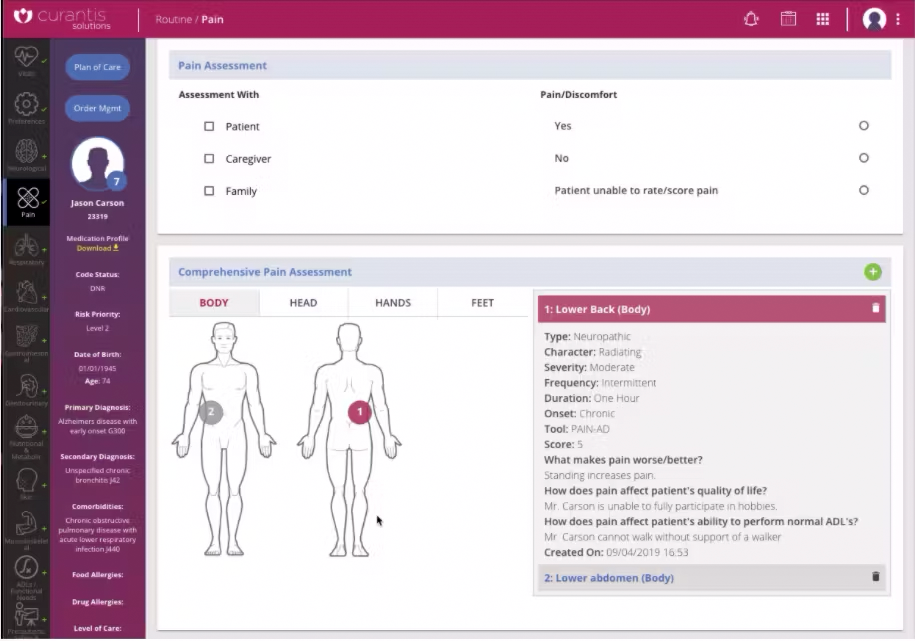
Using Amazon, Curantis Solutions can build visual dashboards and reports. The visual reports help agency administrators understand and apply the data at a glance without spending hours analyzing the data points. The integration allows data analysis in almost real time. The Amazon suite of services aids Curantis in growth and enhanced data processing for their clients. It also allows Curantis to highlight powerful industry and patient data trends. These key indicators will help with critical decision making for continued high quality patient care.

    This new platform adds expanded abilities to meet customer needs:

    • Enhanced partner integrations
    • Diverse way to prensent a patient-focused view
    • The power to make predictions about a patient’s decline based upon chart data
    • The ability for customers and internal stakeholders to easily explore data


    About Curantis Solutions

    Curantis Solutions was born from a desire to put hospice and palliative care first. With a genuine culture of caring, our team is dedicated to creating a refreshingly simple software experience that utilizes emerging technology, smart design and a cloud-native/serverless architecture to create an experience that is congruent with the technology you utilize in your everyday life. It’s time for hospice and palliative care software to make life easier vs creating arduous workarounds and added frustration. It’s time you experience Curantis Solutions!

    About Amazon HealthLake

    AWS HealthLake is a HIPAA-eligible service offering healthcare companies a complete view of individual and patient population health data using FHIR (Fast Healthcare Interoperable Resources) API based transactions to securely store and transform their data into a queryable format at petabyte scale, and further analyze this data using machine learning (ML) models. Using the HealthLake FHIR-based APIs, healthcare organizations can easily import large volumes of health data, including medical reports or patient notes, from on-premises systems to a secure, compliant, and pay-as-you-go service in the cloud. HealthLake offers built-in natural language processing (NLP) models to help customers understand and extract meaningful medical information from a single copy of raw health data, such as medications, procedures, and diagnoses.

    Curantis Solutions Amazon HealthLake

    # # #

    Kristin Rowan, Editor
    Kristin Rowan, Editor

    Kristin Rowan has been working at Healthcare at Home: The Rowan Report since 2008. She has a master’s degree in business administration and marketing and runs Girard Marketing Group, a multi-faceted boutique marketing firm specializing in event planning, sales, and marketing strategy. She has recently taken on the role of Editor of The Rowan Report and will add her voice to current Home Care topics as well as marketing tips for home care agencies. Connect with Kristin directly kristin@girardmarketinggroup.com or www.girardmarketinggroup.com

    ©2024 by The Rowan Report, Peoria, AZ. All rights reserved. This article originally appeared in Healthcare at Home: The Rowan Report. One copy may be printed for personal use: further reproduction by permission only. editor@therowanreport.com