Quality Improvement Project

by Kristin Rowan, Editor

Quality Improvement Project

Joint two-year effort publishes results

The Quality improvement project, a joint two-year research initiative between BerryDunn, Strategic Healthcare Partners, and National Alliance for Care at Home, aimed to improve the care experience for patients and improve CAHPS scores. The study implemented best practices targeted toward the CHAPS survey to see what really was working in improving patient and family satisfaction.

“Very little research has been done in the area of home health and hospice CAHPS, and this project is helping to close that gap. By identifying and validating true best practices, we’re giving agencies actionable tools to improve patient and family experience. At the heart of care is the relationship between providers, patients, and families—and improving that experience is essential to achieving meaningful outcomes.”

Lindsay Doak

Director of Healthcare Research and Education, BerryDunn

The Quality Improvement Project

The study included 27 hospice and 36 home health agencies. It ran from October of 2023 through June of 2024. Participating agencies underwent supervisory training and support, customer service and PCC training and support, and patient-centered mentorship certification. They also participated in bimonthly review calls for performance metrics and best practices.

Data comparisons

CAHPS data collected between June 1 and December 31, 2023 served as a baseline to compare with data collected using best practices. New CAHPS data collected between June 1 and December 31, 2024 showed outcomes of the project.
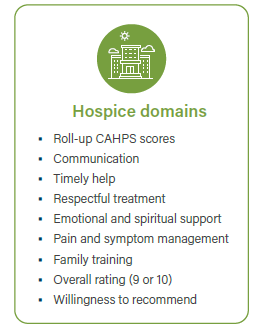
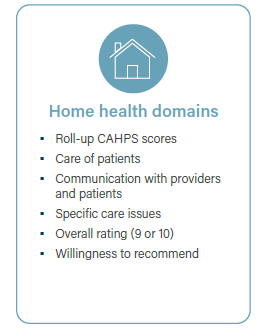
Quality Improvement Project Hospice Domains
Quality Improvement Project Home Health Domains

Best Practice Findings

  • Before funding new or additional initiatives, ensure internal readiness and operational stability to ensure successful implementation
    • Customer service training improved CAHPS outcomes in communication and willingness to recommend
    • Supervisory training improved roll-up scores for hospice and both specific care issues and willingness to recommend for home health
    • Mentorship boosted overall scores in hospice, but had little impact in home health
  • Home Health agencies may benefit from mandated interdisciplinary team meetings for mentorship, peer connection, and ongoing staff education
  • Turnover rates had mixed results
    • Intentional staff changes due to performance issues increased scores
    • General high turnover disrupted continuity and long-term success

Key Takeaways/Conclusions

Implementing patient-centered care (PCC) yielded strong improvement in some areas for some organizations, but overall the project produced varied results. The project was more successful among hospices than home health agencies. PCC training will need changes to achieve measurable impact. The best results came from agencies with the highest participation rates. Further improvement efforts need to be tailored to agency types, cultures, dynamics, and internal barriers.

# # #

This report and the information contained therein is the property of BerryDunn. For more information, contact BerryDunn directly. Download the full report here.
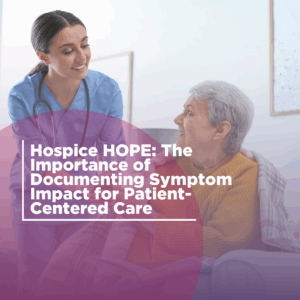

Hospice Hope

by Peggy Rattarree, Principle Product Manager, Curantis Solutions

Hospice HOPE

The importance of documenting symptom impact for patient-centered care

In hospice care, the focus isn’t just on treating symptoms; it’s on improving the quality of life for patients and their families. This is where Hospice HOPE takes center stage, emphasizing the importance of documenting symptom impact to deliver truly patient-centered care. By understanding how symptoms affect each patient’s physical, emotional, and psychosocial well-being, hospice teams can provide care that aligns with their unique needs and goals.

What is hospice HOPE?

Hospice HOPE stands for Hospice Outcomes and Patient Evaluation. It’s a philosophy that places the patient’s comfort, dignity, and goals at the forefront of care delivery. Documenting symptom impact is a critical part of this approach because it provides a detailed understanding of how symptoms affect the patient’s overall quality of life.

In hospice care, every patient’s journey is unique. By actively tracking and documenting symptom impact, care providers can move beyond generic treatments and embrace a truly individualized approach that prioritizes what matters most to the patient.

Why documenting symptom impact matters?

Moves us to patient-centered care

Documenting symptom impact allows hospice teams to focus on what truly matters to the patient. Instead of simply addressing symptoms like pain, nausea, or fatigue in isolation, it provides a holistic view of how these symptoms affect the patient’s daily life. For example:

  • Pain
    • How does it limit mobility or the ability to participate in meaningful activities?
  • Fatigue
    • Is it preventing patients from spending time with loved ones?
  • Nausea
    • Is it reducing their ability to eat or enjoy meals?
Curantis Solutions Hospice HOPE

By asking these questions and recording the answers, hospice providers can better tailor interventions to manage not just symptom management but the overall patient experience.

Improves communication across the care team

In hospice care, communication is everything. Documenting symptom impact ensures that every member of the interdisciplinary team (IDT), from nurses and physicians to social workers and chaplains, has access to the same comprehensive information.

This documentation:

  • Creates a shared understanding of the patient’s condition
  • Helps align the team’s goals with the patient’s priorities
  • Reduces duplication of efforts and enhances care coordination

When everyone is on the same page, patients and families receive more seamless, cohesive care.

Hospice HOPE Communication

Supports compliance and quality standards

Regulatory bodies like CMS (Centers for Medicare & Medicaid Services) require hospices to document and monitor patient symptoms to ensure care quality. But beyond compliance, tracking symptom impact demonstrates a commitment to continuous improvement.

Documenting symptom impact allows hospices to:

  • Identify trends and gaps in care
  • Measure the effectiveness of interventions
  • Use data to advocate for better resources or innovations in care delivery

Empowers families and caregivers

When symptom impact is documented, families and caregivers gain a clearer understanding of their loved one’s condition. This transparency fosters trust and collaboration between the hospice team and the family, ensuring everyone is working toward the same goals.

For example, a caregiver might better understand why a loved one sleeps more during the day or avoids certain foods. These insights can help families feel more prepared and supported during a challenging time.

Final Thoughts

With CMS rolling out Hospice HOPE, documenting symptom impact is no longer optional. It’s the standard for compassionate, high-quality care. This shift helps hospice organizations go beyond symptom control and into whole-person care that honors each patient’s life journey.

This is part one in a two-part series on Hospice HOPE. Check back next week for part two.

# # #

Peggy Rattarree Curantis Solutions Hospice HOPE

Peggy is an IT professional with over 30 years’ experience. She has defined and developed software products in industries such as grocery management, financial services, and reporting and analytics. In her 2.5 years with Curantis, Peggy has helped to shape the definition and delivery of the application. She brings a passion for agility and has been integral in transitioning Curantis to an environment of delivery on cadence, release on demand.

Peggy has a Bachelor of Music degree from University of North Texas.

©2025 by The Rowan Report, Peoria, AZ. All rights reserved. This article originally appeared in the Curantis Solutions blog and is reprinted here with permission. For more information or to request permission to print, please contact Curantis Solutions.