Partnership for Quality Home Healthcare to Cease Operation

FOR IMMEDIATE RELEASE

Contacts:           Elyssa Katz
571-281-0220

Thomas Threlkeld
202-547-7424
communications@allianceforcareathome.org

Partnership for Quality Home Healthcare Combines Efforts with Alliance

WASHINGTON, D.C., JANUARY 17, 2025. The Board of Directors of the Partnership for Quality Home Healthcare (PQHH) plans to cease operations of the organization effective March 1, 2025. Moving forward, the PQHH Board of Directors will combine efforts with the National Alliance for Care at Home (the Alliance). 

Advocacy

By establishing a unified and robust industry voice through the Alliance, the PQHH Board of Directors hopes to advance the public policy and regulatory issues affecting the home health community’s shared vision of a healthcare system that fully recognizes the essential role of home health in delivering compassionate and value-driven care.

Partnership for Quality Home Healthcare The Alliance

Your content goes here. Edit or remove this text inline or in the module Content settings. You can also style every aspect of this content in the module Design settings and even apply custom CSS to this text in the module Advanced settings.

“We have the deepest gratitude for all who have served this organization and championed PQHH’s mission, especially our Chief Executive Officer Joanne Cunningham, who has expertly managed and successfully driven PQHH’s agenda and advocacy for nearly 7 years. Joanne’s commitment to this sector and expertise in planning and executing federal advocacy is unmatched in the home health community and will continue to have a positive, lasting impact on our industry and our patients.”

David Baiada

Chairman, Partnership for Quality Home Healthcare

PQHH History

Since its founding in 2010, PQHH has been dedicated to ensuring access to high-quality home healthcare for all Americans. Throughout its history, PQHH has maintained an unwavering focus on this mission, including in this pivotal moment.

“Through the work of the Partnership and the Alliance, the Medicare home health community has forged strong relationships in Congress and with CMS that have well positioned the sector for future success, and which we look forward to building upon in the future. With a unified industry voice, we can continue to educate the policy community on the importance of care at home to American families.”

Dr. Steven Landers, MD, MPH

Chief Executive Officer, National Alliance for Care at Home

The PQHH Board of Directors’ decision to combine efforts with the Alliance follows careful consideration of the current state of home health policy, the post-election political landscape, and significant industry developments.

“By combining efforts with the Alliance, we look forward to strengthening the unity and resources of our sector,” added Baiada.

“The Board of Directors for the National Alliance for Care at Home unanimously supports the decision by PQHH to align efforts and resources with the Alliance to further unify our industry. The core of our vision underlying the merger with NHPCO has always been to create a community where all care-at-home stakeholders can invest the time, energy and resources necessary to produce the results required to secure our places in the continuum of health care in America. We are beyond pleased that PQHH leaders share in this vision. It is not trite to assert that we will be stronger together.”

Ken Albert

Board Chair, The Alliance

# # #

About the National Alliance for Care at Home

The National Alliance for Care at Home (the Alliance) is a new national organization representing providers of home care, home health, hospice, palliative care, and other health care services mainly delivered in the home. The Alliance brings together two organizations with nearly 90 years of combined experience: NAHC and NHPCO. NAHC and NHPCO are in the process of combining operations to better serve members and lead into the future of care offered in the home. Learn more at www.AllianceForCareAtHome.org

©2025 National Alliance for Care at Home. This press release originally appeared on The Alliance website and is reprinted on The Rowan Report with permission.
Chief Government Affairs Officer Announced

FOR IMMEDIATE RELEASE

Contacts:              Elyssa Katz
571-281-0220

Thomas Threlkeld
202-547-7424
communications@allianceforcareathome.org

The National Alliance for Care at Home Welcomes Scott Levy as Chief Government Affairs Officer 

WASHINGTON, D.C., JAN 21, 2025. The National Alliance for Care at Home (the Alliance) is excited to announce Scott Levy as its inaugural Chief Government Affairs Officer starting on January 27. With over 20 years of distinguished experience in government relations, public policy, advocacy, and law, Scott is poised to lead the Alliance’s efforts to drive impactful legislative and regulatory changes that expand access to quality care at home for America’s growing population of elderly and seriously ill. 

“Scott Levy is an extraordinary addition to our leadership team. He brings a deep understanding of healthcare policy, politics, and a great sensitivity to the intersection of public policy and healthcare operations and how policy impacts patients and families. His track record of success, combined with his dedication to improving care at home, makes him an invaluable addition to our team.”  

Dr. Steve Landers

CEO, The Alliance

Background and Experience

Scott’s career is marked by notable achievements and experiences in both the public and private sectors. He most recently served as Chief Government Affairs Officer at Amedisys, one of the nation’s largest at-home healthcare providers, where he led initiatives that secured critical legislative and regulatory reforms, including payment model adjustments and the expansion of value-based care. His public service includes roles with all branches of government at both the state and federal level, where he gained invaluable experience in high-level government operations and policymaking. 

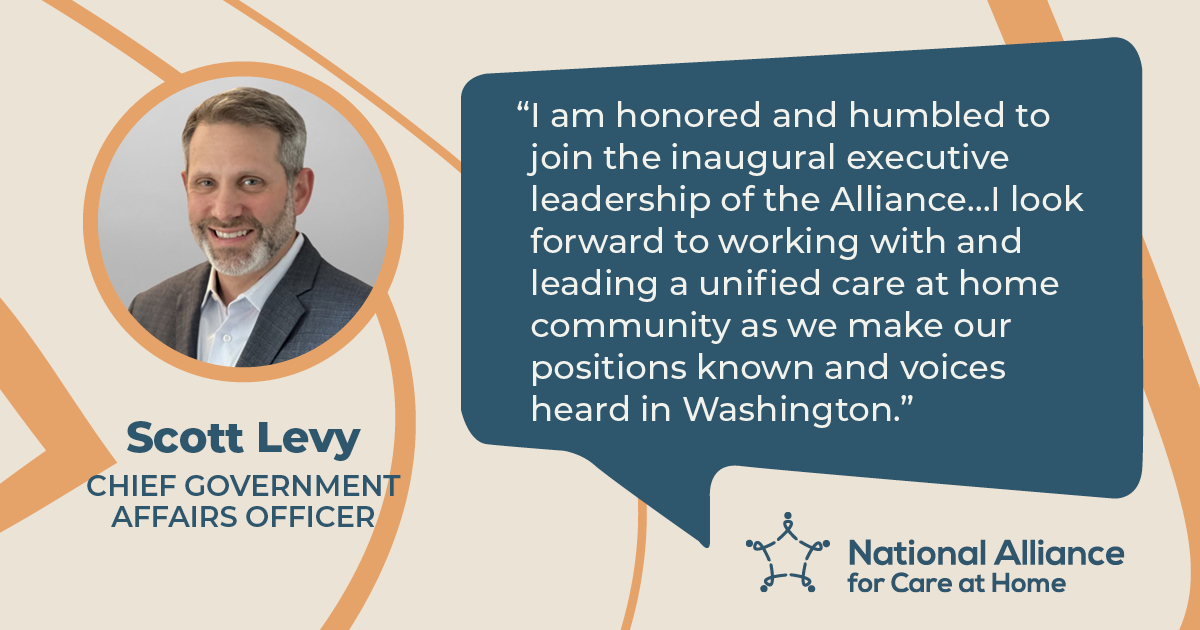
Scott Levy Chief Government Affairs Officer

His skill set as a lawyer, where he has advocated for clients in regulatory settings and in the courtroom, combined with his political experience and decade of service to one of the largest providers in our industry make Scott uniquely qualified for this role at this time.

Education

A graduate of Louisiana State University, Scott earned both a Bachelor of Arts in Political Science and a Bachelor of Arts in Mass Communication before completing his Juris Doctor at the LSU Paul M. Hebert Law Center. His legal and policy expertise, as well as his strategic leadership, has made him a trusted advisor to CEOs, boards, and industry leaders across the healthcare landscape.  

Chief Government Affairs Officer Role

At the Alliance, Scott will lead a talented team of advocacy professionals and work closely with policymakers, industry stakeholders, and grassroots networks to address challenges such as provider reimbursement, regulatory hurdles, improving quality and program integrity, and advancing innovative care models. His leadership will strengthen the Alliance’s ability to represent and empower its members while ensuring better access to home-based care for patients and their loved ones nationwide.  

In His Own Words

“I am honored and humbled to join the inaugural executive leadership of the Alliance.  This opportunity allows me to leverage and maximize my nearly ten years of experience in advocating for home health and hospice on the state and national level. I am eager to get started in strategically positioning the industry and aggressively pursuing public policy that ensures all Americans can access quality care in the home. I look forward to working with and leading a unified care at home community as we make our positions known and voices heard in Washington.”  

Scott Levy

Chief Government Affairs Officer, The National Alliance for Care at Home

We are honored to welcome Scott Levy to the Alliance and look forward to the transformative impact of his leadership!  

# # #

About the National Alliance for Care at Home

The National Alliance for Care at Home (the Alliance) is a new national organization representing providers of home care, home health, hospice, palliative care, and other health care services mainly delivered in the home. The Alliance brings together two organizations with nearly 90 years of combined experience: NAHC and NHPCO. NAHC and NHPCO have combined operations to better serve members and lead into the future of care offered in the home. Learn more at www.AllianceForCareAtHome.org.   

©2025 National Alliance for Care at Home. This press release originally appeared on The Alliance website and is reprinted on The Rowan Report with permission.

Product Review: Plan-of-Care Documentation

by Kristin Rowan, Editor

OASIS Assessment is a Time Suck

Regulatory requirements for home health quality assurance are designed to monitor and improve quality of care. QA focuses on ensuring that patients get safe, effective, compassionate care that meets their individual needs. QA also improves patient outcomes and reduces adverse events like ER visits and rehospitalizations. OASIS includes 79 standardized medical, nursing, and rehab data elements for a comprehensive assessment. Typical OASIS assessments take 1-2 hours to complete, depending on the patient’s complexity and the assessment type. 

Artificial Intelligence in OASIS coding

The Rowan Report recently came across a tool that addresses the complexities of OASIS coding. We sat down with Zach Newman (CEO) and Dan Conger (Founder) at Enzo Health to learn more about their AI powered QA tool with customizable workflows.

Co-pilot for Your Agency

Enzo Health is a documentation tool that automates workflows, acting as a co-pilot for your agency. Some of the workflows that Enzo Health supports include intake, OASIS, and QA reviews. Automating these processes can reduce errors and clawbacks, save your clinicians hours of paperwork, and offer cost savings to your agency.

QA Process

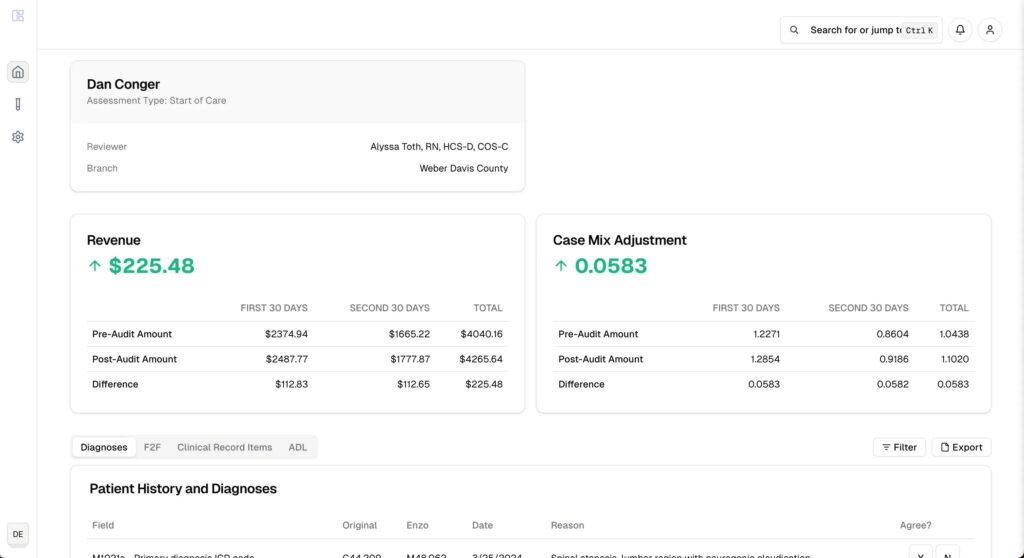
With the Enzo health QA tool, users upload all documents related to an episode. This will include the referral, initial visit notes, patient information, medical history, and form 485. Enzo calls out any issues it finds in the documentation.

In Face-to-Face encounters, Enzo looks for dates, signatures from qualifying clinicians, a valid primary diagnosis, and other qualifying information.

For ICD-10 Coding, Enzo assesses primary and secondary diagnoses, and adds notes with links to where the information can be found in the uploaded documentation.

Enzo then provides functional limitations and improvements that can be made. Using a team of clinicians that are trained as home health coders, Enzo provides a proxy for internal teams. These coders review charts and finalize diagnosis coding and OASIS answers.

Episode of Care

Qualification for an episode of care is required before anything else happens with a referral. Enzo’s intake automation tool reviews the referral package in advance of the initial F2F. Mirroring the agency’s internal intake process, Enzo determines whether the patient will be admitted to care, whether their insurance will cover the episode, and whether the patient’s psych history may impact the plan of care.

Enzo Health QA Automation

Clinical Assistance

The Rowan Report has often stated, and will continue to stand by this fact, that there is no substitute for face-to-face care and the expertise of the nurses and clinicians in the home. We have also seen the advancement of artificial intelligence that provides assistance and guidance at the point-of-care that can be useful. Enzo health includes a chat tool that pulls evidence-based information to provide guidance, coding instructions, and other help to nurses.

QA Tool Integration with Scribe Tool

Enzo Health has developed a talk-to-text scribe tool that integrates directly with the QA tool. The use of both products together would likely save more time as well as reduce errors. The Rowan Report will provide a thorough product review of the scribe tool at a later date. Enzo Health charges a flat fee determined by volume and offers bundle pricing for using both the QA and Scribe tools.

Final Thoughts

Costs are increasing, the workforce shortage is ongoing, nurses are suffering from burnout, and employees are stretched about as thin as they can go. Any tool that alleviates paperwork, stress, unpaid work at home to finish documentation, and the need for additional back-office staff is worth looking into. Enzo differentiates its tool from other QA software with their team of clinicians trained in home health coding to review the documentation. This end-to-end tool boasts a 95% accuracy rate and do date has no clawbacks or ADRs. 

In my conversation with Zach and Dan, their coding expertise and knowledge of the home health industry were evident. They are excited about the tools they are creating and passionate about helping agencies to provide patient care, a task they referred to as “very noble.” They continue to improve upon their software and conceive of innovative additions. If they continue as they started, Enzo Health will be one to watch.

Right at Home and PocketRN Partner for Dementia

FOR IMMEDIATE RELEASE

Contact:                               William Leiner
COO
will.leiner@pocketrn.com

Right at Home and PocketRN Enter Strategic Partnership to Provide New Medicare Care Model for Seniors with Dementia

Right at Home and PocketRN today announced a strategic partnership to provide support to Medicare dementia beneficiaries.

WASHINGTON, DC, UNITED STATES, January 15, 2025. Right at Home, a nationwide provider of in-home care, and PocketRN, a leading provider of virtual nursing care, today announced a strategic partnership to provide support to certain Medicare beneficiaries with dementia.

CMS Selects PocketRN

PocketRN was recently selected as a participant in the Guiding an Improved Dementia Experience (GUIDE) Model by the Centers for Medicare & Medicaid Services (CMS). As a GUIDE participant, PocketRN’s innovative “virtual nurse for life” approach will allow dementia patients and family caregivers to be specialty matched to nurses, who will become trusted companions that establish a long-term relationship with patients and families. PocketRN nurses also encourage openness to better understand individualized challenges; serve as continuous sources of education, coaching, monitoring, and emotional support; and are available as a 24/7 lifeline. Under the GUIDE Model, PocketRN will be available at no cost to eligible beneficiaries, with $0 copays.

PocketRN Right at Home

PocketRN Right at HomeRight at Home will provide in-home care and safety assessments for eligible beneficiaries to evaluate the safety of the home environment, to assess the ability of the beneficiary to manage and function at home, and to report to PocketRN other environmental, social, and behavioral factors that might impact the function and needs of the beneficiary and their caregiver. PocketRN and Right at Home will use these valuable reports to bring other resources included in the GUIDE benefit package to better support the beneficiary and allow them to stay in their home longer.



The GUIDE Model also provides respite services for certain people, enabling caregivers to take temporary breaks from their caregiving responsibilities. As part of its strategic partnership with PocketRN, Right at Home agencies will be providers of this key respite care service.

The anticipated outcomes of the GUIDE Model include increased caregiver empowerment and a reduction in Medicare and Medicaid expenditures–primarily achieved by preventing or delaying long-term nursing home stays. Additionally, the program aims to bring about a secondary reduction in hospital, emergency department, and post-acute care utilization. These outcomes closely align with the work that PocketRN is already doing and its mission to close the gap between home and healthcare.

“We couldn’t be more thrilled to bring our revolutionary nurse-led care model to the millions of dementia patients and families who need it most. With PocketRN, patients and families get unwavering support from a ‘virtual nurse for life’ as they navigate the complexities of managing dementia at NO cost to them. Nurses are hands-down the best clinicians to be the ‘glue’ to dementia patients and families throughout their journey–they’ve been doing so forever, and it’s high-time their work is valued by our system.”

Jenna Morgenstern-Gaines

CEO, PocketRN

“For over 25 years, Right at Home has empowered seniors to continue to live with independence and dignity while managing the effects of aging. This brand-new payment model will enable more seniors to experience the benefit of Right at Home services and support family members caring for seniors with dementia.”

Brady Schwab

Chief Growth Officer, Right at Home

GUIDE Model Participation

PocketRN will utilize its national network of expert nurses to dramatically expand access for dementia patients and families who otherwise may go without care. Its participation in the GUIDE Model will span eight years, with a one-year pre-implementation period for program development, community engagement, and infrastructure scaling before rolling out with a cohort of initial partners. Providers who are interested in partnering with PocketRN so their patients and families can get high-quality, personalized dementia care at no cost can contact nancy.gillette@pocketrn.com.

# # #

About Right at Home

Founded in 1995, Right at Home offers in-home care to seniors and adults with disabilities who want to live independently. Most Right at Home offices are independently owned and operated and directly employ and supervise all caregiving staff. Each caregiver is thoroughly screened, trained, and bonded/insured before entering a client’s home. Right at Home’s global office is based in Omaha, Nebraska, with more than 700 franchise locations in the U.S. and five other countries. For more information about Right at Home, visit rightathome.net.

About PocketRN

PocketRN gives patients, families, and caregivers a “virtual nurse for life.” Its mission is to close the gap between home and healthcare by: enabling nurses to care proactively and continuously at the top of their license, enabling caregivers with peace of mind and the confidence to support others, and enabling patients to access whole-person, trusted, empathetic care when and where they want it. PocketRN is the glue that holds together fragmented experiences in care so that partners, clinicians, patients, and families get back more of what they need: quality time. For more information, visit www.pocketrn.com.

This press release was originally submitted to and appeared on EIN Presswire and is reprinted with permission.

GUIDE Model Expanding

by Kristin Rowan, Editor

GUIDE Launched with 390 Participants

On July 1, 204, CMS launched the GUIDE Model and announced that 390 organizations had signed on to participate. The Guiding an Improved Dementia Experience (GUIDE) Model is a voluntary model test amied at supporting people with dementia and their unpaid caregivers (family members).

Overview

The GUIDE Model focuses on comprehensive, coordinated dementia care to improve the quality of life for people with dementia. It also hopes to reduce the strain on family caregivers and keep patients in their homes and communities longer. Medicare payments cover the package of care coordination, care management, caregiver education and support, and respite care.

Poor-Quality Dementia Care

The GUIDE Model aims to address the key drivers of poor-quality dementia care in five ways:

    • Defining a standardized approach to dementia care delivery for model participants – this includes staffing considerations, services for people with dementia and their unpaid caregivers, and quality standards.
    • Providing an alternative payment methodology to model participants – CMS provides a monthly per-beneficiary payment to support a team-based collaborative care approach.
    • Addressing unpaid caregiver needs – the model aims to address the burden experienced by unpaid caregivers by requiring model participants to provide caregiver training and support services, including 24/7 access to a support line, as well as connections to community-based providers.
    • Respite services – CMS pays model participants for respite services, which are temporary services provided to a beneficiary in their home, at an adult day center, or at a facility that can provide 24-hour care for the purpose of giving the unpaid caregiver  temporary breaks from their caregiving responsibilities.
    • Screening for Health-Related Social Needs – model participants are required to screen beneficiaries for psychosocial needs and health-related social needs (HRSNs) and help navigate them to local, community-based organizations to address these needs.

Health Equity

Aspects of GUIDE designed to improve health equity include:

    • Requiring participating providers to implement HRSN screenings and referrals.
    • Offering financial and technical support for development of new dementia care programs targeted to underserved areas with less access to specialty dementia care.
    • Annual reporting by participants on progress towards health equity objectives, strategies, and targets.
    • Using data from the model to identify disparities and target improvement activities.
    • A health equity adjustment to the model’s monthly care management payment to provide additional resources to care for underserved beneficiaries.

Exclusive Inside Scoop

PocketRN gives patients, families, and caregivers a “nurse for life,” closing the gap between healthcare and care at home. This whole-person support allows patients and their caregivers to have access to medical care through their virtual nurse, who establishes a relationship with the patients and families.

On January 13, 2025, PocketRN announced a Strategic Partnership with Nevvon to pilot the GUIDE Model.

Nevvon is a global home and health care training tech company that certifies caregivers for continuing education. The app-based learning allows caregivers to go at their own pace, simplifying compliance, and empowering agencies to deliver exceptional care.

On January 15, 2025, PocketRN announced a Strategic Partnership with Right at Home to provide support to eligible Medicare beneficiaries with dementia.

Right at Home is a nationwide provider of in-home care and will provide care and safety assessments for eligible beneficiaries to evaluate the safety of the home environment, the ability of the patient to manage and function at home, and report back to PocketRN any other factors that might impact the patient and their family caregiver.

Later today, PocketRN will announce a National Strategic Partnership with with Assisting Hands® Home Care to test the care model. 

Assisting Hands provides in-home care to seniors, individuals with disabilities, and people recovering from illness or injury. The agency has a significant portion of their client base with a dementia diagnosis. Their franchise system has locations across the United States.


“We couldn’t be more thrilled to bring our revolutionary nurse-led care model to the millions of dementia patients and families who need it most. With PocketRN, patients and families get unwavering support from a ‘virtual nurse for life’ as they navigate the complexities of managing dementia at NO cost to them. Nurses are hands-down the best clinicians to be the ‘glue’ for patients and their families throughout their dementia journey–they’ve been doing so forever, and it’s high-time their work is valued by our system.”

Jenna Morgenstern-Gaines

CEO, PocketRN

In Their Own Words

The Rowan Report spoke with Nancy Gillette, Chief Growth Officer at PocketRN for this exclusive scoop. Nancy explained that with this program, PocketRN will be able to provide a nurse to dementia patients, provide a clinical overlay to care at home, work with care at home partners for respite benefits, and become a referral source when a home care agency has an eligible patient.

GUIDE Model PocketRN

Existing models and studies using PocketRN have shown up to a 30% reduction in urgent care visits, ER visits, and hospitalizations. The company is focusing on finding new strategic partners for a greater understanding of patient engagement from a home care agency standpoint.

Nancy gave us this inside information: 

The three recent announcements are just the beginning. Expect more announcements in the next 30-60 days and then continuing throughout the year.

PocketRN will eventually be applying the GUIDE Model in agencies, patients already using PocketRN, and direct referrals across all 50 states.

# # #

Kristin Rowan, Editor

Kristin Rowan has been working at The Rowan Report since 2008. She is the owner and Editor-in-chief of The Rowan Report, the industry’s most trusted source for care at home news .She also has a master’s degree in business administration and marketing and runs Girard Marketing Group, a multi-faceted boutique marketing firm specializing in content creation, social media management, and event marketing.  Connect with Kristin directly kristin@girardmarketinggroup.com or www.girardmarketinggroup.com

©2025 by The Rowan Report, Peoria, AZ. All rights reserved. This article originally appeared in The Rowan Report. One copy may be printed for personal use: further reproduction by permission only. editor@therowanreport.com


PocketRN and Nevvon

FOR IMMEDIATE RELEASE

Contacts:                           William Leiner
COO
will.leiner@pocketrn.com

James Cohen
CEO and Co-founder
james@nevvon.com

PocketRN & Nevvon Announce National Strategic Partnership to Transform Dementia Care through CMS’ Innovative GUIDE Model

Aims to Improve Care Coordination, Empower Caregivers, and Enhance Patient Outcomes

WASHINGTON, DC, UNITED STATES, January 13, 2025 /EINPresswire.com/ — Today, PocketRN, a leader in virtual nursing, and Nevvon, a global innovator in home and health care training technology, announced a National Strategic Partnership to pilot the Centers for Medicare & Medicaid Services (CMS) Guiding an Improved Dementia Experience (GUIDE) Model. This groundbreaking alternative payment model is designed to support individuals living with dementia and their caregivers.

Under this partnership, PocketRN and Nevvon will integrate their scalable virtual nursing and caregiver training solutions into Dementia Care Programs (DCPs) being tested nationwide. PocketRN is one of approximately 400 participants in the GUIDE Model, and this partnership with Nevvon will address systemic barriers such as limited access to high-quality training, caregiver burnout, and operational inefficiencies.

PocketRN Nevvon

The CMS GUIDE Model, launched on July 1, 2024, introduces a new payment framework to ensure that individuals living with dementia receive holistic, person-centered care. It tackles caregiver burnout by offering respite care services to allow caregivers necessary breaks to maintain their health and well-being. The program also improves access to care by providing 24/7 availability of trained professionals through telehealth services, overcoming geographic barriers and ensuring equitable support. Additionally, it addresses training deficits with Nevvon’s multilingual, on-demand e-training modules, which empower caregivers with the skills and knowledge to navigate the complexities of dementia care. PocketRN’s “virtual nurse for life” model bridges fragmented services by connecting caregivers, patients, and clinicians, creating a seamless, coordinated care experience.



24/7 Nursing

PocketRN enables caregivers and patients to access 24/7 virtual nursing support and regular nurse check-ins, delivering preventative care and reducing reliance on unnecessary emergency services through real-time assistance. Nevvon enhances caregiver education through a user-friendly app that offers short, practical learning modules tailored to every stage of dementia care. With training available in 11 languages, Nevvon ensures inclusivity and meets state-specific regulatory requirements, allowing agencies to focus on caregiving rather than administrative tasks.

“The GUIDE model is a powerful step forward in bridging the gap between homecare and healthcare. Our partnership with Nevvon strengthens our ability to deliver equitable, innovative, and scalable solutions that meet the needs of caregivers and families across the country. Together, we are ensuring that no one—caregiver or patient—is left behind in this new era of dementia care.”

WIlliam Leiner

COO, PocketRN

“The CMS GUIDE model offers an unprecedented opportunity to reimagine dementia care by focusing on the needs of caregivers and patients alike,” said James Cohen, CEO of Nevvon. “By combining our innovative e-training platform with PocketRN’s virtual nursing solutions, we are equipping caregivers with the tools, confidence, and flexibility they need to provide compassionate, patient-centered care. Together, we’re not only transforming how dementia care is delivered but also ensuring that agencies, caregivers, and families have the support they need to thrive in this new care paradigm.”

This partnership supports the GUIDE Model’s broader goals, as highlighted in the Biden Administration’s Executive Order on Increasing Access to High-Quality Care and Supporting Caregivers and the National Plan to Address Alzheimer’s Disease. For more information on the CMS GUIDE Model, visit: https://www.cms.gov/priorities/innovation/innovation-models/guide.

# # #

About Nevvon

Nevvon is a global innovative home and health care training technology company that certifies caregivers for the mandatory annual education they earn online. Our simple, intuitive app lets caregivers learn at their own pace, simplifying regulatory compliance while empowering agencies to deliver exceptional care. Learn more at https://www.nevvon.com/guide/.

About PocketRN

PocketRN gives patients, families, and caregivers a “virtual nurse for life,” closing the gap between homecare and healthcare. PocketRN empowers caregivers with peace of mind, patients with trusted care, and clinicians with tools to deliver proactive, whole-person support. Visit www.pocketrn.com to learn more or engage with PocketRN on LinkedIn, Facebook, and Instagram.

This press release was submitted to and originally appeared on EIN Presswire and is reprinted here with permission.

Direct From the Front Lines

by Andrew Pagsisihan, COO, AllCare Provider

L.A. Brief From a Home Health Provider

Direct from the front lines, a California agency owner talks about the experiences and challenges of providing care at home during the devastating California Wildfires.

Healthcare Amid the Flames: How LA's Home Care Agencies Navigate the 2025 Wildfire Crisis

As unprecedented wildfires ravage Los Angeles County in early 2025, healthcare providers face extraordinary challenges in maintaining continuity of care. The combination of low precipitation, parched vegetation, and extreme winds has created the deadliest fire season in California’s history, forcing healthcare facilities to monitor, evacuate, close, or, in some cases, face complete destruction.

While traditional healthcare facilities grapple with mass relocations, home care agencies confront unique challenges due to their care distribution model. Agencies, operating at the intersection of healthcare delivery and disaster response, must maintain accountability for patient care scatter throughout the county while navigating complex evacuation scenarios and communication challenges.

Care at Home Wildfire

Direct From the Front Lines: Crisis Response in Action

When the fires began, home care agencies immediately activated their disaster response protocols. The first crucial step involved is mapping affected areas and identifying impacted patients and staff members – including consideration of employees’ families, whose situations directly affect the agency’s ability to maintain operations. Internal roles shifted swiftly as the emergency continued to escalate.

Patient status became categorized into four critical groups: Safe, Warn, Shelter-in-Place, or Evacuated as well as triage for importance. For those choosing to shelter in place within evacuation zones, agencies coordinated with physicians, health plans, and local government authorities to ensure proper oversight. Evacuated patients required careful care plan adjustments and staff reallocation, while some chose to temporarily discontinue services altogether.

Communication Challenges and Solutions

The inability to contact certain patients emerged as a significant concern, prompting ongoing outreach efforts and coordination with primary care physicians and health plans to disclose status of their patients. Regional emergency communication systems like REDDINet and Everbridge (provided by Los Angeles county) proved invaluable in managing healthcare service partnerships across the affected population,  enabling rapid risk reduction and aid delivery in need.

Direct from the Front lines

Bridging the Gap

A crucial role emerged from the “last mile” healthcare workers, who became essential conduits of information about available aid resources to our communities. Many patients, particularly older adults, struggle with and outreach programs especially with disaster aid. Home care agencies have taken on the additional responsibility of enabling patients and their caregivers to access assistance independently as assistant aid becomes available. Especially with scammers praying on these populations.

Federal Response and Specialized Support

As multiple intense fires stretched county and state resources thin, Los Angeles County secured direct FEMA funding and partnership assistance. In a notable development, home care agencies successfully advocated for specialized accommodation at FEMA Disaster Assistance sites, allowing dedicated time slots for home care patients to meet with federal agents – a critical arrangement that acknowledges the unique needs of this vulnerable population.

The ongoing crisis highlights both the resilience of home healthcare systems and the need for specialized disaster response protocols for distributed care models. As climate change threatens to make such events more common, the lessons learned from the 2025 Los Angeles wildfires will likely shape future disaster preparedness strategies for home healthcare providers nationwide.

# # #

Andrew Pagsisihan Direct from the Front Lines

Andrew never imagined that a personal experience with home healthcare would transform his engineering career into a heartfelt mission. Today, as Chief Operating Officer of AllCare Provider, he channels his passion for helping others into revolutionizing home health and hospice care. His eyes light up when discussing better outcomes for patients and families – it’s clear this isn’t just a job for him, but a calling.

Drawing from 25 years in healthcare management, Andrew combines technical expertise with deeply empathetic leadership. His colleagues often remark on his ability to remember not just patients’ names, but their stories, families, and dreams. At AllCare Provider, he’s fostered a culture where every team member feels valued and every patient is treated like family.

©2025 by The Rowan Report, Peoria, AZ. All rights reserved. This article originally appeared in The Rowan Report. One copy may be printed for personal use: further reproduction by permission only. editor@therowanreport.com

Care at Home Coming to Medicaid?

by Elizabeth E. Hogue, Esq.

Brown v D.C. Decision is Another Boost for Care at Home

In Olmstead v. L.C., the U.S. Supreme Court decided that unjustified segregation of disabled persons constitutes discrimination in violation of Title II of the Americans with Disabilities Act.

The Court said that public entities must provide community-based services to disabled persons when such services are:

    • Appropriate;
    • Unopposed by disabled persons; and
    • Reasonable accommodations taking into account resources available to public entities and the needs of other disabled individuals receiving services from the entity.

This decision gave a tremendous boost to the provision of home and community-based services of all types. Since Olmstead was decided in 1999, there have been more court decisions that require services to be provided at home based on this opinion.

Support for Olmstead

One recent decision is Brown, et al v. District of Columbia (Brown v D.C.) that was decided on December 31, 2024. The Court decided that the District of Columbia violated the rights of D.C. residents with disabilities under the Americans with Disabilities Act (ADA) and the Rehabilitation Act. According to the Court, D.C. failed to inform nursing facility residents who receive Medicaid that they could leave nursing facilities and receive home health services in their communities and failed to assist them to do so. The D.C. government also failed to help them access community-based services and housing options needed to transition back to the community.

Brown v D.C.

The Court recognized that individuals living in nursing facilities often need help learning about and applying for available community services to help them transition out of the institution and into their own homes. Even when residents learn about services, navigating the complicated Medicaid-funded long-term care program can cause confusion and anxiety that sometimes causes facility residents to lose hope that they can live in their own homes again.

Consequently, the decision applies to

“All persons with physical disabilities who, now or during the pendency of this lawsuit: (1) receive DC Medicaid-funded long-term care services in a nursing facility for 90 or more consecutive days; (2) are eligible for Medicaid-covered home and community-based long-term care services that would enable them to live in the community; and (3) would prefer to live in the community instead of a nursing facility but need the District of Columbia to provide transition assistance to facilitate their access to long-term care services in the community.”

Brown v D.C. Says That D.C. Must

    • Develop and implement a working system of transition assistance for [nursing home residents that], at a minimum
      • informs DC Medicaid-funded residents, upon admission and at least every three months thereafter, about community-based long-term care alternatives to nursing facilities
      • elicits DC Medicaid-funded nursing facility residents’ preferences for community or nursing facility placement upon admission and at least every three months thereafter
      • begins DC Medicaid-funded nursing facility residents’ discharge planning upon admission and reviews at least every month the progress made on that plan
      • provides DC Medicaid-funded nursing facility residents who do not oppose living in the community with assistance accessing all appropriate resources available in the community
    • Ensure sufficient capacity of community-based long-term care services for [residents] under the EPD, MFP, and PCA programs and other long-term care service programs, to serve [residents] in the most integrated setting appropriate to their needs, as measured by enrollment in these long-term care programs.
    • …[D]emonstrate [its] ongoing commitment to deinstitutionalization by, at a minimum, publicly reporting on at least a semi-annual basis the total number of DC Medicaid-funded nursing facility residents who do not oppose living in the community; the number of those individuals assisted by [DC] to transition to the community with long-term care services [described above]; and the aggregate dollars [DC] saves (or fails to save) by serving individuals in the community rather than in nursing facilities.

Final Thoughts on Brown v D.C.

As indicated above, there continues to be a clear mandate for Medicaid Programs to provide services to individuals in the community, which is a significant impetus to provide services to patients in their homes. This mandate, however, does not directly address practical aspects of implementation, such as reimbursement at appropriate rates for providers or availability of staff to provide services at home. Nonetheless, the Olmstead and Brown cases provide an important basis for further development of in-home services of all types to meet the needs of disabled persons.

Elizabeth E. Hogue, Esq.

Elizabeth Hogue is an attorney in private practice with extensive experience in health care. She represents clients across the U.S., including professional associations, managed care providers, hospitals, long-term care facilities, home health agencies, durable medical equipment companies, and hospices.

©2025 Elizabeth E. Hogue, Esq. All rights reserved.

No portion of this material may be reproduced in any form without the advance written permission of the author.

©2025 by The Rowan Report, Peoria, AZ. All rights reserved. This article originally appeared in The Rowan Report. One copy may be printed for personal use: further reproduction by permission only. editor@therowanreport.com

AI and Communication in Healthcare

An exerpt of “How AI is Enhancing Healthcare Communication” by Sandeep Shah, Founder and CEO, Skyscape

Edited by Kristin Rowan

How AI is Enhancing Communication

Artificial intelligence isn’t a new concept. In the healthcare industry alone, AI has been used to some degree since the 1970’s. It was first implemented to help identify blood infection treatments and showed promising results. This led to further curiosity about what it could do for healthcare professionals.

Today, AI is commonly used in several aspects of care, especially regarding radiology, screening tests, psychiatry, disease diagnosis, and predictive and preventative care. However, one lesser-known way AI tools are impacting our industry is through enhanced communication. AI is reshaping how care at home professionals interact with patients and care teams.

Challenges in Medical Communication

Electronic Health records have reduced the incidence of medical errors by improving the accuracy and clarity of medical records. However, they do not address the communication challenges today’s healthcare organizations still face. Communication channels, especially in care at home, are often fragmented, leaving gaps in patient care, follow-up, and department collaboration. Moreover, patient engagement is increasingly tricky without good communication, resulting in disruptive care plans or gaps in their treatment.

Effective communication is paramount to enhancing patient outcomes, revenue growth, and operational efficiency. Thanks to advancements in technology, AI has the potential to bridge these gaps and create a better experience for both healthcare providers and the patients they care for.

AI Communication

AI Communication Improving Patient Care

Communication within a HH agency is becoming increasingly complex. With more patients and a shortage of nurses, your team may be overwhelmed with tasks, applications, and health information. Luckily, there are several ways that you and your team can leverage artificial intelligence to better communication with patients and care teams (physicians, nurses, surgeons, lab technicians, administrative staff, etc.)

Here are some AI applications that will have the most impact on your agency:

Scheduling and Follow-ups

AI can improve both scheduling and follow-up processes, where there are often delays and miscommunications. AI software can automate appointment reminders and confirmations as well as rescheduling appointments if needed. These automated systems increase patient engagment with your agency and in their treatment. Some AI platforms can analyze patient data to give you a better look at patients who may have additional needs, which could also increase your billings.

Real-Time Support

Care at home nurses and caregivers report burnout due to increased requirements and tasks, including patient communication. AI should not replace your caregivers, but it can be helpful for simple questions, appointment reminders, and other routine tasks.

Future uses may include assistance with medical questions and creating a plan of care. AI is becoming more powerful in learning predetermined information, including scientifically reviewed medical information. Having real-time access to evidence-based, clinical information can accelerate care decisions at the point-of-care.

Less Paperwork, Less Burnout

Care at home nurses and caregivers can spend hours per day on documentation and patient communication. AI cannot and should not completely replace human interaction and communication, but it can significantly reduce the administrative burden of your employees.

Documentation, care notes, intake, and patient emails consume a significant portion of the day. A study from the University of California San Diego School of Medicine found that AI-generated emails and replies significantly reduce the mental strain on medical professionals. The study focused on communication between doctors and patients, but suggests that is can ease the workload of nurses and other healthcare professionals.

Efficient Workflows

Streamlining workflows seems to be one of the most promising applications of AI. Generative AI can interpret the information it is given to create something new. For care at home, this means the eventual use of AI for OASIS coding, plan-of-care, NTUC documentation, and more. 

Removing Language and Cultural Barriers

Language translation creates the possibility for any of your caregivers to care for any patient, regardless of the language they speak. AI translators bridge gaps in communication, especially when it comes to care plans and symptoms that are not generally part of the vocabulary taught when learning a language.

AI can also adjust communication for certain cultural backgrounds, improving patient trust and satisfaction, which can impact your star rating.

Care Collaboration

Using digital secure platforms, you can create communication channels with patients, family members, family caregivers, doctors, specialists, lab technicians, and anyone else involved in patient care. Instant updates to all the members of a patient’s care team relays critical information when it’s needed most. 

Save Time and Money

Not only do these AI applications improve patient satisfaction and reduce the workload for your nurses, AI can save you money. By automating operations like scheduling, shift fulfillment, billing, and other routine, repetitive tasks, your agency can scale without adding additional administrative personnel. With minimal profit margins, automation can help ensure your agency can continuing putting effort where it matters most, into patient care.

The Platform Matters

AI sounds great, and the applications for improving efficiency, better patient satisfaction, better employee satisfaction, and lower costs are appealing to care at home agency owners. However, spending your time, effort, and money on the wrong AI platform can be worse than doing nothing at all. 

AI platforms should enhance, not replace, any task it is designed to perform. If an AI platform promises to handle 100% of any task, run, don’t walk, in any direction. 

With so many AI applications available, you could onboard dozens of platforms and still have room for more automation. Look for AI applications that perform multiple tasks and/or integrate with other AI software companies. 

When you’re ready to let AI simplify your agency and make your staff and patients happier, it may be a good idea to find a consultant who is an expert in software and AI applications to recommend the right fit for your agency.

# # #

About Buzz

Buzz is a HIPAA-secure platform that simplifies real-time on-the-go communications between all stakeholders in an organization’s healthcare ecosystem (administrators, operations, billing, payors, providers and patients). It supports commonly used communication modalities, including texts, dictation, private calls, audio, images, reports, and video sharing. By consolidating these features into a single platform, Buzz eliminates the need for multiple communication tools, reducing confusion and burnout and enabling healthcare teams to focus on delivering exceptional patient care. 

AI Communication
AI Communication

Sandeep Shah is a pioneering technology entrepreneur, educator, and innovator, combining vision with strong technical expertise to transform healthcare delivery. Track record delivering innovative technologies to Harvard’s hospital network, and developing the first, truly usable mHealth application. Technical interests in telehealth, Clinical Communication and Collaboration (CC&C), and business leadership. Educational background in electrical engineering (B.Tech) and computer science (M.Tech), both from the Indian Institute of Technology, Bombay.

©2025 by The Rowan Report, Peoria, AZ. All rights reserved. This article originally appeared in The Rowan Report. One copy may be printed for personal use: further reproduction by permission only. editor@therowanreport.com

Whistleblower Case Impedes Lawsuits

by Kristin Rowan, Editor

Whistleblower Action

A United States District Court in Tampa, Florida ruled against a whistleblower action under the False Claims Act (FCA) against her former employer. In 2019, a family care physician filed a whistleblower, or qui tam, action against her employer for increasing the risk adjustment scores of Medicare Advantage patients in order to receive higher payments.

Whistleblower Protection

When an employee or person with information about a company’s wrongdoing, they can file a lawsuit against that company. Whistleblowers are protected under OSHA, EEOC, and several federal and state regulations against retaliation from their employer. A whistleblower, the person who brings evidence of wrongdoing to the court, is called a “relator.”

Whistleblower

Before the Ruling

The False Claims Act is the first and one of the strongest whistleblower laws in the U.S. Under the FCA whistleblower rules, any private citizen can sue any individual, company, or other entity that is defrauding the government and recover damages and penalties on the government’s behalf. Whistleblowers also receive compensation when these suits are settled between 15% and 30% of the total proceeds. As the FCA has expanded since its passing in 1863, the law made it possible for anyone to serve as a whistleblower.

The Ruling

In the case noted above, the court ruled that FCA whistleblowers act as officers of the United States when they sue on behalf of the federal government. The decision reasoned that whistleblowers are appointing themselves as officers of the federal government by bringing these lawsuits.

Article II, Section 2, Clause 2 of the Constitution states that the President can appoint officers and officials to the government and that they require Senate approval for some of these. Cabinet appointments, judicial appointments, and other high ranking positions are often the subject of news stories during Senate hearings to confirm these appointments.

The court ruled that an FCA whistleblower becomes an officer of the federal government through self-appointment, violating the Appointment Clause of the Constitution. The court further ruled that the False Claims Act in itself is a violation of the Constitution, effectively nullifying the FCA, at least in Florida for now.

Widespread Implications

Any company who has lost a False Claims Act suit may now be able to challenge those rulings, using this case as precedent. However, there are some hoops they would need to jump in order to do so, depending on how this case is interpreted. Ironically, this case states that whistleblowers cannot be officers of the government without appointment, but if that’s true, then all False Claims Act decisions become easier to challenge. 

If this decision stands and is adopted as precedent across the U.S., it could completely nullify the False Claims Act. It may even be considered for a Supreme Court ruling. In 2023, the U.S. government recouped $2.6 billion from FCA suits, nearly $2.3 billion of which were claims brought by whistleblowers.

Care at Home Implications

Medicare and Medicare Advantage are rife with fraudulent claims, “coding intensity“, upcoding, and predatory marketing. In 2024, CMS announced changes to the risk adjustment model in the Risk Adjustment Validation Final Rule after seeing higher-than-expected risk scores. The changes could help CMS recoup up to $4.7 billion in the next ten years. 

MedPAC estimates that Medicare Advantage plans received as much at $88 billion in excess payments in 2024. The lowest share of overpayment reimbursement through the Fraudulent Claims Act would give whistleblowers a combined $13.2 billion. Eliminating the FCA may discourage employees and contractors from reporting fraudulent claims and overbilling through Medicare and Medicare Advantage.

Final Thoughts

A safeguard for people trying to do the right thing, a means to save the federal government billions of dollars that can be spent elsewhere, and ultimately better care for patients are all at risk if the FCA is struck down. A law that has been in place for more than 150 years should carry more weight than the ruling of one district court who applies a new definition to a long-standing term. 

Whistleblowers and the federal government have generally been considered co-defendants in these suits. Two parties with separate interests in the same suit, acting independently, not a joint case like a class action suit would be. I anticipate an appeal on this decision and hopefully a panel of judges who better understand the necessity of the False Claims Act and the Whistleblower provisions.

# # #

Kristin Rowan, Editor

Kristin Rowan has been working at The Rowan Report since 2008. She is the owner and Editor-in-chief of The Rowan Report, the industry’s most trusted source for care at home news .She also has a master’s degree in business administration and marketing and runs Girard Marketing Group, a multi-faceted boutique marketing firm specializing in content creation, social media management, and event marketing.  Connect with Kristin directly kristin@girardmarketinggroup.com or www.girardmarketinggroup.com

©2025 by The Rowan Report, Peoria, AZ. All rights reserved. This article originally appeared in The Rowan Report. One copy may be printed for personal use: further reproduction by permission only. editor@therowanreport.com