TEFCA and QHINs: Interoperability 2

by Ben Rosen, Sr. Client Success Manager, Netsmart

Interoperability

What you need to know and how it affects you Part 2

For over two decades, tech companies and government agencies have been moving toward the goal of interoperability in healthcare technology. At long last, standards and protocols are in place — and continually being improved — to support open data exchange networks. As a result, healthcare providers, including human services, post-acute providers, and specialty practices, have more opportunities to participate in alternative payment models and adapt more readily to the evolving payment landscape.

This is part two of a four-part series covering the forces that are driving interoperability, as well as the future vision of open networks, and what it all could mean to your organization. Read Part One Here.

Interoperability in Healthcare

The creation of TEFCA and QHINs

TEFCA (Trusted Exchange Framework and Common Agreement) is a national framework designed to enable seamless, secure sharing of health information across organizations. With respect to EHRs, this framework simplifies data exchange with other providers, payers and public health entities while enhancing compliance with interoperability requirements. TEFCA is touted as a nationwide federal and private data exchange network.

End goal

One of TEFCA’s main goals is to standardize data sharing, therefore reducing the complexity of managing multiple connections and enhancing the interoperability of your EHR with other systems nationwide.

TEFCA was created by the U.S. Department of Health and Human Services’ Assistant Secretary for Technology Policy (ASTP). The ASTP is contracting with the Recognized Coordinating Entity (RCE), The Sequoia Project. The RCE is tasked with governing and maintaining the operations of the entities who are electing to implement the TEFCA network, these entities are referred to as Qualified Health Information Networks (QHINs).

Interoperability
Interoperability TEFCA QHIN

QHINs

The certification process

QHINs are the entities that build the frameworks to allow data exchange as specified by TEFCA and facilitate the national exchange of health information. A single QHIN may represent dozens or even hundreds of healthcare providers, referred to as participants or sub-participants, across sectors (i.e., acute, human services, post-acute) public health agencies, health IT vendors and payers.

Applicants must build their TEFCA connection, which is then subjected to rigorous technology and security testing. QHIN applicants must also sign the Common Agreement that is countersigned by The Sequoia Project. These rigorous standards have a time limit: Each QHIN who applies must have their network built, tested and designated by the ASTP and RCE within 12 months of the application acceptance date. As of this writing there are eight designated QHINs and two candidate QHINs.

Benefits of participating in a QHIN

  • Streamlined Data Exchange
  • Compliance with Federal Interoperability Mandates
  • Access to Broader Patient Data
  • Improved Care Coordination

The market is already seeing regulatory rules and guidance tied directly to TEFCA. For instance, HTI 1 rule laid the groundwork for TEFCA and the HTI 2 rule is expanding on the process for designation, as well as codifying definitions and use cases to be exchanged via QHINs. Overwhelmingly, one of the biggest benefits to using a QHIN will be the increased types of data exchanged via the network.

The Same, but Different

Data exchange via TEFCA will look different than what we are used to with other nationwide networks today, such as Carequality, EHealthExchange or CommonWell. Via TEFCA, QHINs will exchange more robust types of data, referred to as Exchange Purposes, and will deal with higher volumes as a network. A few examples of these Exchange Purposes are clinical documentation (CCD-A), benefits determination data, public health research data, and even lab data, just to name a few.

Another benefit will be seamless connectivity. Other QHINs should integrate with EHRs to facilitate data exchange, acting as a hub that connects your system with other networks, providers and stakeholders.

Coming soon in Interoperability Part 3: Not all QHINs are created equal. How to choose the one that’s right for you.

# # #

Interoperability Ben Rosen Netsmart

Ben Rosen is a senior client success manager and business unit owner for the interoperability solution suite at Netsmart. With more than a decade of healthcare experience, Ben has led numerous initiatives to integrate healthcare systems and enhance data sharing across the care continuum. His dedication to advancing healthcare interoperability drives his active involvement in industry initiatives and standards organizations, where he provides insight for frameworks such as HL7 FHIR, USCDI and others. Ben holds a Bachelor of Science in kinesiology from Kansas State University and a Bachelor of Science in nursing degree from the University of Nebraska Medical Center.

©2025 by The Rowan Report, Peoria, AZ. All rights reserved. This article originally appeared in the Netsmart blog and is reprinted here with permission. For more information or to request permission to print, please contact Netsmart.

Elderspeak

by Elizabeth E. Hogue, Esq.

Elderspeak

Providers have all heard baby talk. Baby talk is just one kind of elderspeak, i.e., changes in the way caregivers speak to patients, especially elders, regardless of the person’s ability to understand and respond. 

Elderspeak includes:

  • Using a singsong voice, i.e., an exaggerated melodious tone
  • Changing pitch and tone to a higher level
  • Exaggerating words
  • Using terms like “honey” or “dear”
  • Using statements that sound like questions
  • Slow speech at a deliberate pace
  • Speaking at a higher volume than normal
  • Using simple, basic words
  • Substituting collective pronouns, such as “we” instead of “you”
  • Lack of eye contact
  • Use of so-called tag questions, such as “It’s time to eat lunch now, right?”
Elderspeak

For Example:

A daughter visited her father in his apartment in an assisted living facility. She heard an aide trying to get her father to do something. The aide said, “Let me help you, sweetheart.” Dad’s response: “What? Are we getting married?”

Negative Results

Research shows that using elderspeak can diminish patients’ confidence in their abilities. Elderspeak is, after all, based on an ageist assumption of frailty, incompetence, and dependence. It can also be controlling and bossy. The use of “we” instead of “you” implies that patients are not able to act as individuals. Use of elderspeak may result in resistance to care.

When and How to Use Elderspeak

Some elderspeak does help to compensate for changes in cognition, but most of the time it’s confusing or even harmful to use elderspeak because it adversely affects a senior’s ability to understand. What is helpful?

Based on scientific evidence that older adults experience changes in their working memories that affect the way they hear and understand what is said to them, here’s what may be helpful:

  • Repeat and paraphrase what you say
  • Simplify and be explicit

Don’t say, for example, “I ate dinner later than usual yesterday, which made my stomach upset, so I missed the class that I enjoy taking.” Instead, say, “I ate dinner late yesterday. My stomach was upset, so I missed the class I like.” In other words, express complex ideas in a chain of simple sentences. Then repeat the main point or say it again another way.

Final Thoughts

Old habits are hard to break, but avoiding elderspeak is important because effective communication is essential to quality of care.

# # #

Elizabeth E. Hogue, Esq.

Elizabeth Hogue is an attorney in private practice with extensive experience in health care. She represents clients across the U.S., including professional associations, managed care providers, hospitals, long-term care facilities, home health agencies, durable medical equipment companies, and hospices.

©2025 Elizabeth E. Hogue, Esq. All rights reserved.

No portion of this material may be reproduced in any form without the advance written permission of the author.

©2025 by The Rowan Report, Peoria, AZ. All rights reserved. This article originally appeared in The Rowan Report. One copy may be printed for personal use: further reproduction by permission only. editor@therowanreport.com

BREAKING NEWS: House Passes Bill

by Kristin Rowan, Editor

House Passes Bill

House passes bill in early-morning vote. The House of Representatives, predictably split along party lines, passed the “Big, Beautiful Bill” in a 215-214 narrow win. All but three Republican representatives cheered at its passing. Republicans who previously stated they would not vote for a higher deficit caved and voted along party lines. The House expects an uphill battling getting the bill passed through the Senate.

House Objections

All House Democrats and two House Republicans voted against the bill. One Republican voted “present.” Democrats were vocal in their opposition.

“Children will get hurt. Women will get hurt. Older Americans who rely on Medicaid for nursing home care and for home care will get hurt. People with disabilities who rely on Medicaid to survive will get hurt. Hospitals in your districts will close. Nursing homes will shut down. And people will die. That’s not hype. That’s not hyperbole. That’s not a hypothetical.”

Hakeem Jeffries

Representative, D-NY

Medicaid Changes

Work Requirement

One controversial change in Medicaid is the community engagement requirement for eligibility. Eligibility is at least one of the following:

  • Working at least 80 hours in a month
  • Completing at least 80 hours of community service
  • Participating in a work program for at least 80 hours
  • Enrolling at least part-time in an educational program
  • Any combination of the above totaling at least 80 hours
  • Having a monthly income greater than minimum wage for 80 hours per month

Exceptions

This rule applies to all eligible individuals at least 19 years old and is under 65 years old, is not pregnant, does not have children under age 7, and is not enrolled in or eligible for Social Security benefits. Mandatory exceptions to the community engagement requirement are:

  • Indian, Urban Indian, California Indian, or eligible as an Indian for the Indian Health Service
  • The parent, guardian, or caretaker of a disabled individual or dependent child
  • A veteran with a total disability rate
  • Medically frail or has special medical needs including those who:
    • are blind or disabled
    • have a substance use disorder
    • have a disabling mental disorder
    • live with a physical, intellectual, or developmental disorder that impairs 1 or more activities of daily living
    • live with a serious and complex medical condition
    • have any other medical condition approved, but not listed here
  • In compliance with requirements imposed by the State
  • The member of a household receiving SNAP benefits
  • Participating in a drug or alcohol rehabilitation program
  • An inmate of a public institution
  • Meet other criteria deemed appropriate

Senate Poised for a Fight

After the vote, the Senate made it clear that it will not send the bill to the President without “major changes.” The problem, however, is that different members of the Senate are calling for different changes. Some want even more spending reductions, others want to keep more of Biden’s green-energy incentives, and still others want to soften the Medicaid cuts. Here is some of the feedback from Senators:

Ron Johnson, Senator (R-Wis.) wants to take the bill “line by line” to find $6.5 trillion in cuts over 10 years.

Rand Paul, Senator (R-Ky.) supports the tax agenda, but not the debt ceiling hike.

Lisa Murkowski, Senator (R-Alaska) is expecting significant changes and wants to address the Medicaid cuts, call them “challenging.”

Patty Murray, Senator (D-WA) called the bill a “scam” and urged Republican senators to vote against it.

“House Republicans don’t want you to know they just passed a bill that makes health care MORE expensive and kicks MILLIONS off Medicaid, all to pass tax cuts for billionaires & giant corporations. We need to make sure America knows. And we need to kill this bill in the Senate.”

Patty Murray

Senator, D-WA

House Passes Bill to Senate

Because of the way the House presented the bill, designed to prevent a filibuster, there are constraints on what can be included.

First, everything included in the bill has to be about the budget. Challenges to parts of the bill and whether they are directly related to the budget go to the Senate parlimentarian. A non-partisan advisor, the parlimentarian advises the Senate if a provision is challenged. Elizabeth MacDonough is the current Senate parlimentarian and has served under Senate Majority Leaders from both parties.

Second, the Senate gets to make its own changes to the bill. If the House does not accept those changes, the debt ceiling will not go up. An impasse means the government defaults on its debt. Congress has to raise the debt ceiling by the summer to avoid default. This could put pressure on the House to accept whatever changes the Senate makes.

More to Come

This is an ongoing story and The Rowan Report will continue to provide updates as they become available. Read our accompanying article this week on organizations and courts attempting to stop Trump’s sweeping changes.

# # #

Kristin Rowan, Editor

Kristin Rowan has been working at The Rowan Report since 2008. She is the owner and Editor-in-chief of The Rowan Report, the industry’s most trusted source for care at home news, and speaker on Artificial Intelligence and Lone Worker Safety and state and national conferences.

She also runs Girard Marketing Group, a multi-faceted boutique marketing firm specializing in content creation, social media management, and event marketing.  Connect with Kristin directly kristin@girardmarketinggroup.com or www.girardmarketinggroup.com

©2025 by The Rowan Report, Peoria, AZ. All rights reserved. This article originally appeared in The Rowan Report. One copy may be printed for personal use: further reproduction by permission only. editor@therowanreport.com


Pushback on Trump Initiatives

by Kristin Rowan, Editor

Pushback on Trump Initiatives From All Sides

Pushback on Trump initiatives, including the steep cuts to Medicare, Medicaid, Social Security, and VA benefits erupted this week. Coalitions, associations, and members of Congress seek to stop the cuts before the new bill is passed. The Republican-backed bill, under direction from President Trump, called the “Big, Beautiful Bill” would cut federal spending by billions of dollars over ten years. Pushback on Trump’s executive orders is also making headway, with temporary and preliminary injunctions.

Protect Our Healthcare Coalition

Protect Our Healthcare Coalition is a group of consumer and non-profit organizations in Rhode Island. This week, they joined with Medicaid members and Senators Reed and Whitehouse to speak out against the Medicaid cuts in the bill. The coalition also released a report on the impact of Medicaid services in the state.

“Republicans…want to whack Medicaid so fewer people have coverage and costs go up. These cuts will do real harm, pushing seniors out of nursing homes, increasing hospital closures, and denying families access to preventative care. If you think the emergency room is crowded now, just wait until Trump’s Medicaid cuts happen.”

Jack Reed

Senator, (D) Rhode Island

Protecting Retirement and Health Benefits

Congresswoman Mikie Sherrill (NJ-11) introduced the Protecting Retirement and Health Benefits for Working Families Act. The bill is in response to the recent federal program and job cuts. The legislation requires that before any cuts are made to jobs or programs that the administration can prove those cuts won’t harm to benefits and those who rely on them. It also requires a study within one year of any mass layoffs or closures to ensure no harm was done.

Federal Judge Blocks...

DoE Layoffs

More than 1,300 employees of the Department of Education received notice of termination in March from then-Secretary of Education Linda McMahon. The layoffs reduced the staff by nearly half. McMahon initially said they were part of the plan to reorganize and streamline the department for efficiency and accountability. Trump later revealed the layoffs to be the first step in dismantling the Department of Education altogether. District Judge Myong Joun, a Biden appointee, said, “The record abundantly reveals that defendants’ true intention is to effectively dismantle the department without an authorizing statute.” Judge Joun issued an injunction blocking the mass layoff.

Sweeping Agency Changes

In February, the Trump administration issued an executive order, followed by a number of memos, instructing multiple federal agencies to cut staff. The executive order called for the immediate dismissal of temporary and reemployed annuitant staff members. Specifically, it called out those performing functions not mandated by statute or other law, not designated as essential, or is not suited to federal service due to failure to comply with federal employment requirements. The order also reduced hiring ratios to 1:4, permitting agencies not under a hiring freeze to hire one person for every four that leave.

U.S. District Judge Susan Illston, in San Francisco, as part of a lawsuit filed by labor unions, nonprofits, and local governments, issued a temporary block on the overhaul. The lawsuit alleges that Trump needs authorization from Congress to restructure the federal government. Judge Illston says the office of the president can seek changes to agencies, but only through Congress. Illston also issued a temporary restraining order barring agencies from any further implementation of the executive order. This includes the final dismissal of employees who have received layoff notices that have not yet been executed. The temporary restraining order expires May 23, 2025. Additionally, Illston ordered the administration to submit restructuring plans to the court.

Revoking Student Status

The administration attempted end the legal status of international students. This would effectively nullify their right to stay in the United States. Some individual students challenged the action successfully. On May 22, 2025, a federal judge in California blocked the action. He prohibited the administration from arresting or detaining foreign-born students on the basis of their immigration status. The administration insists the immigration status was only revoked for students who had criminal charges.

Pushback on Trump Initiatives is Ongoing

Along with the passing of the “Big, Beautiful Bill,” these issues are ongoing and The Rowan Report will provide updates as they become available.

# # #

Kristin Rowan, Editor

Kristin Rowan has been working at The Rowan Report since 2008. She is the owner and Editor-in-chief of The Rowan Report, the industry’s most trusted source for care at home news, and speaker on Artificial Intelligence and Lone Worker Safety and state and national conferences.

She also runs Girard Marketing Group, a multi-faceted boutique marketing firm specializing in content creation, social media management, and event marketing.  Connect with Kristin directly kristin@girardmarketinggroup.com or www.girardmarketinggroup.com

©2025 by The Rowan Report, Peoria, AZ. All rights reserved. This article originally appeared in The Rowan Report. One copy may be printed for personal use: further reproduction by permission only. editor@therowanreport.com


Shoot the Messenger

by Elizabeth E. Hogue, Esq.

Shoot the Messenger at Your Own Risk

Shoot the messenger of fraud and abuse at your peril. Providers must take seriously the concerns of employees about possible fraudulent and abusive practices. Most whistleblowers take their concerns to their employers first, especially if they are required to do so by employers’ Compliance Plans. When employers ignore their concerns or, even worse, retaliate against employees or contractors for raising issues in the first place, employees may turn to outside enforcers for assistance in addressing their concerns. Providers must take employees’ allegations seriously whether or not they are valid. Thorough investigations are required in order to demonstrate to employees that there is no problem or that the problem has been corrected.

Shoot the Messenger

Qui Tam

Private citizens may initiate so-called “whistleblower” or qui tam lawsuits to enforce prohibitions against fraud and abuse in the Medicare, Medicaid, and Medicaid Waiver Programs and other state and federal health care programs, such as VA and Tri-Care. 

False Claims Act

One of the federal statutes that allows for whistleblower actions is the False Claims Act (FCA). This Act generally prohibits providers from “knowingly” presenting or causing to be presented false or fraudulent claims for payment by the government. Whistleblowers continue to be a major source of information for government enforcers.

Whistleblower Requirements

In order to bring a qui tam action under the FCA, private parties must have direct and independent knowledge of fraud by providers against whom suits are filed. Thus, current or former employees who are familiar with providers’ practices may often initiate whistleblower actions under the FCA. As you can imagine, employees and contractors who are ignored or retaliated against when they bring possible violations to the attention of employers or partners by firing them, for example, are likely to initiate whistleblower suits.  

Here is an example:

In United States ex rel. Chorches v. American Medical Response [No. 15-3920 (2d Cir. July 27, 2017)], Paul Fabula worked as an emergency medical technician (EMT) for American Medical Response. Fabula realized that his employer fraudulently sought reimbursement from the Medicare Program by falsely claiming that ambulance services were medically necessary when they were not. Specifically, EMTs were asked to falsify electronic Patient Care Reports (PCRs) to make it appear that services were medically necessary. Supervisors printed copies of PCRs, revised them, and directed staff members to sign the revised forms.

In one instance, Fabula provided services with another staff member who prepared the PCR. A supervisor instructed the staff member to fraudulently revise the form. When the staff member refused, the supervisor directed Fabula to sign the revised form. When Fabula refused, he was fired.

Don't Shoot the Messenger

What did Fabula do? Why, of course, he filed a whistleblower suit! The message from this case and numerous others is clear: don’t shoot the proverbial messenger who brings information about possible fraud and abuse violations. Listen up!

# # #

Elizabeth E. Hogue, Esq.

Elizabeth Hogue is an attorney in private practice with extensive experience in health care. She represents clients across the U.S., including professional associations, managed care providers, hospitals, long-term care facilities, home health agencies, durable medical equipment companies, and hospices.

©2025 Elizabeth E. Hogue, Esq. All rights reserved.

No portion of this material may be reproduced in any form without the advance written permission of the author.

©2025 by The Rowan Report, Peoria, AZ. All rights reserved. This article originally appeared in The Rowan Report. One copy may be printed for personal use: further reproduction by permission only. editor@therowanreport.com

Interoperability

by Ben Rosen, Sr. Client Success Manager, Netsmart

Interoperability

What you need to know and how it affects you

For over two decades, tech companies and government agencies have been moving toward the goal of interoperability in healthcare technology. At long last, standards and protocols are in place — and continually being improved — to support open data exchange networks. As a result, healthcare providers, including human services, post-acute providers, and specialty practices, have more opportunities to participate in alternative payment models and adapt more readily to the evolving payment landscape.

Interoperability in Healthcare

What's driving the need for change?

Government regulatory agencies, together with payers and healthcare organizations, have long recognized the need to improve care coordination among healthcare providers. Making it easier to share information via a nationwide data sharing network is a critical component of this effort.

End Game

The ultimate goal of providing access to complete, accurate patient information is to help drive down costs to providers and electronic health record (EHR) users. Through exhaustive work and years of innovation, we’re seeing the tangible outcome of this effort. Information now flows seamlessly across multiple healthcare networks. Using a concise view of the data, we can focus on broader population health initiatives that improve outcomes for chronic conditions, reduce emergency department (ED) visits, and prevent hospitalizations. The interoperability market is moving ahead at blazing speeds. Therefore, we must understand the players who are the driving forces behind the movement.

Interoperability

The Interoperability Highway

Who are the players and how do they work together?

Healthcare technology is complex. It’s not surprising, then, that getting the disparate systems to share information seamlessly and securely is a complicated process. In the last decade an increasing number of vendors, organizations, and healthcare players started working together to advance a useful interoperability market.

Some of the larger players in this space include government and regulatory agencies. To understand the role these entities play and how they coordinate with other organizations and efforts, let’s compare the process to building a national highway system.

Building an open data exchange network

  • Assistant Secretary for Technology Policy and Office of the National Coordinator for Health (ASTP/ONC): This federal agency sets the vision, rules and regulations for health information technology policy. Compare it to the Federal Highway Administration (FHWA), the federal agency that provides stewardship over the construction, maintenance, and preservation for all interstate highways.
  • Trusted Exchange Framework and Common Agreement (TEFCA): Established by the ASTP/ONC, TEFCA sets the rules for health data exchange over the network. This is similar to plans or blueprints for highway construction. This would also include engineering, construction and safety standards for the highway.
  • The Sequoia Project (RCE): The Sequoia Project is the Recognized Co-ordinating Entity (RCE) for TEFCA and is appointed by the ASTP/ONC. The Sequoia Project is a non-profit, public-private collaborative that leads the implementation project for nationwide data exchange. They approve and help regulate the TEFCA exchange, via QHINs. The Sequoia Project can be compared to a construction manager that approves contractors and oversees quality control measures to ensure standards are met.
  • Qualified Health Information Networks (QHIN)s: QHINs are data sharing networks built to operate the exchange network as outlined by TEFCA. In our analogy, QHINs are the highways, and the companies that build QHINs can be compared to the construction companies that physically build and maintain the roadways themselves.

Now that you’re familiar with the entities involved in developing the standards for interoperability and building the data exchange networks that make it a reality, we will next look at how these enhanced capabilities can impact your organization.

This is part one of a four-part series covering the forces that are driving interoperability, as well as the future vision of open networks, and what it all could mean to your organization. Check back for part 2, “How TEFCA affects your technology and what the heck is a QHIN?” coming soon.

# # #

Interoperability Ben Rosen Netsmart

Ben Rosen is a senior client success manager and business unit owner for the interoperability solution suite at Netsmart. With more than a decade of healthcare experience, Ben has led numerous initiatives to integrate healthcare systems and enhance data sharing across the care continuum. His dedication to advancing healthcare interoperability drives his active involvement in industry initiatives and standards organizations, where he provides insight for frameworks such as HL7 FHIR, USCDI and others. Ben holds a Bachelor of Science in kinesiology from Kansas State University and a Bachelor of Science in nursing degree from the University of Nebraska Medical Center.

©2025 by The Rowan Report, Peoria, AZ. All rights reserved. This article originally appeared in the Netsmart blog and is reprinted here with permission. For more information or to request permission to print, please contact Netsmart.

DOJ Rejects Plan

by Kristin Rowan, Editor

DOJ Rejects Plan to Divest Assets

DOJ rejects plans to divest assets from UnitedHealth and Amedisys to BrightSpring Health Services and the Pennant Group. Last week, we reported that Amedisys and UnitedHealth had entered an agreement to divest certain home health and hospice agencies to satisfy anti-trust concerns. The plan is contingent on the finalization of the merger between UnitedHealth and Amedisys.

Divesting Assets

The merger between UnitedHealth and Amedisys has been ongoing since last summer. Shortly after the announcement, the Department of Justice sued under anti-trust allegations to stop the merger. According to the DOJ, even if the companies offload the 120 planned locations, it would not safeguard competition in home health and hospice markets. The DOJ cited overlap in certain markets where UnitedHealth and Amedisys both currently have agencies.

This could spell T-R-O-U-B-L-E

Following the lawsuit, Amedisys and UnitedHealth started talks with VitalCaring to divest properties. That deal fell through after VitalCaring lost its own lawsuit last year. This latest blow could stall the merger altogether. The DOJ reportedly rejected the divestiture stating that it wasn’t enough. Unless Amedisys and UnitedHealth divest more properties in certain markets, the DOJ is unlikely to approve the merger. 

Mediation

The parties are scheduled to enter mediation on August 18th. The judge has now scheduled a follow-up mediation appointment on August 25th, anticipating that one day of mediation will not resolve the lawsuit. Amedisys and UnitedHealth have 90 days to secure additional divestiture that will satisfy the DOJ before mediation begins. 

DOJ Rejects Plan

This is an ongoing story and The Rowan Report will continue to bring you the latest news on the merger. Please see our accompanying articles this week on the new UnitedHealth CEO and the new DOJ investigation on UnitedHealth Group.

# # #

Kristin Rowan, Editor

Kristin Rowan has been working at The Rowan Report since 2008. She is the owner and Editor-in-chief of The Rowan Report, the industry’s most trusted source for care at home news, and speaker on Artificial Intelligence and Lone Worker Safety and state and national conferences.

She also runs Girard Marketing Group, a multi-faceted boutique marketing firm specializing in content creation, social media management, and event marketing.  Connect with Kristin directly kristin@girardmarketinggroup.com or www.girardmarketinggroup.com

©2025 by The Rowan Report, Peoria, AZ. All rights reserved. This article originally appeared in The Rowan Report. One copy may be printed for personal use: further reproduction by permission only. editor@therowanreport.com


BREAKING NEWS: UnitedHealth CEO Steps Down

by Kristin Rowan, Editor

Breaking News: UnitedHealth Group CEO Andrew Witty Steps Down

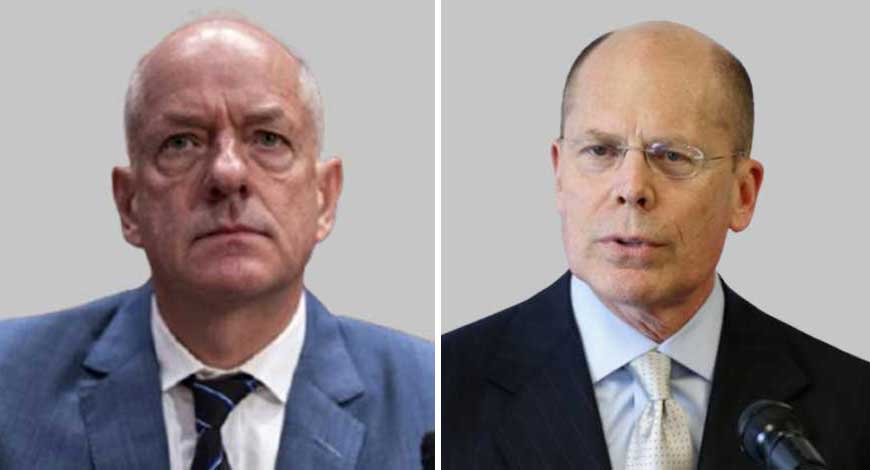
Citing “personal reasons” with no elaboration, UnitedHealth Group CEO Andrew Witty steps down from his position, effective immediately. Witty joined UnitedHealth Group in 2018 and became the company’s CEO in 2021. Despite overwhelming growth during Witty’s tenure, the company continues to face numerous setbacks.

UnitedHealth Group Struggles Since January

The shooting death of Brian Thompson, UnitedHealthcare CEO, in December seems to have set off an onslaught of setbacks for the insurance giant.

  • Share prices have dropped 38% since December, from $503 down to $308
  • The company recently cut its annual forecast, after first adjusting it down, causing the final 18% stock drop
  • For the first time since 2008, UHG missed its forecasted earnings
  • Statements from the company look to 2026 before growth resumes

New (Old) CEO

Stephen Hemsley is the new CEO of UnitedHealth Group, effective immediately. Hemsley, who currently serves as the director of the board, was the company’s CEO from 2006 to 2017. Hemsley will stay on as chairman of the board and company CEO. Witty will serve as senior adviser to Hemsley. 

Contradictions and Conflicts

In an official statement regarding the leadership change, Hemsley said, “We are grateful for Andrew’s stewardship of UnitedHealth Group…. The Board and I have greatly valued his leadership and compassion as chief executive….” 

On a call with investors, Hemsley said, “Many of the issues standing in the way of achieving our goals as well as our opportunities are largely within our control.”

During that same call, Hemsley said, “I’m deeply disappointed in and apologize for the performance setbacks we have encountered from both external and internal challenges.”

UnitedHealth CEO Steps Down

In addition to the conflicting statements, Hemsley will serve as CEO and Chairman of the Board, creating conflict and reducing oversight. The chairman of the board plays a key role in oversight, governance, and communication with the CEO. They also evaluate the CEO’s performance. Holding both roles, especially in light of the shareholder request for reports, may we be in the best interest of UnitedHealth Group, but probably not in the best interest of anyone else.

# # #

Kristin Rowan, Editor

Kristin Rowan has been working at The Rowan Report since 2008. She is the owner and Editor-in-chief of The Rowan Report, the industry’s most trusted source for care at home news, and speaker on Artificial Intelligence and Lone Worker Safety and state and national conferences.

She also runs Girard Marketing Group, a multi-faceted boutique marketing firm specializing in content creation, social media management, and event marketing.  Connect with Kristin directly kristin@girardmarketinggroup.com or www.girardmarketinggroup.com

©2025 by The Rowan Report, Peoria, AZ. All rights reserved. This article originally appeared in The Rowan Report. One copy may be printed for personal use: further reproduction by permission only. editor@therowanreport.com


A New Path for Hospice Care

FOR IMMEDIATE RELEASE

Contact:        press@empathhealth.org
EmpathHealth.org

Empath Health Introduces One Hospice Model, Bringing Together Florida's Established Not-for-Profit Hospices Under One Mission

CLearwater, FL, May 5, 2025. Empath Health, one of the nation’s largest 501(c)(3) integrated care networks, today unveiled its One Hospice Model—a first-of-its-kind framework that preserves community-based hospice while adding the scale, innovation and accountability of a statewide system. “Families deserve hospice that puts mission before margin,” said Jonathan D. Fleece, President & CEO of Empath Health. “By uniting Florida’s most trusted not-for-profit hospices under one model, we keep local relationships intact and ensure every person facing serious illness receives Full Life Care—supported by the strength and expertise of an entire network.”

The model integrates seven locally known hospice brands—Empath Hospice, Hospice of Marion County, Suncoast Hospice, Suncoast Hospice of Hillsborough, Tidewell Hospice and Trustbridge (Hospice by the Sea and Hospice of Palm Beach County)—which collectively care for one in five hospice patients statewide. Five of these affiliates have served their communities for more than 40 years, delivering generations of compassionate, not-for-profit care.

Regional hubs in Tampa Bay, Sarasota, Palm Beach and Ocala keep decision-making local while enterprise teams provide centralized quality, technology and research support. Regional presidents Travis Fogle (Tampa Bay), Brad Perkins (Sarasota) and Tony Maxwell, PA (Ocala/Palm Beach) oversee clinical operations and community partnerships.

“By uniting Florida’s most trusted not-for-profit hospices under one model, we keep local relationships intact and ensure every person facing serious illness receives Full Life Care – supported by the strength and expertise of an entire network.”

While all Empath Health services are available through direct community access, families who begin care with an Empath-affiliated hospice gain direct referral into the wider Empath network of services—available regionally, when needed. This integrated approach allows patients to easily access Empath Home Health for skilled nursing at home; Empath Palliative Care for earlier symptom relief; Empath LIFE / PACE for comprehensive elder day-center support; Empath GUIDE for dementia education and caregiver coaching; EPIC HIV/AIDS Services for prevention, case management and housing; and Empath Grief Care, including Empath Blue Butterfly programs for children. The result is a coordinated Full Life Care journey—from the first serious illness conversations through loss and healing—thoughtfully adapted to each community’s resources and needs.

As policymakers and the public scrutinize hospice ownership, Empath offers a scalable not-for-profit alternative. The organization reinvests much of its revenue into care, workforce development and community programs, and publicly reports quality metrics that exceed national benchmarks. By pairing local leadership with statewide strength, the One Hospice Model offers a blueprint for mission-driven innovation at scale.

# # #

About Empath Health

Empath Health is a pioneering not-for-profit health network redefining healthcare through Full Life Care—supporting chronic, post-acute, end-of-life, and grief care needs across Florida. Its full spectrum of services includes home health, palliative care, all-inclusive elder care (PACE), HIV/STI prevention, grief support, and compassionate hospice care through seven programs: Empath Hospice, Hospice of Marion County, Suncoast Hospice, Suncoast Hospice of Hillsborough, Tidewell Hospice and Trustbridge (Hospice by the Sea and Hospice of Palm Beach County). With decades of trusted service and deep community roots, Empath Health reaches more than 81,000 people each year and serves one in five hospice patients statewide.

© 2025 This press release orginally appeared on Business Wire and is reprinted with permission. For more information or to request permission to print, please use the media contact above.

New Deal to Sell HH & Hospice Agencies

by Kristin Rowan, Editor

UnitedHealth, Amedisys to Divest Home Health & Hospice...Again

History

UnitedHealth, Amedisys to divest home health and hospice properties to satisfy DOJ. Almost two years ago, the health services division of UnitedHealth Group, Optum, announced plans to by Amedisys. The purchase announcement came after Optum outbid Option Care Health with an unsolicited offer. The Department of Justice launched an anti-trust probe shortly after the announcement. To satisfy the DOJ, UnitedHealth and Amedisys plan to divest some of its businesses as part of the acquisition agreement.

Anti Anti-Trust

We previously reported that Amedisys entered into an agreement with VitalCaring to divest some of its home health and hospice locations. This agreement was meant to satisfy the DOJ concerns raised in its anti-trust lawsuit against Amedisys and UnitedHealth. 

In January of 2025, VitalCaring lost a lawsuit filed by Encompass Health and Enhabit and were ordered to pay 43% of all future profits to the two companies. In the wake of that court decision, VitalCaring pulled the agreement and signed a mutual release with UnitedHealth, with all parties walking away from the deal.

BrightSpring

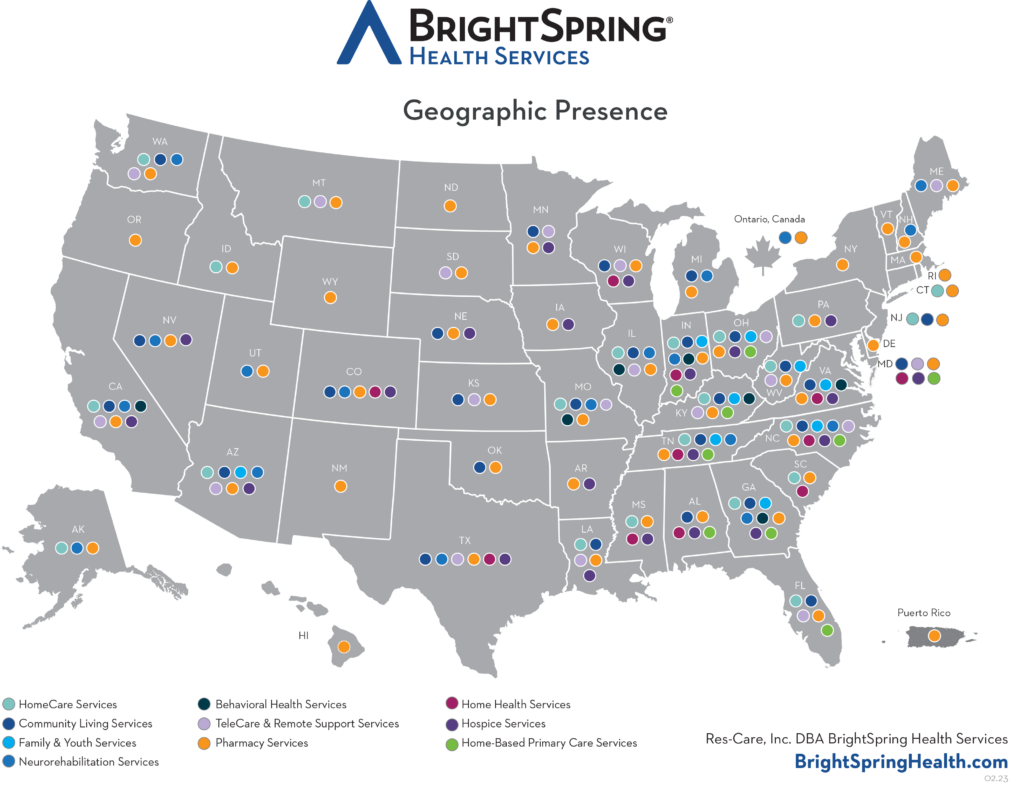
BrightSpring Health Services is an $11.5B company with locations across the United States and employing more than 37,000 people. In January of this year, BrightSpring sold is Community Living Business to Sevita. BrightSprings intends to acquire additional properties, focusing on its home- and community-based businesses. According to the BrightSpring President and CEO Jon Rousseau, BrightSpring is “focused on getting to 3x leverage within the next two years.”

Amedisys operates in 38 states with more than 500 locations. The document Amedisys submitted to the SEC does not indicate how many of its properties and those of UnitedHealth will be divested. A UnitedHealth statement said the company plans to divest at least 128 home health and hospice facilities.

One has to wonder whether we are trading one monopoly for another.

BrightSpring Health Services

New Deal

As the DOJ lawsuit enters mediation this August, UnitedHealth and Amedisys search for another way to divest its properties. Enter the New Deal. BrightSpring Health Services, parent company to Adoration Home Health Acquisition LLC, Adoration Hospice Care Acquisitions LLC and Senescence LLC, DBA All Saints Hospice will purchase some of the properties from both Amedisys and UnitedHealth. The Pennant Group, parent company to Cornerstone Healthcare, Inc. and Tensaw River Healthcare, LLC, will purchase additional properties from bother companies.

According to documents submitted to the Securities and Exchange Commission (SEC), both agreements have mulitple contingencies, including the finalization of the UnitedHealth/Amedisys merger. Financial information on the two deals was not included in the Amedisys SEC filing. In a separate filing, Pennant valued their part of the agreement at nearly $102.5 million.

No Deal Yet

The sale of properties to BrightSpring and Pennant Group relies on the finalization of the merger between Amedisys and UnitedHealth. A magistrate will oversee mediation between the two companies and the DOJ beginning this August.

The SEC and the DOJ have not yet responded to the intent to divest to BrightSpring and Pennant Group.

Final Thoughts

The proposed merger between UnitedHealth and Amedisys has been ongoing for two years. The two companies, who previously stated their competition helped keep them honest and keep costs low, now state that the merger will lower costs even more. The DOJ disagrees. To alleviate concerns, the merger includes the release of properties anywhere the merger would create an unfair advantage. Mediation in August will reveal more on the position of the DOJ, the response from UnitedHealth and Amedisys, and the specifics of the divestment of home health and hospice agencies. The merger proposal expires December 31, 2025. We will continue to follow the story as the parties enter mediation.

# # #

Kristin Rowan, Editor

Kristin Rowan has been working at The Rowan Report since 2008. She is the owner and Editor-in-chief of The Rowan Report, the industry’s most trusted source for care at home news, and speaker on Artificial Intelligence and Lone Worker Safety and state and national conferences.

She also runs Girard Marketing Group, a multi-faceted boutique marketing firm specializing in content creation, social media management, and event marketing.  Connect with Kristin directly kristin@girardmarketinggroup.com or www.girardmarketinggroup.com

©2025 by The Rowan Report, Peoria, AZ. All rights reserved. This article originally appeared in The Rowan Report. One copy may be printed for personal use: further reproduction by permission only. editor@therowanreport.com