Federal Regulations for Adult Protective Services

by Elizabeth E. Hogue, Esq.

Dept of Health & Human Services Final Rule

On May 7, 2024, the U.S. Department of Health and Human Services (HHS) issued a final rule establishing the first federal regulations for Adult Protective Services (APS). The regulations took effect on June 7, 2024. The entire rule is at https://acl.gov/apsrule.

One goal of the new regulations is to promote high quality APS that better meet the needs of adults who experience or are at risk of maltreatment and self-neglect. Another goal is to improve consistency in services among the states. 

APS services have historically been funded by state and local governments. There has been wide variation in APS services and practices between and even within states. New regulations, along with recent funding from HHS to state APS programs, now make it possible to improve consistency.

Adult Protective Services

The APS final rule:

    • Establishes a set of national minimum standards for the operation of APS programs that all state APS systems meet
    • Requires APS systems to ensure that planning and delivery of all services respect the fundamental right of adults to make their own life choices and that services are driven by the person receiving them
    • Establishes stronger protections for clients subject to, or at risk of, guardianship. Specifically, APS must consider guardianship only when there are not alternatives.
    • Requires responses within 24 hours of screening cases that are life-threatening or likely to cause irreparable harm or significant loss of income, assets, or resources
    • Requires APS to provide at least two ways, at least one of which must be online, to report maltreatment or self-neglect 24 hours per day, seven days per week
    • Requires robust conflict of interest policies to support ethical APS practice
    • Establishes definitions for key APS terms to improve information sharing, data collection, and program standardization
    • Promotes coordination and collaboration with state Medicaid agencies, long-term care ombudsmen, tribal APS, law enforcement, and other partners.

The Need for Adult Protective Services

Adult Protective Services

HHS points out that at least one in ten older adults who live in communities experience some form of maltreatment each year.

All providers have been involved in situations in which adult protective services are needed. Case managers/discharge planners in hospitals and long-term care facilities are especially likely to encounter and to be expected to assist with situations involving APS.

Providers of services to patients in their homes; including home health agencies, hospices, home medical equipment (HME) companies, and home care or private duty companies; are on the “front lines” with regard to identifying situations in which APS is needed. At least anecdotally, however, providers have received very little assistance and support from APS in situations of abuse and neglect.

Hopefully, providers can look forward to greater assistance in view of enhanced funding and standards.

# # #

Elizabeth E. Hogue, Esq.

Elizabeth Hogue is an attorney in private practice with extensive experience in health care. She represents clients across the U.S., including professional associations, managed care providers, hospitals, long-term care facilities, home health agencies, durable medical equipment companies, and hospices.

©2024 Elizabeth E. Hogue, Esq. All rights reserved.

No portion of this material may be reproduced in any form without the advance written permission of the author.


Axxess Announces Agile 2025

FOR IMMEDIATE RELEASE

Contact:                 Johnathan Eaves
(903) 445-6969
jeaves@axxess.com

Axxess 2025 AGILE Conference to be held May 5-7 in Dallas

DALLAS, July 18, 2024 – Axxess, the leading global technology innovator for healthcare at home, today announced the 2025 Axxess Growth, Innovation and Leadership Experience (AGILE) will be held May 5–7 at the Fairmont hotel in downtown Dallas.

Each year several hundred care at home thought leaders, industry providers and partners attend AGILE to learn and share insights to help build the future of healthcare at home. The conference also features valuable networking opportunities and educational sessions on topics at the leading edge of care at home. Clinicians earn much needed continuing education units toward their license renewal.

“AGILE is the must-attend event for anyone involved in care at home,” said John Olajide, Founder and CEO of Axxess. “We are excited about the future of care in the home and believe AGILE 2025 will play a crucial role in advancing our industry by fostering innovation and bringing our community together to learn and grow. Next year’s conference will feature thought-provoking keynote speakers, informative breakout sessions and interactive workshops, all focused on the latest trends, technologies and best practices. I know that AGILE 2025 will inspire and equip attendees with the knowledge they need to provide exceptional care and drive positive change in the care at home industry.”

Attendees can also learn about new solutions and practical applications of the insights shared during sessions by visiting an exhibit showcase featuring the latest products and services from leading care at home solution vendors. More than 50 organizations sponsored the 2024 AGILE conference.

Registration for AGILE 2025 will open in the fall of 2024. For more information, visit the AGILE conference website.

# # #

About Axxess

Axxess is the leading global technology innovator for healthcare at home, focused on solving the most complex industry challenges. Trusted by more than 9,000 organizations that serve more than 5 million patients worldwide, Axxess offers a complete suite of easy-to-use software solutions that empower home health, home care, hospice, and palliative providers to make healthcare at home human again. Multiple independent certifications have confirmed that Axxess has the most secure and industry-compliant software available for providers. The company’s collaborative culture focused on innovation and excellence is recognized nationally as a “Best Place to Work.”

©2024 Axxess All rights reserved

BREAKING NEWS: Warren, Cassidy React to Supreme Court Ruling

by Kristin Rowan, Editor

The Background

Senators Warren and Cassidy react to the landmark decision by the Supreme Court in Loper Bright Enterprises v. Raimondo. That decision effectively overturned the Chevron Doctrine, which gave deference to federal agency decisions in interpreting ambiguous statutes. Eliminating the Chevron Deference puts more responsibility on federal agencies to show reason behind their interpretations. Likewise, it requires Congress to be less ambiguous in its wording of statutes. This decision would impact CMS’s ability to create their own definitions of terms when calculating reimbursement rates, implementing rules.

Senator Elizabeth Warren Reacts

Warren Chevron Bill

Senator Elizabeth Warren (D-MA)

Less than one month after the U.S. Supreme Court decided the case that overturned Chevron Deference, Senator Elizabeth Warren (D-MA) introduced a bill in the Senate that would override the Supreme Court’s decision and establish Chevron Deference as law.

“Giant corporations are using far-right, unelected judges to hijack our government and undermine the will of Congress,” Warren said. According to Warren, the pending legislation, “The Stop Corporate Capture Act”, will stop corporate interest groups from using their own interpretations of statutes over the judgment of Congress or expert agencies.

Senator Cory Booker (D-NJ) called the Supreme Court decision “an egregious power grab from the US Supreme Court.”

Warren asserts that the overturning of Chevron Deference would put more power in the hands of industry-backed lobbyists who already have more negotiating power than the general public. This assertion is contrary to the majority opinion from Chief Justice John Roberts, who wrote, “Courts must exercise their independent judgment in deciding whether an agency has acted within its statutory authority.”

Increasing Congressional Authority

In addition to making Chevron Deference law, the Stop Corporate Capture Act would also:

Modernize and Reform the Regulatory Process

    • Streamline the White House’s review period for regulations, creating a 120-day time limit for review.
    • Authorize agencies to reinstate rules that are rescinded by Congress through the Congressional Review Act.
    • Reform agencies’ cost-benefit analysis to emphasize public benefits of a rule, including non-quantifiable benefits like promoting human dignity, securing child safety, and preventing discrimination.

Empower and Expand Public Participation in Rulemaking

    • Create an Office of the Public Advocate to help members of the public participate more effectively in regulatory proceedings.
    • Strengthen agency procedures for notifying the public about pending rulemakings.
    • Provide the public with greater authority to hold agencies accountable for unreasonable delays in completing rules. 
    • Require agencies to respond to citizen petitions for rulemaking that contain 100,000 or more signatures.

Increase Transparency and Protect Independent Expertise in Rulemaking

    • Require all rulemaking participants to disclose industry-funded research or other related conflicts of interest.
    • Require any submitted scientific or other technical research that raises a specified corporate conflict of interest be made available for independent public review. 
    • Bring transparency to the White House regulatory review process by requiring disclosure of changes to draft rules during that process and the source of those changes.
    • Require agency officials to provide justification when the regulatory review process ends with a rule being withdrawn.  
    • Establish financial penalties for corporate special interests that knowingly submit false information during the rulemaking process. 

Senator Bill Cassidy Responds

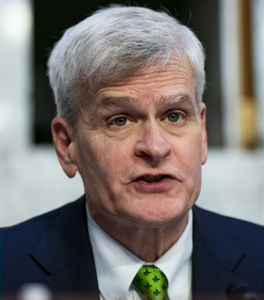
At the same time that Warren introduced her bill overriding Loper v. Raimondo, Senator Bill Cassidy (R-LA) introduced the “Upholding Standards of Accountability (USA) Act of 2024.” Cassidy’s bill takes the removal of the Chevron Deference further than simply overturning the previous ruling. According to the description, the USA Act imposes additional accountability in agency rulemaking. 

Senator Cassidy is the ranking member of the Senate Health, Education, Labor, and Pensions (HELP) Committee. He stated, “For decades, the executive branch has exploited Chevron deference to increase its power beyond what Congress intended, all while skirting congressional oversight. Now, with Chevron deference overturned, Congress must work to rein in the executive branch and hold it accountable to the people and their elected representatives.”

Cassidy Chevron Bill

Senator Bill Cassidy (R-LA)

Decreasing Agency Authority

The direct impact of the Supreme Court decision is that federal agencies do not get preferential treatment when interpreting a statute. Cassidy’s bill requires the head of any federal agency signing a major rule to testify before the committee of jurisdiction within 30 days of the rule’s publication.

Additionally, the bill would:

    • Require each person nominated to a Senate-confirmed position to testify before the committee of jurisdiction prior to Senate confirmation; 
    • Improve cost-benefit analyses by requiring federal agencies to conduct retrospective reviews of such analyses for major rulemakings within five years of each rule’s effective date; 
    • Clarify that federal agencies are permitted to communicate with Congress at all times regarding proposed rules; and  
    • Require timely, substantive responses to congressional oversight from federal agencies. 

Cassidy Challenges Existing Rules

Immediately after the Loper v Raimondo decision, Sen. Cassidy sent a letter to the U.S. Secretary of Education Miguel Cardona asserting that the Education Department has established rules outside of the authority given to it by Congress. He specifically alluded to the new Title IX rule. Cassidy asked Cardona, “How will the department change its current practice to enforce the laws as Congress writes them, and not to improperly legislate via agency action?”

Given Cassidy’s position in the Senate HELP Committee and his previous statements on medical debt, the multitude of bills he introduced on transparency, accountability, and decreasing authority, this is likely not Cassidy’s last attempt to challenge agency rules.

Likely Outcomes

Senator Warren's Bill

There are ten co-sponsors of Warren’s bill and a long list of endorsing organizations. Despite that, experts say the bill has only a slim chance of passing in an election year in the Senate, where Democrats currently have a narrow majority control. The bill is even less likely to pass in the Republican controlled House of Representatives. 

Senator Cassidy's Bill

Similar to Warren’s bill, Cassidy’s bill has a low likelihood of passing. The Democrat majority in the Senate may dismiss the bill before it ever reaches the house. In 2023, the 118th Congress passed only 34 bills, the lowest number in decades. With only a few months remaining for the Congress, and the focus turning to a new Democratic nominee, passing this, or any other, bill seems improbable.

Final Thoughts

Regardless of your political affiliation, the overturning of the Chevron Deference is good news for home health, hospice, and palliative care. This ruling puts more pressure on CMS to justify its reasoning for certain decisions it has made. Senator Warren’s bill threatens the advantage given to the home health industry related to NAHC’s senate and house bills and pending lawsuits. Senator Cassidy’s bill ensures federal agency oversight and requires CMS to rationalize their decisions and prove budget-neutrality.

We will continue following these and other Chevron Deference related stories.

# # #

Kristin Rowan, Editor

Kristin Rowan has been working at Healthcare at Home: The Rowan Report since 2008. She has a master’s degree in business administration and marketing and runs Girard Marketing Group, a multi-faceted boutique marketing firm specializing in event planning, sales, and marketing strategy. She has recently taken on the role of Editor of The Rowan Report and will add her voice to current Home Care topics as well as marketing tips for home care agencies. Connect with Kristin directly kristin@girardmarketinggroup.com or www.girardmarketinggroup.com

©2024 by The Rowan Report, Peoria, AZ. All rights reserved. This article originally appeared in Healthcare at Home: The Rowan Report. One copy may be printed for personal use: further reproduction by permission only. editor@therowanreport.com

HHAeXchange Opens Minnesota Office

FOR IMMEDIATE RELEASE

Contact:                                       Michelle Rand

855.300.8209

Michelle.rand@alloycrew.com

HHAeXchange Opens Minnesota Office and Call Center, Expanding Technical Support Team

The office and call center opening will strengthen HHAeXchange’s technical support and fuel job creation in Minnesota

NEW YORK, July 18, 2024 – HHAeXchange, a leader in homecare management solutions for providers, managed care organizations (MCOs), and state Medicaid agencies, today announced the opening of a new Minnesota office and call center for its Technical Customer Care team and local company employees. The strategically located call center in Bloomington, MN will offer localized, skilled agents to provide timely, efficient, and responsive customer support.

This investment is one of many designed to enhance HHAeXchange’s customer care capabilities, while also creating job opportunities and growth in the local area. Minnesota is ripe for technology expansion, particularly within the medical technology industry, accounting for 380,263 jobs in 2019 and ranking 13th highest in high-tech jobs among all states, making it a perfect fit for HHAeXchange’s new location. 

This announcement comes on the heels of HHAeXchange’s recent acquisition of Cashé Software, a leading Minnesota-based solution for homecare operations and billing. Integrating Cashé talent with deep domain and regional expertise will further support HHAeXchange in creating a leading homecare software platform and a strengthened presence in Minnesota.

“As HHAeXchange continues to advance its homecare management solutions to best meet the needs of today’s customers, we also remain focused on our service and support capabilities to ensure caregivers, families, providers, and payers are able to provide the best care in the home,” said Paul Joiner, HHAeXchange’s Chief Executive Officer. “Both the acquisition of Cashé and our increased presence in Minnesota will help us make this vision possible.”

In tandem with the new office and call center opening, HHAeXchange is launching multiple customer experience initiatives across its business, including:

    • Streamlined support processes to ensure swift and accurate issue resolution, minimizing delays that might impact service delivery.

    • Enhanced focus on workforce optimization aiming for peak efficiency across all call centers.

    • Increased investment in training and onboarding to resolve technical issues as they arise.

Tammy Prause, VP of Technical Customer Care for HHAeXchange, will be spearheading these initiatives to improve HHAeXchange’s overall technical support. 

“Through my 30 years of experience, I’ve gained a deep understanding of what truly drives customer satisfaction, and in my newly appointed position, I am dedicated to elevating the support HHAeXchange provides its customers,” said Prause. “These company-wide initiatives, coupled with our expanded presence in Minnesota, further our commitment to fulfilling our customers’ needs and exceeding their expectations.”

# # #

About HHAeXchange

Founded in 2008, HHAeXchange is the leading technology platform for homecare and self-direction program management. Developed specifically for Medicaid home and community-based services (HCBS), HHAeXchange connects state agencies, managed care organizations, providers, and caregivers through its intuitive web-based platform, enabling unparalleled communication, transparency, efficiency, and compliance. For more information, visit hhaexchange.com or follow the company on TwitterLinkedIn and Facebook.

Axxess to Offer Cybersecurity to Clients

FOR IMMEDIATE RELEASE

Contact:                Christine Shein

(214) 435-6731

cstein@axxess.com

Axxess Partners With Security Compliance Associates to Offer Comprehensive Cybersecurity Services to Clients

DALLAS, July 11, 2024 – Axxess, the leading global technology innovator for healthcare at home, and Security Compliance Associates (SCA), a leading provider of comprehensive cybersecurity solutions, have partnered to offer Axxess clients tailored, cost-effective cybersecurity services.

Through this collaboration, Axxess clients have access to a robust suite of cybersecurity services offered by SCA, including penetration testing, risk assessments and cyber regulatory compliance. These services are specifically designed to address the unique challenges faced by the home healthcare industry, ensuring sensitive patient data remains protected against the evolving landscape of cyberthreats.

“Our partnership with Security Compliance Associates complements our industry-leading secure software solutions, providing our clients with additional specialized cybersecurity services,” said Chris Taylor, senior vice president of channel partnerships at Axxess. “By leveraging SCA’s expertise in healthcare cybersecurity, we are enhancing our clients’ ability to safeguard sensitive data, ensuring they can deliver exceptional care with utmost confidence in their operational security.”

SCA’s services will help Axxess clients navigate the complexities of cybersecurity compliance, safeguard patient information and enhance their overall security posture. This partnership comes at a critical time when the importance of robust cybersecurity measures in the healthcare sector is increasingly paramount.

“Security Compliance Associates is very excited to partner with Axxess to provide a full range of cybersecurity and compliance services to the home healthcare industry,” said Jim Brahm, CEO of Security Compliance Associates. “With the alarming and detrimental cyberattacks specifically targeting the healthcare industry causing significant business interruption, the time is now to proactively protect your practice and stay in compliance with the state and federal security and privacy laws.”

  # # #

About Axxess

Axxess is the leading global technology innovator for healthcare at home, focused on solving the most complex industry challenges. Trusted by more than 9,000 organizations that serve more than 5 million patients worldwide, Axxess offers a complete suite of easy-to-use software solutions that empower home health, home care, hospice, and palliative providers to make healthcare in the home human again. Multiple independent certifications have confirmed that Axxess has the most secure and industry-compliant software available for providers. The company’s collaborative culture focused on innovation and excellence is recognized nationally as a “Best Place to Work.”

About Security Compliance Associates

Security Compliance Associates (SCA) specializes in providing tailored cybersecurity solutions that help healthcare organizations meet stringent regulatory requirements from HIPAA and HITRUST. Their services include penetration testing, risk assessments, cyber regulatory compliance and more, ensuring sensitive patient data remains secure.

©2024 Axxess. All rights reserved.

Kickbacks for Referrals are Costly…and Illegal

by Elizabeth E Hogue, Esq.

Kickback on Kickbacks

Three home health agencies and their parent company in Cincinnati, Ohio, must pay $4,496,330 to resolve alleged violations of the federal False Claims Act by providing kickbacks to assisted living facilities in exchange for referrals of Medicare patients. The settlement resolves allegations that, between 2013 and 2022, the companies provided lease payments and other valuable benefits; including wellness health services, sports tickets, and meals; to numerous ALFs and their residents. The companies then billed Medicare for the services provided to patients referred by the ALFs.

Referrals from ALFs

Getting more referrals from ALF’s and retirement communities seems to be a crucial piece of the puzzle for all types of providers. As the number of years in which they have been in business increases, ALF’s and retirement communities are more eager to assist their residents to “age in place.” This means that they often view availability of services from post-acute providers as essential to allow them to achieve this goal. 

While providers compete aggressively in the marketplace, they cannot, however, lose sight of the fact that the healthcare industry is highly regulated. With ever-increasing emphasis on fraud and abuse compliance, providers cannot afford to violate the law.

Kickbacks for Referrals

How can providers get more referrals from ALF’S and retirement communities? What are the potential legal pitfalls that providers must avoid? 

The most effective way to maximize referrals from these sources may be to take a multi-pronged approach that includes:

Assigning at least one coordinator/liaison to each referral source on at least a part-time basis

Use of coordinators/liaisons at ALF’s and retirement communities raises issues related to violation of the federal anti-kickback statute. This statute generally prohibits providers from either offering to give or actually giving anything to referral sources in order to induce referrals. Consequently, liaisons and coordinators must be scrupulous about avoiding the provision of free services to ALF’s and retirement communities and/or their residents. Possible violations include “staffing” an office with an RN who responds to requests from residents in their apartments or has “office hours” to address health conditions of residents.

Renting space for coordinators/liaisons to occupy so that providers have a frequent or continuous presence on the premises of referral sources to better serve patients

Renting space from referral sources also involves potential kickbacks, so providers must meet the requirements of the space rental exception or safe harbor. In order to do so, providers must enter into a written lease with the facility/community for a term of least one year. The lease must include the number of square feet providers are renting. Rent must be set in advance at fair market value and cannot take into account either the volume or value of referrals received. Finally, providers may rent only the amount of space that is commercially reasonable or that they actually need.  

The OIG has provided significant guidance about these requirements, which providers must master before they establish these types of relationships. Common pitfalls for providers is insistence by ALFs that providers must rent an entire apartment, whether or not they need it, and must pay an amount equal to the residents’ monthly rent, which includes food and other services. 

Entering into Preferred Provider Agreements

Preferred Provider Agreements may be verbal or in writing. There may be significant value in reducing these preferred provider relationships to writing. These types of relationships raise issues related to patients’ right to freedom of choice of providers. The common law or court decisions require providers of all types to honor patients’ right to freedom of choice. There are also federal statutes that guarantee this right to Medicare and Medicaid patients. In addition, states sometimes address these issues in applicable statutes and regulations. For this reason, providers should not attempt to use standard or “sample” Agreements, but must adhere to requirements in all of the states in which they use these types of Agreements.

Providing a full range of screenings and educational events for and about common chronic illnesses or community awareness activities

ALF’s and retirement communities often ask providers to conduct educational events and basic screenings for common chronic conditions. Generally, providers may do so if they walk a relatively fine line between engaging in community awareness activities and providing free skilled services to residents that exceed $15.00 in value at a time. At a minimum, such activities must be conducted consistent with a detailed policy and procedure that governs the provision of such services, so that providers do not violate the anti-kickback statute.

No kickbacks for referrals

Establishing relationships with ALF’s and retirement communities may result in numerous referrals to post-acute providers. Such relationships should be based on standard documents and comprehensive policies, as described above, in order to ensure compliance. Legal representation is essential for the development and implementation of these documents due to the complexity of the issues involved. 

Enforcement actions like those described above are avoidable.

Elizabeth E. Hogue, Esq.

Elizabeth Hogue is an attorney in private practice with extensive experience in health care. She represents clients across the U.S., including professional associations, managed care providers, hospitals, long-term care facilities, home health agencies, durable medical equipment companies, and hospices.

©2024 Elizabeth E. Hogue, Esq. All rights reserved.

No portion of this material may be reproduced in any form without the advance written permission of the author.
Ohio HHA Violated Anti-Kickback Statute

FOR IMMEDIATE RELEASE

Office of Public Affairs

July 1, 2024 — Guardian Health Care Inc., Gem City Home Care LLC and Care Connection of Cincinnati LLC, home health agencies operating in Texas, Ohio and Indiana, along with their owner Evolution Health LLC (together, the Companies), have agreed to pay $4,496,330 to resolve allegations that they violated the False Claims Act by knowingly providing illegal kickbacks to assisted living facilities and physicians in exchange for Medicare referrals.

This settlement resolves allegations that, from 2013 to 2022, Guardian Health Care, Gem City Home Care and Care Connection of Cincinnati provided lease payments and other valuable benefits, including wellness health services, sports tickets and meals, to numerous assisted living facilities and their residents, as well as certain health care providers, in exchange for referrals of Medicare beneficiaries. The home health agencies then billed Medicare for the home health services they provided to the referred patients.

The Anti-Kickback Statute prohibits the provision of remuneration with the intent to induce referrals of government health care program business. The Anti-Kickback Statute is intended to ensure that medical providers’ judgments are not compromised by improper financial incentives. Claims that are knowingly submitted in violation of the Anti-Kickback Statute are ineligible for payment and can violate the False Claims Act.

“It is imperative to ensure that improper financial incentives play no role in decisions regarding patient care,” said Principal Deputy Assistant Attorney General Brian M. Boynton, head of the Justice Department’s Civil Division. “Today’s resolution demonstrates the department’s commitment to protecting the integrity of federal health care programs and the medical treatment received by their beneficiaries.”

The Companies received credit under the department’s guidelines for taking disclosure, cooperation and remediation into account in False Claims Act cases. Among other actions, the Companies disclosed the conduct to the government, identified the individuals involved and assisted in the determination of losses caused to Medicare.

The investigation and resolution of this matter illustrates the government’s emphasis on combating healthcare fraud. One of the most powerful tools in this effort is the False Claims Act. Tips and complaints from all sources about potential fraud, waste, abuse and mismanagement can be reported to the Department of Health and Human Services at 800-HHS-TIPS (800-447-8477).

Trial Attorney Elizabeth A. Strawn of the Civil Division’s Commercial Litigation Branch, Fraud Section and Assistant U.S. Attorney Brandi Stewart for the Southern District of Ohio handled the matter.

The claims resolved by the settlement are allegations only. And there has been no determination of liability.

Payer or Competitor?

by Tim Rowan, Editor Emeritus

UnitedHealth Making Home Health Visits

Payer or Competitor…that is the question. According to a report in the Wall Street Journal, and questioned by the insurance industry’s lobbying arm, AHIP, UnitedHealth Group has increased its revenue from the Medicare Trust Fund by $50 billion by “finding” additional health issues during home visits to its MA customers.

In a July 16 investor call, CEO Andrew Witty said UnitedHealth clinicians made more than 2.5 million home health visits to UnitedHealthcare MA members in 2023. Following these visits to more than 500,000 seniors, UnitedHealth upgraded over 300,000 of them to higher payment levels by uncovering health conditions the individual seniors did not know they had.

The WSJ investigation found that between 2018 and 2021, insurers received $50 billion for diagnoses they added to members’ charts. Many of these diagnoses were “questionable,” according to that investigation.

Questionable Visits

Uncover versus Discover United Health

Though a UnitedHealth spokesperson called the analysis “inaccurate and biased,” former UnitedHealth employees told the Journal home visits are often used to add diagnoses. Clinicians say they use software during visits that offer suggestions as to what illnesses a patient might have.

CEO Witty maintained in the investor call that the practice is good for seniors. “UnitedHealth clinicians discovered more than 3 million gaps in care through home visits in 2023,” he reported, “and 75% of patients receive follow-up care in a clinic within 90 days of a home visit.” 

He added that the United home visit program “helps patients live healthier lives and saves taxpayers money,” concluding. “…Medicare Advantage makes programs and results like this possible.” 

The Journal concluded with the finding that few of these upgraded seniors are ever seen by a physician for their newly discovered health conditions. 

# # #

Tim Rowan, Editor Emeritus

Tim Rowan is a 30-year home care technology consultant who co-founded and served as Editor and principal writer of this publication for 25 years. He continues to occasionally contribute news and analysis articles under The Rowan Report’s new ownership. He also continues to work part-time as a Home Care recruiting and retention consultant. More information: RowanResources.com
Tim@RowanResources.com

©2024 by The Rowan Report, Peoria, AZ. All rights reserved. This article originally appeared in Healthcare at Home: The Rowan Report. One copy may be printed for personal use: further reproduction by permission only. editor@therowanreport.com

Recruitment, Retention, and Reward: Product Review

by Kristin Rowan, Editor

Caregiver Recruitment, Retention, & Reward

The workforce shortage, caregiver burnout, after effects of the pandemic, and the advent of “quiet quitting” have impacted home care agencies’s ability to fully staff and care for their patients. Hiring new caregivers is not always an options. Agencies must put time and effort into recognizing, rewarding, and retaining their existing caregivers and clinicians.

The Rowan Report recently came across a company that is helping agencies do just that and we had an opportunity to sit down with their founder.

How it Started

Victor Hunt’s grandmother was a career nurse who started her own home care agency. However, the operation was too hard for her to handle on her own. She made the difficult decision to close the agency and go back to shift work. Victor realized that we need more home care agencies. But, he knew there had to be a way to help the people who have “home care heart” and can provide great care. There had to be an easier way.

Home Care Immersion

Before Victor and his team could address the difficulties faced by home care agency owners, they first had to understand them. With his co-founder Dan, Victor embedded himself into home care agencies. They took shifts, followed schedulers and recruiters, and experienced the problems up close. During this process, they got to know one agency in particular and one caregiver who was a rockstar. She picked up shifts, did training, contributed the company culture, visited patients in the hospital, and had referred more than 100 caregivers to the agency. In short, she was the home care clinician all agency owners want.

Her Name was Ava

Using this rockstart clinician, Victor and Dan set out to create a system that could turn every caregiver into an “Ava” and make every agency one that caregivers like Ava would want to work for. The mission of Victor’s and Dan’s company is to “make home care agencies destination employers.”

The Problem Statement

Home care agencies suffer from high turnover rates and performance challenges. THere is a lot of legwork that needs to be done to fill in the gaps and fix what isn’t done well. According to Victor, it comes down to a challenge of engagement and morale. Being a home care clinician is a lonely and thankless task. Caregivers can feel stuck in their career track unless they are actively pursuing higher credentials. The problem home care agency owners face is:

“How do we engage employees so their work feels recognized and meaningful?”

The Solution is Ava

The Ava team surmised that in order for caregivers to feel valued and appreciated, something had to give. The question, they wondered, was whether it would be margins or administrative overhead. AI was at the center of these conversations. But, traditional EMRs limit the implementation of AI solutions.

Recognition and Rewards

Because EMRs limit AI applications, Ava is an app but is also a stand-alone system that operates in a mobile browser. No download is required for use, yielding an 85-90% adoption rate within agencies offering Ava.

Ava connects to the existing EMR first to import data. Then, agency owners create their own rule sets. This offers incentives and engagement around specific metrics the agency wants to see. Examples include attendance, timeliness, number of hours, documentation, and completed training. 

Ava will then assign, track, and reward milestones based on the rules set for the agency. Clinicians earn points that can be redeemed directly from the Ava store with more than 100 participating vendors. Agencies can also add internal rewards like branded merchandise, PTO, and raffle tickets. Rewards can be redeemed in $5 increments. 

Recruitment, retention, and reward AVA

Communication

Ava includes automated messaging to recognize employees without taking valuable time away from administrators. The app sends recognition texts to all staff to congratulate clinicians for reaching certain benchmarks. Announcements can be sent by email or SMS to all employees at once. Additionally, Ava includes HIPAA compliant two-way communication between agency and staff.

Additionally, administrators can create groups within the system to send mass reminders to specific people. For example, you may create a group that includes all employees whose driver’s license will expire in the next 60 days. Within that group, reminders are sent to ensure updated information is added to the employee file. The system updates automatically each week, adding and removing employees from the group based on the criteria created. 

Surveys are a great way to keep a pulse on the level of commitment and satisfaction your employees have. Studies suggest that engagement is a large factor in why employees leave their workplace. Ava includes pre-built survey templates but also allows you to crete a survey using an AI query. The survey questions and answers are customizable, can be “required”, set to “read only”, and can include a comment box to gain additional insights. Administators can filter survey responses to only see a certain type of answer.

Marketing

Recruitment, retention, and reward AVA

Referrals from employees is not a new concept. However, it is not always a visible part of your recruiting strategies. Ava has a referral bonus program with automated milestones. The bonus program spreads the referral bonus out across multiple agency milestones. 

Ava also allows for manual tracking of Google Reviews or any other event or milestone where clinicians can be measured, tracked, and rewarded. 

Customizable on Multiple Fronts

In addition to the custom survey questions and benchmarks, Ava includes custom naming conventions to track clinicians. One agency uses the term “activity tag” to categorize achievements. If your agency already uses different terminology, that can be added to the system. 

Currently, Ava operates and switches between seven different languages. Additional languages can be added to the system and Ava can support those as well. 

Recruitment processes are also customizable. Agencies can give candidates access to the system during the hiring process and they can earn points for attending the interview, completing onboarding paperwork, finishing the first training shift, or other measures. This allows the agency to reward a new employee with, for example, a coffee gift card by the end of their first day. 

Track and Reward Your Top Employees

When your agency finds an exemplary employee, the unicorn, the “Ava”, keeping them becomes a top priority. Finding and training new employees is costly and time consuming. It is far easier and less expensive to reward your current high-achievers.

Badges

In addition to daily, weekly, and monthly goals, Ava has a tier system called “Badges.” Badges are long-term drivers of engagement, satisfaction, and success. The current badges are Orange (Avas brand), Silver, and Gold. There are points multipliers at each level. 

Once an employee reaches a badge level, they have to maintain a consistent 90% goal completion rate in daily, weekly, and monthly goals in order to maintain their badge level. Loss aversion to lowering back down a level encourages a high completion rate of other tasks. 

Training

Caregivers and clinicians should be constantly learning to stay ahead of the newest trends and technologies in the industry. Ava includes learning management system (LMS) integrations with several of the top training companies in the industry. Clinicians can access learning modules through the app or browser and can earn rewards by completing training modules based on individual agency settings. 

Reporting

Reports within the system go beyond badges and benchmarks. The system consolidates reporting from various data sources and allows you to see your business health at a glance. These reports can help catch burnouts before they happen, focus performance improvement plans, and automate process than can save an agency hundreds of thousands, if not millions, of dollars per year.

Limitations

Like most software solutions, the first iteration of a usable system is never the last version. Ava has already integrated with WellSky and can access several other EMRs. As they continue onboarding customers, the team at Ava is very open to the suggestions of their users and will continue adding features.

Some current limitations we noticed in our intial demo:

The badge system has only three levels. Longer term employees may want to see higher badge levels to maintain motivation. Victor noted that AI systems can help add account-specific customizations.

The app is designed for caregivers and clinicians. There is not currently a model for back-office administrators and support staff. While some customization could make the app usable for the back-office, it is not designed with them in mind.

Mass messaging through email or SMS is limited to one-way, read-only communication. There is an option to add “likes,” but currently there is no option for a group or individual to respond, even privately to a company-wide announcement.

The two-way communication is limited to internal staff. Employees cannot communicate with patients from the app to advise them of their arrival time, reschedule an appointment, or ask questions before an appointment.

The manual tracking of Google reviews is not scalable.

When The Rowan Report sat down with the team at Ava, we asked about some of these limitations and additional ideas for future iterations of the program. Victor and his team have already hired at least one person to focus on new feature requests.

Final Thoughts

Gamification is not a new concept in many industries. In fact, most of us probably have a memory of a teacher or parent with an activity board to earn stars for tasks completed. We’ve been unknowingly using gamification for many years. 

Smart phones, advancing technologies, and AI have increased the adoption of gamification and is infiltrating the care at home world quickly. The ongoing workforce shortage will make implementing these types of gamified systems even more important for an agency’s financial well-being. 

Ava may not be the first of its kind, but it has shown innovation and ingenuity in it application. If your agency is looking for ways to reward employees, needs to stand out among rival employers, is looking to reduce administrative costs, or needs a simpler way to see reports and statistics from multiple sources, Ava may be a viable solution. 

We see great things coming with future iterations of the app and the software and I’m sure this is not the last we will here of Ava. For more information, visit joinava.com.

# # #

Kristin Rowan, Editor

Kristin Rowan has been working at Healthcare at Home: The Rowan Report since 2008. She has a master’s degree in business administration and marketing and runs Girard Marketing Group, a multi-faceted boutique marketing firm specializing in event planning, sales, and marketing strategy. She has recently taken on the role of Editor of The Rowan Report and will add her voice to current Home Care topics as well as marketing tips for home care agencies. Connect with Kristin directly kristin@girardmarketinggroup.com or www.girardmarketinggroup.com

©2024 by The Rowan Report, Peoria, AZ. All rights reserved. This article originally appeared in Healthcare at Home: The Rowan Report. One copy may be printed for personal use: further reproduction by permission only. editor@therowanreport.com

Disincentives for Information Blocking

From the U.S. Department of Health and Human Services

FOR IMMEDIATE RELEASE

June 24, 2024

Contact: HHS Press Office
202-690-6343
media@hhs.gov

HHS Finalizes Rule Establishing Disincentives for Health Care Providers That Have Committed Information Blocking

The U.S. Department of Health and Human Services (HHS) today released a final rule that establishes disincentives for health care providers that have committed information blocking. This final rule exercises the Secretary’s authority under the 21st Century Cures Act (Cures Act) to establish “disincentives” for health care providers who engage in practices that the health care providers knew were unreasonable and were likely to interfere with, prevent, or materially discourage the access, exchange, or use of electronic health information (EHI), except as required by law or covered by a regulatory exception.

“This final rule is designed to ensure we always have access to our own health information and that our care teams have the benefit of this information to guide their decisions. With this action, HHS is taking a critical step toward a health care system where people and their health providers have access to their electronic health information,” said HHS Secretary Xavier Becerra. “When health information can be appropriately accessed and exchanged, care is more coordinated and efficient, allowing the health care system to better serve patients. But we must always take the necessary actions to ensure patient privacy and preferences are protected – and that’s exactly what this rule does.”

HHS has established the following disincentives for health care providers found by the HHS Office of Inspector General (OIG) to have committed information blocking and referred by OIG to the Centers for Medicare & Medicaid Services (CMS): 

  • Under the Medicare Promoting Interoperability Program, an eligible hospital or critical access hospital (CAH) that has committed information blocking and is referred to CMS by OIG will not be a meaningful electronic health record (EHR) user during the calendar year of the EHR reporting period in which OIG refers its determination to CMS.  If the eligible hospital is not a meaningful EHR user, the eligible hospital will not be able to earn three quarters of the annual market basket increase they would have been able to earn for successful program participation; for CAHs, payment will be reduced to 100 percent of reasonable costs instead of 101 percent. This disincentive will be effective 30 days after publication of the final rule.
  • Under the Promoting Interoperability performance category of the Merit-based Incentive Payment System (MIPS), a MIPS eligible clinician (including a group practice) who has committed information blocking will not be a meaningful EHR user during the calendar year of the performance period in which OIG refers its determination to CMS. If the MIPS eligible clinician is not a meaningful EHR user, then they will receive a zero score in the MIPS Promoting Interoperability performance category. The MIPS Promoting Interoperability performance category score is typically a quarter of an individual MIPS eligible clinician’s or group’s total final score in a performance period/MIPS payment year, unless an exception applies and the MIPS eligible clinician is not required to report measures for the performance category. CMS has modified its policy for this disincentive to clarify that if an individual eligible clinician is found to have committed information blocking and is referred to CMS, the disincentive under the MIPS Promoting Interoperability performance category will only apply to the individual, even if they report as part of a group. This disincentive will be effective 30 days after publication of the final rule.
  • Under the Medicare Shared Savings Program, a health care provider that is an Accountable Care Organization (ACO), ACO participant, or ACO provider or supplier who has committed information blocking may be ineligible to participate in the program for a period of at least one year. Consequently, the health care provider may not receive revenue that they might otherwise have earned through the Shared Savings Program. CMS also finalized in this rule that it will consider the relevant facts and circumstances (e.g. time since the information blocking conduct, the health care provider’s diligence in identifying and correcting the problem, whether the provider was previously subject to a disincentive in another program, etc.) before applying a disincentive under the Shared Savings Program. This disincentive will be effective 30 days after publication of the final rule; however, any disincentive under the Shared Savings Program would be imposed after January 1, 2025.
  • Additional disincentives may be established through future rulemaking.

This HHS final rule complements OIG’s final rule from June 2023 that established penalties for information blocking actors other than health care providers, as identified in the Cures Act (health information technology (IT) developers of certified health IT or other entities offering certified health IT, health information exchanges, and health information networks). If OIG determines that any of these individuals or entities committed information blocking, they may be subject to a civil monetary penalty of up to $1 million per violation.

The Office of the National Coordinator for Health Information Technology (ONC) and CMS will host a joint information session about the final rule on June 26, 2024 at 2pm ET. More information can be found at healthit.gov/informationblocking and via ONC’s X account, @ONC_HealthIT.

# # #

All HHS press releases, fact sheets and other news materials are available at https://www.hhs.gov/news.
Like HHS on Facebook, follow HHS on Twitter @HHSgov, and sign up for HHS Email Updates.
Last revised: