Alliance Statement on House Passage of Reconciliation Bill

FOR IMMEDIATE RELEASE

Contact:                                                       Elyssa Katz
571-281-0220
communications@allianceforcareathome.org

Medicaid Provisions Threaten Home and Community-Based Services for Millions of Vulnerable Americans

Alexandria, VA and Washington, DC, July 3, 2025. The National Alliance for Care at Home (the Alliance) issued the following statement today in response to the House’s passage of the “One Big Beautiful Bill Act,” also known as the Reconciliation bill, which now heads to President Trump’s desk for his signature.

“The Alliance is deeply troubled by the Medicaid provisions within the One Big Beautiful Bill Act, which has passed both chambers of Congress and now awaits President Trump’s signature,” said Alliance CEO Dr. Steve Landers. “These provisions—including work requirements, reduced provider taxes, and new cost-sharing mandates—prioritize short-sighted budget savings over the health and wellbeing of our most vulnerable citizens who rely on home and community-based services (HCBS).”

Dr. Steve Landers

CEO, The National Alliance for Care at Home

The Alliance Advocates for Care at Home

The home care community advocated throughout the legislative process for Congress to mitigate these harmful Medicaid provisions. The legislation will reduce state provider tax rates, cutting funding that states rely on to support HCBS programs. New work requirements and mandatory cost-sharing will also create administrative burdens for both providers and beneficiaries, likely resulting in coverage losses that extend beyond those directly targeted by these policies. Further, new limits on home equity for long-term care recipients will force older adults to sell their homes, leading to unnecessary institutionalization.

Continued Advocacy

“As these Medicaid provisions become law, the Alliance will work tirelessly to monitor their implementation and advocate for the protection of Medicaid enrollees, families, and providers nationwide,” said Dr. Landers. “We will continue to champion the delivery of HCBS – proven services that are preferred by beneficiaries and save the system money.”

Careful Consideration Needed

Landers CEO The Alliance Reconciliation Bill

The Alliance calls on federal and state officials to implement these new requirements with careful consideration of their impact on vulnerable populations and to work collaboratively with providers to minimize disruption to essential services.

# # #

About the National Alliance for Care at Home

The National Alliance for Care at Home (the Alliance) is the leading authority in transforming care in the home. As an inclusive thought leader, advocate, educator, and convener, we serve as the unifying voice for providers and recipients of home care, home health, hospice, palliative care, and Medicaid home and community-based services throughout all stages of life. Learn more at www.AllianceForCareAtHome.org.

© 2025 The National Alliance for Care at Home. This press release originally appeared on The Alliance website and is reprinted here with permission. For additional information or to request permission to print, please see the contact information above.

Follow our continuous updates on the bill passage, what it means for Medicare and Medicaid, and how the provisions of the bill will be rolled out in our accompanying article here.
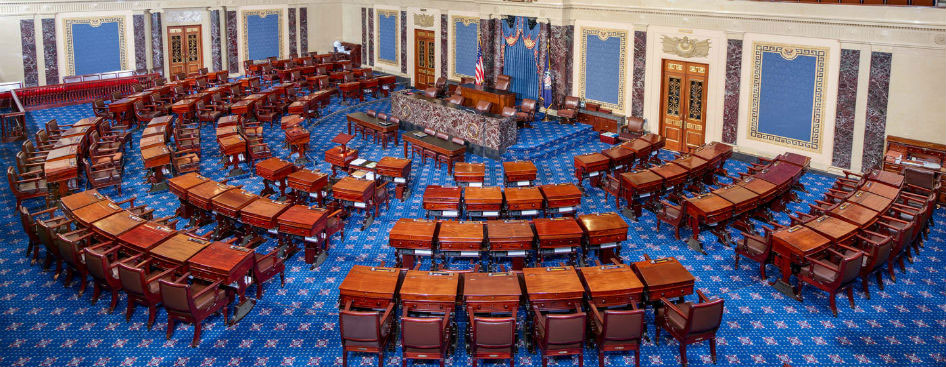

Bill Cuts Medicaid Directly, Medicare Indirectly

by Tim Rowan, Editor Emeritus

Bill Cuts Medicaid Directly, Medicare Indirectly

This is what online publishers call a “living article.” With the House and Senate passing different bills, progress toward the President’s desk changes by the hour. What follows is everything we knew to be true on Tuesday evening, July 1. However, this bill will impact Home Health, Home Care, and Hospice. To keep readers informed, we will continuously update this article as need through the weekend. We will not send our usual emails to subscribers with every update, so we urge you to return here from time to time for updates to this breaking news item. We will add the date and time to each update.

July 3: Bill Passes, The Alliance Responds

Nearly as soon as House Republicans began their celebration, Alliance President Dr. Steve Landers issued a response from the National Alliance for Care at Home. We reprinted the complete statement from The Alliance here.

“As these Medicaid provisions become law, the Alliance will work tirelessly to monitor their implementation and advocate for the protection of Medicaid enrollees, families, and providers nationwide. We will continue to champion the delivery of HCBS – proven services that are preferred by beneficiaries and save the system money.” 

Dr. Steve Landers

CEO, The National Alliance for Care at Home

Final House Vote: July 3

In spite of a couple of Republican holdouts, H.R. 1 passed the House on a 2018-2014 vote on Thursday afternoon. All of the Senate’s changes were approved, meaning the bill does not have to go back to Senate for re-approval. Now begin final assessments of the impact on Medicaid and SNAP. Changes made in the Senate, approved by the House, increased the size of spending cuts for those two programs. As analysts inside and away from our home care community weigh in, we will post them here.

As of the end of the day, July 1

It appears as though the stalemate, if there is to be one, will center around Medicaid and SNAP cuts. There are some House Republicans who are upset that the Senate increased their H.R. 1 proposed cuts to nearly $1 Trillion. Contrarily, other House Republicans threaten to vote no because cuts are not deep enough. They point to the predicted $3.3 trillion addition to the national debt over ten years. As of the evening of July 1, the House Rules Committee continues the debate. We will update this page as often as possible for you.

As of the morning of July 1

Early Tuesday morning, the Senate passed its version of Donald Trump’s bill. Among its changes are increased cuts to Medicaid. The Congressional Budget Office calculated that the House version would have resulted in $700 billion in spending reductions. It would also have removed health insurance from 10.9 million people over 10 years. The version the Senate sent back to the House Tuesday, according to the CBO, increases those cuts to $930 billion and 11.8 million people.

Senate passes bill

June 29th

The Senate reconciliation bill would cut gross federal Medicaid and Children’s Health Insurance Program (CHIP) spending by $1.02 trillion over the next ten years.  These cuts are $156.1 billion (18%) larger than even the House-passed bill’s draconian cuts of $863.4 billion over ten years.

  • These larger gross Medicaid and CHIP cuts are driven by changes to the House-passed bill that would:

    • further restrict state use of provider taxes to finance Medicaid
    • eliminate eligibility for many lawfully present immigrants
    • cut federal funding for payments to hospitals furnishing emergency Medicaid services
    • further reduce certain supplemental payments to hospitals and other providers (known as state-directed payments)
  • The spending effect of these additional cuts is modestly offset by increased Medicaid and CHIP spending from provisions not in the House-passed bill

    • a rural health transformation program
    • increased federal Medicaid funding for Alaska and Hawaii (Already ruled out by the parliamentarian)
    • expanded waiver authority for home- and community-based services
  • Overall, the Senate Republican reconciliation bill’s Medicaid, CHIP, Affordable Care Act marketplace, and Medicare provisions would increase the number of uninsured by 11.8 million in 2034, relative to current law

    • In comparison, the House-passed bill would increase the number of uninsured by 10.9 million in 2034.
    • More detailed CBO estimates of the specific Medicaid health coverage effects under the Senate Republican reconciliation bill are not yet available
    • CBO estimates the House-passed bill’s Medicaid and CHIP provisions would cut Medicaid enrollment by 10.5 million by 2034 and by themselves, increase the number of uninsured by 7.8 million by 2034

How the Senate Pushed the Bill Through

Majority leader Thune could only afford to lose three Republican votes. With GOP Senators Thom Tillis (N.C.), Rand Paul (Ky.) and Susan Collins (Maine) voting against the measure, along with every Democrat, centrist Lisa Murkowski of Alaska became the sole target of Republican pressure. The tactic used to get the vote close enough for VP Vance to cast the deciding vote is disturbing. 

First, leadership wrote an amendment that would have exempted Alaska from Medicaid and SNAP cuts. The parliamentarian killed that idea, saying it violated the Senate’s “Byrd Rule.” Next, marathon negotiations brought Murkowski and Parliamentarian MacDonough together to appease both. The compromise became exceptions to Medicaid and SNAP cuts that had less of an appearance of a bribe. They devised a formula that delayed cuts to states with a history of high error rates in calculating who is entitled to benefits. The CBO said that would cover as many as 10 states. The parliamentarian decided this did not violate Senate rules because it did not specifically benefit one state. They also increased the federal subsidy for rural hospitals that will be harmed by the bill from $25 billion to $50 billion.

In agreeing to vote ‘yes,’ Murkowski essentially declared that she knows the cuts will be bad for most states but will be good for her state. With the Alaska Senator’s vote secured, the final count was 50-50, leaving the final decision up to the vice president.

# # #

Tim Rowan The Rowan Report

Tim Rowan is a 30-year home care technology consultant who co-founded and served as Editor and principal writer of this publication for 25 years. He continues to occasionally contribute news and analysis articles under The Rowan Report’s new ownership. He also continues to work part-time as a Home Care recruiting and retention consultant. More information: RowanResources.com
Tim@RowanResources.com

©2025 by The Rowan Report, Peoria, AZ. All rights reserved. This article originally appeared in The Rowan Report. One copy may be printed for personal use: further reproduction by permission only. editor@therowanreport.com

BREAKING NEWS: House Passes Bill

by Kristin Rowan, Editor

House Passes Bill

House passes bill in early-morning vote. The House of Representatives, predictably split along party lines, passed the “Big, Beautiful Bill” in a 215-214 narrow win. All but three Republican representatives cheered at its passing. Republicans who previously stated they would not vote for a higher deficit caved and voted along party lines. The House expects an uphill battling getting the bill passed through the Senate.

House Objections

All House Democrats and two House Republicans voted against the bill. One Republican voted “present.” Democrats were vocal in their opposition.

“Children will get hurt. Women will get hurt. Older Americans who rely on Medicaid for nursing home care and for home care will get hurt. People with disabilities who rely on Medicaid to survive will get hurt. Hospitals in your districts will close. Nursing homes will shut down. And people will die. That’s not hype. That’s not hyperbole. That’s not a hypothetical.”

Hakeem Jeffries

Representative, D-NY

Medicaid Changes

Work Requirement

One controversial change in Medicaid is the community engagement requirement for eligibility. Eligibility is at least one of the following:

  • Working at least 80 hours in a month
  • Completing at least 80 hours of community service
  • Participating in a work program for at least 80 hours
  • Enrolling at least part-time in an educational program
  • Any combination of the above totaling at least 80 hours
  • Having a monthly income greater than minimum wage for 80 hours per month

Exceptions

This rule applies to all eligible individuals at least 19 years old and is under 65 years old, is not pregnant, does not have children under age 7, and is not enrolled in or eligible for Social Security benefits. Mandatory exceptions to the community engagement requirement are:

  • Indian, Urban Indian, California Indian, or eligible as an Indian for the Indian Health Service
  • The parent, guardian, or caretaker of a disabled individual or dependent child
  • A veteran with a total disability rate
  • Medically frail or has special medical needs including those who:
    • are blind or disabled
    • have a substance use disorder
    • have a disabling mental disorder
    • live with a physical, intellectual, or developmental disorder that impairs 1 or more activities of daily living
    • live with a serious and complex medical condition
    • have any other medical condition approved, but not listed here
  • In compliance with requirements imposed by the State
  • The member of a household receiving SNAP benefits
  • Participating in a drug or alcohol rehabilitation program
  • An inmate of a public institution
  • Meet other criteria deemed appropriate

Senate Poised for a Fight

After the vote, the Senate made it clear that it will not send the bill to the President without “major changes.” The problem, however, is that different members of the Senate are calling for different changes. Some want even more spending reductions, others want to keep more of Biden’s green-energy incentives, and still others want to soften the Medicaid cuts. Here is some of the feedback from Senators:

Ron Johnson, Senator (R-Wis.) wants to take the bill “line by line” to find $6.5 trillion in cuts over 10 years.

Rand Paul, Senator (R-Ky.) supports the tax agenda, but not the debt ceiling hike.

Lisa Murkowski, Senator (R-Alaska) is expecting significant changes and wants to address the Medicaid cuts, call them “challenging.”

Patty Murray, Senator (D-WA) called the bill a “scam” and urged Republican senators to vote against it.

“House Republicans don’t want you to know they just passed a bill that makes health care MORE expensive and kicks MILLIONS off Medicaid, all to pass tax cuts for billionaires & giant corporations. We need to make sure America knows. And we need to kill this bill in the Senate.”

Patty Murray

Senator, D-WA

House Passes Bill to Senate

Because of the way the House presented the bill, designed to prevent a filibuster, there are constraints on what can be included.

First, everything included in the bill has to be about the budget. Challenges to parts of the bill and whether they are directly related to the budget go to the Senate parlimentarian. A non-partisan advisor, the parlimentarian advises the Senate if a provision is challenged. Elizabeth MacDonough is the current Senate parlimentarian and has served under Senate Majority Leaders from both parties.

Second, the Senate gets to make its own changes to the bill. If the House does not accept those changes, the debt ceiling will not go up. An impasse means the government defaults on its debt. Congress has to raise the debt ceiling by the summer to avoid default. This could put pressure on the House to accept whatever changes the Senate makes.

More to Come

This is an ongoing story and The Rowan Report will continue to provide updates as they become available. Read our accompanying article this week on organizations and courts attempting to stop Trump’s sweeping changes.

# # #

Kristin Rowan, Editor

Kristin Rowan has been working at The Rowan Report since 2008. She is the owner and Editor-in-chief of The Rowan Report, the industry’s most trusted source for care at home news, and speaker on Artificial Intelligence and Lone Worker Safety and state and national conferences.

She also runs Girard Marketing Group, a multi-faceted boutique marketing firm specializing in content creation, social media management, and event marketing.  Connect with Kristin directly kristin@girardmarketinggroup.com or www.girardmarketinggroup.com

©2025 by The Rowan Report, Peoria, AZ. All rights reserved. This article originally appeared in The Rowan Report. One copy may be printed for personal use: further reproduction by permission only. editor@therowanreport.com