BREAKING NEWS: Warren, Cassidy React to Supreme Court Ruling

by Kristin Rowan, Editor

The Background

Senators Warren and Cassidy react to the landmark decision by the Supreme Court in Loper Bright Enterprises v. Raimondo. That decision effectively overturned the Chevron Doctrine, which gave deference to federal agency decisions in interpreting ambiguous statutes. Eliminating the Chevron Deference puts more responsibility on federal agencies to show reason behind their interpretations. Likewise, it requires Congress to be less ambiguous in its wording of statutes. This decision would impact CMS’s ability to create their own definitions of terms when calculating reimbursement rates, implementing rules.

Senator Elizabeth Warren Reacts

Warren Chevron Bill

Senator Elizabeth Warren (D-MA)

Less than one month after the U.S. Supreme Court decided the case that overturned Chevron Deference, Senator Elizabeth Warren (D-MA) introduced a bill in the Senate that would override the Supreme Court’s decision and establish Chevron Deference as law.

“Giant corporations are using far-right, unelected judges to hijack our government and undermine the will of Congress,” Warren said. According to Warren, the pending legislation, “The Stop Corporate Capture Act”, will stop corporate interest groups from using their own interpretations of statutes over the judgment of Congress or expert agencies.

Senator Cory Booker (D-NJ) called the Supreme Court decision “an egregious power grab from the US Supreme Court.”

Warren asserts that the overturning of Chevron Deference would put more power in the hands of industry-backed lobbyists who already have more negotiating power than the general public. This assertion is contrary to the majority opinion from Chief Justice John Roberts, who wrote, “Courts must exercise their independent judgment in deciding whether an agency has acted within its statutory authority.”

Increasing Congressional Authority

In addition to making Chevron Deference law, the Stop Corporate Capture Act would also:

Modernize and Reform the Regulatory Process

    • Streamline the White House’s review period for regulations, creating a 120-day time limit for review.
    • Authorize agencies to reinstate rules that are rescinded by Congress through the Congressional Review Act.
    • Reform agencies’ cost-benefit analysis to emphasize public benefits of a rule, including non-quantifiable benefits like promoting human dignity, securing child safety, and preventing discrimination.

Empower and Expand Public Participation in Rulemaking

    • Create an Office of the Public Advocate to help members of the public participate more effectively in regulatory proceedings.
    • Strengthen agency procedures for notifying the public about pending rulemakings.
    • Provide the public with greater authority to hold agencies accountable for unreasonable delays in completing rules. 
    • Require agencies to respond to citizen petitions for rulemaking that contain 100,000 or more signatures.

Increase Transparency and Protect Independent Expertise in Rulemaking

    • Require all rulemaking participants to disclose industry-funded research or other related conflicts of interest.
    • Require any submitted scientific or other technical research that raises a specified corporate conflict of interest be made available for independent public review. 
    • Bring transparency to the White House regulatory review process by requiring disclosure of changes to draft rules during that process and the source of those changes.
    • Require agency officials to provide justification when the regulatory review process ends with a rule being withdrawn.  
    • Establish financial penalties for corporate special interests that knowingly submit false information during the rulemaking process. 

Senator Bill Cassidy Responds

At the same time that Warren introduced her bill overriding Loper v. Raimondo, Senator Bill Cassidy (R-LA) introduced the “Upholding Standards of Accountability (USA) Act of 2024.” Cassidy’s bill takes the removal of the Chevron Deference further than simply overturning the previous ruling. According to the description, the USA Act imposes additional accountability in agency rulemaking. 

Senator Cassidy is the ranking member of the Senate Health, Education, Labor, and Pensions (HELP) Committee. He stated, “For decades, the executive branch has exploited Chevron deference to increase its power beyond what Congress intended, all while skirting congressional oversight. Now, with Chevron deference overturned, Congress must work to rein in the executive branch and hold it accountable to the people and their elected representatives.”

Cassidy Chevron Bill

Senator Bill Cassidy (R-LA)

Decreasing Agency Authority

The direct impact of the Supreme Court decision is that federal agencies do not get preferential treatment when interpreting a statute. Cassidy’s bill requires the head of any federal agency signing a major rule to testify before the committee of jurisdiction within 30 days of the rule’s publication.

Additionally, the bill would:

    • Require each person nominated to a Senate-confirmed position to testify before the committee of jurisdiction prior to Senate confirmation; 
    • Improve cost-benefit analyses by requiring federal agencies to conduct retrospective reviews of such analyses for major rulemakings within five years of each rule’s effective date; 
    • Clarify that federal agencies are permitted to communicate with Congress at all times regarding proposed rules; and  
    • Require timely, substantive responses to congressional oversight from federal agencies. 

Cassidy Challenges Existing Rules

Immediately after the Loper v Raimondo decision, Sen. Cassidy sent a letter to the U.S. Secretary of Education Miguel Cardona asserting that the Education Department has established rules outside of the authority given to it by Congress. He specifically alluded to the new Title IX rule. Cassidy asked Cardona, “How will the department change its current practice to enforce the laws as Congress writes them, and not to improperly legislate via agency action?”

Given Cassidy’s position in the Senate HELP Committee and his previous statements on medical debt, the multitude of bills he introduced on transparency, accountability, and decreasing authority, this is likely not Cassidy’s last attempt to challenge agency rules.

Likely Outcomes

Senator Warren's Bill

There are ten co-sponsors of Warren’s bill and a long list of endorsing organizations. Despite that, experts say the bill has only a slim chance of passing in an election year in the Senate, where Democrats currently have a narrow majority control. The bill is even less likely to pass in the Republican controlled House of Representatives. 

Senator Cassidy's Bill

Similar to Warren’s bill, Cassidy’s bill has a low likelihood of passing. The Democrat majority in the Senate may dismiss the bill before it ever reaches the house. In 2023, the 118th Congress passed only 34 bills, the lowest number in decades. With only a few months remaining for the Congress, and the focus turning to a new Democratic nominee, passing this, or any other, bill seems improbable.

Final Thoughts

Regardless of your political affiliation, the overturning of the Chevron Deference is good news for home health, hospice, and palliative care. This ruling puts more pressure on CMS to justify its reasoning for certain decisions it has made. Senator Warren’s bill threatens the advantage given to the home health industry related to NAHC’s senate and house bills and pending lawsuits. Senator Cassidy’s bill ensures federal agency oversight and requires CMS to rationalize their decisions and prove budget-neutrality.

We will continue following these and other Chevron Deference related stories.

# # #

Kristin Rowan, Editor

Kristin Rowan has been working at Healthcare at Home: The Rowan Report since 2008. She has a master’s degree in business administration and marketing and runs Girard Marketing Group, a multi-faceted boutique marketing firm specializing in event planning, sales, and marketing strategy. She has recently taken on the role of Editor of The Rowan Report and will add her voice to current Home Care topics as well as marketing tips for home care agencies. Connect with Kristin directly kristin@girardmarketinggroup.com or www.girardmarketinggroup.com

©2024 by The Rowan Report, Peoria, AZ. All rights reserved. This article originally appeared in Healthcare at Home: The Rowan Report. One copy may be printed for personal use: further reproduction by permission only. editor@therowanreport.com


Recruitment, Retention, and Reward: Product Review

by Kristin Rowan, Editor

Caregiver Recruitment, Retention, & Reward

The workforce shortage, caregiver burnout, after effects of the pandemic, and the advent of “quiet quitting” have impacted home care agencies’s ability to fully staff and care for their patients. Hiring new caregivers is not always an options. Agencies must put time and effort into recognizing, rewarding, and retaining their existing caregivers and clinicians.

The Rowan Report recently came across a company that is helping agencies do just that and we had an opportunity to sit down with their founder.

How it Started

Victor Hunt’s grandmother was a career nurse who started her own home care agency. However, the operation was too hard for her to handle on her own. She made the difficult decision to close the agency and go back to shift work. Victor realized that we need more home care agencies. But, he knew there had to be a way to help the people who have “home care heart” and can provide great care. There had to be an easier way.

Home Care Immersion

Before Victor and his team could address the difficulties faced by home care agency owners, they first had to understand them. With his co-founder Dan, Victor embedded himself into home care agencies. They took shifts, followed schedulers and recruiters, and experienced the problems up close. During this process, they got to know one agency in particular and one caregiver who was a rockstar. She picked up shifts, did training, contributed the company culture, visited patients in the hospital, and had referred more than 100 caregivers to the agency. In short, she was the home care clinician all agency owners want.

Her Name was Ava

Using this rockstart clinician, Victor and Dan set out to create a system that could turn every caregiver into an “Ava” and make every agency one that caregivers like Ava would want to work for. The mission of Victor’s and Dan’s company is to “make home care agencies destination employers.”

The Problem Statement

Home care agencies suffer from high turnover rates and performance challenges. THere is a lot of legwork that needs to be done to fill in the gaps and fix what isn’t done well. According to Victor, it comes down to a challenge of engagement and morale. Being a home care clinician is a lonely and thankless task. Caregivers can feel stuck in their career track unless they are actively pursuing higher credentials. The problem home care agency owners face is:

“How do we engage employees so their work feels recognized and meaningful?”

The Solution is Ava

The Ava team surmised that in order for caregivers to feel valued and appreciated, something had to give. The question, they wondered, was whether it would be margins or administrative overhead. AI was at the center of these conversations. But, traditional EMRs limit the implementation of AI solutions.

Recognition and Rewards

Because EMRs limit AI applications, Ava is an app but is also a stand-alone system that operates in a mobile browser. No download is required for use, yielding an 85-90% adoption rate within agencies offering Ava.

Ava connects to the existing EMR first to import data. Then, agency owners create their own rule sets. This offers incentives and engagement around specific metrics the agency wants to see. Examples include attendance, timeliness, number of hours, documentation, and completed training. 

Ava will then assign, track, and reward milestones based on the rules set for the agency. Clinicians earn points that can be redeemed directly from the Ava store with more than 100 participating vendors. Agencies can also add internal rewards like branded merchandise, PTO, and raffle tickets. Rewards can be redeemed in $5 increments. 

Recruitment, retention, and reward AVA

Communication

Ava includes automated messaging to recognize employees without taking valuable time away from administrators. The app sends recognition texts to all staff to congratulate clinicians for reaching certain benchmarks. Announcements can be sent by email or SMS to all employees at once. Additionally, Ava includes HIPAA compliant two-way communication between agency and staff.

Additionally, administrators can create groups within the system to send mass reminders to specific people. For example, you may create a group that includes all employees whose driver’s license will expire in the next 60 days. Within that group, reminders are sent to ensure updated information is added to the employee file. The system updates automatically each week, adding and removing employees from the group based on the criteria created. 

Surveys are a great way to keep a pulse on the level of commitment and satisfaction your employees have. Studies suggest that engagement is a large factor in why employees leave their workplace. Ava includes pre-built survey templates but also allows you to crete a survey using an AI query. The survey questions and answers are customizable, can be “required”, set to “read only”, and can include a comment box to gain additional insights. Administators can filter survey responses to only see a certain type of answer.

Marketing

Recruitment, retention, and reward AVA

Referrals from employees is not a new concept. However, it is not always a visible part of your recruiting strategies. Ava has a referral bonus program with automated milestones. The bonus program spreads the referral bonus out across multiple agency milestones. 

Ava also allows for manual tracking of Google Reviews or any other event or milestone where clinicians can be measured, tracked, and rewarded. 

Customizable on Multiple Fronts

In addition to the custom survey questions and benchmarks, Ava includes custom naming conventions to track clinicians. One agency uses the term “activity tag” to categorize achievements. If your agency already uses different terminology, that can be added to the system. 

Currently, Ava operates and switches between seven different languages. Additional languages can be added to the system and Ava can support those as well. 

Recruitment processes are also customizable. Agencies can give candidates access to the system during the hiring process and they can earn points for attending the interview, completing onboarding paperwork, finishing the first training shift, or other measures. This allows the agency to reward a new employee with, for example, a coffee gift card by the end of their first day. 

Track and Reward Your Top Employees

When your agency finds an exemplary employee, the unicorn, the “Ava”, keeping them becomes a top priority. Finding and training new employees is costly and time consuming. It is far easier and less expensive to reward your current high-achievers.

Badges

In addition to daily, weekly, and monthly goals, Ava has a tier system called “Badges.” Badges are long-term drivers of engagement, satisfaction, and success. The current badges are Orange (Avas brand), Silver, and Gold. There are points multipliers at each level. 

Once an employee reaches a badge level, they have to maintain a consistent 90% goal completion rate in daily, weekly, and monthly goals in order to maintain their badge level. Loss aversion to lowering back down a level encourages a high completion rate of other tasks. 

Training

Caregivers and clinicians should be constantly learning to stay ahead of the newest trends and technologies in the industry. Ava includes learning management system (LMS) integrations with several of the top training companies in the industry. Clinicians can access learning modules through the app or browser and can earn rewards by completing training modules based on individual agency settings. 

Reporting

Reports within the system go beyond badges and benchmarks. The system consolidates reporting from various data sources and allows you to see your business health at a glance. These reports can help catch burnouts before they happen, focus performance improvement plans, and automate process than can save an agency hundreds of thousands, if not millions, of dollars per year.

Limitations

Like most software solutions, the first iteration of a usable system is never the last version. Ava has already integrated with WellSky and can access several other EMRs. As they continue onboarding customers, the team at Ava is very open to the suggestions of their users and will continue adding features.

Some current limitations we noticed in our intial demo:

The badge system has only three levels. Longer term employees may want to see higher badge levels to maintain motivation. Victor noted that AI systems can help add account-specific customizations.

The app is designed for caregivers and clinicians. There is not currently a model for back-office administrators and support staff. While some customization could make the app usable for the back-office, it is not designed with them in mind.

Mass messaging through email or SMS is limited to one-way, read-only communication. There is an option to add “likes,” but currently there is no option for a group or individual to respond, even privately to a company-wide announcement.

The two-way communication is limited to internal staff. Employees cannot communicate with patients from the app to advise them of their arrival time, reschedule an appointment, or ask questions before an appointment.

The manual tracking of Google reviews is not scalable.

When The Rowan Report sat down with the team at Ava, we asked about some of these limitations and additional ideas for future iterations of the program. Victor and his team have already hired at least one person to focus on new feature requests.

Final Thoughts

Gamification is not a new concept in many industries. In fact, most of us probably have a memory of a teacher or parent with an activity board to earn stars for tasks completed. We’ve been unknowingly using gamification for many years. 

Smart phones, advancing technologies, and AI have increased the adoption of gamification and is infiltrating the care at home world quickly. The ongoing workforce shortage will make implementing these types of gamified systems even more important for an agency’s financial well-being. 

Ava may not be the first of its kind, but it has shown innovation and ingenuity in it application. If your agency is looking for ways to reward employees, needs to stand out among rival employers, is looking to reduce administrative costs, or needs a simpler way to see reports and statistics from multiple sources, Ava may be a viable solution. 

We see great things coming with future iterations of the app and the software and I’m sure this is not the last we will here of Ava. For more information, visit joinava.com.

# # #

Kristin Rowan, Editor

Kristin Rowan has been working at Healthcare at Home: The Rowan Report since 2008. She has a master’s degree in business administration and marketing and runs Girard Marketing Group, a multi-faceted boutique marketing firm specializing in event planning, sales, and marketing strategy. She has recently taken on the role of Editor of The Rowan Report and will add her voice to current Home Care topics as well as marketing tips for home care agencies. Connect with Kristin directly kristin@girardmarketinggroup.com or www.girardmarketinggroup.com

©2024 by The Rowan Report, Peoria, AZ. All rights reserved. This article originally appeared in Healthcare at Home: The Rowan Report. One copy may be printed for personal use: further reproduction by permission only. editor@therowanreport.com
Chevron Deference Derailed

by Kristin Rowan, Editor

Chevron Deference

“A government agency must conform to any clear legislative statements when interpreting and applying a law, but courts will give the agency deference in ambiguous situations as long as its interpretation is reasonable.”

This statement followed the unanimous (minus the three who did not take part in the decision) U.S. Supreme Court decision in the Chevron U.S.A., Inc. v. National Resources Defense Council. The case is known for establishing the extent to which a federal court should defer to a government agency’s interpretation of an ambiguous statement when constructing statutes.

Breaking Down Chevron Deference

For those of you who don’t have a law degree, here’s what that means:

  • When a statutory term (required by law) is not explicitly defined and explained by Congress, there is room for interpretation
  • When a government agency interprets that statutory term, the interpretation may come under question
  • As long as the interpretation is not arbitrary (random), capricious (impulsive or unpredictable), or contrary to the statute (opposite the intent when put into practice), federal courts should give more weight to the government agency’s interpretation than to any other interpretation

Implications

At the time, the Supreme Court argued that if Congress leaves a term open to interpretation, it is either stated openness to interpretation, or an implied openness to interpretation. If a statute is implicity open, the intent of Congress is to allow a government agency to create provisions and regulations from that statute as they see fit. 

No one foresaw the impact this ruling would have on commerce and regulation in the U.S. To date, the Chevron Doctrine has been cited nearly 18,000 times in federal court decisions. The application of a statute based on agency interpretation could no longer be questioned or changed by judicial review.

Chevron Deference in Home Health

Since the advent of the PDGM model, CMS has calculated payment rates based on its interpretation of budget neutrality. The National Association for Home Care and Hospice has disputed the validity of both the interpretation of budget neutrality and the formulas used to calculate it.

Last year’s 2024 CMS Proposed Rule cut payment rates even further with a 2.890% Budget Neutrality permanent payment rate adjustment and a temporary rate adjustment to account for alleged overpayments from 2020-2022.

The lawsuit filed against CMS in response to the 2024 Final Rule was dismissed. NAHC began pursuing an administrative review with CMS. However, CMS has already stated that their final position is that budget neutrality has been calculated within the law. 

NAHC Comment: 2023 CMS Rule

“That proposal also fails logically in that it puts care access in severe jeopardy in applying a budget neutrality reconciliation methodology that takes PDGM-induced behavior changes to assess what otherwise would have been expended by Medicare in the absence of PDGM. In doing so, CMS fully fails to meet its obligation to ensure that the transition to a new payment model is budget neutral.”

  1. NAHC Comment Source

Chevron Deference Repealed

In a landmark ruling on Friday, June 28. 2024, the Supreme Court removed the power of federal agencies to interpret laws and ruled that the courts should rely on their own intrepretation of ambiguous laws. Justice Elena Kagan, who dissented the ruling, predicts this change “will cause a massive shock to the legal system.”

Chief Justice John Roberts explained in his opinion that the Chevron Deference is inconsistent with the Administrative Procedure Act (APA). The APA is a federal law which contains instructions for courts to review actions by federal agencies. According to Roberts, the APA directs courts to decide legal questions using their own judgment. Therefore, he noted, agency interpretations of statutes are not entitled to deference. “…it remains the responsibility of the court to decide whether the law means what the agency says,” concluded Roberts.

NAHC to Refile Lawsuit after Chevron Deference Repeal

2024 Final Rule

In April, 2024, the lawsuit filed against CMS regarding the methodology for calculating budget neutrality was dismissed. Now, NAHC can refile the lawsuit and force CMS to justify its decision to enact repeated reimbursement cuts for home health.

In an interview on Wednesday, Bill Dombi told The Rowan Report, “This improves the chances of success for our lawsuit. CMS is going to have to support their regulatory interpretations going forward. Congress is going to have to offer more detail in its legislative language, leaving less to being open to interpretation.” Regarding the PDGM lawsuit, CMS argued that the law was clear and the agency’s interpretation was valid. The overturning of Chevron Deference allows the possibility of arguing that CMS’s interpretation of the law is flawed. 

80/20 Rule

Dombi also explained that the Ensuring Access to Medicaid Services rule, also known as the 80/20 rule, was “drawn out of a whole cloth.” Previously, there were limited avenues available to challenge this rule. The repeal of Chevron Deference significantly improves the ability to challenge the 80/20 rule. The argument now, Dombi told The Rowan Report, is “Does CMS even have the authority to do this?”

More to Come

The Rowan Report anticipates more news coming out of Washington D.C. and the NAHC office regarding the 2024 pay cuts and the 80/20 rule. We will provide ongoing updates and information as it becomes available.

# # #

Kristin Rowan, Editor

Kristin Rowan has been working at Healthcare at Home: The Rowan Report since 2008. She has a master’s degree in business administration and marketing and runs Girard Marketing Group, a multi-faceted boutique marketing firm specializing in event planning, sales, and marketing strategy. She has recently taken on the role of Editor of The Rowan Report and will add her voice to current Home Care topics as well as marketing tips for home care agencies. Connect with Kristin directly kristin@girardmarketinggroup.com or www.girardmarketinggroup.com

©2024 by The Rowan Report, Peoria, AZ. All rights reserved. This article originally appeared in Healthcare at Home: The Rowan Report. One copy may be printed for personal use: further reproduction by permission only. editor@therowanreport.com

A New Path for Recruitment and Retention

by Kristin Rowan, Editor

Recruitment and Retention amidst the national workforce shortage is not a new topic for The Rowan Report. We have feature articles dating back months, even years, talking about how you can recruit the top talent in the industry and keep the best employees you have. A lot of companies look at wages as the driving force for retention of great employees. While there is some merit to that idea, wages are not always the strongest indicator of employee satisfaction. In fact, happy employees say it would take a substantial (more than 30%) raise to get them to leave a great workplace.

The reality for many home health agencies (HHAs) is that higher wages are not always possible with the rising costs of everything else and the lower reimbursement rates from CMS. HHAs have to be creative in their recruitment and retention strategies and find new ways to engage their staff. Incentivizing staff outside of wage increases is becoming a standard part of recruitment and retention strategies and we’ve seen several of these companies popping up recently. And we’re not the only ones who have noticed.

The Rowan Report met with the team at Ava and will have a product review for you next week. In the meantime, you can read the press release from Wellsky here.

About Wellsky

Recruitment and Retention Wellsky Ava

Wellsky, a leading home health technology company, has been focusing on patient-centered coordinated care. The software for home health includes intake, scheduling, care delivery, claims management, analytics, and more. Recently, Wellsky has included caregiver retention as part of their platform, in a partnership with Ava.

About Ava

Ava is a home-care-focused employee management solution that personalizes your employee incentives and sends automated reminders to your staff. Together, Wellsky and Ava created “TeamEngage”, using Ava’s platform connected directly to your workflows. WellSky Team Engage promises to improve retention, incentivize productivity, capture engagement insights, and allow you to hire more efficiently.

Recruitement and Retention Ava Stats

# # #

Kristin Rowan, Editor

Kristin Rowan has been working at Healthcare at Home: The Rowan Report since 2008. She has a master’s degree in business administration and marketing and runs Girard Marketing Group, a multi-faceted boutique marketing firm specializing in event planning, sales, and marketing strategy. She has recently taken on the role of Editor of The Rowan Report and will add her voice to current Home Care topics as well as marketing tips for home care agencies. Connect with Kristin directly kristin@girardmarketinggroup.com or www.girardmarketinggroup.com

©2024 by The Rowan Report, Peoria, AZ. All rights reserved. This article originally appeared in Healthcare at Home: The Rowan Report. One copy may be printed for personal use: further reproduction by permission only. editor@therowanreport.com
Generative AI Comes to AlayaCare

by Kristin Rowan, Editor

Generative AI and Artificial Intelligence are taking the world, and the care at home industry, by storm. Not surprisingly, there are only a few companies that are doing AI well. We’ve started reviewing the best of of them. So far, each company doing AI well has a unique solution to a pain point in home care. No two companies are approaching or using AI the same way. This week, we’d like to re-introduce you to a company we’ve reviewed before that has a new Generative AI app launching soon.

History

Practically a household name in home care, AlayaCare is a 10-year-old software company that started as a mobile workforce platform. Like many of us, once Adrian Schauer, Co-Founder and CEO, spend some time in the care at home world, he was hooked. He shifted the focus of AlayaCare to the care at home space. With parents in their 80s, Adrian found a lack of inspiring software in the industry in Canada and he felt like that was an important problem to solve.

“Care workers are doing God’s work, and they are not getting the support they deserve,” says Schauer. In Canada, where AlayaCare started, agencies combine home health and supportive care. Because of this, the largest patient base on the AlayaCare platform is on the supportive care at home side, but they now operate within home health as well.  Since 2021, AlayaCare has added hospice to their network with the acquisition of Delta Health. 

AI Comes to AlayaCare

Through many iterations of the software, AlayaCare has advanced with new technological capabilities. Now, AlayaCare is embracing artificial intelligence; more specifically, Generative AI. Schauer explains that the purpose of their new AI technology is “to enable the type of care we want our loved ones to receive at home.” 

The new GenAI app was demoed in September of 2023 and is still in Beta testing. AlayaCare is anticipating an end-of-summer launch of the product.

Introducing...Layla

Layla is an in-app digital assistant, built on top of GenAI. It’s large language model allows the user to conversationally interact with the data in the system. It also includes a constrained internet search component. From the conversation, it can determine whether the user is seeking internal or external information.

Layla’s data exploration does more than just extracting data. The GenAi platform allows Layla to provide operational support around key metrics for employee retention.

Layla Generative AI AlayaCare

Agency Support

AlayaCare has determined some key factors in employee retention:

  • Utilization
  • Quality shifts
  • Qualified Hours
  • Recurrent shifts
  • Average weekly clients
  • Weekday hours vs weekend hours

Focusing on these factors, Layla provides improvements in onboarding, scripting information, data migration, and scheduler use of time.

Features

Visit Optimizer

AI generated, automated scheduler that takes into account route management, skill matching, daily hours, and schedule optimization to optimize care and reduce time from referral to first appointment.

The scheduling automation includes push notification capabilities to send schedule updates to clinicians in real time. As each week’s schedule is created, Layla can send a push notification to each clinician. It asks them to verify their availability and confirm the next week’s schedule.

Additionally, Layla considers environmental factors such as pets, neighborhoods, and other family members in the home.  According to AlayaCare users, the Visit Optimizer offers up to a 98% decrease in time required to fill visits, 35% improvement in visit fulfillment, and 35% improvement in data quality.

Notable

Notable transforms notes from patient visits, forms, and client records. Then, it uses AI to review, compile, categorize, and tag all the notes. 

From this information, Notable compiles an activity of daily living (ADL) for each client, including whether and why a task was completed. This information is also moved to the risk dashboard. The risk dashboard shows the whole population, the risk of that population, identifiable trends, risk level, and whether the risk has remained stable over time. All of this information is compiled into a single risk dashboard with customizable reports. 

Additional security measures for Notable include a grounded model to reduce the risk of AI hallucination and ensuring no PHI leaves the dashboard.

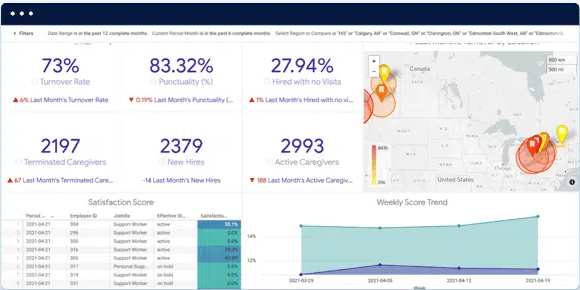
Employee Retention Dashboard

Several factors impact employee retention.  Among the top reasons for employee dissatisfaction are pay and benefits, inconsistent hours, and safety concerns. The current workforce shortage means keeping your best employees is more important than ever. With a quick snapshot of your employee satisfaction and engagement, you can address concerns earlier and improve turnover rates.

The employee retention dashboard highlights satisfaction scores, client capacity, scheduled hours, number of unique clients, overall turnover rates, turnovers by location, and more.

“Having a tool to predict employees who may be disengaged or dissatisfied prior to this happening is invaluable,” said Lee Grunberg, President & CEO, Integracare. “With the dashboard and algorithm behind it, we can see a caregivers’ satisfaction or engagement trend over time, and deploy preventative measures to reduce the likelihood that they’ll resign. It has empowered our coordinators to be much more retention-driven.”

On Deck for Layla

I spoke with Adrian Schauer, Co-founder and CEO of AlayaCare, during the online demo. “My passion project is…Layla. The people in your agency should be building relationships and making decisions. Anything else should be done by automation.” 

AlayaCare is currently in a high growth mode to build marketshare across the personal care and skilled sides of the marketing. Schauer’s goal is to elevate a level above their existing capabilities with home based care providers. This includes how payers are set up, how EVV is operating, lobbying, and advocacy. 

For Layla, AlayaCare is working on the GenAI capacity for chart completion by voice. Layla would use the conversational language model it already has to recognize and understand the conversation during a home visit and transcribe the conversation into notes, visit documentation, care plans, and codes.

Final Thoughts

As AI becomes more commonplace across care at home, we are scrutinizing AI platforms for safety, identity protection, accuracy, and ethical use. If you are looking for an AI solution for your business operations, we caution you to use discretion in your use of AI and thorougly vet the AI platform prior to adoption. We will continue to provide updates when Layla launches later this year. But, for now, it looks like we’ve found one more technology platform that is using AI the right way.

Kristin Rowan, Editor

Kristin Rowan has been working at Healthcare at Home: The Rowan Report since 2008. She has a master’s degree in business administration and marketing and runs Girard Marketing Group, a multi-faceted boutique marketing firm specializing in event planning, sales, and marketing strategy. She has recently taken on the role of Editor of The Rowan Report and will add her voice to current Home Care topics as well as marketing tips for home care agencies. Connect with Kristin directly kristin@girardmarketinggroup.com or www.girardmarketinggroup.com

©2024 by The Rowan Report, Peoria, AZ. All rights reserved. This article originally appeared in Healthcare at Home: The Rowan Report. One copy may be printed for personal use: further reproduction by permission only. editor@therowanreport.com

The Future of Care at Home

by Kristin Rowan, Editor

Home Nurses are joining unions. The advent and unionization of Hospital-at-Home (H@H) is changing the care at home landscape. Large hospital systems across the country have engaged in H@H studies and launched H@H programs, providing hospital-level ambulatory services in their communities. As H@H continues to take a foothold in the healthcare landscape, what do those changes mean for care at home?

Hospital at Home Popularity

Most of the existing H@H programs are operating under a CMS waiver. A few of the H@H programs use a private pay model. The CMS waiver needs to be extended in order to continue the programs. As many H@H organizations are pushing for CMS to extend the waiver, they are looking to patients for advocacy.

A recent survey by Vivalink showed that 84% of U.S. individuals over the age of 40 are interested in H@H monitoring after a hospital visit so they can return home sooner. 77% of respondents said they would trust a recommendation that included at-home monitoring. Respondents who had been hospitalized three or more times in the past 12 months were more interested in H@H programs than those who had been hospitalized less.

Massachusetts Ambulatory Nurses Unionize

On May 20, 2024, 33 ambulatory nurses from Martha’s Vineyard Hospital (MVH) filed with the National Labor Board to join a union that is already active within the hospital, the Massachusetts Nurses Association (MNA). The MNA currently represents 23,000 hospital workers from 85 healthcare facilities across the Commonwealth of Massachusetts. The hospital denied the request to join the union. The group of ambulatory nurses joined MVH through an acquisition of a physician’s group. Therefore, those nurses were not recognized under the existing collective bargaining agreement.

Hospital-at-Home Nurses at Mass General Unionize

The Hospital-at-Home nurses at Mass General Brigham (MGB) have unionized in the hopes of influencing the future of in-home acute care. They are also hoping this will encourage more people working in home healthcare to join unions. In the last seven months of 2023, almost half of all registered nurses working in home health care and non medical care at home left their jobs within a year. One registered nurse from MGB said she hopes HaH nurse unions become more common as HaH expands across the country.

The clinicians in the MGB home care segment are hoping to follow the H@H group into unionization soon. The home care segment, which includes home health, palliative, and other care at home services, are currently voting on whether to unionize.

Hospital-at-home nurses unionize at Mass Gen

Among the listed reasons for considering unionization are changes in expectations on productivity, and wages. Some of the more recent changes at MGB were rolled out across the company and did not take into consideration the territories and limitations that care at home clinicians have. More than 400 clinicians are in the care at home side of MGB and they have all received ballots to vote on unionization.

Home Health Unionization

hospital-at-home changing home health unions

The nature of care at home clinicians is disparate. Therefore, it is difficult to organize them into one cohesive group. Recently, though, more home health workers are looking to service workers and healthcare workers unions for better pay, better working conditions, and more buy-in on the day-to-day operations of the agency.

Opponents of unionization among home health clinicians argue that pay rates are largely set by CMS reimbursement rates. Employers may want to raise rates but are unable to do say because they accept Medicare and Medicaid. Home health unions could force employers to pay more than the set CMS rates.

CMS Response to Union Backlash

Otherwise known as the 80/20 rule, CMS responds to agencies worried about unionization with a mandate to pay their workers 80% of total Medicaid payments. Some agency owners say the proposed rule ignores the low reimbursement rates and further burdens agencies that are barely making a profit now. It is unlikely that CMS will see the unionization of home health clinicians as a reason to increase reimbursement rates. Experts advise agencies to start working on contract negotiations within the VBPM, to engage in risk-sharing and cost-benefit analyses with all parties within the VBPM. For example, Remote Patient Monitoring (RPM) is Medicare reimbursable, but not through home health use. However, a home health agency can share the benefits of RPM when it is billed through an approved provider for Medicare reimbursement. These strategies can lower overall care costs, increasing the share of reimbursement flowing to HHAs.

Maximize VBPM with Technology

Technologies available today include RPM, generative AI for data analytics, automated scheduling, and apps for secure communication, among others. Technology can lower overhead costs, allow you to eliminate some FTEs, and provide added value to providers during contract negotiations. If you don’t already have a robust tech-stack, look at some of our most recent product reviews, or contact The Rowan Report for more information about technology adoption consultations.

# # #

Kristin Rowan, Editor

Kristin Rowan has been working at Healthcare at Home: The Rowan Report since 2008. She has a master’s degree in business administration and marketing and runs Girard Marketing Group, a multi-faceted boutique marketing firm specializing in event planning, sales, and marketing strategy. She has recently taken on the role of Editor of The Rowan Report and will add her voice to current Home Care topics as well as marketing tips for home care agencies. Connect with Kristin directly kristin@girardmarketinggroup.com or www.girardmarketinggroup.com

©2024 by The Rowan Report, Peoria, AZ. All rights reserved. This article originally appeared in Healthcare at Home: The Rowan Report. One copy may be printed for personal use: further reproduction by permission only. editor@therowanreport.com

BREAKING NEWS – CMS Proposed Rule for 2025

by Kristin Rowan, Editor

CMS Proposed Rule for 2025

Citing “budget neutrality adjustments”, the Centers for Medicare & Medicaid Services (CMS) June 26 issued its proposed rule for 2025 for the home health prospective payment system. Here are the highlights:

  • Overall net reduction in home health payments by $280 million dollars
  • Market basket update of 3.0%
  • Productivity adjustment of -0.5%
  • Base payment rate reduction of 4.067% due to PDGM
  • Update fixed dollar loss for outlier payments
  • Update LUPA thresholds, functional impairment levels, and comorbidity adjustment subgroups
CMS Proposed Rule CY 2025

We did the math. This is an overall reduction in payment by 3.6%. This come after multiple years of similar adjustments that reduced the overall payment rates.

Included in the proposal is an additional adjustment to the fixed-dollar loss amount for high-cost outliers. This will reduce payments another 0.6%.

As we focus primarily on the payment reductions, CMS is looking at additional data. CMS provides a detailed account of the requirements for behavior assumptions and actual changes, as outlined in earlier rules. Using CY 2023 claims, and the methodology from the CY 2023 final rule, CMS believes they paid more under the PDGM system than they would have under the old system, leading to the deduction in base payment rate.

HHA Conditions of Participation

In addition to the payment cuts, CMS is also proposing an update to the Conditions of Participation. This new standard would require HHAs to develop, apply, and maintain a policy for accepting new patients into service.

According to the proposal, CMS is not moving to add or modify any quality measures from the Quality Reporting Program. They do, however, propose to modify some patient assessment items related to health-related social needs. This would require HHAs to collect and report data related to living situation, food, and utilities. This proposed modification would be implemented beginning with the calendar year 2027 QRP.

COVID-19 Reporting

Also included in the CY 2025 proposal is a revision to the infection prevention and control requirements for long-term care facilities. The revision calls for an extension on reporting some of the Covid-19 data elements to the Centers for Disease Control and Prevention. It also requires influenza and RSV reporting beginning January 1, 2025.

Additional Items

CMS also used data from OASIS-D and OASIS-E, making adjustments for missing and altered data from the two different information sets. The proposed rule includes a new methodology to address the issue of varying data sets from OASIS-D to OASIS-E.

LUPA add-ons are meant to establish equitable compensation for all home health services. CMS is proposing an occupational therapy (OT) specific LUPA add-on factor, rather than continuing to use the PT add-on factor for OT.

Payment groups under the PDGM model use an associated case-mix weight and LUPA threshold, specific to each of the 432 payment groups. CMS is proposing a recalibration of the case-mix weights, including funtional levels and comorbidity adjustment subgroups.

Request for Information: CMS is seeking feedback on Future Performance Measure Concepts for the expanded HHVBP Model. New proposed measure include care activities like bathing and dressing, which are not currently included in the function measures. Additional potential measures include family caregiver status and claims-based falls with major injuries.

Feedback

The American Hospital Association has expressed “serious concerns” about the payment rate adjustments in the proposed rule. “We urge the agency to adequately resource HH providers as they are a critical part of the care continuum,” AHA wrote. “We are particularly concerned about the substantial size of the agency’s proposed budget neutrality adjustment, a cut of 5.653%, and again call on CMS to withdraw it.” The AHA has asked CMS to revise its accounting methodology to more accurately account for changes in the payment system and care delivery due to PDGM.

President of the National Association for Home Care and Hospice (NAHC), Bill Dombi, today released a statement:

“The 2025 proposed version of Medicare home health payment rates shows the ongoing and predictable rate reductions impacting home health agencies since the beginning of the new payment model in 2020. That decline is solely due to a fatally flawed budget neutrality methodology that CMS employed to arrive at the rate adjustments,” stated NAHC President William A. Dombi.

“While this means that Medicare spending on home health services will continue to decline as costs continue rise, the more important element is that care access and utilization continues to decline at significant levels. When Congress set Medicare payment reform in motion starting in 2020, it was not planned or even expected that the outcome would be that nearly 500,000 Medicare beneficiaries would be able to access care or that those who could find care would get fewer services,” he added.

“Congress must step in immediately to put an end to this dismantling of the Medicare home health benefit. The value of home health services is not only undeniable; it has been proven by CMS in its analysis and expansion of the highly successful Home Health Value Purchasing demonstration project. We call on Congress to correct what CMS has done and prevent the growing harm to the millions of highly vulnerable home health patients that depend and will depend in the future on this essential Medicare benefit. Fortunately, longstanding advocates for home health care, Senator Debbie Stabenow (D-MI) and Senator Susan Collins (R-ME) have introduced S. 2137 to eliminate the rate cuts. We urge the Congress to support this legislation and enact it into law before the end of the year. The 2025 rate cuts must not take effect” Dombi added.

Comments

CMS has issued a fact sheet with more details on their assumptions and calculations. You can access the fact sheet here. The proposed rule can be downloaded here.

CMS will accept comments on the proposed rule through August 26th.

# # #

Kristin Rowan, Editor

Kristin Rowan has been working at Healthcare at Home: The Rowan Report since 2008. She has a master’s degree in business administration and marketing and runs Girard Marketing Group, a multi-faceted boutique marketing firm specializing in event planning, sales, and marketing strategy. She has recently taken on the role of Editor of The Rowan Report and will add her voice to current Home Care topics as well as marketing tips for home care agencies. Connect with Kristin directly kristin@girardmarketinggroup.com or www.girardmarketinggroup.com

©2024 by The Rowan Report, Peoria, AZ. All rights reserved. This article originally appeared in Healthcare at Home: The Rowan Report. One copy may be printed for personal use: further reproduction by permission only. editor@therowanreport.com

NAHC and NHPCO Sign Affiliation Agreement

by Kristin Rowan, Editor

BREAKING NEWS

In a joint statement on June 18, 2024, NAHC and NHPCO announced that the Board Chairs and CEOs of each organization met in Washington. During this meeting, they formally signed the affiliation agreement. This is a union of the two largest advocate organizations for care at home providers. They hope to unify the voice of the care at home community. The combined resources of the organizations will provide education, expert advice, and increased advocacy for policies that help deliver the best care to those who need it most.

After 18 months of discussions, meetings, and challenges, the two organizations have agreed on terms for the combining of the two groups.


“The affiliation of NAHC and NHPCO is a historic event,” said NAHC President and CEO William A. Dombi. “Unifying the voice of health care at home has been a longstanding goal of NAHC, as it is the essence of the original formation of NAHC in 1982. Combining our two organizations will significantly strengthen that voice for the benefit of our members and the patients they serve.”

Read the full press release from NAHC and NHPCO here.

# # #

Kristin Rowan, Editor

Kristin Rowan has been working at Healthcare at Home: The Rowan Report since 2008. She has a master’s degree in business administration and marketing and runs Girard Marketing Group, a multi-faceted boutique marketing firm specializing in event planning, sales, and marketing strategy. She has recently taken on the role of Editor of The Rowan Report and will add her voice to current Home Care topics as well as marketing tips for home care agencies. Connect with Kristin directly kristin@girardmarketinggroup.com or www.girardmarketinggroup.com

©2024 by The Rowan Report, Peoria, AZ. All rights reserved. This article originally appeared in Healthcare at Home: The Rowan Report. One copy may be printed for personal use: further reproduction by permission only. editor@therowanreport.com
When Social Media Goes Too Far

by Kristin Rowan, Editor

Access to Information: Pro & Con

The advent of social media has allowed millions upon millions of users worldwide to connect with distant friends and family, meet new people, and share information among followers. From Six Degrees in 1997 to BlueSky in 2023, social media has evolved over time. Some say social media has brought us closer together and created more opportunities for small business marketing and branding. Others argue it has replaced human interaction and created overuse of mobile devices, addictions to “likes”, and a host of fake news and propaganda. Whatever your particular outlook on social media, it’s probably here to stay.

Social Media

Having a profile on a social media platform (or several as most people have), allows friends, family, and colleagues to connect quickly and easily. This easy access to user information can be great for social networking and branding. Recently, however, the social media platforms have started gathering the information from your profile to enhance the paid marketing campaigns you see in “Sponsored” posts. If you’ve never noticed it before, pay attention to how often a sponsored post appears on your social media feed that happens to match a recent browser search, email, or, scarily enough, conversation, you are part of.

Social Media Access to Outside Information

Cookies

We’ve all seen the warning pop-ups on websites that read “This site uses cookies.” Cookies store your browser information and history, page visits, keyword searches, and other information. This information is accessible to other websites. This is why Amazon sends you an email for sale items you recently searched for, even if you didn’t search on Amazon. Most of us know we have the option to allow only necessary cookies and to opt out of everything else. However, most people rarely take this extra step. Rather than selecting from a list of allowable cookies, the default action is to “allow all.” We are just one click away from continuing our browsing, reading, or shopping.

PHI Information Accessed by Social Media

We accept that when we allow cookies, our information will be shared. However, when you share personal information with your doctor, you assume that information is not subject to the cookie preferences, even if the information is uploaded digitally. The federal Health Insurance Portability and Accountability Act (HIPAA), in fact, requires that this information not be shared. Ron Prosky that the Palm Beach Health Network, the largest health care network in Palm Beach County, Florida, did just that. Palm Beach Health Network allegedly used Meta’s pixel code in their website, allowing Facebook to target patients with personalized ads based on their medical condition and other sensitive information.

Similar lawsuits alleged the same action against Atrium Health in North Carolina and against Kaiser Permanente, both in April of 2024. Kaiser Permanente claimed an “accidental breach” after knowingly using website trackers from Microsoft, Meta, and Google. Kaiser alleged they were unaware that the website trackers would send private information. Website trackers gather information that includes the user’s name and IP address. This information does not necessarily violate HIPAA laws. However, because the “cookies” attach to the IP address, they follow the user around the web. This makes it fairly easy for the data to infer a diagnosis or illness and use that to market to patients.

A Word of Caution for Agencies Using Tracking Data

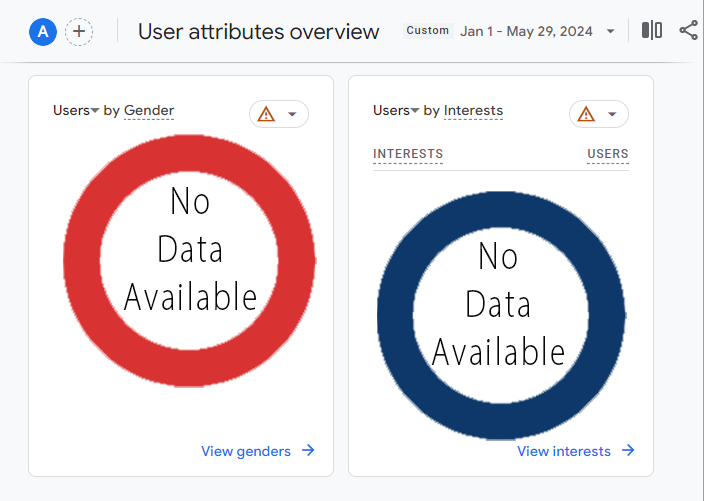
If your website is set up to track users through partner codes from Google Analytics, Facebook Pixel, or any other tech provider, you may be inadvertently sharing protected patient data with any of these companies.

If you are tracking landing page and link clicks through Google Analytics, you may be sharing sensitive data. Here is an easy to follow article to prevent sharing Personally Identifiable Information (PII).

Social Media No Data<br />

A Word of Caution for all Social Media and Internet Users

Social Media No Cookies<br />

The digital world is one in which we all live. Whether you are engaging with social media content, shopping in an app, or browsing online, protect your personal information. 

Opt out of cookies whenever possible. If it’s not possible, limit access to only necessary cookies and don’t allow your information to be sold. Only use websites that are secure. Delete your browser history or use incognito mode as often as possible.

# # #

Kristin Rowan, Editor

Kristin Rowan has been working at Healthcare at Home: The Rowan Report since 2008. She has a master’s degree in business administration and marketing and runs Girard Marketing Group, a multi-faceted boutique marketing firm specializing in event planning, sales, and marketing strategy. She has recently taken on the role of Editor of The Rowan Report and will add her voice to current Home Care topics as well as marketing tips for home care agencies. Connect with Kristin directly kristin@girardmarketinggroup.com or www.girardmarketinggroup.com

©2024 by The Rowan Report, Peoria, AZ. All rights reserved. This article originally appeared in Healthcare at Home: The Rowan Report. One copy may be printed for personal use: further reproduction by permission only. editor@therowanreport.com

New Resources for Home Health Value-Based Purchasing Model

by Kristin Rowan, Editor

The Home Health Value-Based Purchasing (HHVBP) Model began in 2016 as part of the Home Health Prospective Payment System (HH PPS) final rule. The original model aimed to:

  • Incentivize better quality and more efficient care
  • Study potential quality and efficiency measures
  • Enhance the public reporting process

HHVBP Model Outcomes

The original model had an average 4.6 percent improvement in Total Performance Scores (TPS). The model also saved Medicare $141 million annually, on average. There were no adverse risks with these savings. 

Additionally, the model reduced the number of unplanned hospitalizations and stays at Skilled Nursing Facilities (SNF). This provided additional savings from lower inpatient and SNF spending. 

home health value-based purchasing<br />
outcomes

HHVBP Expansion Model

HHVBP Measures

The HHVBP model expanded in 2022. The model includes HHAs in all 50 states, D.C., and the U.S. territories. The model adjusts Medicare payments from the fee-for-service (FFS) model.  Quality measures in a Performance Year impact adjustments in the Payment Year. These adjustments range from -5% to 5% and are based on quality measures relative to peer performance. HHA peers are pre-assigned cohorts with HHAs of similar size.

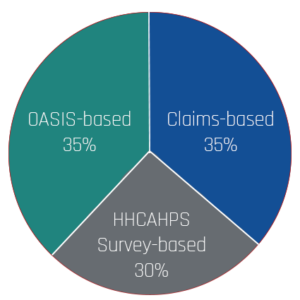
The expanded HHVBP model uses data from the Home Health Quality Reporting Program (HH QRP), Medicare claims, and HHCAHPS surveys. The expanded model does not require any additional data at this time.

Additional information on the quality  measures, cohorts, guides, and recordings from CMS can be found here.

We will continue to follow this story and provide updates on the new expanded model as they come in.

# # #

Kristin Rowan, Editor

Kristin Rowan has been working at Healthcare at Home: The Rowan Report since 2008. She has a master’s degree in business administration and marketing and runs Girard Marketing Group, a multi-faceted boutique marketing firm specializing in event planning, sales, and marketing strategy. She has recently taken on the role of Editor of The Rowan Report and will add her voice to current Home Care topics as well as marketing tips for home care agencies. Connect with Kristin directly kristin@girardmarketinggroup.com or www.girardmarketinggroup.com

©2024 by The Rowan Report, Peoria, AZ. All rights reserved. This article originally appeared in Healthcare at Home: The Rowan Report. One copy may be printed for personal use: further reproduction by permission only. editor@therowanreport.com