by Kristin Rowan | May 30, 2024 | Admin, Artificial Intelligence, Vendor Watch
by Kristin Rowan, Editor
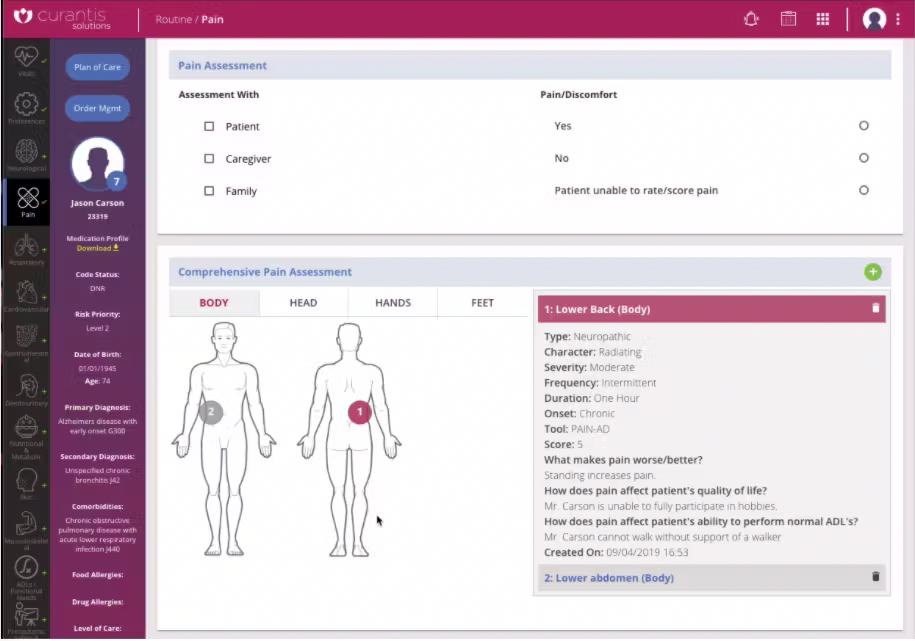
Having a lot of data can help grow your business, streamline processes, improve efficiencies, and make your agency more profitable. But, if you don’t know how to use the data, or simply don’t have the time and man-power to analyze the data, then those hidden treasures waiting in all that data remain hidden. Understanding the value of that data, Curantis Solutions partners with Amazon HealthLake to help you harness it.
Curantis Solutions is a Texas based company delivering value to hospice and palliative care agencies. Their cloud-based management solutions help you increase operational and financial efficiencies while still offering well-coordinated and high quality patient care. The platform works to address two common pain points in our industry: siloed data and software systems that operate separate from each other. Curantis Solutions re-imagines workflows to reduce hours spent on tasks outside of direct patient care.
The Impetus for Change
New CMS regulations and the HL7 Fast Healthcare Interoperability Resources (FHIR) create standards that providers and health care plans must meet. This could help home health and hospice agencies with clinical data issues. FHIR imagines a unified EMR system for greater interoperability. Facing FHIR compliance, Curantis Solutions turned to AWS to help centralize their data. Using Amazon HealthLake, a fully managed FHIR service, Curantis was able to make their client data interoperable.
The Solution for Curantis Solutions
Using Amazon’s Working Backwards process, Curantis found a customer-centric solution. AWS helped Curantis work through:
- Business objectives
- A free, introductory program, “Gain Insights”
- Cloud set-up and solution design
Curantis also implemented Amazon Kinesis to help collect, process, and analyze real-time data. All of Curantis’s data is now easily accessible, opening the door for AI, analytics, and business intelligence.
Curantis Solutions and Amazon HealthLake Data Processing and Analytics
Using Amazon, Curantis Solutions can build visual dashboards and reports. The visual reports help agency administrators understand and apply the data at a glance without spending hours analyzing the data points. The integration allows data analysis in almost real time. The Amazon suite of services aids Curantis in growth and enhanced data processing for their clients. It also allows Curantis to highlight powerful industry and patient data trends. These key indicators will help with critical decision making for continued high quality patient care.
This new platform adds expanded abilities to meet customer needs:
- Enhanced partner integrations
- Diverse way to prensent a patient-focused view
- The power to make predictions about a patient’s decline based upon chart data
- The ability for customers and internal stakeholders to easily explore data
Curantis Solutions was born from a desire to put hospice and palliative care first. With a genuine culture of caring, our team is dedicated to creating a refreshingly simple software experience that utilizes emerging technology, smart design and a cloud-native/serverless architecture to create an experience that is congruent with the technology you utilize in your everyday life. It’s time for hospice and palliative care software to make life easier vs creating arduous workarounds and added frustration. It’s time you experience Curantis Solutions!
AWS HealthLake is a HIPAA-eligible service offering healthcare companies a complete view of individual and patient population health data using FHIR (Fast Healthcare Interoperable Resources) API based transactions to securely store and transform their data into a queryable format at petabyte scale, and further analyze this data using machine learning (ML) models. Using the HealthLake FHIR-based APIs, healthcare organizations can easily import large volumes of health data, including medical reports or patient notes, from on-premises systems to a secure, compliant, and pay-as-you-go service in the cloud. HealthLake offers built-in natural language processing (NLP) models to help customers understand and extract meaningful medical information from a single copy of raw health data, such as medications, procedures, and diagnoses.
Kristin Rowan has been working at Healthcare at Home: The Rowan Report since 2008. She has a master’s degree in business administration and marketing and runs Girard Marketing Group, a multi-faceted boutique marketing firm specializing in event planning, sales, and marketing strategy. She has recently taken on the role of Editor of The Rowan Report and will add her voice to current Home Care topics as well as marketing tips for home care agencies. Connect with Kristin directly kristin@girardmarketinggroup.com or www.girardmarketinggroup.com
©2024 by The Rowan Report, Peoria, AZ. All rights reserved. This article originally appeared in Healthcare at Home: The Rowan Report. One copy may be printed for personal use: further reproduction by permission only. editor@therowanreport.com
by Kristin Rowan | May 30, 2024 | Admin, Advocacy, CMS, Regulatory
by Kristin Rowan, Editor
NAHC President Bill Dombi announced at last week’s CAHSAH annual meeting and expo that he would end his tenure at NAHC and retire at the end of 2024. We reached had an interview with Dombi on Thursday, May 23rd. He said he was not prepared to speak yet about his upcoming retirement, but we should hear more about that soon.
In the meantime, he provided additional details from his session at CAHSAH. We also discussed updates on the lawsuit against CMS and the status of the merger between NAHC and NHPCO. Tim’s article from last week talks about Dombi’s progress with Senator Wyland.
Ongoing Litigation
When we last spoke with Bill, he told us about the lawsuits filed against CMS. The suit claims that the budget-neutral calculations were based on faulty data and outdated software. These calculations determined the reimbursement rate reductions. Dombi explained the process for those lawsuits.
“The first round of the battle is around whether the court has the power to hear the case either at all or at that point in time. The courts are littered with litigation that have been dismissed on jurisdictional grounds,” Dombi offered. The court dismissed the lawsuit and the case is now closed. The Department of Justice (DoJ) attacked jurisdiction to get the case dismissed. Most concerning, according to Dombi, was the DoJ’s question of whether the statute passed by Congress precluded any litigation. If the courts had found in their favor, they would have dismissed the lawsuit no further suits could be filed. Luckily, that argument didn’t hold. The second attack was whether NAHC had expedited administrative review, which is the argument that caused the dismissal. Now, they have to establish that it would be futile to get CMS to agree to expedited judicial review.
Next Steps
In light of the dismissal, NAHC had to decide whether to appeal the ruling, exhaust the expedited review step with CMS, or both. Ultimately, they decided not to appeal and is pursing the review with CMS. This process could take up to 6 months, according to Dombi. Although they are pursuing the review, CMS has already stated that their final position is that the budget neutrality has been calculated within the law. Dombi feels the review is futile because CMS is not going to change their position. Now, they just have to prove the futility.
Two-Step Approach
Advocacy from NAHC, NHPCO, and other individuals and organizations was always intended to be a two-pronged effort: Litigation and Congress. The two do not interfere with each other. Even though the court dismissed the litigation suit in favor of judicial review, the approach in Congress continues. Of Senator Wyland, Dombi said, “A year ago at this time, his view was that home health agencies needed no relief. Now, he’s indicated a willingness to find a way to help home health agencies and recognizes that the cuts have been harmful to home health agencies and others that provide care.” According to Dombi, it was the personal stories and individual provider information that was crucial in swaying Wyland. The organizations continue to meet with other members of Congress to persuade them in the same way.
Dombi Provides Merger Update
Last year, NAHC and NHPCO announced they would join forces and merge into a new, as yet to be named, organization. That merger is still moving forward, but there are a lot of odds and ends to tie up. Dombi told us, “Nothing is final, final, but I don’t see anything but tailwinds moving forward.” The two organizations are still hoping for a July 1, 2024 launch of the organization. There is an active, open search for a new CEO to actively run both organizations as one. According to Dombi, no one has been slated for that position yet, so they may end up launching before there is a CEO in place.
The two organizations have already started integrating. They have lobbied together and they have worked on policy together. Additionally, they are integrating the association management system and building a website. “We feel confident enough that it’s going to reach the finish line that we’re investing time and money in these elements,” Dombi said. The two organizations can continue to operate together without a CEO, but there are a lot of decisions that need to be made that won’t be made until after there is a CEO.
After the Merger
Once the merger is complete and the two organizations operate under a new name with a new CEO, Dombi and his counterpart Bill Marcantonio of NHPCO will stay on for some time. Dombi will take the title President Emeritus and Council to the organization and Marcantonio will become the Chief Integration Officer. The new name of the organization has not been announced. Dombi says a lot of things are tied together, from an action standpoint, and it’s better to announce all of those details together along with the new name.
Reflections From Bill Dombi
When asked what was next for him after the merger is completed and he moves to retirement, Dombi reflected on his career:
“I’m proud of what I’ve accomplished in my life, but I’m more proud of what the people I work with I have accomplished. It’s not the first time we’ve tried to merge the two organizations, but this time, we had all the right ingredients and I’m proud of that. I live with the confidence that my constituency is up to the challenge. Every time they get kicked back, they’re right back at it.
To see where we are today compared to the 70s, we are so many light years ahead of where we were then. I mean, we’re talking about a hospital level of care at home. That was part of the dream. The fore-runners of healthcare at home truly believed those things were possible. The problems that caused the workforce shortage are multi-faceted, so the solutions are multi-pronged.”
We will continue following the story of both the lawsuits and the merger and update you as soon as there is more information.
Kristin Rowan has been working at Healthcare at Home: The Rowan Report since 2008. She has a master’s degree in business administration and marketing and runs Girard Marketing Group, a multi-faceted boutique marketing firm specializing in event planning, sales, and marketing strategy. She has recently taken on the role of Editor of The Rowan Report and will add her voice to current Home Care topics as well as marketing tips for home care agencies. Connect with Kristin directly kristin@girardmarketinggroup.com or
www.girardmarketinggroup.com
©2024 by The Rowan Report, Peoria, AZ. All rights reserved. This article originally appeared in Healthcare at Home: The Rowan Report. One copy may be printed for personal use: further reproduction by permission only.
editor@therowanreport.com
by Kristin Rowan | May 23, 2024 | Artificial Intelligence, Clinical, Telehealth
Telehealth’s evolution includes the dramatic shift to at-home and hybrid healthcare models post COVID-19 as well telehealth’s role in program management and staffing. From telehealth’s earliest models to today’s automated systems, Telehealth and AI have future implications for care at home. I recently sat down for an interview with Dr. Pamela Ograbisz, a nurse practitioner with expertise in telehealth spanning almost two decades.
The Rowan Report:
First off, thank you for taking the time to talk with me today. Can you give our readers a brief introduction about you and your background?
Dr. Pamela Ograbisz:
I have been in telehealth for about 19 years now. I’ve been a nurse practitioner for 25 plus years. My specialty is cardiothoracic surgery and critical care. I have it was started out as a nurse in CT surgery, went back to school, became a nurse practitioner, then worked in CT also my entire career in critical care. We had an opportunity roughly 17 years ago when I was working in a cardiothoracic unit where we were connected by bridges and tunnels and water.
RR:
And, how did you come to be involved in telehealth?
Ograbisz:
We covered seven different sites and we weren’t able to get to all of our patients in a timely manner. We were struggling. We were trying to figure that out. A nurse reached out to us and was on a flip phone. She was taking photos and sending things and we were able to piece together a plan because of that. We literally all sat down that night after around and said, we need to do something like this. And we were attached to a medical school. And so we got them involved as well. And we built one of the first ICU bunkers in the classroom for telemedicine. And it was really sort of the beginning of something amazing. And I saw how well it worked. And I had the privilege of going around and building more of those programs.
RR:
And this eventually brought you to LocumTenens.com?
Ograbisz:
I was recruited by LocumTenens.com. When I first joined them, they had roughly 7% of their business was tele[health] and it was all behavioral health and they were really trying to expand their footprint. And of course, this was prior to COVID, we were still dealing with a lot of legislative issues and not everybody necessarily believed in it. It was still very scary for people and we were trying to sort of showcase what we could do. And so I came in and wrote a lot of policy and procedure and then COVID happened and we had to flip everything over it and we were poised to do so, which was fantastic.
So overnight we started turning on just loads of programs, 100% virtual. And then honestly, a lot of them never went back or they’ve come to a hybrid model. So now you can then convert those programs from traditional boots on ground all the time to more, you know, expandable, flexible models that have a hybrid option that includes telehealth.
RR:
Are you still operating the telehealth programs for LocumTenens.com?
Ograbisz:
My role now is I run LT Telehealth, which is a company inside of LocumTenens.com. We’re not a stand alone, but we do run all of the telehealth programs inside of the company. I also oversee all APP (advanced practice provider) relationships and how we’re growing that business and then our legislative arm.
RR:
LocumTenens.com is a full service staffing company, right? How are you finding the workforce shortage right now?
Ograbisz:
So, I would say that probably for a while, we commiserated with the health systems. But, filling the gaps from workforce shortage is our business.
I will tell you this, I graduated school a long time ago when I got out, it didn’t matter if you were a doctor or a nurse practitioner or a PA, your goal was to join a practice. You wanted to become a partner and you wanted your name on that building and you wanted to own a piece of that building. Nobody was owned by the hospital groups. I felt like with the evolution of the electronic health record, everything changed. People were asked to do a whole lot more. All of a sudden it became a lot of boxes to check a lot of things to tick. You sat on more and more committees. It became more and more about the paperwork. And then of course, with the advent of EHRs, billing changed; CMS codes changed how you got paid. People started bucking the system. And so what we saw then honestly was a shift. Now people coming out [of college] are like, yeah, I’m not joining a practice or I’ve left my practice. This gives me a new creative way to be part of medicine with flexibility which no one ever promised you when you got out of school. Right? No one ever said, “You want to be a cardiothoracic surgeon? Work, life balance is for you!” No, right? 80 hour weeks and sleeping in the hospital. You signed up for it; you knew it. And now people have been given a glimpse of what it can be and what it could be. And so I think that the physician shortage 100% exists, but COVID forced the gig economy. And so what we’re seeing is people wanting to work on their own terms and 1099 contracting does that for them.
RR:
How are you seeing telehealth working in care at home?
Ograbisz:
So, we’ve been working on the medical hospital-at-home pieces trying to figure out how we can sort of fit into that model. We’ve seen a lot of really wonderful pilot programs come out of Mayo and Hopkins and what they’re doing. I think the biggest problem right now is they’re not reimbursed well. That is making it very hard for other systems that don’t have deep pockets like those two facilities to scale those programs to any kind of large extent. What we would say is we know that it’s better. If a patient is too ill to leave home, we can facilitate a visit with the doctor right from the house. We’ve found it is especially helpful in the oncology program we launched when a doctor has to deliver bad news. The pushback we got was the patients are not going to be able to adapt and get that kind of news through a screen. But the patients really proved that wrong. It was the patients who said, “If someone’s going to tell me that I have six months [to live], I don’t really want to hear that in a sterile, cold, doctor’s office. I really am much happier if I could be in my own environment and process that information.”
RR:
What is standing in the way of a robust telehealth system for hospitals, physician groups, and home health?
Ograbisz:
I mean, CMS obviously needs to catch up with the telehealth. They were doing it during COVID. We need to extend that so that those payments, as long as the coding is all there, those payments need to come through for telehealth. But when you combine it with home health and hospice, you have that in person touch point. So the whole visit then is reimbursable, which is why a lot of hospitals and physician groups are partnering with home health, hospice, and palliative care or organizations now because you get that in-person visit, but everything is sent back to the physician to oversee changes in care, oversee changes in medication. At home care and physician care combined, the reimbursement goes into place because you have that touch point there, a face-to-face visit. They can verbally and visually see everything that’s going on, but then it goes back to the physician and they can then also get reimbursed for that. So there’s a lot of that with telehealth that is crossing over. Home health and hospice agencies need to start using telehealth and they need to be partnering with the ACOs and they need to be partnering with physician groups and now they have to partner with payers, especially as we move to the value based system. They have to partner with them because there’s only a certain amount of money that each patient is going to get. Some of it’s going to go to the hospital, some of it’s going to go to the physician and some of it’s going to go to the home health company and if there’s no partnership then there’s no money. So, you know, they have to take on some of that risk, but telehealth is the way to do that.
RR:
We’ve been talking a lot the last year or so about the rapid advancements in AI. What we’re seeing is that AI is impacting interoperability, telehealth, direct patient care, and so much more. What do you see happening in health care with Ai?
Ograbisz:
Yeah, I think it’s a huge unknown. I think everyone’s afraid to commit. I think there’s more scary stuff than there is positive stuff. So right now, what we’re worried about is someone taking on my identity, somebody being able to give advice in my voice with my likeness and put that out somewhere. So I think when you talk to providers, they see more of the scary side and how are we going to control it? But then you look at the most amazing pieces which is I can use AI to help me form a better diagnosis, to cultivate more ideas for how to treat things for each how process and procedure, right? How do we go about garnering information, which is what I think AI will help us do better in the telehealth space. I think it will be interesting to see where all of the programmatic goes. I think more towards like holographs and literally like Star Trek lead people into rooms, you know, life size images where it’s not just we go from just a 2D flat screen to really look at 4D, you know, being able to really see and perhaps even with scans and patient monitoring and you can hold the scanner up and I can see your liver, who knows? I think the possibilities are endless. But I think right now in all honesty, I think it’s fear…until we figure out a little bit of the regulatory side of it.
RR:
You’re also working on advocacy for telehealth on state and national levels. Will you follow up with us on how the next round goes as far as extending the reimbursement for telehealth?
Ograbisz:
Absolutely! I’ve written a lot of pieces that I’ll share with you. We’re always happy to collaborate.
RR:
Thank you, again for your time. Your insights were wonderful.
# # #
Kristin Rowan has been working at Healthcare at Home: The Rowan Report since 2008. She has a master’s degree in business administration and marketing and runs Girard Marketing Group, a multi-faceted boutique marketing firm specializing in event planning, sales, and marketing strategy. She has recently taken on the role of Editor of The Rowan Report and will add her voice to current Home Care topics as well as marketing tips for home care agencies. Connect with Kristin directly kristin@girardmarketinggroup.com or
www.girardmarketinggroup.com
©2024 by The Rowan Report, Peoria, AZ. All rights reserved. This article originally appeared in Healthcare at Home: The Rowan Report. One copy may be printed for personal use: further reproduction by permission only.
editor@therowanreport.com
For more information on Locum Tenens visit: https://www.locumtenens.com/
Pamela Ograbisz
Vice President of Clinical Operations
Pamela Ograbisz, Associate Vice President of Telehealth for LocumTenens.com. With 20 years of experience in cardiothoracic surgery and internal medicine, she is passionate about delivering quality healthcare in a timely manner. Dr. Ograbisz is confident that telehealth programs are the key to improving health and the overall patient experience
by Kristin Rowan | May 16, 2024 | Caring for the Caregiver, Clinical, Product Review
by Kristin Rowan, Editor
If you haven’t been following our recent reports, you may have missed last week’s article on the Home Care Worker Safety Bill that was passed in Connecticut. You may also have missed the article reporting that OSHA levied fines against Elara Caring, the home health agency where Joyce Grayson worked. If you did, take a minute to go back and read those updates. Changes are coming to home health and home care.
We’ve been reporting on these important updates as we believe new regulations on Home Care Worker Safety will be coming nationwide. If OSHA can penalize a home health agency for failing to protect the safety of an employee, then protecting the safety of an employee is required, by default.
Home Care Worker Safety Industry
We’ve been meeting with and researching about home care worker safety since the first article about Joyce Grayson. There are several on the market as stand-alone equipment and/or SaaS services. Many existing SaaS companies are adding GPS tracking, visit check-in/check-out, and other safety and risk items to their suite of services as well.
Background
AJ Leahy had a close friend who was attacked on a college campus. First responders were called, but they didn’t have his exact location. The extra time it took responders to reach him contributed to his death. AJ concluded that the current emergency system is dangerous and broken. AJ didn’t want anyone else to have the same experience. Thus, he created POM (Peace of Mind) Safe Company.
AJ soon realized that the length of time it takes first responders to reach a victim is only part of the problem. He sought to create a system that would not only connect you with the help you need, but deter and de-escalate violence. After all, AJ surmised, the best outcome is not for first responders to reach you, but for first responders not being needed in the first place.
Home Care Worker Safety in the “POM” of Your Hand
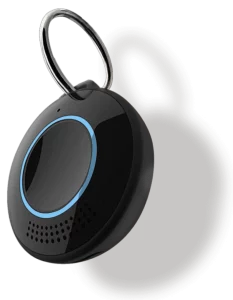
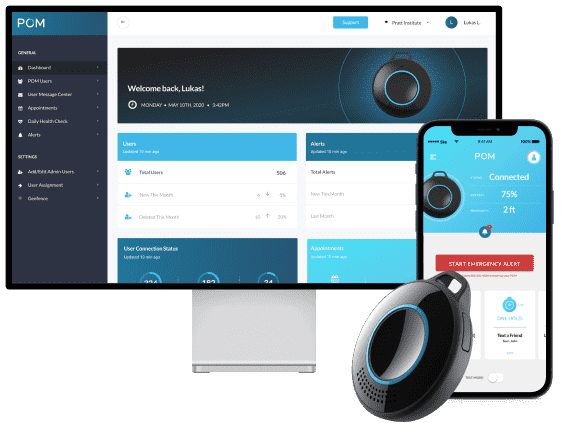
POM safe is a portable, two-way communication safety device paired with an app that bypasses the need to use your phone to call 911. Using a series of taps, the POM Safe device can deter and de-escalate violence and dispatch the appropriate help. The POM 3 (pictured left) is a wearable fob with a 10-day battery life between charges and is connected to your mobile data or WIFI connection through a cell phone. The POM Mobile (pictured below) device carries its own SIM card and remains independent of a cell phone.
Emergency Response
POM Safe has built-in, two-way communication that connects a home care worker to a dispatcher. Even if the clinician can’t speak, the dispatcher can hear the situation and deploy appropriate actions. When the two-way communication is activated, the device send a GPS signal along with profile information directly to the dispatcher. When needed, the dispatcher contacts emergency response services to arrive at the precise location.
Beyond Emergency Response
Reaction addresses the need for intervention after an act of violence has occurred. Proaction attempts to remove the need for the intervention at all. The proactive safety features of the POM Safe device include:
- Fake phone call
- Press a button on the device and your phone rings
- Answering the call tells a would-be attacker that someone knows where you are and who you are with
- Check on Me
- Use the POM Safe device to start a timer
- If you don’t confirm your safety within that time, help is alerted
- Appointment Sync
- POM Safe integrates with your scheduling and appointment data
- Your precise location is sent to dispatchers and emergency responders
- One-Tap Text
- With one tap, a pre-written text is sent to alert dispatcher of your need for help
- GPS location is sent with the text
Home Care Worker Safety Network
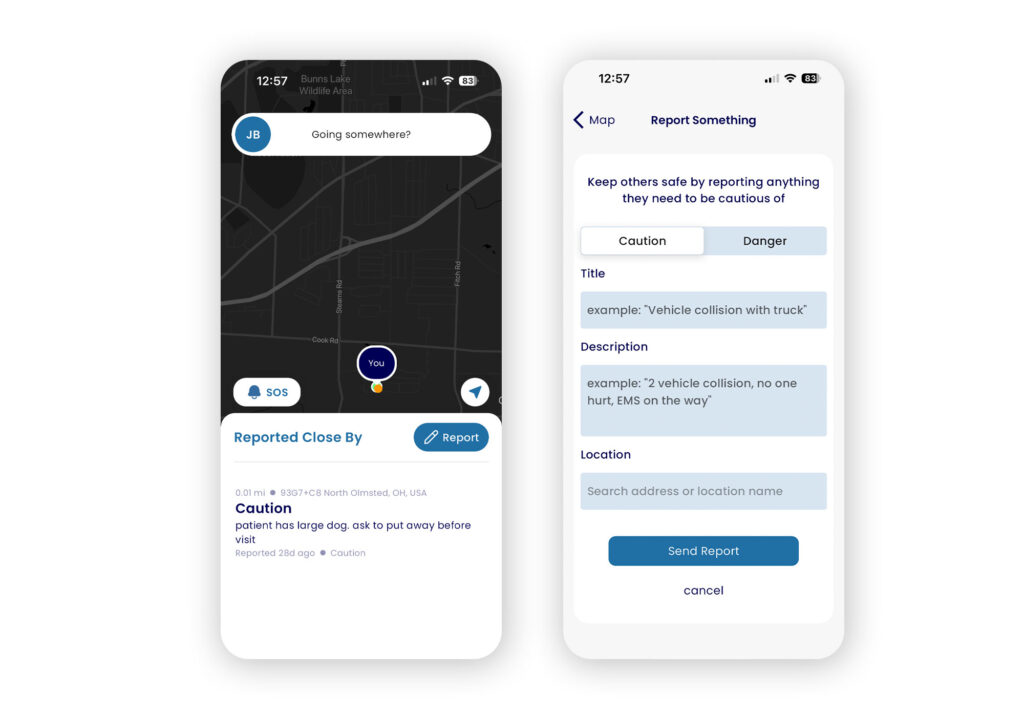
One of the requirements in the Home Care Worker Safety Bill passed in Connecticut is to provide your clinicians with information about the neighborhood of each client. Crime rate, safety, registered offenders (coming soon), and other safety information about the neighborhood aid in the overall risk assessment of the client.
The POM mobile app includes the “360 Safety Network”, combining a crowdsourced alert system with third-party safety data. Your clinicians can also report additional safety concerns and receive real-time notifications if a new alert flags their location.
Customizable Programming
Each home health and home care agency will have their own protocols, emergency contacts, and preferences for home care worker safety. When you adopt the POM Safe system, devices are customized and programmed to your agency’s specifications. You can set the “Check on me” timer for shorter or longer visits. GPS settings can be turned off at custom set times so you’re not tracking your clinicians in their off hours. Your clinicians can add their own family members to their connections and you can allow them to custom set what each button-click type will do.
Organizational Monitoring
POM Safe links to a safety dashboard for the agency. At a glance, you can see all of your users, alerts, and appointments. It also includes a user message center, customizable user assignments, daily health check, and more.
Final Thoughts
Whether you contact POM Safe or another safety device company, it is imperative that you implement a safety program in your organization. This should include a committee, de-escalation training, self-protection training, employee assistance programs for mental health support, and a wearable/personal safety device that is GPS-enabled and connected to emergency response systems.
# # #
Kristin Rowan has been working at Healthcare at Home: The Rowan Report since 2008. She has a master’s degree in business administration and marketing and runs Girard Marketing Group, a multi-faceted boutique marketing firm specializing in event planning, sales, and marketing strategy. She has recently taken on the role of Editor of The Rowan Report and will add her voice to current Home Care topics as well as marketing tips for home care agencies. Connect with Kristin directly kristin@girardmarketinggroup.com or www.girardmarketinggroup.com
©2024 by The Rowan Report, Peoria, AZ. All rights reserved. This article originally appeared in Healthcare at Home: The Rowan Report. One copy may be printed for personal use: further reproduction by permission only. editor@therowanreport.com
by Kristin Rowan | May 16, 2024 | Artificial Intelligence, Clinical, Vendor Watch
By Kristin Rowan, Editor
Care at home has expanded in the last twenty years to include care that was previously received in hospitals, SNFs, and therapy centers. As care at home is increasingly recognized as a more cost efficient way to provide care with better outcomes and lower rehospitalization rates, we can expect more services to be offered in the home. We recently received report of one such expansion with the announcement that Constant Therapy and Elara Caring have partnered to offer speech-language and cognitive therapy support in the home.
About Constant Therapy
Led by Founder & CEO Veera Anantha, PhD, Constant Therapy offers an AI-driven platform for speech-language and cognitive therapy. The recommended dose of these types of therapy is high. With fewer therapists available, most patients aren’t receiving the recommended frequency of patient care.
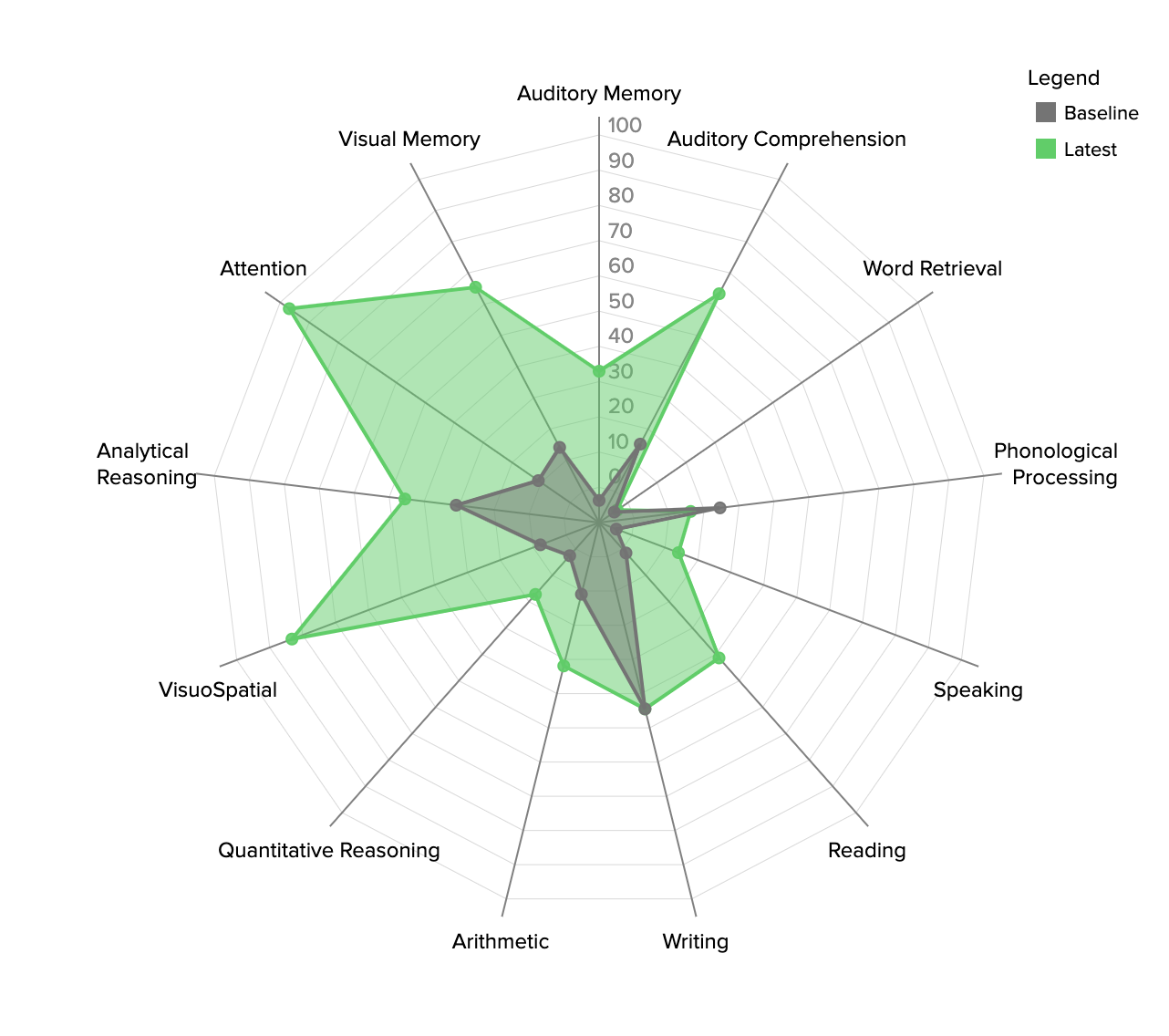
Constant Therapy decreases the number of needed in-home visits using a digital program with 500,000 customizable exercises. The app also provides insights into patient performance and improvements. The AI tracks accuracy and speed over time and naturally progresses the patient based on that performance.
Delivery of Care
Constant Therapy is a personal assistant for the therapist to provide more care to more patients. It also has a time saving component. Constant Therapy automates all of the documentation and home exercise programs a therapist has to keep up with, in addition to providing updates to physicians.
Mobile App
The patient app can include family members who can log in to track their loved one’s progress. The app also includes RPM to track whether the patient is adhering to the homework assignment. The app tracks how long the patient spends on a task, how many tasks are completed, and progress over time. Additionally, the therapist app can link multiple clinicians, caregivers, physicians, and hospitals to increase continuity of care.
Direct and Indirect Care Sessions
During a care session, Constant Therapy acts as a digital workbook. The workbook is used to standardize delivery of care and objectively measure progress. Outside of direct care appointments, the app acts as a homework tool for the patients. It provides assignments for continued progress when the therapist is not present.
About Elara Caring
Elara Caring is a home health agency that operates in 17 states and has 200 locations. They offer skilled home health, hospice, personal care services, behavioral health, and palliative care. Elara’s mission is to expand home care access by embracing the industry’s most innovative technologies and models. They strive to hire compassionate people who believe in taking care of their patients, clients, care providers, and each other.
From the Source
Mark Salley
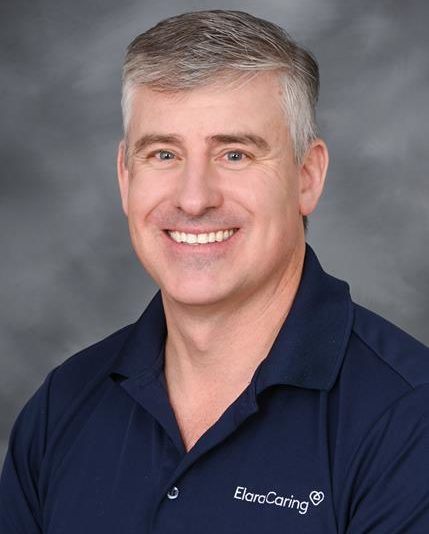
VP of Innovation and Rehabilitation at Elara Caring said, “Since our inception, Elara Caring has utilized patient data insights – more than 120M data points annually, in fact – to drive our strategic decisions that improve quality care and patient outcomes. This has brought us to Constant Therapy. They have similar values and a shared goal to incorporate data into their evidenced-based, treatment platform. With Constant Therapy, our patients are seeing quicker recovery of speech, cognitive function, and language deficits following healthcare incidents including stroke, TBI, dementia, and more. We are excited to start this new chapter in close partnership with Constant Therapy. This will be a gamechanger for our patients and clinicians.”
Noah Poskanzer
Director of National Accounts at Constant Therapy said, “Part of being a home health clinician is to set the patient up to be as successful at home as possible. Not just in the U.S., but around the world, the number of people trained to provide therapy are [sic] going down but the number of people needing therapy is going up. Constant Therapy is providing patients with additional therapy when therapists are not present in the home with their patients.”
Constant Therapy Pilot Program
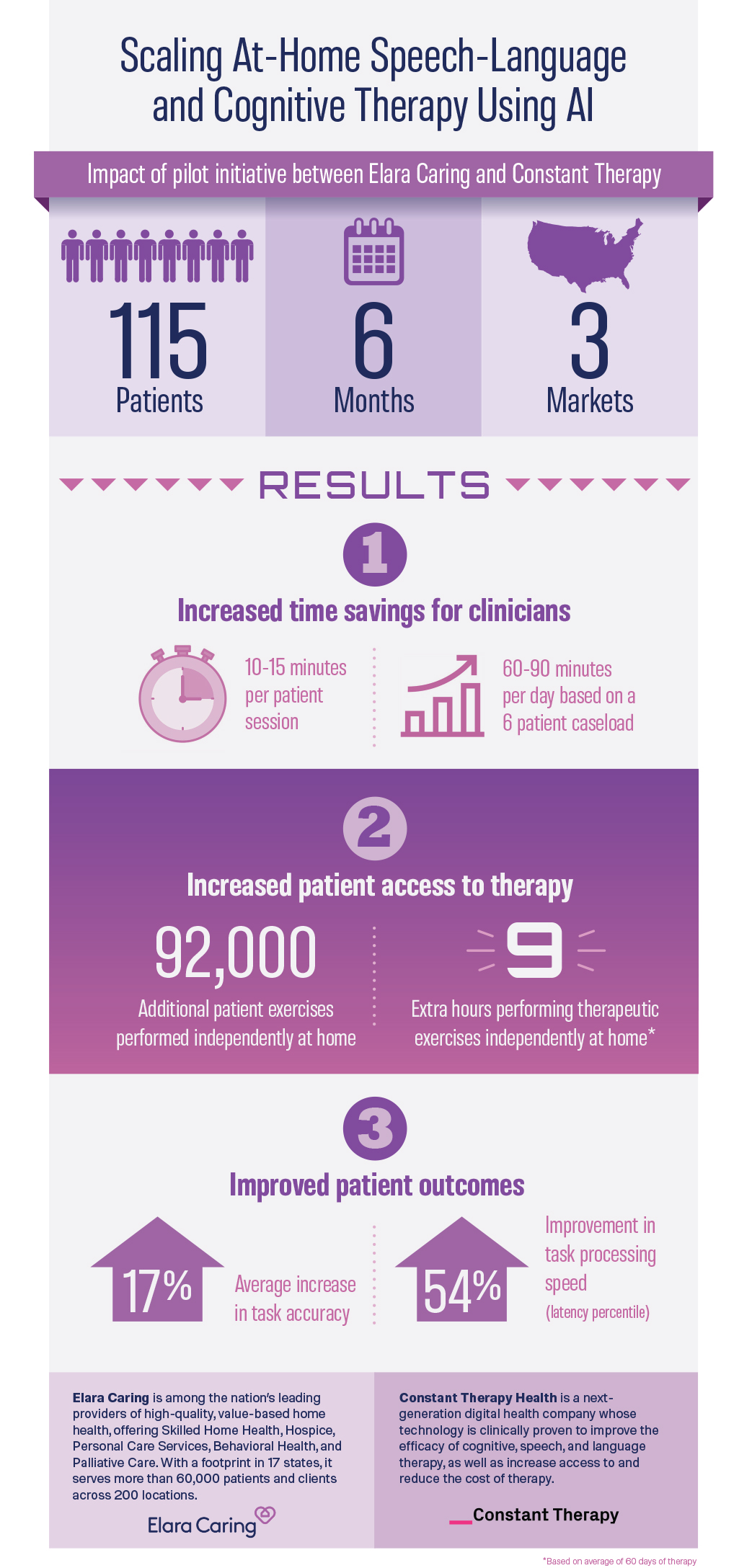
Prior to the full-scale partnership, Constant Therapy and Elara Caring launched a pilot program in June of 2023 with 115 patients across three markets. The results of that pilot program include:
- Increased Time Savings
- 10-15 minutes per patient session
- 60-90 minutes per day for a clinician with a six-patient caseload
- Increase Patient Access
- 115 patients performed 92,000 additional exercises independently at home
- Improved Patient Outcomes*
- 17% average increase in task accuracy
- 54% improvement in task processing speed (latency percentile)*
*Patient outcomes calculated using Constant Therapy task performance
As Constant Therapy expands to include more agencies and more patients, they expect to continue to see improved patient outcomes, better access to care, and the ability to serve more patients. We will continue monitoring their progress.
Kristin Rowan has been working at Healthcare at Home: The Rowan Report since 2008. She has a master’s degree in business administration and marketing and runs Girard Marketing Group, a multi-faceted boutique marketing firm specializing in event planning, sales, and marketing strategy. She has recently taken on the role of Editor of The Rowan Report and will add her voice to current Home Care topics as well as marketing tips for home care agencies. Connect with Kristin directly kristin@girardmarketinggroup.com or www.girardmarketinggroup.com
©2024 by The Rowan Report, Peoria, AZ. All rights reserved. This article originally appeared in Healthcare at Home: The Rowan Report. One copy may be printed for personal use: further reproduction by permission only. editor@therowanreport.com
Veera Anantha, PhD, is the Founder and CEO of Constant Therapy. Veera is a hands-on technology executive and business leader with a passion to bring positive change through the power of data and AI. He created Constant Therapy, an award-winning mobile app that uses artificial intelligence to help tens of thousands of people living with neurological conditions regain essential life skills.Veera also successfully built a number of innovative products at other startups, including at a company acquired by Apple that developed the world’s fastest digital signal processor.
He began his career as a Lead Engineer at Motorola developing mobile software and hardware products, and later, as Vice President of Engineering at a startup acquired by Motorola, developed software products that are now used worldwide to manage wireless networks. Veera has six technology patents and recently won TiE Boston’s Entrepreneur of the Year Award. He is an expert mentor at MassChallenge HealthTech and Insight Data Sciences, is a Charter Member of TiE Boston, and is a guest lecturer for Entrepreneurship at Questrom School of Business. Veera holds a PhD in electrical and computer engineering and a master of science degree in physics from Northwestern University, as well as a bachelor’s degree from the Indian Institute of Technology in Bombay.
Mark Salley, Vice President of Innovation and Rehabilitation Solutions at Elara Caring, has been a Physical Therapist
since 1995 and has worked in the homecare sector since 2003. His journey has been marked by his commitment to integrating data into the decision-making processes, revolutionizing the approach to clinical and operational challenges at Elara Caring.
Throughout his 25-year career, Mark has focused on enhancing patient care. His early years as a Physical Therapist lend to his understanding of the intricacies of healthcare delivery, particularly within the homecare landscape. Transitioning into leadership roles, Mark recognized the transformative power of data in shaping the future of healthcare, and at Elara Caring, he is spearheading initiatives that leverage data-driven insights to drive meaningful change.
by Kristin Rowan | May 10, 2024 | Admin, Caring for the Caregiver, Clinical, Marketing, Recruitment & Retention, Regulatory
by Kristin Rowan, Editor
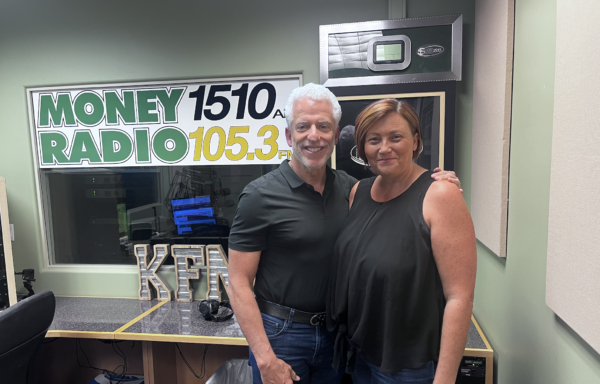
I was honored to have been a guest on Health Futures – Taking Stock in You Radio Show on Money Radio 1510 AM discussing navigating the home care revolution. Health Futures is hosted by HomeCare expert Bob Roth, owner of Cypress HomeCare Solutions. Cypress just celebrate its 30th anniversary last week and is the recipient of a Grant to Innovate within Medicaid in partnership with PocketRN and is the 2013 & 2018 winner of the BBB Torch Awards for Ethics. You can listen to the full radio show here. Below is the blog based on the show, written by the CEO of Strait Talk PR, Lauren Strait.
by Lauren Strait, CEO Strait Talk PR
The Aging Population Tsunami
By 2050, the 85-year-old population in the United States is expected to quadruple. As this massive demographic shift unfolds, the already strained home care industry will face unprecedented challenges in meeting the escalating demand for quality care services.
Bob Roth, Managing Partner of Cypress HomeCare Solutions, recently had Kristin Rowan, of The Rowan Report on the radio show and podcast to discuss this trend and everything a consumer needs to know about the homecare industry and how it will affect them.
A Trusted Voice Amid Industry Upheaval
In the latest episode of “Health Futures, Taking Stock in You” hosted by Bob Roth of Cypress Homecare Solutions, Kristin Rowan, Owner and Editor of The Rowan Report, offered insights into how her publication is guiding the industry through this seismic transition.
The Rowan Report’s Unbiased Expertise
What began as a print magazine reviewing home health technology has evolved into a comprehensive digital hub covering regulatory updates, workforce solutions, marketing strategies, and groundbreaking innovations. Rowan emphasized the publication’s commitment to neutrality when evaluating new products and services.
“We do our best to remain as neutral as possible…that’s one of the things that Tim [her father and the founder] established early on in his relationships with tech providers.”
Empowering a Strained Workforce
With a redesigned website offering robust search capabilities, The Rowan Report curates resources to help agencies streamline operations and alleviate administrative burdens on overstretched staff. “The solution is not more people because they’re just not there,” Rowan stated. “But the solution is collaboration to better utilize the people that you have.”
The publication explores leveraging AI, voice technologies, automated claims processing, and outsourcing to reduce paperwork and maximize efficiency, enabling care professionals to concentrate on frontline patient care.
Preparing for the Age Wave
As the population ages, The Rowan Report recognizes the need to educate professionals and families on navigating the complexities of long-term care. By convening experts, the publication covers crucial topics like choosing providers, understanding Medicare/Medicaid, and planning for future care needs.
An Indispensable Industry Guide
With over 25 years of experience, The Rowan Report stands as an indispensable guide for the home care industry as it braces for the challenges and opportunities of an aging America. Access their insights at www.therowanreport.com.
Bob Roth is Managing Partner of Cypress HomeCare Solutions. He assisted in creating Cypress HomeCare Solutions with his family in 1994. Bob brings the depth and breadth of his nearly 36 years of consumer products, health care and technology experience to the home care trade. Over the years, Bob has received a number of awards. These include the January 2014 CEO of the Month and finalist for the 2015 Phoenix Business Journal’s Healthcare Heroes award. Cypress won the Better Business Bureau’s Business Ethics award in 2013 and 2018.
In March 2017, Arizona Governor Bob Ducey appointed Bob to the Governor’s Advisory Council on Aging. This was the first time in the Council’s 40 years that a home care/home health care agency owner/manager has served on the Council. Nationally, Bob serves on the Board of Directors for the Home Care Association of America (HCAOA). Locally, he serves on the Board of Directors for DUET Partners in Aging. Additionally, he is on the ambassador committee for Aging 2.0 – Phoenix Chapter. On September 11, 2019 Bob won the Home Health Care News Future Leader Award. The award recognizes up-and-coming leaders elevating the home health industry. When he’s not working, Bob enjoys spending time with his wife Susie, their three daughters, and playing golf, tennis, hiking and walking with Ruby and Lacey, our pet therapy dogs.
Kristin Rowan has been working at Healthcare at Home: The Rowan Report since 2008. She has a master’s degree in business administration and marketing and runs Girard Marketing Group, a multi-faceted boutique marketing firm specializing in event planning, sales, and marketing strategy. She has recently taken on the role of Editor of The Rowan Report and will add her voice to current Home Care topics as well as marketing tips for home care agencies. Connect with Kristin directly kristin@girardmarketinggroup.com or
www.girardmarketinggroup.com
©2024 by The Rowan Report, Peoria, AZ. All rights reserved. This article originally appeared in Healthcare at Home: The Rowan Report. One copy may be printed for personal use: further reproduction by permission only. editor@therowanreport.com
by Kristin Rowan | May 10, 2024 | Admin, Caring for the Caregiver, Clinical, Regulatory
by Kristin Rowan, Editor
Last week, we reported on the proposed Bill in the Connecticut Senate and House to provide additional precautions for home care worker safety. In wake of the 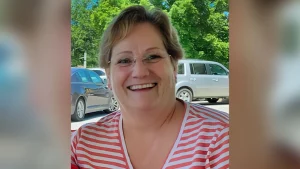 Joyce Grayson murder during a home health visit, leadership in Connecticut aimed to safeguard home health and home health aide workers and collect risk assessment data on the same.
On May 6, 2024, CT legislature passed bills in both the Senate and House of Representatives. Instead of the proposed bills that we reported on previously, both branches added amendments to previous bills. The bills include provisions for cyberattack readiness, child safety, and other items not related to care in the home.
First Stage of Home Care Worker Safety
Some of the provisions in the final bill are effective July 1, 2024. As we previously reported, hospice agencies are currently exempt from these provisions and the CT legislature will address hospice agencies in their next session.
On and after July 1, 2024
The Commissioner shall increase the fee payable to a home health care or home health aide agency that provides escorts for safety purposes to staff conducting a home visit to cover the costs of providing such escorts.
The Commission of Public Health will establish and administer a home care staff safety grant program to provide grants to home health and home health aide agencies for staff safety technology, including, but not limited to :
- A mobile application for staff to access safety information about a client
- A method for staff to communicate with either local police or other staff in the event of an emergency
- A global positioning system-enabled, wearable device that allows staff to contact local police
Effective July 1, 2024
The sum of one million dollars is appropriated to the Department of Public Health for the the fiscal year ending June 30, 2025, to establish and administer the aforementioned grant program.
The Commissioner of Public Health and the Commission on Community Gun Violence Intervention and Prevention, will develop or find educational material about gun safety practices and provide such to primary care providers to give to patients who are 18 years of age or older.
Second Stage of Home Care Worker Safety
Some of the provisions in the final bill are effective October 1, 2024. Home health and home health aide agencies have five months to comply with these measures.
Effective October 1, 2024, home health and home health aide agency must collect and provide to assigned workers information about:
The client, including as applicable;
- psychiatric history
- history of violence
- history of substance use
- history of domestic abuse
- current infections, if any, and treatment received
- whether diagnoses or symptoms have remained stable over time
Other persons present or anticipated to be present at the location of care including, if known to the agency:
- name and relationship to client
- psychiatric history
- history of violence or domestic abuse
- criminal record
- history of substance use
Location where employee will provide services including, if know to the agency:
- the crime rate for the municipality in which employee will provide services
- the presence of any hazardous materials, including, but not limited to used syringes
- the presence of firearms or other weapons
- the status and of the fire alarm system
- the presence of any safety hazards, including, but not limited to, electrical hazards
By October 1, 2024, each home health and home health aide agency must:
Provide staff training consistent with the health and safety training curriculum for home care workers, including but not limited to:
- Training to recognize hazards commonly encountered in home care workplaces
- Applying practical solutions to manage risks and improve safety
Conduct monthly safety assessments with each staff member and
Provide staff with a mechanism to perform safety checks, which may include, but need not be limited to:
- A mobile application that allows staff to access safety information about the client
- A means of communicating with local police or other staff in the event of an emergency
- A global positioning system-enabled, wearable device that allows staff to contact local police by pressing a button or through another mechanism
Effective October 1, 2024
Each home health and home health aide agency shall, in a manner prescribed by the Commissioner of Public Health:
- Report each instance of verbal abuse that is perceived as a threat or danger to the staff
- Report each instance of physical, sexual, or any other abuse by a client against a staff member
Third Stage of Home Care Worker Safety
No later than January 1, 2025
Beginning January 1, 2025 and annually therafter, the commissioner shall report to the joint standing committee:
- The number of reports of violence and abuse received
- The actions taken to ensure the safety of the staff member about whom the report was made
Effective January 1, 2025
Each individual health insurance policy shall provide coverage for escorts for the safety of home health care agency or home health aide agency staff
The joint standing committee of the General Assembly will convene a working group to study staff safety issues affecting home health and home health aide agencies, including but not limited to the following members:
- Three employees of a home health care or home health aide agency
- Two representatives of a home health care or home health aide agency
- One representative of a collective bargaining unit representing home health care or home health aide agency employees
- One representative of a mobile crisis response services provider
- One representative of an assertive community treatment team
- One representative of a police department; and
- One representative of an association of hospitals in the state
As we mentioned before, these regulations will become mandates across the country soon. OSHA has found the home care agency in Connecticut at fault for failing to implement safety procedures and precautions in the death of Joyce Grayson. The nurse’s family is suing the home health agency for wrongful death. Connecticut has established a protocol for safety measures, committees, reporting, and grant programs to implement immediate safety procedures across home health and home health aide agencies in the state. Before these provisions are passed on a national level, and before you have to tell the family of one of your staff that they aren’t coming home…
We urge you to:
- Create a safety committee within your agency
- Invest in training on de-escalation, workplace violence prevention, and self-defense
- Research and invest in a GPS-enabled emergency alert system for your staff. We recommend POM Safe and Katana Safety
- Insist on background information on all clients and others living in the home upon intake and BEFORE the first home visit
- Create a safe and comfortable way for your staff to report verbal abuse, violence, or uneasiness from any in-home visit
- Invest in escort and/or paired visits for high-risk clients, first-time clients, or any other situation that warrants it
We will continue to follow this story and provide updates as we receive them.
Kristin Rowan has been working at Healthcare at Home: The Rowan Report since 2008. She has a master’s degree in business administration and marketing and runs Girard Marketing Group, a multi-faceted boutique marketing firm specializing in event planning, sales, and marketing strategy. She has recently taken on the role of Editor of The Rowan Report and will add her voice to current Home Care topics as well as marketing tips for home care agencies. Connect with Kristin directly kristin@girardmarketinggroup.com or www.girardmarketinggroup.com
©2024 by The Rowan Report, Peoria, AZ. All rights reserved. This article originally appeared in Healthcare at Home: The Rowan Report. One copy may be printed for personal use: further reproduction by permission only. editor@therowanreport.com
by Kristin Rowan | May 2, 2024 | Product Review
by Kristin Rowan, Editor
Revenue Cycle Management (RCM) addresses several pain points for care at home agencies: coding errors, timely reimbursement payments, and employee workload. Available as both full-service and SaaS products, RCM automation offers higher reimbursement rates, lower overhead costs, and overall better efficiency for your agency. Not having a RCM tool leaves your agency at higher risk for nonpayment, audits, and lengthy revenue cycles that impede your ability to manage your agency’s revenue.
Last week, I had the opportunity to talk with Michael Greenlee, Founder and CEO of HealthRev Partners. Hannah Vale, Chief Strategy Officer, joined him on the call. They told me about the HealthRev Partners’ launch of their new RCM tool, Velocity.
About HealthRev Partners
HealthRev Partners offers OASIS & POC Review and Coding assistance to home health, hospice, and palliative care agencies. The partnership program starts with an initial telephone conference, followed by a live review of documentation with an OASIS expert with recommendations for accuracy and compliance. Additionally, they have a precepting partnership program to enhance clinician performance and documentation practices. The RN guided program offers OASIS documentation review and correction sessions to ensure accurate and compliant documentation. Their solutions aim to maximize reimbursements with faster turnaround and higher accuracy.
HealthRev Partners Launches Velocity
On April 1, 2024, HealthRev Partners announced the launch of a new SaaS solution for Revenue Cycle Management, Velocity. HealthRev Partners designed Velocity to transform RCM for multi-site agencies. In addition to RCM, the tool offers operational insights for optimization and growth. Velocity focuses on real-time analytics and operational efficiency by centralizing data between locations. If you have an in-house RCM team, Velocity can be a stand-alone SaaS. However, if you need it, it can also be a full-service solution with outsourced coding and RCM experts on the Velocity team.
About Velocity
According to Michael Greenlee, many agencies lack tracking of their aging accounts receivable and the status of their claims. Without these, agencies can be leaving hundreds of thousands of dollars stuck in the revenue cycle without ever getting reimbursement from the claim. Velocity works with any existing EMR to pull data from coding and billing information. The built-in quality assurance (QA) solution is automated and customizable for charting and documentation. HealthRev Partners launched Velocity to help agencies overcome some of the pain points agencies have with RCM, billing, and coding.
Features
- Productivity and Accountability Reporting: Whether using Velocity as an outsourced solution or SaaS, instantly see time-stamped productivity reports, accuracy reports, and clinician QA scoring
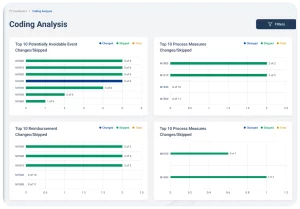
- Ai powered tracking: All claims in the 61-90 day and over 90 day segments are brought into the system for tracking with a follow-up reminder for each claim, payment information, and reasons for nonpayment.
- Claims forecasting: Velocity shows the current financial status of the agency, and with enough data in the system, can provide revenue forecasts simply by entering a future date into the reporting system.
- Pre-built database: All charting codes are built into the system and are searchable by keyword or phrase to reduce coding errors and increase reimbursement rates
- Platform agnostic: For many agencies, switching to a different EMR system costs more than the sticker price on the solution. With Velocity, there is no loss of data because it holds previous EMR data when you switch.
- Advanced Funding: Partners with Velocity have access to their AR funds before claims are processed, with an immediate credit line of up to $100,000, or 80% of the agencies AR.
Differentiation
Whether you need a software solution for your in-house RCM team or are looking to outsource your billing and coding to a partner, choosing the right RCM team is essential for your success. With so many RCM companies available in the market, it can be difficult to choose the right one. To choose the right RCM partner, there are a few factors to consider:
How does the solution or company match with the mission and vision I have for my agency?
HealthRev Partners has an “aspiration to develop innovative solutions that create boundless opportunities for our clients to advance their mission.”
Does the solution have the right tools for my success?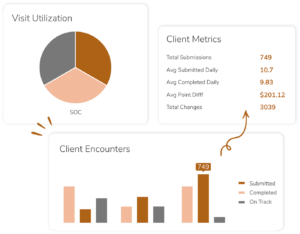
The analytics tools in Velocity can by customized to each agency’s KPIs. Velocity offers a fully supported software solution, a SaaS solution, and everything in-between to provide each agency with the level of support they need to succeed. Clinician productivity reports calculate clinician reimbursement by month. This shows which of your clinicians needs additional training and which should be recognized for their achievements, which can help to decrease your turnover rates. Velocity will custom build additional dashboards and measurements, included in the cost of the software.
Is the software solution safe for my agency and my clients?
Velocity is a HIPAA secure platform and is undergoing SOC-2 certification to protect your organization and the privacy of your patients.
Does the software partner have my best interests in mind?
Have you ever talked to someone who is so passionate about what they do that their energy is contagious? That was my experience in talking with Michael Greenlee, CEO and Founder of HealthRev Partners. Our one-hour scheduled software review meeting turned into a two hour conversation about what Velocity is designed to achieve. We also talked about how much potential it has to help home health, hospice, and palliative care agencies to survive.
Greenlee’s goal for Velocity is to have 0 claims go past 90 days for any agency they work with. They train each of their team members to meet the needs of an individual customer before they touch the account. HealthRev Partners offers “white glove service” to make good agencies great and to help partners dominate their marketplace. Michael partners with agencies he believes in as much as he believes in his own company. “We’re passionate about securing success for home health, hospice, and palliative care agencies across the nation.”
Future Considerations
Michael, Hannah, and I talked at length about what might be possible with Velocity. (So much so that Hannah asked if I was available to attend their next planning meeting.) AI capabilities are evolving and maturing at a rapid rate. Generative AI will become the standard for software solutions in care at home in short order. Michael’s passion for elevating the efficiency and prosperity of his home health, hospice, and palliative care agency partners will undoubtedly lead to even more innovation. Hannah Vale offered, “Our goal is to further enhance the sophistication of the AI. We consistently heed client feedback to creatively address their evolving requirements.”
To book a demo with HealthRev Partners, click here.
# # #
 Kristin Rowan has been working at Healthcare at Home: The Rowan Report since 2008. She has a master’s degree in business administration and marketing and runs Girard Marketing Group, a multi-faceted boutique marketing firm specializing in event planning, sales, and marketing strategy. Additionally, she has recently taken on the role of Editor of The Rowan Report and will add her voice to current Home Care topics as well as marketing tips for home care agencies. Connect with Kristin directly kristin@girardmarketinggroup.com or www.girardmarketinggroup.com
©2024 by The Rowan Report, Peoria, AZ. All rights reserved. This article originally appeared in Healthcare at Home: The Rowan Report. One copy may be printed for personal use: further reproduction by permission only. editor@therowanreport.com
by Kristin Rowan | May 2, 2024 | Clinical, Regulatory
Home health agency failed to protect Joyce Grayson
History
We’ve been following the story of Joyce Grayson since her death in October of 2023. The news was first published in The Rowan Report here on November 8th, 2023.On April 14th, we reported on the pending Senate Bill in Connecticut that would require home health agencies to provide additional information and safety precautions prior to a home visit. The safety of solo workers is now even more important to home health and hospice agencies with the most recent update.
Today
May 1, 2024, the U.S. Department of Labor (DOL) posted a news release on their investigation into the death of Joyce Grayson, a home health nurse in Connecticut. According to the Department of Labor, OSHA has determined that Elara Caring exposed their employees to workplace violence from patients who were known to pose a risk to others. Jordan Health Care Inc. and New England Home Care Inc., both doing business as Elara Caring, have been cited for willful violation of the agency’s general duty clause. OSHA cited them for not developing and implementing safety measures to protect employees from workplace violence. They also cited the agency for failure to report work-related injury and illness records within four business hours.
Repercussions
OSHA has proposed more than $163,000 in penalties against Elara Caring. Elara Caring has 15 days from receipt of the citations to respond, request a hearing, or contest the findings.
“Elara Caring failed its legal duty to protect employees from workplace injury by not having effective measures in place to protect employees against a known hazard and it cost a worker her life,” said OSHA Area Director Charles D. McGrevy in Hartford, Connecticut. “For its employees’ well-being, Elara must develop, implement and maintain required safeguards such as a comprehensive workplace violence prevention program. Workplace safety is not a privilege; it is every worker’s right.”
OSHA found that Elara Caring could have reduced the potential for workplace violence by looking at the root causes of violent incidents and “near misses.” They could also have provided clinicians with background information on patients prior to a home visit. Other recommendations from OSHA include providing emergency panic alert buttons and using safety escorts for visits with high-risk patients.
Future Recommendations
The DOL states that employers should have a comprehensive workplace violence program. This program should include both management and employee involvement. Further, the DOL says this plan should have a written program with a committee. Elements of a workplace violence program include:
- Analysis of a home upon new patient admission
- Hazard prevention and control
- Training and Education
- Resources for Impacted Employees
- Recordkeeping
- Employee Feedback
Implications
If Elara Caring is fined for failure to keep their clinicians safe as a result of the investigation into Joyce Grayson’s murder, state and national level regulations are sure to follow. However, even if the laws in your area don’t change, investing now in workplace safety for your clinicians could save you from similar allegations and fines. As we mentioned in last week’s article about the Senate Bill, we have been in touch with several emergency alert companies and will be providing product reviews in the next few weeks. Start a workforce safety committee, develop a written plan for mitigating dangerous situations, and issue emergency response systems to all of your clinicians before it is your agency under investigation. More importantly, take these steps before your team loses one of its own to workplace violence.
# # #
Kristin Rowan has been working at Healthcare at Home: The Rowan Report since 2008. She has a master’s degree in business administration and marketing and runs Girard Marketing Group, a multi-faceted boutique marketing firm specializing in event planning, sales, and marketing strategy. She has recently taken on the role of Editor of The Rowan Report and will add her voice to current Home Care topics as well as marketing tips for home care agencies. Connect with Kristin directly kristin@girardmarketinggroup.com or www.girardmarketinggroup.com
©2024 by The Rowan Report, Peoria, AZ. All rights reserved. This article originally appeared in Healthcare at Home: The Rowan Report. One copy may be printed for personal use: further reproduction by permission only. editor@therowanreport.com
by Kristin Rowan | Apr 26, 2024 | CMS, Recruitment & Retention, Regulatory
by Kristin Rowan, Editor
The Centers for Medicare and Medicaid Services (CMS) has finalized the “Ensuring Access to Medicaid Services” rule, more commonly known as the 80/20 rule. The 80/20 finalized rule requires at least 80% of Medicaid payments for home care services goes to caregiver wages. No more than 20% can be spent on administrative or other overhead costs. The White House, citing a study by The Commonwealth Fund, says that higher wages for caregivers will reduce turnover. Facing massive workforce shortages, home health, hospice, and supportive care at home agencies have been struggling to recruit and retain an adequate number of caregivers. The higher wage will also increase the quality of care, according to the study.
Prior to the 80/20 rule, there was no law or rule requiring home care agencies to report how they were spending money from federal medical payments. The rule includes requirements for states to create advisory groups to consult on rates and compensation. This changes the current Medical Care Advisory Committee regulations by increasing the percent of beneficiaries on the committee from 10% to 25% over the next two year. The Home Care Association of America (HCAOA) and the National Association for Home Care & Hospice (NAHC) argued that the rule adds administrative requirements to home care agencies while simultaneously reducing the resources available to fund them. NAHC President Bill Dombi said, “We all agree that more needs to be done to support the direct care workforce; however, this policy will make things worse, not better.” NAHC suggests the policy will force some agencies to close and others will leave the Medicaid program altogether, causing patients to have even more problems accessing care.
From the text of the final rule, CMS acknowledges additional comments that the minimum direct payment to caregivers in this rule will create hardships for some agencies. Across the country, there are substantial differences among waiver programs for HCBS that are not accounted for in the rule. There is some flexibility built into the rule to account for these factors, according to CMS. Some of the flexibilities include:
- Excluding some costs from the calculation
- Including clinical supervisors in the calculation
- Allowing states to set a different minimum for small providers
- Allowing states to develop their own criteria to qualify as a small provider
- Allowing states to develop criteria to exempt some providers from the rule
- Exemption from the minimum payment rule for all Indian Health Service and Tribal health programs
The final rule also changes the timeline for complying with the rule from four years after the date of publication to six.
Other comments included the need to address various reasons for the workforce shortage. In addition to low wages, commenters cited the social valuation of direct care work, lack of governmental support for some workforce pipelines, and immigration policies as deterrents to recruitment. One suggested that CMS start looking at creative strategies for developing an atypical workforce.
There were several submitted comments stating the either HHS or CMS or both does not have the authority under the Affordable Care Act to make specific requirements for minimum payments, but only to ensure that each State is assessing payment regulations and ensuring payments are economical, efficient, and ensure quality of care. A specific section of the Affordable Care Act, section 2402(a)(1) requires the Secretary of the Department of Health and Human Services (HHS) to ensure states implement service systems to allocate resources. The provision does not give HHS the authority to dictate the terms of those service systems, only to ensure the states develop those systems. Not surprisingly, CMS disagreed with those comments.
Many people questioned the 80% as being unrealistic, too high, and not based on quality data. CMS cited data from several states, who have pass-through requirements of 80-95% for all rate increases. This is not a minimum payment from all Medicaid payments, only a requirement for a minimum pass-through to direct care workers of increases in rates. Two states, Minnesota and Illinois, currently have minimum payment requirements set at 72% and 77%, respectively. CMS used these two states as justification for the 80% rule, acknowledging that it is higher than both states while also acknowledging that they did not perform a state-by-state study of the impact the 80% rule will have. CMS states the rate was set higher than those states to “encourage further steps towards improving compensation for workers.” CMS believes that requiring HCB agencies to pay their direct care workers a higher percentage of Medicaid rates than any state currently does will somehow make those agencies want to voluntarily pay even more.
The 80/20 Rule and Technology
Technological advances in telehealth, remote patient monitoring, revenue cycle management, scheduling, employee benefits, assistive technology, EVVs, EMRs, CRMs, and other software solutions can and will lower overhead costs and increase efficiency in your agency. Paperwork automation can reduce the time spent on documentation by a significant percentage. Revenue Cycle Management software can reduce claim denials and decrease reimbursement payment cycles so you can get your money faster. They can also reduce the number of unpaid claims. Employee benefit and training software can reduce responsibilities for HR teams, lessen the requirements for clinical supervisors, and cut training time in half, getting your newly recruited caregivers out in the field faster. Scheduling and onboarding software can increase your intake capabilities. The advances in generative AI allow you to create robust reports almost instantly so you can see your agency’s strengths and weaknesses and create plans for improvement.
Some of these costs will be excluded from the calculations for the 80% rule. Now is the time to invest in technology for your agency. Not only will your agency be more efficient and more effective, but you will be able to care for more patients with the same staff you have now, and the software solutions are as close to cost-neutral as they will ever be. We have a list of technology solutions that we’ve recently discovered and will be writing about in the next few weeks. If you are in immediate need of a software solution, contact us directly for a consultation.
Kristin Rowan has been working at Healthcare at Home: The Rowan Report since 2008. She has a master’s degree in business administration and marketing and runs Girard Marketing Group, a multi-faceted boutique marketing firm specializing in event planning, sales, and marketing strategy. She has recently taken on the role of Editor of The Rowan Report and will add her voice to current Home Care topics as well as marketing tips for home care agencies. Connect with Kristin directly kristin@girardmarketinggroup.com or www.girardmarketinggroup.com
©2024 by The Rowan Report, Peoria, AZ. All rights reserved. This article originally appeared in Healthcare at Home: The Rowan Report. One copy may be printed for personal use: further reproduction by permission only. editor@therowanreport.com