Injunctions Overturned

by Kristin Rowan, Editor

District Court Injunctions Overturned

Agencies to resume layoffs.

The now infamous “Memo” from the Office of Management and Budget and the Office of Personnel Management instructed agency leaders to cut their workforce as part of the President’s DOGE Workforce Optimization Initiative. The memo from late February started with divisions and employees whose work was not mandated by law and is not considered essential during government shutdowns.

District Court Block on Workforce Downsizing

In May, District Court Judge Susan Illston ruled that the administration lacked congressional approval to make sweeping cuts, and blocked the federal workforce reductions. The order came after lawsuits from labor unions and nonprofit groups argued that the cuts would have drastic negative effects on the American people. They also posed the argument that reorganizing government functions and laying off workers en masse without congressional approval is not allowed by the Constitution. A panel of the U.S. 9th Circuit Court of Appeals voted against overturning Illston’s order. 

Supreme Court Overrules

On July 8th, the Supreme Court ruled to allow federal agencies to resume the layoff directive. The 8-1 decision lifts one block on reduction in workforce, but there are smaller injunctions across different courts that have not made it to the Supreme Court yet. The decision overturns the injunction for 17 of the 19 agencies included in the initial memo. The Department of Veterans Affairs is among those cleared to resume layoffs. The departments of Defense, Education, Homeland Security and Justice were not included in the directive.

Restructuring Not Included

The Court was careful to convey there has been no decision on whether the reorganization plan for any specific agency is legal. Each agency’s restructuring plan may eventually reach the Supreme Court.

The order also only clears the way for the reduction in workforce. It is also not a blanket green light. The administration has to provide details on how it selects the staff being laid off. In some cases, they must notify Congress and the labor unions. 

Dissent, and Agreement

The Supreme Court decision was 8-1 in favor of overturning the injunction. Only Justice Ketanji Brown Jackson dissented.

“In my view, this decision is not only truly unfortunate but also hubristic and senseless. [The] statutory shortfalls likely to result from implementation of this executive order will be immensely painful to the general public, and the plaintiffs, in the interim, causing harm that includes ‘proliferat[ing] foodborne disease,’ perpetuating ‘hazardous environmental conditions,’ ‘eviscerat[ing] disaster loan services for local businesses,’ and ‘drastically reduc[ing] the provision of healthcare and other services to our nation’s veterans.’”

Kentanji Brown Jackson

Justice, United States Supreme Court

Justice Sotomayor, who voted to overturn the injunction, wrote a one-paragraph solo opinion saying she agrees with Jackson that the administration cannot “restructure federal agencies in a manner inconsistent with congressional mandates.”

“The plans themselves are not before this Court, at this stage, and we thus have no occasion to consider whether they can and will be carried out consistent with the constraints of law,” Sotomayor warned.

Blocks Still Standing

The Supreme Court ruling overturned the injunction put in place on May 22nd by the U.S. District Court for the Northern District of California. This is the only injunction impacted by the ruling. Other injunctions remain in place.

On July 1, U.S. District Judge Melissa DuBose granted an injunction to stop the downsizing and restructuring of HHS. This injunction was not explicitly mentioned in the latest ruling, but could still be impacted.

U.S. District Judge Matthew Maddox ordered the reinstatments of AmeriCorps employees who were laid off or put on leave and blocked any additional reductions that affect union employees. 

U.S. District Judge Myong Joun indefinitely blocked the reduction of workforce of school districts in Boston. An emergency bid with the Supreme Court to lift the block could be heard and decided at any time.

A federal appeals court blocked a 90 percent reduction of the staff at the Consumer Financial Protection Bureau; federal judges reversed similar reductions at DEI foundations, and all actions under Pete Marocco are voided.

Final Thoughts

Numerous cases remain undecided in lower courts and the Supreme Court. Whether any layoffs will be finalized and whether departmental restructing is legal remain to be seen. For now, expect a reduction in personnel at the VA, but not yet at HHS or CMS. We will continue to report on updates as they occur.

# # #

Kristin Rowan, Editor

Kristin Rowan has been working at The Rowan Report since 2008. She is the owner and Editor-in-chief of The Rowan Report, the industry’s most trusted source for care at home news, and speaker on Artificial Intelligence and Lone Worker Safety and state and national conferences.

She also runs Girard Marketing Group, a multi-faceted boutique marketing firm specializing in content creation, social media management, and event marketing.  Connect with Kristin directly kristin@girardmarketinggroup.com or www.girardmarketinggroup.com

©2025 by The Rowan Report, Peoria, AZ. All rights reserved. This article originally appeared in The Rowan Report. One copy may be printed for personal use: further reproduction by permission only. editor@therowanreport.com
 

Fraud, Waste, and Abuse

by Kristin Rowan, Editor

Fraud, Waste, and Abuse

DOJ, HHS False Claims Act

Fraud, Waste, and Abuse has become something of a mantra within the Department of Health and Human Services (HHS). Secretary Kennedy has committed to combatting fraud, waste, and abuse within the federal healthcare system. The Department of Justice (DOJ) and HHS have a long history of working together to combat healthcare frauding under the False Claims Act (FCA).

Working Group

In furtherance of their goal to combat healthcare fraud, HHS and DOJ have formed the DOJ-HHS False Claims Act Working Group. The Working Group will include leadership from the HHS Office of General Counsel, CMS Center for Program Integrity, the Office of Counsel for the OIG, and the DOJ Civil Division.

Working Group Priorities to Combat Fraud, Waste, and Abuse

1. HHS will refer potential False Claims Act violations to the DOJ that are in line with the Working Group priority enforcement areas:

  • Medicare Advantage
  • Drug, device, or biologics pricing
    • arrangements for discounts, rebates, service fees, and formulary placement and pricing reporting
  • Barriers to patient access to care
    • violations of network adequacy requirements
  • Kickbacks related to drugs, medical decives, DME, and other products paid for by federal healthcare programs
  • Materially defective medical devices that impact patient safety
  • Manipulation of Electronic Health Records systems to drive inappropriate utilization of Medicare covered products and services

2. The Working Group will maximize collaboration to expedite investigations and identify new leads. They will leverage HHS resources using data mining and assessment of findings.

3. The Working Group will discuss implementing payment suspension according to the CMS Medicare Program Code of Federal Regulations¹

4. The Working Group will discuss whether DOJ will dismiss a whistleblower case under the U.S. Code for Civil actions for False Claims, pursuant to the DOJ Manual for Civil Fraud Litigation²

Report Fraud, Waste, and Abuse

The Working Group encourages whistleblowers to report violations of the False Claims Act within the priority areas. Tips and complaints from all sources about potential fraud, waste, abuse, and mismanagement can be reported to HHS at 800-HHS-TIPS (800-447-8477). Similarly, the Working Group encourages healthcare companies to identify and report such violations.

Fraud, Waste, and Abuse

²DOJ Dismissal of a Civil Qui Tam Action. When evaluating a recommendation to decline intervention in a qui tam action, attorneys should also consider whether the government’s interests are served, in addition, by seeking dismissal pursuant to 31 U.S.C. § 3730(c)(2)(A).

¹Suspension of payment. The withholding of payment by a Medicare contractor from a provider or supplier of an approved Medicare payment amount before a determination of the amount of the overpayment exists, or until the resolution of an investigation of a credible allegation of fraud.

# # #

Kristin Rowan, Editor

Kristin Rowan has been working at The Rowan Report since 2008. She is the owner and Editor-in-chief of The Rowan Report, the industry’s most trusted source for care at home news, and speaker on Artificial Intelligence and Lone Worker Safety and state and national conferences.

She also runs Girard Marketing Group, a multi-faceted boutique marketing firm specializing in content creation, social media management, and event marketing.  Connect with Kristin directly kristin@girardmarketinggroup.com or www.girardmarketinggroup.com

©2025 by The Rowan Report, Peoria, AZ. All rights reserved. This article originally appeared in The Rowan Report. One copy may be printed for personal use: further reproduction by permission only. editor@therowanreport.com
 

Planned Parenthood Cut Halted

by Kristin Rowan, Editor

Part of Big Beautiful Bill Halted

Medicaid Cuts to Planned Parenthood Blocked

The tax and immigration bill, dubbed “One Big Beautiful Bill,” signed by President Trump on July 4th, included removing all Medicaid payments to any nonprofit organization that provides medical services, received more than $800,000 in federal funding in 2023, and also provides abortions.

On Monday, July 7th, the first business day after the bill was signed into law, U.S. District Judge Indira Talwani granted a temporary halt to Medicaid funding cuts to Planned Parenthood.

Planned Parenthood Claims Unfavorable Treatment

The portion of the bill in question does not specifically name Planned Parenthood. The bill cuts Medicaid funding to groups “primarily engaged in family planning services, reproductive health, and related medical care” that also provide abortions and abortion education. According to the lawsuit, however, because of the federal funding threshold of $800,000, Planned Parentood locations comprise almost all of the impact. 

[It’s a] “naked attempt to leverage the government’s spending power to attack and penalize Planned Parenthood and impermissibly single it out for unfavorable treatment.”

Planned Parenthood

Immediate Decision

The decision came before the federal government responded. Judge Talwani ruled within hours and provided no explanation other than a brief note stating that Planned Parenthood showed good cause for immediate intervention.

Decision Unlikely to Stand

  • The decision came within hours of the lawsuit filing
  • Congress is generally lawfully allowed to make determinations on spending
  • This was an egregious judicial usurpation of legislative power
  • This makes her court look like a fast food drive-through
  • The House could initiate impeachment proceedings against the judge for this decision

These are just a few of the statements made in opposition to the injunction, mostly claiming that the judge did not have the authority to make the decision. Talwani set a hearing for July 21 to hear from both Planned Parenthood and the agencies named in the lawsuit, HHS, and CMS.

Precedent

A previous ruling from the Supreme Court in June of this year provides that any state can remove any provider from the list of “Qualified Providers” using its own Medicaid criteria. The court further ruled that, although patients have the right to choose their own provider, patients do not have the right to sue based on who those qualified providers are.

This lawsuit is the first against the tax and immigration bill, but it is most likely not the last. We will continue to report on this and other lawsuits as they arise.

# # #

Kristin Rowan, Editor

Kristin Rowan has been working at The Rowan Report since 2008. She is the owner and Editor-in-chief of The Rowan Report, the industry’s most trusted source for care at home news, and speaker on Artificial Intelligence and Lone Worker Safety and state and national conferences.

She also runs Girard Marketing Group, a multi-faceted boutique marketing firm specializing in content creation, social media management, and event marketing.  Connect with Kristin directly kristin@girardmarketinggroup.com or www.girardmarketinggroup.com

©2025 by The Rowan Report, Peoria, AZ. All rights reserved. This article originally appeared in The Rowan Report. One copy may be printed for personal use: further reproduction by permission only. editor@therowanreport.com

 

CMS Home Health Proposed Rule 2026

by Kristin Rowan, Editor

CMS Home Health Proposed Rule 2026

June 30th, 2025, the Centers for Medicare & Medicaid Services issued its proposed rule with updates to Medicare payment policies and rates for home health agencies under the Home Health Prospective Payment System Proposed Rule for calendar year 2026.

Payment Adjustments

The Facts, as Listed by CMS

  1. A permanent prospective adjustment to home health payments of -4.059% (not applied to LUPAs)
    • Reasoning: the impact of implementing PDGM
  2. A temporary adjustment of -5.0% (not applied to LUPAs)
    • Reasoning: to recoupe retrospective overpayments
  3. Updates Fixed-Dollar Loss (FDL) adjustment of -0.5%
  4. Payment Update Percentage of 2.4%
  5. Quality data decrease of 2%, offset by the update percentage yields a 0.4% adjustment
  6. Net changes in payment rate from 2025 to 2026 with quality reporting data is -6.40%

Contradictory Facts, as Listed by CMS

  1. The finalized methodology used to calculate the impact of PDGM yielded the need for a -7.85% permanent adjustment
  2. In CY 2023, 2024, and 2025, CMS implemented permanent adjustments of -3.925%, -2.890%, and -1.975%, respectively
  3. The total permanent adjustment made in the last three years is -8.790% (0.940% more than the calculated adjustment need)
  4. CMS has now determined that Medicare is still paying more under PDGM than it did under the old system and is proposing an additional permanent adjustment of -4.059%
  5. This yields a combined -12.849% permanent adjustment over four years
  6. The CMS analysis of estimated aggregate expenditures lead them to propose an additional temporary adjustment of -5.0%

HHCAHPS Survey Changes

Added Questions

  • Whether the care provided helped the patient take care of their health.
  • Whether the patient’s family/friends were given sufficient information and
    instructions.
  • Whether the patient felt the staff cared about them “as a person.”

Removed Questions - Medication

  • Whether someone asked to see all the prescription and over-the-counter medicines
    the patient was taking.
  • Whether the patient is taking any new prescription medicines or whether the patient’s
    medicines have changed.
  • Whether home health providers talked to the patient about the purpose for taking new
    or changed prescription medicines.
  • Whether home health providers talked to the patient about when to take the
    medicines.

Removed Questions - Other

  • Which type of staff served the patient – nurse, PT/OT, or home care aide
  • Whether the patient got information about what care and services they would get when they first started home health care
  • Removal of the proposed changes to include questions on SDOH
  • Minor text changes to clarfiy some existing questions and response options

Other Changes

CMS recommends additional changes in various categories:

  1. Recalibration of the PDGM case-mix weights
    • Update low utilization payment adjustment (LUPA) thresholds
    • Update functional impairment levels
    • Update comorbidity adjustment subgroups
    • Update the fixed-dollar loss (FDL) for outlier payments
  2. Change the face-to-face encounter policy by adding physicians to the list of who can perform the face-to-face
  3. Removal of the “Up-to-date” on the COVID-19 vaccine percentage
  4. Changing the Final Data Submissions Deadline Period from 4.5 months to 45 days
  5. Adding a Termination Clause for DME, prosthetics, orthotics, and supplies competitive bidding program

Requests for Information and Feedback

CMS is seeking feedback on the proposed rule through

August 29th, 2025

  • Feedback on the digital quality measurement transition
  • Feedback on the final data submission deadline from 4.5 months to 45 days
  • Feedback on tools that promote healthy eating habits, exercise, nutrition, and physical activity
  • Feedback on the current state of health IT use, including EHRs
  • Feedback on the proposed changes to DMEPOS
CMS home health proposed rule

The Alliance Responds

“We are alarmed by the negligent proposed payment update, which deepens a heartless pattern of insufficient adjustments that have already led providers to close their doors and reduce services, and now threatens to further diminish care access by compelling more HHAs to take similar actions.”

Dr. Steve Landers

CEO, The National Alliance for Care at Home

You can read the entire Proposed Rule HERE. Read the Fact Sheet HERE.

# # #

Kristin Rowan, Editor

Kristin Rowan has been working at The Rowan Report since 2008. She is the owner and Editor-in-chief of The Rowan Report, the industry’s most trusted source for care at home news, and speaker on Artificial Intelligence and Lone Worker Safety and state and national conferences.

She also runs Girard Marketing Group, a multi-faceted boutique marketing firm specializing in content creation, social media management, and event marketing.  Connect with Kristin directly kristin@girardmarketinggroup.com or www.girardmarketinggroup.com

©2025 by The Rowan Report, Peoria, AZ. All rights reserved. This article originally appeared in The Rowan Report. One copy may be printed for personal use: further reproduction by permission only. editor@therowanreport.com

 

Workplace Violence in Home Health

by Kristin Rowan, Editor

Workplace Violence and Policy Impact

Study of home health workers

A group of researchers from the University of Cincinnati, Ohio published a recent study¹ on the frequency and reporting procedures of workplace violence (WPV) in home healthcare. The study specifically addressed WPV in home healthcare, stating limited understanding of WPV in the home care setting. Most existing studies on WPV were hospital-based.

Frequency of Workplace Violence

Of the home health care workers (HHCW) surveyed, almost 37% responded that they experience both verbal and emotional violence in the workplace daily. More than 80% reported experiencing verbal aggression at some point. Physical violence is less prominent. 20% of respondants said they experience physical violence monthly. However, 56.6% said they have experienced physical violence at some point in their current agency. 76.6% of the time, the perpetrators of the violence are the patients of the HHCW.

Workplace Violence

Fig. 1 Frequency of occurrence of physical, verbal, emotional, and sexual abuse as a function of time: daily, weekly, monthly, <yearly, yearly, and never.

Reporting Workplace Violence

All of the study participants indicated they had knowledge of workplace violence reporting procedures in their agencies, but 26.7% were unsure if the policies are contained in the employee handbook. 46.7% were uncertain as to whether the agency offered WPV or de-escalation training and 66% said prevention and de-escalation training was not mandatory. Unfortunately, 40% said their management did not encourage reporting and 33% said they were not comfortable approaching management about WPV. Despite the frequency of WPV among the respondents, none of the participants reported these incidents to management

Thoughts

According to this, and other research studies on workplace violence in home healthcare, the problem is prevalent and persistent. Most HHCWs have experienced some sort of aggression, violence, or abuse in the course of performing their jobs. Of those who have, most do not report the incidents to management. Most HHCWs have not been trained in prevention or de-escalation. Even with training, HHCWs need a way to get immediate help. Unfortunately, most do not have an emergency alert system on their person during home visits.

    Solution

    Care at Home agencies, including non-medical supportive care, home health, hospice, and any other lone workers who are visiting patients in their homes, need safety policies and procedures. Agencies must include the same in the employee handbook, explain during orientation, and make available to HHCWs digitally. 

      Policies and procedures should include:

      • A safety committee comprised of management, back office staff, and field workers
      • A clearly written policy regarding physical, emotional, verbal, and sexual abuse
        • Against a patient or their family/friends by a HHCW
        • Against a HHCW by a patient or their family/friends
        • Against a HHCW by a colleague or manager
        • Against a HHCW by the environment in which they work (i.e. aggressive pets, weapons, cigarette smoking indoors, etc.)
      • A digital reporting system that employees can use without having to approach management individually
      • A clearly written policy on the management response to violence reporting
      • A clearly written policy forbidding any retaliation or discrimination against a reporting employee
      • Required research about new patients including
        • Background/History of violence and/or mental instability
        • Neighborhood safety rating
        • Family members likely to be in the home and their history of violence and/or mental instability

      Additional Tools for HHCWs

      • Training in
        • Violence prevention
        • De-escalation
        • Situational Awareness
        • Self-defense
      • A mandatory, GPS-enabled, multi-function safety device and platform to proactively manage caregiver safety and respond to incidents
      • Optional escort service for new patients
      • Mandatory escort service for new patients with a history of violence, mental issues, or incarceration

      Workplace violence against HHCWs is not “if,” but “when.” It is the responsibility of the agencies to lower the risk, lower the percentage of “whens,” and encourage reporting. If you’re not sure how to begin, hire a consultant to help you build your safety committee and write your policies. It doesn’t matter how you start implementing safety protocols, as long as you follow through and protect your employees.

      # # #

      Kristin Rowan, Editor, The Rowan Report
      Kristin Rowan, Editor

      Kristin Rowan has been working at The Rowan Report since 2008. She is the owner and Editor-in-chief of The Rowan Report, the industry’s most trusted source for care at home news, and speaker on Artificial Intelligence and Lone Worker Safety and state and national conferences.

      She also runs Girard Marketing Group, a multi-faceted boutique marketing firm specializing in content creation, social media management, and event marketing.  Connect with Kristin directly kristin@girardmarketinggroup.com or www.girardmarketinggroup.com

      ©2025 by The Rowan Report, Peoria, AZ. All rights reserved. This article originally appeared in The Rowan Report. One copy may be printed for personal use: further reproduction by permission only. editor@therowanreport.com
       

      1. Obariase, E.; Bellacov, R.; Gillespie, G.; Davis, K. (2025). Assessing Workplace Violence and Policy Impact: A Cross-sectional Study of Home Healthcare Workers. Home Healthcare Now, 43(3), 150-156. doi: 10.1097/NHH.0000000000001345

      The Alliance Responds

      by Kristin Rowan, Editor

      The Alliance Responds to CMS Hospice Update

      The Alliance responds to CMS-1835-P, the FY 2026 Hospice Wage Index, Conditions of Participation, and Quality Reporting Program Requirements updates. On June 10, 2025, in a 25 page letter to Dr. Mehemet Oz, CEO for The National Alliance for Care at Home Steve Landers, MD, MPH lays out the constraints and financial burdens hospice agencies will face if these updates are enacted. 

      Payment Rate Update

      Increase Less than Inflation

      In the rule for FY 2026, CMS proposes a 3.2 percent market basket increase and a .8 percent productivity decrease, yielding a 2.4 percent increase overall. According to the letter, inflation has raised medical care prices by 3.1 percent, leaving a shortfall of .7 percent. Hospices are also plagued by the same workforce shortage the rest of the medical industry faces. Workforce shortages result in fewer qualified people than there are available positions, which drives wages up. BLS data indicates the wage increase for 2025 was 4.4%. The Alliance argues that the 2.4% net increase falls well short of the actual expense increase.

      Faulty Data

      In a recent article, we outlined the process that CMS uses to determine the market basket update. The Alliance echos our information, showing the market basket forecast is well below actual increases. The Alliance further argues that the shortfall compounds, leaving the base rate increasingly smaller with each forecast. The current estimate is a 4.9% pay rate gap. CMS contends there is no way to adjust for forecast errors. The Alliance has a simple solution: manually adjust the payment rate every year when the finalized number are above the forecasted numbers BEFORE adding the next year’s payment rate increase.

      Likewise, The Alliance concurs with The Rowan Report sentiment that productivity cannot increase in hospice like it does in less labor-intensive sectors. Landers also mentions the failure to consider travel costs, the wage differences in rural areas, and the lack of reclassification options in hospice care.

      Payment Rate Recommendations

      As any well-drafted response should, The Alliance provides actionable recommendations in each section. For payment rate updates, The Alliance recommends:

      • We recommend CMS examine closely more recent data and increase final payment rates for FY 2026.
      • We urge CMS to explore all available avenues to address the forecast error shortfall, such as through a one-time adjustment.
      • We encourage CMS to collaborate with stakeholders to address the shortcomings of relying upon hospital data to determine hospice payment rates, and ways to achieve parity across provider types with respect to geographic area wage adjustments.

      HIS to HOPE Transition

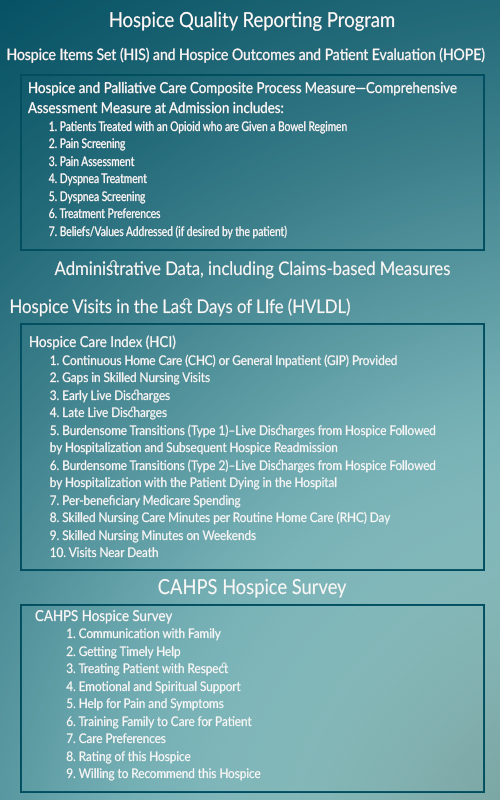
      Also addressed in the letter is opposition to the timeline of the HIS to HOPE transition. The Alliance restates much of what was in the joint letter to CMS urging the delay of the HOPE tool adoption. That letter was a joint venture between The National Alliance for Care at Home (The Alliance), LeadingAge, and the National Partnership for Healthcare and Hospice Innovation (NPHI).

      The consequence of adverse outcomes cannot be understated. The risk of negative financial consequences for hospice providers is
      largely dependent this year on the success of two transitions—iQIES and HOPE— neither of which are within their control.

      Steve Landers, MD, MPH

      CEO, National Alliance for Care at Home

      HOPE Transition Recommendations

      • Considering the volatility inherent in a reporting transition of this magnitude and the lack of clear information provided to date, we respectfully request CMS waive the HOPE timeliness submission requirement for two calendar quarters post implementation.
      • We further respectfully request that CMS delay the HOPE implementation date until at least six months after CMS education and training, beyond that which is introductory and that is scheduled for spring/summer 2025, the final validation utility tool specifications are available and the application for iQIES access has been opened for hospices.

      Digital and Future Hospice Measurements

      Among the digital hospice measurements is an interoperability measurement. The Alliance supports interoperability and data exchange across medical care entities, but stresses to CMS that many hospices do not have digital EHR systems, cannot afford to maintain such systems, and have not received the federal financial support necessary to meet this objective.

      The Alliance also objects, not in theory, but in practical application, to the nutrition measure noted in future hospice measures. Nutrition for a hospice patient is vastly different than for other patients and should be implemented as a process measure, rather than having specific goals for food intake and nutrition.

      Similarly, the well-being measure is not designed for hospice care. In other sectors of healthcare, well-being incorporates measures for mental, social and physical health and focuses on curative plans. Hospice care focuses on person-centered care, emphasizing the desires of the patient as they are balanced against religious, cultural, and personal beliefs. The well-being measure must be curated to fit hospice care.

      The Alliance - Conclusion

      The Alliance values CMS’s ongoing commitment to enhancing hospice care quality,
      ensuring program integrity, and improving patient outcomes. We appreciate your
      consideration of our comments and look forward to ongoing dialogue to achieve these
      shared objectives.

      The Rowan Report - Conclusion

      The Alliance has, as always, done an exemplary job at explaining the industry position on the CMS rule. Likewise, it has outlined each step CMS should take to view the updates through a hospice lens rather than a hospital lens. We commend and support The Alliance statement and position. As this is an ongoing topic until the final rule is implemented, we will continue to provide updates as they become available. 

      If you are a member of The Alliance, you can read the full 25 page letter here.

      # # #

      Kristin Rowan, Editor
      Kristin Rowan, Editor

      Kristin Rowan has been working at The Rowan Report since 2008. She is the owner and Editor-in-chief of The Rowan Report, the industry’s most trusted source for care at home news, and speaker on Artificial Intelligence and Lone Worker Safety and state and national conferences.

      She also runs Girard Marketing Group, a multi-faceted boutique marketing firm specializing in content creation, social media management, and event marketing.  Connect with Kristin directly kristin@girardmarketinggroup.com or www.girardmarketinggroup.com

      ©2025 by The Rowan Report, Peoria, AZ. All rights reserved. This article originally appeared in The Rowan Report. One copy may be printed for personal use: further reproduction by permission only. editor@therowanreport.com
       

      UnitedHealth Bribes Nurses

      United Health Bribery Update

      In the weeks since the below article revealed allegations against UnitedHealth, members of Congress are calling for action. At least one US Senator and two Representatives are engaged in the allegations. Senator Wyden (D-OR) announced that his office is launching its own investigation. Senator Hawley (R-MO), who is on the investigations subcommittee said it was “alarming to hear these serious allegations. I look forward to securing justice for patients, policyholders, and whistleblowers alike who’ve been harmed by insurance companies.” Other Senators expressed similar sentiments.

      “If these allegations are true, UnitedHealth must be held responsible for their gross abuse of patients. Patients should always come before profits.”

      Buddy Carter

      Chair of the House subcommittee on health, U.S. Representative, (R-GA)

      Three U.S. Representatives, coming from both sides of the aisle, are calling on the DoJ to investigate. A letter to the DoJ reads:

      “The Guardian’s findings reveal the need for a wide-ranging investigation by the Department of Justice into years, if not decades, of potential waste, fraud, and abuse at UnitedHealth.”

      Here is another take on the breaking news story, published by whistlebloweraid.org

      The Guardian has uncovered some truly disturbing information about UnitedHealth Group. As the investigation and reporting belongs to them, I have reprinted the first part of the article here. Read the full article here.

      by George Joseph, The Guardian
      Wed May 21, 2025

      Revealed: UnitedHealth secretly paid nursing homes to reduce hospital transfers

      A Guardian investigation finds insurer quietly paid facilities that helped it gain Medicare enrollees and reduce hospitalizations. Whistleblowers allege harm to residents

      UnitedHealth Group, the nation’s largest healthcare conglomerate, has secretly paid nursing homes thousands in bonuses to help slash hospital transfers for ailing residents – part of a series of cost-cutting tactics that has saved the company millions, but at times risked residents’ health, a Guardian investigation has found.

      UnitedHealth paid nursing homes

      Those secret bonuses have been paid out as part of a UnitedHealth program that stations the company’s own medical teams in nursing homes and pushes them to cut care expenses for residents covered by the insurance giant.

      In several cases identified by the Guardian, nursing home residents who needed immediate hospital care under the program failed to receive it, after interventions from UnitedHealth staffers. At least one lived with permanent brain damage following his delayed transfer, according to a confidential nursing home incident log, recordings and photo evidence.

      “No one is truly investigating when a patient suffers harm. Absolutely no one,” said one current UnitedHealth nurse practitioner who recently filed a congressional complaint about the nursing home program. “These incidents are hidden, downplayed and minimized. The sense is: ‘Well, they’re medically frail, and no one lives for ever.’”

      Confidential Investigation

      The Guardian’s investigation is based on thousands of confidential corporate and patient records obtained through sources, public records requests and court files, interviews with more than 20 current and former UnitedHealth and nursing home employees, and two whistleblower declarations submitted to Congress this month through the non-profit legal group Whistleblower Aid.

      The documents and sources provide a never-before-seen window into the company’s successful effort to insert itself into the day-to-day operations of nearly 2,000 nursing homes in small towns and urban commercial strips across the nation – an approach which has helped UnitedHealth secure a vast stream of federal dollars from Medicare Advantage plans that cover more than 55,000 long-term nursing home residents.

      UnitedHealth Responds

      UnitedHealth said the suggestion that its employees have prevented hospital transfers “is verifiably false”. It said its bonus payments to nursing homes help prevent unnecessary hospitalizations that are costly and dangerous to patients and that its partnerships with nursing homes improve health outcomes.

      Long-Term Profit

      UnitedHealth Profit over Patients

      Under Medicare Advantage, insurers collect lump sums from the federal government to cover seniors’ care. But the less insurers spend on care, the more they have for potential profit – an opportunity that UnitedHealth higher-ups have systematically sought to exploit when it comes to long-term nursing home residents.

      To reduce residents’ hospital visits, UnitedHealth has offered nursing homes an array of financial sweeteners that sounded more like they came from stockbrokers than medical professionals.

      Seven Years of Bribery and Threats

      Over the past seven years, the company has shelled out “Premium Dividend” and “Shared Savings” payments that boosted nursing homes’ bottom lines. Through its “Quality and Shared Risk” program, UnitedHealth offered an even bigger cut to nursing homes that drove down medical spending, but threatened to claw back money from those that didn’t, according to former employees and internal corporate documents.

      “You gain profitability by denying care, and when profitability suffers for the shareholders, that’s when people get crazy and do things that are not appropriate.”

      Anonymous

      Former National Executive, United Health

      # # #

      © 2025 This article is reprinted from The Guardian. The full article can be accessed here. For more information or for permission to reprint, please contact The Guardian directly.

      BREAKING NEWS: Intrepid USA Files Bankruptcy

      by Kristin Rowan, Editor

      *Editor’s note: This article has been updated to remove inaccurate information from the Intrepid USA website.

      Intrepid USA Files Bankruptcy

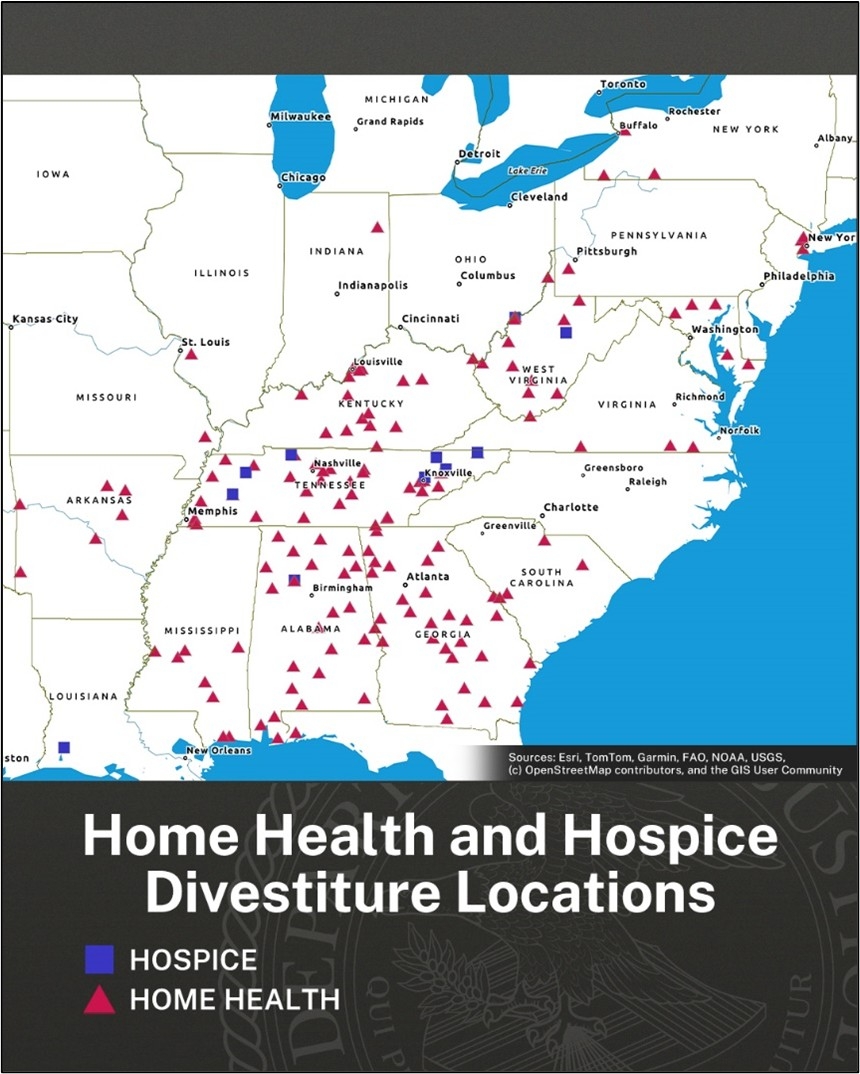
      Intrepid USA, once among the largest providers of home health and hospice services, files bankruptcy in Texas. With more than $90 million in revenue in 2023, Intrepid operated more than 60 home health and hospice locations in 17 states. The Chapter 7 filing leaves no road to recovery. Chapter 7 allows the company to liquidate assets and distribute the proceeds. According to the Texas Southern Bankruptcy Court, Intrepid USA filed a voluntary petition for Chapter 7 bankruptcy on May 29, 2025.

      Troubled History Plagues Company

      Intrepid USA has a troubled past that it seems may have caught up with them. The U.S. Department of Justice (DoJ) alleges that between 2016 and 2021, Intrepid home healthcare agencies engaged in fraud. In violation of the False Claims Act, Intrepid filed Medicare claims for patients who did not qualify for home health, services that were not medically necessary, services provided by untrained staff, and services that were never provided. In August, 2024, Intrepid agreed to pay $3.85 million to resolve the allegations. The allegations were brought to the DoJ by two former employees of Intrepid under whistleblower provisions.

      This is not the first DoJ lawsuit against Intrepid USA. In 2006, when Intrepid owned 150 agencies across the country, the company entered into an $8 million settlement agreement to resolve similar allegations. The DoJ alleged that from 1997 to 2004 Intrepid violated the False Claims Act by billing Medicare and TRICARE for services not provided by a qualified person, failing to maintain complete documentation for its claims, and other violations of Medicare regulations. Additionally, the DoJ alleged that Intrepid, in 2002 and 2003, fraudulently billed Medicaid for home care services provided to patients who were hospitalized at the time of the supposed care.

      Private Equity Backing

      Sometime around Q3 of 2006, Intrepid USA received financial backing from Patriarch Partners, led by Lynn Tilton. In August of 2020, Patriarch filed a notice of removal with the Supreme Court of New York. In 2021, Intrepid announced it was gearing up for rapid growth fueled by new private equity investors. Then CEO John Kunysz indicated the infusion of capital would fund opportunities for growth through acquisition.

      Divest, not Acquire

      Despite the influx of capital and the plan to grow through acquisition, by 2024, Intrepid was selling its assets. In August of 2024, Humana acquired 30 Intrepid branch locations and rebranded them under the CenterWell Home Health brand. The sale was part of Patriarch Partners’s Zohar Funds bankruptcy case. In November of 2024, New Day Healthcare acquired Intrepid’s hospice locations in Missouri and Texas.

      $0 Revenue; 0 Value

      The bankruptcy filing shows that Intrepid USA had $90 million in revenue in 2023, $50 million in revenue in 2024, and $0 in revenue so far in 2025. Chapter 7 bankruptcy is usually supervised by the court, allowing the filing company to sell assets without having to use the revenue generated by the sale to pay off debts. Intrepid listed $1 to $10 million in assets and $88 million in debts at the time of the filing. 

      Intrepid USA files bankruptcy
      Intrepid USA Files Chapter 7 Bankruptcy

      Who will take the loss?

      The Intrepid USA website still lists 55 active home health and hospice locations in 11 states. However, 30 of those locations are now listed on the CenterWell website and at least 5 other locations were part of the sale to New Day Healthcare. It is unknown if Intrepid has any locations still in operation. The company did not respond to our request for a statement.

      The website also has a list of partners and investors. The Rowan Report reached out to the partners with whom we are familiar for more information. We will provide updates from them once we reach them.

      Final Thoughts

      The recent divestiture of home health and hospice locations to New Day and CenterWell will hopefully minimize the number of patients who are losing their home health or hospice provider. Millions of dollars in future fraudulent claims will remain in the Medicare, TRICARE, and Medicaid coffers. Conversely, the partners and investors in Intrepid USA may face some loss. We will provide any important updates and comments from the impacted companies as available.

      # # #

      Kristin Rowan, Editor
      Kristin Rowan, Editor

      Kristin Rowan has been working at The Rowan Report since 2008. She is the owner and Editor-in-chief of The Rowan Report, the industry’s most trusted source for care at home news, and speaker on Artificial Intelligence and Lone Worker Safety and state and national conferences.

      She also runs Girard Marketing Group, a multi-faceted boutique marketing firm specializing in content creation, social media management, and event marketing.  Connect with Kristin directly kristin@girardmarketinggroup.com or www.girardmarketinggroup.com

      ©2025 by The Rowan Report, Peoria, AZ. All rights reserved. This article originally appeared in The Rowan Report. One copy may be printed for personal use: further reproduction by permission only. editor@therowanreport.com
       

      Fraudsters Arrested, Oz Issues Warning

      by Kristin Rowan, Editor

      Fraudsters Arrested, Oz Issues Warning

      Fraud in California

      Fraudsters arrested in West Covina, CA this week were allegedly running a Medicare scheme. Authorities arrested hospice owner-operator Normita Sierra. They charged her with nine counts of health care fraud, one count of conspiracy, and four counts illegal remuneration (kick-backs) for health care referrals. The U.S. Attorney’s Office named co-conspirator Rowena Elegado. They also arrested her and charged her with one count of conspiracy and four counts of illegal remuneration for health care referrals.

      Kickbacks

      Sierra and Elegado worked together to pay marketers to recruit patients who did not have a hospice referral from their PCP and who were not terminally ill. Some of the kickbacks paid to marketers were as high as $1,300 per patient per month. After six months, the patients were referred out to Sierra’s home health company.

      Medicare Claims

      According to the U.S. Attorney’s Office, from 2018 to 2022, Sierra’s hospice agences submitted $4.8 million in fraudulent claims. Of those claims, Medicare paid approximately $3.8 million.

      Dr. Oz Issues Warning

      In a video statement, Dr. Oz explained how Medicare recipients are falling victim to scams. Sales people call, email, and even knock on your door, offering advice, free samples, and referrals. These marketers have one goal: get you sign a piece of paper. That paper signs you up for hospice care and agrees to allow a specific hospice agency to provide that care. The hospice agency then bills Medicare for services they never provide. Watch the video statement here.

      HHS OIG Issues Consumer Alert

      In a similar statement, HHS issued a consumer alert regarding DME companies. The alert warns that some DME companies are contacting Medicare beneficiaries. They claim to work for or on behalf of Medicare. Once they receive the patient’s Medicare number, they bill Medicare for unnecessary medical items. These items include urinary catheters, knee and back braces, orthotic braces, and prescription drugs, which may or may not ever be sent to the patient. HHS urges enrollees not to give their Medicare number to anyone. Further, they suggest regulary reviewing items charged to insurance, and refusing delivery of any medical supply not ordered by a physician.

      Oz Issues Warning
      Fraudsters Arrested

      Combating Waste, Fraud, and Abuse

      Dr. Oz and CMS have spoken numerous times about combatting the waste, fraud, and abuse withing the Medicare and Medicaid systems. Originally a strong proponent for Medicare Advantage, Oz has promised to audit MA after discovering the government pays more for MA than traditional Medicare. Oz also promised to reduce the amount of prior authorization requests needed before a patient gets services. Oz responded to the Republican-backed House bill requiring more oversight on Medicaid eligibility. Oz indicated that some Medicaid patients are enrolled in more than one state and that Medicaid is paying for able-bodied patients. The waste, fraud and abuse across Medicare and Medicaid is costing the government between $1 and $10 billion and Dr. Oz plans to find it and make significant changes to the management of the system.

      A Cautionary Tale for Hospice Providers

      You may be thinking, “What does this have to do with me?” Unfortunately, even the most scrupulous hospice agencies can fall prey to marketers running schemes. There are legitimate referral resources in the market who can help your agency get more referrals and more clients. There are also underhanded marketers who know how the system works. These predators will promise new referrals (for a fee) and then enroll uneligible patients without your knowledge. If you are working with or looking for a referral partner for your hospice agency, use one that is referred by someone you trust, and/or do a lot of research on the company history before working with anyone. Be especially wary of the ones who promise much more than what most referral companies offer.

      # # #

      Kristin Rowan, Editor
      Kristin Rowan, Editor

      Kristin Rowan has been working at The Rowan Report since 2008. She is the owner and Editor-in-chief of The Rowan Report, the industry’s most trusted source for care at home news, and speaker on Artificial Intelligence and Lone Worker Safety and state and national conferences.

      She also runs Girard Marketing Group, a multi-faceted boutique marketing firm specializing in content creation, social media management, and event marketing.  Connect with Kristin directly kristin@girardmarketinggroup.com or www.girardmarketinggroup.com

      ©2025 by The Rowan Report, Peoria, AZ. All rights reserved. This article originally appeared in The Rowan Report. One copy may be printed for personal use: further reproduction by permission only. editor@therowanreport.com
       

      Delay HOPE Tool

      by Kristin Rowan, Editor

      Advocacy Groups to CMS:

      Delay HOPE Tool Implementation

      “Delay HOPE Tool Implementation,” say multiple hospice advocacy groups. LeadingAge, the National Alliance for Care at Home (The Alliance), and the National Partnership for Healthcare and Hospice Innovation (NPHI) are urging CMS to delay the transition from HIS to HOPE. The three groups sent a joint letter to Dr. Mehmet Oz, CMS Administrator, earlier this week.

      “Our associations remain fully committed to the [Hospice Quality Reporting Program (HQRP)], including the payment penalties for non-compliance, and recognize the critical importance of accurate, timely data submission to inform the delivery of high-quality hospice care. However, we have serious concerns about the potential for successful implementation of the HOPE tool.”

      LeadingAge, The Alliance, NPHI

      Hospice Advocacy

      The concerns over agency readiness to implement the new tool center on the new reporting platform. Hospice agencies state they don’t have all the necessary information to develop a workable tool for submission. Therefore, the agencies have asked CMS to delay the implementation of the HOPE tool. They have called on CMS to wait until six months after agencies have access to education, training, and final validation specifications.

      Hospice Rule Penalty

      The hospice program through CMS requires substantial reporting for payment. Hospices that do not submit the required 90% of records, they receive an annual payment penalty of 4%. Combined with lower than sustainable payment increases, the 4% penalty results in a lower reimbursement rate over prior years. The associations worry that the lack of information and education will lead to lower reporting. In turn, the lower reporting lowers reimbursement rates. For hospices that are already struggling to survive, the penalty is devastating. The letter to CMS asked to waive the timeliness requirement for two quarters after implementation.

      HOPE Tool Lacks Validation

      CMS will have a Validation Utility Tool that agencies will need to use in order to ensure their software can successfully submit their data. CMS has not released the tool and indicates they may not until sometime in September. The HOPE tool is scheduled for implementation in October. There is not enough time between release of the validity tool and implementation of the HOPE tool for proper testing.

      Hospice Agencies Lack Validation

      In addition to validating data submission, hospice agencies have to enroll in the new submission portal, iQUIES. Enrollment requires a privacy security official and other staff. Additionally, it requires an application to access the system, background checks, and other actions. Thus far, hospice agencies do not have access to begin this process and there is no indication of how long it will take. The associations are concerned that the process may also involve significant financial cost to hospice agencies.

      Resources

      CMS released the Hospice Outcomes and Patient Evaluation (HOPE) Guidance Manual v1.01, a 138 page PDF, available here. The manual includes links to other resources for hospice agencies. Namely, a webpage with information on HOPE Data Submission Specifications has a “final” version of data specs available for download. Additionally, there are links to the Main Page here and technical information and updates here. The document urges vendors to register to get updates and important announcements.

      Final Thoughts

      There is no information yet as to a response to the letter from CMS. Thus far, CMS is still planning on keeping the October 1, 2025 HOPE implementation date. We will continue to report on updates from CMS and the advocacy groups.

      # # #

      Kristin Rowan, Editor
      Kristin Rowan, Editor

      Kristin Rowan has been working at The Rowan Report since 2008. She is the owner and Editor-in-chief of The Rowan Report, the industry’s most trusted source for care at home news, and speaker on Artificial Intelligence and Lone Worker Safety and state and national conferences.

      She also runs Girard Marketing Group, a multi-faceted boutique marketing firm specializing in content creation, social media management, and event marketing.  Connect with Kristin directly kristin@girardmarketinggroup.com or www.girardmarketinggroup.com

      ©2025 by The Rowan Report, Peoria, AZ. All rights reserved. This article originally appeared in The Rowan Report. One copy may be printed for personal use: further reproduction by permission only. editor@therowanreport.com