Fraud and Abuse Compliance

Admin

by Elizabeth E. Hogue, Esq.

Fraud and Abuse Compliance

Why All Providers Should Have One

Providers may have heard or read about the importance of Fraud and Abuse Compliance Programs in their organizations. Despite the wealth of available information about Compliance Programs, many providers continue to express uncertainty about their value. 

Coincidentally, as we are preparing to publish this article, HHS publishes this report on the compliance audit of Guardian Home Care, LLC. 

Here are some of the questions providers often ask about Compliance Programs:

Why should we have a Fraud and Abuse Compliance Program?

First

The Office of Inspector General (OIG) of the U.S. Department of Health and Human Services (HHS) has clearly stated that all providers are now required to have current Compliance Programs that are fully implemented. 

Next

As a practical matter, when providers establish and maintain Compliance Programs, it clearly discourages regulators from pursuing allegations of fraud and abuse violations. Jody Hunt, formerly of the DOJ, says providers should create robust fraud and abuse compliance programs. Then providers can argue that they shouldn’t be liable for violations because their compliance programs demonstrate that they had no intent to commit fraud.

Technically speaking, the Federal Sentencing Guidelines make it clear that establishment and implementation of Compliance Programs is considered to be a mitigating factor. That is, if accusations of criminal conduct are made, the consequences may be substantially less severe as a result of a fully implemented Compliance Program.

Additionally

Providers with Compliance Programs are more likely to avoid fraud and abuse. This is because Programs routinely establish an obligation on the part of every employee to report possible instances of fraud and abuse and include training for all employees.

Compliance Programs may also help to prevent qui tam or so-called “whistleblower” lawsuits by private individuals, rather than by government enforcers, who believe that they have identified instances of fraud and abuse. There are significant incentives to bring these legal actions since “whistleblowers” receive a share of monies recovered as a result of their efforts. Some “whistleblowers” have received millions of dollars.  Compliance Programs make it clear that employees have an obligation to bring any potential fraud and abuse issues to the attention of their employers first.

Also…

The federal Affordable Care Act (ACA) requires providers to have Compliance Programs. In short, it’s the law!

Finally

The Deficit Reduction Act (DRA) requires providers who receive more than $5 million in monies from state Medicaid Programs per year to implement policies and procedures, provide education to employees and put information in their employee handbooks about fraud and abuse compliance. These requirements can be met through implementation of Fraud and Abuse Compliance Programs.

We don't receive reimbursement from the Medicare or Medicaid Programs.

Do we still need a Compliance Program?

Statutes and regulations governing fraud and abuse also apply to providers who receive payments from any federal and state healthcare programs, including Medicaid, Medicaid waiver and other federal and state health care programs, such as Tri-Care. Many private insurers have followed the federal government’s “lead” in terms of fraud and abuse enforcement.  So private duty providers must have compliance programs, too.

Should we just use the model guidance that is applicable to us?

We hear that the OIG has provided guidance for various segments of the healthcare industry regarding Compliance Programs. Specifically, the OIG has already published guidance for clinical laboratories, hospitals, home health agencies, skilled nursing facilities (SMFs), hospices, physicians’ practices, third-party billing companies and home medical equipment companies. The OIG will publish updated guidance for all providers, It has already done so for SNFs.

The answer is “No!” Guidance from the OIG is not a model Compliance Program. Guidance from the OIG consists of general guidelines and does not constitute a valid Compliance Program. In addition, the OIG has made it clear that Programs must be customized for each organization. 

Do we have to conduct internal audits first?

We have read that, before implementing Compliance Programs, providers must conduct expensive internal audits that can take many months to complete. Is this true?

While beginning the compliance process with an extensive internal audit is certainly one way to proceed, it is not the only viable way to work toward compliance. It is equally valid to begin with Compliance Programs that are customized for the organization that includes training for all employees about fraud and abuse and Compliance Programs. Then all staff members can subsequently participate in internal compliance activities, including audits, with a process in place to handle any issues that arise as a result of the audits.

We already have policies. Why do we need a Compliance Program too?

Compliance Programs are specific types of documents that routinely address issues that providers do not usually cover in internal policies and procedures. In addition, providers may not gain benefits under the Federal Sentencing Guidelines described in the first question above if there is no formal document called a Compliance Program.

We're accredited. Doesn't that mean we are in compliance?

On the contrary, Compliance Programs appropriately address potential fraud and abuse issues. They also include mechanisms for helping to ensure compliance such as processes for identification and correction of potential problems that are not addressed during the certification process. In other words, organizations may be accredited but fail to meet applicable compliance standards for fraud and abuse.

Will it help with investigations?

Will the fact that our organization has a Compliance Program make any difference with regard to the outcome of fraud and abuse investigations and the imposition of Corporate Integrity Agreements (CIA’s)? 

Yes, it may make a considerable difference based on statements from the OIG. If providers have Compliance Programs in place that are current and fully implemented, the OIG may be less aggressive in pursuing potential violations. When the OIG actually discovers problems with fraud and abuse in organizations, providers are usually asked to develop and implement a Corporate Integrity Agreement (CIA). The OIG often requires CIA’s to include a process for stringent monitoring by the OIG on a continuous basis. These monitoring activities can be extremely burdensome to providers in terms of both time and money. Providers with valid Compliance Programs are not necessarily asked to develop and implement CIA’s. 
Fraud and Abuse Compliance

Final Thoughts

Now is the time for all providers to recognize and act upon the need to establish and maintain Compliance Programs. “Working on it” is no longer good enough.

Elizabeth E. Hogue, Esq.

Elizabeth Hogue is an attorney in private practice with extensive experience in health care. She represents clients across the U.S., including professional associations, managed care providers, hospitals, long-term care facilities, home health agencies, durable medical equipment companies, and hospices.

©2025 Elizabeth E. Hogue, Esq. All rights reserved.

No portion of this material may be reproduced in any form without the advance written permission of the author.

©2025 by The Rowan Report, Peoria, AZ. All rights reserved. 
Can This New Software Eliminate Fraud and Billing Errors?

Admin

by Tim Rowan, Editor Emeritus

Software Eliminates Fraud and Errors

Like so many Home Care providers, Aspen Home Care in Kansas City, Missouri was drowning in paper. Two hundred caregivers turned in weekly timesheets every Friday. A large office staff had to go through them, looking for errors, omissions, and unauthorized visits and shifts. Submitting erroneous claims, of course, leads to payment denials, even fines. When an agency submits too many bad claims every week over a long period, a surveyor will soon be knocking at their door.

The Hurdles

On a good week, Aspen completed all necessary payroll and billing tasks and had bills ready to submit by end of business on the following Thursday. Slowing down the process were the usual errors — forgotten check-outs, more hours worked than authorized, and late timesheet submission. Caregivers grew weary of the weekly phone calls asking for clarification, even when the error was their fault. Aspen did have a basic billing system, but paper timesheets fed it too. Electronic Visit Verification was possible, but only via a patient’s landline, using punched-in identification codes.

Then... the call came

“After years of software design, we have completed our replacement for your billing and EVV system. We would like you to switch from the basic system we sold you a few years ago and beta test our better one.”

– Henry (Hank) Schwab, Owner, Compliance Plus

Beta testing is a risky venture, but both owner Ahmed Jara and Office Manager Mohammed Mohammed* trusted Hank and agreed to give it a try. After all, the agency was drowning in paper, they reminded each other.

Dramatic Process Improvements

We took part in a demo of the Compliance Plus system before speaking with Mohammed and hearing Aspen’s experience. We saw a comprehensive, user-friendly system, with a color-coded user interface, that includes scheduling, EVV, and billing for Medicaid, Managed Care, and all other payers an agency contracts with.

Time Tracking

Caregivers clock in and out with an app that is GPS-enabled down to exact longitude and latitude coordinates. Should a patient live in an internet dead zone, caregivers can use their landline. If there is no landline, Aspen will install a “smart fob” in the home. Aspen does not require specific visit start times, but once a check-in is recorded, the app knows the patient’s authorized hours and automatically alerts the caregiver when it is time to clock out.

Verification

Mistakes do happen, of course, but fixing them is not difficult. When the Compliance Plus back end sees a 14-hour visit, it assumes the caregiver forgot to check out. The visit flashes red on the screen, indicating it is not ready to bill, and displays the difference between authorized and recorded hours. The office employee managing exceptions simply calls the caregiver for verification and then manually edits the end time, and compliance is maintained.

Caregiver Feedback

Mohammed told us his caregiving staff is thrilled with the app, though he did say the transition was hard at first. “They learn to use it in about 30 minutes,” he said. “Check-in and check-in take a few seconds and now they are happy to be done with paper forever, not to mention no longer having to deliver paper timesheets to the office.” He added that fake check-ins from the car on the way to a patient’s home have been completely eliminated.

Most importantly, the three-person office staff now completes payroll and billing for 200 caregivers by midday on Tuesday instead of late on Thursday.

The "Plus" of Compliance Plus

Certainly, procedural efficiencies are important, and many scheduling and EVV systems force caregivers to check in and check out in the presence of the patient and alert office staff when a caregiver arrives late or is a no-show. What we saw during our demo, however, we have not seen elsewhere. Compliance Plus automates the tedious task of rooting out EVV, billing, and payroll errors so efficiently, payment denials, aggregator rejections, and incorrect paychecks are virtually eliminated.

Denials are Rare

Mohammed confirmed what we saw in the demo. The file that includes hours, authorizations, patient demographics, and pre-arranged pay rates is prepared and perfected in advance. Then, the system uploads the same corrected file to the aggregator and to state and other payers. “If we need to fix hours or a bill, we do it before uploading to all entities,” he said. “We rarely get rejections from the aggregator or denials from payers.”

Aggregated Data

One of the requirements of payers and EVV aggregators is that all patient and caregiver names and other information must be in their respective databases in advance. Compliance Plus finds missing data and removes a bill from the file before it is uploaded, notifying the user with a red flag. Mohammed added, “We have to make sure all patient data is in system, but that is easy to do.”

Implementation and Training

In every home care agency, there is always a measure of trepidation among the staff when switching from familiar paper to automation. Aspen Home Care was no different when owner Ahmed Jara announced that he had accepted Hank’s invitation to join a beta test. Mohammed told us that his staff’s time from implementation to software expertise took a little less than three months. Compliance Plus customer relationship manager Sara Moore conducted online training of key office staff, a service that is included in Aspen’s monthly fee. Mohammed and a couple others trained the rest of the staff on the full system and then caregivers on the use of the app.

“After a short while, the new system became our normal workflow,” Mohammed commented. “The only speed bump is when they upload new features. We need to spend a little time learning them, but ultimately, the new features improve our workflow. Our caregivers pick up the app in about 30 minutes, including new hires.”

Favorite Features

He added that his 200 caregivers like checking in and out on the app better than the legacy ANI system, which used the patient’s landline for automatic number identification. “English is a second language for some of our caregivers, and they sometimes had trouble with the ANI prompts spoken by the computerized voice,” he explained. “GPS verification is the best feature. If a caregiver checks in from too far away, we see their distance from the patient’s home on a map, and we gently ‘re-educated’ them and it does not happen again. In the past, they would sometimes get away with asking a family member to check in for them from the patient’s landline. Those days are gone.”

He also told us that Aspen does not insist on specific start times. What matters is that visit length matches authorized hours over a billing period. This is especially helpful for waiver and HCBS plans when the caregiver lives in the home. In those arrangements, checking in or out used to be easily forgotten. “I take care of her all day, how do I know when I start and stop?” The Compliance Plus app rings its cell phone loudly to remind visiting and live-in caregivers to check in and then to check out after the authorized number of hours have been reached.

Simplifying Complex Billing

Presently, Aspen exclusively serves Medicaid beneficiaries, though that can mean several managed care payers. With varying reimbursement rates from payers, combined with different caregiver hourly rates, getting a bill to match an authorization used to be a challenge for Office Manager Mohammed and his team.

It's Complicated

In the case of an agency employed family caregiver, there are often days when the family member will spend one hour toileting and feeding, the next hour doing reimbursable homemaking chores, and the third hour running care-related errands. Not only might those tasks be paid at different rates, but they can, and often are, reimbursed by different payers.

Patient Profiles

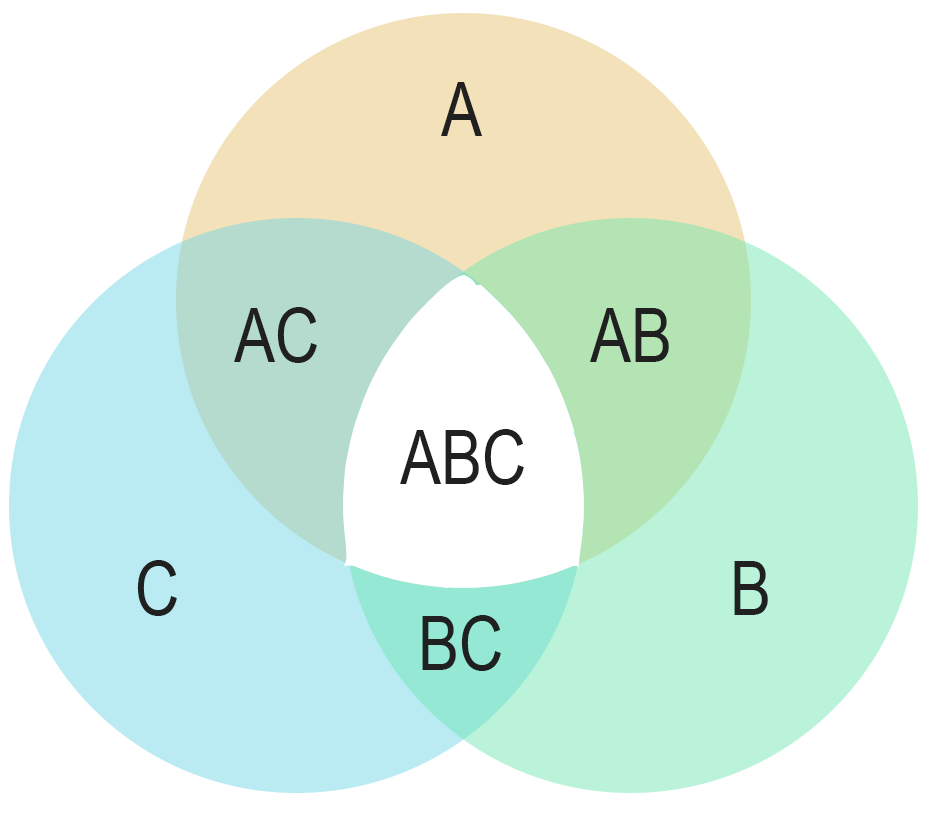
Mohammed emphasized that the way Compliance Plus handles these situations saves considerable time and reduces payer and aggregator rejections. Like in a Venn diagram, every combination of patient, payer, task type, and caregiver creates a “patient profile.” The user created most profiles in advance, based on known payer rates, etc. Occasionally, a patient’s profile is unique, but a user can easily enter the specifics into the system manually. Once a profile is built, the system calculates all of the billing accurately without additional user supervision.

Compliance Plus

Task Rates

If a payer’s rate for a task changes, Mohammed or another office staffer makes the change one time for all affected patients. In that scenario where the live-in caregiver performs three different tasks in one day, he or she checks in and out only once, before the first task and after the last, and designates each task performed. Compliance Plus does the rest.

Company Prospects

Hank Schwab told us that he is confident, after 100 successful beta customers, that Compliance Plus is ready for general release. At $10 to $12 per patient per month, he believes that supplementing word-of-mouth with a modest marketing effort will help him replace paper and strengthen the bottom line for many Medicaid and Personal Care agencies. Hank’s plan is to begin that effort as soon as he identifies an investor or two and hires a marketing director. “I already manage a team of coders and personally pay all the bills,” he laughed. “I’m ready for someone else to take on a few of my jobs.”
https://complianceplus.com/

*No, that is not a typo. We also enjoyed Mohammed Mohammed’s sense of humor. He tells people his parents were too cheap to give him a first name, so they just copied his last name.

# # #

Tim Rowan The Rowan Report
Tim Rowan is a 30-year home care technology consultant who co-founded and served as Editor and principal writer of this publication for 25 years. He continues to occasionally contribute news and analysis articles under The Rowan Report’s new ownership. He also continues to work part-time as a Home Care recruiting and retention consultant. More information: RowanResources.com
Tim@RowanResources.com

©2025 by The Rowan Report, Peoria, AZ. All rights reserved. This article originally appeared in The Rowan Report. One copy may be printed for personal use: further reproduction by permission only. editor@therowanreport.com

Fraud, Waste, and Abuse

Clinical

by Kristin Rowan, Editor

Fraud, Waste, and Abuse

DOJ, HHS False Claims Act

Fraud, Waste, and Abuse has become something of a mantra within the Department of Health and Human Services (HHS). Secretary Kennedy has committed to combatting fraud, waste, and abuse within the federal healthcare system. The Department of Justice (DOJ) and HHS have a long history of working together to combat healthcare frauding under the False Claims Act (FCA).

Working Group

In furtherance of their goal to combat healthcare fraud, HHS and DOJ have formed the DOJ-HHS False Claims Act Working Group. The Working Group will include leadership from the HHS Office of General Counsel, CMS Center for Program Integrity, the Office of Counsel for the OIG, and the DOJ Civil Division.

Working Group Priorities to Combat Fraud, Waste, and Abuse

1. HHS will refer potential False Claims Act violations to the DOJ that are in line with the Working Group priority enforcement areas:

  • Medicare Advantage
  • Drug, device, or biologics pricing
    • arrangements for discounts, rebates, service fees, and formulary placement and pricing reporting
  • Barriers to patient access to care
    • violations of network adequacy requirements
  • Kickbacks related to drugs, medical decives, DME, and other products paid for by federal healthcare programs
  • Materially defective medical devices that impact patient safety
  • Manipulation of Electronic Health Records systems to drive inappropriate utilization of Medicare covered products and services

2. The Working Group will maximize collaboration to expedite investigations and identify new leads. They will leverage HHS resources using data mining and assessment of findings.

3. The Working Group will discuss implementing payment suspension according to the CMS Medicare Program Code of Federal Regulations¹

4. The Working Group will discuss whether DOJ will dismiss a whistleblower case under the U.S. Code for Civil actions for False Claims, pursuant to the DOJ Manual for Civil Fraud Litigation²

Report Fraud, Waste, and Abuse

The Working Group encourages whistleblowers to report violations of the False Claims Act within the priority areas. Tips and complaints from all sources about potential fraud, waste, abuse, and mismanagement can be reported to HHS at 800-HHS-TIPS (800-447-8477). Similarly, the Working Group encourages healthcare companies to identify and report such violations.

Fraud, Waste, and Abuse

²DOJ Dismissal of a Civil Qui Tam Action. When evaluating a recommendation to decline intervention in a qui tam action, attorneys should also consider whether the government’s interests are served, in addition, by seeking dismissal pursuant to 31 U.S.C. § 3730(c)(2)(A).

¹Suspension of payment. The withholding of payment by a Medicare contractor from a provider or supplier of an approved Medicare payment amount before a determination of the amount of the overpayment exists, or until the resolution of an investigation of a credible allegation of fraud.

# # #

Kristin Rowan, Editor

Kristin Rowan has been working at The Rowan Report since 2008. She is the owner and Editor-in-chief of The Rowan Report, the industry’s most trusted source for care at home news, and speaker on Artificial Intelligence and Lone Worker Safety and state and national conferences.

She also runs Girard Marketing Group, a multi-faceted boutique marketing firm specializing in content creation, social media management, and event marketing.  Connect with Kristin directly kristin@girardmarketinggroup.com or www.girardmarketinggroup.com

©2025 by The Rowan Report, Peoria, AZ. All rights reserved. This article originally appeared in The Rowan Report. One copy may be printed for personal use: further reproduction by permission only. editor@therowanreport.com

 

Fraudsters Arrested, Oz Issues Warning

CMS

by Kristin Rowan, Editor

Fraudsters Arrested, Oz Issues Warning

Fraud in California

Fraudsters arrested in West Covina, CA this week were allegedly running a Medicare scheme. Authorities arrested hospice owner-operator Normita Sierra. They charged her with nine counts of health care fraud, one count of conspiracy, and four counts illegal remuneration (kick-backs) for health care referrals. The U.S. Attorney’s Office named co-conspirator Rowena Elegado. They also arrested her and charged her with one count of conspiracy and four counts of illegal remuneration for health care referrals.

Kickbacks

Sierra and Elegado worked together to pay marketers to recruit patients who did not have a hospice referral from their PCP and who were not terminally ill. Some of the kickbacks paid to marketers were as high as $1,300 per patient per month. After six months, the patients were referred out to Sierra’s home health company.

Medicare Claims

According to the U.S. Attorney’s Office, from 2018 to 2022, Sierra’s hospice agences submitted $4.8 million in fraudulent claims. Of those claims, Medicare paid approximately $3.8 million.

Dr. Oz Issues Warning

In a video statement, Dr. Oz explained how Medicare recipients are falling victim to scams. Sales people call, email, and even knock on your door, offering advice, free samples, and referrals. These marketers have one goal: get you sign a piece of paper. That paper signs you up for hospice care and agrees to allow a specific hospice agency to provide that care. The hospice agency then bills Medicare for services they never provide. Watch the video statement here.

HHS OIG Issues Consumer Alert

In a similar statement, HHS issued a consumer alert regarding DME companies. The alert warns that some DME companies are contacting Medicare beneficiaries. They claim to work for or on behalf of Medicare. Once they receive the patient’s Medicare number, they bill Medicare for unnecessary medical items. These items include urinary catheters, knee and back braces, orthotic braces, and prescription drugs, which may or may not ever be sent to the patient. HHS urges enrollees not to give their Medicare number to anyone. Further, they suggest regulary reviewing items charged to insurance, and refusing delivery of any medical supply not ordered by a physician.

Oz Issues Warning
Fraudsters Arrested

Combating Waste, Fraud, and Abuse

Dr. Oz and CMS have spoken numerous times about combatting the waste, fraud, and abuse withing the Medicare and Medicaid systems. Originally a strong proponent for Medicare Advantage, Oz has promised to audit MA after discovering the government pays more for MA than traditional Medicare. Oz also promised to reduce the amount of prior authorization requests needed before a patient gets services. Oz responded to the Republican-backed House bill requiring more oversight on Medicaid eligibility. Oz indicated that some Medicaid patients are enrolled in more than one state and that Medicaid is paying for able-bodied patients. The waste, fraud and abuse across Medicare and Medicaid is costing the government between $1 and $10 billion and Dr. Oz plans to find it and make significant changes to the management of the system.

A Cautionary Tale for Hospice Providers

You may be thinking, “What does this have to do with me?” Unfortunately, even the most scrupulous hospice agencies can fall prey to marketers running schemes. There are legitimate referral resources in the market who can help your agency get more referrals and more clients. There are also underhanded marketers who know how the system works. These predators will promise new referrals (for a fee) and then enroll uneligible patients without your knowledge. If you are working with or looking for a referral partner for your hospice agency, use one that is referred by someone you trust, and/or do a lot of research on the company history before working with anyone. Be especially wary of the ones who promise much more than what most referral companies offer.

# # #

Kristin Rowan, Editor

Kristin Rowan has been working at The Rowan Report since 2008. She is the owner and Editor-in-chief of The Rowan Report, the industry’s most trusted source for care at home news, and speaker on Artificial Intelligence and Lone Worker Safety and state and national conferences.

She also runs Girard Marketing Group, a multi-faceted boutique marketing firm specializing in content creation, social media management, and event marketing.  Connect with Kristin directly kristin@girardmarketinggroup.com or www.girardmarketinggroup.com

©2025 by The Rowan Report, Peoria, AZ. All rights reserved. This article originally appeared in The Rowan Report. One copy may be printed for personal use: further reproduction by permission only. editor@therowanreport.com

 

Fraud Soup

Clinical

by Elizabeth E. Hogue, Esq.

Everyone in the "Fraud Soup" Together

Fraud Soup

Perhaps you remember the CEO of a hospice in the Dallas area, Novus Health Care Services, who texted staff members urging them to administer drugs to patients to avoid exceeding per patient spending caps. He then sent texts praising them when patients passed away from the drugs he had urged them to administer: “Good job!” There were also accusations of recruiting ineligible patients and falsifying documentation. Ever wonder what happened to him and other staff members?

Well...Here's the Scoop!

  • Sixteen individuals from the hospice were indicted and at least eleven of them pled guilty.
  • Thirteen individuals involved in these activities were sentenced to a combined eighty-four years in prison.
  • The most recent sentence of four years in prison was imposed on the hospice’s marketing director.
  • The CEO of the Hospice was sentenced to thirteen years in prison.
  • Two Medical Directors decided to go to trial instead of pleading guilty. They were sentenced to thirteen years and ten years in prison.
  • A nurse involved in these activities was sentenced to eight and a half years in prison.
  • An LVN who received a text from the CEO saying “good job” after she administered drugs to a patient who then passed away was sentenced to eight years in prison.
Fraud Soup Elizabeth Hogue
  • A triage nurse was sentenced to seven years in prison.
  • The Director of Operations was sentenced to five and a half years in prison.
  • A Medical Director who pleaded guilty received a sentence of four years and nine months.
  • The VP of Patient Services was sentenced to three years in prison.
  • The VP of Marketing was sentenced to two years and nine months in jail.
  • A nurse was also sentenced to two years and nine months in prison.
  • An owner of a lab and home health agency was also sent to jail for eighteen months because she allowed the CEO to access potential patients’ confidential medical information in exchange for using services provided by her companies.

Far-Reaching Effects

Can you imagine the effect on professionals who surely also lost their licenses and their families?  Not to mention patients and their families!

The lesson in this heartbreaking story is that fraud enforcement is not limited to owners and upper management. Enforcers will dump everyone who engaged in inappropriate conduct into the “fraud soup.” Therefore, when providers refuse to engage in fraudulent conduct, they are not only protecting themselves, but everyone else involved.

# # #

Elizabeth E. Hogue, Esq.

Elizabeth Hogue is an attorney in private practice with extensive experience in health care. She represents clients across the U.S., including professional associations, managed care providers, hospitals, long-term care facilities, home health agencies, durable medical equipment companies, and hospices.

©2024 by The Rowan Report, Peoria, AZ. All rights reserved. This article originally appeared in Healthcare at Home: The Rowan Report. One copy may be printed for personal use: further reproduction by permission only. editor@therowanreport.com

©2024 Elizabeth E. Hogue, Esq. All rights reserved.

No portion of this material may be reproduced in any form without the advance written permission of the author.

Hospice Fraud Oversight

Admin

by Kristin Rowan, Editor

CMS Oversight in Fraud-Ridden States

In 2023, The Centers for Medicare and Medicaid Services (CMS) cited research suggesting that hospices profit from fraud far too often. CMS has identified cases of hospices certifying benficiaries who are not terminally ill, providing little to no services, and still billing CMS. Four states have had rapid growth in fraudulent hospices: Arizona, California, Nevada, and Texas.

Churn-and-Burn

Some of the registered hospices had non-operational addresses. This information led to an investigation that resulted in evidence of the fraud dubbed “Churn and Burn.” This scheme involves registering a new hospice and billing for services until there is an audit or the agency maxes out on yearly payments. Then, the hospice closes, keeps the money, registers for a new Medicare billing number, and starts all over again.

Program Integrity Strategy

As a result of  the findings of this research, CMS put more effort behing the hospice program integrity strategy to find and address fraudulent activity. Part of the strategy was unannounced visits to hospices nationwide. Hospices not active at listed addresses were deactivated and Medicare billing privileges were revoked. Of the more than 7,000 hospices visited, 400 had potential administrative action pending.

Enhanced Oversight

In the four states identified as having higher instances of fraud, CMS implemented a provisional period of enhanced oversight. During the provisional period, CMS conducted a medical review prior to payment for hospices in these states that have identified problems.

Nationwide Pilot Project

In addition to the provisional period for the four identified states, CMS started a pilot project to review hospice claims after a patient’s intitial 90 days of hospice care. This pilot project was not limited to the four states, but was implemented nationwide. CMS launched the program to help inform medical reviews in determining whether hospices are submitting claims for eligible patients.

Regulatory Changes

CMS also proposed some regulatory changes to combat hospice fraud. Some of these regulatory changes were initially suggested by hospice providers. The proposals include:

Hospice Fraud
    • Prohibiting the transfer of Medicare billing privileges of a new hospice for 36 months
    • Clarifying the definition of “Managing Employee” to include the administrator and medical director of a hospice
    • Implementing a Special Focus Program to increase oversight on poor-performing hospices that have ongoing health and safety deficiencies
    • Adding criminal background checks for owners when they initially enroll for Medicare billing privileges.

Prepayment Review Expanded

CMS has just announced that they will expand the prepayment review process in the four states beginning in September, 2024. Information from CMS is limited and states that prepayment review volume will start low to protect compliant hospices, but will increase if a hospice is found to be non-compliant. Consequences for non-compliance includes delays in payment, extended review, or additional administrative actions.

According to preliminary information we received from a hospice consultant, the expanded program puts all new hospices or hospices with ownership changes into prepayment review even if they have not had identified problems. 

We have reached out to both CMS and some of our expert hospice consultants to get more information and will update this story as information becomes available.

# # #

Kristin Rowan, Editor

Kristin Rowan has been working at Healthcare at Home: The Rowan Report since 2008. She has a master’s degree in business administration and marketing and runs Girard Marketing Group, a multi-faceted boutique marketing firm specializing in event planning, sales, and marketing strategy. She has recently taken on the role of Editor of The Rowan Report and will add her voice to current Home Care topics as well as marketing tips for home care agencies. Connect with Kristin directly kristin@girardmarketinggroup.com or www.girardmarketinggroup.com

©2024 by The Rowan Report, Peoria, AZ. All rights reserved. This article originally appeared in Healthcare at Home: The Rowan Report. One copy may be printed for personal use: further reproduction by permission only. editor@therowanreport.com

Private Duty Home Care in Fraud Enforcers’ Crosshairs

Clinical

by Elizabeth E. Hogue, Esq.

Some owners and managers of private duty home care agencies mistakenly think that fraud and abuse prohibitions apply only to services paid for by the Medicare Program. In fact, fraud and abuse prohibitions apply to providers if they accept any state or federal funds, including, but not limited to, Medicaid, Medicaid waiver, VA, and Tri-Care. Many private insurers have adopted the prohibitions on fraud implemented by state and federal programs.

Private duty home care agencies are increasingly in the crosshairs of fraud enforcers if they receive reimbursement from Medicaid and/or Medicaid Waiver Programs. The reason for enhanced scrutiny is that both the federal government, which partially funds state Medicaid and Medicaid Waiver Programs, and state governments that also fund these programs are alarmed about the high costs of them.

Conventional wisdom says that there are big bucks to be saved if fraud and abuse in the Programs are controlled and ultimately eliminated. Conventional wisdom also says that enforcement actions in Medicaid Programs have just scratched the surface. According to this “wisdom,” there are big bucks to be recouped from “low-hanging fruit!”

A recent report from the Office of Inspector General of the U.S. Department of Health and Human Services seems to support this perception regarding private duty home care agencies based on the following:

  • Patient Fallen From Wheelchair AbuseBetween 2014 and 2023, at least 34% of fraud convictions in some years were based on private duty home care services. In some years, this percentage was as high as 48%.

  • In fiscal year 2023, there were 279 criminal convictions related to private duty home care services compared to 66 for registered nurses and 43 for home health agencies.
  • Recoveries from private duty home care agencies in 2023 totaled $26.4 million.
  • The amount of civil recoveries reached a 4-year high in 2023 and the combined criminal and civil recoveries were $1.2 billion, resulting in a return on investment of $3.35 for every $1 spent.

The return on investment of more than three times the amount spent is perhaps the most important figure of all. With a three to one return, regulators will not hesitate to “beef up” enforcement actions.

THE CONSEQUENCES OF FRAUD AND ABUSE ARE SEVERE WHEN SERVICES ARE PAID FOR BY THE MEDICAID AND OTHER STATE AND FEDERAL PROGRAMS!

Personal care private duty agencies, don’t believe the myth that only services paid for by the Medicare Program are subject to fraud and abuse enforcement. The consequences may be devastating, including the loss of businesses. Heads up!

©2024 Elizabeth E. Hogue, Esq. All rights reserved.
No portion of this material may be reproduced in any form without the advance written permission of the author.
©2024 This article appeared in The Rowan Report. All rights reserved.

Pay Attention to Fraud Reports

Admin

by Elizabeth E. Hogue, Esq.

Two former Amedisys employees claim that they were fired in retaliation for alerting management to possible violations of the federal False Claims Act. They then filed a whistleblower, or qui tam, lawsuit [Pilat v. Amedisys, Inc., No. 23-566 (2d Cir. Jan. 17, 2024)]. In their whistleblower suit, the employees claim that they complained internally to supervisors about suspected fraudulent practices and refused to engage in such practices.

The employees, for example, recommended against recertifying patients, but supervisors overruled the recommendations and recertified patients again. One of the employees then refused instructions from his supervisors to recertify the patient yet again. The employee said that the patient was completely independent and it would be “unethical” to do so.

The employees also expressed concern to supervisors about the inability of nurses and therapists to keep up with a large volume of patients. One employee said he had to schedule visits for three times as many patients as was safe. The employees explained that many patients were seen for only a few minutes rather than an appropriate amount of time. The employees said that one nurse was assigned to make eighty-six visits during one week and another was assigned to make seventy-eight visits. Amedisys billed for the visits anyway.

In addition, former employees identified multiple specific instances in which clinicians were instructed to document false information about patients. The false documentation was then used to support treatments for which patients did not qualify or to recommend unnecessary treatments. Supervisors, for example, instructed employees to fraudulently document that a fifty-year-old man whom an employee was treating was not independent and needed assistance to climb stairs. The patient did not need such assistance.

The employees further claimed that a female patient in her late fifties with early onset Parkinson’s disease received services during an episode of care. The severity of her condition was overstated in order to continue treatment.

Perhaps the most vivid example provided by the employees involved a female patient who was approximately seventy years old who had a neurological disorder that limited her mobility. The patient’s condition did not prevent her from leaving home or from driving. Supervisors repeatedly overruled employees’ recommendations to reduce visits even though she was completely independent and it would be “unethical” to provide more intensive treatment. The employees were also told not to document a leg injury that the patient suffered in a car accident because documentation of the accident would make it clear that she was not actually homebound and that she did not meet eligibility requirements of the Medicare Program.

Providers must take seriously employees’ concerns regarding possible fraudulent and abusive practices. Most whistleblowers take their concerns to their employers first. It is only when employers ignore their concerns or, even worse, retaliate against employees for raising issues in the first place, that employees turn to outside enforcers for assistance in pursuing their concerns. Whether or not the allegations of employees are valid, providers must take them seriously. Thorough investigations are required in order to demonstrate to employees that there is no problem or that the problem has been corrected.

Although this case involves home health services, the message applies to all types of providers. The message from this case and numerous other lawsuits is clear: Don’t shoot the proverbial messenger who brings information about possible fraud and abuse violations. There is a very heavy price to be paid.


©2024 Elizabeth E. Hogue, Esq. All rights reserved.

No portion of this material may be reproduced in any form without the advance written permission of the author.

Why Every Provider Must Establish and Maintain a Fraud and Abuse Compliance Program

Admin

by Elizabeth E Hogue, Esq.

Providers may have heard or read about the importance of Fraud and Abuse Compliance Plans in their organizations. Despite the wealth of available information about Compliance Plans, many providers continue to express uncertainty about their value. Here are some of the questions providers commonly ask about Compliance Plans:

Why should we have a Fraud and Abuse Compliance Plan?

First, the Office of Inspector General (OIG) of the U.S. Department of Health and Human Services has clearly stated that, consistent with the Affordable Care Act (ACA) as described below, all providers are now expected to have current Compliance Plans that are fully implemented.

As a practical matter, when providers establish and maintain Compliance Plans, it clearly discourages regulators from pursuing allegations of fraud and abuse violations.

Technically speaking, the Federal Sentencing Guidelines make it clear that establishment and implementation of Compliance Plans is considered to be a mitigating factor. That is, if accusations of criminal conduct are made, the consequences may be substantially less severe because of a properly implemented Compliance Plan.

In addition, providers with Compliance Plans are more likely to avoid fraud and abuse. This is because Plans routinely establish an obligation on the part of every employee to report possible instances of fraud and abuse, and Plans include training for all employees.

Compliance Plans may help to prevent qui tam or so-called “whistleblower” lawsuits by private individuals, rather than by government enforcers, who believe that they have identified instances of fraud and abuse. There are significant incentives to bring these legal actions since whistleblowers receive a share of monies recovered because of their efforts. Some whistleblowers have received millions of dollars. Compliance Plans make it clear that employees have an obligation to bring any potential fraud and abuse issues to the attention of their employers first. Compliance Plans provide a clear path to resolve fraud and abuse issues internally.

In addition, the federal Affordable Care Act (ACA) requires providers to have Compliance Plans. In short, it’s the law!

Finally, the Deficit Reduction Act (DRA) requires providers who receive more than $5 million in monies from state Medicaid Programs per year to implement policies and procedures, provide education to employees, and put information in their employee handbooks about fraud and abuse compliance.  These requirements can be met through implementation of Fraud and Abuse Compliance Plans.

We don’t receive reimbursement from the Medicare or Medicaid Programs. Do we still need a Compliance Plan?

Statutes and regulations governing fraud and abuse also apply to providers who receive payments from any federal and state healthcare programs, including Medicaid, Medicaid waiver and other federal and state health care programs, such as TriCare and the VA. Many private insurers have followed the federal government’s lead in terms of fraud and abuse enforcement. Therefore, providers that don’t receive reimbursement from the Medicare Program must have compliance plans, too.

We hear that the OIG of the U.S. Department for Health and Human Services has provided guidance for various segments of the healthcare industry regarding Compliance Plans.

  • Specifically, the OIG has already published guidance for clinical laboratories, hospitals, home health agencies, hospices, physicians’ practices, third-party billing companies, and home medical equipment companies. Should we just use the model guidance that is applicable to us?

The answer is, “No!” Guidance from the OIG is not a model Compliance Plan.   Guidance from the OIG consists of general guidelines and does not constitute valid Compliance Plans. In addition, the OIG has made it clear that Plans must be customized for each organization.

We have read that, before implementing Compliance Plans, providers must conduct expensive internal audits that can take many months to complete. Is this true?

While beginning the compliance process with an extensive internal audit is certainly one way to proceed, it is not the only viable way to work toward compliance. It is equally valid to begin with Compliance Plans that are customized for the organization and include training for all employees about fraud and abuse, and Compliance Plans. Then all staff members can subsequently participate in internal compliance activities, including audits, with a process in place to handle any issues that arise as a result of the audits.

We have all sorts of policies and procedures in our organization. Why do we need something else called a Compliance Plan?

Compliance Plans are specific types of documents that routinely address fraud and abuse issues that providers do not usually cover in internal policies and procedures. In addition, providers may not gain benefits under the Federal Sentencing Guidelines described in paragraph one (1) above if there is no formal document called a Compliance Plan.

We just spent a lot of money to become accredited or reaccredited. Doesn’t certification mean that we are in compliance?

On the contrary, Compliance Plans appropriately address potential fraud and abuse issues. They also include mechanisms for helping to ensure compliance, such as processes for identification and correction of potential problems that are not addressed during the certification process. In other words, organizations may be accredited, but fail to meet applicable compliance standards for fraud and abuse.

Will the fact that our organization has a Compliance Plan make any difference regarding the outcome of fraud and abuse investigations and the imposition of Corporate Integrity Agreements (CIA’s)?

Yes, it may make a considerable difference, based on statements from the OIG. If providers have Compliance Plans in place during investigations that are current and fully implemented, the OIG may be less aggressive in pursuing potential violations. Enforcers are likely to ask for information about Compliance Plans and related policies and procedures. Enforcers are now also likely to ask providers to show them how much money they have spent on fraud and abuse compliance activities!

When the OIG discovers problems with fraud and abuse in organizations, providers are usually asked to develop and implement a Corporate Integrity Agreement (CIA). The OIG often requires CIA’s to include a process for stringent monitoring by the OIG on a continuous basis. These monitoring activities can be extremely burdensome to providers in terms of both time and money. Providers with valid Compliance Plans may not be asked to develop and implement CIA’s.

Now is the time for all providers to recognize and act upon the need to establish and maintain Compliance Plans. “Working on it” is no longer good enough.

©2024 Elizabeth E. Hogue, Esq. All rights reserved.

No portion of this material may be reproduced in any form without the advance written permission of the author.