Alliance Responds to Hospice Final Rule

by Kristin Rowan, Editor

The Alliance Responds to CMS Hospice Final Rule

CMS Issues FY 2026 Hospice Final Rule

On August 1, 2026, CMS issues the FY 2026 Hospice Wage Index and Payment Rate Update and Hospice Quality Reporting Programs Requirements Final Rule. Here are the high-level changes in this year’s final rule:

  • Rate Setting Changes
    • A 3.3% inpatient hospital market basket percentage increase
    • A 0.7% productivity adjustment (read decrease)
    • Statutory cap increases from $34,465.34 to $35,361.44
  • Hospice Care Admission
    • The physician member of the interdisciplinary group (IDG) may recommend admission to hospice care
  • Face-to-Face Attestation
    • Signature and date requirements restored
    • Eliminated requirement for attestation to be a separate and distinct document
    • Attestation requirement can be a section or addendum to recert form, or part of a signed and dated clinical note
  • Hospice Quality Reporting Program
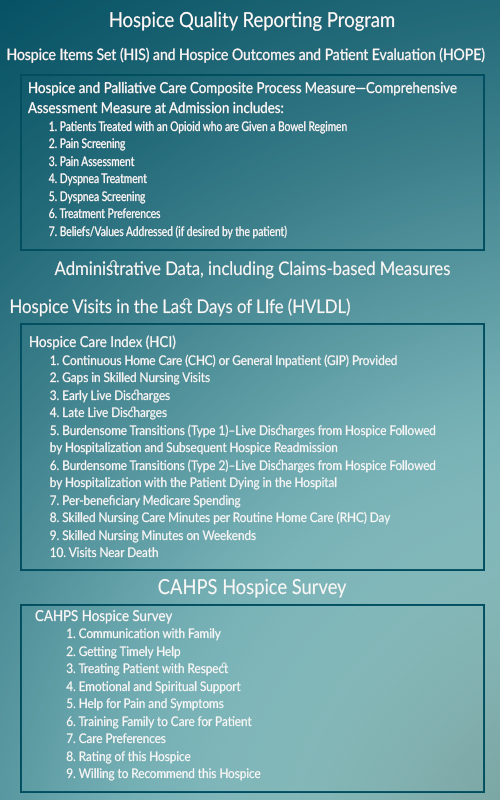
  • The HOPE tool will replace the HIS tool on October 1, 2025, despite comments to delay implementation
  • CMS published a HOPE Technical Information webpage ,an HQRP training library, and a Requirements and Best Practices webpage
  • CMS recognized the error in their HOPE burden calculations. The burden is 21.1% higher than initially reported. The difference will be “taken into consideration” in the next PRA package submission.
  • The separate reporting tool (QIES) and reports tool (CASPER) will sunset and iQIES will replace both tools.
FY 2026 Hospice Quality Reporting Program

National Alliance for Care at Home Statement

After CMS issued the final rule, the Alliance responds with a statement addressing the wage adjustment, HOPE tool implementation, and sttestation changes. Read the full press release here.

Wage Adjustment

The Alliance recognizes that the 2.6% wage update is higher than the proposed 2.4% adjustment issued earlier this year. However, The Alliance maintains its position that the update does not go far enough to offset the very high and very real operational costs that hospices across the country face.  

Regulatory Relief

Both the physician member of the IDG recommending hospice admission and the inclusion of a clinical note to serve as attestation of a face-to-face were welcome changes to hospice regulations. The Alliance thanked CMS for these changes.

HOPE Tool Implementation

The Alliance was among the many commenters to CMS about the October 1, 2025 implementation date for the HOPE tool. Alliance CEO Dr. Steve Landers had this to say:

Despite responsiveness in other areas, the Alliance is deeply disappointed that CMS did not heed recommendations and delay the October 1, 2025 implementation of the Hospice Outcomes and Patient Evaluation (HOPE) tool nor waive the timeliness completion requirement for HOPE record submission. We expect providers to face a burdensome transition and urge CMS to remain responsive to real-world challenges, offering flexibility as providers navigate the change.  

Dr. Steve Landers

CEO, National Alliance for Care at Home

The Alliance is committed to working with CMS to reduce spending and strengthen the Medicare hospice benefit. They also continue to support the CMS initiative to reduce fraud, waste, and abuse.

Final Thoughts

The Hospice Final Rule is not what we hoped for. The wage update was increase, but not by enough to make a real impact on the operational burden hospices face. CMS has provided technical training and education for the HOPE tool, but severely underestimated the financial burden connected to the transition. CMS continues to use outdated, incorrect, or faulty information in its calculations of wage rate updates and ignores the repeated comments from advocacy groups and hospice providers. 

# # #

Kristin Rowan, Editor

Kristin Rowan has been working at The Rowan Report since 2008. She is the owner and Editor-in-chief of The Rowan Report, the industry’s most trusted source for care at home news, and speaker on Artificial Intelligence and Lone Worker Safety and state and national conferences.

She also runs Girard Marketing Group, a multi-faceted boutique marketing firm specializing in content creation, social media management, and event marketing.  Connect with Kristin directly kristin@girardmarketinggroup.com or www.girardmarketinggroup.com

©2025 by The Rowan Report, Peoria, AZ. All rights reserved. This article originally appeared in The Rowan Report. One copy may be printed for personal use: further reproduction by permission only. editor@therowanreport.com


NonCompete Agreements and What to do About Them

by Elizabeth E. Hogue, Esq.

What to do About Noncompete Agreements

The Federal Trade Commission (FTC) published a final rule earlier this year that banned noncompete agreements. The final rule was effective on September 4, 2024.

 Requirements of the rule included:

    • A ban on new concompete agreements with all workers, including senior executives
    • Existing noncompete agreements could remain in force for senior executives if
      • they make more than $151,164 per year including salary, commissions, and performance bonuses but not including benefits, board and lodging; and
      • senior executives have authority to make policy decisions for the entire company
    • Existing noncompete agreements with workers other than senior executives are unenforceable after the rule is effective

There are a number of exceptions to the rule.

In the meanwhile, litigation

On July 23, 2024, a federal court in Pennsylvania refused to issue a preliminary injunction to prevent implementation of the final FTC rule. The U.S. District Court for the Eastern District of Pennsylvania said that the statutory authority of the FTC to prevent unfair methods of competition under Section 5 of the FTC Act is not limited to procedural rules for adjudications and extends to substantive rulemaking [See ATS Tree Servs. v. Fed. Trade Comm’n, No. 24-1743 (E.D. Pa. July 23, 2024)].

Noncompete Agreements

But...

In early July, a federal court in Texas granted a preliminary injunction that delayed the effective date of the final rule. The Court declined to issue a nationwide injunction [See Ryan LLC v. Federal Trade Comm’n, No. 3:24-CV-00986-E (N.D. Tex. July 3, 2024)]. 

Then, on August 20, 2024, the Judge issued an order in the Ryan case that included a nationwide prohibition on implementation of the FTC rule. The basis of this decision is that the FTC does not have authority to order a ban, and that the rule was arbitrary and capricious. Based on this ruling, employers may continue to enter into and enforce non-compete agreements with workers.


Another but...

A number of state legislatures have enacted restrictions on use of noncompete agreements. As of August 21, 2024, four states ban the use of noncompete agreements and thirty-three states plus the District of Columbia restrict the use of these agreements. 

Providers must comply with applicable requirements in the states in which they conduct business. Providers who fail to do so risk enforcement action.  

Comfort Keepers, for example, agreed to pay $500,000 to resolve claims that it unfairly restricted workers’ mobility according to the California Department of Justice. Comfort Keepers’ Client Care Agreement that clients were required to sign before receiving care prevented clients from using, hiring, or soliciting current and former Comfort Keepers’ caregivers for up to one year after the termination of services. Violations required payment of $12,500.

So...

The current bottom line is that the FTC rule banning noncompete agreements is not in effect, but providers must comply with applicable state requirements or risk enforcement action.

Stay tuned for more!

# # #

Elizabeth E. Hogue, Esq.

Elizabeth Hogue is an attorney in private practice with extensive experience in health care. She represents clients across the U.S., including professional associations, managed care providers, hospitals, long-term care facilities, home health agencies, durable medical equipment companies, and hospices.

©2024 by The Rowan Report, Peoria, AZ. All rights reserved. This article originally appeared in Healthcare at Home: The Rowan Report. One copy may be printed for personal use: further reproduction by permission only. editor@therowanreport.com

©2024 Elizabeth E. Hogue, Esq. All rights reserved.

No portion of this material may be reproduced in any form without the advance written permission of the author.

NAHC NHPCO Town Hall

by Kristin Rowan, Editor

The Alliance

On June 18, 2024, the National Association for Home Care & Hospice (NAHC) and the National Hospice and Palliative Care Organization (NHPCO) announced they had met in Washington D.C. to formally sign an affiliation agreement between the two organizations. After 18 months of meetings, conversations, and compromises, the two groups announced their “Alliance” would be the leading authority of the care at home community.

Bill Dombi Ken Albert Town Hall Alliance

During the opening keynote address at the NAHC Financial Management Conference in July, Bill Dombi, President of NAHC and interim President of The Alliance, and Kenneth Albert, Chair of the Transition Board of Directors overseeing the merger, spoke about the progress they have made.

Albert spoke of the thoughtful consideration the board and members of both organizations have put into this change. They are focusing on the biggest concerns of home health and hospice providers both now and in the future. The unification will create one voice as they advocate for home health and hospice in Washington D.C.

New Leadership

Albert and Dombi shared the stage at the NAHC Financial Management Conference about the ongoing search for a CEO of the new organization. According to Albert, there were some candidates who were very excited about the role, but whom the board did not feel there was a great fit. Contrarily, there were candidates the board eagerly wanted to move forward with who declined to continue the process. According to Dombi, the search has gone outside care at home as they look for the right fit from qualified candidates from multiple industries. Both agreed that they felt the search was close to over and they should have an announcement about the new CEO, and possibly the new name, sometime in August of this year.

New Resources

The conjoined organization promises more than just new leadership. Currently under construction is a new logo and website to encompass both groups. Dombi alluded to new resources for providers, training for quality care, and other tools for the industry. While the organization’s name and leadership are forthcoming, the website is projected to launch sometime in the spring of 2025. 

Operating as One

Since the announcement of the merger last year, and even before the deal was inked, NAHC and NHPCO have already been integrating. Dombi told The Rowan Report in a previous interview that the two groups have already been lobbying together, working on policy together, and integrating the management of the two associations. 

The Last NHPCO Conference and the First Alliance Conference

September, 2024 marks the final standalone event for the NHPCO. The 2024 NHPCO Annual Leadership Conference runs September 16-18, with a pre-conference September 14-15 in Denver, CO. The conference will have on-demand access until December 31, 2024. NAHC members will receive member rates to the NHPCO conference. 

The “2024 Home Care and Hospice Conference and Expo” will be the last conference held solely by NAHC, but we are seeing quite a few hospice companies on the exhibitor list and expect this to be a sneak peek at future conferences. The national conference is scheduled for October 20-24, 2024 in Tampa, Florida. This will also mark the final conference for Bill Dombi as President. Dombi announced earlier this year that he will retire at the end of 2024.

NAHC NHPCO Alliance Town Hall

Town Hall

With quite a few remaining unanswered questions about the future of the two organizations, NAHC and NHPCO hosted a virtual Town Hall on July 31, 2024. With more than 250 association members from both groups in attendance, Bill Dombi and Ben Marcantonio, interim-CEO for NHPCO, along with Kenneth Albert and Melinda Gruber, Vice Chair of the Transition Board of Directors.

Naming "The Alliance"

Albert mentioned that there has been some success using the term Alliance, but it is not a long term solution. The finalization of the name is awaiting some trademark issues to be ironed out and that announcement, which they had hoped to be able to make in July, is coming soon.

CEO Search Update

Gruber thanked the search committee and recruiting firm for their work on the CEO search. Gruber reiterated that they are nearing the final selection phase and after board approval, an announcement will be made. 

Website

Ben Marcantonio, current interim CEO of NHPCO and future CIO of The Alliance confirmed that the new website will allow access to both legacy websites (the current NAHC and NHPCO websites). The new website will have a preliminary version this fall with a fully completed version next spring.

Members of either organization will have full access to the preliminary version of the website this fall. Currently, members can only access information from their own organization, but Marcantonio stressed that if there is information you need, they can help you access it.

Integration

There are eleven committees working together to integrate the two associations. advocacy, programs, education, and HR are a few of these workgroups that each have two to three high priority goals that will most effectively bring about the integration of the two groups. Work plans are now in place to create significant integration by the end of the calendar year. 

Policy and Advocacy

Bill Dombi presented an updated on the joint policy and advocacy issues The Alliance is undertaking. “What stands out for the immediate term has been how the resources have been employed of the two legacy organizations under the banner of The Alliance, focusing on hospice and palliative care,” Dombi said, “In a matter of weeks we saw significant regulatory and legislative action taking place.”

Hospice

The Hospice Final Rule 2025 has undergone an intense review and indepth analysis by members of both teams. The rule will have “tremendous impact” under the Medicare hospice program.

According to Dombi, the two organizations have come together to jointly fund a research project for the Special Focus Program to understand the impact and targeting. Dombi is hopeful that U.S. Representative Earl Blumenauer’s (D-OR) discussion draft will serve as a stepping stone for Hospice reform.

Home Health

The ongoing battle in Congress against CMS is gaining momentum. Dombi said there is a “tremendous amount of support” in Congress to role back the authority of CMS to institute rate changes and rate cuts under the Patient Driven Groupings Model (PDGM). “We have gained a seat at the table, which really helps,” Dombi said. We are continuing with litigation challenging Medicare’s validity of the regulation which has set all these rate cuts in motion.

Medicaid Home and Community-Based Services

The Final Rule modified in a positive way the 80/20 requirement. “We agree with the intentions of improving the status of direct care workers who positively impact so many lives. But in the absence of additional funding, it’s very very difficult to support this rule,” Dombi said. The modification stepped back from the more “draconian” interpretation, but The Alliance is not yet satisfied with the result. There is talk of a joint lawsuit challenging the validity of that rule.

Private Duty

The Private Duty Home Care world, one of the less regulated in the industry, is gaining a lot of attention from Fair Labor Standards as well as Non-Compete Laws. There is currently a joining of forces around solutions that will help Private Duty in the workforce arena, more specifically the Credit for Caring Act, which is gaining some traction, and would offer some financial support for family members who are paying for home care services directly.

The Alliance Needs You

Bill Dombi’s final statement in the Town Hall meeting centered on advocacy. He called for everyone who was in attendance and every member of both legacy organizations to join the fight. Everyone needs to part of that team of advocacy.

Final Thoughts

There is much more news to come out of these to associations as we near the end of 2024, and still more through the first quarter of 2025. The Rowan Report expects additional announcements to be made at both the NHPCO and NAHC annual conferences and we will be there to update everyone on the progress and statements coming out of those two meetings. 

# # #

Kristin Rowan, Editor

Kristin Rowan has been working at Healthcare at Home: The Rowan Report since 2008. She has a master’s degree in business administration and marketing and runs Girard Marketing Group, a multi-faceted boutique marketing firm specializing in event planning, sales, and marketing strategy. She has recently taken on the role of Editor of The Rowan Report and will add her voice to current Home Care topics as well as marketing tips for home care agencies. Connect with Kristin directly kristin@girardmarketinggroup.com or www.girardmarketinggroup.com

©2024 by The Rowan Report, Peoria, AZ. All rights reserved. This article originally appeared in Healthcare at Home: The Rowan Report. One copy may be printed for personal use: further reproduction by permission only. editor@therowanreport.com

2025 Hospice Final Rule

by Kristin Rowan, Editor

2025 Hospice Final Rule Update

On July 30, 2024, CMS issued its final rule for the 2025 Hospice Final Rule Update (CMS-1810-F), with updates to HQRP and HOPE. The rule also finalizes a proposal to change the statistical area delineations. This will impact the hospice wage index. The rule includes clarifications on the hospice election statement and notice of election as well as clarifying language around hospice admission and certification of terminal illness.

Wage Decrease for Some Hospices Assigned to a New Area

The change in area delineations will have a negative impact on some hospices. They will see a decrease in payments based on their new area. However, CMS emphasizes that, regardless of the area change, the maximum change is a 5% decrease from the 2024 wage index, as there is a 5% cap on any decrease to the wage index. 

2025 Hospice Final Rule Routine Annual Rate Setting Changes

Just one month after proposing additional deduction to the home health payment rate, the 2025 hospice final rule increases the base rate by 2.9%. This is an aggregate of a 3.4% inpatient hospital increase and a 0.5% productivity decrease. The quality data reporting requirement remains. Hospices that do not submit quality data would still see a 4% decrease in payment rates, yielding an aggregate 1.1% decrease. The payment update also includes an aggregate cap of $34,465.34 per individual per year.

Hospice Quality Reporting Program (HQRP)

The new rule includes two new process measures to HQRP:

    • Timely Follow-up for Pain Impact
    • Timely Follow-up for Non-Pain Symptom Impact 

These two measures are expected to begin in 2028 and address hopsice care delivery documentation on whether a follow-up visit occurred with 48 hours of the first assessment. The measures include visits where there was an impact of moderate to severe symptoms, both with and without pain.

Adoption and Implementation of HOPE

Hospice Outcomes and Patient Evaluation (HOPE) will replace the current Hospice Item Set (HIS) structure. The gradual roll-out will begin in FY 2025 and will collect data at different time points throughout a hospice stay. In contrast, HIS only collected data at admission and discharge.

New or expanded categories of HOPE relative to HIS include:

Hospice Payment Rule 2025

Changes to CAHPS Survey

CMS conducted an experiment in 2021 surrounding the Hospice CAHPS Survey. Based on those results, the final rule will implement these change to the survey:

    • The addition of a web-mail mode (email invitation to a web survey, with mail follow-up to non-responders).
    • A shortened and simplified survey.
    • Modifications to survey administration protocols to include a pre-notification letter and extension of the field period from 42 to 49 days.
    • The addition of a new, two-item Care Preferences measure.
    • Revisions to the existing Hospice Team Communication measure and the existing Getting Hospice Care Training measure.
    • The removal of three nursing home items and additional survey items impacted by other proposed changes in this rule.

Hospice Special Focus Program (SFP)

The SFP allows CMS to monitor those hospices that are identified as poor performers based on quality indicators from the CAHPS surveys. Additional oversight from CMS will “enable continuous improvement” for those hospices identified. The four measures used to determine poor performance are Help for Pain and Symptoms, Getting Timely Help, Willingness to Recommend this Hospice, and Overall Rating of this Hospice.

According to CMS, the final rule includes changes to the Overall Rating of this Hospice measure. CMS states that these changes are not substantive and will not impact the SFP algorithm. “CMS adjusts measure scores for mode of survey administrations, so the introduction of a new mode should not impact measure scores.” 

NAHC previously submitted comments to CMS stating that some aspects of the Hospice Special Focus Program are flawed and need to be adjusted for accuracy and fairness. NAHC/NHPCO has created a research project to understand the impact and validity of the Hospice Special Focus Program.

2025 Hospice Final Rule Conditions of Participation and Payment Requirements

There are language discrepancies in existing hospice requirements for medical director and physician designee, physician member, and payment requirements for the certification of the terminal illness and admission to hospice care. Therefore, CMS is making technical changes to the CoPs by adding the physician mmever of the hospice IDG as someone who can review technical information and provide certification of life expectancy. 

# # #

Kristin Rowan, Editor

Kristin Rowan has been working at Healthcare at Home: The Rowan Report since 2008. She has a master’s degree in business administration and marketing and runs Girard Marketing Group, a multi-faceted boutique marketing firm specializing in event planning, sales, and marketing strategy. She has recently taken on the role of Editor of The Rowan Report and will add her voice to current Home Care topics as well as marketing tips for home care agencies. Connect with Kristin directly kristin@girardmarketinggroup.com or www.girardmarketinggroup.com

©2024 by The Rowan Report, Peoria, AZ. All rights reserved. This article originally appeared in Healthcare at Home: The Rowan Report. One copy may be printed for personal use: further reproduction by permission only. editor@therowanreport.com

CMS Issues Final Rule for 2024 with Drastic Pay Cut

By Kristin Rowan, Editor

On November 1, CMS issued its Home Health Final Rule for CY 2024. As expected, the final rule includes drastic pay cuts to Medicare home health services payments. The original proposed rule issued earlier this year included a 5.653% rate reduction, the remainder of the 7.85% reduction from 2020-2021 and an additional 1.636% for 2022, for a total rate reduction of 9.36% overall from the start of PDGM. In a surprising turn, CMS has not implemented the full 5.779% rate cut from the initial proposal, opting instead to introduce the rate cuts over two years. The 2024 rate cut will be 2.890%, half of the full adjustment CMS alleges is still needed. The CMS final rule does not attempt to collect any of the alleged overpayments from 2020-2022, totaling $3,439,284,729.00.

NAHC President Bill Dombi offered this response:


“We continue to strenuously disagree with CMS’s rate setting actions, including the budget neutrality methodology that CMS employed to arrive at the rate adjustments. We recognize that CMS has reduced the proposed 2024 rate cut. However, overall spending on Medicare home health is down, 500,000 fewer patients are receiving care annually since 2018, patient referrals are being rejected more than 50% of the time because providers cannot afford to provide the care needed within the payment rates, and providers have closed their doors or restricted service territory to reduce care costs. If the payment rate was truly excessive, we would not see these actions occurring. The fatally flawed payment methodology that CMS continues to insist on applying is having a direct and permanent effect on access to care. When you add in the impact of shortchanging home health agencies on an accurate cost inflation update of 5.2% over the last two years, the loss of care access is natural and foreseeable.

We now implore Congress to correct what CMS has done and prevent the impending harm to the millions of highly vulnerable home health patients that depend and will depend in the future on this essential Medicare benefit. Fortunately, longstanding advocates for home health care, Senator Debbie Stabenow (D-MI) and Senator Susan Collins (R-ME) have introduced S. 2137 to eliminate the rate cuts. We urge the Congress to support this legislation and enact it into law before the end of the year. The 2024 rate cuts must not take effect.”

The final rule includes the following:

  • A net 3.0% inflation update
  • A 2.890% Budget Neutrality permanent adjustment
  • A $3,489,523,364 alleged overpayment in 2020-2022. CMS has not scheduled a collection of the alleged overpayment in 2024 or any other year yet.
  • Recalibration of the 432 case mix weights with a separate budget neutrality adjustment in the payment rates of +1.0124%
  • CMS estimates an increase in CY2024 Medicare spending of $140 million ($525 million inflation increase minus the $455 million rate adjustment plus a $70 million outlier FDL change)

HHAs that fail to provide required quality data will have these rates reduced by two percent.

Non-payment-related changes

In addition to the inflation increase and payment adjustments, the CMS Final Rule includes a number of other changes. These changes include amendments for the payment of Disposable Negative Pressure Wound Therapy, removing and replacing OASIS measures in HHVBP, new coverages and payments in IVIG services, the adoption of two new measures and the removal of one existing measure in HHQRP, coverage for lymphedema therapy items under a new Medicare Part B benefit, and revisions to Medicare provider enrollment requirements.

Hospice Provisions

Hospice Special Focus Program (SFP)

CMS is pushing forward with the Hospice SFP. Despite the commonsense suggested changes requested by NAHC and multiple others, CMS is using a flawed algorithm in the structure and implementation of SFP. This flawed algorithm will fail to identify hospices most appropriate for additional oversight and support. This creates the risk of reducing access to higher quality care and directing patients and families to hospices that perform most poorly relative to health and safety requirements. The official stance from NAHC is strong support of the SFPs goal to improve poor performing hospices, but are emphatically against the method in which SFP is being implemented and will continue to advocate for changes to the structure of the program.

Hospice Informal Dispute Resolution (IDR)

The IDR process for hospice is for condition-level survey findings which may trigger an enforcement action. The finalized IDR process allows hospice programs an opportunity to resolve disputes during recertification or reaccreditation for continued participation in Medicare. this allows for settlement agreement prior to a formal hearing, which will save time and money for the hospice agency. NAHC has additional recommendations for the Hospice IDR process that have not been implemented in the final rule.

Hospice 36-month rule

CMS is extending the “36-month” rule that currently applies to home health agencies and hospices, which is designed to prevent the flipping of Medicare certifications to non-vetted hospice owners. There are several exceptions to the rule for hospices. Even if a hospice undergoes a CIMO, a new owner must enroll as a new hospice and undergo a survey or accreditation unless:

  • The hospice submitted 2 consecutive years of full cost reports since initial enrollment or the last CIMO, whichever is later.
  • A hospice’s parent company is undergoing an internal corporate restructuring, such as a merger or consolidation.
  • The owners of an existing HHA are changing the hospice’s existing business structure (for example, from a corporation to a partnership (general or limited)), and the owners remain the same.
  • An individual owner of an hospice dies

New hospice owners will immediately be placed into the “high-risk” category for screening requirements and will have to submit fingerprints for a national background check from all owners with a 5% or greater direct or indirect ownership interest.

CMS Final Rule Synopsis and NAHC Response

We reached out to NAHC President Bill Dombi after the release of the Final Rule for CY2024. He provided us with a full breakdown of each provision in the final rule and the NAHC stance on each topic.

You can read all of these changes and how NAHC will continue to advocate for changes to the final rule here.

# # #

Kristin Rowan has been working at Healthcare at Home: The Rowan Report since 2008. She has a master’s degree in business administration and marketing and runs Girard Marketing Group, a multi-faceted boutique marketing firm specializing in event planning, sales, and marketing strategy. She has recently started writing for The Rowan Report and will add her voice to current Home Care topics as well as marketing tips for home care agencies. Connect with Kristin directly kristin@girardmarketinggroup.com or www.girardmarketinggroup.com

©2023 by The Rowan Report, Peoria, AZ. All rights reserved. This article originally appeared in Healthcare at Home: The Rowan Report. homecaretechreport.com One copy may be printed for personal use: further reproduction by permission only.

editor@homecaretechreport.com