The $100,000 Visa

by Kristin Rowan, Editor

The $100,000 Visa

What Care at Home Needs to Know

Highly skilled, highly trained, and highly in-demand professionals fill roles that very few are qualified to hold. These roles are usually in math, engineering, technology, medical science. They can also be in healthcare, trade jobs like plumbers and welders, and professional fields like financial managers and market research analysts. 

Due to the specialized training and education, extensive experience, and other unique qualifications required for these positions, the number of people qualified to fill them is much lower than the number of positions to fill. The U.S. has relied on the H-1B visa, a type of permission for highly skilled professions to work temporarily in the U.S. in these specialty jobs. The H-1B visa starts at three years, but can be extended to six.

H-B Visa Availability & Distribution

Very few of these visas are available. Standard H-1B visas are capped at 65,000 per year. There are an additional 20,000 H-1B visas available only to persons who have earned a master’s degree or doctorate from a U.S. school.

Currently more than 70% of H-1B visa holders have citizenship in India. The largest petitioners for H-1B visas are tech and retail giants Amazon, Microsoft, Meta, Apple, Google, Cognizant Technology Solutions, JPMorgan Chase, and Walmart.

Executive Order

On September 21, the fee to petition for a new H-1B visa increased from $2,000-5,000, depending on the size of the employer, to $100,000. This change was implemented by proclamation. The administration has since clarified that the fee will apply to new petitions, not those already in process and that it is a one-time fee.

Impact on Care at Home

According to Becker’s Hospital Review, healthcare uses the H-1B visa often to sponsor medical residents and physicians. Overall, immigrant workers account for 27% of physicians and surgeons, 22% of nursing assistants, and 16% of RNs nationwide. Included in the proclamation is an exemption clause. This allows the $100,000 visa fee to be waived if the Secretary of Homeland Security decides, on an individual basis, for specific companies, that the hiring is in the national interest. It is unclear whether that exemption will extend to health care workers.

According to Ellis Porter, immigration attorneys, standard nursing positions do not qualify for H-1B visas because they are not considered “specialty occupations.” RNs in the U.S. must have a two-year associate’s degree, not the required bachelor’s degree for the H-1B visa. Ellis Porter says even if you have a bachelor’s degree, that alone does not qualify an RN for an H-1B visa. Nurse Managers, Nurse Practitioners, Certified Registered Nurse Anesthetists, Certified Nurse Midwives, and Clinical  Nurse Specialists qualify as “specialty occupations” under the H-1B visa regulations.

If healthcare workers are not exempt from the new fee, some nurse positions will be effected. This could increase the workforce shortage for nurses outside the care at home industry, driving care at home nurses into hospitals, medical centers, doctor’s offices, and SNFs, which could, in turn, exacerbate the workforce shortage for care at home. However, until there is clarity on the exemption, this is not a definite.

$100,000 Visa Overturned

Immigration attorneys are already preparing lawsuits to challendge the proclamation. They are calling it excessive, unlawful, and equal to a ban on immigrant workers. Some critics argue the proclamation bypassed established rulemaking procedures. Others say there are provisions to charge visa fees to cover expenses, but no legal precedent to charge exorbitant fees. Legal experts call the proclamation vague and arbitrary, leaving it open for misinterpretation, and therefore is likely to be overturned.

This is an ongoing story that requires additional clarification and explanation. The White House has promised an FAQ page soon. We will continue to follow this story as it develops.

# # #

Kristin Rowan, Editor

Kristin Rowan has been working at The Rowan Report since 2008. She is the owner and Editor-in-chief of The Rowan Report, the industry’s most trusted source for care at home news, and speaker on Artificial Intelligence and Lone Worker Safety and state and national conferences.

She also runs Girard Marketing Group, a multi-faceted boutique marketing firm specializing in content creation, social media management, and event marketing.  Connect with Kristin directly kristin@girardmarketinggroup.com or www.girardmarketinggroup.com

©2025 by The Rowan Report, Peoria, AZ. All rights reserved. This article originally appeared in The Rowan Report. One copy may be printed for personal use: further reproduction by permission only. editor@therowanreport.com

 

Bill Dombi Presents

by Kristin Rowan, Editor

Bill Dombi Presents...

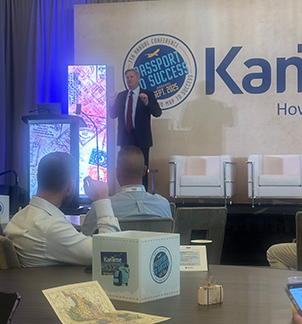
It has become almost customary for the President/CEO of The Alliance, and previously NAHC, to give the keynote address at state association and software user group meetings. The 2025 Kantime event, Passport to Success, was no exception. Dr. Steve Landers was scheduled to speak first thing Tuesday morning. But, Dr. Landers is in D.C. speaking to members of Congress and CMS for Advocacy Week, trying to convince anyone who will listen of the needed changes in Care at Home.

When Kantime asked Bill Dombi, former President of NAHC, to take Landers’s place, they asked him not to give his customary “vanilla” talk about the state of the industry. According to Dombi, Kantime gave him a bit of a license to step outside the traditional industry address. He took that license and ran with it, regaling the audience with stories of his school days, being educated (and tortured) by KCatholic nuns in full habits, his road to both the law and care at home, and his thoughts on the future of the industry.

Bill Dombi Presents

“I shouldn’t be here. I’m retired! I should have no shoes in, wearing shorts, or maybe still sleeping, waking up just in time to catch Let’s Make a Deal or the Price is Right, have lunch, take a nap, and then watch a movie or mow my lawn. I had retirement dreams of lounging on a two-person hammock by the beach. My hammock is in the basement. And the guitar I bought myself as a retirelment present, with dreams of coming back here with my band, remains unopened in my living room. It has never been out of its case.”

Bill Dombi

President Emeritus, National Alliance for Care at Home

“But, one of my jobs is to make my successor a success. So, here I am.”

This led Bill to his first topic, Passion: Powering Health Care at Home. He invited the audience to think not of his story, but of their own what lead to their passion for care at home. If you’ve ever heard Bill Dombi speak about care at home and his wish to in his lifetime see the industry become what he has advocated for and imagined for more than 50 years, then you know how spirited and passionate he is. He has fought against injustice since the 6th grade and fought for radical improvement in care at home since college.

Bill spoke openly about the fraud, waste, and abuse that has plagued home health and hospice since before most of us knew what home care was. He lamented the continued need for advocacy at both state and federal levels with each new administration, bill, and MedPAC recommendation since before the Reagan era. He recalled the advent of Medicare and Medicaid when care at home was limited and underused. And he warned of the disasterous idea of rolling Hospice care into Medicare Advantage. In true “Bill Dombi style,” he managed to do all of this in a way that left an air of hope in the room rather than doom.

What's in Store for Care at Home?

Bill talked about the progress his successor has made, including his current work on The Hill for Advocacy week. According to Bill, the advocacy focus for the National Alliance for Care at Home is:

  • PDGM
  • Hospice Carve-in
  • HCBS OBBA Risks
  • HCBS 80/20 rule
  • Medicare Advantage
  • Workforce Improvement

Final Thoughts - Dombi's Care at Home Forecast

The scope of Health care at home will continue to expand. There will continue to be technology and artificial intelligence advances in care at home. The provide design and delivery of care model will evolve. Consolidation and competition are definitely in play. And the workforce is a common denominator for success. 

# # #

Kristin Rowan, Editor

Kristin Rowan has been working at The Rowan Report since 2008. She is the owner and Editor-in-chief of The Rowan Report, the industry’s most trusted source for care at home news, and speaker on Artificial Intelligence and Lone Worker Safety and state and national conferences.

She also runs Girard Marketing Group, a multi-faceted boutique marketing firm specializing in content creation, social media management, and event marketing.  Connect with Kristin directly kristin@girardmarketinggroup.com or www.girardmarketinggroup.com

©2025 by The Rowan Report, Peoria, AZ. All rights reserved. This article originally appeared in The Rowan Report. One copy may be printed for personal use: further reproduction by permission only. editor@therowanreport.com
 

Update on Malpractice Claims

by Elizabeth E. Hogue, Esq.

Update on Malpractice Claims

New analysis by Claggett, Sykes and Garza Trial Lawyers shows that registered nurses (RNs) and physicians continue to top the list of health professions most likely to be sued for malpractice. A total of 50,555 claims were filed in 2024. Complaints included 12,655 against RNs while 12,299 complaints were filed against physicians. There were 5,851 complaints against licensed practical nurses. There were also 2,889 complaints against nursing paraprofessionals and 1,068 complaints against advanced practice nurses. Registered nurses now have a risk level that is 2.3 times higher than average. The report says that large patient volumes make nurses especially vulnerable.

Claims and Payouts

While the total number of malpractice suits has decreased by almost 20% in ten years, the severity of claims has risen. In 2024, total payouts were $4.93 billion, averaging $433,000 per case, while the cost per claim against home health nurses was previously much lower as described below. 

Home care nurses, including those providing hospice and palliative care, were the most vulnerable to professional liability claims of all nursing specialties for the period from 2015 to 2019, according to “Nurse Professional Liability Exposure Claim Report: 4th Edition,” recently issued by Nurses Service Organization and CNA. This is 

Malpractice

the first time that nurses in home care topped the list since the reports were first compiled in 2008. According to the report, home care nurses accounted for 20.7% of claims, which represents an increase of 12.4% over the previous number reported in 2015. Adult medical/surgical nurses topped the list in past reports.

Cost

The average total costs incurred per claim against home care nurses, including legal fees and amounts awarded to patients and/or families, was $216,051 over the five-year period of the study. This amount is a little higher than the overall average for claims against nurses. 

The average total costs incurred from closed liability lawsuits against all nurses was $210,513, representing a 4% rise since the last report in 2015. This increase is likely based on more expensive legal and expert counsel, and the rising cost of healthcare since payments to patients include costs of medical treatment that led to malpractice suits.

The following may contribute to increases in claims against home health nurses:

  • Lack of institutional support for home care nurses that is routinely received by nurses in hospitals and other facilities
  • Growing popularity of home care
  • Rising acuity of home care patients
  • Lack of 24-hour oversight of patients
  • Absence of equipment in patients’ homes that is readily available in institutional settings to help identify patients at high risk for negative outcomes

Strategies that nurses can use to protect themselves from malpractice claims include:

  • Stay up to date on education and training
  • Document assessments of patients in a timely and objective manner
  • Go up the chain of command when concerned about the well-being of patients
  • Maintain files that demonstrate character; such as letters of recommendation, notes from patients, and performance evaluations

Final Thoughts

And, of course, complete, accurate and contemporaneous documentation may provide the best defense of all. 

It is time to keep risk management close to the top of lists of potential problems that need on-going attention.

# # #

Elizabeth E. Hogue, Esq.

Elizabeth Hogue is an attorney in private practice with extensive experience in health care. She represents clients across the U.S., including professional associations, managed care providers, hospitals, long-term care facilities, home health agencies, durable medical equipment companies, and hospices.

©2025 Elizabeth E. Hogue, Esq. All rights reserved.

No portion of this material may be reproduced in any form without the advance written permission of the author.

©2025 by The Rowan Report, Peoria, AZ. All rights reserved. 

Overtime Changes

by Kristin Rowan, Editor

Overtime Changes

FLSA exemption to resume

In 1938, the Fair Labor Standards Act (FLSA) established a federal minimum wage, guaranteed overtime, and kept children out of the workforce. Exemptions to FLSA include executive, administrative, professional, computer employee, and outside sales positions. Employers did not pay minimum wage for retail workers, service workers, agricultural workers, or construction workers.

Domestic workers included

An amendment to FLSA in 1974 added domestic workers to those who must receive minimum wage and overtime. The amendment did not include “companionship services” and live-in domestic service employees. A later amendment from 2013 narrowed the definition of “companionship services.” This eliminated the exemptions for workers who provided “care.” Companions could still be exempted from overtime. This stopped home care agencies from claiming exemptions and required overtime pay for home care workers.

Overtime Changes FLSA Exempt

Rolling back the rule

The Department of Labor is considering unraveling the 2013 amendment. There is a concern that they may have misinterpretated the rule. Additionally, requiring overtime for home care workers will increase the cost of care. Supporters of the rule change believe that allowing exemptions for overtime among home care workers would make live-in care more affordable. If the 2013 amendment is removed, employers would not have to guarantee minimum wage or overtime for home care aides.

Industry impact

The DOL argues that this change will make care more affordable and expand access to care at home. However, there is already a workforce shortage in the industry. Lowering pay rates and removing overtime could cause a mass exodus from the industry. As far as we know, DOL did not discuss requiring CMS to increase reimbursements rates or covering non-medical supportive care at home as an alternative.

“Removing basic labor protections from home care workers will only exacerbate the multiple issues buffeting the home care sector, its workers and consumers: serious threats from cuts to federal Medicaid contributions, changing immigration policies and the lack of realistic long-term services and supports (LTSS) options.”

Katie Smith Sloan

President and CEO, LeadingAge

Comments from the industry

The public comments period on this proposed rule change ended on September 2, 2025. The proposed rule received roughly 5,300 comments. Some examples of feedback include:

“…reversing the 2013 protections, the DOL would undermine the wages and economic security of home care workers…exacerbate turnover and workforce shortages…[and] harm older adults and people with disabilities….” – Hand in Hand: The Domestic Employers Network

“This proposed change is a crucial step toward restoring flexibility and affordability in home care services, particularly for families relying on live-in support.” – Owner, Home Helpers Home Care of Larimer County and member of HCAOA and IFA

“…strongly support workforce development and has historically and continues to support thoughtful solutions to our workforce crisis. We strongly support the restoration of the overtime exemption.” – The Virginia Association for Home Care and Hospice and the West Virginia Council for Home Care and Hospice

Home care workers are also strongly vital for companion care, personal care, home health, nursing, therapy, caring for the disabled and the elderly, and more. The proposed rule that was meant to strip home care workers of wage and overtime protections is absolutely cruel and harmful for home care workers…” – Derek Dinh, CA

“I am not a home care worker, but used a home care worker to take care of my mom when she was unable to do things around the home and then got progressively worse. They need to be paid a living wage and receive overtime. They are professional people who take care of those who need care.” – Wendy Peale, NY

Opposition

  • Among the people and organizations who have publicly expressed opposition to this change are:
  • LeadingAge
  • Autistic Self Advocacy Network
  • American Civil Liberties Union
  • Congresswoman Pramila Jayapal
  • The Commonwealth of Pennsylvania, California, Colorado, Connecticut, District of Columbia, Hawaii, Illinois, Massachusetts, Maryland, Maine, Michigan, Minnesota, Nevada, New Jersey, New York, Oregon, Rhode Island, Vermont, and Washington

Final Rule

The has not issued a final rule. However, neither has the DOL enforced the requirement since July 25, 2025. Home care agencies can currently claim overtime exemptions. There is no set timeline yet for a final decision. We will continue to follow updates on this topic.

# # #

Kristin Rowan, Editor

Kristin Rowan has been working at The Rowan Report since 2008. She is the owner and Editor-in-chief of The Rowan Report, the industry’s most trusted source for care at home news, and speaker on Artificial Intelligence and Lone Worker Safety and state and national conferences.

She also runs Girard Marketing Group, a multi-faceted boutique marketing firm specializing in content creation, social media management, and event marketing.  Connect with Kristin directly kristin@girardmarketinggroup.com or www.girardmarketinggroup.com

©2025 by The Rowan Report, Peoria, AZ. All rights reserved. This article originally appeared in The Rowan Report. One copy may be printed for personal use: further reproduction by permission only. editor@therowanreport.com

 

Eleos Navigates Eligibility Risk

Eleos Navigates Eligibility Risk

FOR IMMEDIATE RELEASE

Contact:                  Amanda Wells

awells@sloanepr.com

Eleos Launches AI Scanner to Navigate Medicaid Eligibility Risk in Real Time

The new OBBBA AI scanner uses Eleos’ ambient AI technology to alert providers of patient eligibility changes, preserving revenue and ensuring care continuity amid sweeping Medicaid policy changes

BOSTON, MA, Aug. 20, 2025 — Eleos, the leading AI platform in post-acute care, today announced the launch of the OBBBA (One Big Beautiful Bill Act) AI scanner, the first real-time tool to proactively detect potential changes to Medicaid eligibility during client sessions. The OBBBA AI scanner uses Eleos’ purpose-built ambient AI scribing technology to inform providers about changes that may impact coverage, giving them time to act before Medicaid coverage lapses. The tool was launched in response to sweeping Medicaid funding cuts and eligibility rule changes.

Eligibility Check

Providers can select Medicaid-related “themes” to track such as housing status, diagnosis updates, or life events like marriage or aging out of eligibility. The OBBBA scanner captures contextual clues that could trigger changes in coverage. Providers use this information to take action to prevent eligibility loss, reduce care disruption and maintain treatment continuity. For care organizations, this means fewer denials and greater revenue stability, as well as better client support.

The OBBBA AI scanner arrives at a critical moment: new Medicaid rules introduce shorter retroactive coverage windows, semi-annual (versus annual) redeterminations and narrowed eligibility criteria — all of which lead to a higher risk of churn, especially for vulnerable groups such as people with serious mental illness and those experiencing housing instability.

Eleos Navigates Eligibility Risk

“We’re hearing from leaders across the country that Medicaid redetermination changes are already causing confusion and fear among clients and providers alike. The OBBBA AI scanner gives providers the earliest possible warning via real-time insights so they can protect coverage and avoid treatment disruptions, ensuring clients continue to receive necessary and life-saving care. This kind of provider-first technology is at the core of Eleos.”

Alon Joffe

Co-founder and CEO, Eleos

Embedded seamlessly within the Eleos Documentation experience, the tracker works in tandem with providers’ existing workflows, requiring no additional software or manual data entry.

Industry leader sees Eleos scanner as critical tool

“OBBBA has created significant uncertainty for the behavioral health sector, and organizations need every possible advantage to navigate it. Properly deployed, purpose-built AI tools help organizations navigate an ever-changing landscape while also promoting the health and well-being of clients and communities.”

Chuck Ingoglia

President and CEO, National Council for Mental Wellbeing

Rationale

The OBBBA AI scanner builds on Eleos’ mission to free care providers from administrative burdens and enable better, more data-informed care. Deployed in over 200 organizations in 30-plus states, Eleos is the most-used AI solution in behavioral health, substance use disorder (SUD) treatment and post-acute care. Its suite of AI-powered documentation and compliance solutions has been proven to reduce documentation time by more than 70%, double client engagement and drive 3-4x better treatment outcomes. 

For more information about the OBBBA AI scanner or to request a demo, visit www.eleos.health.

# # #

About Eleos

Eleos is the leading AI platform for behavioral health, substance use disorder, home health and hospice. At Eleos, we believe the path to better care is paved with provider-focused technology. Our purpose-built AI platform streamlines documentation, simplifies revenue cycle management and surfaces deep care insights to drive better client outcomes. Created using the industry’s largest database of real-world sessions and fine-tuned by our in-house clinical experts, our AI tools are scientifically proven to reduce documentation time by more than 70%, boost client engagement by 2x and improve symptom reduction by 3-4x. With Eleos, post-acute care providers are free to focus less on administrative tasks and more on what got them into this field in the first place: caring for their clients.

DOJ Settles with UnitedHealth and Amedisys

by Kristin Rowan, Editor

DOJ Settles with UnitedHealth and Amedisys

Judge to Weigh In

DOJ settles with UnitedHealth and Amedisys after almost nine months of negotiations. The Department of Justice (DOJ) initially blocked the proposed merger between UnitedHealth and Amedisys, citing concerns over eliminating competition in home health and hospice services in some areas of the U.S. After the most recent settlement hearing, the merger seems to be back on track.

Public Comment Period and Judicial Review

Now that the DOJ hurdle has been passed, there is a public comment period. Following the public comment period, the U.S. District Court for the District of Maryland will enter final judgement. From the Justice Department website:

As required by the Tunney Act, the proposed settlement, along with a competitive impact statement, will be published in the Federal Register. Any interested person should submit written comments concerning the proposed settlement within 60 days following the publication to Jill Maguire, Acting Chief, Healthcare and Consumer Products Section, Antitrust Division, U.S. Department of Justice, 450 Fifth Street NW, Suite 4100, Washington, DC 20530. 

Antitrust Division Statement

“In no sector of our economy is competition more important to Americans’ well-being than healthcare. This settlement protects quality and price competition for hundreds of thousands of vulnerable patients and wage competition for thousands of nurses. I commend the Antitrust Division’s Staff for doggedly investigating and prosecuting this case on behalf of seniors, hospice patients, nurses, and their families.”

Abigail Slater

Assistant Attorney General, Justice Department Antitrust Division

Divestiture Agreement

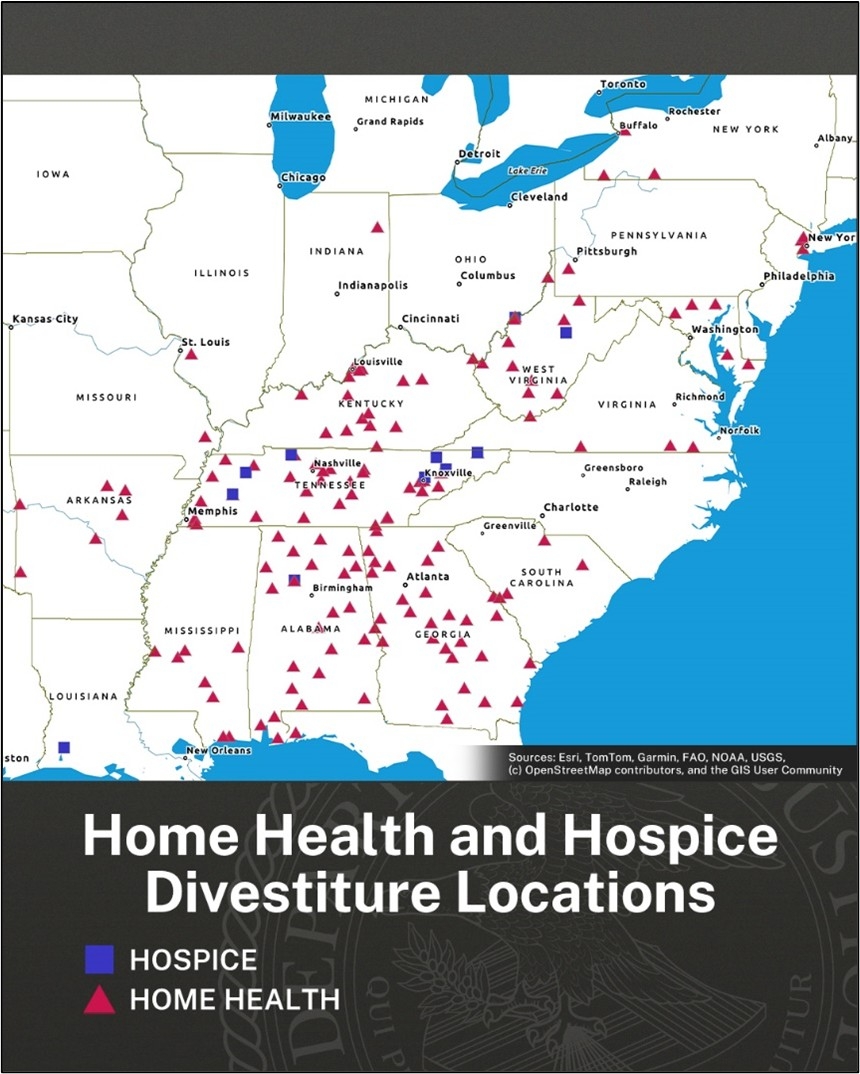
According to the new agreement, UnitedHealth will sell 164 home health and hospice locations across 19 states. In addition to the sale, the agreement provides the buyers of these locations with assets, personnel, and relationships to help them compete with remaining UnitedHealth locations. Also included are protections to deter UnitedHealth from interfering with the new owners’ ability to compete.

BrightSpring Health Services and Pennant Group will acquire the 164 locations. Slater said the settlement, which includes the largest ever divestiture of outpatient healthcare, protects quality and price competition patients as well as wage competition for nurses. However, antitrust specialist Robin Crauthers, a partner with McCarter & English, says it doesn’t go far enough. According to Crauthers, the settlement agreement does not address all of the markets that would have less competition and that the DOJ accepted less than they wanted in the agreement.

Additionally, critics argue the divestiture moves 164 home health and hospice agencies from one large player to two other large players in the space. Arguably, rather than preserve competition, this divestiture agreement will only serve to strengthen the largest players in the market, giving them a substantial advantage over smaller agencies in these areas.

UnitedHealth Amedisys divestiture locations

Not the Only Concern

Vertical Integration

Joe Widmar, Director of M&A at West Monroe consulting firm, says that the number of home health and hospice agencies is not the tipping factor in competition. Rather, it is UnitedHealth’s vertical integration. A health insurance company that also owns nearly 2,700 subsidiaries, including pharmacies, home health and hospice, behavioral health, consulting for healthcare organizations, surgery centers, hospitals, mental health, managed care for Medicaid and Medicare, and specialty care. Virtually any referral from a PCP to any other health professional puts more money into the health care giant’s pockets. The lack of competition is across all forms of healthcare, leaving patients no choice buy to support UnitedHealth Group in areas where all local healthcare providers are subsidiaries. I 2024, UnitedHealth insurance paid $150.9 million to its subsidiaries for care. These provider companies are not counted in the profit caps placed on insurance companies.

Upcoding

In addition to side-stepping profit caps, vertical integration aids in upcoding. Upcoding is the practice of digging into a patient’s life to find (or create) additional patient needs. Insurers add as many codes as possible for the greatest reimbursement rates. According to a recent study, UnitedHealthcare overbilled Medicare Advantage by $14 billion through upcoding. 

In-home health risk assessments and patient reviews, often offered to beneficiaries as a free service, result in an average risk score 7% higher than in patients seen in medical practices and hospitals. UnitedHealth generates more income from patient review diagnoses than any other MA insurer. The Department of Justice is currently investigating UnitedHealth’s Medicare billing practices.

Final Thoughts

If you own a home health, hospice, or palliative care agency in any of the states shown in the graphic above, write to Jill Maguire with comments and concerns. Our primary objective is providing quality care to patients in their homes. We know that home care is less expensive for the patient and government-funded insurance. But not when all the home care agencies in an area are owned by only a few of the largest home health agencies in the country. And not when the insurer is adding diagnostic codes to pad their bill. 

# # #

Kristin Rowan, Editor

Kristin Rowan has been working at The Rowan Report since 2008. She is the owner and Editor-in-chief of The Rowan Report, the industry’s most trusted source for care at home news, and speaker on Artificial Intelligence and Lone Worker Safety and state and national conferences.

She also runs Girard Marketing Group, a multi-faceted boutique marketing firm specializing in content creation, social media management, and event marketing.  Connect with Kristin directly kristin@girardmarketinggroup.com or www.girardmarketinggroup.com

©2025 by The Rowan Report, Peoria, AZ. All rights reserved. This article originally appeared in The Rowan Report. One copy may be printed for personal use: further reproduction by permission only. editor@therowanreport.com

 

Tell CMS not to Kill Home Health

by Kristin Rowan, Editor

The Alliance to Care at Home:

CMS needs your comments

CMS needs your comments on the home health proposed rule for FY 2026. Advocacy is a cornerstone of the mission of The National Alliance for Care at Home. From The Hill to the home, The Alliance fights for the future of the industry. But, they can’t do it alone. 

Proposed Rule

The CMS proposed rule for FY 2026 has a net 6.4% decrease in payments to home health providers. Industry experts warn that this change will cause home health agencies to shutter their doors and it will leave many rural areas in a home health desert.

The Alliance Call to Action

At last week’s 2025 Financial Summit in Chicago, policy and industry experts provided ways to adjust how to write comments to CMS. According to Mary Carr, Vice President for Regulatory Affairs at National Alliance for Care at Home, it’s not enough for a few agencies and organizations to advocate for home health. Everyone has to submit comments about this. Carr says if done effectively, sending comments on proposed rules is one of the most powerful ways to stop these policy changes. The way you write your comment letters is important if you want them to have an impact.

Carr provided this guidance and tips on how to right an effective comment to CMS:

Remember that CMS is not looking for an agree/disagree statement

Provide good reasons for not keeping the proposed rule as is

Address very specific reasons why any part of the proposed rule is bad

Include the direct impact the proposal will have on your business, your staff, and your patients

Provide an alternative recommendation

Mention studies on how much less home health costs compared with SNFs and ALFs

Don’t let fear, anger, and anxiety detract from your message

Maintain professionalism and respect

Mention and thank CMS for any good aspects of the proposed rule

Include impact statements on reduction in services, delays to getting care, and areas that would be without any available home health care should the proposed rule stand

Mention the Other Side

No matter what side of the aisle you are usually on, we all must agree that care at home is an industry issue, not a Democrat or Republican issue. Hillary Loeffler, Vice President of policy and regulatory affairs at the Alliance, reluctantly mentions that the clawbacks, reductions, and methodology used to determine rates were put in place by the previous administration. 

“It’s a new administration. I hate to say it, but I’m going to say, ‘This methodology was created by the Biden administration, and the Trump administration needs to do something about this.’ So, hopefully they take a fresh look at it.”

Hillary Loeffler

Vice President of Policy and Regulatory Affairs, National Alliance for Care at Home

Loeffler also suggests going directly to Congress with comments and letters in addition to CMS. The recent trend of lowering reimbursement rates causing fewer visits, less coverage, and longer wait times is untenable and complete reform of the home health benefit at the federal level is needed to ensure its survival, added Loeffler.

Illogical Arguments

Whether you are publishing comments on the home health proposed rule or writing a letter to your senators and representatives, steer clear of logical fallacies. These errors in reasoning are easy to fall prey to when you have an emotional investment in the issue at hand.

Ad Hominem

The very common Ad Hominem fallicy happens when the argument moves from the problem to the person. Blaming your representative or accusing CMS of hating home health rather than focusing on the impact of the pay cut will weaken our standing.

Slippery Slope

This fallicy involves stretching the consequences of an action beyond reality. Cutting home health payment rates will decrease care and increase start-of-care delays. It will not cause homelessness, mass hysteria, or a small pox outbreak. 

Fallacy of Composition

If you’re familiar with standard contracts, you’ve read the clause that goes something like, “if any part of this contract is illegal, the rest is still intact.” The composition fallacy assumes that the whole of something matches its parts. The CMS proposed rule for FY 2026 has improvements, such as allowing physicians to do face-to-face appointments even if they are not the certifying physician. Don’t throw out the entire proposed rule. Rather focus on those parts that are clearly devastating to the industry.

Fallacy of Origin

Criticizing the rule based on its authors (CMS) as adversaries to care at home also negates the impact of our advocacy. CMS has been charged with maintaining government payments for health care in hospitals, physician groups, hospices, SNFs, and more. They have also been directed to cut costs, decrease spending, and maintain budget neutrality. The proposed rule is a death sentence for home health not because it came from CMS, but because of the flawed math. Address the calculations, the methodology, the assumption that care at home is more expensive than hospital or SNF care, and the number of people who will lose access to quality care.

CMS needs your comments now

Now that you know what issues to address and how to frame your argument, reach out. Contact CMS and your Congresspeople and submit your comments today. Comments are due by August 29th.

# # #

Kristin Rowan, Editor

Kristin Rowan has been working at The Rowan Report since 2008. She is the owner and Editor-in-chief of The Rowan Report, the industry’s most trusted source for care at home news, and speaker on Artificial Intelligence and Lone Worker Safety and state and national conferences.

She also runs Girard Marketing Group, a multi-faceted boutique marketing firm specializing in content creation, social media management, and event marketing.  Connect with Kristin directly kristin@girardmarketinggroup.com or www.girardmarketinggroup.com

©2025 by The Rowan Report, Peoria, AZ. All rights reserved. This article originally appeared in The Rowan Report. One copy may be printed for personal use: further reproduction by permission only. editor@therowanreport.com

 

First Joint Event for NAHC & NHPCO

FOR IMMEDIATE RELEASE
July 30, 2025
PHOTO LINK

National Alliance for Care at Home Hosts Inaugural Financial Summit

Over 700 industry leaders gather in Chicago for three-day event focused on financial leadership and innovation in home-based care

(Alexandria, VA and Washington, DC) — The National Alliance for Care at Home (the Alliance) successfully hosted its inaugural event, the 2025 Alliance Financial Summit, July 27-29 in Chicago, IL. The Summit brought together financial leaders from across the care at home community, with expert-led sessions, peer collaboration, and insights into market shifts and emerging technologies.

Arrival in Chicago

Welcome

The Summit officially launched Sunday evening with an opening keynote by Wendy Sue Swanson, MD, MBE, Founder and CEO of Skin Metal and Author of “Mama Doc Medicine.” Dr. Swanson delivered a forward-looking presentation on the intersection of medicine and technological innovation. The evening concluded with a Welcome Reception in the Exhibit Hall. 

Keynote

The day’s keynote session featured Alliance CEO Dr. Steve Landers alongside a panel of experts including Ken Albert, President and CEO of Andwell Health; Trisha Crissman, President and CEO of CommonSpirit Health at Home; and Hillary Loeffler, Vice President of Policy & Regulatory Affairs for the Alliance. Panel discussions addressed the potential impact of payment cuts in the Centers for Medicare & Medicaid Services Calendar Year 2026 Home Health proposed rule, hospice policy developments, workforce challenges and solutions, and actionable strategies for providers to protect the future of home-based care. Attendees then moved into a full day of concurrent sessions before an evening reception on the Chicago River.  

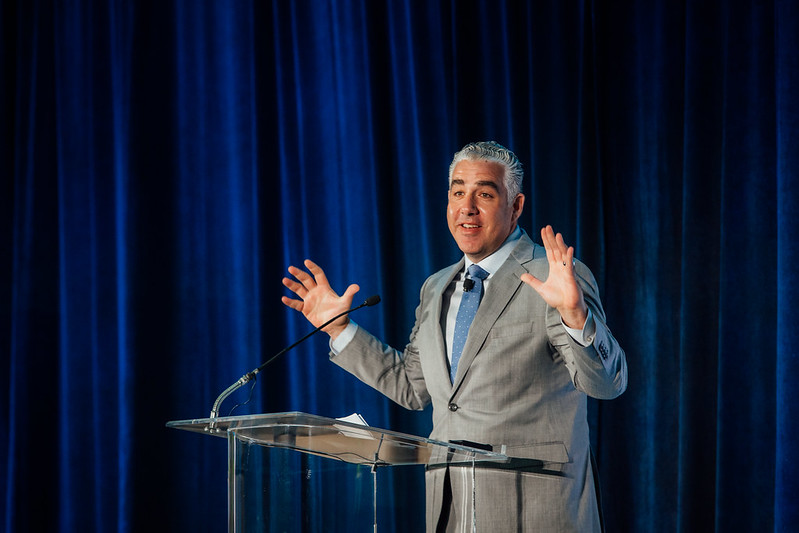
Steven Landers, CEO, The Alliance, Financial Summit
The Alliance Financial Summit Riverwalk Reception
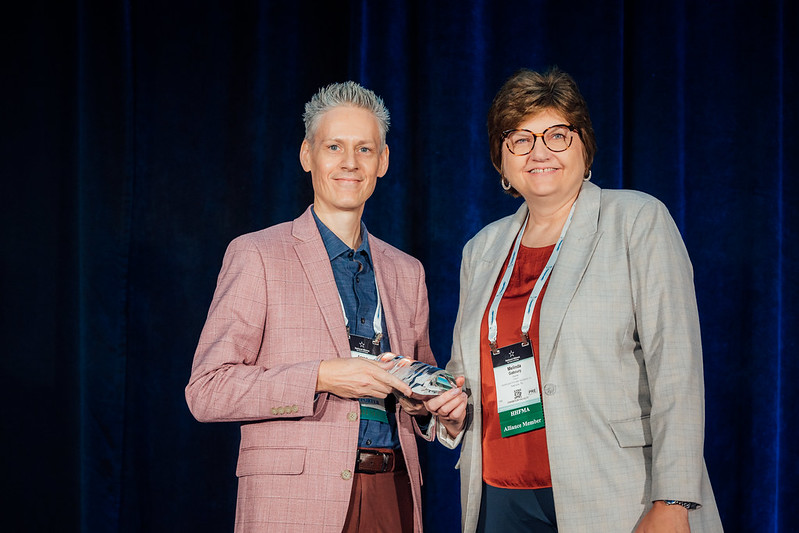
The Alliance Financial Summit Awards
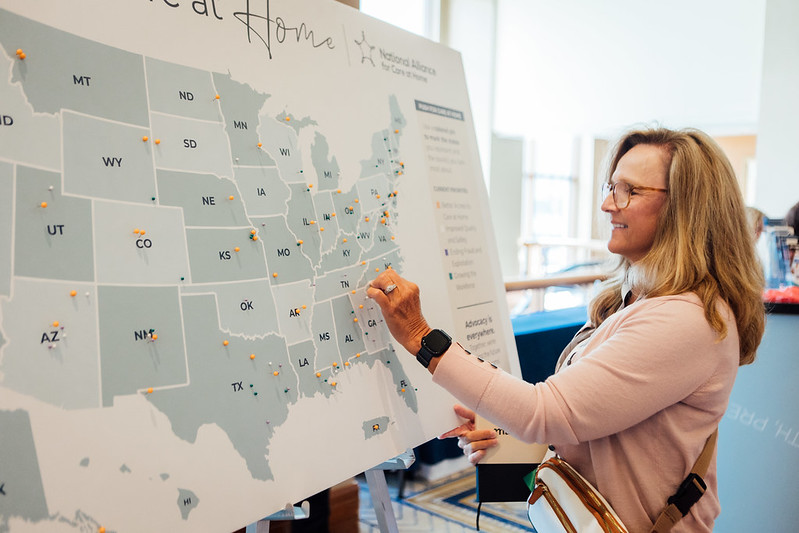
The Alliance Financial Summit Attendee Map

Networking and Education

Tuesday featured dedicated peer-to-peer networking sessions, allowing for informal conversation and knowledge sharing, before the opportunity for more concurrent sessions. The Summit concluded with a closing keynote expert panel featuring leaders from the Alliance’s Home Health and Hospice Financial Managers Association (HHFMA). 

“This first Alliance event exceeded our expectations, bringing together care at home leaders from across the nation to connect, learn, and recommit to our shared vision of an America where everyone has access to the highest quality, person-centered healthcare wherever they call home,” said Alliance CEO Dr. Steve Landers. “The content was both practical, grounded in the day-to-day challenges and successes of providers, while incorporating innovation and aspiration to drive future growth and success.”  

The Alliance has announced two additional events for 2025: Alliance Advocacy Week, September 8-11 in Washington, DC, and the National Alliance for Care at Home Annual Meeting and Exposition, November 1-4 in New Orleans, LA.  

# # #

About the National Alliance for Care at Home

The National Alliance for Care at Home (the Alliance) is the leading authority in transforming care in the home. As an inclusive thought leader, advocate, educator, and convener, we serve as the unifying voice for providers and recipients of home care, home health, hospice, palliative care, and Medicaid home and community-based services throughout all stages of life. Learn more at www.AllianceForCareAtHome.org

Press Contact
communications@allianceforcareathome.org
Elyssa Katz | 571-281-0220

HHAeXchange Expands in Manhattan

FOR IMMEDIATE RELEASE

Contact:                                 Hollie Barnridge
Alloy, on behalf of HHAeXchange
855-300-8209
hhaexchange@alloycrew.com

HHAeXchange Unveils New Corporate Headquarters in New York City

New location reaffirms the company’s commitment to its employees and customers with expanded office space to support enhanced collaboration, creativity, and innovation

NEW YORK, June 3, 2025 – HHAeXchange, a leader in homecare management solutions for providers, caregivers, managed care organizations (MCOs), and state Medicaid programs, today announced the opening of its new corporate headquarters in New York City. 

Located in the heart of Midtown Manhattan, the reimagined workspace is a reflection of the company’s recent growth and its commitment to delivering advanced solutions for the home and community based services (HCBS) industry. The new space also marks an important step in uniting teams from HHAeXchange’s recent acquisitions of Sandata, Cashé Software, and Generations Homecare System. Efforts to foster stronger collaboration across functions will accelerate the delivery of a more connected, efficient experience for customers nationwide. 

“We are always striving to better meet the needs of our customers, and bringing our employees together at our new headquarters will support greater collaboration that drives product innovation. New York has been our home base since 2008, and we’re proud to grow the HHAeXchange footprint locally while creating a welcoming work environment for our network of employees, customers, and partners from across the nation.”

Paul Joiner

CEO, HHAeXchange

For more than 15 years, HHAeXchange has been at the forefront of homecare technology, innovating software solutions that empower personal care providers, self-direction program administrators, MCOs, and state Medicaid agencies to achieve operational efficiency, increased compliance, and improved member outcomes. The new central office space reflects HHAeXchange’s focus on supporting its teams and customers, helping to advance care delivery for all members.

HHAeXchange

In addition to the office’s collaborative workspace, HHAeXchange’s new headquarters features state-of-the-art employee training rooms and flexible meeting spaces designed to foster engagement with customers, prospective clients, and partners.

In His Own Words

We sat down with Paul Joiner, CEO of HHAeXchange, to talk about the new office space, how its impacting the company culture, and what’s next for the company. See our accompanying article here.

About HHAeXchange

Founded in 2008, HHAeXchange is the leading technology platform for homecare and self-direction program management. Developed specifically for Medicaid home and community-based services (HCBS), HHAeXchange connects state agencies, managed care organizations, providers, and caregivers through its intuitive web-based platform, enabling unparalleled communication, transparency, efficiency, and compliance. In 2024, HHAeXchange expanded through the strategic acquisitions of Sandata, Cashé Software, and Generations Homecare System, strengthening its commitment to advancing the industry. For more information, visit hhaexchange.com or follow the company on XLinkedIn, and Facebook.

Paul Joiner: On the Record

by Kristin Rowan, Editor

Paul Joiner

On the Record

Paul Joiner, CEO of HHAeXchange, sat down with The Rowan Report Editor Kristin Rowan to discuss the company’s new headquarters in Manhattan, the company culture he’s creating, his dedication to support those helping our most vulnerable populations.

In His Own Words

The Rowan Report: Paul, thank you for taking the time to talk to us. HHAeXchange is going through some significant growth recently. And now you’ve moved your headquarters from Long Island to Manhattan, correct? How did that decision come about?

Paul Joiner: HHAeXchange has been in Manhattan for a long time. Sandata, who we acquired earlier this year, was in Long Island. But, the move was planned with or without Sandata. We needed a nice sized space to convene people. We valued a large, multi-purpose meeting space over individual office space. It’s a space where the teams can meet when they come to town, where we can host clients, and larger company meetings.

RR: How does the new space support your team?

Paul: The majority of our team is remote. I don’t think remote work is healthy for everyone. It varies from person to person. It’s not a long-term healthy option. Returning back to the office 9-5 five days a week isn’t practical and not all that healthy either. We have created policies, a workspace, and a culture where people are invited to visit. Some come 2-3 days per week. Some only once a month. We maintain flexibility for our teams to work when and where they need to work. Being a single parent, for example, is really hard, so we stay flexible to support single parents to be where they need to be.

At the same time, we’ve seen the benefit of the connection and how much more healthy it is by physically coming together. For the younger workforce, they are enjoying getting together and coming into the office. We have to support our younger employees and their professional development. How do you professionally develop via Zoom or Teams? Physically coworking and promoting good and active environments compel people to come into the office. To build connections, you have to be together, not just on video.

RR: You have workers across the country, though. How does that work?

Paul: We have the main office here in Manhattan, a large and growing office in Minneapolis, and a smaller office in Miami. We try to keep people in areas that make it easy to meet. However, we do have some roles with certain criteria that allows for mostly remote work. Those teams come to one of the offices to meet when they can. We’ve hosted team meetings here and in Minneapolis recently.

RR: Has this new meeting space had an impact on the company culture?

Paul: Yeah, it has improved. We are having real, honest conversations about what needs to be improved. The team effort is the way we win and our teams understand that. We also understand that working hard doesn’t mean foregoing your life and the ability to recharge.

Work hard, be passionate, and motivate people with your mission and vision. The people we serve don’t have it easy, they are supporting the most vulnerable people.

RR: In a recent statement, you said that the new location will support collaboration and innovation. Do you have new features on the horizon? Are you investing in AI capabilities?

Paul: We have a lot in the works. We have a new mobile app in the beta phase that we’ll be rolling out that I’m really excited about. It’s actually an update, but it’s so massive that it’s basically new. We’re working on data analytics and data tracking for some of our largest clients.  We’ve consolidated some screens into one spot to streamline and make the user more efficient. A lot of what we’re working on is foundational. We’re focusing on supporting companies as they scale.

RR: Are you looking into AI, either within the HHAeXchange platform, or in a partner?

Paul: Yeah, of course. AI is the future and it’s everywhere. We are looking at ways to return time to users, make it easier to train users, and make things easier on caregivers. We will try to generate more buzz around AI, but not until there’s real, tangible value. AI definitely needs to be part of our strategy, but being smart where we apply it to truly get the value-add for our clients. It has to improve the quality of life for the user. Does it improve the ability of caregivers to care for people?

Paul Joiner, CEO, HHAeXchange

RR: Do you have any additional acquisition or growth plans for the second half of 2025?

Paul: There’s a lot going on in the marketplace right now. A lot of our clients are growing really well also. So, we’re sort of in a heads-down mode. There’s a handful of things we’re looking at. Right now, I’m really excited about being a bigger participant across the full continuum of care for our populations. There are some opportunities to innovate and evolve to support integrated care over the next few years. I’ll just leave it at that…for now.

RR: Paul, thank you for joining me today. It’s always a pleasure.

# # #

About HHAeXchange

Founded in 2008, HHAeXchange is the leading technology platform for homecare and self-direction program management. Developed specifically for Medicaid home and community-based services (HCBS), HHAeXchange connects state agencies, managed care organizations, providers, and caregivers through its intuitive web-based platform, enabling unparalleled communication, transparency, efficiency, and compliance. In 2024, HHAeXchange expanded through the strategic acquisitions of Sandata, Cashé Software, and Generations Homecare System, strengthening its commitment to advancing the industry.

About Paul Joiner

Paul Joiner is an accomplished executive with extensive leadership experience in the healthcare sector. Currently serving as a Board Member at AssistRx, Joiner has held prominent positions, including Chief Executive Officer at both HHAeXchange and Kipu Health. Previous roles include Chief Operating Officer as well as Executive Vice President and General Manager at Availity, and Senior Vice President and General Manager of Health Plan. Joiner also served as Vice President of Client Engagement and Business Development at Midas+ Solutions, Xerox Healthcare Provider Solutions. Educational qualifications include a Master of Accountancy from Belmont University and a Bachelor of Accountancy from the University of Mississippi.

Kristin Rowan, Editor

Kristin Rowan has been working at The Rowan Report since 2008. She is the owner and Editor-in-chief of The Rowan Report, the industry’s most trusted source for care at home news, and speaker on Artificial Intelligence and Lone Worker Safety and state and national conferences.

She also runs Girard Marketing Group, a multi-faceted boutique marketing firm specializing in content creation, social media management, and event marketing.  Connect with Kristin directly kristin@girardmarketinggroup.com or www.girardmarketinggroup.com

©2025 by The Rowan Report, Peoria, AZ. All rights reserved. This article originally appeared in The Rowan Report. One copy may be printed for personal use: further reproduction by permission only. editor@therowanreport.com