Update is Not an Increase

by Kristin Rowan, Editor

Updates to Hospice Rule

On April 11, 2025, the Centers for Medicare and Medicaid Services (CMS) issued their proposed rule for hospice rates, Conditions of Participation (CoPs) and face-t0-face encounter requirements for FY 2026. The proposed rule also includes a change in regulatory text for the Hospice Quality Reporting Program.

Following Executive Order 14192, an attempt to reduce the expense attached to following Federal regulations, CMS is seeking feedback on streamlining regulations and reducing expenses. The RFI to submit responses can be found here.

Payment Updates

The proposed update to the hospice payment rate yields a net increase of 2.4 percent. This change includes a 3.2 percent market basket increase based on the estimate cost increase for inpatient hospitalization. The 0.8 percent productivity adjustment offsets the market basket increase. The quality data penalty of 4 percent remains in place.

Market Basket Objections

Not for the first time, commentors on CMS proposed rules objected to the use of the hospital wage index in determining hospice pay rates. According to a report from the Federal Register, a few commenters on the FY 2025 payment update opposed using the IPPS wage index to determine the hospice wage index. According to the commenters, the hospital wage index uses cost report wage data that excludes hospice wage costs. The exclusion of hospice costs skews the accuracy of wage adjustments for hospice providers.

In response to the same proposed rule, MedPAC recommended that wage index policies be repealed and replaced by new Medicare wage index systems that use all-employer, occupation-level wage data; account for wage differences across geographical areas, and match wages in adjacent local areas. 

CMS Ignores Objections

Despite years of comments, objections, and suggestions to update the hospice wage index calculations using more accurate data, CMS continues to insist that using the pre-floor and pre-reclassified hospital wage index is the more appropriate for determining hospice payment rates. CMS states that this position is “longstanding and consistent with other Medicare payment systems.”

Productivity Adjustment

The productivity adjustment started with the Affordable Care Act. It’s stated purpose is to “reduce Medicare spending by recognizing that hospitals can improve their efficiency and productivity.” Average efficiency and productivity gains in all private non-farming businesses form the productivity adjustment.

The most recent document from CMS about the productivity adjustment comes from 2022, using data from 2019. The report shows that hospital growth falls far below the average growth of private non-farming businesses. Using two different methods of calculations, hospital growth falls between 0.2 and 0.3 percent. Non-farming business growth is 0.8 percent. 

Labor Productivity

CMS uses labor productivity as its measure for the productivity adjustment for Medicare hospitals and hospices. The estimate for labor productivity across all private non-farming businesses is 2.0 percent. The calculation for hospital labor productivity is 0.8 percent. This is the number used in this year’s productivity adjustment. Actual labor productivity growth in hospitals from 1993 to 2018 was 0.4 percent.

Quality Reporting Reduction

Hospices that do not submit the required quality data incur a payment reduction of 4 percent. This yields a 1.6 percent decrease over last year’s rates after factoring in the 2.4 percent increase. Quality data reporting includes the HIS tool, administrative data, and CAHPS hospice survey. The threshold to avoid the 4 percent reduction includes submitting at least 90 percent of HIS records within 30 days of an event date and ongoing monthly participation in CAHPS surveys.  The HOPE reporting tool replaces the HIS system beginning October 1, 2025. These requirements are not changing with the FY 2026 proposed rule, with the exception of the change from the HIS tool to the HOPE tool.

Comment from The Alliance

In last week’s newsletter, we summarized Dr. Steven Landers’s keynote address from the New England Home Care & Hospice Conference and Expo. Always passionate about care at home, and particularly about hospice, which he describes as “a national treasure,” Dr. Landers strongly stated that an “update is not an increase” when it doesn’t keep up with inflation and pay increases. 

Final Thoughts

Every year, CMS, MedPAC, and HHS make changes to hospice and home health payment rates based on faulty information that doesn’t account for the nature of the work or the person-centered requirements of the industry. Non-farming industries can increase efficiency and productivity in myriad ways that cut staff. We see it in grocery stores with the increasing number of self-checkout lines. We see it in restaurants with QR code menus, ordering kiosks, and payment kiosks. There is no substitute for one-on-one contact in a home setting for care at home, particularly in hospice. Nurses can’t take on enough more patients in a day to make a meaningful impact on efficiency and productivity without sacrificing quality of care.

AI for Efficiency and Productivity

I’ve been speaking for some time now on the advantages of using augmented and generative intelligence in care at home. As long as CMS continues to lower reimbursement rates using the collective productivity rates of impertinent industries, care at home has to embrace the technology that increases productivity and efficiency in the office and in the field. Talk to text, documentation, scheduling, onboarding, and data analytics are readily available through AI platforms and drastically reduce costs across departments.

You can read about some of the AI tools here. For more information or to engage our consulting services for AI adoption, contact me directly.

# # #

Kristin Rowan, Editor

Kristin Rowan has been working at The Rowan Report since 2008. She is the owner and Editor-in-chief of The Rowan Report, the industry’s most trusted source for care at home news, and speaker on Artificial Intelligence and Lone Worker Safety and state and national conferences.

She also runs Girard Marketing Group, a multi-faceted boutique marketing firm specializing in content creation, social media management, and event marketing.  Connect with Kristin directly kristin@girardmarketinggroup.com or www.girardmarketinggroup.com

©2025 by The Rowan Report, Peoria, AZ. All rights reserved. This article originally appeared in The Rowan Report. One copy may be printed for personal use: further reproduction by permission only. editor@therowanreport.com

 

Meaningful AI

by Scott Green, Care Dimensions at Netsmart

Meaningful AI in Post-Acute

Elevating Care and Efficiency with Integrated AI

Meaningful AI is more than plugging your questions into ChatGPT. It goes beyond Artificial Intelligence into Augmented Intelligence. 

After a long day of caring for patients, a home health nurse pulls into their driveway, bracing for the familiar evening grind — hours of documentation. They take a deep breath, one of relief. They’re not mentally preparing for hours at their laptop, documenting every visit, trying to recall every detail while fatigue tugs at their focus. Tonight is different.

Tonight, they step through the door, greeted by their kids clamoring to show off their school projects. Dinner is already on the table, and for the first time in weeks, they sit with their family—truly present. There’s no need to pull out the laptop after dessert, no late-night race against deadlines. Their documentation? Done. Completed during patient visits, thanks to an integrated AI workflow that not only captured essential details of their patient but also highlighted critical care needs in near real-time.

This isn’t just a glimpse of what’s possible—it’s the reality Meaningful Augmented Intelligence (AI) creates for home care & hospice providers. With AI-assisted documentation tools, caregivers are freed from after-hours work. Repetitive tasks are automated, and accurate, compliant records are captured during visits. As a result, clinicians can focus on what matters most: delivering care to their patients during the day and being present for their families at night.

Meaningful Integrated AI in Care at Home: How it Works and Why It Matters

Integrated AI doesn’t just automate tasks—it enhances every part of the care process. By embedding AI directly into existing workflows, solutions empower clinicians and administrators to work smarter, not harder. Predictive analytics, real-time documentation and automated data entry reduce repetitive tasks and administrative burden, clearing staff to focus on patient care.

Unlike generic AI tools, Meaningful AI supports clinicians at the point of care. It captures essential details during visits, highlights critical needs as they arise, and offers real-time guidance. This isn’t just about making work faster—it’s about making it more human. Integrated AI simplifies workflows and strengthens decision-making, whether it’s anticipating a patient’s end-of-life needs, identifying compliance risks, or supporting proactive billing.

The AI Trifecta

AI isn’t just about automation—it’s about Meaningful AI that directly addresses the needs of community-based providers. With our AI Trifecta, every aspect of care delivery is reimagined to optimize processes, empower staff, and simplify reimbursement.

Optimize Processes

Integrated AI helps organizations operate more efficiently by taking over time-intensive, repetitive tasks, allowing staff to focus on patient care. For example, guided assist tools integrated with clinical workflows proactively coach staff through complex tasks like completing the OASIS assessment or interdisciplinary start of care documentation.

Imagine a clinician documenting care after a patient visit. With AI-powered assistance, charting can pre-fill fields based on visit details, flag potential inconsistencies in near real-time and suggest changes to align with regulatory requirements for a supervisor to review. This reduces errors and speeds up documentation, freeing clinicians to focus on patients rather than administrative tasks.

Predictive analytics empower organizations to anticipate and address challenges early, supporting clinical benefits of Hospice Visits in the Last Days of Life (HVLDL) such as symptom management, reduced patient distress and honoring the patient’s end-of-life wishes.

Empower Staff

The backbone of any agency is its staff. Integrated AI tools relieve the pressures of excessive documentation and administrative burdens. These tools aren’t just about doing tasks faster—they help create a more sustainable work-life balance by addressing challenges like burnout and turnover.

Staff can also benefit from smart task prioritization. Meaningful AI tools can include the ability to log in and instantly see a clear list of priorities based on patient needs and compliance deadlines. This reduces time spent figuring out “what’s next” so that every action directly contributes to better patient outcomes.

Meaningful AI

Simplify Reimbursement

Some AI tools monitor claims for potential issues before submission. Imagine if your system could identify a missing modifier or mismatch in coding then flag the problem and provide actionable suggestions to correct it. This not only increases first-pass acceptance rates but also reduces the exhausting back-and-forth that often accompanies denied claims.

Beyond preventing errors, predictive tools assess patterns in denial risks and reimbursement trends, enabling organizations to adjust strategies proactively. Leaders can use these insights to negotiate better contracts or refine documentation practices, ensuring steady cash flow and financial health and upstream process improvement. This empowers organizations to invest resources where they matter most: improving patient outcomes.

About Netsmart myUnity® NX

With Meaningful AI at the heart of myUnity NX, every part of the healthcare process—from care delivery to financial health—works smarter, not harder. These innovations support not just operational efficiency but also the well-being of care teams. By embedding intelligent workflows, providers have the time and space to focus on what matters most—delivering exceptional, person-centered care. Learn more about Netsmart myUnity® NX

# # #

Scott Green Meaningful AI

Scott Green leads the Care Dimensions business unit at Netsmart. In his role, he leads a team focused on building out a comprehensive suite of solutions designed to support organizations as they digitize their operations beyond the EHR. Green has been with Netsmart for 10 years and has held many roles during that time including leading the Human Services business unit.

Prior to joining Netsmart, he spent 13 years with Pfizer where he focused on building relationships and clinical initiatives with Integrated Delivery Networks.

Scott holds a bachelor’s degree in industrial psychology from Kansas State University and a graduate certificate in healthcare leadership from Park University.

©2025 by The Rowan Report, Peoria, AZ. All rights reserved. This article originally appeared on the Netsmart blog and is reprinted here with permission. For more information or to request permission to print, please contact Netsmart. 

Industry Update

by Kristin Rowan, Editor

Industry Update with Dr. Steve Landers

At last week’s New England Home Care & Hospice Conference, Dr. Steve Landers, President of The National Alliance for Care at Home (The Alliance) gave the keynote address and offered some industry insights and updates.

A Heartfelt Introduction

Ken Albert, Chairman of the Board at The Alliance introduced Dr. Landers before his address. After reading Dr. Landers’s official biography, Albert offered his own thoughts on the first few months of Landers’ tenure.

Last year, five colleagues from organizations across the country sat in D.C. interviewing candidates. While interviewing Landers, I was remarkably engaged by someone who is deeply passionate about care at home. Steve describes hospice care as a national treasure, and I don’t disagree. More than just his passion for care at home, Dr. Landers is savvy in navigating the political paradigms driving policy. He artfully combines data and stories to navigate relationships with policy makers. What I see every day is someone who roles up his sleeves for the patients we take care of with tremendous respect for the caregivers who are in the patients’ homes.

Ken Albert

Chairman of the Board, The National Alliance for Care at Home

Industry Changes, Advancements, and Ongoing Advocacy Efforts

Dr. Landers attributes much of the positive changes in D.C. to the efforts of volunteer leaders looking to move the industry forward. Care at home needs to become more streamlined, more efficient, and with a better voice.

His vision for the care at home industry is an America where everyone can access high-quality care wherever they call home.

Strong Admonition for CMS

Dr. Landers noted positive movement in some areas. However, he became passionately adamant that a payment update is not an increase if it doesn’t keep up with inflation or pay increases. “The Alliance represents providers delivering high-quality, person-centered care to million of individuals in the home, and they deserve to be recognized and compensated for the work they do,” he said.

Our Aging Nation

It should come as no surprise that older adults have a strong preference for aging at home. They prioritize living where they feel in control and connected. They want to be in familiar surroundings and to maintain their routines.

The U.S. population over the age of 85 is expected to triple from 2020-2060 to more than 19 million people. Despite medical advances, only 1/3 of those over the age of 85 say they are free of disability or free of difficulty with daily living.

With the rising number of older individuals, caregiver to patient ratios are falling nearly everywhere across the country. Dr. Landers and The Alliance urge policymakers to make promoting the dignity and independence of our aging population one of their highest health policy priorities. The Alliance will continue to tell anyone and everyone who will listen that care at home offers the win-win solution that policymakers are looking for.

Changes at the Top

We’ve already seen numerous and sometimes drastic changes at the federal level. Dr. Landers points out that eight years ago the “Trump 1.0 Administration” developed the PDGM framework and signed hospice reform legislation. On the campaign trail, President Trump stated he would not be making cuts to Medicare. The “Trump 2.0” care at home priorities are not yet clear, but The Alliance will continue to emphasize cost savings and the preference to age in place.

Secretary Kennedy, head of HHS, placed his emphasis on the chronic disease epidemic, launching Making America Healthy Again. He has stated a preference for community-based solutions and patient-centered care.

New CMS Administrator Dr. Oz seems to be supportive of Medicare Advantage, but did have some critique of the program during senate hearings. Dr. Oz has a stated focus of finding and eliminating fraud, waste, and abuse.

Changes Near the Top

At the congressional level, The Alliance lost a few key supporters with the last election, but many care at home advocates remained. Of the returning members of the Senate and House, care at home advocates include:

  • Senators Collins (R-ME), Hassan (D-NH), Tillis (R-NC), Barrasso (R-WY), Blackburn (R-TN), CortezMasto (D-NV), and Rosen (D-NV)
  • Representatives: Adrian Smith (R-NE), Sewell (D-AL) Van Duyne (R-TX), Panetta (D-CA), Guthrie (RKY), and Carter (R-GA)

The support in Congress leaves us hopeful. Large Reconciliation Packages dominate the current conversation. Many questions remain as to what is at risk for care at home and what Medicaid’s future might hold.

Later this year, The Alliance sees opportunities for care at home outside of reconciliation. These include Home Health PDGM reform, hospice reform, the telehealth extension, revocation of the Medicaid HCBS 80/20 rule, tax credits, and long term care insurance.

Public Policy Priorities

As The Alliance moves forward, several key issues will remain priorities:

Access to Care at Home

  • PDGM Implementation
  • Telehealth Extension
  • Medicare Advantage Dynamics
  • Care for High Needs Beneficiaries

Quality Care at Home

  • Special Focus Program Implementation
  • DEA Telehealth Provisions
  • HOPE tool implementation?

Eliminating Fraud and Abuse in Care at Home

  • Hospice Concurrent Care
  • Hospice and Medicare Advantage
  • Medicaid 80/20 Rule
  • Caregiver Tax Credits / LTCI

Growing the Care at Home Workforce

  • Supply is simply not meeting demand
  • Strengthened rates, incentives, and educational opportunities will attract and retain a qualified workforce
Industry Update with Dr. Steve Landers

Follow Up

I spoke with Dr. Landers after the keynote address to ask him why lone worker safety was not among the top priorities of The Alliance. He assured me that there is a position within The Alliance who, among other tasks, is focusing on lone worker safety. I urged him to make it a higher priority and will follow up to get the contact information for the position he mentioned.

# # #

Kristin Rowan, Editor

Kristin Rowan has been working at The Rowan Report since 2008. She is the owner and Editor-in-chief of The Rowan Report, the industry’s most trusted source for care at home news, and speaker on Artificial Intelligence and Lone Worker Safety and state and national conferences.

She also runs Girard Marketing Group, a multi-faceted boutique marketing firm specializing in content creation, social media management, and event marketing.  Connect with Kristin directly kristin@girardmarketinggroup.com or www.girardmarketinggroup.com

©2025 by The Rowan Report, Peoria, AZ. All rights reserved. This article originally appeared in The Rowan Report. One copy may be printed for personal use: further reproduction by permission only. editor@therowanreport.com


HIS to HOPE

by Vicki Goodman, CRO at Curantis Solutions

HIS to HOPE Transition in Hospice Care

What You Need to Know

As a hospice nurse, I am excited to share pivotal news that will significantly impact our field starting October 1st. In case you have been living under a rock, we are transitioning from the Hospice Item Set (HIS) to the Hospice Outcomes and Patient Evaluation (HOPE). This change is not just a modification in terminology; it represents a transformative shift towards a more patient-centered and holistic approach to hospice care. In this article, we will explore what this transition entails, its benefits, and how it will affect our daily practices.

Understanding the Transition from HIS to HOPE

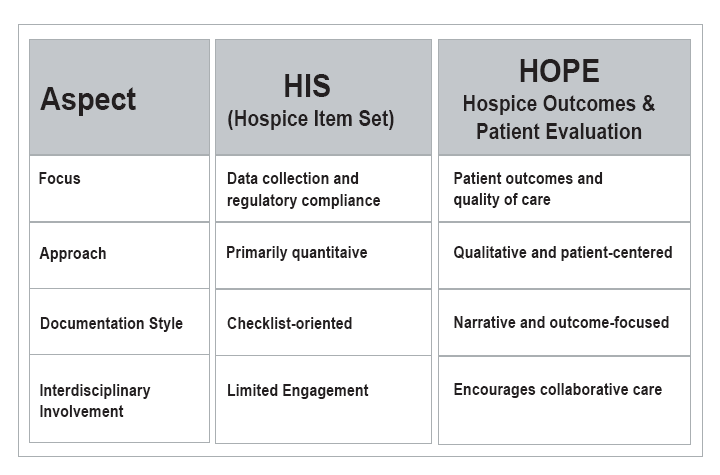
The move from HIS to HOPE signifies an essential evolution in our approach to patient care. While HIS primarily focused on data collection and compliance with regulations, HOPE emphasizes measuring patient outcomes, quality of care, and overall patient experience. This transition encourages us to engage more deeply with our patients and their families, ensuring that their unique needs and preferences are at the forefront of the care we provide.

What is HOPE?

HOPE stands for Hospice Outcomes and Patient Evaluation. This new framework highlights several core principles:

  • Patient-Centered Care
    • Focusing on individual patien needs and preferences
  • Quality of Care Assessment
    • Evaluation how well we meet those needs
  • Holistic Approach
    • Considering emotional, spiritual, and psychological factors in addition to physical health

Benefits of HOPE in Hospice Care

The adoption of the HOPE framework offers numerous advantages for both patients and healthcare providers:

  • Improved Patient Engagement
    • By prioritizing patient preferences, we can foster stronger relationships and enhance the overall care experience
  • Enhanced Quality of Care
    • Focused outcomes assessment allows us to identify areas for improvement and implement best practices
  • Recognition of Care Quality
    • HOPE enables us to demonstrate the effectiveness of our care, leading to greater recognition of our contributions in hospice settings

HIS to HOPE Key Differences

Understanding the distinctions between HIS and HOPE can help clarify the shift in our practices. Here are some key differences

HIS to HOPE Vicki Goodman Curantis Solutions

The Role of Hospice Nurses in the HOPE Framework

As hospice nurses, our role in implementing HOPE will require a significant mindset shift. Here’s how we can adapt our practice:

  • Engage With Patients and Families
    • Actively involve them in care planning and decision-making
  • Assess Holistically
    • Look beyond clinical data to include emotional and spiritual assessments
  • Collaborate with Interdisciplinary Teams
    • Work closely with all caregivers to ensure a comprehensive approach to patient care

By integrating these principles into our daily practice, we can enhance patient experiences and outcomes, ultimately providing the compassionate care that is the hallmark of hospice services.

Acknowledging Our Impact

As we transition to the HOPE framework, it’s essential to take a moment to give ourselves credit for the incredible work we already do. For most of us, patient-centered care has been at the heart of our practice long before HOPE was introduced. This new framework serves as validation, providing a structured approach to highlight the compassionate, individualized care we consistently offer.

Getting Prepared

The transition from HIS to HOPE marks an important chapter in the hospice care journey. Prepare for the transition with partners who understand the complexities and challenges that come with such significant changes. Specifically, work with a software and service company designed to ensure that your hospice team can seamlessly adapt to the HOPE framwork without sacrificing the quality of care. 

About Curantis Solutions

From comprehensive training to state-of-the-art data management systems, we provide everything needed to make this transition as smooth and effective as possible. With Curantis Solutions, you can be confident that no matter how the standards evolve, you will always be at the cutting edge, providing compassionate, patient-centered care. t Curantis, we understand the unique challenges faced by hospice and palliative care organizations. Our commitment to providing exceptional support ensures that you can focus on what matters most—delivering compassionate care to your patients. We pride ourselves on our quick response times, we deeply listen to our clients, and are easy to get ahold of when you need us. When partnering with Curantis Solutions, we guarantee we have support you can depend on.

# # #

Vicki Goodman
Vicki Goodman

Vicki Goodman, RN, BSN, MHA is an accomplished healthcare professional with a strong background in post-acute care, SaaS sales. With a proven track record of driving revenue growth, Vicki has successfully orchestrated sales strategies and marketing initiatives with over 30 years of experience in the home health and hospice EHR industry. Prior to joining Curantis Solutions, Vicki was VP, Enterprise Sales at Matrix Care.

She is an RN and BSN graduated of East Carolina University and received her MHA from University of North Carolina at Chapel Hill. She credits a lot of her success to collaborating with product and marketing teams creating an unstoppable engine. We are thrilled to have her join the Curantis Solutions family and look forward to the continued growth under her leadership.

©2024 by The Rowan Report, Peoria, AZ. All rights reserved. This article originally appeared in Healthcare at Home: The Rowan Report. One copy may be printed for personal use: further reproduction by permission only. editor@therowanreport.com
Ensuring HIPAA Compliance in Healthcare Communication

by Devin Paullin, CGO at Skyscape Buzz

Ensuring HIPAA Compliance

Communications Requiring HIPAA Compliance

While patient communication requires HIPAA adherence, so does any discussion between other parties. Essentially, any time PHI is discussed, a degree of confidentiality must be involved. For example, the Health Insurance Portability and Accountability Act (HIPAA) requires that sensitive patient data be protected when shared or discussed among:

  • Healthcare Providers and Patients
    • Any time a caregiver, staff member, doctor, nurse, or any other employee communicates with a patient, resident, or client, outside of face-to-face meetings, it must be done securely in a way that meets HIPAA standards.
  • Healthcare Professionals Among Themselves
    • HIPAA compliance must be met when healthcare professionals discuss PHI within their department or collaborate with external departments.
  • Healthcare Providers and Insurance Companies
    • Insurance providers require patient details and sensitive PHI. Still, anything that makes information vulnerable to interception must be fully compliant with HIPAA standards.
  • Healthcare Organizations and Third-Party Associates
    • Third parties that need to handle PHI (e.g., IT consultants, collections agencies, or other vendors) must do so in a way that protects patient data. To safeguard communication, healthcare organizations should ask outside associates, vendors, or agencies to sign a business associate agreement (BAA) and/or Data Processing Agreement (DPA). This is a formal agreement to comply with HIPAA standards and ensure accountability.
  • Healthcare Organizations and Public Health Authorities
    • Some diseases or conditions require healthcare professionals to report to public health authorities (e.g. COVID-19 information during the pandemic). This communication requires stringent security measures and protection of PHI.

Why HIPAA Compliance Matters

In healthcare, effective communication is essential for providing high-quality care. However, without HIPAA compliance, the risk of data breaches increases. Implementing secure, HIPAA-compliant communication systems ensures the protection of Personal Health Information (PHI) while improving overall operational efficiency.

Key Benefits of HIPAA-Compliant Communication

  • Protects Patient Privacy and Data Security
    • HIPAA-compliant platforms use advanced encryption and access controls to prevent unauthorized access. This protects patient information, including medical histories, diagnoses, and test results.
  • Enhances Communication Efficiency
    • Secure messaging platforms streamline communication between patients, caregivers, and healthcare providers. These tools eliminate inefficient methods like phone calls and ensure real-time communication.
  • Strengthens Collaborative Care
    • Providing high-quality healthcare often involves a team of professionals working together. Whether it is a hospital placing a patient in rehabilitation or home care, coordinating with intake team, care team and providers,collaboration is key. HIPAA-compliant communication tools allow these professionals to securely share critical patient information, ensuring everyone has the details they need to deliver cohesive, well-informed care.
  • Reduces Legal and Financial Risks
    • Compliance with HIPAA regulations minimizes the risk of violations, protecting organizations from hefty fines and legal repercussions.
  • Maintains Patient Trust
    • Patients are more likely to engage openly with healthcare providers when they feel confident that their sensitive information is protected.

How to Ensure HIPAA Compliance in Communication

To comply with HIPAA regulations, healthcare organizations should adopt the following secure communication methods:

  • Encrypted Emails
    • Ensure emails containing PHI are encrypted and, in some cases, require patient consent.
  • Secure Messaging Platforms
    • Use platforms specifically designed for HIPAA compliance for text-based communication.
  • HIPAA-Compliant Voice Calls and Telehealth
    • Ensure voice and video communication channels are encrypted and secure.
  • Patient Portals
    • Provide secure portals with two-factor authentication for patients to access their medical information.
  • Secure File Sharing
    • Use encrypted systems for sharing patient documents and medical records.

Implementing HIPAA-Compliant Communication Platforms

Adopting a HIPAA-compliant communication platform requires a thorough evaluation of existing systems and policies. Organizations should consider the following steps:

  • Conduct a Communication Audit
    • Identify all channels currently used for healthcare communication and assess their compliance.
  • Choose a Secure Platform
    • Select an all-in-one communication solution designed to meet HIPAA standards.
  • Establish Access Controls
    • Implement role-based access to ensure only authorized personnel can view PHI.
  • Provide Staff Training
    • Educate employees on the importance of HIPAA compliance and how to use secure communication tools.
  • Monitor and Evaluate
    • Regularly assess communication practices to identify and address vulnerabilities.

Final Thoughts

HIPAA-compliant communication is not just a legal obligation—it’s a commitment to patient privacy, security, and high-quality care. By implementing secure communication platforms, healthcare organizations can enhance efficiency, foster trust, and reduce the risk of data breaches. Investing in compliance is an investment in the long-term success and reputation of your organization.

# # #

Devin Paullin HIPAA Compliance in Home Healthcare

Devin Paullin is an award-winning innovator and executive in Healthcare Technology, having developed successful products, solutions, and partnerships in Life Sciences, Post-Acute Care, SDOH, and Long-Term industries.

He is currently Chief Growth Officer for Skyscape which provides Buzz, an all-in-one, real-time HIPAA-compliant clinical collaboration and communication platform that enables the entire staff (admins, operations, clinicians, caregivers, partners, patients, and families) with the tools to communicate securely, easily, in groups or one to one, and affordable, by any mode they choose. Visit Buzz or contact them to learn more about Buzz by Skyscape today.

©2024 by The Rowan Report, Peoria, AZ. All rights reserved. This article originally appeared in Healthcare at Home: The Rowan Report. One copy may be printed for personal use: further reproduction by permission only. editor@therowanreport.com
Enabling Care Through AI

by John Crighton, CTO at Curantis Solutions

Enabling Care Through AI: Ethical Issues

Recently, artificial intelligence (AI) has become an essential component of healthcare organizations. AI is revolutionizing hospice and palliative care by enhancing patient care and optimizing workflows. Its impact is undeniable in these sensitive and life-changing fields. At Curantis Solutions, we are proud to apply AI-driven solutions to support caregivers while upholding ethical standards, enabling care through AI.

The Importance of AI in Hospice and Palliative Care

Hospice and palliative care are primarily based on empathy, understanding, and individual approach. When applied correctly, AI can enhance these core principles in several ways:

  • Improving Efficiency
    • Some of the time-consuming tasks, such as entering assessment notes, reviewing recent documents before a patient meeting, or creating a summary of recent documentation in preparation for a team meeting, can be performed or assisted by AI. By automating these administrative tasks, caregivers can spend more time providing direct patient care.
  • Predictive Analysis
    • AI tools can analyze the patient’s data and predict the possible changes in the patient’s condition, which will help to prevent complications.
  • Individualized Care Plans
    • Based on the patient’s history, AI can help clinicians in the development of care plans that are more accurate in meeting the needs of the patient. Although the idea of using AI in hospice and palliative care is fascinating, it is crucial to approach this issue with caution and always pay attention to ethical issues.

Ethical Issues in the Use of AI in Hospice and Palliative Care

As  the industry incorporates AI into our products and agencies, we need to consider ethical implications such as those shown below:

  • Privacy and Data Protection Issues
    • Hospice and palliative care deal with the patient’s private details. At Curantis Solutions, we ensure that all AI-powered tools comply with the highest security and privacy standards, safeguarding patient data at every step.
  • Bias and Fairness
    • The way AI systems are developed, they are only as good as the data that is used in their development. At Curantis Solutions, we strive to recognize and eliminate any possible prejudice in the AI systems that we develop to benefit all patients.
  • Transparency and Accountability
    • It is important that the caregivers and the patients know how the AI is being used and how the decisions are made. We try to make our AI solutions as transparent as possible, and we ensure that the final decisions are always made by humans. Hospice and palliative care are very personal. This field is defined by the human component, and AI should only supplement it and not replace it. The solutions that we provide are intended to assist clinicians in order to maintain the sanctity of every patient.

A Future of Kindness with the Help of AI

The healthcare sector is changing rapidly, and AI is coming in to improve hospice and palliative care. At Curantis Solutions, we are proud to apply AI in a way that enhances the human factor, ethical values, and the capacity of the caregivers to offer the best care possible to the patient. Therefore, it is possible to envision a future where technology and empathy coexist to ensure that every patient gets the care they require. Leverage AI to reduce administrative burdens for hospice and palliative care.

About Curantis Solutions and AI

The goal of Curantis Solutions is to assist hospice and palliative care providers in the provision of patient-centered and compassionate care. This post discusses how AI can be used in this mission and how it can be done ethically.

We accomplish this in the following manner:

  • Working in partnership with specialists
    • We partner with clinicians, ethicists, and AI experts to guarantee that our solutions are appropriate for the context of hospice and palliative care).
  • Revisiting the Model
    • AI is not set and forgotten; it needs to be assessed and improved on an ongoing basis. We also regularly check the efficacy of our AI tools to ensure that they are accurate, fair, and reliable.
  • Enabling Care Teams
    • Our solutions which are supported by AI are meant to support the skills of the care teams and not to replace them. Thus, we lessen the burden of documentation to allow the providers to focus on the patient and their families more often.

# # #

Curantis Solutions AI John Crighton

John Crighton is a seasoned technology leader, with over 25 years of experience in software development innovation and best practices.

John most recently served as the Chief Technology Officer for Lightning Step, a Behavioral Health SaaS EHR with over 100,000 users. John served on the executive team that scaled the business, contributing to the 40x revenue growth and eventually to a successful exit.  Prior to that, John managed a custom development team at Openlink Financial and was responsible for product quality at SolArc Software. John was part of the management team that led Mission Critical Software to a successful IPO and went on to management roles with JMI Software, NEON Systems, and NetIQ.

John is a veteran of the US Army, and graduated Summa Cum Laude from the University of Houston with a Bachelor’s of Business Administration.

©2024 by The Rowan Report, Peoria, AZ. All rights reserved. This article originally appeared in the Curantis Solutions blog and is reprinted in Healthcare at Home: The Rowan Report with permission. For further permission to reprint, contact Curantis Solutions.

More Violence in Care at Home

by Elizabeth E. Hogue, Esq.

Violence Against Home Care Providers Continues

Violence in Care at Home Continues…

Sadly, but not surprisingly, the violence against field staff caring for patients in their homes continues. Here’s a recent example:

On February 28, 2025, a hospice nurse in Texas was accosted inside a patient’s home while she was attempting to provide care. The man who accosted her inside the home followed her outside with a rifle and fired at her as she fled. The nurse was uninjured, but her car was struck by at least one bullet.

Then, still armed, the man went back inside the patient’s home where he stayed close to the patient while pointing his rifle at deputies. Law enforcement officers were able to communicate with him and de-escalate the tense situation. The man was booked into the county jail on a charge of aggravated assault with a deadly weapon and bond was set at $250,000.

Violence in Care at Home

By the Numbers

According to a recent analysis of Bureau of Labor Statistics data, healthcare is one of the most dangerous places to work. Homecare field staff members who provide services on behalf of private duty agencies, hospices, Medicare-certified home health agencies, and home medical equipment (HME) companies may be especially vulnerable. Contributing to their vulnerability is the fact that they work alone on territory that may be unfamiliar and over which they have little control. Staff members certainly need as much protection as possible. 

Violence Policies Needed

First, regardless of practice setting, management should develop a written policy of zero tolerance for all incidents of violence, regardless of source. This policy should include animals. The policy must require employees and contractors to report and document all incidents of threatened or actual violence, no matter how minor.

Beyond Reporting

Emphasis should be placed on both reporting and documenting. Employees must provide as much detail as possible. The policy should also include zero tolerance for visible weapons. Caregivers must be required to report the presence of visible weapons.

UCHealth SAFE Program

Below are some additional important actions for healthcare organizations to take that are based on the UCHealth SAFE Program:

  • Encourage staff members to STOP if they feel unsafe for any reason. 
  • If danger is not imminent, workers should pause to generally ASSESS their environments. Staff members should think about what happened and observe what is currently happening. Is there, for example, mounting frustration or anger?
  • Staff should then FAMILIARIZE themselves with the area. Who is the patient? Where is the patient? Are there any factors that might escalate behaviors? Staff members should also consider putting themselves in positions where they have a route to escape, if necessary.
  • ENLIST help. Getting help may, for example, include pushing panic buttons on mobile devices.

In Their Own Words

Here is what Chris Powell, Chief of Security at UCHealth, said in Becker’s Hospital Review on June 4, 2024:

“You can’t just talk about the shrimp and give you a good picture. We have to talk about the roux and the rice and everything else that goes into this for a good picture to be painted so people have an understanding. We want to solve this with an electronic learning or a 15-minute huddle, but we can’t. This is continuous and a persistent pursuit toward educating, communicating, recognizing, responding to, reporting and recovering from workplace violence.”

Chris Powell

Chief of Security, UCHealth

Final Thoughts

Every caregiver matters. The healthcare industry has lost caregivers to violence on the job in the past. Let’s do all that we can to avoid similar events in the future.

# # #

Elizabeth E. Hogue, Esq.

Elizabeth Hogue is an attorney in private practice with extensive experience in health care. She represents clients across the U.S., including professional associations, managed care providers, hospitals, long-term care facilities, home health agencies, durable medical equipment companies, and hospices.

©2025 Elizabeth E. Hogue, Esq. All rights reserved.

No portion of this material may be reproduced in any form without the advance written permission of the author.

©2025 by The Rowan Report, Peoria, AZ. All rights reserved. This article originally appeared in The Rowan Report. One copy may be printed for personal use: further reproduction by permission only. editor@therowanreport.com

HIPAA Compliance in Communication

by Devin Paulin, Skyscape

The Critical Importance of HIPAA Compliance in Home Healthcare Communication

The Rise of Messaging Apps and Healthcare Communication

Nearly 44% of the global population (3.5 billion people) rely on messaging apps to communicate. Unfortunately, available consumer SMS, text, and even “secure” messaging apps like WhatsApp, Apple Message, or Google Messages do not come with safety and security features specifically required to be compliant in the healthcare industry.

Still, consumer SMS apps are quite often used for healthcare communication in which Personal Health Information (PHI) is shared, and many individuals don’t understand the level of risk or that this is a violation of the law.

HIPAA Compliance in Communication Advantages

Group and Individual texting are a proven, timesaving, real-time communication tool in healthcare, and must be done through a HIPAA-compliant messaging platform. Secure platforms can improve privacy and security while maintaining compliance in such a sensitive industry.

There are many reasons why HIPAA compliance is vital for secure communication in home healthcare.

HIPAA Compliance in Communication - Not Just for Doctors and Nurses

HIPAA compliance is not just for medical clinics and hospitals. HIPAA compliance extends to all types of services that hold healthcare information. Physical Therapy, Personal Care, Home Health, Wellness, Behavioral Health, Assisted Living, and many more all fall under HIPAA. Most importantly, ALL providers, staff members (full or part-time), contractors, and third-party partners who come in contact with PHI are subject to HIPAA law, violations, and fines.

HIPAA Compliance in Communication

We're too Small for Violations to be Noticed, Though

Wrong. We regularly speak to many owners and staff members of large and small Home Health Care, Assisted Living, Hospice and Palliative, Mobile Imaging, PT and Rehabilitation, and Behavioral Health across the country. Many openly operate under the false assumption that their business is too small to be noticed by the U.S. Department of Health and Human Services (HHS) and the Office for Civil Rights (OCR), who is responsible for enforcing the HIPAA Privacy and Security Rules. That is not how it works.

Complaints logged by those within or close to your business alert the OCR to possible HIPAA violations. These can be from current and former staff, patients, clients, business partners, or anyone who claims to have witnessed a HIPAA breach. This can include disgruntled employees and whistleblowers. Even for companies that are HIPAA compliant, any breach is to be reported by an employee assigned as the security officer.

HIPAA Compliance in Home Healthcare by Type

HIPAA mandates compliance for all communications involving PHI. Some key examples include:

  • Provider-to-Patient Communication
    • Secure platforms are necessary when caregivers contact patients outside of in-person visits.
  • Provider-to-Provider Communication
    • Sharing PHI within or between departments must meet HIPAA standards.
  • Provider-to-Insurance Communication
    • Insurance companies require sensitive patient data, which must be securely transmitted.
  • Provider-to-Third-Party Communication
    • Any third-party associates handling PHI must have a signed Business Associate Agreement (BAA) and adhere to HIPAA regulations.
  • Provider-to-Public Health Authorities
    • Reporting communicable diseases or pandemics requires secure communication.

Consequence of HIPAA Violations

HIPAA violations can have severe consequences, including:

  • Financial Penalties
    • Fines range from $100 to $50,000 per violation, depending on the level of negligence.
  • Reputational Damage
    • Data breaches erode patient trust, leading to a damaged reputation.
  • Legal Consequences
    • In cases of willful neglect, organizations may face lawsuits or criminal charges.

Final Thoughts

Understanding and adhering to HIPAA regulations is crucial in home healthcare. Compliance not only safeguards sensitive information but also strengthens patient trust and ensures ethical operations.

# # #

Devin Paullin HIPAA Compliance in Home Healthcare

Devin Paullin is an award-winning innovator and executive in Healthcare Technology, having developed successful products, solutions, and partnerships in Life Sciences, Post-Acute Care, SDOH, and Long-Term industries.

He is currently Chief Growth Officer for Skyscape which provides Buzz, an all-in-one, real-time HIPAA-compliant clinical collaboration and communication platform that enables the entire staff (admins, operations, clinicians, caregivers, partners, patients, and families) with the tools to communicate securely, easily, in groups or one to one, and affordable, by any mode they choose. Visit Buzz or contact them to learn more about Buzz by Skyscape today.

©2024 by The Rowan Report, Peoria, AZ. All rights reserved. This article originally appeared in Healthcare at Home: The Rowan Report. One copy may be printed for personal use: further reproduction by permission only. editor@therowanreport.com

Medicare Advantage Lowers Home Health Care Use

by Kristin Rowan, Editor

End-of-Life Care in Medicare Advantage vs Traditional Medicare

Using research from CMS, researchers from Mt. Sinai in New York and Brown University in Rhode Island studied the data of adults aged 66 and older who passed away and had Medicare coverage in their final year of life. Included in the study were people potentially eligible for home health care and not in a nursing facility, hospital, or hospice care setting. Data from close to 1.8 million people was analyzed. The researchers identified whether the participants received home health care and how many days of end-of-life care they received.

Home Health Higher in Traditional Medicare

Of the nearly 1.8 million participants, the average age was 82. 51.5% were female and 36.5% were enrolled in Medicare Advantage. In the final year of life, home health care use was recorded at 37.5% for MA enrollees and 41.7% for traditional Medicare.

When the researchers looked at different demographic groups within the data sets, home health care usage was higher in traditional Medicare in most groups. However, among American Indian and Alaska Native groups, Medicare Advantage had a slightly higher rate of home health use at 37.9% compared with 37.1% in Traditional Medicare.

Conversely, in the Asian or Pacific Islander demographic, home health use rate was 32.6% in MA and 41.8% in TM. Similarly, the rate of use among the Hispanic group was 33% in MA and 44% in TM. Following a similar trend, in the non-Hispanic Black group home health usage in MA was 38.8% compared with 42.9% in TM. Likewise, among the non-Hispanic White group, home health use in MA was 37.9% versus 41.5% for TM. For those of unknown race, usage was 36.1% in MA compared with 40.1% in TM.

Days of Care Lower in Medicare Advantage

Home health users across all racial and ethnic demographic groups enrolled as Medicare Advantage beneficiaries had fewer days of care in home health than those enrolled in Traditional Medicare. The stand-out group in this part of the research was those of Hispanic descent, who averaged 81.9 days in home health care in Medicare Advantage compared with 111.9 days in Traditional Medicare.

Medicare Advantage Home Health Use

Implications

The researchers indicated some limitations in the study, namely that data was pulled from pre-covid patients because of the changes in home health during covid. The study should be repeated with post-covid data. One of the researchers received personal fees while serving as a senior advisor to CMS. Another received personal fees as a section editor for UpToDate. A third researcher reported receiving personal fees from Abt and UpToDate.

Despite these limitations, the implications of the study show that end-of-life care is not the same between Medicare and Medicare Advantage patients. Medicare Advantage is largely operating on a Value-Based Purchasing Model. The fewer services the beneficiary receives, the more money the primary doctor, hospital, and payer keep. It is not surprising, therefore, that MA patients get fewer services for less time. Patients who switch from Traditional Medicare to Medicare Advantage, especially if they are your patients, should be informed that they are still eligible for home health care and hospice care, but they may have to ask for it.

# # #

Kristin Rowan, Editor

Kristin Rowan has been working at The Rowan Report since 2008. She is the owner and Editor-in-chief of The Rowan Report, the industry’s most trusted source for care at home news .She also has a master’s degree in business administration and marketing and runs Girard Marketing Group, a multi-faceted boutique marketing firm specializing in content creation, social media management, and event marketing.  Connect with Kristin directly kristin@girardmarketinggroup.com or www.girardmarketinggroup.com

©2025 by The Rowan Report, Peoria, AZ. All rights reserved. This article originally appeared in The Rowan Report. One copy may be printed for personal use: further reproduction by permission only. editor@therowanreport.com

 

Fraud Soup

by Elizabeth E. Hogue, Esq.

Everyone in the "Fraud Soup" Together

Fraud Soup

Perhaps you remember the CEO of a hospice in the Dallas area, Novus Health Care Services, who texted staff members urging them to administer drugs to patients to avoid exceeding per patient spending caps. He then sent texts praising them when patients passed away from the drugs he had urged them to administer: “Good job!” There were also accusations of recruiting ineligible patients and falsifying documentation. Ever wonder what happened to him and other staff members?

Well...Here's the Scoop!

  • Sixteen individuals from the hospice were indicted and at least eleven of them pled guilty.
  • Thirteen individuals involved in these activities were sentenced to a combined eighty-four years in prison.
  • The most recent sentence of four years in prison was imposed on the hospice’s marketing director.
  • The CEO of the Hospice was sentenced to thirteen years in prison.
  • Two Medical Directors decided to go to trial instead of pleading guilty. They were sentenced to thirteen years and ten years in prison.
  • A nurse involved in these activities was sentenced to eight and a half years in prison.
  • An LVN who received a text from the CEO saying “good job” after she administered drugs to a patient who then passed away was sentenced to eight years in prison.
Fraud Soup Elizabeth Hogue
  • A triage nurse was sentenced to seven years in prison.
  • The Director of Operations was sentenced to five and a half years in prison.
  • A Medical Director who pleaded guilty received a sentence of four years and nine months.
  • The VP of Patient Services was sentenced to three years in prison.
  • The VP of Marketing was sentenced to two years and nine months in jail.
  • A nurse was also sentenced to two years and nine months in prison.
  • An owner of a lab and home health agency was also sent to jail for eighteen months because she allowed the CEO to access potential patients’ confidential medical information in exchange for using services provided by her companies.

Far-Reaching Effects

Can you imagine the effect on professionals who surely also lost their licenses and their families?  Not to mention patients and their families!

The lesson in this heartbreaking story is that fraud enforcement is not limited to owners and upper management. Enforcers will dump everyone who engaged in inappropriate conduct into the “fraud soup.” Therefore, when providers refuse to engage in fraudulent conduct, they are not only protecting themselves, but everyone else involved.

# # #

Elizabeth E. Hogue, Esq.

Elizabeth Hogue is an attorney in private practice with extensive experience in health care. She represents clients across the U.S., including professional associations, managed care providers, hospitals, long-term care facilities, home health agencies, durable medical equipment companies, and hospices.

©2024 by The Rowan Report, Peoria, AZ. All rights reserved. This article originally appeared in Healthcare at Home: The Rowan Report. One copy may be printed for personal use: further reproduction by permission only. editor@therowanreport.com

©2024 Elizabeth E. Hogue, Esq. All rights reserved.

No portion of this material may be reproduced in any form without the advance written permission of the author.