Underlying Causes of Health Issues

by Kristin Rowan, Editor

Underlying Causes of Health Issues

Underlying causes of health issues are common. Not all health issues come directly from infections, medical conditions, or genetics. Lifestyle, environmental factors, and social determinants can cause and/or increase the severity of health issues. Beginning in the winter of 2023, the Centers for Medicare and Medicaid Services posted guidance on approving coverage for these social needs, acknowledging that they contribute to poor health outcomes. CMS named the social needs that could be covered by Medicaid, CHIP, Section 1115, and Home and Community Based Services. These include help finding new housing, one-time moving costs, eviction prevention, respite care, sober centers, home improvements, meals, and case management.

Guidance Rescinded

CMS referred to both the 2023 and 2024 documents as “Center Informational Bulletins” (CIB) meant as guidance, not rule of law. The 2024 document provided updates and clarifications to the 2023 document. According to the statement from CMS, dated March 4, 2025, they have rescinded both CIBs “to evaluate policy options consistent with Medicaid and CHIP progam requirements and objectives.” Moving forward, CMS will consider each application to cover these services on a case-by-case basis using the Social Security Act, not the HRSN Framework or the CIBs.

Opposition

Former chief medical officer of the US Medicaid program Andrey Ostrovsky, MD, FAAP said that removing coverage for social determinants of health will harm patients and taxpayers.

Sen Ron Wyden (D, Oregon) agrees, stating that addressing the underlying causes of health issues is key to keeping America healthy.

Underlying Causes of Health Issues Andrey Ostrovsky

“It’s unlikely we see an easy, smooth approval process for such services moving forward….I think that the bar to getting it approved will be higher. States are going to have to make individualized decisions around where their priorities are and where they want to continue to focus on expansion — and maybe focus a little bit more on cost constraint and financially effective services under the new administrative priorities.”

Damon Terzaghi

Senior Director of Medicaid Advocacy, National Alliance for Care at Home

On the Other Hand

Despite the opposition to this change, there does seem to be some validity to the move. There should be some discussion about where Medicaid services should end and another department begins. The question here is whether a different federal program should be providing coverage for these social determinants of health. According to Terzaghi, this could be the beginning of an improvement to the system, rather than the dismantling of it.

Final Thoughts

The changes coming out of D.C. recently seem to be coming like rapid fire. See this weeks related press release on the continuing resolution passed by Congress. As with most of these edicts, executive orders, and other changes, the long-term impact and the eventual goal remain to be seen. We will continue to follow these and other stories as new information becomes available.

# # #

Kristin Rowan, Editor

Kristin Rowan has been working at The Rowan Report since 2008. She is the owner and Editor-in-chief of The Rowan Report, the industry’s most trusted source for care at home news .She also has a master’s degree in business administration and marketing and runs Girard Marketing Group, a multi-faceted boutique marketing firm specializing in content creation, social media management, and event marketing.  Connect with Kristin directly kristin@girardmarketinggroup.com or www.girardmarketinggroup.com

©2025 by The Rowan Report, Peoria, AZ. All rights reserved. This article originally appeared in The Rowan Report. One copy may be printed for personal use: further reproduction by permission only. editor@therowanreport.com


 

Update on Public Participation in Rule Making

by Kristin Rowan, Editor

Update

Last week, we reached out to some of our contacts for responses to this change.

Former President of NAHC and current Senior Counsel at Arnall Golden Gregory Bill Dombi said:

It is difficult to discern the impact of the rescission of the waiver. One concern is whether the administration considers Medicaid  a grant or benefit program thereby exempting it from APA public notice and comment rulemaking.  

With respect to Medicare, if it is considered a benefit, there is still a Medicare statutory requirement of public notice and opportunity for comment through formal rulemaking that should effectively nullify the practical impact of the rescission of the waiver. All that said, we will need to see more before being to judge the impact.

Frequent guest author and Fellow, American Health Law Association, Elizabeth E. Hogue, Esq. had this to say:

Recission of the Richardson Waiver is not good news for providers. 

Many federal agencies voluntarily committed to give notice and comment for actions that otherwise would be exempt. The US Department of Health and Human Services was one of the federal agencies that adopted this policy in October, 1970, in a memorandum commonly referred to as the “Richardson Waiver.”  This policy was published in the Federal Register in 1971.  HHS did not, however, promulgate the Waiver through notice and comment rulemaking. 

The open process of give and take between agencies and providers under the Richardson Waiver resulted in resolution of important issues relatively informally.  Now it appears that only policies mandated by statute will go through the rulemaking process.  In other words, opportunities to resolve issues without formal resolution will be compromised. 

The recission of the Waiver may also make administration of both the Medicaid and Medicare programs more complicated and less effective, especially in view of US Supreme Court decisions that say everything that hasn’t gone through the notice and comment process is not binding on providers.

# # #

Below is the original article, published March 6, 2025

Public Participation Rescinded

The Administrative Procedure Act (APA) requires that an agency public a notice of proposed rulemaking in the Federal Register; allow sufficient time for public participation via written data, views, or arguments; and then publish a final rule. Matters relating to agency management, personnel, or public property; loans, grants, benefits, or contracts; and for “good cause” are exempt from the reporting requirements. The Richardson Waiver, adopted in 1971, waived the exemption and instructed agencies to use the good cause exemption sparingly. Effective immediately, the Richardson Waiver is rescinded.

“The policy waiving the statutory exemption…imposes on the Department obligations beyond the maximum procedural requirements specified by the APA, adds costs [that] are contrary to the efficient operation of the Department, and impedes the Department’s flexibility to adapt quickly to legal and policy mandates.”

Robert F. Kennedy, Jr.

Secretary, Department of Health and Human Services

What it Means

Public participation is now optional. Agencies and offices of the Department of HHS can, if desired, use the public notice and comment procedures for these matters, but are no longer required to do so. The Department will continue to follow these procedures in all circumstances in which they are required to do so.

Law firm Hogan Lovells, experts in healthcare law, wrote about the potential implications for the health care industry in a recent blog post. According to the firm, it is unclear how HHS will interpret the “benefits” portion of the exemption. HHS, and specifically CMS, currently uses the notice and comment procedure for various benefits programs, including Medicare and Medicaid. Secretary Kennedy’s statement clearly calls out the limitation in impacting any other law requiring notice and comment periods.

Public Participation in Medicare Rules

Hogan Lovells indicates that few if any policies written under the Medcare Act will be impacted by this change. The Medicare Act operates under additional rulemaking requirements under section 1871(a) of the SSA. Additionally, Azar v. Allina Health Services, 587 U.S. 566 (2019) confirms that Medicare rulemaking is independent from the APA. Some policies are currently exempt from the notice and comment obligations under the Medicare Act and will remain exempt.

Public Participation in Medicaid and CHIP rules

Medicare and CHIP fall under Title XIX of the SSA, which does not contain its own notice and comment requirements separate from the APA. HHS has used the APA notice and comment rules for many of the changes made to the Medicaid program. HHS could interpret the “benefits” clause as exempting Medicaid changes from the rule. Hogan Lovells states it is currently unclear whether HHS will take this route. They also purport the courts have not ruled on whether APA excludes Medicaid from the notice and comment requirements, and may not agree with that exclusion. Until the term “benefits” is better defined, Medicaid, CHIP, the insurance exchange marketplace, and TANF, among others, may be impacted.

Department of Veterans Affairs

A notable exception to these changes is the rulemaking in the Department of Veterans Affairs as it relates to the Veterans Health Care act of 1992. This program implemented Federal contractor requirements that established pricing and contracting standards for drug manufacturers. The VA policies and rules have historically been enacted using guidance letters, avoiding the rulemaking process altogether.

Final Thoughts

There is too much that is yet unknown regarding this change to understand its full impact. There will be immediate changes, court rulings, further changes, and likely a lot of advocacy from national organizations fighting for transparency for Medicare, Medicaid, and other “benefit” programs. This will be an ongoing story and The Rowan Report will bring updates as they happen.

# # # 

Kristin Rowan, Editor

Kristin Rowan has been working at The Rowan Report since 2008. She is the owner and Editor-in-chief of The Rowan Report, the industry’s most trusted source for care at home news .She also has a master’s degree in business administration and marketing and runs Girard Marketing Group, a multi-faceted boutique marketing firm specializing in content creation, social media management, and event marketing.  Connect with Kristin directly kristin@girardmarketinggroup.com or www.girardmarketinggroup.com

©2025 by The Rowan Report, Peoria, AZ. All rights reserved. This article originally appeared in The Rowan Report. One copy may be printed for personal use: further reproduction by permission only. editor@therowanreport.com

 

BREAKING NEWS: Kennedy Rescinds Public Participation in Rule Making

by Kristin Rowan, Editor

Public Participation Rescinded

The Administrative Procedure Act (APA) requires that an agency publish a notice of proposed rulemaking in the Federal Register; allow sufficient time for public participation via written data, views, or arguments; and then publish a final rule. Matters relating to agency management, personnel, or public property; loans, grants, benefits, or contracts; and for “good cause” are exempt from the reporting requirements. The Richardson Waiver, adopted in 1971, waived the exemption and instructed agencies to use the good cause exemption sparingly. Effective immediately, the Richardson Waiver is rescinded.

“The policy waiving the statutory exemption…imposes on the Department obligations beyond the maximum procedural requirements specified by the APA, adds costs [that] are contrary to the efficient operation of the Department, and impedes the Department’s flexibility to adapt quickly to legal and policy mandates.”

Robert F. Kennedy, Jr.

Secretary, Department of Health and Human Services

What it Means

Public participation is now optional. Agencies and offices of the Department of HHS can, if desired, use the public notice and comment procedures for these matters, but are no longer required to do so. The Department will continue to follow these procedures in all circumstances in which they are required to do so.

Law firm Hogan Lovells, experts in healthcare law, wrote about the potential implications for the health care industry in a recent blog post. According to the firm, it is unclear how HHS will interpret the “benefits” portion of the exemption. HHS, and specifically CMS, currently uses the notice and comment procedure for various benefits programs, including Medicare and Medicaid. Secretary Kennedy’s statement clearly calls out the limitation in impacting any other law requiring notice and comment periods.

Public Participation in Medicare Rules

Hogan Lovells indicates that few if any policies written under the Medcare Act will be impacted by this change. The Medicare Act operates under additional rulemaking requirements under section 1871(a) of the SSA. Additionally, Azar v. Allina Health Services, 587 U.S. 566 (2019) confirms that Medicare rulemaking is independent from the APA. Some policies are currently exempt from the notice and comment obligations under the Medicare Act and will remain exempt.

Public Participation in Medicaid and CHIP rules

Medicare and CHIP fall under Title XIX of the SSA, which does not contain its own notice and comment requirements separate from the APA. HHS has used the APA notice and comment rules for many of the changes made to the Medicaid program. HHS could interpret the “benefits” clause as exempting Medicaid changes from the rule. Hogan Lovells states it is currently unclear whether HHS will take this route. They also purport the courts have not ruled on whether APA excludes Medicaid from the notice and comment requirements, and may not agree with that exclusion. Until the term “benefits” is better defined, Medicaid, CHIP, the insurance exchange marketplace, and TANF, among others, may be impacted.

Department of Veterans Affairs

A notable exception to these changes is the rulemaking in the Department of Veterans Affairs as it relates to the Veterans Health Care act of 1992. This program implemented Federal contractor requirements that established pricing and contracting standards for drug manufacturers. The VA policies and rules have historically been enacted using guidance letters, avoiding the rulemaking process altogether.

Final Thoughts

There is too much that is yet unknown regarding this change to understand its full impact. There will be immediate changes, court rulings, further changes, and likely a lot of advocacy from national organizations fighting for transparency for Medicare, Medicaid, and other “benefit” programs. This will be an ongoing story and The Rowan Report will bring updates as they happen.

# # # 

Kristin Rowan, Editor

Kristin Rowan has been working at The Rowan Report since 2008. She is the owner and Editor-in-chief of The Rowan Report, the industry’s most trusted source for care at home news .She also has a master’s degree in business administration and marketing and runs Girard Marketing Group, a multi-faceted boutique marketing firm specializing in content creation, social media management, and event marketing.  Connect with Kristin directly kristin@girardmarketinggroup.com or www.girardmarketinggroup.com

©2025 by The Rowan Report, Peoria, AZ. All rights reserved. This article originally appeared in The Rowan Report. One copy may be printed for personal use: further reproduction by permission only. editor@therowanreport.com


Treatment in Place from Emergency Medical Services

by Elizabeth E. Hogue, Esq.

Treatment in Place

Providers of services to patients in their homes are anecdotally familiar with situations in which patients need help at home, but do not qualify for home health services and have not arranged for or are unable to afford home care/private duty services. These patients need assistance, but do not need transport.

The Problem

The problem for Emergency Medical Services (EMS) is nonpayment for services if patients are not transported for services.

Can EMS Charge Without Transport

The Office of Inspector General (OIG) of the U.S. Department of Health and Human Services has weighed in on whether local EMS can meet this need and bill patients’ insurance for treatment in place (TIP) services. The OIG has “blessed” the provision and billing of these services in Advisory Opinion No. 24-09 issued on November 21, 2024.

Treatment in Place

Treatment in Place Requirements to Bill Insurance

Specifically, the OIG says that EMS may provide services to patients in their homes or TIP services and bill Patients’ insurers if the following requirements are met:

  • Charges to patients’ insurers would be limited for emergency responses only.
  • Charges for TIP services must be based on the level of care furnished to patients and cannot exceed amounts currently claimed for payment for the same levels of care furnished in connection with ambulance transports.
  • Charges are made regardless of whether patients are enrolled in commercial insurance plans or federal health programs.
  • EMS accepts payment for TIP services from patients’ health insurances as payment in full.
  • Patients will not be billed for any cost-sharing amounts under patients’ health insurance, including federal health care programs for covered TIP services, regardless of whether they are residents or nonresidents of the county where TIP services are provided.
  • EMS cannot later claim cost-sharing amounts waived as bed debts for payments under federal health care programs or otherwise shift the burden of cost-sharing waivers onto federal health care programs, other payors, or individuals by, for example, balance billing.

Cost-Sharing

In light of the above, the OIG first acknowledged that the prohibition on waivers of cost-sharing under the federal anti-kickback statute (AKS) is applicable and that the requirements of a safe harbor that addresses waivers of cost-sharing amounts for municipally owned ambulances are not met by the proposed arrangement. The OIG also said that the proposed arrangement would result in remuneration in the form of cost-sharing waivers for TIP services and TIP services provided at no charge to patients. Consequently, remuneration provided implicates both the AKS and the Beneficiary Inducements CMP.

Risk

Nonetheless, the OIG concluded that the arrangement involves a low risk of fraud and abuse. In addition to the above requirements, the OIG concluded that neither Medicare Part B nor the State Medicaid Program currently covers TIP services; only a handful of Medicare Advantage Plans and some Medicaid Programs currently cover TIP services. This means that, in most circumstances, the arrangement will result in no costs to federal health care programs and, in fact, may reduce costs by avoiding ambulance transport or subsequent hospital care. Patients may also receive care more quickly and efficiently, and at more appropriate levels of care when they receive TIP services.

Treatment in Place Cost-sharing Waivers

Finally, according to the OIG, waivers of cost-sharing for TIP services or the provision of free TIP services are unlikely to affect patients’ decisions to use future emergency ambulance services reimbursed by federal health care programs.

Providers are increasingly aware that patients need a variety of services in their homes. The OIG has opened another door!

# # #

Elizabeth E. Hogue, Esq.

Elizabeth Hogue is an attorney in private practice with extensive experience in health care. She represents clients across the U.S., including professional associations, managed care providers, hospitals, long-term care facilities, home health agencies, durable medical equipment companies, and hospices.

©2025 Elizabeth E. Hogue, Esq. All rights reserved.

No portion of this material may be reproduced in any form without the advance written permission of the author.

©2025 by The Rowan Report, Peoria, AZ. All rights reserved. This article originally appeared in The Rowan Report. One copy may be printed for personal use: further reproduction by permission only. editor@therowanreport.com

Is Medicaid Down for the Count?

by Kristin Rowan, Editor

Medicaid Payment System Goes Dark

On Monday, January 27, President Trump, through the Office of Management and Budget, announced a temporary freeze on federal spending while his newly designated head of the Department of Government Efficiency ensures all spending follows the executive orders the President has signed. The memo was vague and caused widespread confusion across government departments. Almost immediately after the memo was circulated, Medicaid programs could not access the Payment Management Services web portal, the entity responsible for paying Medicaid claims.

The Memo

The language used in the memo on federal spending was broad and overreaching. As such, many federal organizations were unclear as to whether the memo applied to them. The message in the memo was that the administration intended to curb any spending that does not improve the day-to-day lives of the people. Throughout the day Monday, the White House sent clarifications about what programs would not be impacted. Among them were food assistance programs like SNAP, WIC, and Meals on Wheels, and Medicaid. The medicaid payment portal went down, despite this clarification.

Exclusions

Multiple state and federal agencies reached out to the White House for clarification following the release of the memo. Explicitly excluded from the freeze are direct benefit plans like Social Security and Medicare. In addition to the programs named in the memo, clarification on additional programs that would not be impacted included Medicaid. Despite the temporary website outage, claims were still being processed and payments were still being made.

Immediate Lawsuits

Almost simultaneously with the distribution of the memo, several non-profit organizations filed suit against the federal government. They called Trump’s action an “unlawful and unconstitutional” act, even temporarily. The pause on federal spending was set to go into effect at 5 p.m. ET on Tuesday. Minutes before, U.S. District Judge Loren L. AliKhan put a pause on the pause.

Temporary Freeze on the Temporary Freeze

To allow both sides time to construct an argument, the judge stayed the funding freeze until Monday, February 3. That morning, the judge will hear arguments and consider the issue. After the stay, attorneys general from 22 states and D.C. filed their own lawsuit to permanently block the freeze and prevent any future attempts to cut off already approved federal funding.

Then Comes the Thaw

If the judge allows the freeze to move forward, Trump has given every agency until February 10 to account for and explain all spending programs within their departments. Once the accounting has been reviewed, likely the OMB and the Department of Government Efficiency will determine which federal spending programs can resume operation.

There is no indication yet as to whether Trump will extend the February 10 deadline, given the delay in the courts. By the time the judge rules on Monday, however, we hope the White House will have issued additional details and guidance to avoid additional disruption to essential services like Medicare and Medicaid.

Federal Funding Freeze

Final? Ruling

Early Monday, Judge AliKhan said she was not convinced by the argument that nonprofit groups have no case against the funding freeze since the OMB rescinded the memo. The administration argued that a brief pause on funding to align federal spending is within the law. The administration also suggests that the courts have no standing to block it. AliKhan has indicated that she will likely grant a longer temporary order to stay the funding freeze.

# # #

Kristin Rowan, Editor

Kristin Rowan has been working at The Rowan Report since 2008. She is the owner and Editor-in-chief of The Rowan Report, the industry’s most trusted source for care at home news .She also has a master’s degree in business administration and marketing and runs Girard Marketing Group, a multi-faceted boutique marketing firm specializing in content creation, social media management, and event marketing.  Connect with Kristin directly kristin@girardmarketinggroup.com or www.girardmarketinggroup.com

©2025 by The Rowan Report, Peoria, AZ. All rights reserved. This article originally appeared in The Rowan Report. One copy may be printed for personal use: further reproduction by permission only. editor@therowanreport.com
 

Care at Home Coming to Medicaid?

by Elizabeth E. Hogue, Esq.

Brown v D.C. Decision is Another Boost for Care at Home

In Olmstead v. L.C., the U.S. Supreme Court decided that unjustified segregation of disabled persons constitutes discrimination in violation of Title II of the Americans with Disabilities Act.

The Court said that public entities must provide community-based services to disabled persons when such services are:

    • Appropriate;
    • Unopposed by disabled persons; and
    • Reasonable accommodations taking into account resources available to public entities and the needs of other disabled individuals receiving services from the entity.

This decision gave a tremendous boost to the provision of home and community-based services of all types. Since Olmstead was decided in 1999, there have been more court decisions that require services to be provided at home based on this opinion.

Support for Olmstead

One recent decision is Brown, et al v. District of Columbia (Brown v D.C.) that was decided on December 31, 2024. The Court decided that the District of Columbia violated the rights of D.C. residents with disabilities under the Americans with Disabilities Act (ADA) and the Rehabilitation Act. According to the Court, D.C. failed to inform nursing facility residents who receive Medicaid that they could leave nursing facilities and receive home health services in their communities and failed to assist them to do so. The D.C. government also failed to help them access community-based services and housing options needed to transition back to the community.

Brown v D.C.

The Court recognized that individuals living in nursing facilities often need help learning about and applying for available community services to help them transition out of the institution and into their own homes. Even when residents learn about services, navigating the complicated Medicaid-funded long-term care program can cause confusion and anxiety that sometimes causes facility residents to lose hope that they can live in their own homes again.

Consequently, the decision applies to

“All persons with physical disabilities who, now or during the pendency of this lawsuit: (1) receive DC Medicaid-funded long-term care services in a nursing facility for 90 or more consecutive days; (2) are eligible for Medicaid-covered home and community-based long-term care services that would enable them to live in the community; and (3) would prefer to live in the community instead of a nursing facility but need the District of Columbia to provide transition assistance to facilitate their access to long-term care services in the community.”

Brown v D.C. Says That D.C. Must

    • Develop and implement a working system of transition assistance for [nursing home residents that], at a minimum
      • informs DC Medicaid-funded residents, upon admission and at least every three months thereafter, about community-based long-term care alternatives to nursing facilities
      • elicits DC Medicaid-funded nursing facility residents’ preferences for community or nursing facility placement upon admission and at least every three months thereafter
      • begins DC Medicaid-funded nursing facility residents’ discharge planning upon admission and reviews at least every month the progress made on that plan
      • provides DC Medicaid-funded nursing facility residents who do not oppose living in the community with assistance accessing all appropriate resources available in the community
    • Ensure sufficient capacity of community-based long-term care services for [residents] under the EPD, MFP, and PCA programs and other long-term care service programs, to serve [residents] in the most integrated setting appropriate to their needs, as measured by enrollment in these long-term care programs.
    • …[D]emonstrate [its] ongoing commitment to deinstitutionalization by, at a minimum, publicly reporting on at least a semi-annual basis the total number of DC Medicaid-funded nursing facility residents who do not oppose living in the community; the number of those individuals assisted by [DC] to transition to the community with long-term care services [described above]; and the aggregate dollars [DC] saves (or fails to save) by serving individuals in the community rather than in nursing facilities.

Final Thoughts on Brown v D.C.

As indicated above, there continues to be a clear mandate for Medicaid Programs to provide services to individuals in the community, which is a significant impetus to provide services to patients in their homes. This mandate, however, does not directly address practical aspects of implementation, such as reimbursement at appropriate rates for providers or availability of staff to provide services at home. Nonetheless, the Olmstead and Brown cases provide an important basis for further development of in-home services of all types to meet the needs of disabled persons.

Elizabeth E. Hogue, Esq.

Elizabeth Hogue is an attorney in private practice with extensive experience in health care. She represents clients across the U.S., including professional associations, managed care providers, hospitals, long-term care facilities, home health agencies, durable medical equipment companies, and hospices.

©2025 Elizabeth E. Hogue, Esq. All rights reserved.

No portion of this material may be reproduced in any form without the advance written permission of the author.

©2025 by The Rowan Report, Peoria, AZ. All rights reserved. This article originally appeared in The Rowan Report. One copy may be printed for personal use: further reproduction by permission only. editor@therowanreport.com

Meet the CMS Administrator Nominee

by Tim Rowan, Editor Emeritus

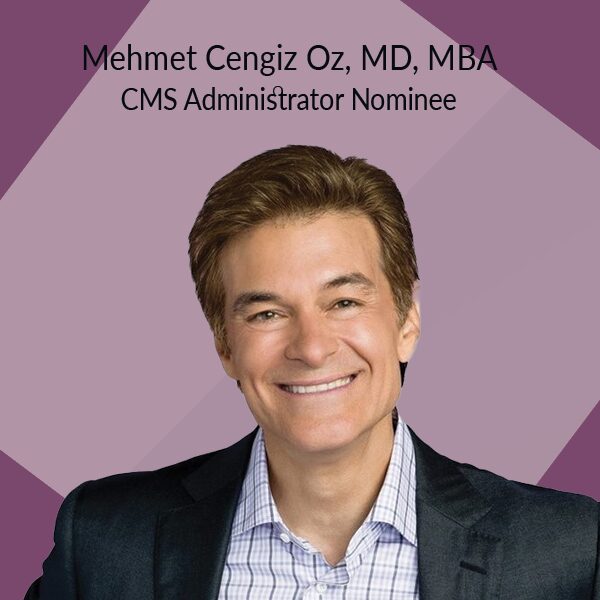
Mehmet Oz, MD, MBA is the CMS Administrator nominee in the new administration that assumes power on January 20. A popular TV personality and former gubernatorial candidate, the public side of Dr. Oz is well known, but the details of his life and his qualifications to head a $1.16 trillion government program less so. We reached out to the nominee’s PR firm on November 22 to request an interview but have not received a response. We gathered the following background information from his web site and other sources.

Heritage and Education

Mehmet Cengiz Öz was born on June 11, 1960 in Cleveland, Ohio, of Turkish immigrant parents. Raised in Wilmington, Delaware, he holds dual U.S. and Turkish citizenship and comes from healthcare roots. His father, Mustafa Oz, graduated at the top of his class at Cerrahpaşa Medical School in 1950 and moved to the United States to join the general residency program at Case Western Reserve University in Cleveland, where Mehmet was born. His mother, Suna Atabay, was the daughter of an Istanbul pharmacist.

Mehmet graduated with a biology degree from Harvard University in 1982. He earned an MD at the University of Pennsylvania School of Medicine and an MBA from Penn’s Wharton Business School in 1986. He completed his surgical training at NewYork-Presbyterian Hospital and served as a professor of surgery at Columbia University.

CMS Administrator Nominee Dr. Oz

Completing his general surgery residency and cardiothoracic fellowship at Columbia-Presbyterian Medical Center in New York City, Oz became an attending surgeon at NewYork-Presbyterian Hospital/Columbia University Medical Center in 1993. He was later appointed professor of surgery at Columbia University in 2001. An advocate for integrating alternative medicine with conventional practices, he co-founded the Cardiac Complementary Care Center in 1995.

During his time at New York-Presbyterian, Oz patented the Mitraclip, a small implantable clip that can be placed using a catheter to repair the heart’s mitral valve. Oz reported earning over $333,000 in royalties from that product in his 2022 disclosures.

Rise to Fame

Oz gained national attention through appearances on “The Oprah Winfrey Show.” Winfrey’s production company, Harpo Productions, and Sony Pictures produced the daytime syndicated program, “The Dr. Oz Show,” which debuted in 2009. It won 10 Emmy Awards during its run.

The program, which focused on health and wellness topics, aired until 2022, when he left it to run for the U.S. Senate in Pennsylvania, winning the Republican nomination and eventually losing to Democrat John Fetterman. Oz is also a prolific author, with eight of his books on the New York Times bestselling list. The Dr. Oz Show gained in popularity during its run but occasionally faced criticism for promoting unproven health products and practices.

Finances

Most of what can be learned about Oz’s personal finances comes from disclosures he made during his Senatorial campaign. He reported a salary of $2 million as host of The Dr. Oz Show and $7 million from his stake in Oz Media. He was also paid $268,000 as a guest host on Jeopardy in 2021. In addition to salaries, Oz and his wife, Lisa, reported investments in big tech, health care, private equity funds, and various real estate holdings.

Oz’s 2022 financial disclosures showed Amazon stock worth up to $25 million; Microsoft, Apple, and Alphabet (Google) stock, each valued up to $5 million, and Nvidia stock valued up to $1 million. He also owned stock in UnitedHealth Group worth up to $500,000, and in CVS Health (Aetna), valued at up to $100,000. They also owned shares in privately owned gas station and convenience store chain Wawa valued between $5 million and $25 million. His 2022 disclosures showed he earned $5 million in dividends from his investment in Wawa.

The Oz’s also reported a real estate portfolio that includes residential and investment properties in New Jersey, New York, Pennsylvania, Florida, Maine, and his parents’ native country, Turkey, each valued from $1 million to $25 million. His 2022 disclosures also showed an investment property in Palm Beach and a cattle farm in Okeechobee, Florida, worth up to $5 million each, and $500,000 worth of cattle.

In addition to these investments, Oz currently runs the non-profit organization HealthCorps, which trains teenagers to share the organization’s curriculum on mental health, physical health, and nutrition. He also serves as Global Advisor and Stakeholder at iHerb, a company that sells supplements, personal care, grocery, and beauty products.

CMS Administrator Nominee

What Kind of CMS Would Oz Create?

What we know of Dr. Oz’s opinions regarding Medicare and Medicaid we learned from his 2022 Pennsylvania campaign message. During that campaign, Oz was a vocal supporter of privatizing Medicare. In 2020, Oz co-wrote an opinion piece in Forbes, suggesting “an affordable 20% payroll tax” to fund a “Medicare Advantage For All” program that could replace private insurance.

His plan, co-authored with Steve Forbes, suggested a 20% payroll tax, half paid by the employer, which the government would use to purchase a Medicare Advantage plan for everyone. The proposal did not explain how this would replace private insurance as MA plans are administered by insurance companies. Of course, this was four years ago, before it was widely known that MA plans pad patient assessments and deny care at a higher rate than straight Medicare does.*

CMS Administrator Nominee Outlook

Uncertainties to keep watch over include the CMS Administrator’s supervision over Medicaid and negotiating Medicare drug prices. If confirmed by the Senate, Oz would have the power to approve states’ requests to change their Medicaid plans, such as adding work requirements for beneficiaries.

He will also oversee drug price negotiations. The Inflation Reduction Act gave CMS the power to negotiate with pharmaceutical marketers to reduce the price of popular medications for people covered by Medicare Part D. The first round of negotiations concluded in August, and the next slate of drugs up for negotiations will be announced in February.

In nominating Dr. Oz, the President-elect said Oz will “help cut waste and fraud.” Whether that goal or seeing to the health of the more than a third of Americans insured through CMS programs becomes Mehmet Oz’s priority should be the first question asked in his Senate confirmation hearings.

Statement from National Alliance for Care at Home

I congratulate Dr. Oz on his nomination for CMA Administrator, I believe it generally is a good thing for patient care when physicians engage in public service and public policy leadership. I am still learning about his priorities and approaches for CMS and am looking forward to speaking with him about the importance of a vibrant and growing care at home sector. Home care and hospice offers CMS the greatest win-win opportunity in American healthcare; people get the independence and dignity they want and deserve while the taxpayers and families save on the costs of unnecessary hospitalization and institutionalization.

Steve Landers, MD, MPH

Chief Executive Officer, National Alliance for Care at Home

# # #

Tim Rowan, Editor Emeritus

Tim Rowan is a 31-year home care technology consultant who co-founded and served as Editor and principal writer of this publication for 25 years. He continues to occasionally contribute news and analysis articles under The Rowan Report’s new ownership. He also continues to work part-time as a Home Care recruiting and retention consultant. More information: RowanResources.com
Tim@RowanResources.com

©2024 by The Rowan Report, Peoria, AZ. All rights reserved. This article originally appeared in Healthcare at Home: The Rowan Report. One copy may be printed for personal use: further reproduction by permission only. editor@therowanreport.com

2025 Final Rule

by Kristin Rowan, Editor

CMS Releases Home Health Final Rule 2025

Last week, the Centers for Medicare & Medicaid Services (CMS) released the Calendar Year (CY) 2025 Home Health Prospective Payment System (HH PPS) final rule. Included in the final rule are updates the Medicare payment policies and rates for Home Health Agencies (HHAs), intravenous immune globulin (IVIG) items, and payment rates for Durable Medical Equipment (DME) suppliers. Estimates indicate that CMS payments to HHAs will increase by 0.5% over 2024.

Partnership for Quality Home Healthcare

The Partnership for Quality Home Healthcare issued a press release in response to the final rule.

[We] were again disappointed that the Centers for Medicare & Medicaid Services (CMS) continued its policy of cuts by finalizing a -1.975 percent permanent cut to home health.

The Partnership for Quality Home Healthcare

The Partnership urged Congress to intervene to “fix the broken payment system” that continues making payment rate cuts year after year. The cuts are reducing patient access. According to recent data, patient visits per 30 days are down nearly 20 percent. The partnership notes workforce shortages, capacity limitations, and closures of providers as the primary reasons behind the decline in patient visits. 

Legislative Action

As we have reported previously, a number of organizations have worked together to advocate for home health with members of Congress. NAHC and NHPCO (Now The National Alliance for Care at Home), The Partnership for Quality Home Healthcare, and others, have proposed bipartisan legislation, the Preserving Access to Home Health Act (S. 2137/H.R. 5159).

NAHC last year filed a lawsuit claiming that CMS used flawed formulae in their calculations of budget-neutrality. That lawsuit has been paused while NAHC/NHPCO follow administrative processes required by the judge. Once those administrative paths are exhausted, The Alliance will look at next steps to continue their objections to the pay cuts. The overturning of “Chevron Deference” will open new avenues for The Alliance as well.

CMS Facts

CMS published its Final Rule Fact Sheet after the issuance of the final rule for CY 2025. According to the fact sheet, the 2025 rule:

    • Finalizes a permanent prospective adjustment of -1.975% (half of the calculated permanent adjustment of -3.95%) to the CY 2025 home health payment rate to account for the impact of implementing the Patient-Driven Groupings Model (PDGM)
    • Includes the final CY 2025 home health payment update of 2.7%
    • Adds an estimated 1.8% decrease to reflect the permanent behavior adjustment
    • Also has an estimated 0.4% decrease that reflects the updated FDL

This yields an aggregated 0.5% increase in payment rates over 2024. 

Increase=Decrease

Despite the overall 0.5% increase in payment rates, PQHH, The Alliance, and many other organizations see this as a drastic pay cut. The increase will not account for inflation, higher operating costs, or any other adjustments. These organizations continue to call upon you to contact your Senators and Representatives as well as to support them in their ongoing efforts with the bipartisan bills and the lawsuit. 

CMS Proposed Rule CY 2025

Ongoing Updates

The information in the 2025 final rule is still being analyzed and is further complicated by the change in leadership at the national and local levels after this week’s election. Please see our Upcoming Events section on the website for several webinars discussing these issues. The Rowan Report will continue to bring additional insights as they become available.

# # #

Kristin Rowan, Editor

Kristin Rowan has been working at Healthcare at Home: The Rowan Report since 2008. She has a master’s degree in business administration and marketing and runs Girard Marketing Group, a multi-faceted boutique marketing firm specializing in event planning, sales, and marketing strategy. She has recently taken on the role of Editor of The Rowan Report and will add her voice to current Home Care topics as well as marketing tips for home care agencies. Connect with Kristin directly kristin@girardmarketinggroup.com or www.girardmarketinggroup.com

©2024 by The Rowan Report, Peoria, AZ. All rights reserved. This article originally appeared in Healthcare at Home: The Rowan Report. One copy may be printed for personal use: further reproduction by permission only. editor@therowanreport.com

End of an Era

by Kristin Rowan, Editor

NAHC President Bill Dombi Retires

Earlier this year, with the announcement of the merging of NAHC and NHPCO, Bill Dombi announced his retirement from his position as President of the Association. Shortly after that announcement, The Rowan Report interviewed Bill and asked about the ongoing litigation against CMS as well as his thoughts on his tenure at NAHC. At the time, Bill was not prepared to speak about his upcoming retirement.

Remembering the Past

This week, at his final Annual Convention & Expo as association President, Bill shared his vision for the future of home health and hospice. Bill shared the story of the first time he faced an adversary…way back in kindergarten. He met his first bully and it took only a day for him to stand up to his nemesis and fight back. His bully walked away with a broken nose and Bill spent time with his nose in a corner.

“I was smiling the entire time,” Dombi shared, “and learning that’s not the way to do it. You’ve got to go to law school instead.”

How it Began

A young litigator, bright-eyed and ready to take on the world, Bill was initially hired to tackle a lawsuit against the Medicare program for denying care that should have been offered. He walked into the office that day and found boxes upon boxes with thousands of patient records and denied claims. Bill had to comb through each of these to select the 12 best plaintiffs to be named in the case. The amount of information was overwhelming, he recalled. It got a little easier when he was able to add members of Congress to the plaintiff list.

Nearly 40 years have passed since that day. “That day that I said yes was the beginning of a stunning opportunity that I had to be a part of an incredible team of people,” Bill reminisced.

First Steps Forward

That day will live in NAHC history as the first day of Bill’s tenure with the association. He promised his wife and children they’d be in Washinton D.C. for “just three or four years.” They stayed for 37. This day led to his first case against Medicare, Duggan v. Bowen. A case that rewrote the Medicare home health benefit. “It’s not perfect, but it was a monumental move forward,” Bill stated.

A Career Marked by Achievements

While is Bill is often hesitant to take full credit for what he has accomplished, and regularly credits his team for the strides made for home health and hospice patients, there is no doubt that he has been a driving force behind NAHC’s momentum and a key player in its advances at state and federal levels. 

Among Bill’s many accomplishments are:

  • Creating the Medicare Hospice Benefit. Today, one out of every two decedents have used hospice in the last 12 months of their life, which is an enormous increase since its launch.
  • The growth of the Medicaid program. The program went from having no home services in 1965, to being the largest home health program in the world.
  • Increasing access of care for pediatric patients, those receiving private duty nursing, the severely disabled and the elderly.
  • The transition of making hospital-at-home care permanent in Medicare.
  • Ever-growing technologies and improving the focus on in-home care.
  • Several lawsuits that Dombi led at NAHC against private insurers and others, to ensure that specific patients—including several with amyotrophic lateral sclerosis (ALS)—weren’t arbitrarily denied the coverage they needed.
NAHC President Bill Dombi Retires

“That’s where my heart, my soul is; that’s where my aggressiveness is born, representing those very vulnerable people.”

Bill Dombi

President Emeritus, National Association for Home Care & Hospice

Where it's Going

As Bill wrapped up his final appearance on stage as NAHC President, he made some predictions and shared his hopes for the future of care at home. “I see a future where we see a whole transformation of health care. A future where the minds, hearts, operations, payments, and everything else are focused arund a home care direction,” he shared, “Not everyone can or should receive care at home, but it would be the ideal default before someone is hospitalized or moved to a nursing facility.”

Bill’s more specific hopes for the future of care at home include:

  • Nursing school curricula specific to care at home
  • Physician education including care at home
  • The leaders of CMS and/or DHHS have backgrounds in or a deep understanding of care at home
  • Technology visionaries working on tech solutions for care at home
  • Every state of the union and Presidential debate includes a discussion on care at home

Dream Big

Bill openly admits that his “wish list” for care at home may be fantastical, but he will continue to encourage all those who work in the care at home industry to continue to fight to move in that direction.

“We have to stand ready and be capable of working in all forms to defend ourselves against being bullied around,” he said. In typical fashion, Bill’s statements brought the crowd to its feet. He fittingly exited the stage to a standing ovation with Tom Petty’s “I Won’t Back Down” echoing through the hall. 

As the music faded on Bill’s tenure, The Alliance CEO Steve Landers offered, “Bill, we won’t back down. Just so you know, we’re not going anywhere.”

The Legacy Lives On

Bill may be retiring from his post as President of NAHC, but his accomplishments, his passion for care at home, and his legacy will live on. National Alliance for Care at Home has established The William A. Dombi Scholarship Fund at his alma mater, the University of Connecticut. Bill’s contributions to care at home can hardly be overlooked when the scholarship fund has nearly doubled its initial goal of $50,000. 

Incoming and continuing students at UCONN who are majoring in political science can apply for the scholarship. The scholarship prioritizes awarding money to students focused on public policy and/or health care policy. Contributions to the scholarship fund can be made here. 

On a Personal Note

I spoke with Bill briefly during this week’s national convention & expo. I couldn’t let the event pass without acknowledging his contributions personally. When I started working in the care at home industry nearly 16 years ago, I saw Bill speak at a convention. Most of what he said was beyond my limited knowledge of care at home at the time. But, when I introduced myself afterward, he was gracious and offered any assistance he could offer in the future. Since then, as I have delved deeper into the world of care at home, Bill has been a voice of reason, of passion, of resilience, and of steadfast commitment to advocating for the current and future recipients of care at home. He has impacted countless lives. For his guidance, for his character, and for his relentless pursuit of reform for care at home, I can only echo the sentiments of my colleagues and friends:

“Thank you, Bill, for everything.”

# # #

Kristin Rowan, Editor

Kristin Rowan has been working at Healthcare at Home: The Rowan Report since 2008. She has a master’s degree in business administration and marketing and runs Girard Marketing Group, a multi-faceted boutique marketing firm specializing in event planning, sales, and marketing strategy. She has recently taken on the role of Editor of The Rowan Report and will add her voice to current Home Care topics as well as marketing tips for home care agencies. Connect with Kristin directly kristin@girardmarketinggroup.com or www.girardmarketinggroup.com

©2024 by The Rowan Report, Peoria, AZ. All rights reserved. This article originally appeared in Healthcare at Home: The Rowan Report. One copy may be printed for personal use: further reproduction by permission only. editor@therowanreport.com
BREAKING NEWS: Blumenauer Proposes Hospice Overhaul

FOR IMMEDIATE RELEASE

Contact:      Portland District Office
503-231-2300

blumenauer proposes overhaul to hospice benefit

If enacted, the legislation would be the single most significant update to the hospice benefit and payment structure since its inception in 1982

WASHINGTON, D.C., SEPTEMBER 26, 2024 – Today, Congressman Earl Blumenauer (D-OR), a senior member of the Ways and Means Committee, introduced the Hospice Care Accountability, Reform and Enforcement Act (Hospice CARE Act) to modernize Medicare’s hospice benefit, which has remained largely unchanged since its inception in 1982. The proposal comes as egregious reports of fraud and abuse within the benefit persist, despite action from Centers for Medicare & Medicaid Services (CMS). The legislation is the product of years of collaboration between stakeholders, lawmakers, and industry leaders. It builds on Blumenauer’s decades-long commitment to ensure the federal government supports families at a time of great stress and vulnerability: the end of life. 

“The United States spends significantly more on health care than other developed nations for worse outcomes. Nowhere is this more egregious than in the hospice industry,” said Congressman Earl Blumenauer. “Patients and families deserve better. We need a reset. It is past time for Congress to act to end the fraud, waste, and abuse within the hospice benefit and bring it into the 21st century.”

To protect patients and taxpayers, the Hospice CARE Act would institute a number of long overdue reforms to crackdown on fraud while incentivizing high-quality care. Critically, it would:

    • Reform the payment structure: The underlying hospice per-diem payment structure—which generally pays hospices for each day of care regardless of if care is provided on a given day—rewards bad actors who exploit the benefit for financial gain. The legislation revises the payment structure to ensure that providers are incentivized to deliver high-quality care and meet the current needs of individuals and their families.
    • Bolster program integrity: Additional safeguards and oversight is needed to prevent fraudulent providers from enrolling in Medicare, especially for new hospices. That includes temporarily preventing new hospices from enrolling in Medicare, with exceptions where additional access to care is needed, increasing survey frequency, and increasing ownership transparency

A one-page fact sheet can be found here. Bill text here. 

“The hospice benefit, while unique, is ripe for change. This legislation is a first-of-its-kind opportunity to improve it,” said Katie Smith Sloan, president and CEO, LeadingAge, the association of nonprofit providers of aging services, including hospice, on the Hospice Care Accountability, Reform and Enforcement (CARE) Act of 2024. “Revising a benefit that has not been altered significantly since its creation in 1982 is a formidable undertaking – but a necessary one. Done right, changes will expand the benefit to support the realities of modern-day hospice care and address vulnerabilities that are currently being exploited.  There is more work to do and we look forward to continuing our productive partnership to ensure this bill achieves these goals.” 

 “The National Partnership for Healthcare and Hospice Innovation (NPHI) is thankful for the work of Congressman Blumenauer, his staff, and the Ways and Means Committee staff who worked with the hospice and advanced illness community to put forward the Hospice Care Accountability, Reform, and Enforcement (CARE) Act. This legislation is an encouraging and unique opportunity to consider reforms that would strengthen the Medicare hospice benefit by ensuring it continues to support patients, families, and the non-profit providers who were the original foundation of hospice care,” said Tom Koutsoumpas, CEO and founder of NPHI. “We look forward to continuing to work closely with Congress and relevant stakeholders on efforts to modernize the hospice benefit and improve care of those at the end-of-life.

“The Coalition to Transform Advanced Care (C-TAC), truly appreciates the introduction of the Hospice Care Accountability, Reform, and Enforcement (Hospice CARE) Act. We commend Representative Earl Blumenauer (D-OR-3rd) for this important work and for his decades of support for compassionate end-of-life care and for bringing policies to the national stage with bi-partisan support,” stated Jon Broyles, C-TAC CEO.  “We have had the privilege to work with the Congressman, his staff, Ways & Means Committee staff and other advocates on this bill and it is an important starting point for ideas that will lead to modernizing the hospice program and improving the lives of people with serious illness and their family caregivers.”

# # #

This press release was issued by the office of U.S. Congressman Earl Blumenauer, representing the 3rd district of Oregon. The original press release can be found here. The Rowan Report has reached out to The Alliance for Care at Home for comment.