Medicaid Cuts Update: Meet the Senate Parliamentarian

by Tim Rowan, Editor Emeritus

Medicaid Cuts Update

Senate Parliamentarian Elizabeth MacDonough

The ongoing negotiations in Congress will impact Medicaid and Medicare. There has been little movement from the Senate since we reported on this last week, but here’s what we know now:

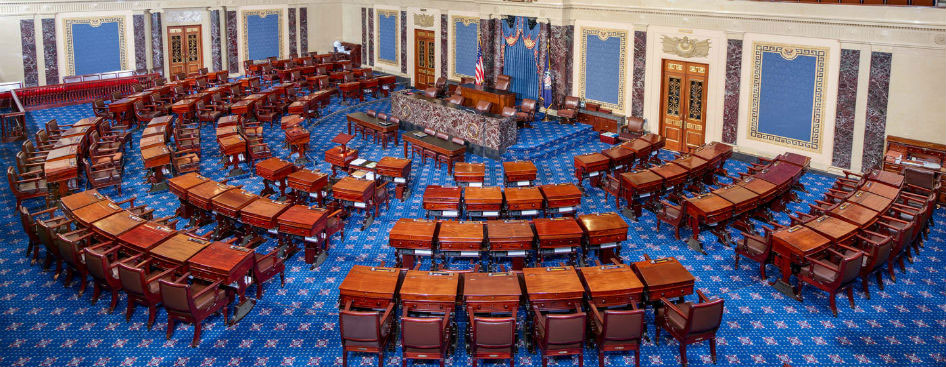
When H.R. 1 was passed by the House of Representatives and forwarded to the Senate, it was immediately subjected to scrutiny by the Senate Parliamentarian, Elizabeth MacDonough. The job of the parliamentarian is to ensure that every proposed bill complies with Senate rules. The story of Ms. MacDonough taking her scissors to the “One Big Beautiful Bill” requires more than a little unpacking, but it is a good story.

Problem with Medicaid Cuts: "One Bill"

It appears that the idea to put all of the President’s legislative agenda into a single bill is acceptable in the House, but the Senate has different rules. The Senate forces itself to live under the filibuster system. When the filibuster is evoked, a bill must receive 60 votes to pass, but there is an exception. “Budget Reconciliation” is a rule that allows expedited passage of certain specific budget-related bills with only a simple majority, 51 votes.

The problem of the week is that H.R. 1 includes dozens of provisions that have nothing to do with spending. The Senate parliamentarian took her scissors to parts of the bill that:

  • change environmental regulations to pave the way to sell public lands
  • reduce the ability of federal judges to block Presidential orders1
  • dissolve the Consumer Financial Protection Bureau
  • change the rules about who can be excluded from receiving Medicare benefits, even after contributing through FICA taxes
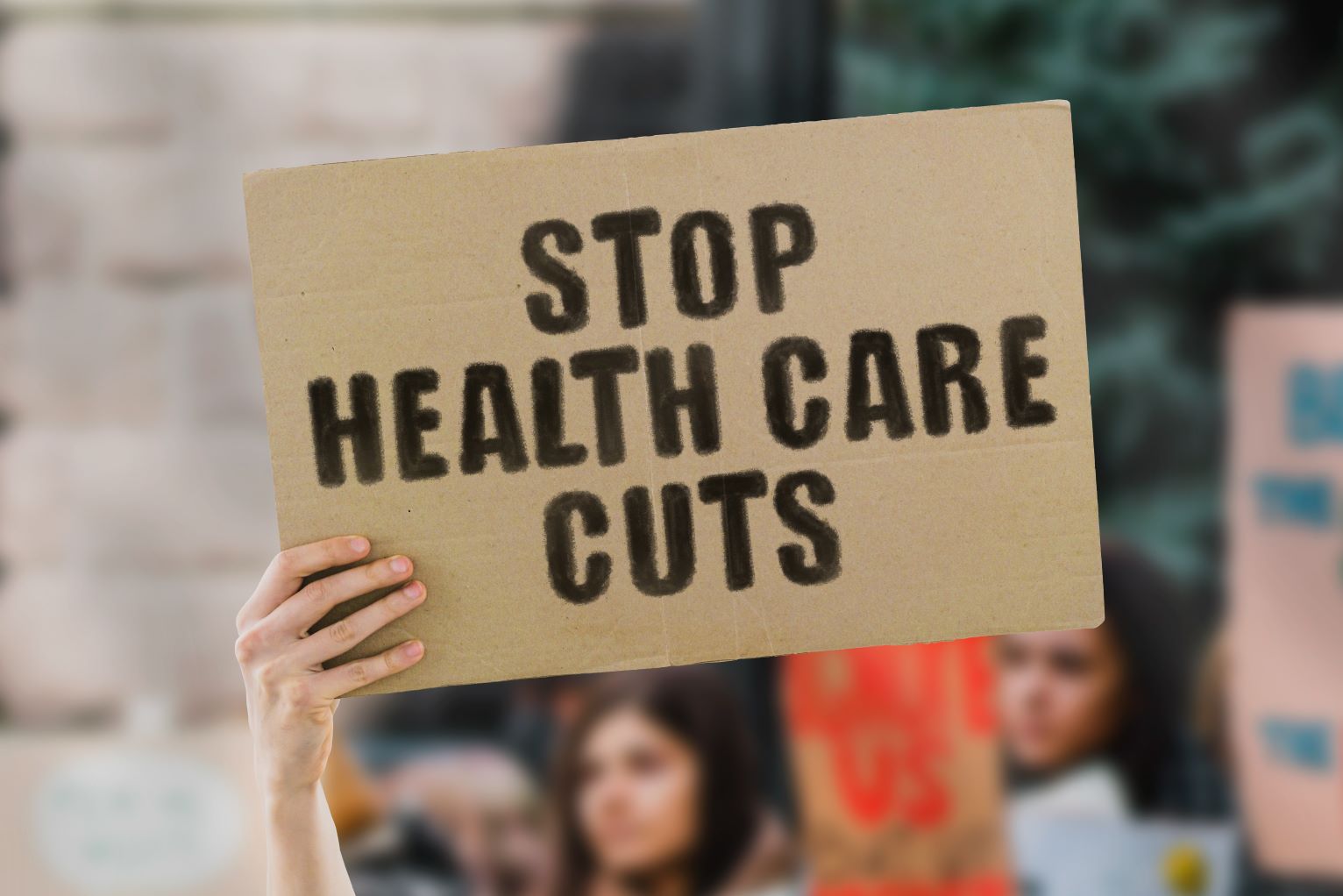
Medicaid Cuts

Cutting Medicaid Cuts

Parliamentarian MacDonough has also applied her scissors to the portion of the bill that would reduce Medicaid spending by nearly $800 billion over ten years. Writing for The Hill, Alexander Bolton reported on June 26:

“The Senate’s referee rejected a plan to cap states’ use of health care provider taxes to collect more federal Medicaid funding, a proposal that would have generated hundreds of billions of dollars in savings… The decision could force Senate Majority Leader John Thune (R-S.D.) to reconsider his plan to bring the Senate bill up for a vote this week.”

Alexander Bolton

Journalist, The Hill

The provision, which would have forced states to take over substantially more Medicaid costs, came under strong bipartisan opposition. Sen. Josh Hawley (R-Mo.), Susan Collins (R-Maine), Lisa Murkowski (R-Alaska) and Jerry Moran (R-Kan.) warned deep cuts to federal Medicaid spending could cause dozens of rural hospitals in their states to close. Senate Democrats, led by Jeff Merkley (D-Ore.), the ranking Democratic on the Senate Budget Committee, praised MacDonough’s exclusions.

The Hill reported, “Democrats are fighting back against Republicans’ plans to gut Medicaid, dismantle the Affordable Care Act, and kick kids, veterans, seniors, and folks with disabilities off of their health insurance – all to fund tax breaks for billionaires,” Merkley said in a statement.

The President pushed back against the parliamentarian’s rulings in a June 24 social media post:

“To my friends in the Senate, lock yourself in a room if you must, don’t go home, and GET THE DEAL DONE THIS WEEK. Work with the House so they can pick it up, and pass it, IMMEDIATELY. NO ONE GOES ON VACATION UNTIL IT’S DONE.”

Donald Trump

President of the United States

Sorting out the Complex Immigration Question

If the above seems complicated, it becomes rudimentary compared to the background that sets the stage for the parliamentarian’s next cut. Except for emergencies, most often crisis pregnancies, persons in the country illegally cannot, and do not, receive Medicaid-reimbursed healthcare. According to a study by Kaiser Family Foundation, however, fourteen states plus the District of Columbia use state taxpayer money, not federal funds, to cover children regardless of immigration status, Seven of those fourteen, and D.C., also cover some adults with state funds regardless of immigration status.

In the bill was a provision to punish these fourteen states and D.C. by reducing their federal Medicaid payments from 90 percent to 80 percent. Though there is no accusation in the bill that these states are guilty of improper use of federal funds, the states will lose some of those funds because of the way they have chosen to use their own funds. Parliamentarian MacDonough said that is not a budget line item but an attempt by the federal government to force states to change their own healthcare policies.

Medicare Restrictions also Scrapped

Almost as a postscript, a House restriction on Medicare eligibility also fell victim to the Senate Parliamentarian’s scissors. Non-citizens who work in W-2 wage jobs pay FICA taxes, many of them for 30 years or more. When these workers turn 65, they are eligible for Medicare benefits due to their contributions, regardless of their status. Though H.R. 1, the House version, would eliminate that eligibility, Ms. MacDonough said, “Nope, this is not a budget reconciliation issue.”

Although the White House is pressuring Senators to vote quickly — so that a joint House/Senate negotiating committee can hammer out differences and send their compromise version to the President’s desk by July 4 — that self-imposed deadline is up in the air at the moment. Both President Trump and House Speaker Johnson are adamant that every spending and every non-budgetary policy change they want must be enacted in one big bill. In spite of Ms. MacDonough’s cuts, the Senate it not exactly handcuffed either. Because it makes its own rules, Senators could simply decide, with a 51-49 party-line vote, to ignore the parliamentarian.

The power, as well as the future health of Medicaid, falls into the hands of the four dissenting Republican Senators. Home Health and Home Care folks in Missouri, Maine, Alaska and Kansas take note.

____________________________________

1  From White House correspondent Bart Jansen, writing for USA Today:

  • Currently, judges have discretion to set bonds on plaintiffs who file civil suits. Legal experts say judges often waive bonds in lawsuits against the government because the disputes are typically over policy rather than money.
  • A provision in the House-passed version of the bill would remove that discretion from federal judges and require litigants to post a bond when the issue under consideration is whether to block a Trump policy.
  • So far, judges have blocked Trump policies in 180 cases. All of them would have to be reviewed for bonds if the Senate approves the House provision and Trump signs it into law.
  • The law would effectively kill most of the limitations on Trump policies because bond amounts are determined by the dollar amount of the contested policy. In federal cases involving massive policy changes, those bonds can amount to hundreds of billions.

# # #

Tim Rowan The Rowan Report

Tim Rowan is a 30-year home care technology consultant who co-founded and served as Editor and principal writer of this publication for 25 years. He continues to occasionally contribute news and analysis articles under The Rowan Report’s new ownership. He also continues to work part-time as a Home Care recruiting and retention consultant. More information: RowanResources.com
Tim@RowanResources.com

©2025 by The Rowan Report, Peoria, AZ. All rights reserved. This article originally appeared in The Rowan Report. One copy may be printed for personal use: further reproduction by permission only. editor@therowanreport.com

Medicaid Cuts Still Looming

by Tim Rowan, Editor Emeritus

Medicaid Cuts Looming

Terminal Prognosis

Let me tell you about my brother. In his early 30’s, Tom was diagnosed with a rare disorder, one of the 25 versions of Ataxia. A disorder that is sometimes genetic, sometimes of unknown cause. It damages the part of the brain stem that controls balance, eye-hand coordination, and speech. He was supposed to be confined to a wheelchair by age 45 and not make it to 60.

Medicaid to the Rescue

Tom will celebrate his 71st birthday next week. Some years back, an experimental drug appeared that happened to be effective with his variation of Ataxia. That medication, administered intravenously in his home, is ridiculously expensive. If not for Medicare and Medicaid, those early prognoses would have come true. With the treatments, the disorder does still progress, though much more slowly. During my visits to his home — yes, he still manages on his own for now — he and I talk about the Assisted Living or Skilled Nursing Facility that looms in his future. Always with his head low and a sigh, he says he knows that day will come.

One in 71 Million

The 20 percent of American citizens who qualify for Medicaid are as nervous as Tom is about a bill making its way through Congress. As of May 22, 2025, H.R. 1 passed the House of Representatives by one vote. Today, it is still under debate in the Senate, where several amendments are being considered.

Medicaid Pays More than Medicare

In a February report, the Kaiser Family Foundation explained it this way:

Medicaid road sign "cuts ahead"

Four in ten adults incorrectly believe that Medicare is the primary source of coverage for low-income people. For those who need nursing or home care, Medicaid is the primary payer. Medicaid covered two-thirds of all home care spending in the United States in 2022. With House Republicans considering $2.3 trillion in Medicaid cuts over 10 years, the availability of home care could be affected in future years. Home care cannot afford the loss of almost one-third of the entire Medicaid budget.

Medicaid Cuts Impact

The February report indicates that H.R 1 could fundamentally change how Medicaid financing works. This would consequently impact enrollees’ access to care. The authors assert that “cuts of this magnitude would put states at financial risk, forcing them to raise new revenues or reduce Medicaid spending by eliminating coverage for some people, covering fewer services, and/or cutting rates paid to home care workers and other providers.”

“Such difficult choices would have implications for home care because over half of Medicaid spending finances care for people ages 65 and older and those with disabilities, the enrollees most likely to use home care and related services.”

Mohamed, A.; Burns, A.; O'Malley Watts, M.

Authors, What is Medicaid Home Care (HCBS)?

Medicaid Cuts Proposals

The Center on Budget and Policy Priorities has been listening to Senate debates and reading proposed amendments. In a news release this week, CBPP offered a dismal assessment.

“The health provisions in the Senate Republican leaders’ plan are, alarmingly, even harsher and more damaging than the health provisions in [H.R. 1]. Under both plans, tens of millions of people would face substantially higher health care costs and millions would lose access to life-saving treatments, routine care, and medications they need.”

Medicaid Cuts

Higher Costs, Less Access

Home Care and the Work Requirement

There is much talk in Congress and in social media about able-bodied Medicaid beneficiaries who sit at home and play video games all day. Not only does this indicate a confusion between healthcare and welfare (you can’t eat or sleep in Medicaid), but it also tends to exaggerate the scope of this fraud/waste/abuse target. 

As KFF points out, most Medicaid adults under age 65 are already working but are paid low enough that they still qualify. Many who are not working (12%) serve as caregivers for a family members. If they are removed from the home to go to a job, someone else would have to take over caregiving duties, probably a home care agency. Thus, there would be a net loss to the system. 

Net Loss

The Congressional Budget Office found when examining the House version that work requirements would decrease federal spending by reducing the number of uninsured. However, in the same report, the CBO notes that there would be no increase in employment numbers.

On top of the uncertain benefit of the work requirement, the bill as it stands today would greatly increase reporting requirements. In place of “once qualified, always qualified,” Medicaid eligibility will require regular reporting to prove employment and annual re-qualification paperwork. The new red tape burdens will be especially difficult on seasonal workers or those who frequently change jobs.

Medicaid Cuts and Rural Hospitals

No one is quite sure what the impact on home care will be when Medicaid cuts force rural hospitals to close, as the CBO predicts. Longer journeys to receive hospital care and doctor visits may push more beneficiaries to home care while home care will be struggling to find caregiving staff.

Before the bill becomes law, rural hospitals are already in trouble. The American Hospital Association says that 48 percent of rural hospitals operated at a loss in 2023 and 92 closed their doors over the past 10 years. There are 16.1 million Medicaid beneficiaries living in rural communities, including 65 percent of nursing home residents. Can home care cover the losses if a portion of the estimated $800 billion in Medicaid cuts over 10 years hit home care just as hard?  

Medicaid Support in Congress

There are home care champions on the Republican side of the House and Senate. Some of them have already expressed their doubts about whether cutting home care would decrease or increase overall spending. In the “strange bedfellow” category, conservative icon Josh Hawley of Missouri swore he would “tank any bill that cuts Medicaid benefits.”

Senate Republicans can afford to lose only three votes to get this bill passed and sent back to the House. Today would be the time for all of them to hear from the care at home industry. Call your Senator. All phone numbers start with 202-224-

# # #

Tim Rowan The Rowan Report

Tim Rowan is a 30-year home care technology consultant who co-founded and served as Editor and principal writer of this publication for 25 years. He continues to occasionally contribute news and analysis articles under The Rowan Report’s new ownership. He also continues to work part-time as a Home Care recruiting and retention consultant. More information: RowanResources.com
Tim@RowanResources.com

©2025 by The Rowan Report, Peoria, AZ. All rights reserved. This article originally appeared in The Rowan Report. One copy may be printed for personal use: further reproduction by permission only. editor@therowanreport.com

BREAKING NEWS: Intrepid USA Files Bankruptcy

by Kristin Rowan, Editor

*Editor’s note: This article has been updated to remove inaccurate information from the Intrepid USA website.

Intrepid USA Files Bankruptcy

Intrepid USA, once among the largest providers of home health and hospice services, files bankruptcy in Texas. With more than $90 million in revenue in 2023, Intrepid operated more than 60 home health and hospice locations in 17 states. The Chapter 7 filing leaves no road to recovery. Chapter 7 allows the company to liquidate assets and distribute the proceeds. According to the Texas Southern Bankruptcy Court, Intrepid USA filed a voluntary petition for Chapter 7 bankruptcy on May 29, 2025.

Troubled History Plagues Company

Intrepid USA has a troubled past that it seems may have caught up with them. The U.S. Department of Justice (DoJ) alleges that between 2016 and 2021, Intrepid home healthcare agencies engaged in fraud. In violation of the False Claims Act, Intrepid filed Medicare claims for patients who did not qualify for home health, services that were not medically necessary, services provided by untrained staff, and services that were never provided. In August, 2024, Intrepid agreed to pay $3.85 million to resolve the allegations. The allegations were brought to the DoJ by two former employees of Intrepid under whistleblower provisions.

This is not the first DoJ lawsuit against Intrepid USA. In 2006, when Intrepid owned 150 agencies across the country, the company entered into an $8 million settlement agreement to resolve similar allegations. The DoJ alleged that from 1997 to 2004 Intrepid violated the False Claims Act by billing Medicare and TRICARE for services not provided by a qualified person, failing to maintain complete documentation for its claims, and other violations of Medicare regulations. Additionally, the DoJ alleged that Intrepid, in 2002 and 2003, fraudulently billed Medicaid for home care services provided to patients who were hospitalized at the time of the supposed care.

Private Equity Backing

Sometime around Q3 of 2006, Intrepid USA received financial backing from Patriarch Partners, led by Lynn Tilton. In August of 2020, Patriarch filed a notice of removal with the Supreme Court of New York. In 2021, Intrepid announced it was gearing up for rapid growth fueled by new private equity investors. Then CEO John Kunysz indicated the infusion of capital would fund opportunities for growth through acquisition.

Divest, not Acquire

Despite the influx of capital and the plan to grow through acquisition, by 2024, Intrepid was selling its assets. In August of 2024, Humana acquired 30 Intrepid branch locations and rebranded them under the CenterWell Home Health brand. The sale was part of Patriarch Partners’s Zohar Funds bankruptcy case. In November of 2024, New Day Healthcare acquired Intrepid’s hospice locations in Missouri and Texas.

$0 Revenue; 0 Value

The bankruptcy filing shows that Intrepid USA had $90 million in revenue in 2023, $50 million in revenue in 2024, and $0 in revenue so far in 2025. Chapter 7 bankruptcy is usually supervised by the court, allowing the filing company to sell assets without having to use the revenue generated by the sale to pay off debts. Intrepid listed $1 to $10 million in assets and $88 million in debts at the time of the filing. 

Intrepid USA files bankruptcy
Intrepid USA Files Chapter 7 Bankruptcy

Who will take the loss?

The Intrepid USA website still lists 55 active home health and hospice locations in 11 states. However, 30 of those locations are now listed on the CenterWell website and at least 5 other locations were part of the sale to New Day Healthcare. It is unknown if Intrepid has any locations still in operation. The company did not respond to our request for a statement.

The website also has a list of partners and investors. The Rowan Report reached out to the partners with whom we are familiar for more information. We will provide updates from them once we reach them.

Final Thoughts

The recent divestiture of home health and hospice locations to New Day and CenterWell will hopefully minimize the number of patients who are losing their home health or hospice provider. Millions of dollars in future fraudulent claims will remain in the Medicare, TRICARE, and Medicaid coffers. Conversely, the partners and investors in Intrepid USA may face some loss. We will provide any important updates and comments from the impacted companies as available.

# # #

Kristin Rowan, Editor

Kristin Rowan has been working at The Rowan Report since 2008. She is the owner and Editor-in-chief of The Rowan Report, the industry’s most trusted source for care at home news, and speaker on Artificial Intelligence and Lone Worker Safety and state and national conferences.

She also runs Girard Marketing Group, a multi-faceted boutique marketing firm specializing in content creation, social media management, and event marketing.  Connect with Kristin directly kristin@girardmarketinggroup.com or www.girardmarketinggroup.com

©2025 by The Rowan Report, Peoria, AZ. All rights reserved. This article originally appeared in The Rowan Report. One copy may be printed for personal use: further reproduction by permission only. editor@therowanreport.com
 

Fraudsters Arrested, Oz Issues Warning

by Kristin Rowan, Editor

Fraudsters Arrested, Oz Issues Warning

Fraud in California

Fraudsters arrested in West Covina, CA this week were allegedly running a Medicare scheme. Authorities arrested hospice owner-operator Normita Sierra. They charged her with nine counts of health care fraud, one count of conspiracy, and four counts illegal remuneration (kick-backs) for health care referrals. The U.S. Attorney’s Office named co-conspirator Rowena Elegado. They also arrested her and charged her with one count of conspiracy and four counts of illegal remuneration for health care referrals.

Kickbacks

Sierra and Elegado worked together to pay marketers to recruit patients who did not have a hospice referral from their PCP and who were not terminally ill. Some of the kickbacks paid to marketers were as high as $1,300 per patient per month. After six months, the patients were referred out to Sierra’s home health company.

Medicare Claims

According to the U.S. Attorney’s Office, from 2018 to 2022, Sierra’s hospice agences submitted $4.8 million in fraudulent claims. Of those claims, Medicare paid approximately $3.8 million.

Dr. Oz Issues Warning

In a video statement, Dr. Oz explained how Medicare recipients are falling victim to scams. Sales people call, email, and even knock on your door, offering advice, free samples, and referrals. These marketers have one goal: get you sign a piece of paper. That paper signs you up for hospice care and agrees to allow a specific hospice agency to provide that care. The hospice agency then bills Medicare for services they never provide. Watch the video statement here.

HHS OIG Issues Consumer Alert

In a similar statement, HHS issued a consumer alert regarding DME companies. The alert warns that some DME companies are contacting Medicare beneficiaries. They claim to work for or on behalf of Medicare. Once they receive the patient’s Medicare number, they bill Medicare for unnecessary medical items. These items include urinary catheters, knee and back braces, orthotic braces, and prescription drugs, which may or may not ever be sent to the patient. HHS urges enrollees not to give their Medicare number to anyone. Further, they suggest regulary reviewing items charged to insurance, and refusing delivery of any medical supply not ordered by a physician.

Oz Issues Warning
Fraudsters Arrested

Combating Waste, Fraud, and Abuse

Dr. Oz and CMS have spoken numerous times about combatting the waste, fraud, and abuse withing the Medicare and Medicaid systems. Originally a strong proponent for Medicare Advantage, Oz has promised to audit MA after discovering the government pays more for MA than traditional Medicare. Oz also promised to reduce the amount of prior authorization requests needed before a patient gets services. Oz responded to the Republican-backed House bill requiring more oversight on Medicaid eligibility. Oz indicated that some Medicaid patients are enrolled in more than one state and that Medicaid is paying for able-bodied patients. The waste, fraud and abuse across Medicare and Medicaid is costing the government between $1 and $10 billion and Dr. Oz plans to find it and make significant changes to the management of the system.

A Cautionary Tale for Hospice Providers

You may be thinking, “What does this have to do with me?” Unfortunately, even the most scrupulous hospice agencies can fall prey to marketers running schemes. There are legitimate referral resources in the market who can help your agency get more referrals and more clients. There are also underhanded marketers who know how the system works. These predators will promise new referrals (for a fee) and then enroll uneligible patients without your knowledge. If you are working with or looking for a referral partner for your hospice agency, use one that is referred by someone you trust, and/or do a lot of research on the company history before working with anyone. Be especially wary of the ones who promise much more than what most referral companies offer.

# # #

Kristin Rowan, Editor

Kristin Rowan has been working at The Rowan Report since 2008. She is the owner and Editor-in-chief of The Rowan Report, the industry’s most trusted source for care at home news, and speaker on Artificial Intelligence and Lone Worker Safety and state and national conferences.

She also runs Girard Marketing Group, a multi-faceted boutique marketing firm specializing in content creation, social media management, and event marketing.  Connect with Kristin directly kristin@girardmarketinggroup.com or www.girardmarketinggroup.com

©2025 by The Rowan Report, Peoria, AZ. All rights reserved. This article originally appeared in The Rowan Report. One copy may be printed for personal use: further reproduction by permission only. editor@therowanreport.com

 

Medicaid Cuts Remain Unknown So Far

by Tim Rowan, Editor Emeritus

"Life and Death"

Medicaid Cuts are Looming

We don’t need to cut benefits, and it really infuriates me to hear people here talking about that because it stresses people out. This is life and death for them.     –Senator Bernie Moreno (R-OH)

Budget Reconciliation Threatens Medicaid

After last weeks HHS purge, all of Care at Home is on edge as the U.S. House and Senate negotiate differences in each body’s budget reconciliation bill. The same jitters are found among Medicaid-eligible citizens, especially those who hear more rumors than actual progress reports from Washington. All we know for sure this week are two things: Speaker Johnson has pushed his deadline for a vote on the bill, asking for $880 billion in cuts, from Memorial Day to Independence Day; and the parallel Senate budget bill, at this date, is quite different. Watching the reconciliation talks should be nerve-wracking but entertaining.

The House Version

As of May 1, it is too early to assign a dollar amount to the FY 2026 Medicaid budget. H.B. 1968, named “Full-Year Continuing Appropriations Act of 2025,” delegates specific cut decisions to committees. It first directs the House Energy and Commerce Committee, which oversees Medicaid and part of Medicare, to reduce the federal deficit by $880 billion over ten years. The Agriculture Committee, which oversees SNAP, is ordered to cut $230 billion over the same time period.

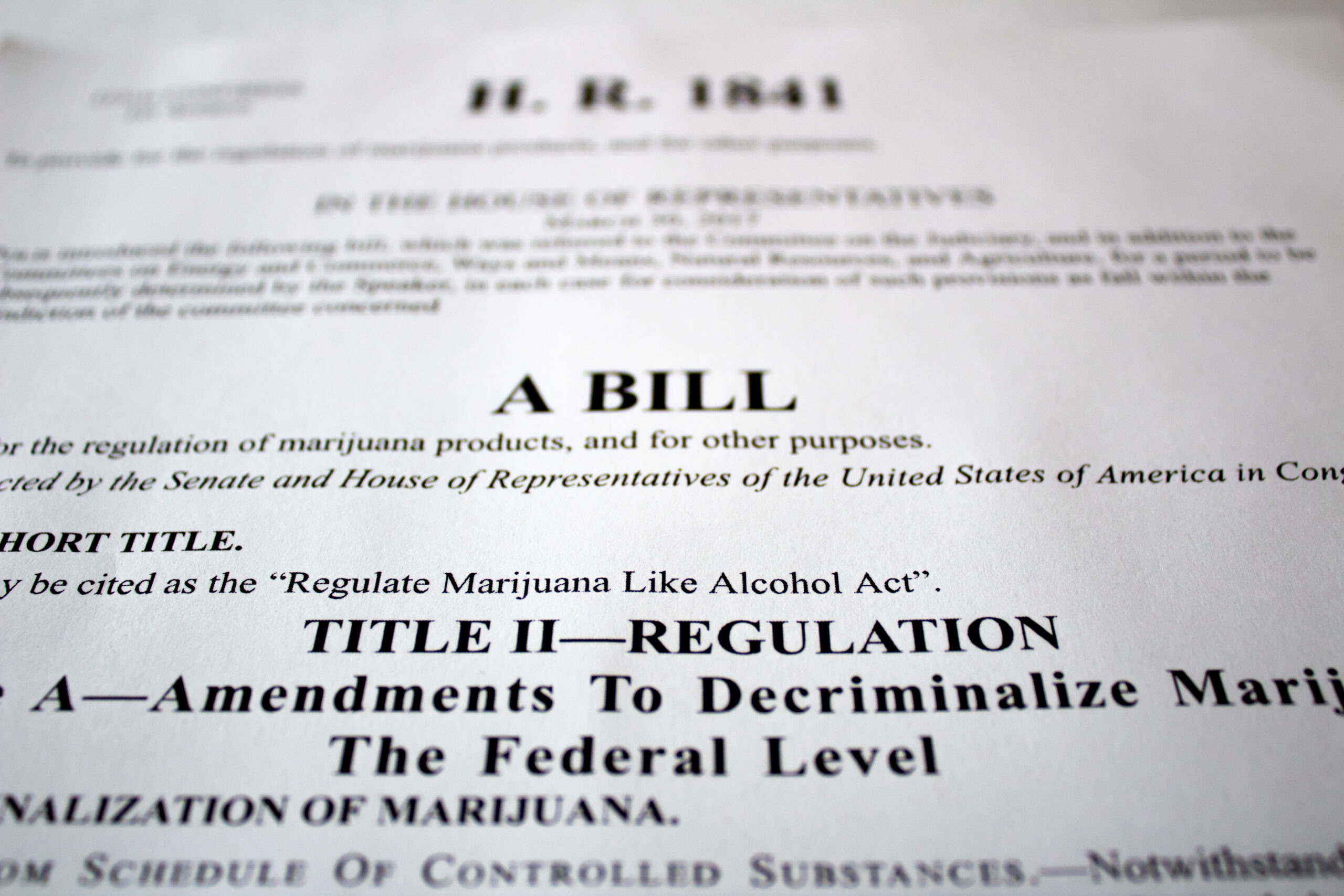
Image of a Congressional Bill Document

Medicaid Cuts: Per Capita Caps

The Energy and Commerce Committee is the oldest standing legislative committee in the House. It has broad jurisdiction over our nation’s energy, health care, telecommunications, and consumer product safety policies. In the 119th Congress, it is chaired by Brett Guthrie (R-KY), a West Point graduate with a degree in Public and Private Management from Yale.

Guthrie has advocated changes to Medicaid since his days as a Kentucky state legislator. He pushed for the $880 billion in cuts that found life in H.B. 1968. Guthrie’s solution to growing Medicaid costs is “per capita caps” which would give states a fixed maximum amount of money for each person on Medicaid. According to an analysis by Axios, published after interviewing Guthrie:

  • “The federal government now covers a percentage of states’ Medicaid costs, so the amount reimbursed goes up or down depending on how much a state spends on the program.
  • Per capita caps would likely result in less money for states, forcing them to make up the difference by raising taxes or cutting spending elsewhere.”

In His Own Words

Guthrie told Axios he saw how the Medicaid program affected state budgets firsthand while serving in the Kentucky Statehouse. “I dealt with it,” he told Axios. “That is why I care about this…It just overwhelmed state budgets. What I’ve learned is, as we keep subsidizing health care, the price keeps going up. So, my idea with per capita allotments has always been that it will control costs.”

People might “fall off” Medicaid. “I’ve talked to a lot of providers, other groups, and they’re concerned. I’m not saying they’re not, but I think we can do it in a way that people get service.”
(202) 225-3501; (202) 225-3501

Brett Guthrie

Chairman, Energy and Commerce Committee

SNAP Cuts

Glenn Thompson (R-PA) chairs the Agricultural Committee, which will be asked to make cuts to SNAP. Prior to being elected to Pennsylvania’s Fifteenth District, Thompson spent 28 years as a therapist, rehabilitation services manager, and a licensed nursing home administrator.
(202) 225-5121; (814) 353-0215

Strange Bedfellows in the Senate

Along with every Democrat, at least two conservative Republicans have expressed uncertainty about putting budget savings on the backs of Medicaid beneficiaries. Senators Bernie Moreno of Ohio and Josh Hawley of Missouri both warned in interviews with newsmagazine Semafor that proposals to cut the federal government’s share of the costs in states that have expanded Medicaid, and to otherwise cap Medicaid expansion spending, could lead to coverage losses. Moreno bluntly told Semafor that both ideas amount to “cutting benefits.”

“There’s not 50 votes for any kind of cuts in benefits. That’s just a fact,” Moreno said.

Just A Skosh of A Difference to Negotiate

A detailed analysis by the Geiger Gibson Program in Community Health at the Milken Institute School of Public Health at George Washington University compares the House and Senate versions side by side. Their analysis points out that the Senate outline for its bill calls for at least $1 billion in Medicaid spending reductions over the 10-year budget window. As already noted, the House wants its committees to find at least $880 billion over the same window.

“The Senate bill also authorizes the Budget Committee to adjust the targets for the purpose of “protecting the Medicaid program,” which may include “strengthening and improving” Medicaid (undefined) in a deficit-neutral fashion. The Senate measure thus effectively prioritizes protections for Medicaid over other potential policy aims to be achieved through the reconciliation process. The House bill, by contrast, calls for scaling back tax relief if the spending reduction targets are not met, thereby placing additional pressure on the $880 billion floor.

The House and Senate now must reconcile two extremely different measures before the reconciliation process actually proceeds, the university report concludes. “Although it is unclear whether the House will proceed with a legislation to achieve reconciliation in advance of a final agreement.”

$779 billion is a lot of reconciling...

One final independent analysis may draw this discussion to a close that speaks directly to our industry’s concerns. The Commonwealth Fund, in a March 25 “Issue Briefing,” looked at the long-term consequences of deep Medicaid cuts. In its executive summary, the briefing says:


Key Findings and Conclusions

Combined losses from proposed Medicaid and SNAP cuts would reach $1.1 trillion over a decade, including a $95 billion loss of federal funding in 2026 alone. State gross domestic products (GDPs) would be $113 billion lower, exceeding federal budget savings. About 1.03 million jobs would be lost nationwide in health care, food-related industries, and other sectors. State and local governments would lose $8.8 billion in state and local tax revenues. Not extending the enhanced health insurance premium tax credits that are scheduled to expire after December 2025 would lead to an additional 286,000 jobs lost in 2026, for a combined total of more than 1.3 million jobs lost in the United States.

Stay tuned. We at the Rowan Report are committed to keeping a close eye on developments in this bi-partisan battle.

# # #

Tim Rowan Editor Emeritus

Tim Rowan is a 30-year home care technology consultant who co-founded and served as Editor and principal writer of this publication for 25 years. He continues to occasionally contribute news and analysis articles under The Rowan Report’s new ownership. He also continues to work part-time as a Home Care recruiting and retention consultant. More information: RowanResources.com
Tim@RowanResources.com

©2024 by The Rowan Report, Peoria, AZ. All rights reserved. This article originally appeared in Healthcare at Home: The Rowan Report. One copy may be printed for personal use: further reproduction by permission only. editor@therowanreport.com

Vision for CMS

by Kristin Rowan, Editor

Vision for CMS from Dr. Oz

Last week, Dr. Mehmet Oz issued a statement on his vision for the future of CMS. Dr. Mehmet Oz is a cardiothoracic surgeon and former host of his own TV show. Under the Department of Health and Human Services, CMS has a $1.7 trillion budget and oversees the health outcomes of more than 160 million people.

“I want to thank President Trump and Secretary Kennedy for their confidence in my ability to lead CMS in achieving their vision to Make America Healthy Again. Great societies protect their most vulnerable. As stewards of the health of so many Americans – especially disadvantaged youth, those with disabilities, and our seniors, the CMS team is dedicated to delivering superior health outcomes across each program we administer. America is too great for small dreams, and I’m ready to get work on the President’s agenda.”

Dr. Mehmet Oz

Administrator of CMS, Department of Health and Human Services

Make America Healthy Again

With HHS Secretary Kennedy, Oz is throwing his support behind Make America Healthy Again, under direction from President Trump. Senator Kennedy says that, under the leadership of Dr. Oz, CMS will work to modernize Medicare, the Marketplaces, and Medicaid. The goal is to get Americans the care they want, need, and deserve. The agenda includes:

  • Empowering the American People with personalized solutions with which they can better manage their health and navigate the complex health care system. As a first step, CMS will implement the President’s Executive Order on Transparency to give Americans the information they need about costs.
  • Equipping health care providers with better information about the patients they serve and holding them accountable for health outcomes, rather than unnecessary paperwork that distracts them from their mission. For example, CMS will work to streamline access to life-saving treatments.
  • Identifying and eliminating fraud, waste, and abuse to stop unscrupulous people who are stealing from vulnerable patients and taxpayers.
  • Shifting the paradigm for health care from a system that focuses on sick care to one that fosters prevention, wellness, and chronic disease management.  For example, CMS operates many programs that can be used to focus on improving holistic health outcomes. 

Letter to Medicaid

Following the vision statement, Dr. Oz released a letter to state Medicaid Agencies outlining the use of Medicaid dollars during his tenure as Administrator. The two-page letter, citing recent studies on gender dysphoria, directed Medicaid agencies to eliminate gender reassignment surgery from covered procedures, opting instead for psychotherapy. Hormonal interventions will be reserved for exceptional cases.

“My top priority is protecting children and upholding the law. Medicaid dollars are not to be used for gender reassignment surgeries or hormone treatments in minors – procedures that can cause permanent, irreversible harm, including sterilization. We have a duty to ensure medical care is lawful, necessary, and truly in the best interest of patients. CMS will not support services that violate this standard or place vulnerable children at risk.”

Read the full letter here.

Final Thoughts

We believe this will be the first of many changes made to Medicare and Medicaid rules under Dr. Oz. We will continue to share updates from the CMS newsdesk.

# # #

Kristin Rowan, Editor

Kristin Rowan has been working at The Rowan Report since 2008. She is the owner and Editor-in-chief of The Rowan Report, the industry’s most trusted source for care at home news, and speaker on Artificial Intelligence and Lone Worker Safety and state and national conferences.

She also runs Girard Marketing Group, a multi-faceted boutique marketing firm specializing in content creation, social media management, and event marketing.  Connect with Kristin directly kristin@girardmarketinggroup.com or www.girardmarketinggroup.com

©2025 by The Rowan Report, Peoria, AZ. All rights reserved. This article originally appeared in The Rowan Report. One copy may be printed for personal use: further reproduction by permission only. editor@therowanreport.com

 

CDPAP Overhaul Under Scrutiny

by Kristin Rowan, Editor

CDPAP Overhaul in NY Medicaid Program

New York State Department of Health issued a comprehensive plan to overhaul the state’s Medicaid program. The state’s program, Consumer Directed Personal Assistance Program (CDPAP), allows patients to hire the caregiver of their choice. Eligible participants like the program for its autonomy. The redesign of the program’s execution reduces payment processors from more than 600 to just one company: Public Partnerships, LLC of Georgia.

The Need for the CDPAP Overhaul

New York Governor Kathy Hochul points to waste, fraud, and abuse in the Medicaid program as the drivers of the change. According to the Department of Health and Human Services (HHS), the cost for CDPAP rose from $2.5B in 2019 to $12B in 2025. Despite drawing national criticism, Hochul maintains that the program needs stronger oversite to ensure adequate care. Additionally, the state’s Medicaid program has recently suffered more than $143 million in clawbacks from kickbacks and improperly claimed reimbursements.

Brakes Applied

Last week, a judge issued a temporary restraining order (TRO) blocking the consolidation of the payer system down to a single entity. The TRO was issued following a lawsuit filed on behalf of individuals and independent living centers. The parties claim that the transition to Public Partnerships LLC has been delayed by technical challenges. The delays threaten to remove beneficiary access to home health services. The litigants also cited failure on the part of the state to serve notice and to allow for a fair hearing to challenge the change.

CDPAP Overhaul

A judge has extended that TRO through April 14th, blocking additional changes. Beneficiaries who have already switched to the new payer are not impacted by the TRO. HHS Secretary Robert F. Kennedy Jr. stated there will be a 90-day review period to assess whether the change complies with federal law.

Hit From Both Sides

For or against the transition to a single payer, lawmakers on both sides of the aisle are in agreement on one thing: Public Partnership LLC should not be that single payer. The company has a history of financial mismanagement, no experience working in New York, and may have engaged in bid rigging.

Dubious Reassurances

The NY Department of Health issued a public service announcement saying access to home health care will remain intact and that members will be able to keep their current caregiver. Following the review period from HHS and the pending lawsuits, residents of New York may experience familiar disappointments.

This is an ongoing story and we will provide updates as the story develops.

# # #

Kristin Rowan, Editor

Kristin Rowan has been working at The Rowan Report since 2008. She is the owner and Editor-in-chief of The Rowan Report, the industry’s most trusted source for care at home news. She also has a master’s degree in business administration and marketing and runs Girard Marketing Group, a multi-faceted boutique marketing firm specializing in content creation, social media management, and event marketing. Connect with Kristin directly kristin@girardmarketinggroup.com or www.girardmarketinggroup.com

©2025 by The Rowan Report, Peoria, AZ. All rights reserved. This article originally appeared in The Rowan Report. One copy may be printed for personal use: further reproduction by permission only. editor@therowanreport.com

 

Alliance Statement on Congressional Budget

FOR IMMEDIATE RELEASE

Contacts:        Tom Threlkeld
202-547-7424
Email

Elyssa Katz
571-281-0220
Email

The Alliance Comments on Recent Congressional Budget and Reconciliation Activity

ALEXANDRIA, VA and WASHINGTON, DC, March 5, 2025 – The National Alliance for Care at Home (the Alliance) released the following statement regarding recent legislative developments that may impact the Medicaid program. These include the passage of the House Budget Bill and the reconciliation framework that includes instructions for the House Energy and Commerce Committee to find $880 billion in reductions to programs under its jurisdiction; passage of the Senate Budget framework that does not include such drastic reductions; and comments by Speaker of the House Johnson (R-LA) that any changes to Medicaid will not include caps on federal funding or changes to the state matching formulas.

“The Alliance is reassured by affirmations that the congressional majority will not pursue some of the most drastic proposals previously discussed as options for reducing federal expenditures. Our members will not support any policies that reduce access to essential home and community-based services for eligible individuals. As Congress continues to assess options to reduce federal spending, we encourage leaders to continue to look favorably on high-value services that reduce costs and improve participant satisfaction.

The Alliance House Budge Bill<br />

“Care in the home is a proven model that reduces costs and is preferred by patients and families. An independent evaluation of Money Follows the Person, a grant program that transitioned individuals from institutional settings to the community, found that total spending on older adults decreased by 20 percent during the first year and 27 percent during the second year following their move to the community.[1] If Congress wishes to seek opportunities to reduce spending, we recommend they advance care models that provide cost-effective care without limiting access to services.

“We also recognize that there are opportunities to strengthen program integrity and reduce instances of fraud, waste, and abuse in the health care sector. The Alliance supports actions that reduce fraud, waste, and abuse from bad actors without placing unnecessary burdens or unfairly punishing providers and beneficiaries who are acting in good faith. We look forward to working with Congress to advance policies that strengthen federal health care program oversight.

Medicaid is a complex program and changes to one part of the statute may have unanticipated negative outcomes on other aspects of services, financing, or reimbursements. We encourage Congress to be extremely careful to avoid making changes that could lead to unintended outcomes. We stand ready to provide our expertise to help strengthen Medicaid for all individuals and providers.”

# # #

About the National Alliance for Care at Home

The National Alliance for Care at Home (the Alliance) is a new national organization representing providers of home care, home health, hospice, palliative care, and other health care services mainly delivered in the home. The Alliance brings together two organizations with nearly 90 years of combined experience: NAHC and NHPCO. NAHC and NHPCO have combined operations to better serve members and lead into the future of care offered in the home. Learn more at www.AllianceForCareAtHome.org.    

[1] https://www.medicaid.gov/medicaid/long-term-services-supports/downloads/mfpfieldreport21.pdf

© 2025. This press release was orginally published on the National Alliance for Care at Home website and is reprinted here with permission. For more information, please see contact information above.

Underlying Causes of Health Issues

by Kristin Rowan, Editor

Underlying Causes of Health Issues

Underlying causes of health issues are common. Not all health issues come directly from infections, medical conditions, or genetics. Lifestyle, environmental factors, and social determinants can cause and/or increase the severity of health issues. Beginning in the winter of 2023, the Centers for Medicare and Medicaid Services posted guidance on approving coverage for these social needs, acknowledging that they contribute to poor health outcomes. CMS named the social needs that could be covered by Medicaid, CHIP, Section 1115, and Home and Community Based Services. These include help finding new housing, one-time moving costs, eviction prevention, respite care, sober centers, home improvements, meals, and case management.

Guidance Rescinded

CMS referred to both the 2023 and 2024 documents as “Center Informational Bulletins” (CIB) meant as guidance, not rule of law. The 2024 document provided updates and clarifications to the 2023 document. According to the statement from CMS, dated March 4, 2025, they have rescinded both CIBs “to evaluate policy options consistent with Medicaid and CHIP progam requirements and objectives.” Moving forward, CMS will consider each application to cover these services on a case-by-case basis using the Social Security Act, not the HRSN Framework or the CIBs.

Opposition

Former chief medical officer of the US Medicaid program Andrey Ostrovsky, MD, FAAP said that removing coverage for social determinants of health will harm patients and taxpayers.

Sen Ron Wyden (D, Oregon) agrees, stating that addressing the underlying causes of health issues is key to keeping America healthy.

Underlying Causes of Health Issues Andrey Ostrovsky

“It’s unlikely we see an easy, smooth approval process for such services moving forward….I think that the bar to getting it approved will be higher. States are going to have to make individualized decisions around where their priorities are and where they want to continue to focus on expansion — and maybe focus a little bit more on cost constraint and financially effective services under the new administrative priorities.”

Damon Terzaghi

Senior Director of Medicaid Advocacy, National Alliance for Care at Home

On the Other Hand

Despite the opposition to this change, there does seem to be some validity to the move. There should be some discussion about where Medicaid services should end and another department begins. The question here is whether a different federal program should be providing coverage for these social determinants of health. According to Terzaghi, this could be the beginning of an improvement to the system, rather than the dismantling of it.

Final Thoughts

The changes coming out of D.C. recently seem to be coming like rapid fire. See this weeks related press release on the continuing resolution passed by Congress. As with most of these edicts, executive orders, and other changes, the long-term impact and the eventual goal remain to be seen. We will continue to follow these and other stories as new information becomes available.

# # #

Kristin Rowan, Editor

Kristin Rowan has been working at The Rowan Report since 2008. She is the owner and Editor-in-chief of The Rowan Report, the industry’s most trusted source for care at home news .She also has a master’s degree in business administration and marketing and runs Girard Marketing Group, a multi-faceted boutique marketing firm specializing in content creation, social media management, and event marketing.  Connect with Kristin directly kristin@girardmarketinggroup.com or www.girardmarketinggroup.com

©2025 by The Rowan Report, Peoria, AZ. All rights reserved. This article originally appeared in The Rowan Report. One copy may be printed for personal use: further reproduction by permission only. editor@therowanreport.com

 

Update on Public Participation in Rule Making

by Kristin Rowan, Editor

Update

Last week, we reached out to some of our contacts for responses to this change.

Former President of NAHC and current Senior Counsel at Arnall Golden Gregory Bill Dombi said:

It is difficult to discern the impact of the rescission of the waiver. One concern is whether the administration considers Medicaid  a grant or benefit program thereby exempting it from APA public notice and comment rulemaking.  

With respect to Medicare, if it is considered a benefit, there is still a Medicare statutory requirement of public notice and opportunity for comment through formal rulemaking that should effectively nullify the practical impact of the rescission of the waiver. All that said, we will need to see more before being to judge the impact.

Frequent guest author and Fellow, American Health Law Association, Elizabeth E. Hogue, Esq. had this to say:

Recission of the Richardson Waiver is not good news for providers. 

Many federal agencies voluntarily committed to give notice and comment for actions that otherwise would be exempt. The US Department of Health and Human Services was one of the federal agencies that adopted this policy in October, 1970, in a memorandum commonly referred to as the “Richardson Waiver.”  This policy was published in the Federal Register in 1971.  HHS did not, however, promulgate the Waiver through notice and comment rulemaking. 

The open process of give and take between agencies and providers under the Richardson Waiver resulted in resolution of important issues relatively informally.  Now it appears that only policies mandated by statute will go through the rulemaking process.  In other words, opportunities to resolve issues without formal resolution will be compromised. 

The recission of the Waiver may also make administration of both the Medicaid and Medicare programs more complicated and less effective, especially in view of US Supreme Court decisions that say everything that hasn’t gone through the notice and comment process is not binding on providers.

# # #

Below is the original article, published March 6, 2025

Public Participation Rescinded

The Administrative Procedure Act (APA) requires that an agency public a notice of proposed rulemaking in the Federal Register; allow sufficient time for public participation via written data, views, or arguments; and then publish a final rule. Matters relating to agency management, personnel, or public property; loans, grants, benefits, or contracts; and for “good cause” are exempt from the reporting requirements. The Richardson Waiver, adopted in 1971, waived the exemption and instructed agencies to use the good cause exemption sparingly. Effective immediately, the Richardson Waiver is rescinded.

“The policy waiving the statutory exemption…imposes on the Department obligations beyond the maximum procedural requirements specified by the APA, adds costs [that] are contrary to the efficient operation of the Department, and impedes the Department’s flexibility to adapt quickly to legal and policy mandates.”

Robert F. Kennedy, Jr.

Secretary, Department of Health and Human Services

What it Means

Public participation is now optional. Agencies and offices of the Department of HHS can, if desired, use the public notice and comment procedures for these matters, but are no longer required to do so. The Department will continue to follow these procedures in all circumstances in which they are required to do so.

Law firm Hogan Lovells, experts in healthcare law, wrote about the potential implications for the health care industry in a recent blog post. According to the firm, it is unclear how HHS will interpret the “benefits” portion of the exemption. HHS, and specifically CMS, currently uses the notice and comment procedure for various benefits programs, including Medicare and Medicaid. Secretary Kennedy’s statement clearly calls out the limitation in impacting any other law requiring notice and comment periods.

Public Participation in Medicare Rules

Hogan Lovells indicates that few if any policies written under the Medcare Act will be impacted by this change. The Medicare Act operates under additional rulemaking requirements under section 1871(a) of the SSA. Additionally, Azar v. Allina Health Services, 587 U.S. 566 (2019) confirms that Medicare rulemaking is independent from the APA. Some policies are currently exempt from the notice and comment obligations under the Medicare Act and will remain exempt.

Public Participation in Medicaid and CHIP rules

Medicare and CHIP fall under Title XIX of the SSA, which does not contain its own notice and comment requirements separate from the APA. HHS has used the APA notice and comment rules for many of the changes made to the Medicaid program. HHS could interpret the “benefits” clause as exempting Medicaid changes from the rule. Hogan Lovells states it is currently unclear whether HHS will take this route. They also purport the courts have not ruled on whether APA excludes Medicaid from the notice and comment requirements, and may not agree with that exclusion. Until the term “benefits” is better defined, Medicaid, CHIP, the insurance exchange marketplace, and TANF, among others, may be impacted.

Department of Veterans Affairs

A notable exception to these changes is the rulemaking in the Department of Veterans Affairs as it relates to the Veterans Health Care act of 1992. This program implemented Federal contractor requirements that established pricing and contracting standards for drug manufacturers. The VA policies and rules have historically been enacted using guidance letters, avoiding the rulemaking process altogether.

Final Thoughts

There is too much that is yet unknown regarding this change to understand its full impact. There will be immediate changes, court rulings, further changes, and likely a lot of advocacy from national organizations fighting for transparency for Medicare, Medicaid, and other “benefit” programs. This will be an ongoing story and The Rowan Report will bring updates as they happen.

# # # 

Kristin Rowan, Editor

Kristin Rowan has been working at The Rowan Report since 2008. She is the owner and Editor-in-chief of The Rowan Report, the industry’s most trusted source for care at home news .She also has a master’s degree in business administration and marketing and runs Girard Marketing Group, a multi-faceted boutique marketing firm specializing in content creation, social media management, and event marketing.  Connect with Kristin directly kristin@girardmarketinggroup.com or www.girardmarketinggroup.com

©2025 by The Rowan Report, Peoria, AZ. All rights reserved. This article originally appeared in The Rowan Report. One copy may be printed for personal use: further reproduction by permission only. editor@therowanreport.com