Whistleblower Case Impedes Lawsuits

by Kristin Rowan, Editor

Whistleblower Action

A United States District Court in Tampa, Florida ruled against a whistleblower action under the False Claims Act (FCA) against her former employer. In 2019, a family care physician filed a whistleblower, or qui tam, action against her employer for increasing the risk adjustment scores of Medicare Advantage patients in order to receive higher payments.

Whistleblower Protection

When an employee or person with information about a company’s wrongdoing, they can file a lawsuit against that company. Whistleblowers are protected under OSHA, EEOC, and several federal and state regulations against retaliation from their employer. A whistleblower, the person who brings evidence of wrongdoing to the court, is called a “relator.”

Whistleblower

Before the Ruling

The False Claims Act is the first and one of the strongest whistleblower laws in the U.S. Under the FCA whistleblower rules, any private citizen can sue any individual, company, or other entity that is defrauding the government and recover damages and penalties on the government’s behalf. Whistleblowers also receive compensation when these suits are settled between 15% and 30% of the total proceeds. As the FCA has expanded since its passing in 1863, the law made it possible for anyone to serve as a whistleblower.

The Ruling

In the case noted above, the court ruled that FCA whistleblowers act as officers of the United States when they sue on behalf of the federal government. The decision reasoned that whistleblowers are appointing themselves as officers of the federal government by bringing these lawsuits.

Article II, Section 2, Clause 2 of the Constitution states that the President can appoint officers and officials to the government and that they require Senate approval for some of these. Cabinet appointments, judicial appointments, and other high ranking positions are often the subject of news stories during Senate hearings to confirm these appointments.

The court ruled that an FCA whistleblower becomes an officer of the federal government through self-appointment, violating the Appointment Clause of the Constitution. The court further ruled that the False Claims Act in itself is a violation of the Constitution, effectively nullifying the FCA, at least in Florida for now.

Widespread Implications

Any company who has lost a False Claims Act suit may now be able to challenge those rulings, using this case as precedent. However, there are some hoops they would need to jump in order to do so, depending on how this case is interpreted. Ironically, this case states that whistleblowers cannot be officers of the government without appointment, but if that’s true, then all False Claims Act decisions become easier to challenge. 

If this decision stands and is adopted as precedent across the U.S., it could completely nullify the False Claims Act. It may even be considered for a Supreme Court ruling. In 2023, the U.S. government recouped $2.6 billion from FCA suits, nearly $2.3 billion of which were claims brought by whistleblowers.

Care at Home Implications

Medicare and Medicare Advantage are rife with fraudulent claims, “coding intensity“, upcoding, and predatory marketing. In 2024, CMS announced changes to the risk adjustment model in the Risk Adjustment Validation Final Rule after seeing higher-than-expected risk scores. The changes could help CMS recoup up to $4.7 billion in the next ten years. 

MedPAC estimates that Medicare Advantage plans received as much at $88 billion in excess payments in 2024. The lowest share of overpayment reimbursement through the Fraudulent Claims Act would give whistleblowers a combined $13.2 billion. Eliminating the FCA may discourage employees and contractors from reporting fraudulent claims and overbilling through Medicare and Medicare Advantage.

Final Thoughts

A safeguard for people trying to do the right thing, a means to save the federal government billions of dollars that can be spent elsewhere, and ultimately better care for patients are all at risk if the FCA is struck down. A law that has been in place for more than 150 years should carry more weight than the ruling of one district court who applies a new definition to a long-standing term. 

Whistleblowers and the federal government have generally been considered co-defendants in these suits. Two parties with separate interests in the same suit, acting independently, not a joint case like a class action suit would be. I anticipate an appeal on this decision and hopefully a panel of judges who better understand the necessity of the False Claims Act and the Whistleblower provisions.

# # #

Kristin Rowan, Editor

Kristin Rowan has been working at The Rowan Report since 2008. She is the owner and Editor-in-chief of The Rowan Report, the industry’s most trusted source for care at home news .She also has a master’s degree in business administration and marketing and runs Girard Marketing Group, a multi-faceted boutique marketing firm specializing in content creation, social media management, and event marketing.  Connect with Kristin directly kristin@girardmarketinggroup.com or www.girardmarketinggroup.com

©2025 by The Rowan Report, Peoria, AZ. All rights reserved. This article originally appeared in The Rowan Report. One copy may be printed for personal use: further reproduction by permission only. editor@therowanreport.com


 

Congress Allows Medicare Advantage to Deny Coverage

by Kristin Rowan, Editor

Medicare Advantage Bill Dies in Congress

The 118th United States Congress, ran from January 3, 2023 to January 3, 2025. This Congress’s first law was passed on March 20, 2023, much later than most previous congressional sessions. In its first year, it passed only 34 bills. In the two years of this congressional run, the 118th passed 209 public laws, almost half the average since 1989. Among the many bills that died on the floor before time ran out was the Improving Seniors’ Timely Access to Care Act (H.R. 8702/S. 4532). Senate and House members introduced the bill on June 12, 2024.

Improving Seniors' Timely Access to Care

In June of 2024, senators and representatives introduced bipartisan legislation that would have curbed Medicare Advantage’s ability to deny claims. The bill included language that allowed CMS the authority to establish standard timeframes for electronic prior authorizations requests including expedited requests and real-time decisions for routinely approved services. The bill also included requirements for transparency and reporting, including:

    • establishing an electronic prior authorization process
    • establishing a process for real-time decisions for routine services
    • providing more detailed reports on use of prior authorization including
      • rates of approvals
      • denials
      • average time for approvals
    • pressing Medicare Advantage providers to incorporate input from health care providers on their authorization processes and decisions
    • adopting prior authorization programs that adhere to evidence-based medical guidelines
    • requiring Medicare Advantage providers to report on the percentage of denied claims that were later overturned

Overwhelming Support

At the time this bill was reintroduced to Congress in June, 135 House co-sponsors and 44 Senate co-sponsors signed on. By the end of July, the bill had been read, sent to the House Ways and Means Committee, and passed. Representative Mike Kelly (R-PA) noted that more than 500 organizations had endorsed the act. 

Urgent Need for Change

In early 2024, an audit from the Office of the Inspector General (OIG) at the U.S. Department of Health and Human Services (HHS) revealed that Medicare Advantage plans eventually approve 75% of authorization requests for services that were initally denied. More recently, HHS OIG released a report showing that MA plans incorrectly denied services to beneficiaries even though they met the requirements for coverage. Following the report, HHS OIG made the following recommendations to CMS:

    • issue new guidance on the use of MAO clinical criteria in medical necessity reviews
    • update audit protocols for Medicare Advantage to address the issues of MAO use of clinical critera and examining service types
    • direct MAOs to indentify and address the causes for manual review errors and system errors.

CMS agreed with all three recommendations.

Dead in the Field

Despite the bipartisan, bicameral support of this much needed overhaul of Medicare Advantage providers, the bill is currently in pile of unaddressed issues that the 118th Congress just didn’t get to. Despite having it in front of them for five months, and despite passing nearly half the legislation of the 17 most recent congressional sessions, the bill that would keep MA beneficiaries from waiting inordinate amounts of time for routine care will have to wait for the next session to resume. Let’s hope the 119th Congress is more productive.

Medicare Advantage 118th Congress

# # #

Kristin Rowan, Editor

Kristin Rowan has been working at The Rowan Report since 2008. She is the owner and Editor-in-chief of The Rowan Report, the industry’s most trusted source for care at home news .She also has a master’s degree in business administration and marketing and runs Girard Marketing Group, a multi-faceted boutique marketing firm specializing in content creation, social media management, and event marketing.  Connect with Kristin directly kristin@girardmarketinggroup.com or www.girardmarketinggroup.com

©2025 by The Rowan Report, Peoria, AZ. All rights reserved. This article originally appeared in The Rowan Report. One copy may be printed for personal use: further reproduction by permission only. editor@therowanreport.com

 

HH Accessibility Report

FOR IMMEDIATE RELEASE

Contact:                  Lauren Corcoran

press@trellahealth.com

Trella Health Launches Special Report on Home Health Accessibility for Medicare Fee-for-Service (FFS) Beneficiaries

An analysis of the key trends shaping access to care for Medicare patients

ATLANTA, Dec. 16, 2024. Trella Health, the leading provider of market intelligence and integrated customer relationship management (CRM) solutions to the post-acute care industry, released its Special Edition Report on Home Health Accessibility Among Medicare Fee-for-Service (FFS) Beneficiaries.

Access to Services

This report investigates trends shaping home health accessibility, revealing how the expanding Medicare-eligible population – and other factors – continues to strain access to home health services.

Below are a few key insights from this special report:

Home Health Accessibility Report
    • 49.9% of counties had five or fewer home health agencies per 1,000 square miles in 2023.
    • 94.1% of counties experienced either a decrease or no change in the number of skilled home health agencies treating more than 10 FFS patients in the post-pandemic period.
    • 83.3% of counties experienced a decrease in the number of FFS home health admissions per 1,000 beneficiaries in the post-pandemic period.
    • 87.4% of counties experienced a decrease in the average number of home health visits in the post-pandemic period, and the number of home health visits per patient day decreased by 17.3% between 2017 and 2023.

Urgent Need for Change

“Our analysis of Medicare Fee-for-Service claims indicates a concerning trend: decreasing accessibility to skilled home health care at a time when we are experiencing the largest growth in the Medicare population,” stated Carter Bakkum, Senior Data Analyst at Trella Health. “This report underscores the urgent need for healthcare leaders to address these disparities and ensure that Medicare beneficiaries receive the care they need.”

# # #

About Trella Health

Trella Health‘s unmatched market intelligence and purpose-built CRM allow post-acute providers, HME, and Infusion organizations to drive more effective performance and growth. Trella’s solutions allow post-acute, HME, and Infusion organizations to identify the highest-potential referral targets, evaluate new market opportunities, and monitor performance metrics. Paired with CRM and EHR integrations, business development teams can better manage referral relationships to advance their organizations with certainty by improving their sales and marketing strategy.

This press release was submitted by Trella Health and was reprinted by The Rowan Report with permission. For more information, or to request permission to use this content, please use the press contact above.

Updates on UnitedHealthcare CEO Shooting

by Kristin Rowan, Editor

Last Week

As most of the U.S. now knows, last week, UnitedHealthcare CEO Brian Thompson was shot and killed outside a hotel in Manhattan just hours before the UnitedHealth Group Investor Event. The Rowan Report provided the breaking news story with the information available at the time.

Manhunt

According to reports, after the shooting, a man fled the scene on foot and then rode an e-bike toward Central Park. Police were in pursuit based on early descriptions of the shooter and later on video footage of the shooting. The suspect was wearing a hoodie in the images of the shooting. Further investigation found a photo of the suspect in the lobby of a hostel where it is believed he stayed, smiling. Police followed the suspect into Central Park, where it is believed he got into a taxi and left the park.

He was later spotted at a bus station near the George Washington bridge.

Conflicting Images

Images obtained of the suspect taken inside the hotel show a man appearing to be in his 20s, wearing a dark  jacket with the hood up and a black face mask resting under his chin. An image of the suspect at a nearby Starbucks puts the suspect in a dark jacket with a black mask covering his mouth. Twenty minutes after the shooting, he is spotted getting into a taxi wearing a black jacket and a white surgical mask covering his mouth and nose. Conspiracy theories about why he would change his mask started circulating quickly.

Ongoing Investigation

A video shows the suspect entering the bus station near the George Washington Bridge. There is no video of him exiting the station. Police believe he got on a bus.

Meanwhile, police found a backpack in Central Park they believe belonged to the suspect. The investigation also discovered a cell phone that may be linked to the shooting. Early on Monday, December 9, police returned to Central Park with dive crews to search for evidence.

Delay, Deny, Defend

Delay Deny Defend by Jay M. Feinman is a book criticizing health insurance companies. The sub-title, “Why Insurance Companies Don’t Pay Claims and What YOu can Do About It,” supports the description of the book indicating that Feinman explains how to be more custios when shopping for policies and what to do when you have a disputed claim. Feinman also includes a play for the legal reforms he feels are needed to end the abuse.

NYPD officers found writing on the three shell casings left at the scene of the shooting. Initially reported as “Deny, Defend, & Depose”, police have now clarified that the permanent marker found on the casings read “Deny, Delay, & Depose.”

Former FBI agent Brad Garrett said he believes the shooter is “trying to send a message.” Police have not commented on what they think the words might mean. Meanwhile, “Deny Defend Depose merchandise appeared overnight, followed quickly by the corrected “Deny Delay Depose.”

Person of Interest

Around the time the dive crews arrived to search for clues in Central Park, a man entered a McDonald’s in Altoona, PA, nearly 280 miles away. An employee recognized him as the man from the photos and alerted local police. The person of interest, now identified as Luigi Nicholas Mangione, had a weapon, a mask, and writings that linked him to the shooting. The writings suggest he has issues with corporate America in general, and named several other people in the document in addition to Brian Thompson. He also had a fake ID that matches the one used to check in to the hostel in New York. Mangione has now been charged with Thompson’s murder.

unitedhealthcare CEO Thompson Person of Interest

Mangione was taken into custody by local police. Several members of the NYPD were later seen entering the police station in Altoona. As of Monday afternoon, Mangione was refusing to talk to police and did not have an attorney.

A DNA swab was taken and will be compared with DNA from a Starbucks cup found near the scene. Reports indicate Mangione will be extradited to New York. Mangione was denied bail and will remain in the Pennsylvania prison while he and his attorney fight the extradition to New York.

Additional information about Mangione surfaced on December 11. Mangione’s grandfather founded Lorien Health Services. The company, based in Maryland, operates six ALFs and eight nursing homes. Mangione often volunteered with the company in high school. Additionally, Mangione’s former roommate said in an interview that Mangione recently had surgery that was “heinous” and left him with multiple screws in his body. 

Public Outcry

The customary sentiments of comfort, sympathy, and condolences were pointedly absent in the days after Thompson’s death. Instead, stories of denied claims, limitations on access to care, and other frustrations with the industry flooded social media. Of the 60,000 reactions to the UnitedHealth Group post about Thompson’s death, 57,000 were laugh emojis.

Many industry professionals noted that the incident has brought up bigger issues with healthcare insurance in general. The Rowan Report previously wrote about UnitedHealthcare using AI in place of medical professionals to determine medical necessity. This resulted in a much higher than expected denial rate and more than 90% reversal of denials on appeal.

For more information on how healthcare might change after the shooting death of Brian Thompson, please see our complimentary article this week, “Will Thompson’s death change healthcare?”

# # #

Kristin Rowan, Editor

Kristin Rowan has been working at Healthcare at Home: The Rowan Report since 2008. She has a master’s degree in business administration and marketing and runs Girard Marketing Group, a multi-faceted boutique marketing firm specializing in event planning, sales, and marketing strategy. She has recently taken on the role of Editor of The Rowan Report and will add her voice to current Home Care topics as well as marketing tips for home care agencies. Connect with Kristin directly kristin@girardmarketinggroup.com or www.girardmarketinggroup.com

©2024 by The Rowan Report, Peoria, AZ. All rights reserved. This article originally appeared in Healthcare at Home: The Rowan Report. One copy may be printed for personal use: further reproduction by permission only. editor@therowanreport.com
Health Insurance Impact after Thompson’s Death

by Kristin Rowan, Editor

Will Thompson's death change healthcare?

It's all Relative

On the same day that Brian Thompson died, Blue Cross Blue Shield announced a reversal of an earlier planned policy change. In November, the insurance giant announced it would change its process for anesthesia claims. The change would start in three states and begin on February 1st, 2025. The new process would limit the amount of time the company would cover anesthesia for surgeries and other procedures that called for anesthetization.

The announcements said the company would deny any claim for a surgery or procedure needing anesthesia that goes beyond the time limit they established. Reportedly, the policy would not apply to people under 22 or any maternity related care. A press release from the American Society of Anesthesiologists criticized the policy. It said BCBS “will no longer pay for anesthesia care if the surgery or procedure goes beyond an arbitrary time limit, regardless of how long the procedure takes.”

The new policy was confusing. Some reports indicated there would be a time limit set by the insurer and all claims over that time limit would be denied. Another interpretation said the company would initially approve the claim but would only cover the anesthesia up to a point, leaving the balance to the insured. Yet another report implied BCBS shield would still pay for the surgery, surgeon, and facility, but not for any of the anesthesia.

Reversal of Fortune

Though the initial announcement received backlash from anesthetists, surgeons, insured patients, and Connecticut Senator Chris Murphy, the policy was not widespread news. That is, until the shooting of Brian Thompson shed light on all health insurance company policies. Citing “misinformation” the company announced on Thursday, December 4, that it would not proceed with the policy change.

To be clear, it never was and never will be the policy of Anthem Blue Cross Blue Shield to not pay for medically necessary anesthesia services. The proposed update to the policy was only designed to clarify the appropriateness of anesthesia consistent with well-established clinical guidelines.

Spokesperson

Anthem Blue Cross Blue Shield

Social Media Backlash

The New York Times referred to the reactions to Thompson’s death as “morbid glee.” Comments on social media posts, videos, and news stories include:

“Thoughts and deductibles to the family.”

“Unfortunately my condolences are out-of-network.”

“I pay $1,300 a month for health insurance with an $8,000 deductible. When I finally reached that deductible, they denied my claims. He was making a million dollars a month.”

“Cause of death: Lead poisoning! It’s a pre-meditated condition. Payout denied.” 

UnitedHealth Group Responds

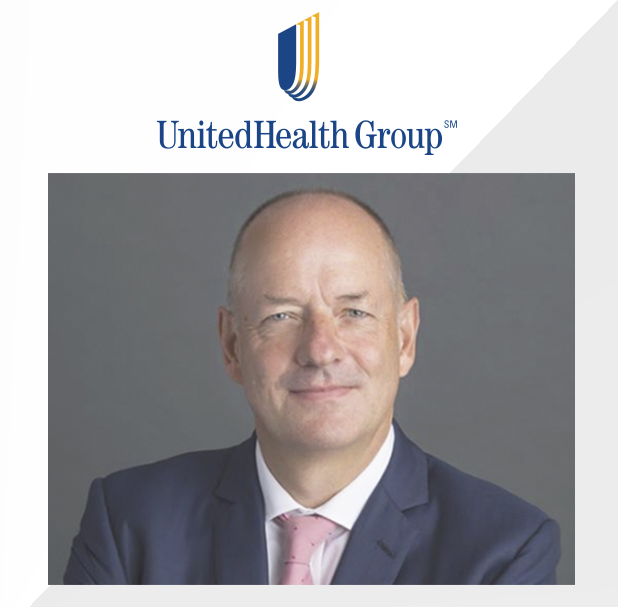
UnitedHealth Group CEO Andrew Witty called the media interest in Thompson’s death “aggressive” and “frankly offensive.” In a video to UnitedHealth Group employees, Witty said, “I’m sure everybody has been disturbed by the amount of negative and in many cases citriolic media and commentary…particulary in the social media environment.” Witty noted there were few poeple who had a “bigger positive effect” on the U.S. healthcare system than Thompson.

From Bad to Worse

Witty’s leaked internal video compounded the negativity towards health insurance companies. Witty decryied the media and public vitriol. He then praised Thompson’s impact on healthcare and defended the company policy.

“Our role is a critical role, and we make sure that care is safe, appropriate, and is delivered when people need it,” Witty said, “What we know to be true is the health system needs a company like UnitedHealth Group.” Witty followed his seemingly innocuous statement with, “We guard against the pressures that exist for unsafe care or for unnecessary care to be delivered in a way which makes the whole system too complex and ultimately unsustainable.” Public outcry was amplified after the video was leaked, with insured persons using this as proof that the company’s policy is to deny care.

Health Insurance Impact

Experts Weigh In

Ron Culp, a public relations consultant at DePaul University said if the attack is related to health insurance policies it “could cause companies in the sector to make some changes,” noting that, “empathy and potential alternative solutions will play greater roles.”

Fortune predicts that the incident will cause fewer people to aim for the corner office.

While disgruntlement with corporate America is not new, The Wall Street Journal said this incident is “tinged with class rage and anti-corporate venom….[The] current outpouring is on a grander scale….”

Loss of Faith in Insurance Stock

Between close of business on Tuesday, December 3, the day before Thompson’s shooting, and Tuesday, December 10, major insurance stocks have dropped more than 6%. This includes UnitedHealth, CVS Health, and Cigna, three of the largest private health insurers in the country.

Jared Holz, a health-care equity strategist, said the stock performance appears to be in response to the rhetoric condemning health insurance business models that include denied claims in deference to higher profits.

Final Thoughts

After just one week, the public is still uncovering and pronouncing issues with the healthcare insurance industry. The long-term health insurance impact regarding company policies, denial rates, or anything else remains to be seen. The Rowan Report will never condone violence against another person. However, if Thompson’s death brings about changes in the corruption of for-profit insurance companies, we will all be the better for it.

This is an ongoing story. The Rowan Report will continue to provide updates as they become available.

# # #

Kristin Rowan, Editor

Kristin Rowan has been working at Healthcare at Home: The Rowan Report since 2008. She has a master’s degree in business administration and marketing and runs Girard Marketing Group, a multi-faceted boutique marketing firm specializing in event planning, sales, and marketing strategy. She has recently taken on the role of Editor of The Rowan Report and will add her voice to current Home Care topics as well as marketing tips for home care agencies. Connect with Kristin directly kristin@girardmarketinggroup.com or www.girardmarketinggroup.com

©2024 by The Rowan Report, Peoria, AZ. All rights reserved. This article originally appeared in Healthcare at Home: The Rowan Report. One copy may be printed for personal use: further reproduction by permission only. editor@therowanreport.com
Meet the CMS Administrator Nominee

by Tim Rowan, Editor Emeritus

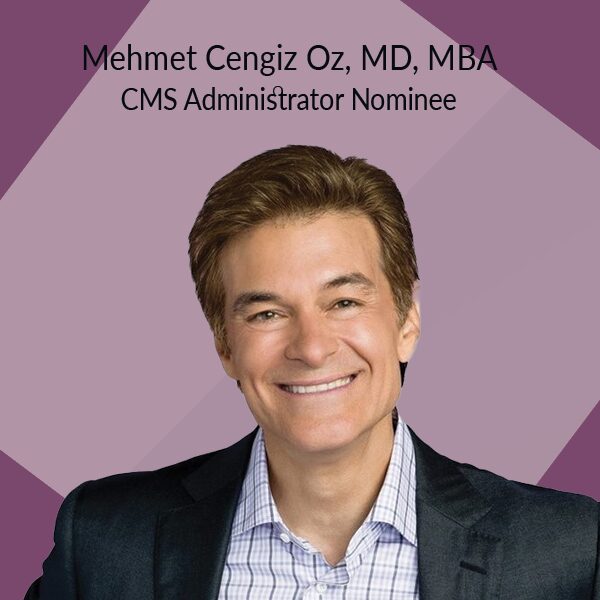
Mehmet Oz, MD, MBA is the CMS Administrator nominee in the new administration that assumes power on January 20. A popular TV personality and former gubernatorial candidate, the public side of Dr. Oz is well known, but the details of his life and his qualifications to head a $1.16 trillion government program less so. We reached out to the nominee’s PR firm on November 22 to request an interview but have not received a response. We gathered the following background information from his web site and other sources.

Heritage and Education

Mehmet Cengiz Öz was born on June 11, 1960 in Cleveland, Ohio, of Turkish immigrant parents. Raised in Wilmington, Delaware, he holds dual U.S. and Turkish citizenship and comes from healthcare roots. His father, Mustafa Oz, graduated at the top of his class at Cerrahpaşa Medical School in 1950 and moved to the United States to join the general residency program at Case Western Reserve University in Cleveland, where Mehmet was born. His mother, Suna Atabay, was the daughter of an Istanbul pharmacist.

Mehmet graduated with a biology degree from Harvard University in 1982. He earned an MD at the University of Pennsylvania School of Medicine and an MBA from Penn’s Wharton Business School in 1986. He completed his surgical training at NewYork-Presbyterian Hospital and served as a professor of surgery at Columbia University.

CMS Administrator Nominee Dr. Oz

Completing his general surgery residency and cardiothoracic fellowship at Columbia-Presbyterian Medical Center in New York City, Oz became an attending surgeon at NewYork-Presbyterian Hospital/Columbia University Medical Center in 1993. He was later appointed professor of surgery at Columbia University in 2001. An advocate for integrating alternative medicine with conventional practices, he co-founded the Cardiac Complementary Care Center in 1995.

During his time at New York-Presbyterian, Oz patented the Mitraclip, a small implantable clip that can be placed using a catheter to repair the heart’s mitral valve. Oz reported earning over $333,000 in royalties from that product in his 2022 disclosures.

Rise to Fame

Oz gained national attention through appearances on “The Oprah Winfrey Show.” Winfrey’s production company, Harpo Productions, and Sony Pictures produced the daytime syndicated program, “The Dr. Oz Show,” which debuted in 2009. It won 10 Emmy Awards during its run.

The program, which focused on health and wellness topics, aired until 2022, when he left it to run for the U.S. Senate in Pennsylvania, winning the Republican nomination and eventually losing to Democrat John Fetterman. Oz is also a prolific author, with eight of his books on the New York Times bestselling list. The Dr. Oz Show gained in popularity during its run but occasionally faced criticism for promoting unproven health products and practices.

Finances

Most of what can be learned about Oz’s personal finances comes from disclosures he made during his Senatorial campaign. He reported a salary of $2 million as host of The Dr. Oz Show and $7 million from his stake in Oz Media. He was also paid $268,000 as a guest host on Jeopardy in 2021. In addition to salaries, Oz and his wife, Lisa, reported investments in big tech, health care, private equity funds, and various real estate holdings.

Oz’s 2022 financial disclosures showed Amazon stock worth up to $25 million; Microsoft, Apple, and Alphabet (Google) stock, each valued up to $5 million, and Nvidia stock valued up to $1 million. He also owned stock in UnitedHealth Group worth up to $500,000, and in CVS Health (Aetna), valued at up to $100,000. They also owned shares in privately owned gas station and convenience store chain Wawa valued between $5 million and $25 million. His 2022 disclosures showed he earned $5 million in dividends from his investment in Wawa.

The Oz’s also reported a real estate portfolio that includes residential and investment properties in New Jersey, New York, Pennsylvania, Florida, Maine, and his parents’ native country, Turkey, each valued from $1 million to $25 million. His 2022 disclosures also showed an investment property in Palm Beach and a cattle farm in Okeechobee, Florida, worth up to $5 million each, and $500,000 worth of cattle.

In addition to these investments, Oz currently runs the non-profit organization HealthCorps, which trains teenagers to share the organization’s curriculum on mental health, physical health, and nutrition. He also serves as Global Advisor and Stakeholder at iHerb, a company that sells supplements, personal care, grocery, and beauty products.

CMS Administrator Nominee

What Kind of CMS Would Oz Create?

What we know of Dr. Oz’s opinions regarding Medicare and Medicaid we learned from his 2022 Pennsylvania campaign message. During that campaign, Oz was a vocal supporter of privatizing Medicare. In 2020, Oz co-wrote an opinion piece in Forbes, suggesting “an affordable 20% payroll tax” to fund a “Medicare Advantage For All” program that could replace private insurance.

His plan, co-authored with Steve Forbes, suggested a 20% payroll tax, half paid by the employer, which the government would use to purchase a Medicare Advantage plan for everyone. The proposal did not explain how this would replace private insurance as MA plans are administered by insurance companies. Of course, this was four years ago, before it was widely known that MA plans pad patient assessments and deny care at a higher rate than straight Medicare does.*

CMS Administrator Nominee Outlook

Uncertainties to keep watch over include the CMS Administrator’s supervision over Medicaid and negotiating Medicare drug prices. If confirmed by the Senate, Oz would have the power to approve states’ requests to change their Medicaid plans, such as adding work requirements for beneficiaries.

He will also oversee drug price negotiations. The Inflation Reduction Act gave CMS the power to negotiate with pharmaceutical marketers to reduce the price of popular medications for people covered by Medicare Part D. The first round of negotiations concluded in August, and the next slate of drugs up for negotiations will be announced in February.

In nominating Dr. Oz, the President-elect said Oz will “help cut waste and fraud.” Whether that goal or seeing to the health of the more than a third of Americans insured through CMS programs becomes Mehmet Oz’s priority should be the first question asked in his Senate confirmation hearings.

Statement from National Alliance for Care at Home

I congratulate Dr. Oz on his nomination for CMA Administrator, I believe it generally is a good thing for patient care when physicians engage in public service and public policy leadership. I am still learning about his priorities and approaches for CMS and am looking forward to speaking with him about the importance of a vibrant and growing care at home sector. Home care and hospice offers CMS the greatest win-win opportunity in American healthcare; people get the independence and dignity they want and deserve while the taxpayers and families save on the costs of unnecessary hospitalization and institutionalization.

Steve Landers, MD, MPH

Chief Executive Officer, National Alliance for Care at Home

# # #

Tim Rowan, Editor Emeritus

Tim Rowan is a 31-year home care technology consultant who co-founded and served as Editor and principal writer of this publication for 25 years. He continues to occasionally contribute news and analysis articles under The Rowan Report’s new ownership. He also continues to work part-time as a Home Care recruiting and retention consultant. More information: RowanResources.com
Tim@RowanResources.com

©2024 by The Rowan Report, Peoria, AZ. All rights reserved. This article originally appeared in Healthcare at Home: The Rowan Report. One copy may be printed for personal use: further reproduction by permission only. editor@therowanreport.com

Medicare Advantage Stock Prices After Trump Elected

by Kristin Rowan, Editor

Will the Change in Leadership Usher in a Change in Reimbursement Rates?

As in any election year, we have been bombarded with promises, predictions, and pandering from senate and house hopefuls as well as presidential candidates from every party. Each of them found platform issues that resonated with their followers. In turn, they have accused their opponents of all manner of sin. 

Now that the election has passed and the lame duck session of congress has begun, analysts have started looking to January and how election results may impact different industries. Analysts believe Trump, along with congressional Republicans, will aggressively push Medicare Advantage. One researcher predicts that traditional Medicare will “wither on the vine.” 

Privatization

Opposition to our current health care and insurance system often advocate for a single-payer system that is seen in places like England and Canada. Naysayers refer to this as the “socialization” of medicine, referring to socialist and communist governments. Privatization, on the other hand, moves healthcare out of the hands of the government and into the hands of privately held, usually for-profit, health insurance companies. Medicare Advantage has quietly moved more than 50% of all Medicare eligible patients to a privatized system. Senior policy analyst at Paragon Health Institute, Joe Alabanese believes that the Trump administration and a republican Congress would be “more friendly” to the idea of privatized health care. 

Insurer Stock Prices

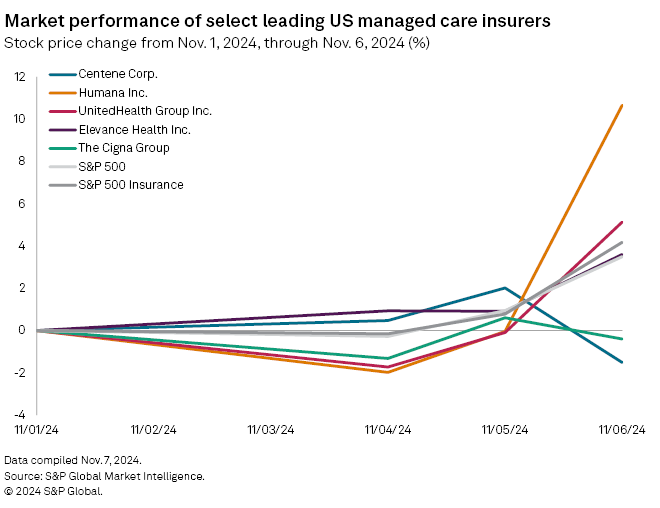
Whether the stock prices just before and after election day are predictive of things to come remains to be seen. For now, the information before us is this:

    • Between Nov 1 and Nov 7, Humana Inc. had the largest increase in stock prices at 10.7%
    • UnitedHealth Group Inc. rose 5.1% in the same time period
    • Both companies had greater stock increases than the average across S&P
    • Elevance Health was in keeping with the rest of the S&P with an increase of 3.6%
    • Molina Healthcare, Inc. and The Cigna Group dropped 0.2% and 0.4%, respectively
Medicare Advantage Stock Trump

Analysts say the jumps are in keeping with expectations that Republican control in Congress and in the White House will be beneficial for Medicare Advantage

Medicare Advantage Stock Trump<br />

Final Thoughts

It’s no secret that The Rowan Report is not a fan of Medicare Advantage. Specifically, the sales tactics used on the elderly and infirmed are predatory and the denial rate is criminal. The more eligible patients sign up for Medicare Advantage the less they will receive the care they need. Further, the more Medicaid has to supplement the cost of Medicare Advantage, the more home care agencies will suffer. Nationally, the more CMS regulates payment rates, pre-authorizations, and denial rates by privatizing Medicaid, the worse off our entire healthcare system will be.

With the state and national associations, we will continue to advocate on behalf of care at home agencies and their patients. And we hope you will too, regardless of who is in office. We have support at the federal level and we will continue to fight the good fight.

# # #

Kristin Rowan, Editor

Kristin Rowan has been working at Healthcare at Home: The Rowan Report since 2008. She has a master’s degree in business administration and marketing and runs Girard Marketing Group, a multi-faceted boutique marketing firm specializing in event planning, sales, and marketing strategy. She has recently taken on the role of Editor of The Rowan Report and will add her voice to current Home Care topics as well as marketing tips for home care agencies. Connect with Kristin directly kristin@girardmarketinggroup.com or www.girardmarketinggroup.com

©2024 by The Rowan Report, Peoria, AZ. All rights reserved. This article originally appeared in Healthcare at Home: The Rowan Report. One copy may be printed for personal use: further reproduction by permission only. editor@therowanreport.com

End of an Era

by Kristin Rowan, Editor

NAHC President Bill Dombi Retires

Earlier this year, with the announcement of the merging of NAHC and NHPCO, Bill Dombi announced his retirement from his position as President of the Association. Shortly after that announcement, The Rowan Report interviewed Bill and asked about the ongoing litigation against CMS as well as his thoughts on his tenure at NAHC. At the time, Bill was not prepared to speak about his upcoming retirement.

Remembering the Past

This week, at his final Annual Convention & Expo as association President, Bill shared his vision for the future of home health and hospice. Bill shared the story of the first time he faced an adversary…way back in kindergarten. He met his first bully and it took only a day for him to stand up to his nemesis and fight back. His bully walked away with a broken nose and Bill spent time with his nose in a corner.

“I was smiling the entire time,” Dombi shared, “and learning that’s not the way to do it. You’ve got to go to law school instead.”

How it Began

A young litigator, bright-eyed and ready to take on the world, Bill was initially hired to tackle a lawsuit against the Medicare program for denying care that should have been offered. He walked into the office that day and found boxes upon boxes with thousands of patient records and denied claims. Bill had to comb through each of these to select the 12 best plaintiffs to be named in the case. The amount of information was overwhelming, he recalled. It got a little easier when he was able to add members of Congress to the plaintiff list.

Nearly 40 years have passed since that day. “That day that I said yes was the beginning of a stunning opportunity that I had to be a part of an incredible team of people,” Bill reminisced.

First Steps Forward

That day will live in NAHC history as the first day of Bill’s tenure with the association. He promised his wife and children they’d be in Washinton D.C. for “just three or four years.” They stayed for 37. This day led to his first case against Medicare, Duggan v. Bowen. A case that rewrote the Medicare home health benefit. “It’s not perfect, but it was a monumental move forward,” Bill stated.

A Career Marked by Achievements

While is Bill is often hesitant to take full credit for what he has accomplished, and regularly credits his team for the strides made for home health and hospice patients, there is no doubt that he has been a driving force behind NAHC’s momentum and a key player in its advances at state and federal levels. 

Among Bill’s many accomplishments are:

  • Creating the Medicare Hospice Benefit. Today, one out of every two decedents have used hospice in the last 12 months of their life, which is an enormous increase since its launch.
  • The growth of the Medicaid program. The program went from having no home services in 1965, to being the largest home health program in the world.
  • Increasing access of care for pediatric patients, those receiving private duty nursing, the severely disabled and the elderly.
  • The transition of making hospital-at-home care permanent in Medicare.
  • Ever-growing technologies and improving the focus on in-home care.
  • Several lawsuits that Dombi led at NAHC against private insurers and others, to ensure that specific patients—including several with amyotrophic lateral sclerosis (ALS)—weren’t arbitrarily denied the coverage they needed.
NAHC President Bill Dombi Retires

“That’s where my heart, my soul is; that’s where my aggressiveness is born, representing those very vulnerable people.”

Bill Dombi

President Emeritus, National Association for Home Care & Hospice

Where it's Going

As Bill wrapped up his final appearance on stage as NAHC President, he made some predictions and shared his hopes for the future of care at home. “I see a future where we see a whole transformation of health care. A future where the minds, hearts, operations, payments, and everything else are focused arund a home care direction,” he shared, “Not everyone can or should receive care at home, but it would be the ideal default before someone is hospitalized or moved to a nursing facility.”

Bill’s more specific hopes for the future of care at home include:

  • Nursing school curricula specific to care at home
  • Physician education including care at home
  • The leaders of CMS and/or DHHS have backgrounds in or a deep understanding of care at home
  • Technology visionaries working on tech solutions for care at home
  • Every state of the union and Presidential debate includes a discussion on care at home

Dream Big

Bill openly admits that his “wish list” for care at home may be fantastical, but he will continue to encourage all those who work in the care at home industry to continue to fight to move in that direction.

“We have to stand ready and be capable of working in all forms to defend ourselves against being bullied around,” he said. In typical fashion, Bill’s statements brought the crowd to its feet. He fittingly exited the stage to a standing ovation with Tom Petty’s “I Won’t Back Down” echoing through the hall. 

As the music faded on Bill’s tenure, The Alliance CEO Steve Landers offered, “Bill, we won’t back down. Just so you know, we’re not going anywhere.”

The Legacy Lives On

Bill may be retiring from his post as President of NAHC, but his accomplishments, his passion for care at home, and his legacy will live on. National Alliance for Care at Home has established The William A. Dombi Scholarship Fund at his alma mater, the University of Connecticut. Bill’s contributions to care at home can hardly be overlooked when the scholarship fund has nearly doubled its initial goal of $50,000. 

Incoming and continuing students at UCONN who are majoring in political science can apply for the scholarship. The scholarship prioritizes awarding money to students focused on public policy and/or health care policy. Contributions to the scholarship fund can be made here. 

On a Personal Note

I spoke with Bill briefly during this week’s national convention & expo. I couldn’t let the event pass without acknowledging his contributions personally. When I started working in the care at home industry nearly 16 years ago, I saw Bill speak at a convention. Most of what he said was beyond my limited knowledge of care at home at the time. But, when I introduced myself afterward, he was gracious and offered any assistance he could offer in the future. Since then, as I have delved deeper into the world of care at home, Bill has been a voice of reason, of passion, of resilience, and of steadfast commitment to advocating for the current and future recipients of care at home. He has impacted countless lives. For his guidance, for his character, and for his relentless pursuit of reform for care at home, I can only echo the sentiments of my colleagues and friends:

“Thank you, Bill, for everything.”

# # #

Kristin Rowan, Editor

Kristin Rowan has been working at Healthcare at Home: The Rowan Report since 2008. She has a master’s degree in business administration and marketing and runs Girard Marketing Group, a multi-faceted boutique marketing firm specializing in event planning, sales, and marketing strategy. She has recently taken on the role of Editor of The Rowan Report and will add her voice to current Home Care topics as well as marketing tips for home care agencies. Connect with Kristin directly kristin@girardmarketinggroup.com or www.girardmarketinggroup.com

©2024 by The Rowan Report, Peoria, AZ. All rights reserved. This article originally appeared in Healthcare at Home: The Rowan Report. One copy may be printed for personal use: further reproduction by permission only. editor@therowanreport.com

UnitedHealth Study: Is Medicare Advantage Killing Seniors

by Tim Rowan, Editor Emeritus

Is Medicare Advantage Killing Us?

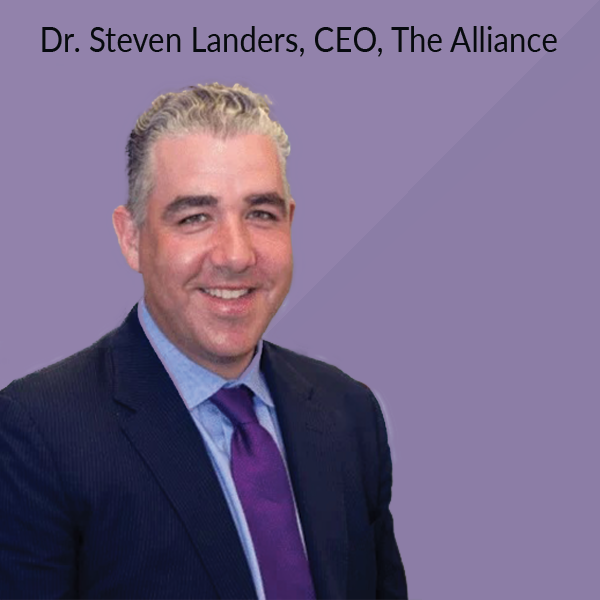
Dr. Steve Landers has long been eloquent in his speaking and writing about the importance of Home Health over the years. Though I was already impressed, I gained a new level of respect this week. Simultaneously with his debut as CEO of the new Alliance, Dr. Landers released an article about a recent study on the impact of Medicare Advantage on Medicare beneficiaries.

It is an article that everyone in our healthcare sector should read.

In “Home Health Cuts and Barriers are Life and Death Issues for Medicare Beneficiaries,” Dr. Landers points readers toward a study conducted by Dr. Elan Gada of UnitedHealthcare’s Optum Group. The results are disturbing. That the findings were released by a Medicare Advantage company is surprising.

Yes, Virginia, Home Healthcare Really Does Save Lives

Landers cited the study’s primary finding. “Medicare Advantage beneficiaries in their plan who did not receive needed home health care after hospitalization were 42% more likely to die in the 30 days following a hospital stay than those who received the prescribed care.” If a drug proved to be as effective as post-discharge home healthcare in saving lives, Landers wrote, “it would dominate the news, restricting access would be considered immoral, and health officials would be pushing its adoption.”

Medicare Advantage Enrollees Go Without

There are a number of reasons a hospital discharged patient might not receive home healthcare, including system issues and patient refusal. However, Dr. Gada’s study also discovered that MA customers go without post-discharge home health at a higher rate than traditional Medicare beneficiaries. Traditional Medicare beneficiaries go without in-home care about 25% of the time. Medicare Advantage beneficiaries 38% of the time. Landers notes that this data is a few years old and that the denial rate for MA customers is likely higher today.

Stop the Killing

We know the life-saving impact of post-hospital home healthcare. The question becomes: how does our little corner of the U.S. healthcare system help regulators and payers to know it as well as we do? At this week’s inaugural conference of the National Alliance for Care at Home, at least three education sessions discussed Medicare Advantage. All three offered strategies for negotiating with insurance companies and surviving under their oppressive rate structures and their frequent care denials.

UnitedHealth Group Medicare Advantage Landers

These Are Bandages, Not Cures

In previous opinion pieces, I have quoted revelations in government lawsuits against MA divisions of insurance companies. These prove the program that was originally launched to extend the lifespan of the Medicare Trust Fund actually costs CMS 118 percent of what traditional Medicare costs. At the same time, insurance company reports to shareholders proudly point out that their MA division is their most profitable.

One of last week’s most read stories was the report from UnitedHealth Group on their astounding Q3 growth.

In the Long Run

Learning to cope with MA care denials and below-cost visit payments is fine for those focused on making next month’s payroll. An entirely different tactic is needed for those focused on the care needs of their elderly parents or who are approaching age 65 themselves. The question must be asked, “Why does Medicare Advantage exist?”

Medicare Advantage Lobbyists

AHIP is the insurance company lobby. It put extreme pressure on Congress in 2009 when the Affordable Care Act was being written. That pressure resulted in then-President Obama removing a core plank from his bill. Obama struck the public option healthcare insurance plan in order to win enough votes to get the bill to his desk.

More $ Makes More $

That lobbying effort continues today precisely because MA is so profitable. How does it bring in so much cash? One after another, all of the large insurance companies have been caught padding patient assessments, the very fraud Home Health is so often accused of. Their monthly checks are determined by how much care they predict their covered lives will need, and they exaggerate it. Later, when it comes time to treat these same customers, MA plans deny care that would have been covered by traditional Medicare. They book profits at both ends, and they gladly pay the minimal fines when the practice is exposed.

The Reality of Medicare Advantage Fraud

To make each covered life more profitable, MA plans have begun calling customers to offer “free” nurse visits. These are essentially re-assessments where the MA staffer is rewarded for “finding” additional illnesses. This is not theoretical. My brother was offered a $50 gift certificate to CVS if he would allow his wife’s MA plan representative to drop in and chat with her, to “make sure she was getting all the benefits she was entitled to.”

Dr. Steven Landers: Call for Advocacy

In his article and in his speeches this week, Dr. Landers made it quite clear what must be done. EVERY person whose livelihood depends on the Medicare Trust Fund must make their voice heard. Letters and phone calls to Congress, to the Senate, to CMS, and to the Secretary of Health and Human Services, telling them you do not want to happen to your community what happened in Maine. After years of negative profit margins, in a state where MA adoption is at two-thirds, Andwell Health Partners ceased business in a wide swath of the northern regions of the state. Andwell was the only Home Health provider there.

The combined advocacy strength of NAHC and NHPCO is not enough to tip the scales. Your input is crucial.

Here's How it Works:

  1. Your letter explaining the damage coming from shrinking CMS reimbursement and MA care denials will be opened by a Congressional staffer.
  2. The staffer will read only enough of your letter to see its topic and which side of that topic you are on.
  3. No need to be lengthy or eloquent
  4. Put your topic and your position in your first paragraph
  5. The staffer will add a checkmark in the pro or con side of their Home Health ledger.
  6. The Congressperson, Senator, HHS Secretary will see a one-page summary of the numbers.
  7. When the numbers are small, the summary goes into a file
  8. When the numbers are large, the elected or appointed official will pay attention
  9. In rare cases, you may even get a phone call
UnitedHealth Group Advocacy Medicare Advantage

Dr. Landers, in His Own Words

The article Dr. Landers wrote detailing all of these includes wording suggestions for your message in your letter and/or call. For convenience, I have included one paragraph below,* but I urge you to spend three minutes reading the entire inspiring and frightening piece. In person, he explained all this in an emotional appeal. He said he cannot emphasize enough the importance of universal participation in our new organization’s advocacy effort. Based on what we have learned about post-hospital nursing care in the home, your letters and phone calls are a matter of life and death.

Excerpt

*To save lives and avoid unnecessary suffering, Medicare officials must reverse their plans to cut Traditional Medicare home health payments for 2025 and ensure payments are stable after adjusting for the dramatically increased healthcare labor cost inflation experienced over the past 5 years. Additionally, Medicare officials and lawmakers must study and address the possibility of the disproportionate administrative and financial barriers to home health in Medicare Advantage.

We are fortunate to have leaders in Congress like Senator Debbie Stabenow, Senator Susan Collins, Representative Terri Sewell, and Representative Adrian Smith who are working to champion a comprehensive bi-partisan legislative fix. Our leaders in Washington must act swiftly, before the end of the year, to save lives and avoid further destabilizing home health services for Medicare beneficiaries.

# # #

Tim Rowan, Editor Emeritus

Tim Rowan is a 30-year home care technology consultant who co-founded and served as Editor and principal writer of this publication for 25 years. He continues to occasionally contribute news and analysis articles under The Rowan Report’s new ownership. He also continues to work part-time as a Home Care recruiting and retention consultant. More information: RowanResources.com
Tim@RowanResources.com

©2024 by The Rowan Report, Peoria, AZ. All rights reserved. This article originally appeared in Healthcare at Home: The Rowan Report.homecaretechreport.com One copy may be printed for personal use: further reproduction by permission only. editor@homecaretechreport.com

An Interview with Dr. Steven Landers, Part 2

by Kristin Rowan, Editor

Medicare Advantage is Killing Us...Literally

This is part 2 of 2 in the interview with Dr. Steven Landers. You can read part 1 here.

Medicare Advantage article by Dr. Landers

Earlier this week, Dr. Landers published an article in the NAHC Report. The article cited three studies and analyses on the number of enrollees in both Medicare and Medicare Advantage who do not receive the care to which they are entitled. During our recent interview with Dr. Landers, he addressed this article.

Dr. Steven Landers: On the Record

The Rowan Report:

You wanted to address something you recently wrote. Is this the same topic you mentioned the opening session, or is this something else?

Dr. Steven Landers:

No, this is a focused piece on the emerging research that we’re seeing around when people miss out on home health. It’s a life and death issue. I want to be sure that we, as an alliance, I, as a physician, and us, as advocates, that we are conveying that these issues around home health cuts and barriers are potentially deadly. This is not a trivial matter. It’s not an administrative or technical financial issue. It’s about people’s lives.

RR:

The article mentioned a study that said that the numper of people not getting the home care that they’re entitled to is almost double with Medicare Advantage enrollees over traditional Medicare.

Steve:

That was from a study that’s referenced there from a few years ago. The Partnership for Quality Home Health Arcadia Analysis that came out this year actually showed that those trends are worsening. We know that they’re not getting the needed care in Medicare Advantage and traditional Medicare.

In both cases it’s too high, but it’s higher in Medicare Advantage. It’s more common that people don’t get the prescribed care in Medicare Advantage. And we also know that that’s going up in both traditional Medicare and Medicare Advantage. The access has gotten worse because of the Medicare home health policy and because of the way that Medicare Advantage has grown and handled these issues.

Medicare Advantage Landers
Interviewer:

I guess the big giant question is what do we do, especially when margins for both traditional Medicare and Medicare Advantage are so low?

Steve:

One, we’ve got to start improving access to home healthcare. And the way that we do that is we end this march of payment cuts that are being set forward by Medicare. I mean, right now the leaders of Medicare are in their rulemaking process and they have choices to make. They can either do things that reverse this trend and put us on a path to better access or I think continuing these cuts will hurt beneficiaries.

And the other piece is the Medicare advantage front. We need more scrutiny and evaluation and potentially oversight here to make sure Medicare Advantage beneficiaries have access to high quality home healthcare.

“The results of this study demonstrate that among MA members referred to home health after acute hospitalization, those who did not receive home health services experienced higher mortality and lower readmissions than those who received these services.”

Unfulfilled Home Health Referrals Lead to Higher Mortality Among Medicare Advantage Members

Elan Gada, MD, Paul Pangburn, MHA, Chris Sahr, MS, MBA, Chad P. Schaben, MPH, Richard Young, MS

RR:

Where does the problem lie?

Steve:

People don’t get home health when it’s prescribed and mortality rates are substantially higher. There could be [anecdotal] reasons that this is happening. I’ve tried to think of them. I can’t really come up with them when you see it in three different analyses, especially one done within the Medicare Advantage plan. They have great data. It was well thought out and this is serious business and it really should be a kitchen table discussion for families like ‘what’s going here?,’ because obviously home healthcare is a beloved service that families care deeply about.

We’ve seen home care become a presidential campaign issue because it’s good policy and also because the folks running, Vice President Harris, who brought it up, and former President Trump, who chimed in sort of a me too, being enthusiastic about the concept. They’ve got to know that this polls well, that the families care about this stuff.

Editor Emeritus Tim Rowan provides an analysis of the study from UnitedHealth Group here.

# # #

Kristin Rowan, Editor

Kristin Rowan has been working at Healthcare at Home: The Rowan Report since 2008. She has a master’s degree in business administration and marketing and runs Girard Marketing Group, a multi-faceted boutique marketing firm specializing in event planning, sales, and marketing strategy. She has recently taken on the role of Editor of The Rowan Report and will add her voice to current Home Care topics as well as marketing tips for home care agencies. Connect with Kristin directly kristin@girardmarketinggroup.com or www.girardmarketinggroup.com

©2024 by The Rowan Report, Peoria, AZ. All rights reserved. This article originally appeared in Healthcare at Home: The Rowan Report. One copy may be printed for personal use: further reproduction by permission only. editor@therowanreport.com