by Kristin Rowan | Jan 30, 2026 | Advocacy, CMS, Home Health, Hospice, Medicare, Regulatory
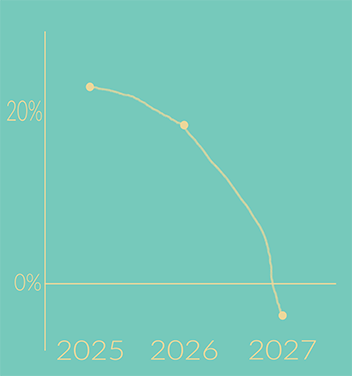
In December, MedPAC published a proposed recommendation for calendar year 2027 that included a 7% cut to home health reimbursement rates and no increase for hospice. Last week, MedPAC voted to finalize that recommendation and send it to CMS.
Both the proposal and final recommendation met with strong industry backlash.
“MedPAC’s dangerous and misguided recommendations to reduce the Medicare home health base payment rate by 7% for CY 2027 and eliminate the update to the 2026 Medicare base payment rate for hospice do not reflect both home health and hospice agencies’ operating realities as well as the cumulative impact of recent policy changes. For home health agencies, any cut – let alone one of such great magnitude – will threaten the ability to meet individuals’ healthcare needs. Yet again, the Commission is failing to understand the operating reality providers face and the potential patient harm that any further payment cuts pose.”
CEO, National Alliance for Care at Home
The MedPAC recommendation may not be built on solid data, use accurate calculations, consider Medicare Advantage and Medicaid rates along with Traditional Medicare FFS, consider the number of agencies that will go out of business, have any recommendations for maintaining nurse and caregiver hourly rates, or fairly distribute Medicare funds across disciplines, but, wait…where was I going with this? Oh, right! At least they’re consistent. MedPAC recommended a 7% decrease in Medicare payments for 2027, 2026, 2025, 2024, and 2023. They may be completely wrong, but they are dedicated to maintaining their wrongness.
Despite the years of 7% cut recommendations from MedPAC, the final numbers from CMS are rarely in line with those recommendations. We will, of course, know more when CMS publishes their proposal later this year. LeadingAge, National Association for Care at Home, individual and corporate HHAs and Hospices, and anyone else with a stake in the care at home industry, should contact their congressional representatives and CMS directly to voice concerns over these cuts.
Kristin Rowan is the owner and Editor-in-chief of The Rowan Report, the industry’s most trusted source for care at home news. She is also a sought-after speaker on Artificial Intelligence, Technology Adoption and Lone Worker Safety. She is available to speak at state and national conferences as well as software user-group meetings.
Kristin also runs Girard Marketing Group, a multi-faceted boutique marketing firm specializing in content creation, social media management, and event marketing. She works with care at home software providers to create dynamic content that increases conversions for direct e-mail, social media, and websites. Connect with Kristin directly at kristin@girardmarketinggroup.com or www.girardmarketinggroup.com
©2026 by The Rowan Report, Peoria, AZ. All rights reserved. This article originally appeared in The Rowan Report. One copy may be printed for personal use: further reproduction by permission only. editor@therowanreport.com
by Kristin Rowan | Dec 12, 2025 | Clinical
MedPAC Proposes Drastic Cuts
Five Year Decrease Not Enough
The onset of PDGM and the recalculations of payments in 2020 have led to an overall decrease in Medicare reimbursement rates for home health by approximately 12%. CMS continues to calculate budget neutrality with flawed formulas. The Alliance, along with several other advocacy groups as well as agencies and individuals, continues to fight against the formula and the pay cuts, estimating that nearly half of all home health agencies will be losing money in order to stay open.
Despite the continual decrease in payment rates, MedPAC recommends additional steep cuts. Highlights from the MedPAC report include:
- 97% of beneficiaries have access to 2 or more HHAs
- The total number of HHAs declined 1% in 2024 (excluding CA)
- Only 7.9% of beneficiaries used HH in 2024
- Number of 30-day periods per beneficiary increased 2.6%
- The overall profit margin for Traditional Medicare is 21.2%
- The overall profit margin for all payers is 5%
- Anticipated profit margin for 2026 is 19% for Traditional Medicare (3% overall)
The Traditional Medicare profit margin in 2026 is projected at 19%. This is offset by the negative profit margin from Medicare Advantage and private insurance plans. It may not be realistic or fair for the taxpayer to offset poor policies in Medicare Advantage and private insurance plans, but that has been the reality for years. Medicare Advantage plans yield high profits for insurance payors, and negative margins for HHAs. With an overall profit margin of 3%, lowering the Medicare reimbursement rate by more than 3% will put all HHAs in the red.
The numbers are there. HHAs earn 5% now, 3% next year. MedPAC recommends that CMS reduce the 2026 rate by an additional 7%.
NET PROFIT MARGIN -4%
Conclusion from MedPAC: This will not impact care; providers will still be willing to treat Traditional Medicare beneficiaries.
That statement may be true. However, in order for HHAs to survive, they will have to drop all MA plans. More than 50% of Medicare beneficiaries are on MA plans. 40% of MA patients use HH care after hospitalization. Medicare Advantage will survive through hospitals and physicians, but the Home Health benefit won’t have any providers.
CMS is currently weighing the option of the hospice carve-in to Medicare Advantage plans. The pilot plan failed miserably and yet rolling this out across all plans is an option, somehow. CMS and MedPAC must not be able to see what has happened to Home Health under MA plans. Hospice will suffer the same fate through the carve-in. It is irresponsible and destructive to add Hospice to MA. For that matter, it is irresponsible and destructive NOT to remove Home Health from MA. Move it all back to Traditional Medicare where at least the profit margin is above 0.
From the proposed rule in July to the final rule in November, CMS lessened the permanent rate cut by about 5%, finally hearing the concerns of advocates who told them HHAs would go out of business. We certainly hope CMS will keep that in mind when considering the MedPAC recommendation.
Kristin Rowan has been working at The Rowan Report since 2008. She is the owner and Editor-in-chief of The Rowan Report, the industry’s most trusted source for care at home news, and speaker on Artificial Intelligence and Lone Worker Safety and state and national conferences.
She also runs Girard Marketing Group, a multi-faceted boutique marketing firm specializing in content creation, social media management, and event marketing. Connect with Kristin directly kristin@girardmarketinggroup.com or www.girardmarketinggroup.com
©2025 by The Rowan Report, Peoria, AZ. All rights reserved. This article originally appeared in The Rowan Report. One copy may be printed for personal use: further reproduction by permission only. editor@therowanreport.com
by Kristin Rowan | Mar 22, 2025 | CMS, Editorial, Medicare Advantage, Regulatory
MedPAC Comments on CY 2026
MedPac Sends Recommendations to Congress
MedPAC makes recommendations to Congress and HHS on issues affecting the Medicare program. The March report for 2025 includes recommendations for hospice, home health, and SNFs, in addition to in-patient and out-patient hospital services.
Using the exact terminology from the 2024 report, MedPAC recommends that Congress eliminate the update to the 2025 Medicare base payment rates for hospice. MedPAC pointed to a number of statistics to support the evaluation:
- The number of hospice providers increased in 2023
- Some of the growth in hospice providers occurred in states where CMS has concerns over program integrity
- The percentage of patients using hospice increased by .8 percent nationwide, as did the days of care and visits per week
- Medicare payments exceeded marginal costs by 14 percent
- The population of the U.S. is aging as more and more Baby Boomers qualify for Medicare; there is an increased need for hospice agencies to accommodate the volume of patients
- Whether there are more hospices in states where program integrity is questioned does not impact the need for hospice care; program integrity reform changes this, not reimbursement rates
- The rise in use, length of stay, and days of care explain the increase in the number of hospice; need, not profitability drives this growth
- The average markup in 2022 was 72 percent above marginal cost
Marginal cost is the cost of adding one more unit of production. In simple terms, that would be the overall costs of adding one hour of care for a hospice patient. This would include scheduling, hourly wage, and other operational costs. MedPAC believes that if an agency adds one hour of care and make 14 percent more than their costs, that is sufficient.
Keeping with tradition, MedPAC used the same language again from 2024 to recommend that Congress reduce the 205 Medicare base payment rate for home health agencies by 7 percent.
- The number of HHAs participating in Medicare increased by 3.4 percent.
- Most of the growth in HHAs was in LA County. Outside LA County, the number of HHAs decreased by 2.8 percent.
- The number of 30-day episodes per beneficiary decreased by 1.8 percent, but is still higher than in prepandemic years
- MedPAC was unable to compute the marginal profit for 2023
- Quality of care (percent discharged to community) increased by 1.3 percent
- The all-payer margin in HHAs was 8.2 percent, attracting investors
- The projected Medicare payment margin for 2025 is 19 percent
- LA County has more HHAs, but the rest of the country has fewer. We believe if you ask The National Alliance for Care at Home, Bill Dombi, or any number of prior HHA owners, low reimbursement rates forced them out of business
- Pandemic numbers skewed the need for care at home because everyone was at home; if you only look at prepandemic numbers compared with 2023 numbers, the need for home health is increasing
- HHAs keep patients out of the hospital, which accounts for more Medicare payments and higher costs
- Again, the average margin across the U.S. is 72 percent, but MedPAC somehow believes 8 percent will attract investors and buyers; volume is attracting buyers, not margins
- The projected 2025 margin is 19 percent and MedPAC recommends lowering it to 14 percent, matching hospice, and is 58 percent lower margins than the average industry
Surprisingly, there is an overlap in thinking between providers and MedPAC. In the February 2025 comment on the CMS notice of proposed rulemaking for 2026, MedPAC addressed the coding intensity and increased Medicare Advantage payments.
Last summer, Editor Emeritus Tim Rowan reported on the inflated health conditions filed by payers. Medicare Advantage payers also routinely deny care that traditional Medicare plans would cover. MA payers are collecting on both the front and back ends of the “Bank of CMS.” According to the Center for Economic Policy Research, upcoding by MA plans costs CMS 106 percent of traditional Medicare costs. Quality bonus payments add an additional 2 percent. Operating surplus from enrolling healthier beneficiaries adds another 11 percent. Payments to MA plans are 19 percent higher. MedPAC agrees and urges CMS to further investigate coding intensity from MA payers.
Although we agree with MedPAC’s assessment of MA coding intensity, that is where the similarity ends. Let’s take that recommendation one step further and require that MA plans pay hospice and home health providers a higher percentage of their risk-assessment adjustment and let the payers make their profits elsewhere.
Given the recent upheaval in D.C. and the fear that Medicare, Medicare Advantage, Medicaid, Social Security, and other benefits would be done away with completely, we are relieved to see the House Budget Bill passing without the drastic reductions to care at home.
Following the passing of the House Budget Bill, The National Alliance for Care at Home issued a response statement. We’ve published the full response here for you.
Kristin Rowan has been working at The Rowan Report since 2008. She is the owner and Editor-in-chief of The Rowan Report, the industry’s most trusted source for care at home news. She also has a master’s degree in business administration and marketing and runs Girard Marketing Group, a multi-faceted boutique marketing firm specializing in content creation, social media management, and event marketing. Connect with Kristin directly kristin@girardmarketinggroup.com or www.girardmarketinggroup.com
©2025 by The Rowan Report, Peoria, AZ. All rights reserved. This article originally appeared in The Rowan Report. One copy may be printed for personal use: further reproduction by permission only. editor@therowanreport.com
by Kristin Rowan | Mar 20, 2024 | CMS, Regulatory
By Kristin Rowan, Editor
In December, 2023, The Medicare Payment Advisory Committee (MedPAC) recommended a 22% payment reduction for hospice providers. This week, they’ve recommended additional cuts once again.
MedPAC has just released the March, 2024 Medicare Payment Policy Report, issued to Congress. The initial statement from MedPAC recognized the long-lasting impact of the COVID-19 pandemic on healthcare providers and the record inflation rates. The commission admits that the pandemic has caused burnout and personal risk to clinicians and other health care workers. The commission also admits that the effects of COVID-19, PHE-related policy changes, and emergency funding made it difficult to interpret the indicators of adequacy in Medicare’s payment rates.
The commission openly states that the fundamental problem with FFS Medicare payments is that providers are paid more when they deliver more services, whether or not those services provide value. The call for additional payment reforms to force providers to coordinate care over time and across care settings and to eliminate what may be necessary services that MedPAC doesn’t deem valuable.
Home Health Agencies
The commission reports the Medicare margins for HHAs at 22.2 percent in 2022. The commission calculates these margins excluding some fixed costs. The margins, according to the commission, indicate that FFS Medicare payments exceed the costs of care. This should incentivize HHAs to take on additional beneficiaries, as the margins are calculating using only costs that diminish by volume.
The commission notes a drop in HHA use in 2022 and lists possible causes including:
- The number of FFS Medicare beneficiaries is lower due to the increased enrollment in Medicare Advantage
- Lower use of inpatient hospital care among FFS beneficiaries
- Hospitalized FFS beneficiaries were less likely to be discharged to home health care (no reason for this was given)
- More FFA beneficiaries are using SNFs after hospitalization (no reason for this was given)
- The staffing shortages reported by HHAs limit the volume of services they can provide
The commission implies that the staffing shortages are not a factor in the decline in HHA usage. The Department of Commerce’s employment data indicates staffing levels that are currently higher than pre-pandemic levels. Even though the data includes HHAs, hospice, private duty, pediatric agencies, and other home care providers, the commission still contends that Medicare HHAs comprise a significant enough share of this group to conclude there is no staffing shortage nationwide.
The commission also reports that the decrease in the number of HHAs nationwide is not a factor in the decline of HHA usage, because most beneficiaries still live in an area with at least on HHA. The commission recognizes that the number of employees and contract laborers is not used to calculate access to care, even though it is a factor. They also admit that an HHA does not need to serve an entire area to be counted as serving the area, and that the capacity to serve additional beneficiaries is not considered.
The report recognizes that preventable readmissions to hospitals is lower among for-profit and free-standing HHAs than for hospital-based care. However, the commission dismisses this data in favor of the all-cause measure of hospitalization, which is much higher for HHAs. This measure covers 60 days and includes all hospitalizations for any cause and includes community-admitted and home health admitted patients. Essentially, MedPAC is assigning a 14.2 percent hospitalization rate to all home health patients, regardless of the cause of hospitalization, whether or not it is deemed preventable, and whether or not it is in any way related to the initial 30-day-period of post acute care.
The average cost of a 30-day period increased by 4 percent in 2022, due to a higher cost per visit. The HHAs are combatting this by reducing the number of in-person visits per 30-day period. Since MedPAC did not track telehealth visits, there is no data on the overall cost per visit, regardless of whether it was in person or remote. HHAs are working within the PDGM model for reimbursement by lowering their overall costs per 30-day period through telehealth visits, remote patient monitoring, and other technologies implemented to increase efficiency in HHAs. MedPAC wants to penalize this by reducing payment rates. This will only serve to push HHAs to further decrease the number of visits, which will impact quality of care, satisfactions rates, and rehospitalization rates.
The commission concludes that because the payments exceed the costs, the benefits of home health care are devalued as a substitute for more costly care options. MedPAC argues that the overpayment since 2000 creates higher expenditures for beneficiaries, but fails to provide data to this effect.
As noted by NAHC, there are flaws in MedPACs calculations as well as in the foundation of their position:
- Exclusions such as taxes, telehealth, and marketing in cost calculations incorrectly inflate the margins
- MedPAC relies heavily on the CMS calculations for budget-neutrality, which NAHC has already refuted as incorrect, bordering illegal formulas
- The data used in these calculations omitted all HHAs that are hospital-based.
NAHC, along with other agencies, will continue to advocate on behalf of HHAs, hospice providers, and other home-based care agencies in front of Congress to ensure these disastrous cuts will not become permanent inclusions in Medicare policy. We will continue to bring you updates as this issue continues to unfold.
# # #
Kristin Rowan has been working at Healthcare at Home: The Rowan Report since 2008. She has a master’s degree in business administration and marketing and runs Girard Marketing Group, a multi-faceted boutique marketing firm specializing in event planning, sales, and marketing strategy. She has recently taken on the role of Editor of The Rowan Report and will add her voice to current Home Care topics as well as marketing tips for home care agencies. Connect with Kristin directly kristin@girardmarketinggroup.com or www.girardmarketinggroup.com
©2024 by The Rowan Report, Peoria, AZ. All rights reserved. This article originally appeared in Healthcare at Home: The Rowan Report.homecaretechreport.com One copy may be printed for personal use: further reproduction by permission only.
editor@homecaretechreport.com
by Tim Rowan | Mar 20, 2024 | CMS, Editorial
by Tim Rowan, Editor Emeritus
This week, we look at the state of the healthcare industry, vis a vis payers that do not pay.
While Home Health and Hospice leaders talk at every gathering about refusing to accept Medicare Advantage clients, some large Integrated Healthcare Systems are actually doing it. Other hospitals are responding to difficult payers by laying off staff, or even closing. The HHS Office of Inspector General repeatedly fines insurance companies for upcoding to gain inflated, unjustified monthly payments. Meanwhile, insurance companies report record profits, with their MA divisions leading the way. The fines go into the “cost of doing business” column.
March, 2024, Becker’s Hospital Review: Bristol (Conn.) Health will eliminate 60 positions, 21 of which are currently occupied and will result in layoffs at Bristol Hospital. The hospital’s CEO, Kurt Barwis, told a local newspaper a lack of reimbursement from insurers left the hospital without a choice but to cut staff.
October, 2023, NPR: Since 2010, 150 rural hospitals have closed. Under CMS’s “Critical Access” designation, Medicare pays extra to those hospitals to compensate for low patient volumes. MA plans do not. Instead, they offer negotiated rates that are lower than what traditional Medicare would pay.
December, 2023, Becker’s Financial Management: 13 additional hospital systems cut ties with Medicare Advantage plans since October.
What is going on?
The Medicare Payment Advisory Commission, MedPAC, believes it has learned the answer. In its March 15, 2024 report to Congress, the Commission called for a “major overhaul” of Medicare Advantage policies. It says it found that the program, designed to lower costs and extend the lifespan of the Medicare trust fund, does not save money but costs the fund more than if all beneficiaries were on traditional Medicare, $83 billion more in 2024.
Calling it, too politely, “coding intensity,” MedPAC concurs with the OIG that MA plans routinely exaggerate patient conditions. The report claims it will amount to MA clients appearing to need 20% more healthcare than fee-for-service beneficiaries, when they do not. Padded coding, MedPAC says, will increase Medicare premiums by $13 billion in 2024.
“A major overhaul of MA policies is urgently needed for several reasons,” the commission wrote in its report. MedPAC cited several problems that need to be addressed, including the disparity in costs between beneficiaries in fee-for-service Medicare and MA, a lack of information on the use and value of supplemental benefits, and challenges setting benchmark payment rates.
A proposal currently making its way through Congress would reduce supplemental payments to insurers, who threaten to raise premiums and cut benefits if their inflated benchmark payments are lowered.
“If payments to MA plans were lowered, plans might reduce the supplemental benefits they offer,” MedPAC wrote in its report. “However, because plans use these benefits to attract enrollees, they might respond instead by modifying other aspects of their bids.” The barrage of TV ads, featuring aging celebrities, have been found to be deceptive and too often backed by shady front companies representing brokers, not insurance companies. The brokerage company behind the Joe Namath ads, for example, has reorganized and changed its name three times.
Pushback from AHIP, the insurance industry lobbying organization, has been as expected. “MedPAC’s estimates are based on ‘speculative assumptions’ and ‘overlook basic facts about who Medicare Advantage serves and the value the program provides.'”
MedPAC asserts that its estimates are based on history, not speculation.
Healthcare Providers Beg to Differ
A lack of payments from Medicare Advantage plans is one reason the Connecticut hospital is laying off staff, the Hartford Courant reported March 14. CEO Kurt Barwis told the newspaper Medicare Advantage plans have been denying claims more frequently while delaying payments for the claims they do approve. “Our primary care is to take care of patients, their single focus is shareholder value and profits,” Mr. Barwis told the Courant. “The Medicare Advantage abuse is outrageous.”
The strategy insurance companies deploy to avoid providing care, Barwis continued, is excessive prior authorizations, coupled with delayed payments. This obstacle to care is directly in opposition to CMS policy. MA divisions of large insurers respond that they are private insurance and allowed to impose their own treatment approval policies. MedPAC says this claim is incorrect.
Richard Kronick, a former federal health policy researcher and a professor at the University of California-San Diego, said his analysis of newly released Medicare Advantage billing data estimates that Medicare overpaid the private health plans by more than $106 billion from 2010 through 2019 because of the way the private plans charge for sicker patients. Kronick added that there is “little evidence” that MA enrollees are sicker than the average senior, though risk scores in 2019 were 19 percent higher in MA plans than in original Medicare. That gap continues to widen.
Where does this excess taxpayer money go?
2023 Medicare Advantage business division profits and 2022 CEO compensation reported by publicly traded companies:
UnitedHealth Group: $22.4 B (Andrew Witty $20,865,106)
Aetna (CVS): $8.3 B (Karen Lynch $21,317,055)
Elevance Health (Anthem): $6 B (Gail Boudreaux $20,931,081)
Cigna: $5.1 B (David Cordani $20,965,504)
Centene: $2.7 B (Sarah London $13,246,447)
Humana: $2.5 B (Bruce Broussard $17,198,844)
We found one curious outlier. Molina Health, with annual revenue 10 percent of UnitedHealth Group’s income and 2.16 percent of the market, paid its CEO $22,131,256 in 2022.
Download the entire MedPAC 2024 report here. Chapter 7 is the Home Health section. A summary of MedPACs recommendations begins the chapter thus, “For calendar year 2025, the Congress should reduce the 2024 Medicare base payment rates for home health agencies by 7 percent.”
# # #
 Tim Rowan is a 30-year home care technology consultant who co-founded and served as Editor and principal writer of this publication for 25 years. He continues to occasionally contribute news and analysis articles under The Rowan Report’s new ownership. He also continues to work part-time as a Home Care recruiting and retention consultant. More information: RowanResources.com
Tim@RowanResources.com
©2024 by The Rowan Report, Peoria, AZ. All rights reserved. This article originally appeared in Healthcare at Home: The Rowan Report.homecaretechreport.com One copy may be printed for personal use: further reproduction by permission only. editor@homecaretechreport.com
by Tim Rowan | Jan 24, 2024 | Regulatory
Untitled Document
Analysis by Tim Rowan, Editor Emeritus
P
erennial Home Health enemy MedPAC angered a different group last week by releasing a status report on insurance companies participating in the Medicare Advantage program.1
The report details the way in which giant, for-profit, health insurance companies improperly increase per-customer payments by upcoding their health assessment at enrollment, and then slash costs by denying coverage for healthcare services that traditional Medicare would have honored. MedPAC was also critical of the practice of requiring prior authorizations, backed up by utilization review algorithms that are supposedly intended to “minimize furnishing unnecessary services” but which effectively increase denials for necessary care.
According to the report, MedPAC expects CMS to pay MA plans $88 billion in 2024.
On January 12, a meeting to discuss the report ended in what one reporter politely described as “a kerfuffle.” Other witnesses to the meeting chose to describe it as a shouting match.
“One member, Brian Miller, MD, MPH, of Johns Hopkins University in Baltimore, accused panel leadership of issuing a negative status report on MA plans’ market dominance, saying it had been ‘hijacked for partisan political aims to justify a rate cut to Medicare Advantage plans.’
“Miller said the analysis … ‘appears to be slanted to arrive at a foregone conclusion in order to set up and provide political cover’ just before the Centers for Medicare & Medicaid Services prepares its annual rate notice for MA plans, expected in coming weeks. ‘The chapter reads like attack journalism as opposed to balanced and thoughtful policy research.'”2
Report authors fired back, citing numerous ways MA plans generate higher revenue, including enrolling people who are relatively healthy, known as favorable selection. They then vigorously scan patients’ medical histories and charts to code for health factors that generate higher per-capita payments, known as coding intensity, often spending less on services. Coding intensity is also the difference between a risk score that a beneficiary would receive in an MA plan versus in fee-for-service. Though MA plans skew toward healthier enrollees, MedPAC found that MA risk scores are about 20.1% higher than scores would be for the same beneficiaries had they enrolled in Fee For Service Medicare.
Namath, Walker, Shatner and Brokers
Criticism of MA plan behavior did not only come from MedPAC commissioners and report authors. For example, Lynn Barr, MPH, founder of Caravan Health, which was acquired by CVS Health through its acquisition of Signify Health, exposed what the annual TV ads do not make clear, that their 800 numbers go to brokers, not to any one plan.
“This is not the big, lovely, glowing success that everybody says it is. And we continue to create policies that drive people into these plans. Medicare allows money paid to MA plans to be used for broker commissions as high as “$600 to recruit them, plus $300 a year every year that they stay in the MA plan.
“We have allowed MA to buy the market, and that is why MA is growing. It’s not because the quality’s so great. People don’t love the prior auth, people are leaving their plans a lot. Aside from Medicaid, Medicare is the least profitable payer for doctors. And at the same time, we give all this money to the plans. It’s unconscionable.”
Adding to the “kerfuffle” with a powerful anecdote, Stacie Dusetzina, PhD, of Vanderbilt University Medical Center in Nashville, Tennessee, noted that even cancer patients often have trouble getting necessary care because of the plans’ limited networks. She referenced a January 7 NPR story3 about an MA enrollee who could not get the cancer care he needed from his MA plan, and could not get out of the plan without facing 20% in expensive copays. In all but four states, supplemental plans that could pick up the difference can reject patients with costly conditions.
“When you are 65 and aging into the program,” Dr. Dusetzina summarized, “you are healthy at that time and may not be thinking about your long-term needs. [If you did], it would push you to think harder about the specialty networks that you may or may not have access to when the MA plan is making your healthcare decisions.”
1 A 30-page slide presentation is available to the public at medpac.gov/wp-content/uploads/2023/10/MedPAC-MA-status-report-Jan-2024.pdf. The complete report is available only to MedPAC commissioners. The charts on slides 26 and 27 show how MA plans learned to pad profits in 2018 and increased the practices exponentially since then.
2 Cheryl Clark, MedPage Today January 16, 2024 medpagetoday.com/special-reports/features/108275
3 npr.org/2024/01/07/1223353604/older-americans-say-they-feel-trapped-in-medicare-advantage-plans
Tim Rowan is a 30-year home care technology consultant who co-founded and served as Editor and principal writer of this publication for 25 years. He continues to occasionally contribute news and analysis articles under The Rowan Report’s new ownership. He also continues to work part-time as a Home Care recruiting and retention consultant. RowanResources.com; Tim@RowanResources.com
©2024 by The Rowan Report, Peoria, AZ. All rights reserved. This article originally appeared in Healthcare at Home: The Rowan Report.homecaretechreport.com One copy may be printed for personal use: further reproduction by permission only. editor@homecaretechreport.com
by Kristin Rowan | Dec 13, 2023 | CMS, Regulatory
by Kristin Rowan, Editor
Last week, MedPAC met for their December meeting to discuss “Assessing payment adequacy and updating payments.” Hospice services and Home health care services were each presented separately to Congress and commissioners are set to review the key indicators and discuss updates to Medicare payment rates for 2024.
The findings presented to Congress gave me whiplash.
Hospice Services
- There is ‘mixed evidence’ on whether hospice reduces Medicare expenditures, but is has important benefits for beneficiaries
- 2021 saw a 6% increase in hospices, mostly in for-profit agencies
- Hospice use rates are down overall, but MedPAC blames the effects of the pandemic on death rates and patterns of care
- Hospice use continues to shift from SNFs to in-home care
- In 2020, 18.6% of hospices exceeded the payment cap
- MedPAC recommends the cap be wage adjusted and reduced by 20%
See the full Hospice Services presentation to Congress here.
Opinion
Of the 18.6% of hospices that exceeded the payment cap in 2020, 17.2% of those were also in the highest bracket of hospice providers with stays longer than 180 days. The payment cap is not enough to cover patients who need hospice care for longer time periods, even though the requirement for hospice care is expected death within 6 months. If hospice is intended to care for a patient for 180 days, shouldn’t the payment cap be equal to 180 days of care? If a hospice provider is caring for a patient for longer, shouldn’t they get paid more?
MedPAC is convinced that lowering the cap would only impact those hospice providers who have the longest stays. However, if those hospices can no longer provide care because the payment cap has been reached, it will fall to other providers to continue care, stretching the already overworked hospice nurses even thinner.
Home Health Care Services
- The Bipartisan Budget Act (BBA) of 2018 prompted CMS to implement PDGM and required MedPAC to review PDGM in its first year of operation
- BBA 2018 changes must be budget neutral
- CMS issued a $2 billion one-time reduction for overages and a 3.925 percent permanent reduction
- The decline in the number of Home Health Agencies continues
- The number of FFS beneficiaries declined, but the per capita use of HHS increased
- The median Medicare margin (profit) for efficient providers is 28.4 percent, but only 14% of HHAs met cost and quality criteria
- The median Medicare margin indicates Medicare payments are too high
Opinion
This makes about as much sense as the new phenomenon “dog math.” 14% of all Home Health Care agencies are considered efficient. On average, those who are efficient have a 28% Medicare profit margin. Among 133 industries reporting gross profit margins across the U.S., a 28% profit margin puts Home Care Agencies at number 104 out of 133, much lower than the average or median profit margins of every other industry.1 The all-payer margin is about 12%, making them the second least profitable industry in the U.S., coming in only slightly higher than auto manufacturers. The smallest HHAs have a profit margin just under 6%. MedPAC’s stance seems to be that if an HHA is making enough money to barely survive, they are making too much money.
See the full Home Health Care Agency presentation to Congress here.
©2023 by Rowan Consulting Associates, Inc., Colorado Springs, CO. All rights reserved. This article originally appeared in Home Care Technology: The Rowan Report. homecaretechreport.com One copy may be printed for personal use; further reproduction by permission only. editor@homecaretechreport.com